10 Small Bathroom Ideas Featuring Stunning Bathtubs

Alright, let’s have a real talk. You’re dreaming of a beautiful, spa-like bathroom—a sanctuary where you can soak away the stress of a long day. There’s just one tiny, little, oh-so-frustrating problem: square footage. Or rather, the lack of it.
I get it. I’ve been there, staring at a bathroom that feels more like a glorified closet, wondering if a decent bathtub is even a remote possibility. It’s easy to feel like you have to choose between a cramped shower stall and sacrificing all your floor space to some bulky, uninspired tub. But what if I told you that’s a complete myth?
A small bathroom doesn’t mean you’re sentenced to a life of boring, purely functional showers. In fact, with some clever design tricks, your cozy space can become the most stunning room in the house. The secret? Choosing the right kind of bathtub and pairing it with genius ideas that trick the eye and maximize every inch.
So, grab a cup of coffee (or a glass of wine, I don’t judge), and let’s dive into ten absolutely brilliant ways to fit a show-stopping tub into your small bathroom. Trust me, by the end of this, you’ll be ready to grab a sledgehammer. Well, maybe just a paintbrush first.
Shower-Tub Combos
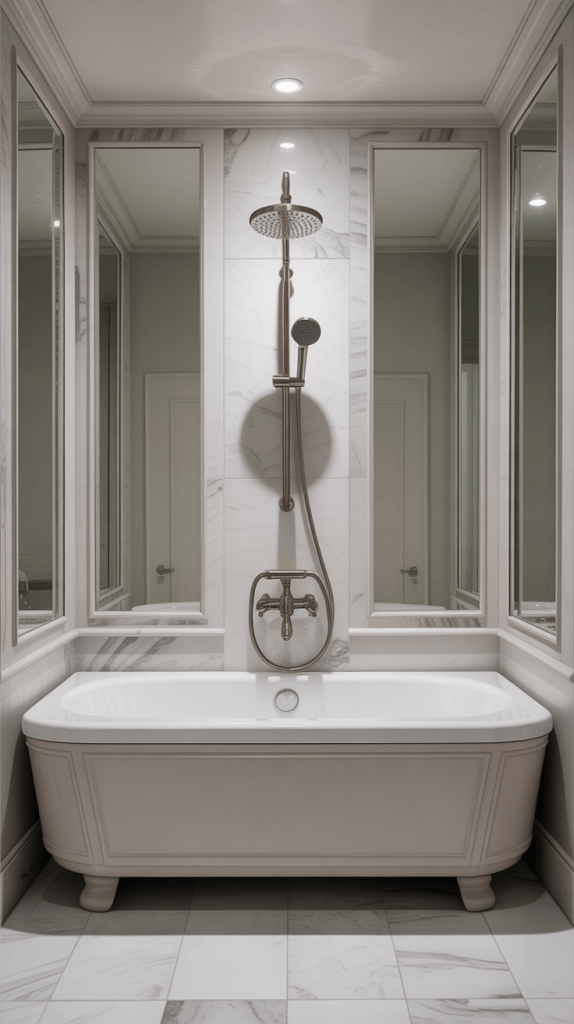
Let’s start with the obvious, shall we? The shower-tub combo is the classic space-saving solution for a reason. It’s practical, it’s efficient, and for decades, it’s been… well, kinda ugly. But hear me out! The modern shower-tub combo has had a serious glow-up. We’re not talking about those cheap, plastic surround units that feel like you’re showering in a cereal box.
Why it works for small spaces:
It’s the ultimate two-for-one deal. You get both bathing functions without needing to allocate separate floor space for a shower and a tub. This is a non-negotiable lifesaver in shared family bathrooms or guest suites.
How to make it stunning:
- Ditch the molded plastic: The key is to frame your tub in a beautiful way. Tile the surround from floor to ceiling. A sleek, large-format subway tile or a fun zellige tile instantly elevates the entire setup.
- Upgrade the hardware: Swap out the basic builder-grade showerhead for a gorgeous rainfall showerhead or a sleek, wall-mounted kit. A glass shower panel instead of a clunky curtain makes the space feel instantly more open and expensive.
- Choose a sculptural tub: Not all alcove tubs are created equal. Look for one with a sloped back for comfortable soaking and clean, modern lines. A deeper, Japanese-style soaking tub can turn this practical choice into a luxury experience.
My take: I used to turn my nose up at combos, but then I installed a deep, white steel tub with a matte black shower system and floor-to-ceiling white hexagon tiles. It’s chic, it’s functional, and it completely changed my perspective. Sometimes, the classic move is classic for a reason.
Mirrored Walls for Depth
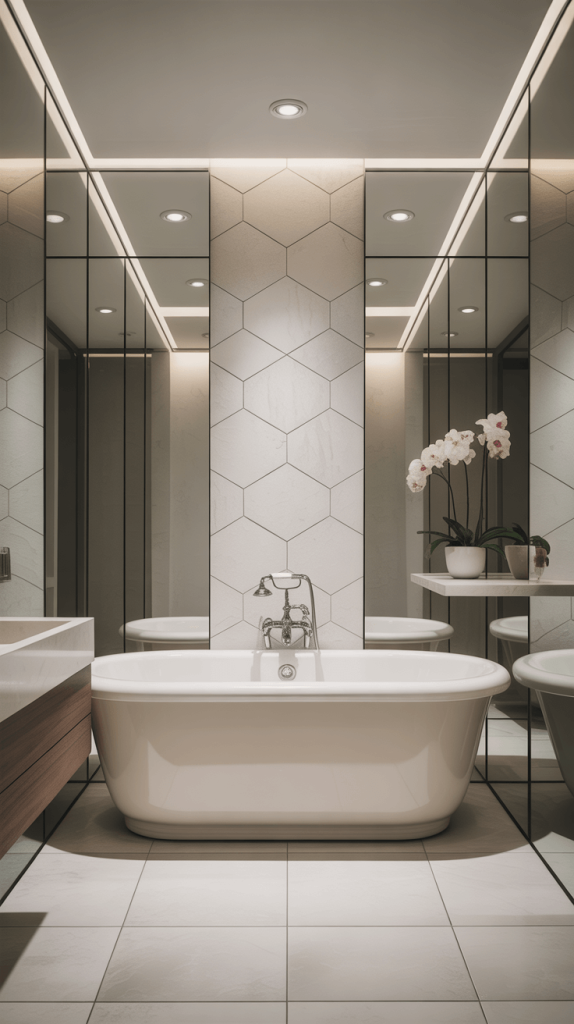
This idea is like a magic trick for your walls. If you want to instantly double the visual space in your bathroom, there is literally no better tool than a mirror. And I’m not just talking about the one over your vanity.
Why it works for small spaces:
Mirrors reflect light and the room itself, creating the powerful illusion of depth and openness. It’s a psychological game, and it works every single time. A wall of mirrors makes the room feel less confined and much brighter.
How to pair it with your bathtub:
- Go big or go home: Instead of a small mirror, consider installing a large, frameless mirror that spans the entire wall behind your vanity, or even on a wall adjacent to your tub. Positioning a mirror to reflect a window is the ultimate pro-move for amplifying natural light.
- Create a feature wall: Imagine your beautiful freestanding tub against a wall of large, mirrored tiles. It’s dramatic, it’s glamorous, and it makes the tub the undeniable star of the show while making the room feel enormous.
- Practical magic: A mirrored cabinet above your toilet or next to the tub gives you that visual expansion and valuable hidden storage. It’s a win-win.
A word of caution: This does mean you’ll see… well, everything. If you’re not ready to confront your morning hair from every possible angle, maybe use this trick on just one wall. But for sheer impact on a small space, it’s unbeatable.
Compact Freestanding Tubs
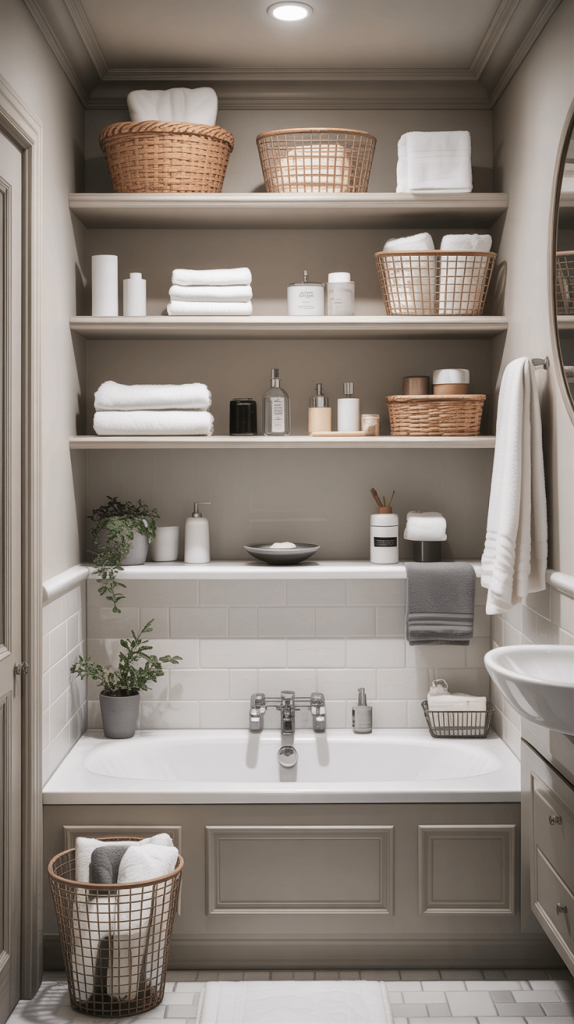
“But a freestanding tub in a small bathroom? You’ve lost it.” I hear you. It seems counterintuitive, right? We’re conditioned to think freestanding tubs are only for sprawling, magazine-worthy master baths. Prepare to have your mind blown.
Why it works for small spaces:
A compact freestanding tub, often called a “slipper” or “soaker” tub, has a secret power: it creates a beautiful, sculptural focal point. Because it’s not shoved against a wall, it actually allows light and sightlines to travel around it, making the room feel less boxy and more dynamic. Its very presence says, “This isn’t just a bathroom; it’s a destination.”
Choosing the right one:
- Size is everything: Look for tubs specifically marketed as “compact,” “small,” or “apartment-sized.” They are shorter in length and often narrower, but many are surprisingly deep for a glorious soak.
- Shape matters: A rounded, oval tub often fits more gracefully into a tight corner than a rigid rectangular one. A slipper tub (raised at one end) is ergonomic, comfortable, and takes up less visual space than a double-ended tub.
- Placement is key: Tuck it into a corner or float it along a wall. Just ensure you leave a few inches of clearance around it. This negative space is what prevents it from feeling cramped.
Pro-Tip: Pair a white freestanding tub with a bold, dark floor. The contrast makes the tub pop as a centerpiece, and the dark floor grounds the space, making it feel intentional and designed, not just small.
Also Read: 15 Unique Bathroom Remodel Ideas for Every Budget
Space-Saving Storage Solutions
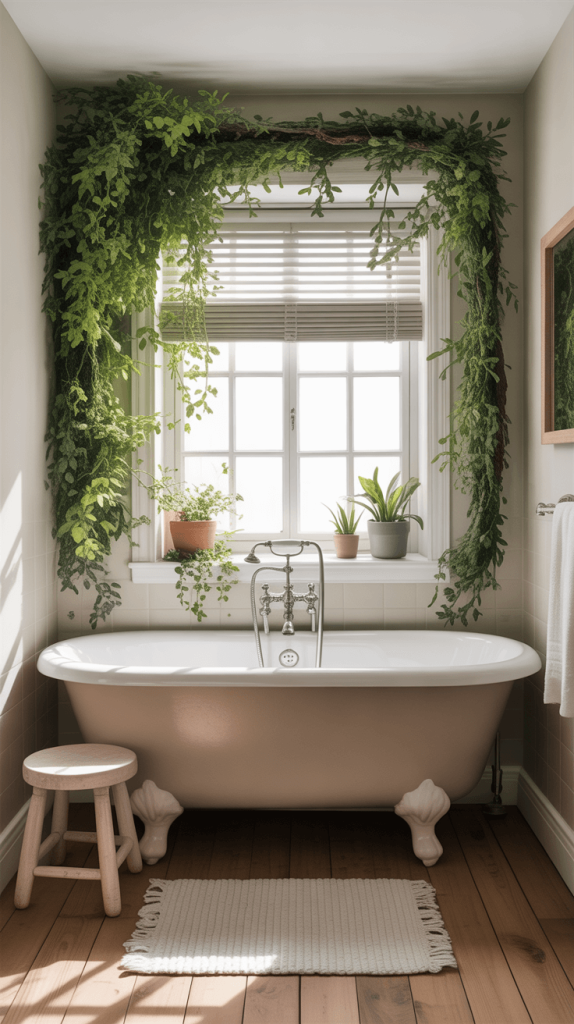
Let’s be real: clutter is the enemy of any small space. A beautiful tub is instantly undermined by a pile of shampoo bottles, loofahs, and half-used bath bombs littering its rim. The key to a serene, spa-like atmosphere is ruthless, clever organization.
Why it works for small spaces:
Clever storage clears precious floor and surface space, making the room feel instantly larger and more tranquil. When everything has a home, you can actually appreciate your stunning tub.
Bathtub-specific storage hacks:
- Recessed Niches: If you’re doing a shower-tub combo or tiling a wall, a recessed niche is a game-changer. It holds all your essentials without protruding into your bathing space. Have two: one for shower items and a shorter, wider one right next to the tub for candles, a book, and a glass of wine.
- Floating Shelves: A simple floating shelf on the wall next to the tub is both practical and decorative. Style it with a plant, a rolled-up towel, and a candle. It keeps things off the floor and adds a personal touch.
- Ladder Shelves: A sleek, narrow leaning ladder shelf is perfect for tight spaces. It provides vertical storage for towels and baskets without requiring any permanent installation.
- Caddies: Never underestimate the power of a good bathtub caddy. A beautiful piece of teak or bamboo that spans the width of the tub holds everything you need for a soak and can be tucked away when not in use.
My philosophy: Every item in a small bathroom must earn its place, either through beauty or function. Ideally, both. A woven basket that hides extra toilet paper is a hero. A random plastic cup is not.
Light and Airy Color Schemes
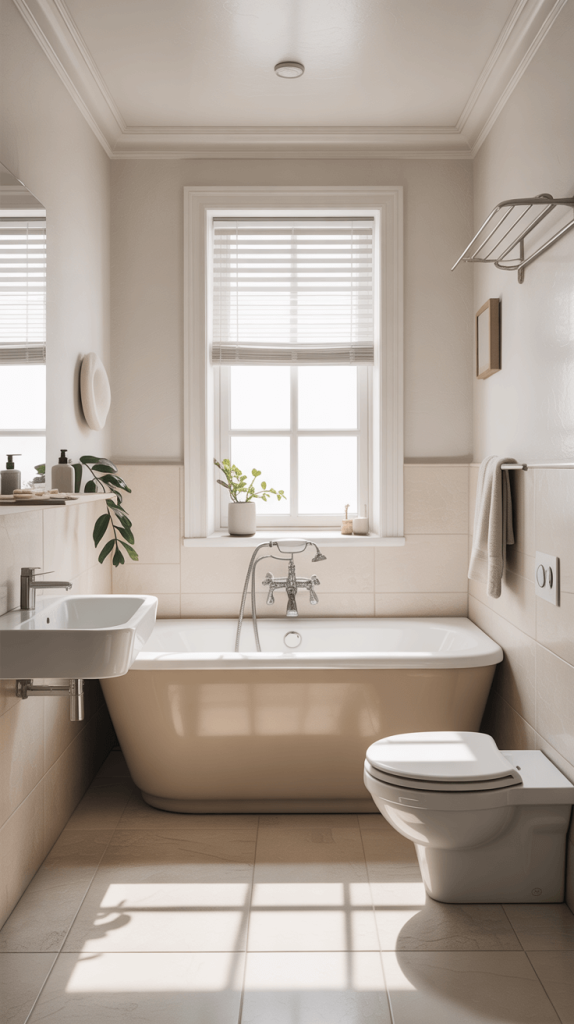
This might be the oldest trick in the book, but that’s because it’s 100% effective. Color has a profound effect on how we perceive space. Dark, moody bathrooms can be amazing, but they are a high-risk, high-reward move in a small room. For a guaranteed feeling of openness, light colors are your best friend.
Why it works for small spaces:
Lighter colors reflect light rather than absorbing it, making walls feel further back and ceilings feel higher. It creates an airy, open, and clean atmosphere—exactly the vibe you want for a relaxing bath.
How to implement it with your bathtub:
- The Monochromatic Magic: Paint your walls, ceiling, and trim all the same light color (think soft whites, pale grays, creamy off-whites). Then, install a white bathtub. This eliminates visual breaks and boundaries, making the room feel like one continuous, expansive space.
- Texture over Color: To keep an all-white scheme from feeling sterile, play with texture. A white shiplap wall, a basketweave tile floor, a fluffy white rug, and a matte white tub all read as “white” but together create a ton of visual interest.
- The “Pop” of Color: If white feels too clinical, introduce color through your accessories—a vibrant rug, colored towels, or art on the walls. This allows you to keep the permanent fixtures (tub, tile, vanity) neutral and space-enhancing.
Ever wondered why spas always feel so open? They almost exclusively use a light, neutral palette. They’re masters of using color to create a sense of calm and expansiveness. We’re just borrowing their playbook.
Vertical Garden Accents
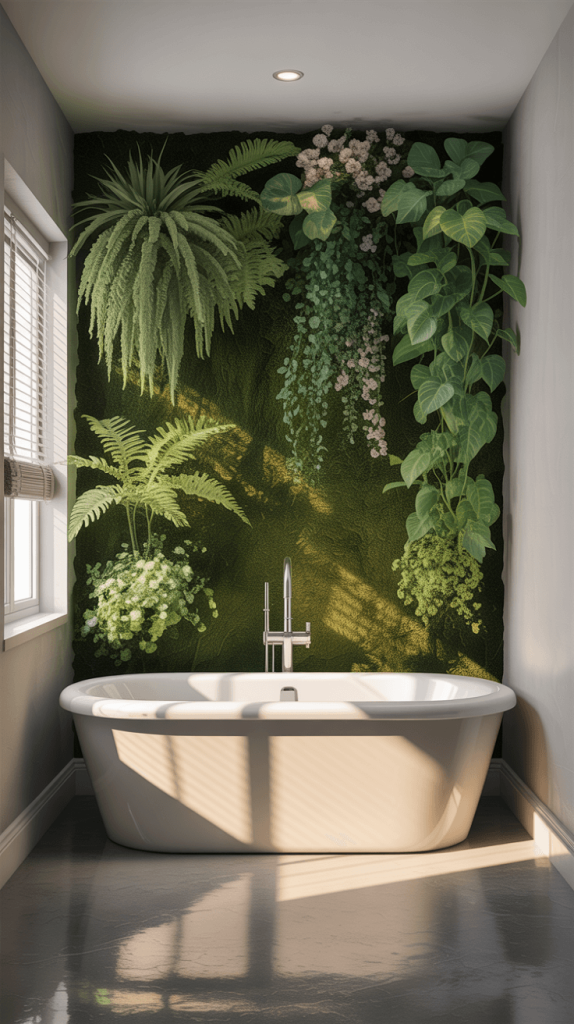
Bringing life into a small bathroom does two incredible things: it purifies the air (a nice bonus) and it instantly makes the space feel fresh, vibrant, and alive. When you have no floor space for a plant, you have to look up.
Why it works for small spaces:
Vertical gardening draws the eye upward, emphasizing height and making use of often-wasted wall space. It adds a lush, organic element that contrasts beautifully with the hard surfaces of tile, porcelain, and metal.
How to integrate greenery with your tub:
- Wall-Mounted Planters: There are tons of stylish wall-mounted options, from geometric terrariums to simple ceramic wall pots. Arrange a few in a cluster on a wall near the tub. Choose air plants (Tillandsia) or succulents, as they thrive in humidity and require minimal care.
- Floating Shelves with Plants: Remember those floating shelves we talked about for storage? Dedate one to a few small potted plants. A trailing pothos or philodendron looks absolutely gorgeous and loves the steam from your bath.
- A Statement Hanging Plant: If your ceiling can support it, a macramé plant hanger with a fern or spider plant suspended near a window or corner adds incredible bohemian flair and maximizes unused air space.
FYI, not all plants love a bathroom. Do your research! Snake plants, ZZ plants, ferns, and peace lilies are all famously hard to kill and enjoy the humid environment. Your black-thumbed friend (you know who you are) can even opt for high-quality faux plants. Your secret is safe with me.
Also Read: 10 Budget-Friendly Ideas for a Stunning Bathroom Remodel
Bathtub with Built-In Shelving
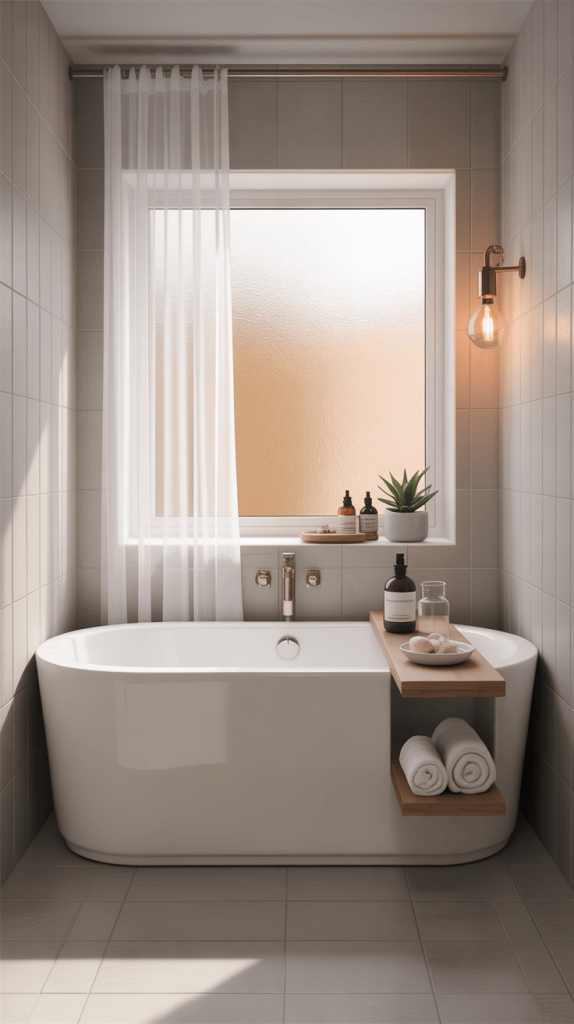
Why have a boring, flat apron on your tub when you could have one that works for you? Some modern tubs are designed with built-in shelves or recessed areas on their exterior. This is a brilliantly seamless way to solve the “where do I put my stuff?” dilemma.
Why it works for small spaces:
It integrates storage directly into the footprint of the tub itself. This means you gain a functional surface without taking up a single additional inch of floor or wall space. It’s the very definition of multi-functional design.
What to look for:
- Integrated Trays: Some tubs have a wide, flat apron that’s perfect for setting down a book, a candle, or a speaker.
- Recessed Shelving: Higher-end tubs might have actual recessed niches carved into the side. These are perfect for stashing smaller items like bath salts, soaps, or a lighter so they’re within arm’s reach but not in the way.
- The DIY Alternative: Can’t find or afford a tub with built-in shelves? No problem. A simple, sturdy stool or a small teak table placed next to the tub serves the exact same purpose. Look for ones with a lower shelf for bonus storage.
This idea is all about efficiency. It acknowledges the limitations of a small room and uses intelligent product design to overcome them. It’s smart, it’s sleek, and it makes your life easier.
Floating Vanities for Floor Space
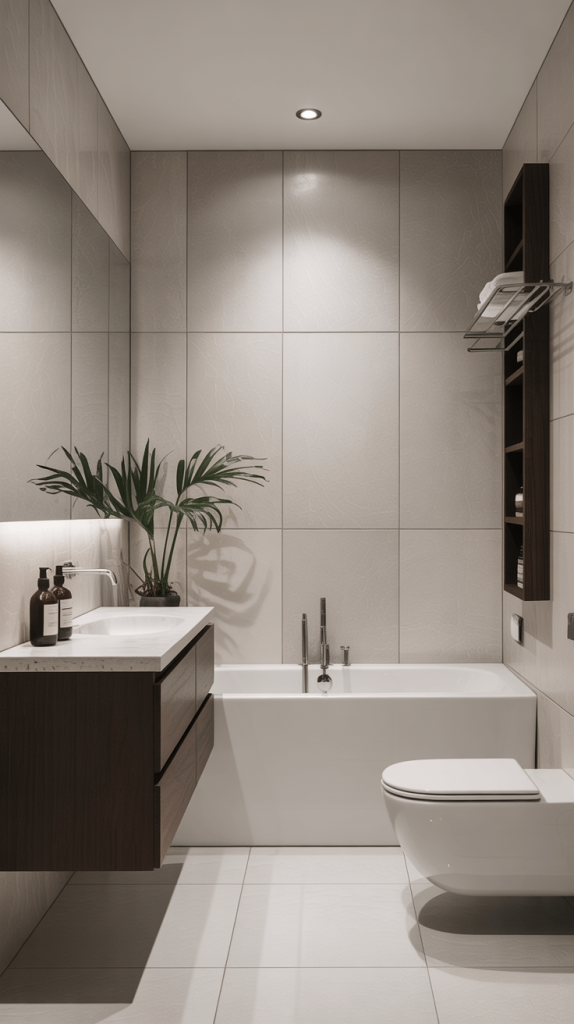
The vanity is often the largest furniture-like object in a bathroom. A big, bulky cabinet that sits on the floor visually weighs down the room and eats up valuable square footage. The solution? Make it float.
Why it works for small spaces:
A wall-mounted, or floating, vanity creates a visible gap between the bottom of the cabinet and the floor. This exposed floor space allows light to travel underneath, making the entire room feel larger and less crowded. It also makes cleaning the floor a bazillion times easier—no more awkward maneuvering around vanity legs!
How it complements your bathtub:
In a small layout, your vanity and tub are likely close neighbors. A floating vanity feels light and airy next to your tub, preventing the area from feeling stuffed with furniture. It creates a sense of openness around the base of the room, which makes the entire space feel more balanced.
Key considerations:
- Strength Matters: You must mount a floating vanity securely into wall studs. This is not a job for drywall anchors. Hire a professional if you’re unsure.
- Style Synergy: Choose a vanity with a slim profile and clean lines that complement your tub. A floating vanity with a natural wood tone can add warmth, while a glossy white one will keep the look crisp and modern.
- Storage is Still Key: Just because it’s floating doesn’t mean it can’t hold stuff. Many come with spacious drawers or cabinets. The goal is to gain storage without the visual heaviness.
Also Read: 12 Creative DIY Ideas for Your Bathroom Remodel
Cozy Nook with Bathtub
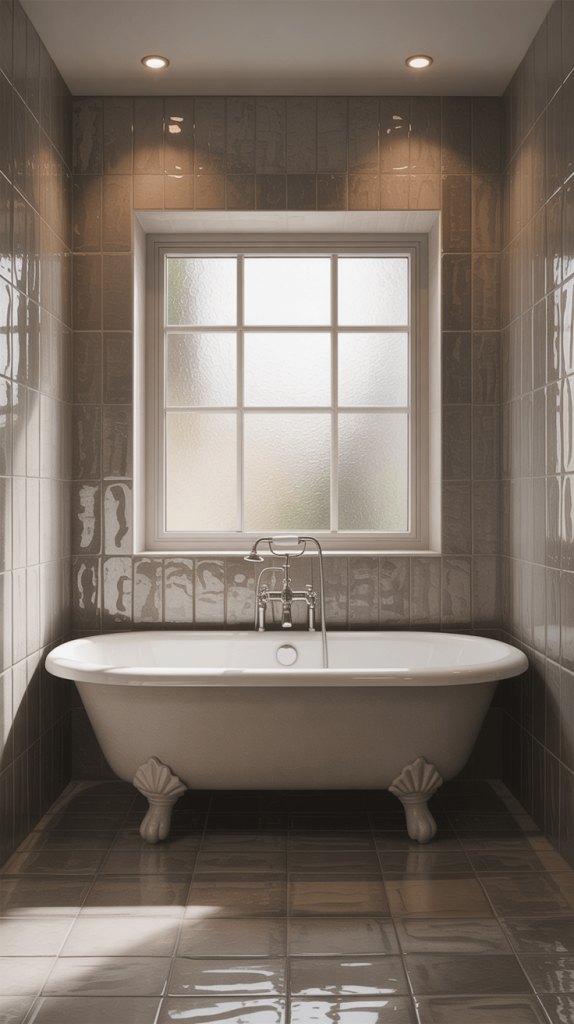
Instead of fighting the constraints of a small space, what if you leaned into them? That’s the philosophy behind the cozy nook. If you can’t have grandeur, you can have incredible charm and intimacy.
Why it works for small spaces:
This idea transforms a potential negative (cramped space) into a overwhelming positive (a snug, secure, and private retreat). There’s a reason why we love cozy reading nooks—they feel safe, protected, and personal. Your bathtub can offer the same feeling.
How to create the nook:
- Embrace the Alcove: If your tub is in an alcove (like a shower-tub combo), paint the interior of the niche a dark, moody, or contrasting color. This visually defines the space and makes it feel intentional.
- Add Texture: Drape a soft, textured curtain on a ceiling-mounted rod to enclose the tub area when in use. This creates a beautiful, canopy-like effect and makes your soak feel like a true escape.
- Lighting is Key: Install a dedicated dimmer switch for the lights above your tub. Warm, low, adjustable lighting is essential for creating a cozy vibe. Sconces on either side of the tub are perfect.
- Personal Touches: This is your spot. Add water-resistant artwork, a small shelf for your favorite supplies, and the plushiest towels you can find. Make it yours.
This approach is less about making the room look bigger and more about making it feel perfect just the way it is. It’s hygge for the bathroom.
Textured Tiles for Visual Interest
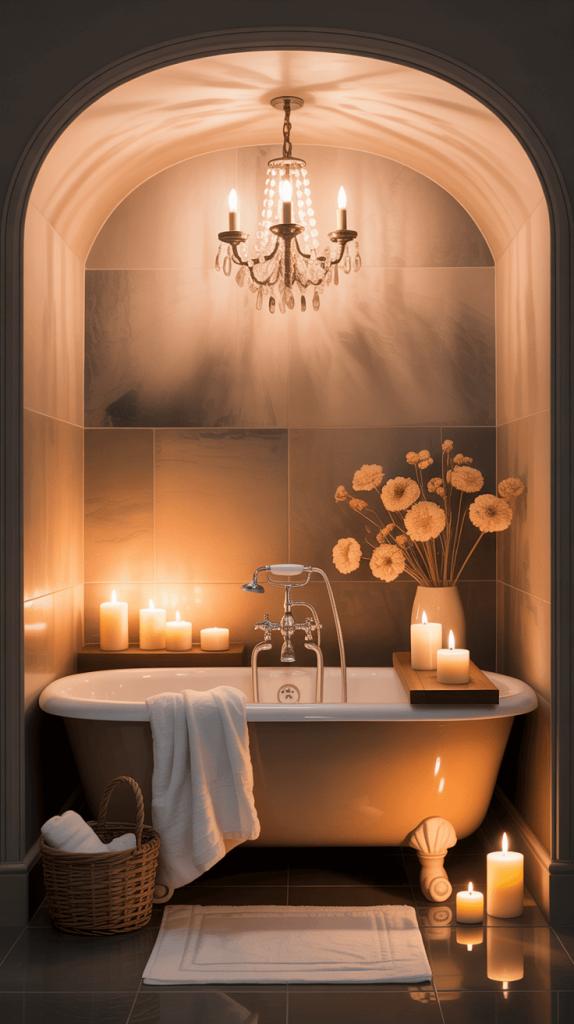
When all else fails, distract the eye! A room with a single, boring surface feels small and flat. A room with interesting texture and pattern feels dynamic and engaging. Your eyes are so busy enjoying the detail that they forget to measure the square footage.
Why it works for small spaces:
Texture adds depth and dimension on a vertical plane. It creates shadows and highlights that make walls feel more complex and less constricting. Pattern can be used to guide the eye and create a sense of movement.
How to use texture with your bathtub:
- Create a Feature Wall: Use a beautifully textured tile—like zellige, handmade subway, or 3D tiles—on the wall behind your tub. This immediately establishes that wall as the focal point. Everything else can be simple, because this one element does all the talking.
- Go for the Floor: A fun patterned floor tile, like a classic cement tile or a geometric design, draws the eye downward and expands the perceived size of the floor. Pair a bold floor with a very simple, freestanding tub to let both elements shine without competing.
- Mix Materials: Combine a smooth, glossy tub with a matte, textured wall tile. The contrast is incredibly sophisticated and adds so much visual weight that the size of the room becomes an afterthought.
IMO, this is the most fun you can have in a small bathroom. Choosing a tile you love is a way to inject massive personality into a small canvas. Don’t be afraid to go bold.
So, Which Idea Stole Your Heart?
Well, there you have it. Ten ways to completely transform your small bathroom from a functional afterthought into a stunning retreat centered around a beautiful bathtub. We’ve covered everything from optical illusions and clever storage to embracing the cozy and playing with texture.
The most important takeaway? Your small bathroom is not a limitation; it’s an opportunity. An opportunity to get creative, to make intelligent design choices, and to build a personal oasis that feels exactly right for you.
You don’t need a mansion to have a luxurious bath experience. You just need a few great ideas and the confidence to implement them. So, which one are you trying first? Maybe it’s the compact freestanding tub that’s calling your name, or perhaps you’re already shopping for textured tiles. Whatever path you choose, remember: the best bathroom is the one that makes you want to sink in and stay a while.
Now, if you’ll excuse me, all this talk about bathtubs has put me in the mood for a long, hot soak. I’ve earned it. And hey, so have you.