15 Stunning Modern Japanese Bedroom Ideas to Transform Your Space

You know that feeling when you walk into a space and instantly feel… calm? That’s exactly what happened to me the first time I stepped into a proper Japanese-style bedroom.
My shoulders dropped, my breathing slowed, and I thought, “Okay, I need this energy in my life ASAP.”
If you’re reading this, you’re probably craving that same serene, minimalist vibe that Japanese design absolutely nails.
Maybe you’re tired of cluttered spaces, or perhaps you just watched one too many episodes of Tidying Up with Marie Kondo (guilty as charged). Whatever brought you here, I’ve got 15 killer ideas that’ll help you create that modern Japanese bedroom you’ve been dreaming about.
Minimalist Zen Bedroom with Natural Wood Accents
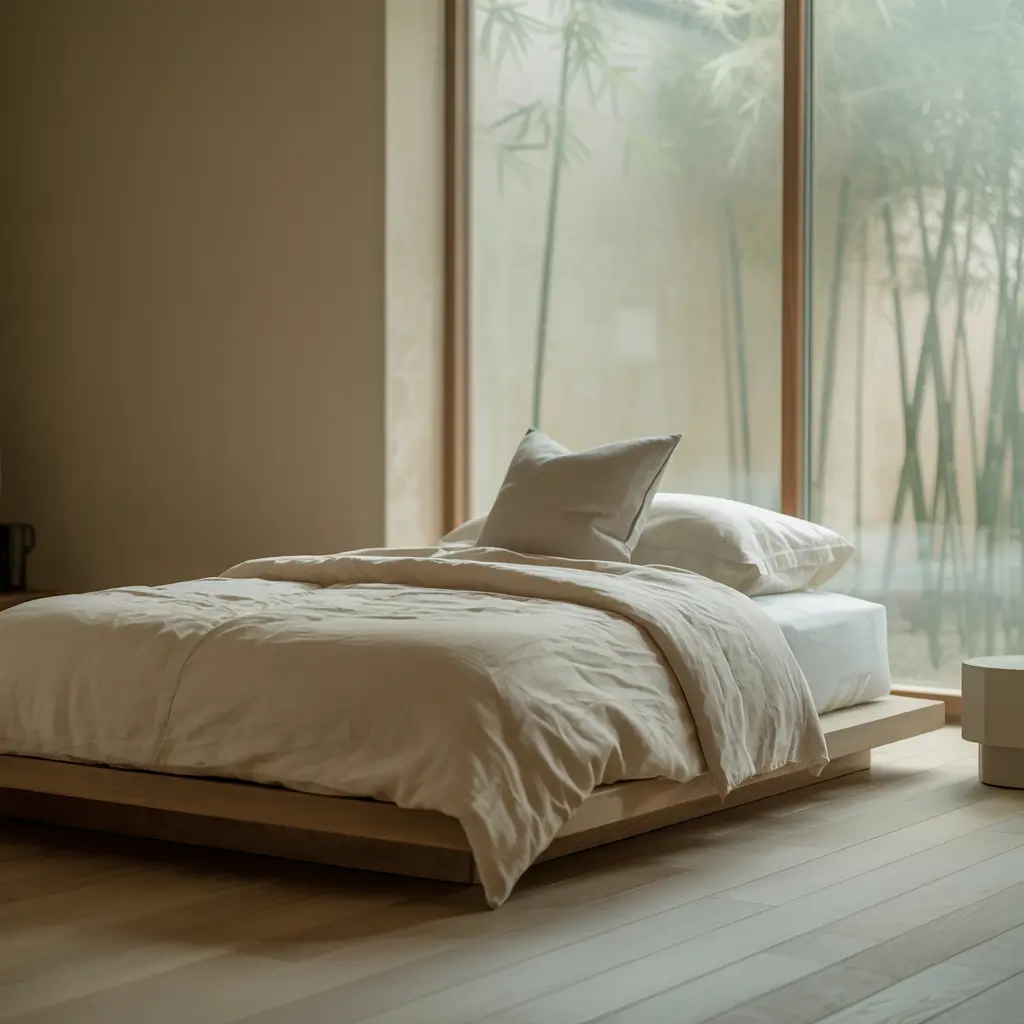
Let me start with the foundation of any Japanese bedroom worth its salt – minimalism meets natural wood. I remember trying to explain this concept to my friend who thought “minimalist” meant “boring.” Boy, was she wrong.
The beauty of a minimalist Zen bedroom lies in its intentional simplicity. You’re not just throwing out stuff randomly; you’re creating a space where every element serves a purpose. Natural wood accents bring warmth that prevents the room from feeling cold or sterile. Think light oak flooring, a simple wooden bed frame, and maybe a floating shelf made from reclaimed wood.
What really makes this work? The grain patterns in the wood become art themselves. You don’t need a thousand decorations when the material itself tells a story. I’ve found that mixing different wood tones – like pairing lighter bamboo with darker walnut accents – creates depth without adding clutter. The key here is restraint; one statement wooden piece often makes more impact than five smaller ones.
Tatami-Inspired Modern Bedroom Design
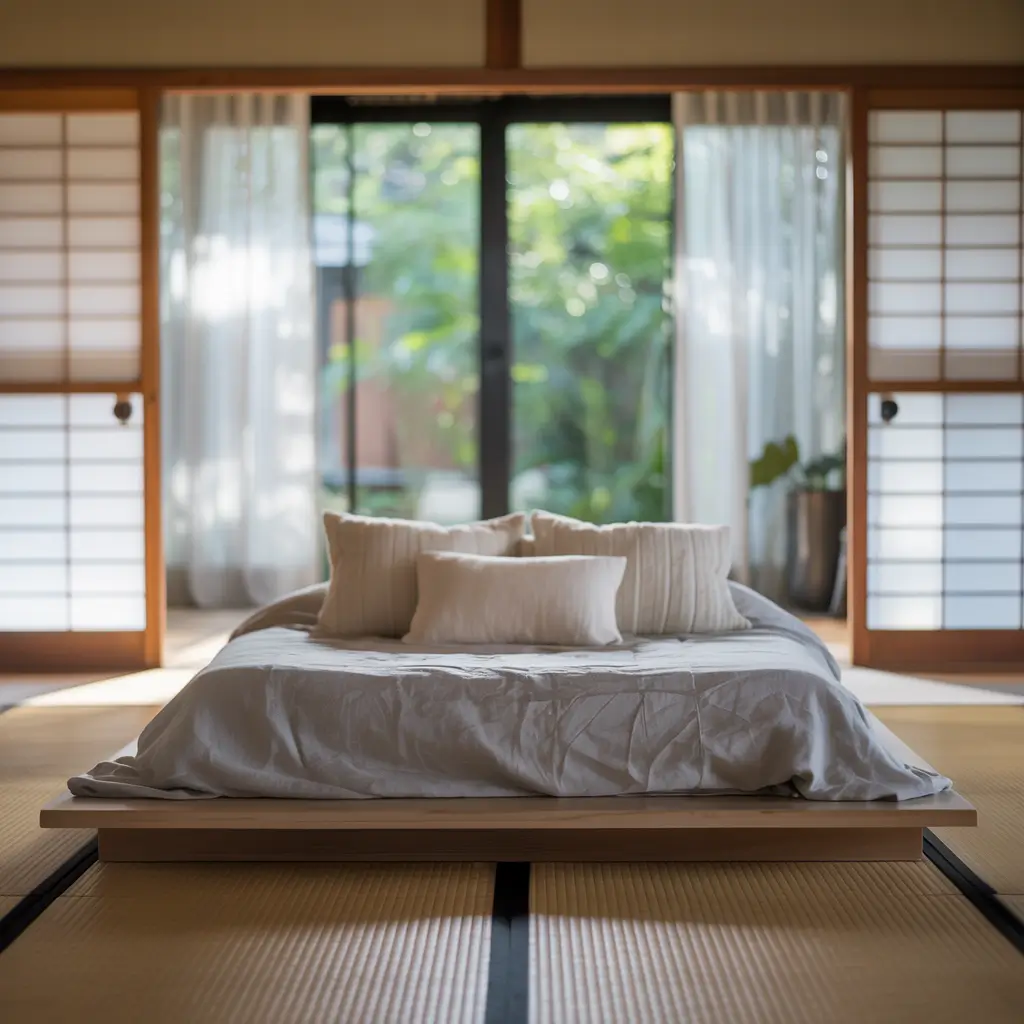
Ever stepped on real tatami mats? They have this subtle give that makes you want to walk barefoot everywhere. While authentic tatami might not be practical for everyone (trust me, they need specific care), you can totally capture that vibe with modern alternatives.
Tatami-inspired flooring gives your bedroom that authentic Japanese feel without the maintenance headaches. You can find foam tatami tiles that snap together like puzzle pieces – perfect for renters who can’t mess with the actual flooring. Some companies even make tatami-print vinyl that looks surprisingly legit from a distance.
The real magic happens when you designate zones in your room using these materials. Create a meditation corner with tatami-style mats, or use them as a border around your sleeping area. This visual separation helps your brain recognize different spaces for different activities, which honestly improved my sleep quality when I tried it.
Making It Work in Western Homes
Here’s where things get interesting. You don’t need to go full traditional to nail this look. Mix tatami elements with your existing furniture – maybe use tatami-inspired area rugs under your regular bed frame, or create a raised platform section with tatami covering.
Futon Bed Setup for Small Spaces
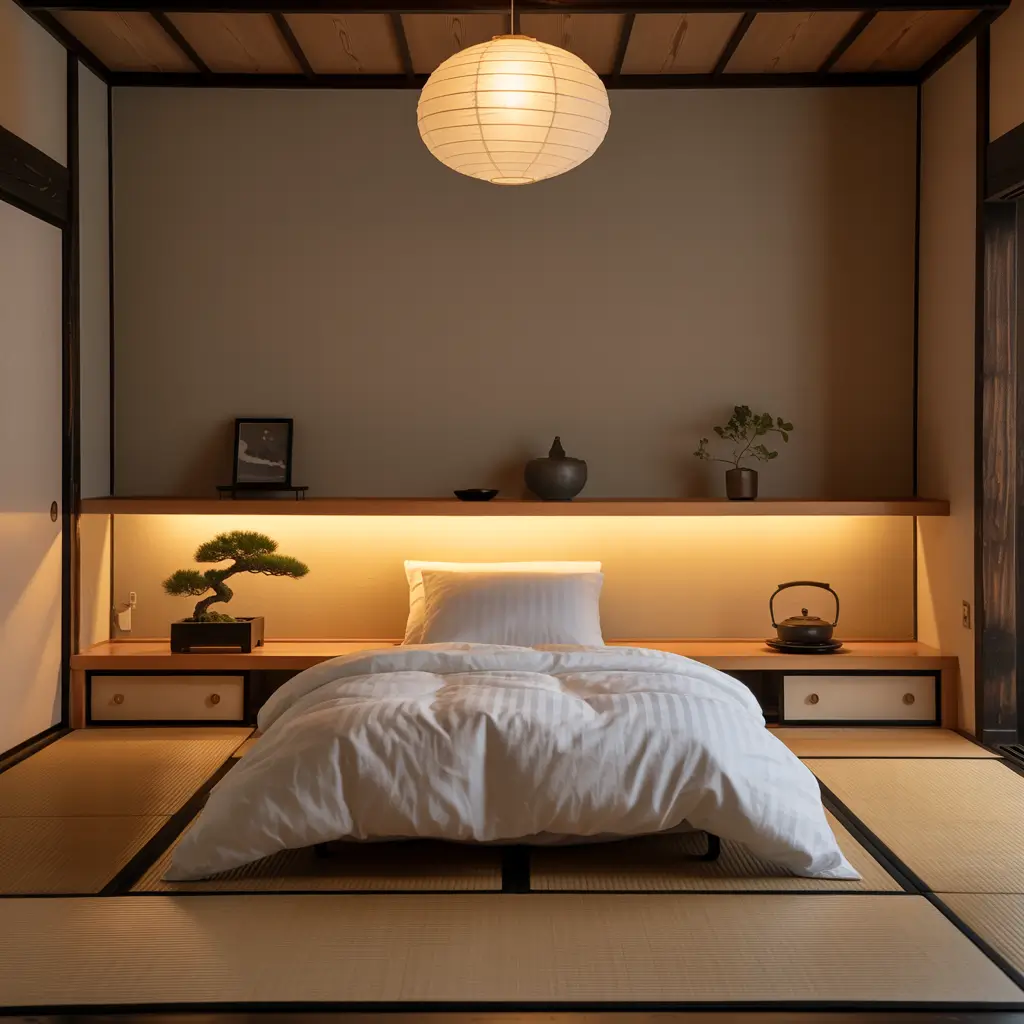
Can we talk about how futons got such a bad rap in the West? Those college dorm metal frame things aren’t even close to real Japanese futons. Authentic futons are actually pretty amazing for small spaces, and they’ve saved my back more than once.
A proper futon setup means you’re working with a shikibuton (the mattress part) and a kakebuton (the comforter). During the day, you fold everything up and suddenly – boom – you’ve got all this floor space for activities. It’s like having two rooms in one, which is genius when you’re dealing with a tiny bedroom.
The trick is getting a quality futon that’s thick enough for Western comfort levels but still foldable. I recommend starting with a 4-6 inch thick futon if you’re new to this. Your back will thank you, and you won’t feel like you’re camping in your own bedroom.
Storage Solutions That Actually Work
Since you’re freeing up floor space daily, you need somewhere to stash that futon. Built-in closets work best, but wall-mounted hooks or a dedicated storage bench can do the job too. Some people even turn the folded futon into a daybed situation with some nice throw pillows.
Also Read: 15 Stunning Dark Modern Bedroom Ideas to Inspire Your Space
Japanese Sliding Door Bedroom Makeover
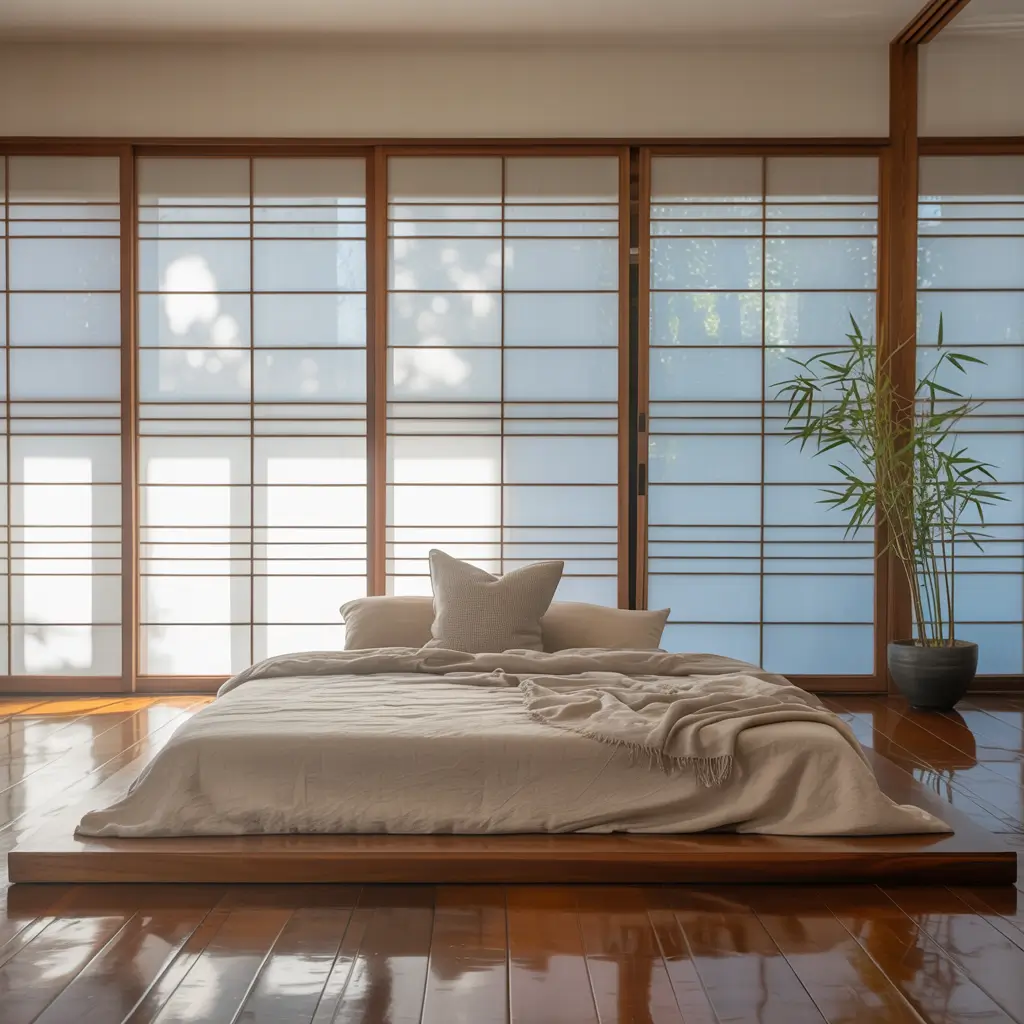
Okay, this one transformed my bedroom more than any other single change. Swapping out traditional doors for sliding panels (shoji screens or modern alternatives) immediately makes any space feel more Japanese. Plus, who doesn’t love the satisfying slide of a well-made door?
Traditional shoji screens use paper and wood, which looks stunning but isn’t always practical. Modern versions use frosted glass or acrylic panels that give you privacy while still letting light filter through. The soft, diffused light creates this dreamy atmosphere that makes mornings way more bearable.
Installation doesn’t have to be a nightmare either. Ceiling-mounted tracks work for most spaces, and you can find kits that don’t require major construction. I installed mine in a weekend with just basic tools and YouTube tutorials (though I may have cursed a few times during the process).
Neutral Tones with Bamboo Décor
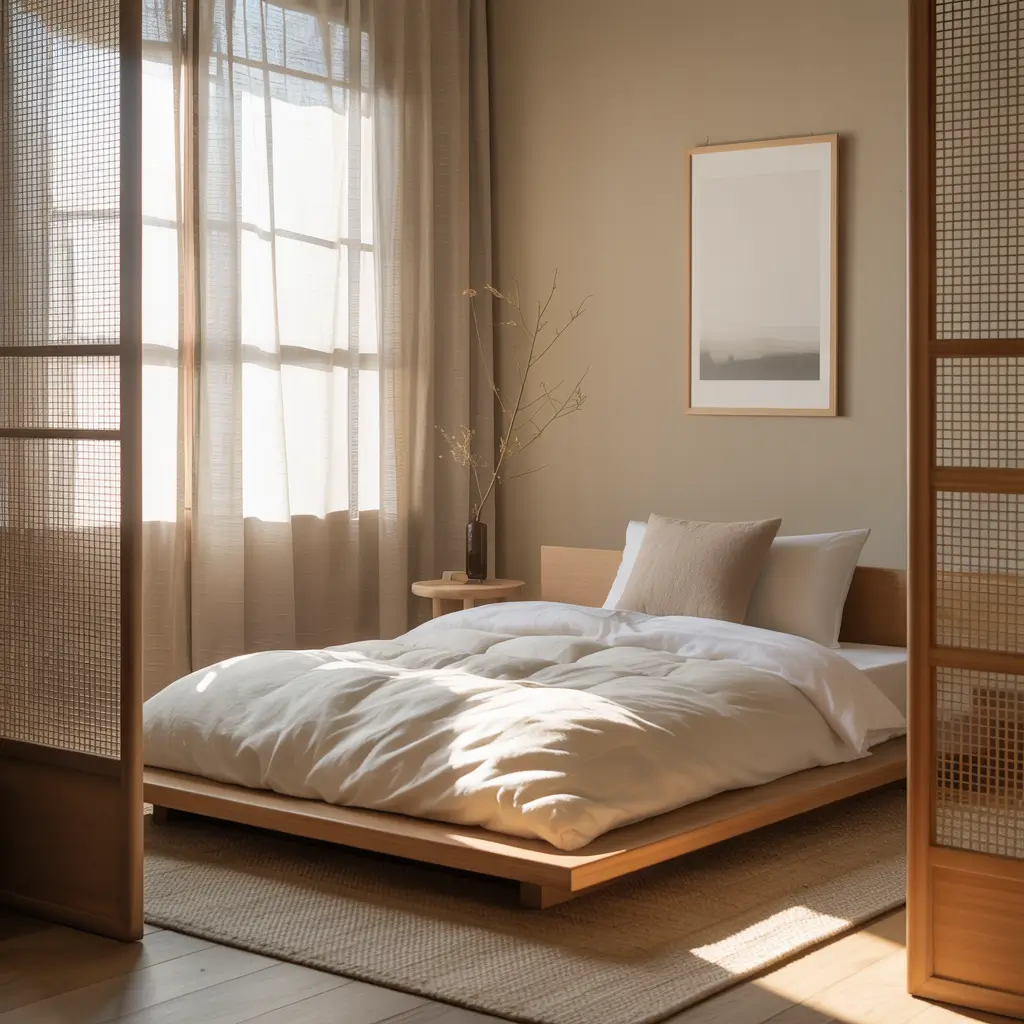
Here’s where people often go wrong – they think neutral means boring beige everything. Japanese neutral palettes are actually super sophisticated, mixing warm and cool tones to create visual interest without overwhelming the senses.
Start with a base of whites, creams, and light grays, then layer in bamboo accents for that organic touch. Bamboo isn’t just for lucky stalks in vases anymore (though those work too). Think bamboo blinds, picture frames, or even a statement bamboo headboard.
What I love about bamboo? It adds texture without heaviness. The vertical lines draw your eye upward, making rooms feel taller. Plus, it’s sustainable, so you can feel good about your design choices. FYI, mixing bamboo with other natural materials like linen and cotton creates this cohesive, breathable feeling that synthetic materials just can’t match.
Color Psychology That Works
The neutral palette isn’t random – it’s based on creating mental space. Soft grays promote calm, while warm wood tones add comfort without stimulation. When you limit your color palette, your brain doesn’t have to process as much visual information, which naturally reduces stress.
Modern Low-Platform Bed with Storage
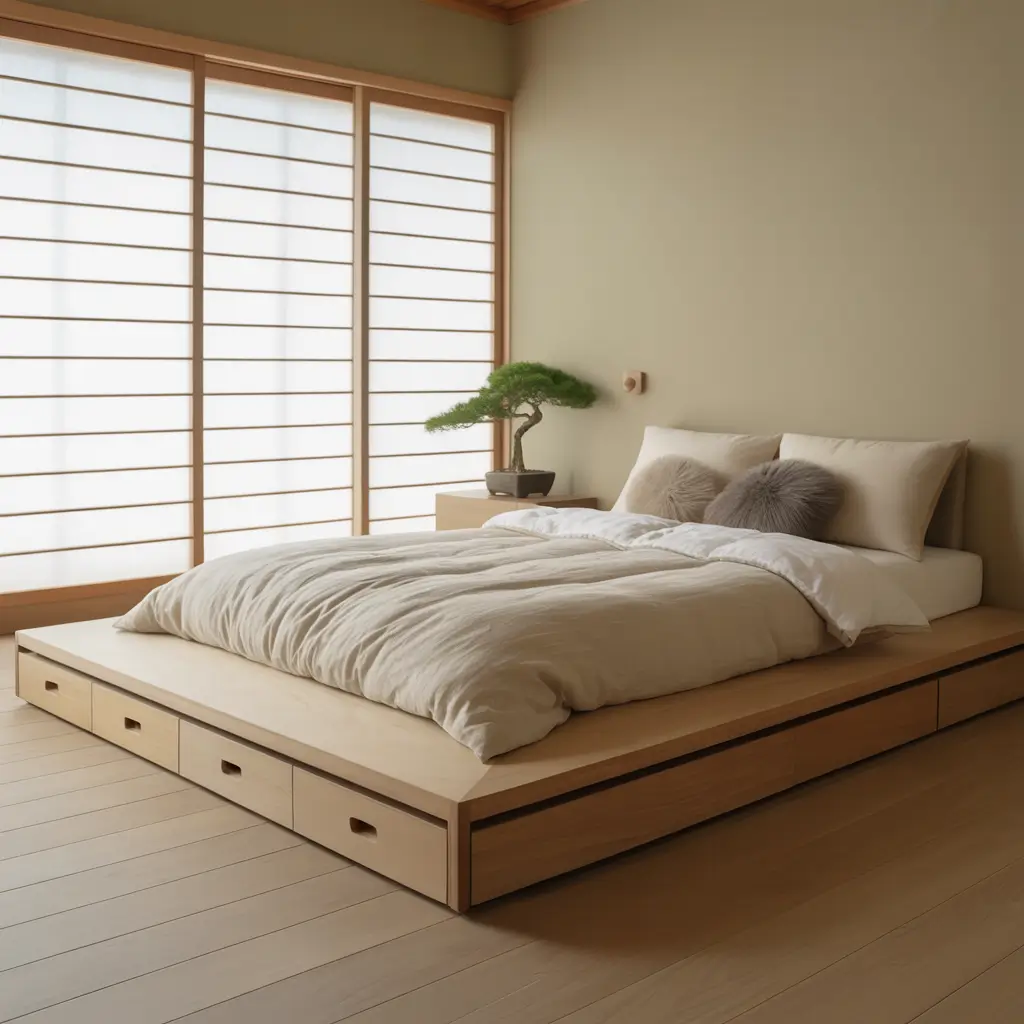
This might be my favorite practical solution for modern living. Low-platform beds scream Japanese aesthetic while solving that eternal bedroom problem – where to put all your stuff?
The best designs incorporate hidden storage compartments without looking bulky. Some have drawers that blend seamlessly into the frame, while others lift up to reveal massive storage spaces underneath. I’ve seen some clever DIY versions using IKEA hacks that look way more expensive than they are.
Height matters here. You want the bed low enough to maintain that ground-hugging Japanese vibe but high enough to fit storage. Usually, 12-18 inches works perfectly. Any higher and you lose the aesthetic; any lower and storage becomes impractical.
Also Read: 15 Stunning Modern Vintage Bedroom Ideas for Cozy Charm
Indoor Zen Garden Corner in Bedroom
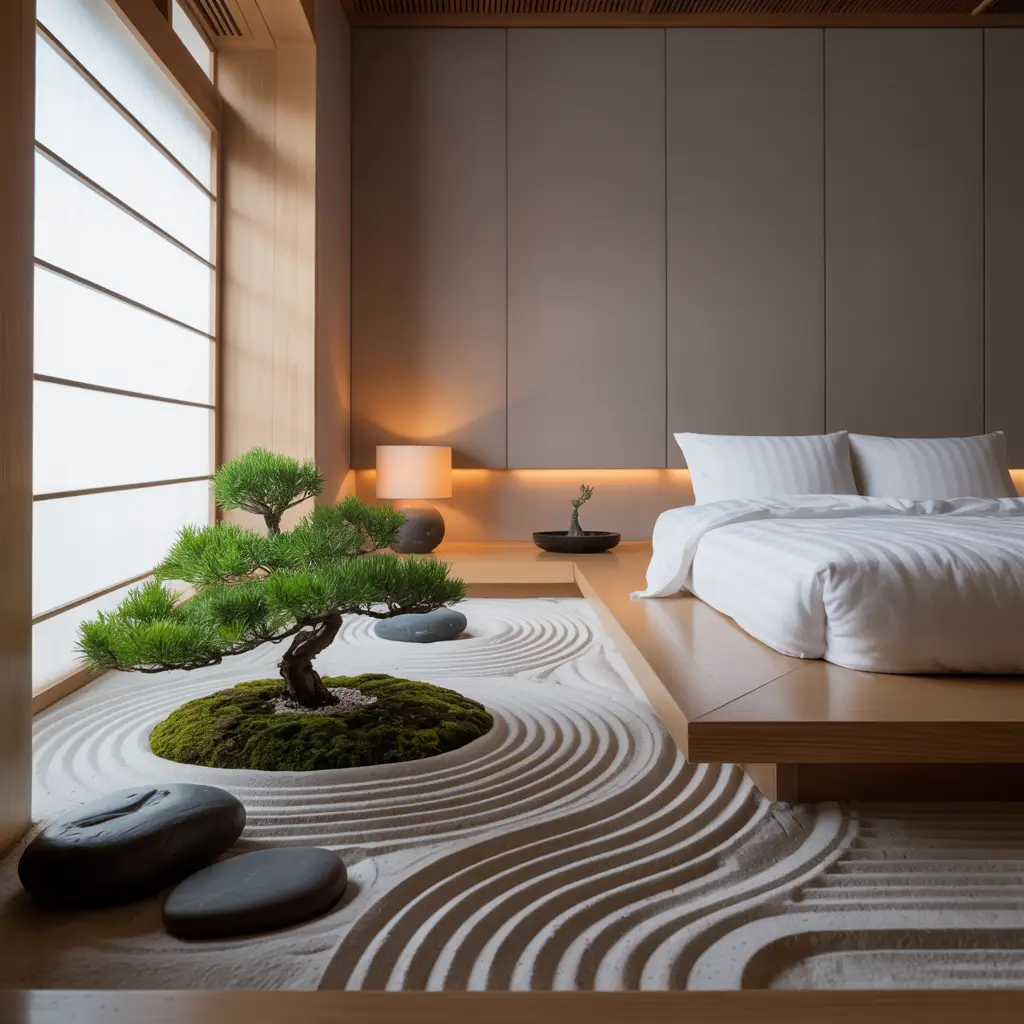
Who says Zen gardens are just for outdoors? Creating a miniature Zen garden in your bedroom might sound extra, but hear me out – it’s basically meditation in physical form.
You don’t need much space. A corner with a shallow wooden tray, some sand, a few stones, and a tiny rake can transform dead space into a mindfulness zone. The act of raking patterns in the sand actually helps calm racing thoughts (science backs this up, BTW).
Some people worry about sand getting everywhere, but if you choose the right container and keep it covered when not in use, mess isn’t really an issue. Plus, there are alternatives like using white gravel or even kinetic sand if you’re really concerned about cleanup.
Making It Personal
Your Zen garden should reflect your vibe. Add elements that speak to you – maybe a small succulent, a piece of driftwood you found on vacation, or a stone from a meaningful place. The point isn’t to create a perfect replica but to build something that brings you peace.
Shoji Screen Room Divider Ideas
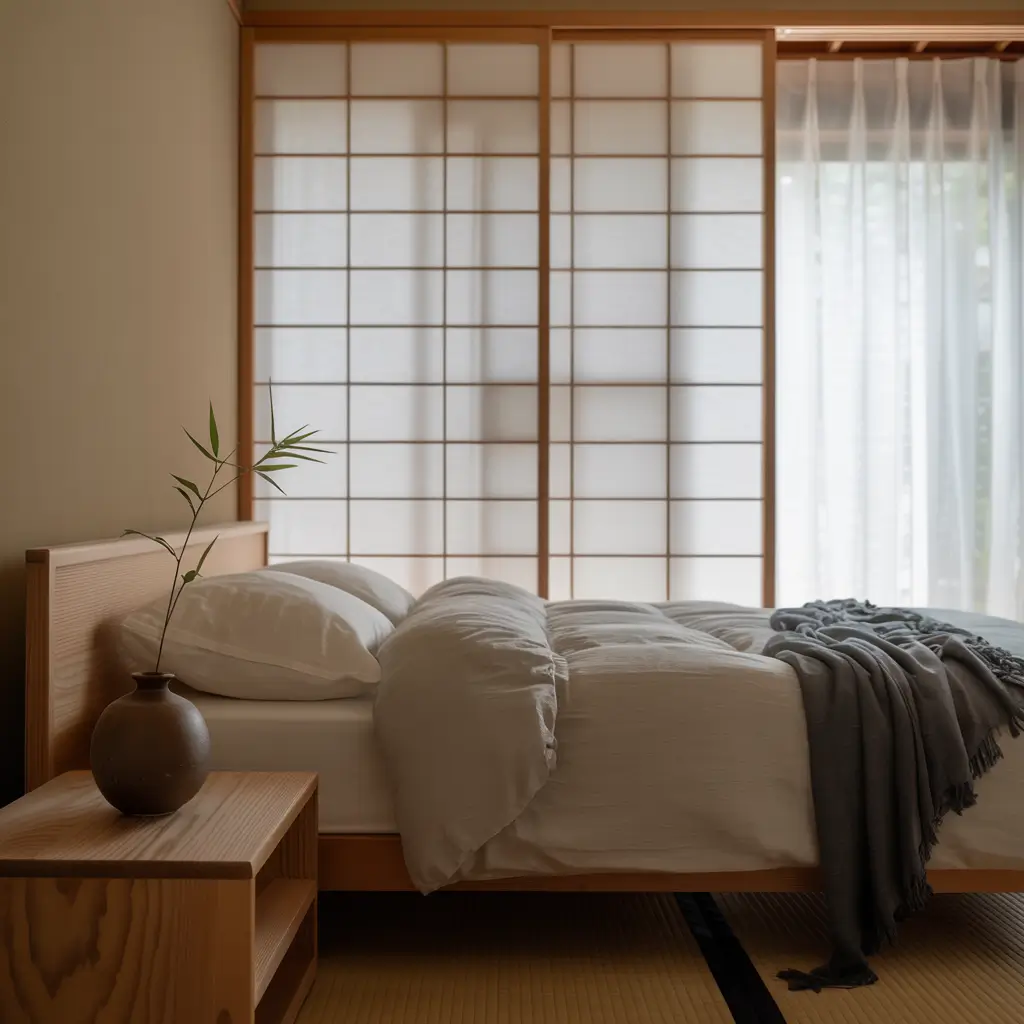
Room dividers changed the game for me when I lived in a studio apartment. Shoji screens do double duty – they separate spaces while maintaining that open, airy feeling that’s essential to Japanese design.
Traditional screens work great, but modern interpretations offer more flexibility. I’ve seen amazing versions using metal frames with fabric panels, or even tension rod systems that require zero permanent installation. The key is choosing materials that let light through while providing visual separation.
Position matters too. Don’t just plop a screen anywhere – think about traffic flow and sight lines. A screen between your bed and work area helps your brain switch between rest and productivity modes. It’s psychological boundaries made physical, and it actually works.
Scandinavian-Japanese Fusion Bedroom
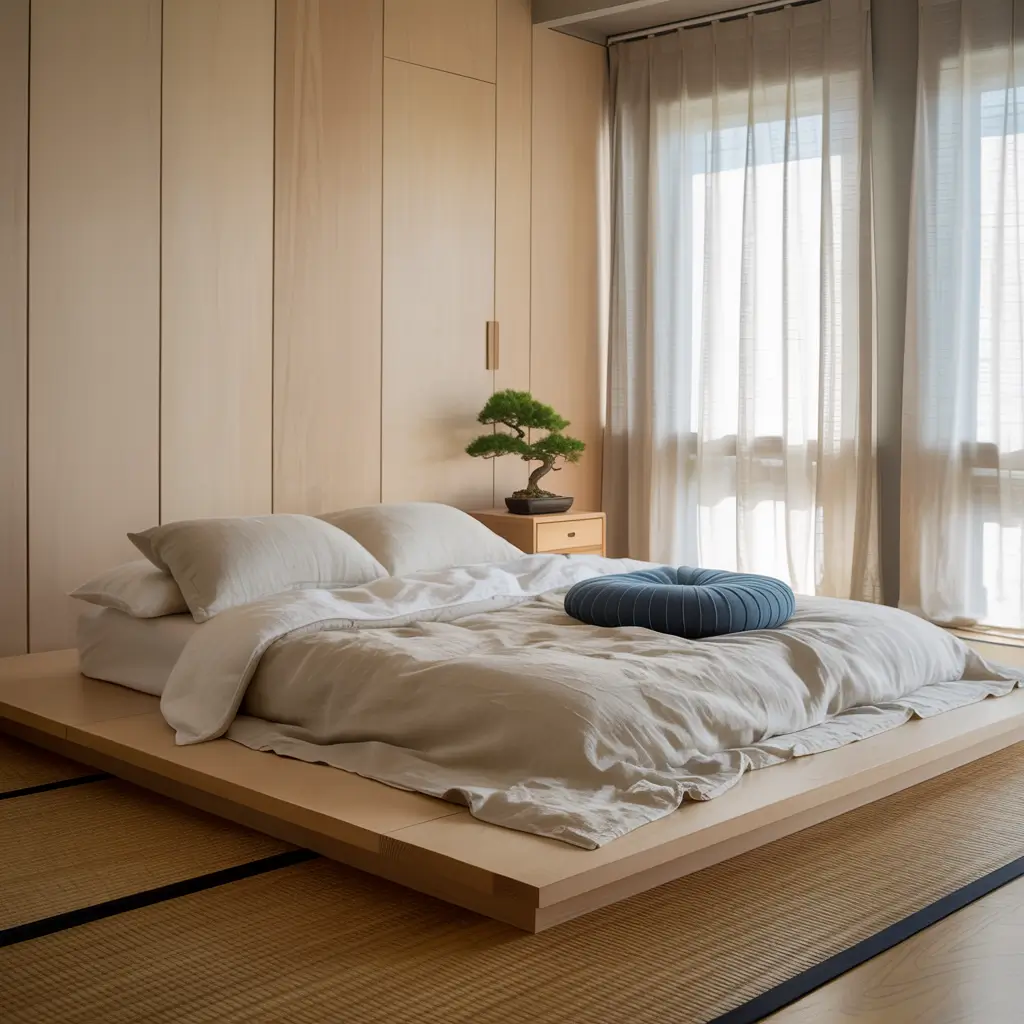
Plot twist – Japandi style (Japanese + Scandinavian) might be the perfect bedroom aesthetic. Both styles value minimalism, natural materials, and functional beauty, but they bring different strengths to the table.
Scandinavian design adds hygge coziness that pure Japanese minimalism sometimes lacks. Think chunky knit throws on your low platform bed, or a sheepskin rug next to tatami mats. The combination creates warmth without clutter, which is basically bedroom goals.
The color palette expands slightly here too. While keeping those neutral bases, you can add muted blues or sage greens that wouldn’t typically appear in traditional Japanese bedrooms. The result? A space that feels both zen and cozy – perfect for actual living, not just Instagram photos.
Textures That Tell Stories
This fusion style really shines when you layer different textures. Smooth wood meets nubby linen, rough ceramics sit next to soft wool. Each texture adds interest without needing patterns or bright colors to catch the eye.
Also Read: 15 Stunning Modern Men’s Bedroom Ideas for Stylish Spaces
Warm Lighting for Tranquil Japanese Vibe
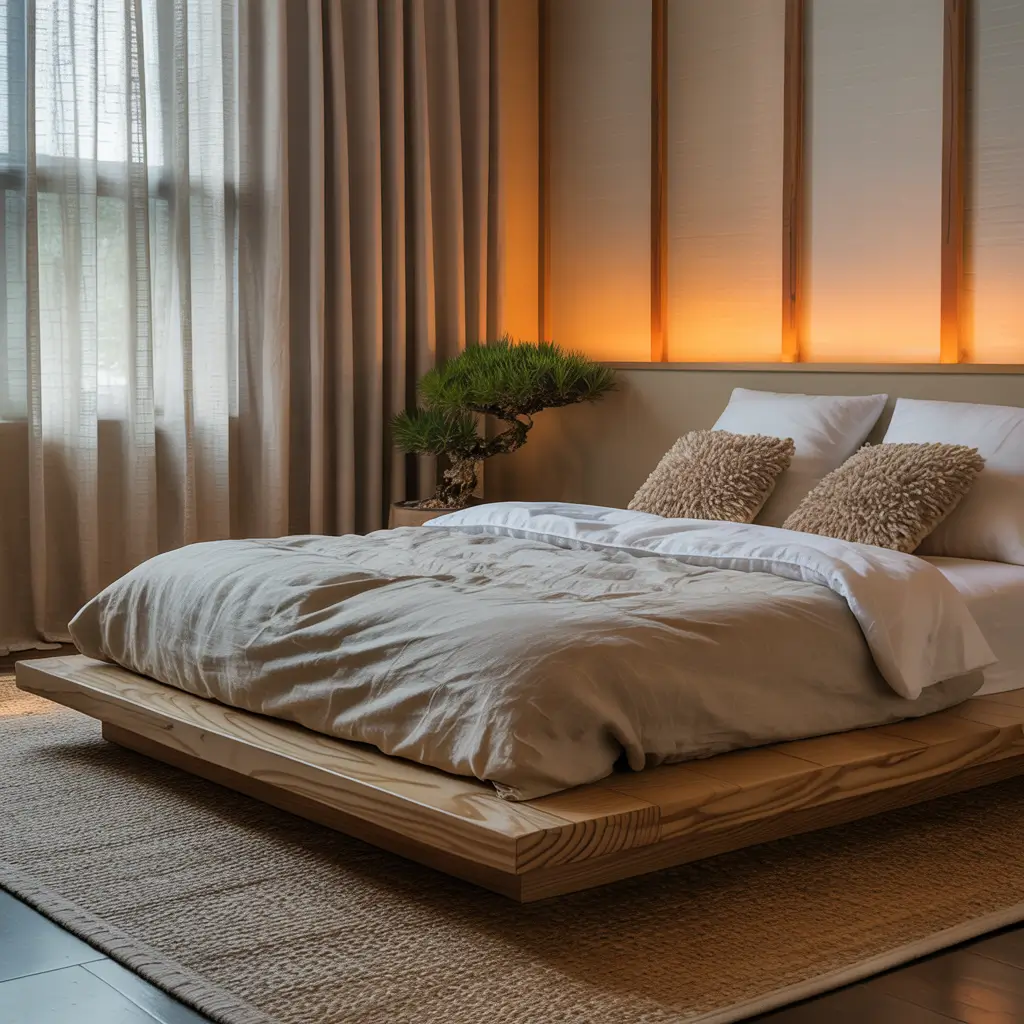
Let’s talk about lighting, because harsh overhead lights will kill your zen vibe faster than anything. Japanese lighting philosophy focuses on layers and warmth, creating pools of light rather than flooding the entire space.
Paper lanterns are the obvious choice, but modern LED options give you that soft, diffused glow without fire hazards. I’m partial to adjustable warm-white LEDs that you can dim throughout the day. Morning needs different light than evening, and having that control makes a huge difference.
Don’t forget about negative space in lighting. Not every corner needs to be lit. Strategic shadows add depth and mystery to your room, making it feel larger and more dynamic. Plus, your electricity bill will thank you.
Compact Japanese-Inspired Studio Bedroom
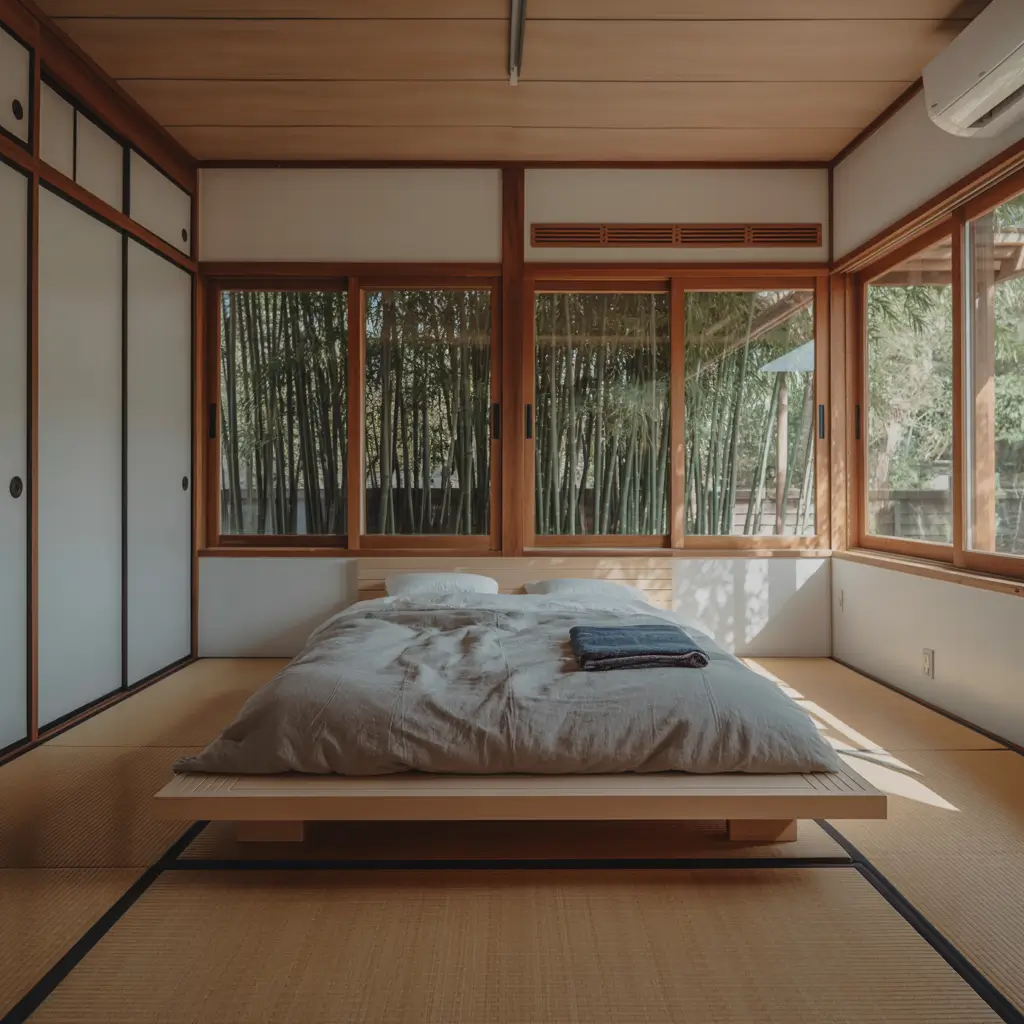
Living in a shoebox? Japanese design was basically invented for small spaces. Every element serves multiple purposes, and nothing takes up more room than necessary.
Start by going vertical. Wall-mounted everything frees up precious floor space. Floating nightstands, wall hooks for daily items, and ceiling-mounted lights eliminate the need for floor furniture. It’s amazing how much bigger a room feels when you can see more floor.
The real secret? Define zones without walls. Use a change in flooring (area rugs work), different lighting levels, or even just furniture placement to create distinct areas. Your brain recognizes these subtle boundaries even without physical barriers.
Multi-Functional Furniture Magic
Every piece needs to earn its keep in a small space. Ottoman with storage? Yes. Decorative chair that’s uncomfortable? Nope. Look for pieces that fold, stack, or transform. Japanese design has been doing transformer furniture since before it was cool.
Minimalist Japanese Wall Art and Décor
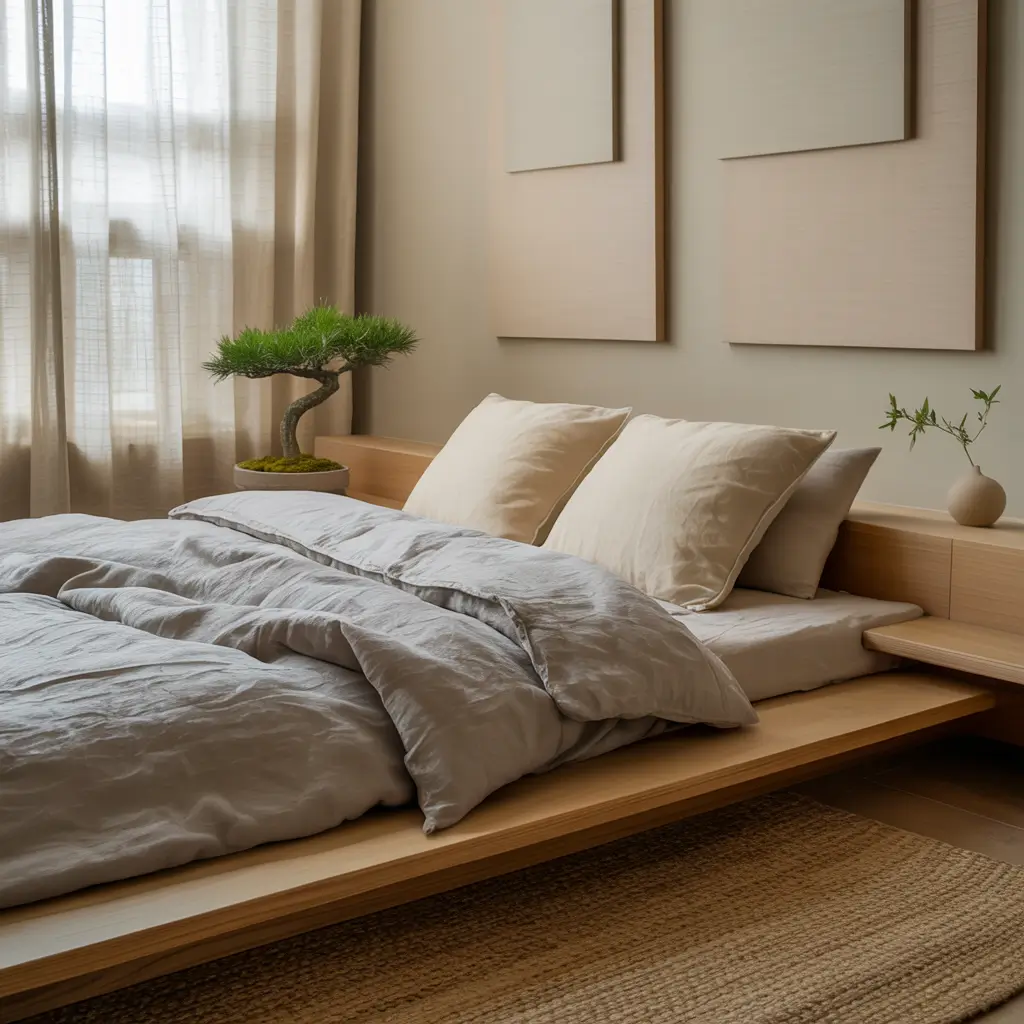
Here’s where less really is more. Japanese wall art follows the principle of “one beautiful thing” rather than gallery walls packed with frames. But that doesn’t mean bare walls everywhere – it means being intentional about what you display.
Traditional options like calligraphy scrolls or simple ink paintings work beautifully, but modern interpretations can be just as effective. A single large photograph of nature, an abstract piece in neutral tones, or even a carefully placed mirror can serve as your focal point.
The trick is giving art room to breathe. Don’t crowd it with other decorations. Let it have its moment. This actually makes the piece more impactful than if it were competing with five other things for attention 🙂
Futuristic Japanese Bedroom with Smart Furniture
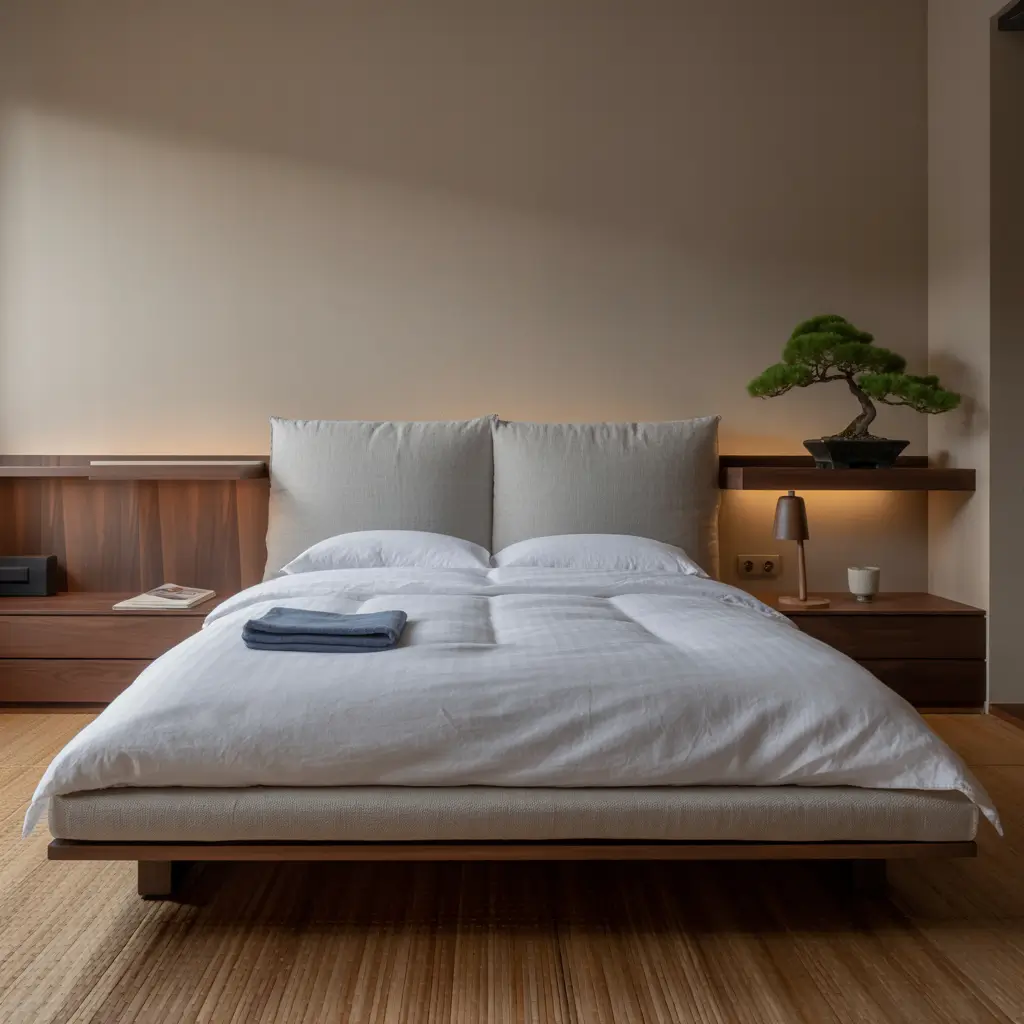
Who says traditional aesthetics can’t embrace technology? Modern Japanese bedrooms increasingly incorporate smart features that enhance the minimalist lifestyle rather than complicate it.
Smart lighting systems that adjust color temperature throughout the day support your circadian rhythm while maintaining that zen atmosphere. Motorized blinds can be programmed to wake you with natural light. Even smart air purifiers designed to look like art pieces fit the aesthetic.
The key is choosing tech that disappears when not in use. Hidden charging stations built into nightstands, TVs that look like art when off, or projectors instead of screens. Technology should enhance the calm, not dominate the space.
Voice Control for Ultimate Minimalism
IMO, voice-controlled everything makes perfect sense for Japanese-inspired bedrooms. No visible switches or remotes means cleaner lines and less visual clutter. Plus, adjusting your environment without getting up maintains that peaceful flow.
Japanese-Inspired Cozy Reading Nook
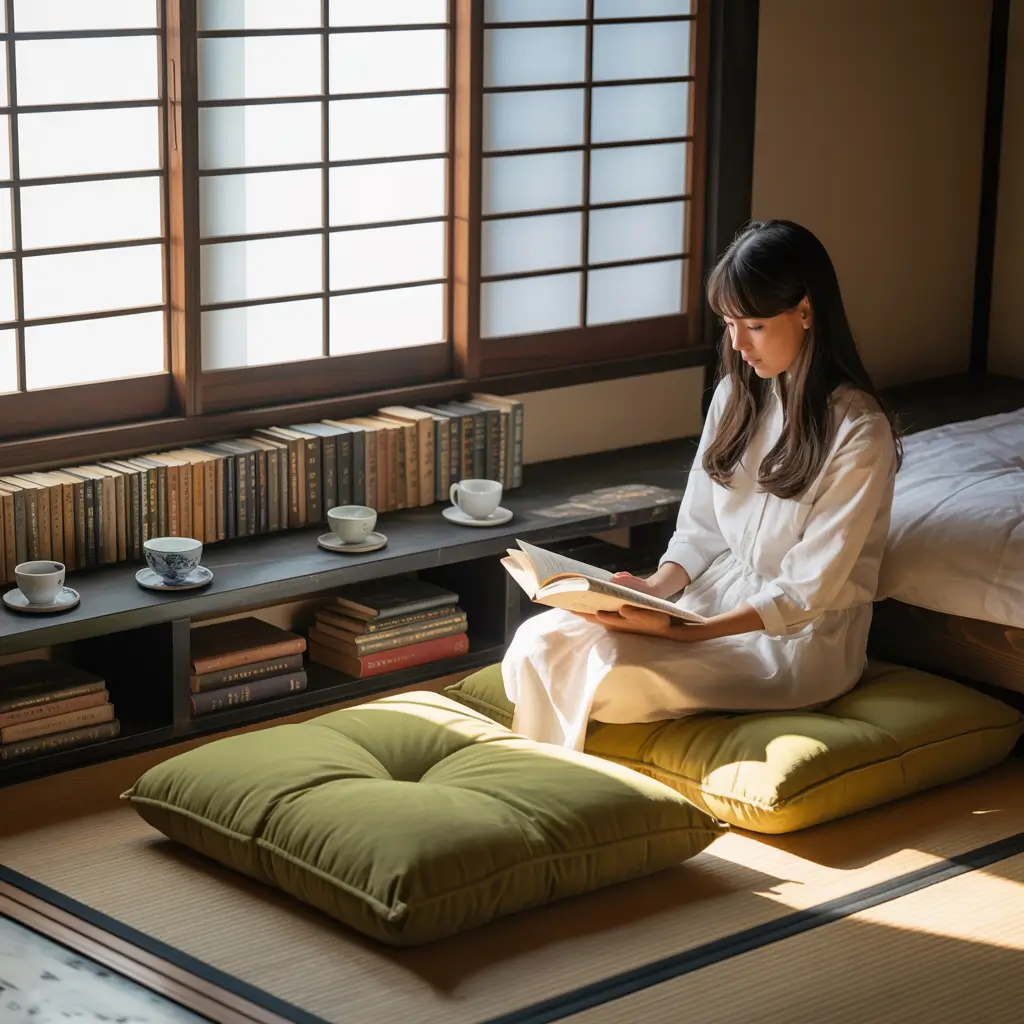
Every bedroom needs a spot that isn’t the bed for relaxing. A Japanese-inspired reading nook combines function with that essential element of retreat within retreat.
Start with seating that’s low to the ground – floor cushions, a meditation pillow, or a low-profile chair. Add a small side table for tea (because obviously), and ensure you have targeted lighting that won’t disturb someone sleeping.
What makes it Japanese rather than just a chair in a corner? The intentionality of the space. Define it with a small rug, position it to take advantage of natural light, and keep reading materials in a single, organized spot. It’s about creating a ritual around reading, not just having somewhere to sit.
Modern Wabi-Sabi Bedroom Aesthetic
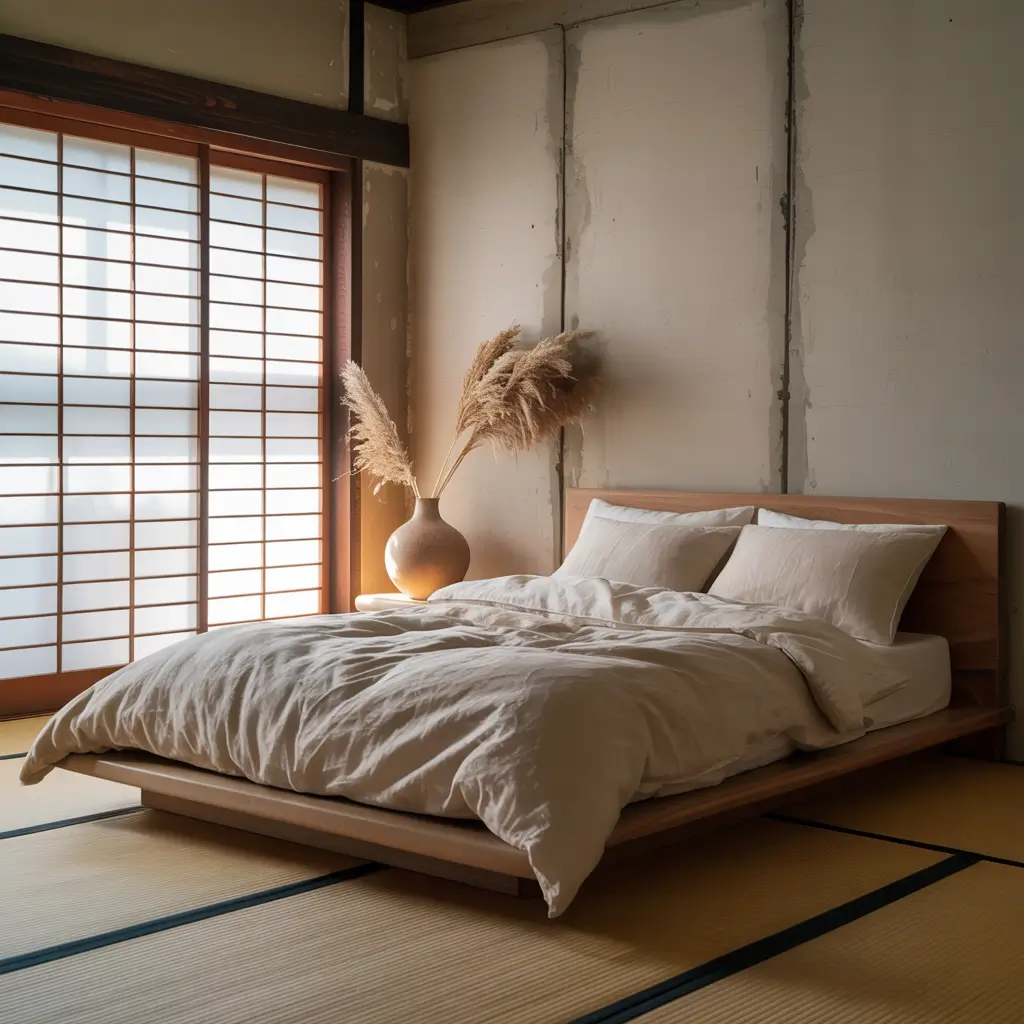
Last but definitely not least, let’s embrace wabi-sabi – the Japanese philosophy of finding beauty in imperfection. This might be the most liberating design principle you’ll ever encounter.
Instead of stressing about everything being perfect, celebrate the imperfect. That wooden headboard with visible knots and grain variations? Beautiful. The handmade ceramic lamp that’s slightly asymmetrical? Perfect. The linen curtains that wrinkle naturally? That’s the point.
Modern wabi-sabi combines this philosophy with contemporary comfort. You’re not living in deliberate discomfort – you’re choosing items that age beautifully and tell stories through their imperfections. It’s the antidote to mass-produced perfection, and honestly, it takes so much pressure off.
Living With Intention
Wabi-sabi bedrooms evolve over time. Each mark and patina adds character rather than diminishing value. This approach means you can invest in quality pieces knowing they’ll only get better with age. That scratch on your wooden floor isn’t damage; it’s evidence of life lived.
Making It All Work Together
So you’ve got 15 ideas – now what? The beauty of Japanese bedroom design is that you don’t need to implement everything at once. Start with one element that really speaks to you, then build from there.
Maybe you begin by decluttering and painting everything white. Perhaps you invest in a low platform bed first. Or maybe you just start with better lighting. Each small change moves you closer to that serene space you’re craving.
Remember, the goal isn’t to create a museum replica of a traditional Japanese bedroom. You want a modern, liveable space that incorporates these principles in ways that make sense for your life. Your bedroom should feel like a retreat from the chaos, not another source of stress about whether you’re doing it “right.”
The most important element? Intentionality. Every choice should have a purpose, whether that’s promoting better sleep, reducing stress, or simply creating beauty in your daily life. When you approach your bedroom design this way, you can’t really go wrong :/
Take these ideas, make them yours, and create a space that makes you exhale deeply every time you walk in. That’s the real magic of Japanese bedroom design – not the aesthetics themselves, but the **peace