15 Stunning Moody Farmhouse Living Room Ideas for Cozy Homes

You know that feeling when you walk into a room and it just gets you? That’s exactly what happened when I discovered moody farmhouse style.
Gone are the days when farmhouse meant only bright whites and cheerful pastels – we’re talking rich, dramatic spaces that make you want to curl up with a good book and never leave.
I spent months transforming my own living room from cookie-cutter bland to moody farmhouse perfection, and let me tell you, the journey taught me everything about balancing darkness with warmth.
These 15 ideas aren’t just pretty pictures I found online; they’re battle-tested concepts that actually work in real homes with real lighting challenges.
Charcoal Rustic Wood Farmhouse
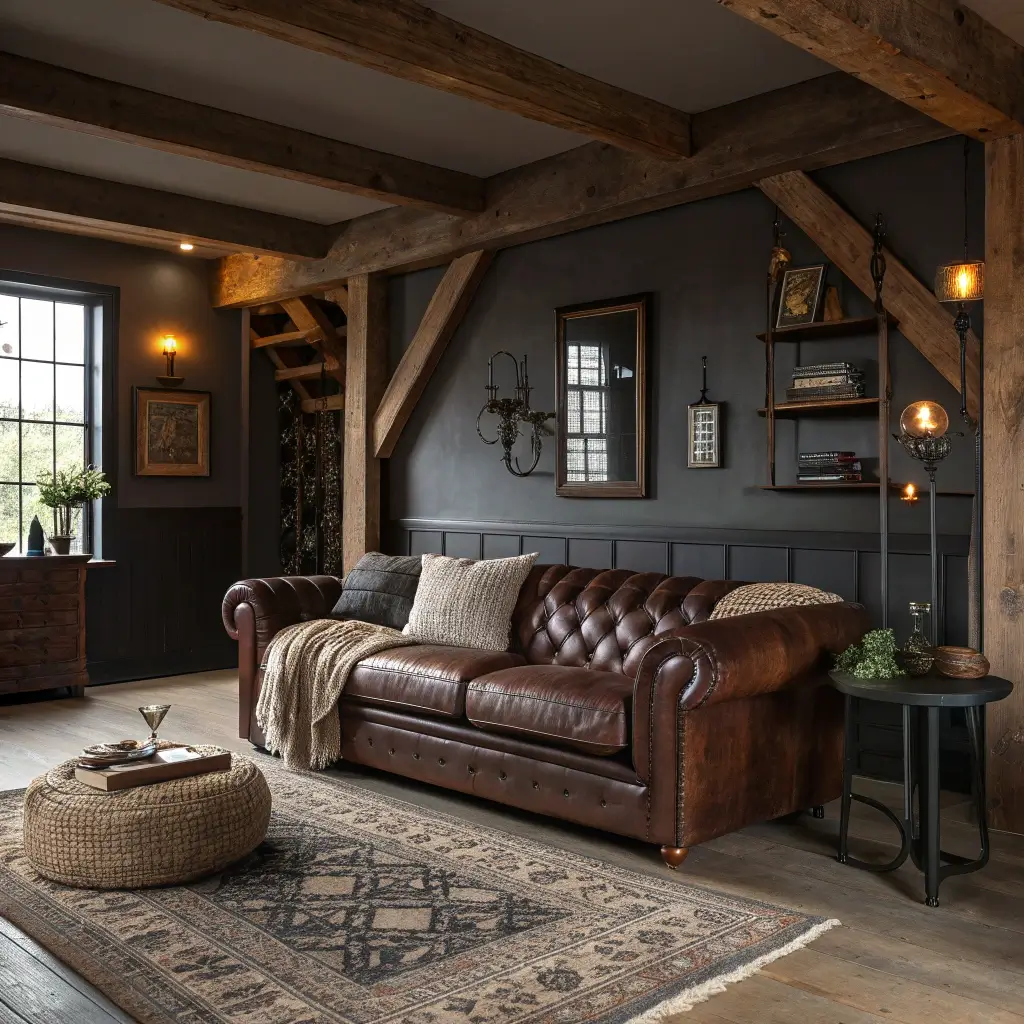
Charcoal and rustic wood create the ultimate power couple in farmhouse design. I learned this the hard way after painting my walls three different shades before landing on the perfect charcoal tone. The trick? You need wood elements that aren’t too polished – think reclaimed barn beams or weathered planks.
Start with charcoal walls as your foundation. Not black, not grey – that perfect in-between that shifts throughout the day. I paired mine with original pine floors that I actually darkened slightly with a walnut stain. The contrast creates depth without feeling cave-like.
Your furniture choices make or break this look. Skip the matchy-matchy sets and mix different wood tones:
- A walnut coffee table with visible grain patterns
- Pine shelving left natural or lightly sealed
- Reclaimed wood accent pieces like picture frames or side tables
The real magic happens when you layer textures. I threw in chunky knit blankets, linen curtains, and a jute rug that ties everything together. Natural fibers prevent the space from feeling too modern or cold.
Moody Olive and Oak Living Room
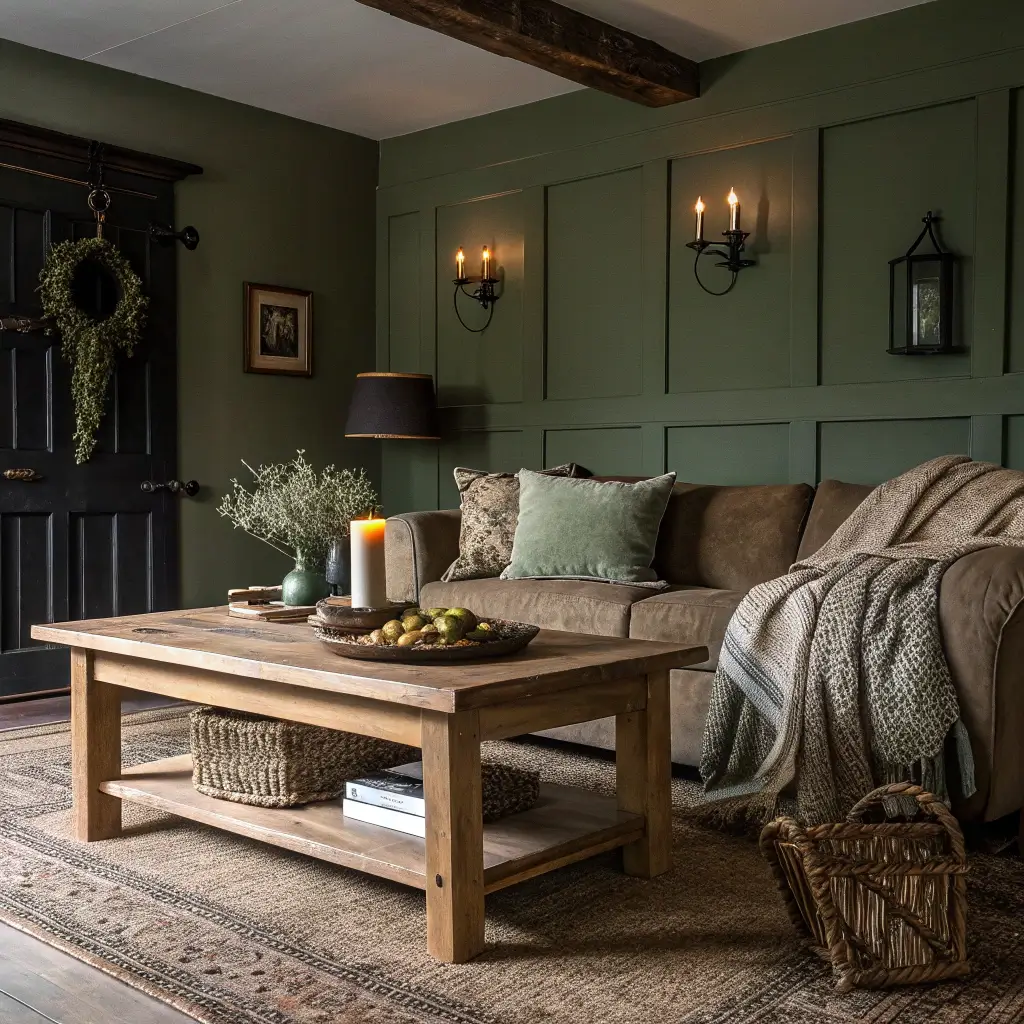
Who says moody has to mean black and grey? Deep olive green walls paired with honey oak furniture create this unexpectedly sophisticated vibe that I’m completely obsessed with. This combination works because olive has those brown undertones that naturally complement wood.
I discovered this combo accidentally when I inherited my grandmother’s oak furniture. Instead of painting it (thank goodness I didn’t!), I worked around it with deep olive walls. The warmth of the oak prevents the green from feeling too somber.
Making Olive Work in Your Space
The key elements for nailing this look:
- Choose the right olive shade – too bright and you lose the moodiness, too dark and it feels military
- Mix oak finishes – combine light and medium oak tones for visual interest
- Add brass accents – they bridge the gap between green and wood beautifully
- Layer in cream textiles to brighten without losing the mood
Window treatments matter more than you’d think here. I went with natural linen in a warm cream that filters light beautifully during the day while maintaining that cozy cave feeling we’re after.
Black Shiplap Accent Farmhouse
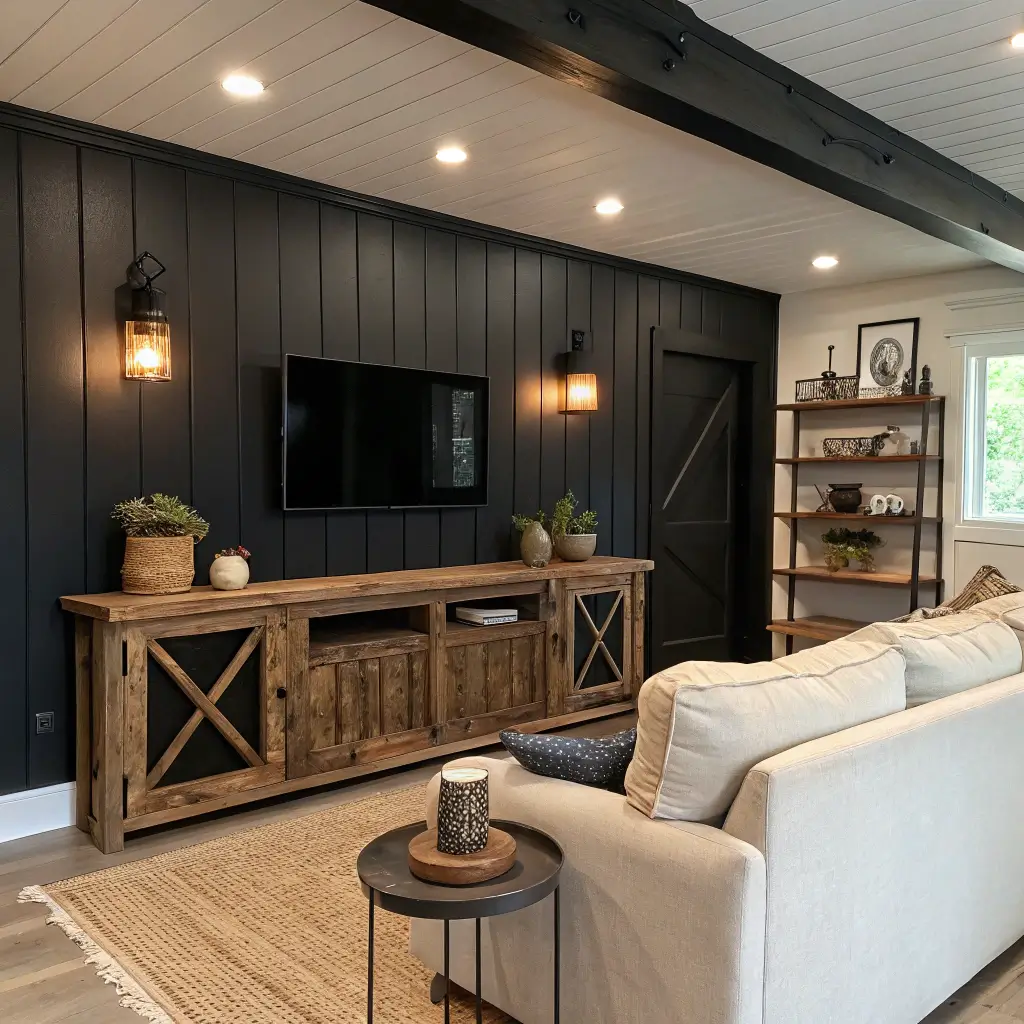
Remember when everyone was doing white shiplap? Well, black shiplap takes that trend and gives it serious attitude. I installed black shiplap on just one wall in my friend’s living room, and honestly? It transformed the entire space from basic to magazine-worthy.
You don’t need to cover every wall – that’s actually overkill IMO. One accent wall creates a focal point without overwhelming the room. Behind the sofa works brilliantly, or consider the wall with your TV for that cinema-room vibe.
Installation Tips That Actually Matter
Here’s what nobody tells you about dark shiplap:
- Prime first – even if you’re buying pre-painted boards
- Mind the gap – slightly wider spacing looks better with dark colors
- Consider horizontal vs vertical – horizontal makes rooms feel wider, vertical adds height
- Matte finish only – glossy black shiplap looks cheap, trust me
Balance the darkness with lighter furniture pieces. A cream-colored sofa against black shiplap? Chef’s kiss. Add some Edison bulb sconces directly on the shiplap for that perfect industrial farmhouse mashup.
Also Read: 15 Cozy Farmhouse Rugs Living Room Ideas for Warm Vibes
Deep Navy Rustic Cozy Space
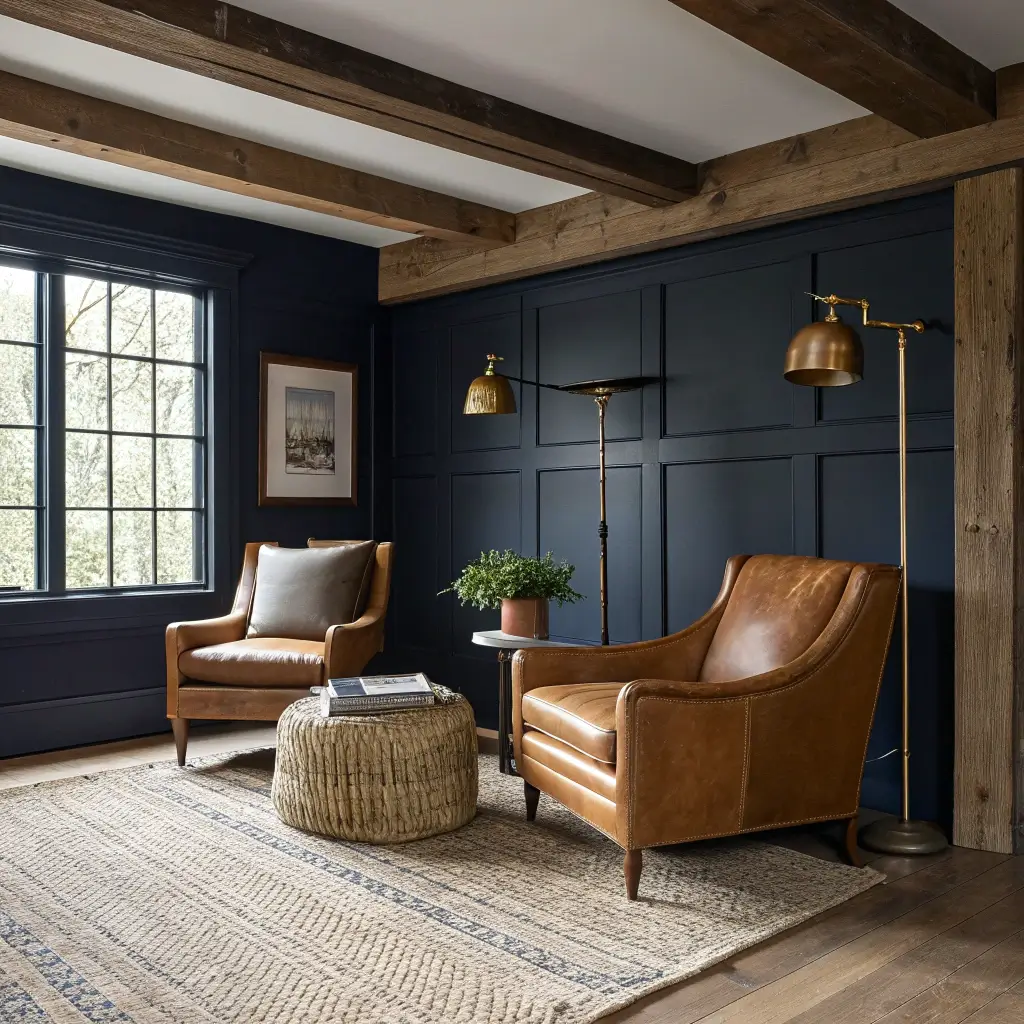
Navy might just be the most underrated moody color out there. Deep navy walls wrapped around rustic furniture pieces create this cocoon-like atmosphere that feels both sophisticated and approachable. I’ve used this scheme in three different homes now – it never gets old.
The beauty of navy? It plays well with literally every wood tone. Cherry, walnut, pine, oak – they all work. I currently have navy walls with a mix of walnut and ash furniture, and the combination feels intentional rather than random.
What really sells this look is the lighting:
- Warm white bulbs only (2700K-3000K)
- Multiple light sources at different heights
- Dimmers on everything – seriously, this changes the game
- Candlelight for those extra moody evenings
Don’t forget about your ceiling! I painted mine a shade lighter than the walls, which prevents that closed-in feeling while maintaining the cozy vibe.
Dark Walnut Farmhouse Charm
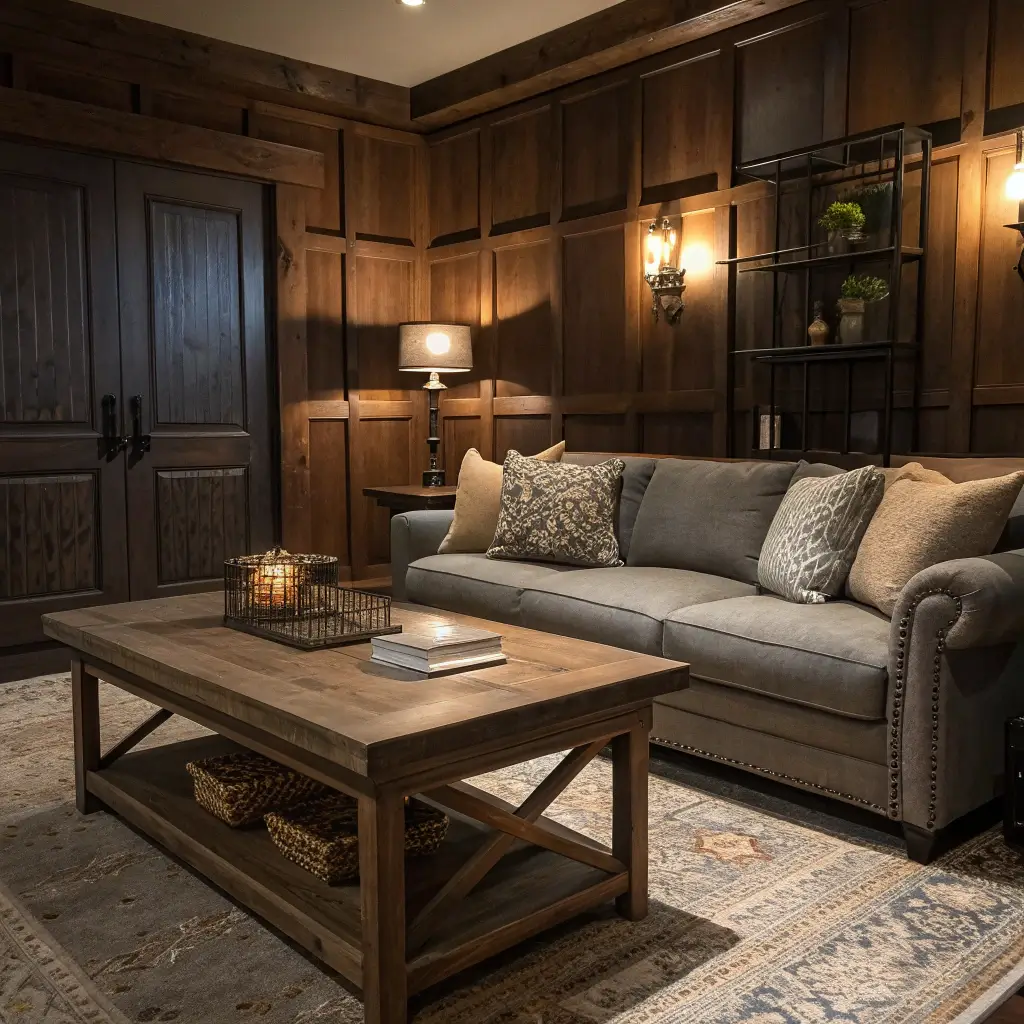
Dark walnut wood against white or light grey walls might sound simple, but execution is everything. This look relies heavily on the quality and quantity of your wood pieces. You need substantial furniture – those skinny-legged mid-century pieces won’t cut it here.
I scored a massive dark walnut entertainment center at an estate sale that became my room’s anchor piece. Everything else revolves around it. The trick is mixing different walnut pieces without looking like you bought a matching set from the furniture store.
Your accent colors matter here. I stick with:
- Deep burgundy in small doses
- Mustard yellow for unexpected pops
- Forest green in textiles
- Cream and beige as neutralizers
Hardware becomes jewelry for this style. Switch out builder-grade pulls for black iron or aged brass. It’s a small change that makes a massive impact.
Smoky Grey Farmhouse Lounge
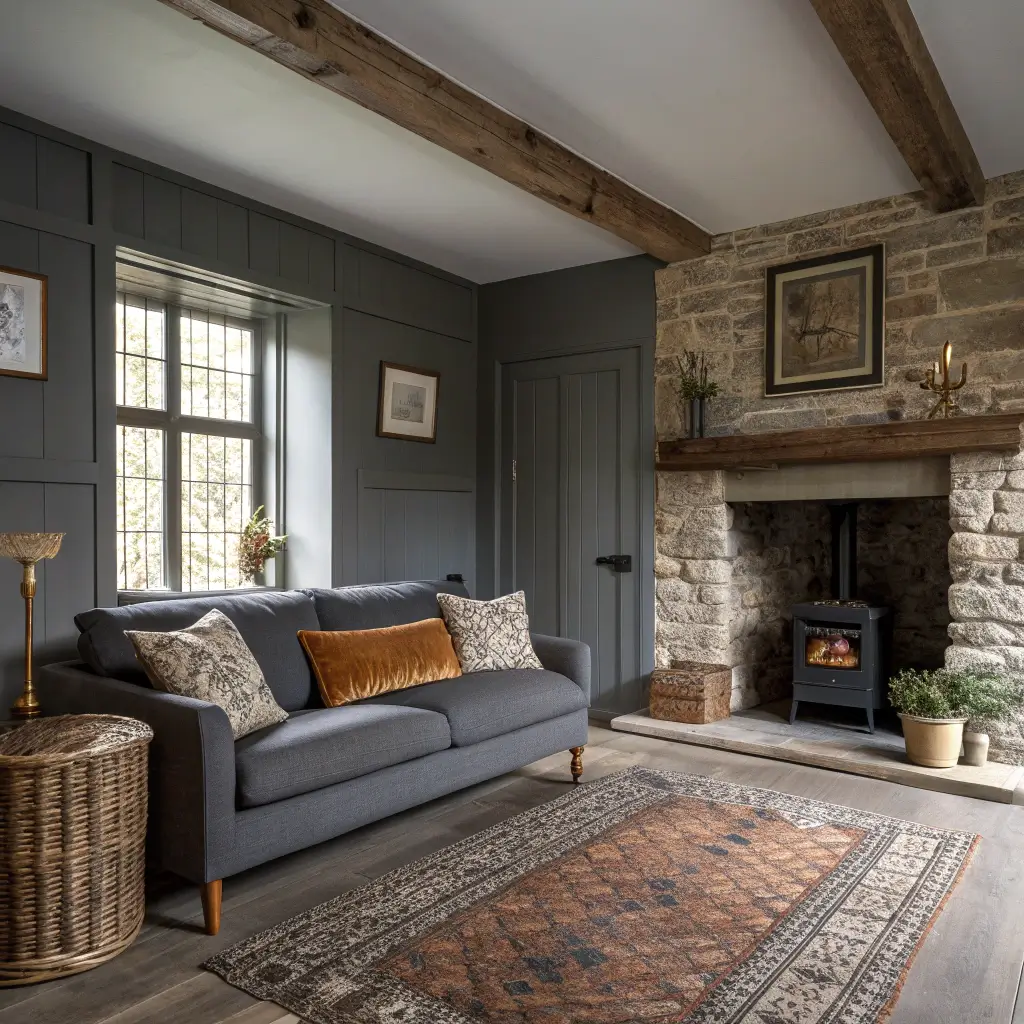
This isn’t your grandmother’s grey – we’re talking sophisticated, complex greys with purple or brown undertones. I repainted my living room four times before finding the perfect smoky grey. Benjamin Moore’s Storm Cloud? That’s the one.
The challenge with grey is avoiding that cold, uninviting feeling. You combat this with:
- Tons of texture through fabrics and materials
- Warm wood tones rather than cool ones
- Metallic accents in brass or copper, never chrome
- Plants – greenery warms up grey instantly
Creating Depth with Grey
Layer different grey tones throughout the room. My sofa is charcoal, curtains are dove grey, and throw pillows range from almost-black to silver. This tonal approach creates depth without introducing competing colors.
FYI, grey shows everything – dust, pet hair, fingerprints. If you’re not into constant cleaning, consider patterned fabrics or textured surfaces that hide the everyday mess better.
Also Read: 15 Inspiring Country Farmhouse Living Room Ideas to Try
Rustic Black Beam Living Room
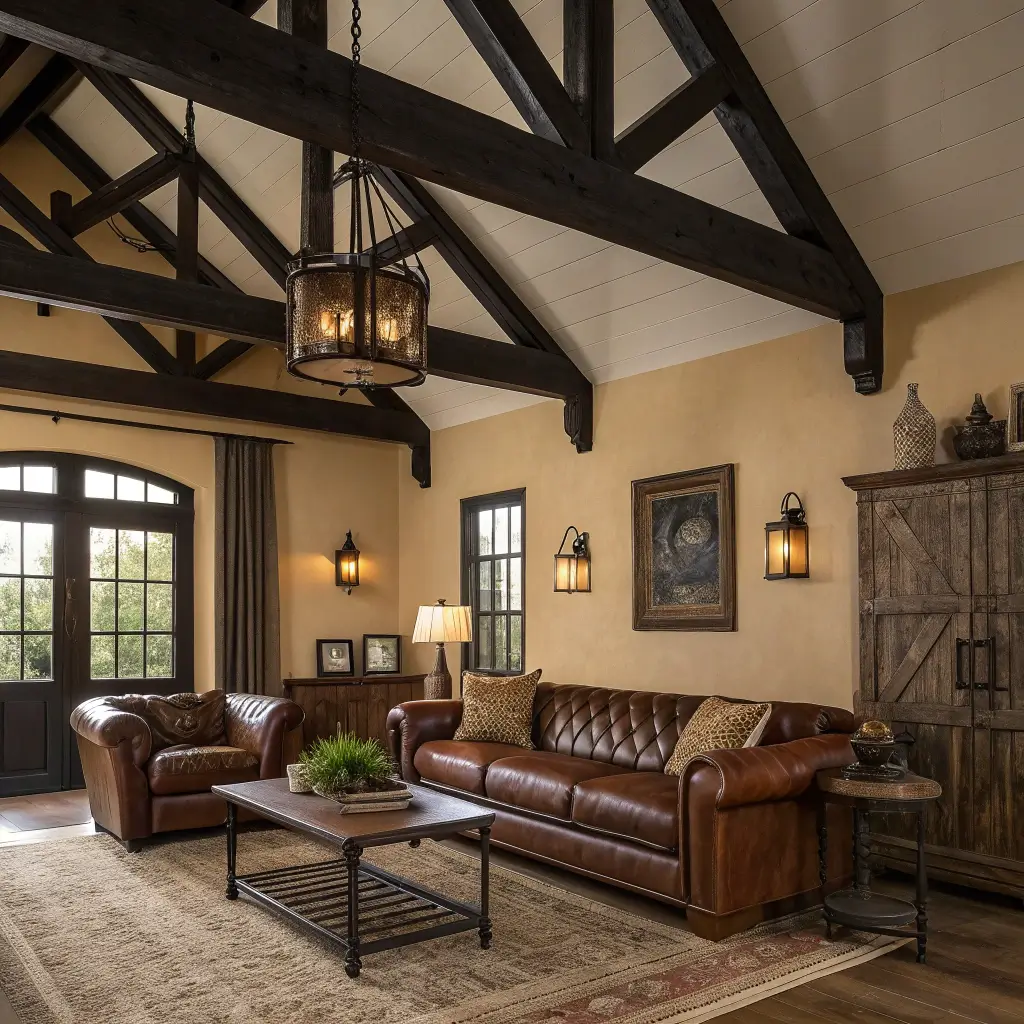
Exposed black ceiling beams against white ceilings create instant architectural interest. Even if your home didn’t come with beams, you can fake it. I installed faux beams in my ranch-style home, and nobody believes they’re not original.
Real or faux, painting beams black makes a statement. The contrast draws eyes upward, making rooms feel larger. Plus, black beams hide imperfections better than natural wood – perfect for those of us who aren’t master carpenters.
Key considerations for black beams:
- Scale matters – thin beams look weird painted black
- Spacing is crucial – too many beams feel oppressive
- Match other black elements – door hardware, light fixtures, picture frames
- Keep walls light to maintain balance
Window trim painted black ties the look together. I initially left mine white, and the beams looked disconnected. Once I painted the trim black, everything clicked.
Matte Forest Green Farmhouse
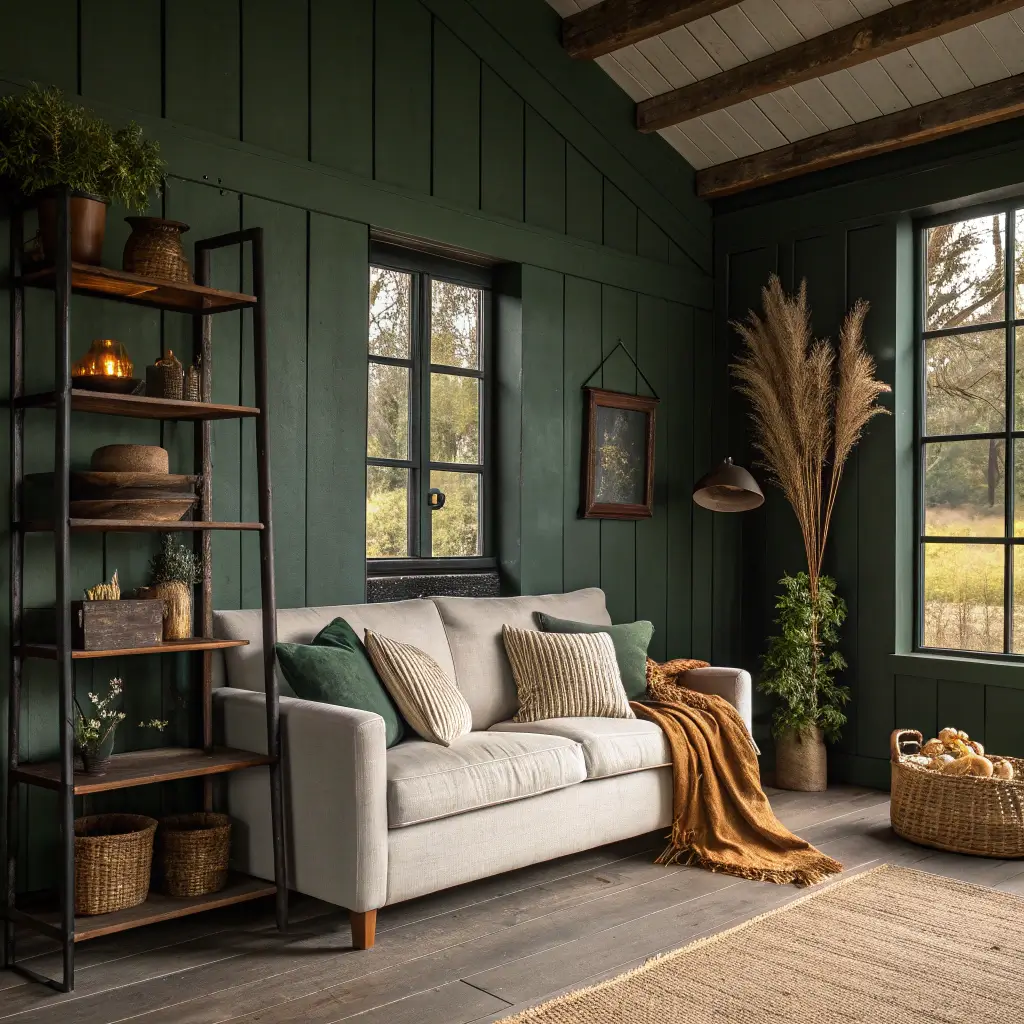
Forest green done right feels like bringing the outside in. Matte forest green walls with natural wood and leather creates this lodge-meets-farmhouse vibe that’s ridiculously cozy. Skip the glossy paint – matte or eggshell finish only for this look.
I paired forest green walls with cognac leather furniture and oak floors. The warmth of the leather prevents the green from feeling too cold, while the wood grounds everything. It shouldn’t work as well as it does, but here we are.
Working with Dark Green
Green can be tricky because it reflects onto everything. Your white ceiling might look mint green in certain light. Combat this with:
- Proper primer – don’t skip this step
- Quality paint – cheap green paint looks terrible
- Strategic lighting – avoid cool white bulbs at all costs
- Natural elements – wood, stone, and plants enhance rather than compete
Ever wondered why hotel lobbies feel so inviting? They nail the lighting. Copy their homework with multiple warm light sources at varying heights.
Vintage Moody Leather Farmhouse
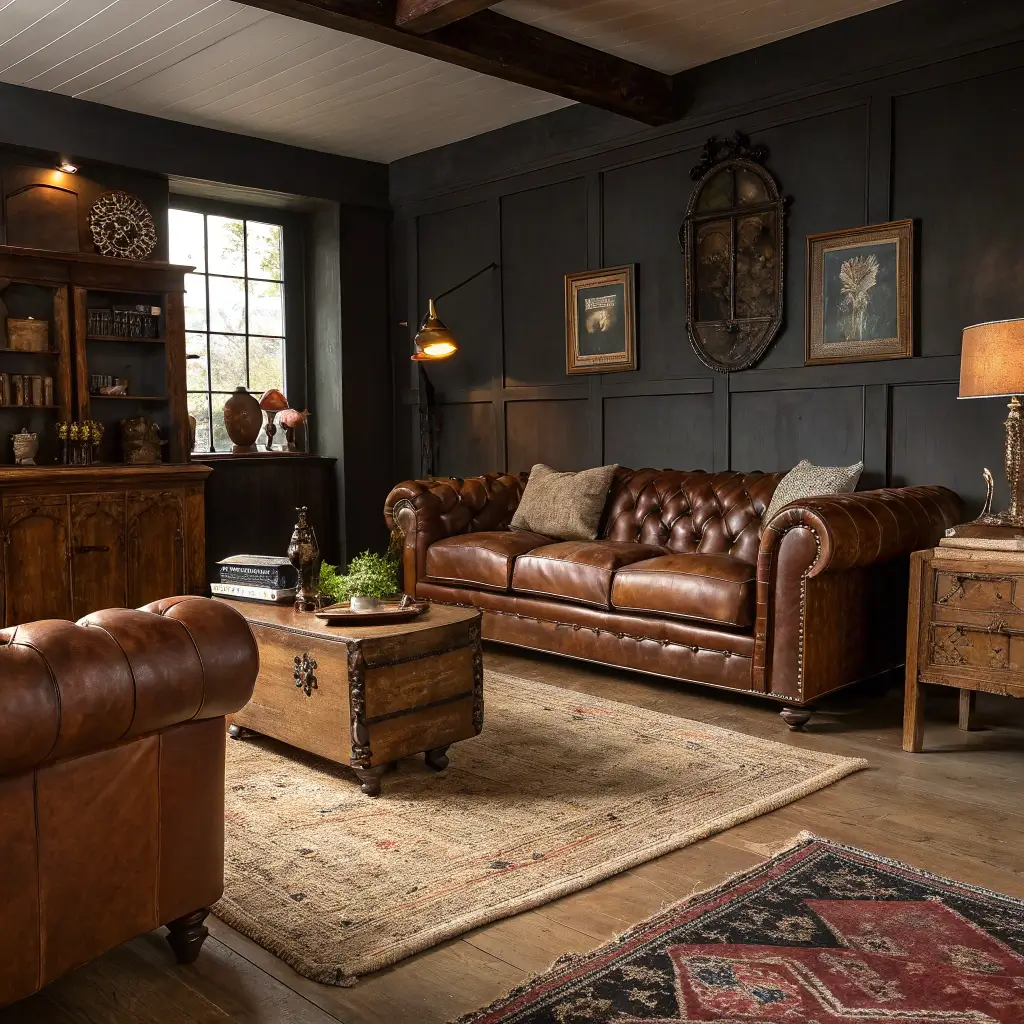
Aged leather furniture against moody walls creates instant character. I’m talking about that worn, lived-in leather that tells stories – not the pristine stuff from the furniture showroom. My chocolate brown leather sofa came from an estate sale and already had that perfect patina.
This style thrives on imperfection. Mix leather pieces of different ages and colors:
- Cognac leather armchair from the 70s
- Dark brown leather sofa with visible wear
- Leather ottoman that doesn’t quite match
- Vintage leather-bound books as decor
The supporting cast matters here. Industrial metal accents, reclaimed wood, and vintage textiles all play well with aged leather. I found old grain sack pillows that add that authentic farmhouse touch without looking costume-y.
Also Read: 15 Charming Industrial Farmhouse Living Room Ideas for Inspiration
Rustic Stone and Shadow Tones
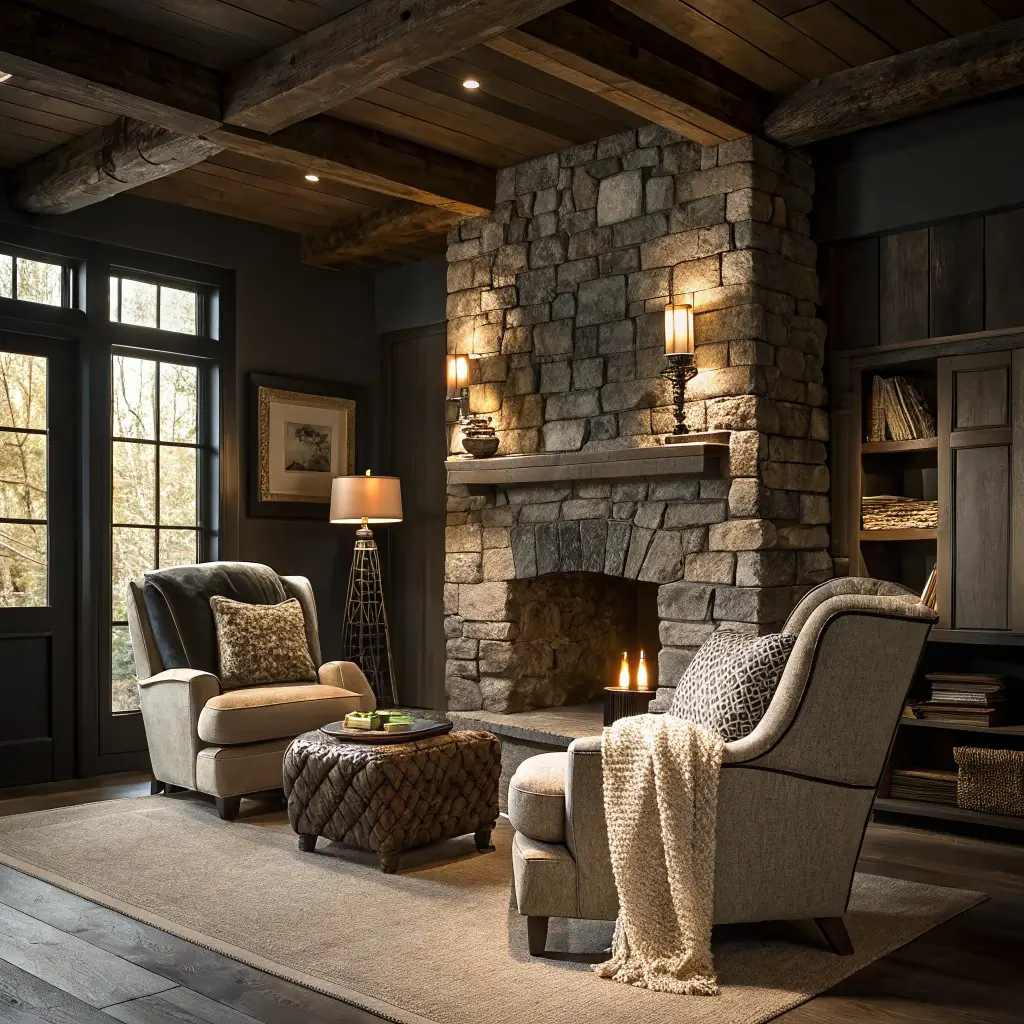
Stone accent walls in grey or charcoal tones bring serious drama to farmhouse style. Whether you go real stone or convincing faux panels (no judgment – I’ve done both), this element transforms ordinary rooms into something special.
I installed a stone veneer around my fireplace that extends to the ceiling. The varying shadow tones in the stone create visual interest without needing much else. The key is choosing stone with enough color variation to avoid that flat, monotonous look.
Making Stone Work
Stone can overwhelm if you’re not careful:
- Limit stone to one wall or focal area
- Choose furniture that doesn’t compete – simple lines work best
- Add soft elements to balance the hardness
- Use uplighting to highlight texture
Pair stone with weathered wood beams for maximum impact. The combination of textures reads expensive even when done on a budget.
Dark Cozy Farmhouse Fireplace
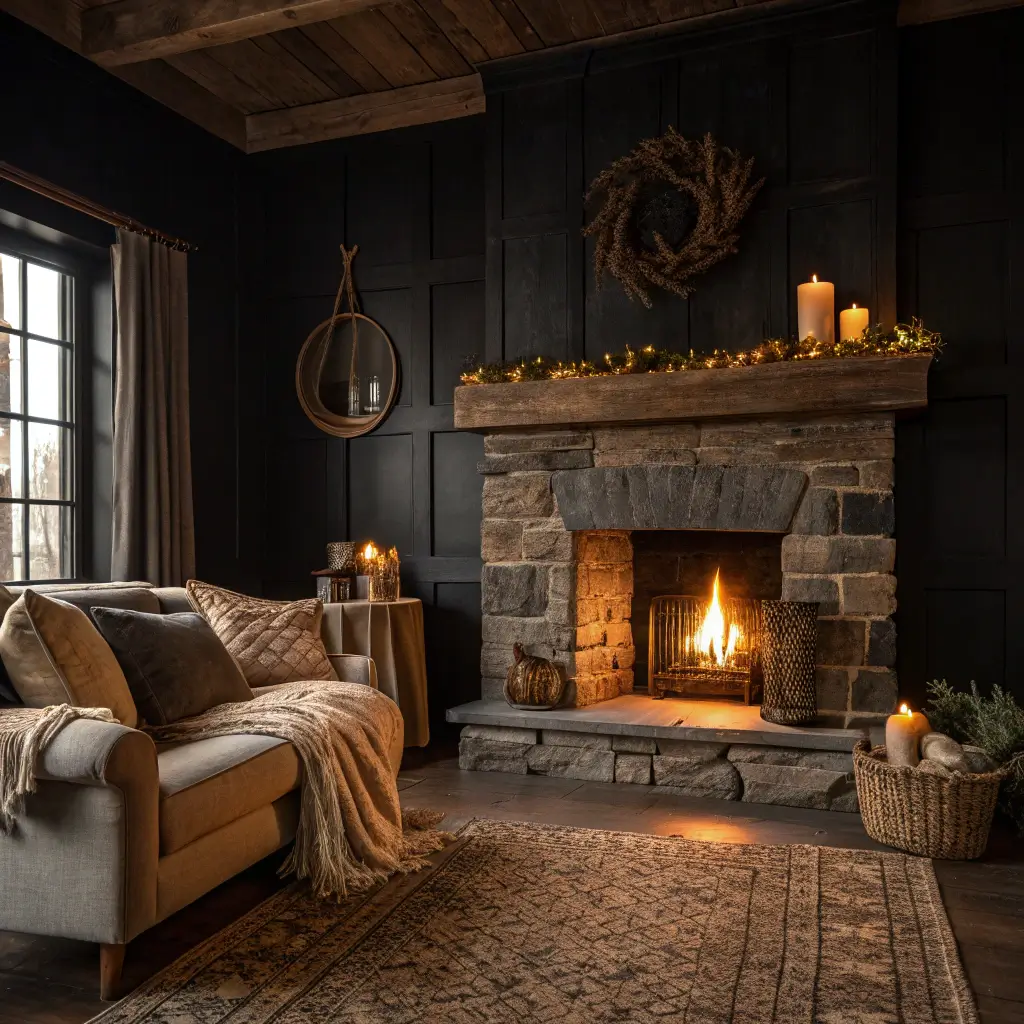
A fireplace painted dark – charcoal, black, or deep green – becomes an instant focal point. I painted my boring beige brick fireplace charcoal grey, and it completely changed the room’s personality. Why didn’t I do this sooner? :/
The surround and mantel need consideration too:
- Natural wood mantel against dark painted brick
- Painted mantel matching the firebox for drama
- Mixed materials like wood mantel with metal surround
- Built-ins painted to match for cohesion
Styling Your Dark Fireplace
Once painted, styling becomes crucial. I layer different heights and textures on my mantel:
- Oversized mirror or artwork as anchor
- Varied candlesticks in brass or black
- Greenery for life and color
- Personal objects that tell your story
Keep the hearth simple. A couple of large baskets with blankets or firewood maintains the farmhouse feel without cluttering your focal point.
Weathered Wood & Black Accents
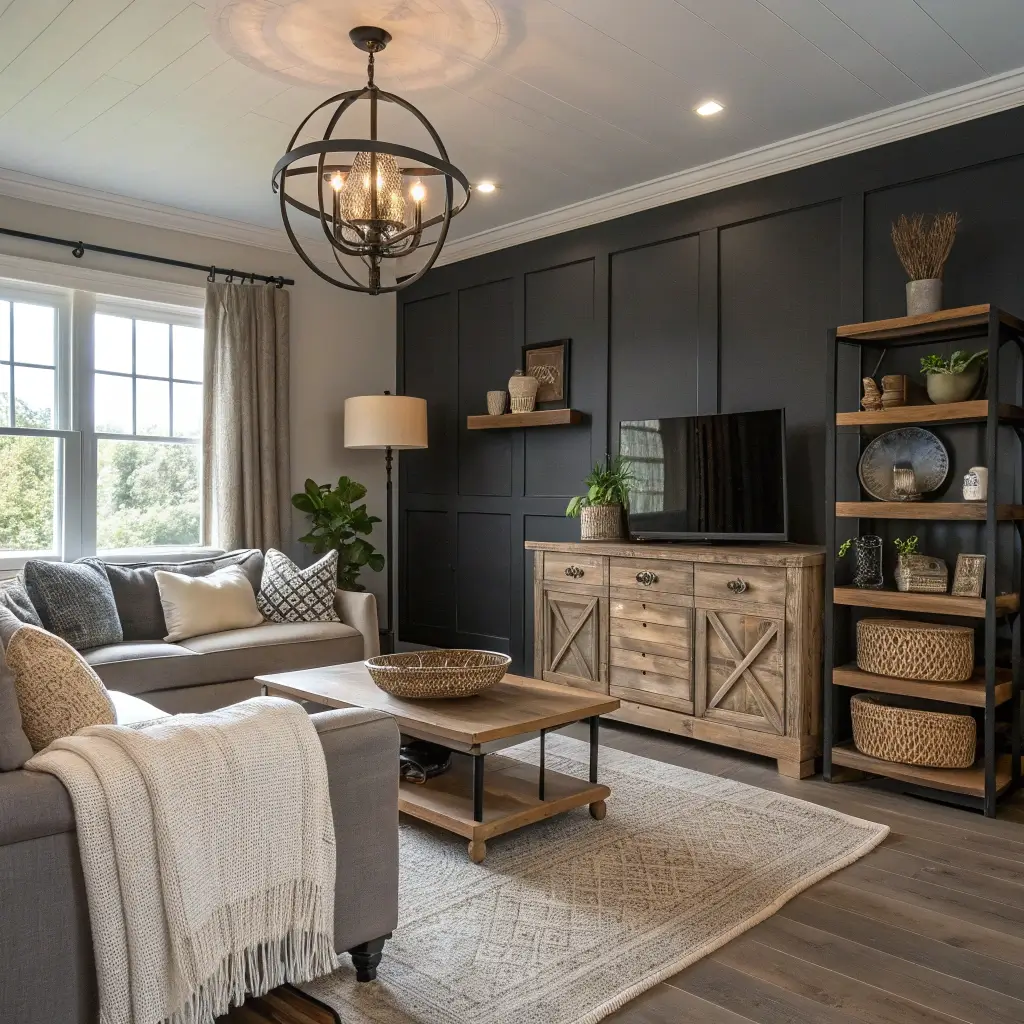
This combination never fails. Weathered grey wood paired with strategic black accents creates sophistication without trying too hard. I used reclaimed barnwood for an accent wall, then tied it together with black picture frames, curtain rods, and lamp bases.
The ratio matters here – too much black overpowers the weathered wood’s subtlety. I aim for about 70% weathered wood tones, 20% black accents, and 10% other colors. This formula keeps things balanced and intentional.
Finding authentic weathered wood can be challenging. Some alternatives:
- Weathering new wood with vinegar and steel wool
- Quality faux wood wallpaper (yes, really)
- Reclaimed wood from local demolition sites
- Pre-weathered planks from specialty suppliers
Modern Rustic Espresso Living Room
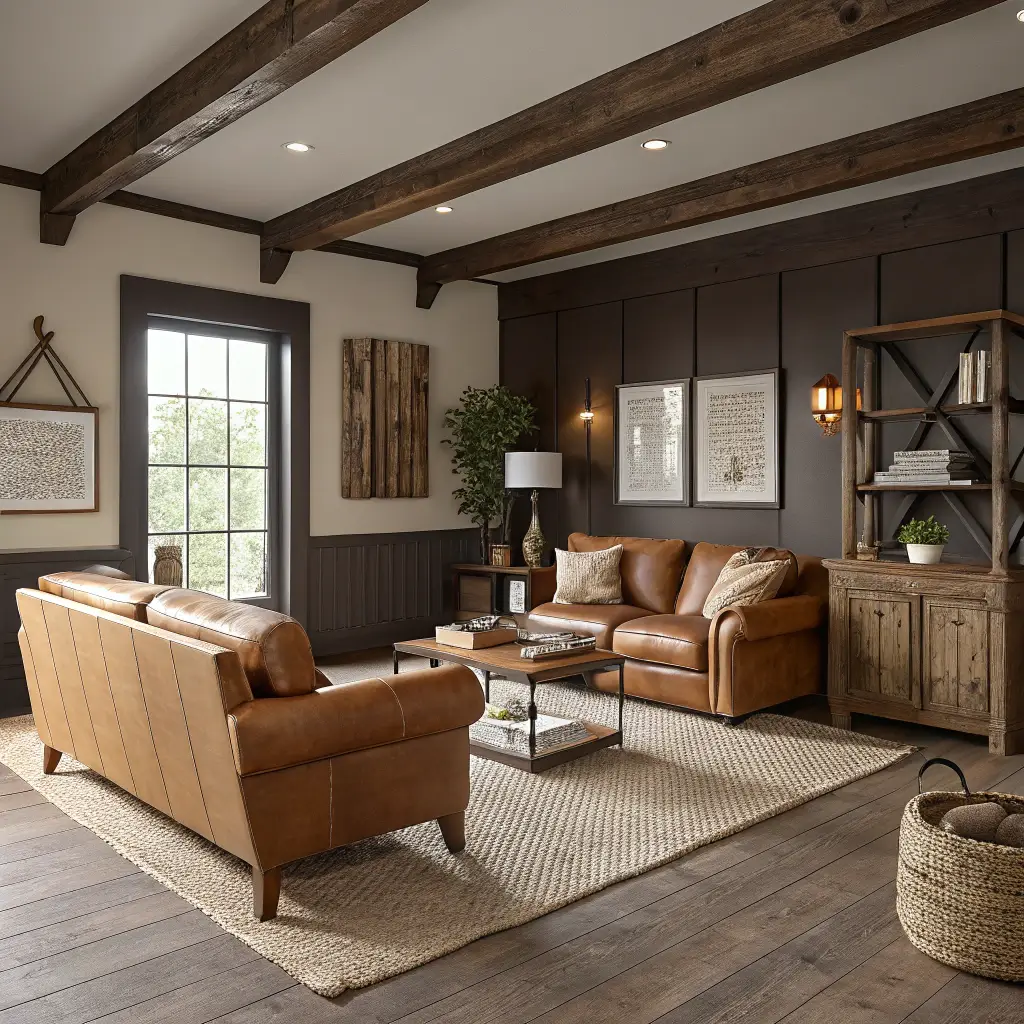
Deep espresso furniture and fixtures bridge modern and farmhouse beautifully. This isn’t about everything being espresso – that would be overwhelming. Instead, choose key pieces in this rich, coffee-inspired tone.
My espresso entertainment center anchors one wall, balanced by a cream sofa and natural wood coffee table. The mix prevents the space from feeling too heavy or dated. Clean lines keep it modern while rustic textures maintain farmhouse charm.
Balancing Dark Furniture
Working with espresso tones requires thought:
- White or light walls are non-negotiable
- Metallic accents in gold or brass warm things up
- Colorful art prevents monotony
- Varied textures add visual interest
I learned the hard way that espresso furniture shows dust like crazy. Microfiber cloths become your best friend, and a quick daily wipe-down saves you from weekend deep cleans.
Moody Farmhouse Textured Walls
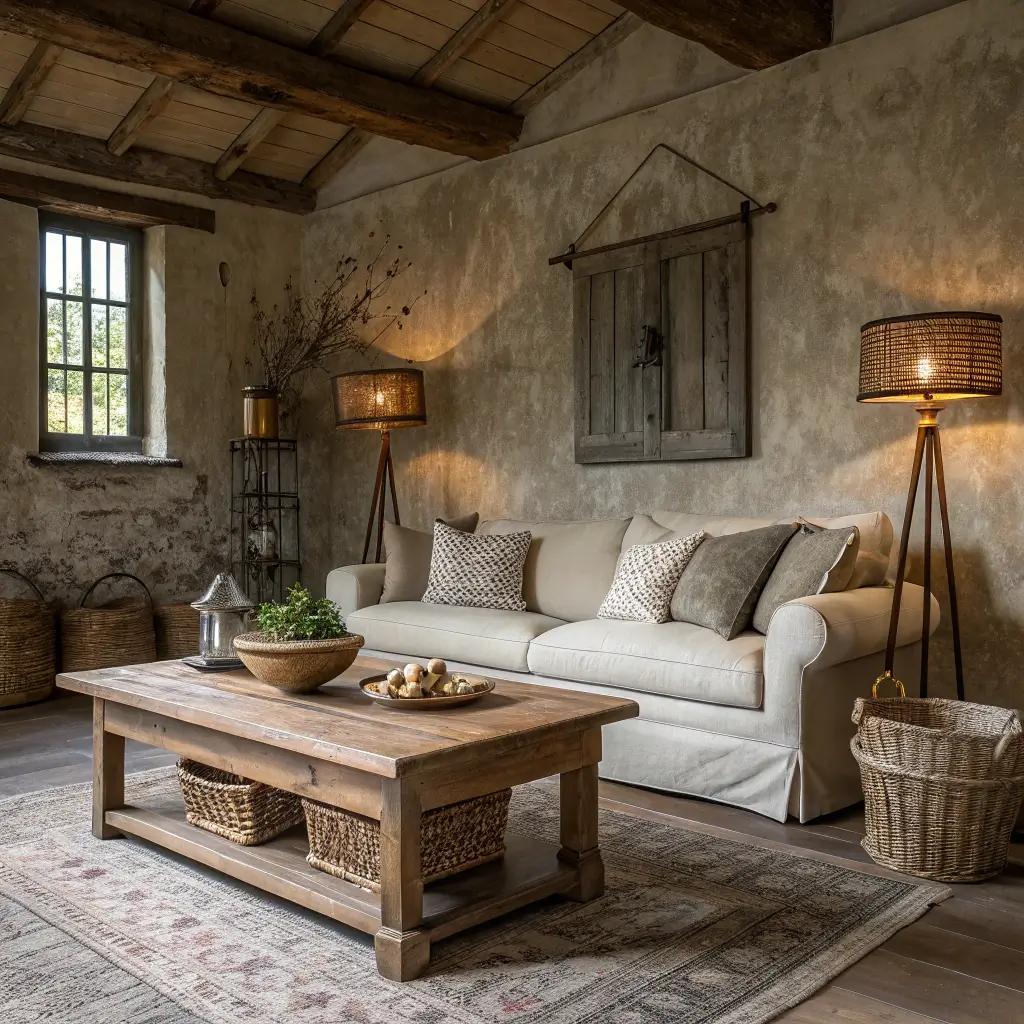
Textured walls in dark colors add dimension that flat paint can’t achieve. I’m talking venetian plaster, limewash, or even heavy texture roller techniques. My dining room features limewashed walls in charcoal, and the subtle variation in tone creates this organic, lived-in feel.
Different texture techniques offer different vibes:
- Limewash for old-world charm
- Venetian plaster for subtle sophistication
- Board and batten for traditional farmhouse
- Exposed brick painted dark for industrial edge
DIY Texture Success
Most texture techniques are DIY-friendly with patience:
- Practice on cardboard first – seriously, don’t skip this
- Work in sections to maintain consistency
- Have a buddy help – four hands are better than two
- Embrace imperfection – too perfect looks fake
The lighting becomes even more important with textured walls. Side lighting from sconces or table lamps highlights the texture beautifully, while overhead lighting can flatten the effect you worked so hard to create.
Deep Charcoal Farmhouse Minimalist Space
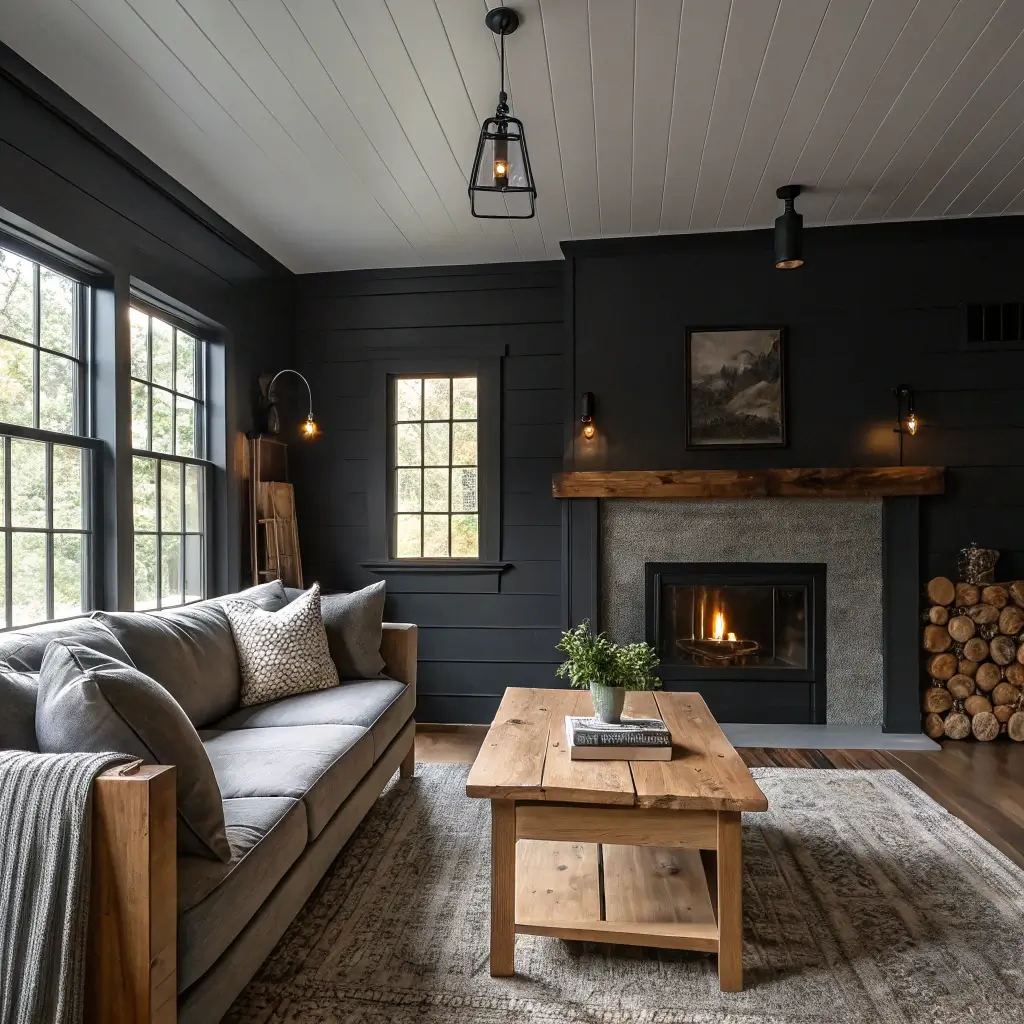
Who says farmhouse has to mean cluttered? Deep charcoal walls with minimal, purposeful furniture creates a sophisticated take on farmhouse style. This approach requires discipline – every piece needs to earn its place.
I stripped my living room down to essentials: sofa, coffee table, two chairs, one amazing piece of art. The deep charcoal walls make these pieces pop while maintaining that cozy farmhouse feeling. Less really is more when you nail the color palette.
Minimalist Farmhouse Essentials
Your must-haves for this look:
- One statement furniture piece in natural wood
- Quality over quantity textiles
- Hidden storage to maintain clean lines
- Strategic lighting since you have fewer decorative elements
- One or two conversation pieces that reflect your personality
The challenge? Keeping it minimal when farmhouse style typically encourages collecting. I use the one-in-one-out rule religiously. Want something new? Something else has to go.
Bringing It All Together
After exploring all these moody farmhouse options, you might be wondering which direction to take. Here’s my advice: start with one element that speaks to you. Maybe it’s painting your fireplace charcoal or adding black shiplap to one wall. You don’t need to transform everything at once.
The beauty of moody farmhouse style is its flexibility. Mix and match these ideas based on your space, budget, and comfort level with darkness. My own living room combines three of these concepts – dark walnut furniture, charcoal accent wall, and weathered wood details. The combination works because I maintained consistent undertones throughout.
Remember, moody doesn’t mean depressing. With the right lighting, textures, and balance of dark and light elements, these spaces feel cozy and sophisticated rather than gloomy. Trust your instincts, embrace the drama, and don’t be afraid to paint over something if it doesn’t work. 🙂
Your perfect moody farmhouse living room is out there waiting – you just need to be brave enough to embrace the dark side.