15 Beautiful Divided Bedroom Kids Concepts and Play Areas

Remember when you shared a room with your sibling and wanted to build a fortress just to get some privacy? Yeah, we’ve all been there! Whether you’re dealing with two kids who can’t agree on wall colors or three little ones crammed into one space, creating personal zones in shared bedrooms has become the ultimate parenting challenge.
I’ve spent countless hours researching, testing, and honestly, failing at some bedroom division attempts with my own kids.
But here’s what I’ve learned: dividing a shared bedroom doesn’t have to involve actual construction or breaking the bank. You just need some creativity and the right strategy for your space.
Let me walk you through 15 brilliant ideas that actually work – no contractor required, I promise!
Loft Beds with Built-In Dividers
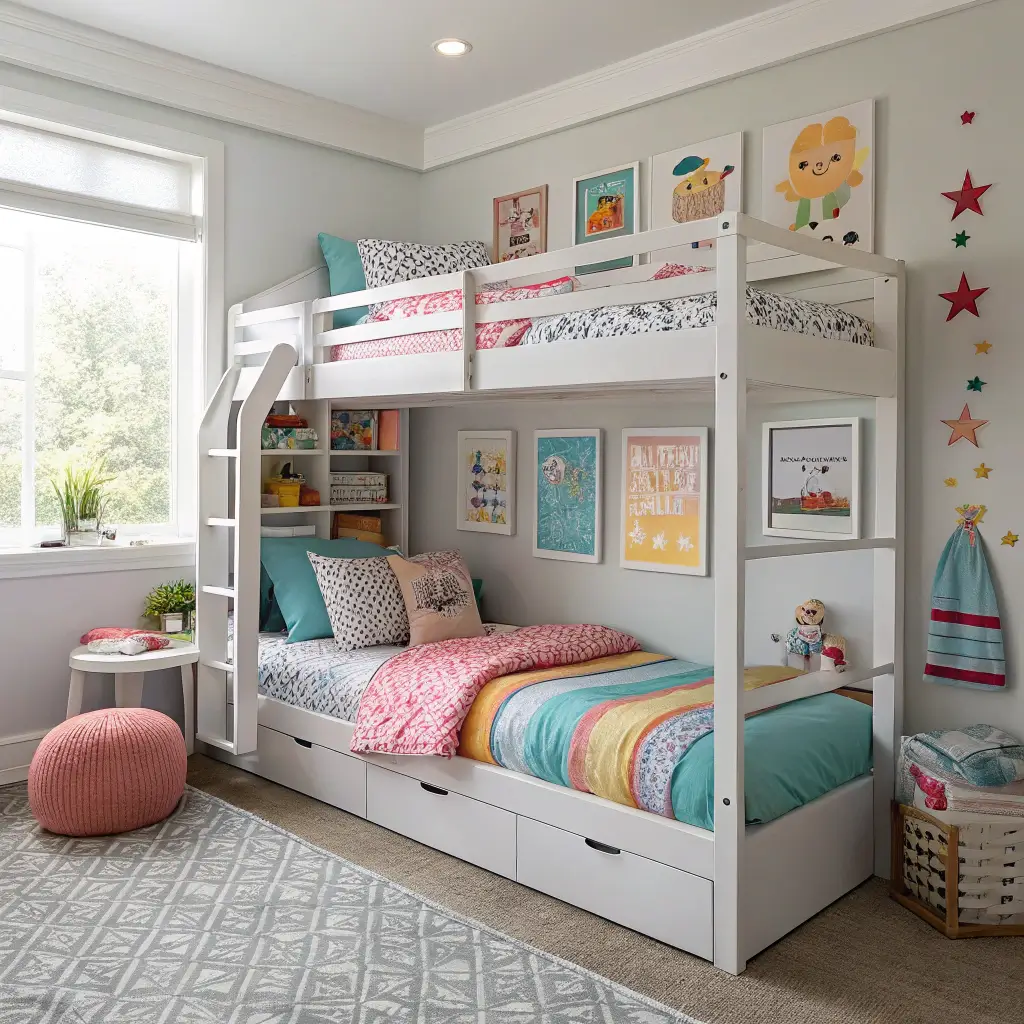
Loft beds with dividers are basically the Swiss Army knife of kids’ bedroom furniture. You get sleeping space, storage, AND privacy all rolled into one piece. My neighbor installed one of these bad boys last year, and her kids haven’t fought about personal space since.
The beauty of loft beds with built-in divider panels lies in their vertical design. You’re essentially creating two separate zones without eating up precious floor space. Most models come with partial walls or panels that extend from the bed frame, creating a cozy nook underneath for the second child.
Why These Work So Well
Here’s what makes loft bed dividers genius:
- Maximum floor space for play areas
- Natural sound barriers between sleeping zones
- Built-in desk or play areas underneath
- Storage compartments integrated into the structure
I particularly love the models with adjustable panels. You can modify them as your kids grow, which means you won’t need to replace the entire setup when your 5-year-old suddenly becomes a privacy-obsessed preteen.
Color-Coded Zones for Kids
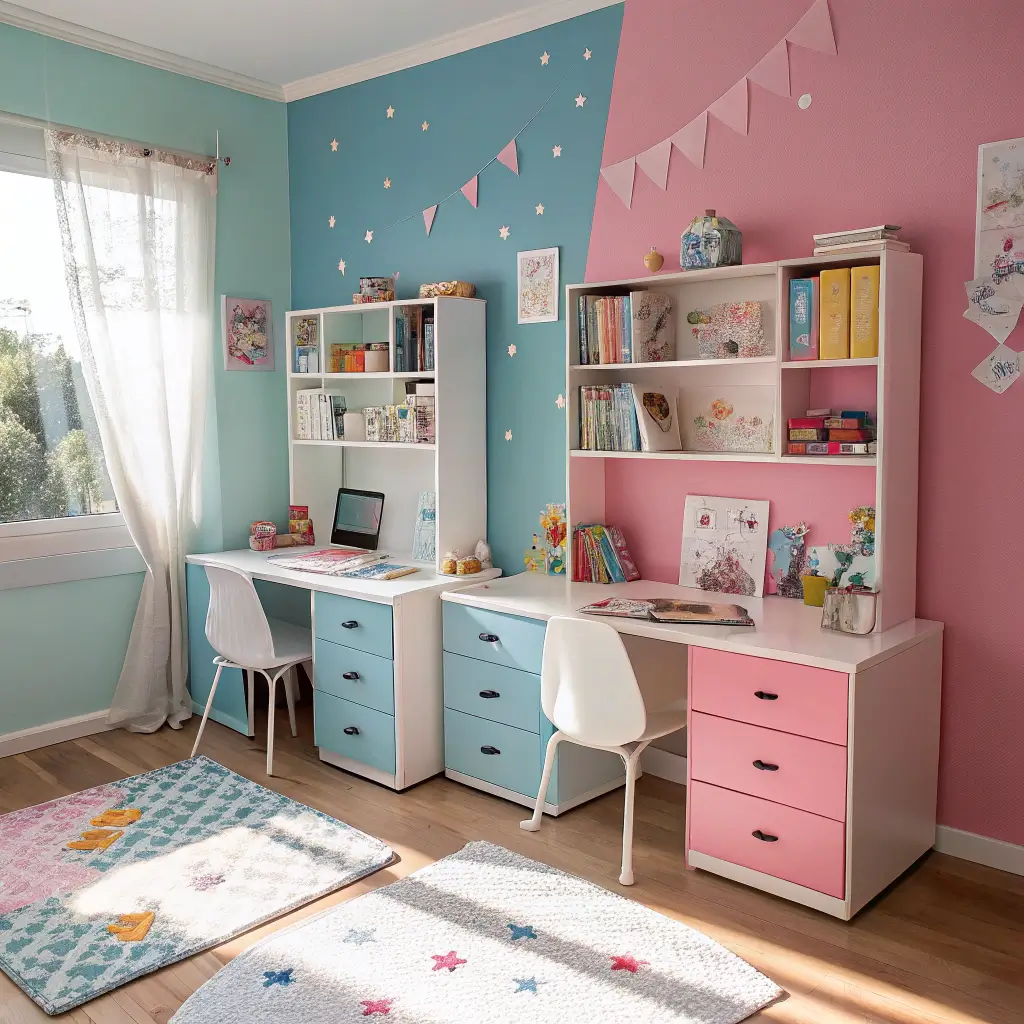
Who says you need physical barriers to divide a room? Color-coding different areas creates visual boundaries that kids naturally respect. Plus, it’s ridiculously easy to implement and costs way less than furniture dividers.
Pick two (or three) complementary colors and assign one to each child. Paint accent walls, use colored tape on the floor, or go wild with removable wall decals. My kids have blue and green zones, and you’d be surprised how well they stick to their designated areas.
The trick is letting each kid choose their color scheme. When they feel ownership over their space, they’re more likely to respect the invisible boundaries. And honestly? It looks pretty cool when done right.
Implementation Tips
- Use painter’s tape to create floor boundaries
- Coordinate bedding and accessories with each zone’s color
- Add colored LED strips for nighttime definition
- Keep shared areas neutral to avoid conflicts
Sliding Panels for Shared Rooms
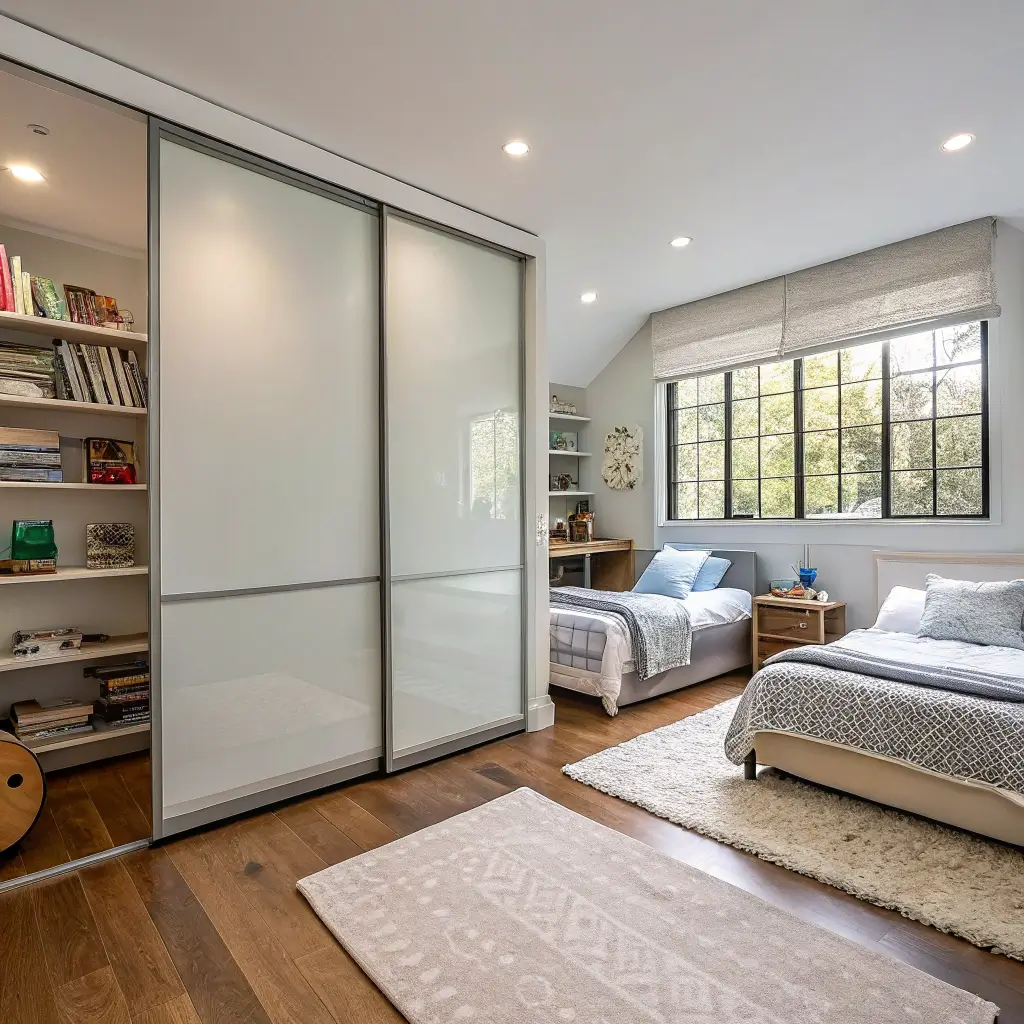
Sliding panels are the modern parent’s secret weapon. They’re like having a magic wall that appears when you need it and disappears when you don’t. How convenient is that?
These panels run on ceiling-mounted tracks and can be made from various materials – wood, fabric, or even translucent acrylic. The best part? Kids can easily slide them open or closed depending on their mood or activity.
I installed fabric sliding panels in my kids’ room last summer, and the transformation was immediate. Morning homework sessions became quieter, and bedtime routines got smoother since one child could sleep while the other finished reading.
Best Materials for Sliding Panels
Consider these options based on your needs:
- Fabric panels: Affordable and washable
- Wood slats: Durable and sound-absorbing
- Frosted acrylic: Lets light through while maintaining privacy
- Cork boards: Doubles as display space
Also Read: 15 Fun Kids Bedroom Boys Ideas and Cool Space Designs
DIY Bookshelf Room Divider
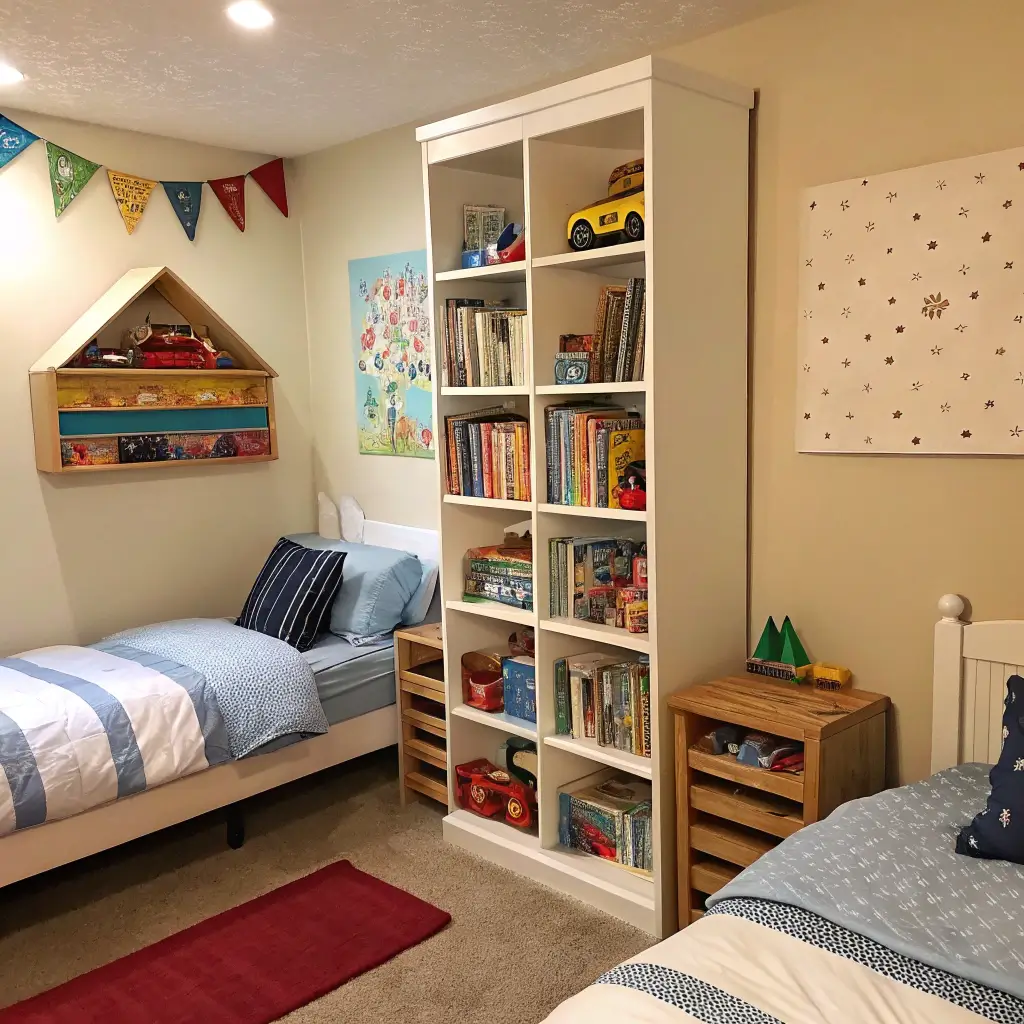
Want to kill two birds with one stone? A bookshelf divider gives you storage AND separation. Plus, building one yourself means you can customize every inch to fit your space perfectly.
You don’t need to be Bob the Builder to pull this off. Simple cube organizers from IKEA or Target work brilliantly as dividers. Stack them, secure them to the wall, and boom – instant room division with bonus storage.
The key is choosing open-back shelving so light flows through the room. Nobody wants their shared bedroom feeling like a cave, right? Fill some cubes with books and toys, leave others empty for breathing room, and use storage bins for private items.
DIY Building Tips
Here’s how to nail your bookshelf divider project:
- Anchor tall units to the wall for safety
- Leave 6-12 inches from the ceiling for airflow
- Use matching bins for a cohesive look
- Position at an angle for more interesting room layouts
Curtain Partition Ideas
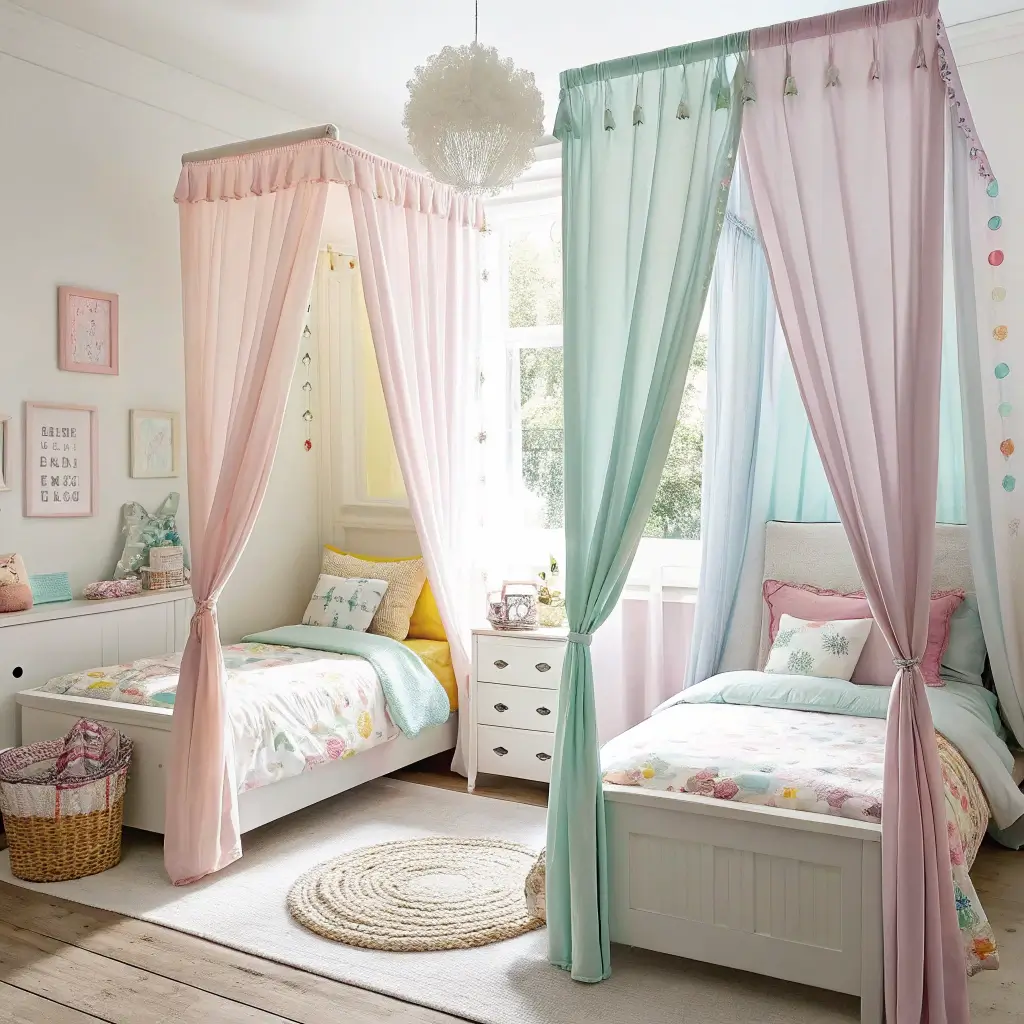
Curtains might seem old-school, but they’re making a serious comeback in kids’ room design. And why not? They’re affordable, flexible, and ridiculously easy to install.
Ceiling-mounted curtain tracks let you create curved divisions, straight lines, or even wrap around specific areas. Choose blackout curtains for kids with different sleep schedules, or go with sheer fabrics to maintain an open feel while still defining spaces.
My sister used hospital-style ceiling tracks with cheerful patterned curtains in her twins’ room. The setup cost her less than $100, and she can wash the curtains whenever they get grimy (which, let’s face it, happens weekly with kids).
Creative Curtain Solutions
- Double-layer system: Sheer for day, blackout for night
- Tie-dye curtains for a fun, personalized touch
- Beaded curtains for older kids who want something unique
- Canvas drop cloths for a budget-friendly option
Bunk Bed with Privacy Screens
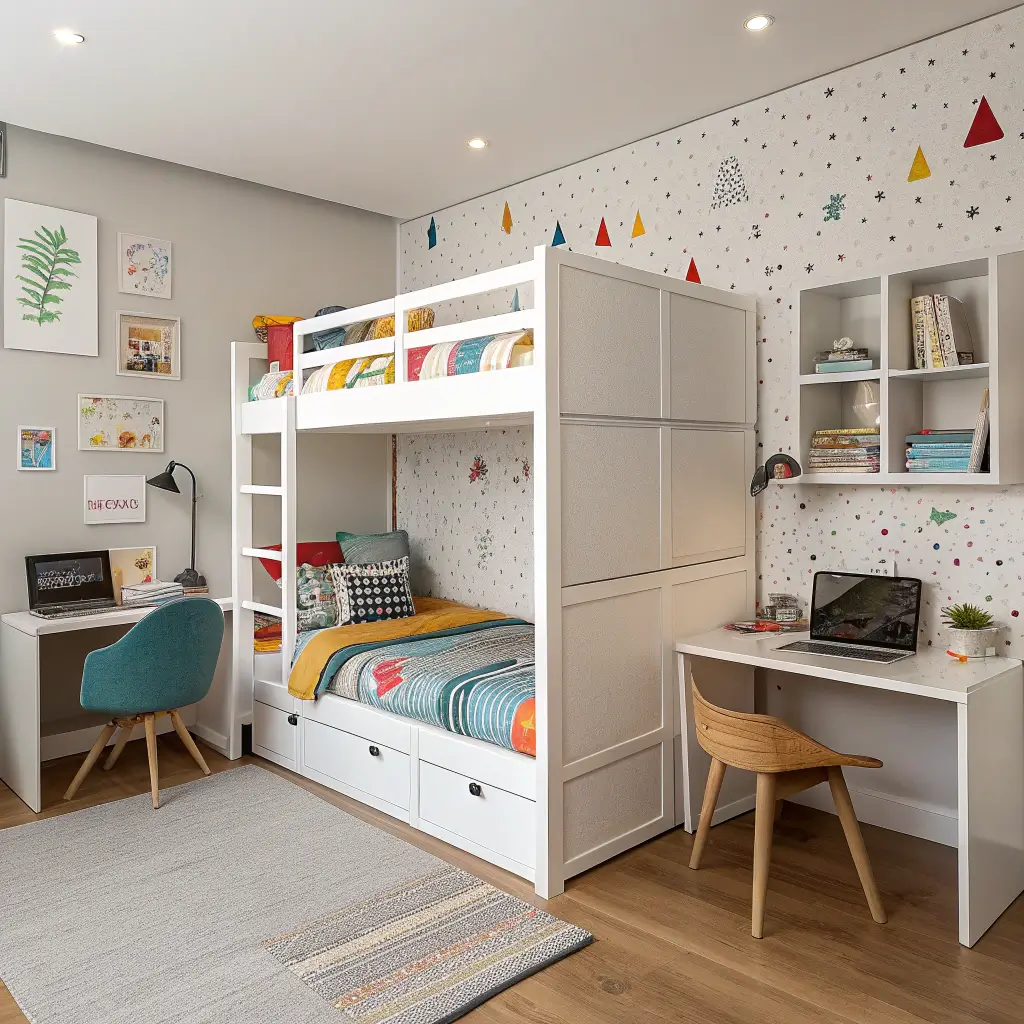
Traditional bunk beds are great for saving space, but adding privacy screens transforms them into personal retreats. Think of it as giving each kid their own tiny apartment within the bedroom.
Modern bunk beds come with built-in curtain rods or attachment points for screens. You can add fabric panels, wooden slats, or even install small sliding doors on each bunk level.
Ever notice how kids love making blanket forts? Privacy screens on bunk beds tap into that same desire for cozy, enclosed spaces. My nephew’s bunk bed has roll-up bamboo screens, and he treats his top bunk like his personal command center.
Screen Options to Consider
Different screen styles offer various benefits:
- Mesh screens: Provide privacy while allowing airflow
- Magnetic attachments: Easy for kids to open and close
- Retractable shades: Clean look when not in use
- Clip-on panels: Changeable based on mood or season
Also Read: 15 Stylish Small Shared Kids Bedroom Ideas and Clever Storage
Modular Furniture for Kids
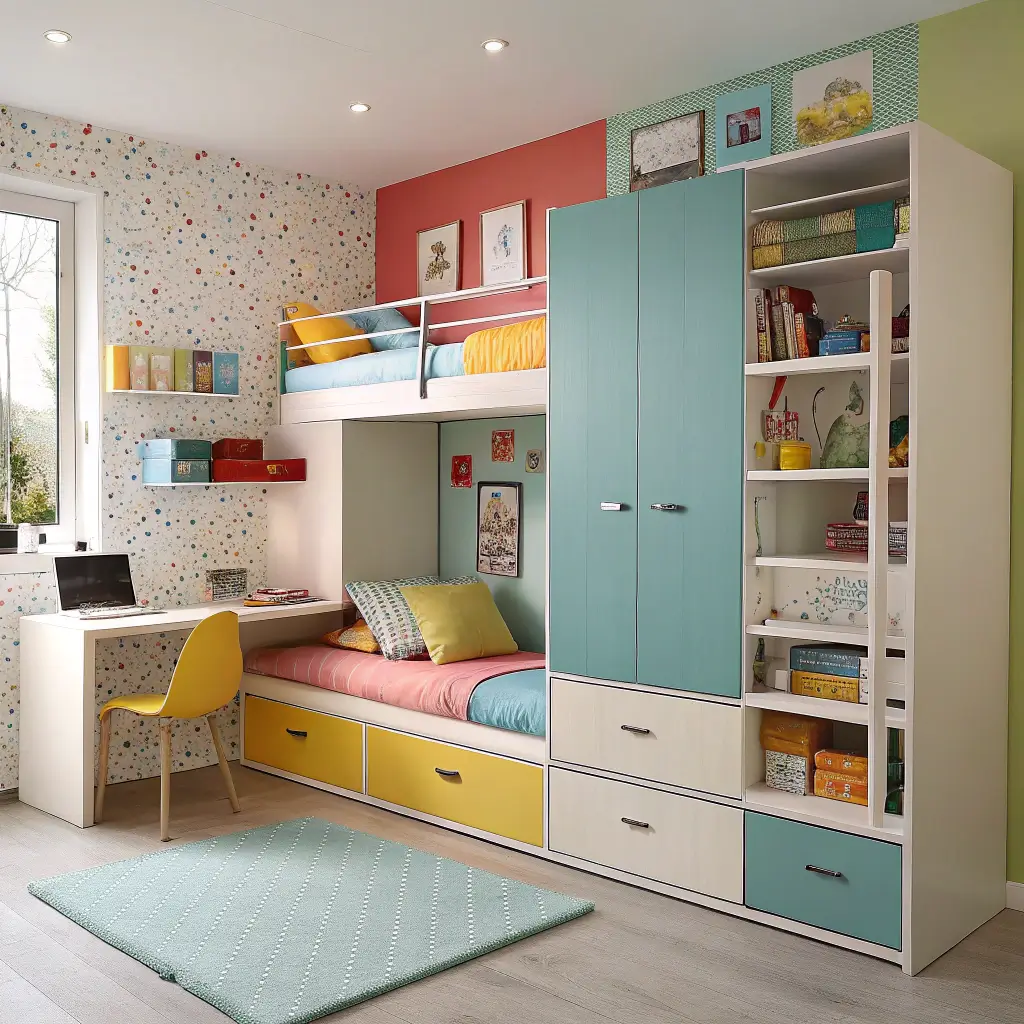
Modular furniture is basically LEGO for bedroom design. You can reconfigure pieces as needs change, which is perfect since kids’ preferences shift faster than TikTok trends.
These systems typically include stackable cubes, connectable shelving units, and moveable wall panels. Start with a basic configuration and add pieces as your budget allows or as your kids grow.
I’m obsessed with modular systems because they grow with your family. What starts as a simple divider can evolve into a study station, reading nook, or gaming setup. FYI, some brands even offer trade-in programs when you need different configurations.
Top Modular System Features
Look for these when shopping:
- Tool-free assembly (trust me on this)
- Rounded corners for safety
- Multiple color options
- Weight capacity suitable for books and toys
Hanging Room Dividers
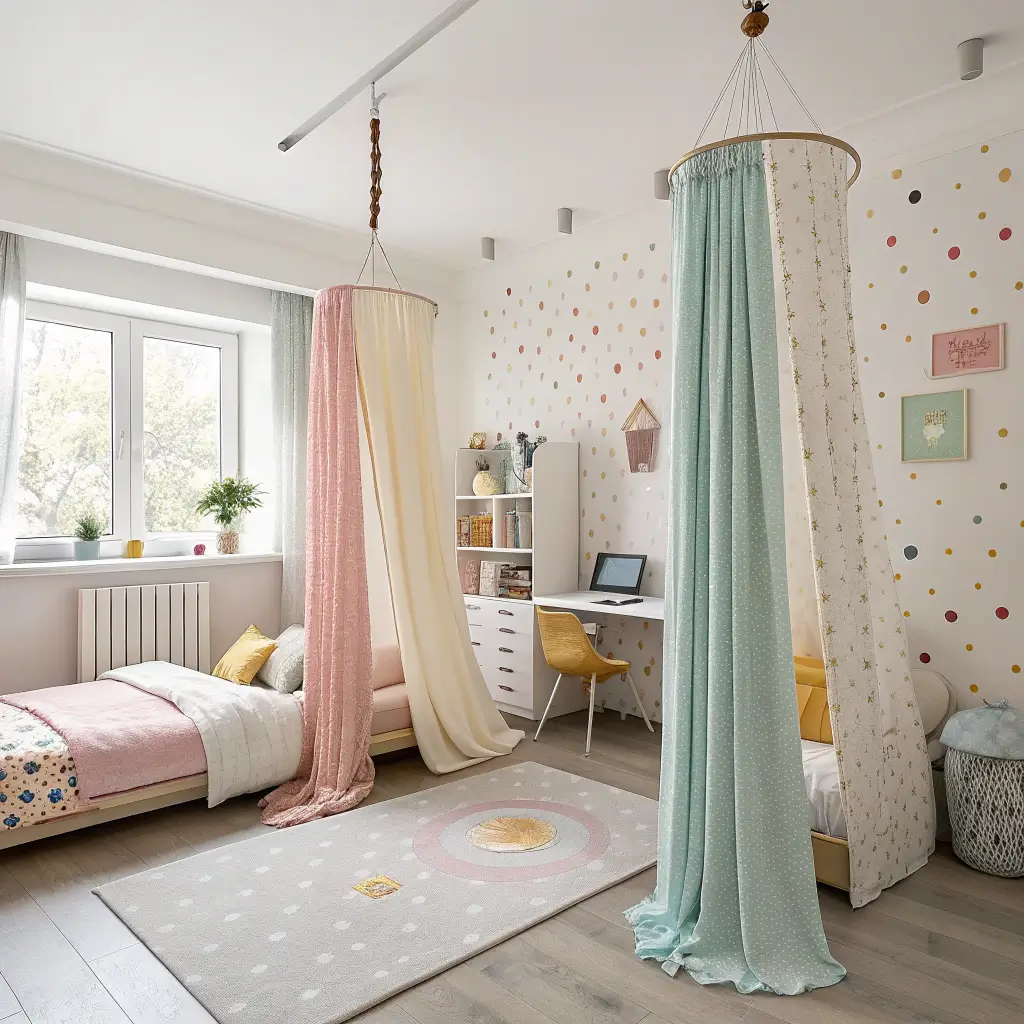
Hanging dividers add personality while creating boundaries. We’re talking macramé, beaded strings, fabric panels, or even repurposed materials like old CDs (if you’re feeling nostalgic).
The beauty of hanging dividers? They create separation without making the room feel smaller. Light and air flow freely, but each kid still gets their defined space. Plus, they’re super easy to change when someone decides they hate dinosaurs and love unicorns instead.
My friend created an amazing divider using wooden dowels and colorful yarn. Her kids helped make it, which meant they actually respected the boundary. Who knew crafting could solve sibling squabbles?
DIY Hanging Divider Ideas
- Plant hangers with cascading greenery
- Fabric strips in gradient colors
- Paper lanterns at varying heights
- Recycled materials for eco-conscious families
Creative Wall Art as Divider
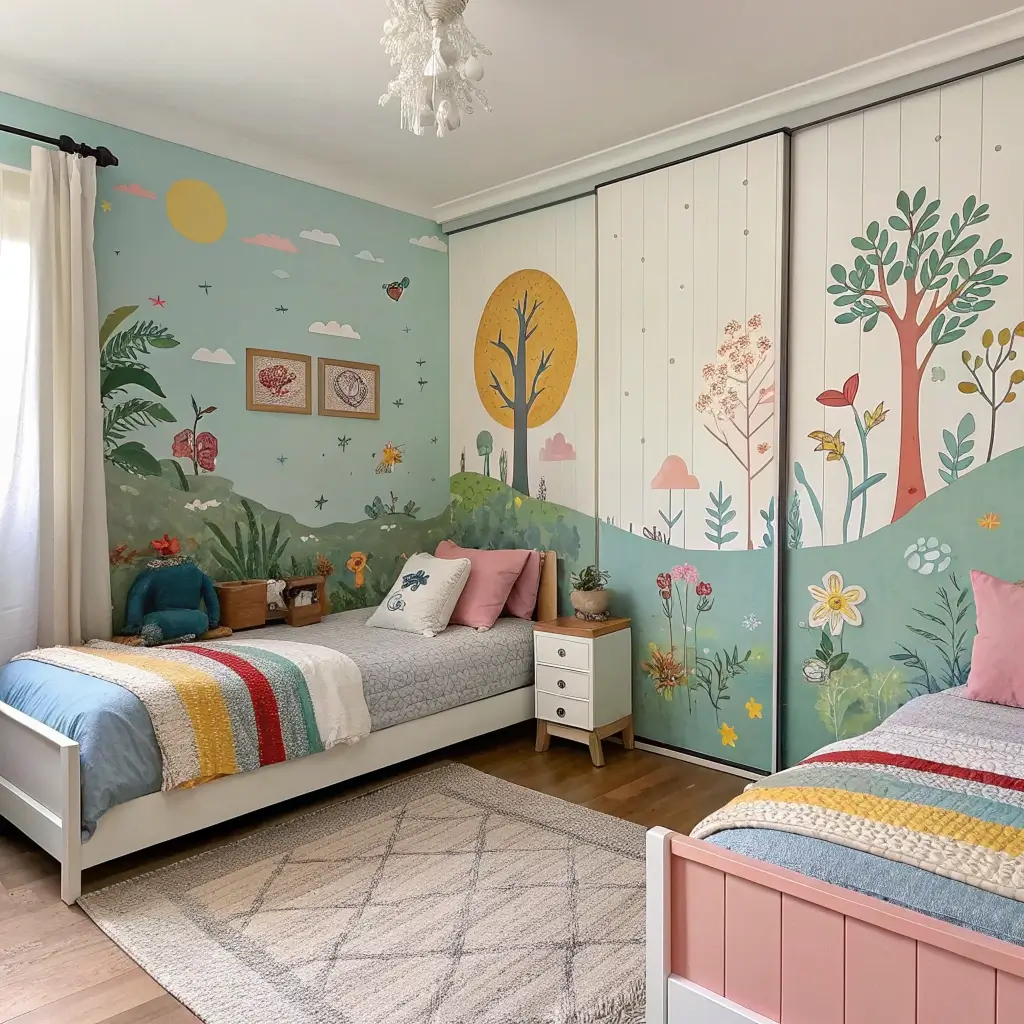
Why install a boring divider when you can create an art installation? Large canvases, wall decals, or even a chalkboard wall can define spaces while adding visual interest.
Position a large piece of art perpendicular to the wall using a stand or ceiling wires. It becomes a functional sculpture that happens to divide the room. Bonus points if each side features artwork chosen by each child.
I’ve seen incredible setups where parents used pegboard panels decorated differently on each side. One kid had a sports theme while the other went full unicorn princess. Both were happy, and the room looked magazine-worthy.
Artistic Division Techniques
- Gallery walls extending from ceiling
- Suspended artwork on invisible wire
- DIY painted panels on hinges
- Removable wall murals as boundaries
Also Read: 14 Stunning Small Kids Bedroom Ideas and Playful Designs
Foldable Screen Partitions
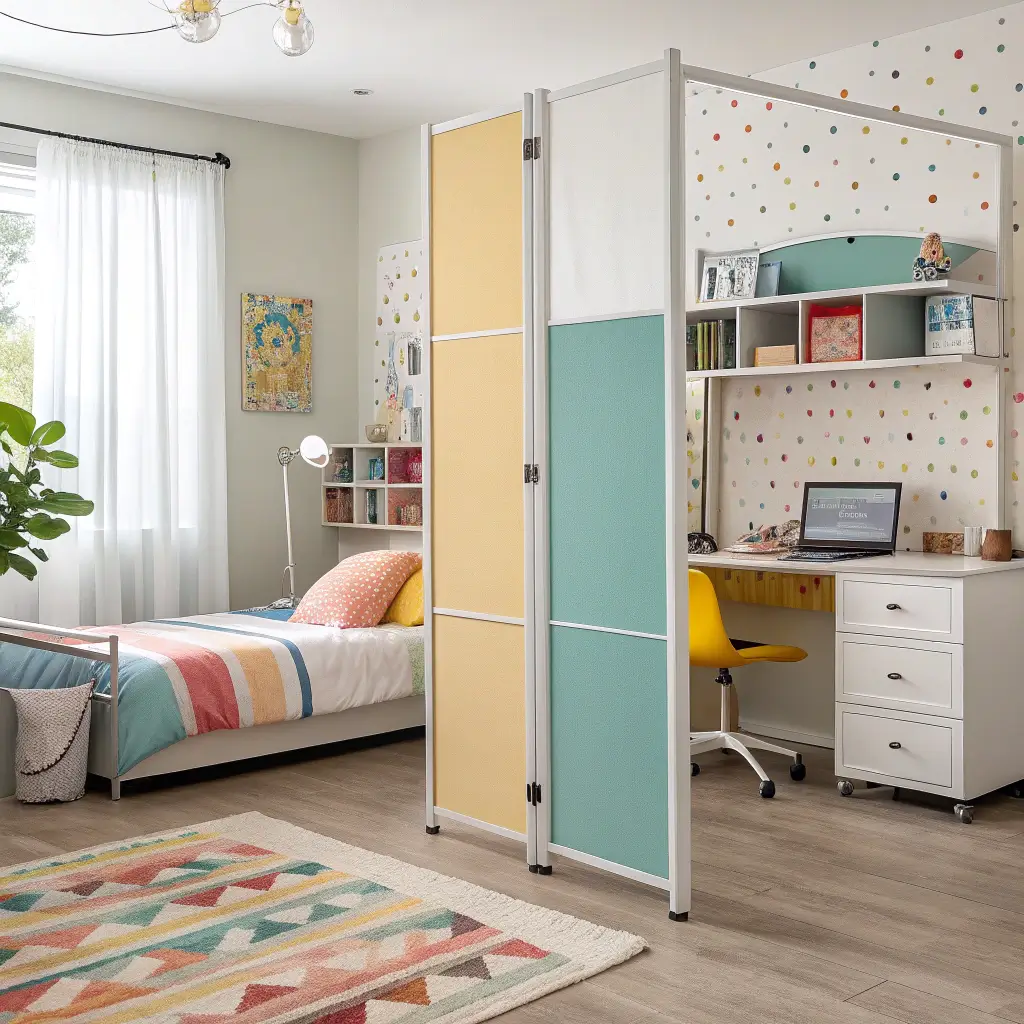
Foldable screens offer the ultimate flexibility. Need the whole room for a sleepover? Fold them up. Want privacy for homework time? Spread them out. It’s room division on demand.
Modern screens come in materials ranging from rice paper to fabric to wood. Some even have built-in whiteboards or cork boards for added functionality. The key is choosing screens tall enough to create privacy but light enough for kids to move safely.
My kids have a three-panel screen that they’ve decorated with photos and drawings. It’s become less of a divider and more of a rotating art gallery. Sometimes the simplest solutions work best, you know?
Choosing the Right Screen
Consider these factors:
- Height: At least 5 feet for effective division
- Panel width for stability
- Material durability for active kids
- Storage requirements when folded
Under-Bed Storage for Each Child
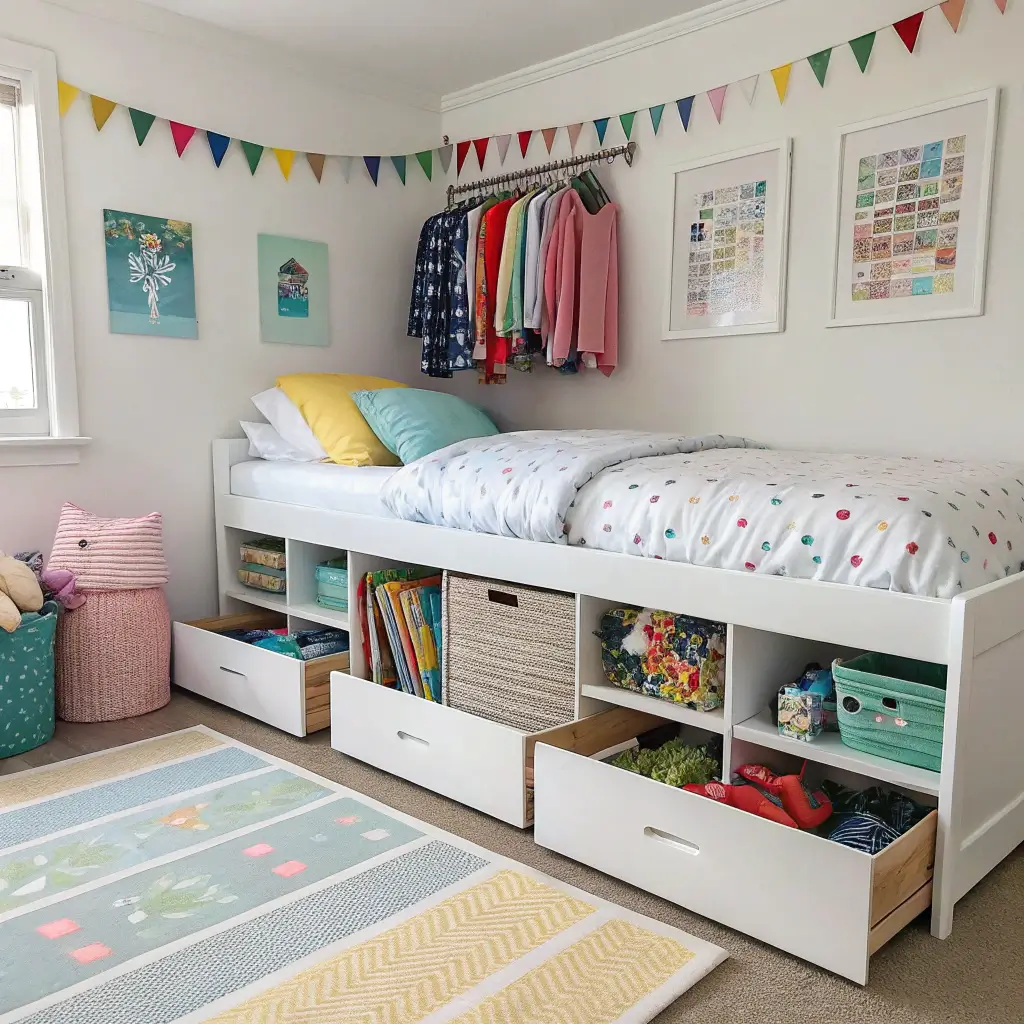
Here’s a sneaky way to create division: use under-bed storage to establish territory. When each child has their designated storage zone, it naturally creates boundaries without any vertical structures.
Rolling storage bins, built-in drawers, or even simple boxes can define each child’s area. Label everything clearly (or color-code if they can’t read yet). The physical act of storing belongings in “their” space reinforces the division.
This method works especially well in smaller rooms where vertical dividers would feel overwhelming. Plus, hello extra storage! Can you ever have too much of that with kids?
Smart Storage Solutions
- Clear bins for easy identification
- Wheeled crates for accessibility
- Vacuum storage bags for seasonal items
- Drawer dividers for smaller items
Themed Personal Spaces
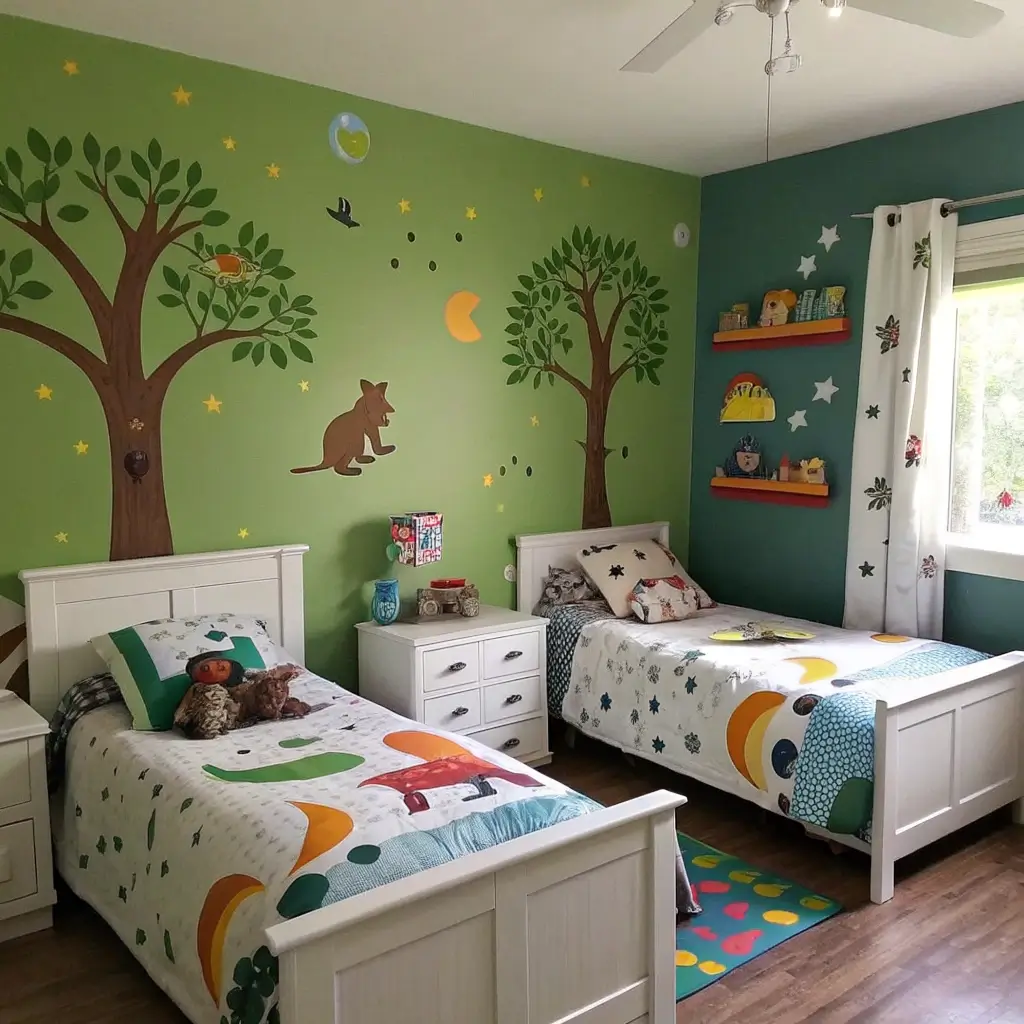
Creating distinct themes for each child’s area makes division feel less like separation and more like personalization. One side becomes a jungle adventure while the other transforms into outer space.
Use removable wallpaper, themed bedding, and coordinating accessories to establish each zone. The visual difference naturally creates boundaries without any physical barriers needed.
When my cousin did this with her daughters’ room, something magical happened. They stopped arguing about whose side was whose because each space felt completely unique. One had a mermaid lagoon, the other had a butterfly garden. Problem solved!
Theme Implementation Strategies
- Start with removable wall decals
- Coordinate lighting with each theme
- Use area rugs to define floor space
- Add themed storage solutions
Half-Wall Divider Concepts
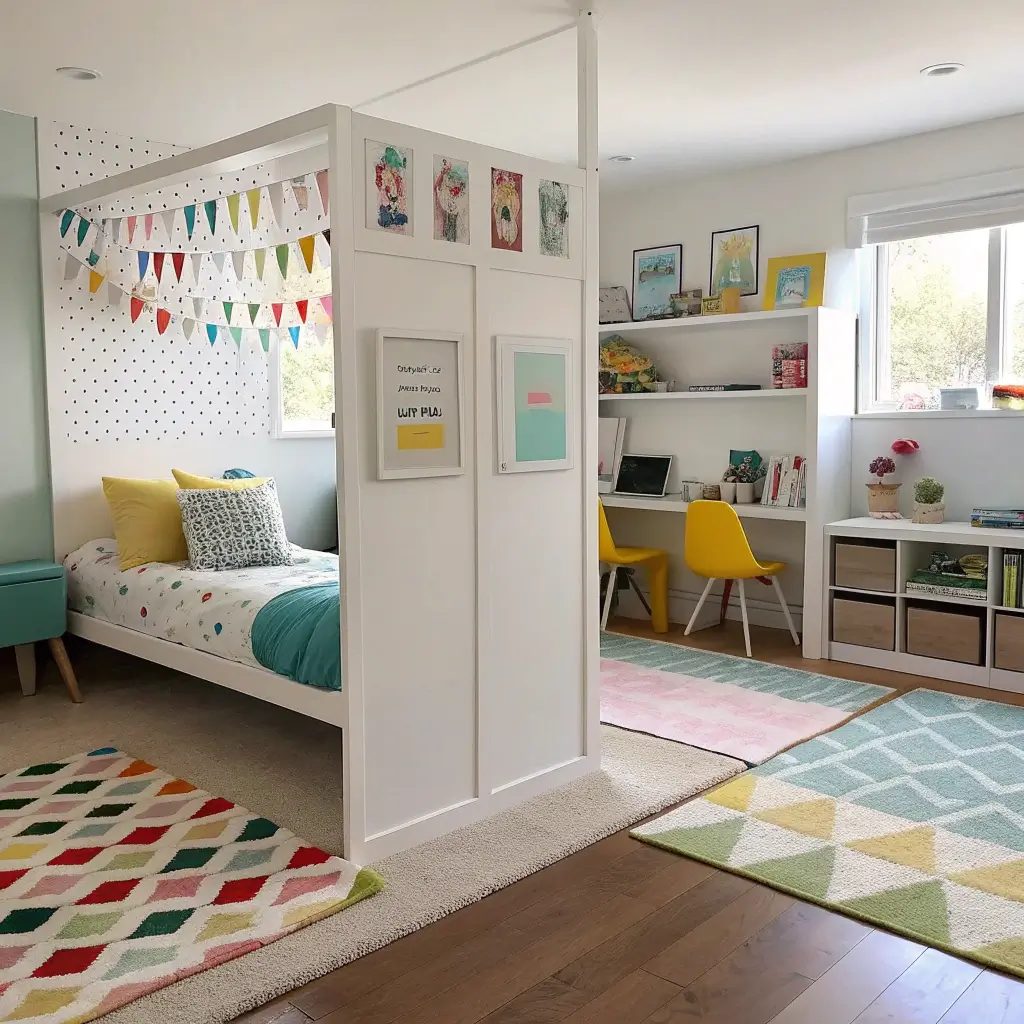
Half-walls (or pony walls, if you’re fancy) give you division without complete separation. They’re perfect when you want kids to have their own spaces but still feel connected.
You can build temporary half-walls using sturdy bookcases laid horizontally or invest in actual half-height room dividers. The top can serve as a display shelf or homework surface, making it functional as well as divisional.
These work brilliantly for kids with significant age gaps. The younger one gets privacy for naps while the older sibling can still supervise from their side. It’s like training wheels for room sharing!
Half-Wall Options
- Bookcase combinations at hip height
- Custom-built storage units
- Modular wall systems
- Repurposed furniture pieces
Multi-Level Play & Sleep Areas
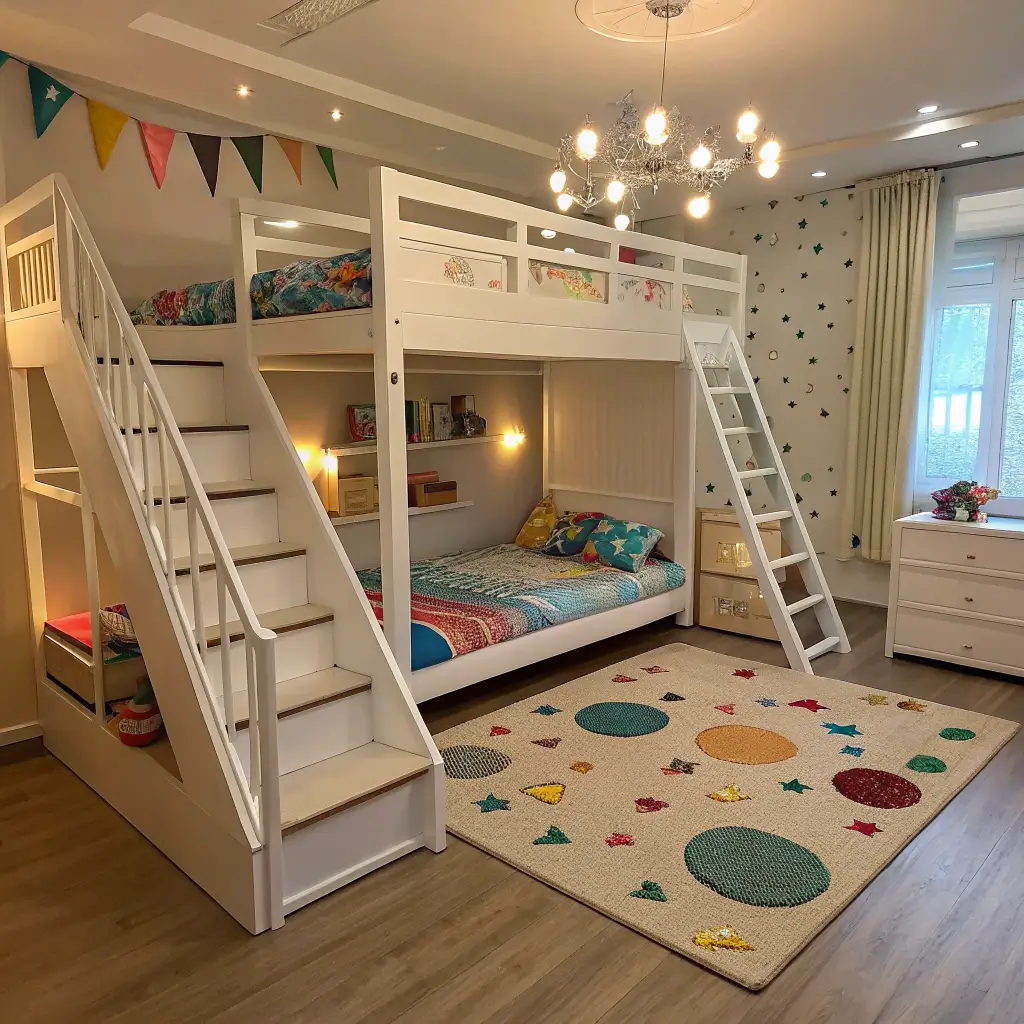
Creating different levels in a room naturally divides space without walls. Think platform beds, raised play areas, or sunken reading nooks (if you’re feeling ambitious).
Raising one bed on a platform instantly creates two distinct zones – high and low. The space under the platform becomes storage or a play cave, while the platform itself feels like a separate room.
This approach works incredibly well in rooms with high ceilings. My contractor friend did this for his kids, and IMO, it looks like something from a design magazine. The key is ensuring all raised areas have proper railings for safety.
Level-Creating Strategies
- Platform beds with storage underneath
- Lofted play areas with ladder access
- Step-up reading nooks
- Graduated floor levels using removable platforms
Convertible Divider Furniture
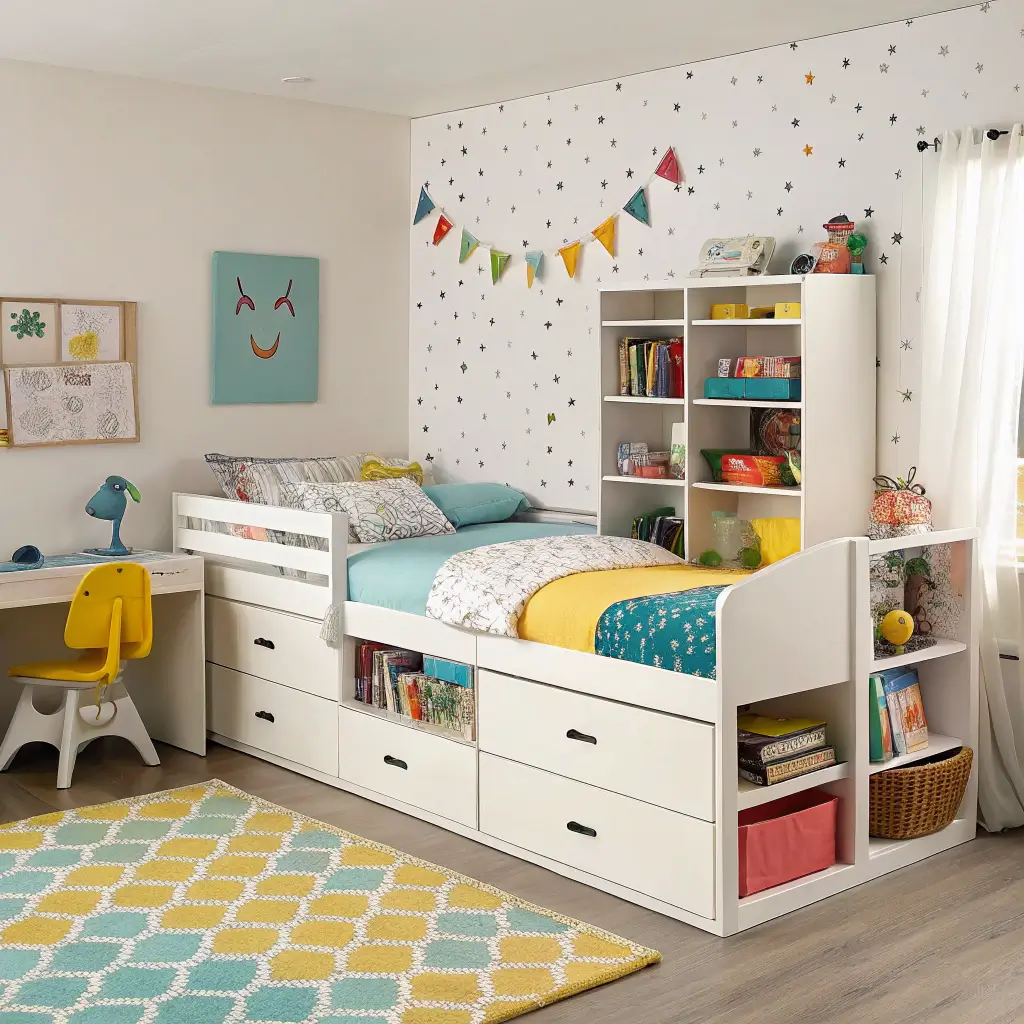
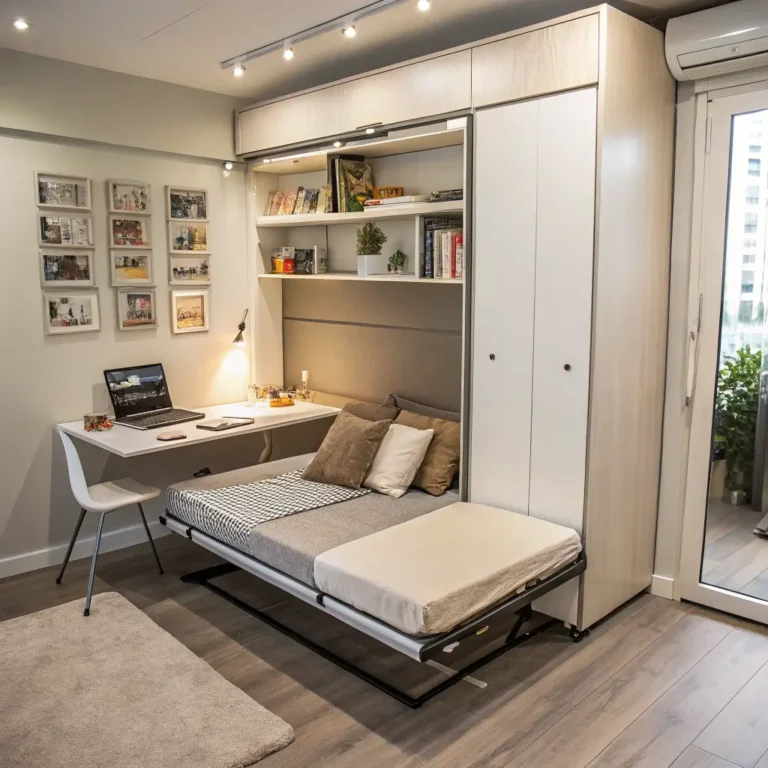
Convertible furniture is the superhero of shared bedrooms. By day, it’s a bookshelf. By night, it unfolds into a privacy screen. Magic? Pretty much 🙂
Look for pieces that serve multiple functions – ottoman storage that stacks into walls, desks that fold up to become dividers, or seating that transforms into partition screens. The investment might be higher initially, but the versatility pays off long-term.
These pieces are perfect for families who might move or need to reconfigure rooms as kids grow. Nothing’s worse than buying expensive furniture only to realize it doesn’t work in your new place, right?
Best Convertible Options
- Murphy desk/divider combinations
- Expandable accordion-style furniture
- Rotating storage units
- Transforming bench-to-wall systems
Final Thoughts
Creating divided spaces in kids’ bedrooms doesn’t require a massive renovation or unlimited budget. Whether you choose a simple curtain solution or go all-in with modular furniture, the key is finding what works for your specific situation.
Remember, the best room divider is one that your kids will actually respect and use. Involve them in the decision-making process, let them personalize their spaces, and be prepared to adjust as they grow.
Start with one simple solution and build from there. Maybe begin with color-coding and add a bookshelf divider later. Or try curtains first and upgrade to sliding panels when the budget allows. The point is creating harmony in shared spaces, not achieving Pinterest perfection overnight.
Your kids might not thank you immediately for giving them their own space (they’re kids, after all), but trust me – fewer territorial disputes mean happier parents. And isn’t that what we’re all after? Now go forth and divide those bedrooms like the resourceful parent you are!