15 Creative Kids Closet Organization Ideas to Maximize Space

Let’s be real – kids’ closets are chaos magnets. One minute you’ve got everything perfectly organized, and the next? It looks like a tornado hit a clothing store.
Trust me, I’ve been there, standing in my daughter’s room wondering how one tiny human can create such massive destruction.
But here’s the thing: the right organization system changes everything. After years of trial and error (and plenty of frustrated Saturday mornings), I’ve discovered that kids’ closets don’t have to be disaster zones.
You just need systems that actually work with how kids think and move, not against them.
Ready to transform that cluttered mess into something that actually functions? Let’s talk about 15 game-changing organization ideas that’ll make both you and your kids happier.
And yes, some of these might even get your kids to actually put their clothes away. I know, sounds impossible, right?
Low-Hanging Rod System
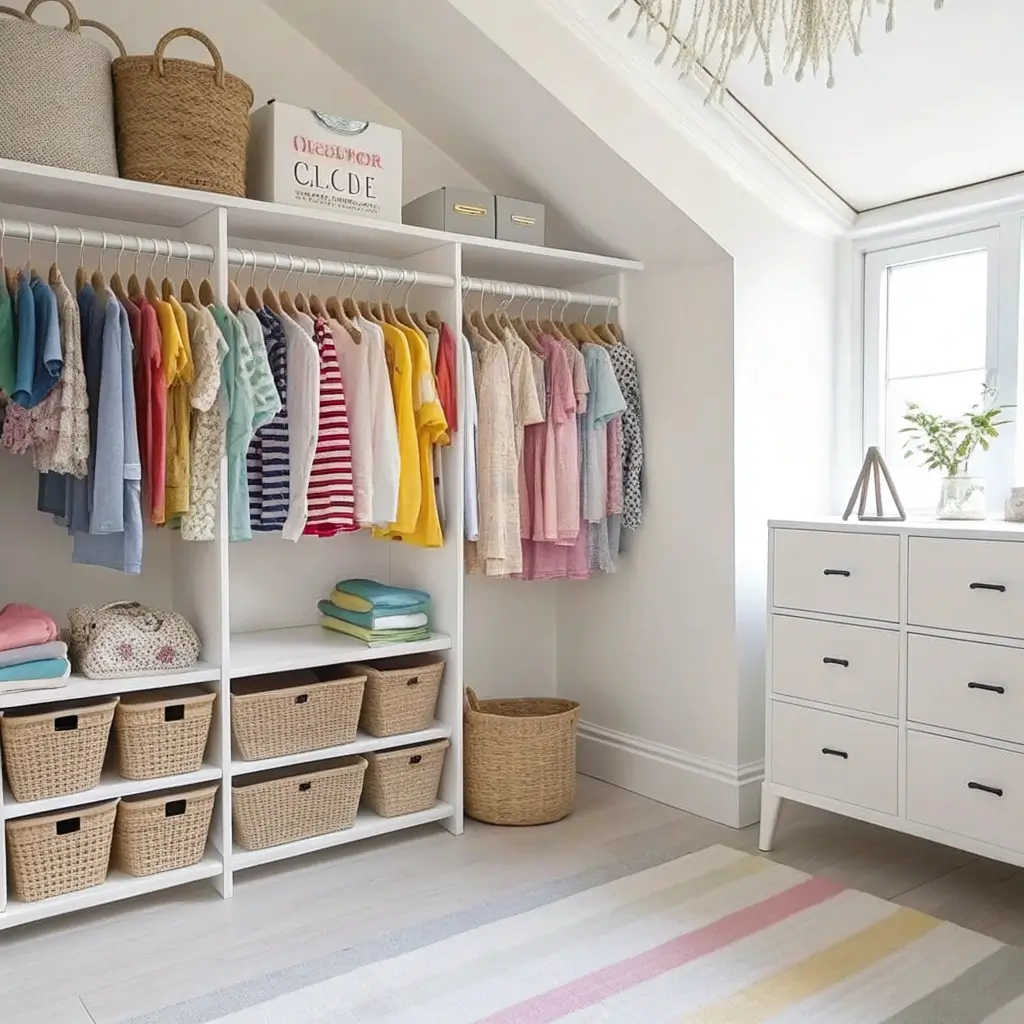
Remember when you installed that closet rod at adult height and your kid couldn’t reach anything? Yeah, we’ve all made that mistake. A low-hanging rod system is honestly the simplest fix that makes the biggest difference.
I moved my son’s closet rod down to about 3 feet high, and suddenly he could grab his own shirts. Revolutionary, I know! The beauty of this system is that it grows with your child – you just adjust the height as they get taller. Most hardware stores sell adjustable rod systems for under $30, and installation takes maybe 20 minutes.
Here’s what makes this system work so well:
- Kids can independently choose their outfits (prepare for some interesting combinations)
- Hanging clothes stay visible and accessible
- You eliminate the “Mom, I can’t reach!” morning drama
- Teaching responsibility becomes way easier when they can actually do things themselves
Pro tip: Keep a small step stool nearby for those in-between growth spurts. Your kid will feel like they’re conquering Mount Everest every time they grab their favorite hoodie.
Color-Coded Clothing Zones
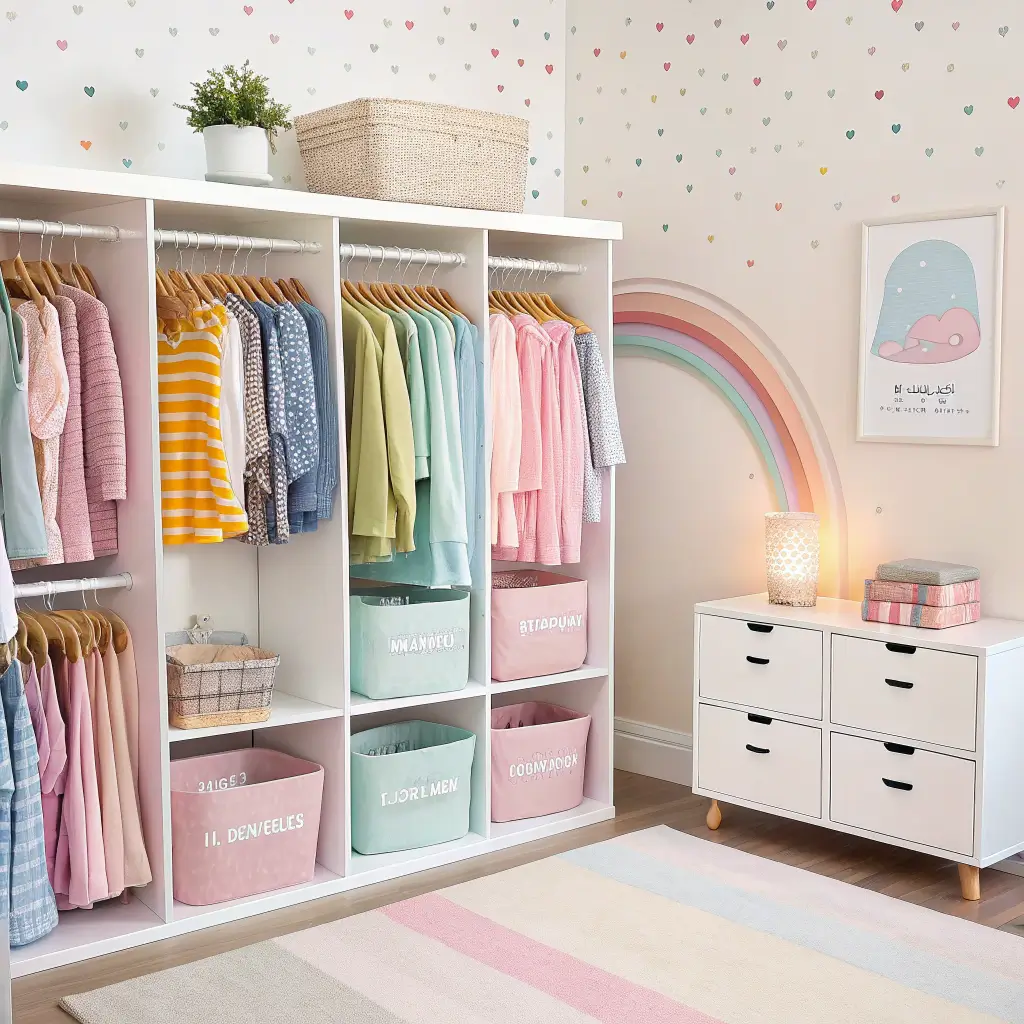
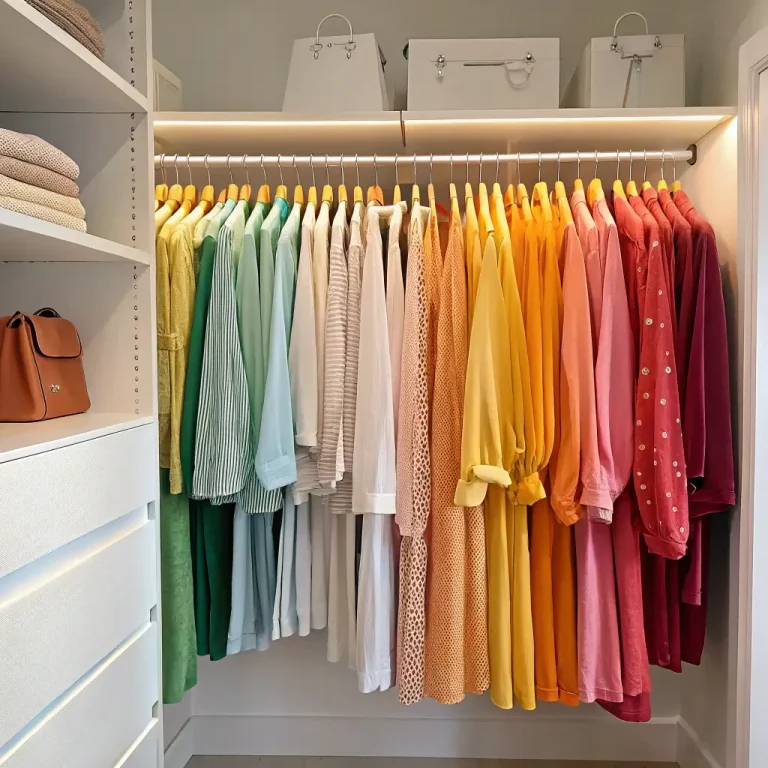
Who says organizing can’t be fun? Color-coding turns the whole closet into a giant rainbow that kids actually want to maintain. I started this with my daughter when she was four, and now at seven, she still organizes by color without me even asking.
Create distinct zones for each color group – blues here, pinks there, whites in the middle. You can use colored hangers to reinforce the system, or just group similar colors together. The visual appeal alone makes kids more likely to put things back where they belong.
Making It Work:
- Start with primary colors for younger kids
- Graduate to more nuanced shades as they grow
- Use colored bins or baskets to match each zone
- Let kids decide where each color section goes
This system also makes getting dressed faster. Need a red shirt for school spirit day? Your kid knows exactly where to look. It’s basically foolproof, and watching kids sort their laundry by color is surprisingly adorable.
Adjustable Shelf Closet Setup
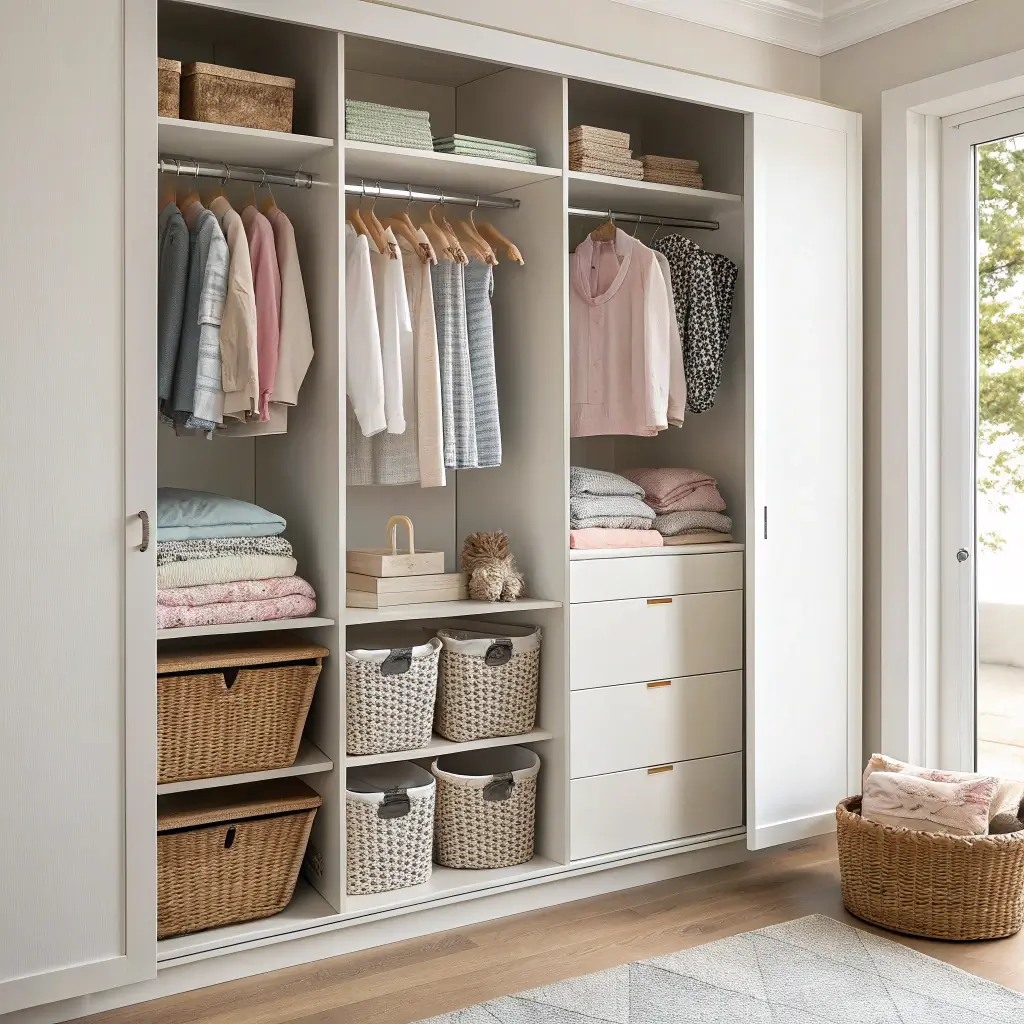
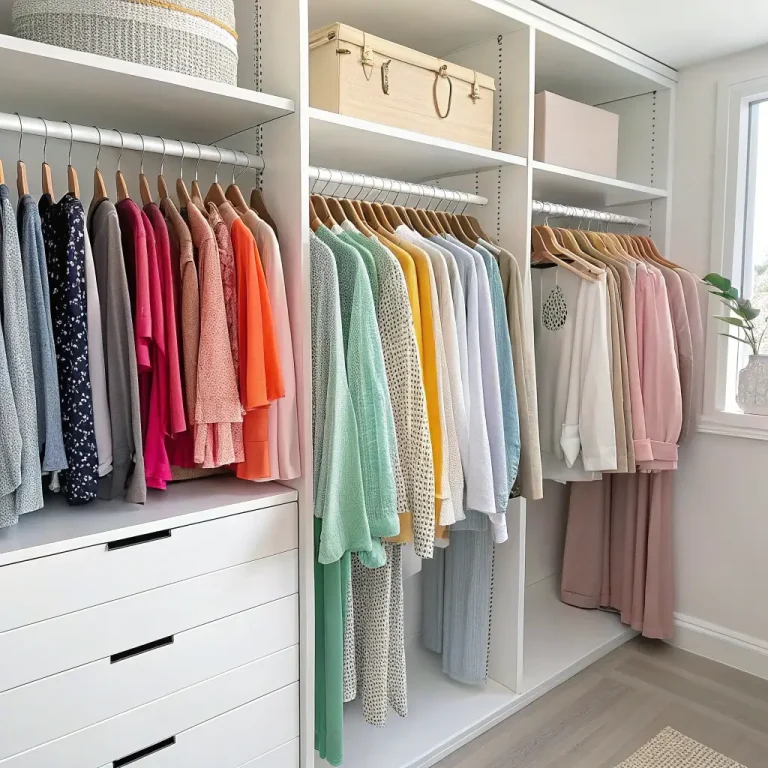
Fixed shelves are the enemy of growing children. What works for a five-year-old won’t work for a ten-year-old, and adjustable shelving systems solve this problem brilliantly.
I invested in a track system with movable shelves two years ago, and it’s been a game-changer. As my kids grow and their storage needs change, I just move the shelves around. Basketball equipment taking over? Add a tall section. Obsessed with tiny collectibles? Create multiple short shelves.
The flexibility means you’re not stuck with a configuration that stops working after six months. Plus, kids love having input on how their space is arranged – it gives them ownership over keeping it organized.
Also Read: 15 Smart Walk In Closet Organization Ideas for Stylish Spaces
Label-Led Bin Organization
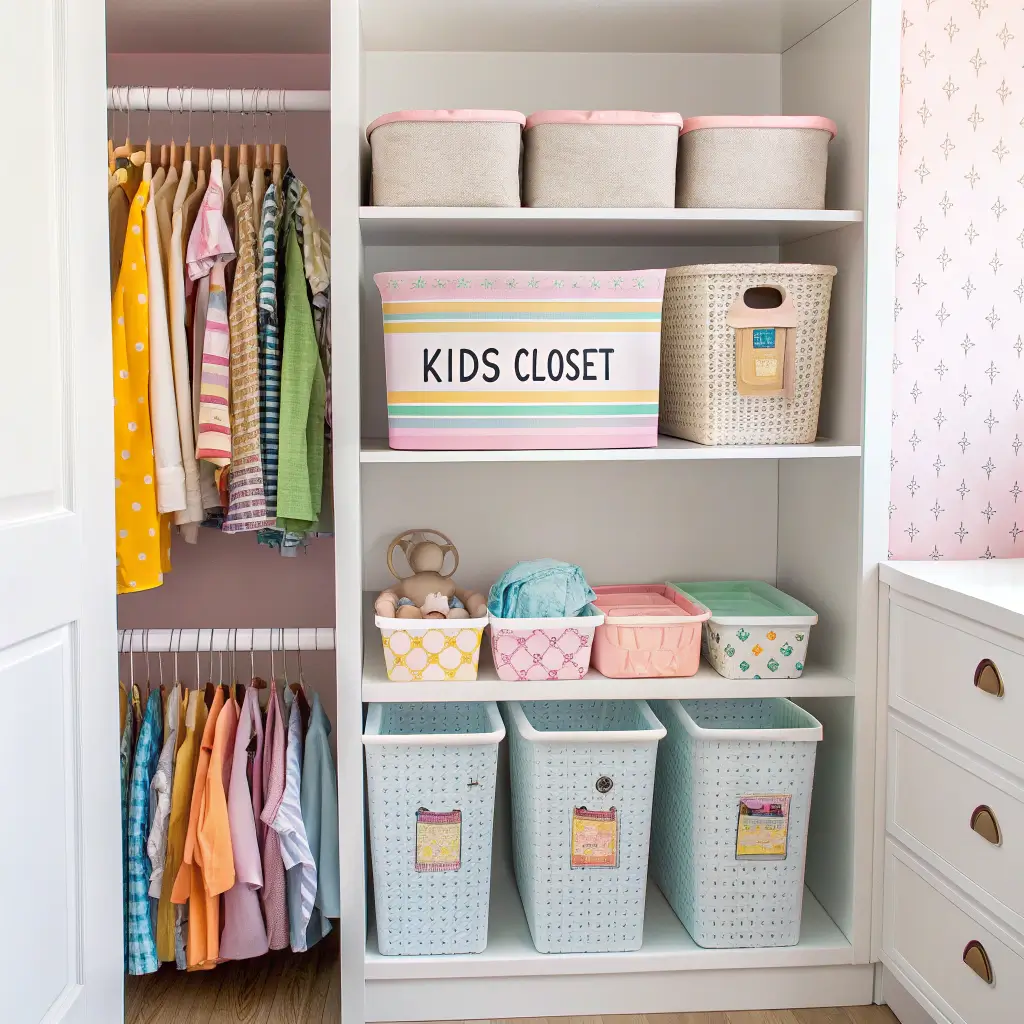
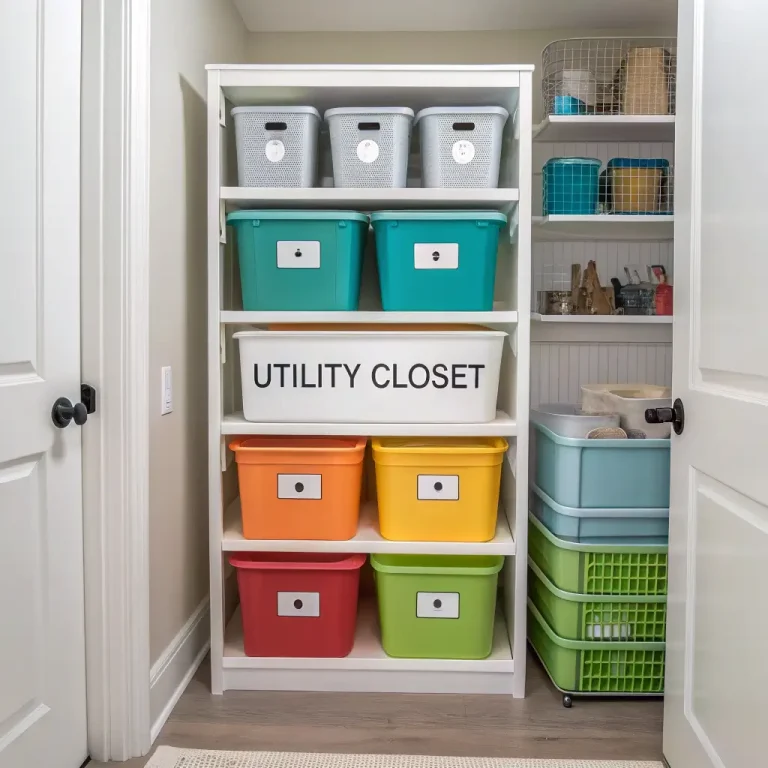
Labels aren’t just for Pinterest moms – they’re legitimately one of the best ways to maintain organization with kids. But here’s the secret: make the labels work for your kid’s reading level.
For non-readers, I use picture labels. Pants get a little pants icon, toys get a toy picture. As kids start reading, you can add words underneath the pictures. Eventually, you transition to just words. It’s like a built-in reading lesson every time they clean up!
Label System Tips:
- Laminate labels so they survive sticky fingers
- Use large, clear fonts for early readers
- Let kids decorate their own labels
- Consider color-coding labels to match bins
- Update labels as contents change
My favorite hack? I let my kids make their own labels with markers and stickers. They’re way more invested in a system they helped create. Sure, the labels aren’t Instagram-perfect, but who cares when the closet actually stays organized?
Seasonal Clothing Rotation Closet
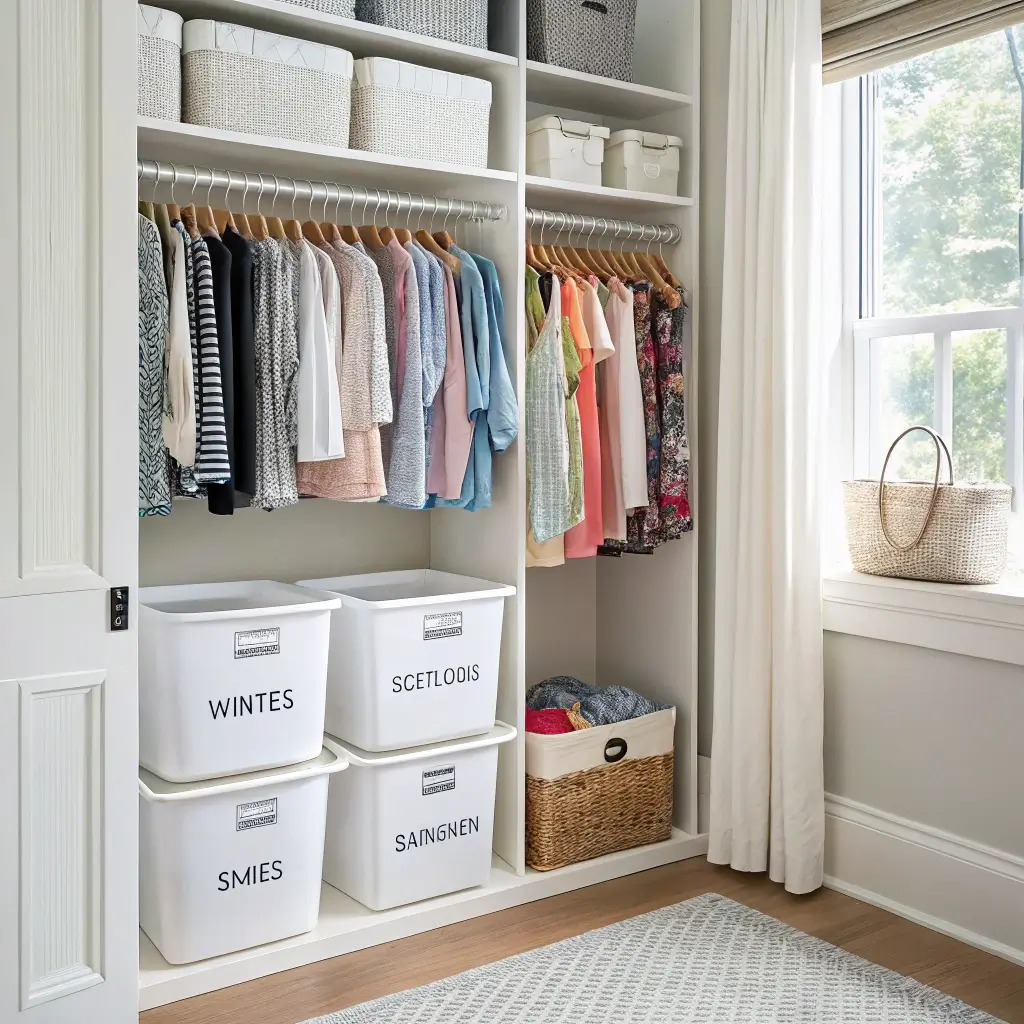
Why fight with winter coats in July or shorts in January? A seasonal rotation system keeps only current clothes accessible, making daily choices simpler for kids.
I use vacuum storage bags for out-of-season clothes and store them on the top shelf. Every few months, we have a “closet swap day” where we pack away old season clothes and bring out the new ones. My kids actually look forward to it – it’s like getting a whole new wardrobe!
This system reduces decision fatigue (ever watch a six-year-old try to choose between 47 shirts?) and keeps the closet from becoming overcrowded. Plus, when you rotate clothes back in, you instantly see what doesn’t fit anymore. No more discovering in December that last year’s snow pants are three inches too short.
Shared Kids Closet Divider System
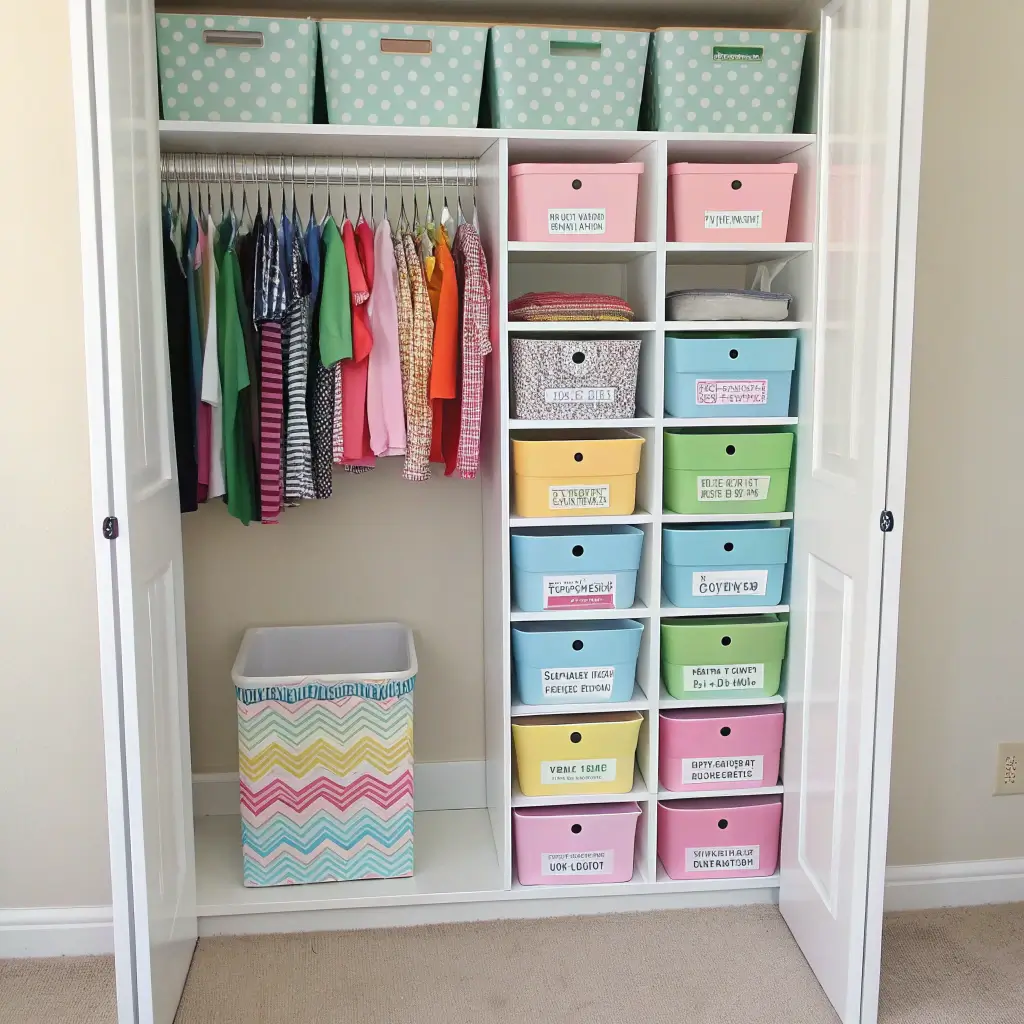
Got multiple kids sharing one closet? Welcome to the thunderdome! But seriously, divider systems can turn potential warfare into peaceful coexistence.
Physical dividers are your best friend here. I use a simple tension rod down the middle of the closet, creating two distinct sides. Each kid gets their own color hangers, bins, and even a different shelf paper pattern. The visual separation makes ownership crystal clear.
You can also try:
- Alternating hanger colors
- Using furniture dividers for deeper closets
- Installing separate low rods at different heights
- Creating “neutral zones” for shared items
The key is making boundaries super obvious. When my twins were younger, I literally put tape down the middle of the closet floor. Dramatic? Maybe. Effective? Absolutely.
Also Read: 15 Simple Small Closet Organization Ideas to Declutter Fast
Cube Storage Closet Layout
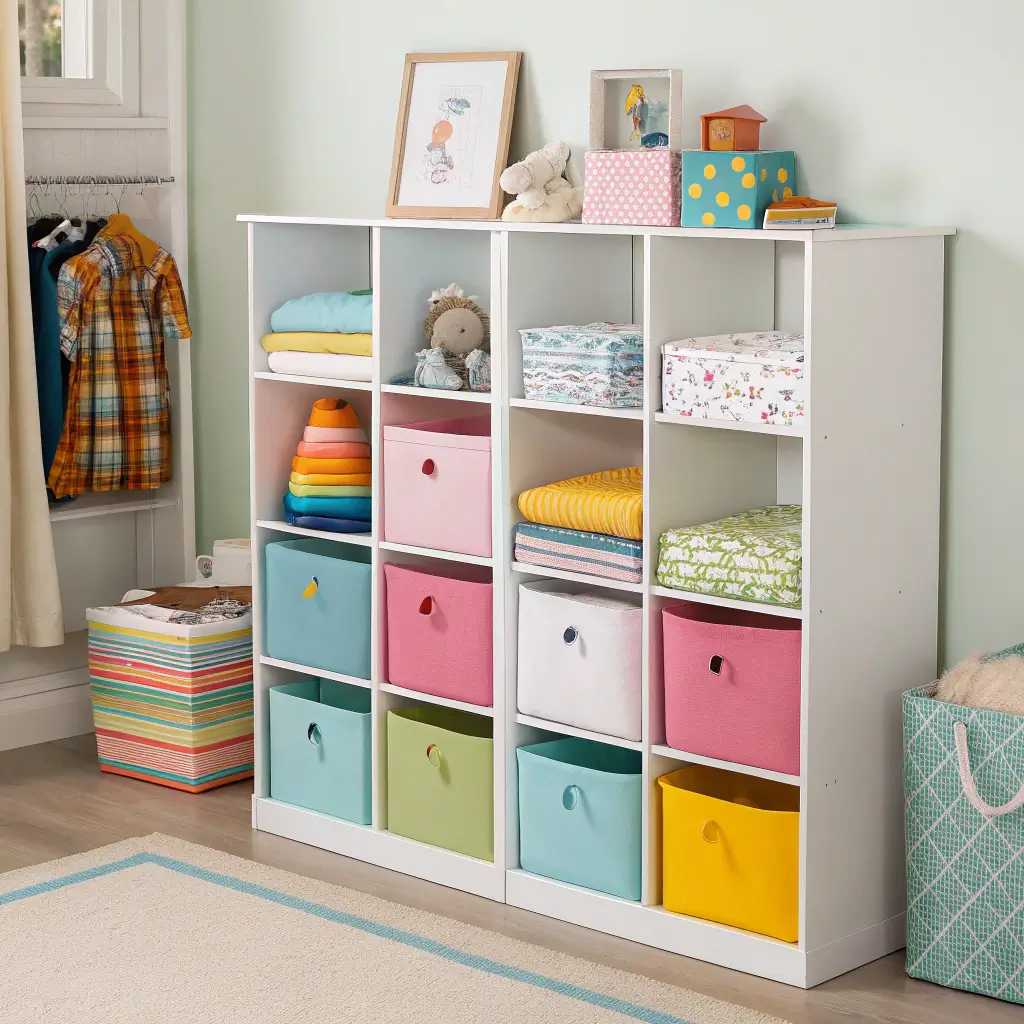
Cube organizers are like the Swiss Army knives of closet organization. They’re versatile, affordable, and kids actually understand how to use them. Each cube becomes its own little zone – one for undies, one for PJs, one for that collection of random treasures your kid insists on keeping.
I bought a 9-cube organizer for $60, and it transformed my son’s closet from disaster zone to functional space. The best part? Cube storage grows with your kids. Today’s stuffed animal storage becomes tomorrow’s sports equipment cubby.
Maximizing Cube Storage:
- Use fabric bins in some cubes for hidden storage
- Leave some cubes open for easy access items
- Stack two units for floor-to-ceiling storage
- Add labels or pictures to each cube
- Rotate cube contents seasonally
FYI, those fabric cube inserts are machine washable. Learn from my mistake and buy extras – because kids will spill things. They always spill things.
Toy-and-Clothes Combo Closet
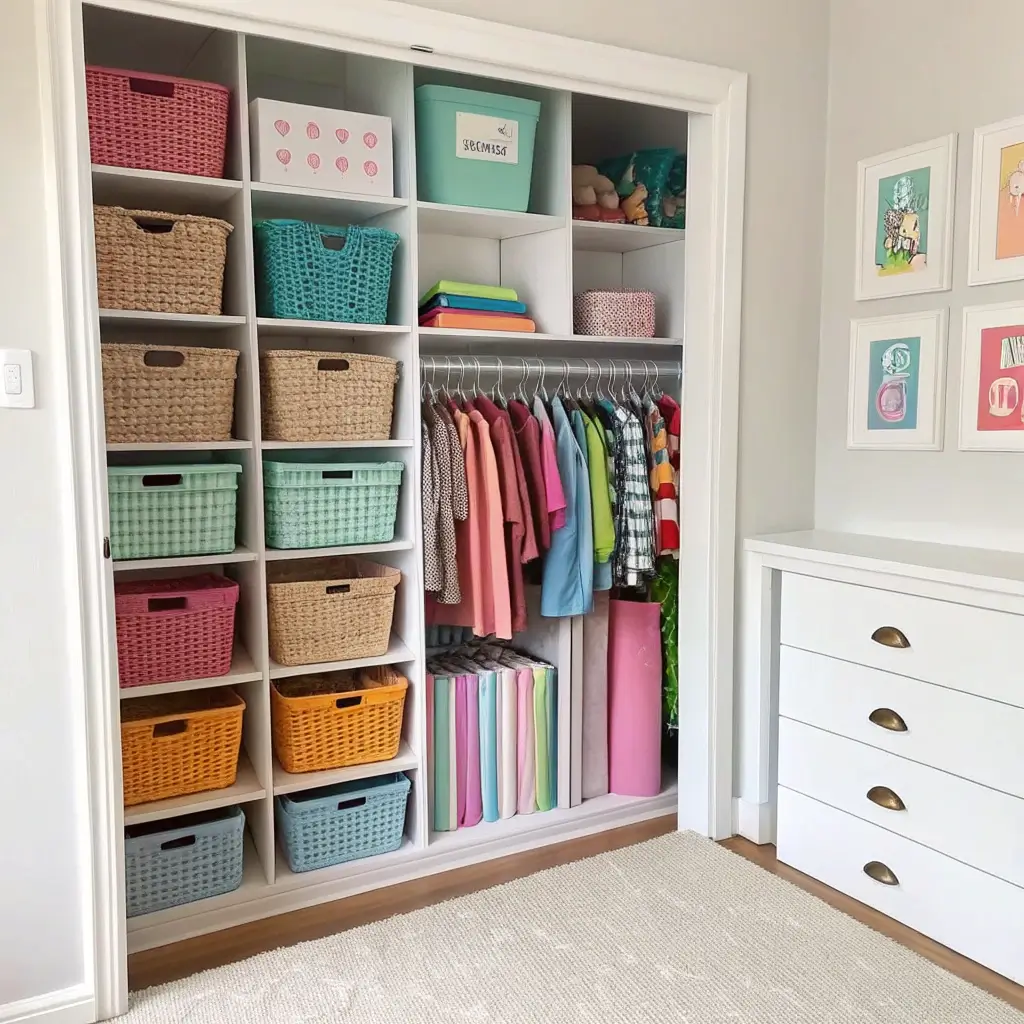
Let’s face it – kids don’t separate toys and clothes in their minds like adults do. So why force an artificial division? A combo closet embraces the chaos while keeping it controlled.
I dedicate the bottom third of the closet to toy storage, the middle to everyday clothes, and the top to less-used items. Rolling carts hold current favorite toys and can wheel out for playtime. Mesh bags on hooks store stuffed animals where kids can see (and reach) them.
This setup acknowledges that kids will play in their rooms and change clothes there too. Instead of toys migrating to the closet anyway, you’re giving them an official home. It’s working with kid logic, not against it 🙂
Shoe Wall Organizer for Kids
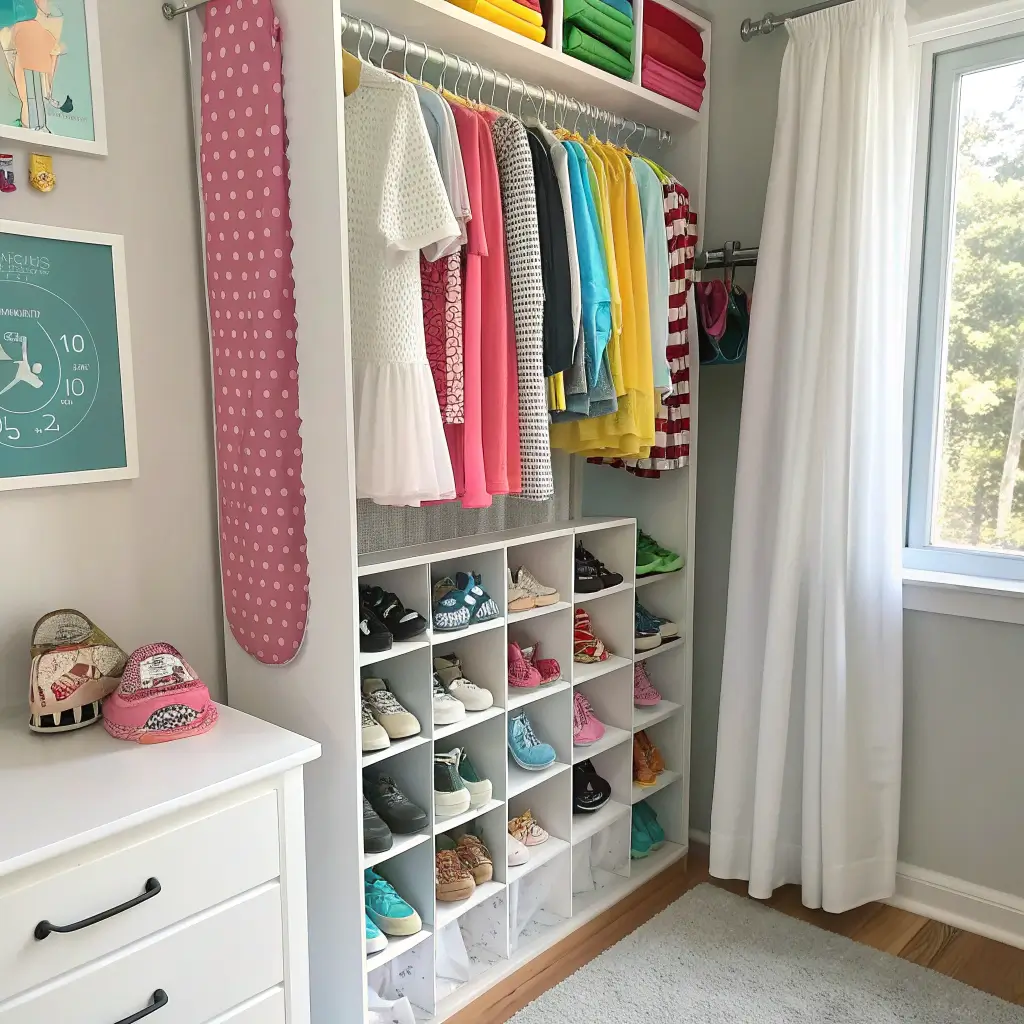
Kids’ shoes multiply like rabbits, I swear. One day you have three pairs, the next you’re drowning in sneakers, boots, and those dress shoes they wore exactly once. A wall-mounted shoe organizer reclaims your floor space while keeping everything visible.
Over-the-door shoe organizers work great for smaller shoes. I use clear pockets so kids can instantly spot the pair they want. For bigger kids, wall-mounted rails or floating shelves display shoes like a store. My daughter loves arranging hers by color – it’s become her thing.
Remember to mount organizers at kid height. There’s no point in a beautiful shoe display if your four-year-old needs a ladder to reach their light-up sneakers.
Also Read: 15 Genius Closet Organization Ideas and Quick Decluttering Tips
Drawer-Based Closet Organization
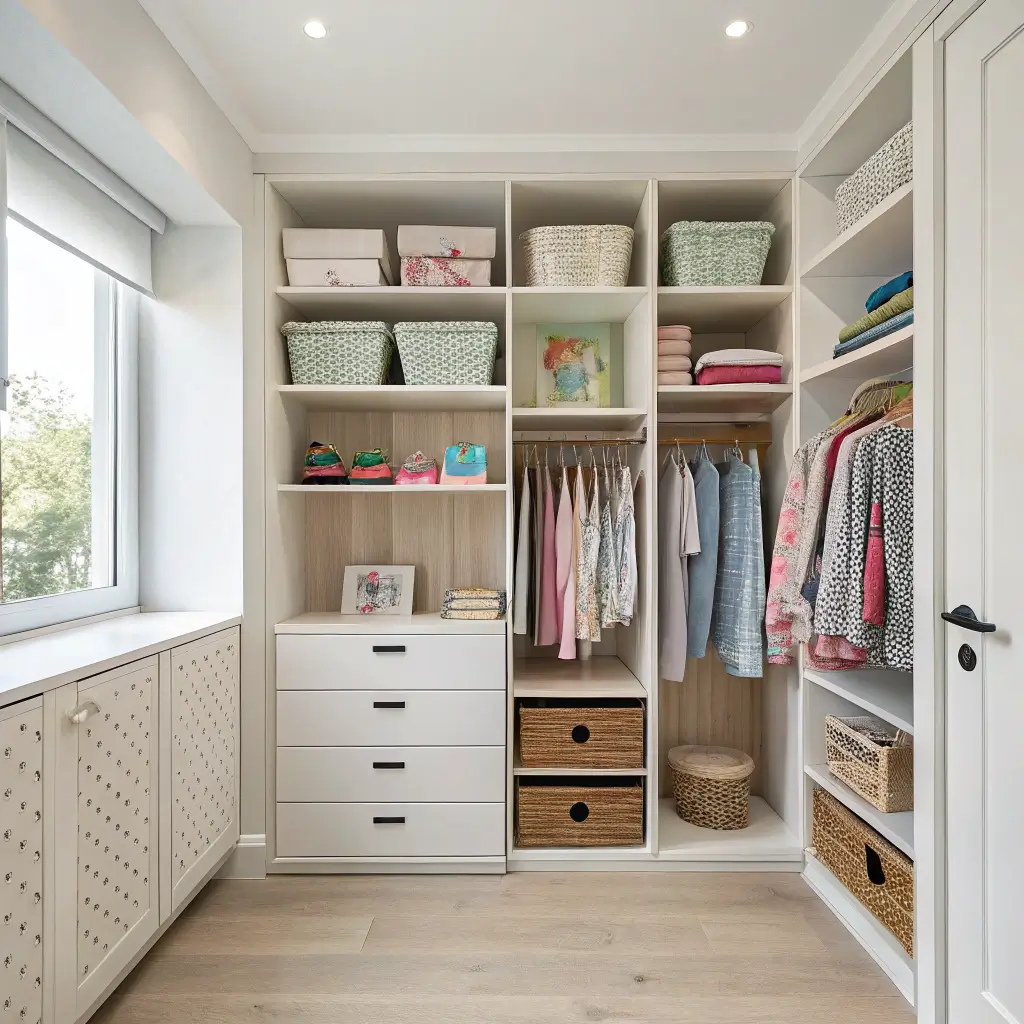
Not every closet needs hanging space. Drawer systems can be more intuitive for younger kids who struggle with hangers. I converted half my son’s closet to drawers when he was five, and getting dressed became so much easier.
You can use a small dresser, rolling drawer units, or built-in drawer systems. The key is making each drawer serve one purpose – underwear drawer, sock drawer, t-shirt drawer. No mixing allowed! This clarity helps kids maintain the system independently.
Drawer Organization Hacks:
- Use drawer dividers for smaller items
- Roll clothes instead of folding for better visibility
- Label drawer fronts with words and pictures
- Keep most-used items in lower drawers
- Use shallow drawers for kid-sized clothes
The rolling method has been a game-changer in our house. My kids can see every shirt at once, and somehow rolled clothes stay neater longer. Science? Magic? Who knows, but it works!
Minimalist Montessori Closet
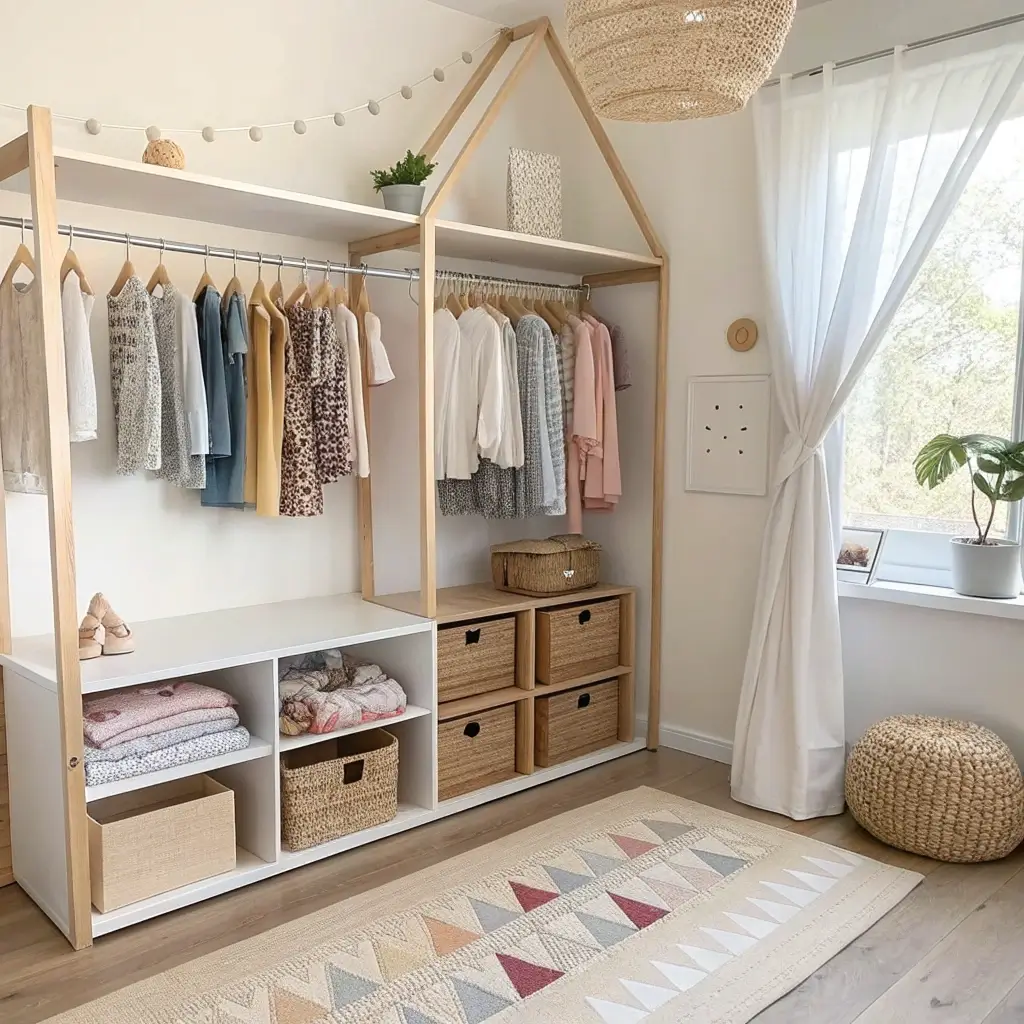
The Montessori approach isn’t just for classrooms – it creates incredibly functional closet spaces that encourage independence. The principle is simple: less stuff, more accessibility.
I tried this with my youngest, limiting her closet to 7-8 outfits at a time. Everything hangs at her height, shoes sit on a low shelf, and a small mirror lets her see her choices. The reduced options mean she can dress herself without overwhelming decision paralysis.
This system requires regular rotation of clothes (I keep extras in storage bins), but the payoff is huge. My three-year-old picks her own outfits and puts dirty clothes in the hamper. The pride on her face when she does it “all by myself” is worth any extra effort.
Rolling Basket Closet Storage
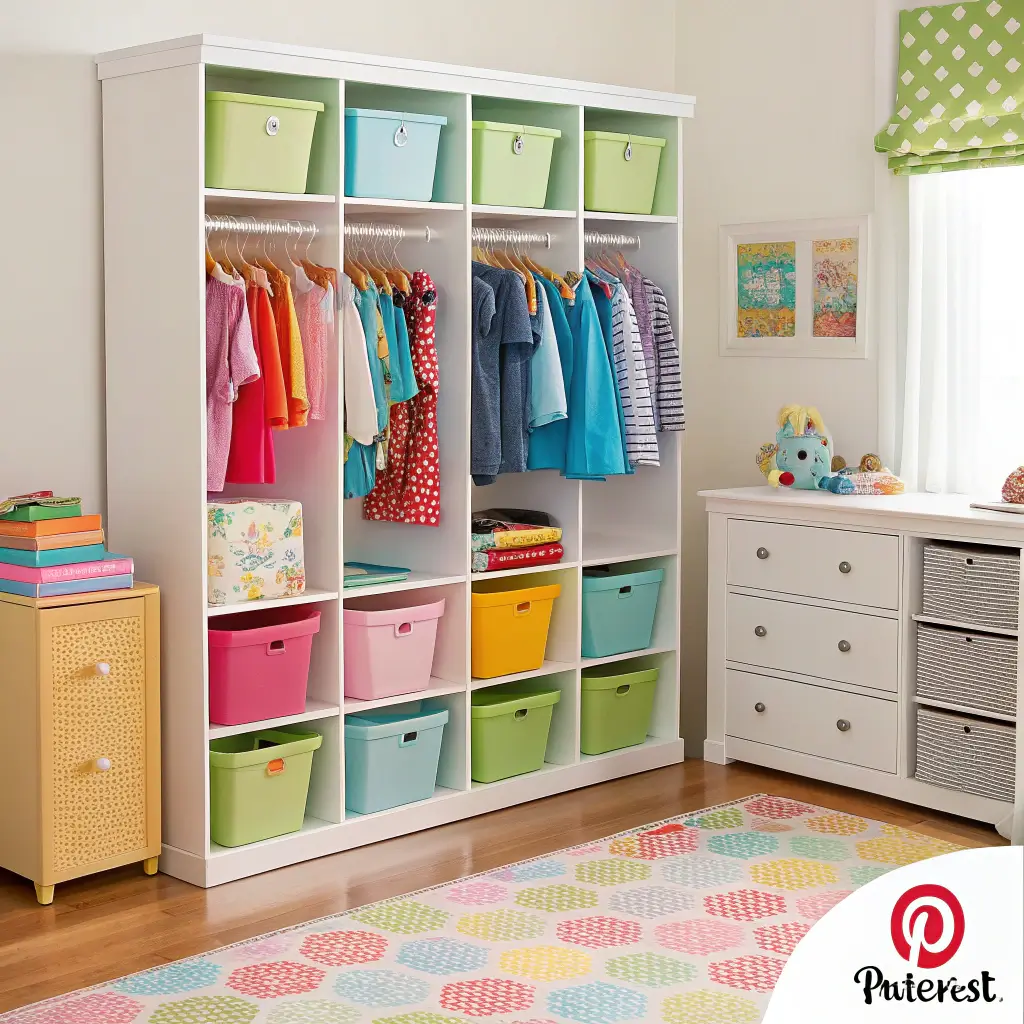
Rolling baskets are mobility magic. Kids can pull out entire categories of items, use what they need, and roll everything back. No more excavating through fixed bins or creating avalanches trying to reach something in the back.
I use three rolling baskets in each kid’s closet – one for sports stuff, one for dress-up clothes, and one for seasonal accessories. The wheels mean even heavy baskets move easily, and the open tops make tossing things in super simple.
Want to sort laundry? Roll the basket to the laundry room. Need to pack for a trip? Roll it to the bed. This mobility factor is seriously underrated IMO.
Vertical Door Storage Closet
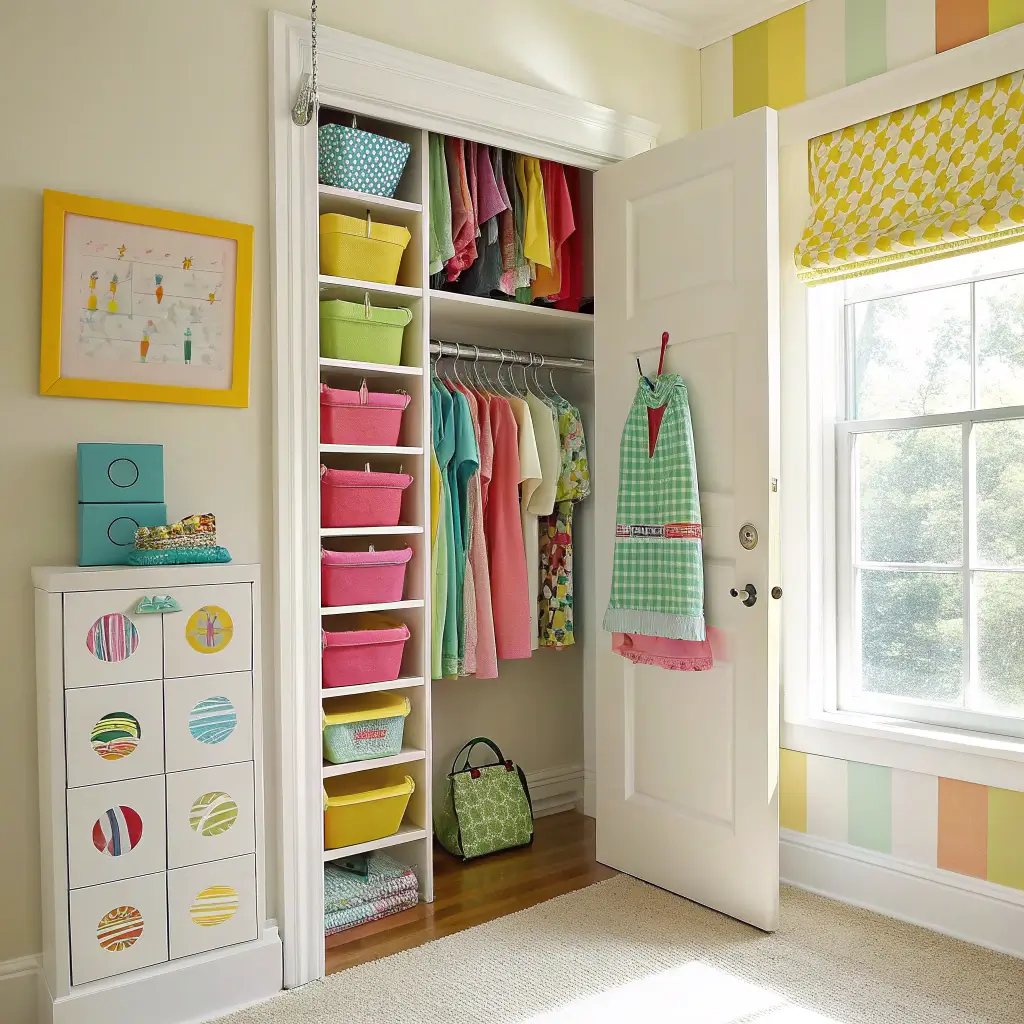
That closet door is prime real estate you’re probably wasting. Over-the-door organizers can double your storage without taking up any floor or hanging space.
I use different organizers on each kid’s door:
- Clear pocket organizers for accessories and small toys
- Hook systems for bags and hats
- Narrow shelving units for books or games
- Mirror/jewelry organizer combos for older kids
The trick is not overloading the door. Keep items lightweight and frequently used. Nobody wants a door that’s too heavy to open easily – learned that one the hard way.
Size-Sorted Clothing Closet
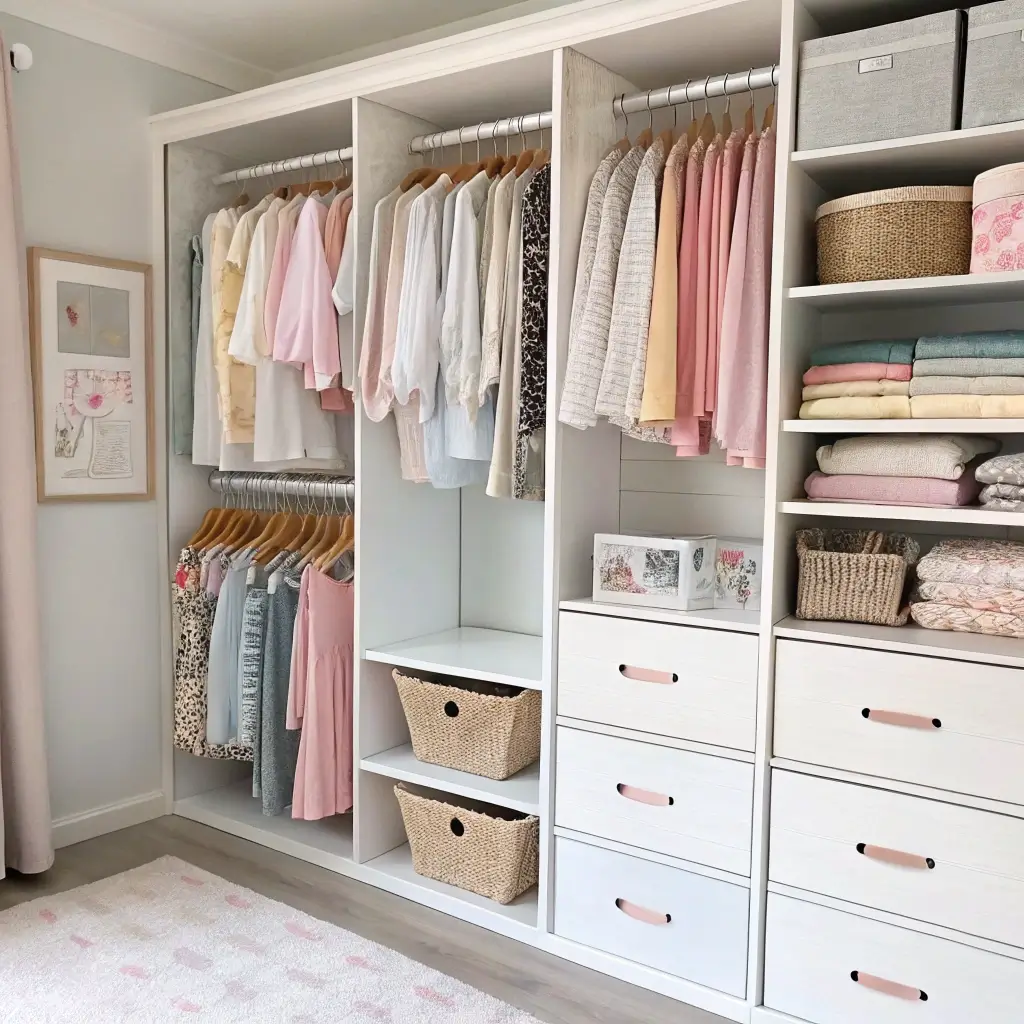
Kids grow fast, and organizing by size instead of clothing type can be surprisingly effective. All 4T clothes together, all size 5 together, and so on.
This system shines when you have hand-me-downs or clothes kids will grow into. I keep current size front and center, next size up to the right, and previous size (for younger siblings) to the left. When growth spurts hit, you just shift everything over.
I also use this for seasonal clothes within sizes. All size 6 winter clothes together, all size 6 summer clothes together. It makes those transition periods so much smoother.
DIY Budget-Friendly Closet System
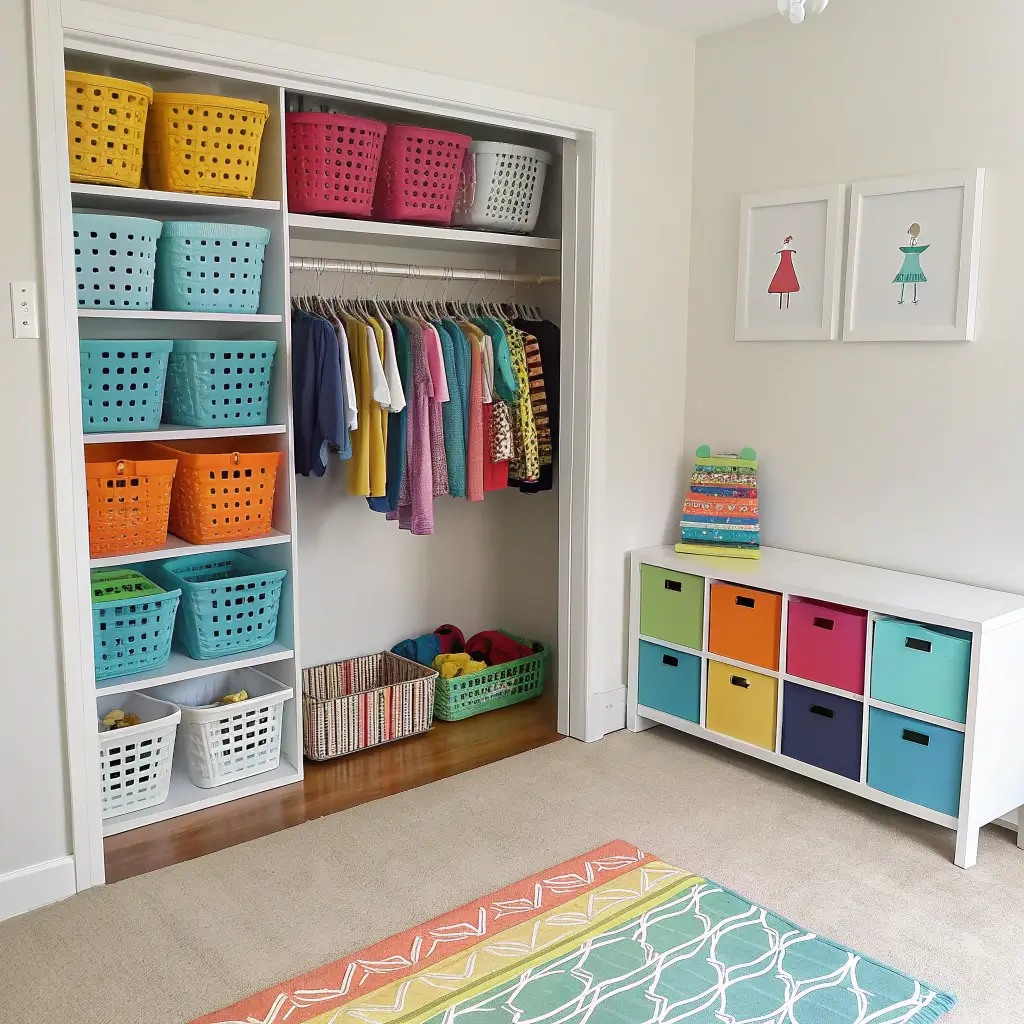
You don’t need expensive built-ins to create an organized closet. DIY solutions can be just as effective and way more affordable. Plus, kids love helping build their own organizational systems.
My favorite budget hacks:
- Tension rods create instant dividers ($5 each)
- Cardboard boxes + contact paper = custom bins ($2 per box)
- Pool noodles on hangers prevent clothes from slipping ($1 fix)
- Shower caddies hold accessories ($3 at dollar store)
- Pegboard creates adjustable storage walls ($20 for a large sheet)
We made our entire closet system for under $50 using tension rods, plastic crates from the dollar store, and some spray paint. Is it Pinterest-perfect? Nope. Does it work? Absolutely.
The best part about DIY is you can modify as you go. Kid suddenly obsessed with hats? Add more hooks. Starting sports? Create a gear section. You’re not locked into anything permanent.
Making It All Work Together
Here’s the real secret: the best closet system is the one your kids will actually use. You can have the most beautiful, organized closet in the world, but if it’s too complicated for a tired seven-year-old after school, it’ll fall apart in days.
Start small. Pick one or two ideas that address your biggest pain points. Maybe it’s the low-hanging rod because your kid can’t reach anything. Maybe it’s bins with picture labels because nobody knows where anything goes. Build from there.
Get your kids involved in the process. Let them choose colors, make labels, decide where things go. When they have ownership, they’re way more likely to maintain the system. My kids actually remind each other where things belong now – it’s become their system, not just mine.
Remember, perfection isn’t the goal here. The goal is functional, maintainable organization that makes everyone’s life easier. Some days the closet will look amazing. Other days, you’ll find a half-eaten sandwich in the shoe bin. That’s life with kids :/
The ideas I’ve shared aren’t rules – they’re starting points. Mix and match, modify as needed, and don’t be afraid to completely change course if something isn’t working. Every kid is different, every closet is different, and what works for your neighbor might be a disaster for you.
But I promise you this: when you find the right combination, mornings get easier, bedtime cleanup gets faster, and you might even hear those magical words: “I put everything away all by myself!” And honestly? That makes every bit of effort worth it.
Now go tackle that closet. You’ve got this. And when you’re done, pour yourself a coffee (or something stronger) and admire your handiwork. Because organizing a kid’s closet that actually stays organized? That’s basically a superpower.