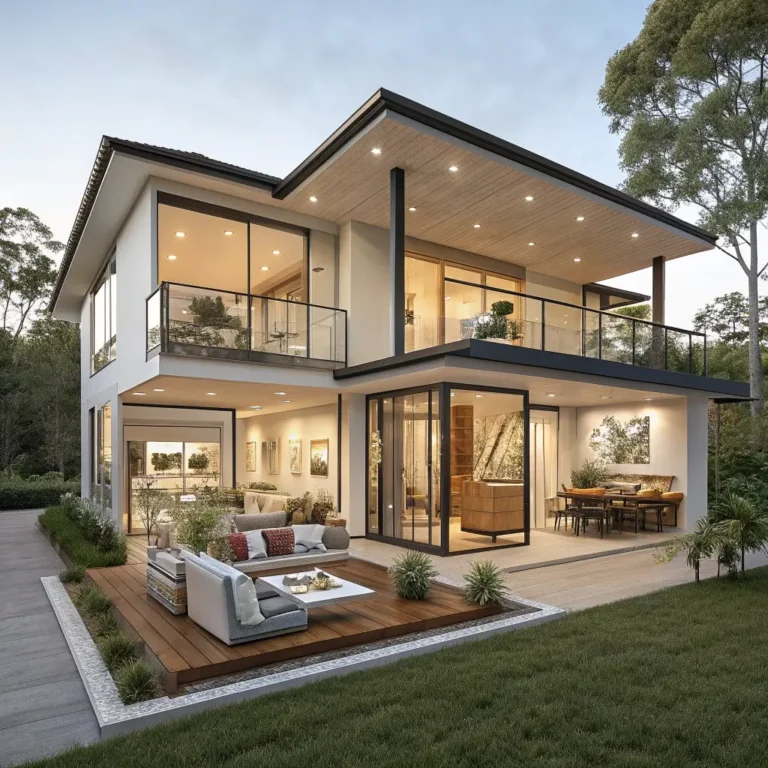
15 Smart House Plans Ideas for Modern Family Living

Remember that time you walked into someone’s home and thought, “This is it. This is exactly what I want”? Yeah, me too.
After spending way too many weekends touring open houses and scrolling through endless Pinterest boards, I’ve learned that finding the perfect house plan feels like searching for a unicorn – until you know exactly what you’re looking for.
Let’s talk about 15 killer house plan ideas that actually make sense for real people living real lives. No pretentious architect-speak here, just straight talk about designs that work.
Modern Open-Concept Family House Plan
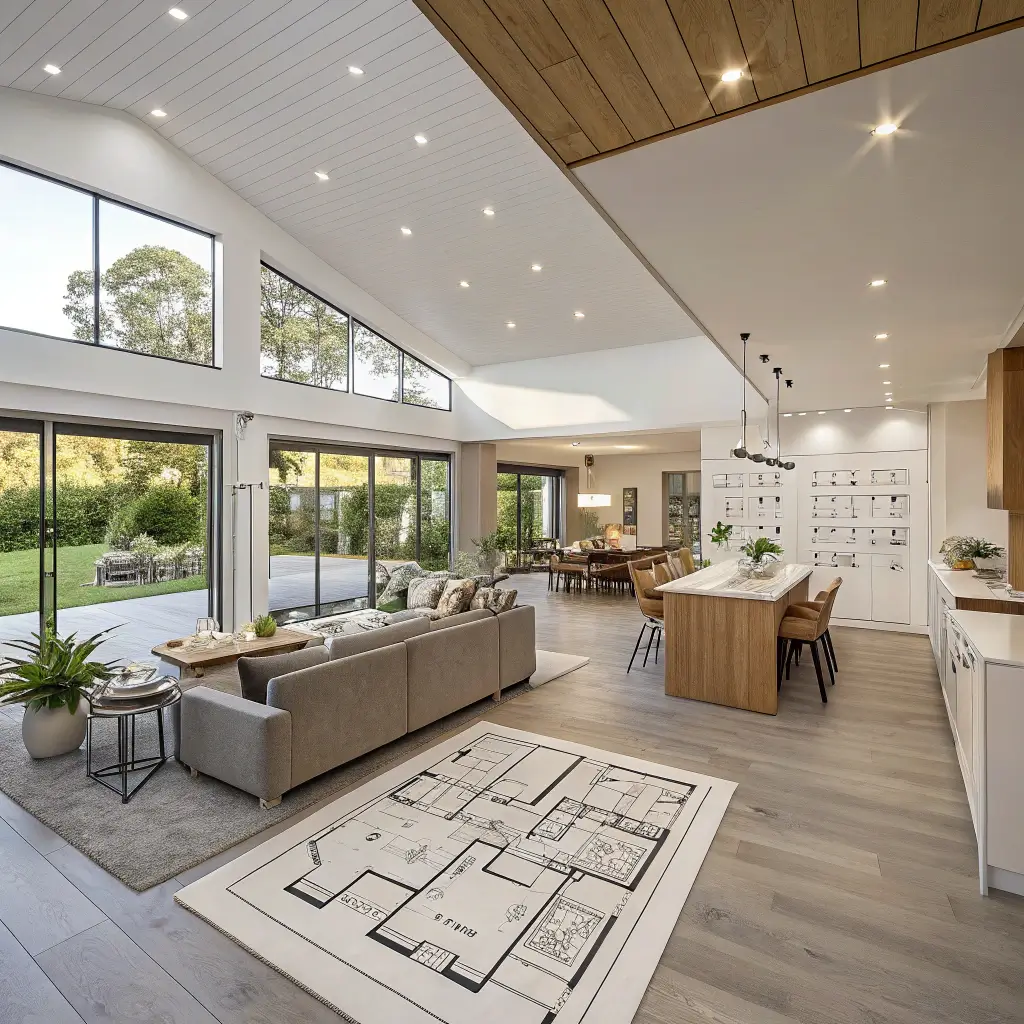
You know what I love about open-concept plans? They make your 2,000 square feet feel like 3,000. Seriously, knocking down those walls between the kitchen, dining, and living areas creates this massive social hub that becomes the heart of your home.
Think about it – when was the last time you had friends over and everyone didn’t end up crowding in the kitchen anyway? Open-concept designs just accept this reality and roll with it. You get clear sightlines from the kitchen island to the TV (perfect for not missing the game while cooking), and kids can do homework at the dining table while you prep dinner.
The best modern open-concept plans I’ve seen include:
- Central kitchen islands with seating for 4-6 people
- Floor-to-ceiling windows along the back wall
- Defined zones using furniture placement rather than walls
- Hidden storage solutions to maintain clean lines
- Flexible spaces that adapt to different activities
Making Open-Concept Work for Families
Here’s the thing nobody tells you about open-concept living – noise travels. My neighbor learned this the hard way when their toddler discovered drums. The solution? Strategic design elements like area rugs, soft furnishings, and ceiling treatments that absorb sound while maintaining that spacious feel.
I recommend incorporating a small nook or alcove somewhere in the design. Trust me, when someone needs a Zoom call while the kids are home, you’ll thank yourself for that semi-private space.
Small Plot Smart Layout House Plan

Got a postage stamp-sized lot? Join the club. Urban lots are shrinking, but that doesn’t mean your dreams have to. Smart layout planning on small plots has become an art form, and honestly, some of the cleverest designs I’ve encountered work with less than 3,000 square feet of land.
The secret sauce here involves vertical thinking. Instead of spreading out, you build up. Multi-level designs with staggered floors create distinct living zones without eating up precious ground space. One brilliant plan I saw recently featured:
- Ground floor garage with workshop space
- Main living areas on the second floor
- Bedrooms on the third level
- Rooftop deck for outdoor living
Maximizing Every Square Inch
You want to hear something crazy? Small plots often force better design decisions. When every square foot counts, you eliminate the fluff and focus on what actually matters. Built-in furniture becomes your best friend, and suddenly that awkward corner transforms into a reading nook with hidden storage.
Single-Story Minimalist Home Plan
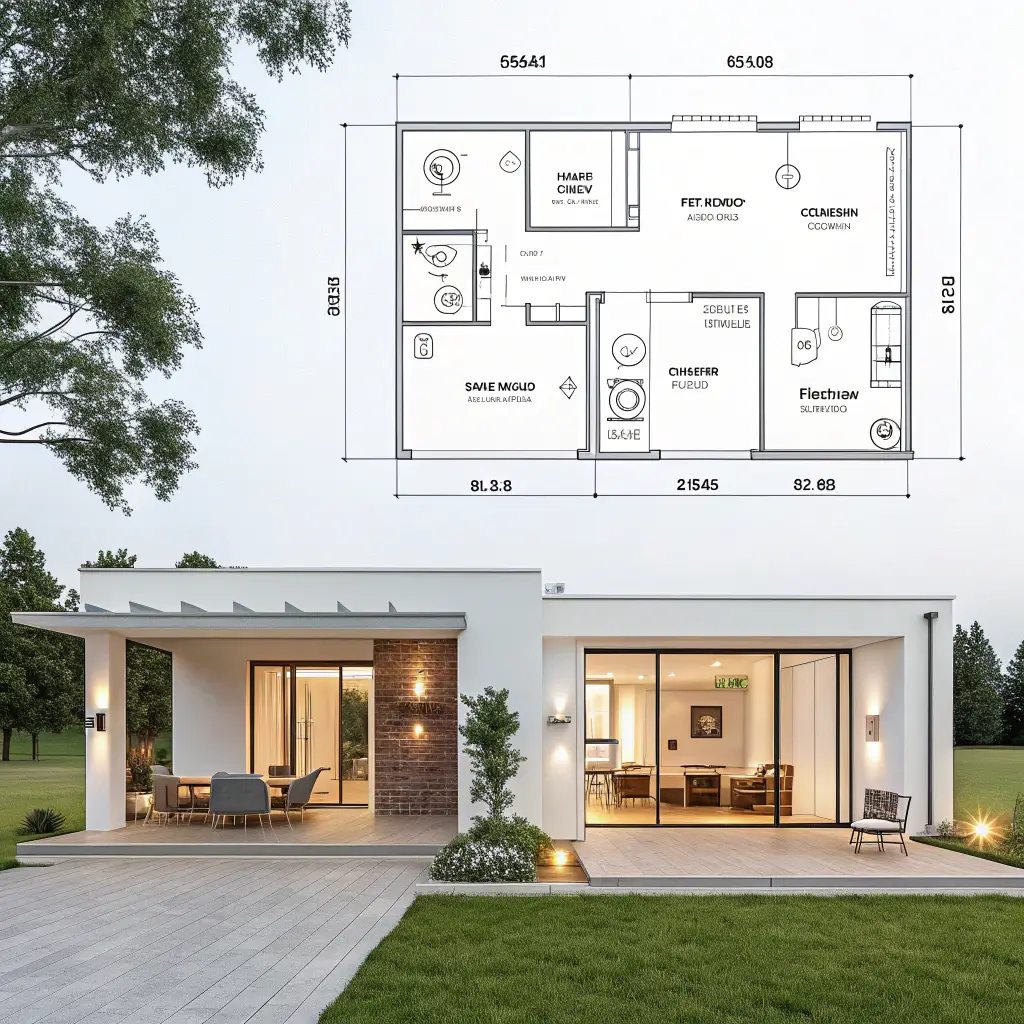
Can we talk about the beauty of single-story living for a minute? No stairs means no lugging laundry baskets up and down, no worrying about elderly parents visiting, and everything flows on one seamless level. Minimalist design takes this simplicity and cranks it up to eleven.
These plans typically feature:
- Clean, uncluttered lines
- Large windows replacing decorative elements
- Neutral color palettes
- Multi-functional spaces
- Hidden storage everywhere
I toured a minimalist single-story home last month that blew my mind. The entire house had maybe ten interior doors, yet every space felt perfectly defined. How? Through clever use of partial walls, level changes, and ceiling treatments.
The Psychology of Minimalist Living
Here’s what nobody mentions about minimalist house plans – they’re surprisingly forgiving. Fewer design elements mean fewer things to maintain, update, or regret five years later. Plus, when your architecture speaks for itself, you don’t need to fill every corner with stuff.
Also Read: 15 Sweet DIY Girls Room Decor Ideas to Add Fun and Style
Luxury Duplex House Plan Design

Who says duplexes can’t be luxurious? Modern duplex designs have evolved way beyond those cookie-cutter boxes from the ’70s. Today’s luxury duplexes offer two complete homes that share a wall but nothing else – not even an aesthetic compromise.
Picture this: mirror-image floor plans with individual entrances, private outdoor spaces, and soundproofing that would make a recording studio jealous. Each unit typically includes:
- Master suites with walk-in closets and spa bathrooms
- Gourmet kitchens with high-end appliances
- Private garages with direct interior access
- Separate utility connections
- Individual outdoor living areas
Investment Potential of Luxury Duplexes
Let’s get real about the financial benefits here. Build one, live in one, rent the other – it’s basically having your mortgage paid by someone else. FYI, in most markets, a well-designed luxury duplex commands premium rent that covers 60-80% of your total mortgage. Not too shabby, right?
Budget-Friendly Compact House Plan

Alright, let’s address the elephant in the room – not everyone has a massive budget. But here’s the good news: compact doesn’t mean cramped, and budget-friendly doesn’t mean boring. Some of the most innovative designs I’ve seen lately come from architects working within tight financial constraints.
Smart budget-friendly features include:
- Simple rooflines (complex roofs = complex costs)
- Standard window sizes
- Open floor plans that reduce wall construction
- Efficient mechanical system placement
- Pre-designed plans that avoid custom fees
Where to Spend and Where to Save
Want my honest opinion? Spend on the bones of the house – foundation, framing, insulation, and mechanical systems. Save on the cosmetic stuff you can upgrade later. That builder-grade carpet? Replace it in five years when you’ve recovered financially from building.
I’ve seen people blow their budget on fancy tile and designer fixtures, then cheap out on insulation. Guess who’s paying massive heating bills while looking at their pretty bathroom? Don’t be that person.
L-Shaped Courtyard House Plan

Ever notice how L-shaped houses create their own little worlds? That protected courtyard becomes this magical outdoor room that’s private, functional, and absolutely perfect for entertaining. The design naturally shields your outdoor space from wind and prying neighbors’ eyes 🙂
The best L-shaped plans position the courtyard to:
- Maximize afternoon shade
- Create visual connections between wings
- Provide easy access from multiple rooms
- Include outdoor kitchen potential
- Accommodate a pool or water feature
Living with an L-Shaped Layout
Here’s what I discovered living in an L-shaped house for three years – the separation between public and private spaces happens naturally. One wing becomes the social zone (living, dining, kitchen), while the other houses bedrooms. Parents, this means your teenagers can have friends over without everyone tripping over each other.
Also Read: 15 Colorful DIY Baby Room Decor Ideas and Playful Designs
Contemporary Two-Bedroom House Plan

Two-bedroom houses get a bad rap, but honestly? They’re perfect for so many life situations. Empty nesters downsizing, young couples starting out, single professionals who want a home office – the list goes on. Contemporary two-bedroom designs maximize every square foot while maintaining style.
Modern two-bedroom plans often feature:
- Dual master suites for roommate situations
- Flex spaces that convert between office and guest room
- Open living areas that feel spacious
- Outdoor living extensions
- Smart home integration from day one
The Second Bedroom Dilemma
Should the second bedroom be another bedroom, an office, or a multi-purpose space? My take: design it as a bedroom with good closet space, but choose furniture that allows flexibility. A daybed with trundle beats a permanent queen bed if you’re using the room as an office 350 days a year.
Three-Bedroom Family-Focused House Plan

The three-bedroom house remains America’s sweetheart for good reason. It hits that sweet spot between space and maintenance, cost and comfort. Family-focused designs prioritize how real families actually live – messy, busy, and constantly evolving.
Key features for family living include:
- Mudroom entries from the garage
- Kitchen visibility to play areas
- Homework stations near but not in the kitchen
- Separate adult and kid bathroom access
- Flexible basement or bonus room space
Growing Into Your Three-Bedroom
What I love about well-designed three-bedroom plans? They grow with you. That nursery becomes a toddler room, then a teen cave, and eventually a home office when the kids move out. Design with the next 20 years in mind, not just the next two.
Narrow Lot Vertical House Plan

Got a lot that’s narrower than a bowling lane? Welcome to vertical living! Narrow lot plans have become incredibly sophisticated, using height to compensate for width. We’re talking 20-25 feet wide but three stories tall.
Vertical designs maximize space through:
- Stacked living areas with bedrooms above public spaces
- Skylights and light wells for natural illumination
- Narrow staircases that double as design features
- Rooftop decks for outdoor space
- Built-in everything to avoid furniture bulk
The Vertical Lifestyle Reality Check
Living vertical means climbing stairs. A lot. But you know what? My friend with a three-story narrow lot home has the best legs in our friend group, and her utility bills are tiny because heating and cooling a narrow footprint costs way less. Plus, the views from that third floor? Absolutely worth the climb.
Also Read: 15 Fun DIY Kids Room Decor Ideas to Brighten Rooms
Modern Farmhouse Style House Plan
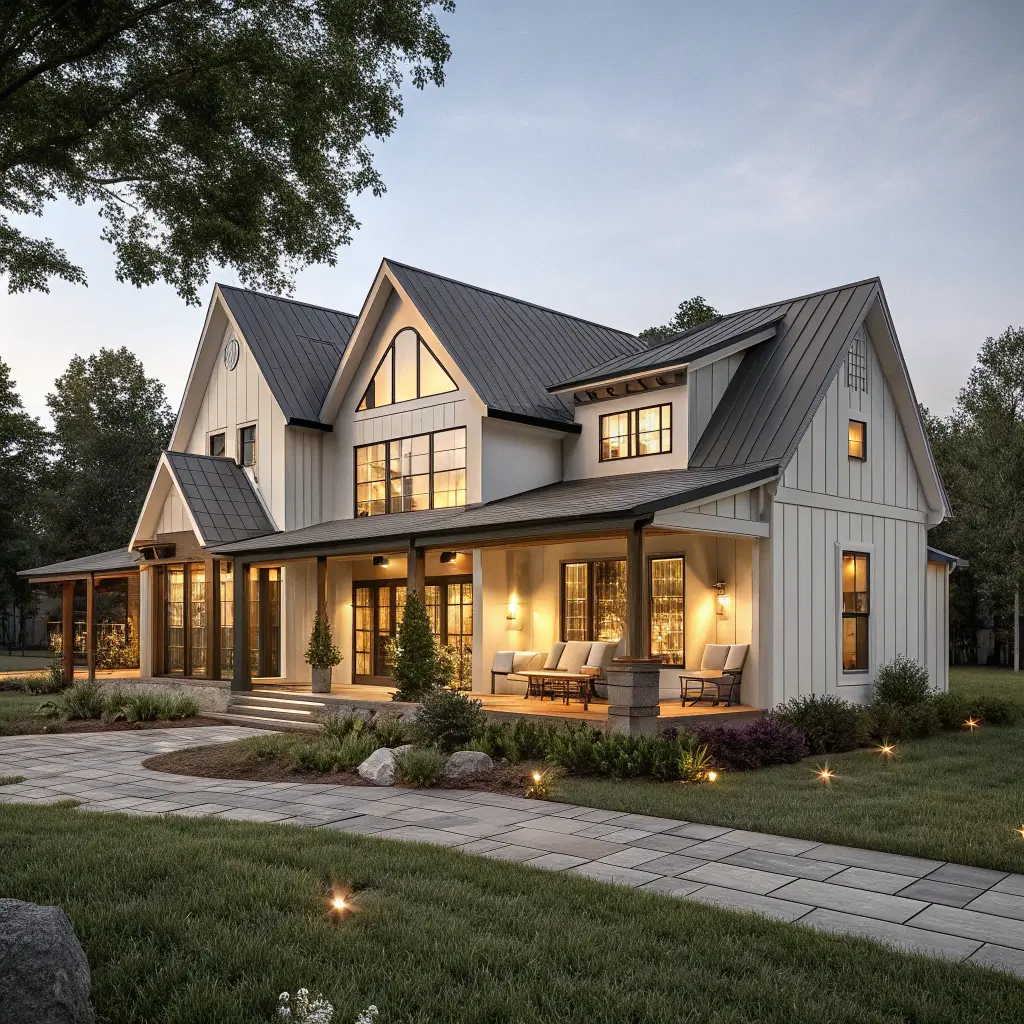
OK, can we please talk about why modern farmhouse style refuses to die? Because it works, that’s why. It combines the warmth and character we crave with the clean lines and open spaces we need for contemporary living.
Modern farmhouse must-haves:
- Board and batten siding (at least as an accent)
- Large covered porches
- Black window frames
- Shiplap somewhere (you knew this was coming)
- Open shelving in the kitchen
- Mix of modern and rustic materials
Making Farmhouse Feel Fresh
The trick to avoiding farmhouse fatigue? Don’t go full Joanna Gaines on every surface. Pick two or three farmhouse elements and mix them with contemporary features. Maybe it’s just the exterior that goes farmhouse while the interior stays minimal, or vice versa.
Vastu-Friendly East-Facing House Plan
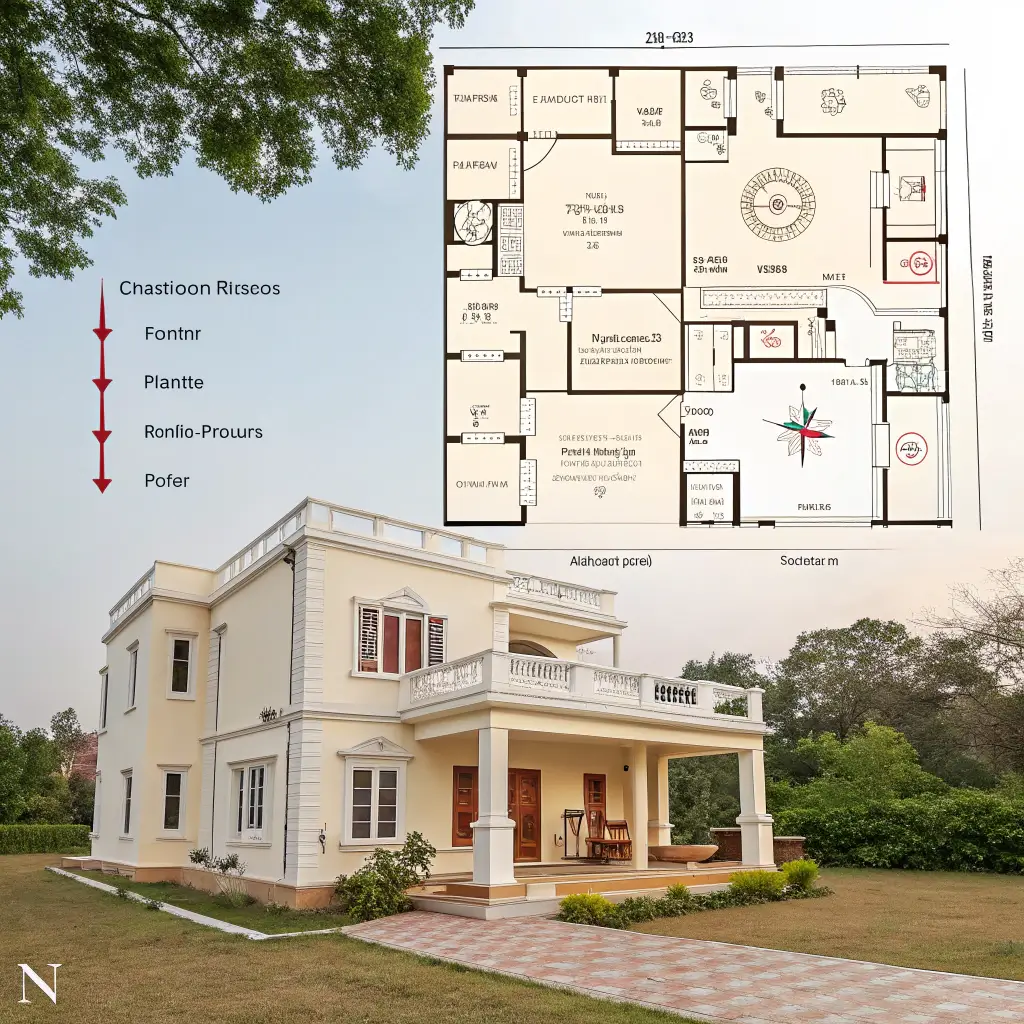
Whether you follow Vastu principles religiously or just appreciate the thought behind them, east-facing house plans offer some genuinely practical benefits. The morning sun flooding your kitchen and living areas? That’s not just good Vastu; it’s good sense.
Vastu-compliant features often include:
- Main entrance facing east or north
- Kitchen in the southeast corner
- Master bedroom in the southwest
- Living areas in the northeast
- Bathrooms avoiding the northeast corner
Practical Benefits Beyond Beliefs
Here’s the thing – many Vastu principles align with good design practices anyway. Placing bedrooms away from the street (usually west or south) reduces noise. Kitchens in the southeast catch morning light but avoid harsh afternoon sun. Sometimes ancient wisdom and modern comfort actually agree.
Urban Rooftop Terrace House Plan

City living means thinking vertically, and nothing says urban sophistication like a rooftop terrace. These aren’t just flat roofs with some deck chairs thrown on top – we’re talking about legitimate outdoor rooms in the sky.
Rooftop terrace essentials:
- Structural reinforcement for heavy loads
- Built-in planters for privacy screening
- Shade structures or pergolas
- Outdoor kitchen capabilities
- Weather-resistant storage
- Safety railings that don’t block views
Creating Your Sky-High Oasis
The best rooftop terrace I ever experienced had zones – a cooking area, a lounging space, a small garden, and even a putting green. The owner told me his rooftop added 800 square feet of living space for about 20% of what interior square footage would cost. IMO, that’s smart math.
Natural Light-Optimized House Plan

Can we just acknowledge that natural light makes everything better? Your mood, your energy bills, your Instagram photos – everything. Light-optimized house plans strategically position windows, skylights, and glass doors to maximize daylight penetration.
Light-maximizing strategies:
- South-facing windows for consistent daylight
- Clerestory windows for privacy with light
- Light tubes for interior spaces
- Glass interior doors
- Light-colored interiors to reflect daylight
- Strategic mirror placement
The Dark Side of Too Much Light
Here’s what nobody tells you about all those windows – furniture fading is real, and air conditioning bills can get crazy. The solution? Plan for window treatments from the start, use low-E glass, and consider automated shades that adjust based on sun position.
Indoor-Outdoor Living House Plan

Indoor-outdoor living isn’t just for California anymore. Seamless transitions between interior and exterior spaces have become the holy grail of modern home design. These plans blur the lines with massive sliding doors, covered patios, and outdoor rooms that feel like interior spaces.
Features that nail indoor-outdoor living:
- Sliding glass walls that completely open
- Matching flooring materials inside and out
- Covered outdoor kitchens
- Pass-through windows from inside kitchens
- Outdoor fireplaces aligned with indoor ones
Weather-Proofing Paradise
Living in Seattle taught me that indoor-outdoor living works anywhere if you plan for weather. Covered areas, heating elements, and proper drainage mean you can enjoy that outdoor room even when it’s drizzling. The key is designing for your actual climate, not your fantasy one.
Future-Ready Expandable House Plan

Smart people plan for the future, and expandable house plans build in growth potential from day one. Maybe you can’t afford that master suite addition now, but designing the house to accommodate it later? That’s thinking ahead.
Expandable design considerations:
- Structural capacity for second-story additions
- Utility systems sized for expansion
- Proper setbacks for future additions
- Modular designs that extend easily
- Unfinished spaces ready for completion
The Economics of Planning Ahead
Here’s some real talk – adding pre-planned expansion capability might cost 5-10% more upfront but saves 30-40% versus retrofitting later. I watched my brother try to add a second story to a house not designed for it. Let’s just say his kids won’t be going to college :/
Making Your House Plan Dreams Reality
So there you have it – fifteen house plan ideas that actually make sense for how we live today. Whether you’re drawn to the simplicity of minimalist design, the practicality of narrow lot solutions, or the investment potential of a luxury duplex, remember this: the best house plan is the one that fits your life, not someone else’s Pinterest board.
Start with what matters most to you. Love entertaining? That open-concept plan might be your winner. Working from home permanently? Maybe that two-bedroom with a killer office space makes more sense than a cramped three-bedroom. Building for the future? Consider that expandable design that grows with your needs.
The beauty of modern house plans lies in their flexibility. Mix and match elements – take the rooftop terrace from the urban plan and add it to your modern farmhouse. Combine the natural light optimization with Vastu principles. Your house should tell your story, not follow someone else’s script.
Remember, a house plan is just the beginning of your journey. It’s the framework for the life you’ll build inside those walls. Choose wisely, plan thoroughly, and don’t forget – sometimes the best house plan is the one that makes you smile every time you come home.