15 Creative Tiny House Floor Plans Ideas and Smart Designs

You know that feeling when you walk into someone’s massive house and think, “What do they even DO with all these rooms?” Yeah, me too.
After spending years bouncing between overpriced apartments and watching friends stress about their mortgages, I finally get why tiny houses have become such a phenomenon.
It’s not just about downsizing—it’s about designing spaces that actually work for how we live.
Let me share something wild: I recently helped my cousin design her 400-square-foot tiny home, and honestly? Her place feels more spacious than my old 900-square-foot apartment ever did.
The secret? Smart floor plans that maximize every single inch. Today, I’m walking you through 15 floor plan ideas that’ll completely change how you think about small spaces. Trust me, by the end of this, you’ll be sketching layouts on napkins.
Loft Bedroom with Open Living Space

This layout has become the poster child of tiny house living, and honestly? I totally get the hype. Picture this: you walk into your tiny home and immediately see this gorgeous, airy living room with vaulted ceilings reaching up to 14 feet. Your bedroom? It’s tucked away in a cozy loft above, accessible by a ladder or compact stairs.
The beauty of this design hits you when you realize your bedroom doesn’t eat up any of your main floor space. You essentially double your square footage without adding a single foot to your foundation. I’ve slept in these loft bedrooms, and there’s something ridiculously cozy about being nestled up there—like having a permanent blanket fort for adults.
Making the Most of Your Loft Space
Here’s what works best for loft bedrooms:
- Keep ceiling height at least 3.5 to 4 feet in the sleeping area
- Install skylights for natural light and stargazing (seriously, it’s magical)
- Add built-in shelving along the walls for books and personal items
- Consider a queen-sized mattress on the floor rather than a full bed frame
The downside? Well, midnight bathroom trips require some coordination. But hey, you’ll develop ninja-like agility in no time 🙂
Compact L-Shaped Kitchen Layout
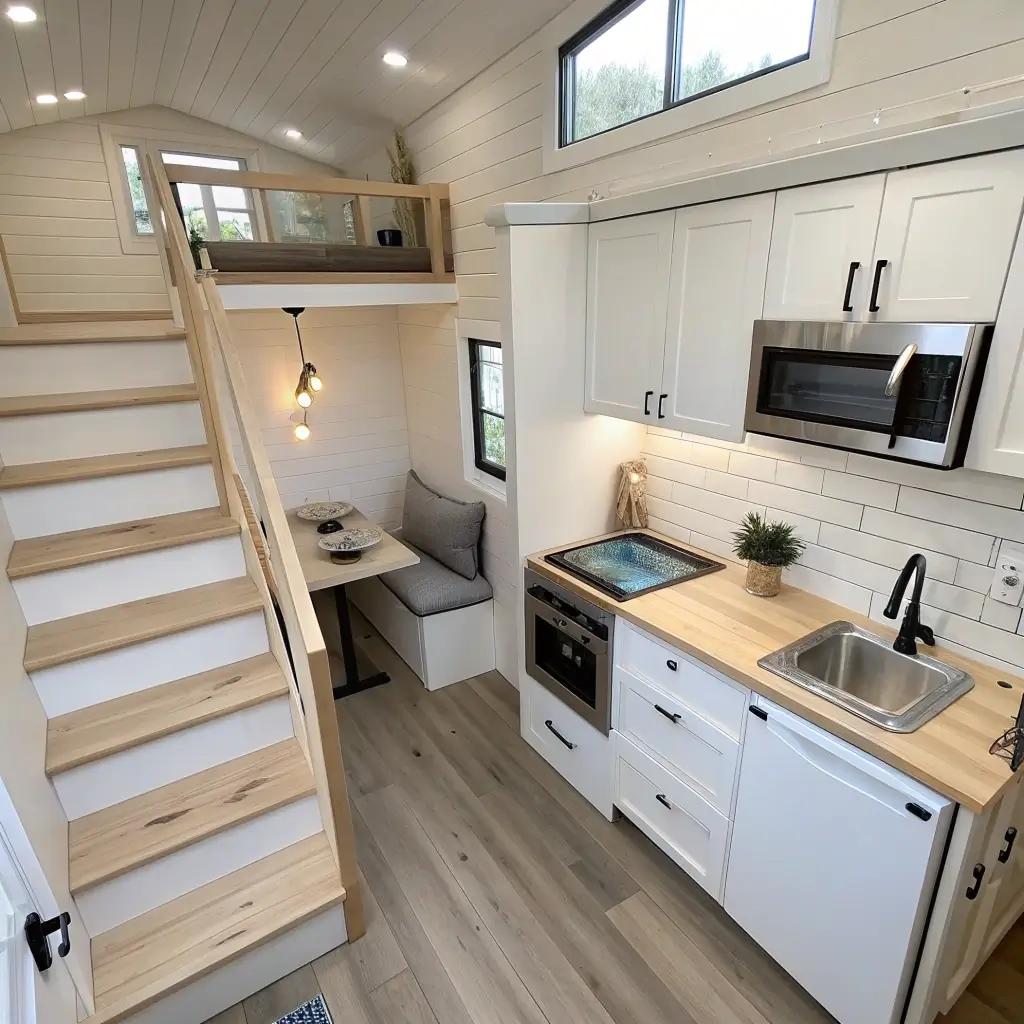
Can we talk about how L-shaped kitchens basically solve every tiny house kitchen dilemma? This layout gives you maximum counter space while keeping everything within arm’s reach. I’ve cooked full Thanksgiving dinners in L-shaped tiny kitchens, and let me tell you—they work better than some full-sized galley kitchens I’ve used.
The L-shape naturally creates a work triangle between your sink, stove, and fridge. Plus, that corner? Perfect spot for a compact dishwasher or extra storage. One side typically runs along the wall with your major appliances, while the shorter leg often doubles as a breakfast bar or workspace.
Smart Kitchen Features to Include:
- Fold-down cutting boards that cover your sink
- Magnetic knife strips on the wall
- Pull-out pantry drawers instead of deep cabinets
- Under-cabinet lighting (changes everything, trust me)
Multi-Functional Fold-Out Furniture Plan

This floor plan philosophy changed my entire perspective on tiny living. Instead of permanent fixtures everywhere, you design your space around furniture that transforms. Your coffee table becomes a dining table for six. Your sofa transforms into a guest bed. Even your desk folds flat against the wall when you’re done working.
I stayed in a tiny house with this setup last summer, and watching everything transform felt like living in a real-life Transformer movie. The owner had this brilliant Murphy bed that revealed a full office setup when folded up. During the day? Home office. At night? Cozy bedroom. Mind. Blown.
The key here? Invest in quality hardware. Cheap fold-out furniture breaks fast and becomes more frustrating than functional. Spring for the good stuff—your future self will thank you.
Also Read: 15 Gorgeous Courtyard House Plans Ideas and Garden Patios
Studio-Style Open Concept Tiny Home
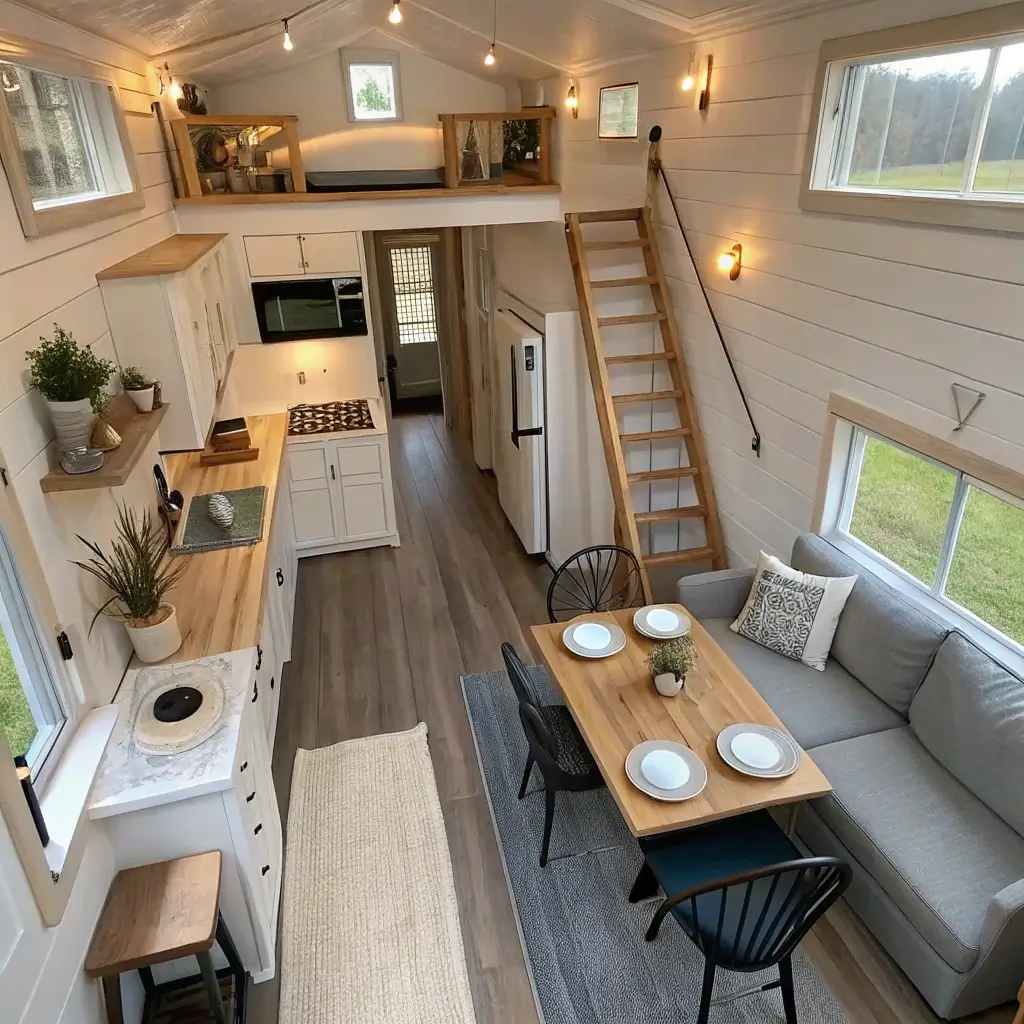
Sometimes the best walls are no walls at all. Studio-style layouts treat your entire tiny house as one flowing space, using furniture and design elements to define different zones. Think of it as the ultimate exercise in intentional living.
You arrange your space using visual cues rather than physical barriers. Your sofa backs up to create a “wall” between living and sleeping areas. A kitchen island defines where cooking ends and living begins. Area rugs anchor different zones without adding any actual divisions.
Creating Zones Without Walls:
- Use different ceiling heights to define spaces
- Change flooring materials between areas
- Install ceiling-mounted curtains for occasional privacy
- Position furniture to create natural pathways
Split-Level Tiny House Design
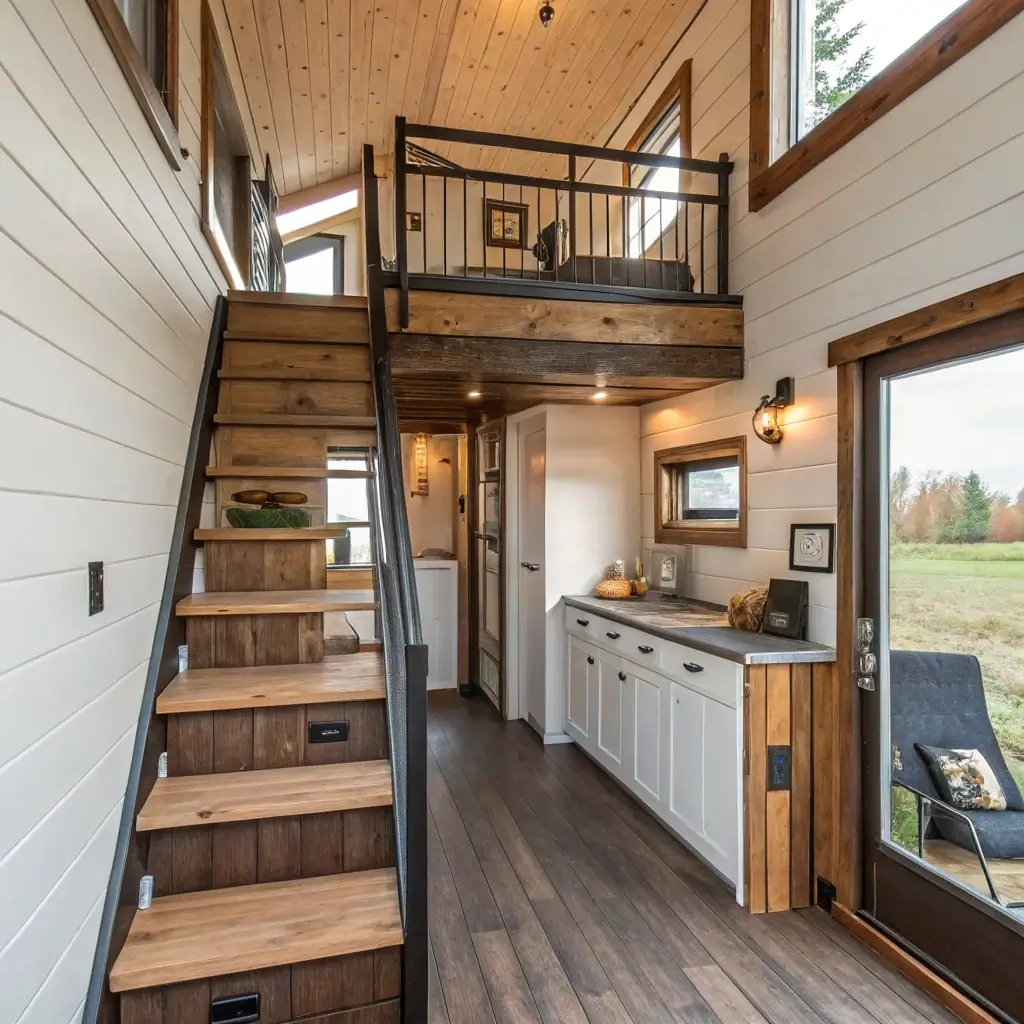
Ever walked into a tiny house and felt like you were in a shoebox? Split-level designs fix that problem instantly. By creating multiple levels within your tiny footprint, you add visual interest and functional separation without sacrificing openness.
Picture stepping up two steps into your bedroom area, while your kitchen sits at entry level, and your living room drops down slightly. Each level shift creates its own zone while maintaining that open feel. Plus, those level changes? Perfect for hiding storage underneath.
I visited a split-level tiny in Colorado that used this technique brilliantly. The raised bedroom platform hid a massive storage area for outdoor gear, while the sunken living room made the ceiling feel impossibly high.
Minimalist Scandinavian Tiny Floor Plan

Let’s be real—Scandinavians know what they’re doing when it comes to small spaces. This floor plan style strips everything down to pure functionality wrapped in simple beauty. White walls, natural wood, and absolutely zero clutter.
The layout focuses on creating one main living space with carefully positioned windows for maximum natural light. Storage gets built into every possible surface, but it’s all hidden behind clean, handle-less cabinets. Your bed might sit on a platform with drawers underneath. Your stairs? They’re actually a series of storage cubes.
Essential Scandinavian Elements:
- Light wood floors throughout
- White or light gray walls
- Minimal color palette (think whites, grays, and natural wood)
- Multi-functional furniture pieces
- Plants. Lots of plants.
Also Read: 15 Stunning 2 Bedroom House Plans Ideas for Modern Living
Tiny House with Hidden Storage Solutions
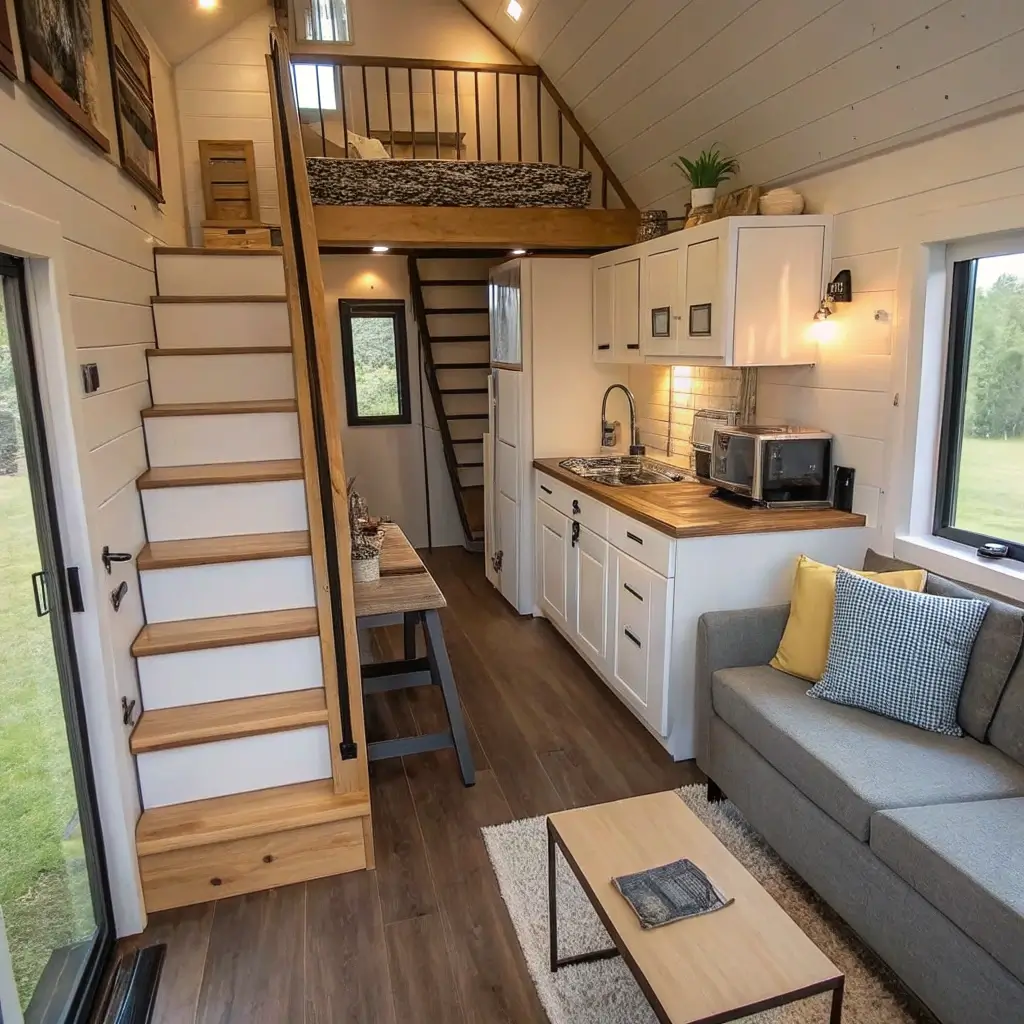
This floor plan type makes me genuinely excited because it’s basically a giant puzzle where every piece has a secret compartment. We’re talking stairs that are drawers, benches with hidden compartments, and toe kicks that pull out for bonus storage.
My friend Sarah built her tiny house around this concept, and visiting her place feels like exploring a magician’s prop room. Her dining table? The top lifts to reveal dish storage. Her bathroom mirror? Opens to a medicine cabinet that’s surprisingly deep. Even her window sills flip up to reveal narrow storage slots for toiletries.
The genius part? From the outside, everything looks clean and minimal. You’d never guess that practically every surface conceals storage space.
Modern Tiny Home with Sliding Partitions

Want flexibility? Sliding partitions give you the power to completely reconfigure your space based on what you need. Hosting friends? Slide everything open for one big party space. Need privacy for a video call? Close off your office area in seconds.
These aren’t your grandmother’s accordion doors either. Modern sliding partitions can be gorgeous barn doors, translucent panels that let light through, or even floor-to-ceiling bookcases on tracks. IMO, this approach gives you the best of both worlds—open when you want it, divided when you need it.
Best Places for Sliding Partitions:
- Between bedroom and living areas
- To close off a home office space
- Hiding the bathroom when guests visit
- Creating a temporary guest room
U-Shaped Kitchen and Cozy Living Combo

Okay, hear me out—U-shaped kitchens in tiny houses sound crazy, but they’re actually brilliant. You get three walls of workspace and storage while keeping everything super accessible. The open end usually faces your living area, often with a peninsula that doubles as a dining counter.
I helped design one of these for a chef friend, and she swears it’s better than her old restaurant kitchen. Everything wraps around you, so you barely need to move while cooking. Plus, that peninsula becomes the social hub where everyone gathers during parties.
The living area in this combo typically sits just beyond the kitchen peninsula, creating one cohesive entertaining space. You can chat with guests while cooking, and nobody feels isolated.
Also Read: 15 Smart House Plans Ideas for Modern Family Living
Tiny House with Indoor-Outdoor Flow

This design philosophy basically erases the line between inside and outside. Massive sliding glass doors open entire walls to decks or patios, instantly doubling your living space in good weather. Your floor plan extends beyond your walls.
The trick? Design your outdoor space as carefully as your indoor space. Match your deck flooring to your interior floors. Use weather-resistant furniture that mirrors your indoor style. Install outdoor lighting that creates ambiance at night.
Creating Seamless Flow:
- Use the same flooring material inside and out (or very similar)
- Install retractable screens for bug-free fresh air
- Position your kitchen near the door for easy outdoor dining
- Add an outdoor shower or sink to reduce indoor traffic
Compact Bathroom with Smart Fixtures
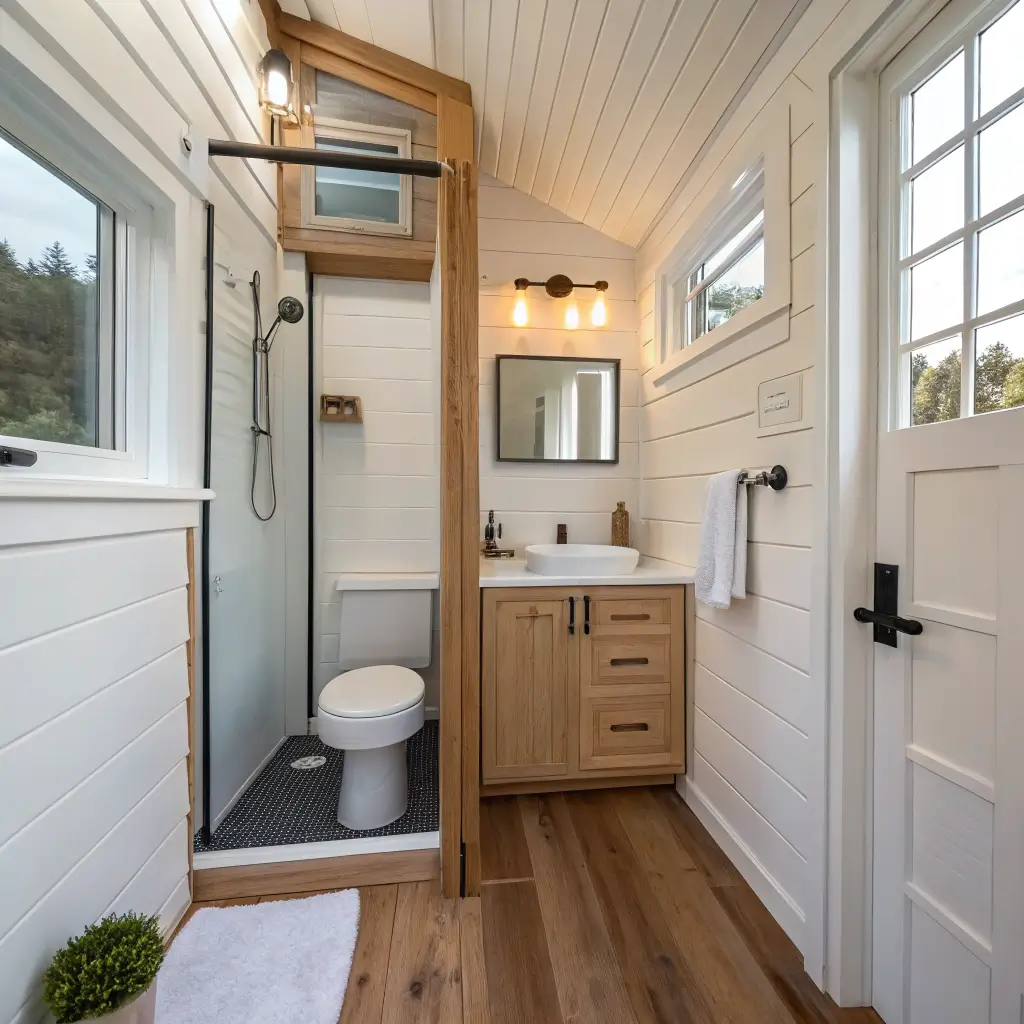
Tiny house bathrooms get a bad rap, but honestly? Some of the best bathrooms I’ve used have been in tiny homes. The secret lies in choosing fixtures designed specifically for small spaces and arranging them strategically.
Wall-mounted toilets save floor space and make cleaning easier. Corner sinks maximize every inch. Shower designs skip the tub entirely, using every square foot for a surprisingly spacious shower. And those Japanese-style soaking tubs that are deep but not long? Game changers.
My favorite tiny bathroom hack? Install a wet bath where the entire room is waterproofed and serves as the shower. Sounds weird, works amazingly.
Tiny Home with Mezzanine Loft Office
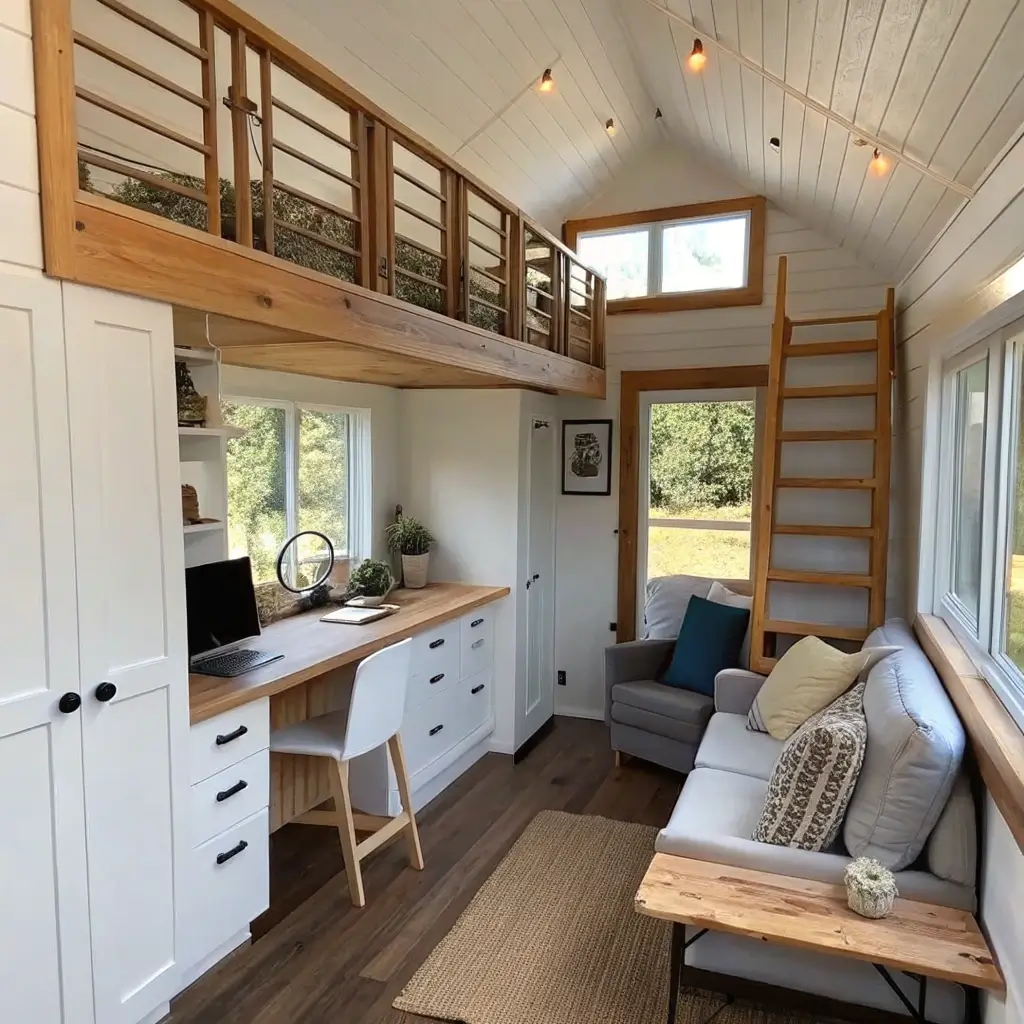
Working from home in a tiny house seemed impossible until I discovered mezzanine offices. These half-level spaces sit between your main floor and loft, creating a dedicated workspace that feels separate from living areas without eating up precious square footage.
You typically access these via a compact staircase or ladder, and they’re just tall enough to stand in comfortably. The psychological separation makes a huge difference—you’re literally ascending to “work mode” and descending when you’re done. Plus, the elevated position often offers the best views in the house.
Tiny House with Convertible Dining Area
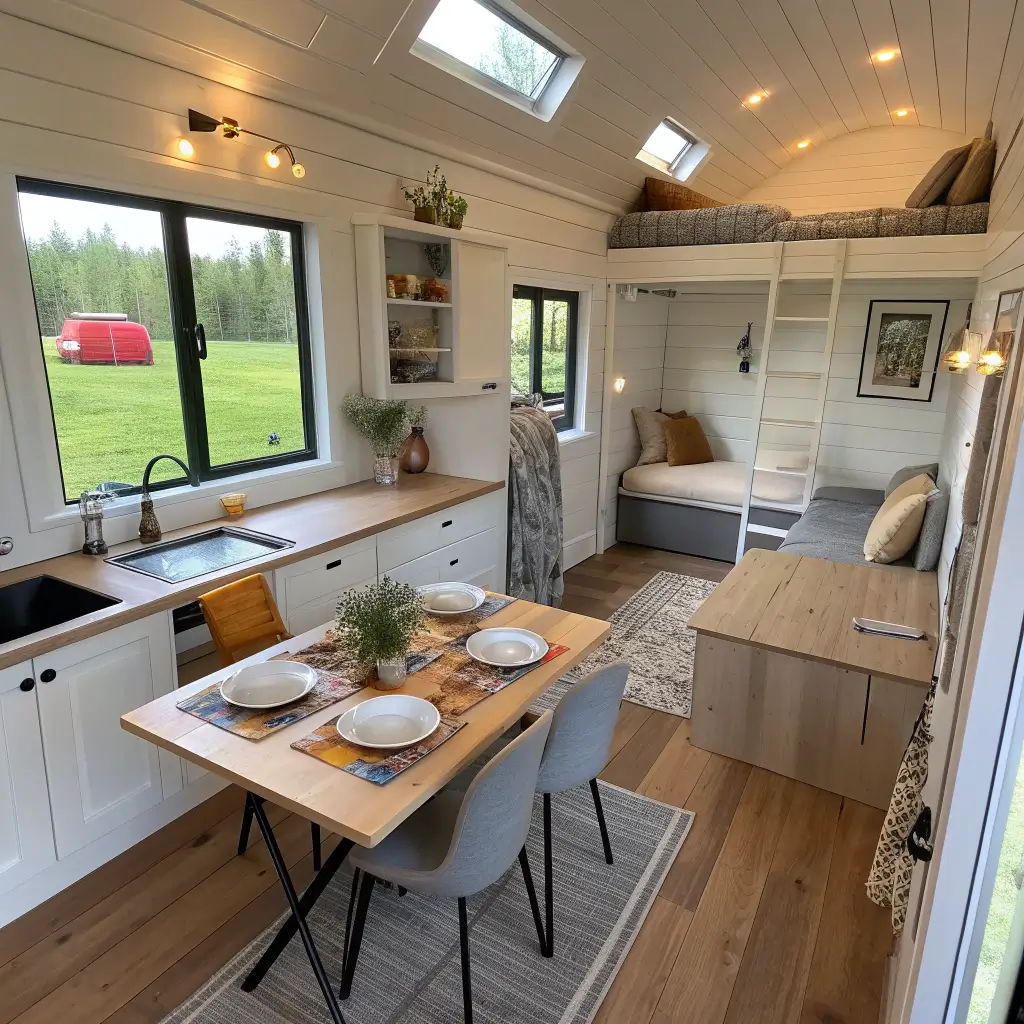
Why dedicate space to a dining table you use twice a day? Convertible dining areas transform from coffee table to dinner party central in minutes. The best designs I’ve seen use hydraulic lifts or clever folding mechanisms that feel satisfying to operate.
One setup I loved used a wall-mounted drop-leaf table that could seat two when partially extended or six when fully opened. When not in use? It folded completely flat against the wall, becoming a piece of art with a cool wood grain pattern.
Convertible Dining Options:
- Coffee tables that lift and expand
- Wall-mounted folding tables
- Kitchen islands with pull-out leaves
- Benches with flip-up backs that become booth seating
Rustic Cabin-Style Tiny Floor Plan
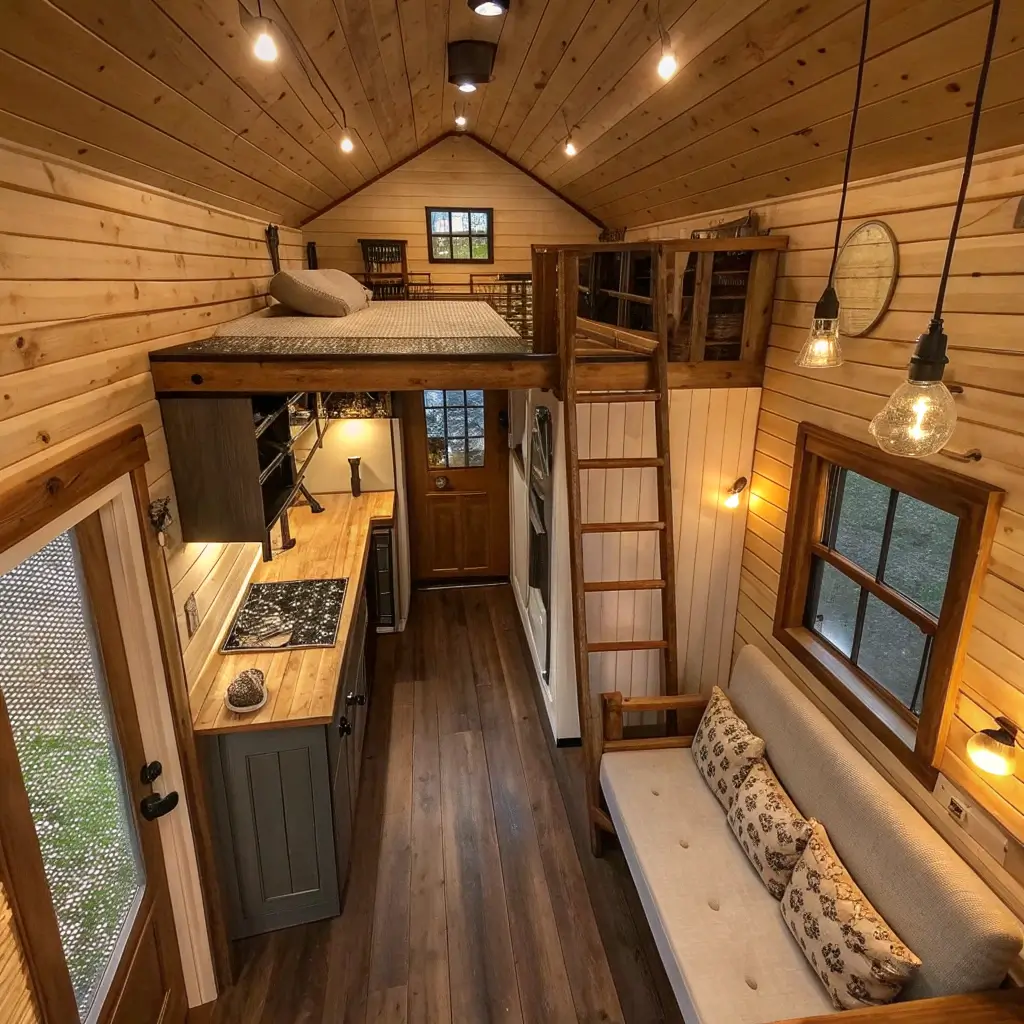
Sometimes you want your tiny house to feel like a cozy mountain retreat, even if it’s parked in suburbia. Rustic cabin layouts embrace natural materials and traditional design while keeping things compact. Think exposed beams, wood-paneled walls, and a layout centered around a small wood stove.
These floor plans typically feature more defined rooms rather than open concepts. You might have an actual bedroom door (gasp!) and a separate kitchen. The vibe is less “modern minimalist” and more “cozy grandmother’s cottage”—in the best way possible.
The layout usually positions the wood stove centrally, with living spaces radiating out from this warm focal point. Built-in window seats and reading nooks are practically mandatory.
Tiny Home with Efficient Storage Nooks
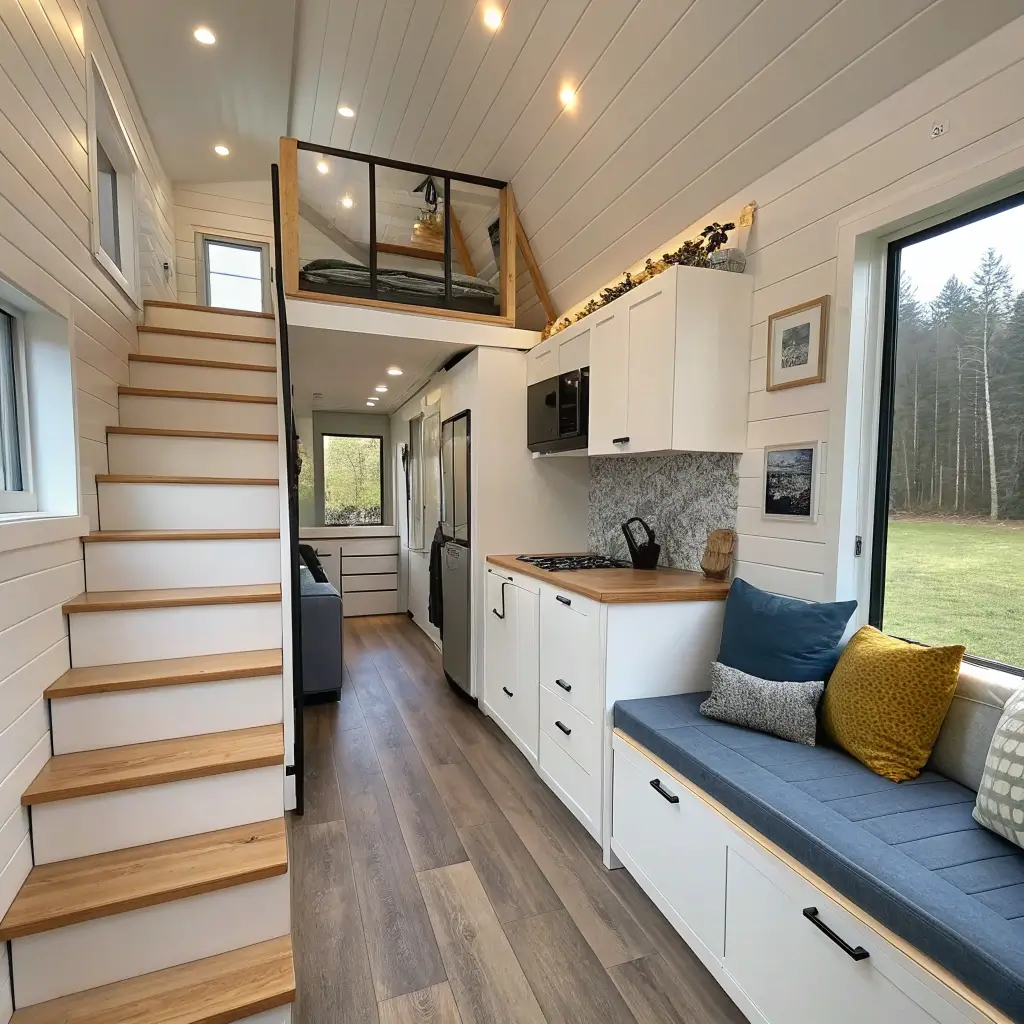
This final floor plan type basically turns your entire house into a Swiss Army knife of storage. Every awkward corner, every space under something, every vertical surface—they all become meticulously planned storage nooks.
I’ve seen people install pull-out spice racks in 4-inch gaps between appliances. Magnetic strips inside cabinet doors hold measuring spoons. Even the space above door frames gets shallow shelving for rarely-used items. The ceiling? Suspended net storage for lightweight stuff like extra bedding.
The floor plan itself gets designed around these storage opportunities. That weird angle where the roof meets the wall? Perfect for built-in shelving. The space under the elevated bathroom? Becomes a closet.
Making Your Tiny House Dreams Reality
Look, after exploring all these floor plans, you might feel overwhelmed. That’s totally normal—I felt the same way when I started researching tiny houses. But here’s the thing: you don’t need to implement every idea. Pick the concepts that genuinely excite you and match how you actually live.
Start by listing your non-negotiables. Need a full kitchen because cooking is your therapy? The U-shaped or L-shaped layouts have you covered. Work from home? That mezzanine office might be perfect. Love entertaining? Focus on convertible spaces and indoor-outdoor flow.
The beauty of tiny house living isn’t just about having less stuff—it’s about designing a space that perfectly fits your life. Every tiny house I’ve visited reflects its owner’s personality in ways that McMansions never could. When every square foot matters, every choice becomes intentional.
So grab that napkin and start sketching. Your perfect tiny house floor plan is out there, waiting for you to discover it. And who knows? Maybe I’ll be writing about your innovative design in my next article. FYI, the tiny house community loves sharing ideas, so don’t hesitate to reach out to owners whose homes inspire you.
Remember, the best tiny house isn’t the smallest or the most clever—it’s the one that makes you excited to come home every single day. Whether that means a Scandinavian sanctuary or a rustic retreat, these floor plan ideas prove that small spaces can hold big dreams.
Now, if you’ll excuse me, all this writing has me itching to redesign my own space. Again. Because once you start thinking about efficient floor plans, you never really stop. Welcome to the obsession!