15 Creative Small Living and Dining Room Combo Ideas

Ugh, the open-concept floor plan. It’s all the rage until you actually have to live in one, right? You’re staring at this single, awkward rectangle that’s supposed to magically be your living room, dining room, and probably also the place you do your online shopping and occasionally cry about the state of the world.
Where does the couch go? How do you fit a table for more than one person without blocking the path to the balcony? And for the love of all that is holy, where do you store everything?
If you’re nodding along, welcome. You’re in the right place. I’ve been there. I’ve measured, I’ve moved the same darn sofa three times in one weekend, and I’ve definitely had heated debates with my partner about the merits of a circular table versus a rectangular one (I won, btw).
The struggle is real, but I’m here to tell you it’s also incredibly fun to solve.
Designing a small living and dining room combo isn’t about sacrificing style for function—it’s about letting them do a beautiful, harmonious dance together.
It forces you to be creative, to think outside the big-box furniture store, and to create a space that is uniquely and efficiently yours.
15 Creative Small Living and Dining Room Combo Ideas
1. Create a Defined Dining Area with a Rug
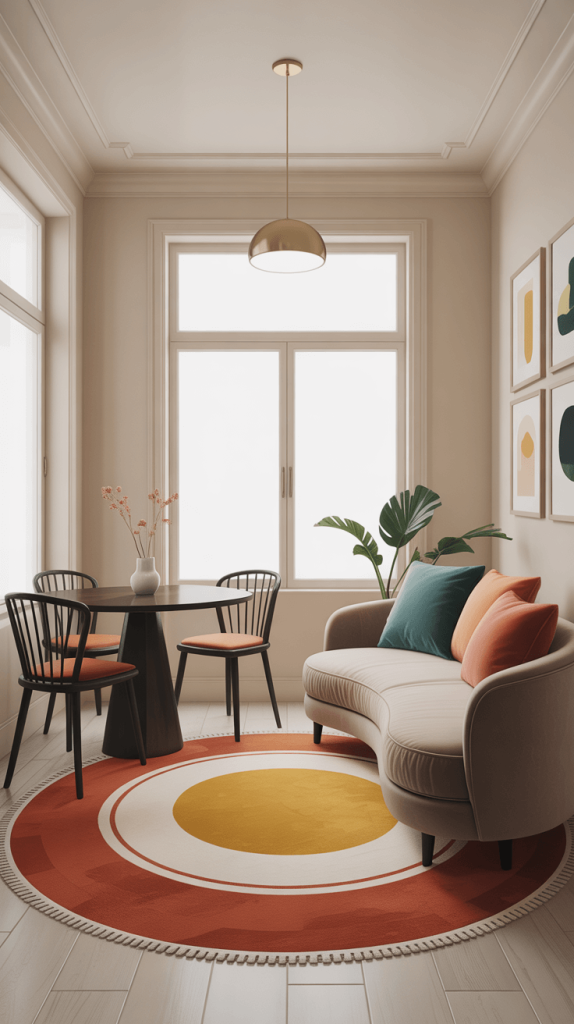
Let’s start with one of the easiest and most effective tricks in the book. Without walls, how do you tell your dining area, “Hey, you’re a dining area!”? You give it its own foundation.
An area rug is the perfect tool for this job.
Think of the rug as an anchor. It visually cordons off the eating space from the lounging space, creating a sense of order and intention.
Now, I know what you’re thinking: “But a rug under a dining table? Isn’t that a spill nightmare waiting to happen?” Fair point. But hear me out.
Choose a low-pile, indoor-outdoor, or stain-resistant rug. The technology in these things now is incredible.
You can spill an entire glass of red wine on some of them, blot it up, and it’s like it never happened. Magic.
The key is size. Make sure the rug is large enough that when the chairs are pulled out, they’re still on the rug.
There’s nothing worse than the awkward chair-leg-half-on-half-off situation. It’s a tripping hazard and it just looks… wrong.
A well-proportioned rug makes the whole area feel deliberate and cozy.
2. Opt for Multi-Functional Furniture
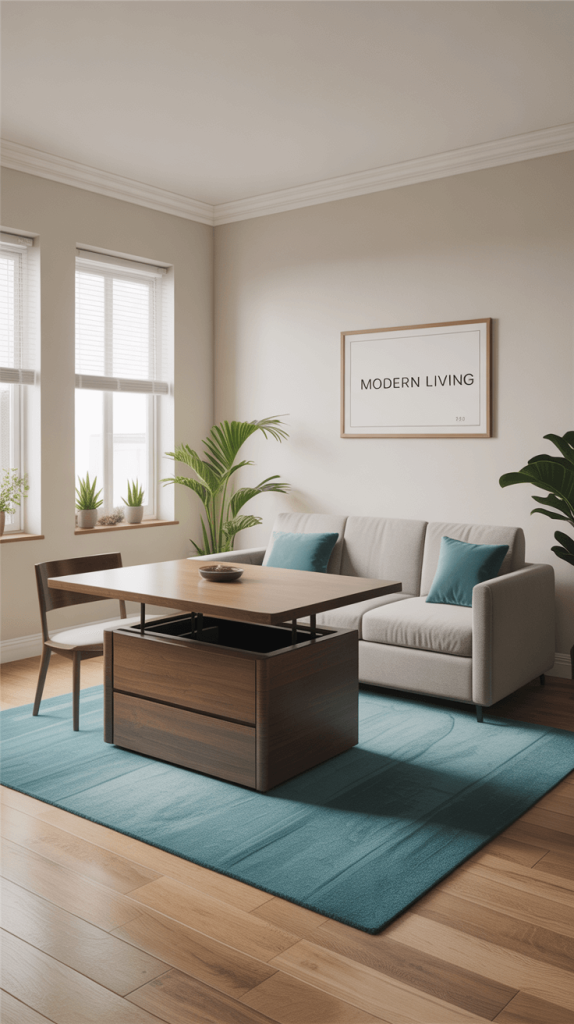
In a small space, every piece of furniture needs to earn its keep. This is non-negotiable
You can’t afford a one-trick pony that just sits there looking pretty but offering zero utility.
This is where multi-functional furniture becomes your absolute best friend.
We’re talking about pieces that work double, sometimes triple, duty. My personal favorite?
- Storage Ottomans: These guys are the MVPs. They can be a footrest, extra seating for guests, and a hidden storage compartment for throws, board games, or that pile of mail you don’t want to deal with.
- Nesting Tables: A stylish coffee table that can split into two or three smaller side tables when you need more surface area for drinks and snacks? Yes, please. When not in use, they tuck neatly away, saving precious floor space.
- Console Tables Behind Sofas: That dead space behind your sofa? Bring it to life with a slim console table. It’s a perfect spot for a lamp, a few decor items, and—you guessed it—often comes with drawers or shelves for more hidden storage.
The golden rule: if it doesn’t have a purpose, it doesn’t get a spot. This mindset will change your entire approach to furnishing a small combo room.
3. Use Light Colors to Open Up the Space
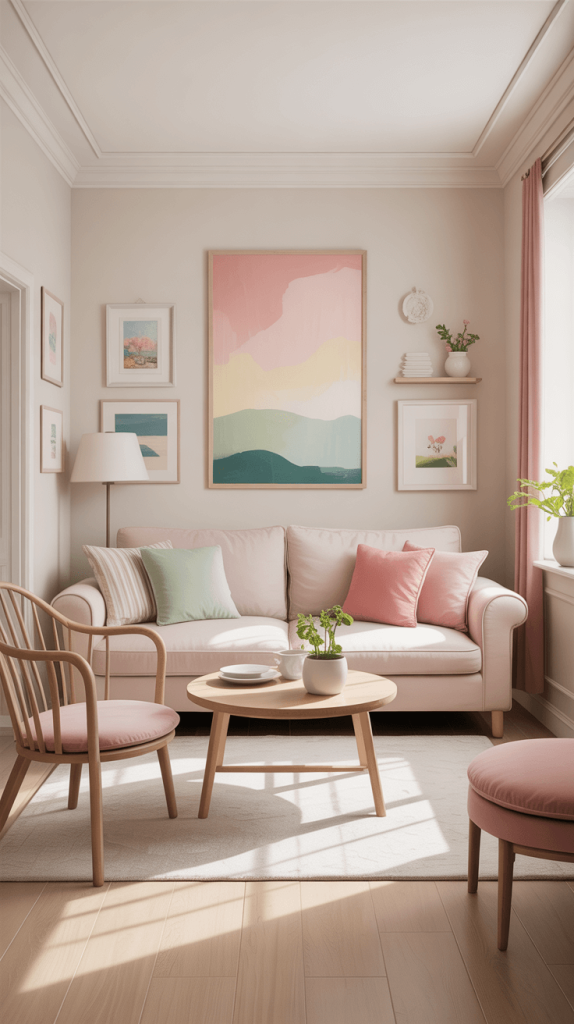
This is Design 101, but it’s worth repeating because it’s so darn effective. Dark, moody colors are amazing, but they have a tendency to absorb light and make walls feel like they’re closing in on you.
In a small, multi-purpose room, you want the opposite effect.
Light, neutral colors—think whites, light grays, soft beiges, pale blues, and gentle greens—reflect light, making the space feel instantly larger, brighter, and more airy.
I’m not saying you have to live in a sterile, all-white box. You can absolutely inject personality! The trick is to use lighter tones on your walls and larger furniture pieces (like your sofa), and then bring in your pops of color and pattern through accessories.
Think throw pillows, artwork, a vibrant rug, or a cool lamp.
This creates a bright, open canvas that feels spacious, while still allowing your style to shine through. It’s a backdrop that makes everything else look better.
Also Read: 15 Small Space Living Room Ideas for a Big Impact
4. Install Floating Shelves for Extra Storage
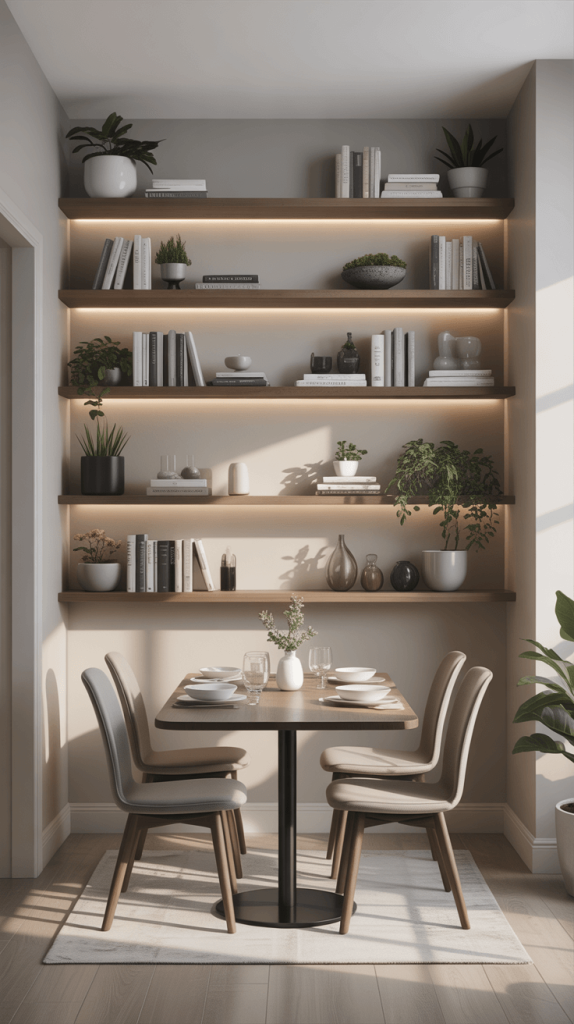
When you can’t build out, you build up. And when floor space is at a premium, you look to your walls. Floating shelves are a small-space savior.
They provide crucial storage and display space without eating up a single square inch of your precious floor real estate.
Use them in your dining area to store glassware and plates, turning your everyday items into decor. In the living room section, they’re perfect for books, plants, and photos.
The best part? Because they’re open, they maintain a sense of airiness.
A bulky bookcase can feel heavy and imposing, but a few sleek, floating shelves feel light and modern.
Just don’t go overboard. A cluttered shelf defeats the purpose. Curate your items and leave some breathing room to keep the look clean and intentional.
5. Keep the Dining Area Close to the Living Room for Easy Flow
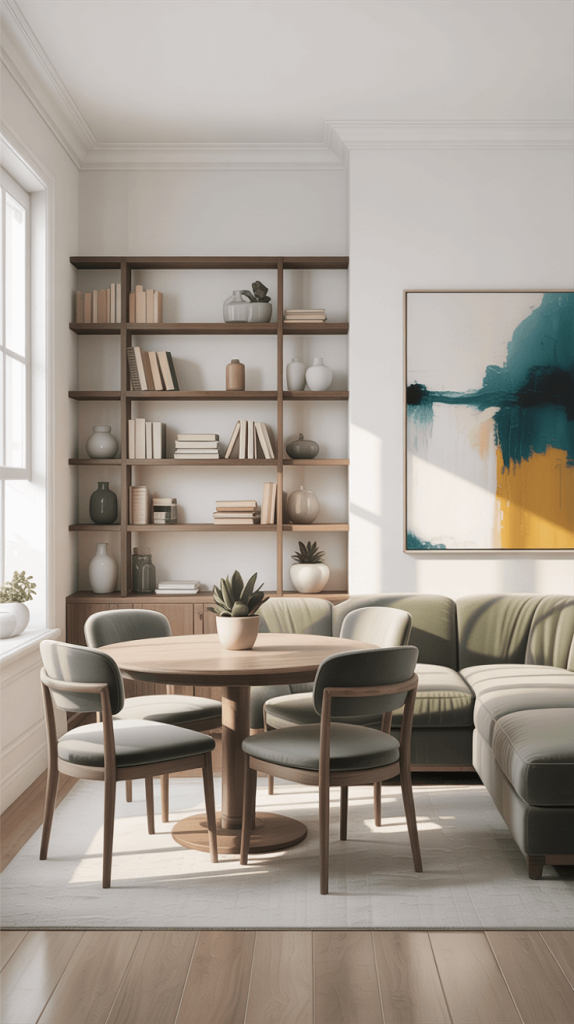
This might seem obvious, but the placement of your zones relative to each other is crucial for both function and flow.
You want to create a natural and easy transition between “lounging” and “dining.”
The last thing you want is to have to navigate an obstacle course every time you bring snacks from the kitchen to the coffee table.
A great way to ensure this is to position your dining area adjacent to your living room seating, not shoved into a far-off corner unless absolutely necessary.
This creates a cohesive social zone where conversation can easily flow from the couch to the table and back again.
It makes the space feel unified rather than like two separate, warring territories.
Think about the pathways people will naturally walk through the room. Arrange your furniture so these paths are clear and logical.
A good flow makes a small space feel effortless and much larger than it actually is.
6. Use Corner Spaces for the Dining Table
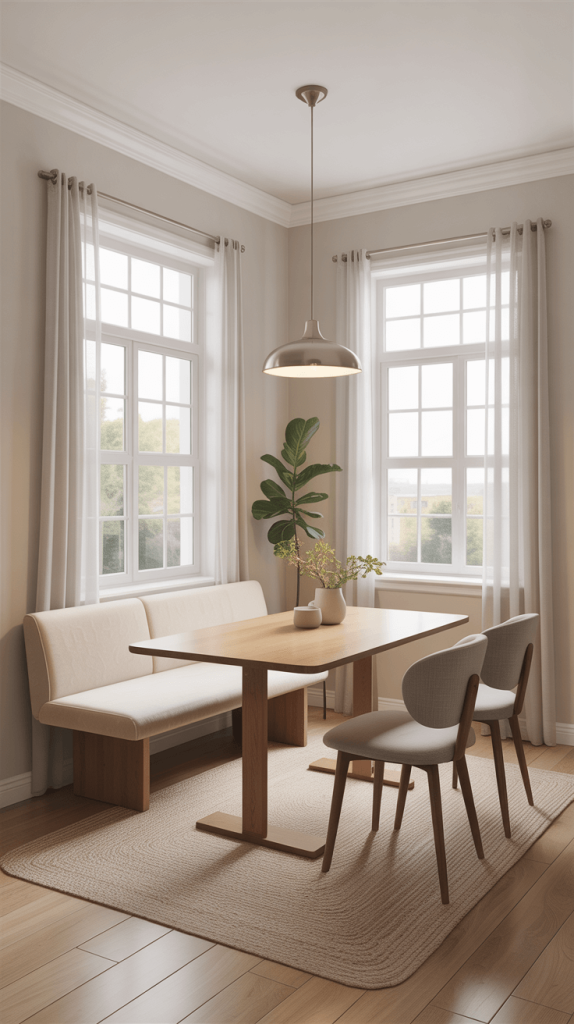
We often forget about corners, treating them as dead space good for not much more than a sad-looking plant.
But in a small living/dining combo, corners are valuable real estate! Tucking a small dining set into a corner is one of the smartest space-saving moves you can make.
A small, round pedestal table or a neat square table fits perfectly into a 90-degree angle, freeing up the center of the room for your living area layout.
Look for a “corner banquette” or bench seating that can be installed directly into the corner.
This not only saves space (as benches take up less room than individual chairs) but also creates a super cozy, café-like vibe. Plus, it automatically defines the dining nook without needing a rug.
Also Read: 15 Very Small Living Room Ideas to Maximize Space
7. Incorporate Wall-Mounted Lighting
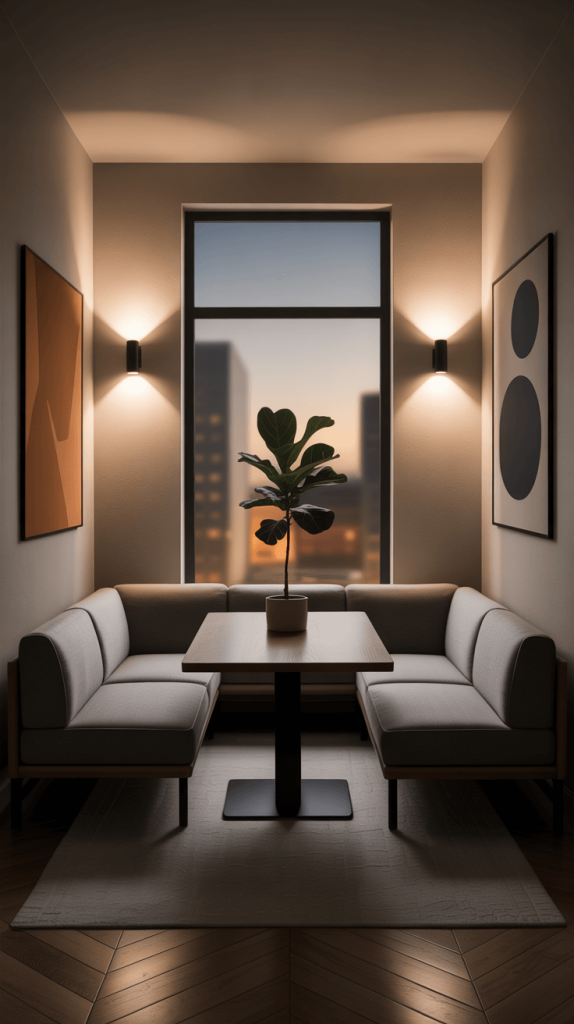
Floor lamps are great, but their bases can get in the way and clutter up a tight space. The solution? Look up. And then look at your walls.
Wall-mounted sconces and swing-arm lamps are a game-changer for small rooms.
In the living area, a sconce on either side of the sofa eliminates the need for end tables and lamps, freeing up surface space.
Over the dining table, a pendant light or a linear chandelier clearly defines the zone and provides perfect, focused task lighting without any floor-level footprint.
It draws the eye up, emphasizing the height of the room and making it feel larger.
8. Choose a Circular Dining Table for a Flowing Look
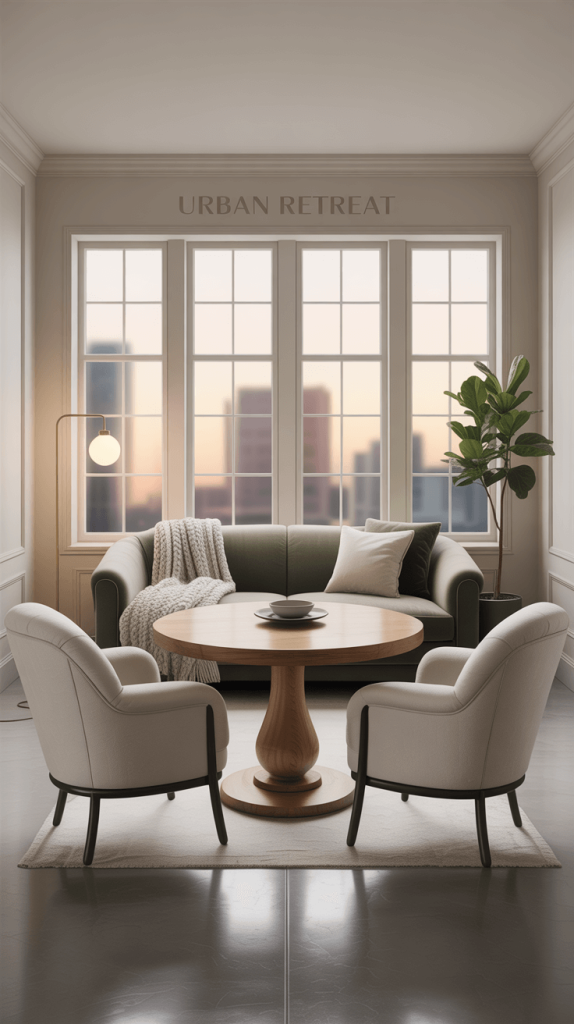
Alright, let’s settle the great debate: round vs. rectangular table. For a combo room, I’m firmly Team Round. Here’s why: a circular table has no sharp corners to bump into, which is a major win for traffic flow.
It feels softer and takes up less visual space, promoting a easier movement around the room.
It’s also inherently more social. Everyone can see everyone else, making conversations feel more intimate and engaging.
A round table can often fit into spaces a rectangular table can’t, like the corner idea we just talked about.
If you’re tight on space, a round pedestal table is almost always the answer. It’s a small change that makes a huge difference in how the room feels and functions.
9. Create a Foldable Dining Area
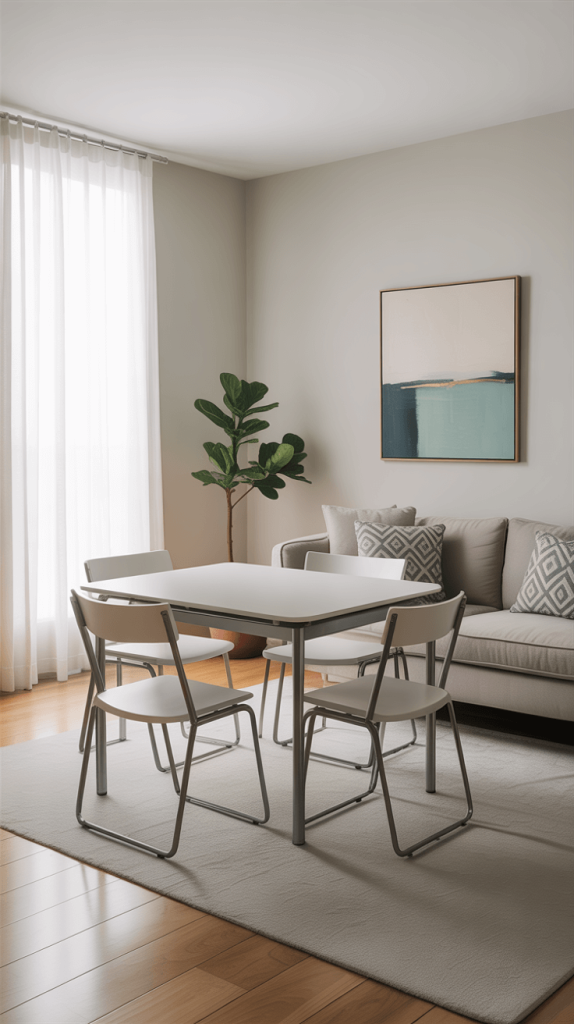
Maybe you only need a full dining setup once in a while for dinner parties, but for 90% of your life, you’re eating at the coffee table or on the couch.
Does that sound like you? Then why sacrifice permanent floor space to a table that just collects clutter? A fold-down or drop-leaf table is your secret weapon.
These brilliant inventions mount to the wall and stay completely out of the way until you need them. When it’s time for a meal, you simply unfold or drop the leaf, and voilà—instant dining surface.
Pair it with some stylish stools that can tuck underneath or be used as occasional side tables, and you have a dining solution that is 100% pragmatic and seriously clever. It’s the ultimate space-saving flex.
Also Read: 15 Styish Small Living Room Ideas for Cozy Spaces
10. Add a Statement Mirror to Reflect Light
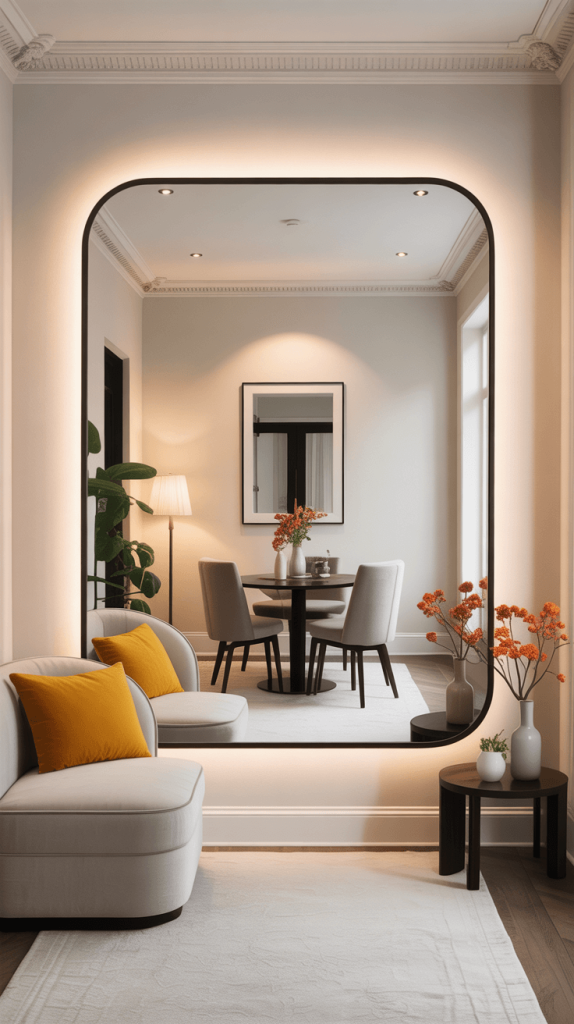
Want to make your room look twice as big without knocking down a single wall? Hang a large, statement mirror.
This is the oldest trick in the book because it simply works.
A mirror strategically placed opposite a window will reflect all that gorgeous natural light around the room, instantly boosting the brightness and creating the illusion of depth.
It’s not just about size, either. A mirror with a great frame can serve as a stunning piece of art.
It adds style and function, which is pretty much the holy grail for small-space design.
Don’t be afraid to go big with this one. A large mirror has more impact than a few small ones.
11. Use Transparent Furniture
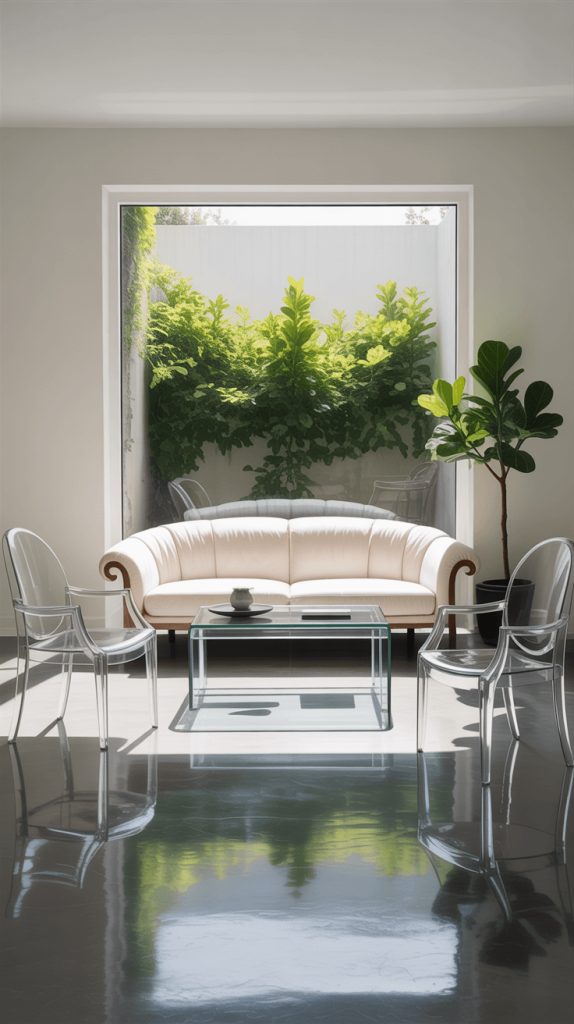
If you want something to take up zero visual space, make it see-through. Furniture made from glass, acrylic, or lucite is a genius choice for a combo room.
A glass coffee table or a clear acrylic dining chair has a presence without the visual weight of a solid wood or upholstered piece.
Your eye passes right through it, making the room feel more open and less cluttered.
A glass-top dining table, especially, keeps the sightlines open, allowing the eye to travel across the entire room uninterrupted.
It’s a modern, sleek solution that maintains an airy, open feeling, even when the furniture is physically there.
12. Create Vertical Zones with Tall Furniture
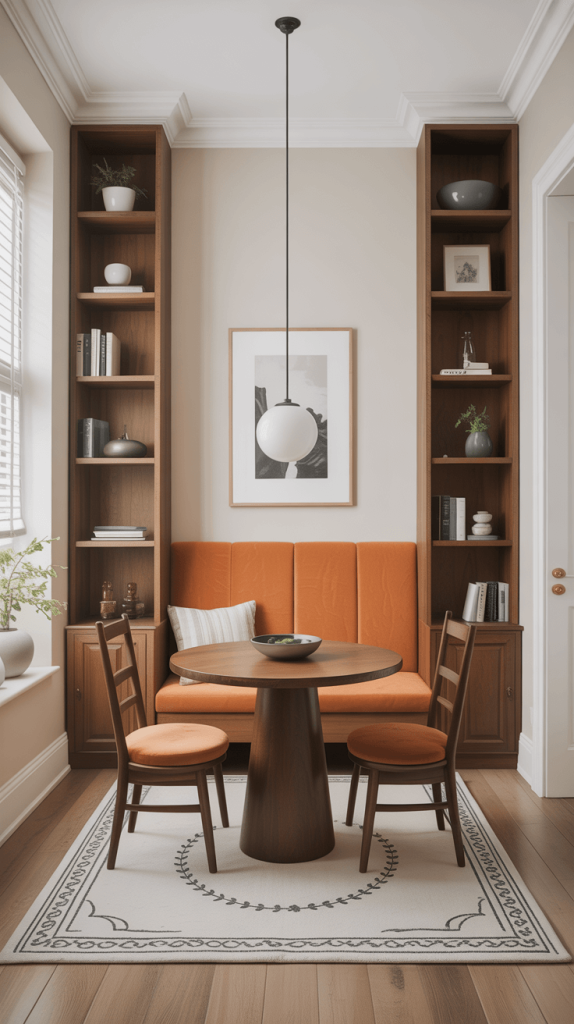
We’ve talked about building up with shelves, but you can also use tall furniture pieces to draw the eye upward and create vertical “zones.”
A tall, slim bookshelf or a streamlined cabinet can act as a subtle room divider, offering a hint of separation between the living and dining areas without building a wall.
This strategy utilizes often-wasted vertical space for storage while also adding architectural interest to the room.
Just make sure the piece is proportional to the room—anything too wide or too bulky will have the opposite effect and make things feel cramped.
The goal is to emphasize the room’s height, making it feel grander.
13. Maximize Natural Light with Sheer Curtains
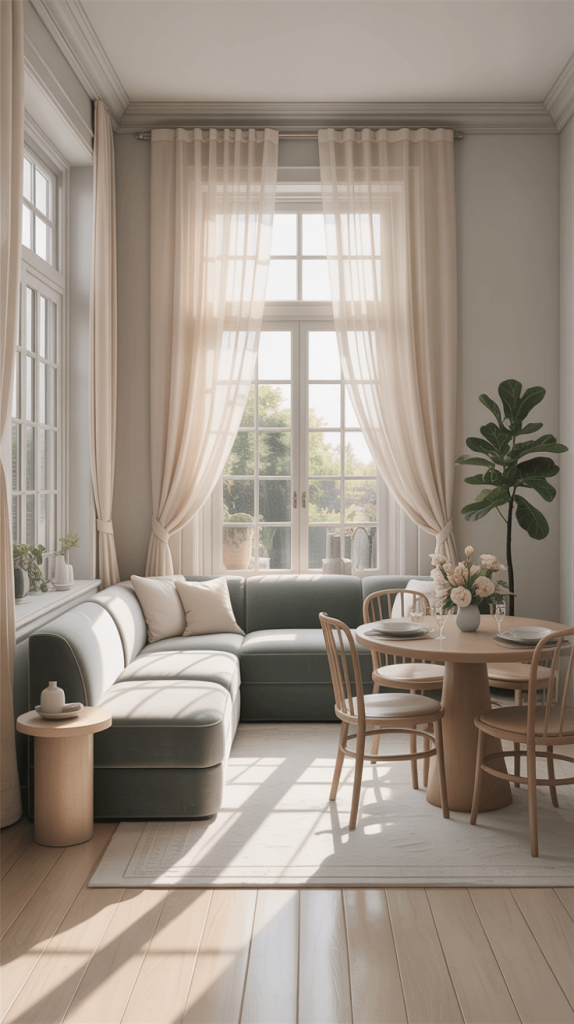
Window treatments matter. Heavy, dark drapes can chop a room in half and block precious light.
To keep your combo room feeling bright and open, opt for light-filtering sheer curtains or minimalist roller shades.
Hang the curtain rod high and wide—closer to the ceiling and extending beyond the window frame on either side.
This trick makes the window itself appear larger and allows for maximum light penetration when the curtains are open.
Sheers provide a soft, diffused light and a sense of privacy without sacrificing the open, airy vibe you’ve worked so hard to create.
14. Mix Textures for Depth and Warmth
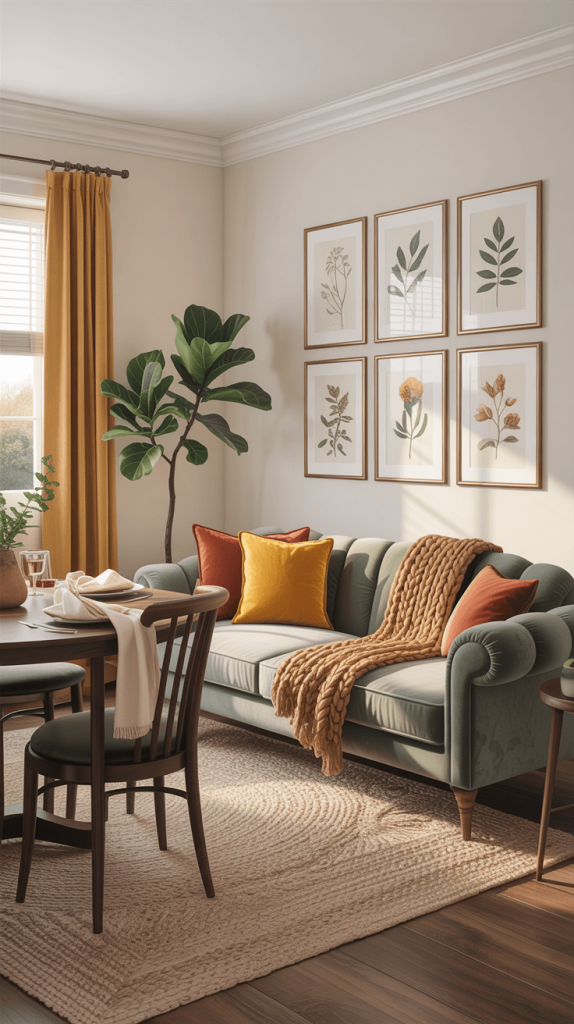
A light-colored, open-plan space runs the risk of feeling a little cold or sterile. How do you combat that? You layer on the texture.
Texture adds visual weight, depth, and a ton of coziness without relying on color, which can sometimes make a space feel smaller.
Think about incorporating a chunky knit throw, a woven rattan basket, a soft shag rug, smooth leather pillows, and rough linen curtains.
When you mix materials like wood, metal, fabric, and glass, you create a rich, tactile experience that feels incredibly inviting.
The room has more dimension and feels thoughtfully designed, not just practically furnished.
15. Keep Furniture Low to the Ground
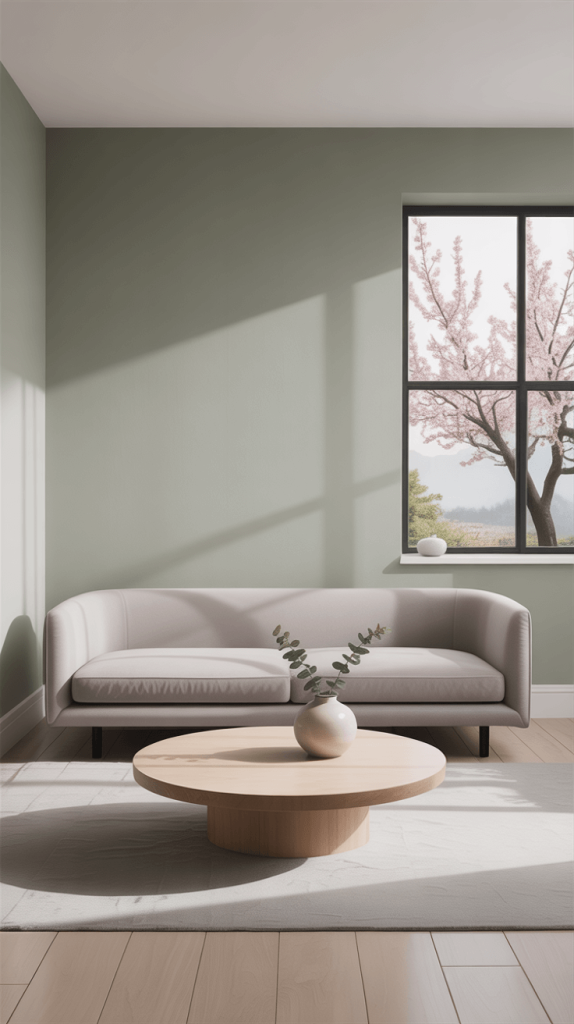
This is a more advanced tip, but it’s incredibly effective.
Furniture with low profiles and clean lines—think a low-slung sofa, a platform bed (for studios!), or a minimalist media console—exposes more of the wall and floor behind and underneath it.
This creates a greater sense of openness because you can see more of the room’s boundaries.
Higher furniture can visually block the room, making it feel segmented and smaller.
Low-profile pieces make the ceiling feel higher and the overall volume of the space feel larger. It’s a sleek, modern approach that maximizes the feeling of airiness.
Conclusion:
Phew! That was a lot, but honestly, we’ve only just scratched the surface.
The most important takeaway? Designing a small living and dining room combo is a puzzle, but it’s one you get to solve in a way that perfectly fits your life.
Don’t be afraid to experiment. Move that rug. Try the table in the corner. Hang that mirror. The best space is one that works for you.
It doesn’t have to look like a magazine spread (though it certainly can); it just has to feel like home.
A home where you can comfortably binge your favorite show and host a fantastic dinner party without having to perform furniture gymnastics.
So, what are you waiting for? Which idea are you trying first? I’m rooting for you! Now go forth and create an amazing space.