15 Inspiring Living and Dining Room Combo Ideas for a Stylish Home

Alright, let’s talk about one of the most common—and sometimes most frustrating—layouts in modern homes: the living and dining room combo. You know the space.
It’s that one big room where you’re trying to figure out how to host a dinner party, binge your favorite show, and convince your kids that the floor isn’t for storing every single toy they own, all without it looking like a furniture store threw up in there.
I’ve been there. My first apartment was a classic “great room” situation. I spent more time rearranging furniture than I did actually living in it, and I made every mistake in the book.
I pushed everything against the walls (classic rookie move), used a rug that was way too small (it looked like a sad little postage stamp), and basically created a glorified bowling alley.
But after years of trial, error, and a frankly unhealthy amount of home design blog consumption, I’ve come to see the combo room not as a challenge, but as the ultimate opportunity.
It’s a blank canvas for creating a space that is uniquely functional, incredibly stylish, and perfectly you.
15 Inspiring Living and Dining Room Combo Ideas
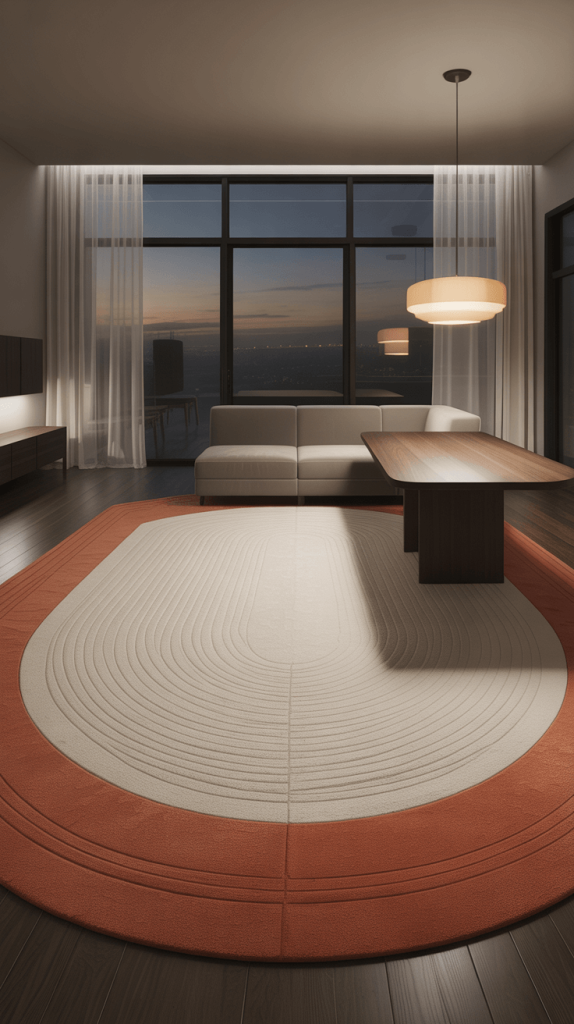
1. Use a Large Area Rug to Define the Space
This is, without a doubt, the number one rule. The holy grail. The thing I wish I could go back in time and tell my 22-year-old self.
A rug is more than just a soft place to put your feet; it’s a visual anchor that tells the world, “This right here? This is the living zone.”
The biggest mistake people make? Choosing a rug that’s too small. A tiny rug in the middle of a large room just makes everything feel disconnected and, well, cheap.
You want a rug that’s large enough for the front legs of your sofa and any accompanying chairs to sit comfortably on top of it. This creates a cohesive “conversation pit” feel.
- For the Living Area: Go big. Really big.
- For the Dining Area: You need a rug that extends at least 24 inches beyond the edges of your dining table on all sides. This ensures that when people push their chairs back to stand up, the chairs don’t catch on the edge of the rug and tumble your guests onto the floor (not a great look for dinner parties).
You can use the same rug style throughout for a seamless look, or use two different but complementary rugs to subtly differentiate the two zones. This is your first and most powerful tool. Don’t waste it!
2. Opt for Multi-Functional Furniture
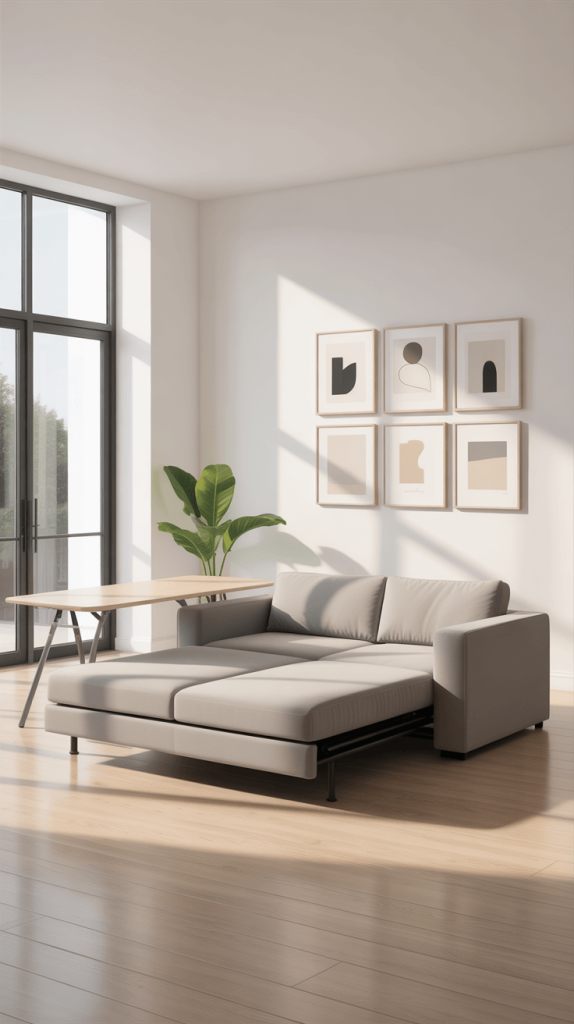
When square footage is a premium, every piece of furniture needs to earn its keep. This is where you get to be smart and strategic.
Think like a designer on a mission.
- Storage Ottomans: Ditch the standard coffee table. A large, sturdy storage ottoman gives you a place to put your feet up, a surface for trays (and therefore drinks), and a hidden compartment to stash blankets, remotes, and that clutter you need to hide in 2.5 seconds flat when the doorbell rings.
- Nesting Tables: These are my secret weapon. They tuck away neatly when you need floor space for yoga or a toddler dance party, but you can pull them out as extra side tables when you have guests over. Functionality on demand!
- Bench Seating: For your dining area, consider a stylish bench instead of chairs on one side. It tucks perfectly under the table when not in use, and it can often provide extra seating in the living area when you’re hosting a crowd. Talk about a team player.
The key here is to choose pieces that serve more than one purpose. It’s like getting a two-for-one deal, but for your home’s functionality.
3. Create a Statement Wall to Separate the Areas
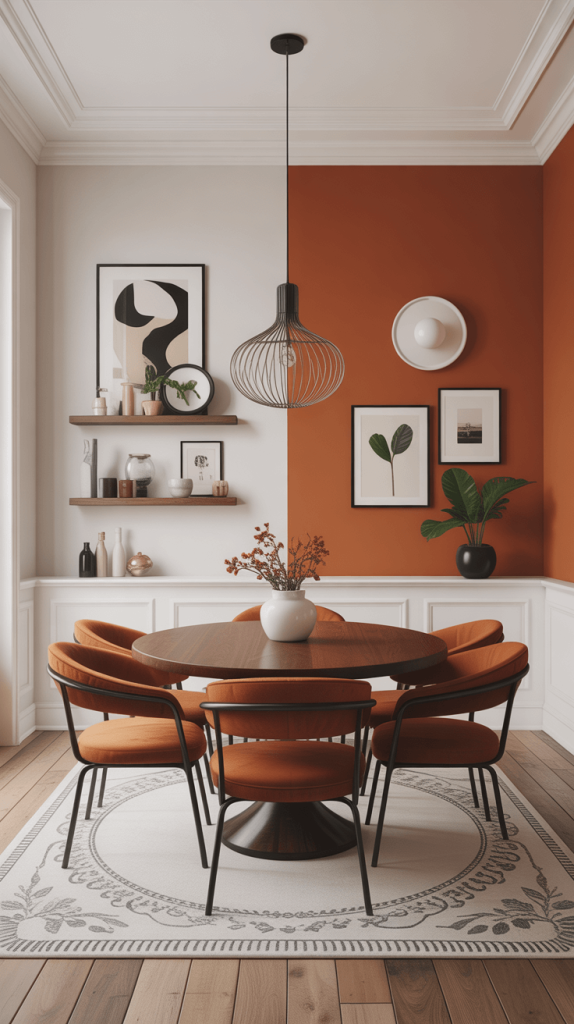
You don’t need a physical wall to create separation. Sometimes, all you need is a little visual trickery.
Enter the mighty statement wall.
By painting or wallpapering a single wall, you create a dramatic focal point that instantly defines a zone.
Which wall do you choose? Typically, it’s the wall behind the sofa in the living area or the wall behind the dining table.
- A bold paint color can add depth and sophistication. A moody navy or a warm terracotta can make the dining area feel intimate and cozy.
- An eye-catching wallpaper with a fun pattern can inject personality and make the living area feel special.
- Wood paneling or shiplap adds texture and a rustic charm that can ground the space.
This approach gives you clear visual separation without sacrificing an inch of precious floor space. It’s all illusion, baby.
Also Read: 15 Creative Small Living and Dining Room Combo Ideas
4. Incorporate Open Shelving for Storage and Display
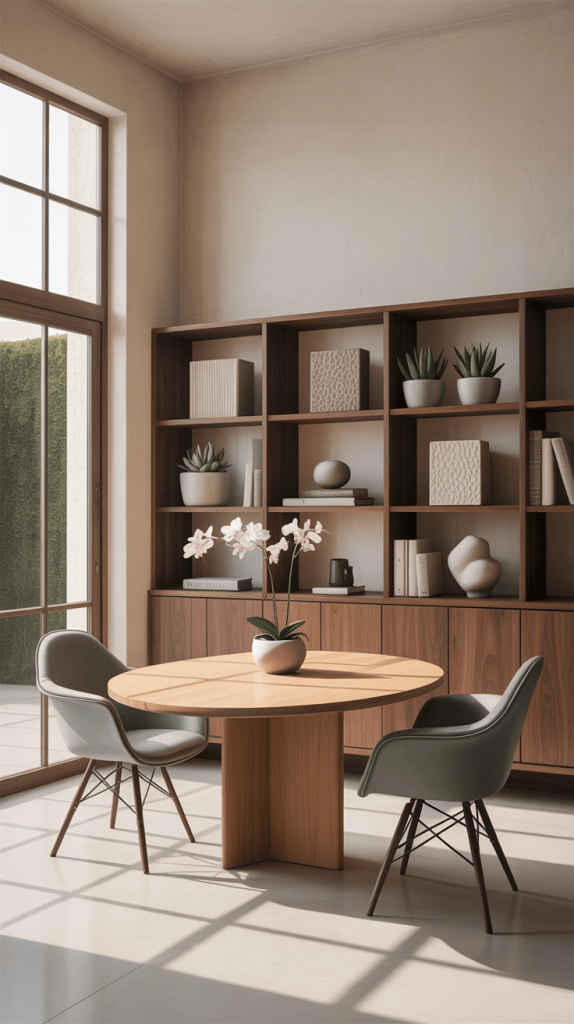
Need separation and storage? Say hello to open shelving.
A tall, open bookshelf or a sleek etagere placed between your living and dining areas acts as a perfect room divider without blocking light or making the space feel closed off.
The beauty of this solution is its dual nature:
- It provides a physical, albeit transparent, barrier between the two rooms.
- It offers invaluable vertical storage for books, decor, and even diningware.
- It allows you to display your personality through curated objects, plants, and art.
Pro Tip: Style both sides of the shelving! It should look good from the living room angle and the dining room angle. This makes it feel intentional and polished from every vantage point.
5. Use a Sofa as a Divider
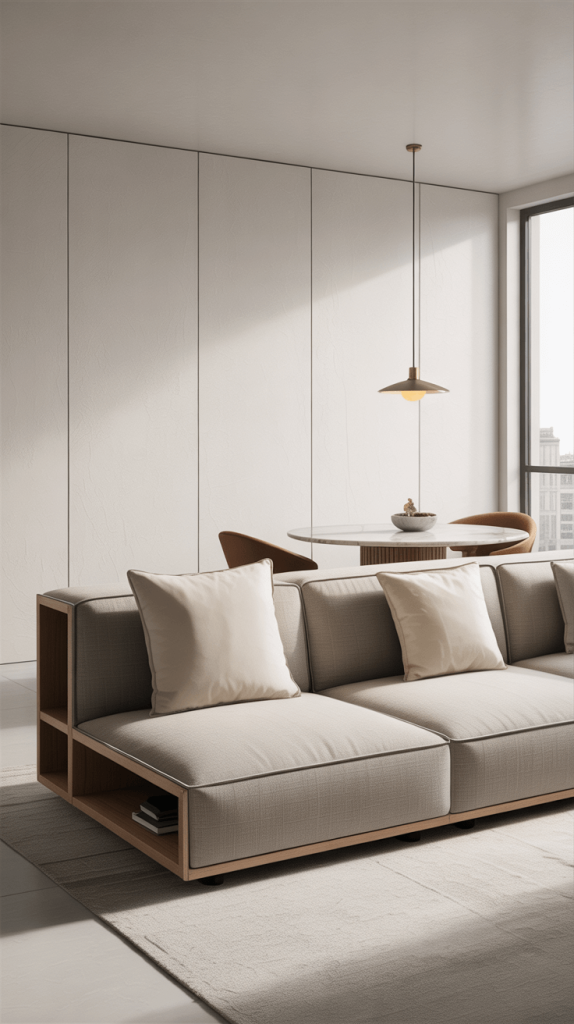
This might seem like a no-brainer, but how you position your sofa is critical.
Instead of pushing it flush against the wall, try floating it in the middle of the room with its back to the dining area.
This effectively uses the sofa’s high back as a natural wall, creating a clear psychological and physical boundary between the “lounging” space and the “eating” space.
It makes both areas feel more defined and intentional.
The best part? You’re not buying any new furniture; you’re just using what you already have in a smarter way. It’s a zero-cost upgrade that makes a massive impact.
6. Go for a Minimalist Approach
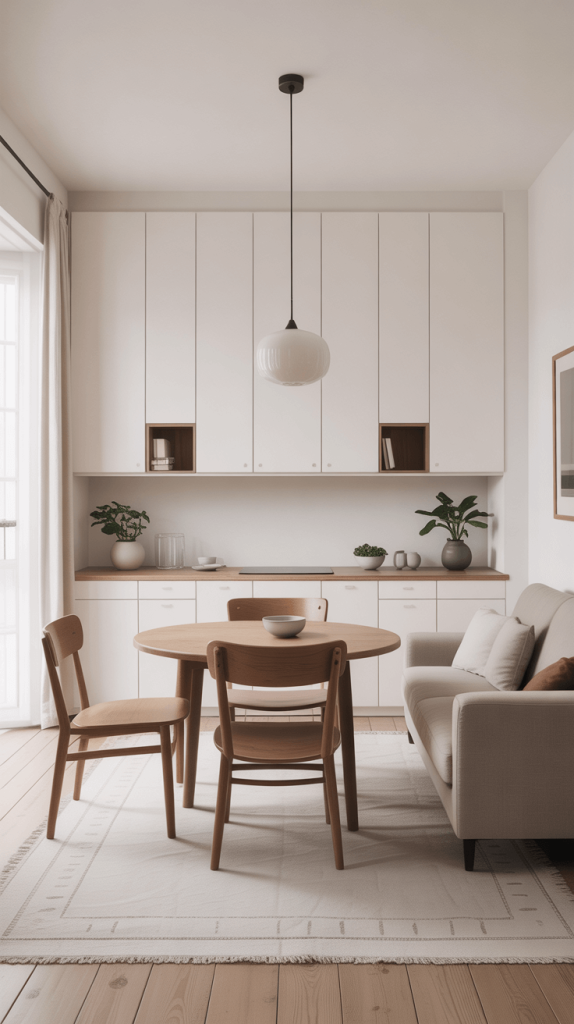
If your combo room feels chaotic, the issue might not be the layout but the stuff. Clutter is the enemy of small spaces.
A minimalist approach can make your combo room feel airy, spacious, and incredibly calm.
This doesn’t mean your space has to be cold or sterile. It just means being ruthlessly intentional about what you bring into it.
- Choose a simple color palette with one or two main colors and an accent.
- Select furniture with clean lines and slender profiles.
- Embrace negative space—not every wall and surface needs something on it.
A clutter-free room allows the architecture and the key pieces of furniture to shine. It’s a breath of fresh air for your home (and your mind).
Also Read: 15 Small Space Living Room Ideas for a Big Impact
7. Add a Long Dining Table for Flow
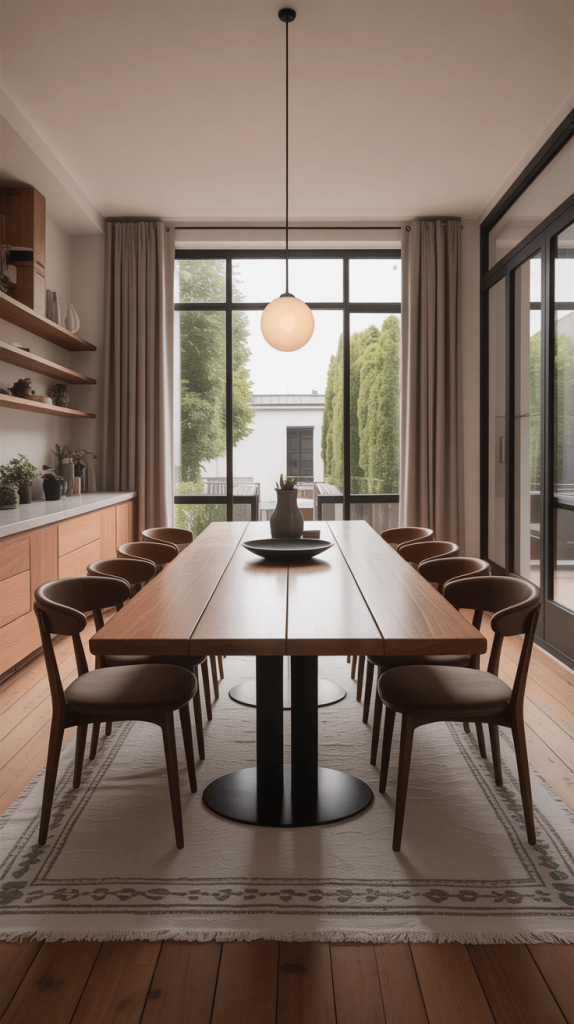
The shape of your dining table plays a huge role in how traffic flows through the space.
While a round table is great for conversation, a long, rectangular, or oval table can be a genius tool for defining the dining area and creating a natural pathway behind it.
Position the table lengthwise, parallel to the flow of the room.
This creates a clear “dining zone” and leaves a natural walkway between it and the living area, preventing a cramped, obstacle-course feel.
It’s perfect for anyone who loves to host, as it feels purposeful and elegant.
8. Incorporate Built-in Furniture
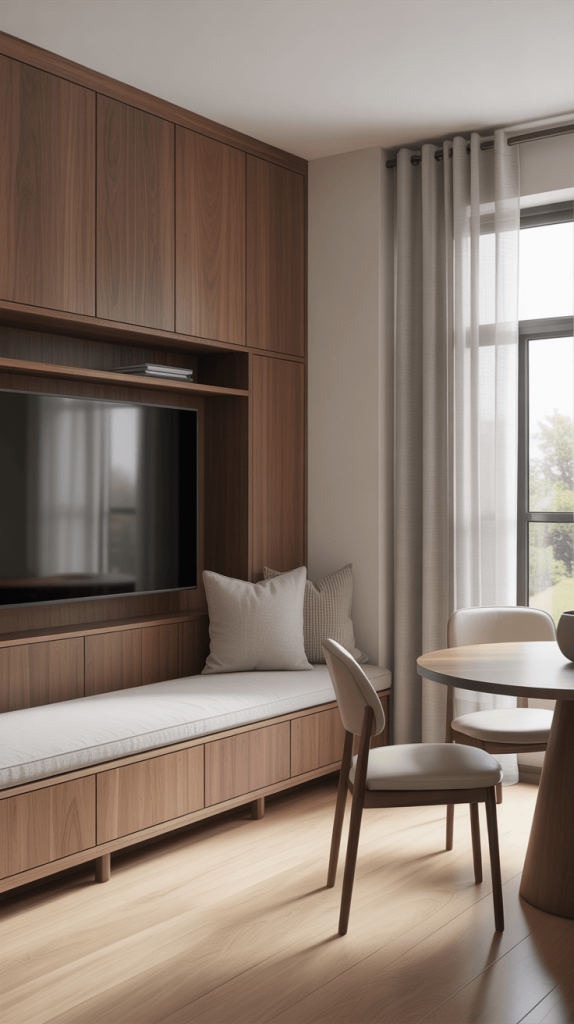
If you’re ready for a more permanent solution (and potentially a bigger project), built-ins are a game-changer.
A built-in bench in the dining nook with storage underneath, or a built-in bookshelf/room divider, can maximize every single inch of your space.
Built-ins look incredibly high-end and tailored because, well, they are. They are designed specifically for your room’s dimensions, solving storage and layout issues in one fell swoop.
They eliminate visual clutter by creating a seamless look that freestanding furniture often can’t achieve.
9. Use Color to Create Zones
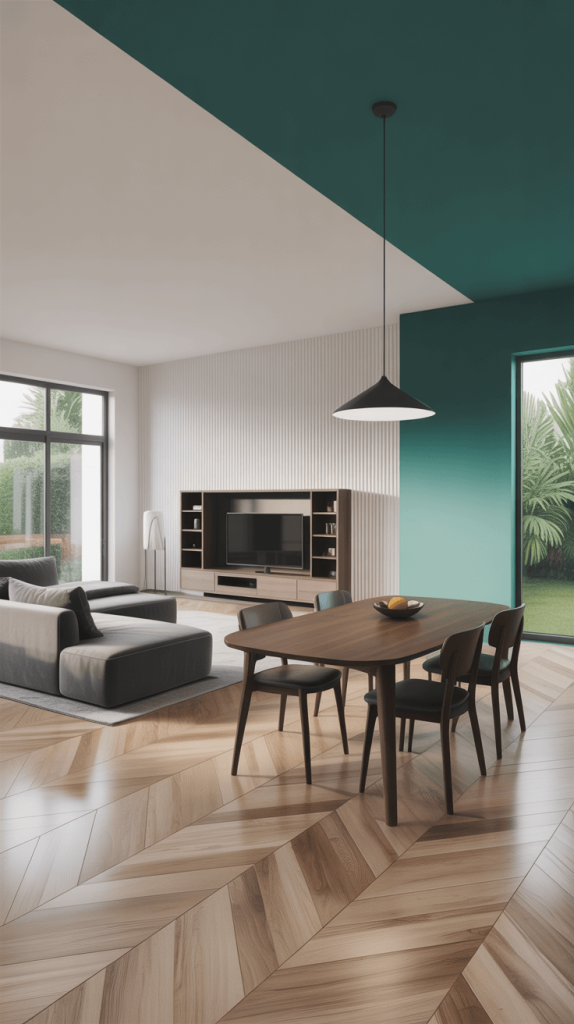
Why should statement walls have all the fun? You can use color on more than just the walls to define your zones.
- Furniture: Choose a sofa in one color family and dining chairs in another complementary color.
- Accessories: Use throw pillows, blankets, and art in the living area to reinforce one palette, and a table runner, centerpiece, and lighting in the dining area to reinforce another.
- Rugs: As we talked about in idea #1, this is the easiest way to use color. A jewel-toned rug under the dining table and a more neutral, textured one under the living area can create a beautiful, nuanced separation.
This method requires a good eye for color, but when done right, it looks incredibly chic and designer-led.
Also Read: 15 Very Small Living Room Ideas to Maximize Space
10. Embrace an Open Concept Layout
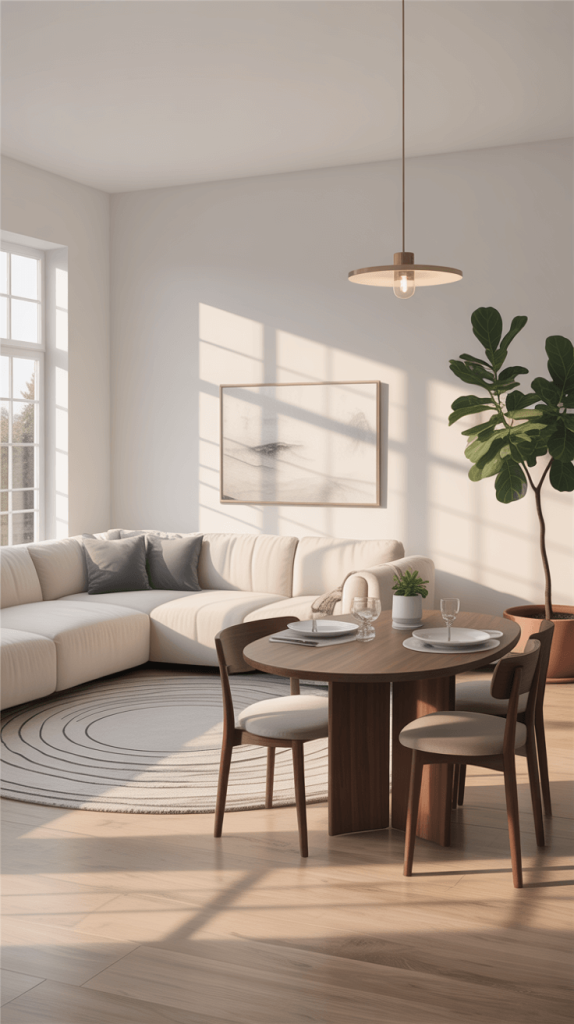
Maybe you’ve tried all these zoning tricks and you’re thinking, “But I actually like the open, airy feel!” Fair enough! Instead of fighting the open concept, you can lean into it.
The key to making this work is cohesion.
You want the two areas to feel like they are part of the same family, not identical twins.
- Use a consistent color story throughout both spaces.
- Repeat materials and finishes. For example, if your dining chairs have metal legs, choose a coffee table or side table with a similar metal finish.
- Maintain a consistent style—don’t pair a ultra-modern dining set with a rustic, farmhouse-style sofa.
This creates a harmonious, flowing space that feels large, bright, and purposefully open. It’s all about unity.
11. Create a Gallery Wall for Both Areas
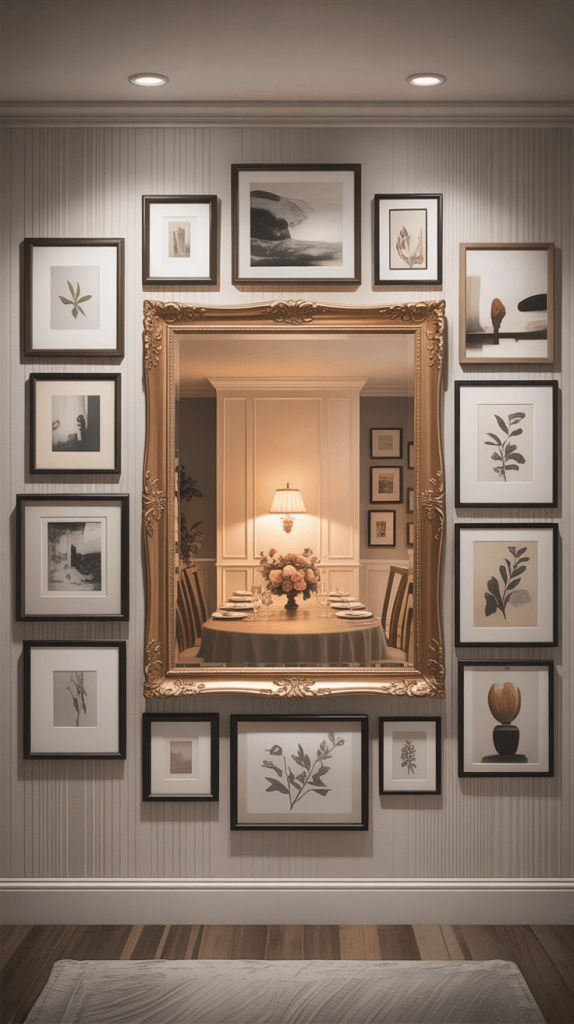
A gallery wall is a fantastic way to bridge the gap between two zones.
By stretching a carefully curated collection of art and photographs across a wall shared by both the living and dining areas, you create a visual through-line that ties the whole room together.
You can mix family photos, prints, paintings, and even small shelves with objects for a dynamic look.
The unified element of the gallery wall makes the room feel designed as a whole, even though it serves two distinct purposes. It’s a great project for a weekend and instantly adds tons of personality.
12. Incorporate Natural Elements
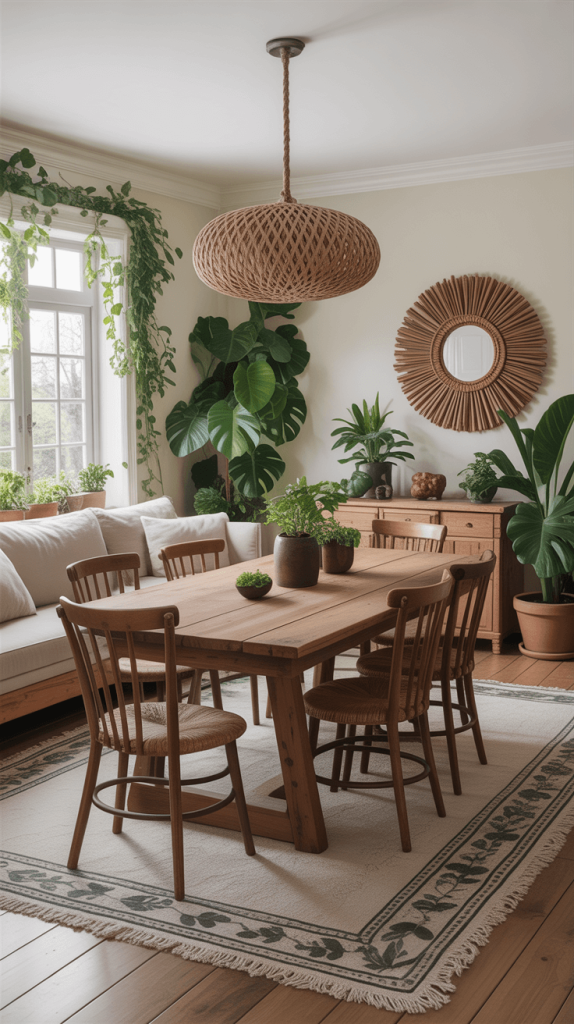
Nothing makes a room feel more fresh, calm, and inviting than a touch of nature.
And in a combo room, which can sometimes feel like a lot of man-made materials, this is especially important.
- Plants, plants, and more plants: A large fiddle-leaf fig tree in a corner can act as a soft room divider. A collection of smaller plants on open shelving adds life and color.
- Natural materials: Incorporate wood, stone, jute, rattan, and linen through your furniture, accessories, and textiles. A jute rug under the dining table, a wooden bowl as a centerpiece, linen curtains—these elements add warmth and texture that make a space feel lived-in and loved.
Seriously, a few well-placed plants can solve a multitude of design sins. IMO, it’s the easiest win in the book.
13. Use Lighting to Create Atmosphere
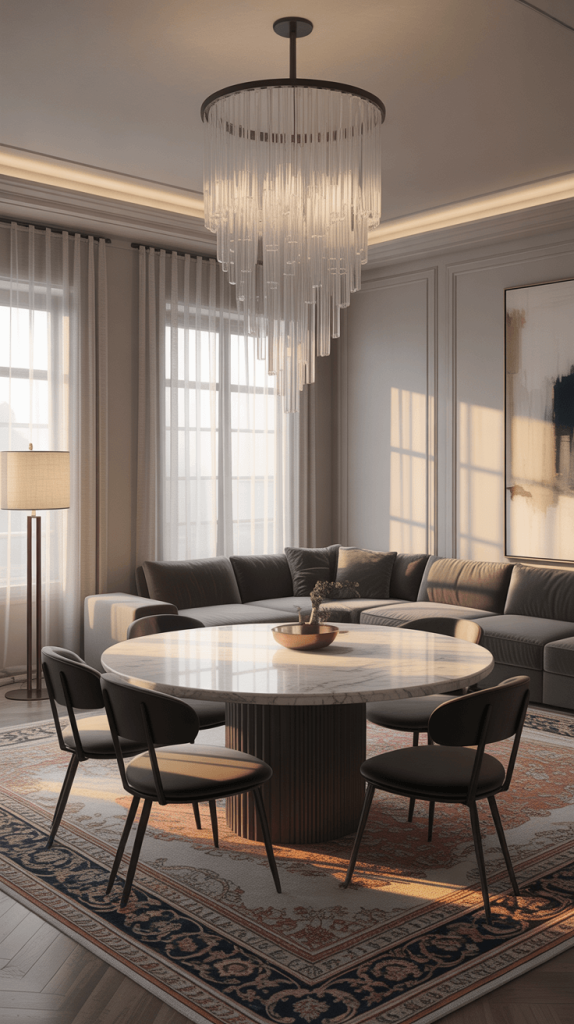
Lighting is everything. It’s the jewelry of the room.
And in a dual-purpose space, you need layered lighting to set the right mood for the right activity.
You need three types of light:
- Ambient (General): This is your main overhead light. But please, for the love of all that is stylish, ditch the single blinding boob light! Opt for a statement pendant over the dining table and maybe a beautiful flush mount ceiling light for the living area.
- Task: This is light for a specific job. A floor lamp by the reading chair, a swing-arm lamp over the console table.
- Accent: This is light for drama. Picture lights over art, small lamps on shelves, or even fairy lights inside a glass jar.
By having separate lighting controls for each area—a dimmer switch on the dining pendant, a lamp by the sofa—you can instantly transform the room from a bright, energetic entertaining space to a soft, cozy lounge for movie night. Magic.
14. Try a Floating Dining Table
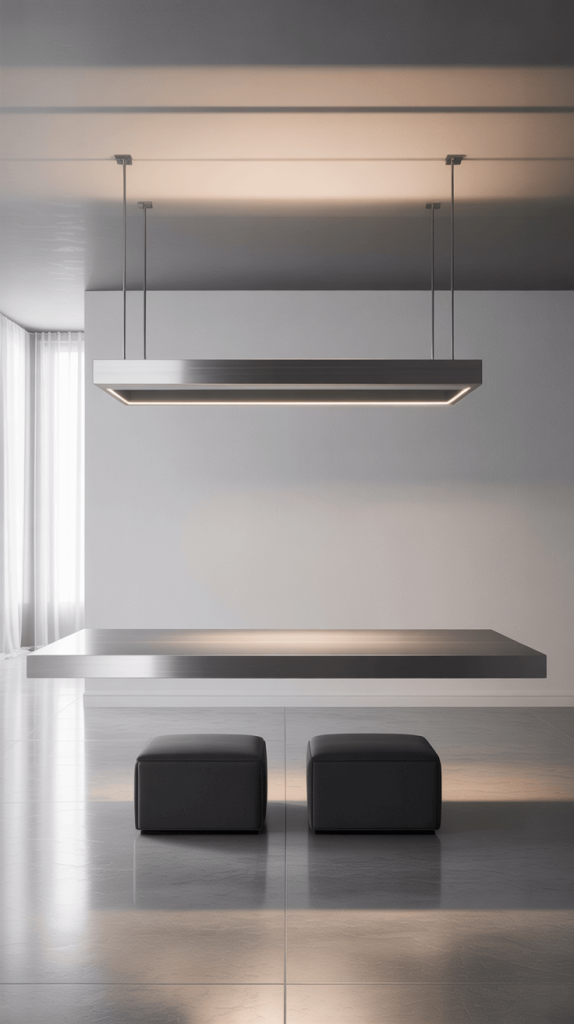
Short on space? Get your table off the floor! A floating console or dining table mounted directly to the wall is a genius solution for super tight spots.
It provides a full dining surface without any leg interference, making the floor space beneath it feel open and airy.
Pair it with some sleek, backless stools that can tuck completely underneath, and you have a dining setup that practically disappears when not in use.
It’s modern, efficient, and perfect for studio apartments or small urban homes.
15. Add Vertical Storage Solutions
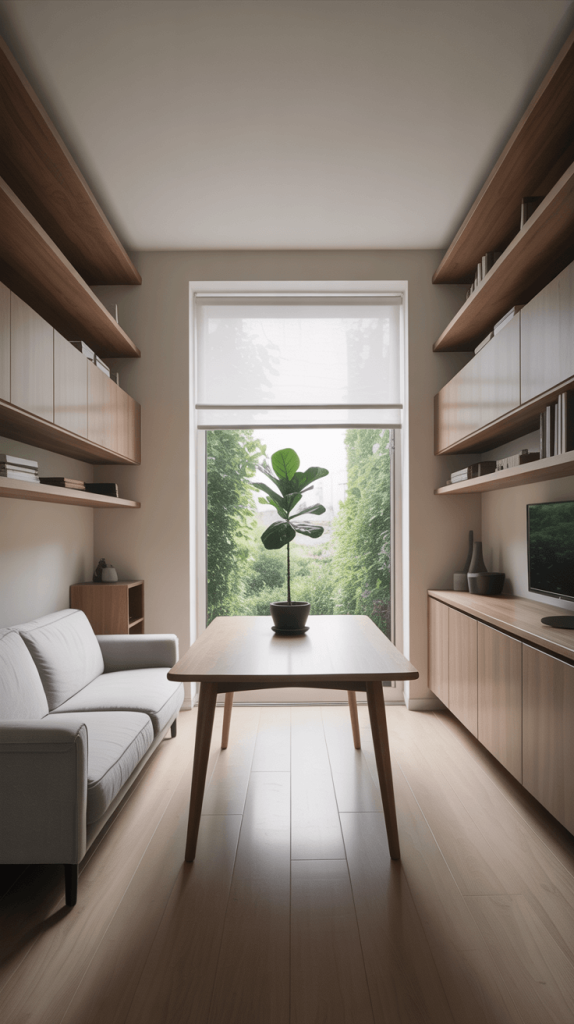
When you can’t build out, build up. Utilizing your vertical space is a non-negotiable for small-space living.
Tall, narrow bookshelves, cabinets that reach the ceiling, and wall-mounted shelving draw the eye upward, making the room feel larger while providing crucial storage.
This keeps your floor space clear and open, which is essential for preventing a combo room from feeling cramped. Store less-frequently-used items up high and keep everyday things within easy reach.
It’s simple, effective, and makes you feel like you’ve unlocked a secret level of home organization. FYI, it’s a game-changer.
Conclusion
Whew, that was a lot! But see? A living and dining room combo isn’t a limitation; it’s a chance to get creative.
The most important thing to remember is that these are your rooms. The best design is the one that works for your life.
Do you host giant Thanksgiving dinners? Then maybe that long dining table (idea #7) and multi-functional furniture (idea #2) are your top priorities.
Are you more of a quiet, cozy couple? Then the minimalist approach (idea #6) and mood lighting (idea #13) might speak to you.
My biggest piece of advice? Start with the rug. It truly is the foundation. Then, play with the furniture arrangement.
Don’t be afraid to move your sofa away from the walls—float it, angle it, see what feels good. The best layouts often come from happy accidents.
So, which idea are you most excited to try? Maybe it’s just one, or maybe you’ll mix and match a few.
Whatever you do, have fun with it. Your stylish, functional, and uniquely yours combo room is waiting to happen. Now go create it