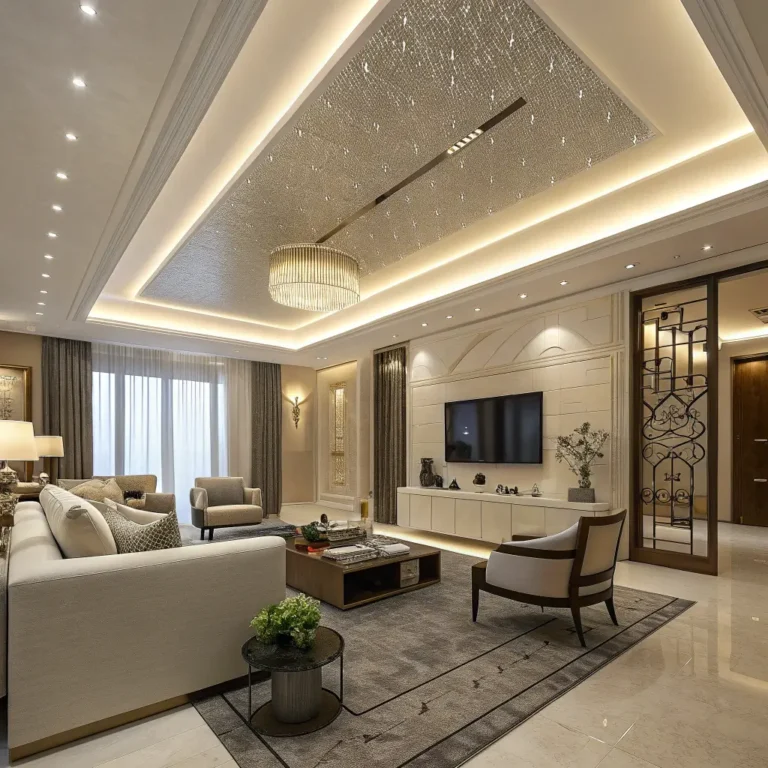
15 Perfect Profile Light Ceiling Design Ideas for Luxury Homes

You know that moment when you walk into a room and the lighting just hits different? That’s exactly what happened to me last year when I visited my friend’s newly renovated penthouse. The ceiling wasn’t just a ceiling anymore – it was pure art, thanks to some seriously clever profile lighting that made the whole space feel like a five-star hotel suite.
Listen, I get it. You’re probably thinking about upgrading your own space, and regular old ceiling lights just aren’t cutting it anymore. Profile lighting has completely revolutionized how we think about luxury interiors, and I’m here to share everything I’ve learned about creating that jaw-dropping effect in your own home.
After spending way too much time (my partner would say obsessively) researching and experimenting with different ceiling designs, I’ve compiled the ultimate list of profile light ceiling ideas that’ll transform any luxury home from “nice” to “holy cow, who’s your designer?”
Minimalist White Cove Ceiling with Warm LED Profile Lights
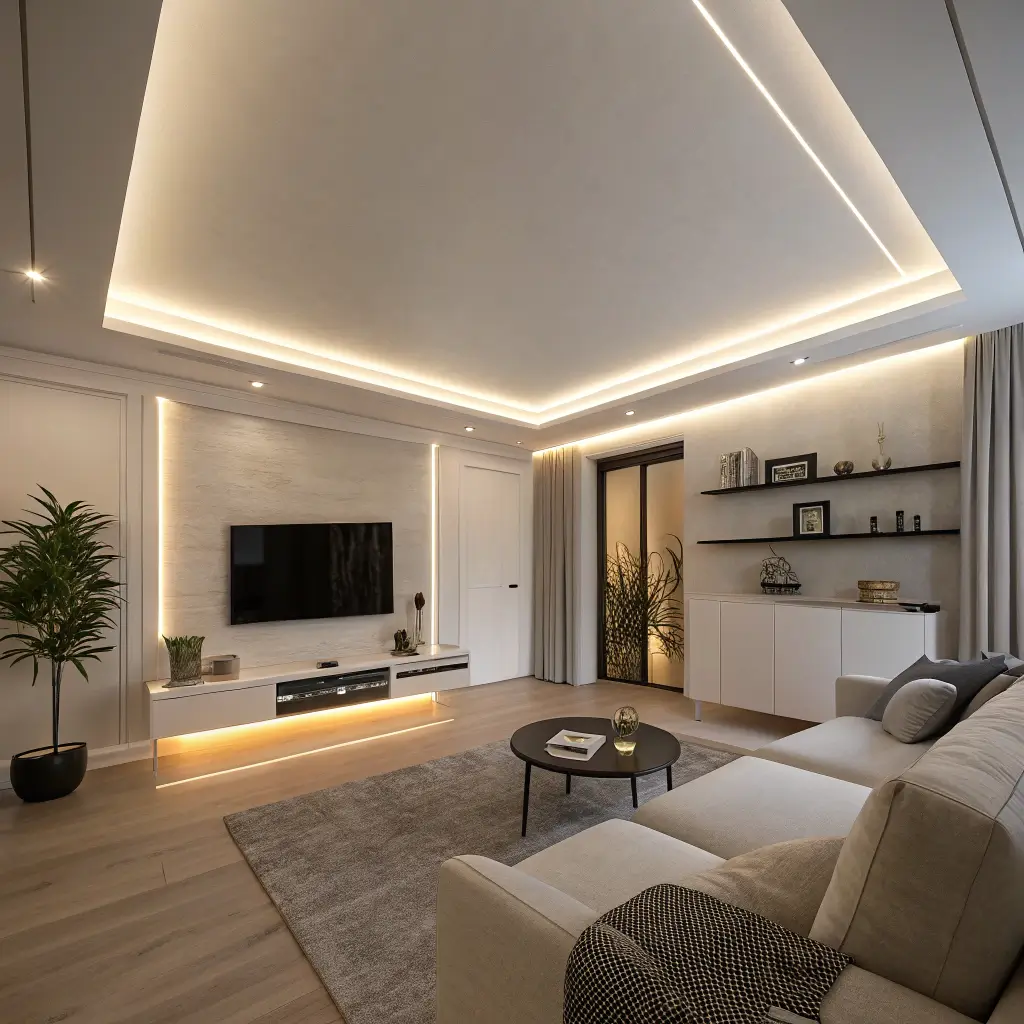
Let me start with my personal favorite – the minimalist white cove ceiling. This design absolutely nails that clean, sophisticated look that screams understated luxury. I installed something similar in my master bedroom last spring, and honestly? Game changer.
The beauty of this design lies in its simplicity. You create a recessed cove around your ceiling perimeter, tuck in some warm LED profile lights, and boom – instant ambiance. The light bounces off the white surface, creating this gorgeous indirect glow that makes everyone look ten years younger (seriously, my selfie game improved dramatically).
What really sells this design is the warm color temperature – we’re talking 2700K to 3000K here. Skip the cool whites unless you want your living room feeling like a dental office. The warm tones create this cozy, inviting atmosphere that makes people want to stay longer.
Installation Tips That’ll Save Your Sanity
- Always use dimmable LEDs – trust me, you’ll want control over the mood
- Leave at least 4-6 inches of cove depth for optimal light distribution
- Consider smart home integration from the start (retrofitting is a pain)
- Install a separate switch for the profile lights
Layered False Ceiling with RGB Profile Lighting
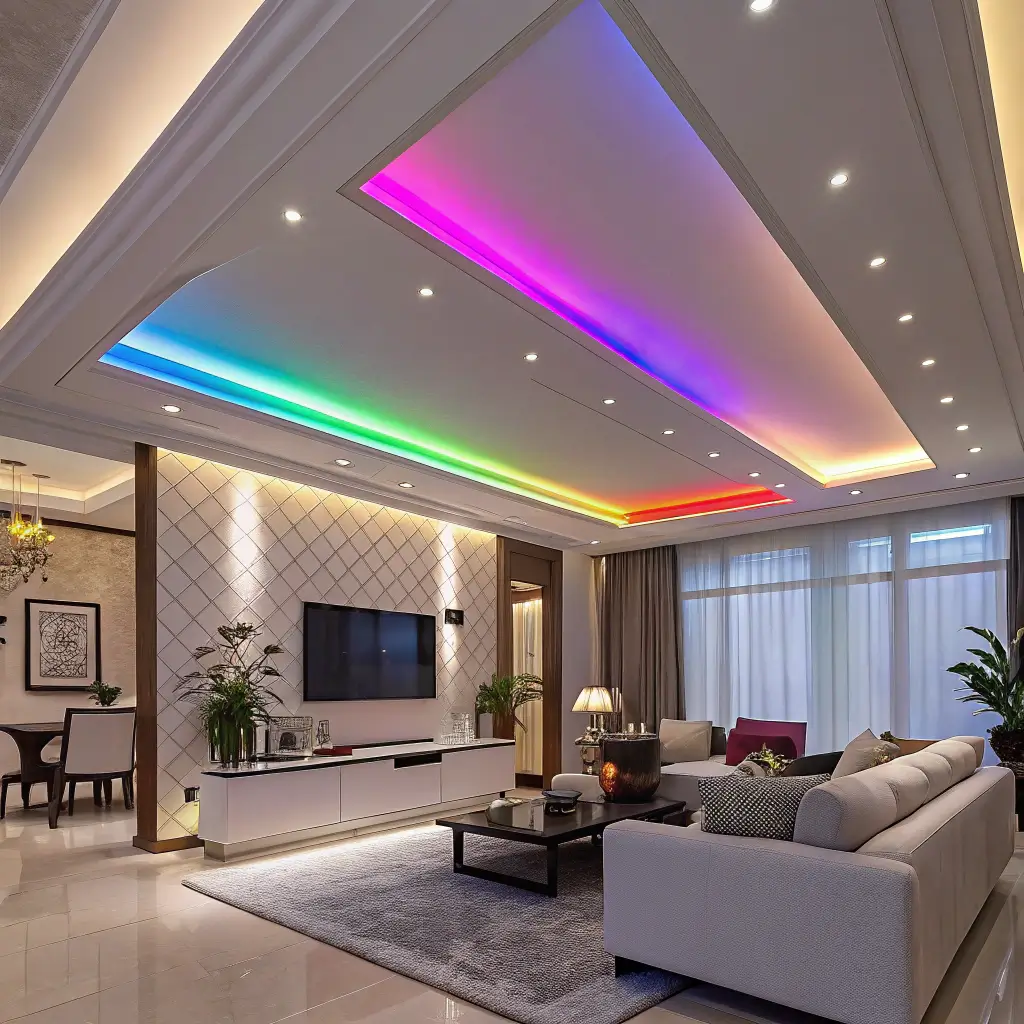
Okay, so maybe you’re thinking minimalist is boring. Fair enough! Let’s talk about layered false ceilings with RGB profile lighting – basically the party trick of ceiling designs.
I helped my tech-obsessed cousin install one of these bad boys, and now his living room transforms from chill Netflix cave to full-on party mode with just a voice command. The layered approach creates depth and visual interest even when the lights are off, but when those RGB profiles kick in? Chef’s kiss.
The key here is creating multiple levels in your false ceiling. Each layer gets its own strip of RGB profile lights, allowing you to play with different color combinations. Want purple on the outer ring and blue in the center? Go for it. Feeling festive? Red and green for the holidays. The possibilities are literally endless.
Why RGB Makes Sense for Luxury Homes
You might think RGB is just for gamers and teenagers, but hear me out. Modern RGB systems offer millions of color combinations, including perfect whites and warm tones. You get the versatility of color when you want it, plus all the traditional lighting options when you need them.
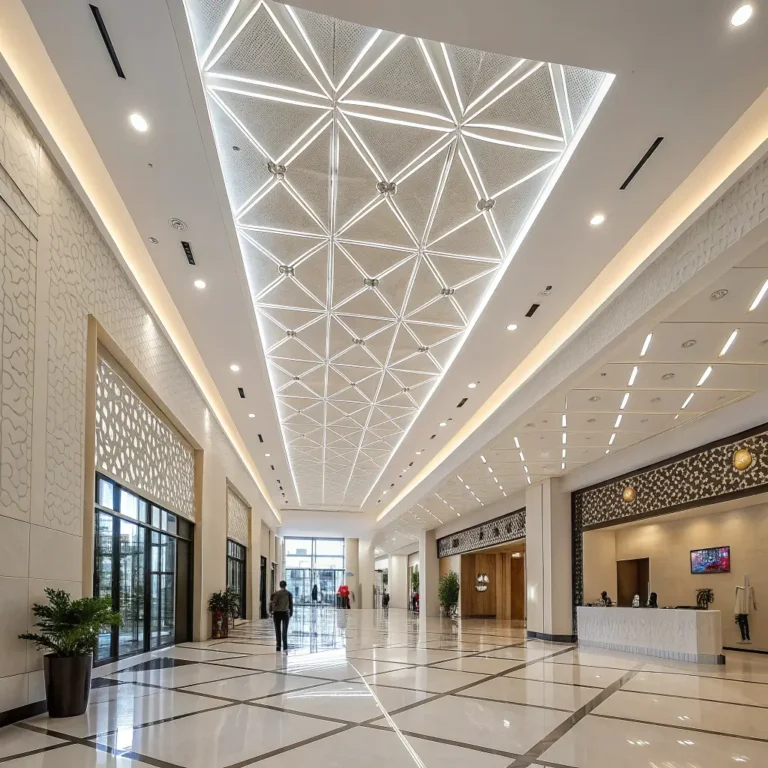
Modern Geometric Ceiling with Hidden Profile Lights
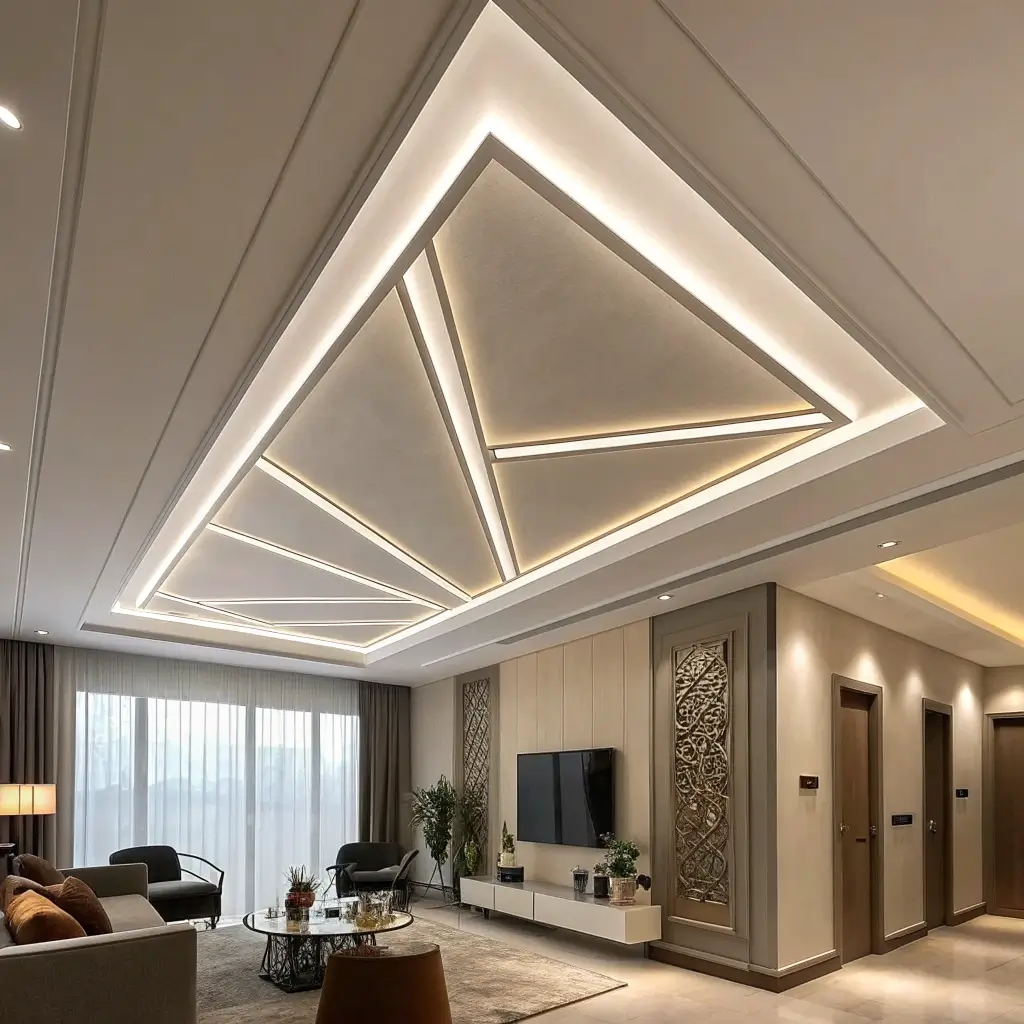
Remember when everyone thought popcorn ceilings were peak design? Yeah, we’ve come a long way. Geometric ceiling designs with hidden profile lights represent the evolution of ceiling artistry, and they’re absolutely crushing it in luxury homes right now.
I recently saw this executed perfectly in a Manhattan loft – angular shapes cut into the ceiling with profile lights hidden in the recesses. During the day, you get these cool shadow patterns. At night? The whole ceiling becomes this glowing geometric masterpiece that looks like it belongs in a modern art museum.
The trick is keeping the profile lights completely hidden from view. You want people wondering where the light is coming from, not staring at LED strips. This creates that magical, ethereal quality that makes geometric ceilings so captivating.
Design Considerations for Geometric Patterns
- Stick to simple shapes initially – triangles, hexagons, or rectangles work beautifully
- Ensure all angles are precise (wonky geometry looks amateur)
- Use consistent spacing between elements
- Consider how shadows will fall during different times of day
Circular Recessed Ceiling with Soft Glow Profile Lights
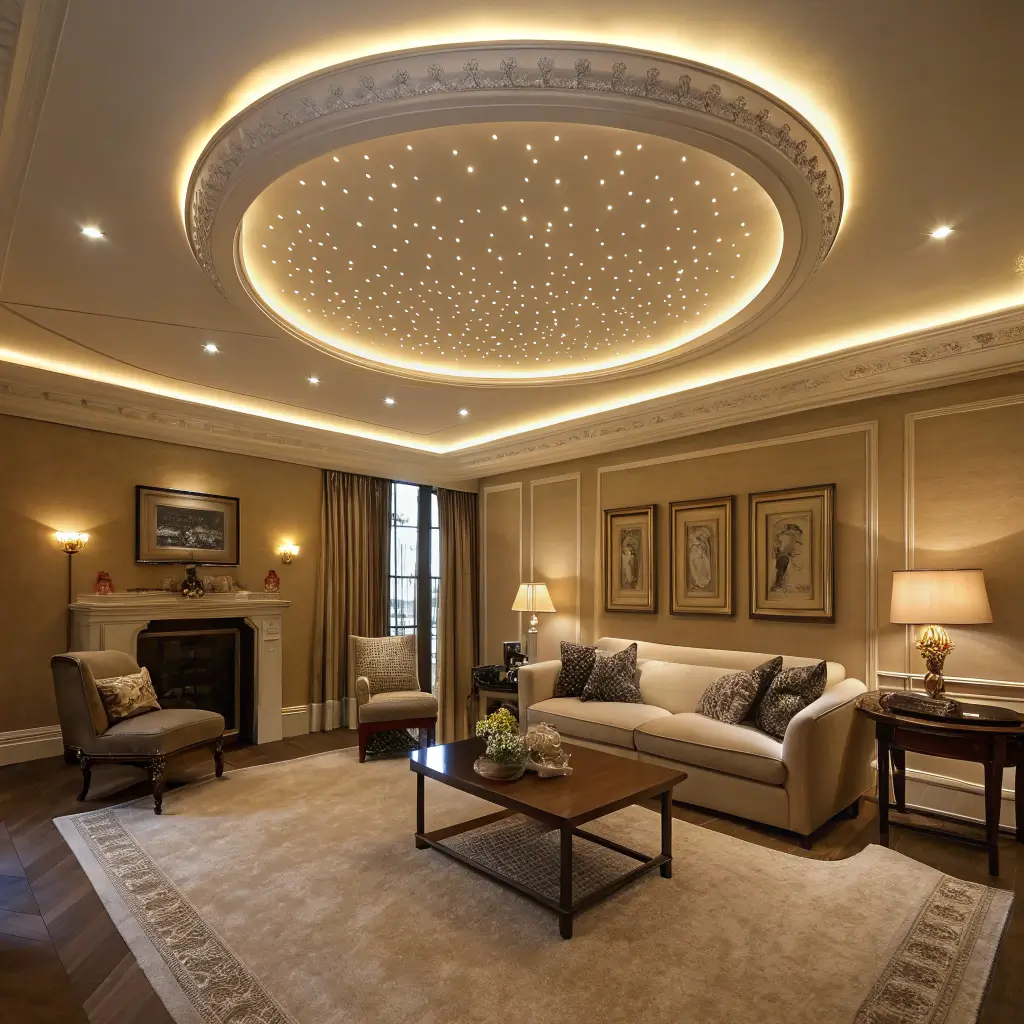
Who says everything needs to be angular? Circular recessed ceilings bring this organic, flowing element to your space that feels both futuristic and timeless. I’m particularly fond of these in dining rooms – something about that circular glow above a round dining table just makes sense, you know?
The installation requires a bit more finesse than straight lines (curves are always trickier), but the payoff is worth it. The soft glow from profile lights following the circular recess creates this halo effect that’s absolutely mesmerizing. Plus, circles have this psychological effect of making spaces feel more harmonious and balanced.
I’ve seen this done with multiple concentric circles too – think ripples in water but on your ceiling. Each ring can have its own profile light intensity, creating this gradual fade from bright center to dim edges. It’s subtle but incredibly effective.
Wooden Panel Ceiling with Warm Profile Strip Lighting
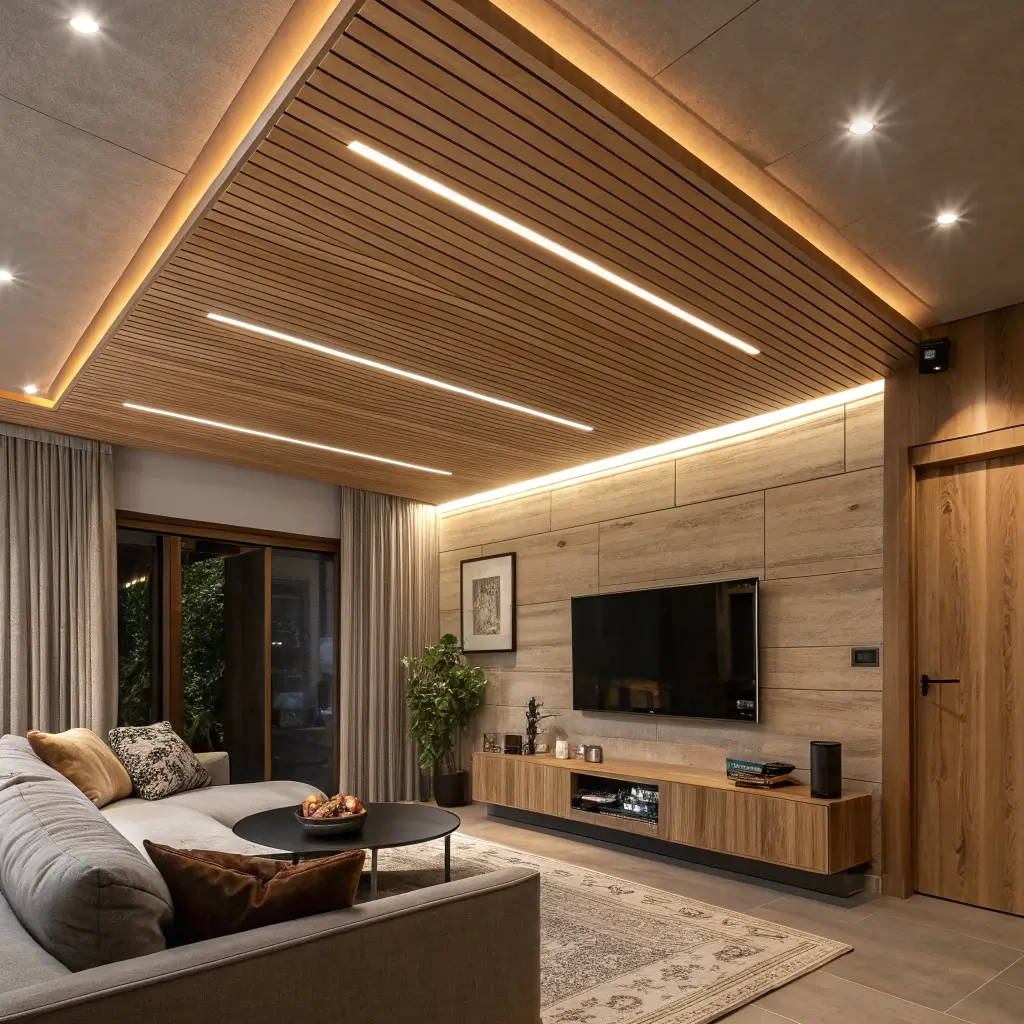
Let’s switch gears and talk about wooden panel ceilings with integrated profile lighting. This combo brings together natural warmth with modern technology in a way that feels both rustic and refined.
Last summer, I visited a cabin in Aspen (humble brag, I know) where they’d installed profile lights between wooden ceiling panels. The effect was stunning – the wood grain practically glowed, and the whole space felt like a high-end spa. The contrast between organic wood textures and clean LED lines creates this perfect balance that works in everything from mountain retreats to urban penthouses.
Wood and Light: A Match Made in Design Heaven
The trick is choosing the right wood tone. Darker woods like walnut or mahogany create drama, while lighter options like oak or birch keep things airy. Here’s what I’ve learned works best:
- Use warm white LEDs (2700K) to enhance wood’s natural tones
- Space panels evenly for consistent light distribution
- Consider the wood’s grain direction – horizontal feels calming, vertical adds height
- Seal the wood properly to prevent warping from LED heat
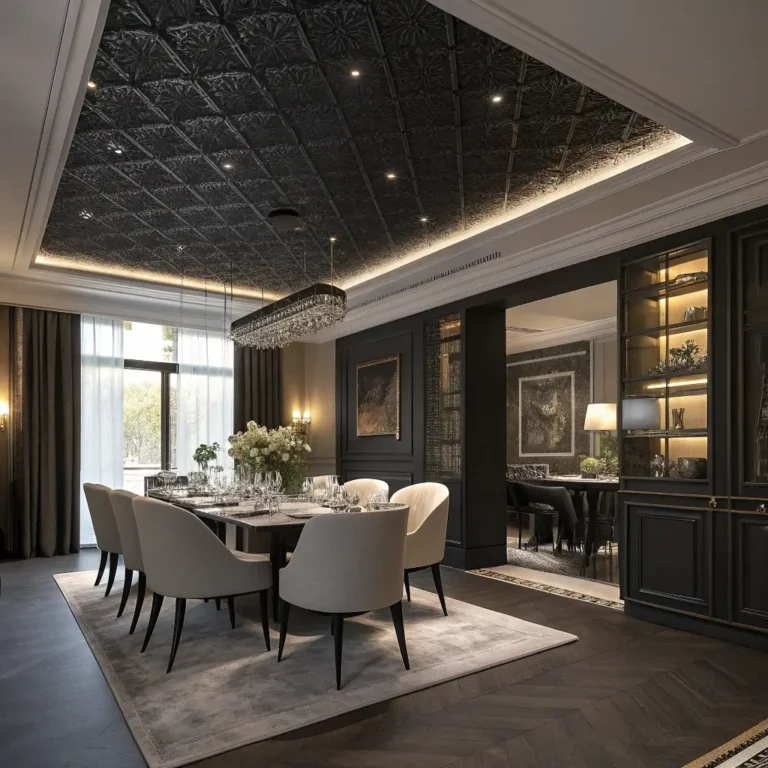
Black Matte Ceiling with Contrasting White Profile Lights
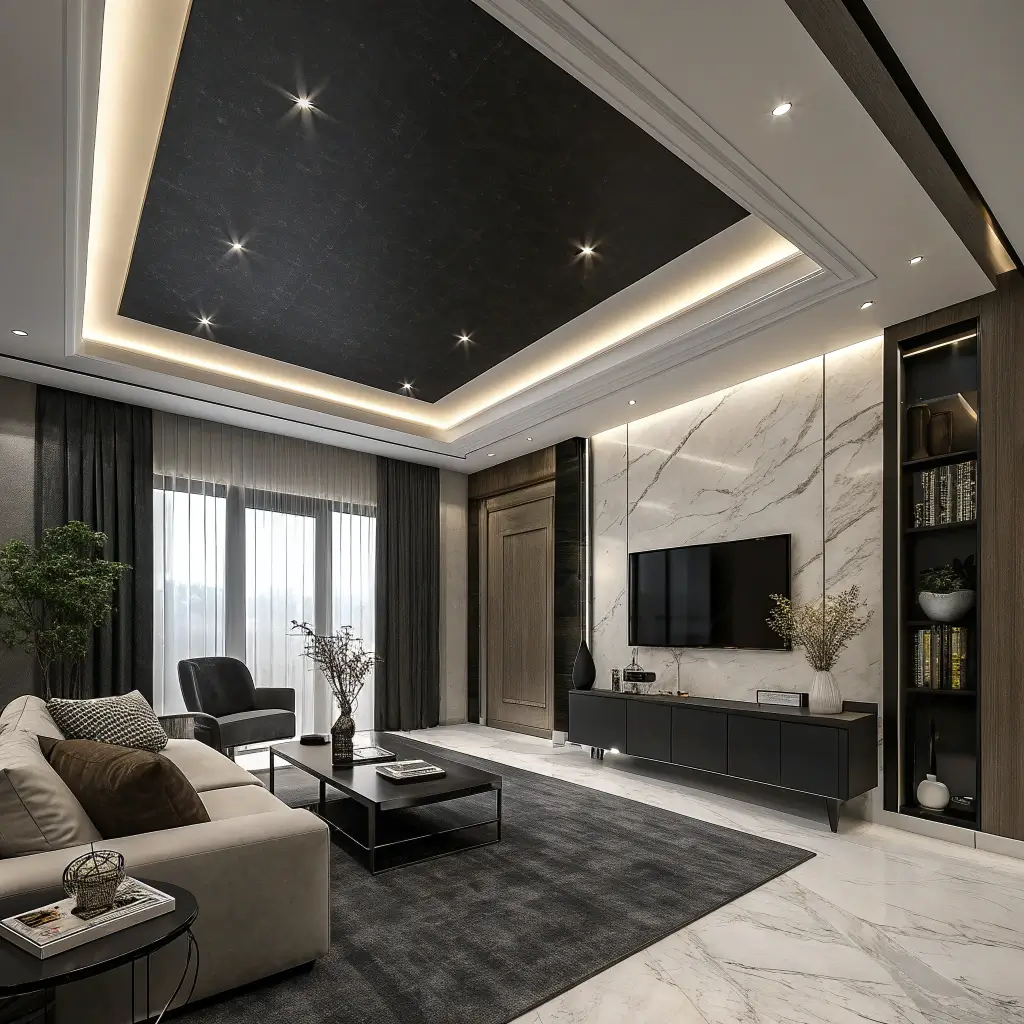
Now here’s where things get interesting. Black matte ceilings might sound crazy, but when you add contrasting white profile lights? Pure sophistication. This isn’t for the faint of heart, but if you want to make a statement, this is how you do it.
I’ll admit, I was skeptical when my designer friend suggested this for her home theater. But walking into that room with the profile lights creating these brilliant white lines against the deep black ceiling? Mind. Blown. It’s like having a piece of the night sky inside your home, minus the weather concerns.
The matte finish is crucial here – glossy black would create reflections that ruin the effect. The profile lights need to be bright enough to create strong contrast but not so intense they cause glare. It’s a delicate balance, but when you nail it? Chef’s kiss 🙂
Also Read: 15 Gorgeous Pop Ceiling Design Ideas for Home Makeovers
Floating Ceiling with Multi-Color LED Profile Lights
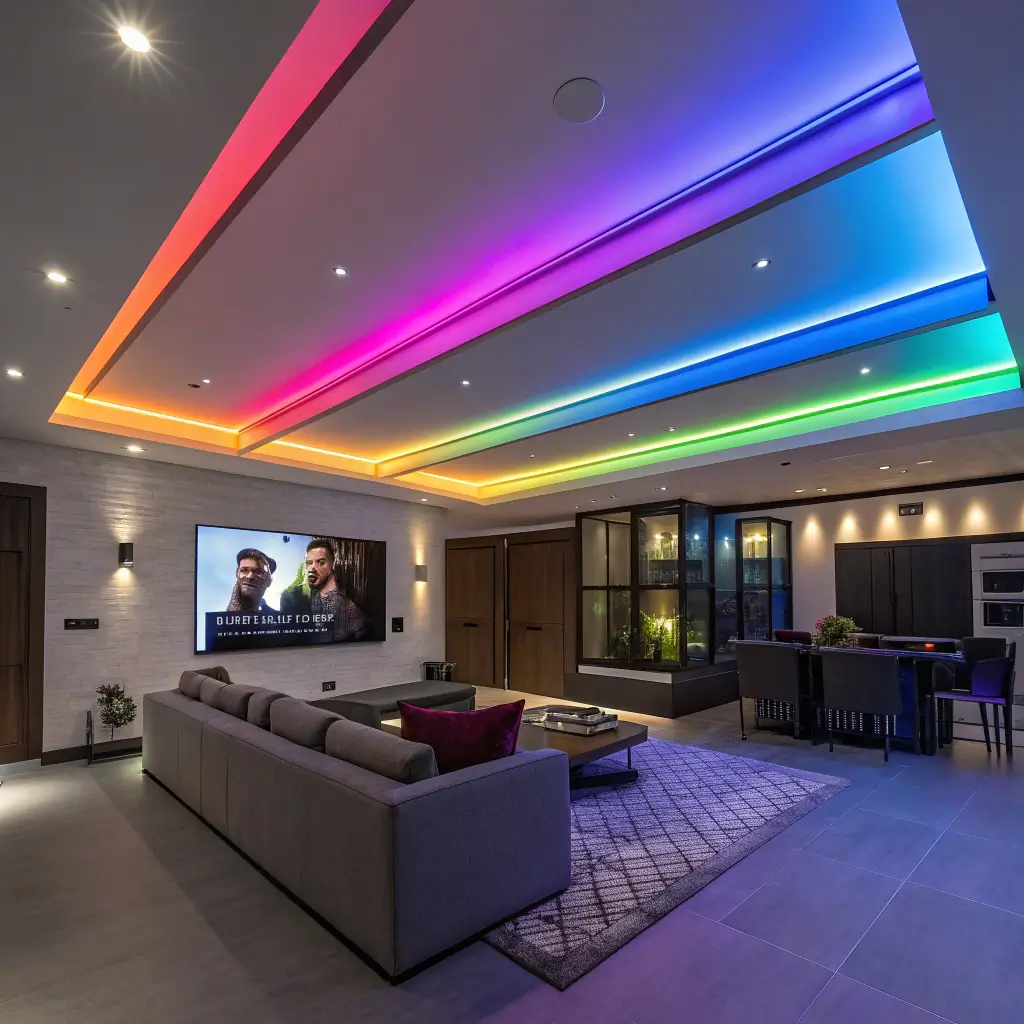
Ever wanted your ceiling to defy gravity? Floating ceilings create this incredible illusion where part of your ceiling appears to hover in mid-air. Add multi-color LED profile lights to the gap, and you’ve got yourself a conversation starter that’ll never get old.
The engineering behind this involves dropping a section of ceiling slightly lower and hiding the mounting hardware. Profile lights installed in the gap between the floating section and the main ceiling create this glowing outline that emphasizes the floating effect. I’ve seen this done with simple rectangles, complex shapes, and even cloud-like organic forms.
Making Your Ceiling Float (Without Magic)
Here’s the technical bit that’ll save you headaches:
- Minimum gap of 4 inches between floating and main ceiling
- Use sturdy metal framework (this isn’t the place to cheap out)
- Install lights on both the floating piece and main ceiling for maximum effect
- Consider sound dampening material if the floating section is large
Glass Panel Ceiling with Subtle Profile Lighting
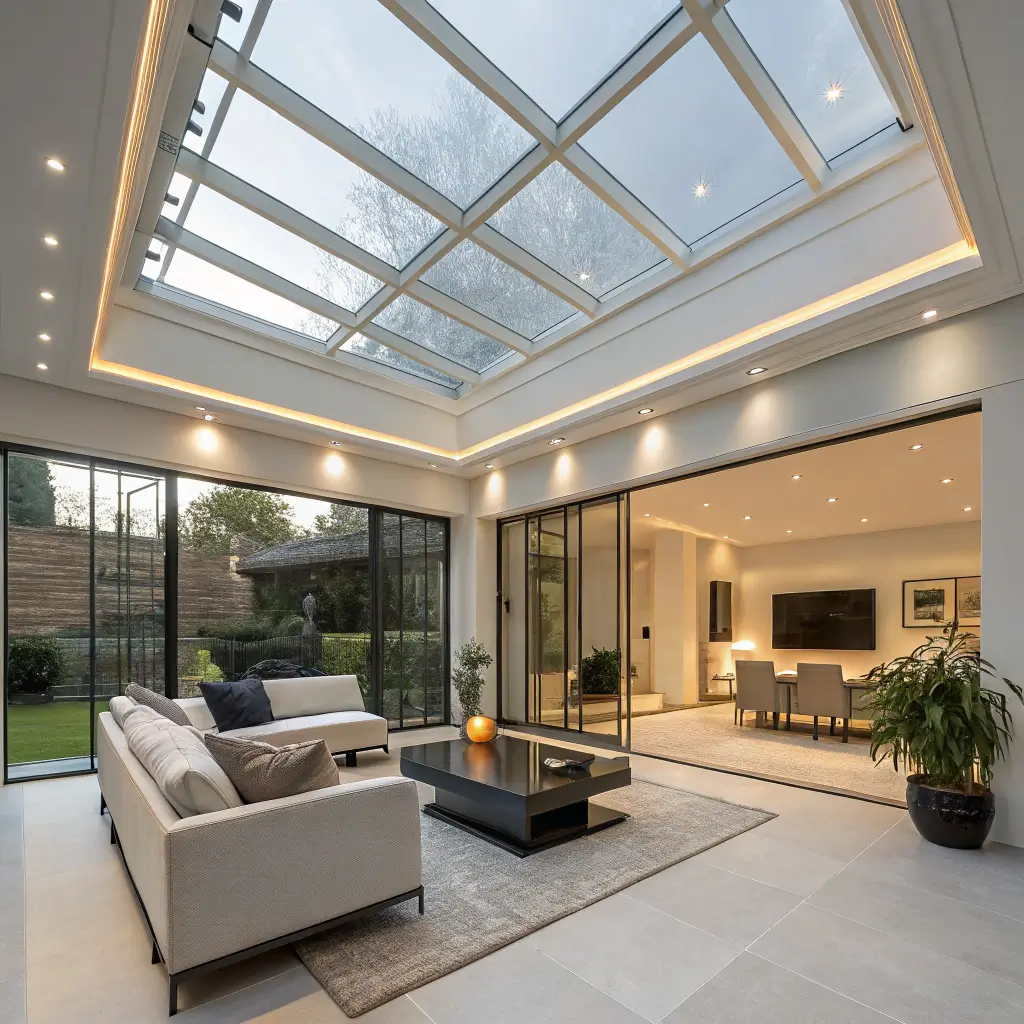
Glass ceilings aren’t just metaphorical anymore, folks. Frosted or textured glass panels backlit with profile lighting create this ethereal, cloud-like effect that’s absolutely breathtaking. IMO, this is one of the most underutilized designs in luxury homes.
I first encountered this in a boutique hotel in Tokyo, and I literally stood there for five minutes just staring up. The way light diffuses through frosted glass creates this soft, even glow that makes harsh shadows impossible. Your skin looks amazing, plants thrive, and the whole space feels larger and more open.
The profile lights sit above the glass panels, completely hidden from view. You can adjust intensity and even color temperature throughout the day – bright and cool for morning energy, warm and dim for evening relaxation.
L-Shaped Ceiling Cove with Warm Yellow Profile Lights
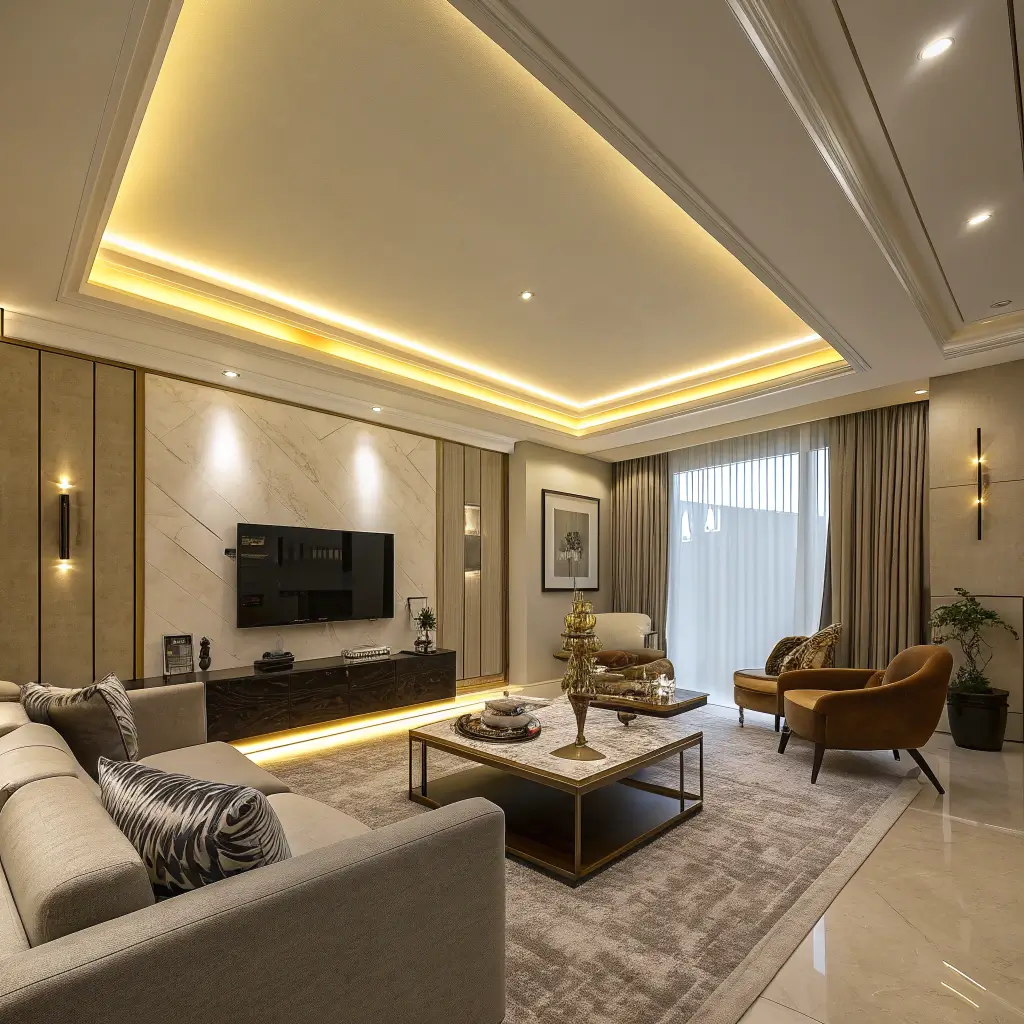
Here’s a design that works brilliantly in rooms with architectural quirks. L-shaped ceiling coves follow the natural angles of your space, turning potential design challenges into features. The warm yellow profile lights add that cozy, inviting glow that makes people feel instantly at home.
My living room has this awkward L-shaped layout (thanks, 1970s architecture), but adding an L-shaped cove with profile lighting actually made it feel intentional. The continuous line of light guides the eye around the room, creating flow and cohesion where there was once just… awkwardness.
Why L-Shaped Coves Work So Well
The beauty of L-shaped designs lies in their versatility:
- They define different zones within open-plan spaces
- Create visual continuity in oddly shaped rooms
- Allow for different light intensities in each section
- Can incorporate both task and ambient lighting
Also Read: 15 Charming Wooden Ceiling Design Ideas for Rustic Vibes
High-Gloss Stretch Ceiling with Embedded Profile Lights
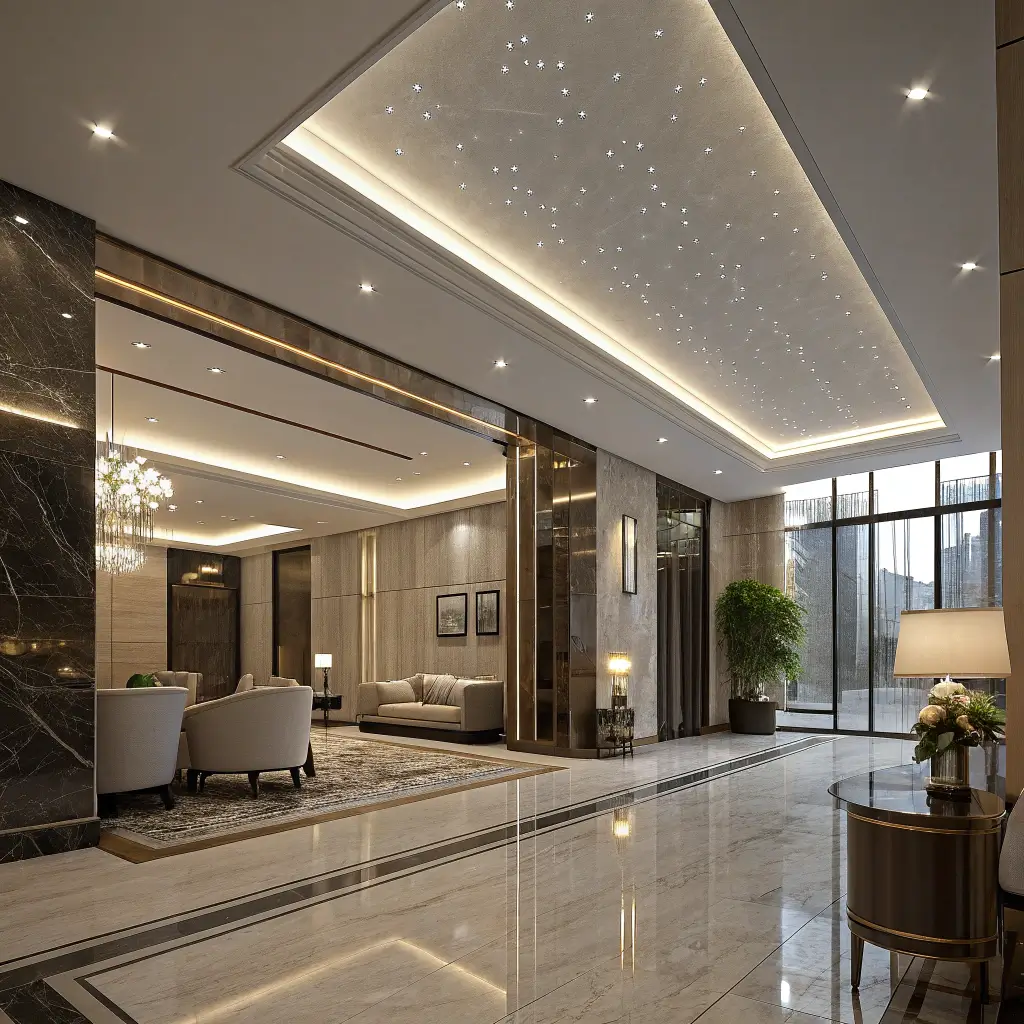
Stretch ceilings are having a moment, and when you add embedded profile lights? You’re basically living in the future. High-gloss stretch ceilings create this mirror-like surface that doubles the visual height of your room while the embedded lights create patterns that seem to float in space.
I was initially worried about the glossy finish showing every imperfection, but modern stretch ceiling materials are incredibly forgiving. The profile lights can be arranged in any pattern – straight lines, curves, even custom designs. The reflection doubles the light output, making this incredibly energy-efficient despite the luxe appearance.
FYI, installation requires specialists, but the results are worth every penny. The membrane is stretched tight across a frame, with profile lights installed above. You can even print custom designs on the membrane – imagine a starry sky or abstract art as your ceiling!
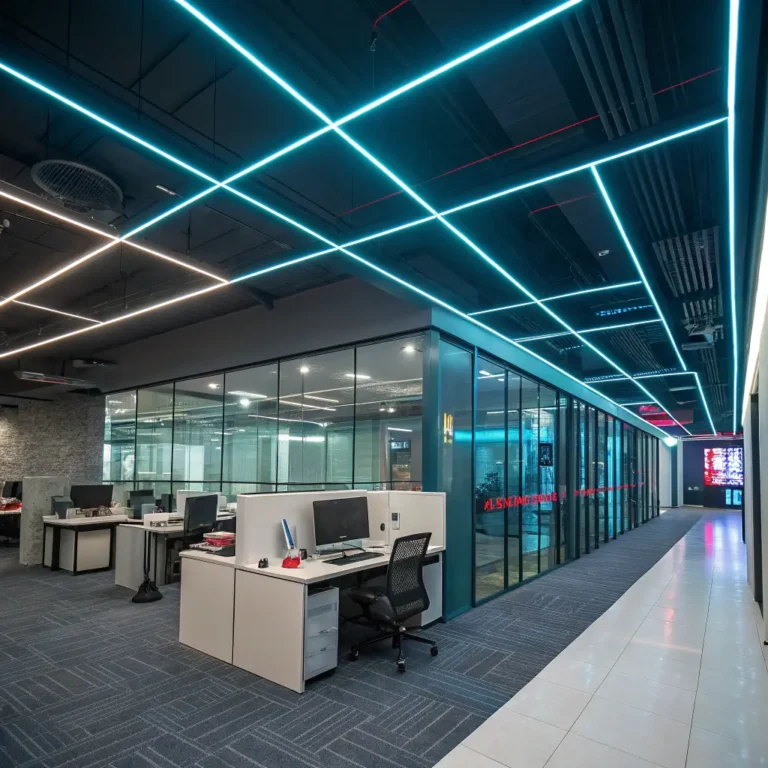
Symmetrical Grid Ceiling with Cool White Profile Lights
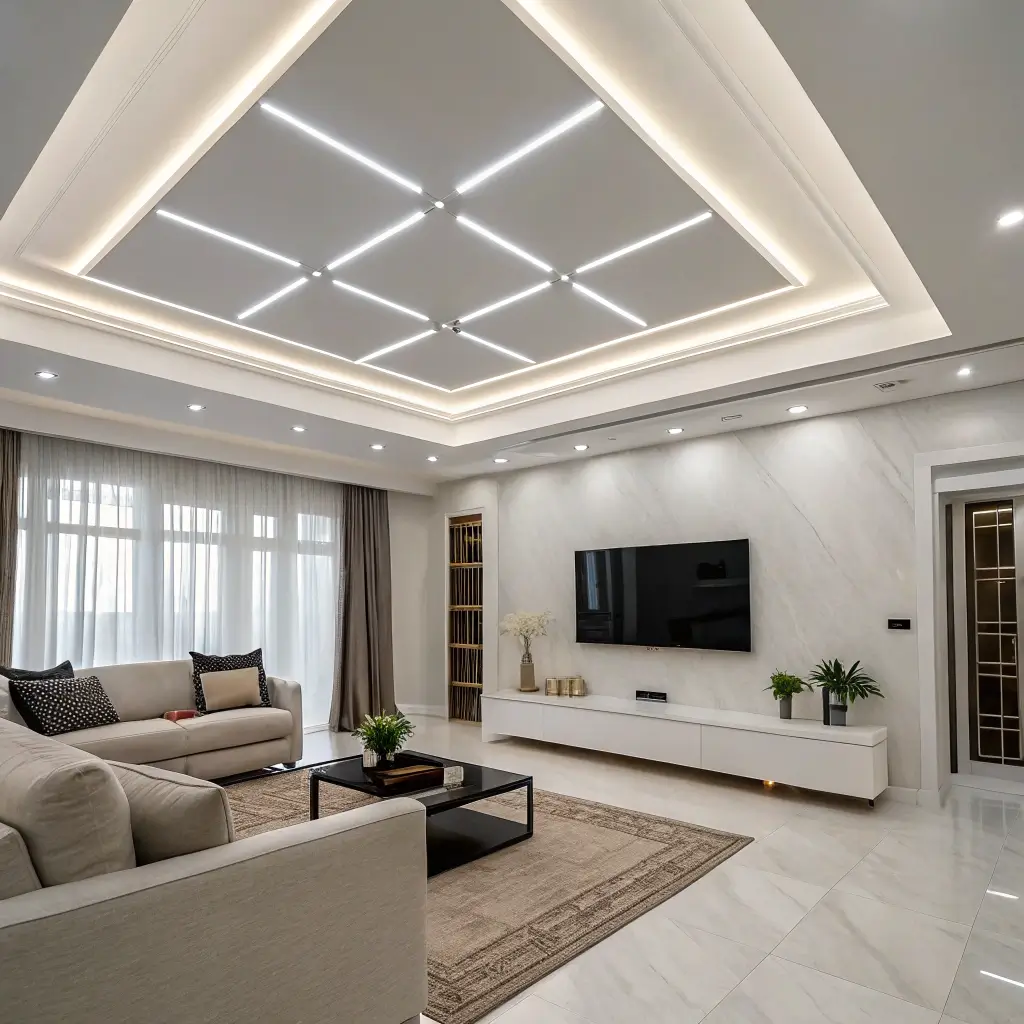
Sometimes, perfection lies in precision. Symmetrical grid ceilings with cool white profile lights bring this architectural rigor that feels both modern and timeless. Think high-end office lobby meets residential sophistication.
I appreciate how this design brings order to chaos. The grid pattern creates visual rhythm, while the cool white lights (4000K-5000K) maintain a crisp, clean aesthetic. This works particularly well in contemporary homes with minimalist furniture – the ceiling becomes art without overwhelming the space.
Creating the Perfect Grid
Getting the grid right requires planning:
- Use a laser level for perfect alignment (eyeballing it never works)
- Maintain consistent spacing (usually 2-3 feet between lines)
- Consider room proportions – larger rooms need bigger grids
- Install separate controls for different grid sections
Curved Wave Ceiling with Gradient RGB Profile Lighting
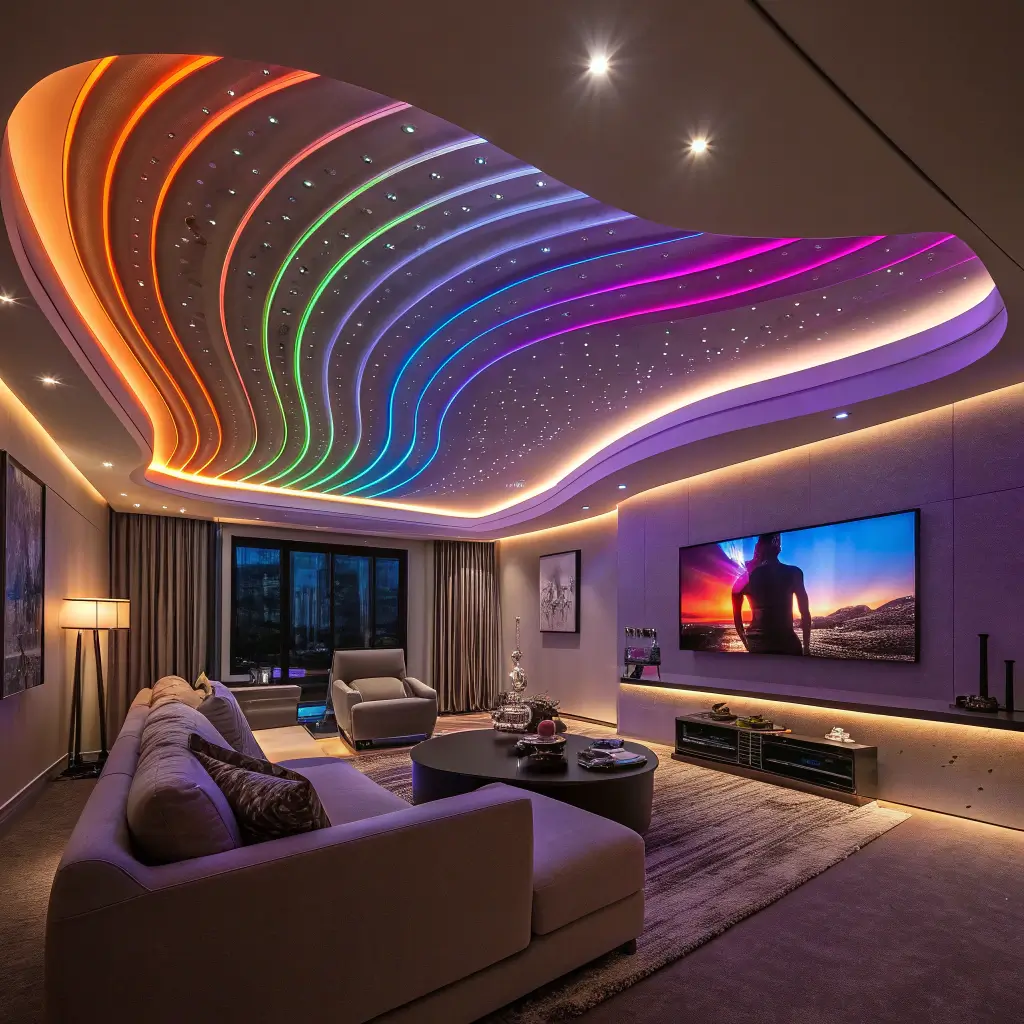
Ready to get wild? Curved wave ceilings throw conventional design out the window and embrace organic, flowing forms. Add gradient RGB profile lighting that shifts colors along the curves, and you’ve created something truly spectacular.
Building these requires either custom plasterwork or specialized ceiling systems, but the result is pure artistry. The profile lights follow the curves, creating this river of light that flows across your ceiling. Program the RGB to shift gradually from blue to purple to pink, and it’s like having the northern lights indoors.
I’ve seen this executed beautifully in spas and master bathrooms, where the flowing forms complement the relaxation vibe. But honestly? It works anywhere you want to make a bold statement.
Also Read: 15 Brilliant Simple Ceiling Design Ideas You Must Try
Vintage Molding Ceiling with Hidden LED Profile Lights
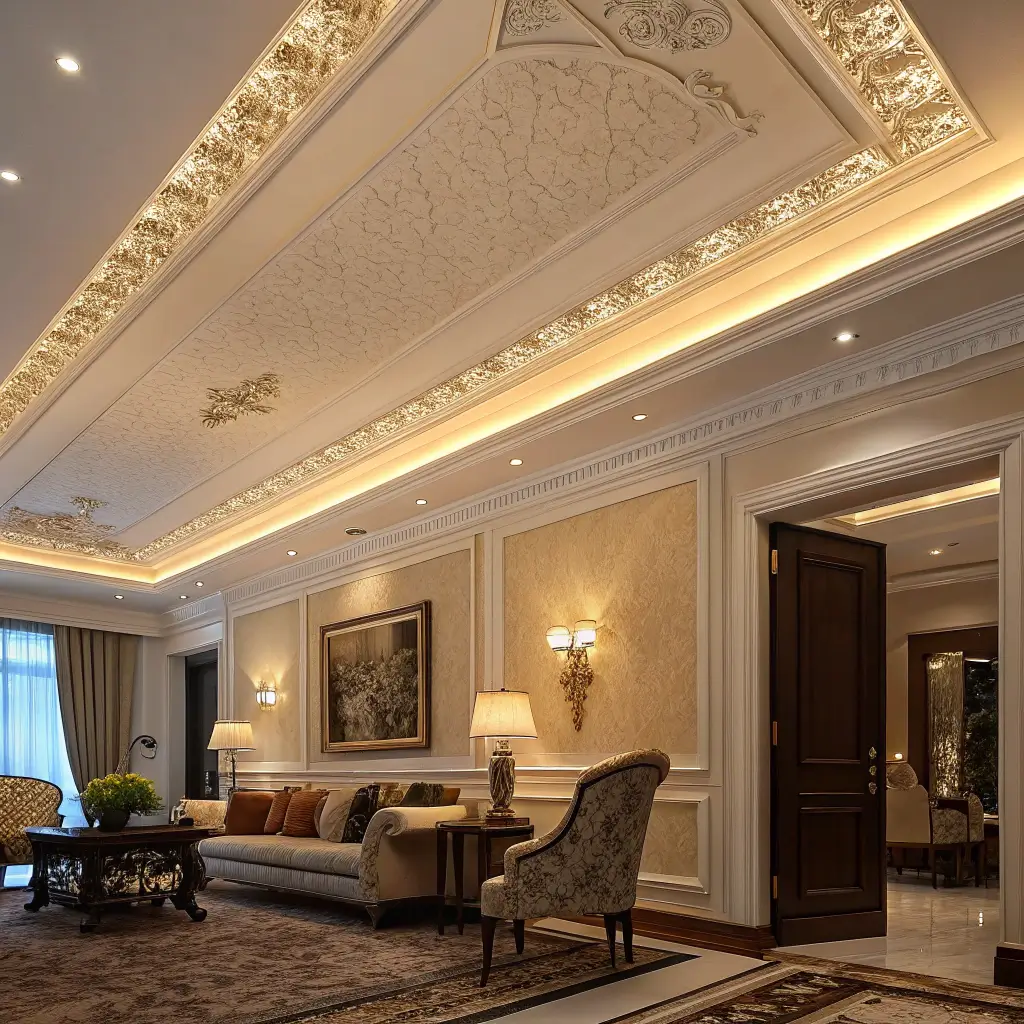
Who says old and new can’t play nice together? Vintage ceiling moldings illuminated with hidden LED profile lights give you that classic elegance with modern functionality. This approach respects architectural heritage while bringing spaces into the 21st century.
My Victorian-era apartment came with gorgeous original moldings that were basically invisible at night. Adding hidden profile lights behind the crown molding completely transformed the space. The indirect lighting highlights the intricate details while providing ambient illumination that old-school fixtures could never achieve.
Modernizing Classic Architecture
The key to success here is subtlety:
- Choose warm whites that complement aged plaster
- Keep LED strips completely hidden behind moldings
- Use narrow profile lights to fit behind existing trim
- Install dimmers to adjust for different moods
Open Beam Ceiling with Profile Lights Between Beams
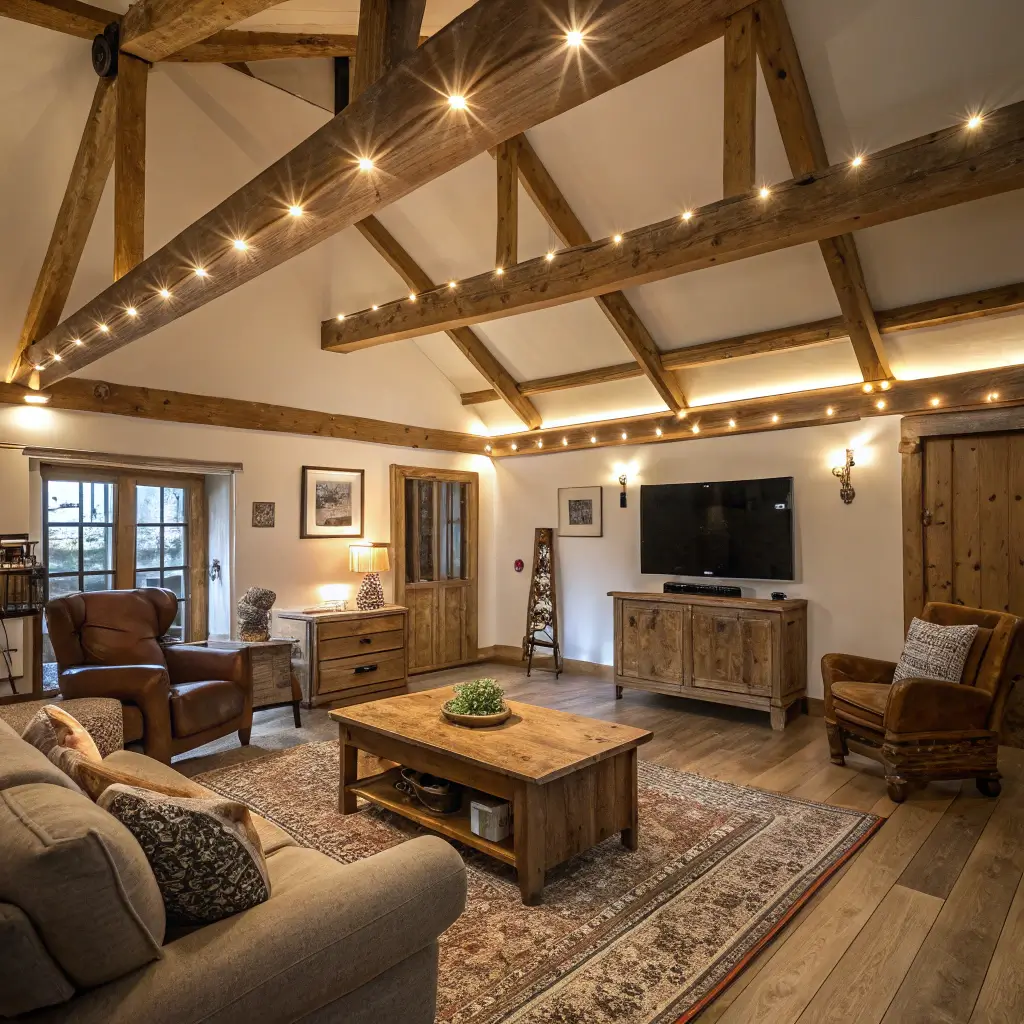
Exposed beams don’t have to mean dark, shadowy ceilings. Installing profile lights between ceiling beams creates this amazing uplight effect that highlights the architectural elements while providing practical illumination. It’s rustic meets high-tech in the best possible way.
I love how this design celebrates the structure rather than hiding it. The beams create natural channels for the profile lights, and the upward illumination makes rooms feel taller and more spacious. Plus, each beam channel can be controlled separately, giving you incredible flexibility in lighting scenes.
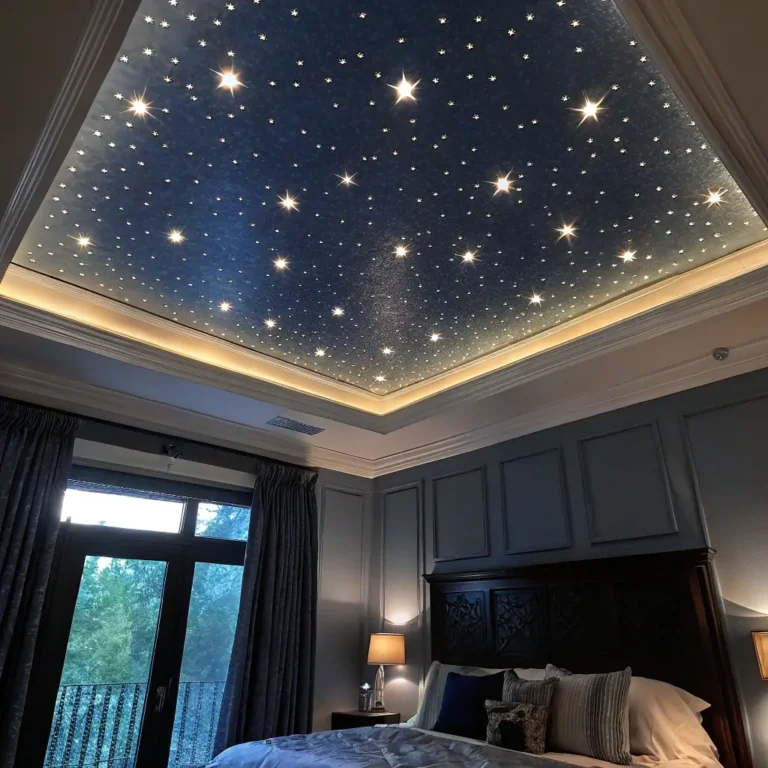
Starry Night Ceiling Effect with Tiny Profile LED Lights
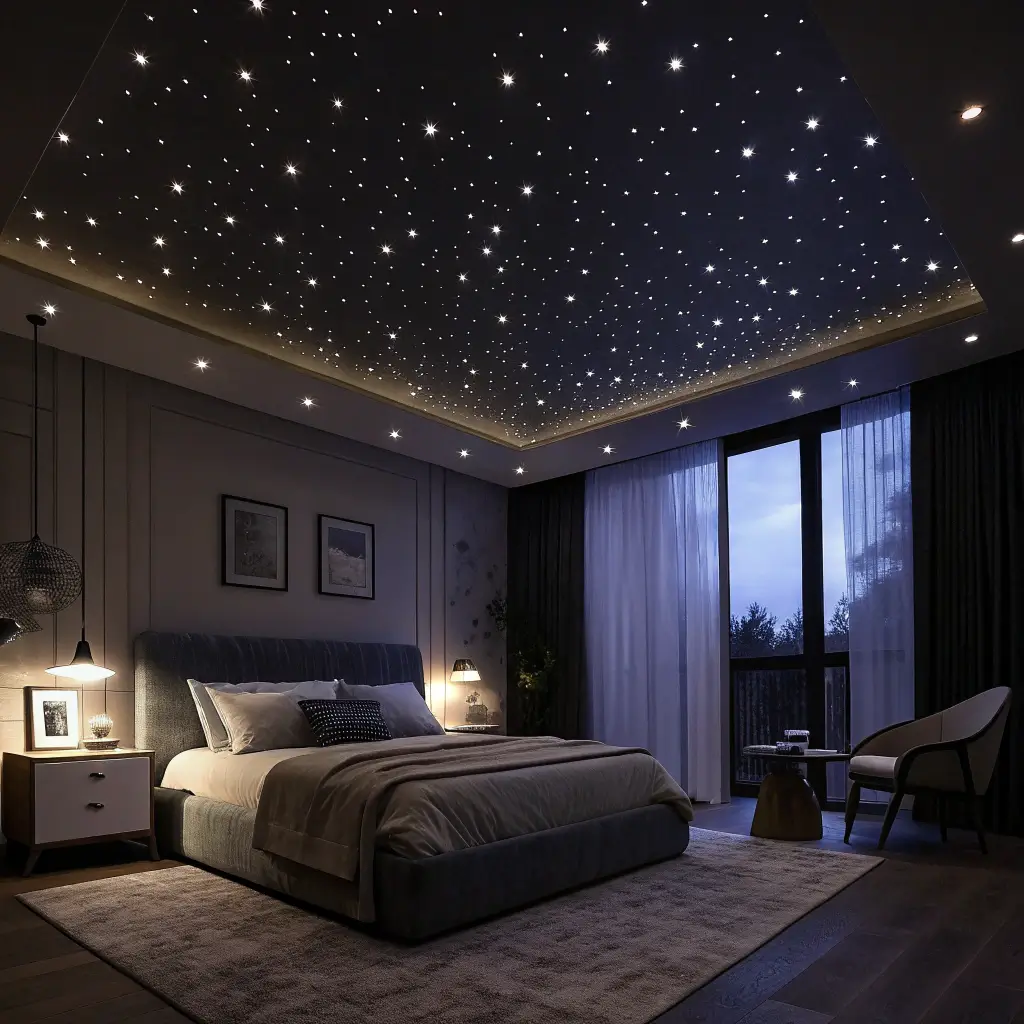
Finally, let’s talk about the ultimate luxury ceiling feature – the starry night effect. Using tiny profile LED lights (we’re talking 1-2mm), you can create a realistic night sky right in your bedroom. Is it extra? Absolutely. Is it amazing? Also absolutely.
This involves installing hundreds of tiny LED points in your ceiling, usually combined with a dark painted or stretched ceiling surface. Some systems even include twinkling effects and can recreate actual constellation patterns. Add some subtle profile lighting around the edges for ambient light, and you’ve got a ceiling that would make Van Gogh jealous :/
Making Your Own Galaxy
Creating a convincing starry ceiling requires:
- Varying LED sizes for depth perception
- Random distribution (avoid patterns unless recreating real constellations)
- Mix cool and warm whites for realism
- Include a few colored LEDs for “planets”
- Install on dimmer circuits for intensity control
Bringing It All Together
After exploring all these incredible profile light ceiling designs, you might be wondering which one’s right for your luxury home. Here’s my take: the best design is the one that makes you smile every time you look up.
Consider your lifestyle, your home’s architecture, and your personal style. Love entertaining? RGB options give you flexibility. Prefer timeless elegance? Stick with warm white coves or vintage moldings. Want to push boundaries? Go for that floating ceiling or starry night effect.
Remember, lighting isn’t just functional – it’s emotional. The right profile light ceiling design sets the mood, defines the space, and yes, makes everything and everyone look better. Don’t be afraid to mix elements from different designs either. Some of the most stunning ceilings I’ve seen combine multiple techniques.
Most importantly, invest in quality materials and professional installation where needed. These designs are meant to last and impress for years to come. Cheap LED strips and DIY disasters will only lead to disappointment and potentially expensive fixes down the road.
Whether you go subtle with hidden coves or bold with RGB waves, profile lighting transforms ceilings from forgotten fifth walls into the crown jewels of your luxury home. After all, why should floors have all the fun?