15 Brilliant Small Bedroom Layout Ideas to Organize Space

Look, we need to talk about your tiny bedroom. You know, that cramped space where you currently play Tetris with your furniture every time you want to reach your closet? Yeah, that one.
I’ve been there—literally sleeping with my feet hanging off the bed because I thought a king-size mattress in a shoebox room was a brilliant idea. Spoiler alert: it wasn’t.
After moving through five different apartments (each with progressively smaller bedrooms, somehow), I’ve become something of an unwilling expert on making small spaces work.
And honestly? Small bedrooms don’t have to feel like prison cells. You just need the right layout strategy and maybe a reality check about how many throw pillows you actually need.
So grab your measuring tape and maybe a coffee, because we’re about to transform that matchbox you call a bedroom into something that actually functions.
These 15 layouts have saved my sanity more times than I can count, and I’m betting at least three of them will blow your mind.
1. Loft Bed with Workspace Layout
The Ultimate Space-Saving Power Move
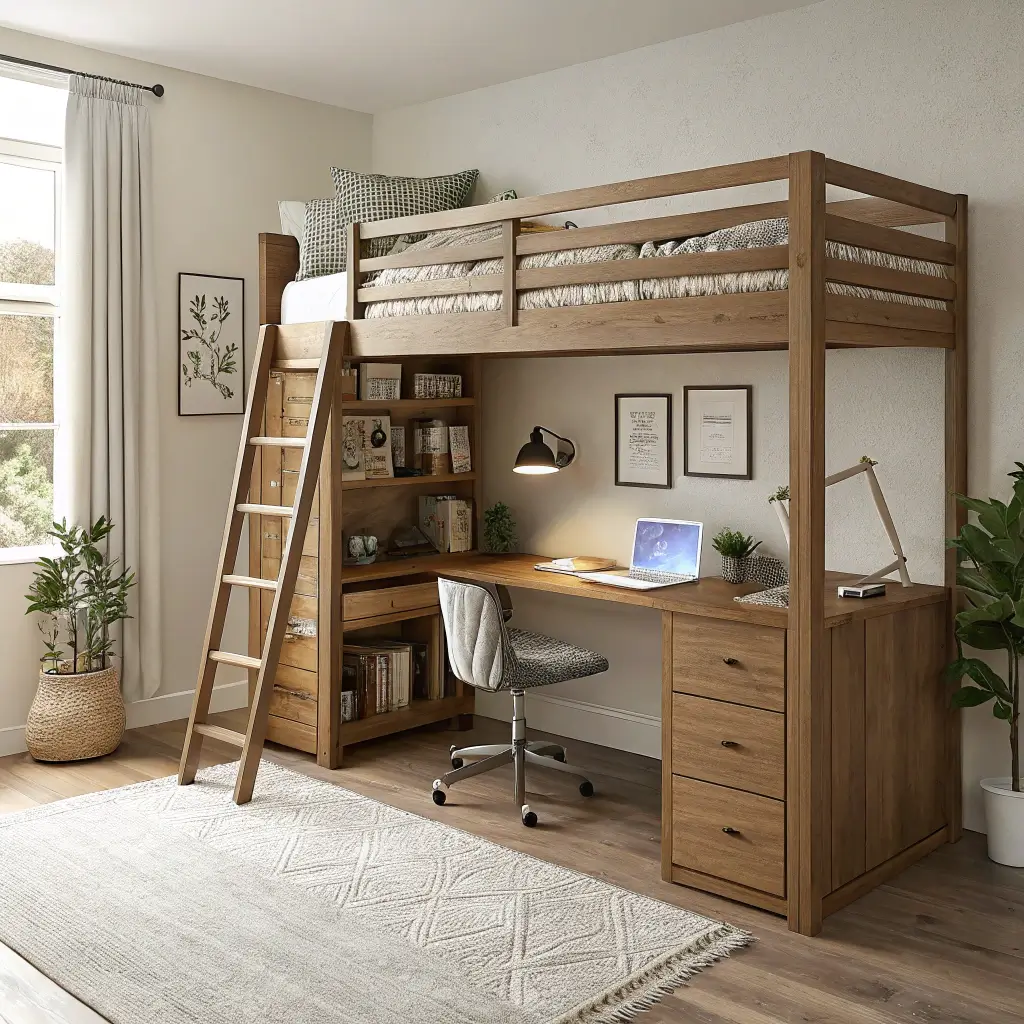
Remember when you were eight and thought bunk beds were the coolest thing ever? Well, guess what—your inner child was onto something. A loft bed with a workspace underneath is basically the Swiss Army knife of small bedroom layouts.
I installed my first loft bed setup three years ago, and let me tell you, it completely changed the game. You’re essentially doubling your floor space by going vertical. Think about it: your bed takes up what, 40-50 square feet? Now imagine having all that space back for an actual home office.
The key here is getting the height right. You want at least 5.5 feet of clearance underneath for a comfortable workspace. Any less and you’ll be hunched over like Quasimodo trying to answer emails. Trust me on this one—I learned the hard way.
Making It Work Without Feeling Like a Dorm Room
Here’s what most people get wrong about loft beds: they think it has to look juvenile. Nope. Choose a sleek metal or minimalist wood frame, add some proper task lighting underneath, and suddenly you’ve got a sophisticated setup that would make any tiny house enthusiast jealous.
Pro tip: Install LED strip lights under the loft frame. Not only does it create amazing ambiance, but it also prevents that cave-like feeling when you’re working underneath. And please, for the love of good design, skip the cartoon bedsheets. We’re adults here (mostly).
2. Minimalist Scandinavian Small Bedroom
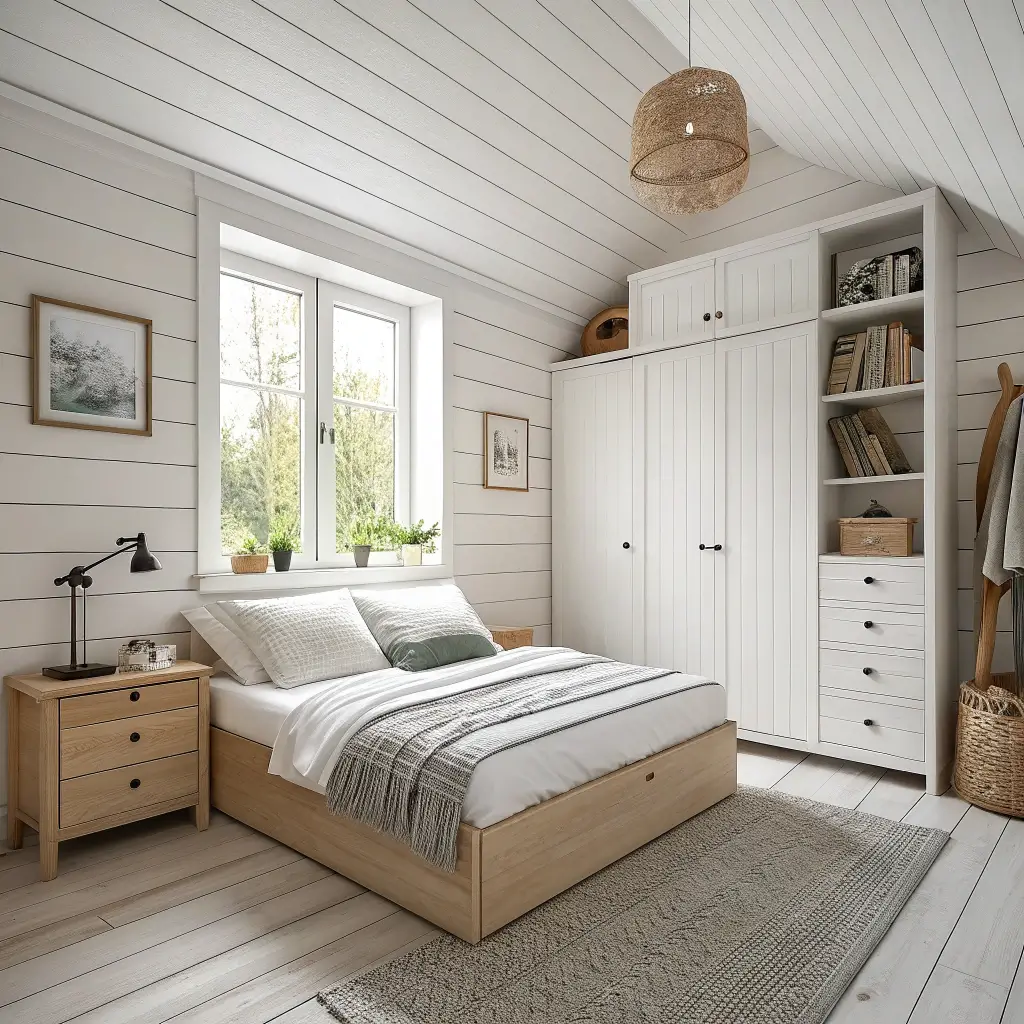
Less Stuff, More Sanity
Ever notice how those Nordic folks always seem so chill? Part of it might be their approach to bedroom design. The Scandinavian layout philosophy is simple: if it doesn’t serve a purpose or spark joy, it doesn’t belong in your bedroom. Period.
I went full Scandi last year after a particularly stressful period where my bedroom looked like a storage unit exploded. The transformation was… well, let’s just say my stress levels dropped faster than my credit score during Black Friday.
The Essential Elements
Here’s what you actually need for a proper Scandinavian small bedroom layout:
- A low-profile platform bed (preferably light wood or white)
- One nightstand (yes, just one—you’re not running a bedside table farm)
- A single piece of wall art (make it count)
- Neutral bedding in whites, grays, or soft pastels
- Natural light (and if you don’t have it, fake it with warm white bulbs)
The magic happens when you realize how much space opens up when you’re not trying to cram seventeen pieces of furniture into 100 square feet. Your bedroom suddenly feels twice as big, and cleaning takes approximately 3.7 minutes instead of an entire Sunday afternoon.
3. Under-Bed Storage Maximized Layout
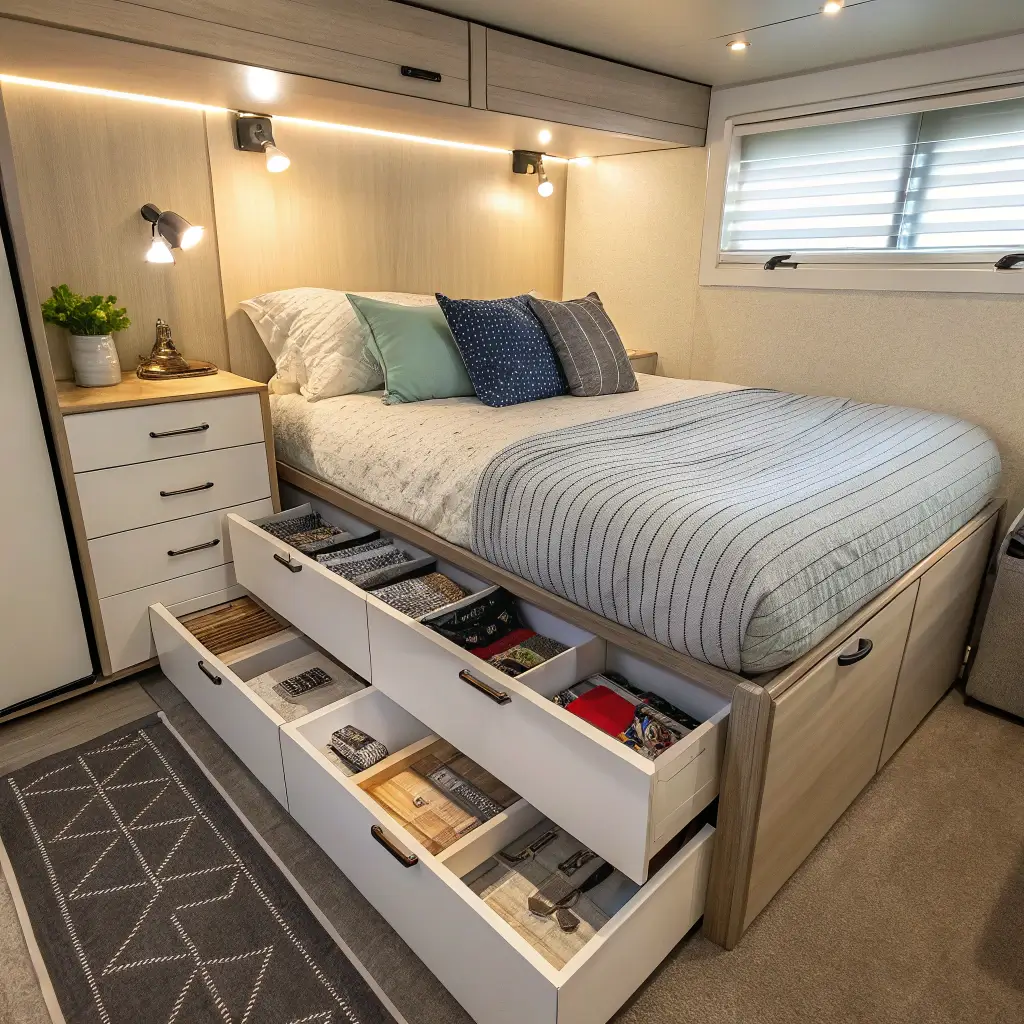
Hidden Storage That Actually Works
Can we have a real conversation about under-bed storage? Because most of us are doing it wrong. Shoving random boxes under there and forgetting about them for three years doesn’t count as “storage optimization,” Karen.
The secret to maximizing under-bed storage is organization and accessibility. I’m talking about drawer systems, vacuum-sealed bags with labels, and rolling bins that actually roll (revolutionary concept, I know).
Strategic Storage Solutions
Here’s my current under-bed setup that’s basically turned my bed into a secret warehouse:
- Four large rolling drawers for seasonal clothing
- Two long, flat bins for extra bedding
- A shoe organizer that slides out from the foot of the bed
The best part? My bed sits about 16 inches off the ground—high enough for serious storage but not so high I need a step ladder. FYI, those bed risers from college actually come in handy here. Who knew?
Also Read: 15 Trendy Plaster Ceiling Design Ideas That Look Amazing
4. Corner Bed with Floating Shelves

Making Dead Corners Work Overtime
Corners are weird, right? They’re like the appendix of room layouts—just kind of there, not really doing much. But push your bed into a corner and suddenly you’ve freed up tons of central floor space. Add floating shelves on both walls above the bed, and boom—you’ve created a cozy sleep nook with built-in storage.
I discovered this layout accidentally when I was too lazy to center my bed properly after moving. Turns out, my laziness was genius in disguise. The corner placement creates this cocoon-like feeling that’s actually amazing for sleep quality.
Shelf Styling That Doesn’t Look Cluttered
The trick with floating shelves above your bed is restraint. You’re not trying to recreate a library here. Keep it to:
- Books (spine out, color-coordinated if you’re feeling fancy)
- Small plants (succulents that won’t die when you forget to water them)
- Minimal decor (one or two pieces max per shelf)
And please, leave some breathing room between items. White space is your friend in a small bedroom—it’s like the pause between sentences that makes everything make sense.
5. Multifunctional Murphy Bed Design
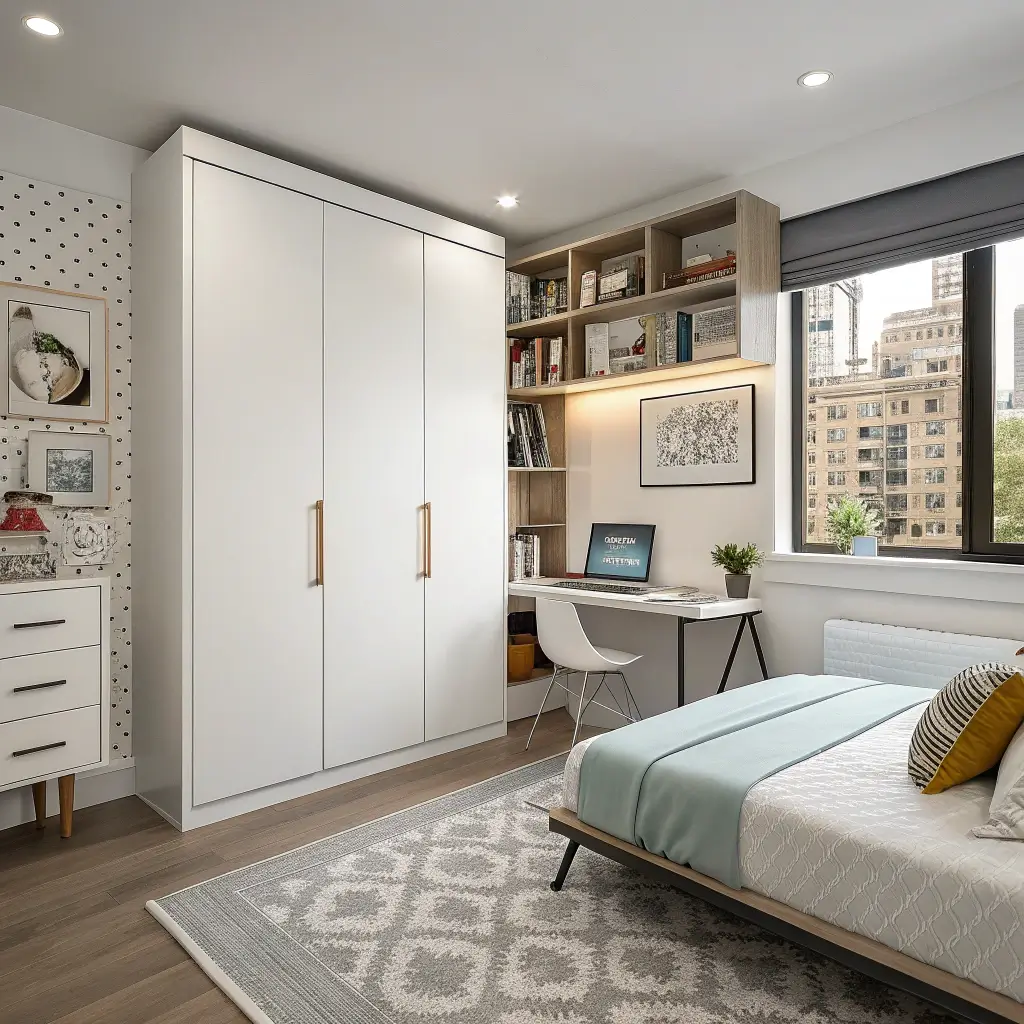
The Transformer of Bedroom Furniture
Murphy beds used to be the punchline of slapstick comedy. Now? They’re the superhero of small bedroom layouts. Modern Murphy beds can include desks, shelving, and even sofas. It’s like having two rooms in one.
I was skeptical at first (wouldn’t you be?), but after staying at a friend’s studio with a Murphy bed setup, I was converted. During the day, her bedroom became a legitimate home office. At night, two minutes of effort transformed it back into a sleep sanctuary.
Installation Without the Drama
Here’s what nobody tells you about Murphy beds: installation isn’t as terrifying as you think. Sure, you’ll want a friend to help (preferably one who can read instructions), but most modern kits are surprisingly DIY-friendly. Just make sure your wall can handle the weight—drywall alone won’t cut it, folks.
The investment ranges from $1,000 to $3,000 for a decent setup, but considering you’re basically getting a bed AND a room transformation, it’s actually pretty reasonable. Think of it as furniture with a secret identity.
6. L-Shaped Bed and Desk Combo
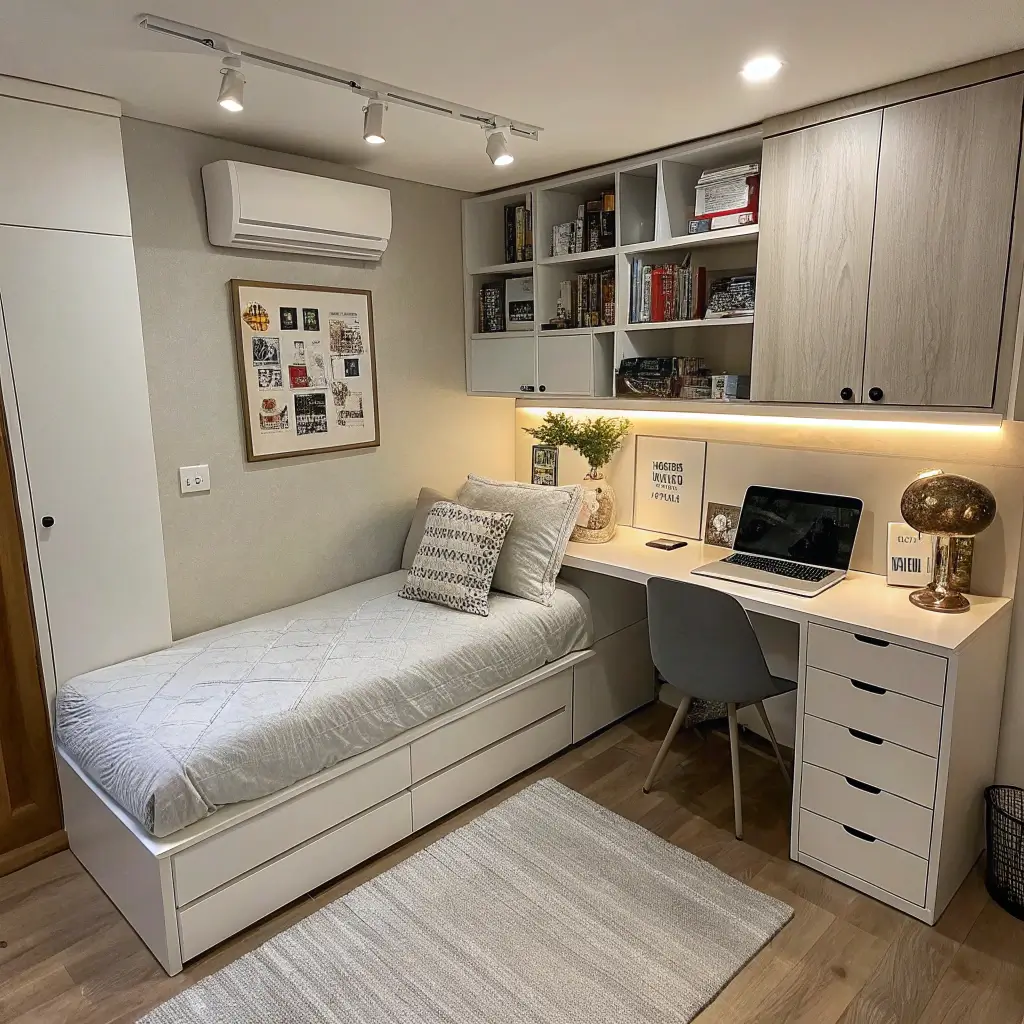
The Corner Office Bedroom Hybrid
Who says your bedroom can’t multitask? An L-shaped configuration with your bed along one wall and a desk extending along the adjacent wall creates a natural division between sleep and work zones. It’s like having a studio apartment within your bedroom.
I stumbled upon this layout when working from home became permanent (thanks, 2020). The L-shape creates distinct zones without needing room dividers or complicated furniture arrangements. Plus, it leaves the center of the room open, which makes even the tiniest bedroom feel more spacious.
Making the Zones Work Together
The key to nailing this layout is visual continuity. Here’s what works:
- Match your desk height to your bed height (creates a clean line)
- Use similar materials (if your bed frame is wood, go with a wood desk)
- Keep color schemes consistent (this isn’t the time for a rainbow explosion)
- Add a rug to define the central space
Pro tip: Position your desk so you’re not staring directly at your bed while working. Nothing kills productivity like your pillow calling your name during a Zoom meeting.
Also Read:15 Elegant Down Ceiling Design Ideas for Cozy Spaces
7. Open Floor Plan with Minimal Furniture
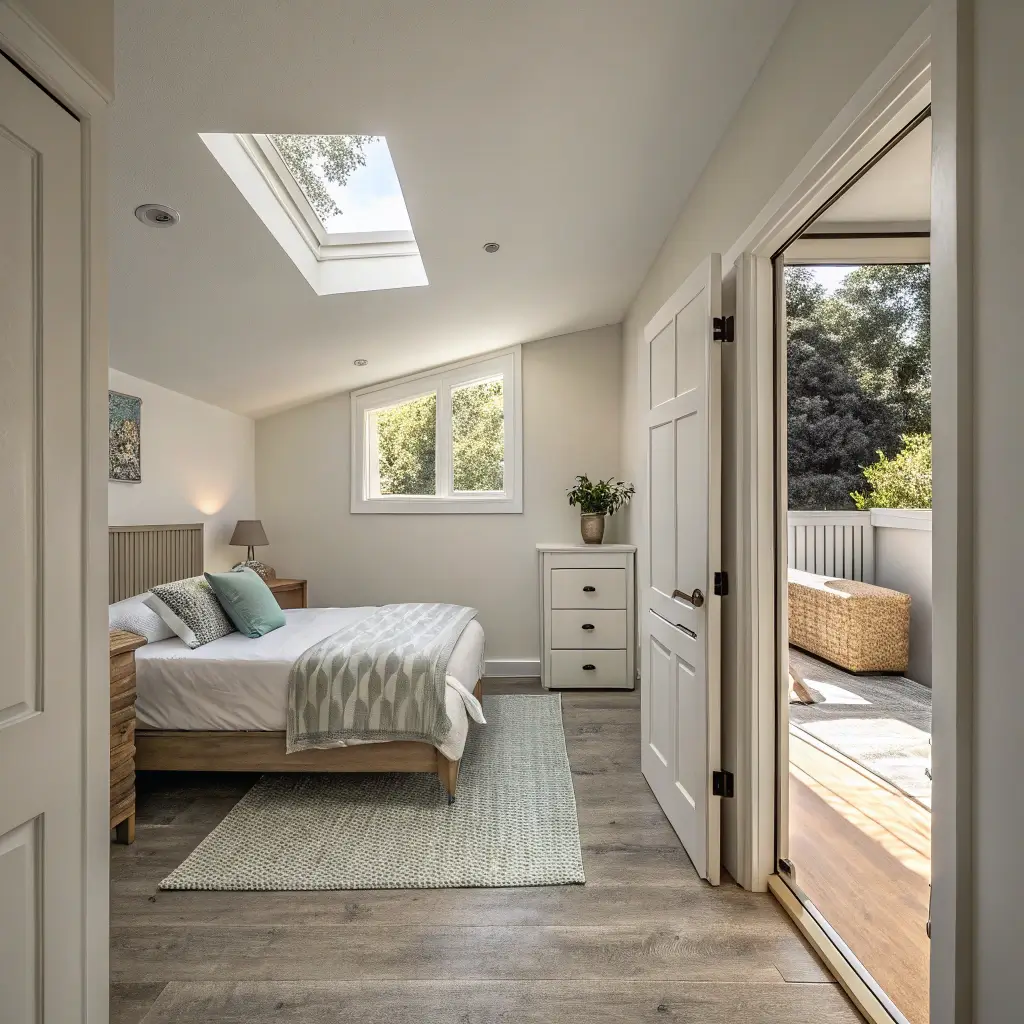
Embracing the Empty Space
Here’s a radical thought: what if your bedroom doesn’t need all that furniture? An open floor plan with just the essentials creates a sense of spaciousness that no amount of clever storage can match.
I tried this approach after a particularly enlightening trip to Japan, where I slept in a room with literally just a futon and a low table. The mental clarity that comes from visual simplicity is no joke. Your brain actually relaxes when it’s not processing seventeen different furniture pieces.
The Bare Essentials List
What you actually need in a bedroom:
- A bed (obviously)
- One surface for essentials (nightstand or wall shelf)
- Clothes storage (dresser OR closet, not both)
- Lighting (overhead plus one task light)
That’s it. Everything else is negotiable. And before you protest about where you’ll put your extensive mug collection—that’s what kitchens are for, my friend.
8. Vertical Storage Wall Layout
Going Up When You Can’t Go Out
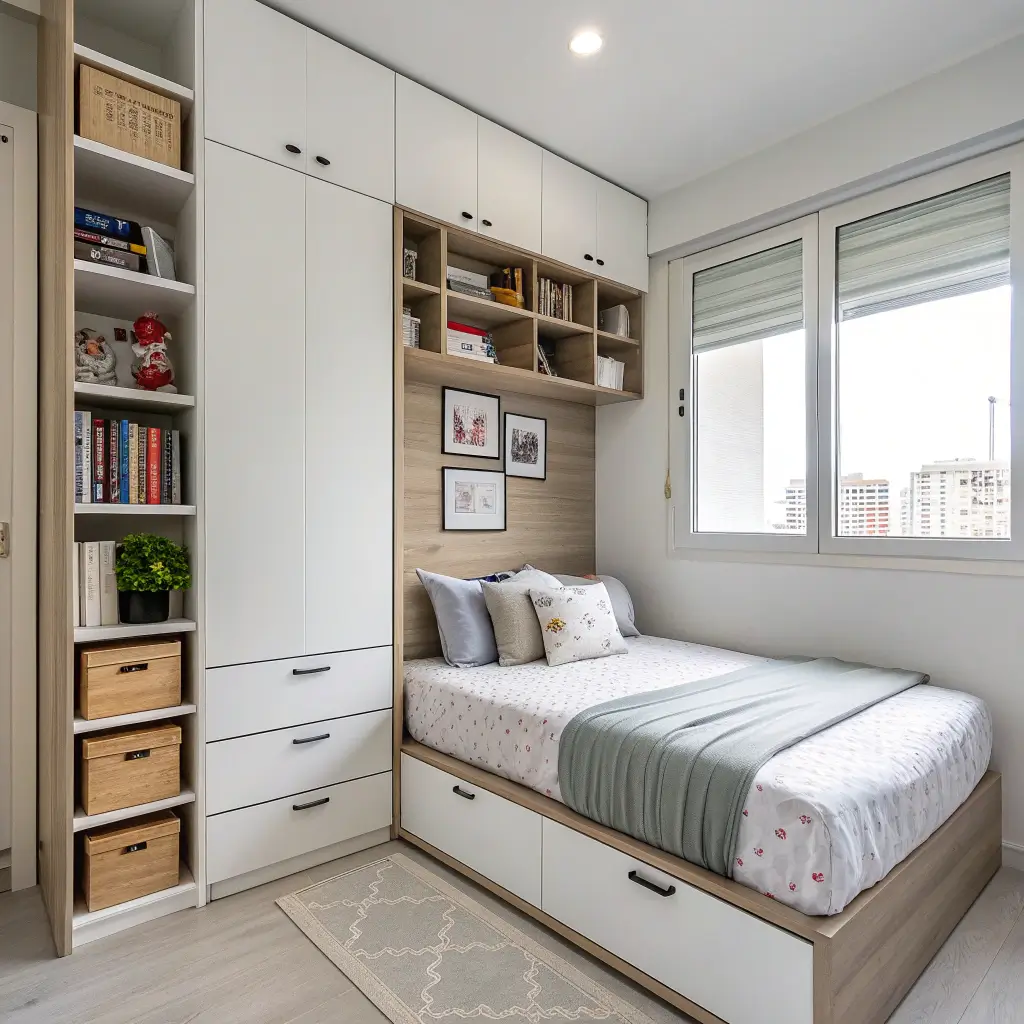
When floor space is at a premium, the only way is up. A full vertical storage wall turns one wall of your bedroom into a storage powerhouse while keeping the floor clear for actual living.
I built my first storage wall using IKEA’s modular systems (because who has custom furniture money?), and it transformed my 90-square-foot bedroom into something actually functional. Floor-to-ceiling shelving, hanging rods, and drawer units—it’s like a closet and bookshelf had a very organized baby.
Design Tips for Vertical Success
- Keep heavy items low (physics still applies in small bedrooms)
- Use uniform storage boxes on higher shelves (visual consistency is key)
- Install good lighting (you need to see what’s up there)
- Leave the top 12 inches empty (breathing room prevents that crushing feeling)
Remember: vertical storage only works if you can actually reach your stuff. Investing in a stylish step stool isn’t admitting defeat—it’s being practical.
9. Platform Bed with Drawers Layout
The Storage Bed That Doesn’t Suck
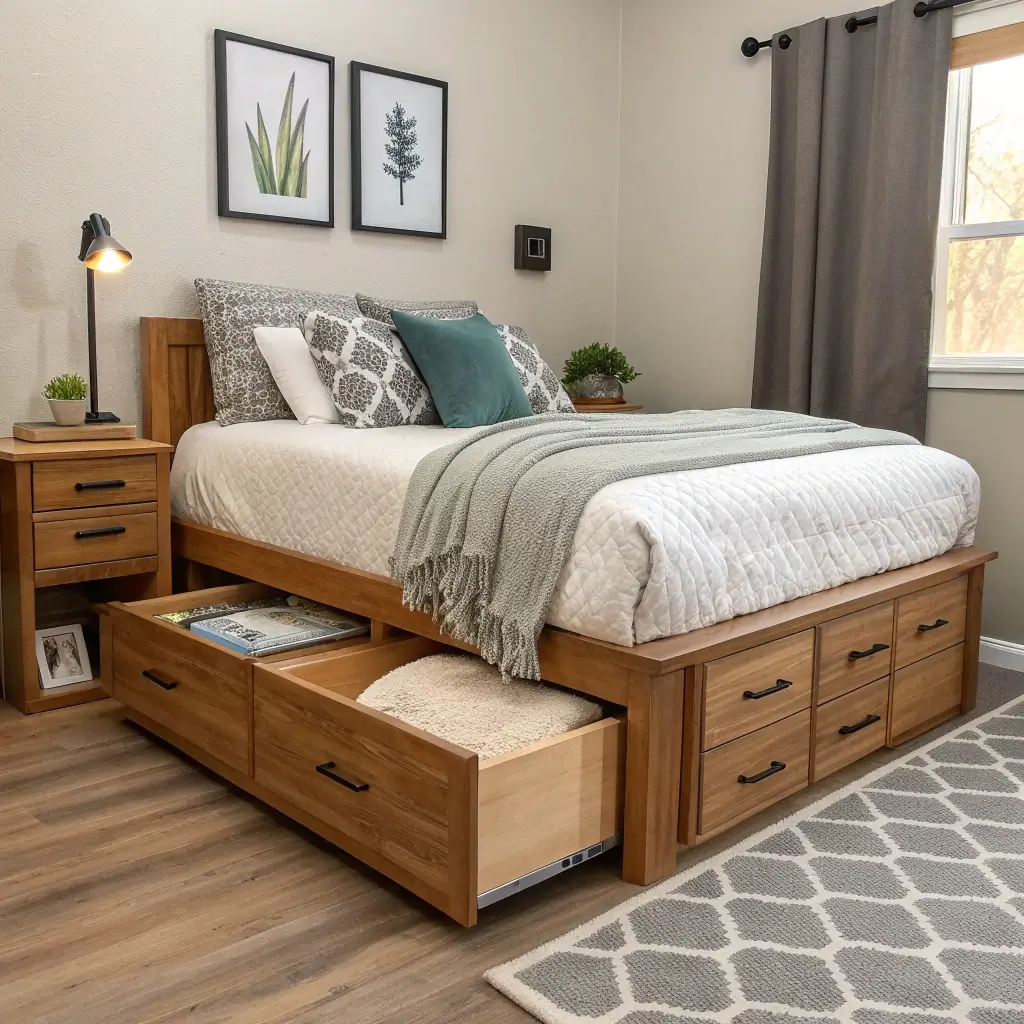
Let’s address the elephant in the room: most storage beds look like they belong in a discount furniture showroom. But modern platform beds with integrated drawers can actually look sleek while hiding half your wardrobe.
After years of fighting with under-bed boxes, I finally invested in a proper platform bed with six built-in drawers. Game. Changer. No more crawling on the floor trying to reach that one sweater in the back corner.
Maximizing Drawer Space
Here’s how I organize mine:
- Top drawers: daily essentials (underwear, socks, pajamas)
- Middle drawers: frequently worn items (t-shirts, jeans)
- Bottom drawers: seasonal or occasional wear
The beauty of drawer storage is accessibility. Everything has a designated spot, and you can actually find things without destroying your entire room. Revolutionary, right?
Also Read: 15 Beautiful Drawing Room Ceiling Design Ideas for Modern Homes
10. Cozy Reading Nook Bedroom Layout
Creating a Room Within a Room
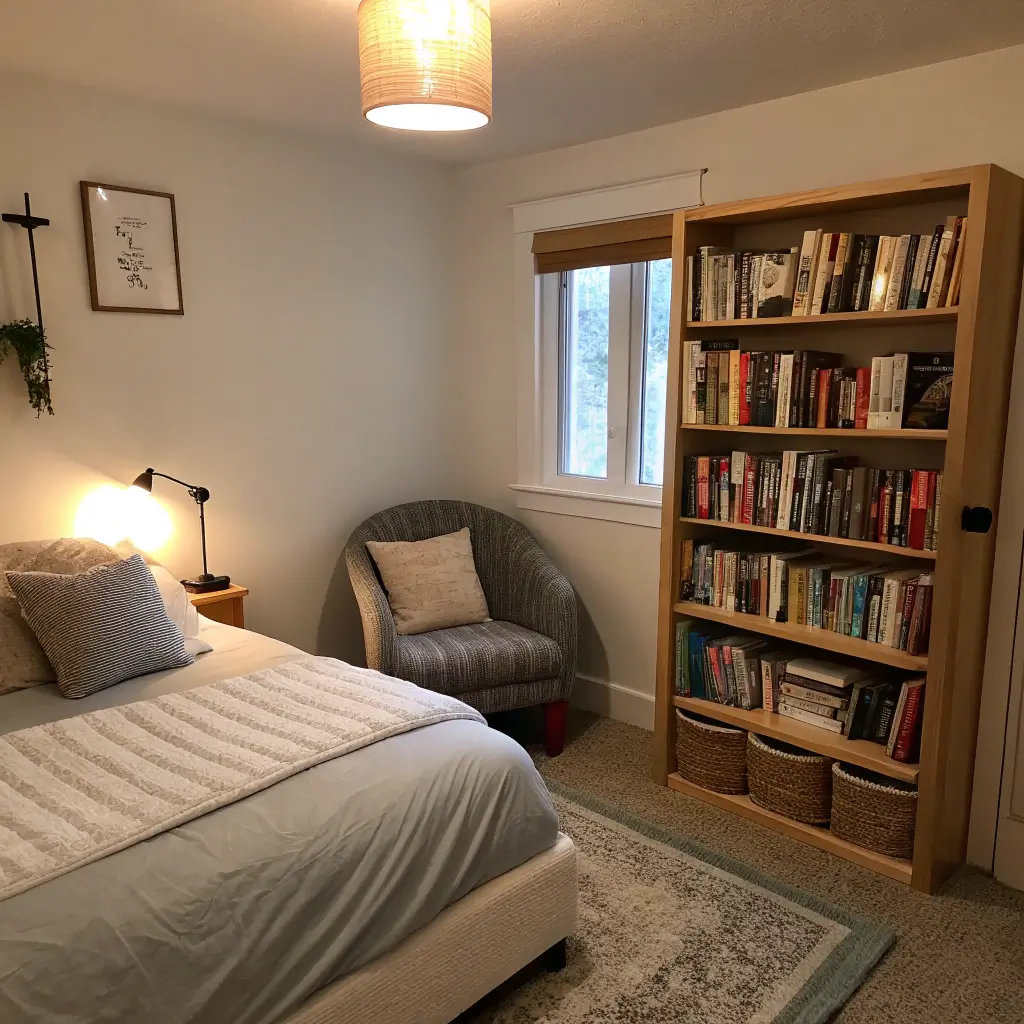
Who says small bedrooms can’t have zones? Carving out a tiny reading nook adds functionality and personality without overwhelming the space. All you need is a corner, a chair, and decent lighting.
I created my reading nook with literally just an accent chair from a thrift store and a floor lamp. Total investment: $75. The psychological benefit of having a dedicated relaxation spot that isn’t your bed? Priceless. Your bed stays associated with sleep (as it should), and you get a mini retreat within your retreat.
Nook Essentials
- A comfortable chair (but not too bulky—this isn’t a living room)
- Good lighting (adjustable reading lamp or wall sconce)
- Small side table or floating shelf for your coffee/wine/book stack
- A throw blanket (because cozy is mandatory)
Position your nook by a window if possible. Natural light plus a reading spot equals instant bedroom upgrade. Trust me, your Instagram followers will thank you 🙂
11. Split-Level Bedroom for Space Optimization
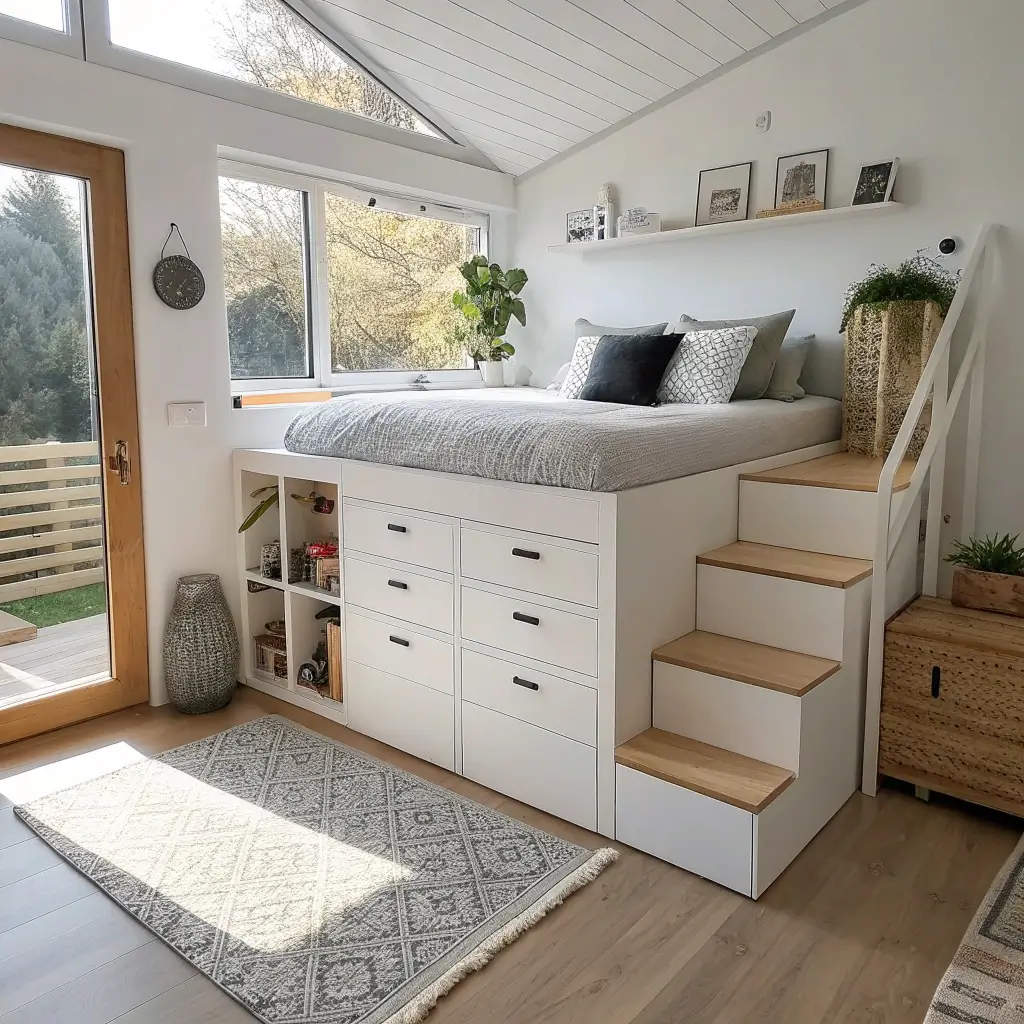
Playing with Heights for Maximum Impact
If you’re blessed with high ceilings, you’re sitting on a goldmine of potential space. Creating split levels in your bedroom essentially gives you two floors in one room. Think sleeping loft with living space below, or raised platform bed with storage/work area underneath.
I’ve seen this done brilliantly in converted lofts where the bed platform extends only halfway across the room, creating a natural division. The area under the platform becomes perfect for a desk, dresser, or even a tiny closet.
Making Split Levels Work
Key considerations for split-level success:
- Minimum ceiling height of 10 feet (anything less feels cramped)
- Sturdy construction (this isn’t a DIY pallet project, folks)
- Safe access (proper stairs or ladder, not death-trap climbing)
- Ventilation (heat rises, remember?)
The split-level approach takes commitment and possibly professional help, but the payoff in a truly tiny bedroom is enormous. You’re literally doubling your usable space.
12. Wall-Mounted Desk and Bed Combo
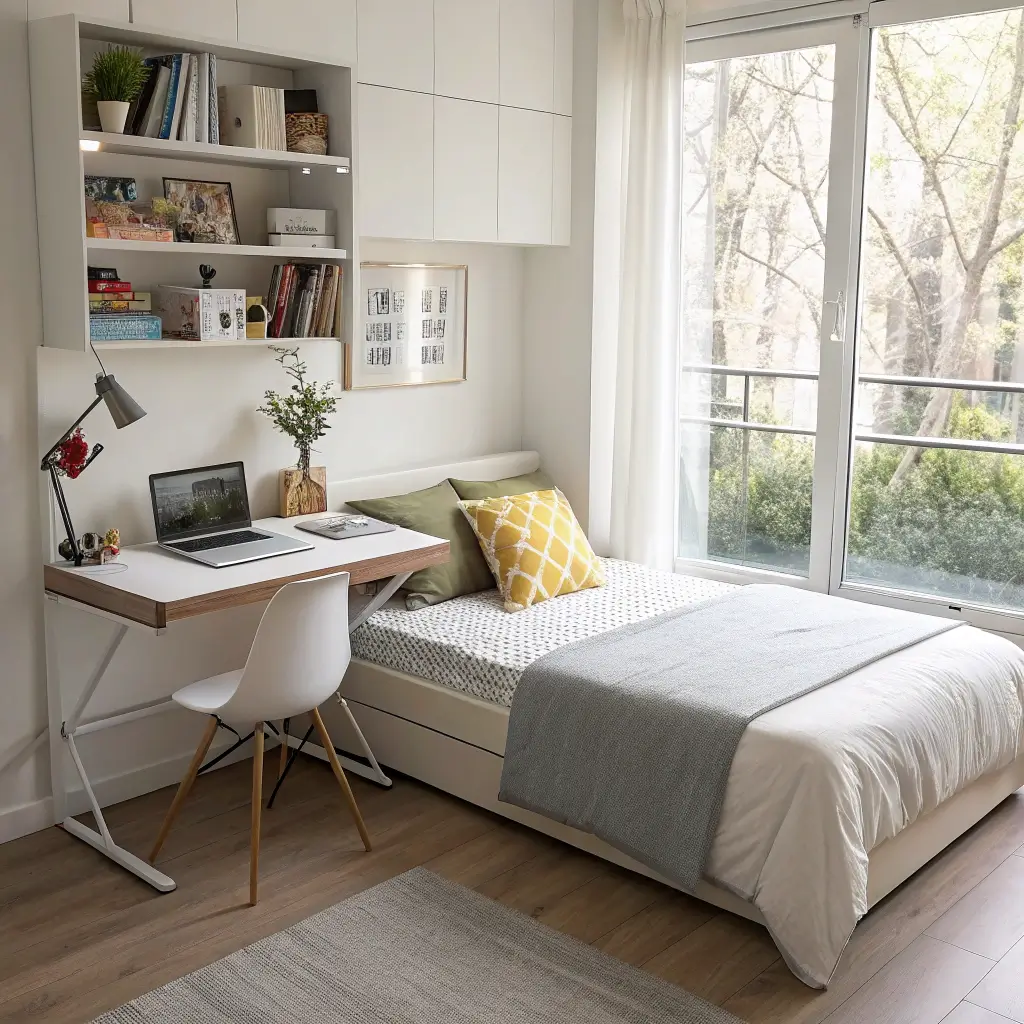
Floating Your Way to Floor Space
Wall-mounted everything is having a moment, and for good reason. Mounting your desk and even your bed frame to the wall frees up precious floor space and creates that coveted floating effect that makes rooms feel larger.
I went the wall-mounted route with my desk first—a simple floating shelf with brackets rated for 100 pounds. The visual weight reduction was immediate. No desk legs = more floor visibility = room feels bigger. It’s basically interior design math.
Installation Without Destruction
Before you grab your drill, consider:
- Find the studs (drywall anchors are not your friend here)
- Check weight limits twice, mount once
- Cable management is crucial (floating desks with dangly cords defeat the purpose)
- Proper height (27-30 inches for desks, standard bed height for… beds)
IMO, wall-mounting is one of those upgrades that seems scary but is actually pretty straightforward if you take your time and measure twice.
13. Small Bedroom with Built-In Wardrobe
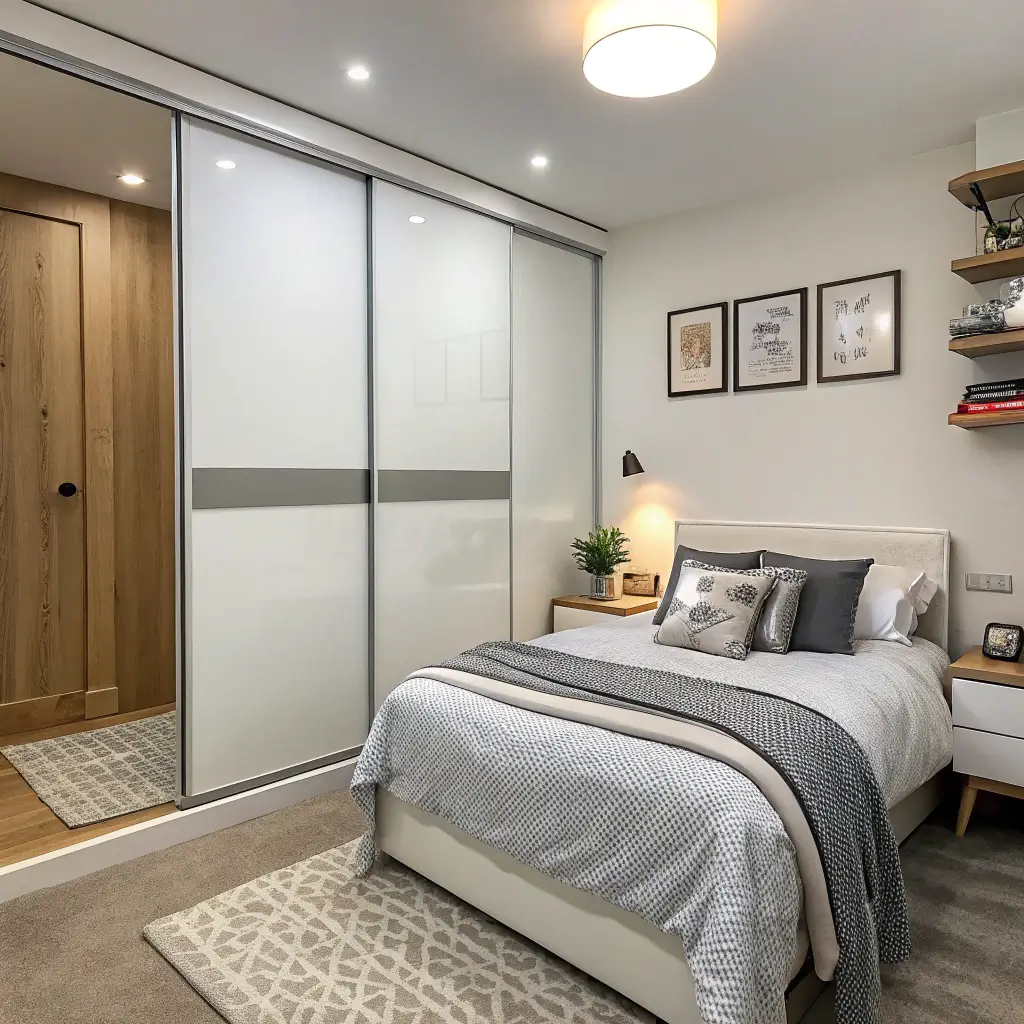
Custom Storage Without the Custom Price
Built-in wardrobes are the holy grail of small bedroom storage—they maximize every inch while looking like they’ve always been there. But here’s the secret: you don’t need actual built-ins to get the built-in look.
I faked built-ins using flat-pack wardrobes fitted wall-to-wall with some crown molding and paint. Total cost: under $500. Looks like I spent thousands on custom carpentry. The key is choosing units that reach the ceiling and adding trim to blend them with the walls.
Wardrobe Organization That Works
Inside your “built-in” wardrobe:
- Double hanging rods (short items up top, long items below)
- Adjustable shelves (because flexibility is everything)
- Drawer inserts (for underwear, socks, and small items)
- Door hooks (for tomorrow’s outfit or that robe you never wear)
The beauty of a well-organized wardrobe is that it can replace multiple pieces of bedroom furniture. Dresser? Don’t need it. Additional shelving? Nope. It’s all contained in one sleek wall of storage.
14. Bed Against Window Layout
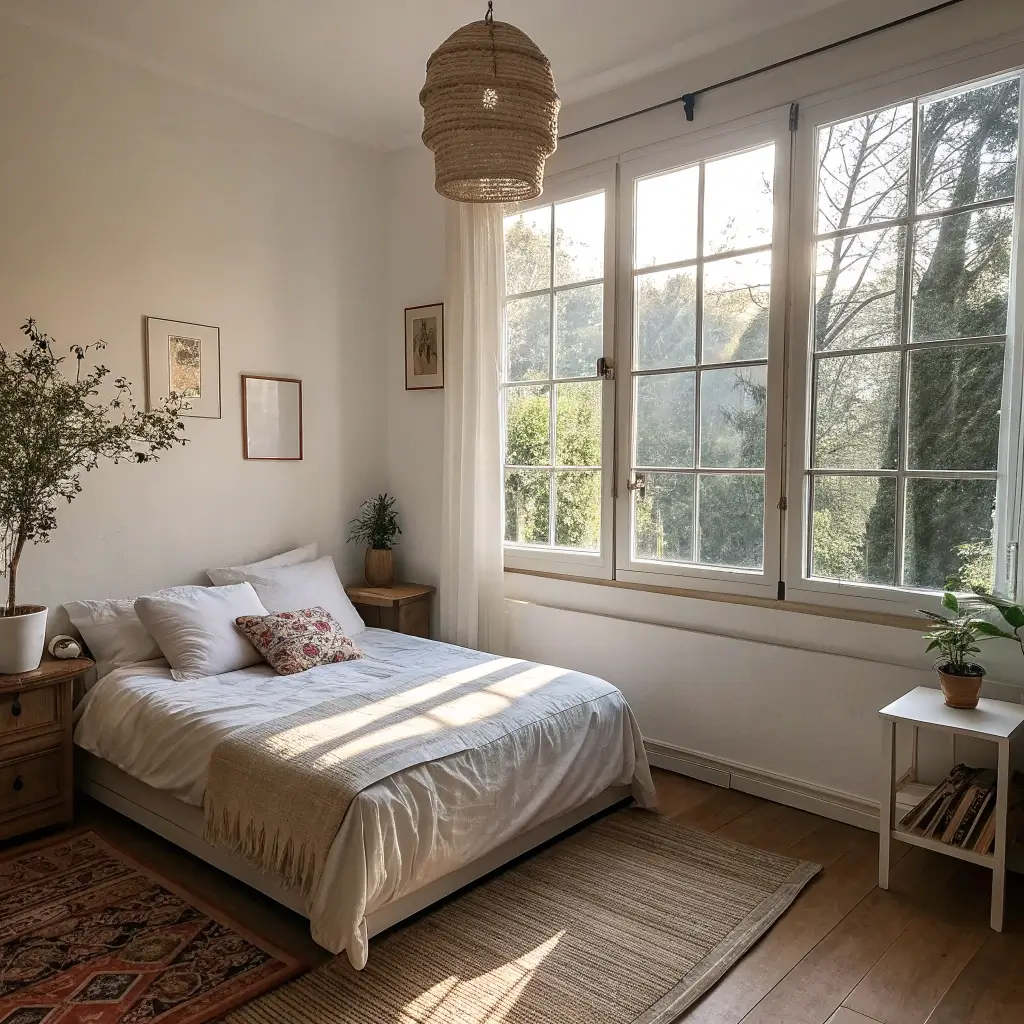
Breaking the Rules for Better Flow
Traditional design wisdom says never put your bed against a window. Well, sometimes traditional design wisdom needs to sit down. Positioning your bed against or under a window can actually create better room flow and free up wall space for storage.
I fought this layout for years until my current apartment literally gave me no choice. Surprise: waking up with natural light streaming in (through blackout curtains, obviously) is actually pretty amazing. Plus, I gained an entire wall for my desk and shelves.
Making Window Placement Work
Critical factors for window-bed success:
- Invest in quality window treatments (blackout curtains or cellular shades)
- Consider the headboard situation (low profile or none at all)
- Check for drafts (nobody wants arctic wind on their pillow)
- Think about privacy (ground floor + bed at window = potential awkwardness)
The unexpected bonus? The window becomes a design feature, framing your bed like built-in architecture.
15. Compact Bedroom with Sliding Door Storage
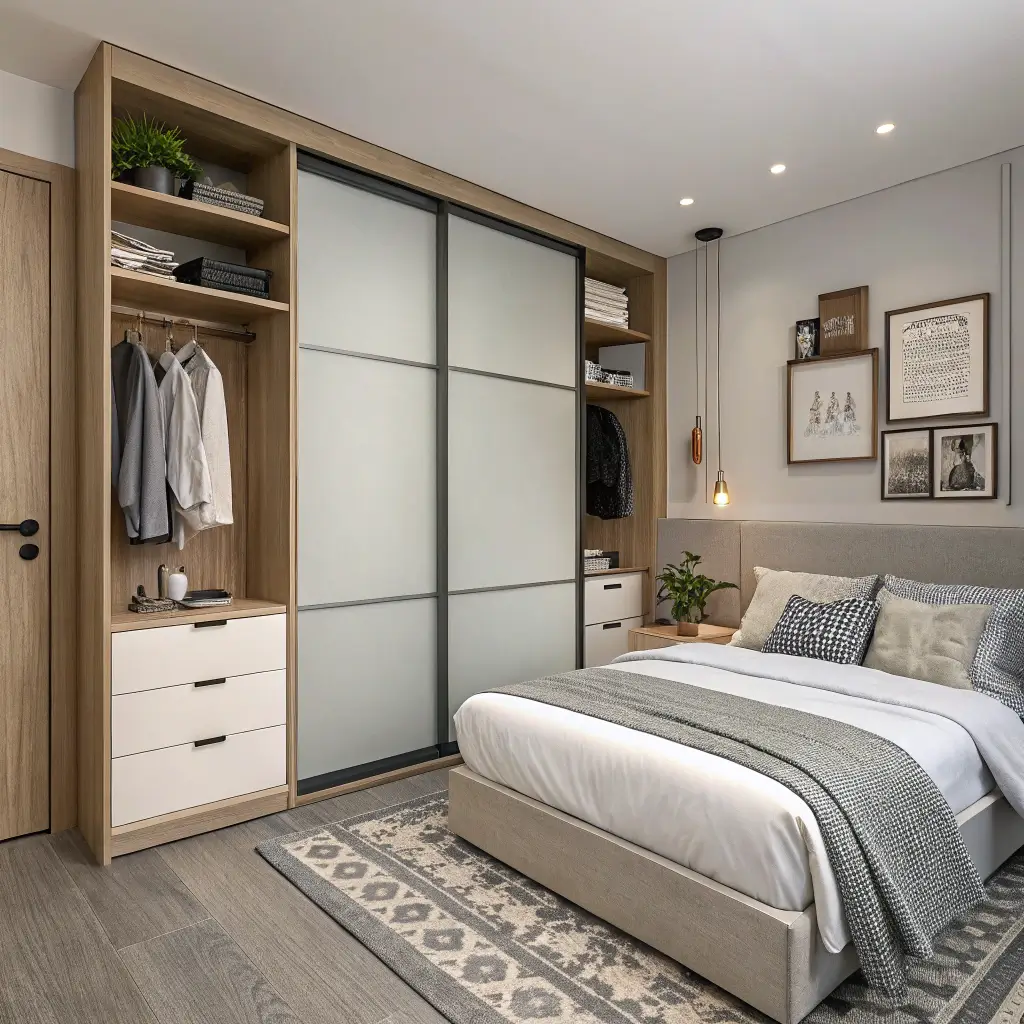
Sliding Into Storage Solutions
Regular closet doors are space hogs. They need clearance to open, which means dead space in front of them. Sliding doors—whether for closets, wardrobes, or room dividers—save massive amounts of space in tight quarters.
I replaced my traditional closet doors with sliding barn-style doors last year, and suddenly I could put my dresser where the door used to swing. It’s like finding free square footage in your own room. Plus, the sliding mechanism adds this satisfying tactile element to your daily routine. Small wins, people.
Types of Sliding Solutions
Your sliding door options:
- Barn doors (rustic charm, easy DIY installation)
- Pocket doors (disappear into walls but require construction)
- Bypass doors (two panels that slide past each other)
- Curtain panels (the budget-friendly option that still looks intentional)
Whatever you choose, make sure the hardware can handle daily use. Nothing kills the vibe faster than a door that comes off its track every third day :/
Making Your Small Bedroom Layout Work for You
Look, transforming a small bedroom isn’t about following every trendy layout you see on Pinterest. It’s about finding what works for YOUR specific space, needs, and lifestyle. Maybe you need maximum storage because you’re a secret hoarder (no judgment). Maybe you need a workspace because your kitchen table isn’t cutting it anymore. Or maybe you just need a calm space to sleep in peace.
The layouts I’ve shared aren’t just theoretical—I’ve lived with most of them, learned from the failures, and celebrated the wins. Some worked brilliantly, others taught me valuable lessons about why I shouldn’t try to DIY structural changes at 2 AM.
Final Thoughts from One Small Room Survivor to Another
Here’s the truth about small bedrooms: they force you to be intentional. You can’t just throw money and furniture at the problem. You have to think, measure, plan, and sometimes admit that yes, you do have too many throw pillows.
Start with one layout change. Maybe it’s just pushing your bed into a corner or adding some floating shelves. See how it feels. Live with it for a week. Then build from there. Rome wasn’t built in a day, and your perfect small bedroom won’t be either.
Remember, the best bedroom layout is the one that makes you happy to walk into the room. Whether that’s a minimalist Scandinavian paradise or a cozy nook packed with hidden storage, make it yours. Because at the end of the day, even the tiniest bedroom can be a sanctuary if you set it up right.
Now go measure your room (again), sketch out some ideas, and start transforming that shoebox into something special. And when you nail it, send me a photo—I love a good before-and-after transformation. We small bedroom warriors need to stick together, after all.
Who knows? Maybe your next move will be to an even smaller space, and then you’ll really need these tricks. But that’s future you’s problem. Present you has a bedroom to optimize.