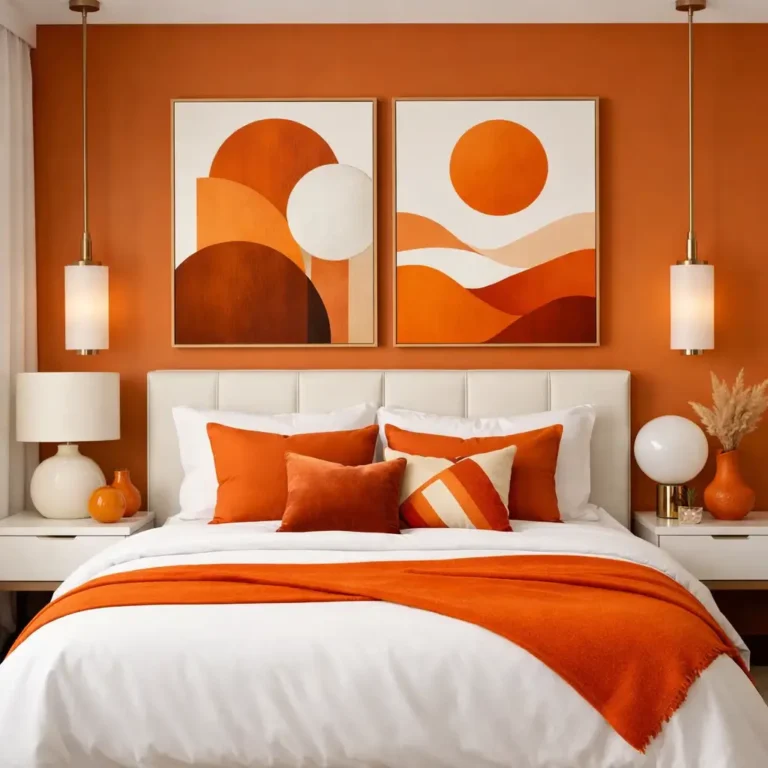
15 Functional Bedroom Furniture Layout Ideas with Style

You know that feeling when you walk into your bedroom and something just feels… off? Maybe you bump into your dresser every morning, or perhaps your nightstand sits awkwardly far from your bed. Been there, done that, got the bruised shins to prove it.
Here’s the thing – bedroom furniture layout makes or breaks your space. You can own the most gorgeous furniture pieces, but if they’re arranged wrong, your room feels like a storage unit rather than a sanctuary. I’ve rearranged my bedroom about seventeen times (yes, I counted), and I’ve learned that the right layout transforms everything from your morning routine to your sleep quality.
Let’s talk about 15 furniture layouts that actually work – not those Pinterest-perfect setups that require a 500-square-foot bedroom and a trust fund. These arrangements work in real bedrooms for real people who need real functionality.
Centered Bed With Balanced Side Furniture
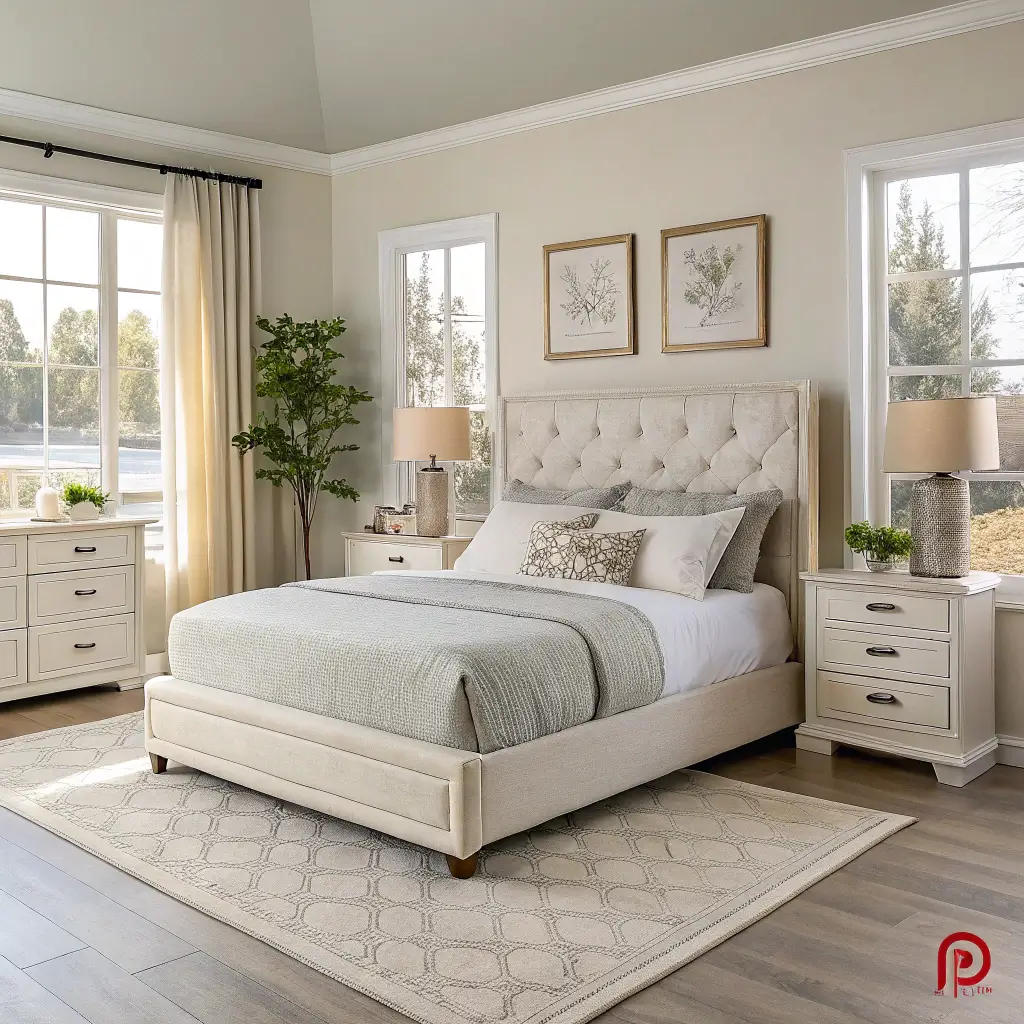
This layout screams classic for a reason – it just works. Position your bed smack in the middle of your longest wall, leaving equal space on both sides for matching nightstands. I’ve tried the off-center bed thing, and trust me, it throws everything off.
The beauty here lies in the symmetry. Your brain naturally finds balance calming, which is exactly what you want in a bedroom. Place identical nightstands on each side, add matching lamps, and watch your room transform into a hotel-worthy retreat.
What really sells this layout? The walking space remains clear and logical. You create natural pathways on both sides of the bed, making those midnight bathroom trips way less hazardous. Plus, both partners get equal nightstand real estate – no more fighting over who gets the charging station 🙂
Making It Work in Different Room Sizes
For smaller rooms, scale down your nightstands to slim floating shelves or wall-mounted options. They provide the same function without eating up precious floor space. In larger rooms, you can go bold with substantial nightstands or even small dressers flanking the bed.
Consider these measurements for optimal spacing:
- 24-30 inches between bed and nightstand edge
- 36 inches minimum walkway around the bed
- 6-8 inches between nightstand and wall
Space-Saving Corner Bed Arrangement
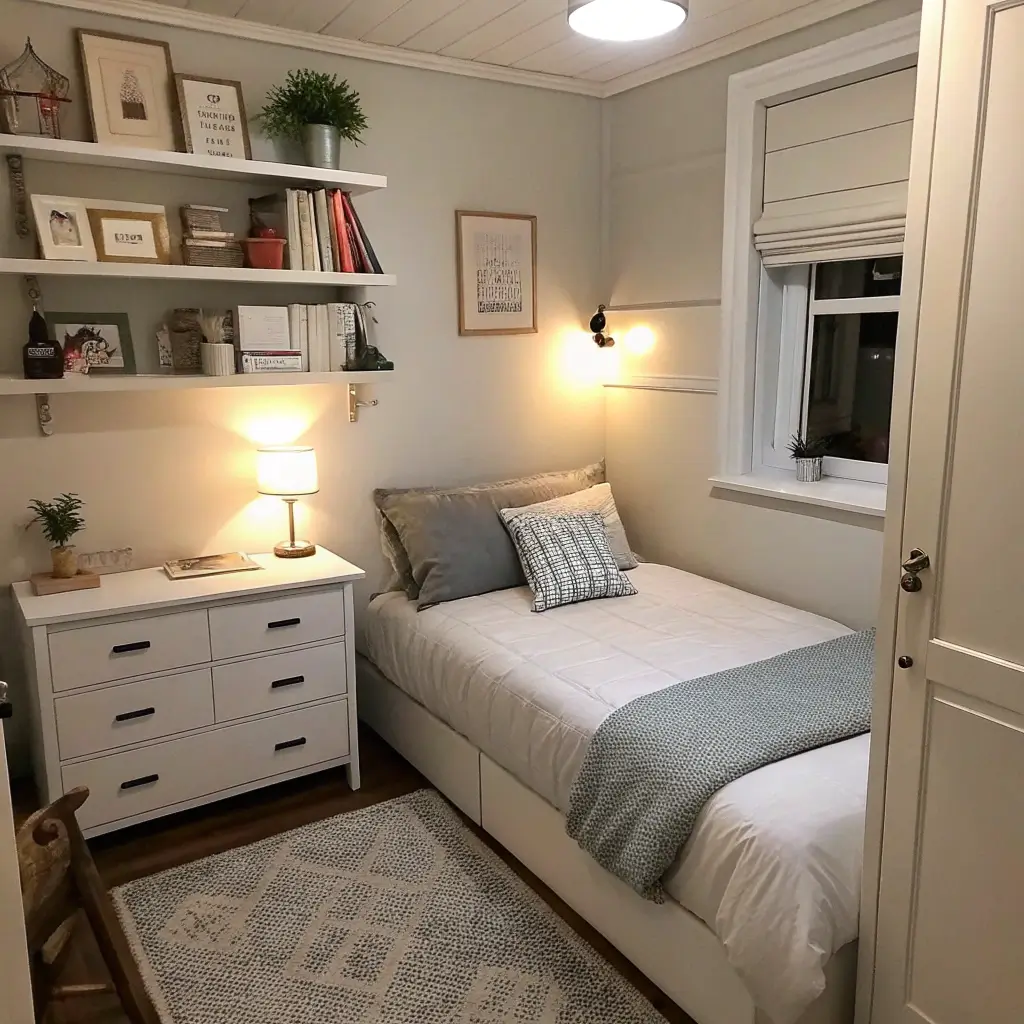
Who says beds need to hog the center stage? Tucking your bed into a corner opens up your entire room in ways you wouldn’t believe. This layout saved my sanity when I lived in a 10×10 bedroom that felt more like a glorified closet.
Corner placement works especially well with platform beds or low-profile frames. You gain all that central floor space for activities, yoga, or just feeling like you can breathe. Mount floating shelves above the bed’s corner sides for storage that doesn’t intrude on your newly claimed territory.
The trick here? Use the walls as your headboard. Add some removable wallpaper or a bold paint color to create visual interest without furniture. One nightstand on the accessible side handles all your bedside needs while keeping things minimal.
Corner Bed Pro Tips
Light placement becomes crucial with corner arrangements. Install wall sconces or pendant lights since traditional table lamps might not fit. This actually creates better task lighting anyway – no more knocking over lamps when reaching for your phone at 2 AM.
Consider these corner bed advantages:
- Creates 40% more usable floor space
- Makes small rooms feel significantly larger
- Perfect for studio apartments or multipurpose bedrooms
- Allows for a cozy, cocoon-like sleeping area
Floating Nightstand Minimal Layout
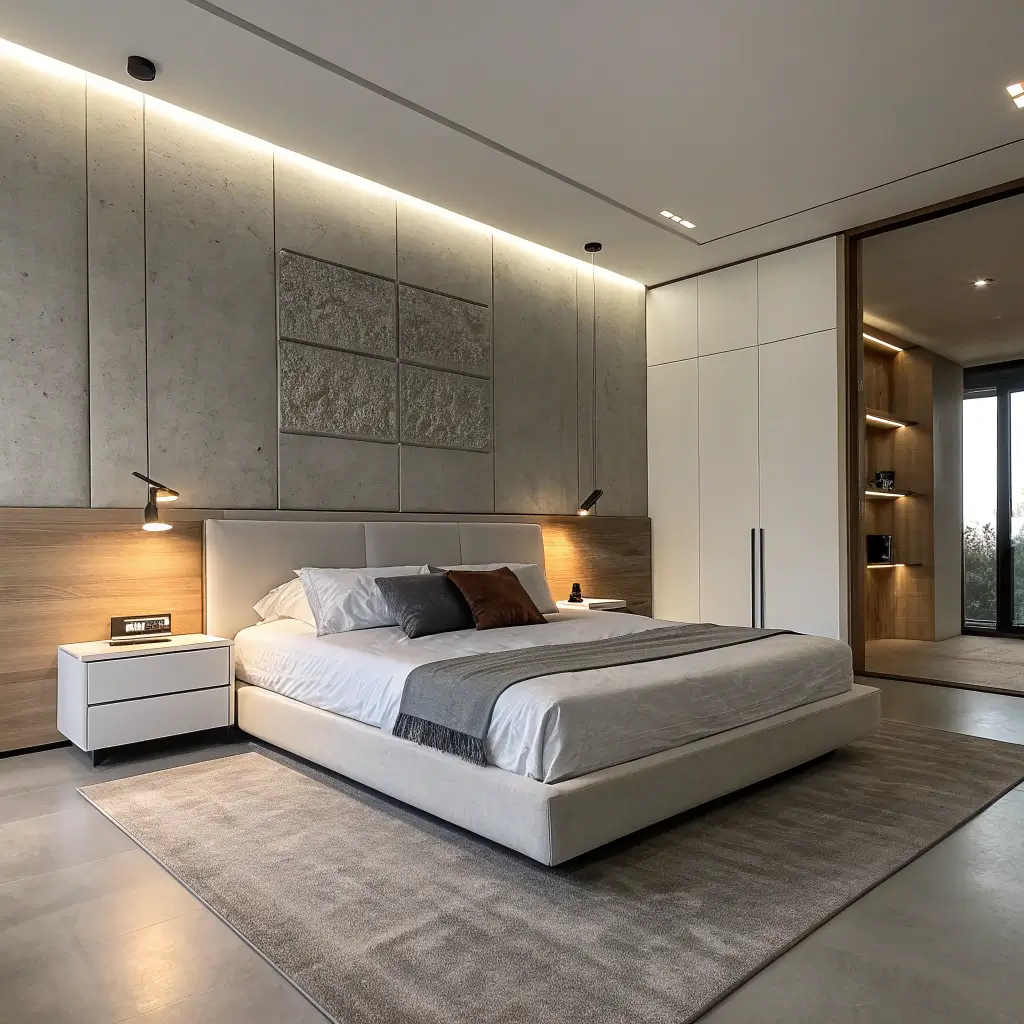
Minimalism isn’t just trendy – it’s transformative. Floating nightstands eliminate visual weight while maintaining all the function you need. I switched to this setup last year, and my bedroom instantly felt twice as spacious.
Wall-mounted nightstands hover about 2-3 inches below your mattress top, creating the perfect height for reaching essentials. The open space underneath makes cleaning a breeze (robot vacuum, anyone?) and prevents that cluttered, heavy look that traditional nightstands create.
The key to nailing this layout? Proper installation. Find those wall studs, people. Nothing ruins minimalist vibes faster than a nightstand crashing down at 3 AM. Use heavy-duty brackets rated for at least 30 pounds – you’ll thank me later.
Styling Your Floating Setup
Keep surfaces clear with these organization tricks:
- Install hidden drawer organizers inside floating nightstands
- Use wall-mounted reading lights instead of table lamps
- Add a small wall hook underneath for charging cables
- Choose nightstands with built-in USB ports when possible
Wardrobe-Facing Bed Smart Layout
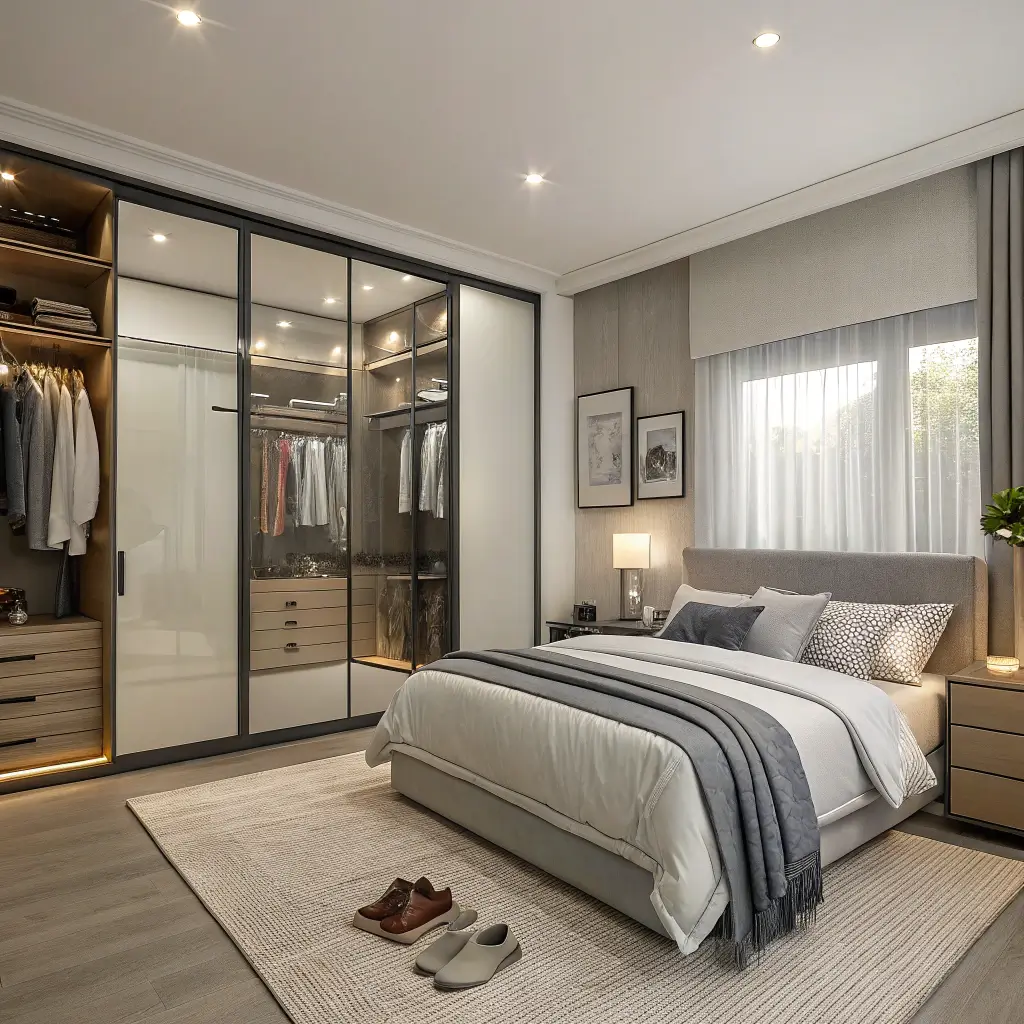
Here’s a controversial opinion: facing your bed toward your wardrobe makes perfect sense. Think about it – you wake up, and boom, your outfit choices stare right at you. No more stumbling around half-asleep trying to find matching socks.
Position your bed about 48 inches from the wardrobe front. This creates enough space to open doors fully while maintaining a clear pathway. The wardrobe acts as a focal point, especially if you choose one with beautiful doors or interesting hardware.
This layout works magic in rectangular rooms. The bed and wardrobe create natural zones – sleeping area at one end, dressing area at the other. Add a small ottoman between them for sitting while putting on shoes, and you’ve got yourself a functional flow that actually makes sense.
Maximizing the Wardrobe-Facing Setup
Consider these wardrobe placement strategies:
- Choose mirrored wardrobe doors to reflect light and expand space visually
- Install interior LED strips for easy morning outfit selection
- Keep 36-48 inches between bed foot and wardrobe
- Use the wardrobe top for decorative storage boxes
Window-Aligned Bed Furniture Setup
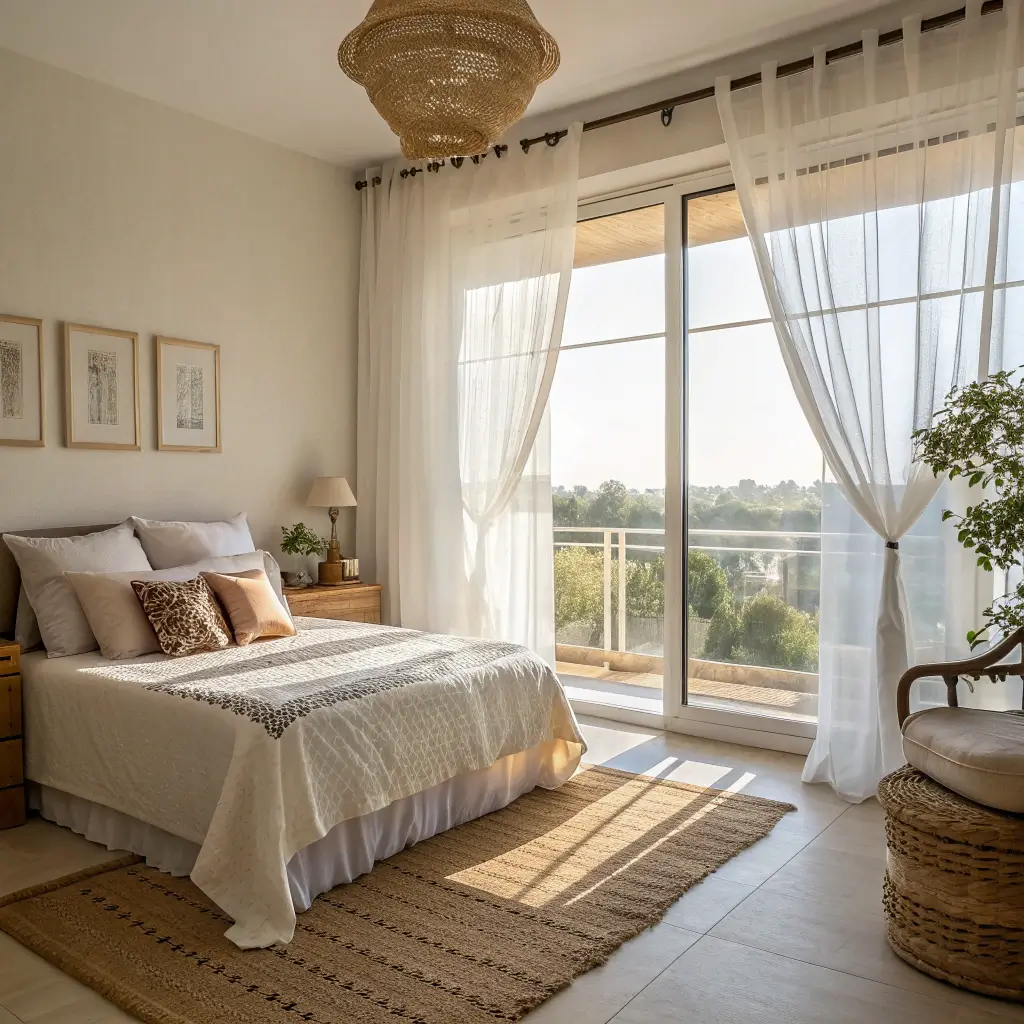
Natural light hitting your face each morning sounds romantic until you realize it happens at 5:30 AM in summer. But hear me out – proper window alignment creates the most balanced bedroom layout you’ll ever experience.
Place your bed perpendicular to the window, not directly under it. Your headboard sits against a solid wall while natural light flows across your bed from the side. This positioning gives you light control with curtains while avoiding direct glare in your eyes.
The furniture placement around a window-aligned bed follows naturally. Nightstands flank the bed normally, while a dresser fits perfectly on the opposite wall, bathed in natural light for getting ready. Ever tried applying makeup in bad lighting? Yeah, window light fixes that problem real quick.
Window Placement Considerations
Make window alignment work with these tips:
- Install blackout curtains on a ceiling track for complete light control
- Position bed at least 16 inches from window wall for curtain clearance
- Use window sill as additional surface for plants or décor
- Consider privacy film for lower window portions
Small Bedroom Functional Layout Plan
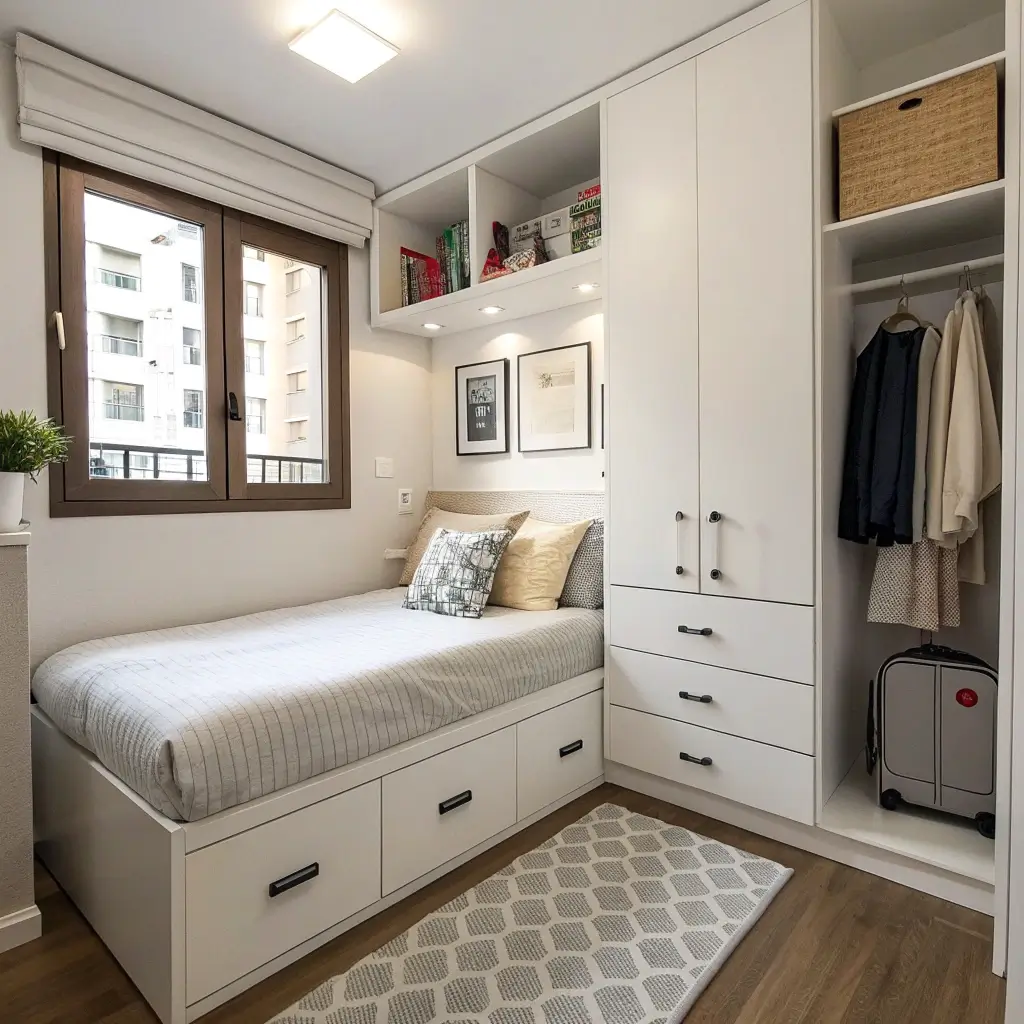
Small bedrooms require ninja-level planning skills. Every inch counts when you’re working with less than 100 square feet. I once arranged a 9×9 bedroom that fit a queen bed, dresser, and desk – it’s all about smart choices.
Start with a lower platform bed to maintain vertical openness. Skip the box spring entirely. Mount your headboard directly to the wall, saving those precious 2-3 inches. Choose furniture with legs to create visual flow underneath – your room instantly feels less cramped.
Multifunctional furniture becomes your best friend here. Ottoman storage at the foot of your bed, nightstands with drawers, wall-mounted desks that fold down – think Swiss Army knife mentality for every piece.
Small Space Layout Hacks
Maximize tiny bedrooms with these strategies:
- Use vertical space with floor-to-ceiling shelving
- Choose light colors for walls and furniture
- Install mirrors strategically to double visual space
- Opt for sliding doors on closets to save swing space
- Pick furniture that’s proportionally scaled to room size
Read More: 15 Cozy Bedroom Setup Ideas Layout for Relaxing Vibes
Rectangular Room Furniture Flow Design
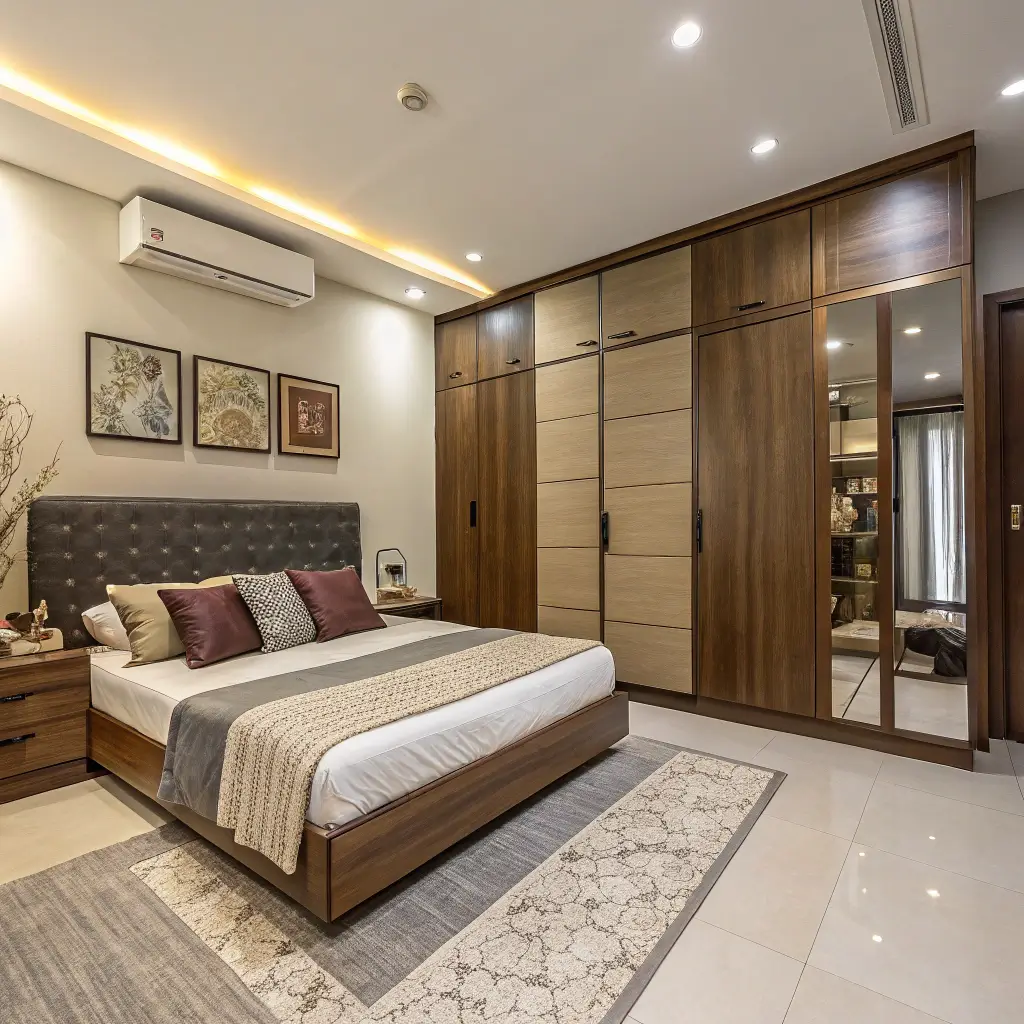
Rectangular rooms offer the most layout flexibility, but they also tempt you into making classic mistakes. The secret lies in creating distinct zones without chopping up the space.
Position your bed along the shorter wall if your room is really long – this prevents that bowling alley effect. Create a seating area at the opposite end with a small chair and side table. Suddenly, your bedroom serves multiple purposes without feeling cluttered.
Traffic flow becomes crucial in rectangular spaces. Keep a clear path from door to window, typically along one longer wall. Float your bed away from walls if space allows, using the gap behind for a console table or shallow shelving unit.
Rectangular Room Zones
Define areas effectively:
- Sleeping zone: Bed plus nightstands
- Dressing zone: Wardrobe and full-length mirror
- Work/relaxation zone: Desk or reading chair
- Storage zone: Dresser and additional organization
Keep 3-foot pathways between zones for comfortable movement. This prevents that cramped feeling even when you’ve maximized every corner.
Square Bedroom Symmetry Layout
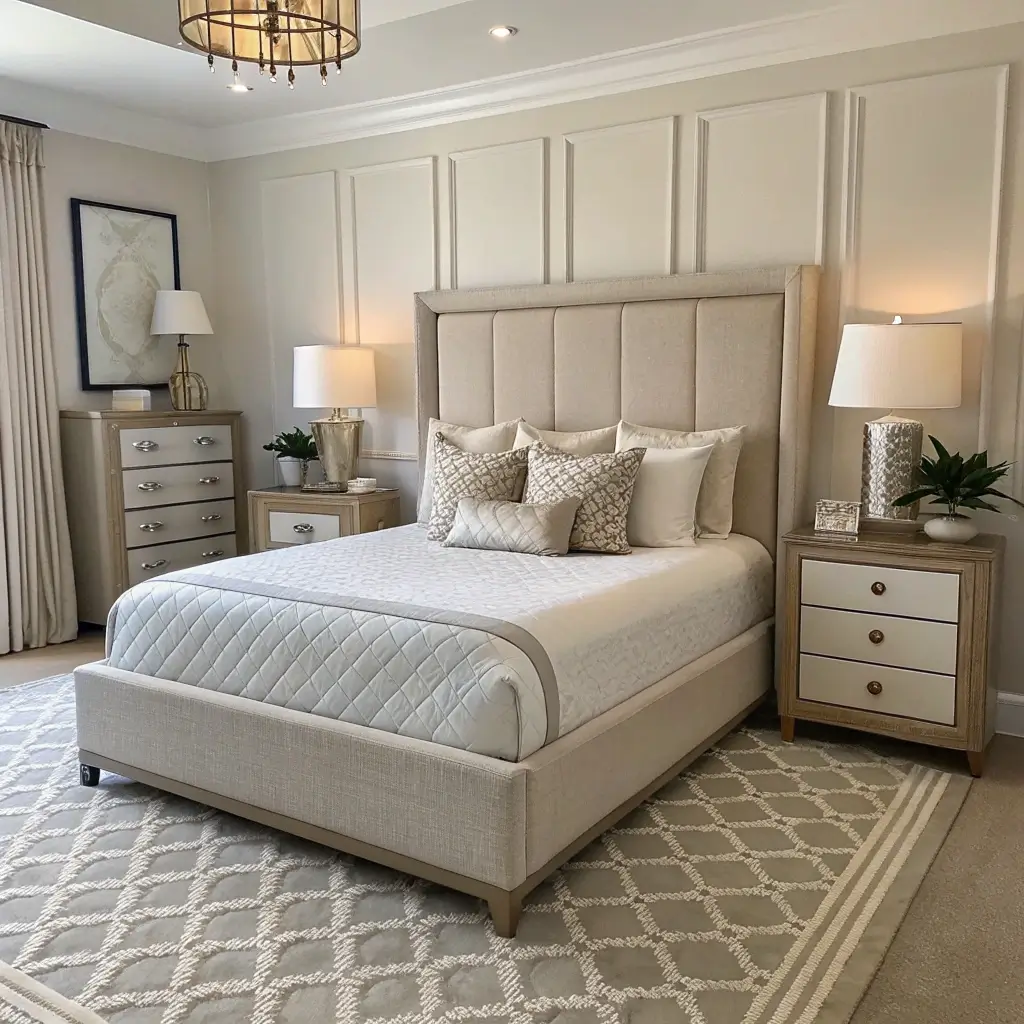
Square rooms practically beg for symmetrical layouts. Embrace the geometry – fighting it only creates awkward, unbalanced spaces. Center your bed on one wall, mirror everything on either side, and watch the magic happen.
I arrange square bedrooms like a tic-tac-toe board. Divide the room into nine mental squares, place the bed in the center three, and use the corners for furniture pieces. This creates natural balance while maintaining clear pathways.
The symmetry extends beyond just nightstands. Match your window treatments on opposite walls, place identical storage pieces in opposing corners, and even mirror your wall art placement. Your brain registers this balance subconsciously, creating instant calm.
Square Room Symmetry Rules
Follow these guidelines:
- Center the bed precisely on your chosen wall
- Keep equal spacing on both sides
- Use pairs of everything when possible
- Create a focal point directly opposite the bed
- Maintain diagonal sight lines for openness
Storage-Focused Bedroom Furniture Plan
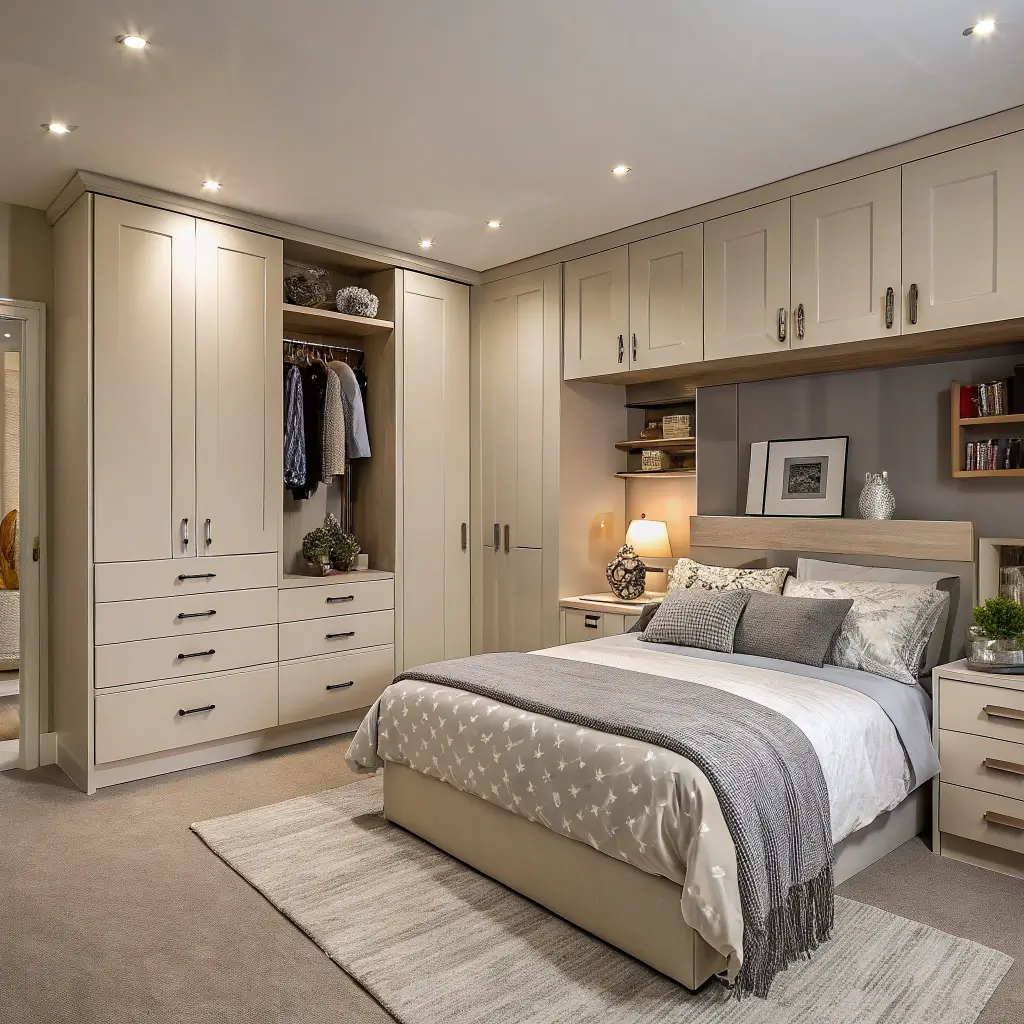
Let’s face it – most of us have way too much stuff. Building storage into your layout from the start prevents that cluttered disaster zone that develops over time. FYI, hiding clutter doesn’t count as organization, but smart storage layout totally does.
Start with a storage bed frame – those built-in drawers underneath hold everything from extra bedding to off-season clothes. Position tall bookcases or wardrobes along one wall, creating a storage wall that looks intentional rather than haphazard.
The trick to storage-focused layouts? Making storage furniture pull double duty. Your dresser top becomes a vanity with a mirror above. Nightstands with multiple drawers eliminate the need for additional side tables. That bench at your bed’s foot? Hollow it should be, young Padawan.
Strategic Storage Placement
Maximize storage without sacrificing style:
- Install floating shelves above head height
- Use under-bed storage boxes on wheels
- Add over-door organizers on closet doors
- Choose nightstands with both open and closed storage
- Incorporate vertical ladder shelves in corners
Read More: 15 Inspiring Long Bedroom Layout Ideas for Perfect Flow
Dressing Table Integrated Layout
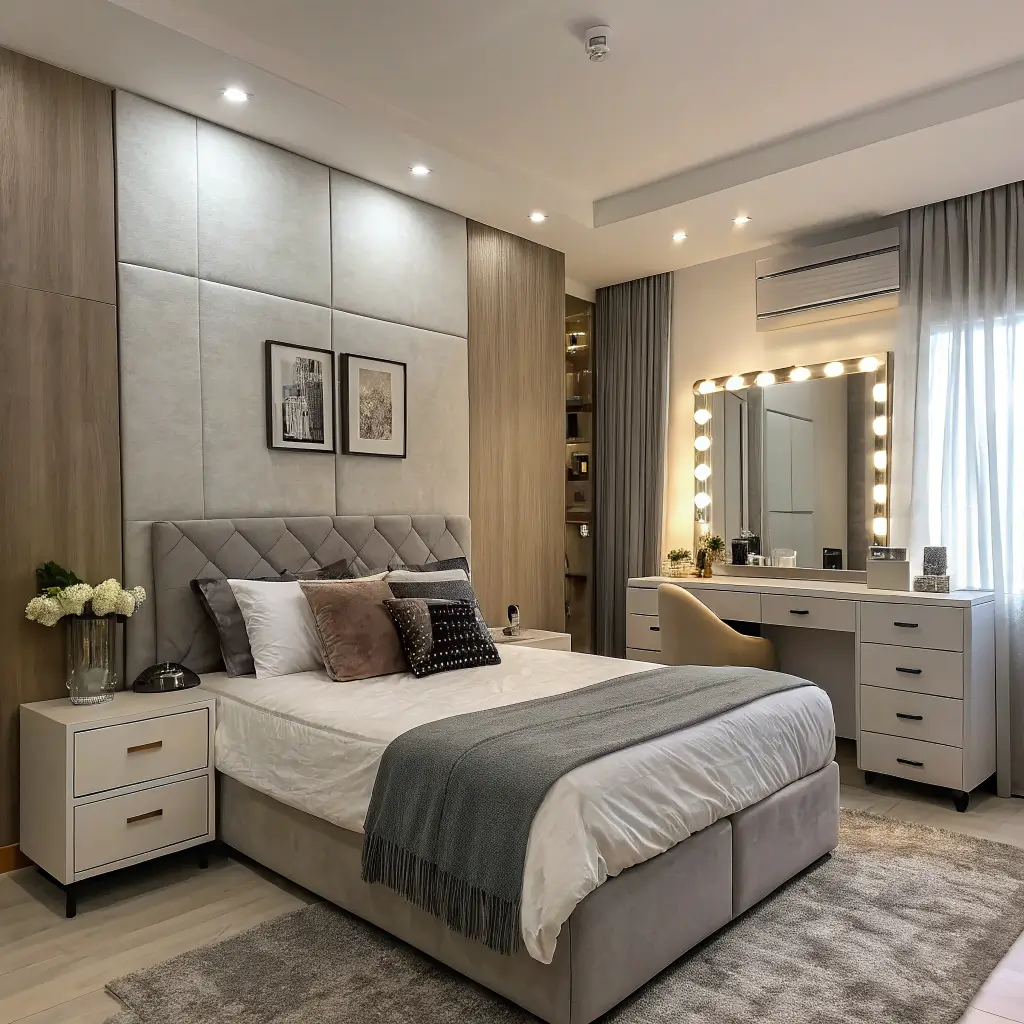
A dedicated dressing table changes your entire morning routine. No more doing makeup in the bathroom while someone showers, or balancing a hand mirror on your dresser. This layout works even in smaller bedrooms – you just need to get creative.
Position your dressing table perpendicular to a window for that perfect natural light. If that’s impossible, place it between two windows or opposite one for reflected light. The key? Never put it in a dark corner unless you enjoy looking like a clown when you leave the house.
Float your dressing table away from the wall slightly, creating space for a decorative mirror to lean behind it. This setup looks intentional and luxurious while taking up minimal floor space. Add a pouf that tucks completely underneath, and you’ve maximized every square inch.
Dressing Table Placement Options
Consider these arrangements:
- Bay window nook: Perfect natural light haven
- Walk-in closet entrance: Creates a dressing suite feel
- Between two nightstands: Replaces traditional dresser
- Corner angle placement: Maximizes awkward corners
- Floating wall-mounted: Saves floor space entirely
Walkway-Optimized Bedroom Arrangement

Nothing ruins bedroom zen faster than obstacle-course navigation. Clear, logical walkways make your bedroom feel larger and function better. Aim for 30-36 inch pathways minimum – anything less feels cramped.
Map your main routes first: door to bed, bed to closet, bed to bathroom. These paths should remain completely clear. Arrange furniture along the walls initially, then float pieces inward only if walkways stay unobstructed.
The biggest mistake people make? Pushing everything against walls automatically. Sometimes floating your bed creates better flow than wall placement. Test different arrangements using painter’s tape on the floor before moving heavy furniture.
Walkway Width Guidelines
Maintain these minimum clearances:
- Main pathways: 36-42 inches
- Between furniture pieces: 24-30 inches
- Bed to wall: 24 inches minimum
- Door swing clearance: Full arc plus 6 inches
- Closet access: 36 inches from doors
Wall-to-Wall Furniture Alignment

Sometimes, embracing wall placement creates the most functional layout. This arrangement works brilliantly in narrow bedrooms or spaces with multiple doors and windows.
Line your major pieces along one long wall: bed, nightstand, dresser in a row. This creates one clear, open space on the opposite side. The linear arrangement looks intentional and organized rather than cluttered.
The secret to making wall alignment work? Varying heights. Alternate tall and low pieces to create visual interest. Break up the line with wall art or mirrors between furniture pieces. This prevents that flat, boring look that wall placement sometimes creates.
Wall Alignment Best Practices
Make linear layouts dynamic:
- Vary furniture depths slightly for dimension
- Install wall-mounted lighting to free surface space
- Use area rugs to define separate zones
- Add vertical elements like tall plants or floor lamps
- Create negative space with strategic gaps
Read More: 15 Creative Large Bedroom Layout Ideas and Stylish Arrangements
Minimalist Open-Space Bedroom Layout

Less really becomes more when you nail minimalist layout. Strip your bedroom down to absolute essentials: bed, one nightstand, maybe a single dresser. The remaining open space feels luxurious rather than empty when done right.
Position your bed low to the ground – platform or Japanese-style frames work perfectly. Float it in the room’s center if space allows, creating circulation on all sides. This brave placement makes your bed sculptural rather than just functional.
Minimalist doesn’t mean boring, though. Choose one statement piece – maybe an oversized piece of art or a stunning light fixture. Everything else stays simple and functional. IMO, this layout style creates the most restful bedrooms because visual clutter equals mental clutter.
Minimalist Layout Essentials
Achieve true minimalism:
- Choose multi-functional pieces only
- Maintain 60% open floor space minimum
- Use hidden storage extensively
- Select a neutral color palette
- Incorporate natural materials for warmth
Luxury Master Bedroom Furniture Layout
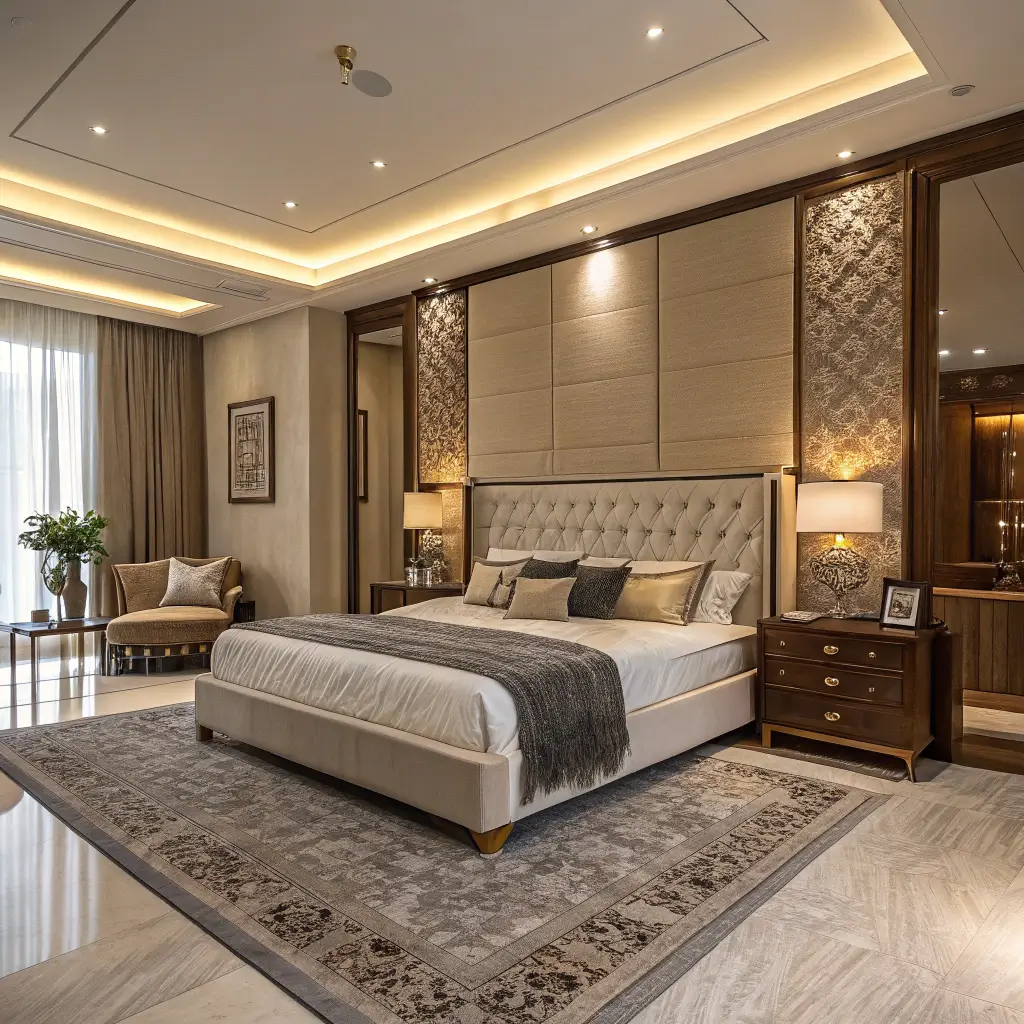
Go big or go home, right? Luxury layouts embrace space rather than apologizing for it. If you’ve got the square footage, use it purposefully rather than just scattering furniture around randomly.
Create a true suite feeling with distinct zones. Position your bed as a room divider, with a seating area beyond. Add a writing desk by the window, a chaise lounge in the corner. Each zone serves a purpose while maintaining cohesive flow.
The key to luxury layouts? Proportional scaling. Choose substantial furniture that fits the space – tiny nightstands beside a king bed look ridiculous. Leave breathing room between pieces. Luxury means space to move, not furniture crammed wall-to-wall.
Luxury Layout Zones
Design your master suite with these areas:
- Sleep sanctuary: King bed with substantial nightstands
- Sitting area: Two chairs with side table or loveseat
- Dressing area: Full vanity with seating
- Reading nook: Comfortable chair with ottoman
- Work space: Writing desk or secretary
Maintain 4-foot pathways in luxury layouts for that truly spacious feel.
Multi-Purpose Furniture Bedroom Setup
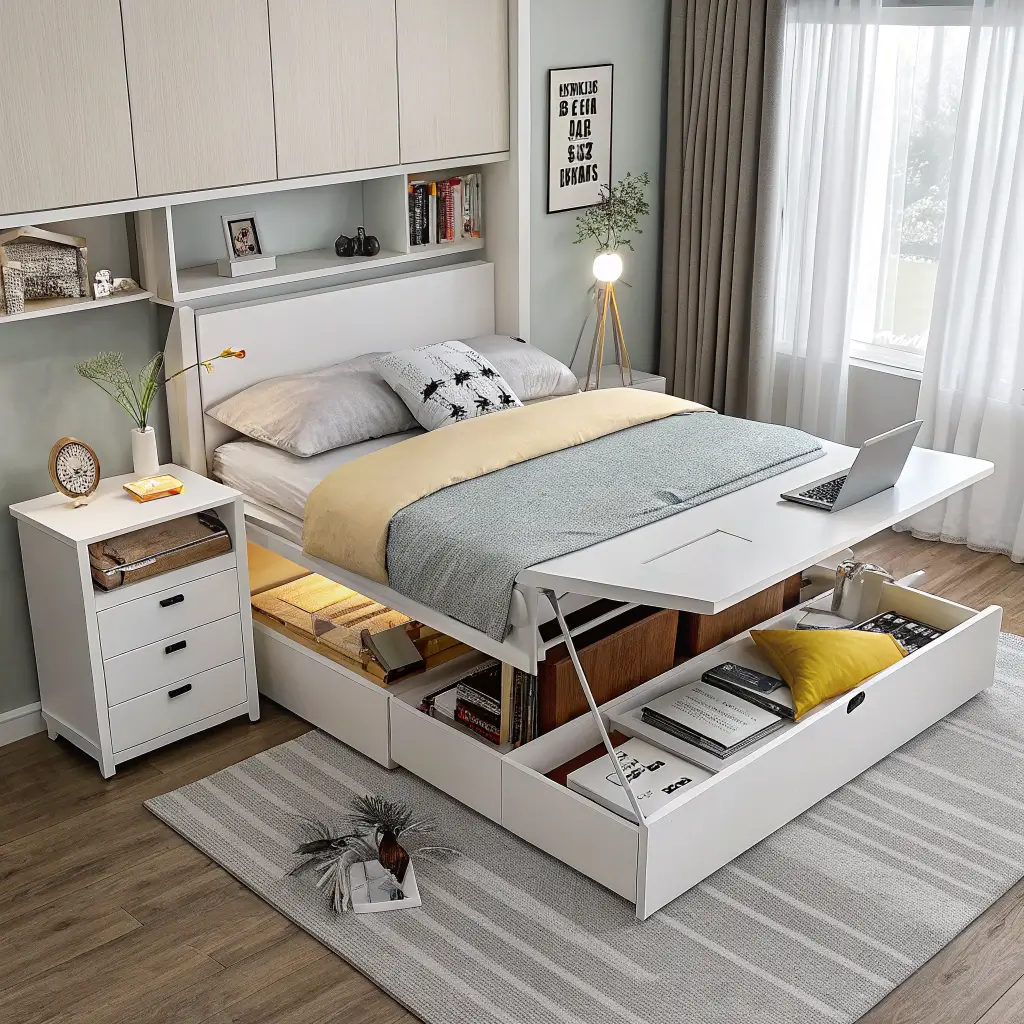
Smart furniture choices make small spaces work overtime. Every piece should serve at least two functions in multi-purpose layouts. That ottoman? Storage plus seating plus coffee table when needed.
Position convertible furniture strategically. A daybed along one wall provides seating by day, sleeping by night. Wall-mounted drop-leaf tables create instant workspaces. Murphy beds sound dated but modern versions look incredibly sleek :/
The arrangement depends on your primary bedroom use. If you work from home, prioritize desk placement during daylight hours. Night owls might arrange everything around optimal TV viewing. There’s no wrong answer – just what works for your lifestyle.
Multi-Purpose Furniture Winners
Invest in these versatile pieces:
- Storage ottoman benches: Seating plus organization
- Bookshelf room dividers: Storage plus space definition
- Nesting tables: Flexible surface options
- Expandable console desks: Compact to comprehensive
- Modular shelving systems: Adaptable configurations
Making Your Layout Work Long-Term
Here’s what nobody tells you about bedroom layouts – they should evolve with your life. The arrangement that works when you’re single might not suit couple life. What functions at 25 might frustrate you at 45.
Test drive layouts before committing. Live with an arrangement for two weeks before declaring it perfect. Notice friction points – where do items naturally accumulate? What pathways do you actually use? Adjust accordingly.
Remember, rules exist as guidelines, not gospel. Your bedroom should work for your specific needs, style preferences, and daily routines. Maybe you need your bed angled oddly because that’s the only way you can watch TV comfortably. Own it.
The perfect bedroom layout balances function with feeling. You want efficient use of space without sacrificing the comfort and style that makes a bedroom your personal retreat. These 15 layouts give you starting points, but the magic happens when you adapt them to fit your unique space and needs.
Take measurements, grab some graph paper, and start experimenting. Move furniture around until walking through your bedroom feels natural and effortless. Because at the end of the day, the best bedroom layout is the one that makes you excited to both wake up and wind down in your space.