10 Smart Restaurant Interior Design Ideas That Wow

Picture this: You walk into a restaurant and immediately think, “Whoa, this place gets it.” That’s the power of smart interior design, my friend. We’re not just talking about pretty wallpaper and fancy chairs here – we’re talking about creating spaces that make people pull out their phones before they even look at the menu.
I’ve spent way too many hours gawking at restaurant interiors (occupational hazard, I guess), and let me tell you, the ones that stick with you do something special. They tell a story, create an atmosphere, and somehow make that overpriced pasta feel totally worth it. So grab a coffee, and let’s chat about ten interior design ideas that’ll transform any dining space from “meh” to memorable.
Modern Minimalist Restaurant Interior
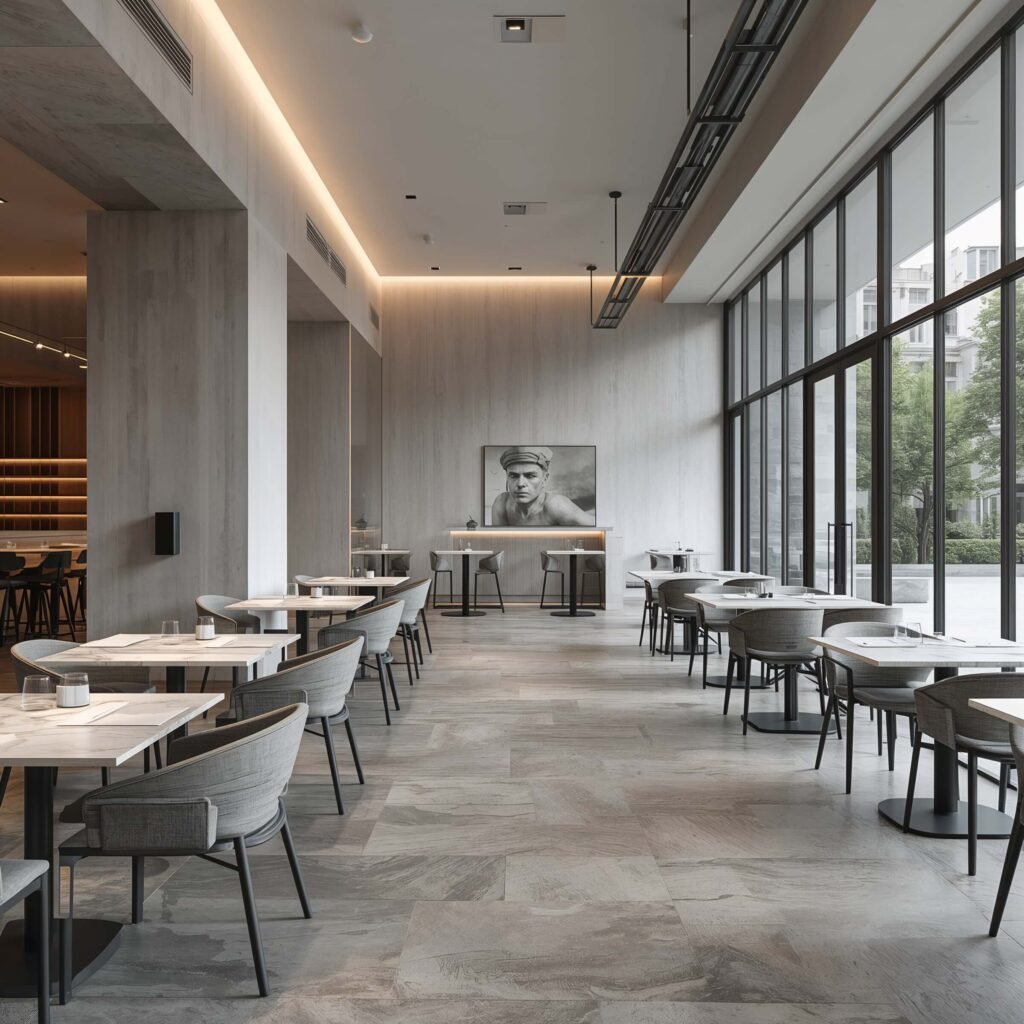
You know what’s funny? Less really can be more when you nail the execution. Modern minimalist design strips away all the unnecessary noise and focuses on what actually matters – clean lines, quality materials, and purposeful design choices.
Think about walking into a space with crisp white walls, natural wood accents, and just enough visual interest to keep things from feeling sterile. I remember visiting this minimalist sushi spot in downtown – they had maybe three colors in the entire space, but man, did it work. The simplicity made the food the star of the show, which is exactly what you want, right?
The key ingredients for nailing this look include:
- Neutral color palettes (whites, grays, soft beiges)
- Simple geometric furniture with clean lines
- Strategic use of negative space
- High-quality materials that speak for themselves
- Subtle lighting that creates warmth without clutter
Making Minimalism Work Without Being Boring
Here’s where most people mess up with minimalist design – they confuse “minimal” with “empty.” Nobody wants to eat in a space that feels like a hospital waiting room. You need texture, warmth, and subtle focal points that draw the eye without overwhelming the senses.
Consider adding a single statement wall with textured concrete or wood paneling. Or throw in some oversized pendant lights that double as sculpture. The magic happens when every single element serves a purpose and looks intentional.
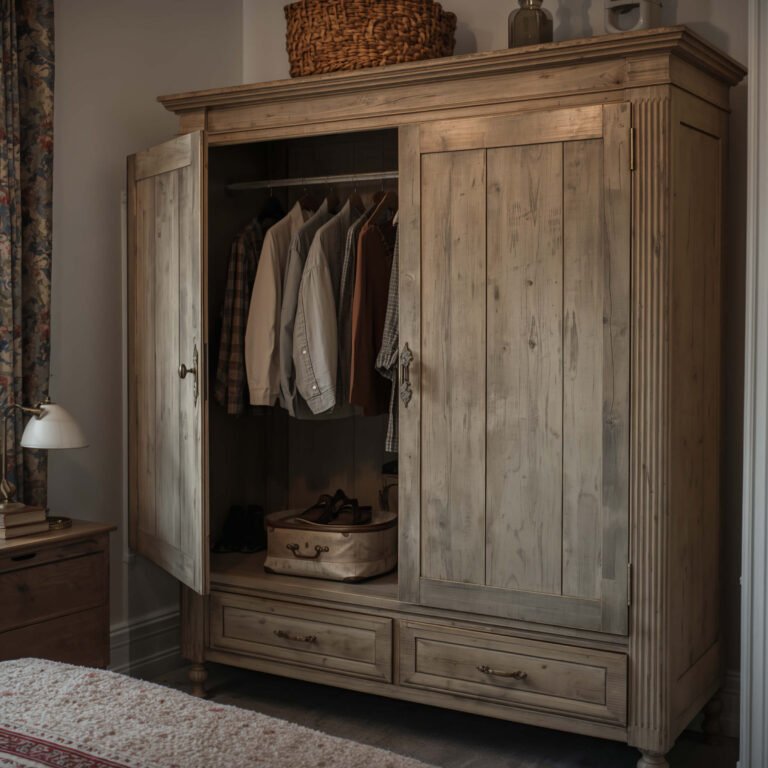
Rustic Farmhouse Dining Space
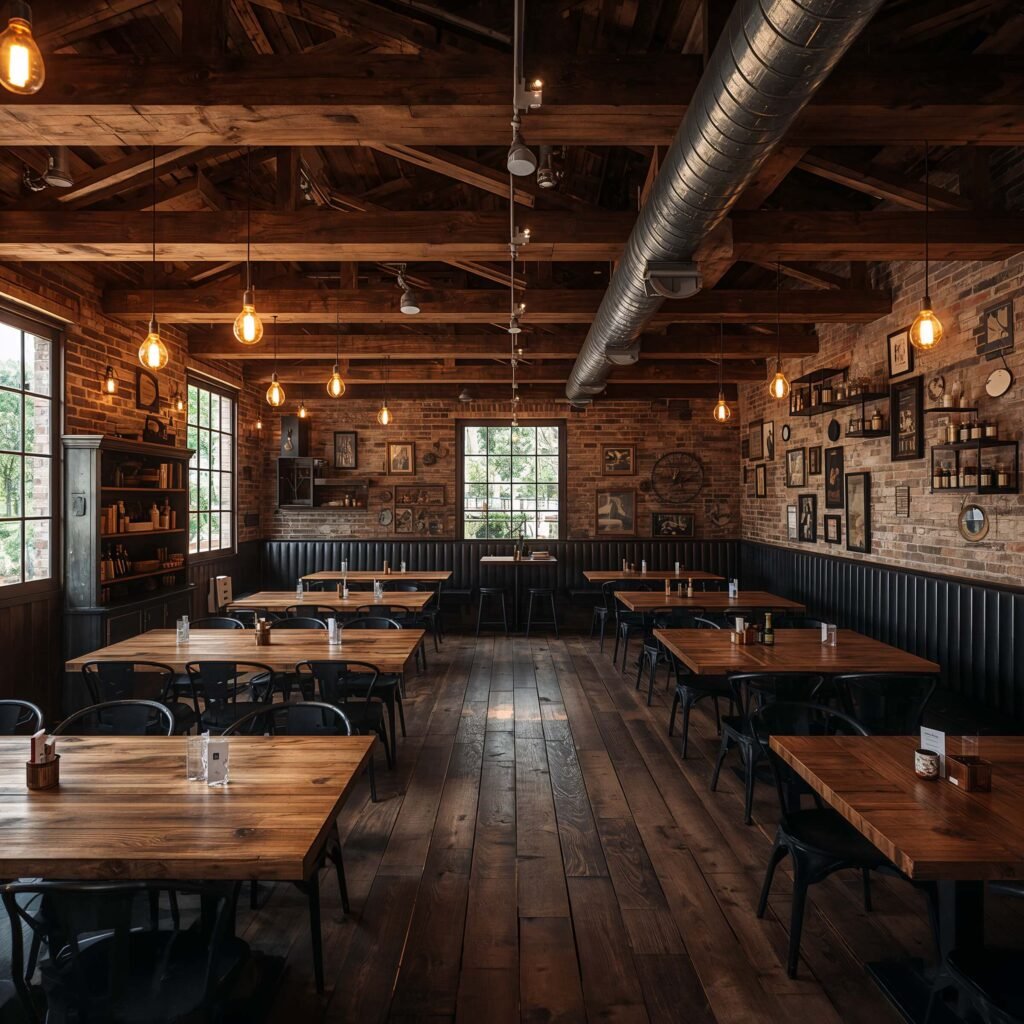
Okay, switching gears completely here – let’s talk about rustic farmhouse charm. This style makes everyone feel like they’re eating at their cool aunt’s countryside home, and honestly, who doesn’t want that vibe?
The farmhouse aesthetic taps into our collective nostalgia for simpler times (even if we never actually lived on a farm). It’s all about creating that warm, welcoming atmosphere that makes people want to linger over their meal and order that second bottle of wine.
Essential elements that scream farmhouse include:
- Reclaimed wood everything – tables, wall features, shelving
- Exposed beams and brick walls
- Mix-and-match vintage furniture
- Mason jar lighting fixtures (yes, they’re still a thing)
- Cozy textiles like buffalo check or gingham
The Modern Farmhouse Twist
Now, unless you’re opening a restaurant in actual farm country, you probably want to add a contemporary edge to avoid looking like a Pinterest board from 2012. Mix in some industrial elements like metal chairs or modern light fixtures. Keep the color palette sophisticated – think charcoal grays alongside those warm woods.
I visited this incredible farm-to-table place that nailed this balance. They had shiplap walls (obviously), but paired them with sleek black metal fixtures and contemporary artwork. The result? Rustic charm without the kitsch factor.
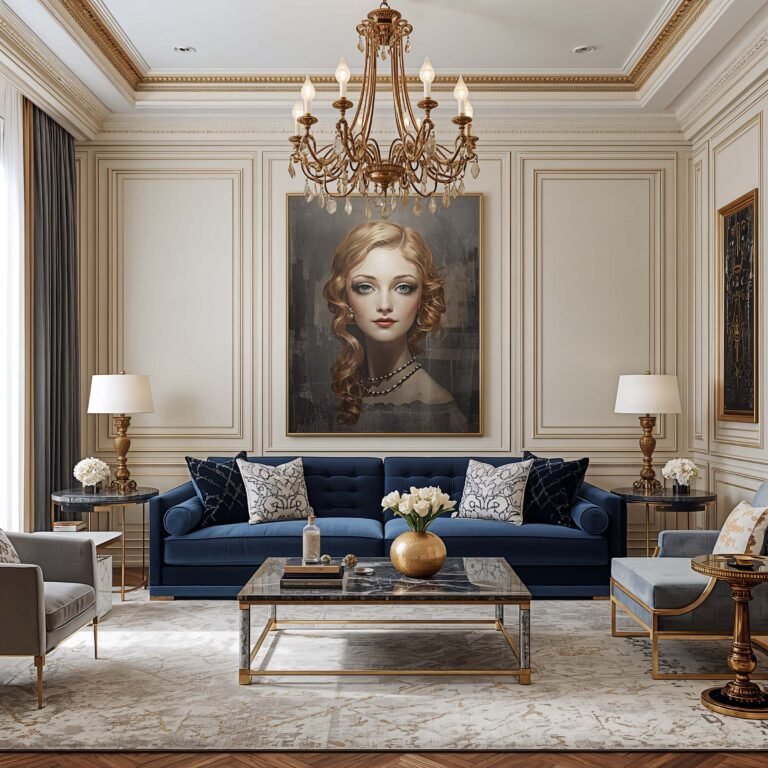
Luxury Fine Dining Interior Theme
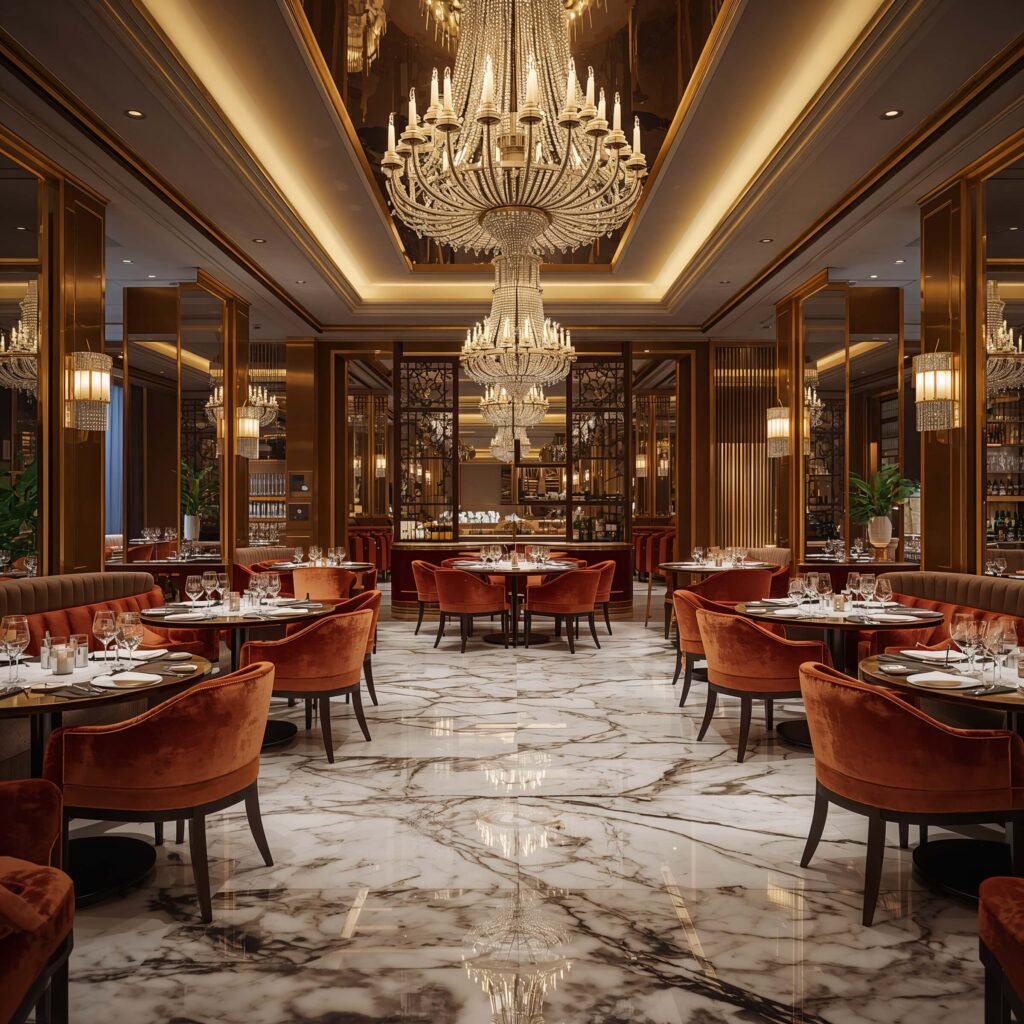
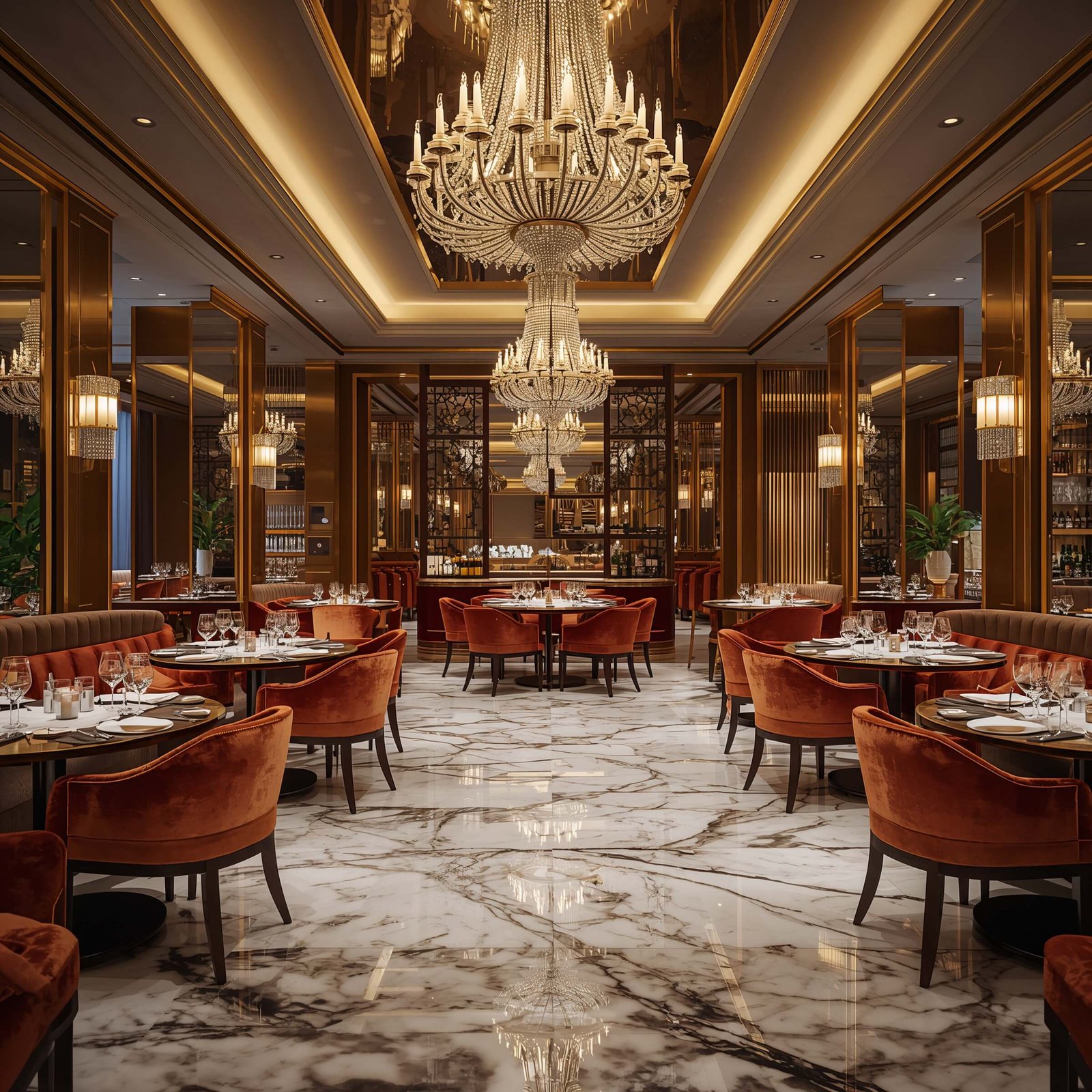
Time to get fancy! Luxury fine dining interiors need to justify those triple-digit price tags, and the design plays a huge role in that equation. We’re creating an experience here, not just a meal.
Think about the last truly upscale restaurant you visited. I bet you remember the atmosphere as much as the food. That’s because luxury dining sells the entire package – the anticipation, the service, the ambiance, and yes, eventually the food too.
Key components of luxury dining design:
- Rich, jewel-toned color schemes (deep blues, emerald greens, burgundy)
- Plush seating with high-quality upholstery
- Dramatic lighting with dimmers and accent lights
- Premium materials like marble, brass, and velvet
- Artistic installations or statement pieces
- Sound-absorbing materials for intimate conversations
Creating Luxury on Different Budgets
Here’s a secret: you don’t need a million-dollar budget to create a luxurious feel. Focus on a few high-impact elements rather than trying to go all-out everywhere. Splurge on amazing lighting or one stunning feature wall. Use clever tricks like mirrors to make spaces feel larger and more opulent.
IMO, lighting does more heavy lifting in luxury spaces than any other element. Invest in quality fixtures and proper dimming systems, and you’re halfway there.
Small Space Smart Restaurant Layout
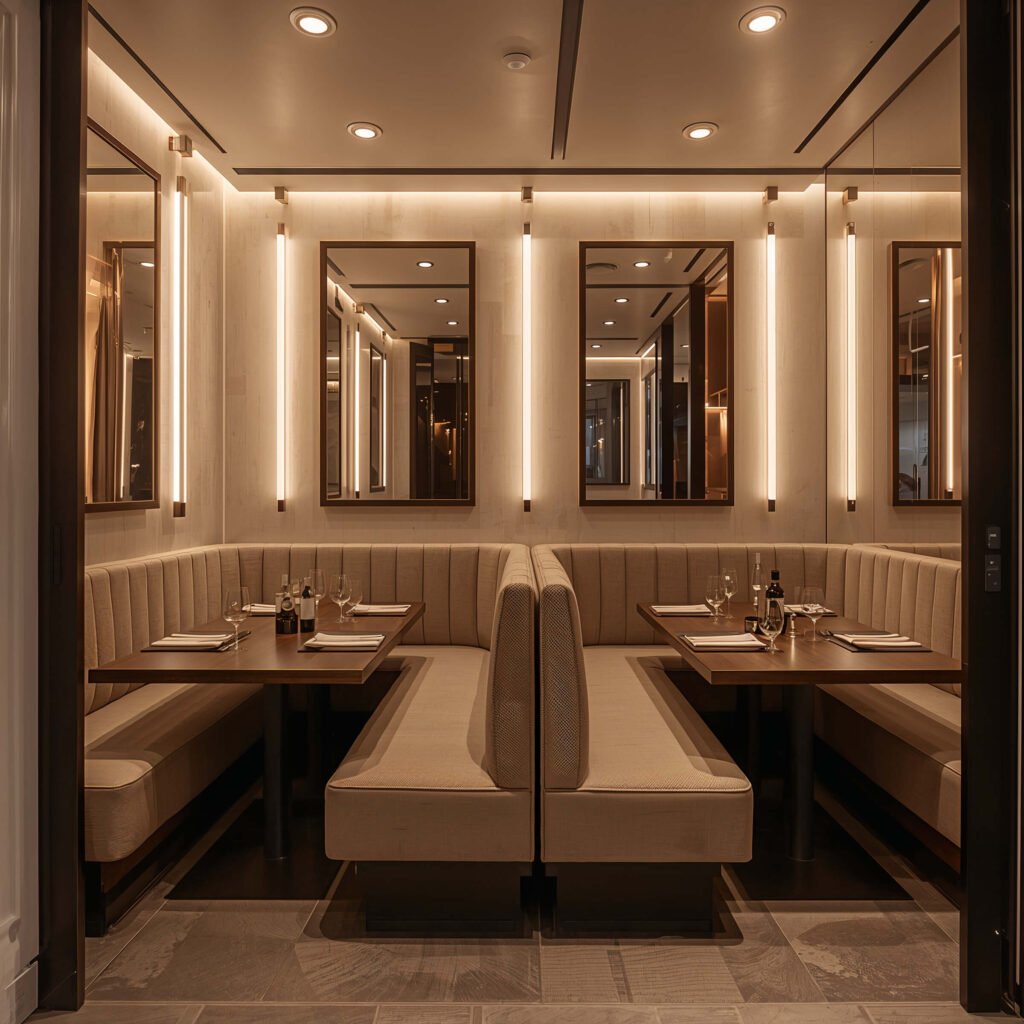
Ever walked into a tiny restaurant that somehow doesn’t feel cramped? That’s smart space planning at work, and it’s basically interior design wizardry.
Small restaurants face unique challenges, but they also have unique opportunities to create intimate, memorable experiences. The trick lies in making every square foot count without making diners feel like sardines in a can.
Brilliant small space strategies include:
- Multi-functional furniture (benches with storage, fold-down tables)
- Vertical storage and display solutions
- Mirrors to create illusion of space
- Light, bright color schemes
- Strategic lighting to define zones
- Bar seating along windows or walls
The Psychology of Small Spaces
Here’s something interesting – small spaces can actually enhance the dining experience when designed right. They create natural intimacy and energy that large spaces struggle to achieve. Think about your favorite hole-in-the-wall spot. Part of its charm comes from that cozy, bustling atmosphere, doesn’t it?
The key? Don’t fight the size; embrace it. Use the coziness as a selling point. Create nooks and corners that feel special rather than cramped. Make guests feel like they’ve discovered a hidden gem.
Industrial Style Restaurant Design
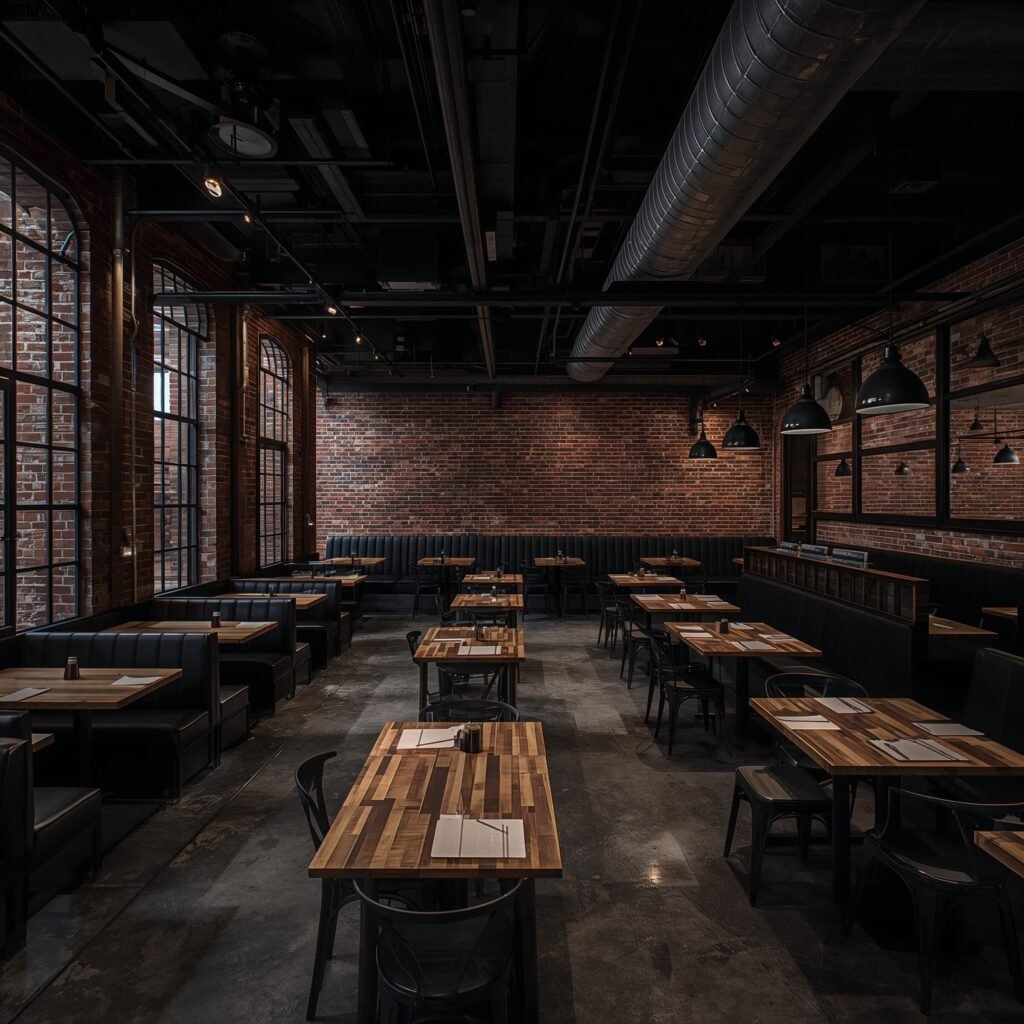
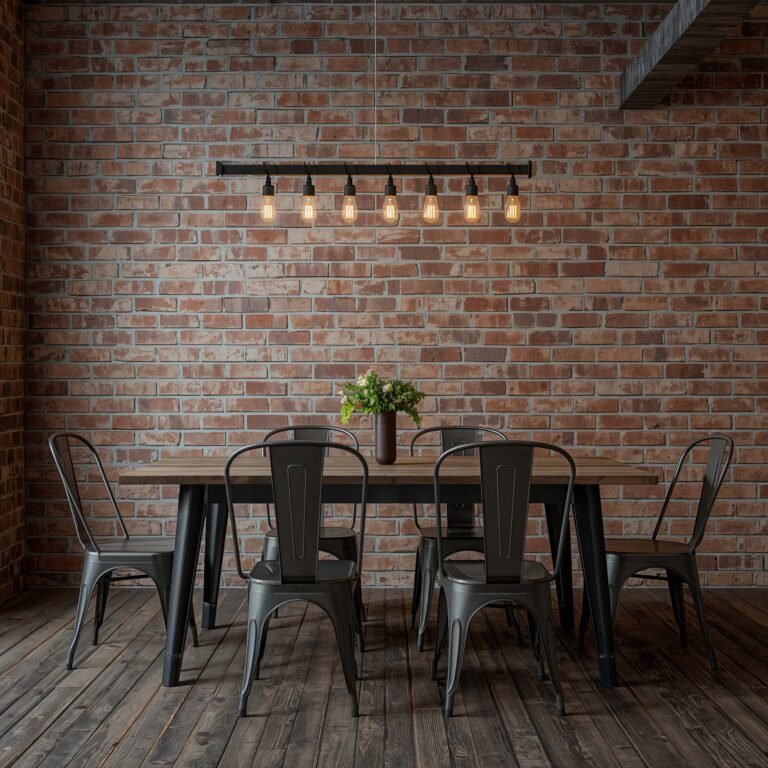
Industrial design keeps refusing to die, and honestly, I’m not mad about it. When done right, industrial interiors create this perfect balance of raw and refined that just works for so many restaurant concepts.
The industrial look started in converted warehouses and factories, but now we’re recreating that aesthetic from scratch. It’s about celebrating the building’s bones – or creating bones worth celebrating.
Must-have industrial elements:
- Exposed everything – pipes, ducts, beams, brick
- Metal and wood material combinations
- Edison bulb lighting (still going strong!)
- Concrete floors or walls
- Open ceiling concepts
- Raw, unfinished textures
- Factory-style windows
Warming Up the Industrial Vibe
Pure industrial can feel cold and unwelcoming if you’re not careful. The restaurants that nail this style add warmth through clever design choices. Think leather banquettes, warm wood tones, and plenty of plants to soften those hard edges.
I love how industrial design gives you permission to leave things “unfinished.” Exposed brick doesn’t need covering, concrete doesn’t need painting, and suddenly your “lazy” design choices become intentional style statements. Pretty clever, right?
Nature-Inspired Greenery Interior
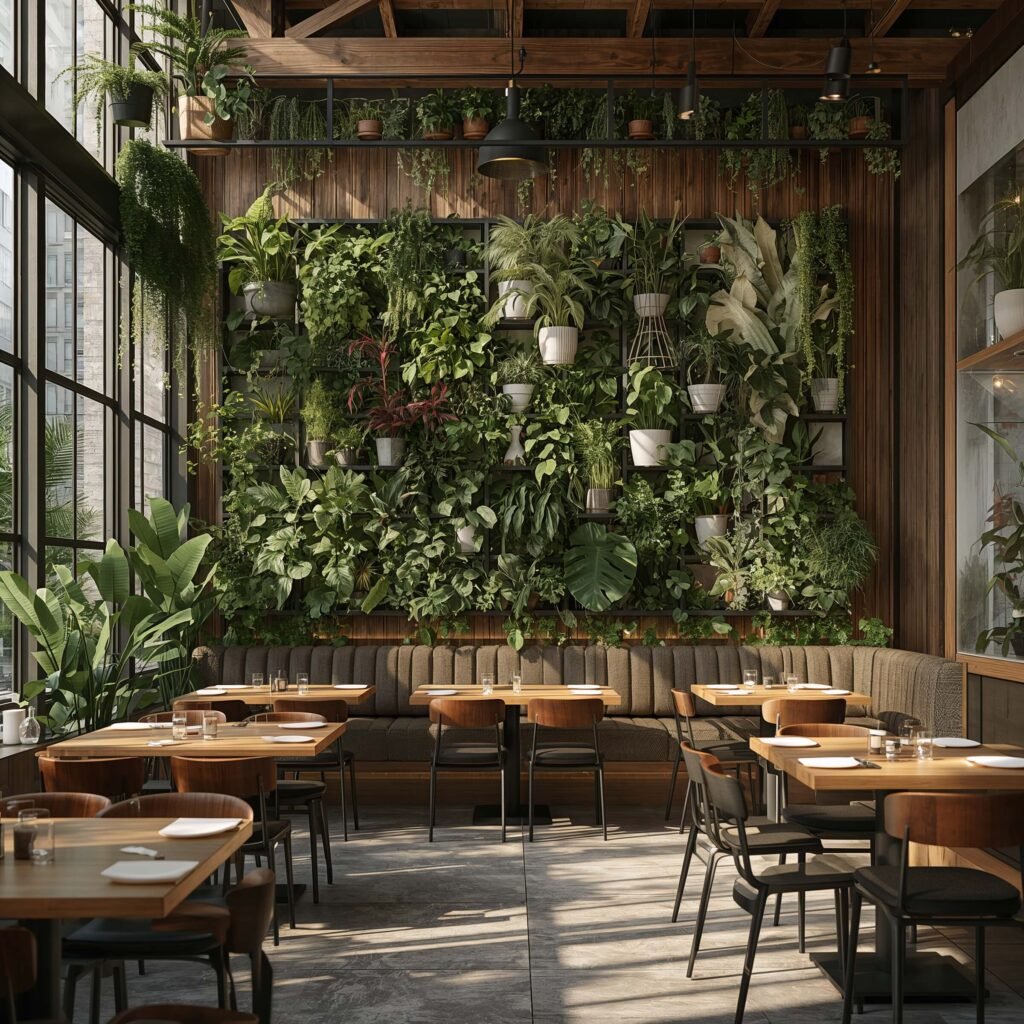
Can we talk about how plants have completely taken over restaurant design? And I’m here for it! Biophilic design (fancy term for bringing nature indoors) creates spaces that make people feel good on a primal level.
Studies show that greenery reduces stress and improves mood. Translation? Happy diners who stay longer and spend more. It’s basically science telling you to buy more plants 🙂
Creating your indoor garden paradise:
- Living walls or vertical gardens
- Hanging plants at varying heights
- Herb gardens that double as ingredients
- Natural materials like wood and stone
- Large windows for natural light
- Earth-toned color palettes
- Water features for added zen
Keeping Plants Alive (The Real Challenge)
Here’s the thing nobody talks about – restaurant plants need to survive in tough conditions. Low light, temperature fluctuations, and the occasional drunk patron grabbing leaves. Choose hardy varieties like pothos, snake plants, or ZZ plants. Or go fake if maintenance becomes a nightmare (no judgment here).
The smartest approach? Mix real statement plants with high-quality faux greenery in hard-to-reach places. Your Instagram-obsessed customers won’t know the difference, trust me.
Also Read: 12 Gorgeous Interior Design Living Room Ideas for Cozy Spaces
Vintage Retro Restaurant Decor
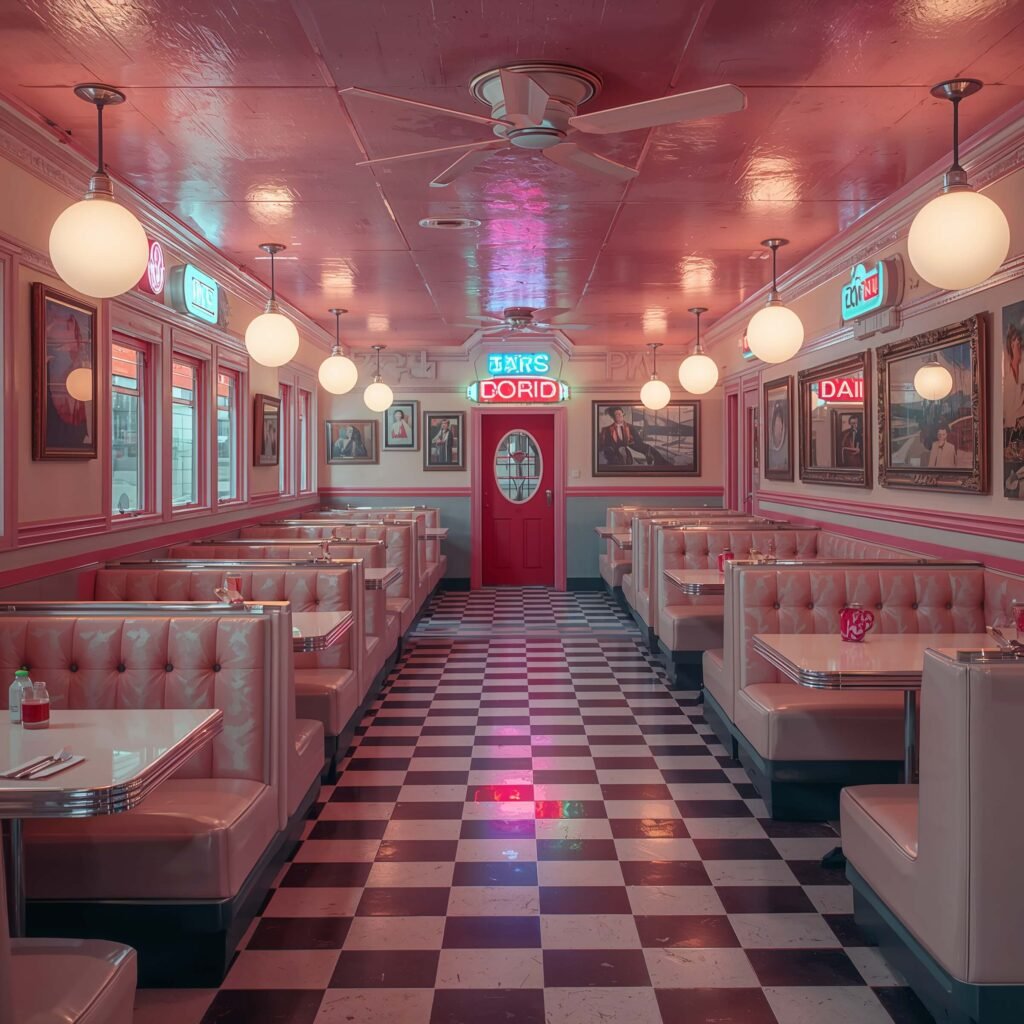
Nostalgia sells, people. Whether it’s a 1950s diner vibe or 1970s disco fever, vintage retro design taps into powerful memories and emotions (even for eras we never lived through).
The beauty of retro design lies in its playfulness. You get to have fun with bold colors, funky patterns, and design choices that would be “too much” in any other context. It’s like Halloween for interior designers.
Retro design essentials by era:
- 1950s: Checkered floors, vinyl booths, neon signs, chrome details
- 1960s: Psychedelic patterns, mod furniture, pop art, bright oranges
- 1970s: Earth tones, macramé, wood paneling, conversation pits
- 1980s: Neon everything, geometric patterns, Memphis design, pastels
Avoiding the Theme Park Trap
The challenge with retro design? Walking that fine line between authentic vintage charm and cheesy theme restaurant. The best retro spaces feel genuine rather than forced. They use period-appropriate design elements without going full costume party.
Mix vintage pieces with modern touches. Keep the color palette sophisticated. And please, for the love of good taste, don’t overdo the memorabilia. A few carefully chosen pieces beat a wall of random junk every time.
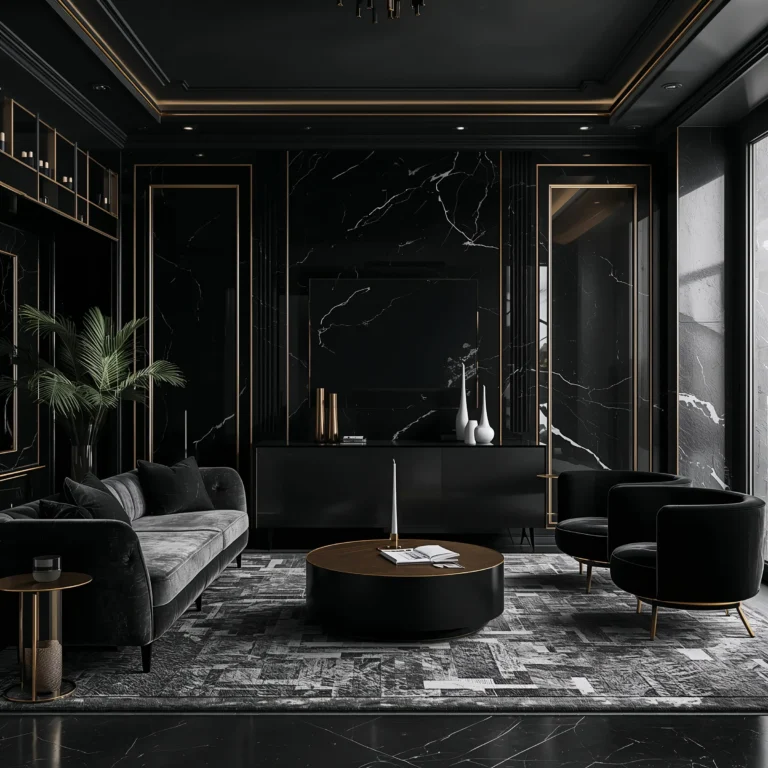
Elegant Black and Gold Dining Theme
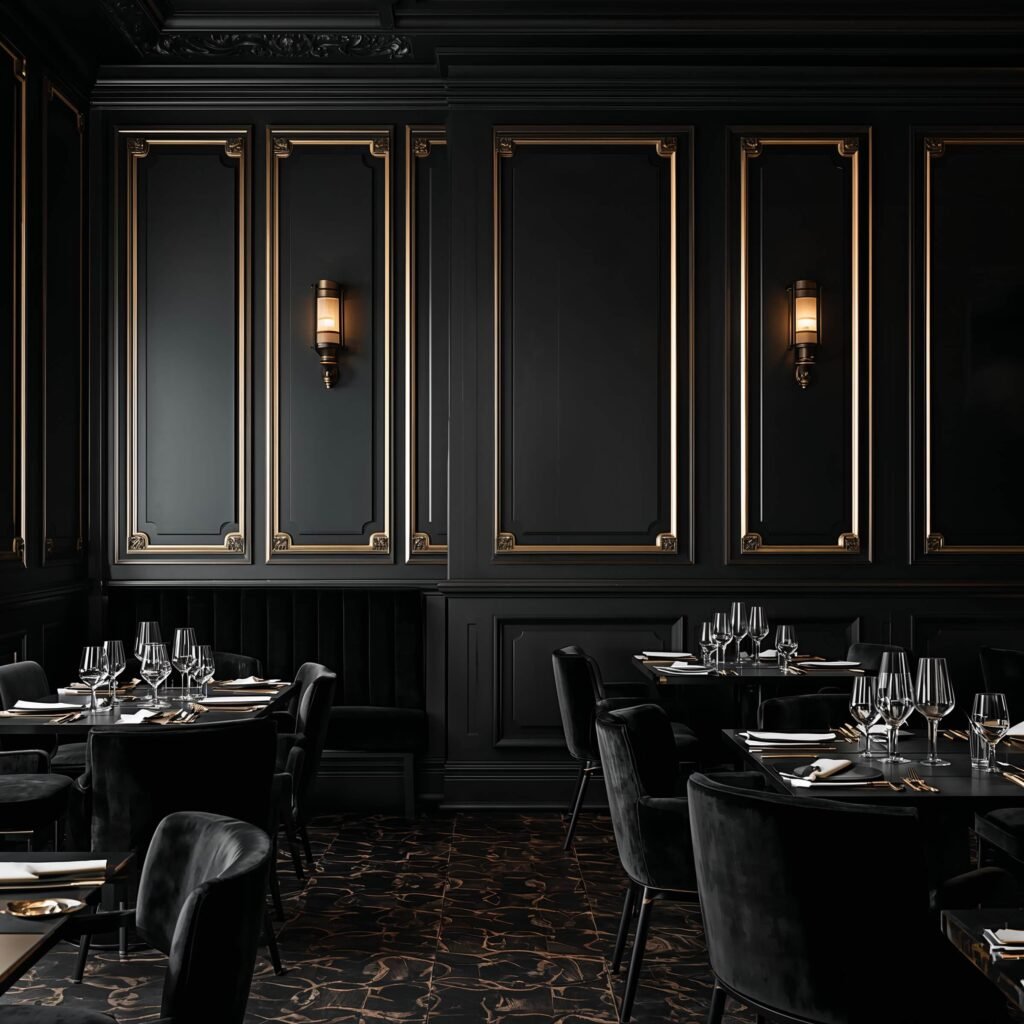
Want to feel fancy without trying too hard? Black and gold delivers sophistication with a side of drama, and it works for everything from cocktail bars to upscale pizzerias.
This color combination has serious staying power because it’s both timeless and trendy. Black provides depth and mystery, while gold adds warmth and luxury. Together, they create spaces that photograph beautifully (hello, social media gold mine).
Nailing the black and gold aesthetic:
- Matte black walls with gold accent fixtures
- Black marble with gold veining
- Brass or gold hardware and lighting
- Black leather seating with gold studs or piping
- Strategic metallic accents without overdoing it
- Mood lighting that enhances the drama
Balancing Drama Without Going Overboard
Too much black makes spaces feel cave-like. Too much gold looks tacky. The sweet spot? Use black as your base and gold as your accent, roughly following a 70-30 ratio. Add white or cream elements to prevent the space from feeling too heavy.
One restaurant I visited used black walls but kept the ceiling white, added gold pendant lights, and threw in some green plants. The result felt luxe without being oppressive. Sometimes restraint is your best design tool.
Cozy Café Style Restaurant Interior
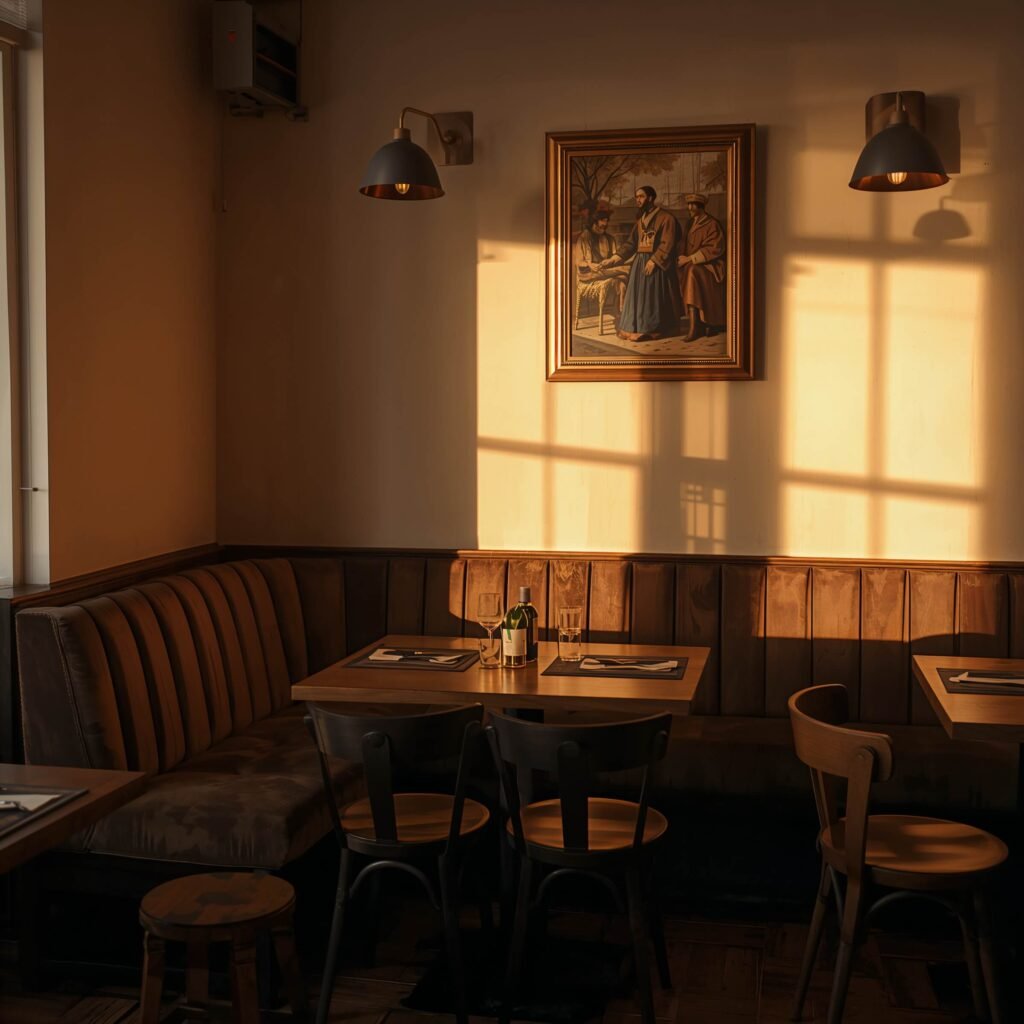
There’s something magical about café-style interiors that makes you want to order another latte and pretend to write your novel. These spaces master the art of comfortable lingering, which translates directly to higher check averages.
Café design borrows from residential interiors, creating spaces that feel more like your stylish friend’s living room than a commercial establishment. It’s approachable luxury – fancy enough to feel special, relaxed enough to stay awhile.
Elements that scream cozy café:
- Mismatched vintage furniture that somehow works together
- Warm, layered lighting from multiple sources
- Bookshelves and personal touches
- Comfortable seating options (sofas, armchairs)
- Warm wood tones and soft textiles
- Gallery walls with local art
- Visible coffee equipment as décor
Creating Community Spaces
The best café-style restaurants understand they’re selling more than food – they’re providing a third space between home and work. Design choices should encourage both solo visitors with laptops and groups catching up over brunch.
Create different zones for different vibes. Maybe a communal table for the work-from-café crowd, cozy corners for dates, and larger tables for friend groups. Flexibility is key when you’re designing for community.
Also Read: 12 Inspiring Office Interior Design Ideas for Small Spaces
Open Kitchen Concept Design
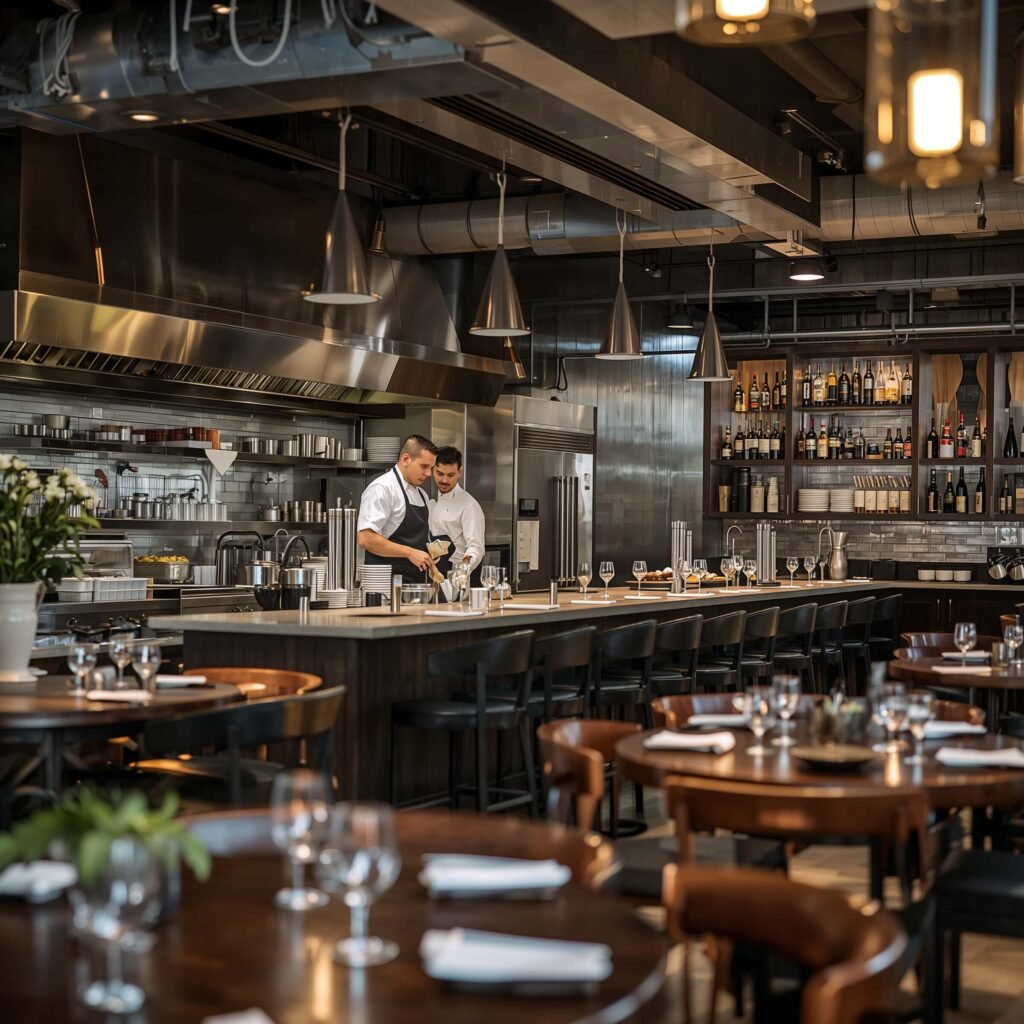
Remember when kitchens were hidden away like some shameful secret? Now open kitchen concepts put the cooking process front and center, turning meal prep into dinner theater.
This design trend works because it taps into our curiosity and desire for transparency. Diners love seeing their food being prepared (assuming your kitchen staff can handle the pressure of performing).
Making open kitchens work:
- Strategic layout that showcases action without chaos
- Investment in attractive kitchen equipment
- Proper ventilation systems (crucial!)
- Sound management solutions
- Attractive chef uniforms (they’re part of the show now)
- Pass-through windows or full visibility
- Bar seating facing the kitchen action
The Practical Side of Open Kitchens
Let’s be real – open kitchens aren’t just about aesthetics. They come with serious operational considerations. Your kitchen needs to stay Instagram-worthy during the dinner rush. That means impeccable organization and staff who understand they’re always “on stage.”
But when it works? Magic happens. Diners feel connected to their food, chefs feel appreciated, and the energy from the kitchen spills into the dining room. Plus, it’s free entertainment that beats staring at phones during dinner.
Bringing It All Together
So there you have it – ten ways to transform a dining space from forgettable to absolutely unforgettable. The beautiful thing about restaurant design? There’s no single right answer. Your perfect interior depends on your concept, location, target audience, and about a million other factors.
The restaurants that truly wow understand that design isn’t just decoration – it’s part of the entire dining experience. Whether you’re going minimal or maximal, rustic or refined, the key lies in commitment to your vision and attention to those tiny details that make people say, “You have to check out this place.”
FYI, mixing elements from different styles often creates the most interesting spaces. Maybe you combine industrial bones with cozy café touches, or add natural greenery to your minimalist design. The rules exist to be bent, if not completely broken.
Want my honest advice? Start with what moves you. Visit spaces that inspire you, figure out why they work, then adapt those lessons to your own vision. Because at the end of the day, authentic passion shows through in design, and diners can smell fake from a mile away.
Now stop reading and start designing. Your future Instagram-famous restaurant interior awaits!