12 Eye-Catching Shop Interior Design Ideas for Retail Success

You know that feeling when you walk into a store and instantly think, “Wow, I need everything in here”? Yeah, that’s not by accident. That’s the magic of killer interior design working its psychological voodoo on your wallet. And honestly, after running my own boutique for three years and helping dozens of retailers revamp their spaces, I’ve learned that the right interior design can literally make or break your retail business.
Here’s the thing – customers make snap judgments about your store within the first seven seconds of walking in. Seven seconds! That’s less time than it takes to tie your shoes. So if your shop looks like it hasn’t been updated since the ’90s (and not in a cool vintage way), you’re basically throwing money out the window.
Today, I’m sharing twelve interior design concepts that have absolutely transformed retail spaces. These aren’t just pretty Pinterest ideas – they’re battle-tested designs that actually drive sales.
Minimalist Scandinavian Shop Design
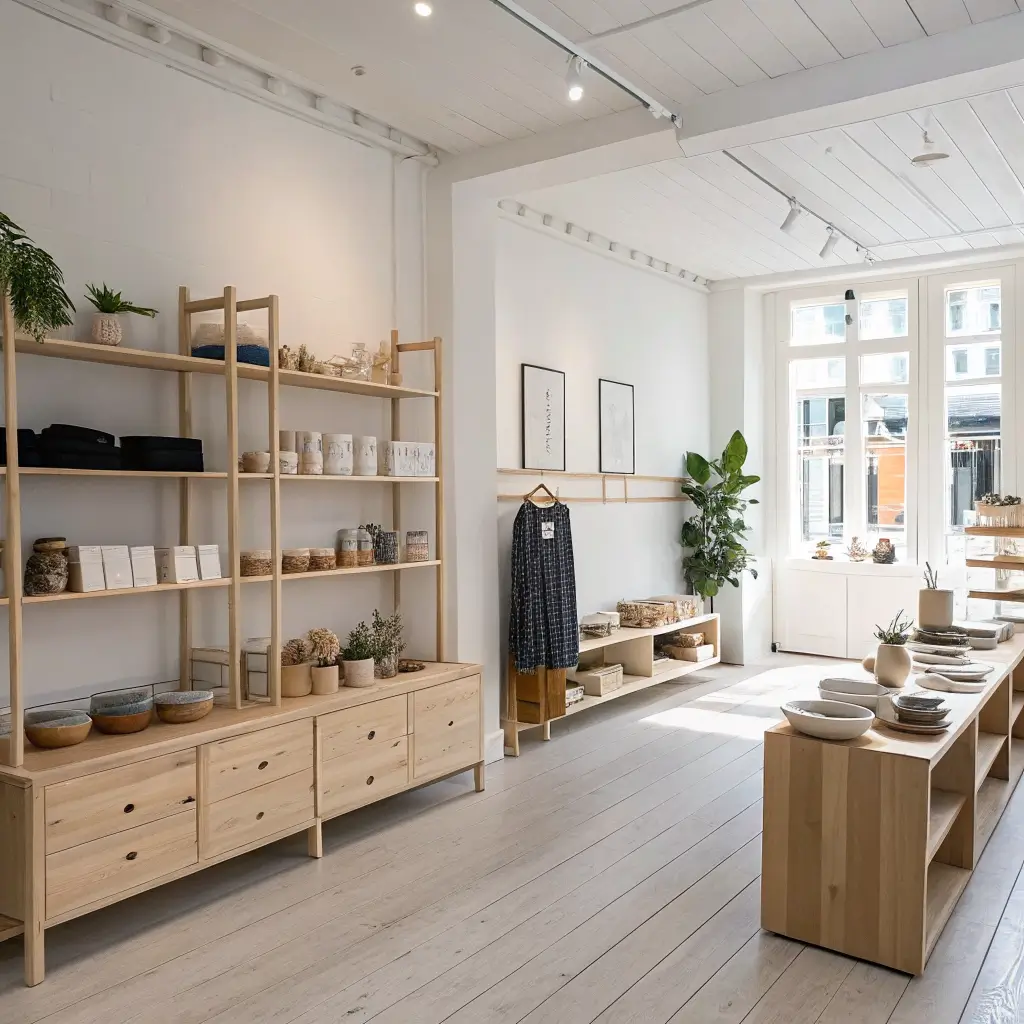
Let’s kick things off with the design trend that refuses to die – and for good reason. Scandinavian minimalism creates this almost zen-like shopping experience that customers absolutely eat up. Think clean lines, neutral palettes, and enough white space to make Marie Kondo weep with joy.
The beauty of Scandinavian design lies in its strategic use of negative space. You’re not cramming products into every corner like you’re playing retail Tetris. Instead, each product gets room to breathe, making everything look more valuable and considered.
Key Elements That Make It Work
Here’s what you need to nail the Scandi vibe:
- Light wood fixtures (birch, ash, or pine work beautifully)
- Neutral color palette with whites, grays, and soft beiges
- Natural lighting – massive windows or skylights if possible
- Simple geometric shapes in displays
- Cozy textural elements like wool throws or sheepskin rugs
I recently helped a clothing boutique in Portland go full Scandinavian, and their sales jumped 35% in three months. Why? Because customers finally had space to think, move, and actually enjoy the shopping experience. Plus, everything photographs beautifully for Instagram – free marketing, anyone?
The maintenance aspect rocks too. With fewer elements and cleaner lines, you spend less time dusting random knick-knacks and more time actually selling stuff. The minimalist approach also means you can highlight seasonal collections without completely overhauling your store.
Making It Budget-Friendly
Think you need IKEA’s entire catalog to pull this off? Nope. Start with white paint (revolutionary, I know), add some simple wooden shelving from your local hardware store, and invest in good lighting. The whole point is doing more with less – your wallet will thank you.
Rustic Vintage Boutique Interior
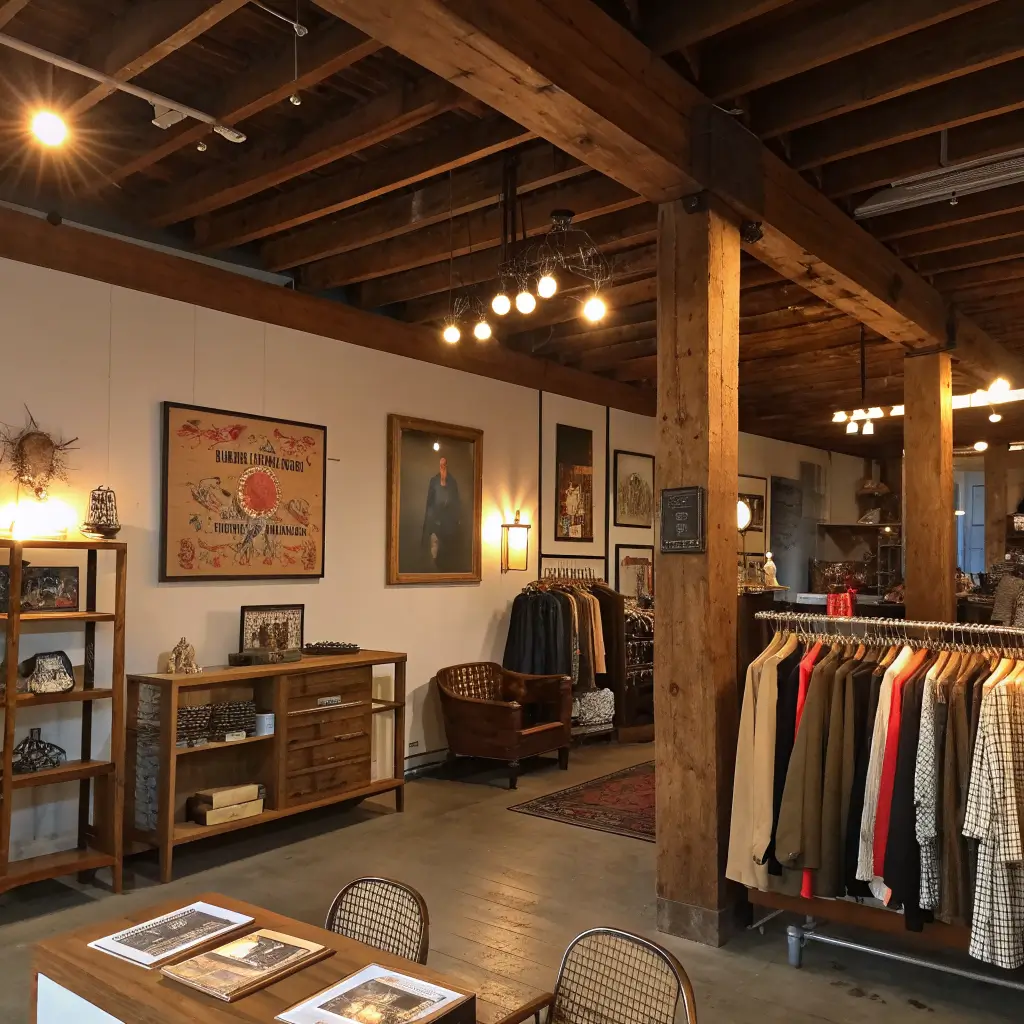
Now, if minimalism makes you yawn, let’s talk about going completely the opposite direction with rustic vintage design. This style basically tells customers, “Hey, we’ve got stories to tell, and they’re all awesome.”
Vintage design creates this incredible emotional connection with shoppers. They’re not just buying a product; they’re buying into a narrative, a piece of history, a vibe that mass-market stores can’t replicate.
Creating Authentic Vintage Vibes
The secret sauce to rustic vintage? Mixing genuine antique pieces with modern functionality. Nobody wants to shop in an actual museum where they’re afraid to touch anything. Here’s your shopping list:
- Reclaimed wood shelving and displays
- Vintage industrial lighting (Edison bulbs are your best friend)
- Antique furniture repurposed as display pieces
- Aged metal fixtures and hardware
- Distressed paint finishes on walls or furniture
My favorite vintage transformation involved a shoe store that installed an old library card catalog as a accessories display. Customers went nuts for it – posting selfies, bringing friends to see it. That single piece probably generated more foot traffic than any traditional advertising could.
Sourcing Without Breaking the Bank
Hit up estate sales, flea markets, and online marketplaces. You’d be amazed what people practically give away. Plus, imperfections are actually desirable here – that scratched-up dresser isn’t damaged goods; it’s “authentically distressed.”
One word of warning though: don’t go overboard. You want “charming vintage boutique,” not “grandma’s attic explosion.”
Modern Industrial Store Layout
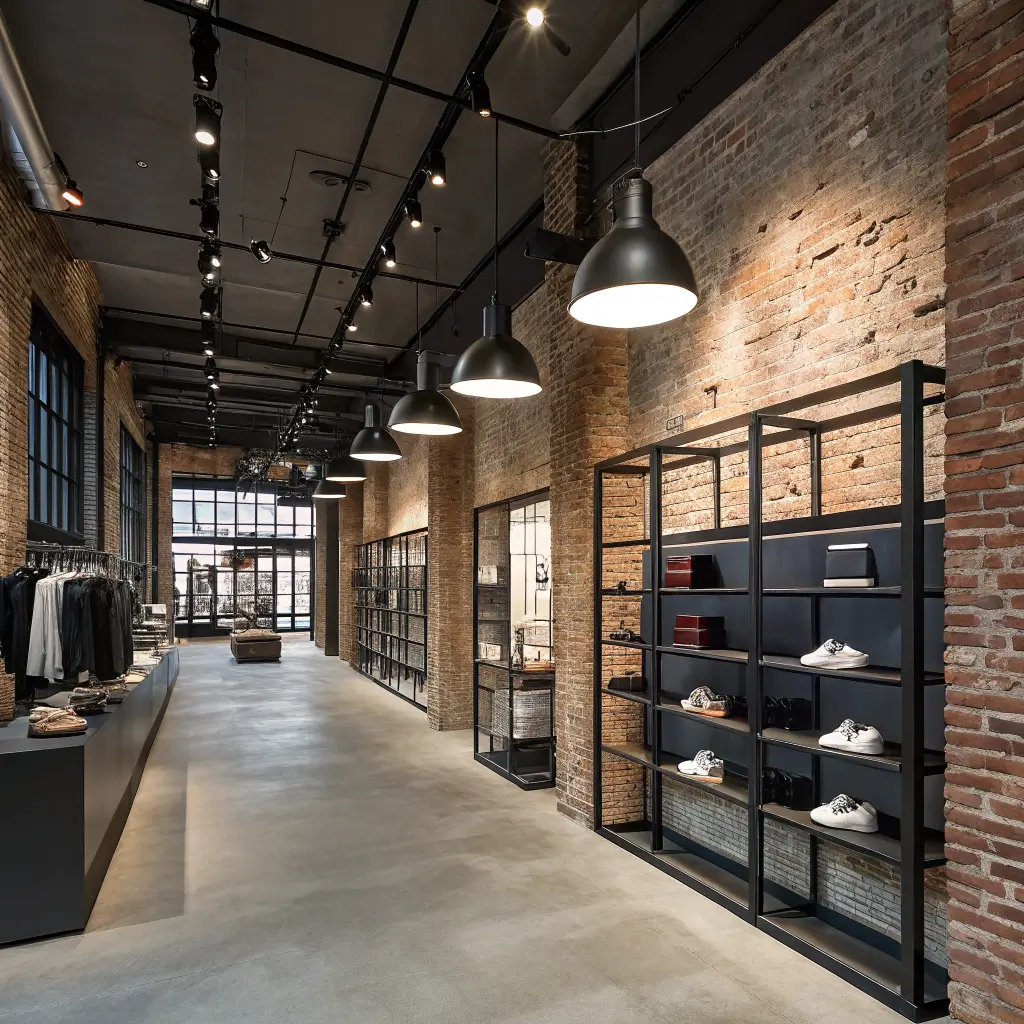
Industrial design hits different, and I mean that in the best way possible. It’s raw, it’s honest, and it screams confidence. When you nail industrial design, your store basically says, “We’re too cool to try too hard” – and customers love that energy.
The industrial aesthetic works particularly well for lifestyle brands, tech stores, and fashion-forward boutiques. It creates this perfect backdrop that’s interesting without competing with your products.
Industrial Elements That Actually Sell
Here’s what makes industrial design pop:
- Exposed brick walls or concrete finishes
- Metal pipe shelving systems
- Open ceiling with visible ductwork
- Concrete or polished cement floors
- Strategic use of black metal and raw wood
The coolest part? Many of these elements already exist in older buildings. Instead of covering them up, you’re celebrating them. It’s like finding money in your pocket – except it’s architectural features that would cost thousands to recreate.
Lighting Is Everything
Industrial spaces live or die by their lighting. Track lighting, pendant lights with metal shades, and those trendy cage lights all work brilliantly. Layer your lighting – ambient, task, and accent – to create depth and highlight products effectively.
FYI, customers spend more time (and money) in well-lit spaces. It’s science, not opinion.
Also Read: 12 Creative Interior Design Styles Ideas And Stylish Spaces
Luxury High-End Retail Concept
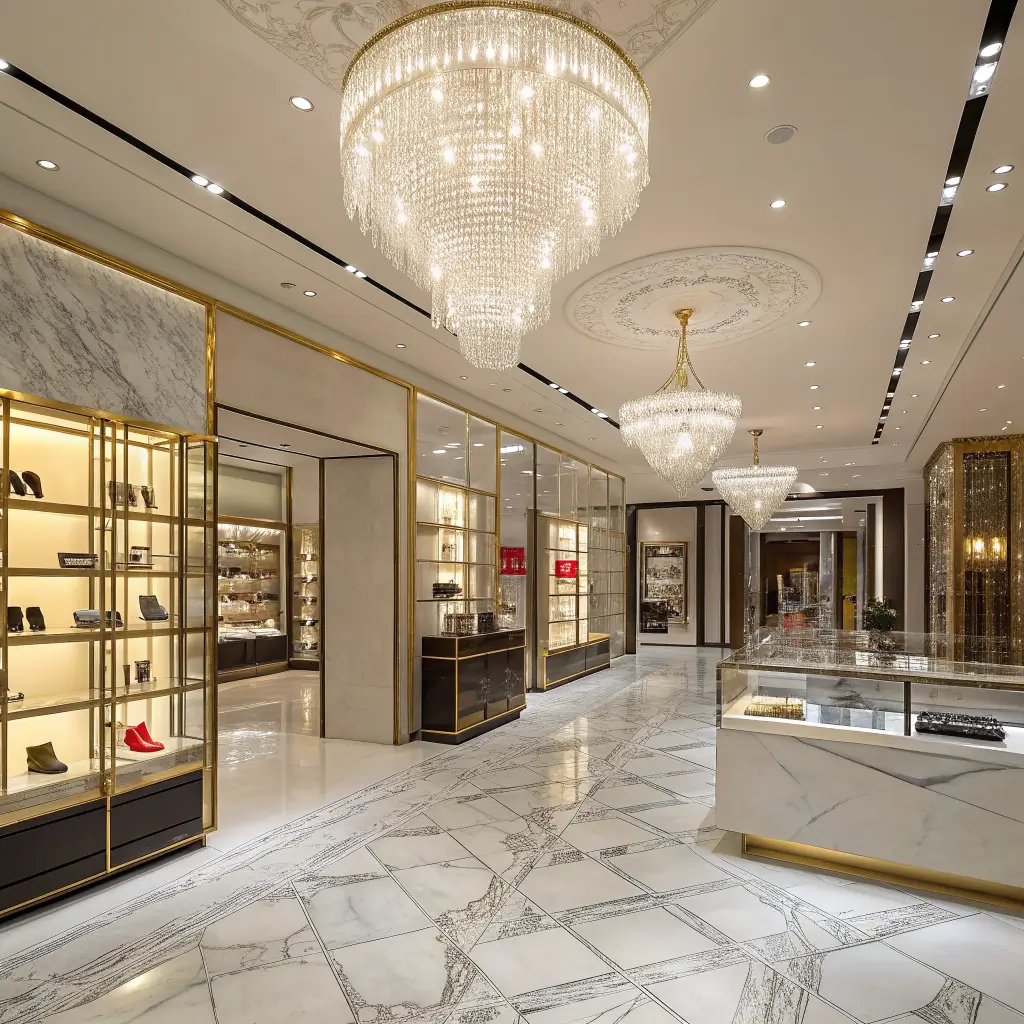
Sometimes you need to go full luxury, and honestly? It’s incredibly fun when you get it right. Luxury retail design isn’t just about expensive materials – it’s about creating an experience that justifies premium pricing.
When customers walk into a luxury space, they should feel special, valued, and maybe a tiny bit like they’ve entered a different world. You’re not just selling products; you’re selling aspiration.
Elements of Luxury That Matter
True luxury design incorporates:
- Premium materials like marble, brass, and velvet
- Custom millwork and built-in displays
- Dramatic lighting with chandeliers or designer fixtures
- Rich color palettes with jewel tones
- Generous spacing between products
- Comfortable seating areas for customers
I worked with a jewelry store that invested heavily in their interior redesign. They added a velvet consultation area with champagne service. Sales of engagement rings doubled within six months. Coincidence? I think not.
The Psychology of Premium
Here’s what most retailers miss: luxury isn’t just visual. You need the right temperature (slightly cool), the perfect scent (subtle and sophisticated), and impeccable maintenance. Every single detail matters when you’re asking customers to pay premium prices.
The music matters too. Classical or smooth jazz? Maybe. Death metal? Probably not (unless that’s weirdly on-brand for you).
Eco-Friendly Green Shop Design
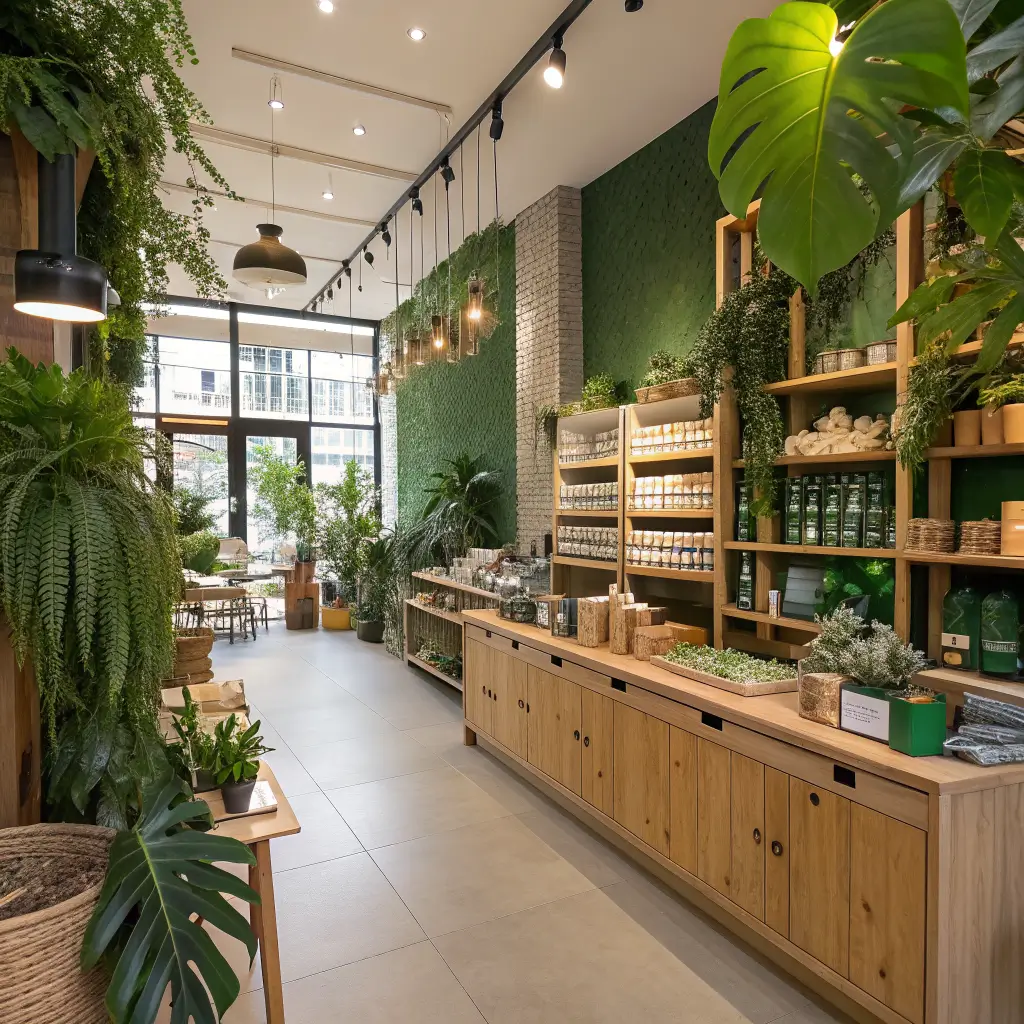
Sustainability sells, and I’m not just talking about the products. Eco-friendly shop design attracts conscious consumers who vote with their wallets. Plus, going green often means lower operating costs in the long run. Win-win, right?
Green design tells customers you share their values. It’s powerful stuff – studies show that 73% of millennials will pay more for sustainable products and shopping experiences.
Green Features That Make a Difference
Consider implementing:
- Living walls or vertical gardens
- Reclaimed and recycled materials
- Energy-efficient LED lighting
- Natural fiber displays (bamboo, cork, jute)
- Solar panels if feasible
- Low-VOC paints and finishes
- Natural ventilation systems
My friend owns a cosmetics store that installed a living wall behind the checkout counter. Not only does it look incredible, but customers literally stop mid-purchase to take photos. The wall paid for itself in social media exposure alone.
Making Green Affordable
Start small. Switch to LED bulbs, add some potted plants, use reclaimed wood for shelving. You don’t need to renovate everything at once. Small sustainable choices add up to significant impact over time.
The best part about eco-friendly design? Customers will actually brag about shopping at your store. They become walking billboards for your brand.
Compact Small Space Store Ideas
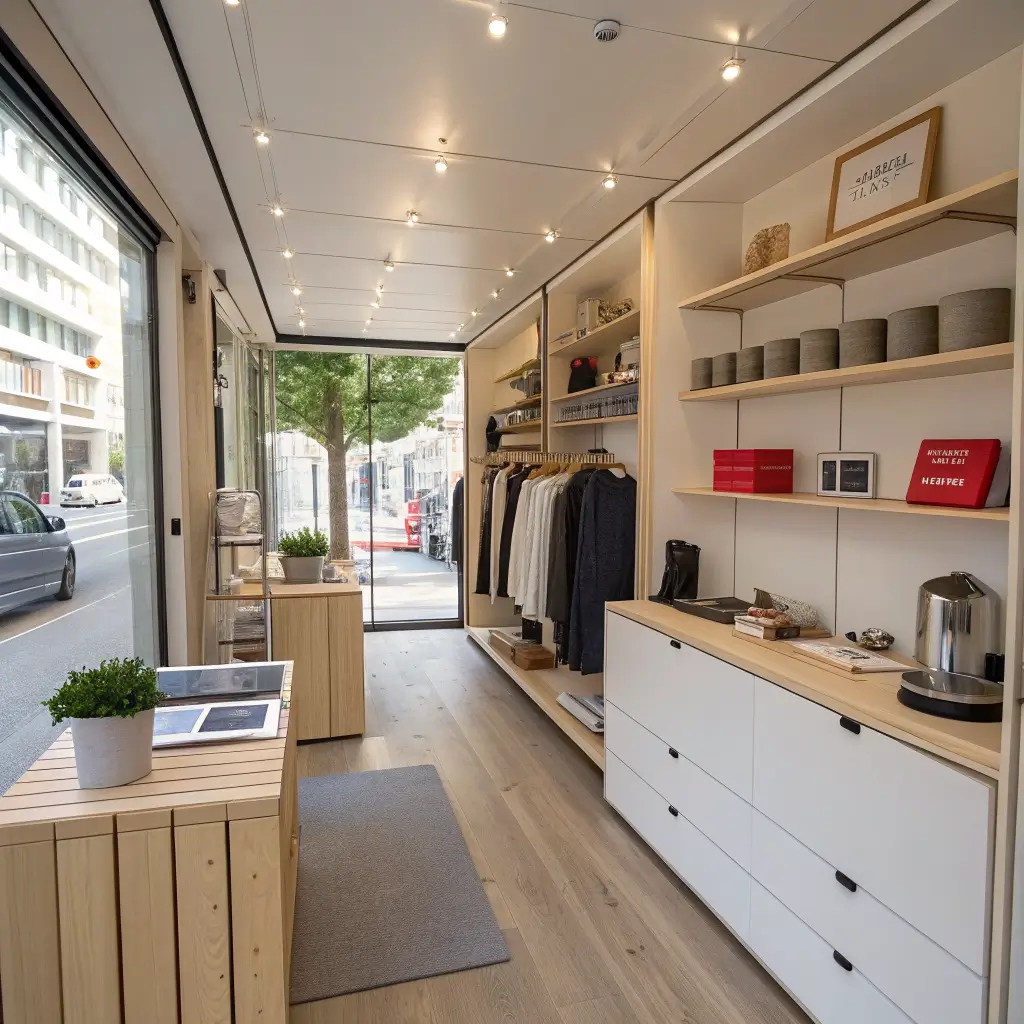
Small space? No problem. Some of the most successful retailers I know operate out of spaces smaller than my living room. The trick? Smart design that makes every square inch count.
Small spaces force creativity, and customers often prefer intimate shopping experiences over warehouse-style stores. You just need to be clever about it.
Maximizing Minimal Square Footage
Here’s how to make small spaces feel bigger:
- Vertical displays that draw eyes upward
- Mirrors to create illusion of space
- Multi-functional furniture and fixtures
- Light, bright color schemes
- Glass shelving to maintain sight lines
- Strategic storage solutions
I once helped design a 400-square-foot boutique that felt more spacious than stores twice its size. We used floor-to-ceiling shelving, mirrors on opposing walls, and rotating displays that could change the entire store layout in minutes.
The Power of Flexibility
In small spaces, flexibility equals survival. Invest in modular fixtures that can be reconfigured for different seasons or collections. Wheels are your friend – mobile displays, rolling racks, moveable mannequins. Transform your space based on what’s selling.
Ever noticed how Apple stores feel spacious despite being packed with people? That’s the power of smart small-space design.
Also Read: 10 Beautiful Interior Ceiling Design Ideas to Inspire You
Bohemian Chic Shop Interior
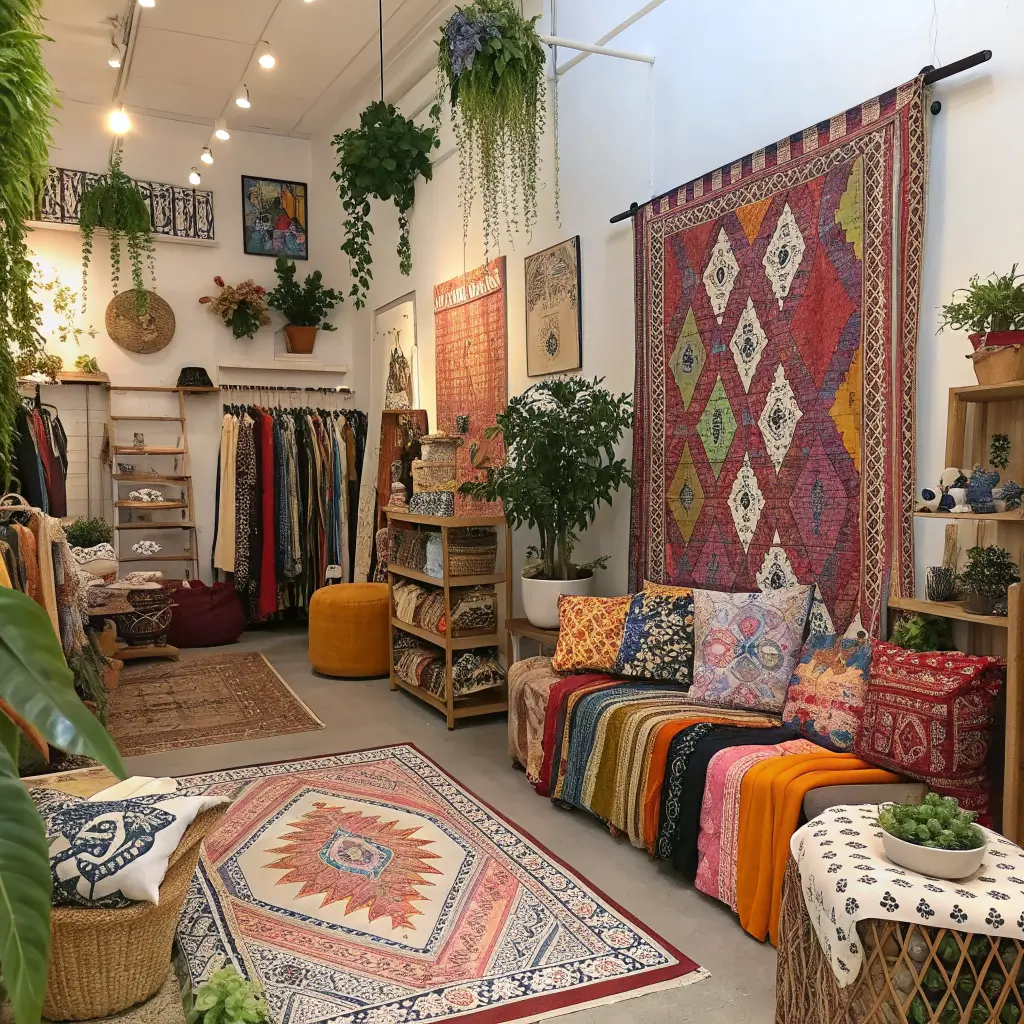
Boho design brings warmth, personality, and that “I-just-discovered-this-amazing-hidden-gem” feeling that customers crave. It’s eclectic without being chaotic, colorful without being overwhelming.
The bohemian aesthetic appeals to creative, free-spirited shoppers who value uniqueness over uniformity. These customers don’t just buy products; they collect experiences and stories.
Creating Boho Magic
Essential bohemian elements include:
- Layered textiles and patterns
- Macramé wall hangings and plant holders
- Vintage rugs and tapestries
- Mixed metals and natural materials
- Warm, ambient lighting with string lights or lanterns
- Plants, plants, and more plants
- Global-inspired decorative elements
The trick with boho? It should look effortlessly thrown together while being carefully curated. Think “world traveler’s collection” not “flea market explosion.”
Balancing Boho Without Overwhelming
Too much bohemian can feel cluttered. Create focal points with statement pieces, then let other areas breathe. Use the 60-30-10 rule: 60% neutral base, 30% secondary colors/patterns, 10% bold accents.
IMO, the best boho shops feel like you’re shopping in someone’s incredibly stylish living room 🙂
Colorful Pop Art Retail Space
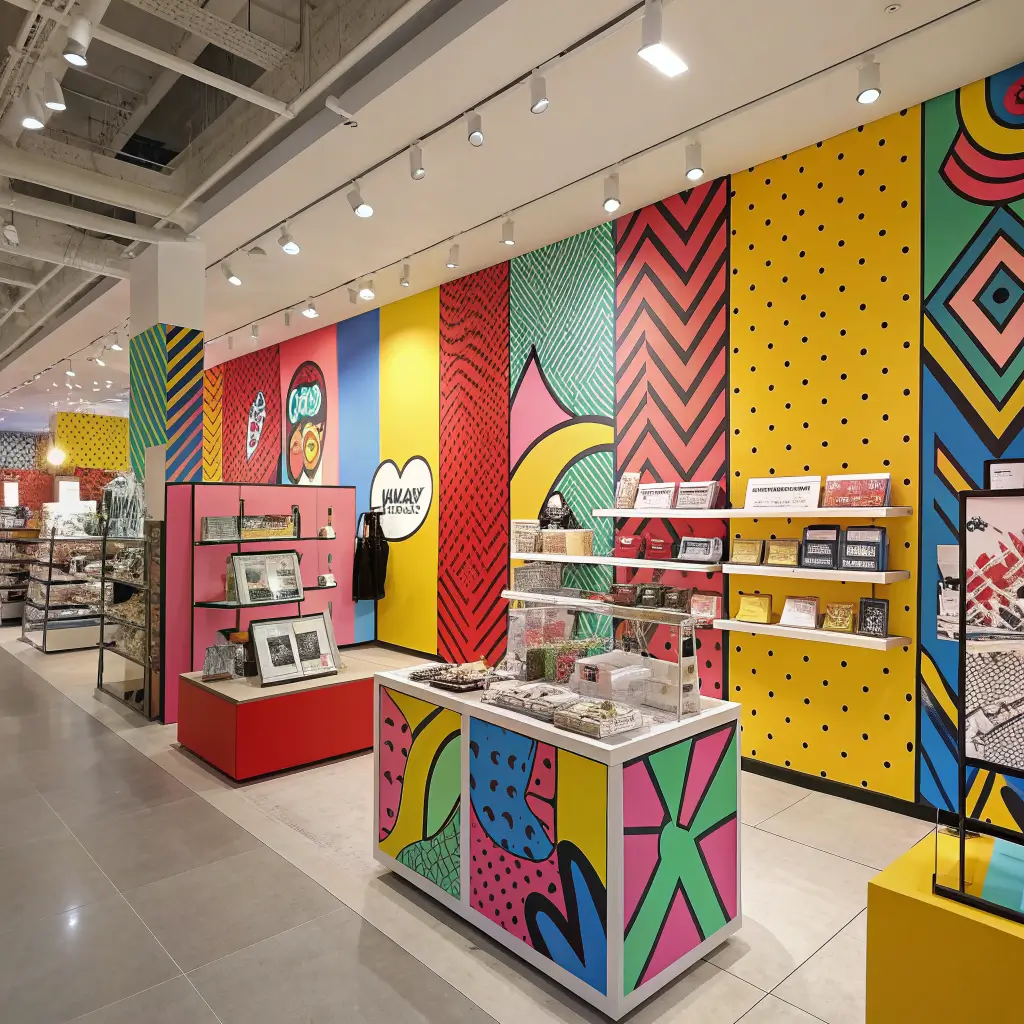
Want to make people stop in their tracks? Go pop art. This design style basically throws subtlety out the window and embraces bold, in-your-face visuals that demand attention.
Pop art design works brilliantly for brands targeting younger demographics or anyone selling fun, creative products. It photographs like a dream for social media too.
Making Pop Art Pop
Key elements for pop art success:
- Bold, contrasting colors (think Warhol-level bright)
- Graphic patterns and geometric shapes
- Oversized artwork or murals
- Neon signage or LED installations
- Comic book-inspired elements
- Repetitive patterns and prints
I watched a struggling toy store completely transform with pop art design. They painted one wall with massive comic book panels, added neon signs, and created Instagram-worthy moments throughout the store. Sales tripled in six months.
Avoiding Sensory Overload
The challenge with pop art? Knowing when to stop. You want energetic, not epileptic. Create color-blocked zones, use white space strategically, and ensure your products don’t get lost in the visual noise.
Remember, the goal is selling products, not giving customers a headache.
Open-Concept Market Style Shop
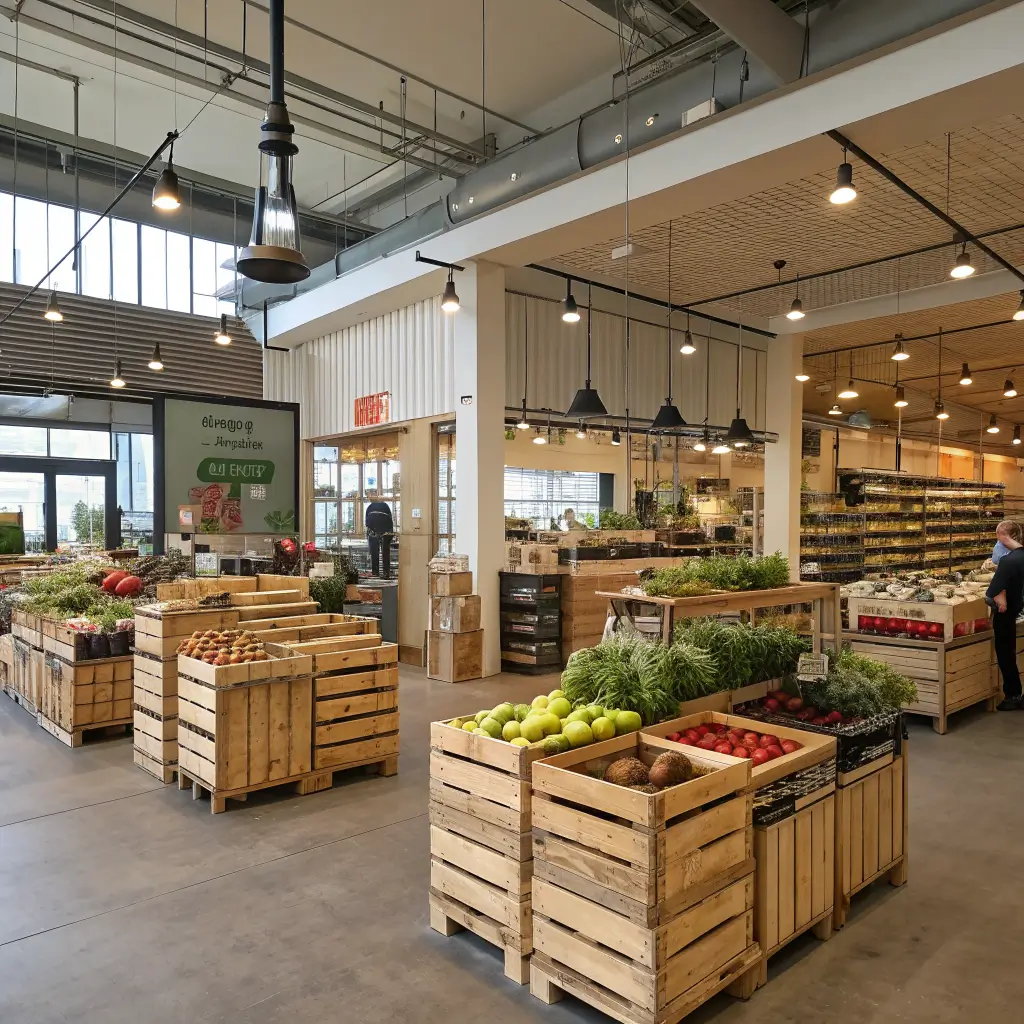
Market-style layouts create this amazing browsing experience that feels both organized and organic. Customers love the treasure hunt aspect while you love the flexibility to constantly refresh displays.
This design works particularly well for stores with diverse product lines or frequent inventory changes. Think boutique grocery stores, gift shops, or multi-brand fashion retailers.
Creating Market Vibes
Essential market-style elements:
- Open floor plans with clear sightlines
- Mobile display units and carts
- Vintage crates and baskets for merchandising
- Handwritten signage and chalkboards
- Mixed display heights for visual interest
- Natural materials like wood and wicker
- Central focal points or feature displays
The beauty of market style? It encourages exploration. Customers wander, discover, and often buy things they didn’t know they needed.
Traffic Flow Matters
Design clear pathways that naturally guide customers through your space. Create a logical flow that exposes shoppers to maximum merchandise without feeling maze-like. The classic racetrack layout works wonders here.
Pro tip: place new arrivals or high-margin items along the main traffic path. It’s not sneaky; it’s strategic.
Also Read: 10 Professional Interior Design Portfolio Ideas and Showcase Tips
Smart Technology Integrated Store
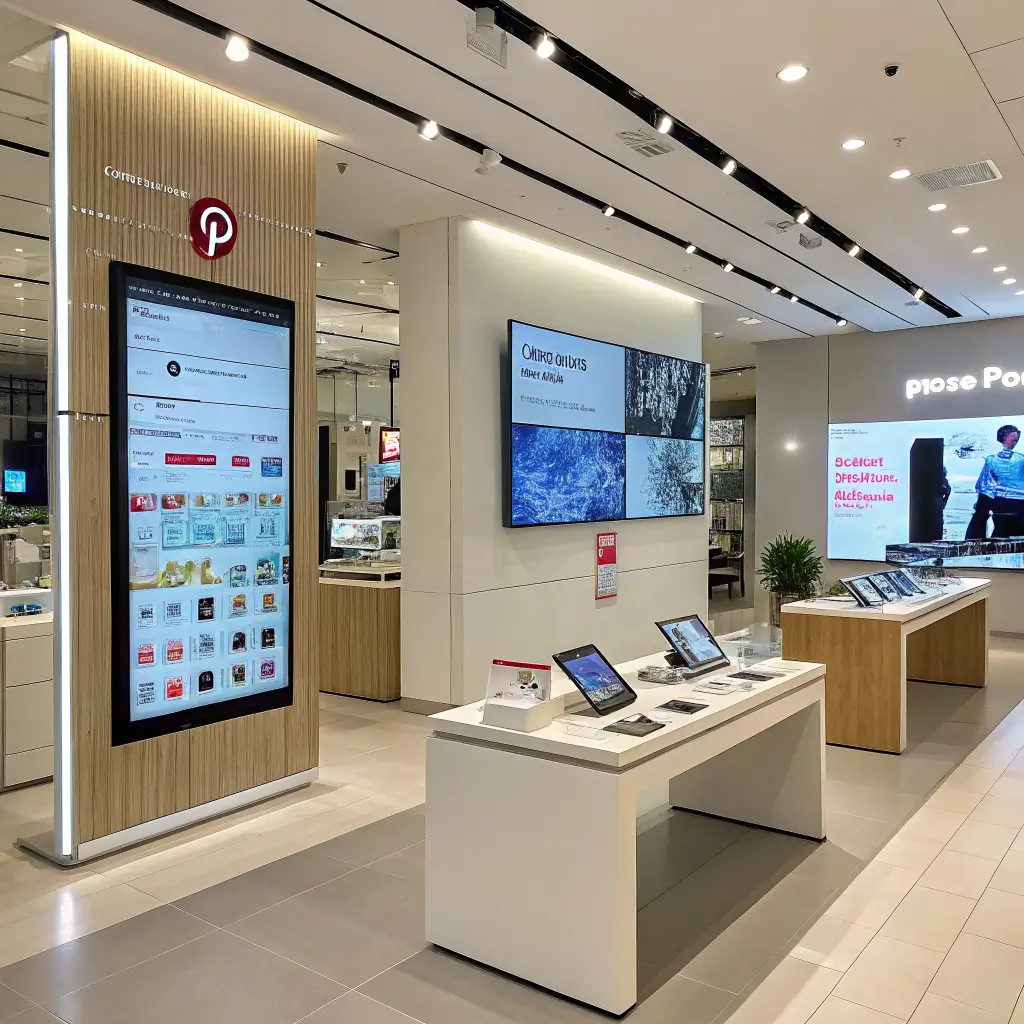
Welcome to the future, where your store isn’t just pretty – it’s smart. Technology integration creates seamless shopping experiences that modern customers expect.
Smart stores bridge online and offline shopping, giving customers the best of both worlds. Plus, the data you collect helps optimize everything from inventory to store layout.
Tech That Actually Helps
Consider implementing:
- Interactive digital displays and touchscreens
- Smart mirrors in fitting rooms
- Mobile POS systems for line-free checkout
- AR/VR experiences for product visualization
- Automated inventory tracking
- Smart lighting that adjusts throughout the day
- Digital price tags for instant updates
A fashion retailer I know installed smart mirrors that suggest accessories and show different colors of the same garment. Average transaction value increased by 40%. Technology pays for itself when done right.
Keeping It Human
Here’s the thing though – technology should enhance, not replace, human interaction. Use tech to free up staff for meaningful customer engagement, not to eliminate jobs. The most successful smart stores feel high-tech and high-touch.
Nobody wants to shop in a sterile robot warehouse. Well, almost nobody.
Monochrome Elegant Boutique
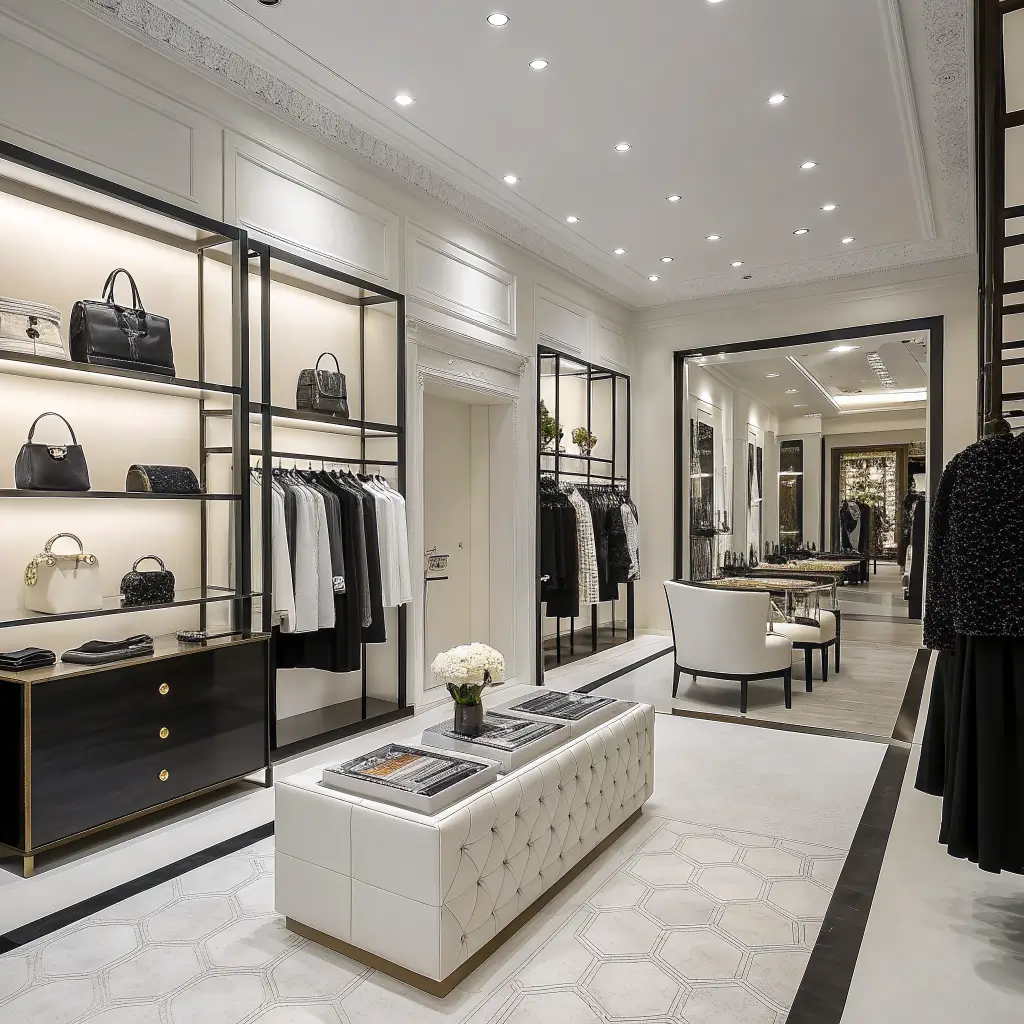
Monochrome design proves you don’t need a rainbow to create visual interest. By limiting your color palette, you create sophisticated spaces that feel intentional and refined.
This approach works beautifully for fashion boutiques, minimalist brands, or any retailer wanting to project elegance and restraint. It’s basically the little black dress of interior design.
Mastering Monochrome
Success with monochrome requires:
- Multiple shades of your chosen color
- Varied textures to create depth
- Strategic use of materials (matte, gloss, metallic)
- Excellent lighting to highlight subtle differences
- Occasional accent colors for products to pop
- Clean lines and thoughtful composition
I helped design a boutique using only blacks, whites, and grays. Sounds boring? The space feels like a high-end gallery where clothes are art. Sales per square foot doubled because products became the stars of the show.
Adding Interest Without Color
Texture becomes your best friend in monochrome design. Mix smooth and rough, shiny and matte, soft and hard. Use patterns sparingly but effectively – geometric prints, subtle stripes, or tonal damasks add visual interest without breaking the color story.
The result? A space that feels expensive, curated, and impossibly chic.
Artistic Gallery-Inspired Store
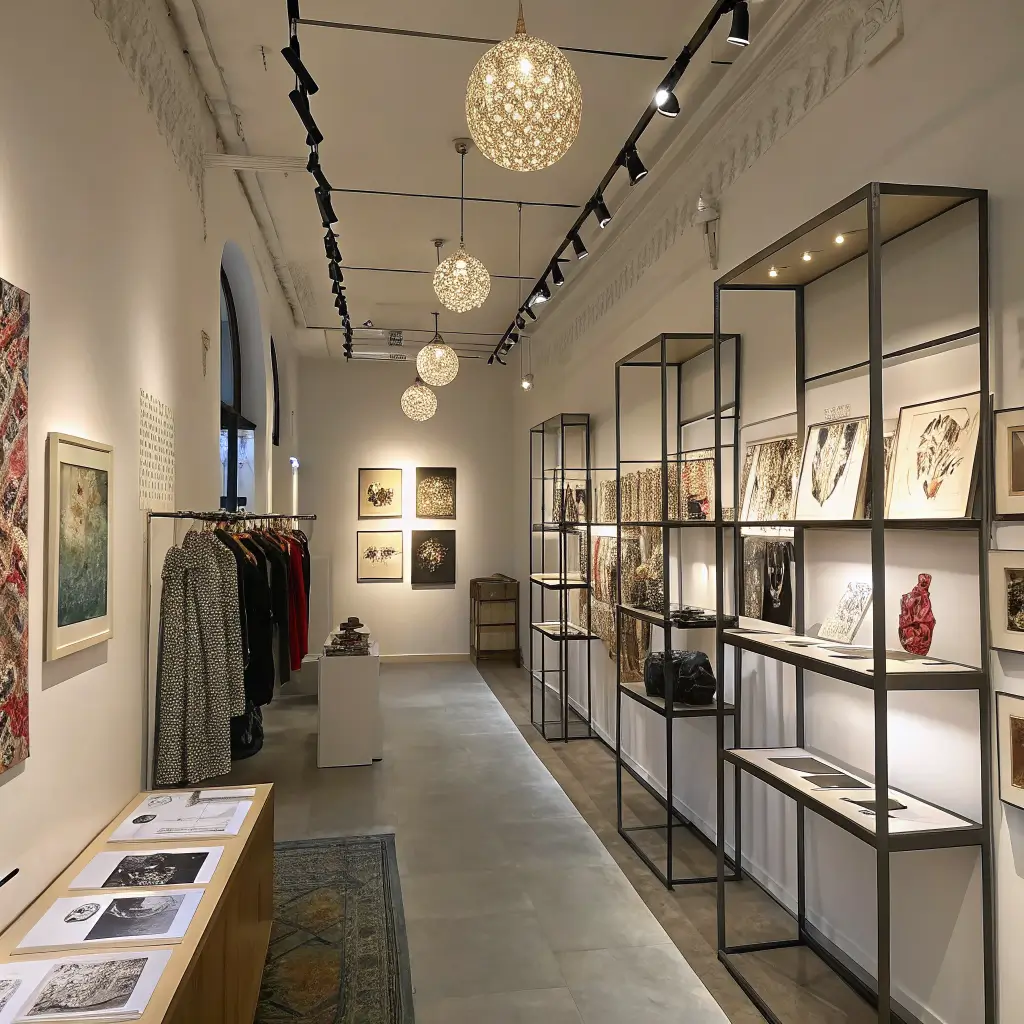
Why shouldn’t shopping feel like visiting a gallery? Gallery-inspired design elevates products to art status, making customers feel like collectors rather than consumers.
This concept works brilliantly for high-end fashion, artisanal products, or anything where craftsmanship and uniqueness matter. You’re selling the story as much as the product.
Creating Gallery Vibes
Essential gallery elements include:
- White walls with strategic accent colors
- Track lighting or adjustable spotlights
- Minimal, floating shelves
- Pedestal displays for featured items
- Plenty of negative space
- Museum-style information cards
- Rotating “exhibitions” of products
A home goods store I worked with adopted gallery design and started hosting “openings” for new collections. Complete with wine, cheese, and artist talks (featuring the designers). These events became must-attend social occasions that drove incredible sales.
The Curation Mindset
Gallery design forces you to curate rather than cram. Every product needs to earn its space. This might mean carrying less inventory, but what you do carry sells at higher margins because it feels special.
Think quality over quantity. Your store becomes a destination, not just another shopping option.
Bringing It All Together
So there you have it – twelve design concepts that can transform your retail space from forgettable to unforgettable. The real magic happens when you understand that great retail design isn’t about following trends blindly. It’s about choosing the approach that aligns with your brand, resonates with your customers, and actually makes financial sense for your business.
Remember, you don’t need to pick just one concept and stick with it forever. The best retailers evolve their spaces, mixing elements from different styles to create something uniquely theirs. Maybe you start with Scandinavian minimalism but add pops of color for seasonal collections. Or perhaps you blend industrial bones with bohemian accessories.
The most important thing? Your store design should tell your brand’s story authentically. Customers can smell fake from a mile away, so whatever direction you choose, commit to it fully. Half-hearted design is worse than no design at all.
Whether you’re working with a massive budget or bootstrapping every penny, these concepts provide frameworks for creating spaces that customers want to spend time (and money) in. Start small if you need to – even changing your lighting can dramatically impact how customers experience your store.
At the end of the day, retail success comes down to creating memorable experiences that online shopping can’t replicate. Your interior design is the stage where these experiences happen. Make it count, make it yours, and most importantly, make it somewhere you’d actually want to shop yourself.
Ready to transform your retail space? Pick one concept that speaks to you and start there. Your future customers (and your bank account) will thank you for it :/