12 Inspiring Interior Design Mood Board Ideas for Modern Homes

Remember that time you scrolled through Pinterest for three hours straight, saving hundreds of gorgeous rooms, only to look around your own space and feel completely lost? Yeah, we’ve all been there.
Creating the perfect mood board can feel like trying to solve a Rubik’s cube blindfolded – frustrating, confusing, and somehow everyone else makes it look so easy.
Here’s the thing: mood boards aren’t just pretty collages. They’re your roadmap to interior design success.
I learned this the hard way after painting my living room three different colors in one month because I couldn’t visualize how everything would come together. My husband still won’t let me forget about my “terracotta phase.”
Whether you’re planning a complete room makeover or just want to refresh your space, these 12 mood board ideas will give you the creative kick you need. And trust me, I’ve tested most of these styles in my own home (with varying degrees of success).
1. Minimalist Neutral Mood Board
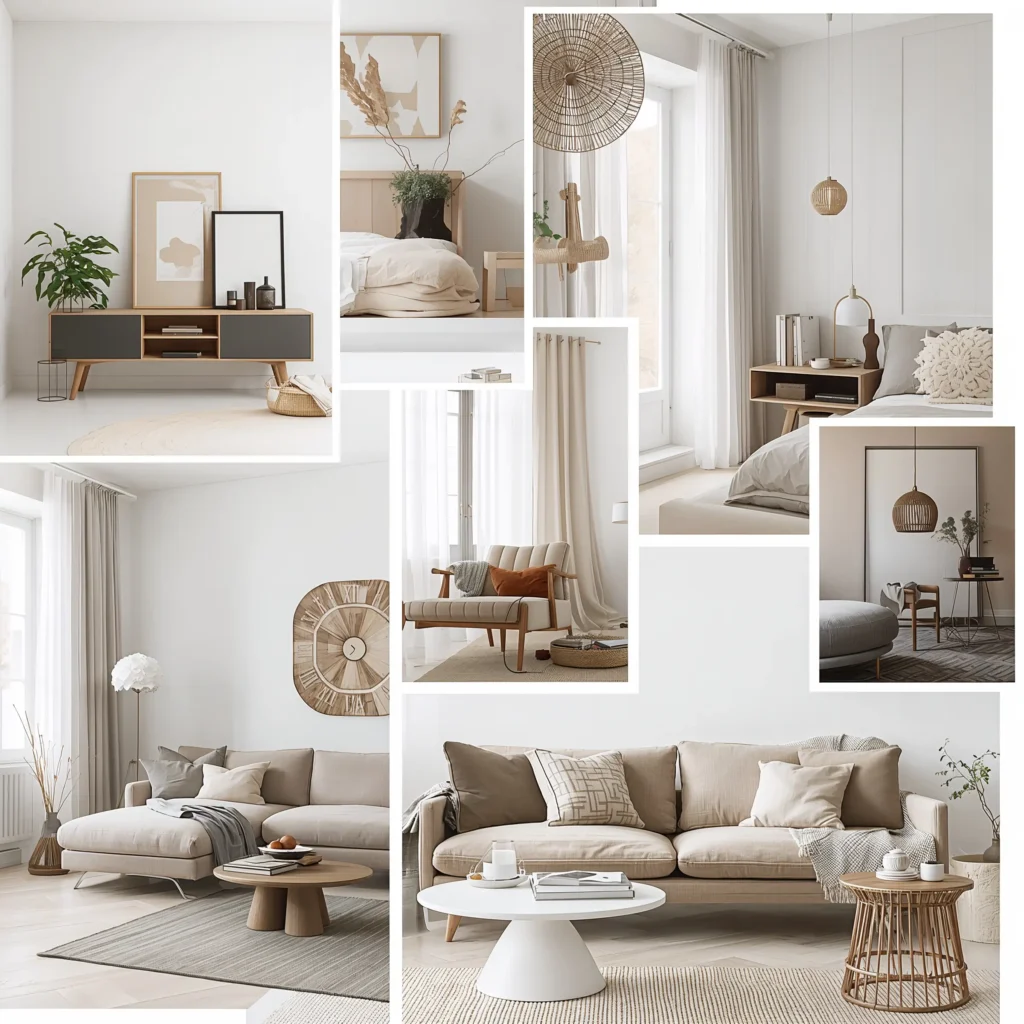
Let’s start with the style that makes Marie Kondo proud – minimalism. But here’s what nobody tells you: creating a minimalist mood board is harder than it looks. You can’t just slap some beige swatches together and call it a day.
The secret sauce lies in texture variation. Think about combining:
- Warm whites (not hospital white, please)
- Natural linen fabrics
- Light oak or birch wood tones
- Matte black accents for contrast
- Concrete or stone elements
I once tried to go full minimalist in my bedroom, and let me tell you, choosing between seventeen shades of white paint nearly broke me. The trick? Layer different textures to create visual interest without cluttering the space. Rough linen, smooth ceramics, and soft wool all play together beautifully in neutral tones.
Remember to include negative space in your mood board. Minimalism breathes through emptiness, so don’t feel pressured to fill every corner. Sometimes what you leave out matters more than what you include.
2. Cozy Scandinavian Living Room Mood Board
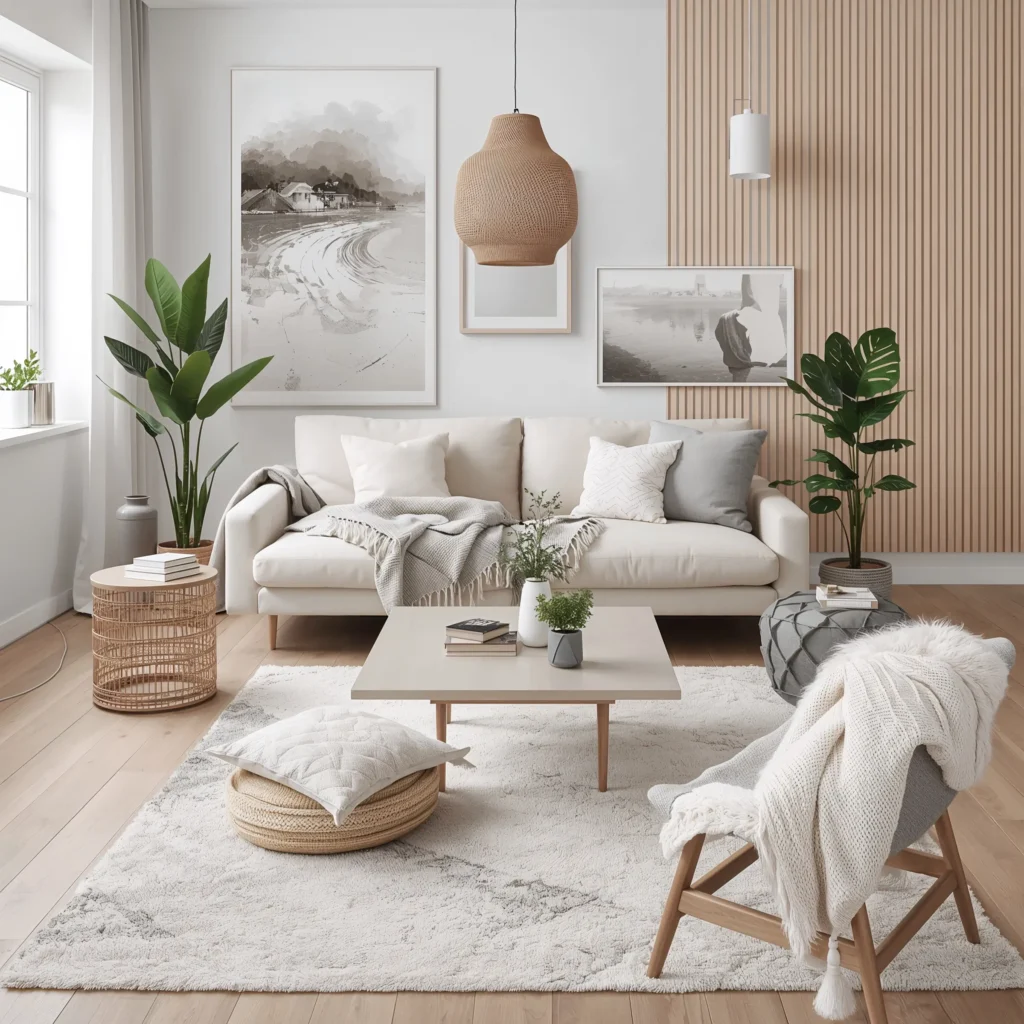
Ah, the Scandinavian aesthetic – where hygge meets functionality and everyone pretends they know how to pronounce “hygge” correctly. (It’s “hoo-gah,” BTW, though I called it “higgy” for an embarrassingly long time.)
Your Scandi mood board should feel like a warm hug on a cold day. Start with these elements:
- Soft gray and white base colors
- Natural wood in light finishes
- Cozy textiles (chunky knits, faux fur throws)
- Simple geometric patterns
- Pops of muted colors (dusty pink, sage green)
Making It Actually Cozy
The biggest mistake people make? Thinking Scandinavian means cold and clinical. Nope! Add candlelight imagery, sheepskin rugs, and that oversized knit blanket you’ve been eyeing. The goal is “Netflix and chill” vibes, not “waiting room at the dentist.”
I transformed my living room using Scandi principles last winter, and the number of naps I take on my sofa has increased by approximately 300%. That’s science, folks.
3. Boho Chic Bedroom Mood Board
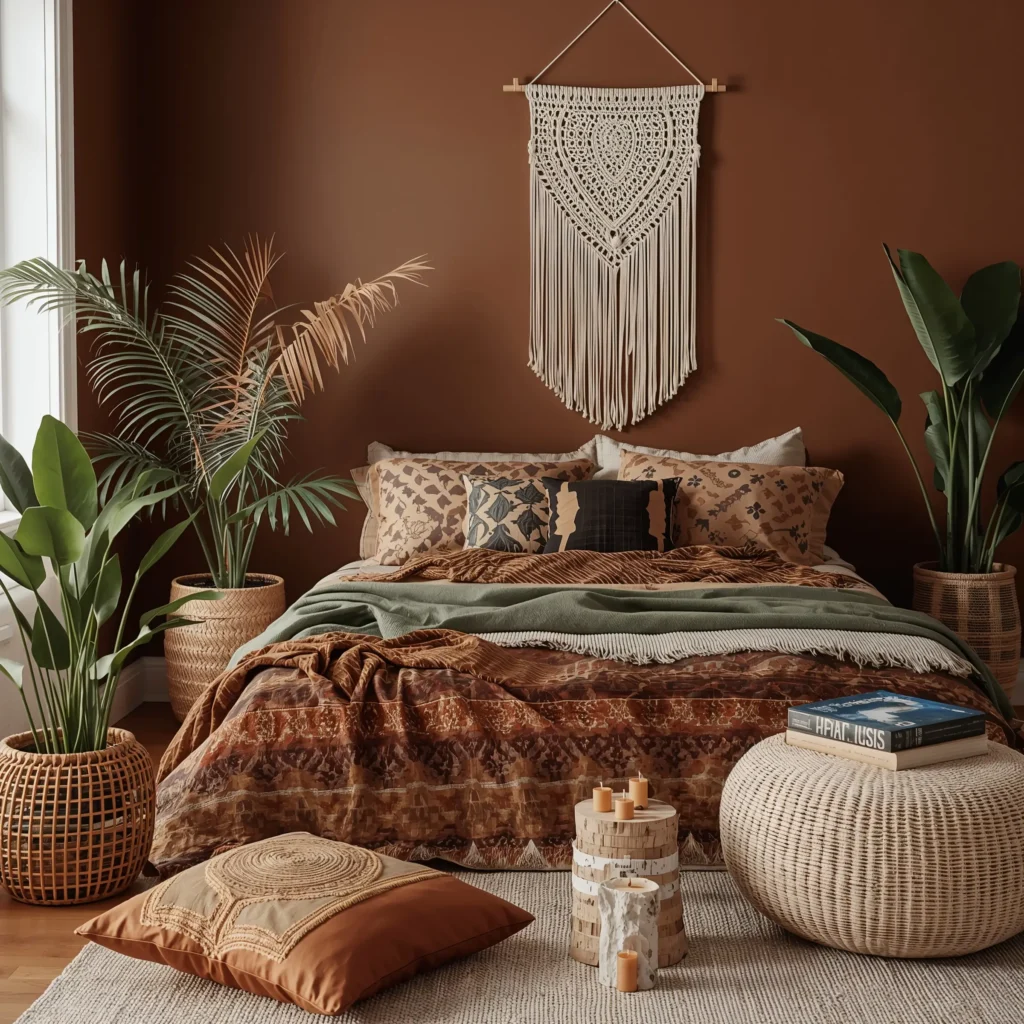
Ready to channel your inner free spirit? Boho chic mood boards are where you can finally use all those Pinterest saves of macramé wall hangings and vintage rugs. This style basically says, “I backpacked through Morocco once, and yes, I’ll tell you about it.”
Essential Boho Elements
Your boho mood board needs:
- Warm earthy tones (terracotta, mustard, rust)
- Mixed patterns (but make them work together)
- Natural materials (rattan, jute, wood)
- Plants, plants, and more plants
- Layered textiles with different textures
Ever notice how boho rooms always look effortlessly thrown together? Ha! Creating controlled chaos takes serious planning. Start with a neutral base and layer in colors and patterns gradually. Think of it like making a good lasagna – too many layers and it falls apart.
Mix vintage finds with new pieces. Combine that thrifted Moroccan pouf with a modern bed frame. The contrast creates that collected-over-time feeling that makes boho spaces so inviting.
Also Read: 10 Beautiful Interior Ceiling Design Ideas to Inspire You
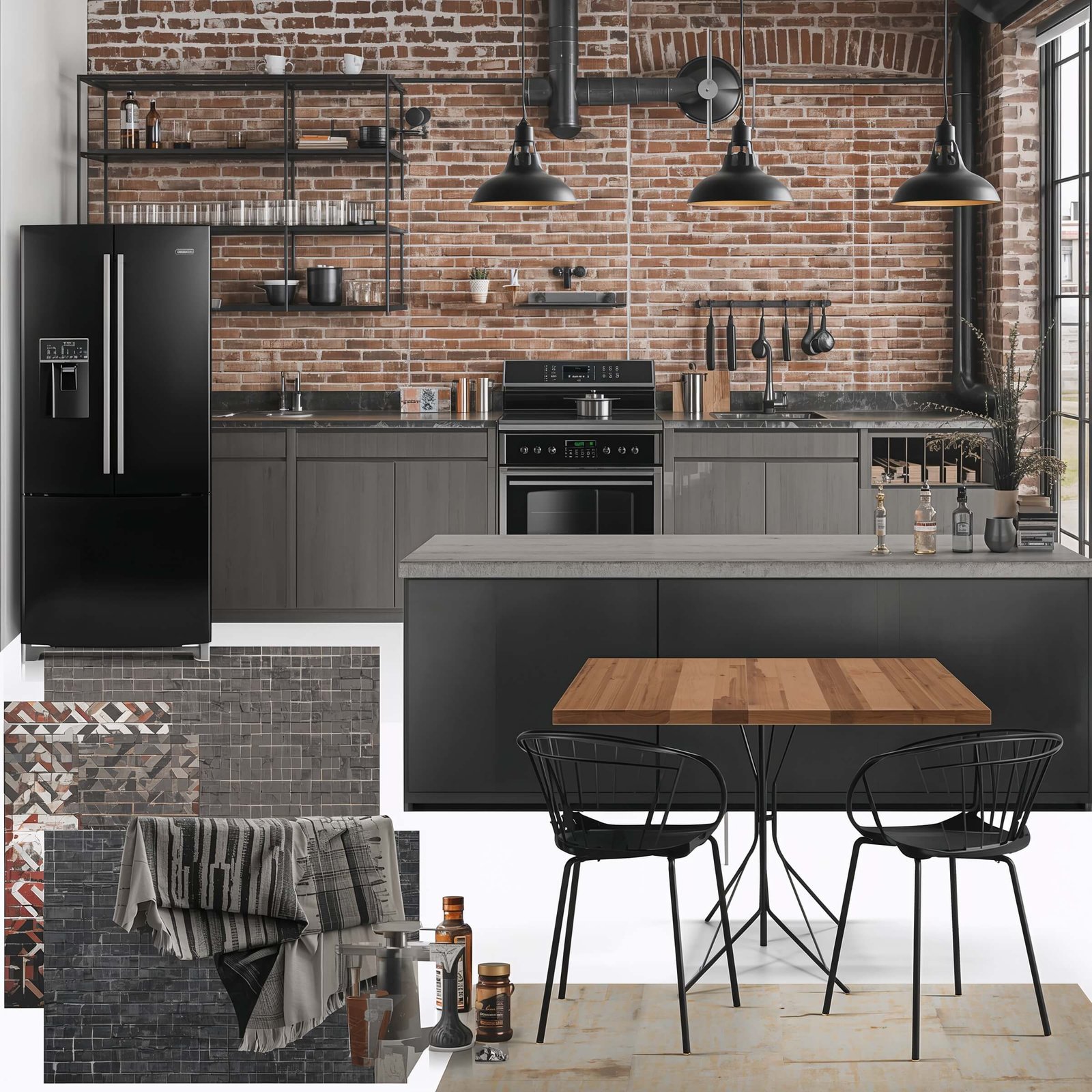
4. Modern Industrial Kitchen Mood Board
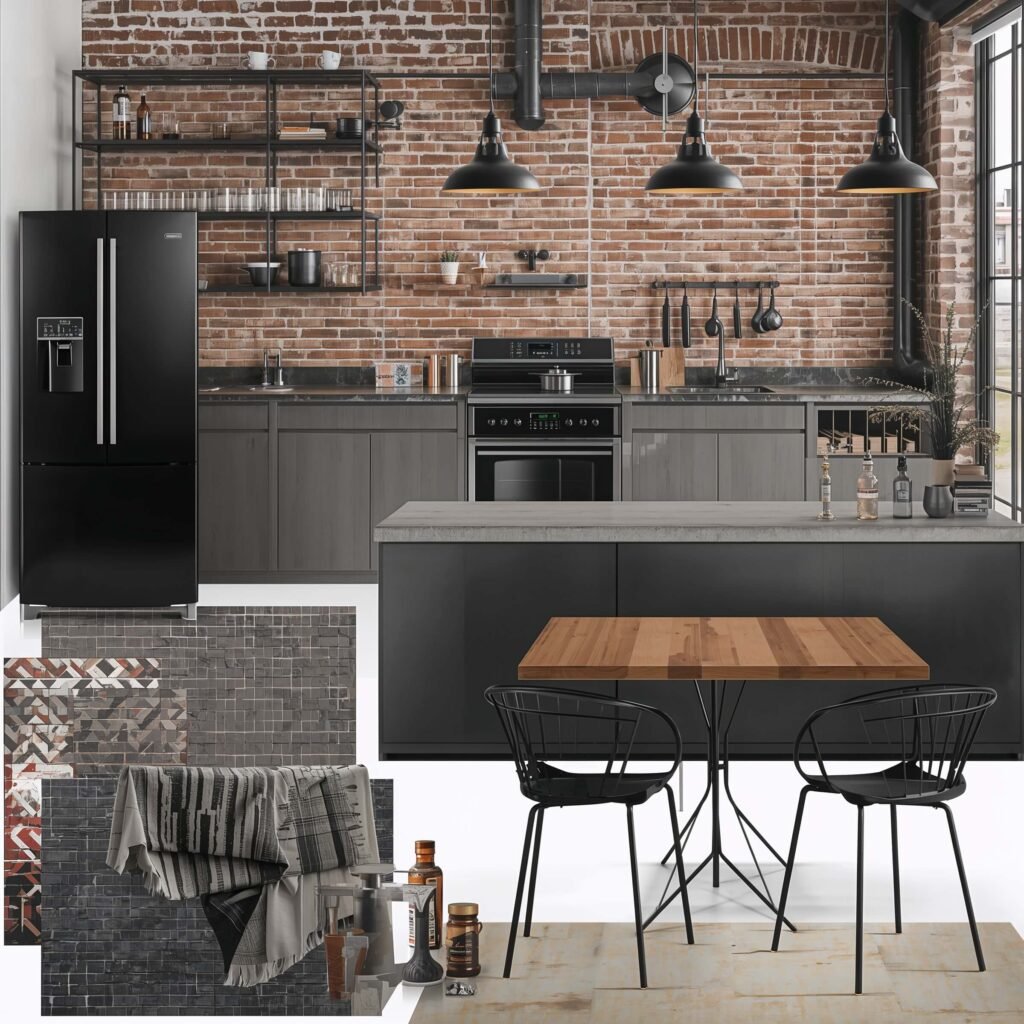
Industrial design is having a moment, and honestly, who doesn’t want their kitchen to look like a converted Brooklyn loft? (Even if you live in suburban Ohio like my sister – no judgment.)
The industrial aesthetic celebrates raw materials and exposed elements. Your mood board should include:
- Dark metals (black iron, brushed steel)
- Reclaimed wood elements
- Exposed brick or concrete textures
- Edison bulb lighting
- Matte black fixtures
Balancing Hard and Soft
The challenge with industrial design? Making it feel livable. Nobody wants to cook dinner in what feels like an abandoned warehouse. Soften those hard edges with warm wood tones, maybe a vintage rug, or some greenery.
I helped my friend design her industrial kitchen, and we discovered that mixing metals is totally okay – bronze, copper, and black iron can be best friends if you introduce them properly. Just keep the finishes consistent (all matte or all shiny, not both).
5. Pastel Color Palette Mood Board
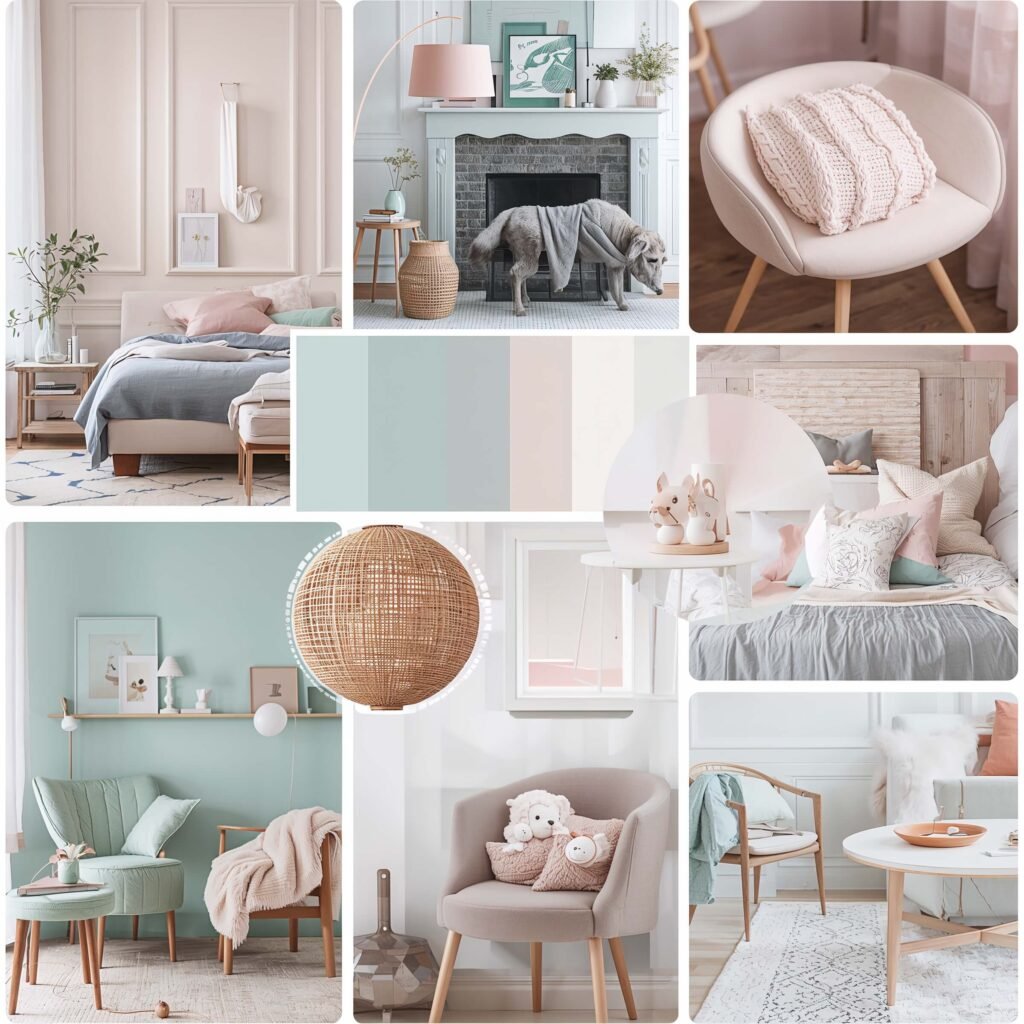
Who says pastels are just for nurseries? A well-executed pastel mood board can create sophisticated spaces that feel fresh and modern. Think less “baby shower” and more “that impossibly chic café in Paris you saw on Instagram.”
Build your pastel paradise with:
- Soft mint greens and blush pinks
- Powder blues and lavender
- Creamy whites as your base
- Gold or brass accents for sophistication
- Natural wood tones to ground the space
Making Pastels Work for Adults
The key to adult pastels? Balance and restraint. Choose two or three pastel shades max, and pair them with plenty of white space. I learned this after my first attempt at a pastel room looked like a unicorn exploded in there. Not cute.
Add depth with different shades of the same color. Layer pale pink with dusty rose and terracotta. This creates visual interest without the rainbow effect.
6. Luxurious Glam Home Office Mood Board
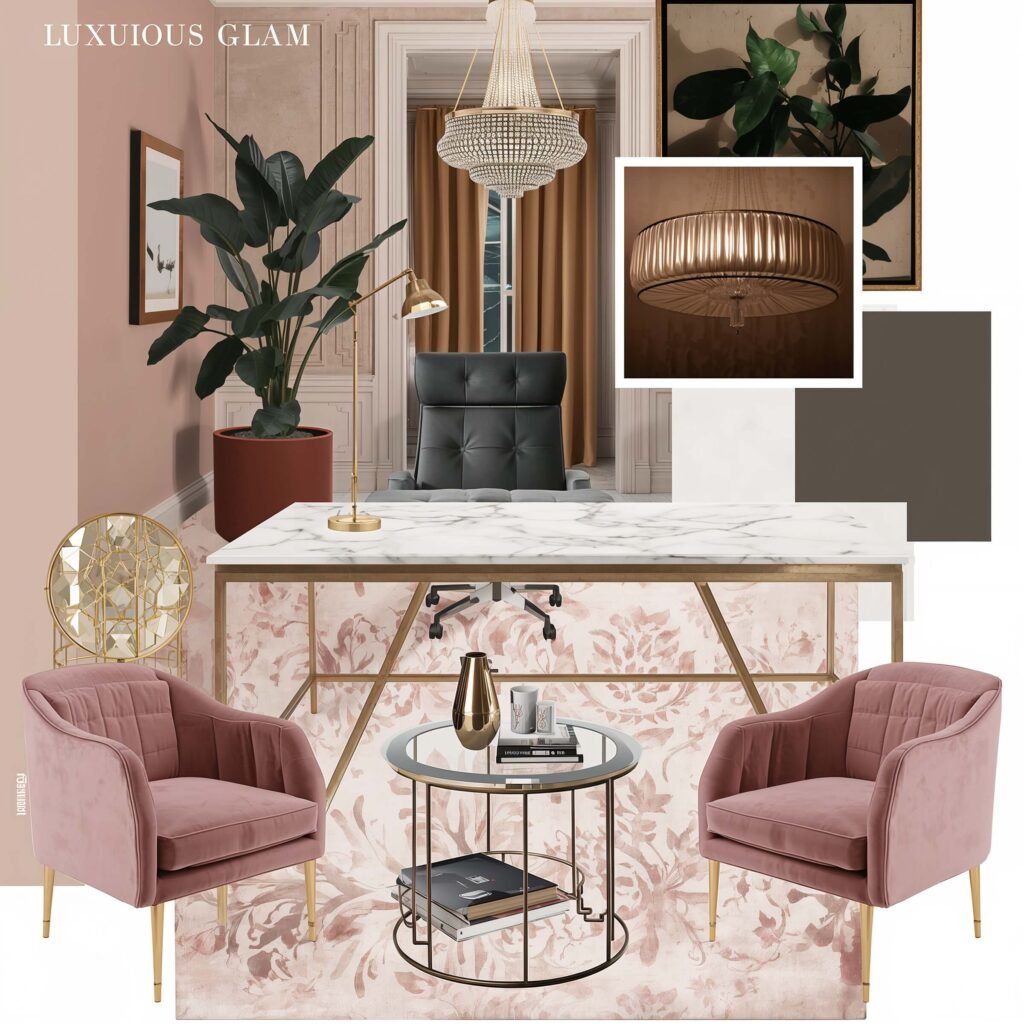
Working from home doesn’t mean working in pajama pants at a card table (though we’ve all been there). A glamorous home office mood board can inspire a space where you actually want to spend eight hours a day.
Your glam office needs:
- Rich jewel tones (emerald, sapphire, amethyst)
- Metallic accents (gold, rose gold, brass)
- Luxe fabrics (velvet, silk, leather)
- Statement lighting (crystal chandeliers, anyone?)
- Marble or mirror surfaces
Functional Glamour
Here’s the thing about glam offices – they need to actually work as offices. Sure, that tufted velvet chair looks amazing, but can you sit in it for three Zoom calls straight? Marry form and function by choosing pieces that look spectacular but won’t leave you with back pain.
I splurged on a brass and glass desk last year, and while it photographs beautifully, fingerprints are now my mortal enemy. Sometimes glamour requires sacrifice 🙂
Also Read: 10 Professional Interior Design Portfolio Ideas and Showcase Tips
7. Coastal Beach House Mood Board
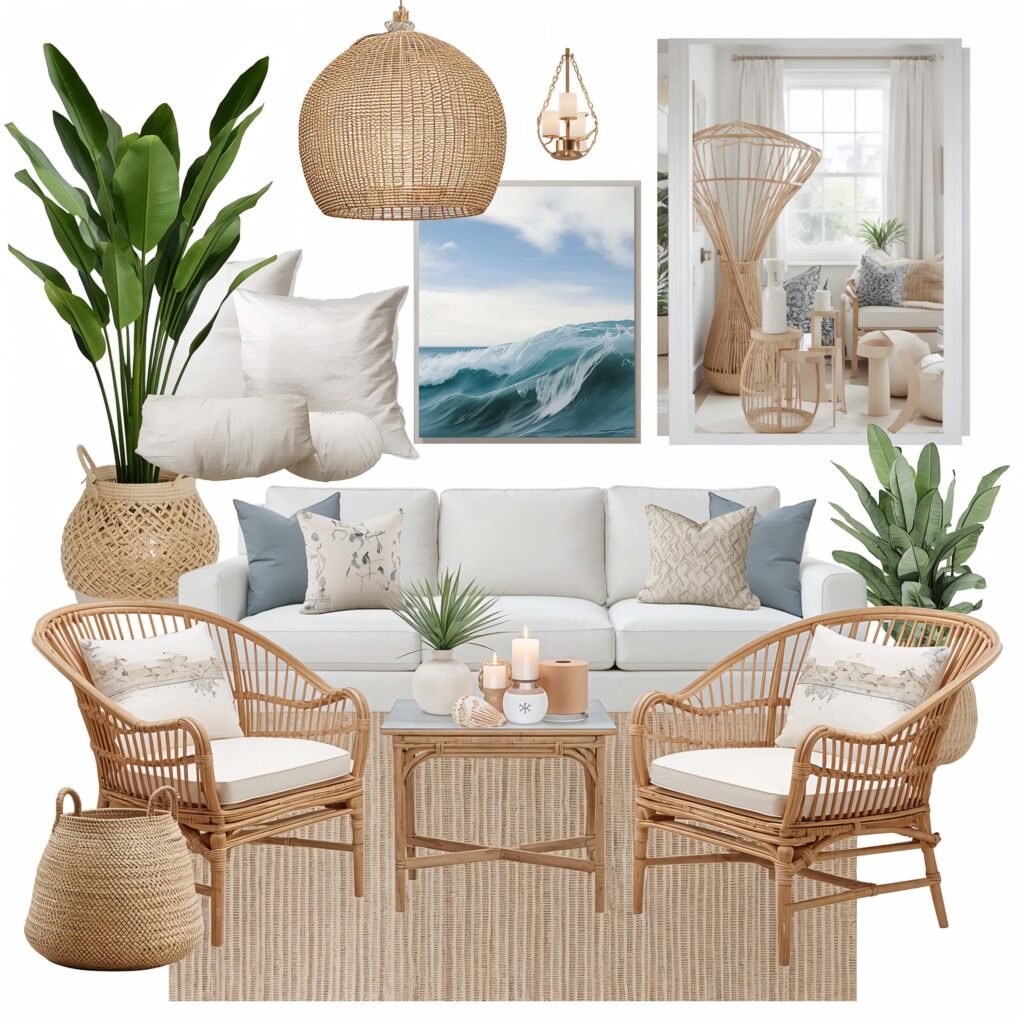
Even if the closest beach is three states away, you can still create that breezy, coastal vibe. Coastal design has evolved beyond anchors and “Life’s a Beach” signs (thank goodness).
Modern coastal mood boards include:
- Soft blues and sandy neutrals
- Weathered wood textures
- Natural fibers (jute, sisal, linen)
- White or light wood furniture
- Subtle nautical elements
Avoiding the Theme Park Effect
The biggest pitfall with coastal design? Going full Pirates of the Caribbean. Keep nautical elements subtle – think rope details on a mirror frame, not a ship’s wheel on the wall. Unless you actually captain a boat, in which case, you do you.
Natural textures are your best friend here. Driftwood, sea glass, and coral (ethically sourced, please) add authenticity without screaming “beach theme!”
8. Rustic Farmhouse Dining Room Mood Board
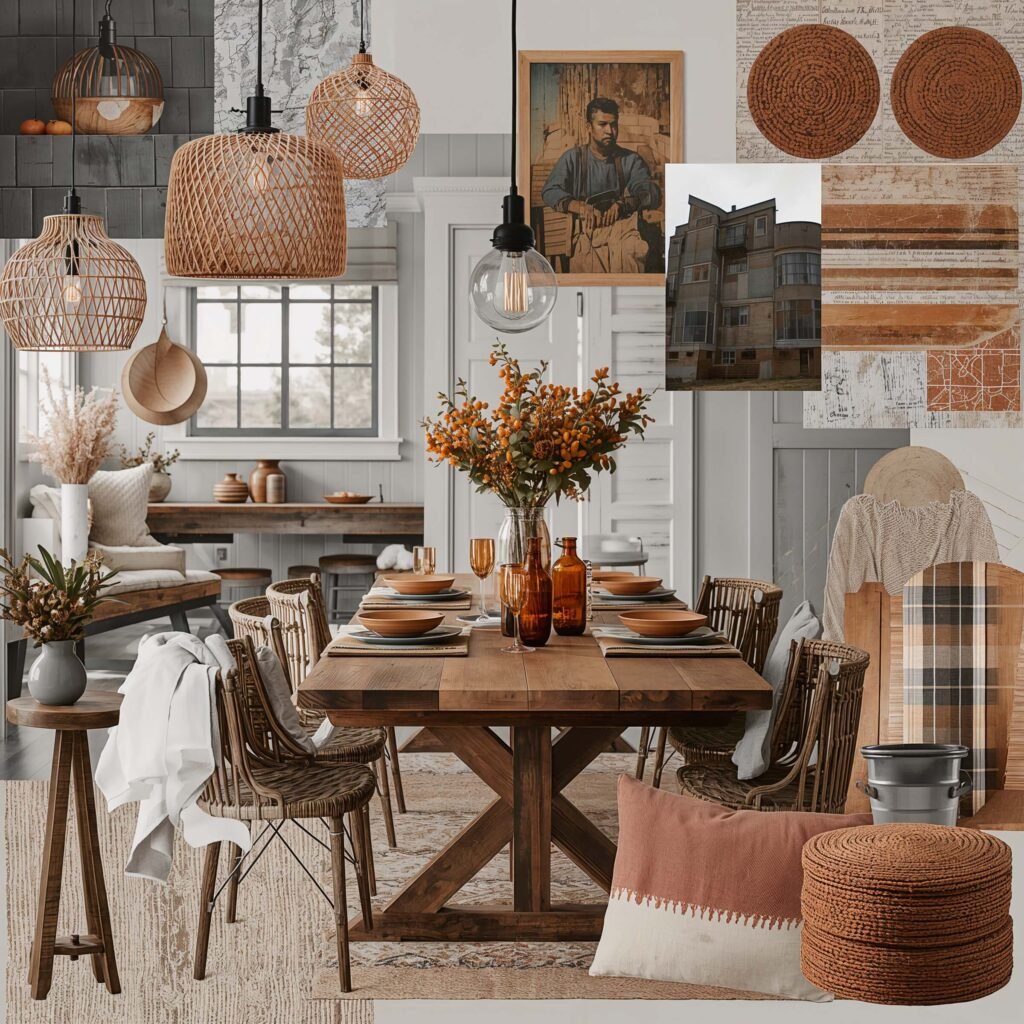
Farmhouse style has been huge for years now, and honestly, I’m not mad about it. There’s something comforting about spaces that feel like your grandma’s house, but cooler. Modern farmhouse takes the best of rural charm and updates it for contemporary living.
Essential farmhouse elements:
- Reclaimed wood everything
- Shiplap walls (obviously)
- Black metal accents
- Vintage or vintage-inspired pieces
- Natural textures and materials
Keeping It Fresh
The challenge with farmhouse? Not making it look like everyone else’s farmhouse. Add personal touches that make it yours. Maybe skip the obligatory “Gather” sign and opt for vintage botanical prints instead.
Mix rough and refined elements. Pair that rustic wood table with modern metal chairs. The contrast keeps things interesting and prevents your dining room from looking like a barn conversion gone wrong.
9. Vibrant Eclectic Living Space Mood Board
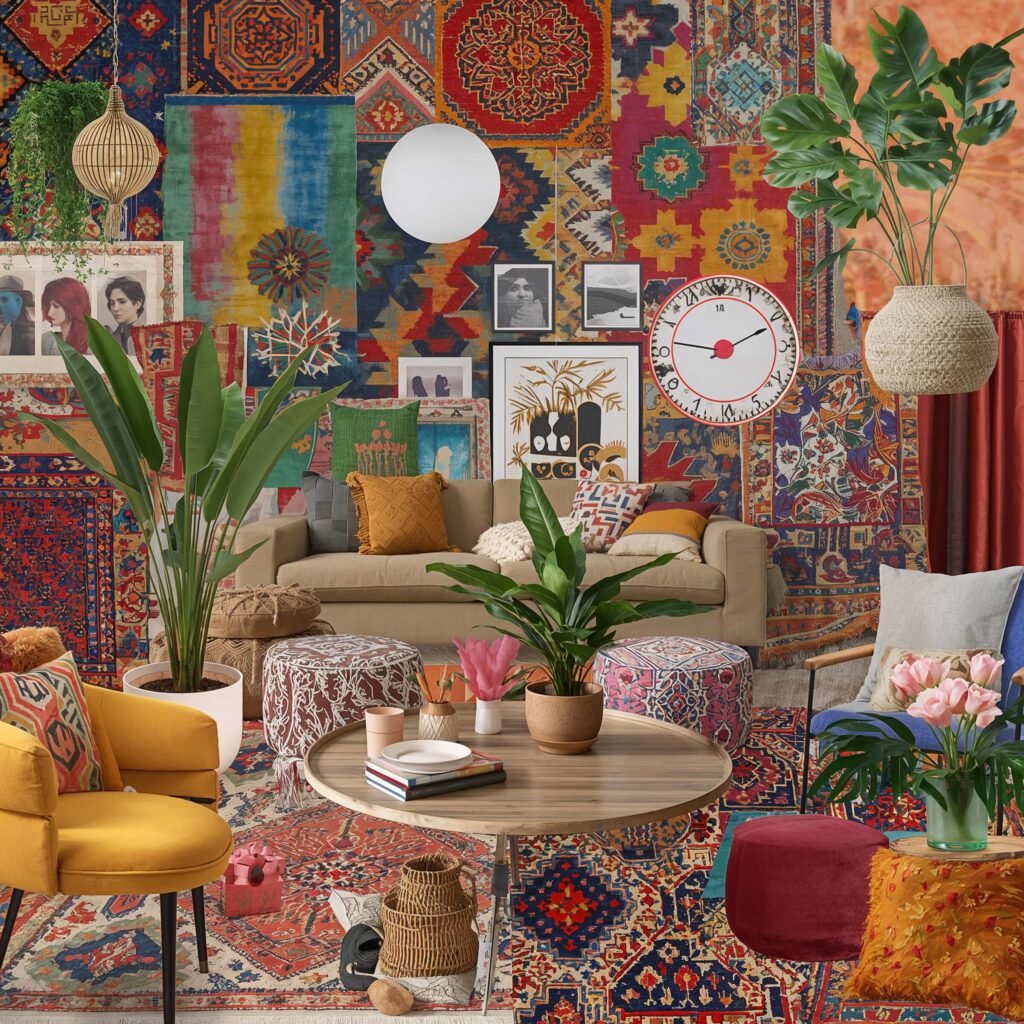
Ready to break all the rules? Eclectic design is where your personality really shines. This is the style for people who can’t choose just one aesthetic (guilty as charged).
Your eclectic mood board might include:
- Bold, unexpected color combinations
- Mix of patterns (florals, geometrics, stripes)
- Variety of furniture styles and eras
- Global influences and travel finds
- Art, art, and more art
Organized Chaos
Here’s the secret nobody tells you about eclectic design: it needs more planning than minimalism. Throwing random stuff together doesn’t equal eclectic; it equals mess. Find a common thread – maybe it’s a color that appears throughout, or a particular texture you repeat.
I’ve been building my eclectic living room for five years now, and the key has been patience. Each piece needs to have a conversation with the others, even if they’re speaking different languages.
Also Read: 12 Stunning Kids Room Interior Design Ideas to Inspire Play
10. Monochrome Black & White Mood Board
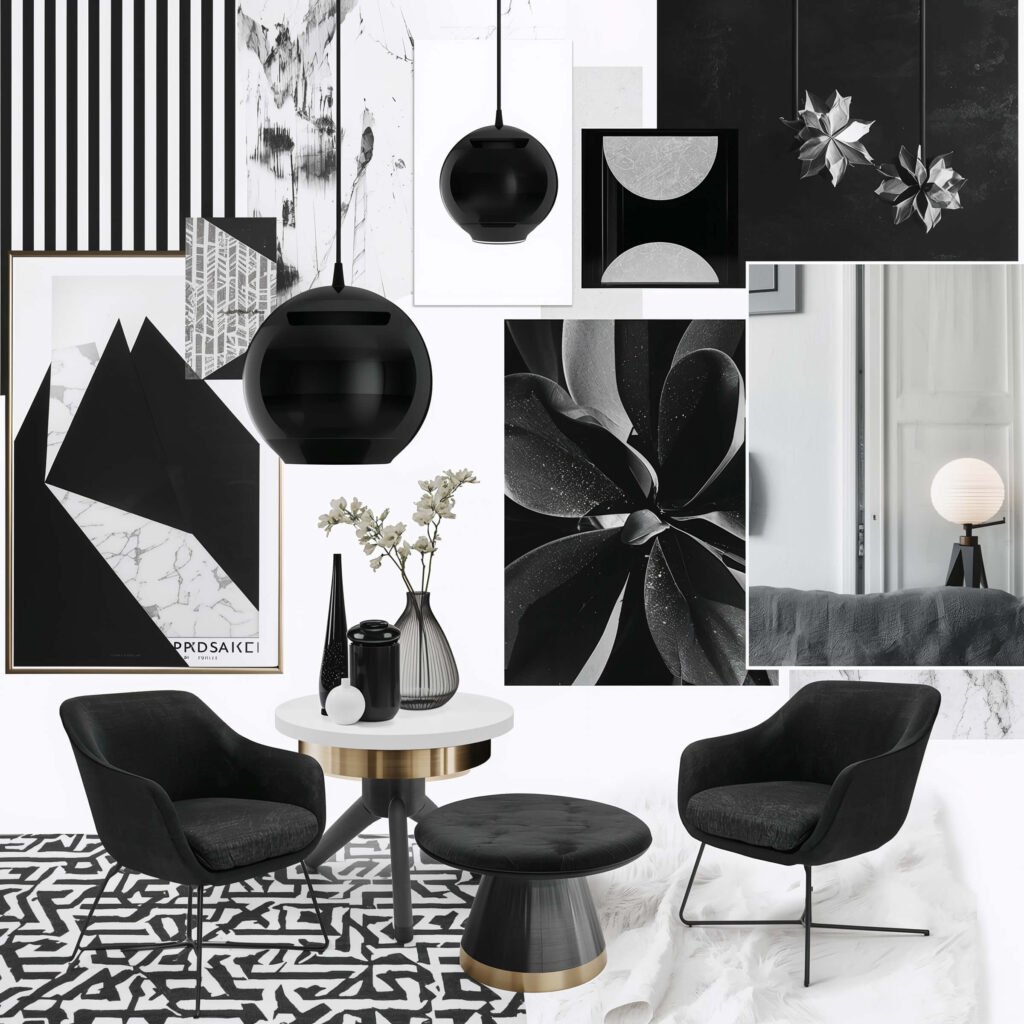
Black and white design is like the little black dress of interiors – classic, sophisticated, and always appropriate. But here’s the plot twist: monochrome doesn’t mean boring.
Build your monochrome masterpiece with:
- Various shades of gray for depth
- High contrast for drama
- Different textures to add interest
- Metallic accents (silver, chrome, pewter)
- Graphic patterns for movement
Making Monochrome Pop
The trick to stunning black and white spaces? Texture and pattern variety. Smooth leather, nubby linen, glossy tiles, and matte paint all play different roles in your monochrome story.
Don’t forget about lighting! In monochrome spaces, shadows and highlights become part of your color palette. I learned this when my all-white bedroom looked amazing at noon but like a hospital at night.
11. Mid-Century Modern Lounge Mood Board
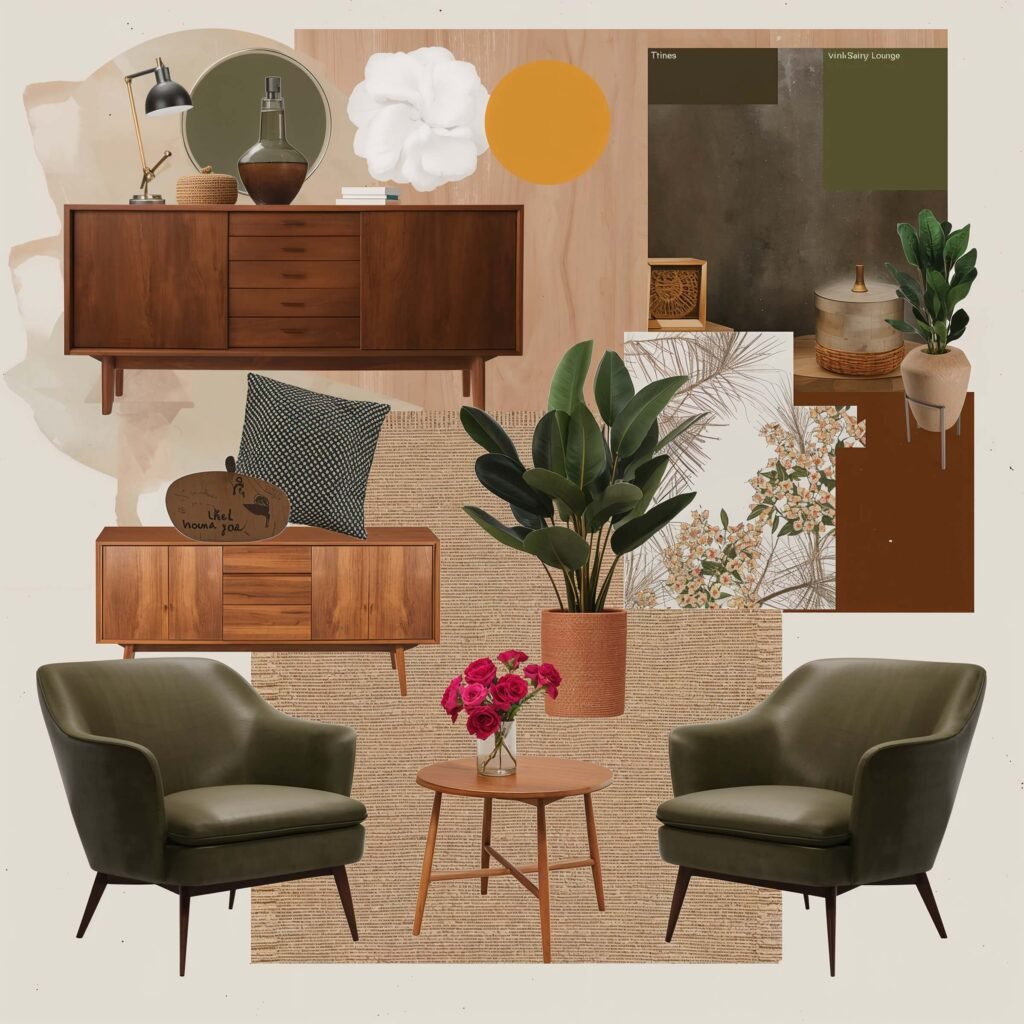
Mad Men might be over, but mid-century modern is forever. This style makes everyone look cooler just by association. IMO, it’s the perfect blend of retro charm and timeless sophistication.
Your mid-century mood board needs:
- Warm wood tones (walnut, teak, rosewood)
- Pops of orange, teal, or mustard
- Clean lines and geometric shapes
- Tapered legs on everything
- Mixed materials (wood, metal, glass)
Authentic vs. Inspired
Here’s a reality check: authentic mid-century pieces cost a fortune. Mix vintage finds with modern reproductions to get the look without selling a kidney. That $3,000 Eames chair? Maybe start with a $300 lookalike and upgrade later.
The beauty of mid-century design lies in its simplicity and functionality. Every piece should have a purpose and a clean silhouette. No cluttered surfaces or excessive decoration here.
12. Nature-Inspired Greenery Mood Board
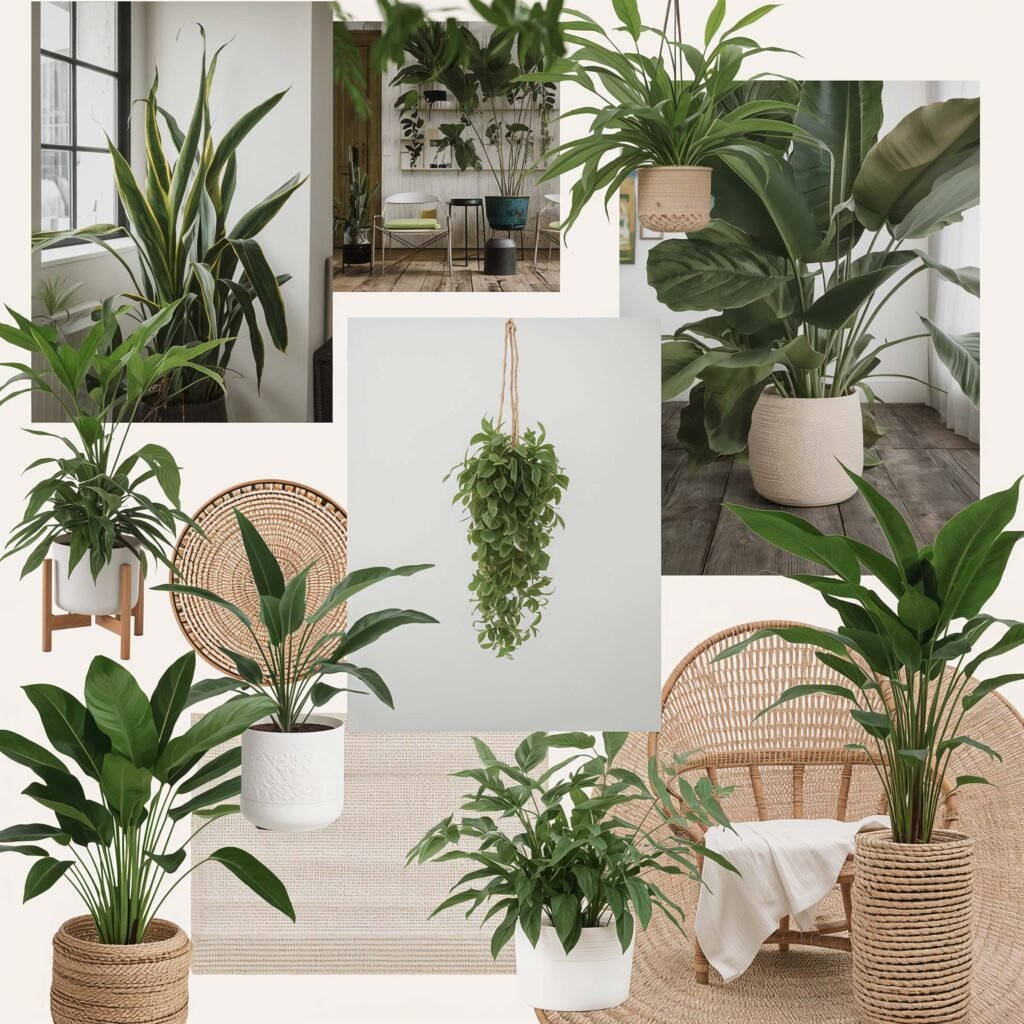
Last but definitely not least, let’s talk about bringing the outdoors in. Biophilic design (fancy term for nature-inspired spaces) isn’t just trendy – it’s scientifically proven to reduce stress and boost creativity.
Create your green oasis with:
- Multiple shades of green
- Natural wood and stone
- Botanical prints and patterns
- Actual plants (lots of them)
- Natural light maximization
Beyond Just Adding Plants
Sure, plants are essential, but nature-inspired design goes deeper. Think about incorporating natural materials like bamboo, cork, or reclaimed wood. Use organic shapes in furniture and decor. Choose a color palette inspired by your favorite landscape.
I turned my home office into a jungle last year (45 plants and counting), and my productivity has honestly improved. Whether that’s the extra oxygen or just the joy of not killing them all, I’ll take it!
Bringing Your Mood Board to Life
Creating mood boards is addictive – trust me, I have approximately 73 saved on my computer. But here’s the real question: how do you actually use them?
Start by identifying your non-negotiables. What elements appear in every mood board you love? Those are your must-haves. Then look for common themes. Maybe you’re drawn to warm colors, or perhaps every board includes vintage elements.
Test your ideas small-scale first. Before repainting your entire living room that moody green you saw on Instagram, try it on one accent wall. Before buying five macramé wall hangings, start with one. This approach has saved me from many design disasters (and marital disputes).
Remember, your mood board is a guide, not a gospel. Rooms evolve, tastes change, and that’s okay. The best interiors have personality and tell a story – your story. Sometimes that means breaking your own rules or combining styles that “shouldn’t” work together.
The most important element in any design? It needs to feel like home to you. Whether that’s minimalist zen or maximalist chaos, coastal calm or industrial edge, your space should make you happy every time you walk in.
So grab those magazines, fire up Pinterest, and start creating. Your perfect mood board is out there waiting, and honestly? The journey of finding it is half the fun. Just maybe learn from my mistakes and test paint colors before committing. Your walls (and wallet) will thank you.