12 Modern Camper Interior Design Ideas and Smart Layouts

You know that feeling when you step into someone’s camper and immediately think “Wow, I could actually live here”? Yeah, that’s the magic of great interior design. Whether you’re working with a vintage Airstream or a brand-new Sprinter van, transforming your mobile space into something spectacular doesn’t require a trust fund or a degree in architecture.
I’ve spent the last five years tinkering with camper layouts, making expensive mistakes (RIP to that custom cabinet that fell apart on a bumpy road), and discovering genius hacks that actually work. Trust me when I say that creating your dream camper interior comes down to smart planning, creative thinking, and knowing which trends actually make sense for life on the road.
Let’s talk about twelve design approaches that’ll transform your camper from a cramped metal box into a space you’ll genuinely love spending time in. And no, you don’t need to blow your entire savings to make it happen.
Minimalist Camper Makeover
The Art of Less Is More
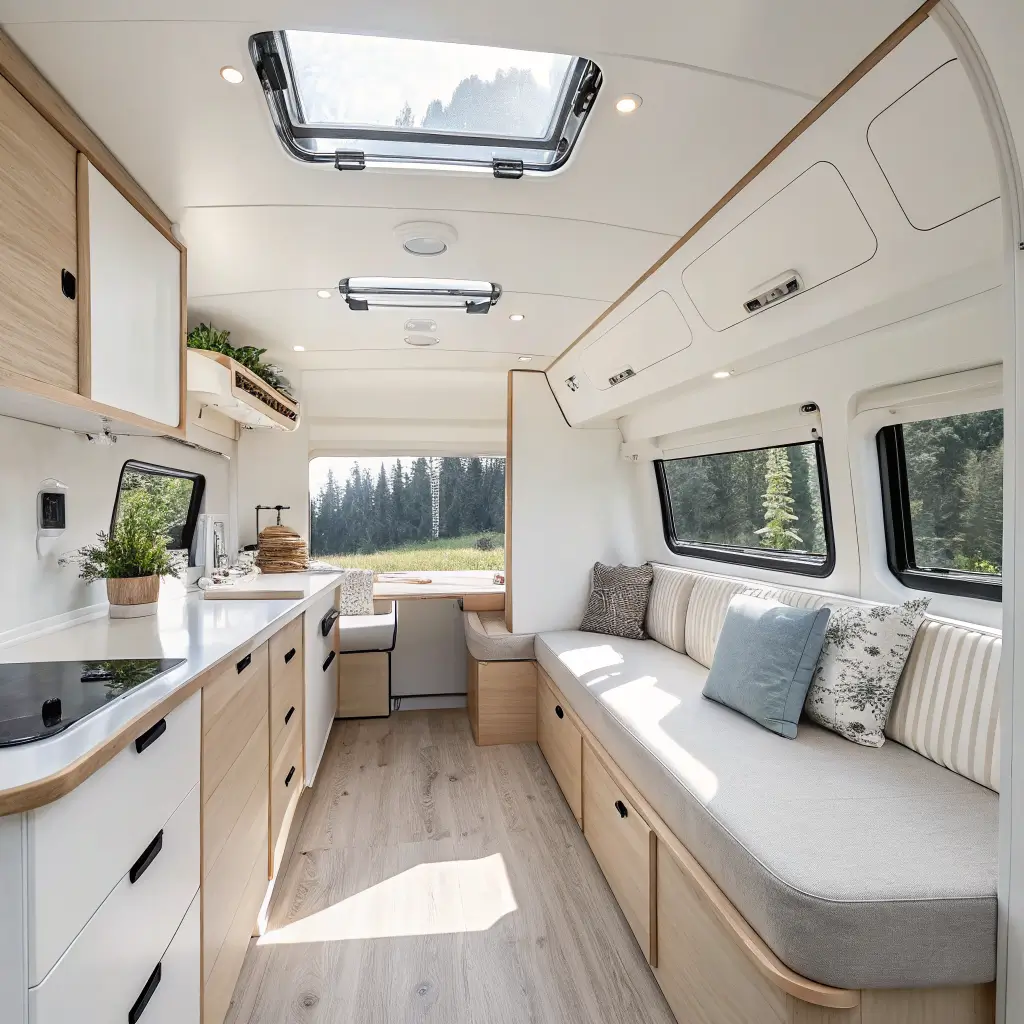
Remember when Marie Kondo had everyone throwing out half their belongings? Well, she was onto something, especially for camper life. A minimalist makeover strips your space down to the essentials, creating an environment that feels twice as spacious without knocking down a single wall.
I converted my first van using this approach after realizing I’d packed enough stuff for three people. The transformation was incredible. White walls, light wood accents, and maybe two or three carefully chosen decorative pieces suddenly made my 60-square-foot space feel like a tiny luxury apartment.
The secret sauce here involves choosing a neutral color palette – think whites, grays, and natural wood tones. You want furniture that serves multiple purposes without screaming for attention. My fold-down table doubles as a cutting board and laptop desk, while looking like it belongs in a Scandinavian design magazine.
Making Minimalism Work
Here’s what you’ll need to nail the minimalist look:
- All-white or light gray cabinets (IKEA has amazing options that fit perfectly)
- Hidden storage solutions that maintain clean lines
- Maximum of three accent colors throughout the space
- Natural materials like bamboo or light oak
- LED strip lighting tucked under cabinets for that floating effect
The biggest challenge? Resisting the urge to add “just one more thing.” Every item needs to earn its place through both function and aesthetics. That cute vintage sign might look adorable, but does it really spark joy when you’re trying to find a parking spot at 2 AM?
Boho Chic Camper Interiors
Bringing Festival Vibes Home
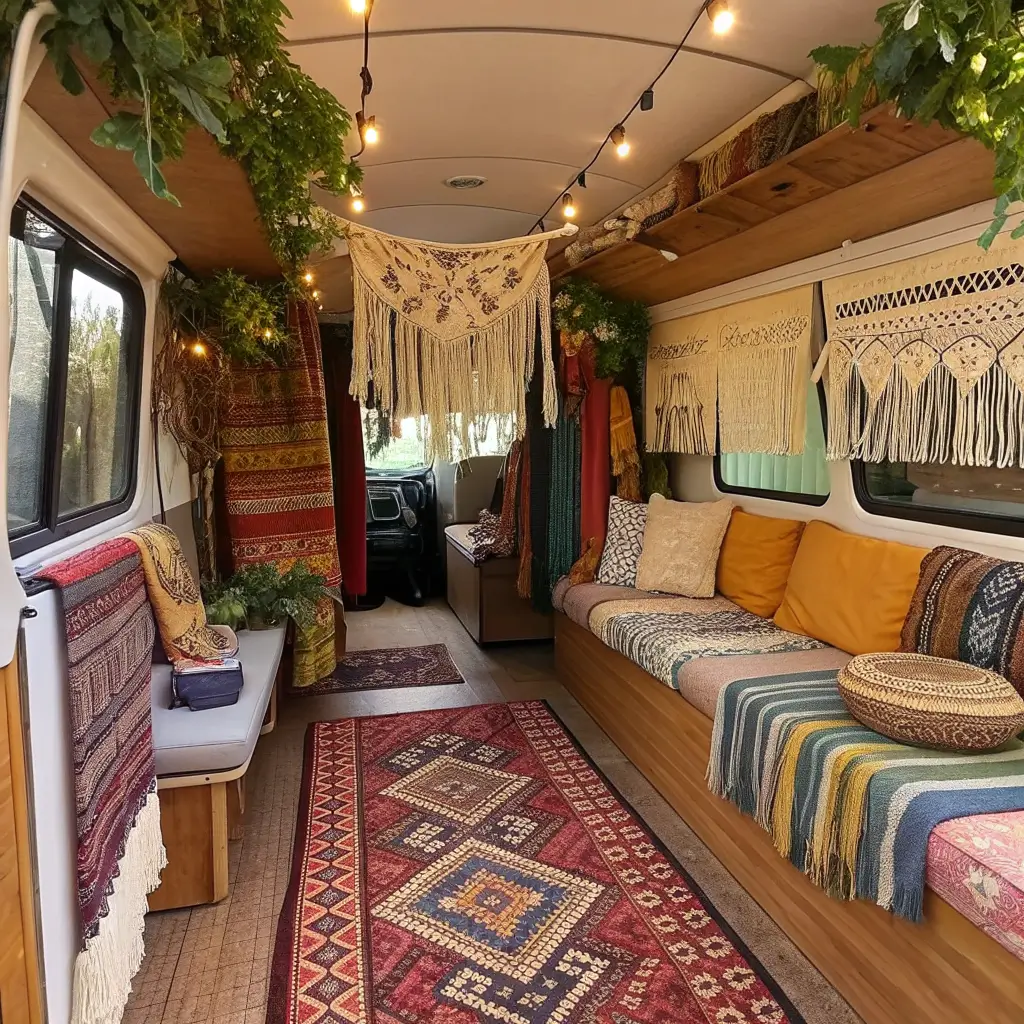
Now, if minimalism makes you yawn, let’s talk boho chic. This style basically throws the rulebook out the window and says “let’s hang some macramé and see what happens.” And honestly? It works brilliantly in small spaces when you know what you’re doing.
I helped my friend Sarah transform her camper into a rolling bohemian paradise last summer. We hung tapestries on the ceiling (secured with heavy-duty velcro, FYI), added layers of colorful textiles, and strung up those trendy Edison bulb lights. The result looked like something straight out of Coachella, minus the dust and overpriced water bottles.
The key to boho without chaos involves establishing a base palette first. Pick two or three main colors, then go wild with patterns and textures within that range. Sarah chose terracotta, cream, and sage green as her foundation, then layered in patterned pillows, woven wall hangings, and vintage rugs.
Essential Boho Elements
Want to achieve that effortlessly eclectic look? Focus on these elements:
- Layered textiles (throw pillows, blankets, rugs on rugs)
- Macramé plant hangers (secured properly, please)
- Warm string lights or lanterns
- Natural elements like driftwood or dried pampas grass
- Vintage or handmade decorative pieces
- Moroccan-inspired patterns and colors
Pro tip: Secure everything properly. That beautiful tapestry becomes a safety hazard real quick when you’re driving through mountain passes. I learned this the hard way when my carefully curated gallery wall became a projectile art installation.
Compact Storage Hacks for Campers
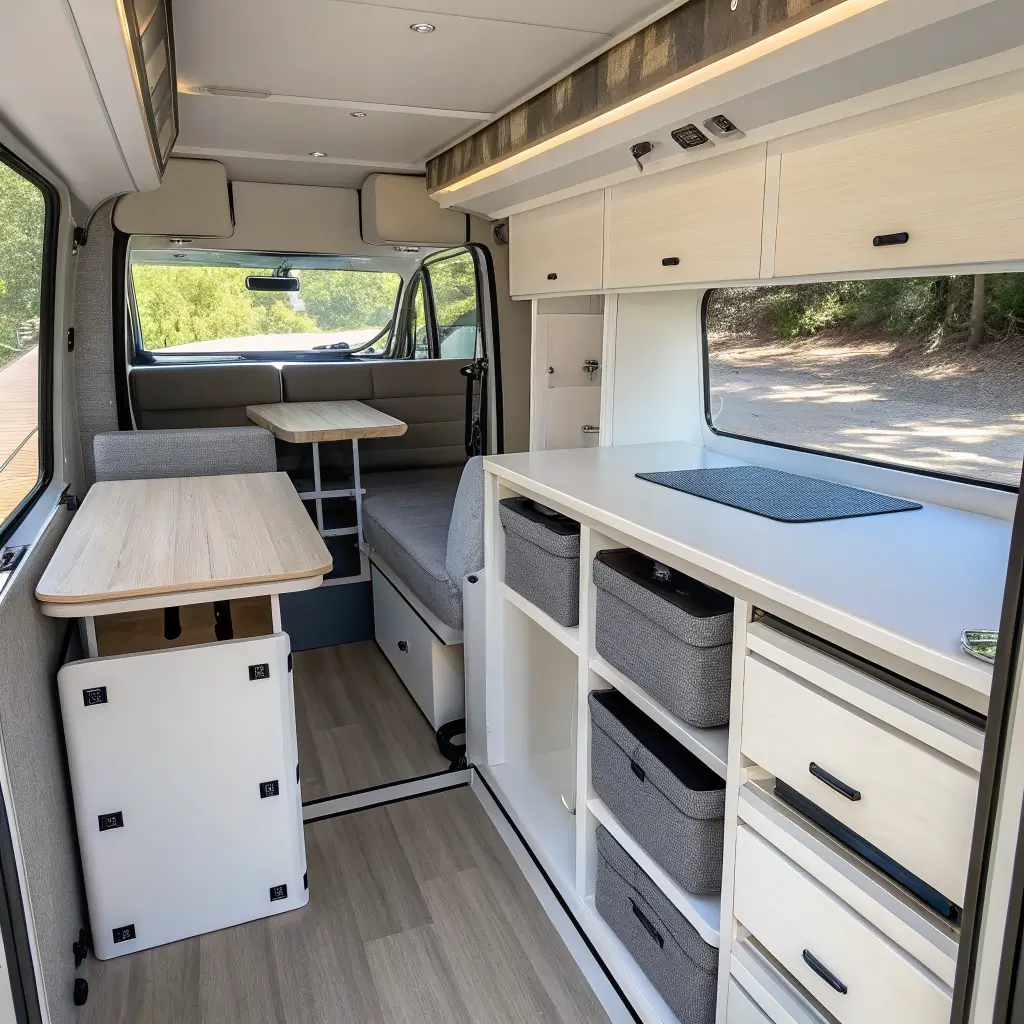
Maximizing Every Cubic Inch
Let’s get real – storage makes or breaks camper living. You could have the prettiest interior on Instagram, but if you can’t find your underwear or cooking pot, what’s the point? Smart storage solutions transform chaos into organized bliss.
I discovered the magic of vertical space after living in my van for three months. Those walls aren’t just for looking pretty; they’re prime real estate for storage. Magnetic strips hold knives and tools, mesh pockets store toiletries, and ceiling nets keep lightweight items secure while driving.
The game-changer for me was discovering modular storage systems. These bad boys adapt to your changing needs. Today that drawer holds kitchen supplies; tomorrow it might store hiking gear. Everything has its place, and more importantly, everything stays in its place when you’re bouncing down dirt roads.
Storage Solutions That Actually Work
Here’s what’s transformed my camper organization:
- Under-bed drawer systems (build them on heavy-duty slides)
- Magnetic spice containers on the fridge
- Collapsible silicone containers for food storage
- Over-door shoe organizers for toiletries
- Vacuum storage bags for seasonal clothes
- Hidden compartments in bench seating
- Ceiling-mounted cargo nets
Remember: If something doesn’t have a designated home, it’ll end up everywhere. Trust me, finding creative storage solutions becomes oddly addictive once you start.
Also Read: 12 Inspiring Interior Design Mood Board Ideas for Modern Homes
Cozy Rustic Camper Vibes
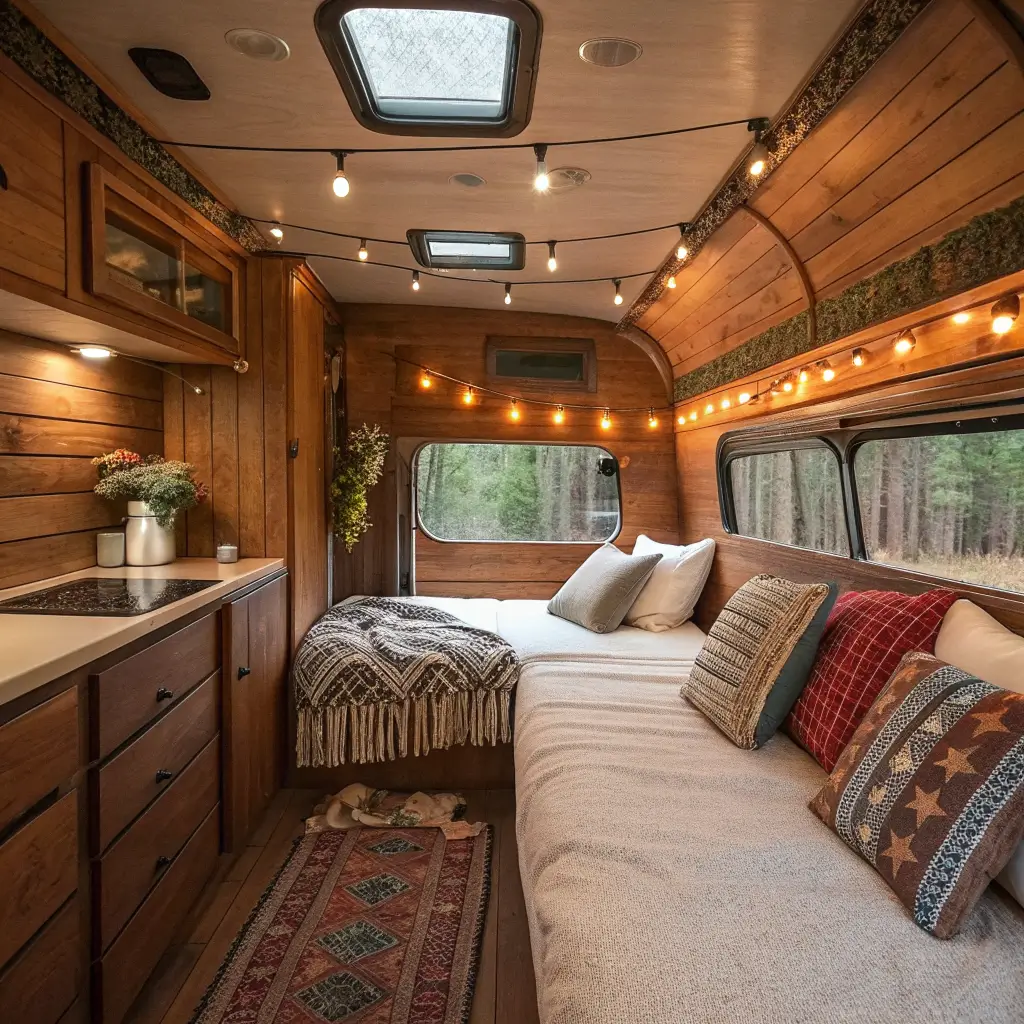
Mountain Cabin Meets Mobile Living
Who says you can’t have that cozy cabin feeling while parked at a beach? Rustic design brings warmth and character to any camper, making it feel less like a vehicle and more like a tiny mountain retreat.
My neighbor Tom nailed this aesthetic in his converted shuttle bus. Dark wood paneling, a mini cast-iron skillet collection displayed on the wall, and buffalo plaid everything. Walking into his bus feels like entering a shrunken log cabin, complete with battery-powered fairy lights that look like fireflies.
The rustic approach works especially well in older campers where you can embrace the imperfections. That wonky cabinet door? Part of the charm. Slightly uneven floors? Adds character. This style celebrates the handmade, the weathered, and the wonderfully imperfect.
Creating Your Rustic Haven
Essential elements for that cabin-in-the-woods feel:
- Reclaimed wood accents (pallets work great for this)
- Plaid or flannel textiles
- Cast iron cookware as decoration
- Vintage camping gear as wall art
- Warm Edison bulb lighting
- Natural fiber rugs
- Dark, rich color schemes (think deep greens and browns)
The beauty of rustic design? You can literally find materials anywhere. That piece of driftwood becomes a towel holder. Old mason jars transform into light fixtures. It’s sustainable, budget-friendly, and genuinely fun to put together.
Modern Sleek Camper Layouts
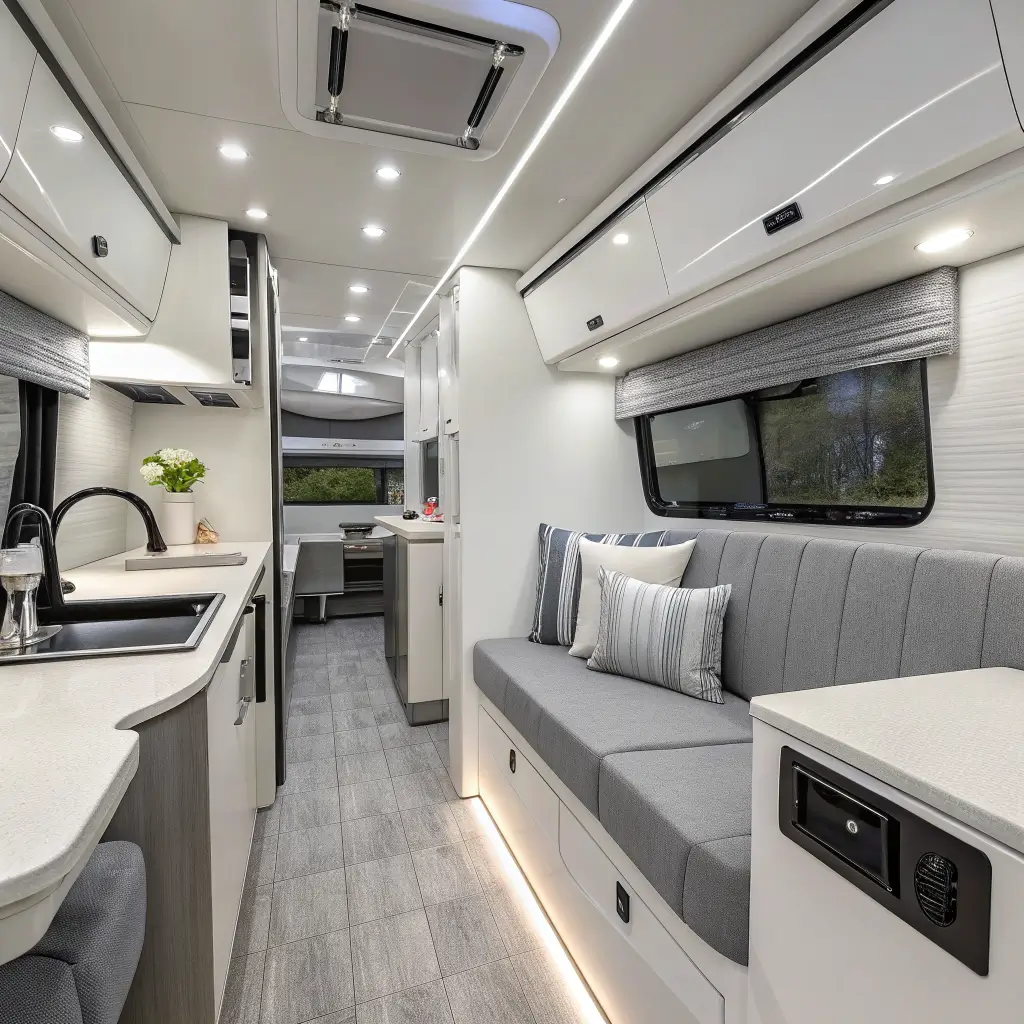
The Future Is Now (And It Fits in Your Van)
Modern design in a camper might sound like an oxymoron, but hear me out. Clean lines, high-tech solutions, and minimalist aesthetics create spaces that feel professionally designed rather than DIY’d in someone’s driveway.
I toured a Sprinter van last month that looked like it belonged in a tech CEO’s portfolio. Glossy white cabinets with push-to-open mechanisms, integrated USB ports everywhere, and an induction cooktop that disappeared into the counter when not in use. The whole setup probably cost more than my first car, but the principles work on any budget.
Modern layouts prioritize efficiency over decoration. Every element serves a purpose, preferably multiple purposes. That sleek bench? It holds the electrical system, provides storage, and converts into a guest bed. Form follows function, but somehow both end up looking incredible.
Modern Must-Haves
Key features for that contemporary look:
- Handle-free cabinets with soft-close mechanisms
- Integrated LED lighting systems
- Monochromatic color schemes
- Hidden appliances and tech
- Geometric patterns and shapes
- Smooth, easy-clean surfaces
- Smart home technology (yes, even in a camper!)
The trick is maintaining the aesthetic while dealing with reality. Those pristine white surfaces look amazing until you’re making spaghetti sauce on a bumpy road. Choose materials that look modern but can handle actual life.
DIY Camper Furniture Ideas
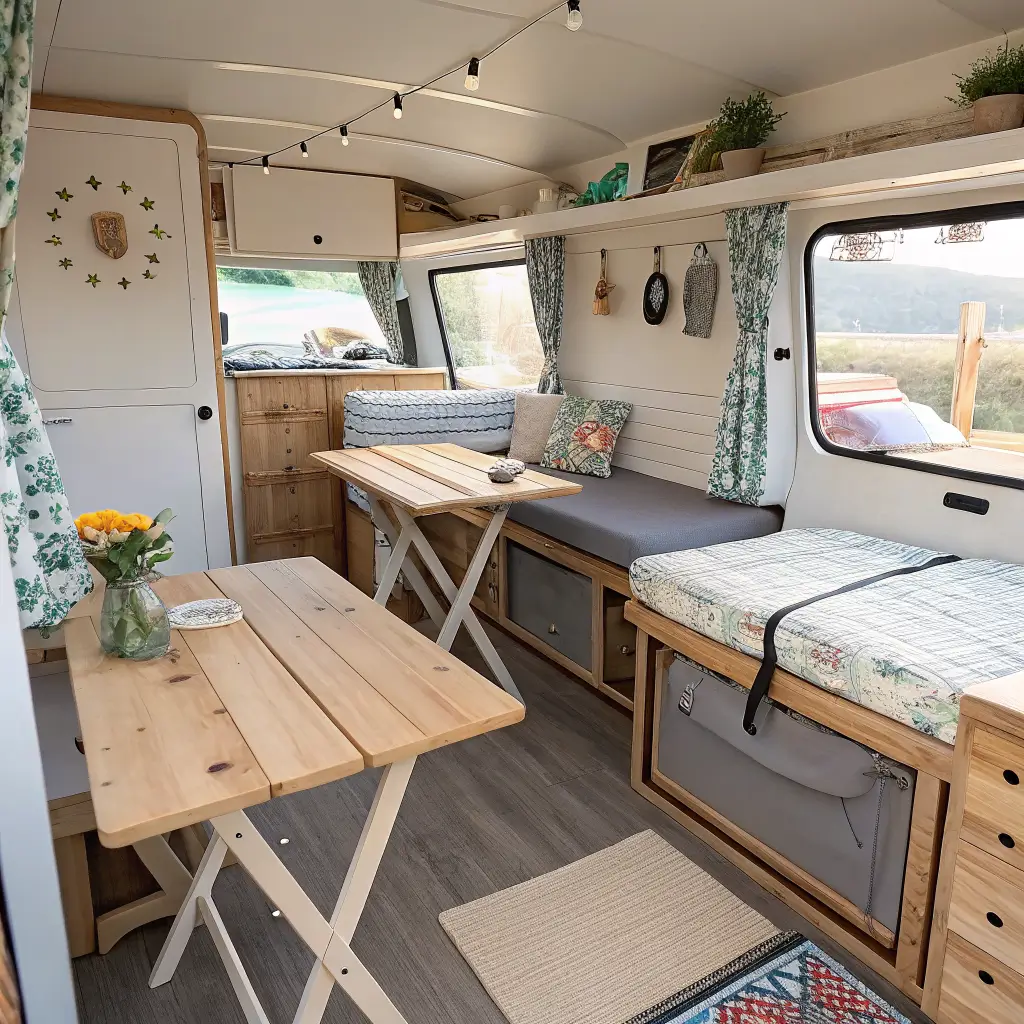
Building Your Way to Better Living
Why buy expensive RV furniture when you can build exactly what you need? DIY furniture projects let you customize every inch while keeping costs reasonable. Plus, there’s something deeply satisfying about sitting on a bench you built yourself.
My first DIY project was a disaster – a table that collapsed the first time I put a laptop on it. But failure teaches you things YouTube tutorials don’t mention. Now I’ve built everything from a convertible bed platform to a fold-out kitchen that would make any chef jealous.
The secret involves starting simple and gradually taking on bigger challenges. That modular seating system you saw online? Start with a basic storage bench first. Master the fundamentals before attempting that transformer-style furniture that converts from a desk to a bed to a dining table.
DIY Projects Worth Attempting
Start with these beginner-friendly builds:
- Sliding drawer systems using skateboard bearings
- Removable table using pipe fittings
- Cushioned bench with hidden storage
- Magnetic spice rack from baby food jars
- Folding desk attached to the wall
- PVC pipe organizers for the garage area
Remember to account for weight and movement. That beautiful hardwood table might look amazing, but it’ll affect your gas mileage and could become dangerous if not properly secured.
Also Read: 12 Eye-Catching Shop Interior Design Ideas for Retail Success
Space-Saving Convertible Designs
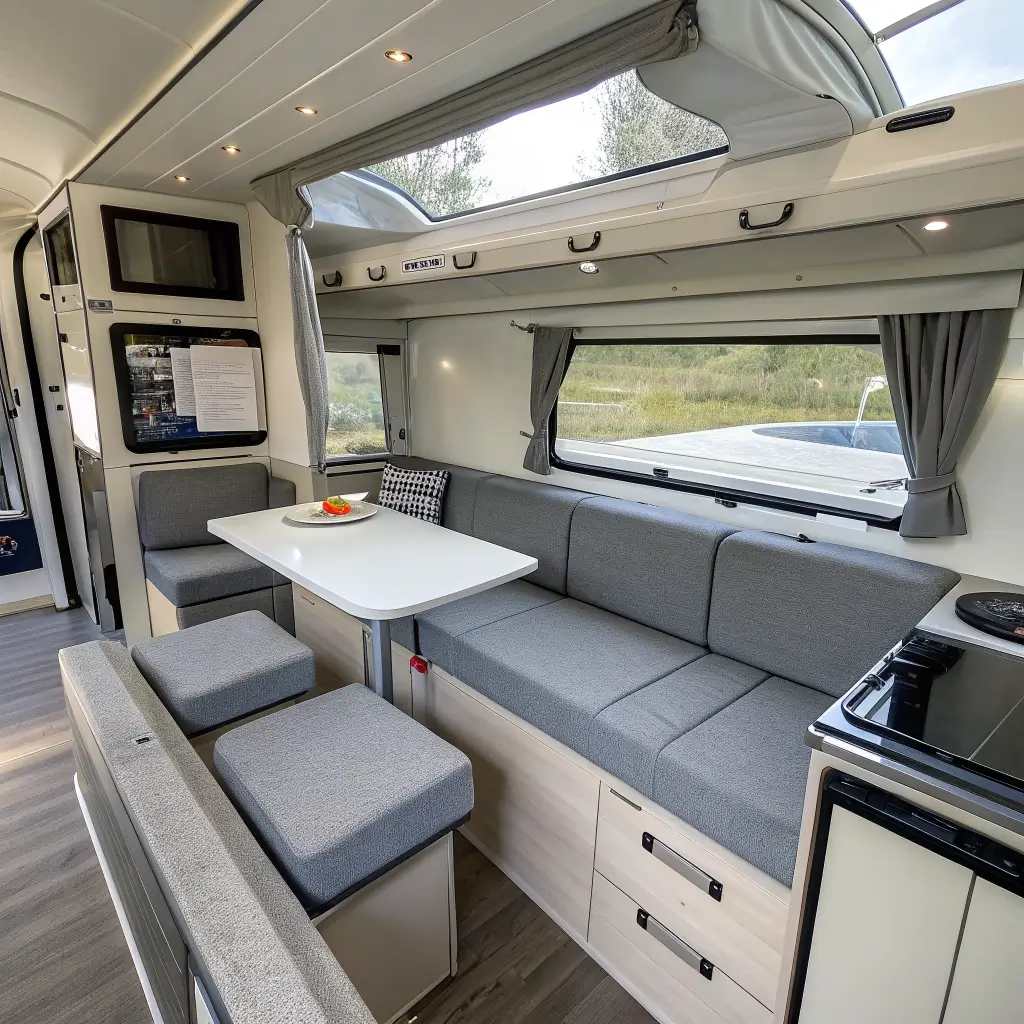
Transformer-Style Living Solutions
Convertible furniture isn’t just clever – it’s absolutely essential for camper life. When your entire home is smaller than most people’s bedrooms, everything needs to pull double or triple duty.
My setup includes a bed that lifts to reveal a garage, a table that becomes a cutting board, and passenger seats that swivel to create a living room. It sounds complicated, but once you establish the routine, transforming your space becomes second nature. Morning coffee? Swivel the seats. Time to work? Drop the table. Ready for bed? Clear the deck and lower the platform.
The best convertible designs feel intuitive. You shouldn’t need an engineering degree to turn your dining area into a bedroom. Simplicity beats complexity every time when you’re tired after a long day of driving.
Convertible Essentials
Must-have transforming elements:
- Bed-to-seating conversions (the classic for good reason)
- Fold-down tables attached to walls
- Swivel seats for multiple configurations
- Ottoman storage that doubles as seating
- Shower pan that covers to become floor space
- Kitchen counter extensions that fold away
Test everything multiple times before hitting the road. That smooth sliding mechanism might work great in your driveway but struggle after a week of dust and vibration.
Luxury on a Budget Camper Interiors
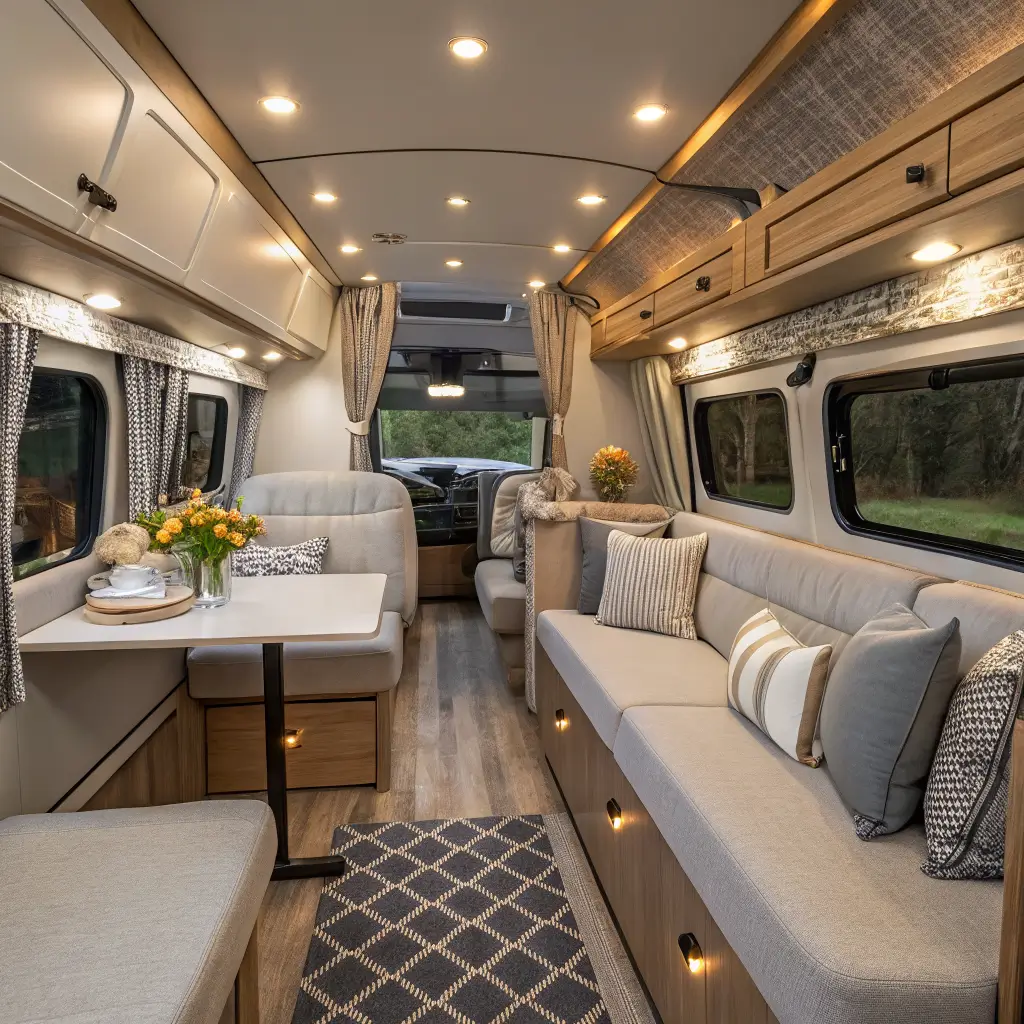
Champagne Dreams, Beer Budget Reality
Who says luxury requires a platinum credit card? Creating an upscale feel in your camper comes down to smart material choices and attention to detail, not throwing money at problems. 🙂
I transformed my basic cargo van into something that regularly gets mistaken for a professional conversion. The secret? Peel-and-stick marble contact paper on countertops, battery-powered sconces from Amazon, and quality textiles from discount stores. Total upgrade cost? Under $500.
Luxury means different things to different people. For some, it’s about materials – soft leather, real wood, quality fabrics. For others, it’s about convenience – hot showers, refrigeration, comfortable sleeping. Figure out your version of luxury and focus your budget there.
Budget Luxury Hacks
Create that high-end feel without the high-end cost:
- Contact paper that mimics marble, wood, or tile
- Battery-operated fixtures for ambient lighting
- Plush throws and pillows from discount stores
- Faux plants that look incredibly real
- Metallic spray paint for hardware upgrades
- Vinyl flooring that looks like hardwood
- Fabric shower curtain as a room divider
The goal isn’t to fool anyone into thinking you spent millions. It’s about creating a space that feels special and intentional, regardless of budget.
Vintage Retro Camper Style
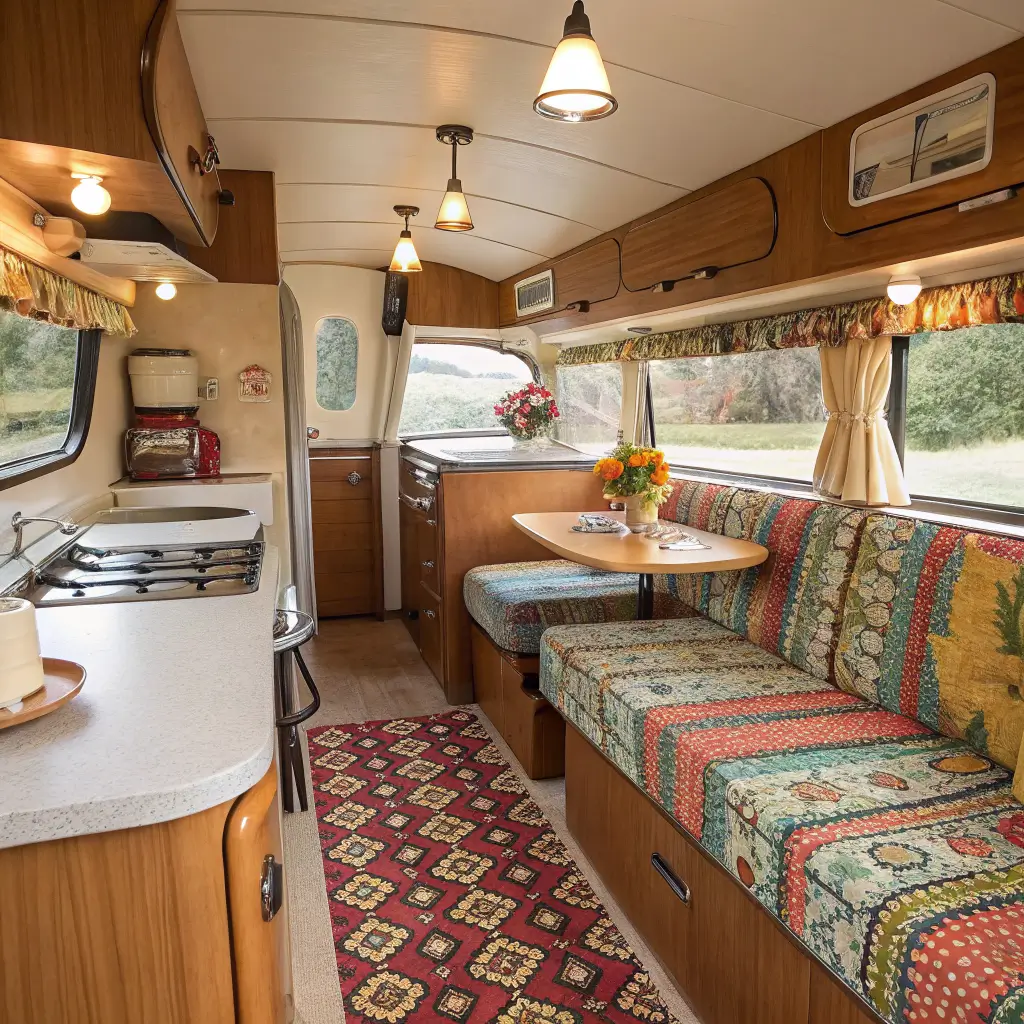
Bringing Back the Good Old Days
Something magical happens when you embrace the vintage aesthetic. Your camper stops trying to be a house and becomes its own unique thing – a time capsule on wheels that makes people smile.
My friend restored a 1972 Airstream, keeping all the original fixtures but adding modern conveniences hidden behind period-appropriate facades. The result? Pure magic. Mint green appliances, checkered flooring, and those amazing curved corners that scream “road trip adventure.”
Vintage style works especially well in older campers where fighting against the original design feels wrong. Instead of hiding those dated features, celebrate them. That wood paneling everyone else is painting over? It’s actually perfect for the aesthetic.
Retro Elements That Work
Key pieces for that nostalgic vibe:
- Pastel color schemes (mint, pink, baby blue)
- Checkered or geometric patterns
- Chrome fixtures and hardware
- Vintage-style appliances (or actual vintage if you’re brave)
- Retro signage and artwork
- Dinette booth seating
- Fun, kitschy accessories
The challenge with vintage style involves balancing authenticity with practicality. That adorable 1960s refrigerator might look perfect, but does it actually keep food cold? Sometimes compromise is necessary.
Also Read: 10 Beautiful Interior Ceiling Design Ideas to Inspire You
Nature-Inspired Camper Decor
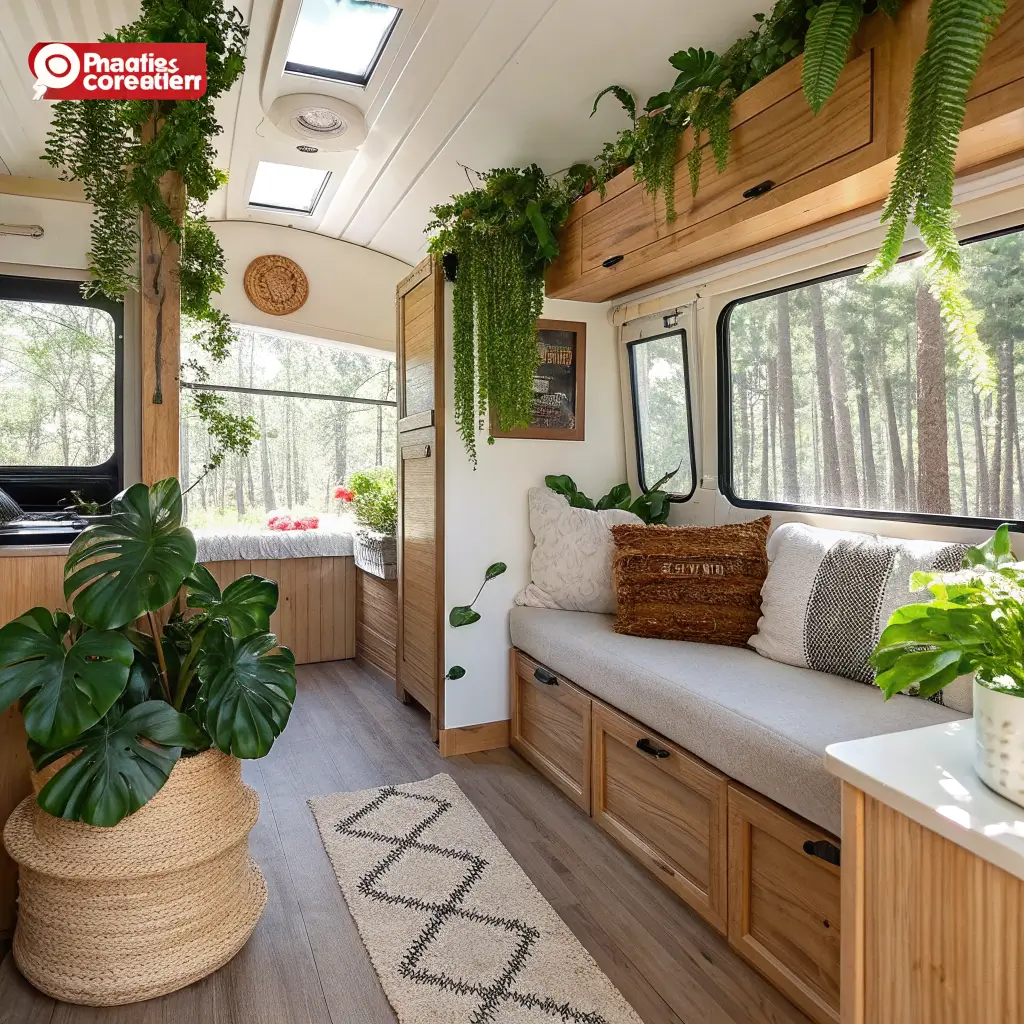
Bringing the Outside In
Why fight against nature when you can embrace it? Nature-inspired design creates a seamless transition between your indoor and outdoor living spaces, making your camper feel like a natural extension of the environment.
I went full forest theme after spending a month in the Pacific Northwest. Live-edge wood shelving, a color palette pulled straight from the woods (moss green, bark brown, sky blue), and enough plants to qualify as a mobile greenhouse. The space feels alive and connected to the surroundings.
The beauty of nature-inspired design lies in its flexibility. Desert vibes with terracotta and sage? Perfect. Coastal themes with driftwood and sea glass? Absolutely. The key involves choosing elements that resonate with where you spend most of your time.
Natural Design Elements
Incorporate these organic touches:
- Live plants (succulents survive everything)
- Natural wood finishes and live edges
- Stone or pebble accents
- Earth-tone color palettes
- Natural fiber textiles (cotton, linen, jute)
- Landscape photography or botanical prints
- Collections from your travels (shells, rocks, pinecones)
Just remember that real plants need light and water. I killed three succulents before accepting that fake plants might be more practical for my black-thumb self.
Tiny Camper Kitchen Solutions
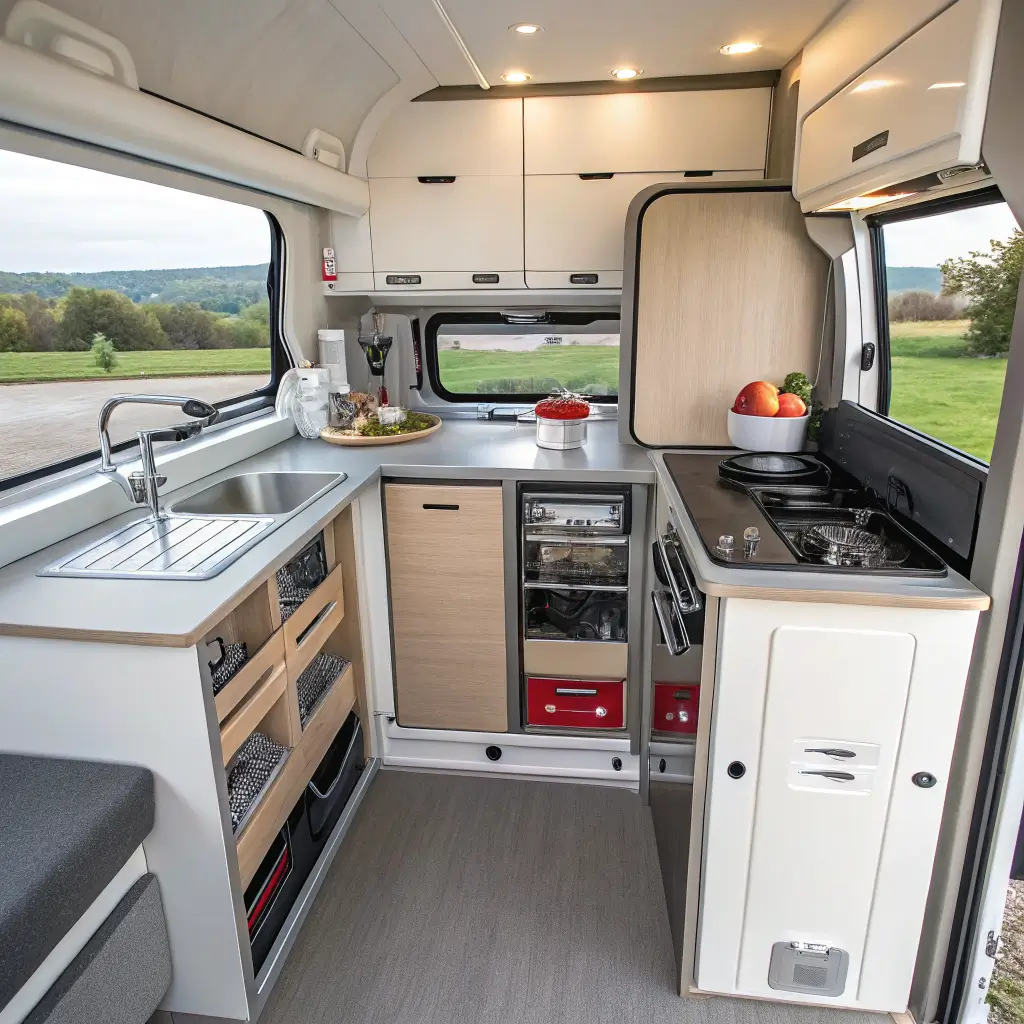
Cooking Big in Small Spaces
The kitchen makes or breaks camper living. You can sleep anywhere, but if you can’t cook a decent meal, you’ll end up spending fortune on restaurants and feeling pretty miserable. Smart kitchen design maximizes functionality without sacrificing precious space.
My kitchen fits in 15 square feet but includes a two-burner stove, sink, refrigerator, and enough counter space to actually prep meals. The secret? Vertical storage, collapsible everything, and multi-use items. That cutting board covers the sink for extra counter space. The dish drying rack folds flat against the wall.
IMO, the biggest mistake people make involves trying to recreate a home kitchen. You don’t need six pots and twelve spices. Focus on versatile basics that handle 90% of your cooking needs.
Kitchen Essentials That Earn Their Space
Must-haves for tiny kitchen success:
- Nesting cookware that stores efficiently
- Collapsible colander and mixing bowls
- Magnetic knife strip (no bulky blocks)
- One good multi-purpose pot and pan
- Compact appliances (if you need them)
- Over-sink cutting board for extra prep space
- Stackable, lightweight dishes
Remember: Every item should serve multiple purposes or be absolutely essential. That avocado slicer? Leave it behind. A good knife handles that job plus twenty others.
Multi-Functional Camper Living Spaces
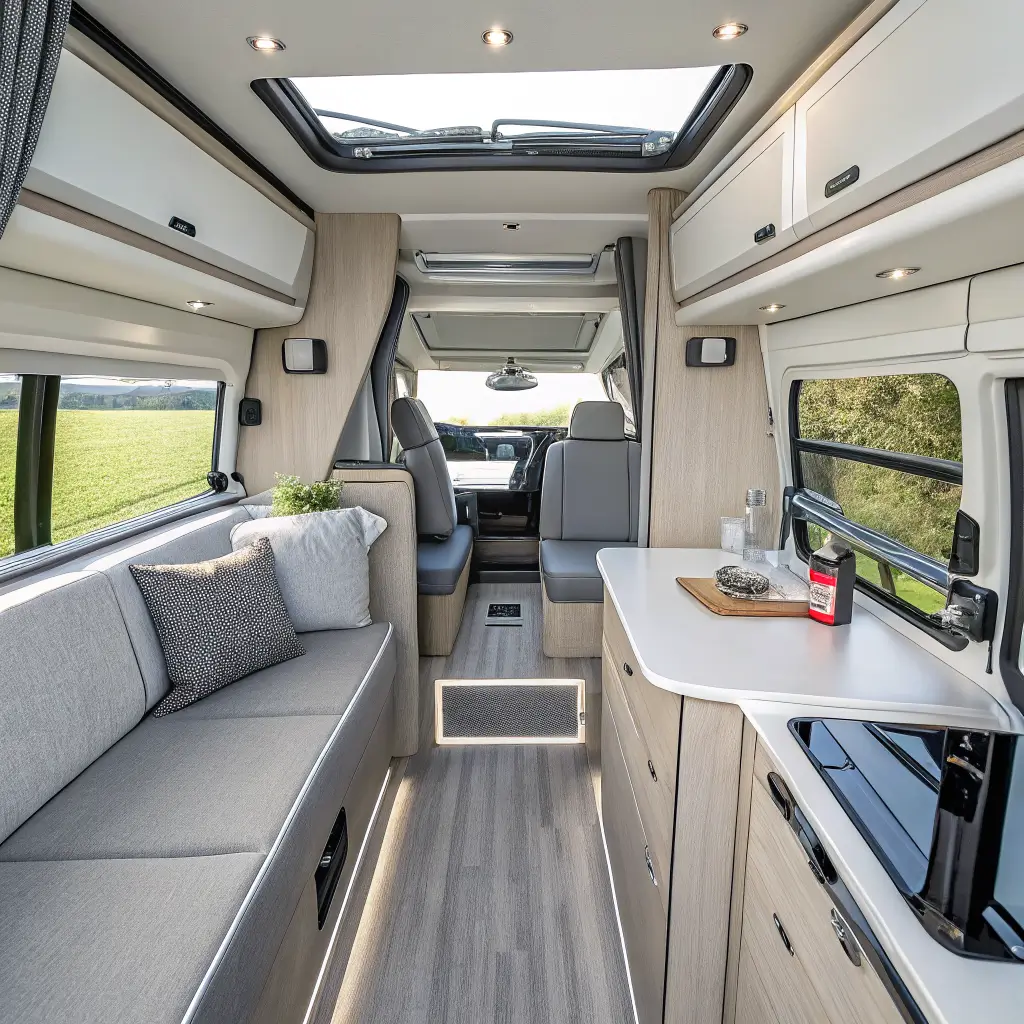
One Space, Endless Possibilities
The ultimate camper design challenge involves creating spaces that transform throughout the day. Your living room becomes a bedroom, your office turns into a dining room, and somehow it all needs to feel intentional rather than cramped.
I’ve lived in 60 square feet for two years now, and my space functions as an office, gym, kitchen, bedroom, and entertainment center. Not simultaneously, obviously – that would be chaos. The transformation happens through careful planning and flexible furniture arrangements.
The key involves defining zones even in the tiniest spaces. This corner is always the kitchen. That area always serves as storage. The middle space? That’s where the magic happens, shifting from yoga studio to dinner party central to cozy movie theater.
Making Multi-Functional Work
Essential strategies for flexible spaces:
- Clear pathways that work in all configurations
- Furniture on wheels for easy rearranging
- Lightweight pieces you can actually move
- Storage that’s accessible from multiple angles
- Good lighting for different activities
- Visual dividers (curtains, different flooring)
Don’t overthink it, though. Sometimes the simplest solution works best. My “dining room” is literally just turning my driver’s seat around. :/
Making Your Design Dreams Reality
So there you have it – twelve approaches to transforming your camper from basic to brilliant. The best part? You don’t have to choose just one. Mix minimalist storage solutions with boho textiles. Combine rustic charm with modern conveniences. Your camper should reflect your lifestyle, not someone else’s Pinterest board.
Start small with one area or design element. Test it out for a few weeks before committing to a full makeover. What looks amazing in photos might drive you crazy in real life. That open shelving everyone loves? It’s a nightmare on bumpy roads unless everything’s secured properly.
The most important thing to remember? Perfect doesn’t exist in camper life, and that’s actually the beauty of it. Every wonky shelf, creative solution, and happy accident adds character to your mobile home. Focus on what makes you comfortable and happy, not what might impress strangers on social media.
Your camper is more than just a vehicle with a bed – it’s your ticket to adventure, your cozy retreat, and your personal canvas for creativity. Whether you go full minimalist or embrace maximum boho chaos, make sure it feels like home. Because at the end of the day, when you’re parked under the stars in the middle of nowhere, that’s exactly what it is.
Now get out there and start creating something amazing. Your dream camper interior is waiting to come to life, one smart design choice at a time.