10 Stunning Mediterranean Interior Design Ideas for Cozy Homes

Remember that vacation to Santorini where you couldn’t stop taking photos of literally everything? Yeah, me too. Those whitewashed walls, the brilliant blue accents, the warm terracotta tiles under your feet – pure magic. Now imagine bringing all that Mediterranean charm right into your own home, minus the hefty plane ticket.
I’ve spent the last decade obsessing over Mediterranean design (my Pinterest board has officially taken over my life), and let me tell you, this style hits different when you nail it. We’re talking about creating spaces that make you feel like you’re perpetually on vacation, sipping wine on a coastal terrace even when you’re actually just in suburban Ohio.
So grab your coffee (or wine, I won’t judge), and let’s transform your space into that cozy Mediterranean haven you’ve been dreaming about. Trust me, your home’s about to get a serious glow-up.
Coastal Greek-Inspired Living Room
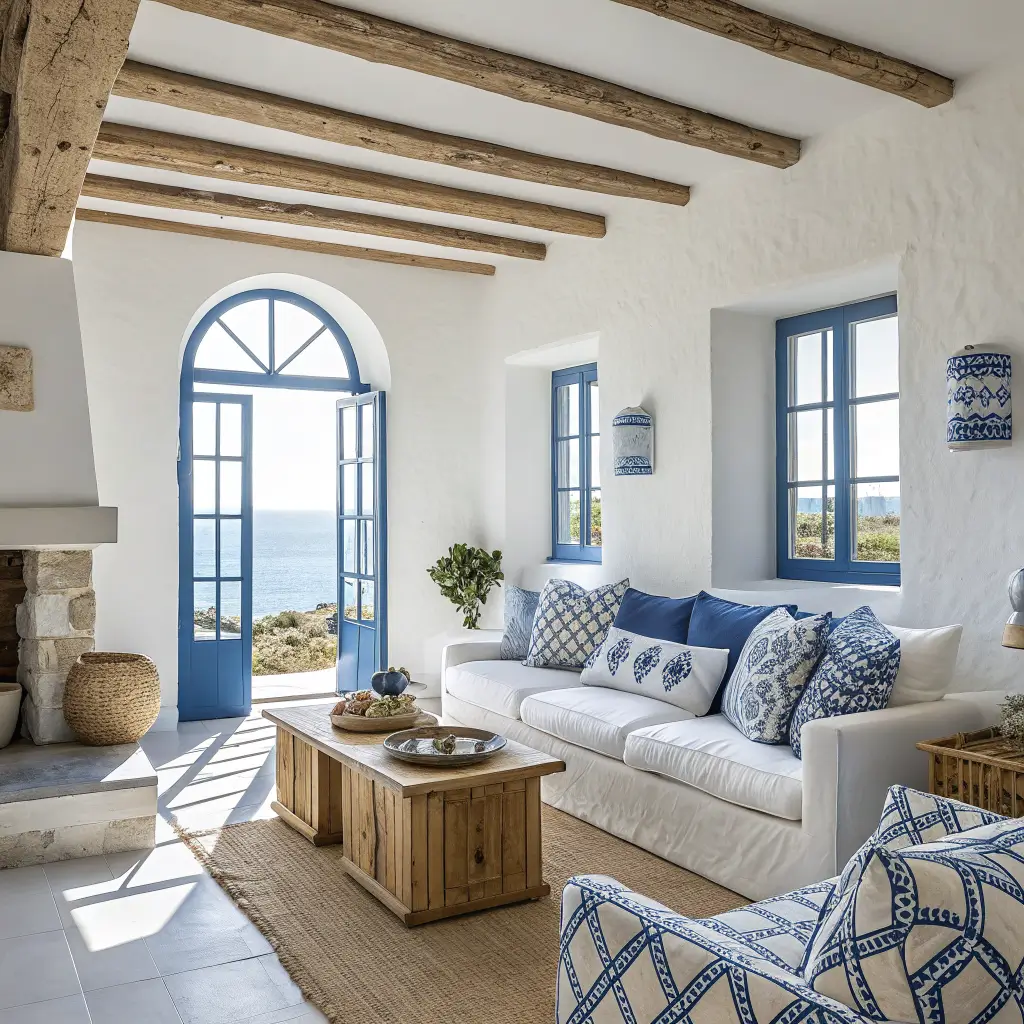
Picture this: you walk into your living room, and suddenly you’re transported to a clifftop villa in Mykonos. That’s the power of Greek coastal design, folks. The secret sauce here is the iconic white and blue color palette – and before you roll your eyes thinking “how original,” hear me out.
I transformed my own living room using this concept, and the trick isn’t just slapping some blue paint on the walls. You want to layer different shades of blue – think navy cushions, cerulean throws, and maybe a cobalt vase or two. The white serves as your canvas, creating that airy, breathable feeling that makes Greek homes so inviting. Whitewashed walls are non-negotiable – they reflect light like nobody’s business and instantly make your space feel twice as large.
Here’s what you absolutely need to nail this look:
- Exposed wooden ceiling beams (painted white if you’re going full Greek island vibes)
- Natural linen or cotton fabrics in whites and blues
- Weathered wood furniture pieces
- Minimal window treatments to maximize natural light
- Stone or whitewashed brick accent walls
The Art of Greek Minimalism
Greeks mastered the art of “less is more” way before it became trendy. You don’t need to clutter your space with a million accessories. Instead, choose a few statement pieces that tell a story. I found this gorgeous oversized ceramic vase at a thrift store, painted it white with blue geometric patterns, and boom – instant focal point.
Want to know what really sells the Greek vibe? Natural textures mixed with smooth surfaces. Think rough-hewn wooden coffee tables paired with sleek white sofas. The contrast creates visual interest without overwhelming the space. And please, for the love of Zeus, keep your color palette tight – whites, blues, and natural wood tones only.
Rustic Spanish Villa Kitchen
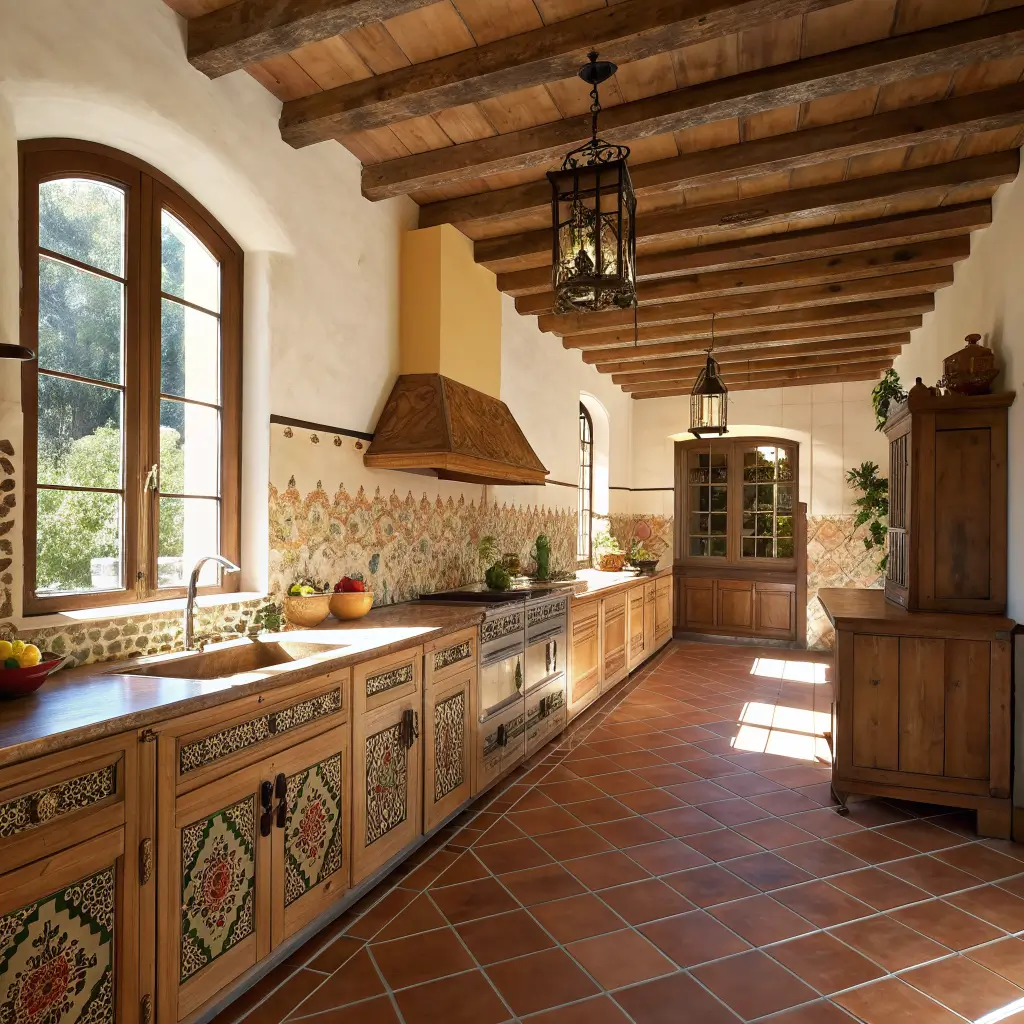
Spanish villa kitchens make me want to cook elaborate meals I have zero skills to actually prepare. But hey, at least I’ll look good pretending, right? The Spanish approach to kitchen design revolves around warmth, functionality, and family gatherings.
Start with those stunning terracotta tiles – they’re practically mandatory for authentic Spanish vibes. I installed them in my kitchen last year, and despite my initial fears about maintenance (spoiler: they’re actually super easy to care for), they’ve become my favorite feature. The warm orange-red tones instantly heat up the space, both literally and figuratively.
Dark wooden cabinets with wrought iron hardware create that Old World charm we’re after. But here’s where I differ from traditional approaches – you don’t need to go full dark and heavy. Mix in some open shelving to display your prettiest dishes and keep things from feeling too closed in. Spanish design loves showing off beautiful ceramics and copper cookware, so why hide them?
Essential Spanish Kitchen Elements
Let me break down what makes a Spanish kitchen actually feel Spanish:
- Talavera tiles for backsplashes – those hand-painted beauties with intricate patterns
- Heavy wooden dining table (preferably one that looks like it’s been in the family for generations)
- Wrought iron pot racks and light fixtures
- Exposed wooden beams on the ceiling
- Arched alcoves for storage or display
The real game-changer? A proper Spanish-style range hood. Mine’s plastered and painted to match the walls, creating this sculptural element that makes the whole kitchen feel custom. FYI, you can DIY this with some basic framing and plaster – saved myself about $3000 going that route.
Moroccan Courtyard Oasis
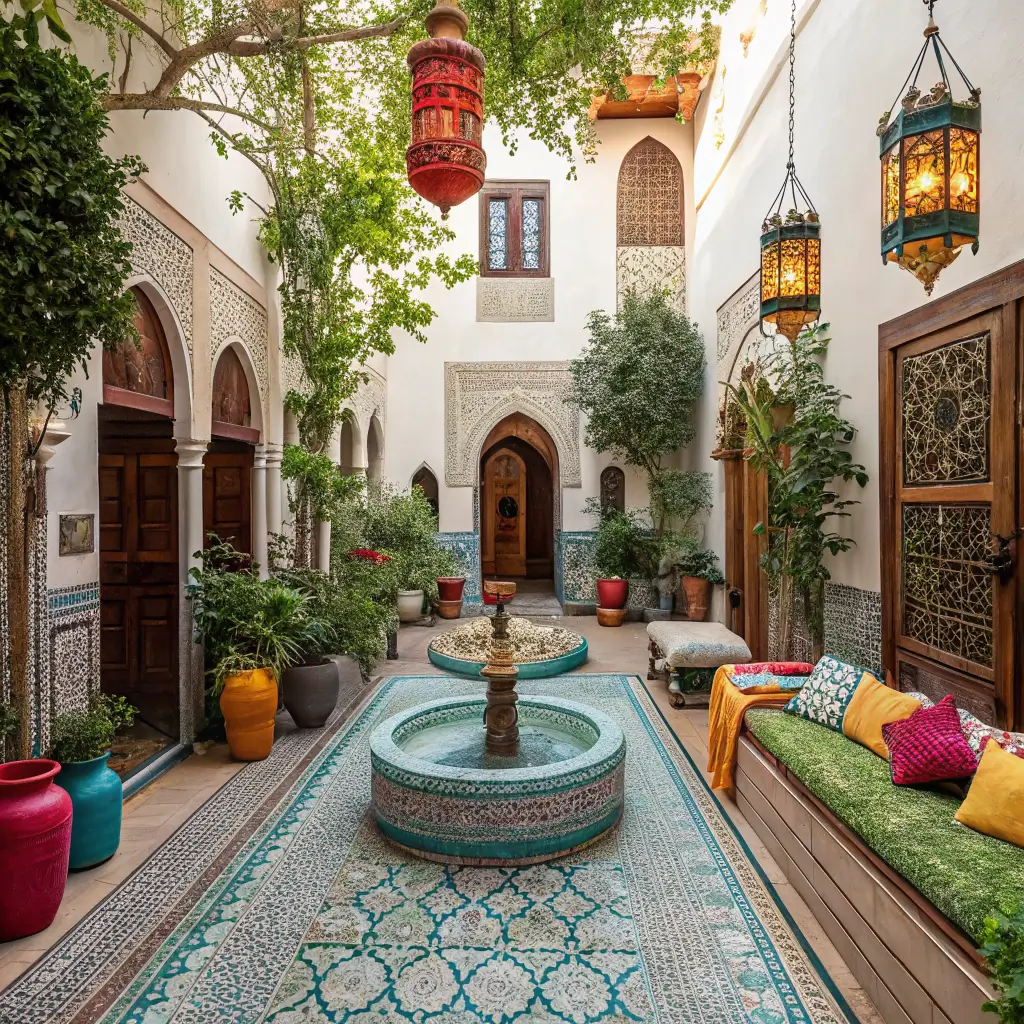
Okay, who doesn’t want their own private riad courtyard? Moroccan design takes the Mediterranean aesthetic and cranks up the drama to eleven. We’re talking bold patterns, rich jewel tones, and more texture than you can shake a mint tea at.
Creating a Moroccan oasis means embracing the concept of an indoor-outdoor sanctuary. Even if you don’t have an actual courtyard (most of us don’t), you can fake it. I turned my boring enclosed patio into a Moroccan dream using some clever tricks. First, zellige tiles are your best friend – those glossy, imperfect geometric tiles that create mesmerizing patterns. Can’t afford real ones? There are some incredibly convincing replicas out there that won’t break the bank.
The key to Moroccan style without going overboard? Pick one show-stopping element and build around it. Maybe it’s an intricately carved wooden screen, a stunning tile feature wall, or a massive brass lantern. Everything else should support, not compete with, your star player.
Creating Your Moroccan Paradise
Here’s how to nail that authentic Moroccan feel:
- Layer, layer, layer – rugs on rugs, cushions on cushions, textiles everywhere
- Install a water feature (even a small tabletop fountain counts)
- Use jewel tones sparingly against neutral backgrounds
- Incorporate metalwork – brass, copper, and silver accents
- Add plants, especially palms and succulents
Don’t forget about lighting! Moroccan spaces live and die by their ambient lighting. Pierced metal lanterns casting intricate shadows transform any space from basic to breathtaking once the sun goes down. I have three different sizes hanging at varying heights in my “courtyard,” and guests always ask if I hired a designer 🙂
Also Read: 12 Fun Interior Design Sketches Ideas for Every Style Lover
Sun-Kissed Italian Bedroom Retreat
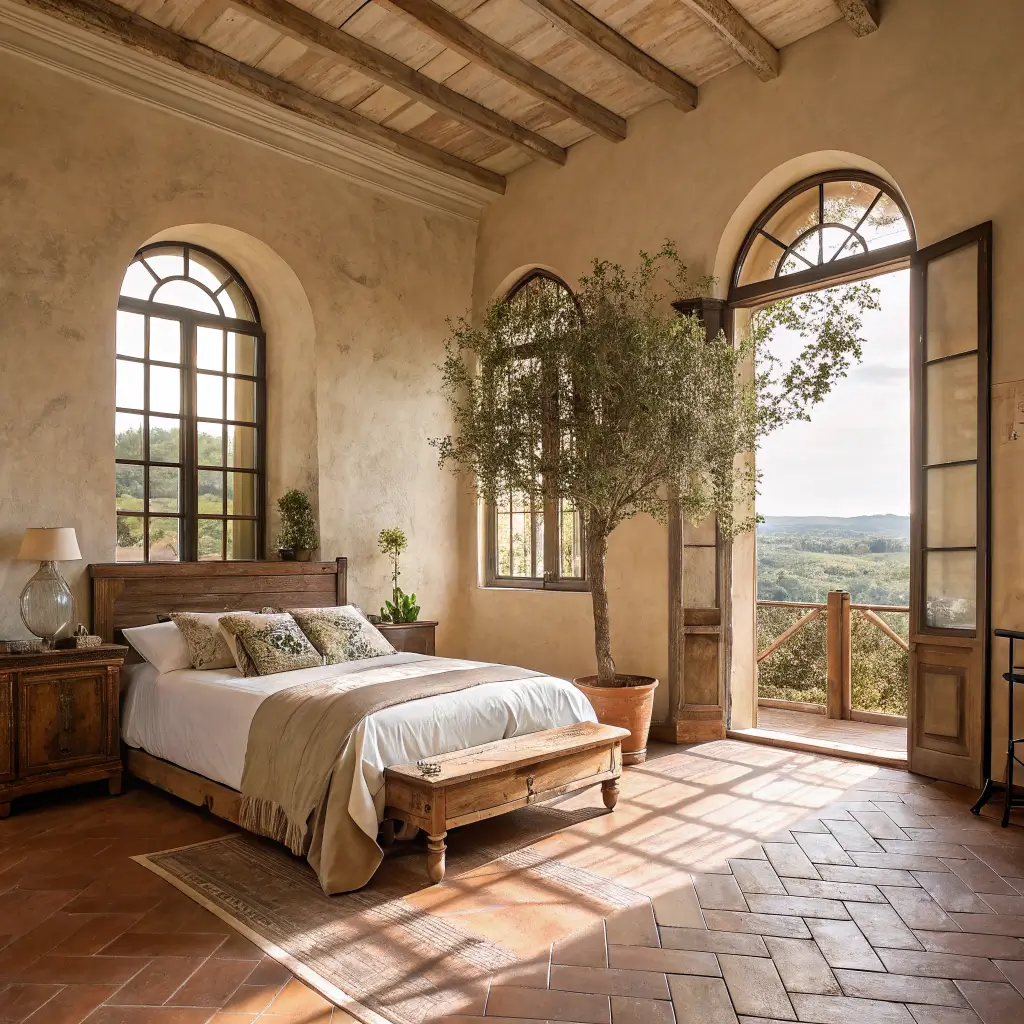
Italian bedrooms understand the assignment – they’re all about romance, comfort, and that effortless elegance that makes you want to stay in bed all day. Think Tuscan villa meets modern comfort, and you’re on the right track.
The foundation of any Italian bedroom starts with the bed itself. We’re talking substantial, preferably with an upholstered or wrought iron headboard that makes a statement. I went with a linen-upholstered headboard in a warm oatmeal color, and it instantly elevated my basic bedroom into something that feels expensive (even though it definitely wasn’t).
Warm, earthy colors dominate the Italian palette – terracotta, ochre, sage green, and warm creams. But here’s the thing about Italian style: it’s not precious. You want your bedroom to look lived-in and loved, not like a museum piece. Mix antique or vintage pieces with modern comforts. That beat-up wooden dresser from the flea market? Perfect. Just pair it with crisp white linens and modern bedside lamps.
The Italian Bedroom Formula
Want that authentic Italian bedroom vibe? Here’s your checklist:
- Heavy, luxurious curtains that pool slightly on the floor
- Exposed wooden beams (fake ones work too – nobody has to know)
- Plastered or textured walls in warm neutrals
- Mix of textures – linen, velvet, aged wood, wrought iron
- Fresh flowers or potted herbs on the nightstand
The secret Italians know that we don’t? Natural light is everything. Position your bed to catch morning sunlight if possible. Install shutters instead of blinds for that authentic Mediterranean feel. And please, invest in good linens – Italians take their thread count seriously, and so should you.
Terracotta Tile Accent Walls
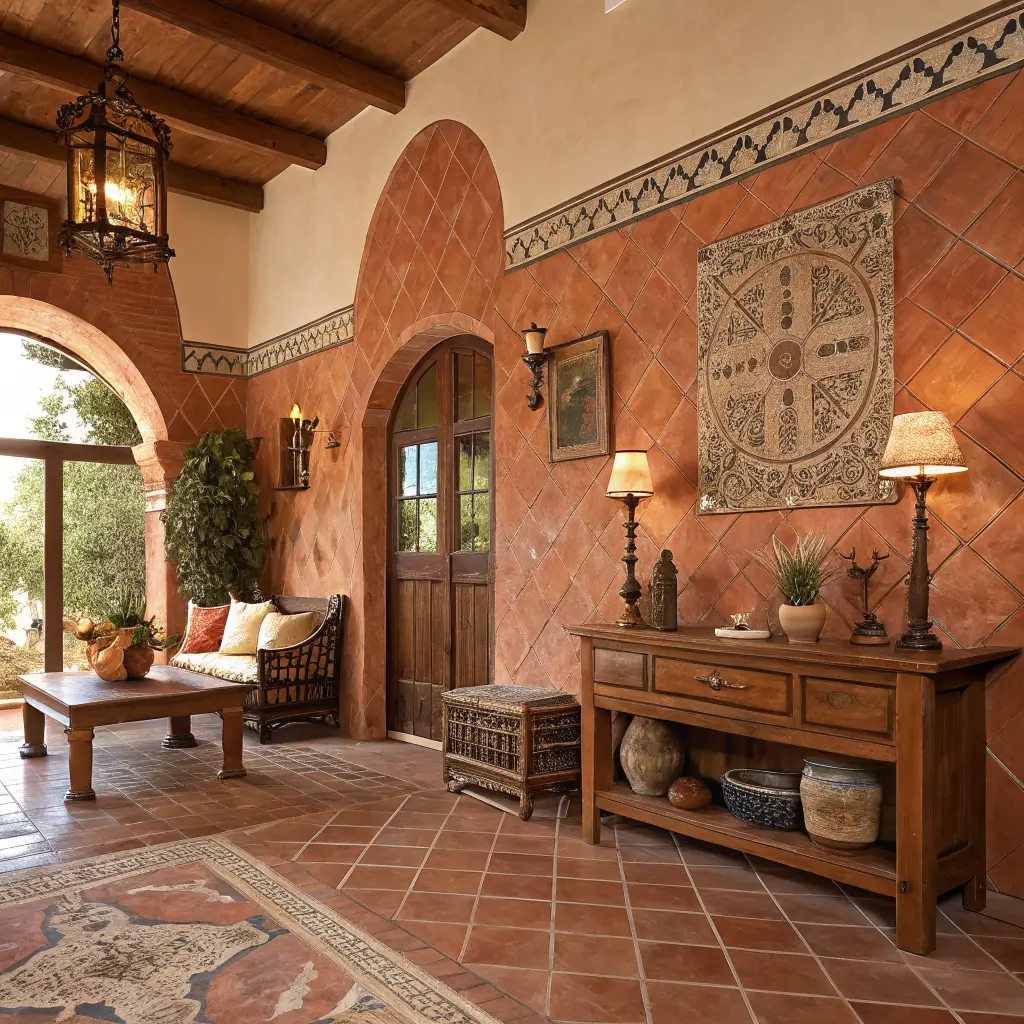
Let’s talk about the most underrated Mediterranean design element – terracotta tiles on walls. Everyone thinks floors when they hear terracotta, but slapping these beauties on your walls? Game changer. Terracotta accent walls bring instant warmth and character to any space without the commitment of tiling entire floors.
I installed a terracotta tile accent wall behind my dining room banquette, and it completely transformed the space. The key is choosing the right finish – go for a matte or slightly weathered look rather than high gloss. You want that authentic, aged appearance that whispers “centuries-old farmhouse” not “Home Depot special.”
What makes terracotta walls work so well? They’re naturally textured and varied in color, so even a plain wall becomes interesting. Each tile has slight color variations, from peachy pinks to deep rust oranges, creating this organic, живой pattern that painted walls just can’t match.
Making Terracotta Work in Modern Spaces
Here’s how to incorporate terracotta walls without looking dated:
- Limit it to one accent wall – more than that gets overwhelming
- Pair with modern furniture for contrast
- Use white or cream grout for a cleaner look
- Consider hexagonal or unusual shapes beyond basic squares
- Seal them properly (learned this the hard way when pasta sauce met unsealed tiles)
Pro tip: Terracotta works brilliantly in unexpected places. Try it in a powder room, behind open kitchen shelving, or as a fireplace surround. The warmth of terracotta plays beautifully against cooler elements like marble countertops or steel fixtures.
Vibrant Mediterranean Color Palette Lounge
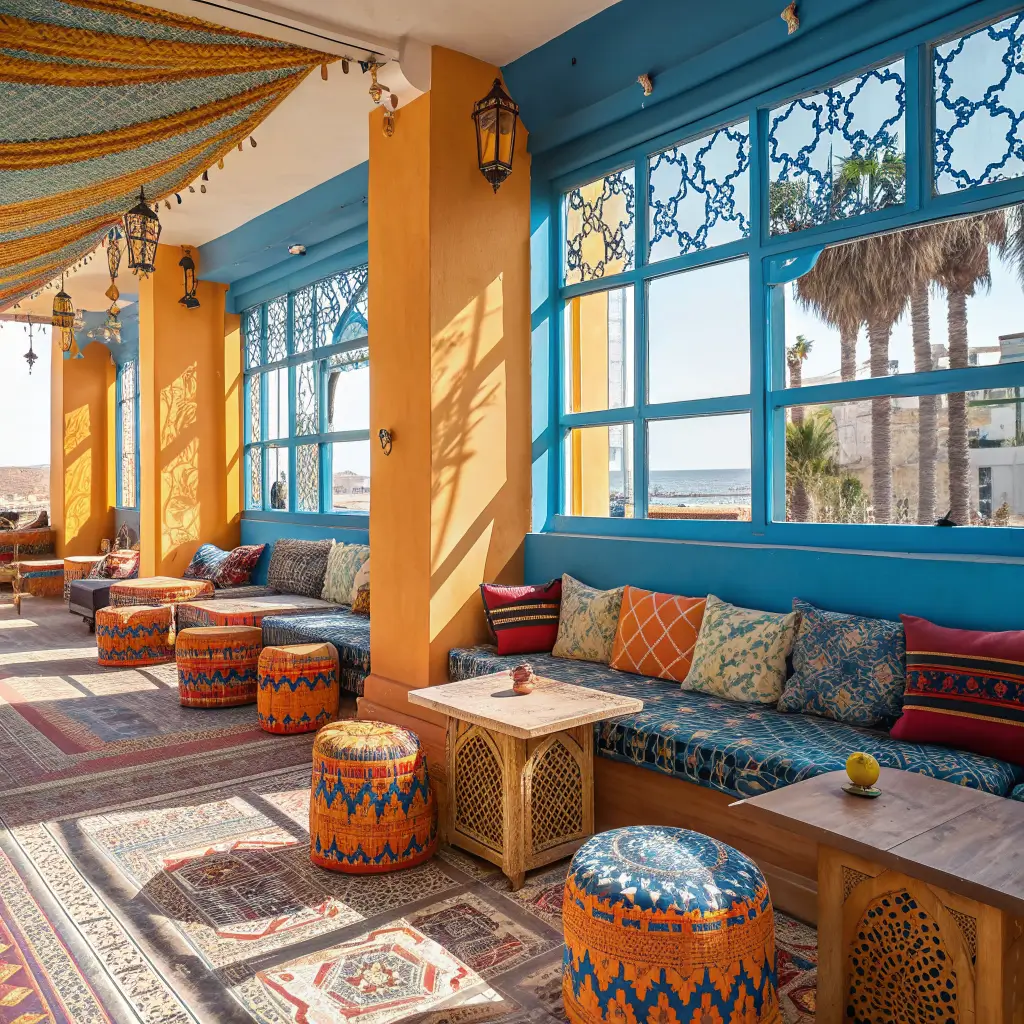
Mediterranean color palettes make beige look boring and gray seem gloomy. We’re diving into a world of sun-baked oranges, sea-foam greens, and deep ocean blues. Creating a vibrant Mediterranean lounge means embracing color fearlessly – but strategically.
Start with a neutral base (white or warm cream walls work best), then layer in your colors through furniture, textiles, and art. I painted one accent wall in a dusty terracotta shade, and suddenly my whole living room felt like it relocated to the Amalfi Coast. The trick is balancing warm and cool tones – too much warm and you’re in the desert, too much cool and you’re in Scandinavia.
The Perfect Mediterranean Color Mix
Here’s your Mediterranean color cheat sheet:
- Base colors: Warm whites, creams, or very pale yellows
- Warm accents: Terracotta, ochre, burnt sienna, warm gold
- Cool accents: Turquoise, cobalt blue, sage green, lavender
- Grounding elements: Deep brown woods, black iron accents
The magic happens when you nail the proportions. IMO, you want about 60% neutrals, 30% warm tones, and 10% cool accent colors. This keeps things vibrant without giving your guests a headache. Bold patterns in small doses – a kilim rug here, some patterned throw pillows there – add personality without overwhelming the space.
Also Read:10 Chic Condo Interior Design Ideas and Trendy Colors
Olive Grove-Inspired Dining Area
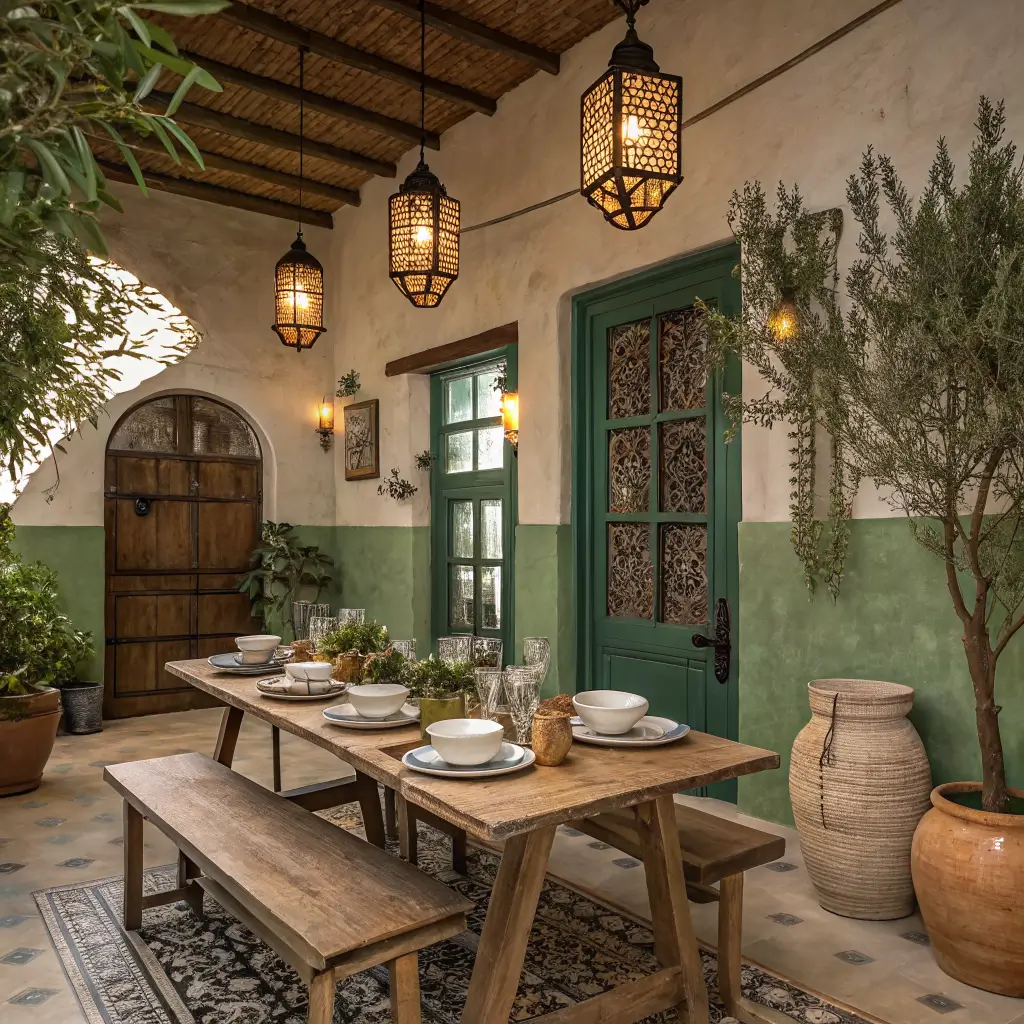
Ever eaten lunch under an olive tree in Provence? That’s the vibe we’re channeling here. Olive grove dining spaces blend rustic charm with natural elegance, creating the perfect backdrop for those long, leisurely meals Mediterranean culture is famous for.
The color palette practically writes itself – sage greens, silvery grays, warm woods, and cream. But the real star? Actual olive branches. I keep a large vase filled with olive branches (fake ones, because let’s be real, fresh ones are impossible to find in most places) as my dining table centerpiece year-round. They bring this sculptural, organic element that flowers just can’t match.
Your dining table should be substantial – think thick wooden tops with either turned legs or a trestle base. Mismatched chairs actually work better than a matching set for that authentic, collected-over-time feel. I mix wooden chairs with a couple of upholstered end chairs, and everyone always wants to know where I got my “set.”
Creating the Olive Grove Atmosphere
Essential elements for your olive grove dining room:
- Natural wood furniture with visible grain and imperfections
- Sage green or gray-green paint on walls or furniture
- Natural fiber rugs (jute or sisal work perfectly)
- Wrought iron chandelier or pendant lights
- Pottery and ceramics in earthy tones
Don’t forget the walls! Large-scale botanical prints or actual preserved olive branches in frames make stunning art pieces. The key is keeping everything organic and slightly rustic – this isn’t the place for sleek modern pieces or formal china.
Arched Doorways & Vaulted Ceilings
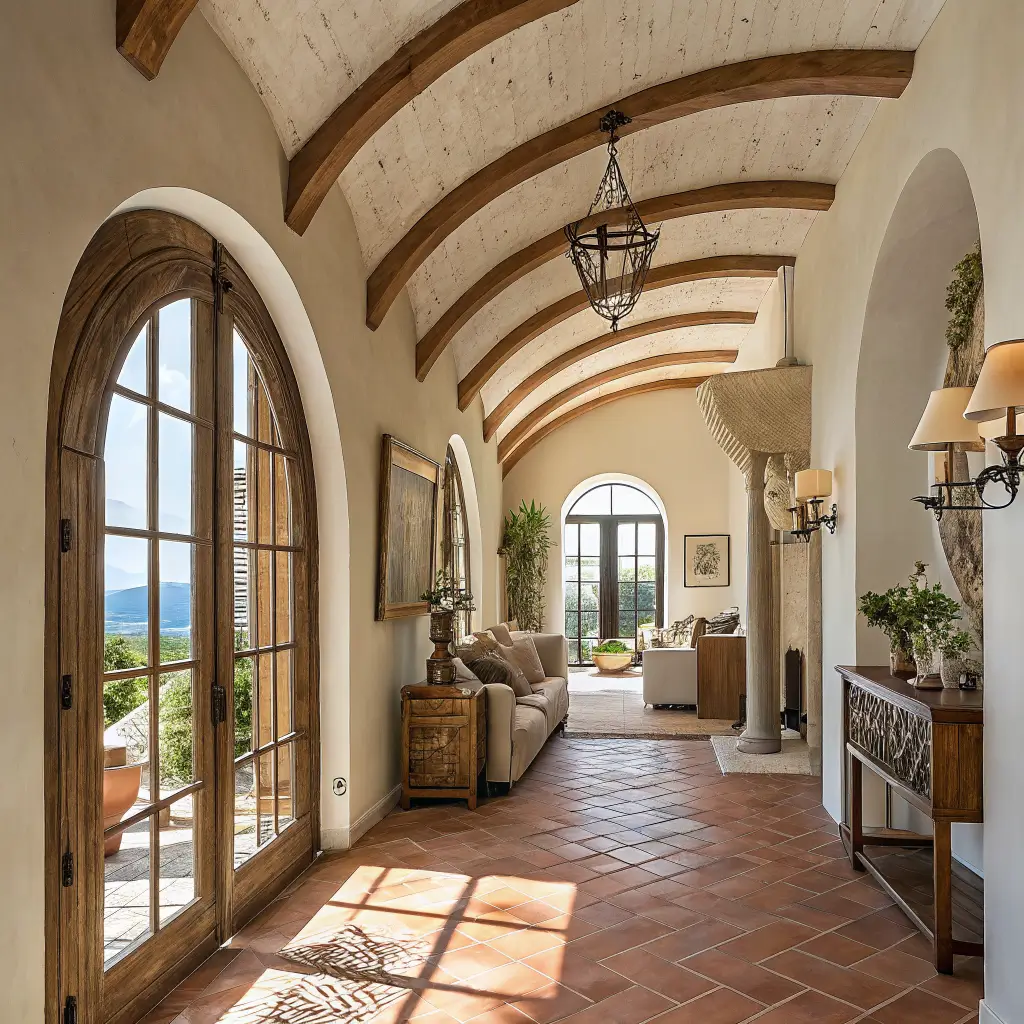
Nothing screams Mediterranean quite like an archway. These architectural elements instantly transport you to a centuries-old villa, even if your house was built in 1982. Arches soften harsh angles and create flow between spaces in a way that standard doorways just can’t match.
Can’t knock down walls to create real arches? Fake it. I installed a prefab archway kit between my kitchen and dining room for under $200, and with some drywall work and paint, it looks completely custom. The curve immediately made both rooms feel larger and more elegant. Vaulted or beamed ceilings take things to the next level, but even just adding faux beams to a flat ceiling creates that Mediterranean charm.
Architectural Elements That Transform
Here’s how to add Mediterranean architecture without major renovation:
- Paint existing doorways to create faux depth with darker colors on the inside edges
- Install decorative arch kits over existing rectangular doorways
- Add ceiling beams (real or faux) painted white or left natural
- Create niche displays with arched tops for art or pottery
- Use arched mirrors to mimic window shapes
The golden rule? Repetition creates cohesion. If you add one arch, try to incorporate the shape elsewhere – maybe through artwork, mirrors, or furniture silhouettes. This creates a design thread that ties your spaces together.
Blue and White Coastal Bathroom
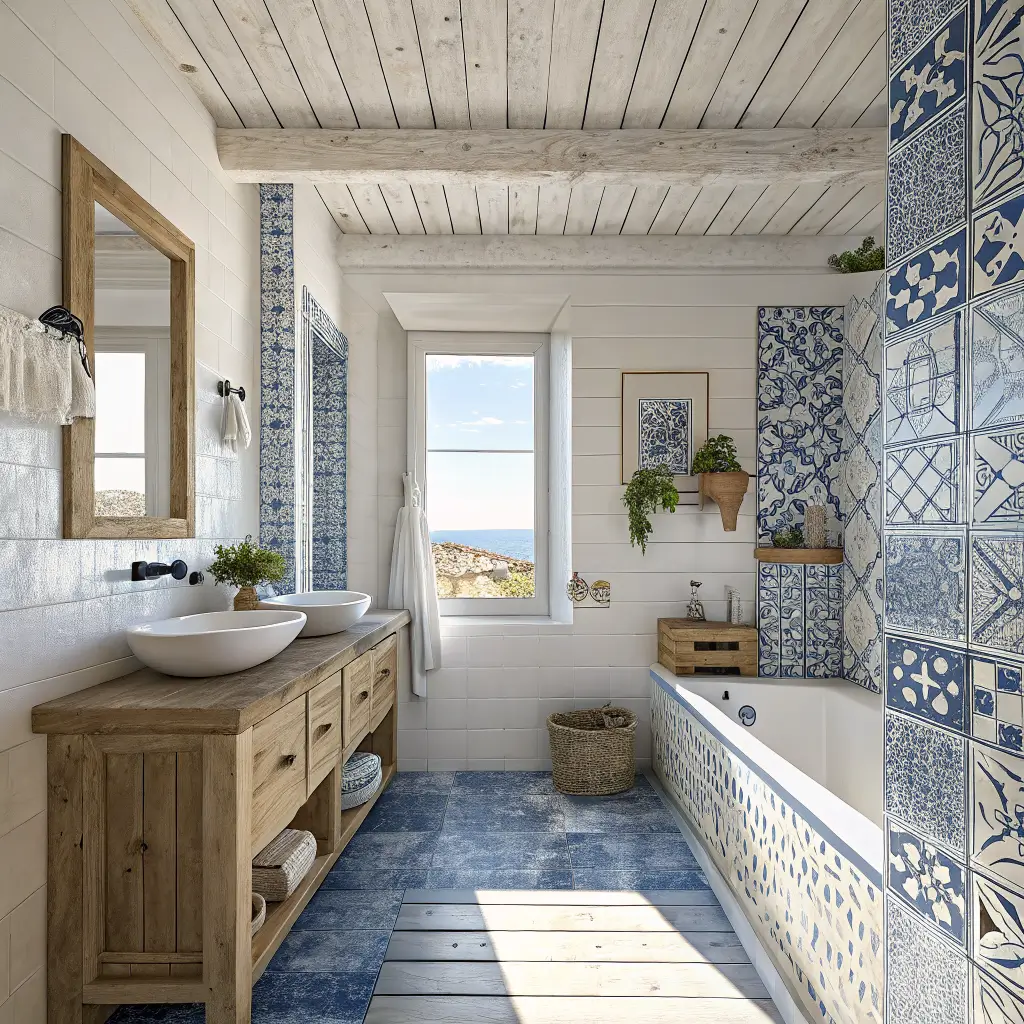
Mediterranean coastal bathrooms make you feel like you’re getting ready for a day at the beach, even when you’re actually prepping for another Zoom meeting. The classic blue and white combo never gets old when you execute it right.
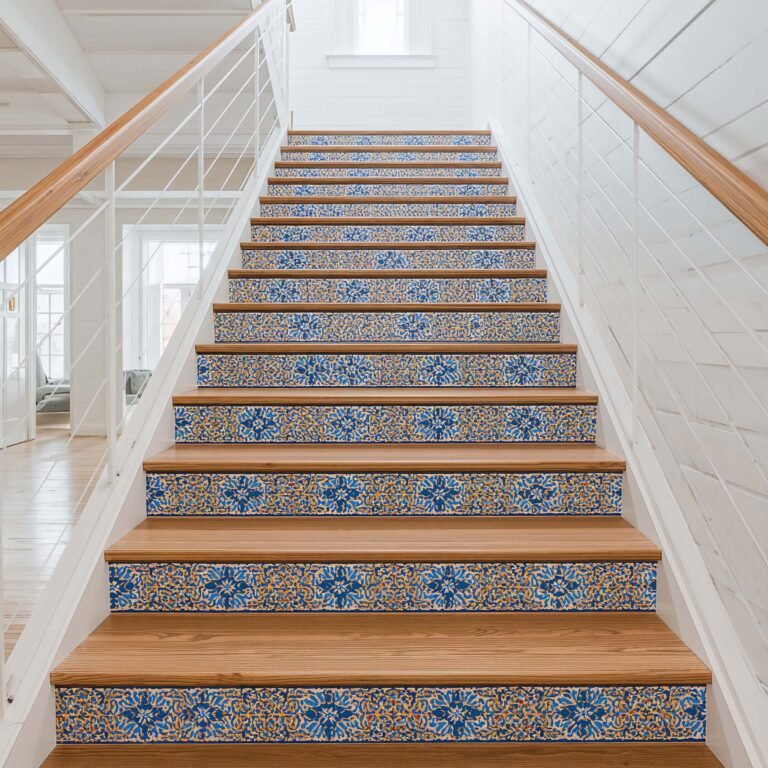
Start with white as your foundation – white tiles, white fixtures, white walls. Then layer in blues through accessories, tiles, and textiles. I used blue and white cement tiles on my bathroom floor, and they’re honestly the best design decision I’ve made. They hide everything (blessing with kids), add pattern without overwhelming, and make my tiny bathroom feel special.
Natural materials are crucial in Mediterranean bathrooms. Think wooden vanities, stone countertops, and rope or wicker storage baskets. The contrast between smooth ceramics and rough natural textures creates that authentic coastal feel.
Coastal Bathroom Must-Haves
Your Mediterranean bathroom needs:
- Patterned tiles somewhere – floor, shower wall, or backsplash
- Natural wood elements (teak works great in humid spaces)
- Brass or oil-rubbed bronze fixtures
- Open shelving for displaying pretty towels and pottery
- A statement mirror (preferably with an interesting frame)
Here’s a hill I’ll die on: skip the nautical kitsch. No anchor decor, no “beach” signs, no seashell soap dispensers. Mediterranean coastal style is sophisticated, not themed. Let the colors and materials do the talking.
Also Read: 12 Beautiful Door Design Interior Ideas for Home Makeovers
Woven Natural Textures & Rugs
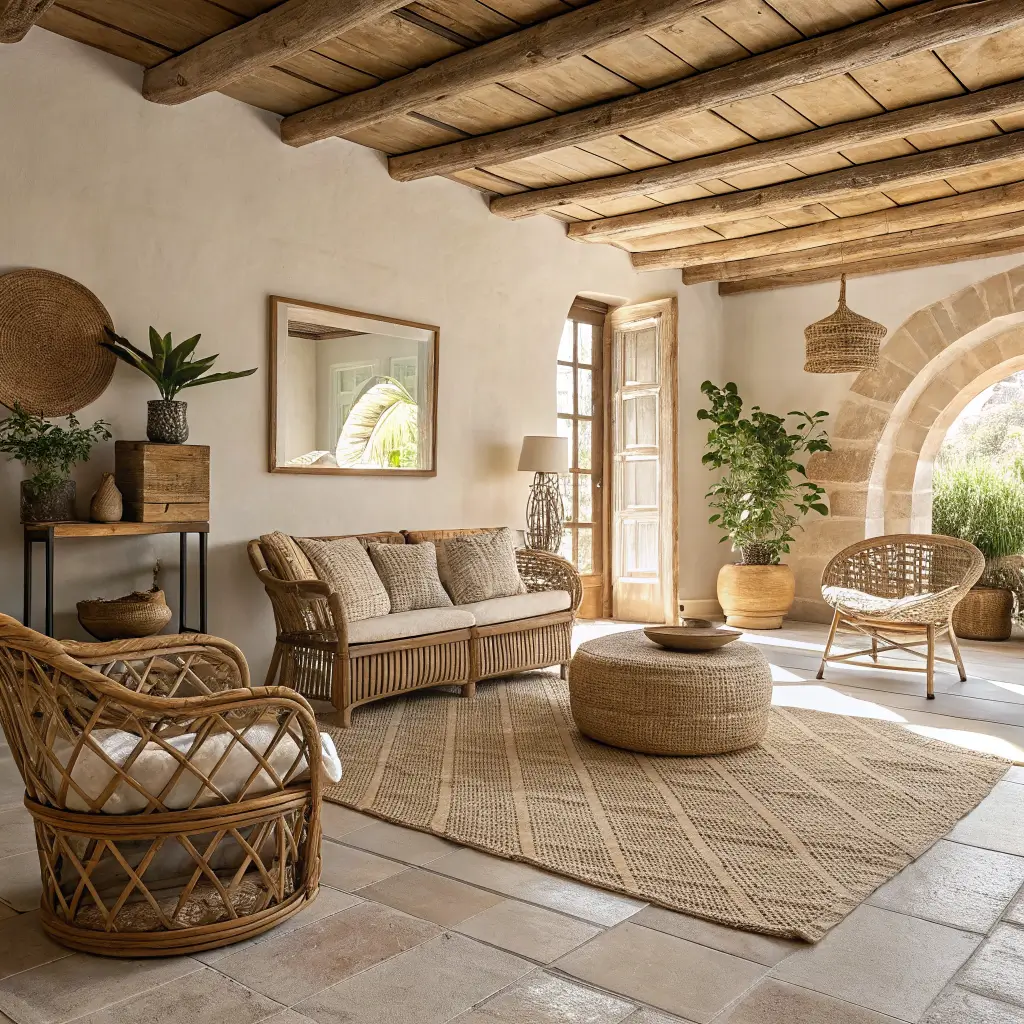
Texture might be the most overlooked element in Mediterranean design, but it’s what transforms a room from flat to fabulous. Woven elements bring warmth, pattern, and that handcrafted quality that makes Mediterranean homes feel so inviting.
Layer different textures like you’re creating a textile symphony. Start with a large jute or sisal rug as your base, then add a smaller patterned kilim or dhurrie on top. Woven baskets become both storage and decoration – I have probably 20 scattered throughout my house holding everything from blankets to mail. Rattan and wicker furniture pieces add another layer of natural texture without the heaviness of wood.
Mastering Mediterranean Textures
Your texture toolkit should include:
- Natural fiber rugs in various sizes for layering
- Woven baskets in different shapes and sizes
- Linen and cotton textiles (never polyester – it kills the vibe)
- Rope elements – mirror frames, lamp bases, curtain tiebacks
- Macramé or woven wall hangings (yes, they’re back)
The secret to making all these textures work together? Keep your color palette neutral in the textured elements. Let the textures themselves create visual interest while your painted walls or colorful tiles provide the color story. This prevents your space from looking too busy or cluttered.
Bringing It All Together
Creating a Mediterranean-inspired home isn’t about slavishly copying every design element from coastal villas. It’s about capturing that relaxed, warm, lived-in feeling that makes Mediterranean homes so appealing. Mix elements from different Mediterranean regions – pair Greek simplicity with Moroccan boldness, Italian elegance with Spanish rusticity.
Remember, Mediterranean design evolved from real life – from protecting homes from harsh sun, from using local materials, from gathering family and friends for long meals. Your Mediterranean space should feel authentic to your life, not like a movie set. Start with one room, nail the vibe, then let it naturally influence the rest of your home.
The best part about Mediterranean design? It’s forgiving. That slightly wonky DIY tile job? Adds character. The mismatched dining chairs you scored at different yard sales? Totally intentional. The paint color that dried differently than the swatch? It’s giving “authentic plaster walls.” This style celebrates imperfection and values comfort over perfection.
So go ahead, pour yourself that glass of wine, put on some Mediterranean playlist, and start planning your transformation. Your cozy Mediterranean haven awaits, and trust me, once you start, you’ll wonder why you waited so long to bring this sunshine-soaked style home. After all, life’s too short for boring beige walls and matching furniture sets, don’t you think?