10 Brilliant Contemporary Interior Design Ideas That Impress

You know that feeling when you walk into someone’s home and everything just clicks? The clean lines, the perfect balance of comfort and style, that effortless vibe that makes you want to curl up with a coffee and never leave? That’s contemporary design working its magic, and honestly, I’m obsessed with how accessible it’s become lately.
Let me share something that might surprise you: creating a contemporary space doesn’t mean you need to sell a kidney or hire some fancy designer who charges more per hour than your monthly rent.
I’ve spent the last decade experimenting with contemporary design in my own homes (yes, plural – I move a lot, don’t judge), and I’ve figured out what actually works versus what just looks good on Pinterest.
Minimalist Contemporary Living Room
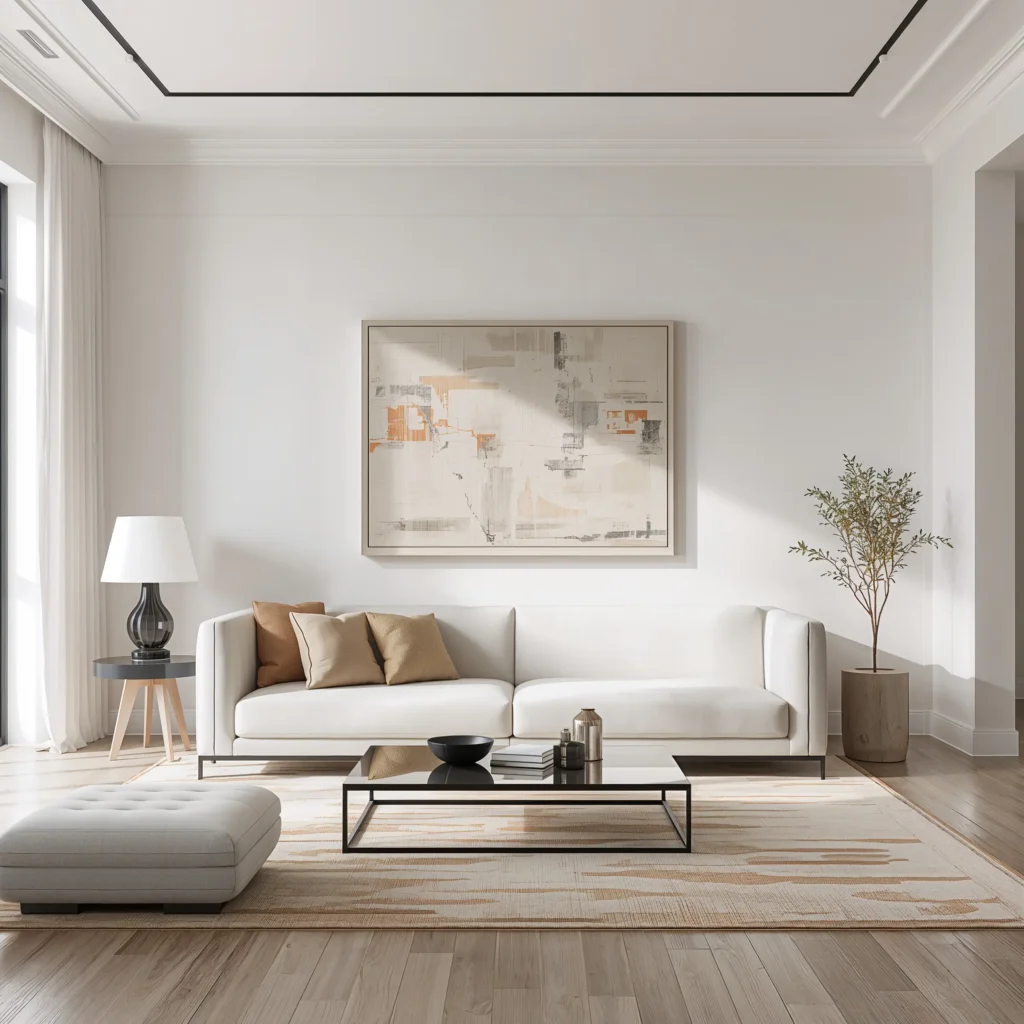
Here’s where most people mess up right off the bat – they think minimalist means boring. Wrong! A minimalist contemporary living room packs more personality than you’d expect, you just need to know where to look.
Start with your color palette. I always go for a neutral base – think whites, grays, and maybe some warm beiges if you’re feeling adventurous. But here’s the kicker: you add depth through textures, not clutter. My living room features a chunky knit throw, smooth leather cushions, and a rough jute rug that all play together beautifully.
The furniture selection makes or breaks this look. You want pieces with clean, geometric lines and low profiles. I scored an amazing sectional sofa with metal legs that practically floats above the floor – it creates this incredible sense of spaciousness even in my not-so-huge apartment.
Key Elements to Nail the Look:
• Statement lighting: Think oversized pendant lights or sleek floor lamps
• Hidden storage solutions: Ottoman with storage, floating shelves, built-in cabinets
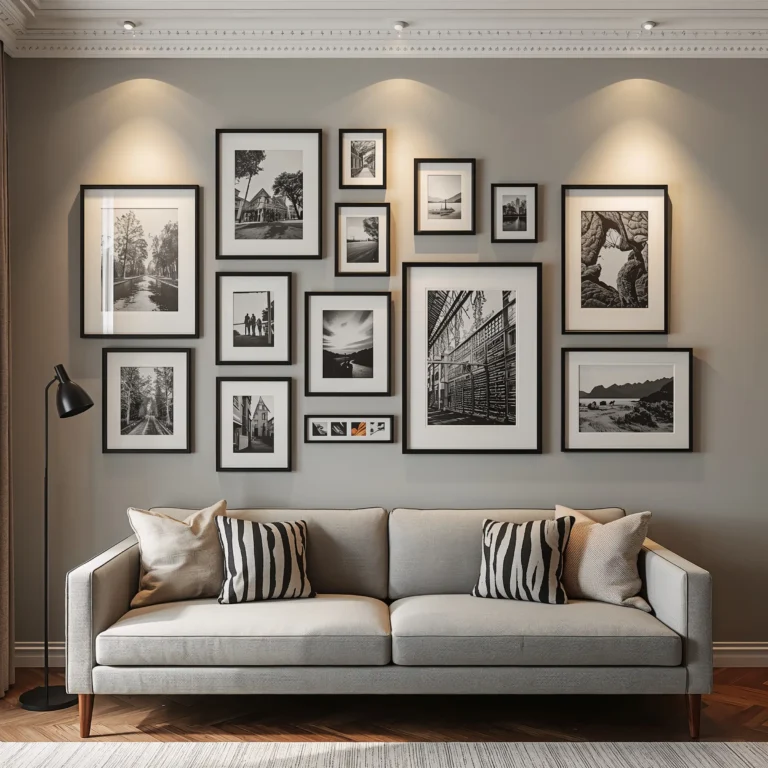
• One bold art piece: Instead of gallery walls, go for one striking artwork
• Natural materials: Wood, stone, or metal accents keep things interesting
Ever noticed how the best minimalist spaces feel warm despite having less stuff? That’s because they focus on quality over quantity. My coffee table? It’s a single slab of live-edge walnut that cost me a fortune, but it’s literally the only table in the room, and it commands attention like nobody’s business.
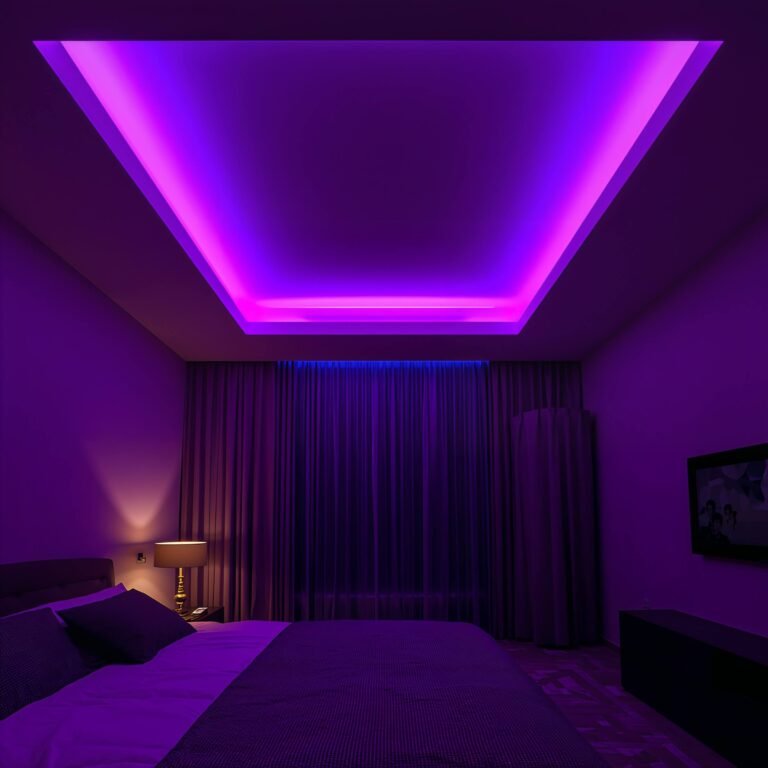
Neutral Contemporary Bedroom
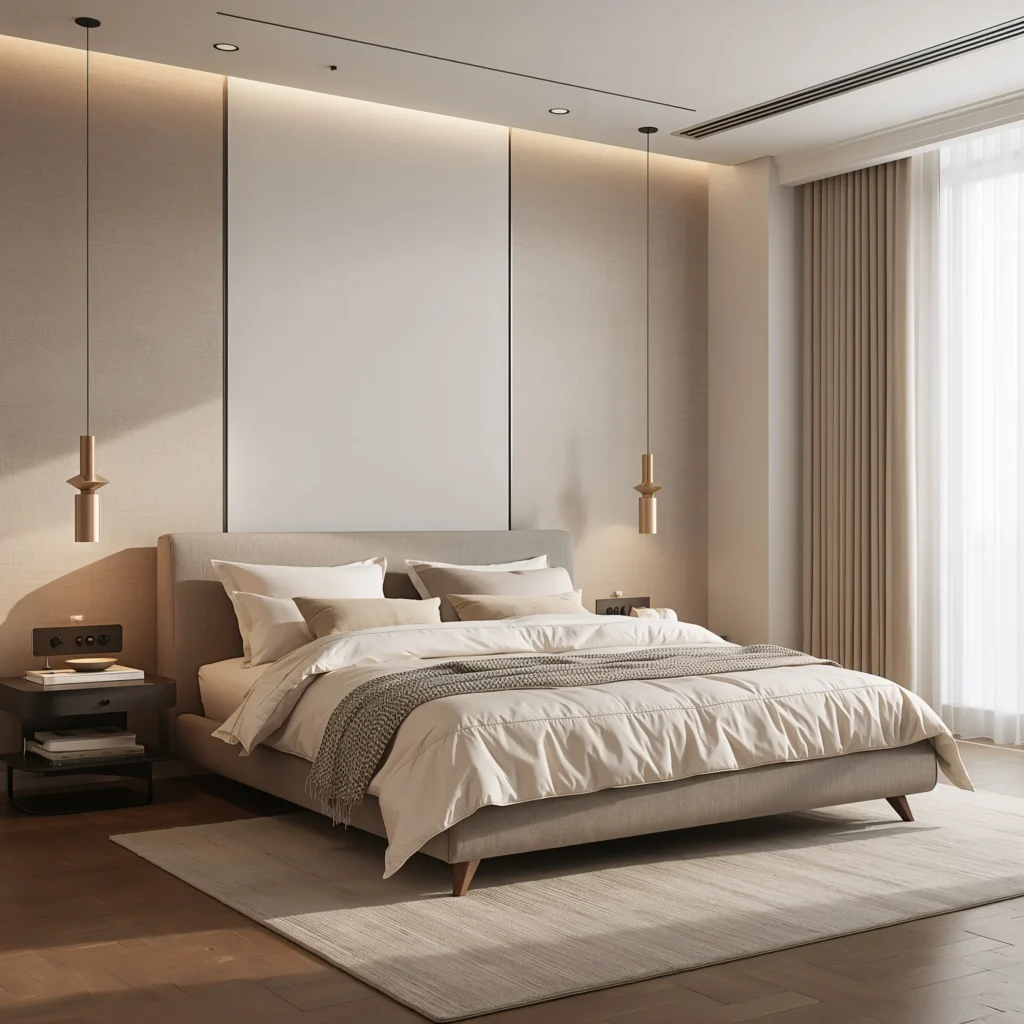
Creating a neutral contemporary bedroom feels like wrapping yourself in the world’s most expensive blanket – except you don’t need expensive anything to achieve it. The secret lies in layering different shades of the same color family.
I learned this trick after painting my bedroom walls “greige” (gray-beige, for the uninitiated) and initially hating how flat it looked. Then I added cream bedding, taupe curtains, and charcoal accent pillows. Suddenly, the room had dimension without looking like a rainbow exploded.
The bed should be your focal point, and platform beds work brilliantly for contemporary spaces. Mine sits low to the ground with an upholstered headboard that extends almost to the ceiling – it’s dramatic without being fussy.
Creating That Hotel-Like Ambiance:
Wall-mounted nightstands free up floor space and look incredibly sleek. I installed mine with hidden cables for phone charging, and visitors always ask where I got them. FYI, they’re just basic IKEA shelves I spray-painted matte black 🙂
Lighting plays a huge role here too. Skip the overhead fixtures if you can. I use a combination of bedside sconces and a floor lamp with a dimmer switch. The ability to control lighting levels transforms the mood instantly – bright for reading, dim for Netflix binges.
Window treatments shouldn’t be an afterthought. Floor-to-ceiling curtains in a light, flowing fabric make windows look larger and add that luxurious hotel vibe everyone craves.
Contemporary Kitchen With Sleek Cabinets
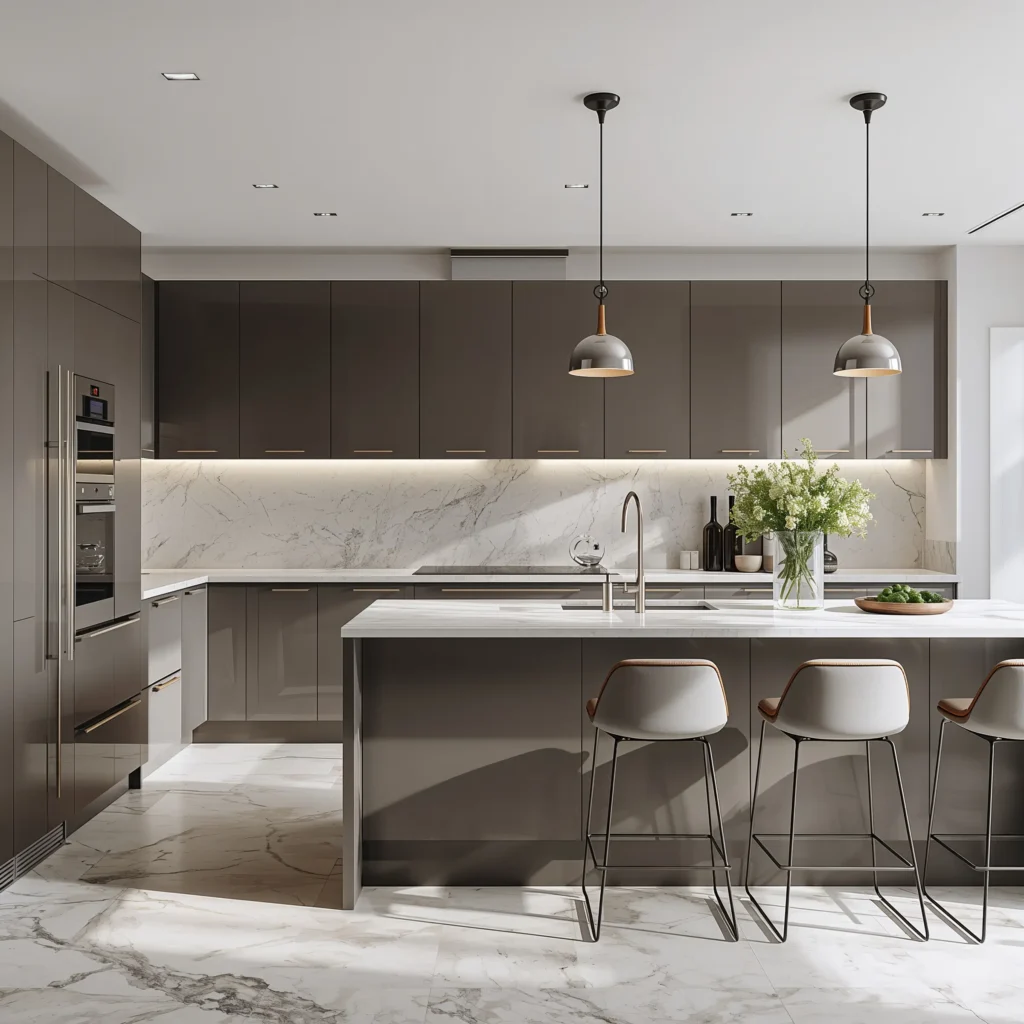
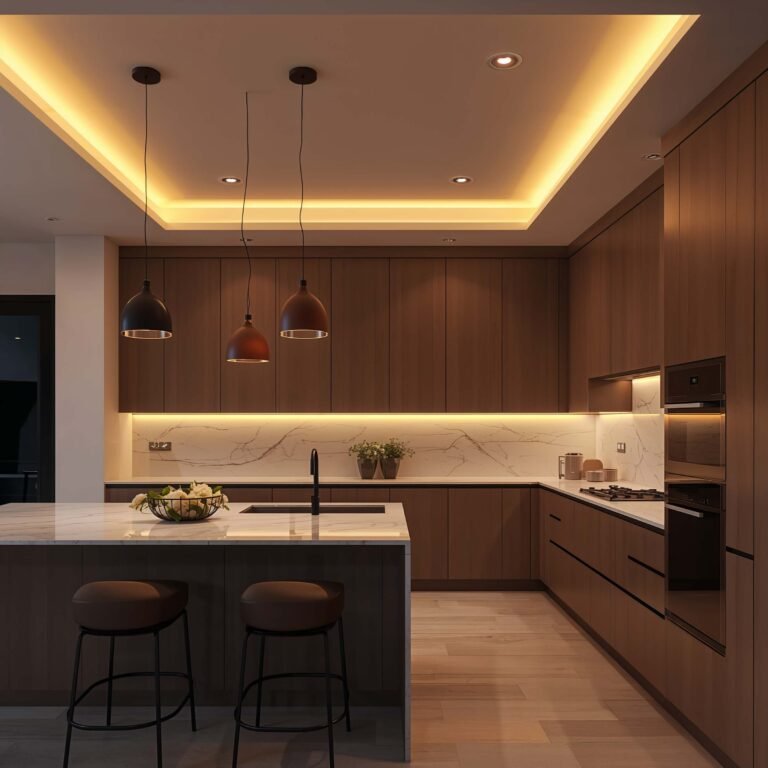
Kitchens get me excited in ways that probably aren’t normal, but hear me out. A contemporary kitchen with sleek cabinets doesn’t just look amazing – it actually makes cooking more enjoyable. Who knew that flat-panel cabinet doors could spark joy?
I recently renovated my kitchen (RIP savings account), and choosing handleless cabinets changed everything. The push-to-open mechanisms create uninterrupted lines that make the space feel twice as large. Plus, no more catching sleeves on cabinet handles while rushing to flip pancakes.
Must-Have Features for Contemporary Kitchens:
• Waterfall countertops: The countertop material extends down the sides
• Integrated appliances: Hidden behind matching cabinet panels
• Under-cabinet lighting: Essential for both task lighting and ambiance
• Mixed materials: Combine wood, metal, and stone for visual interest
The backsplash situation deserves its own paragraph. Forget tiny subway tiles (so 2015). Large-format tiles or solid slabs create that seamless look contemporary design demands. I went with a marble-look porcelain slab that runs from counter to ceiling – zero grout lines, maximum impact.
Color schemes typically stick to monochromatic palettes, but don’t be afraid to go dark. My lower cabinets are charcoal gray while the uppers are white, creating this grounded-yet-airy feel that photographs beautifully. Not that I’m shallow or anything, but Instagram-worthy kitchens make meal prep more fun, IMO.
Also Read: 12 Unique Bar Interior Design Ideas and Rustic Charm
Contemporary Small Apartment Design
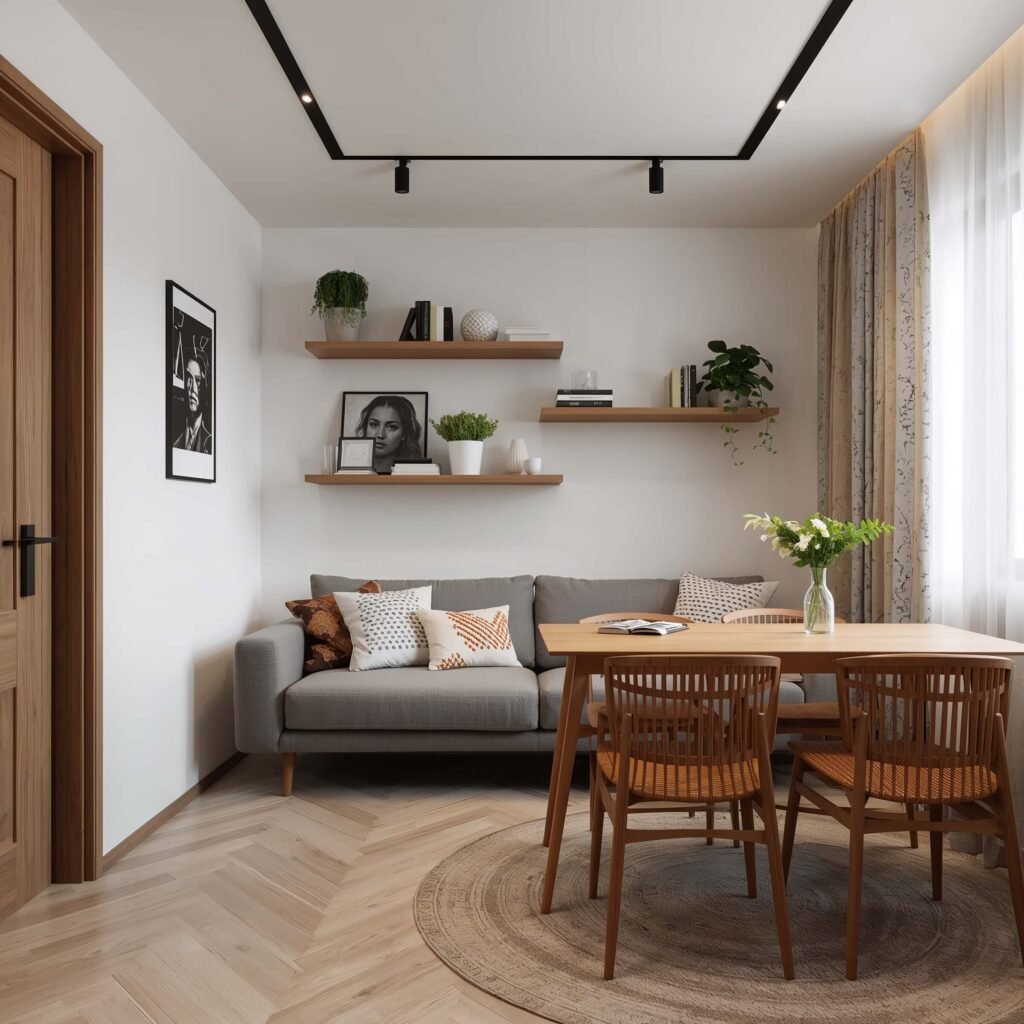
Living in 650 square feet taught me more about contemporary design than any magazine ever could. Small spaces actually benefit more from contemporary principles because every element serves a purpose.
The biggest mistake people make? Trying to shrink traditional design into tiny spaces. Contemporary design embraces the constraints instead of fighting them. My entire apartment follows one cohesive color scheme – various shades of gray with pops of navy blue. This visual consistency makes everything flow together.
Multifunctional furniture becomes your best friend. My dining table extends when needed but usually stays compact. The bench along one side has hidden storage for extra bedding. Even my mirror does double duty – it’s actually a jewelry cabinet.
Space-Maximizing Strategies:
Here’s something nobody tells you: vertical space matters more than floor space. I installed shelving units that reach the ceiling, drawing eyes upward and making my ceilings appear higher. The top shelves hold decorative items while lower ones handle daily necessities.
Transparent furniture pieces work magic in small spaces. My acrylic console table and ghost chairs practically disappear, keeping sight lines open. Visitors always comment on how spacious my apartment feels, not realizing they’re being visually tricked.
Room dividers don’t need to be walls. My bookshelf (oriented perpendicular to the wall) separates my sleeping area from the living space without blocking light. Contemporary design loves these subtle boundaries that maintain openness.
Luxury Contemporary Bathroom
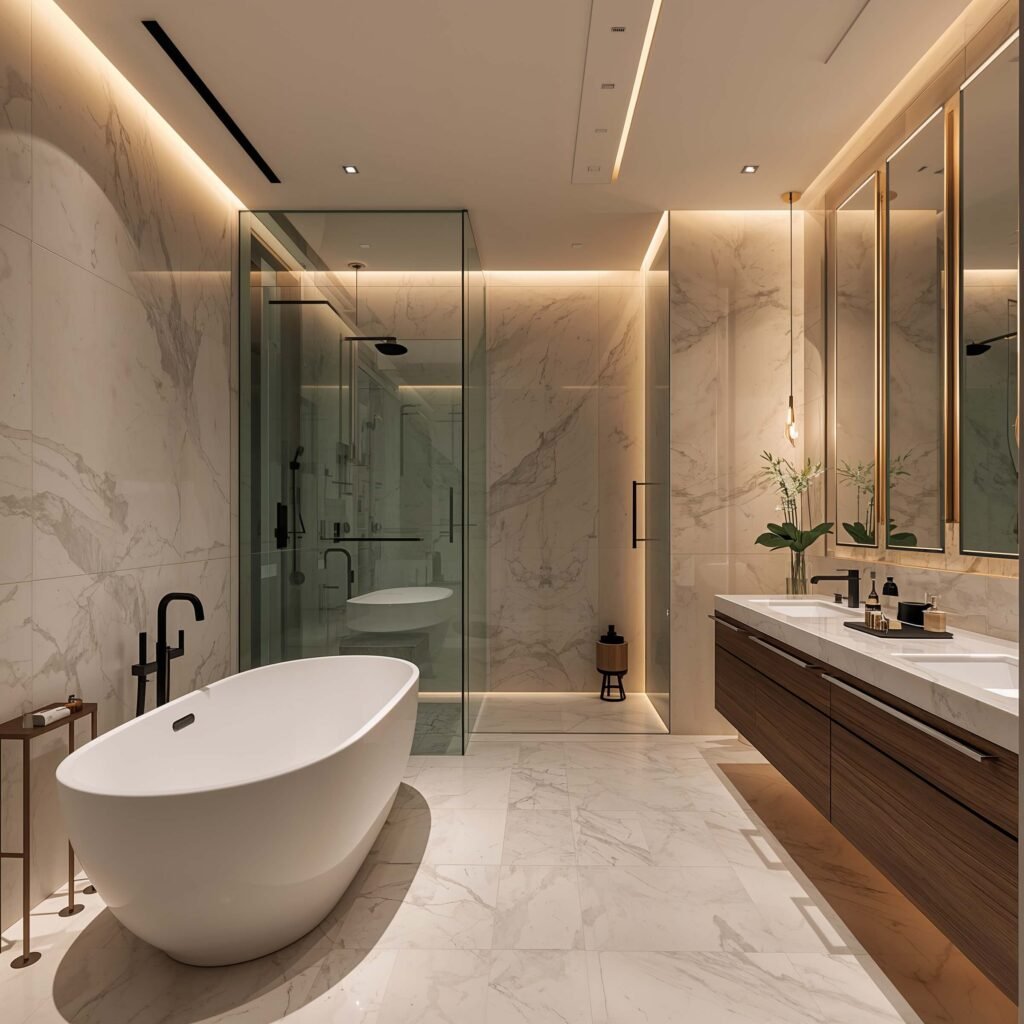
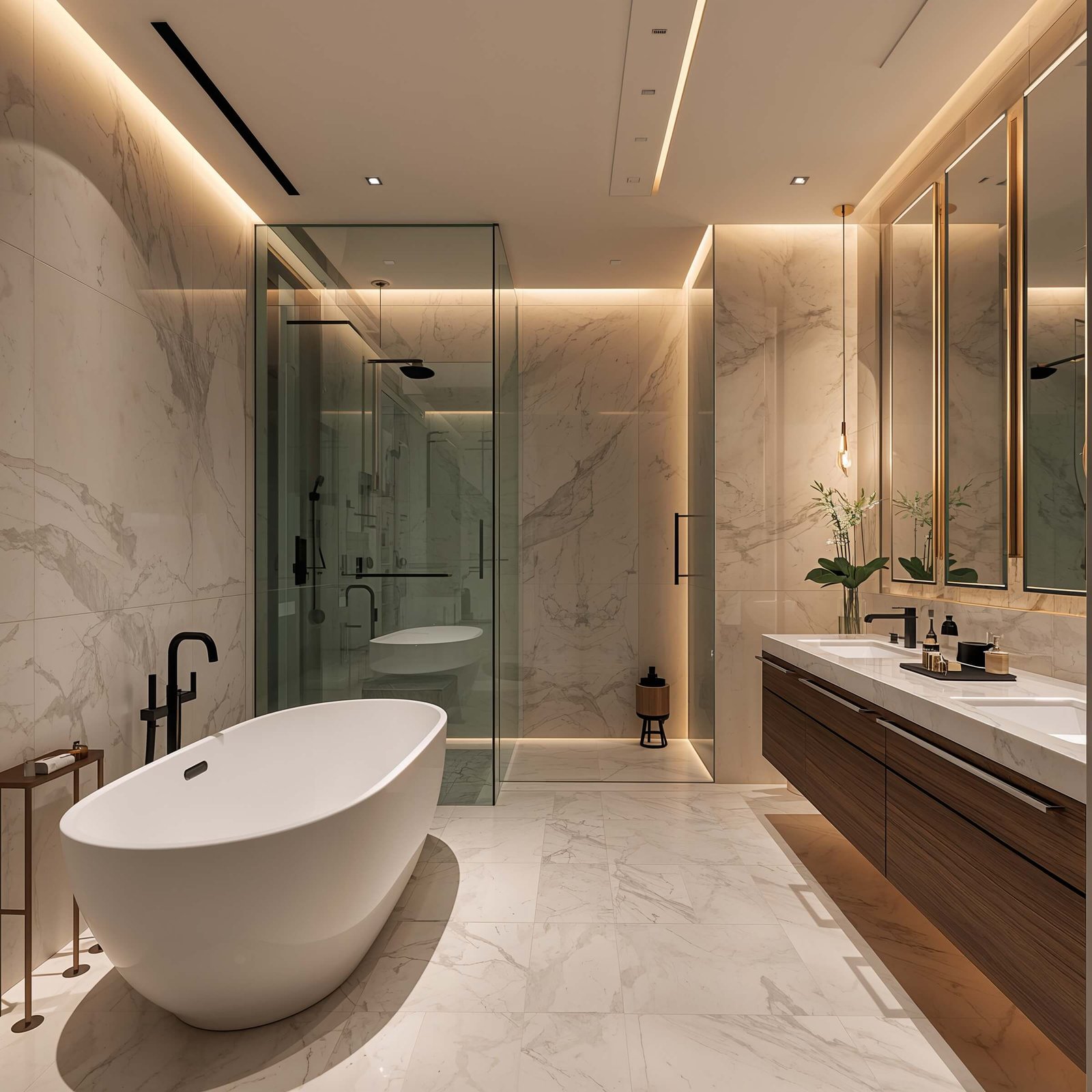
Want to feel like you’re at a spa every morning? A luxury contemporary bathroom delivers that experience without requiring an actual trust fund. Though let’s be real – if you have trust fund money, definitely splurge here.
The shower situation sets the tone for everything else. Frameless glass enclosures keep things visually open, while rainfall showerheads mounted in the ceiling create that luxe experience. I added a handheld option too because practicality matters, even in fantasy bathrooms.
Floating vanities changed my life, and I’m not being dramatic. They make floor cleaning easier, create an illusion of more space, and look impossibly chic. Mine has integrated LED lighting underneath that creates this gorgeous glow at night.
Elements That Scream Luxury:
• Freestanding bathtubs: Sculptural and stunning as a centerpiece
• Large-format tiles: Fewer grout lines mean easier maintenance
• Heated floors: Once you experience this, there’s no going back
• Smart mirrors: With built-in lighting and defogging features
The materials you choose make or break the luxury factor. Natural stone (or convincing look-alikes) adds instant sophistication. I mixed marble-look porcelain with matte black fixtures for contrast that feels both timeless and modern.
Contemporary Open Concept Space
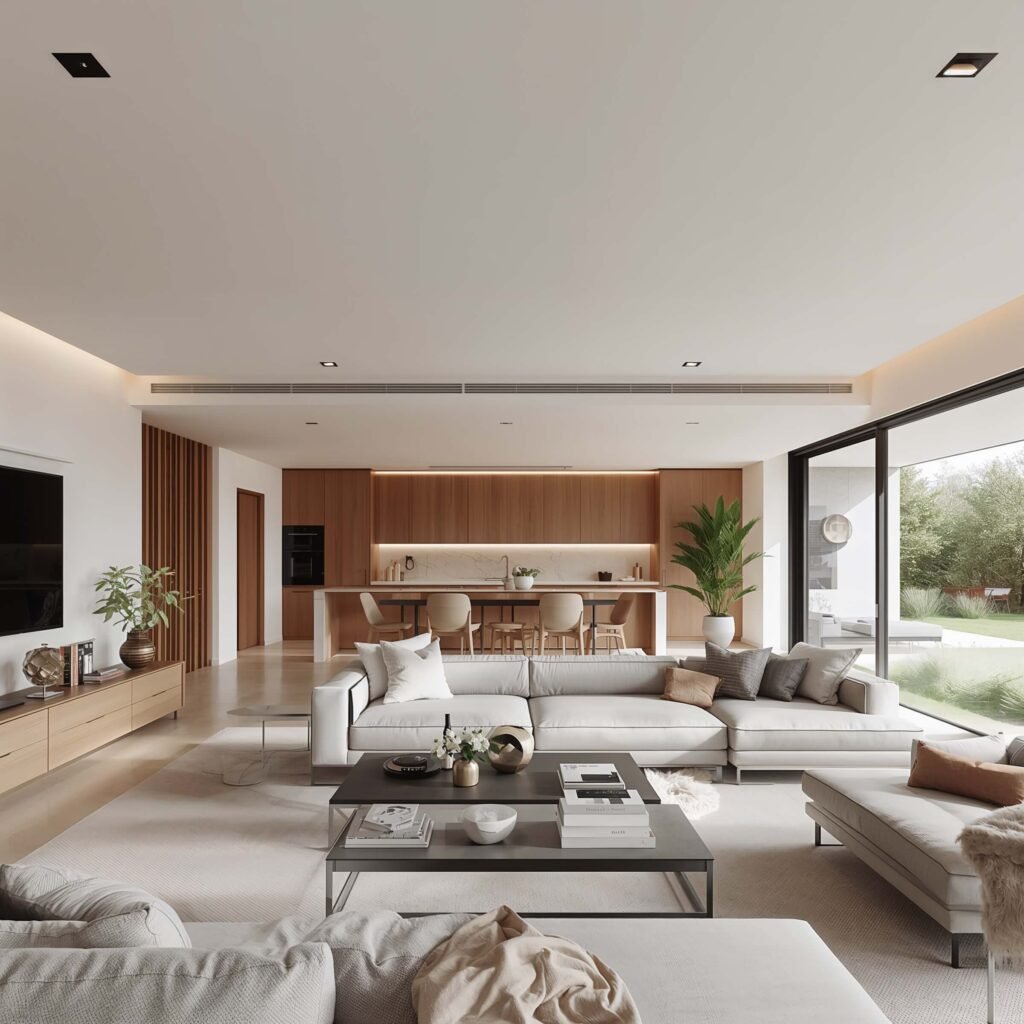
Open concept living gets a bad rap sometimes, but when you nail contemporary design principles, these spaces absolutely sing. The key lies in creating distinct zones without building walls.
I define different areas through furniture placement and area rugs. My living room rug anchors the seating area, while the dining space gets its own rug in a complementary pattern. This visual separation maintains the open feel while providing structure.
Consistent flooring throughout keeps everything cohesive. I chose wide-plank engineered hardwood in a light oak finish that runs through my entire main floor. No transitions, no breaks – just seamless flow that makes the space feel enormous.
Creating Flow in Open Spaces:
Lighting helps establish different zones too. Pendant lights over the kitchen island, a chandelier above the dining table, and floor lamps in the living area all work together while maintaining their own identities. Dimmer switches on everything let me control the mood for different occasions.
Color continuity matters more in open concepts than anywhere else. I use the same white on all walls but introduce variety through furniture and accessories. My kitchen cabinets, dining chairs, and living room throw pillows all feature the same shade of sage green, tying everything together subtly.
Ever notice how some open concept spaces feel chaotic while others feel peaceful? The difference usually comes down to sight lines. I arranged my furniture to create clear pathways and kept tall pieces against walls to maintain visual openness.
Also Read: 10 Stunning 80s Interior Design Ideas and Retro Room Inspiration
Contemporary Home Office Setup
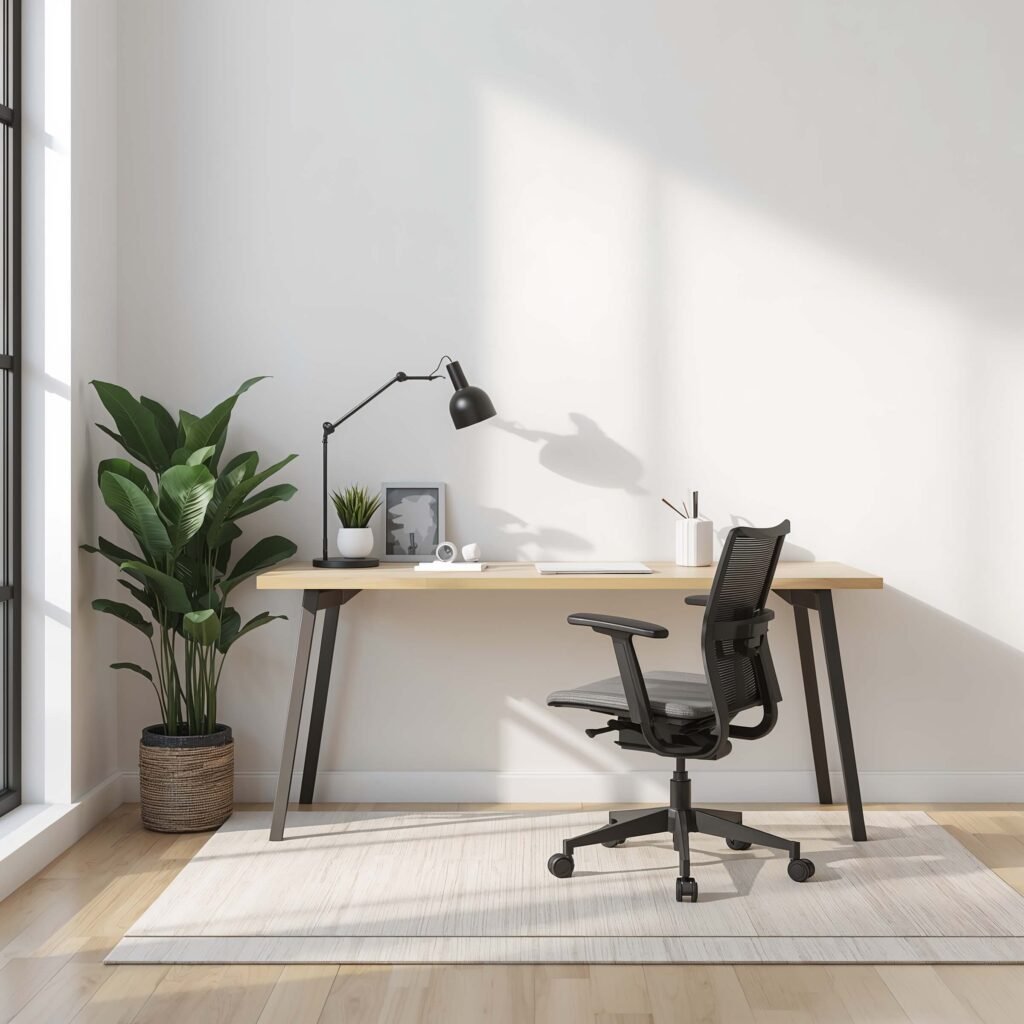
Working from home permanently changed how I think about office design. Gone are the days of shoving a desk in a corner and calling it good. Contemporary home offices blend productivity with style, making those long Zoom calls slightly more bearable.
My desk floats in the room rather than pushing against a wall. This setup looks more professional on video calls and prevents that trapped feeling that wall-facing desks create. The wire management system hidden underneath keeps everything clean – nobody needs to see my cable chaos.
Storage solutions make or break a contemporary office. Open shelving displays attractive items while closed cabinets hide the ugly necessities. I use matching boxes and bins to maintain visual consistency even when things get messy.
Productivity-Boosting Design Elements:
• Adjustable task lighting: Prevents eye strain during long work sessions
• Ergonomic seating: Style doesn’t mean sacrificing comfort
• Sound-absorbing materials: Rugs and upholstered pieces reduce echo
• Biophilic elements: Plants improve air quality and mood
The color psychology aspect fascinated me once I started researching. Blues and greens promote focus, so I incorporated navy accents throughout. My chair, lamp shade, and artwork all feature variations of blue that keep me centered during stressful deadlines.
Contemporary Entryway Styling
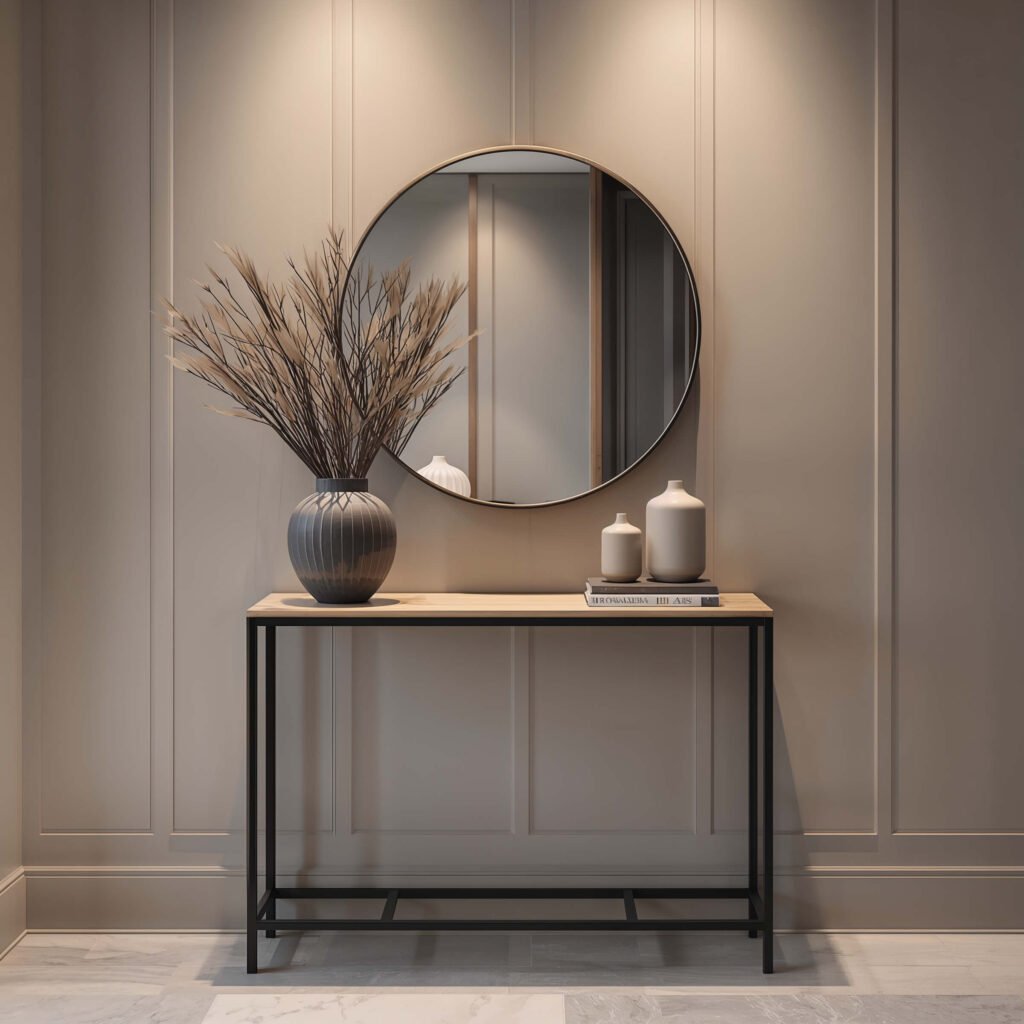
First impressions matter, and your entryway sets expectations for the entire home. A well-designed contemporary entryway combines function with that wow factor everyone craves.
I learned the hard way that entryways need more storage than you think. My sleek console table looks minimal but hides a shocking amount of stuff. The drawers hold keys, mail, and random items that would otherwise clutter surfaces.
Essential Entryway Components:
The mirror situation deserves serious consideration. Oversized mirrors don’t just help with last-minute appearance checks – they double the visual space and reflect light deeper into your home. Mine has a thin black frame that ties into other metal accents throughout the space.
Hooks and coat storage can be sculptural elements rather than purely functional. I installed a series of wooden pegs at varying heights that create an interesting pattern even when empty. During winter, they handle coats beautifully without looking cluttered.
Lighting makes the biggest impact here. A statement pendant or chandelier immediately elevates the space. I chose a geometric fixture that casts interesting shadows on the walls – it’s basically functional art.
Contemporary Dining Room Look
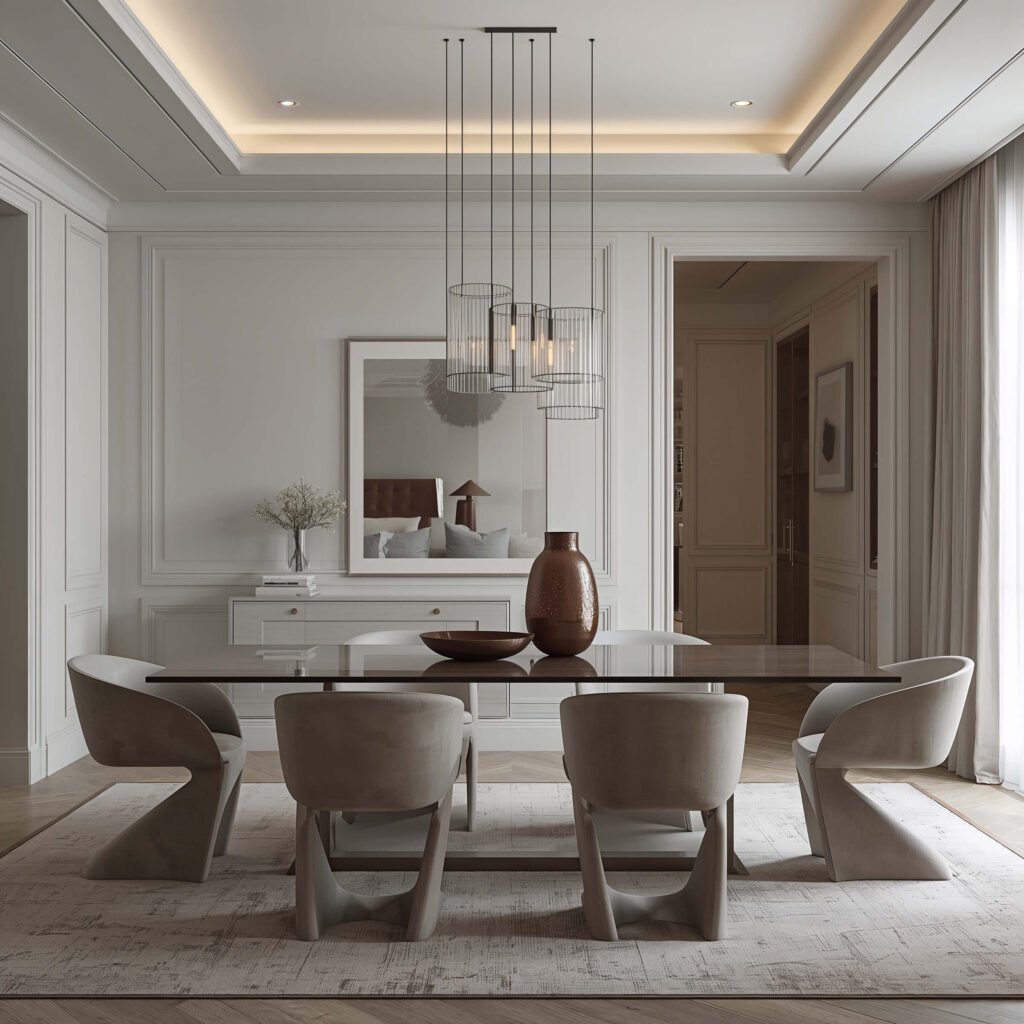
Dining rooms often get neglected (guilty as charged), but contemporary design can transform them into spaces you actually want to use. The days of formal, stuffy dining rooms are officially dead.
My dining table breaks every traditional rule and I love it. The live-edge wood top sits on hairpin legs, mixing natural and industrial elements perfectly. Six chairs would be standard, but I use four chairs and a bench for flexibility and visual interest.
The lighting above your table matters more than anywhere else. I hung three small pendants instead of one large fixture, creating intimate pools of light that make dinner parties feel special. The key? Hanging them low enough to create ambiance but high enough to maintain conversation sight lines.
Modern Dining Room Essentials:
• Mixed seating options: Combining chairs and benches adds variety
• Statement lighting: This is where you can go bold
• Minimal table decor: A single runner or centerpiece, not both
• Bar cart or sideboard: For both storage and display
Wall treatment can dramatically impact the dining room vibe. I created an accent wall using vertical wood slats that add texture without overwhelming the space. The natural wood warms up the contemporary aesthetic while maintaining clean lines.
Also Read: 12 Elegant Office Interior Design Luxury Ideas to Inspire You
Contemporary Studio Apartment Layout
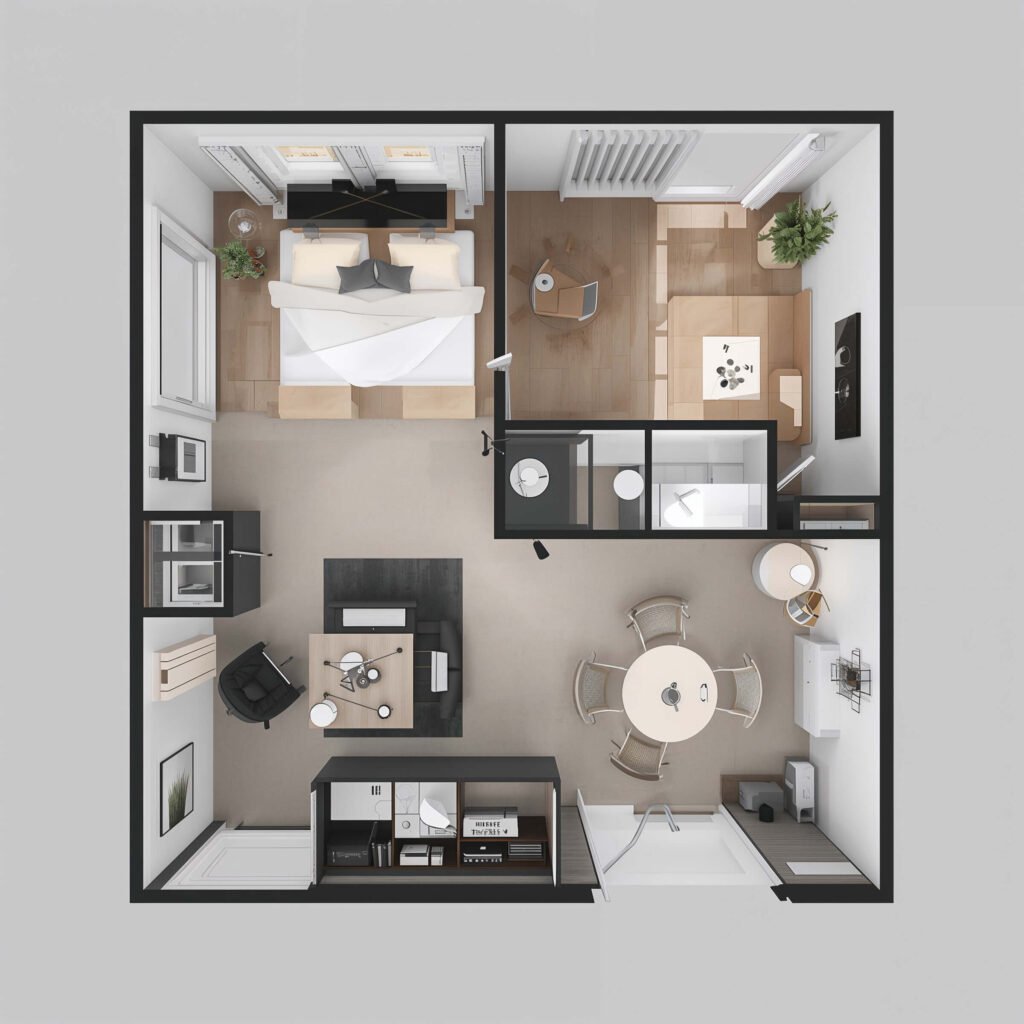
Studio living forces you to get creative, and contemporary design principles actually thrive under these constraints. Every square foot needs to work harder, but that doesn’t mean sacrificing style.
Room dividers become crucial in studios. My bed sits behind a floor-to-ceiling curtain that I can draw for privacy or open to maintain airiness. The curtain track mounted to the ceiling creates a clean line that doesn’t break up the space visually when open.
Furniture placement requires strategic thinking. I positioned my sofa with its back to the bed area, creating a natural division. The console table behind the sofa serves as both decorative space and additional storage – killing two birds with one stylish stone.
Studio Space Optimization:
Murphy beds get a bad rap, but contemporary versions look incredibly sleek. Mine folds up to reveal built-in shelving, transforming my bedroom into a home office during work hours. The mechanism operates smoothly enough that daily conversion doesn’t feel like a chore.
Vertical storage solutions save floor space while maintaining the clean aesthetic. I installed a pegboard system that holds everything from kitchen utensils to office supplies. Painted the same color as my walls, it almost disappears when not in focus.
The kitchen area in studios often feels like an afterthought, but treating it as a design feature changes everything. I added a small island on wheels that provides extra prep space and can move when I need more room for entertaining. The cohesive color scheme – white cabinets, black hardware, wood accents – ties it seamlessly into the main living space.
Wrapping It Up
Creating contemporary interiors doesn’t require a massive budget or professional help – just a clear vision and willingness to embrace simplicity with purpose. Each space I’ve designed taught me something new about balancing aesthetics with functionality.
The beauty of contemporary design lies in its flexibility. You can adapt these principles to any space, any budget, and any lifestyle. Start with one room, nail the basics, then expand from there. Remember that contemporary doesn’t mean cold or impersonal – it means intentional, clean, and surprisingly comfortable.
Whether you’re tackling a studio apartment or a sprawling house, these ideas prove that contemporary design works everywhere. The trick is choosing elements that speak to you personally while maintaining those clean lines and uncluttered surfaces that define the style. Your space should feel like a more polished version of you – not a furniture showroom.
Take these ideas, make them your own, and don’t be afraid to break a few rules along the way. After all, the best contemporary spaces have personality, not just pretty furniture arranged perfectly. Now excuse me while I go rearrange my living room for the third time this month – because that’s what design enthusiasts do, right? :/