12 Amazing Small Living Room with Dining Area Ideas to Try

You know that moment when you walk into your tiny living room and wonder how on earth you’re gonna fit a dining table in there without turning it into an obstacle course? Yeah, I’ve been there.
After helping three friends redesign their cramped spaces (and completely overhauling my own 500-square-foot apartment), I’ve learned that small doesn’t have to mean sacrificing style or functionality.
Let me share what actually works when you’re juggling a living room and dining area in the same tight space.
These aren’t just pretty Pinterest ideas that look great but fail in real life – these are tested solutions that’ll transform your cramped quarters into something you’ll actually want to show off.
Minimalist Small Living-Dining Combo
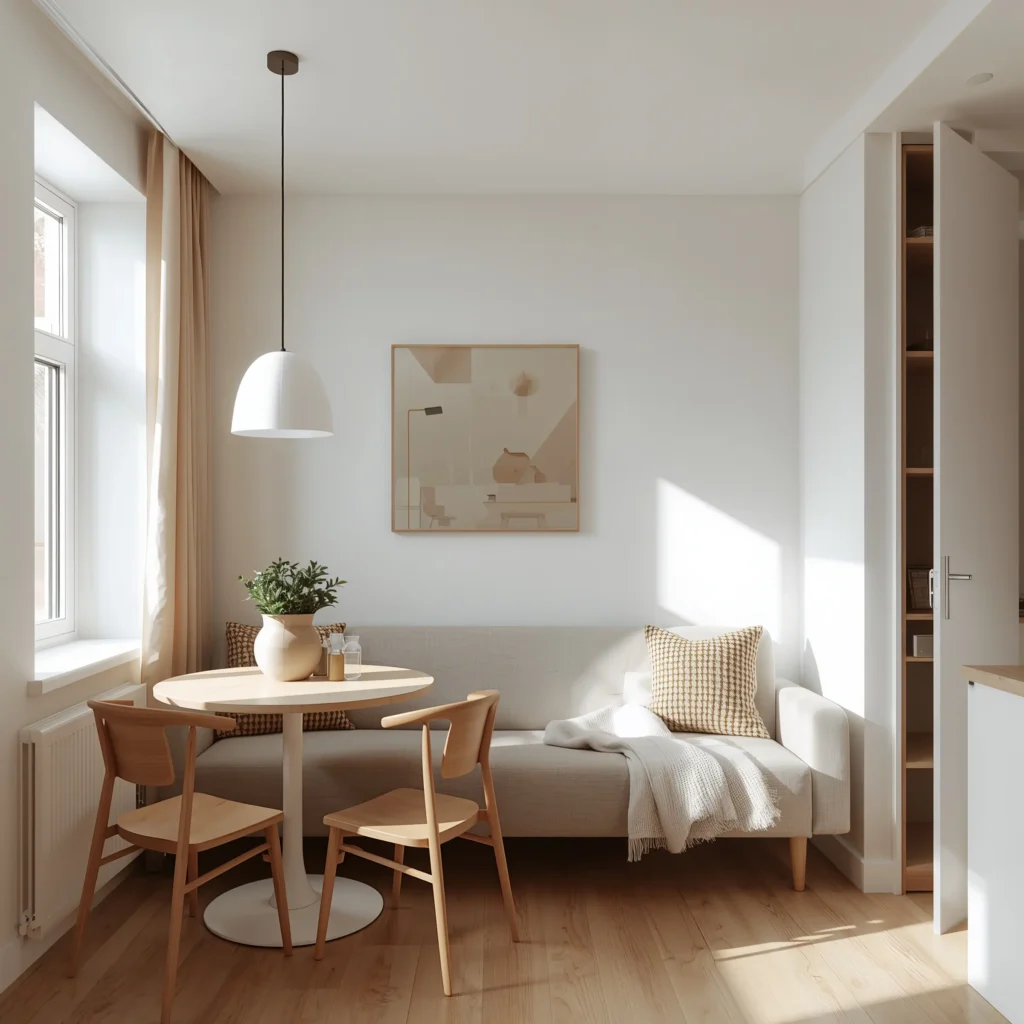
Here’s the thing about minimalism in small spaces – it’s not just about having less stuff. It’s about being ridiculously intentional with what you choose to keep. I learned this the hard way when I tried cramming my grandmother’s china cabinet into my tiny apartment. Spoiler alert: it didn’t work.
The minimalist approach starts with picking furniture that serves you, not decorates for you. Think sleek lines, open legs on furniture pieces, and absolutely zero clutter. My go-to formula? One sofa, one coffee table that doubles as storage, and a dining table that doesn’t scream “look at me!”
You want pieces that whisper rather than shout. I swapped my bulky sectional for a streamlined two-seater with exposed wooden legs, and suddenly my room felt twice as big. The visual weight matters more than actual dimensions – who knew, right?
Key Elements for Minimalist Success:
- Glass or acrylic furniture that practically disappears
- Wall-mounted everything (seriously, get that TV off the console)
- A dining table with hairpin legs or a pedestal base
- Built-in storage that blends with walls
- Maximum of three colors in your palette
Scandinavian Style Space-Saving Layout
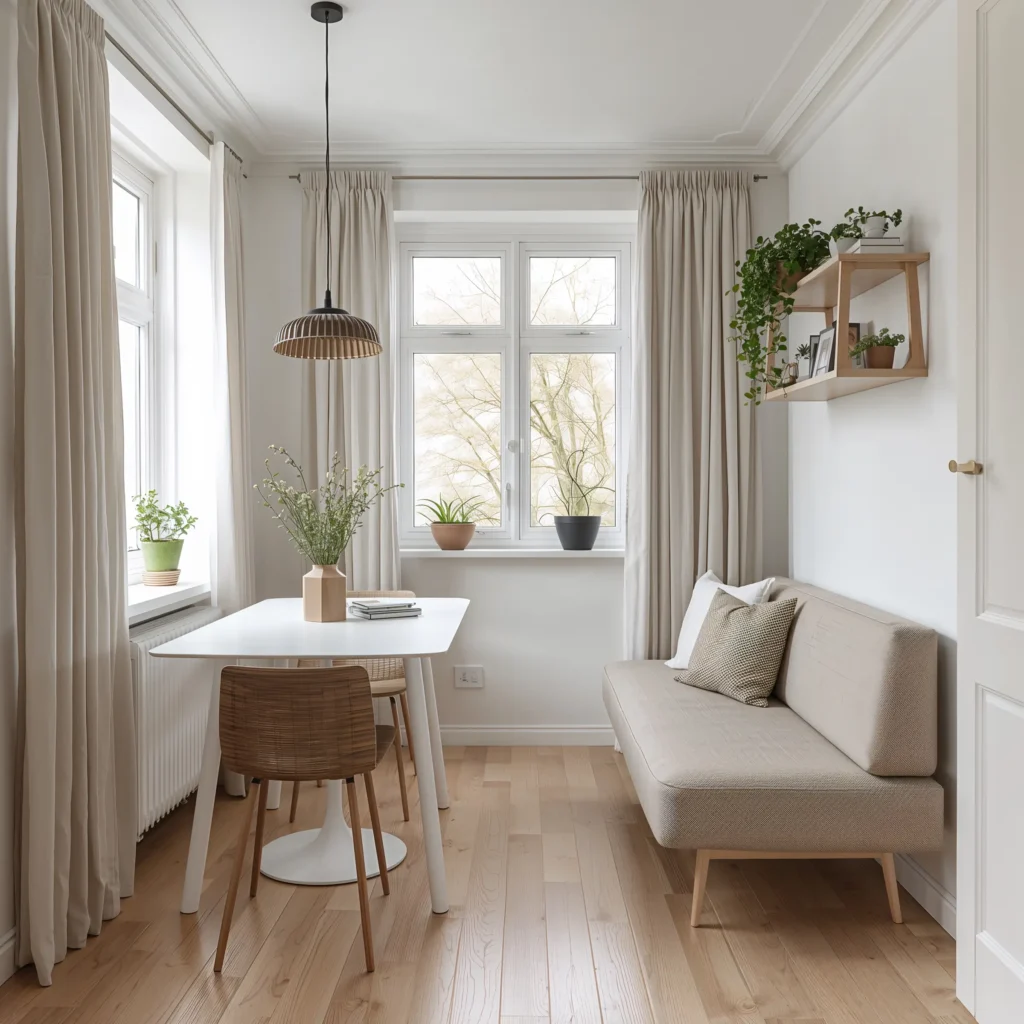
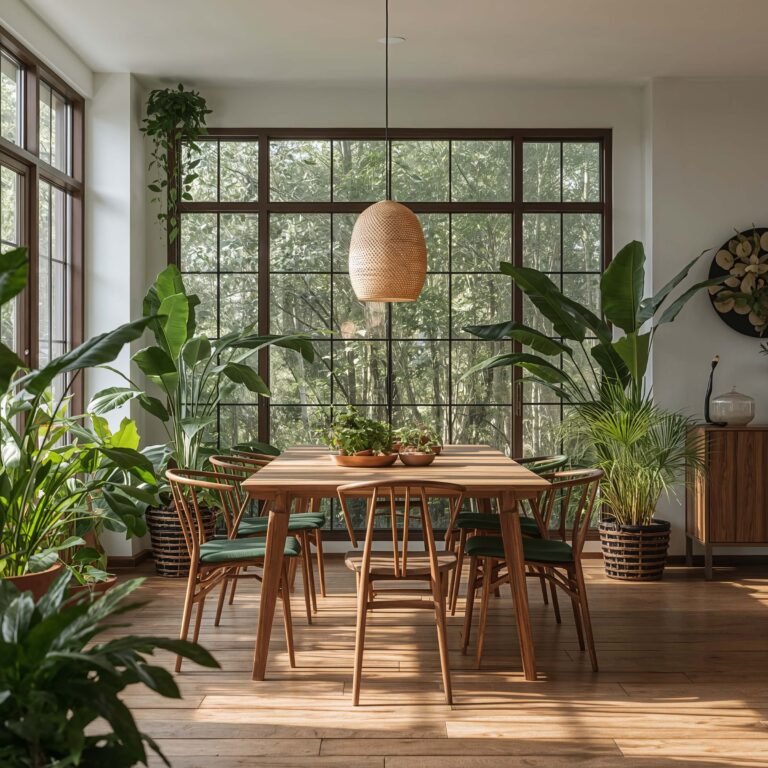
Scandinavian design hits different when you’re working with limited square footage. The Nordics figured out centuries ago that light colors and functional design beat ornate furniture every single time. And honestly, after living with this style for two years, I can’t imagine going back to my dark furniture phase.
Start with white or light gray walls – I know it sounds basic, but trust the process. Then layer in natural wood tones through your dining table and maybe a media console. The magic happens when you add those cozy textile moments without overwhelming the space.
My Scandi setup uses a birch dining table that extends when needed and nests perfectly against the wall when it doesn’t. Pair that with wishbone chairs that stack (game-changer!), and you’ve got flexibility without the bulk.
Must-Have Scandinavian Elements:
- Natural light maximization (sheer curtains or none at all)
- Blonde wood furniture with simple silhouettes
- Neutral textiles with subtle patterns
- One statement pendant light over the dining area
- Plants, but make them architectural (fiddle leaf fig, anyone?)
Multi-Functional Furniture for Tiny Rooms
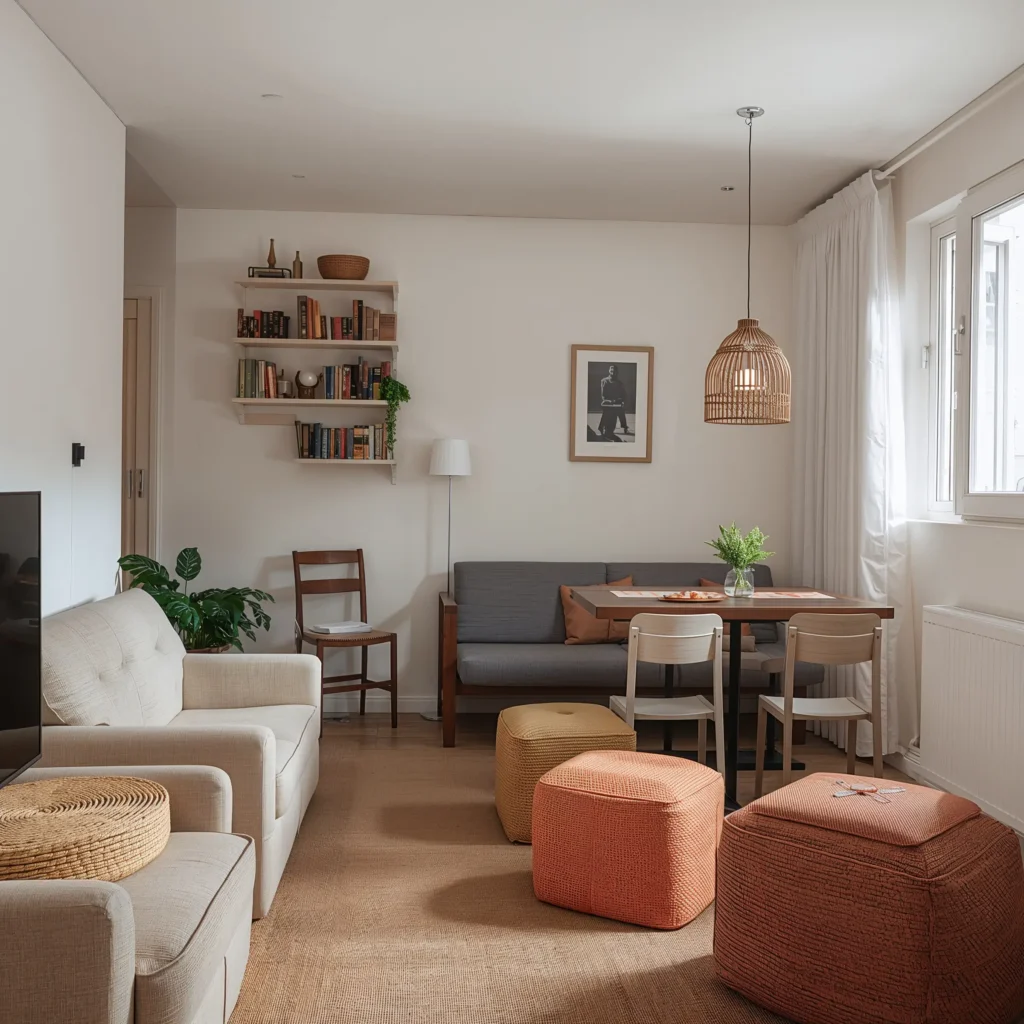
Can we talk about how transformer furniture has evolved beyond those sketchy futons from college? Today’s multi-functional pieces actually look good while pulling double duty. IMO, this is where you should splurge if you’re gonna splurge anywhere.
I invested in an ottoman that opens for storage, holds my coffee table books on top, and serves as extra seating when friends come over. Best $300 I ever spent. Then there’s my dining table that extends from seating four to eight – perfect for game nights that I definitely host more often now.
The real MVP? Console tables that flip into full dining tables. They sit flush against the wall taking up maybe 15 inches of depth, then boom – dinner party ready in seconds.
Top Multi-Functional Picks:
- Nesting tables that tuck away completely
- Storage benches for dining seating
- Coffee tables that lift to dining height
- Expandable console-to-dining tables
- Modular shelving that divides spaces
Also Read: 10 Creative Kitchen with Dining Area Ideas for Small Spaces
Modern Open-Plan Small Living Area
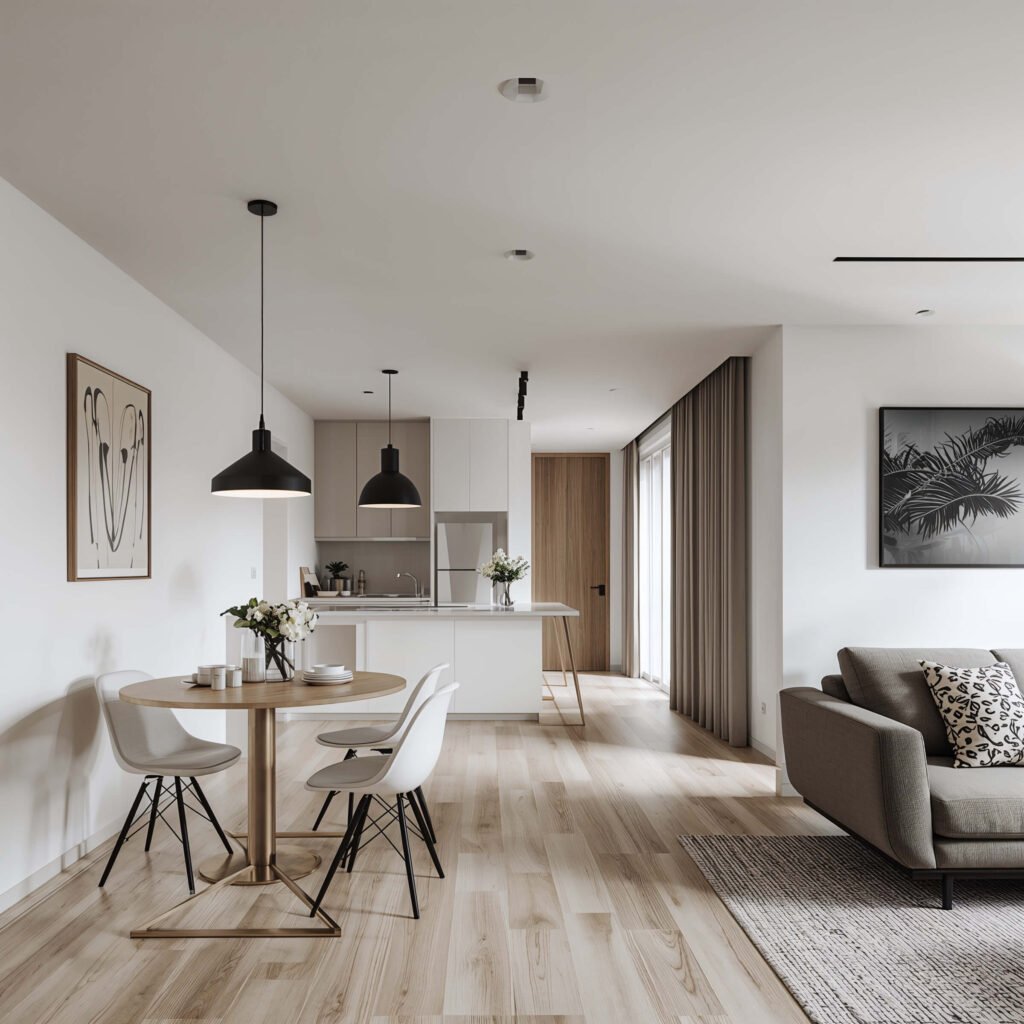
Breaking down visual barriers changes everything in a small space. When I removed that weird half-wall between my living and dining areas, the whole apartment suddenly breathed differently. Modern open-plan design isn’t just about knocking down walls though – it’s about creating flow while maintaining distinct zones.
Define your spaces with rugs instead of walls. A living room rug anchors your sofa area, while a different texture or pattern under the dining table creates separation without division. I use a jute rug in my dining zone and a softer wool blend in the living area – instant definition without a single wall.
Lighting plays huge here too. Pendant lights over the dining table and floor lamps in the living area create atmospheric boundaries that guide the eye naturally.
Cozy Corner Dining in Small Spaces
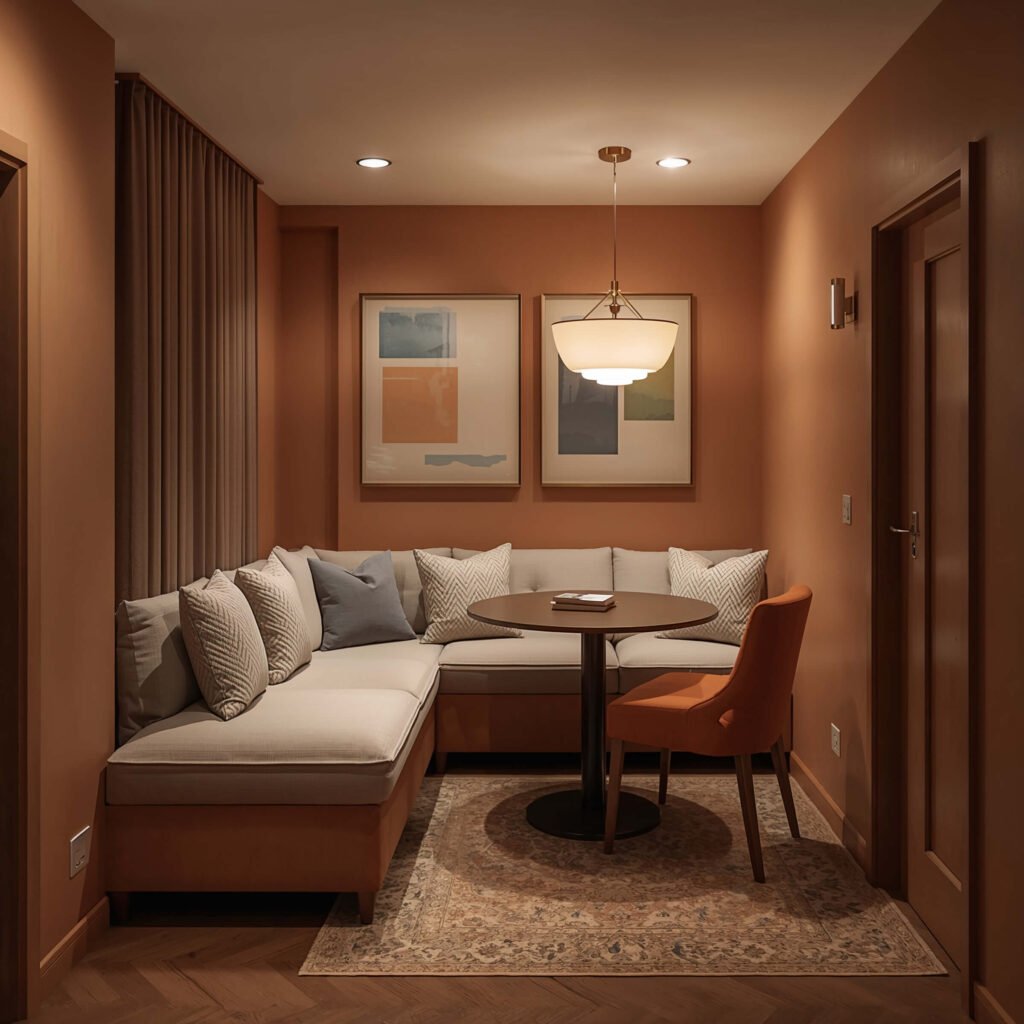
Remember when breakfast nooks were just for suburban kitchens? Well, corner dining setups work brilliantly in small living rooms too. Tucking a small round table into a corner with built-in banquette seating maximizes every inch while creating this intimate vibe that rectangular tables just can’t match.
I helped my sister install a corner bench with hidden storage in her 400-square-foot studio. We paired it with a 36-inch round table and two chairs on the open side. The result? Seating for five in a space that barely fit two before.
The corner approach also lets you play with wall decor above the seating. Gallery walls, floating shelves, or even a statement mirror amplify the cozy factor without eating floor space.
Corner Dining Essentials:
- Round or square tables (never rectangular in corners)
- Upholstered benches for comfort
- Wall-mounted lighting to free up table space
- Cushions that tie into living room colors
- A statement piece of art as backdrop
Compact Sofa and Dining Table Ideas
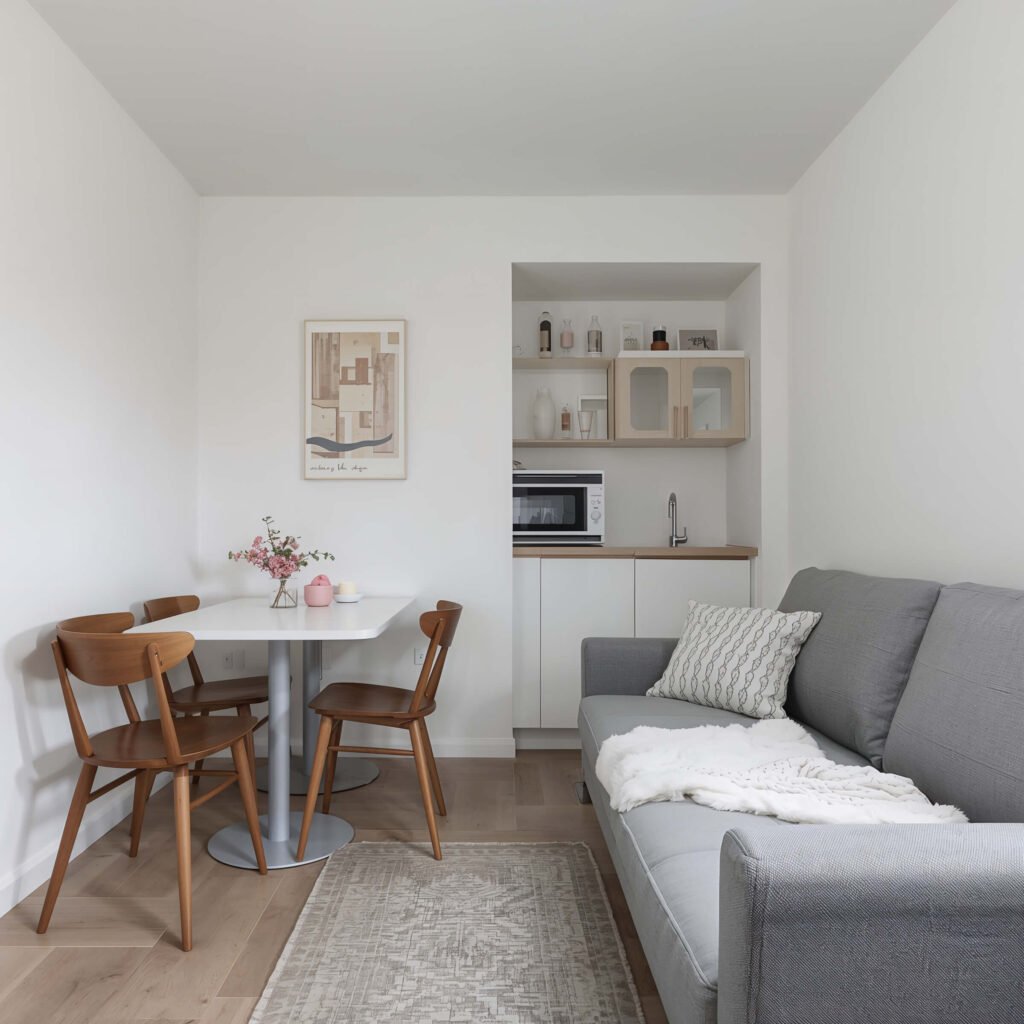
Size matters, but not how you think. The relationship between your sofa and dining table determines whether your space feels cramped or clever. After measuring obsessively (and returning furniture twice), I discovered the golden ratio: your dining table should be roughly 2/3 the length of your sofa.
Apartment-sized sofas (usually 72-80 inches) pair perfectly with 48-inch rectangular tables or 42-inch round ones. This proportion keeps things balanced without one piece dominating. Low-profile sofas work especially well – they maintain sightlines across the room.
Consider materials that complement rather than compete. My velvet navy sofa plays nice with my walnut dining table because they’re different enough to create interest but cohesive enough to feel intentional.
Also Read: 12 Stunning Wash Basin in Dining Area Modern Ideas for Inspiration
Bright & Airy Small Living-Dining Designs
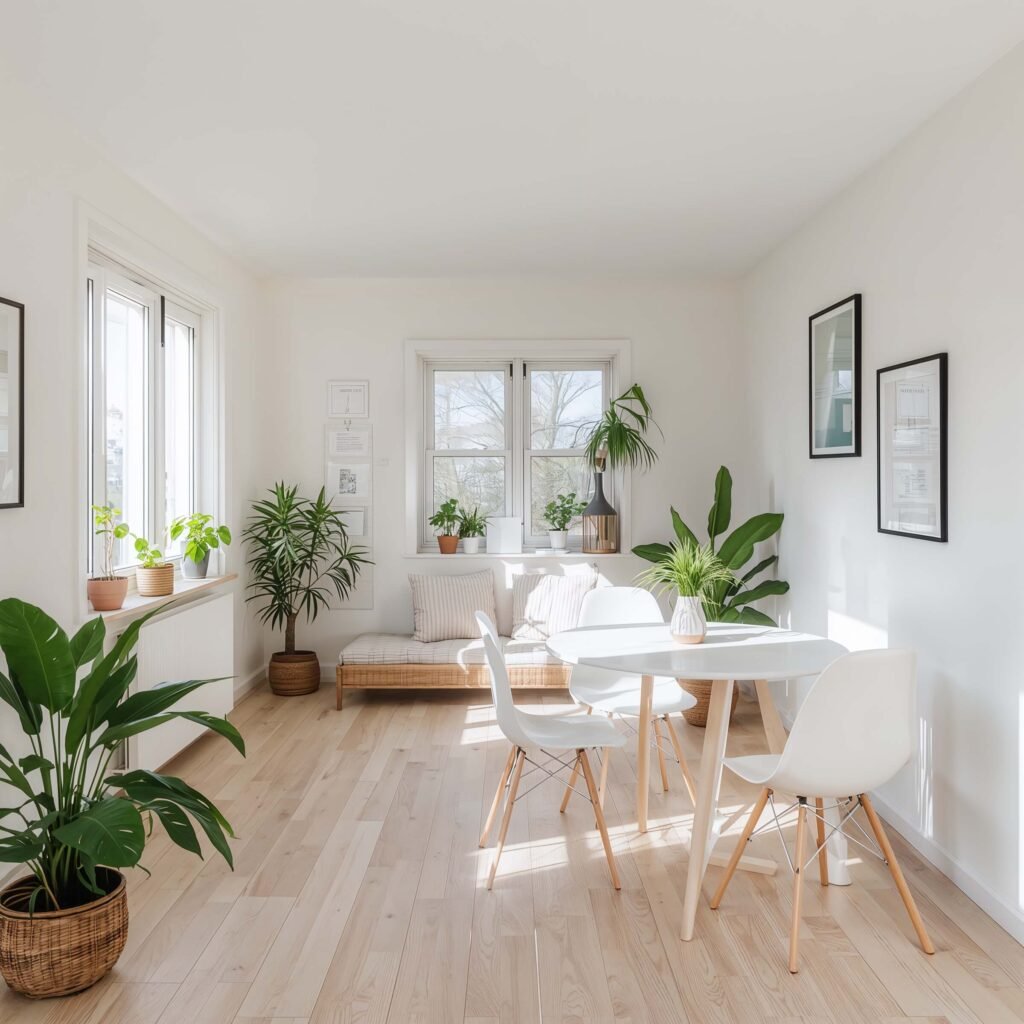
Light transforms small spaces like nothing else can. I’m talking about both natural and artificial light working together to create the illusion of space. The trick? Layer your lighting and embrace reflection.
Mirrors strategically placed across from windows basically double your natural light. I have a large mirror behind my dining table that reflects my living room window – instant brightness boost. White or light-colored lampshades spread light rather than focusing it, making everything feel more open.
Paint colors matter more than you’d think. That trendy charcoal accent wall? It’ll make your space feel like a cave. Stick to whites, soft grays, and pale pastels if you want that airy feeling.
Brightening Techniques That Work:
- Metallic accents that bounce light around
- Glass-top dining tables for visual lightness
- Light-colored upholstery on major pieces
- Multiple light sources at different heights
- Window treatments that maximize daylight
Foldable Furniture Solutions for Small Rooms
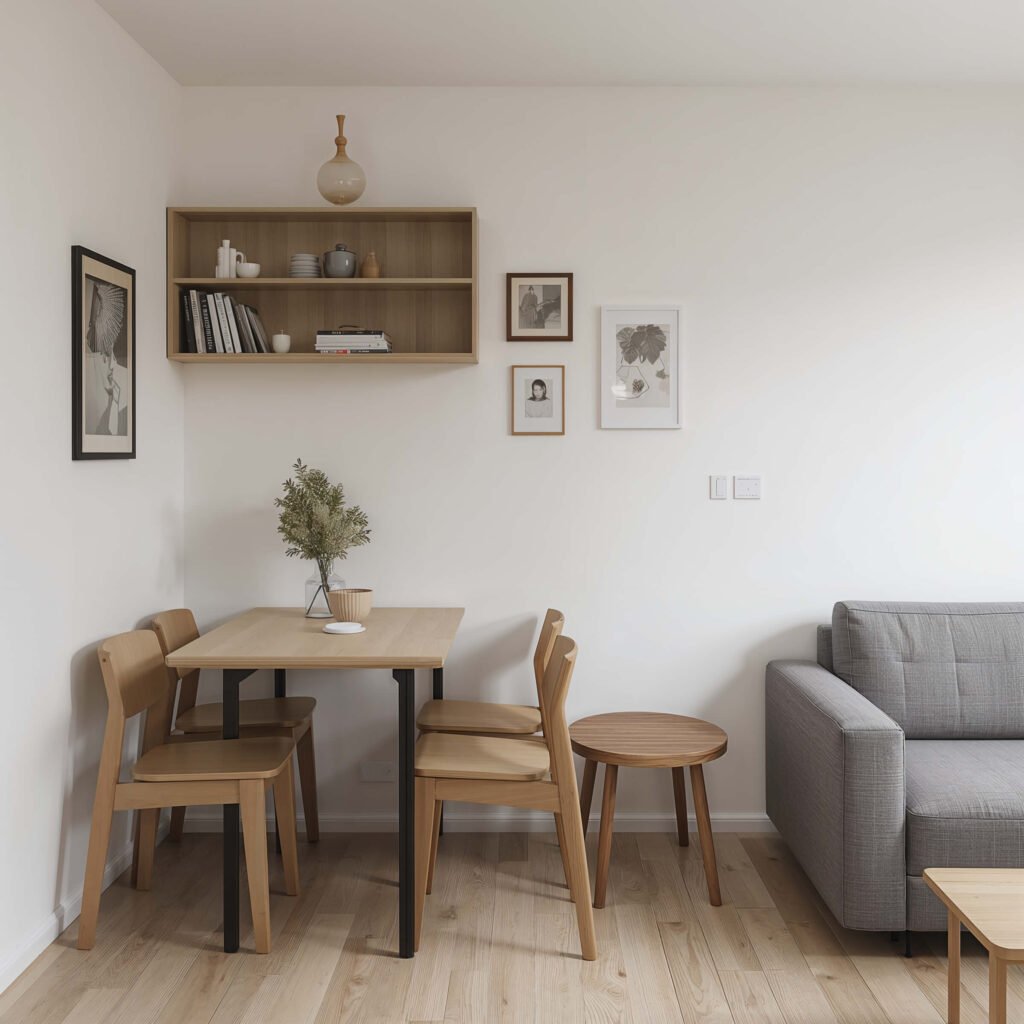
Let’s be real – foldable furniture used to be ugly as sin. But modern folding pieces? They’re having a serious moment. My wall-mounted drop-leaf table looks like floating shelf art when folded and seats four when extended.
The new generation of folding chairs actually look good enough to leave out. I keep two slim folding chairs in a closet for extra dinner guests, but my everyday dining chairs (that also fold) look like regular designer pieces. Nobody believes they collapse completely flat.
FYI, not all foldable furniture is created equal. Invest in pieces with quality hinges and solid construction. That $30 folding table from the big box store will wobble within months. Ask me how I know :/
Stylish Storage Ideas for Combined Areas
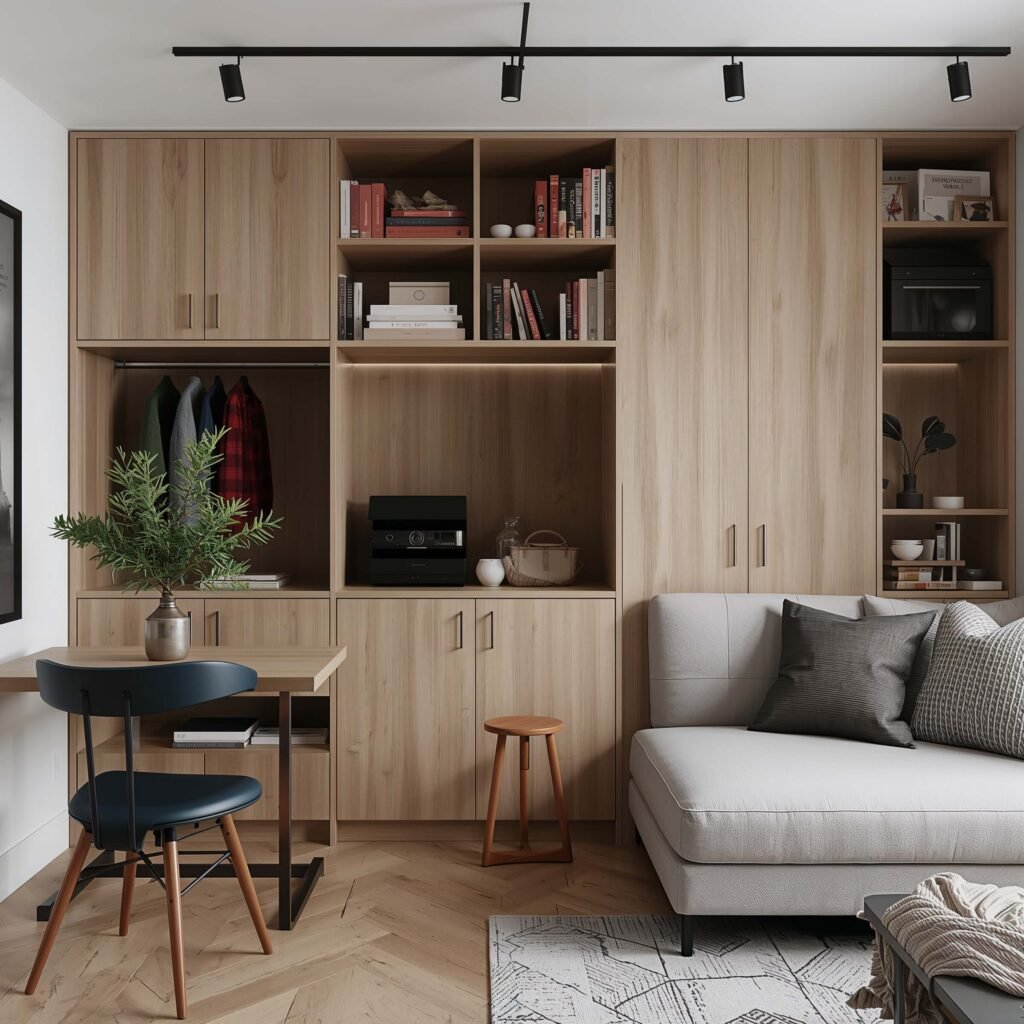
Storage makes or breaks a small living-dining combo. You need places for both living room stuff (remotes, magazines, throws) and dining items (placemats, napkins, serving pieces). The solution? Furniture that doesn’t look like storage.
Credenzas work overtime in combined spaces. Mine holds board games, extra dinnerware, and my work laptop – all hidden behind sleek doors. Above it, floating shelves display pretty things while hiding the functional stuff below.
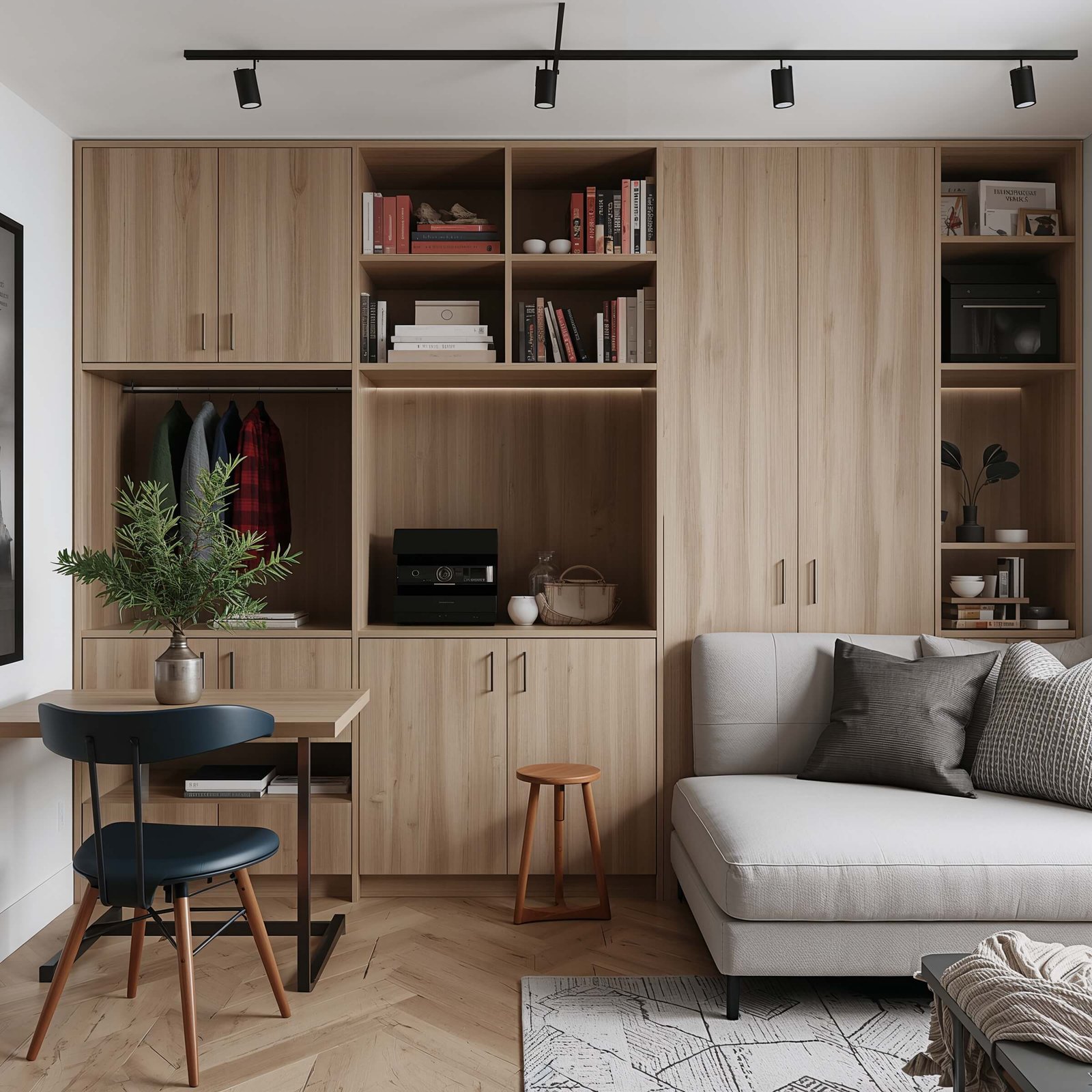
Vertical storage changes the game completely. Floor-to-ceiling shelving might seem overwhelming, but when styled properly, it becomes architectural interest rather than clutter. Mix closed storage boxes with open display areas for balance.
Smart Storage Solutions:
- Ottoman storage for living room blankets
- Dining benches with lift-up seats
- Bar carts that move between zones
- Wall-mounted console tables with drawers
- Ladder shelves that lean without overwhelming
Also Read: 10 Cozy Outdoor Dining Area Ideas Patio Perfection
Neutral Tones for Spacious Feel
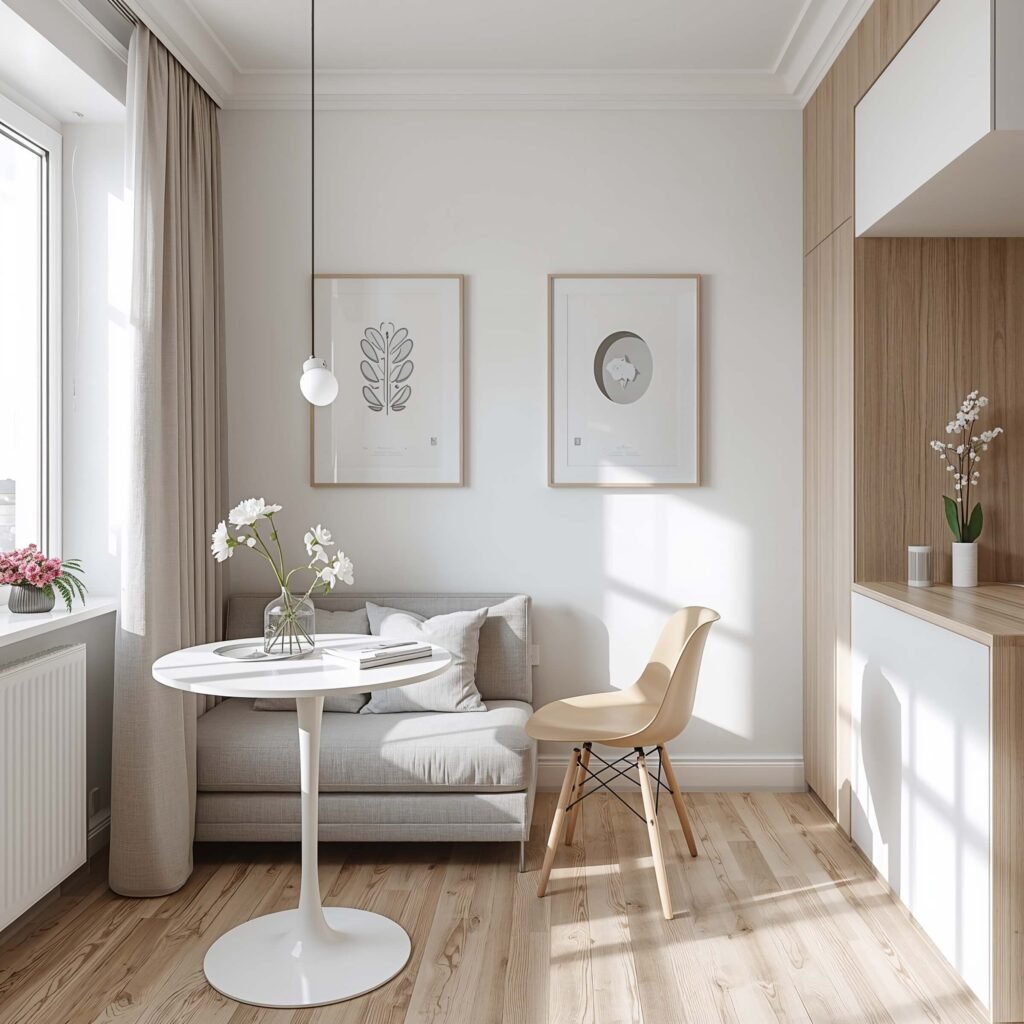
Neutral doesn’t mean boring – it means sophisticated flexibility. I learned this after painting my first apartment bright teal (what was I thinking?). Neutral palettes in small spaces create continuity that tricks the eye into seeing one large area instead of choppy zones.
Layer different textures within your neutral palette to add interest. My beige linen sofa, cream wool rug, and natural rattan dining chairs all read as neutral, but the texture variety prevents monotony. Throw in some black accents for grounding, and you’ve got a space that feels twice its actual size.
The beauty of neutrals? You can change your accent colors seasonally without repainting or buying new furniture. Swap throw pillows and table runners, and boom – whole new vibe.
Small Apartment Living-Dining Transformation
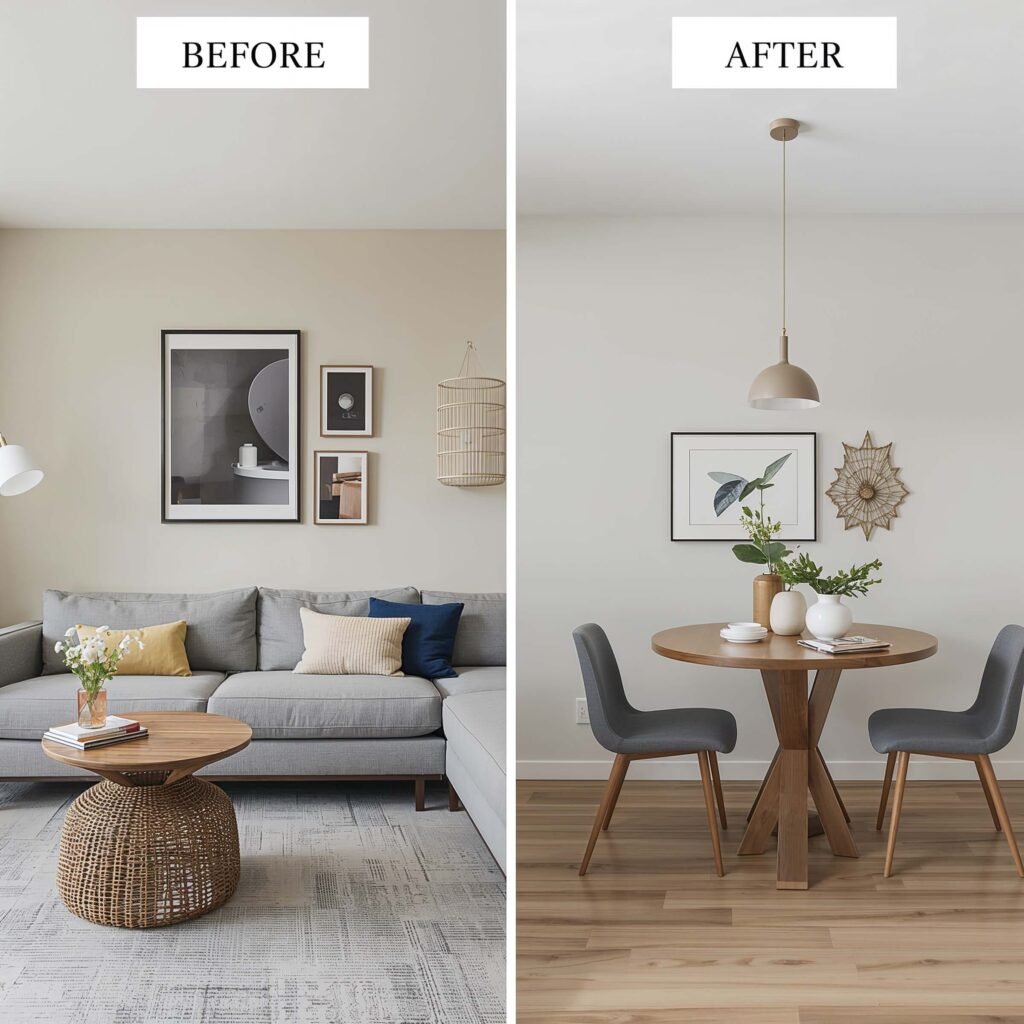
Transforming a small apartment’s living-dining area requires thinking beyond traditional layouts. I completely reimagined my space by floating my sofa in the middle of the room instead of pushing it against the wall. Sounds crazy? It created a natural walkway and actually made the room feel bigger.
The dining area became a multi-purpose zone by day – workspace, craft table, you name it. A sleek desk/dining table hybrid with slim drawers for office supplies meant I didn’t need a separate office space. Work by day, dinner party by night.
Don’t underestimate the power of a good room divider. Open shelving units create separation without blocking light. Mine holds books on the living room side and dishes on the dining side – functional sculpture at its finest.
Transformation Tips:
- Float furniture away from walls when possible
- Use room dividers that serve double duty
- Create zones with lighting and rugs
- Invest in one statement piece per zone
- Keep pathways clear and logical
Space-Smart L-Shaped Sofa Layouts
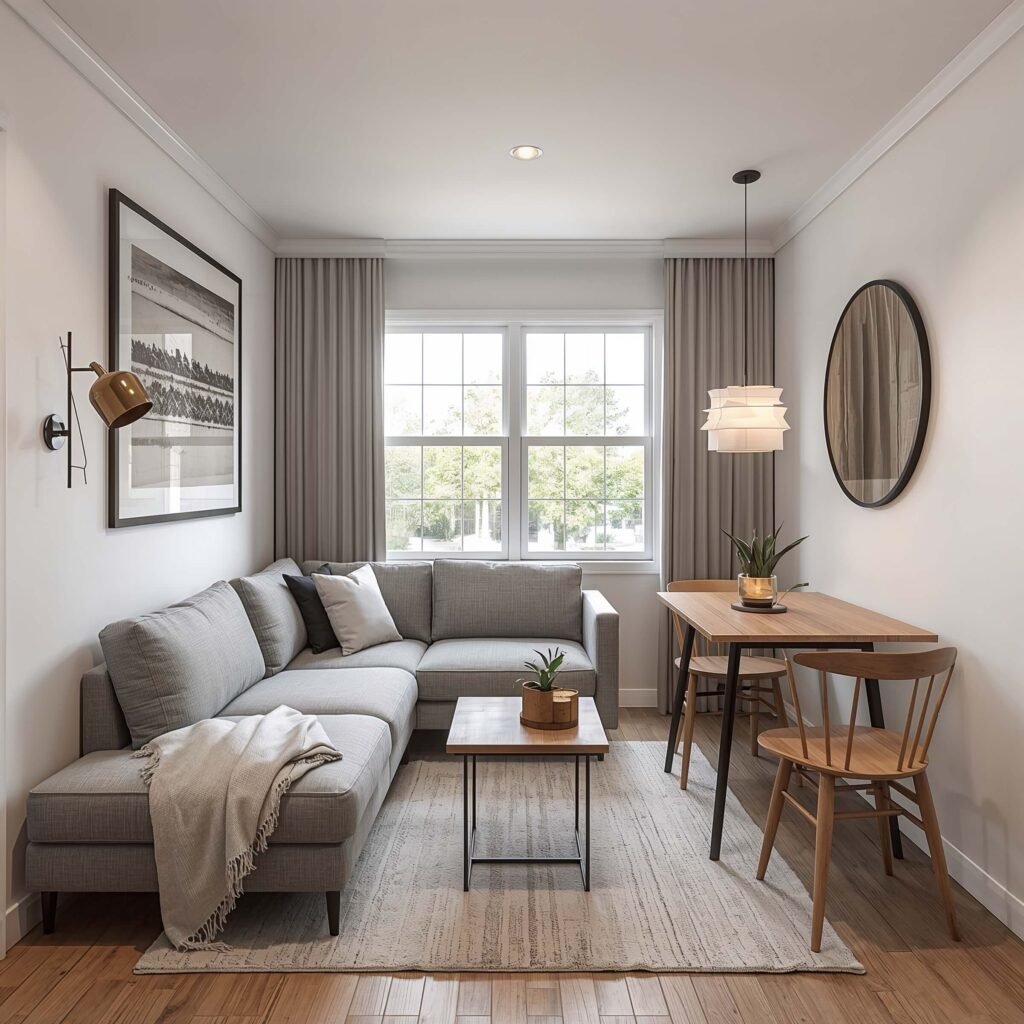
Okay, hear me out on L-shaped sofas in small spaces. Everyone thinks they’re too big, but the right one actually maximizes corner space while providing tons of seating. The key? Choosing one with the right proportions and placement.
My L-shaped sofa defines my living area while leaving plenty of room for a 6-person dining table. The trick was choosing one with low backs and raised legs – it doesn’t visually block the space like those massive sectionals do. Plus, the chaise section doubles as a guest bed 🙂
Position your L-shaped sofa to create natural traffic flow. Mine guides people from the entry through to the dining area without anyone having to squeeze past furniture. The corner it creates also makes a perfect spot for a side table that serves both living and dining zones.
Making It All Work Together
After trying every configuration possible in my own space and helping friends with theirs, here’s what I know for sure: successful small living-dining combos require commitment to the edit. You can’t have it all, but you can have everything that matters.
Start with your must-haves and build from there. Maybe you need seating for six, or perhaps a massive TV is non-negotiable. Whatever your priorities, let them guide your choices. My non-negotiables were a comfortable sofa and a dining table for four – everything else had to earn its spot.
Remember that small spaces evolve faster than large ones. What works for your current lifestyle might need tweaking next year. Choose flexible, quality pieces that can adapt with you. That expensive extending table might seem like a splurge now, but it’ll serve you through three apartments and countless life changes.
The best small living-dining areas feel intentional, not cramped. Every piece has a purpose, every corner works hard, and the whole space flows together naturally. Most importantly, it should feel like home – your home, with your style, solving your specific space challenges.
Living small doesn’t mean living with less joy or style. It means being smarter about your choices and more creative with your solutions. Trust me, once you nail your small living-dining combo, you’ll wonder why anyone needs those massive McMansion spaces anyway. Who wants to clean all that?