10 Stunning Bookshelf Styling Ideas and Cozy Home Vibes

Okay, let’s talk bookshelves. You know that awkward moment when someone walks into your place and their eyes immediately land on your chaotic bookshelf? Yeah, we’ve all been there.
I spent years stuffing books onto shelves like I was playing literary Tetris, wondering why my space never looked like those Pinterest photos.
Turns out, styling a bookshelf isn’t rocket science – it just takes a bit of know-how and maybe a touch of creativity.
After countless rearrangements (and one minor shelf collapse incident), I’ve discovered some game-changing bookshelf styling ideas that actually work.
Trust me, these aren’t your typical “just add a plant” suggestions.
Minimalist Neutral Bookshelf
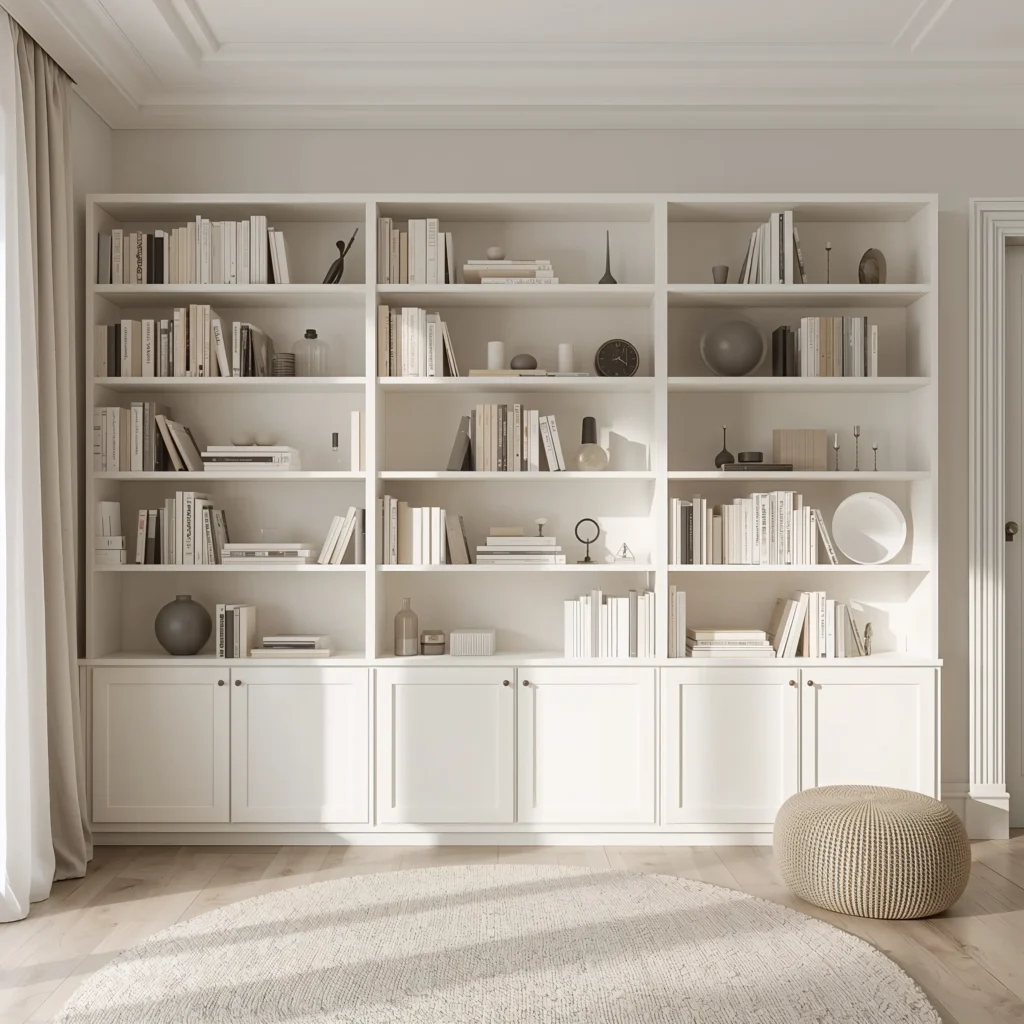
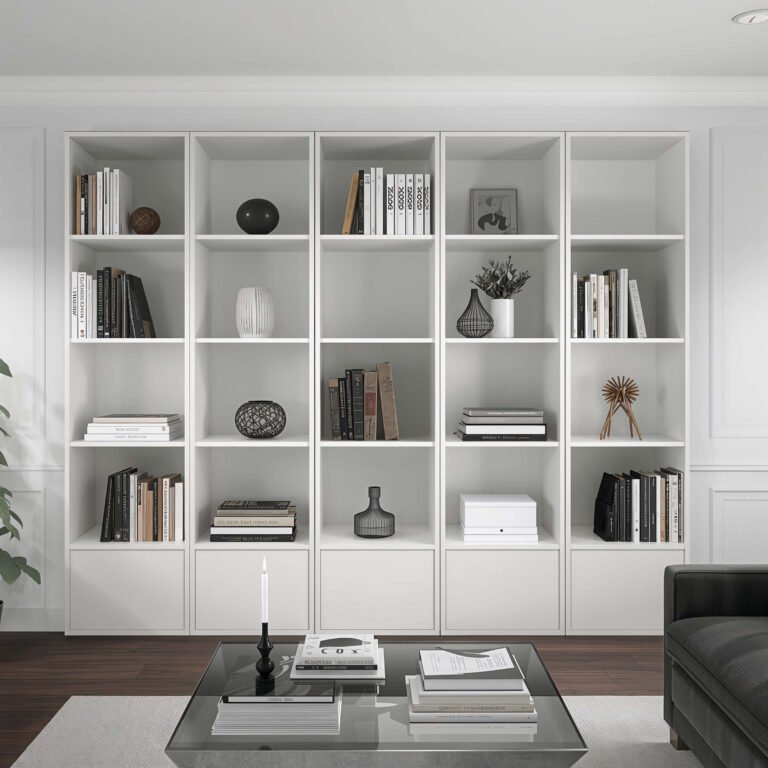
Let’s start with the minimalist approach because honestly, sometimes less really hits different. I discovered this style after Marie Kondo-ing my entire book collection, and wow, the transformation shocked me.
The key to nailing minimalist bookshelf styling lies in embracing negative space. You don’t need to cram every single book you own onto those shelves. Pick your favorites, the ones that actually spark something in you, and give them room to breathe.
Creating That Clean Look
Here’s what works for minimalist shelving:
• Stick to a neutral color palette – whites, beiges, grays, and maybe some soft browns
• Leave at least 30% of each shelf empty (I know, it feels wrong at first)
• Group books in odd numbers – three or five books together looks intentional
• Turn some books horizontally to create visual breaks
I personally love mixing cream-colored ceramics with my neutral book spines. The texture contrast adds depth without screaming for attention. One trick I learned? Remove those garish dust jackets from hardcovers – many books have gorgeous neutral linen covers underneath that you never knew existed.
The Power of Uniformity
Want to know what really elevates a minimalist shelf? Consistency in book heights. Group similar-sized books together, and suddenly your shelf looks curated rather than cluttered. I reorganized my shelves this way last month, and my sister actually asked if I hired a designer. Nope, just strategic book placement, folks.
Boho Chic Shelf Display
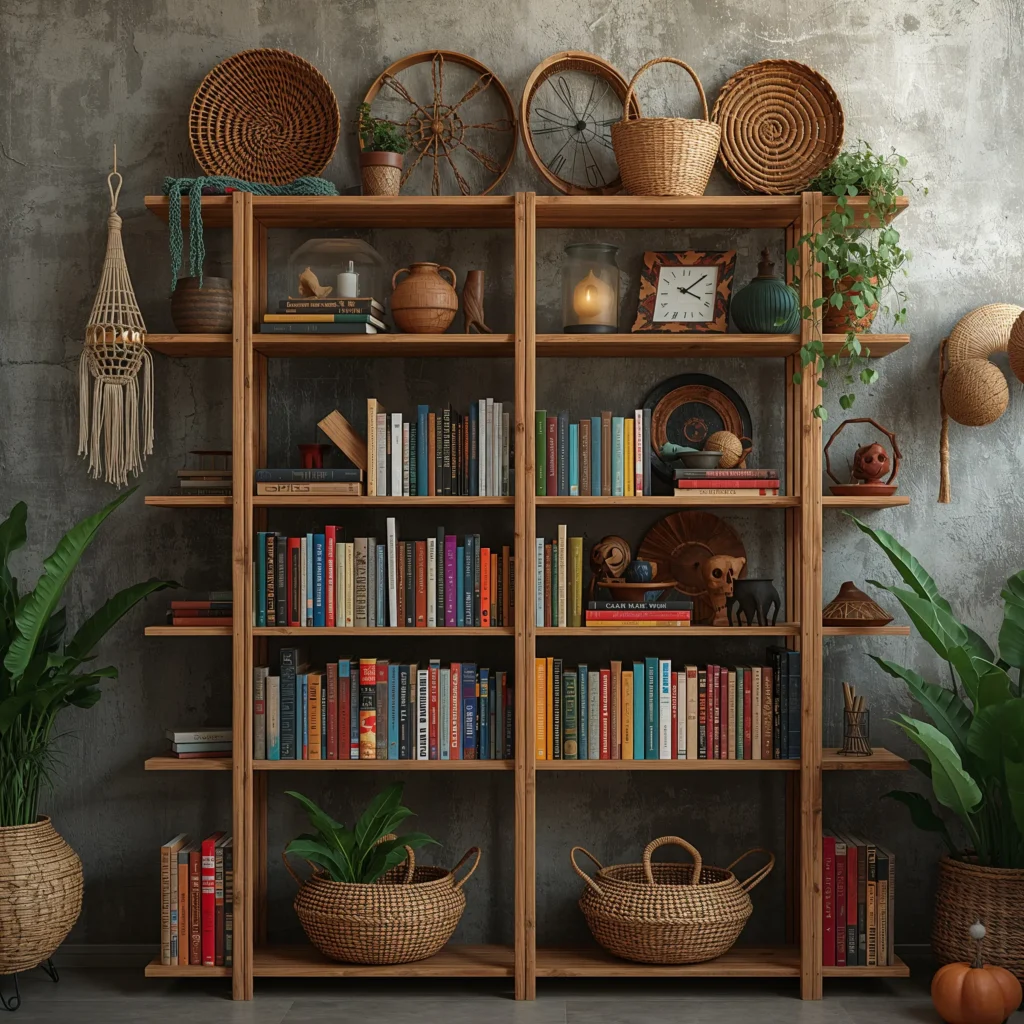
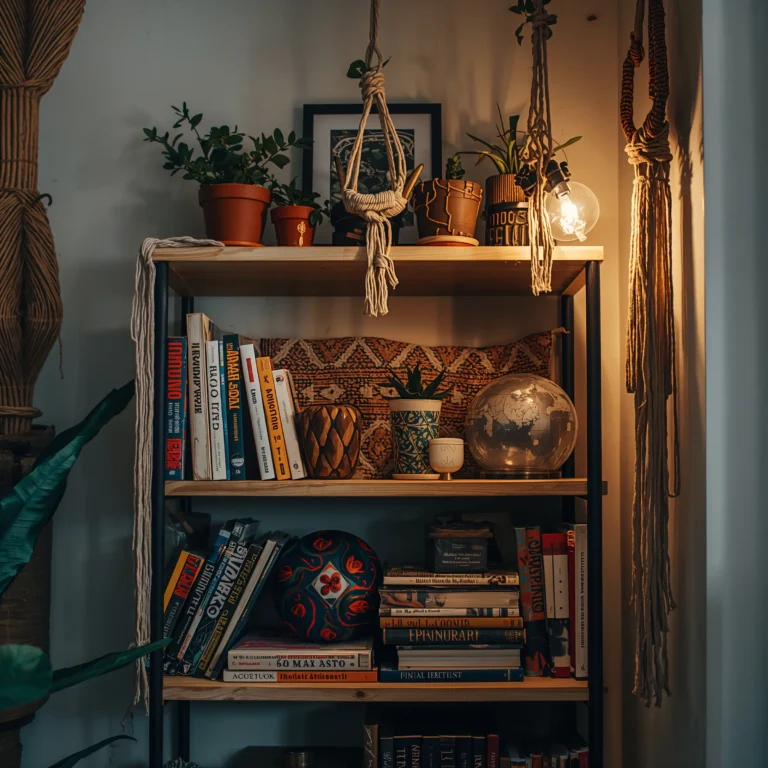
Now, if minimalism makes you yawn, let’s talk boho. This style basically celebrates controlled chaos, and I’m here for it. Boho bookshelf styling lets you showcase your personality without looking like you raided a flea market (even if you totally did).
The boho aesthetic thrives on layers, textures, and a healthy dose of “I collected this stuff from around the world” energy. Even if your furthest travel was to that antique shop downtown, nobody needs to know, right?
Essential Boho Elements
Start with these must-have boho touches:
• Woven baskets for storing smaller books or hiding clutter
• Macramé plant hangers draped from shelf edges
• Vintage brass or copper accents
• Natural wood elements and dried pampas grass
• Colorful book spines mixed with neutral tones
I discovered that layering is everything in boho styling. Stack books horizontally, then place a small succulent or crystal on top. Add a vintage camera or a thrifted sculpture nearby. The goal? Make it look like each item has a story, even if that story is “I found this at Target last week.”
Mixing Patterns Like a Pro
Here’s where people usually mess up boho styling – they go pattern-crazy. Limit yourself to three patterns max per shelf section. I learned this the hard way when my bookshelf started looking like a magic eye poster. Mix geometrics with florals, add some tribal prints, but know when to stop.
FYI, incorporating textiles changes everything. Drape a small tapestry behind your books or fold a vintage scarf between book stacks. These soft elements balance the hard edges of your shelves beautifully.
Color-Coordinated Book Arrangement
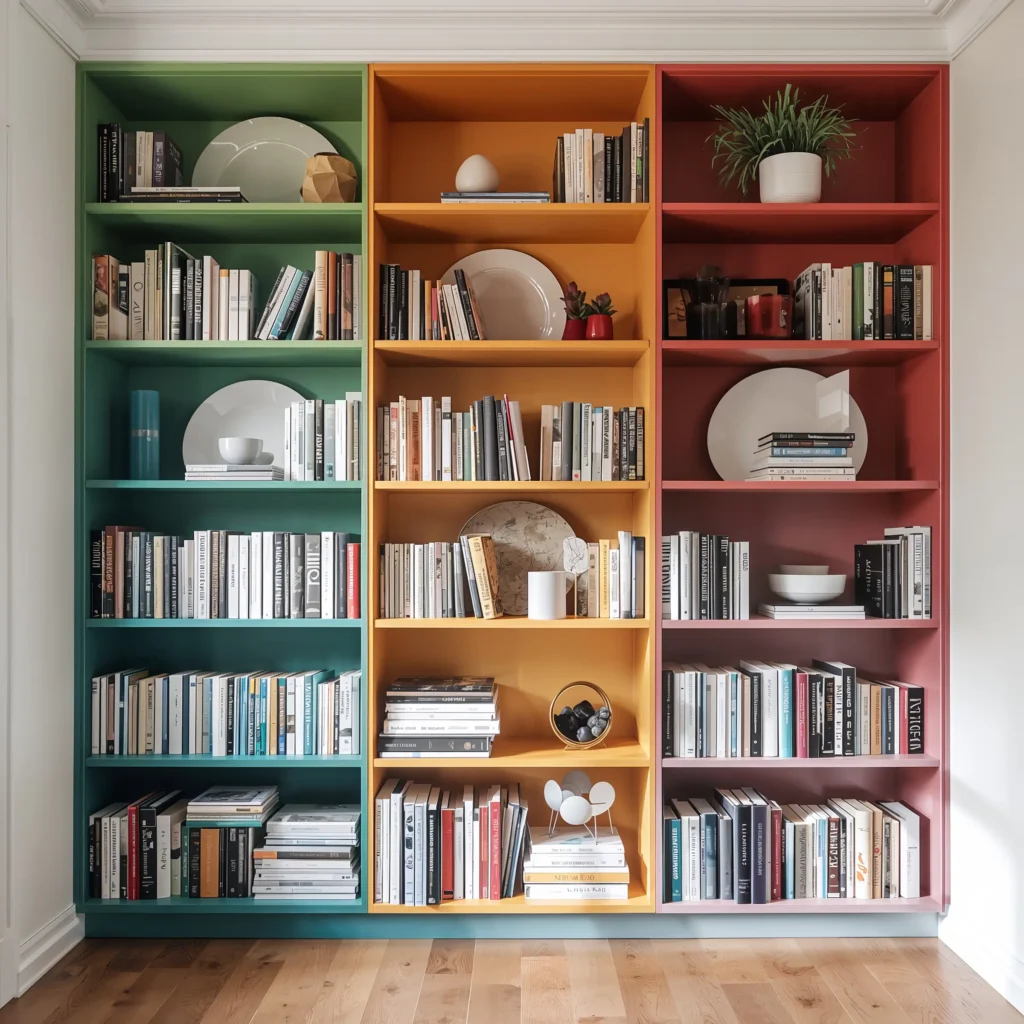
Remember when everyone went crazy for rainbow bookshelves? While I admire the commitment, let’s talk about color coordination that actually works in real life. You don’t need to buy books based on spine color (though I’ve definitely been tempted).
I tried the full rainbow thing once. Looked amazing for Instagram, absolute nightmare for finding anything. Now I go for color blocking – grouping books by color family rather than creating a perfect gradient.
Smart Color Grouping Strategies
The trick to color coordination without losing functionality:
• Group by warm and cool tones first, then organize within those groups
• Keep your most-read books in an accessible spot, regardless of color
• Use bookends to separate color sections clearly
• Mix in neutral objects to give your eyes a break
My current setup features three main color zones: warm tones on top (reds, oranges, yellows), cool tones in the middle (blues, greens, purples), and neutrals at eye level where I grab books most often. Makes sense and looks intentional – win-win.
Beyond the Rainbow
Want to know a secret? Monochromatic sections often look more sophisticated than full rainbows. Try dedicating one shelf to just blue books and objects. The subtle variations in shade create depth while maintaining that organized aesthetic everyone’s after.
Also Read: 10 Modern Study Room Interior Ideas for Stylish Homes
Modern Geometric Styling
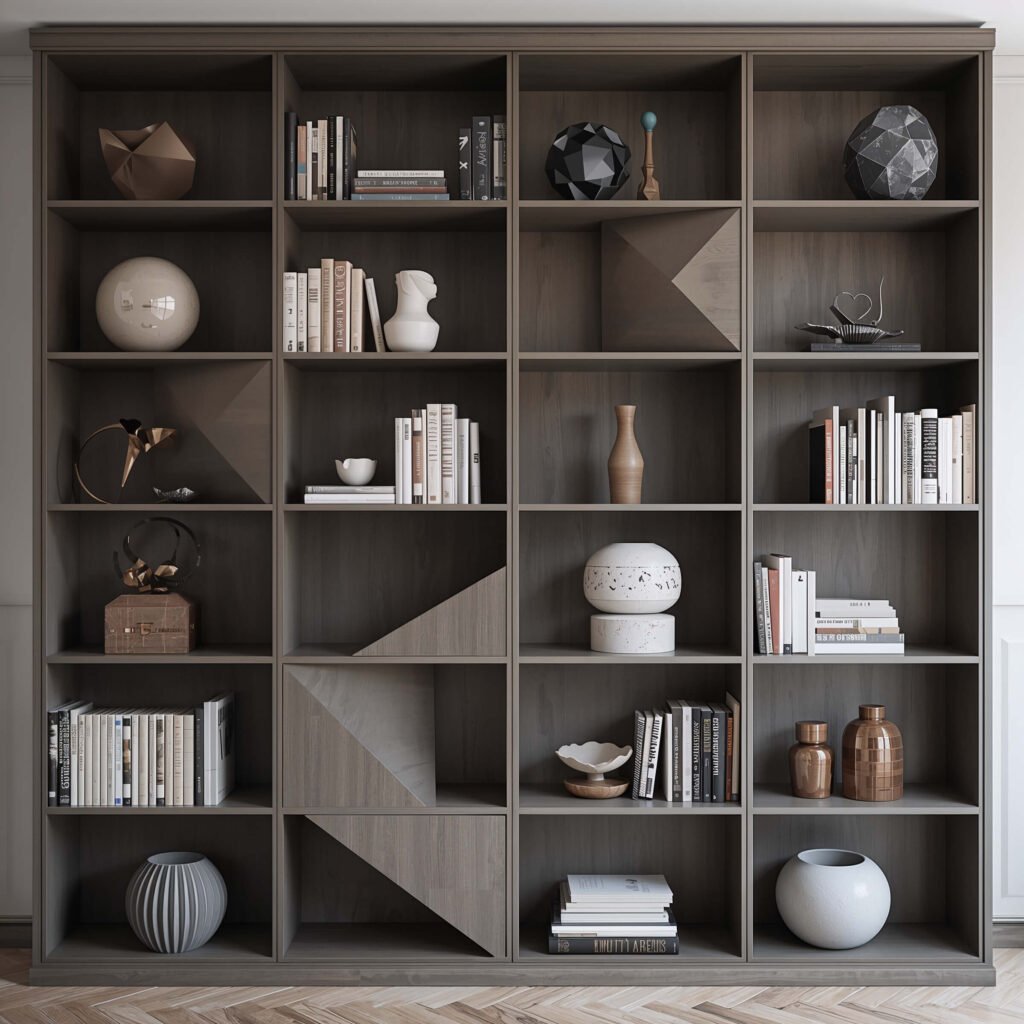
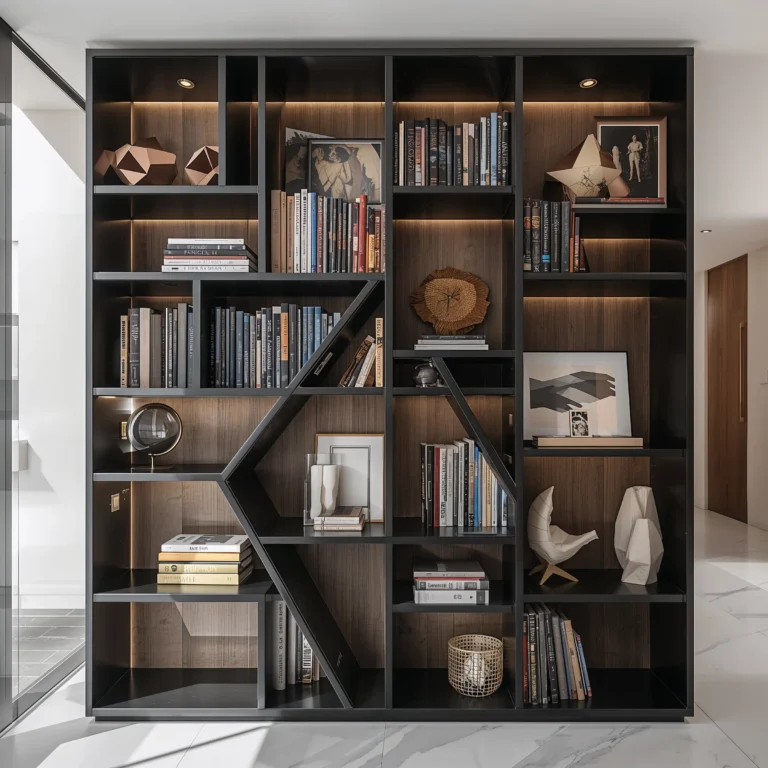
If clean lines and sharp angles make your heart sing, geometric styling deserves your attention. This approach treats your bookshelf like a 3D puzzle where every piece has its perfect spot.
I stumbled into geometric styling accidentally when I noticed how satisfying it looked when my books created perfect rectangles and triangles on the shelf. Once you start seeing shapes, you can’t unsee them.
Building Visual Architecture
Here’s how to achieve that modern geometric look:
• Stack books to create pyramid shapes
• Use bookends with strong angular designs
• Incorporate geometric sculptures or vases
• Play with diagonal book placement (yes, really)
The key element? Repetition of shapes. If you place a circular vase on one shelf, echo that shape with a round picture frame two shelves down. Your eye naturally connects these elements, creating visual flow.
Negative Space as Design
Modern geometric styling celebrates empty space as much as filled space. Think of your shelf as a grid – not every square needs filling. I leave deliberate gaps that form geometric patterns themselves. Sounds weird? Try it. The visual breathing room makes everything else pop.
Greenery & Plant-Filled Shelf
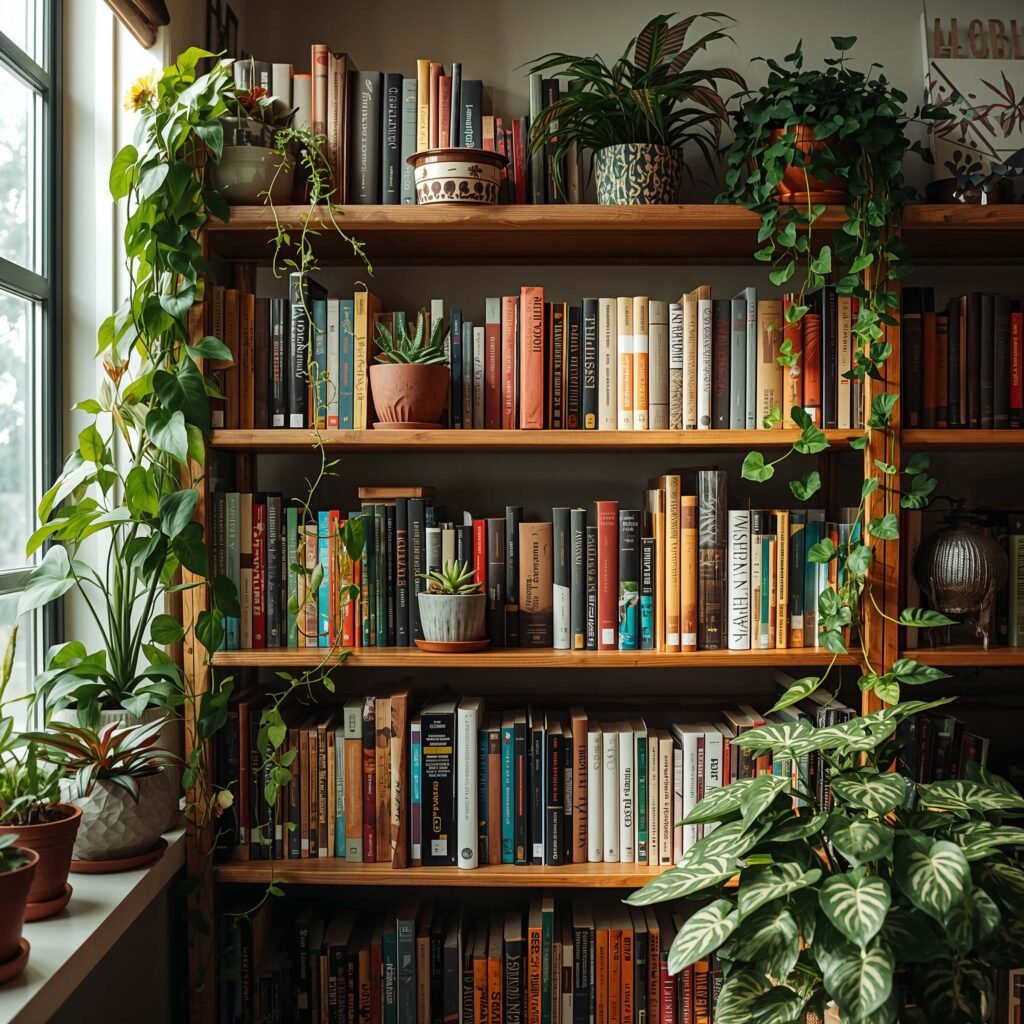
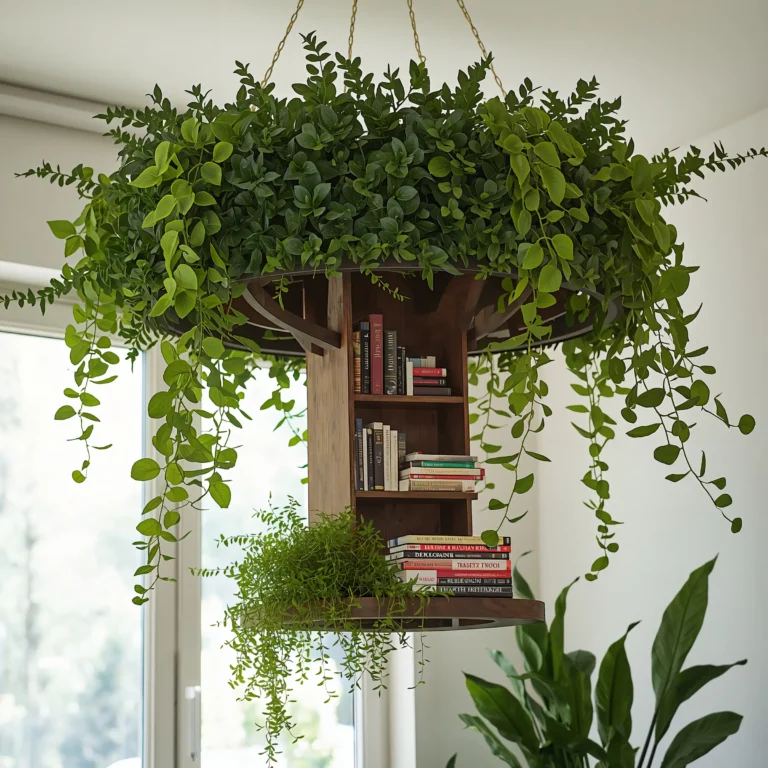
Plants and books together? Name a better duo. Seriously, adding greenery to your bookshelf brings life to your space literally and figuratively. After killing approximately seven succulents (RIP), I finally figured out which plants actually thrive on bookshelves.
Best Bookshelf Plants
Let me save you some plant funeral expenses:
• Pothos – practically indestructible and trails beautifully
• Snake plants – vertical growth perfect for tight spaces
• ZZ plants – ignore them and they thrive
• Small philodendrons – gorgeous and forgiving
• Air plants – no soil needed, minimal mess
The placement matters too. Trailing plants work best on higher shelves, while compact succulents fit perfectly next to horizontal book stacks. I learned to avoid anything that needs frequent watering near valuable first editions – water damage isn’t cute.
Creating a Green Oasis
Here’s my formula for the perfect plant-to-book ratio: one plant element per shelf section, max. Any more and you’re running a greenhouse, not a library. Mix real plants with high-quality fakes if you’re commitment-phobic (no judgment here).
Vary your planters to add visual interest. Ceramic, terracotta, woven baskets – different textures prevent that “garden center” look. Pro tip? Those vintage teacups your grandma gave you make adorable succulent planters.
Vintage & Antique Decor Mix
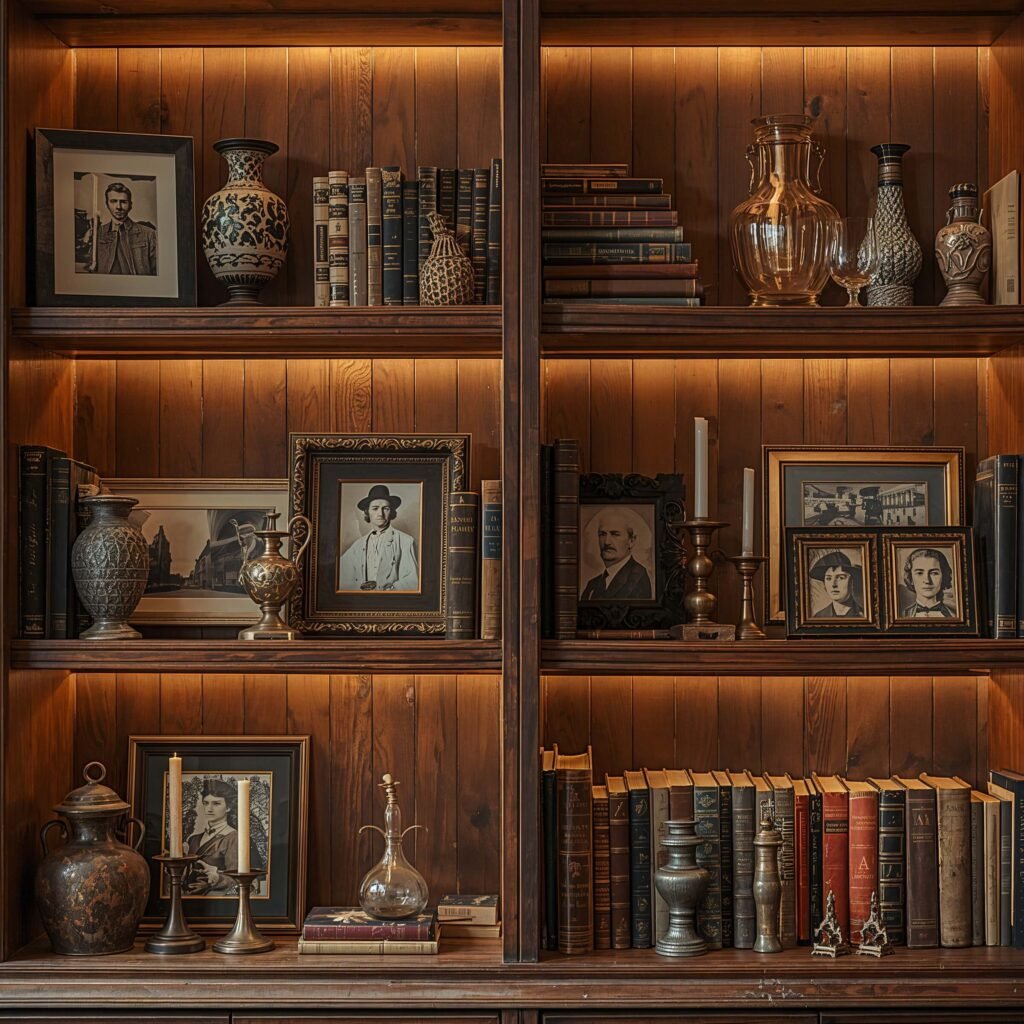
Mixing vintage pieces with your books creates that coveted “collected over time” aesthetic that money can’t really buy. Well, technically it can, but you get what I mean. Vintage bookshelf styling tells a story, even if you’re making that story up as you go.
Curating Your Vintage Collection
Start hunting for these vintage gold mines:
• Old cameras (functional or not)
• Vintage globes or maps
• Antique clocks that may or may not work
• Brass figurines and bookends
• Old leather-bound books as decorative elements
My best vintage finds come from estate sales and grandmother’s attics. That brass telescope I display? Twenty bucks at a garage sale, but visitors think I’m worldly and sophisticated 🙂
Mixing Eras Without Chaos
The secret to vintage styling? Don’t let it become a museum exhibit. Mix periods deliberately – pair that Art Deco vase with mid-century bookends and Victorian-era books. The eclectic mix looks intentional when you maintain some common thread, like material (all brass) or color (all earth tones).
I group vintage items in odd numbers and vary heights religiously. Three antique bottles of different sizes look curated; four looks like you raided an antique mall.
Also Read: 10 Beautiful Cozy Study Room Ideas to Boost Productivity
Floating Wall Bookshelf Vibes
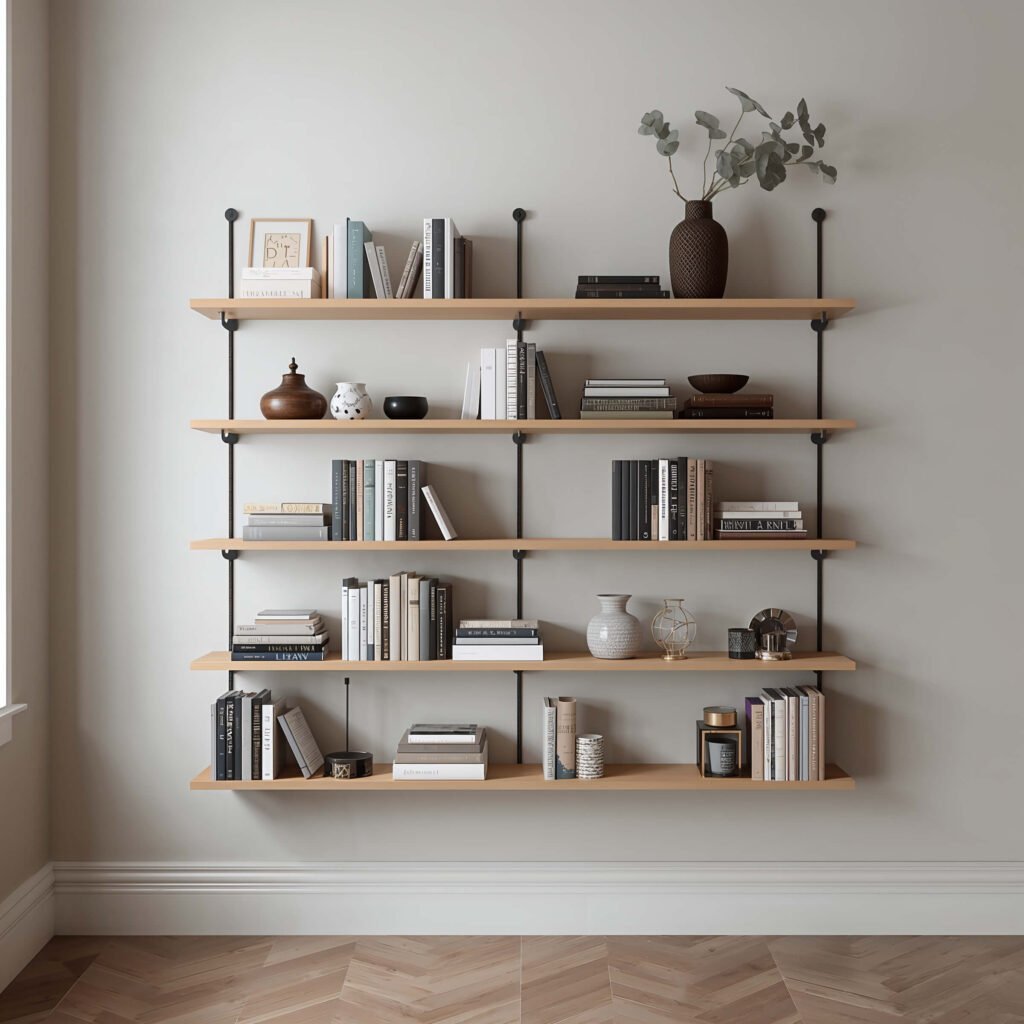
Floating shelves changed my life – dramatic, but true. They make your books look like they’re defying gravity, and who doesn’t want a bit of magic in their space? Plus, they work in tiny spaces where traditional bookcases would overwhelm.
Maximizing Floating Shelf Impact
To nail the floating shelf aesthetic:
• Stagger shelf lengths for visual interest
• Keep spacing between shelves consistent (usually 10-12 inches)
• Install them at varying heights across your wall
• Mix book orientation – vertical and horizontal
Weight distribution matters more than you’d think. I learned this after my first floating shelf started sagging like a sad smile. Place heavier books near the wall brackets and lighter items toward the edges.
Creating Gallery Walls with Books
Think beyond straight lines. Arrange floating shelves in creative patterns – zigzag, spiral, or asymmetrical layouts. I arranged mine in a climbing pattern up my stairwell, and it looks like the books are walking up the wall with you.
Art and Photo Integration
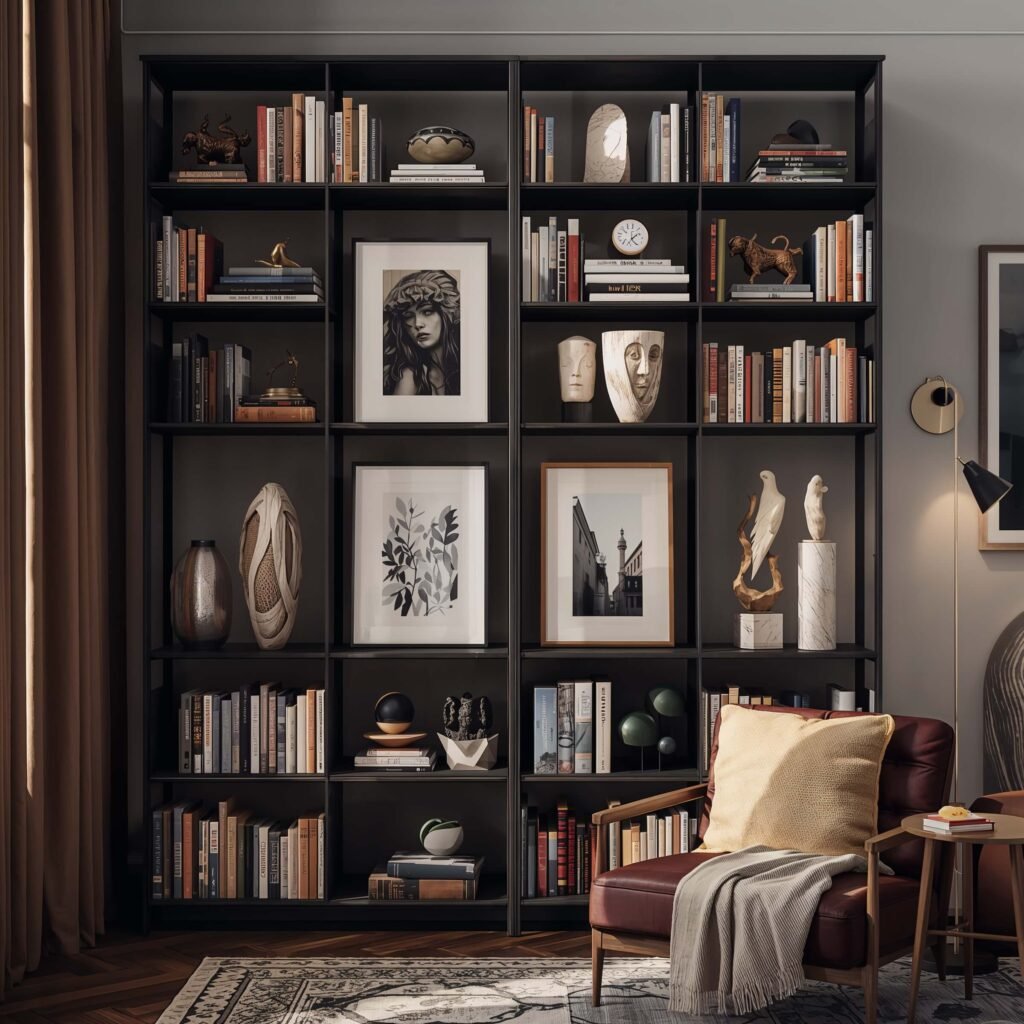
Books and art belong together like coffee and mornings. Integrating artwork and photos into your bookshelf creates personal galleries that no store-bought decor can match.
Layering Art with Books
Here’s my approach to mixing books and artwork:
• Lean framed pieces against the back of shelves
• Layer smaller frames in front of books
• Use books as pedestals for small sculptures
• Create vignettes with 3-5 items including art
The golden rule? Never let art completely hide your books. They should complement each other, not compete. I prop smaller frames against book spines, creating depth while keeping titles visible.
Photo Display Strategies
Personal photos add soul to any bookshelf. But please, ditch those generic wedding party shots for something more interesting. Candid moments, travel photos, or artistic black-and-whites elevate your shelf beyond basic.
Mix frame styles for that collected-over-time look. Combine metals, woods, and even frameless options. I scatter photos throughout my shelves rather than clustering them – creates little surprise moments as you browse.
Seasonal Decor Bookshelf
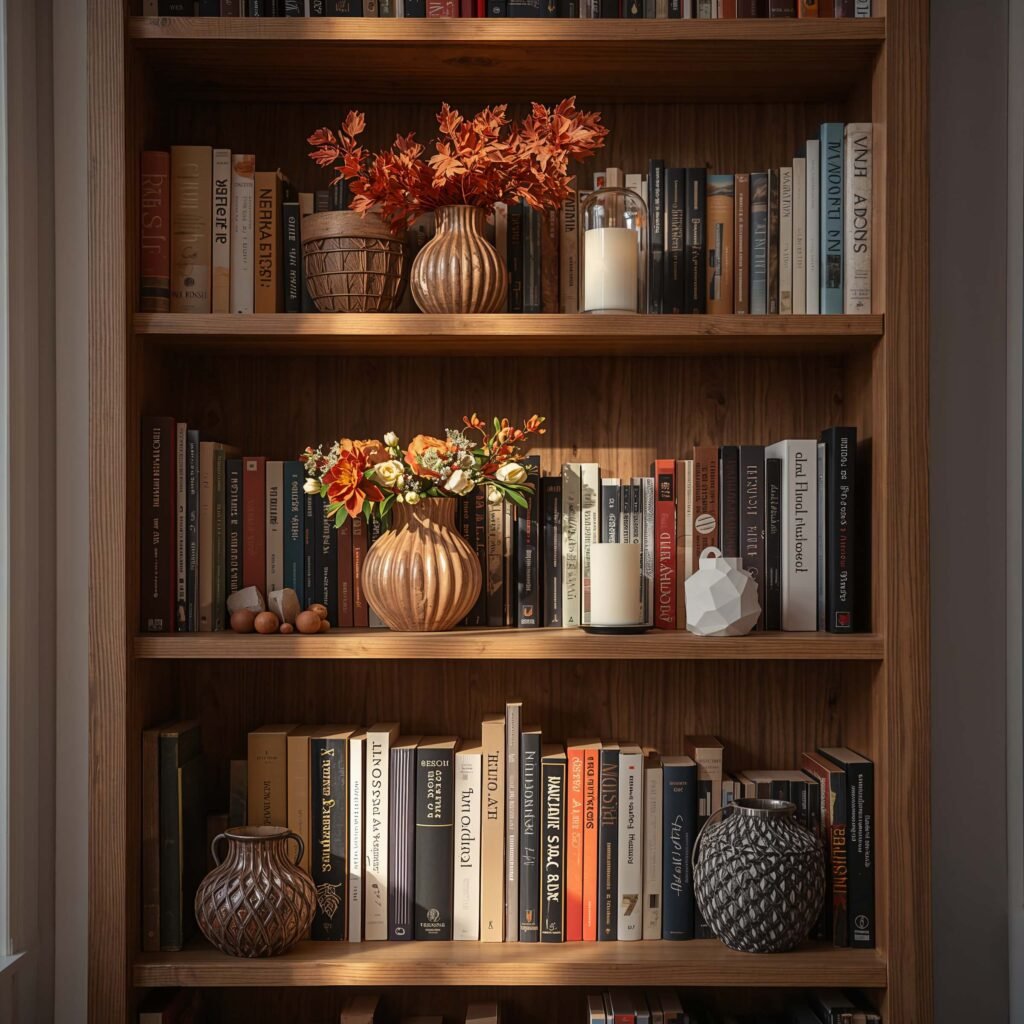
Who says bookshelves can’t celebrate seasons? Seasonal bookshelf decorating keeps your space fresh without major overhauls. IMO, this approach stops your shelves from becoming background noise.
Quick Seasonal Swaps
Simple changes that pack major seasonal punch:
Spring/Summer:
• Fresh flowers in small vases
• Light, bright book spine colors forward
• Beach shells or coral pieces
• Pastel accents and natural textures
Fall/Winter:
• Mini pumpkins or pinecones
• Warm-toned books front and center
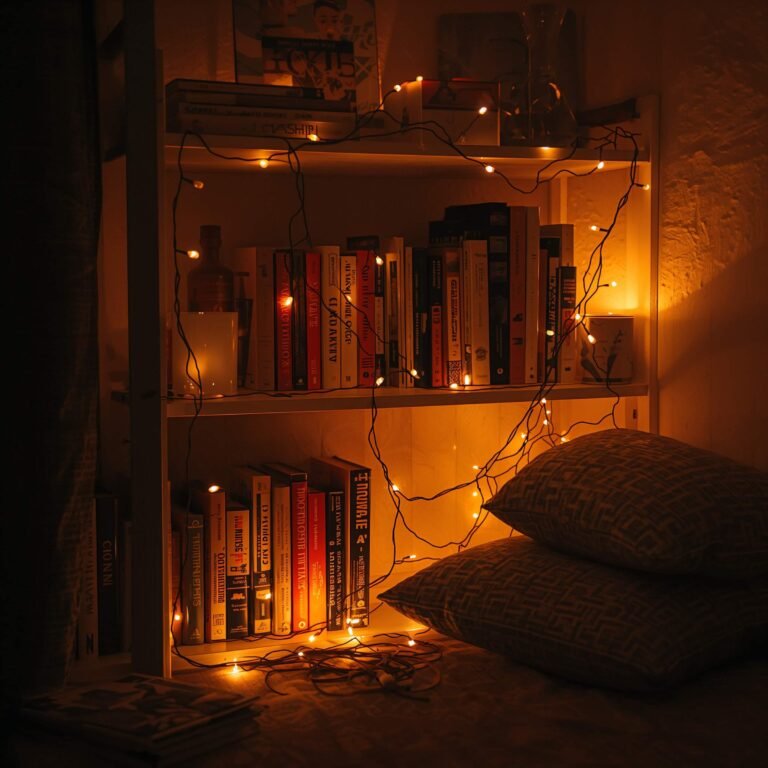
• Cozy candles (LED for safety)
• Metallic accents and rich textures
I keep a box of seasonal bits that I rotate quarterly. Takes maybe twenty minutes to swap, but visitors always notice something new.
Avoiding Holiday Overload
Here’s the thing about seasonal decorating – subtlety wins. A few strategic touches beat turning your bookshelf into a Christmas village. I add maybe three seasonal elements per shelf unit, max. Your books should still star in the show.
Also READ: 10 Creative Study Room Inspiration Ideas for Cozy Productivity
Monochrome Elegance Shelf
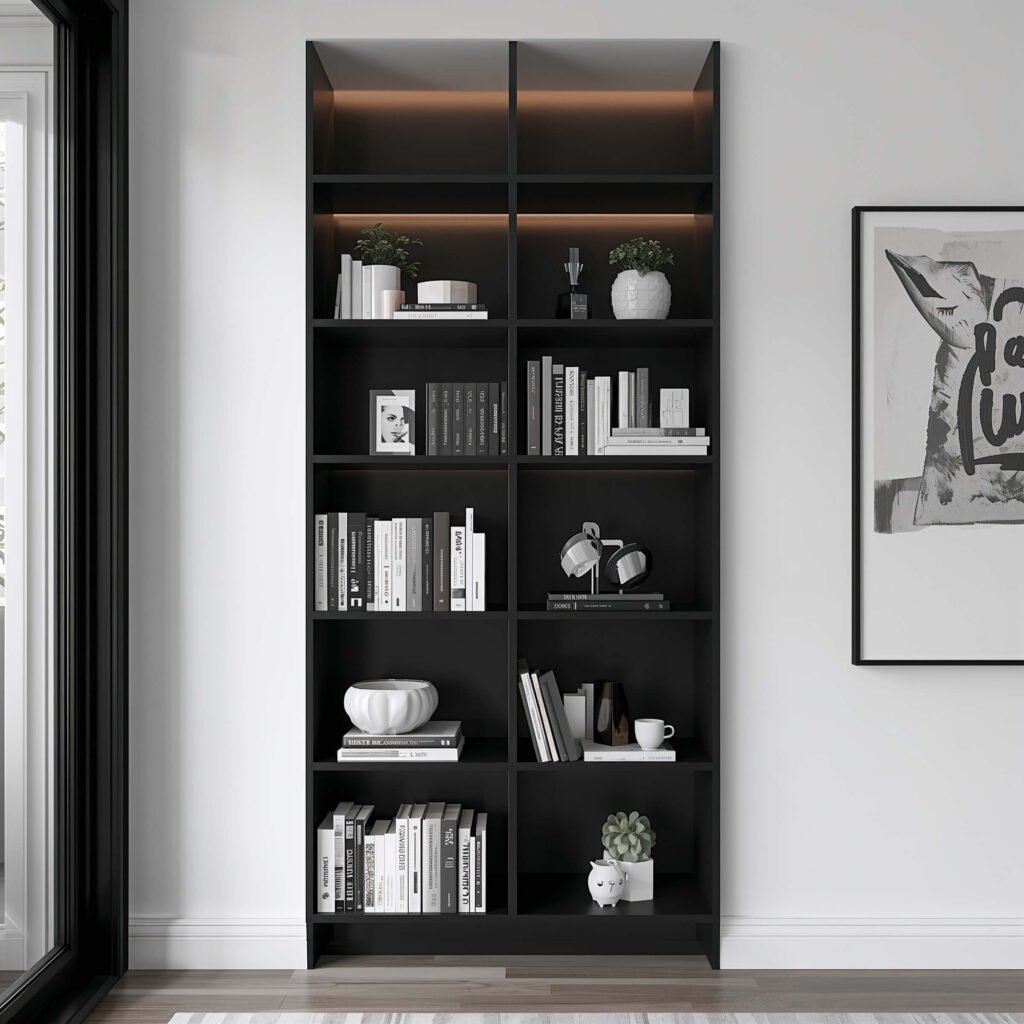
Last but definitely not least, let’s talk monochrome. This isn’t boring – it’s sophisticated restraint at its finest. Pick a color, any color, and commit fully.
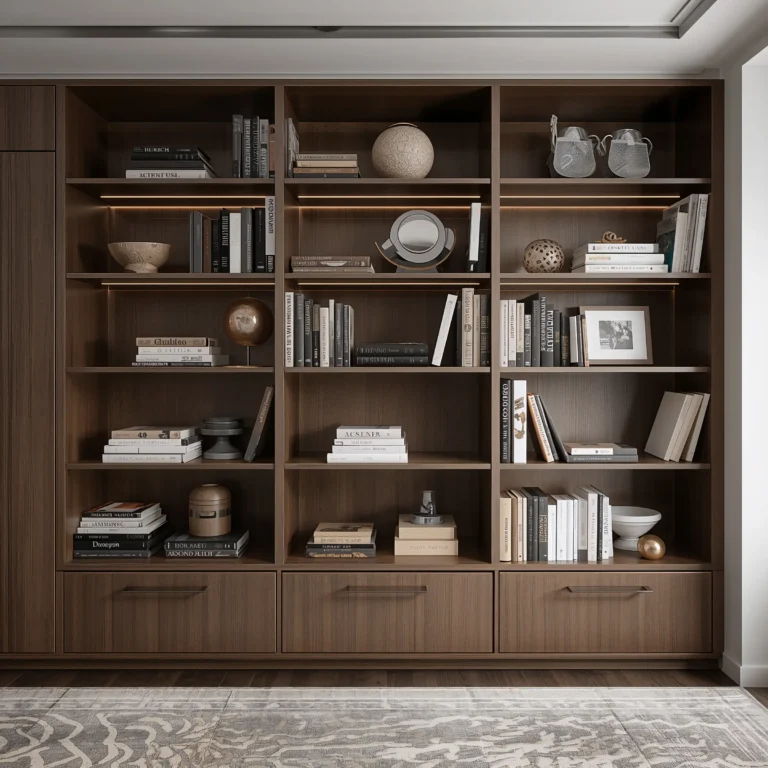
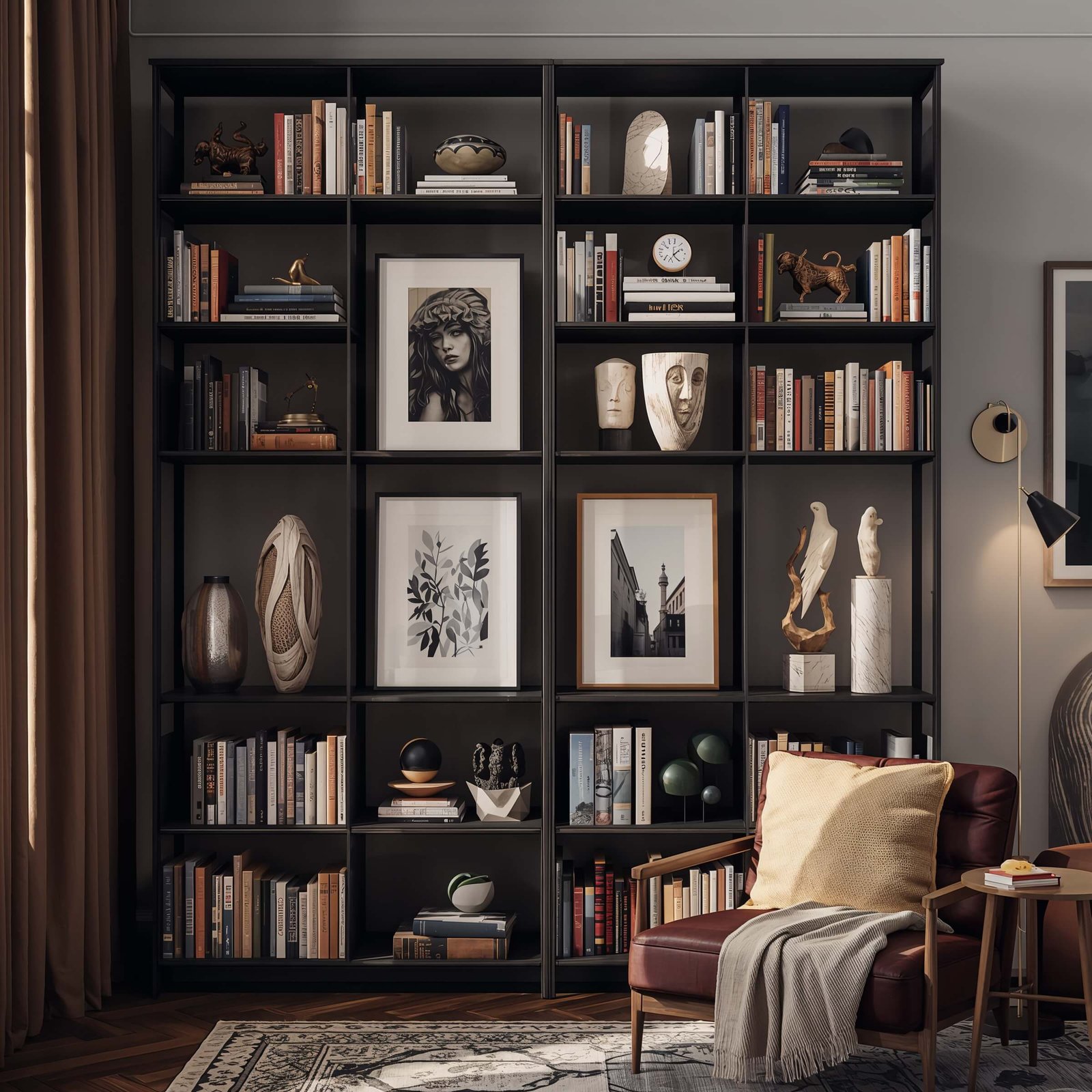
I went full black-and-white on my office shelves, and the impact stunned me. Every item becomes more noticeable when color isn’t competing for attention.
Executing Monochrome Perfectly
Keys to monochrome success:
• Vary your textures extensively – matte, glossy, rough, smooth
• Include multiple shades within your chosen color
• Add metallic accents in complementary tones
• Break rules with one tiny pop of color (if you dare)
The beauty of monochrome? Everything automatically matches. Grabbed a random black vase at a thrift store? It belongs. White ceramic elephant from your mom? Perfect addition.
Beyond Black and White
While black-and-white remains classic, don’t sleep on other monochrome schemes. All-blue shelves feel calm and coastal. Gray schemes scream modern sophistication. Even all-pink can work if you balance sweet with edgy elements.
Making It All Work Together
Here’s the real talk – you don’t need to pick just one style. My living room shelves blend minimalist and boho elements, while my office rocks that monochrome geometric vibe. Your shelves should reflect your personality, not some Pinterest ideal.
Start with one approach that speaks to you. Add elements slowly, step back often, and don’t be afraid to completely start over. I rearrange my shelves every few months because honestly? It’s cheaper than therapy and equally satisfying.
Remember, the best bookshelf styling makes you smile every time you pass it. Whether you go full rainbow or monochrome minimalist, whether you add twelve plants or none, make choices that feel authentically you. Your books deserve a stage that matches their importance in your life.
Now stop reading about bookshelf styling and go move some books around. Trust me, once you start, you won’t want to stop. That perfect shelf arrangement exists – you just need to find it. And when you do? Take a photo, because tomorrow you’ll probably want to change it all over again.