10 Unique Bookshelf Ideas for Small Spaces Made Simple

Look, I get it. You’ve got books everywhere – stacked on your coffee table, piled on your nightstand, and probably shoved in random corners where they definitely don’t belong. Been there, done that, got the dust bunnies to prove it.
But here’s the thing: bookshelves don’t have to be boring. Actually, scratch that – they shouldn’t be boring at all.
Remember when everyone thought IKEA’s Billy bookcase was peak interior design? Yeah, we’ve come a long way since then.
These days, your bookshelf can be a statement piece, a conversation starter, or even a sneaky space divider that makes your studio apartment feel like an actual grown-up home.
Trust me, after helping my sister redesign her entire living room around a killer bookshelf setup (and accidentally dropping a vintage hardcover on my foot in the process), I’ve learned a thing or two about making books look good.
So grab your coffee, get comfy, and let’s talk about 10 bookshelf ideas that’ll make your friends wonder when you became such a design genius. Spoiler alert: you won’t need a trust fund or a degree in architecture for any of these.
Floating Wall Bookshelves
The Magic of Invisible Support
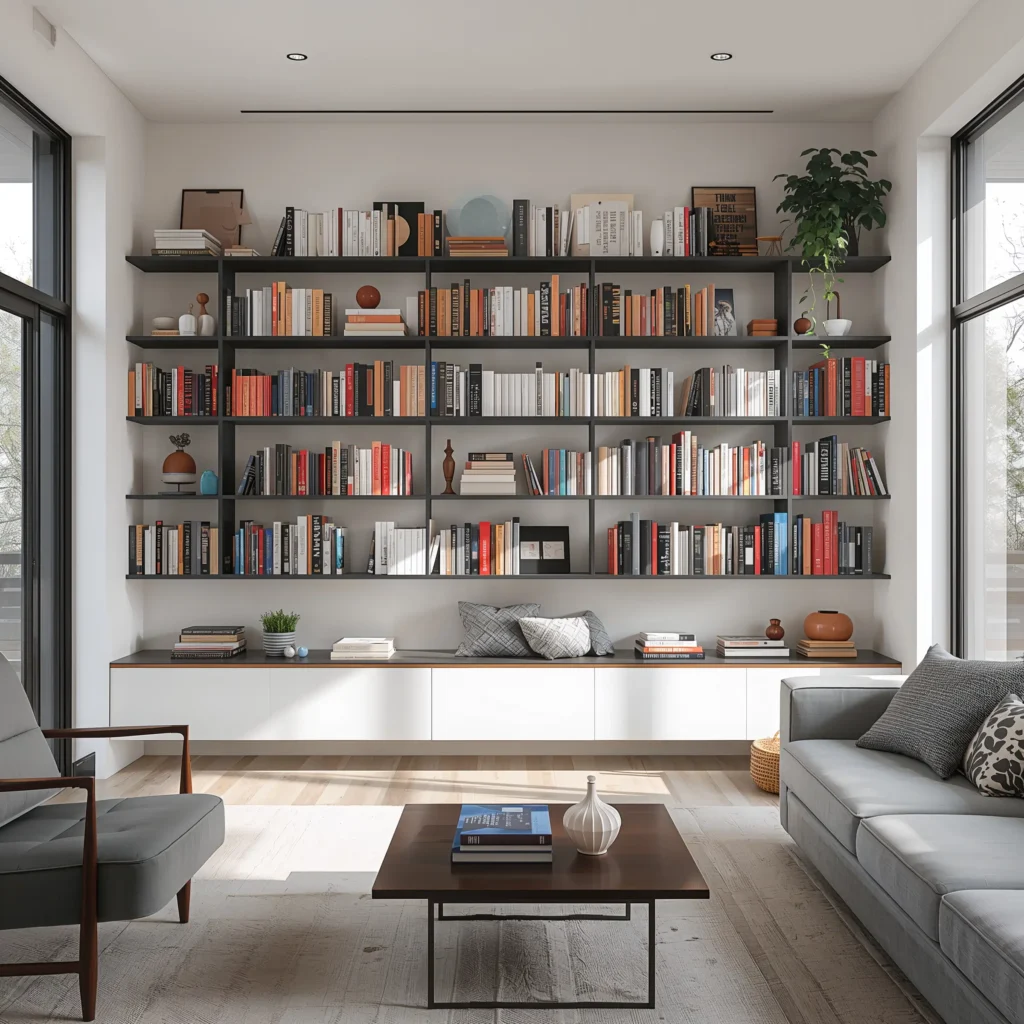
Ever walked into someone’s place and thought their books were literally floating on the wall? Yeah, that’s the vibe we’re going for here. Floating shelves create this incredible illusion that makes people do a double-take every single time. I installed my first set about three years ago, and my mom still asks how they stay up whenever she visits.
The beauty of floating shelves lies in their simplicity. You mount brackets directly into your wall studs (please, for the love of all that’s holy, use a stud finder), and the shelf slides right on. No visible brackets, no clunky supports – just pure, minimalist magic.
Here’s what makes floating shelves absolutely brilliant:
- They work in literally any room – kitchen cookbooks, bathroom reads, bedroom favorites
- You control the spacing completely
- They make small spaces feel bigger
- Installation takes maybe an hour tops
- They’re surprisingly affordable (we’re talking $20-40 per shelf)
Making Them Work in Real Life
Now, let me be real with you. The first time I hung floating shelves, I got a bit… ambitious. Picture this: me, loading up a single shelf with my entire Stephen King collection. Spoiler: that shelf now lives in my garage as a cautionary tale. Weight limits are real, people!
Most floating shelves handle about 15-20 pounds comfortably. That’s roughly 10-15 average books. Want to display your encyclopedia collection? Maybe look elsewhere. But for creating that Pinterest-worthy wall of carefully curated reads? Perfect.
I’ve found the sweet spot is mixing books with lighter decorative items. Throw in a small plant, a candle, maybe that quirky bookend you got at a flea market. It breaks up the visual weight and keeps things interesting.
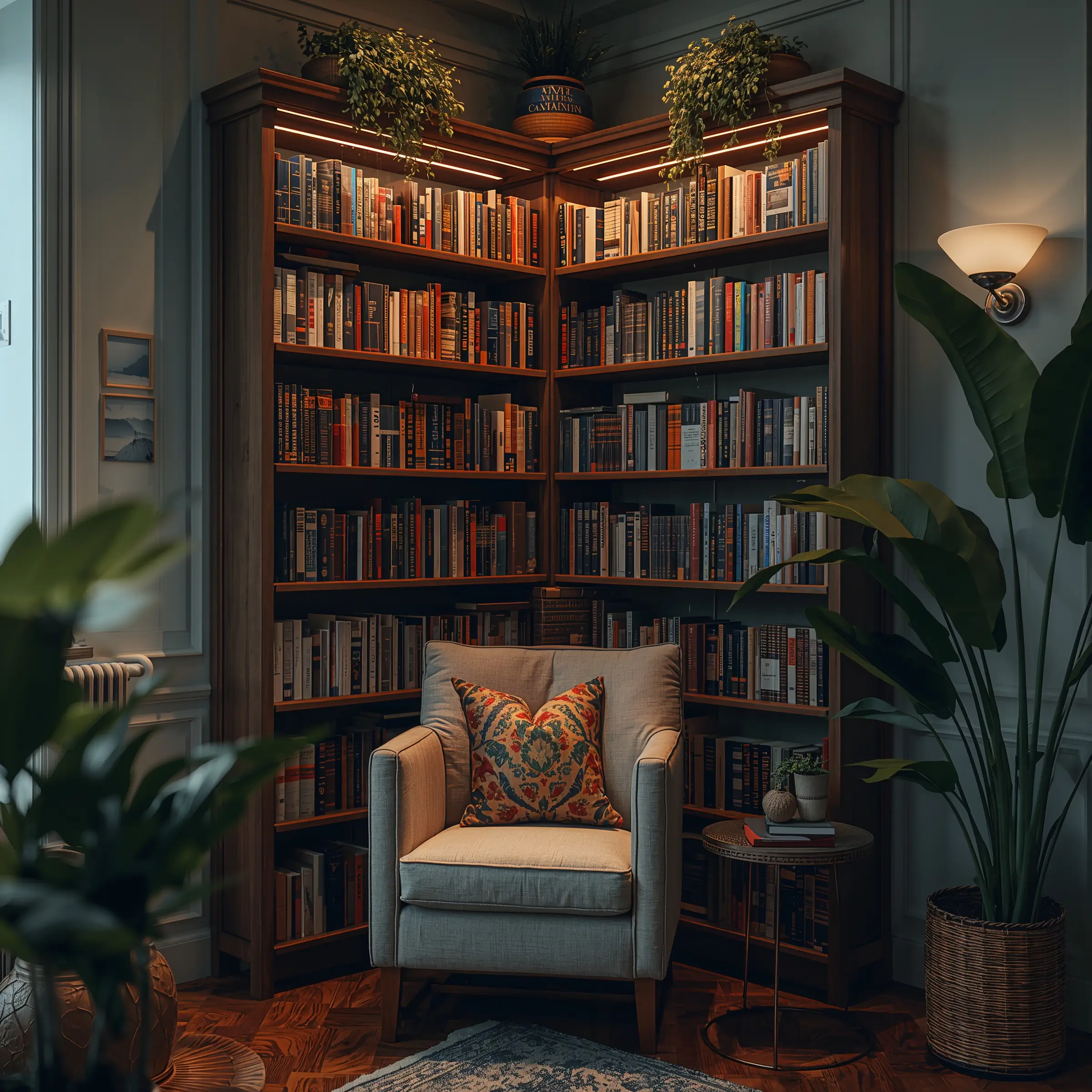
Corner Bookshelf Nooks
Turning Dead Space Into Prime Real Estate
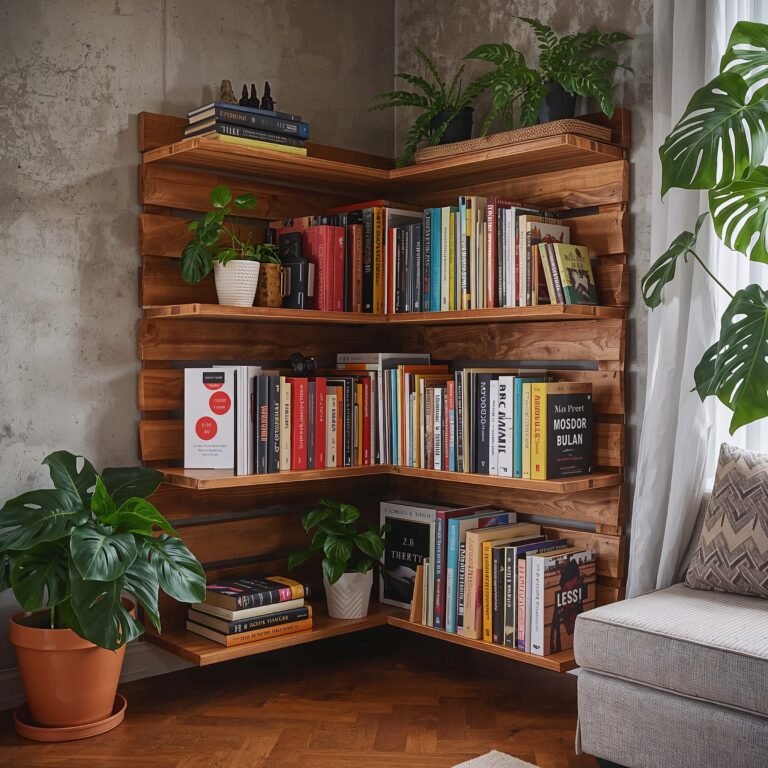
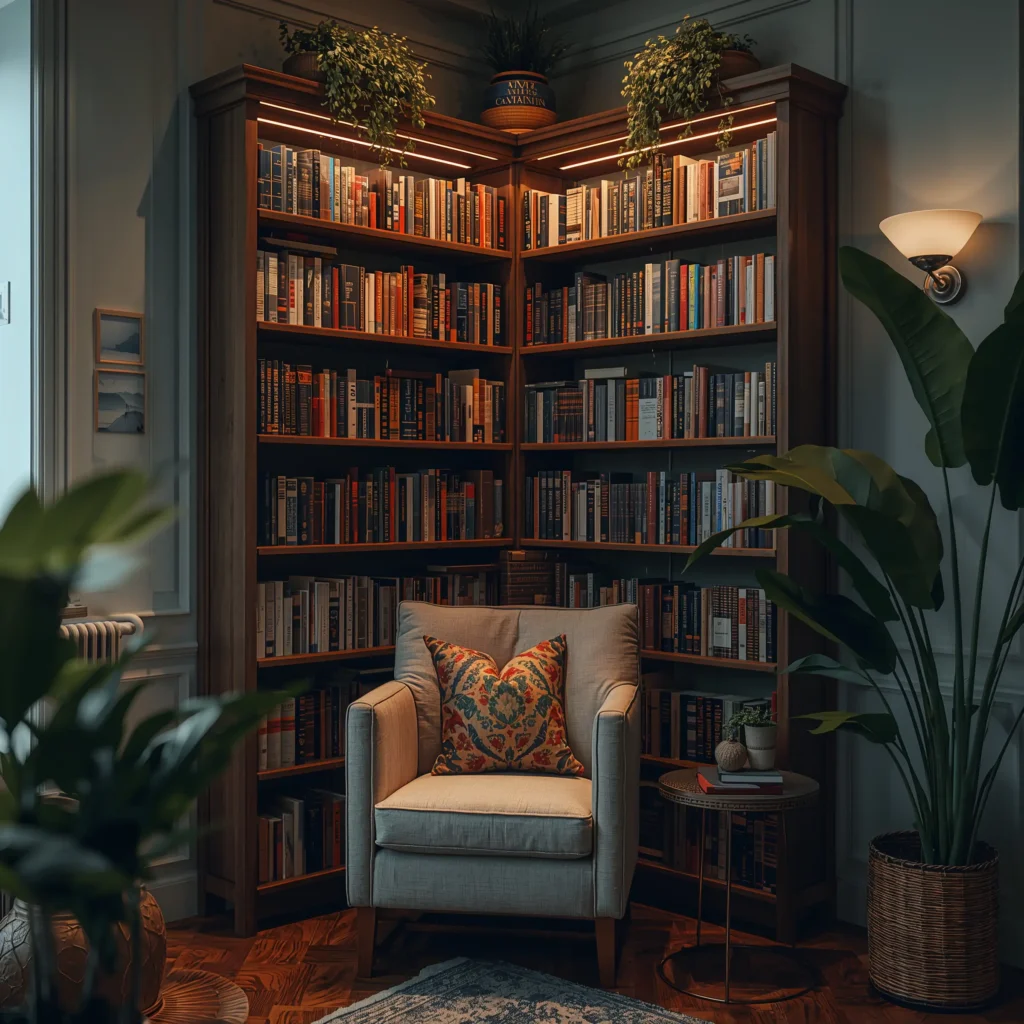
Corners are weird, right? They just sit there, being all angular and awkward, collecting dust and maybe a sad fake plant. But here’s where corner bookshelves come in clutch. They transform that dead zone into functional, gorgeous storage that actually makes sense.
I discovered corner shelving when I moved into my current place and realized I had this massive empty corner in my home office. It was basically screaming for attention. After installing a corner unit, that space became my favorite reading spot – no joke.
Design Options That Actually Work
You’ve got options here, and they’re all pretty fantastic:
Floating Corner Shelves:
- Stack them vertically for a modern look
- Perfect for displaying special editions
- Great for renters (minimal wall damage)
L-Shaped Built-Ins:
- Maximize every inch of corner space
- Create a cozy library feel
- Add value to your home
Ladder-Style Corner Units:
- Lean into the corner naturally
- No installation required (hallelujah!)
- Easy to move when you redecorate
The trick with corner shelves? Don’t overcrowd them. These spaces already draw the eye naturally, so you want to keep things clean and intentional. Think quality over quantity here.
Ladder-Style Book Storage
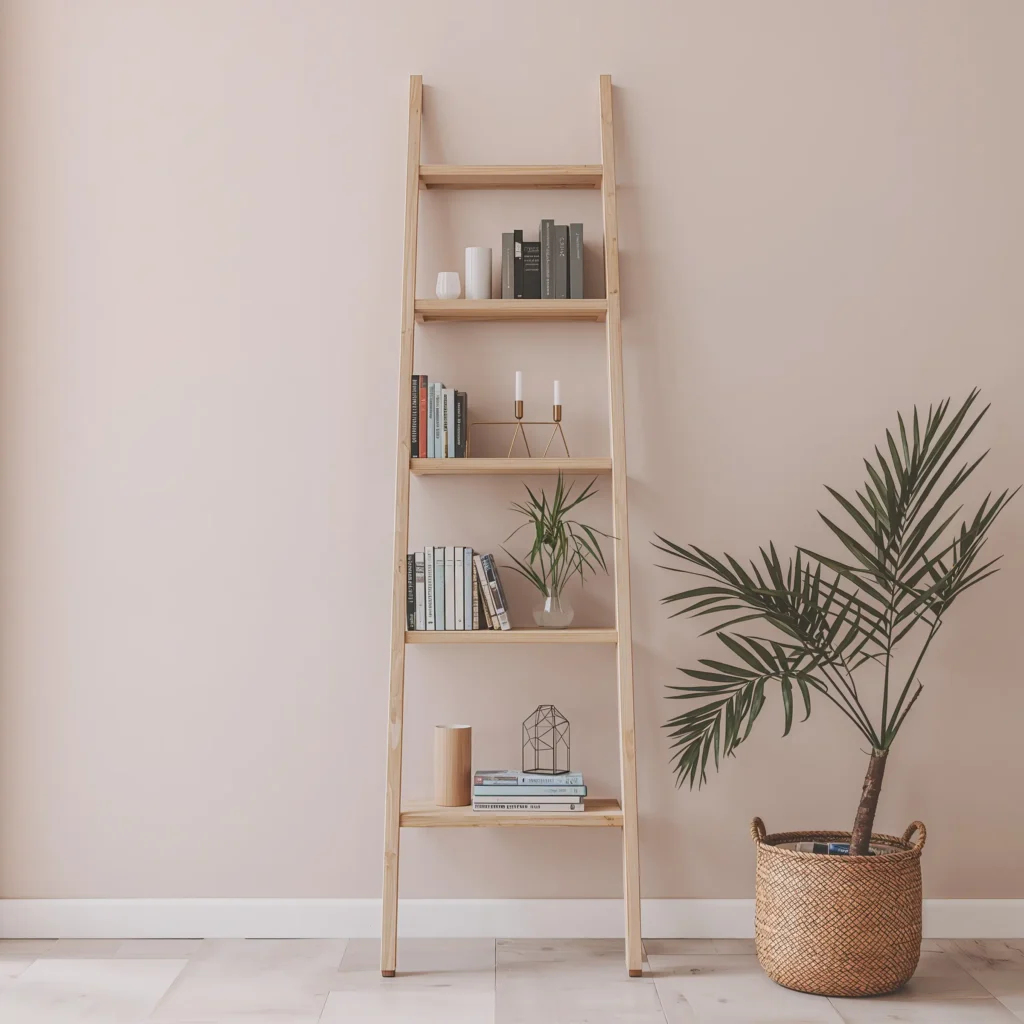
The Trend That Refuses to Die (For Good Reason)
Remember when ladder bookshelves exploded onto the scene and everyone thought they’d be gone in six months? Well, joke’s on us because they’re still everywhere, and honestly? They deserve the hype. Ladder shelves bring this casual, effortless vibe that somehow works with literally any decor style.
My first ladder shelf was a total impulse buy. Saw it at a garage sale, painted bright orange (yes, orange), and thought “why not?” Three coats of paint later, it’s now the centerpiece of my bedroom, and I get compliments on it constantly.
Why Ladder Shelves Just Make Sense
The genius of ladder-style storage comes down to physics and psychology. They lean against your wall at an angle, which means:
- No drilling required (renters, rejoice!)
- Natural stability from the lean
- Graduated shelf sizes that just look right
- Easy to style because the shape does half the work
Plus, there’s something about that upward angle that draws your eye up, making your ceilings feel higher. It’s basically an optical illusion that also holds your books. Win-win, IMO.
Styling Your Ladder Shelf Like a Pro
Here’s where people mess up with ladder shelves: they treat every shelf the same. Don’t do this! The key is working with the natural graduation of sizes.
Top shelf: Smallest items, maybe a succulent or two
Second shelf: Paperbacks, small decorative objects
Middle shelves: Your main book collection
Bottom shelf: Largest items, storage baskets, hefty art books
I learned this the hard way when I put all my heavy books on top and spent a week paranoid it would tip forward. Physics doesn’t care about your aesthetic choices, friends.
Also Read: 10 Stunning Bookshelf Styling Ideas and Cozy Home Vibes
Built-In Floor-to-Ceiling Shelves
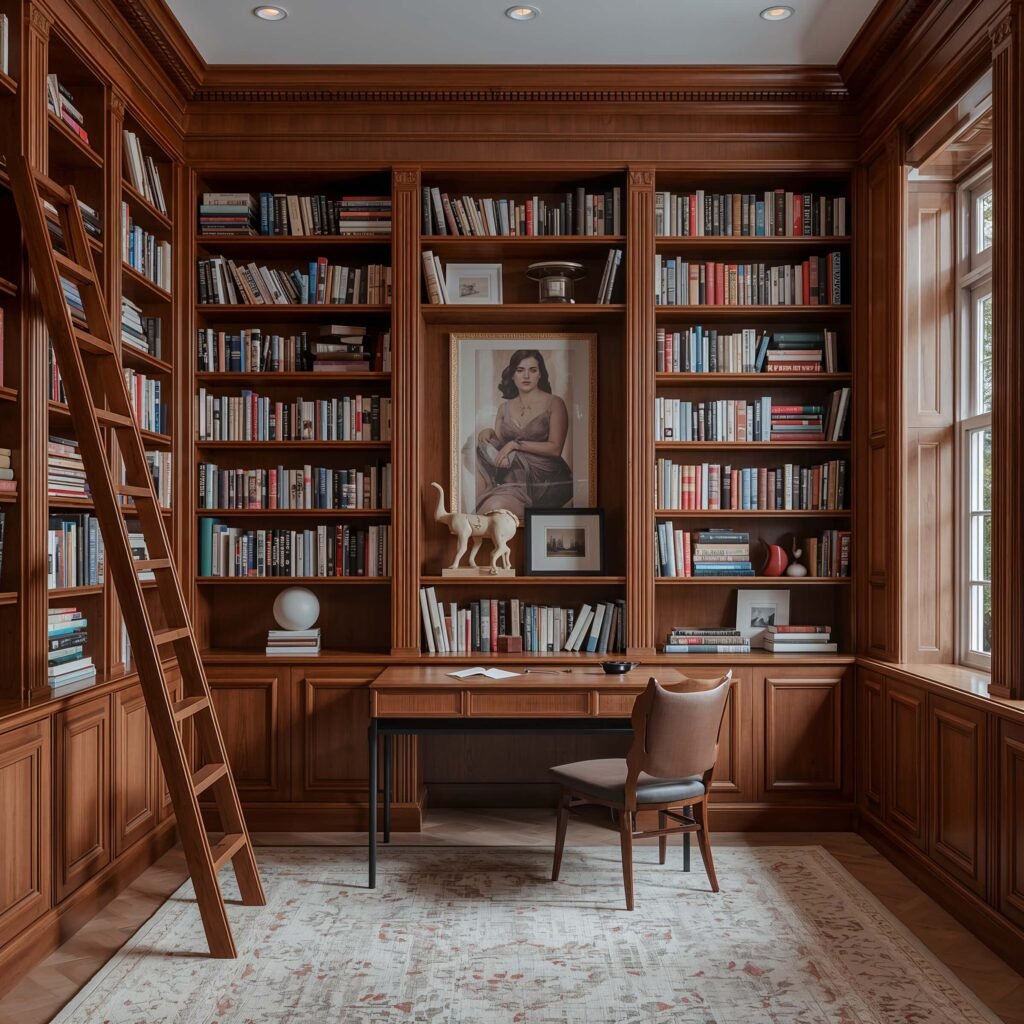
The Ultimate Bookshelf Flex
Okay, we need to talk about built-ins because holy moly, nothing says “I’m a serious reader” quite like floor-to-ceiling bookshelves. Walking into a room with built-ins feels like stepping into a private library, minus the shushing librarian.
When my best friend renovated her house, she went all-in on built-ins in her living room. The contractor thought she was crazy (“You want HOW many shelves?”), but now it’s literally the most photographed spot in her house. Every party, someone’s posing in front of those shelves.
The Investment That Pays Off
Let’s not sugarcoat it – built-ins aren’t cheap. You’re looking at:
- Custom work: $2,000-5,000+ per wall
- Semi-custom: $1,000-3,000
- DIY with help: $500-1,500
But here’s the thing: built-ins add serious value to your home. We’re talking actual dollars on your property value, not just Instagram likes (though you’ll get those too).
Making Built-Ins Work Without Breaking the Bank
Can’t swing custom built-ins? I feel you. Here’s the hack: IKEA Billy bookcases + crown molding + baseboard = fake built-ins that look 90% as good for 20% of the cost. Seriously, YouTube this – the transformations are insane.
I helped my cousin do this in her apartment (yes, apartment!), and her landlord actually asked if he could keep them when she moved out. That’s how good they looked. The whole project took a weekend and maybe $400.
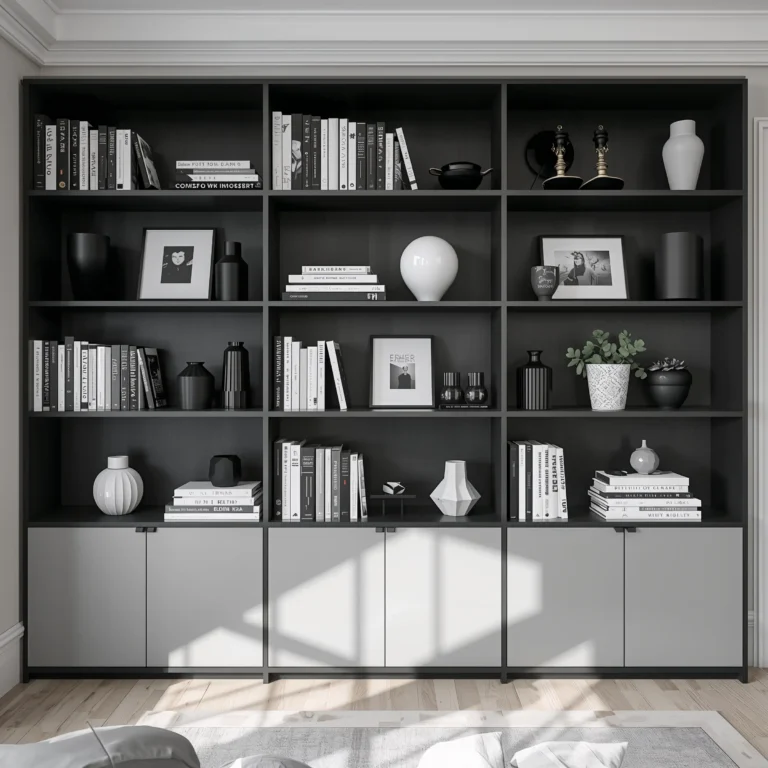
Minimalist Modern Shelving
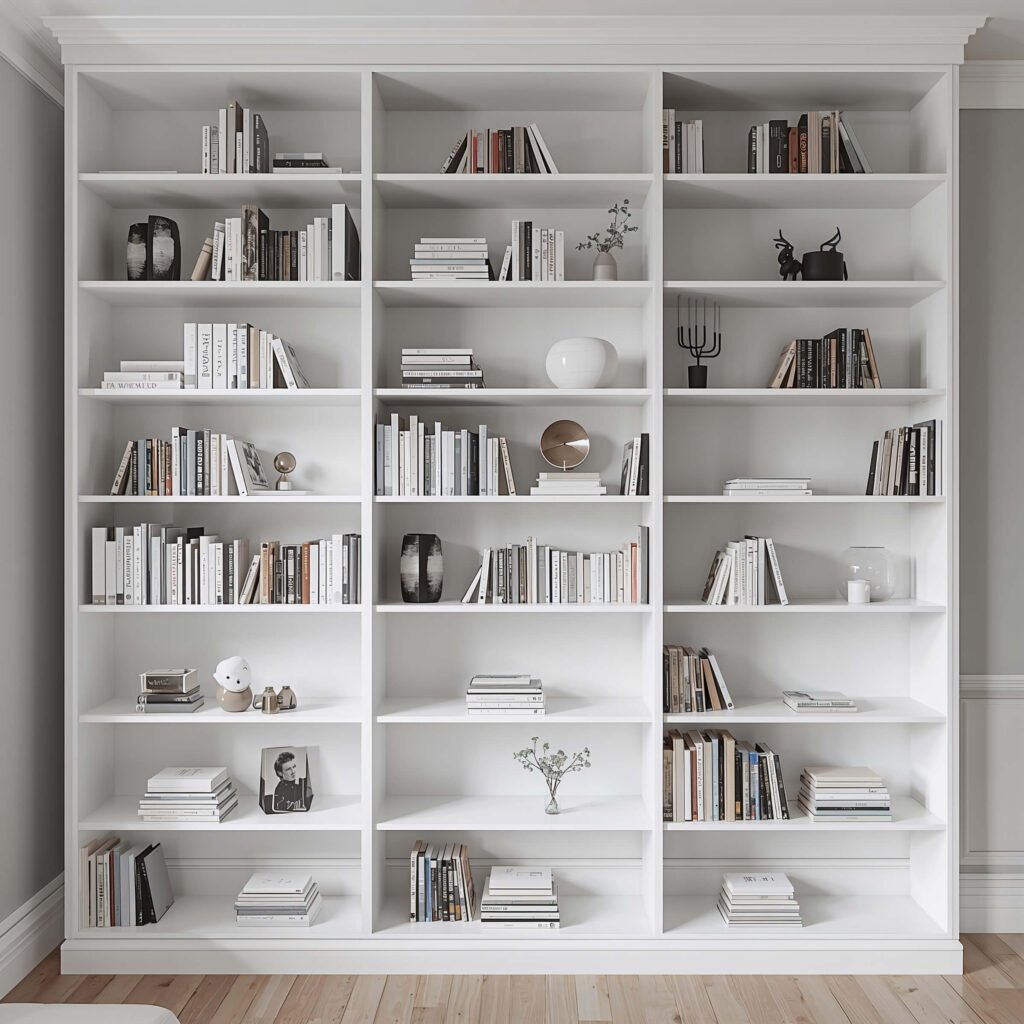
Less Really Can Be More
You know that friend whose house always looks like a magazine spread? The one where everything has its perfect place? Yeah, they probably rock minimalist shelving. Modern minimalist bookshelves strip away all the excess and focus on clean lines, simple forms, and intentional spacing.
I’ll admit, I used to think minimalist meant boring. Then I stayed at this Airbnb in Portland with these incredible geometric shelves that held maybe 20 books total, but each one was displayed like art. Changed my whole perspective.
The Rules of Minimalist Shelving
Going minimal doesn’t mean going empty. It means being choosy. Here’s the formula that works:
The 60-40 Rule:
- 60% books and functional items
- 40% empty space
- This ratio keeps things from feeling cluttered or sparse
Color Coordination:
- Stick to 2-3 colors max
- Neutrals are your friend
- One pop of color if you’re feeling wild
Quality Over Quantity:
- Display your best books, not all your books
- Hardcovers typically look better than paperbacks
- Remove dust jackets for a cleaner look
Making Minimalism Work IRL
Here’s my hot take: pure minimalism is hard to maintain if you actually read. Books multiply like rabbits, and that perfectly curated shelf gets messy fast. My solution? Rotate your display seasonally. Keep the overflow in pretty storage boxes, and swap them out every few months. It’s like having a new bookshelf four times a year 🙂
Rustic Wooden Crate Bookshelves
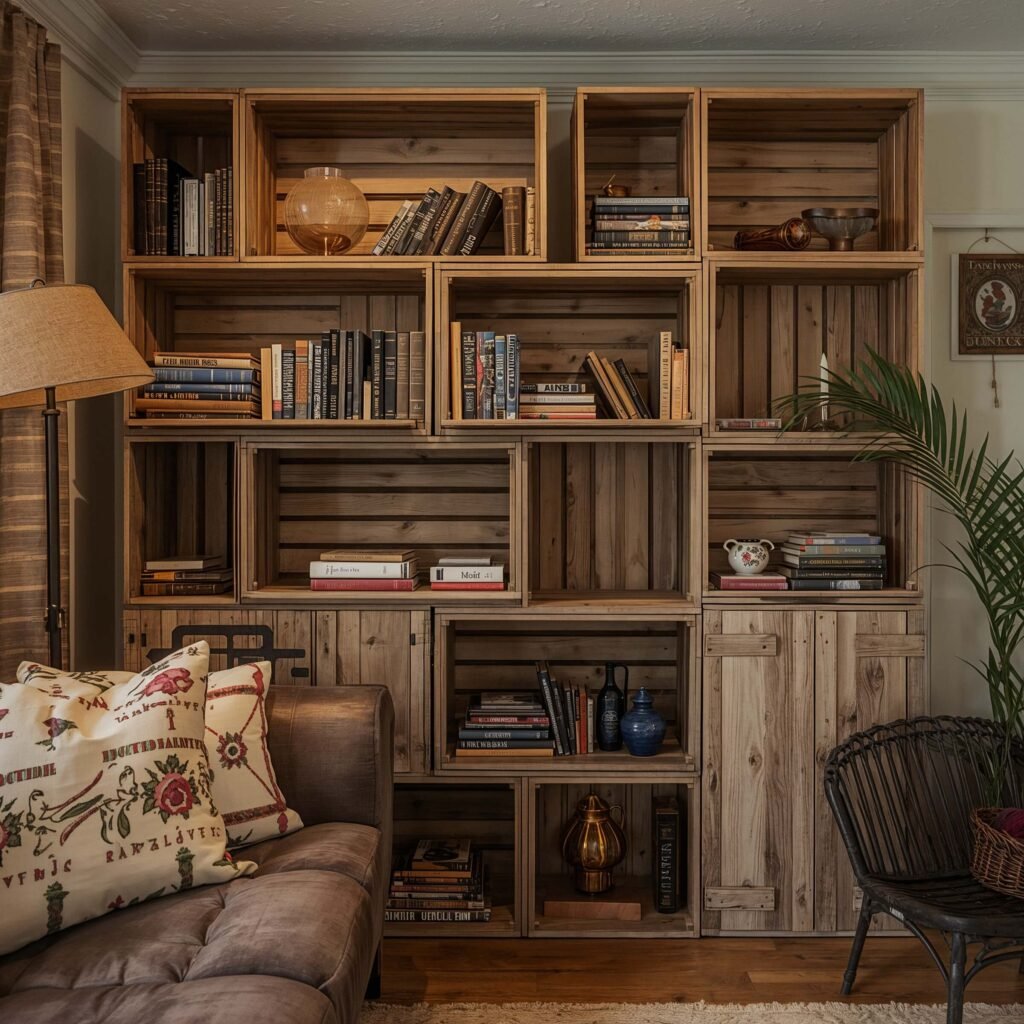
DIY Dreams Come True
Let’s talk about crate bookshelves because they’re having a serious moment, and I’m here for it. Old wooden crates bring this amazing rustic charm that makes everything feel cozy and lived-in. Plus, they’re stupid easy to work with.
Last summer, I scored a bunch of vintage apple crates from a farm stand that was closing. Twenty bucks for six crates! Spent an afternoon sanding and staining them, and now they’re the focal point of my dining room. Everyone asks where I bought them, and I get to be all smug about my DIY skills.
Sourcing and Styling Your Crates
Finding good crates takes some hunting, but it’s worth it:
- Craft stores: New but pricier ($15-30 each)
- Flea markets: Vintage gold mines
- Online marketplaces: Hit or miss on quality
- Wine shops: Sometimes give them away!
The Configuration Game
The beauty of crate shelves? You can reconfigure them whenever you want. Stack them, hang them, arrange them in patterns – it’s like adult LEGOs. My favorite configurations:
The Tetris Wall:
- Mix horizontal and vertical crates
- Creates interesting negative space
- Looks intentionally random
The Pyramid Stack:
- Wide base, narrow top
- Super stable
- Great for corners
The Checkerboard:
- Alternating crate directions
- Perfect symmetry
- Surprisingly modern looking
Also Read: 10 Modern Study Room Interior Ideas for Stylish Homes
Geometric Wall Shelves
When Your Bookshelf Becomes Art
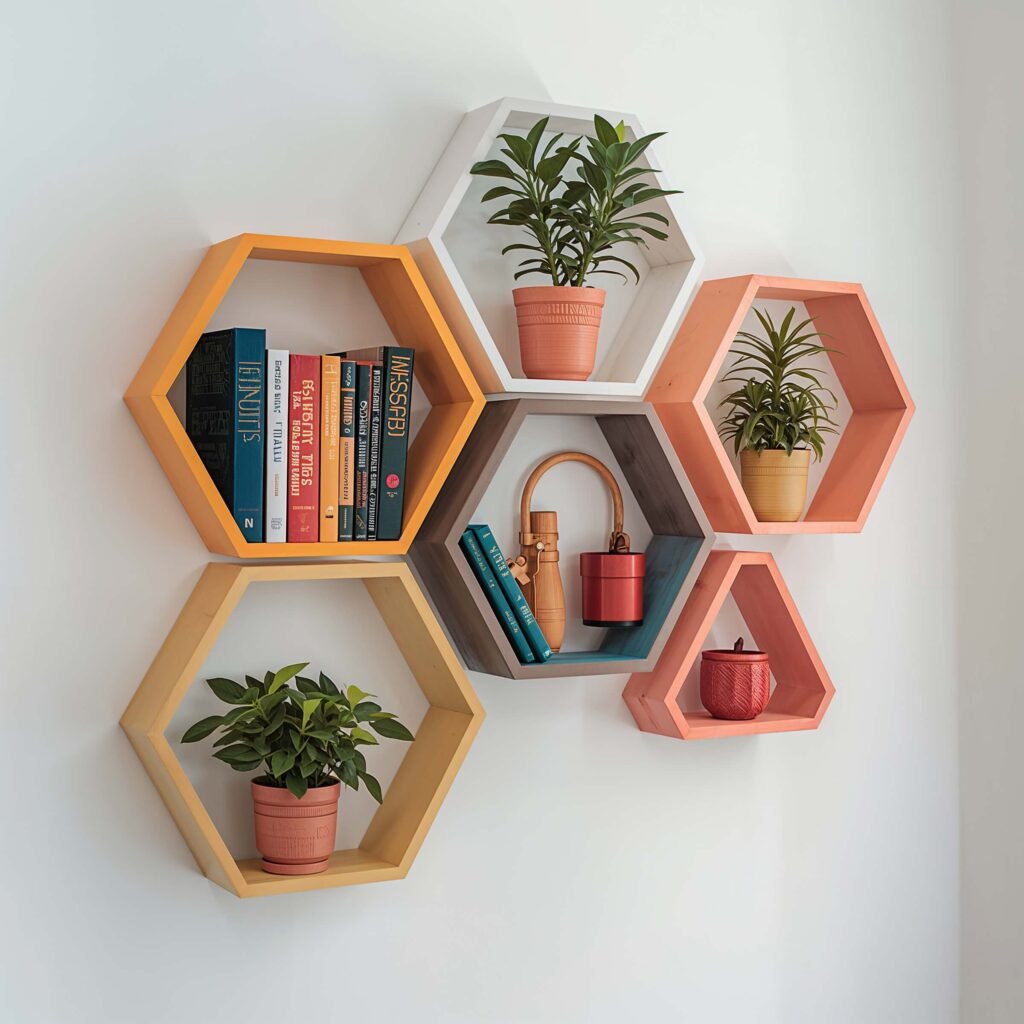
Geometric shelves are where function meets straight-up art. These aren’t just shelves; they’re sculptural elements that happen to hold books. Hexagons, triangles, asymmetric designs – we’re talking shelves that make people stop and stare.
I installed hexagonal shelves in my hallway last year, and honestly? They get more compliments than anything else in my house. There’s something about those unexpected shapes that just works.
Choosing Your Geometric Style
Honeycomb Hexagons:
- Modular and expandable
- Create any pattern you want
- Perfect for modern spaces
Triangle Shelves:
- Edgy and unexpected
- Great for corners
- Work well in small clusters
Asymmetric Boxes:
- Different sizes create visual interest
- More forgiving for styling
- Hide the mess better
The Installation Reality Check
Real talk: geometric shelves can be a pain to hang straight. That cute honeycomb pattern you saw on Pinterest? Yeah, that took someone with a level, patience, and probably a very understanding partner. My first attempt looked like a drunk bee designed it.
Pro tip: Make a paper template first. Seriously. Tape paper cutouts to your wall, step back, adjust, repeat. Once you’re happy, mark your drill points through the paper. You’re welcome.
Bookshelf Room Dividers
The Multitasker’s Dream
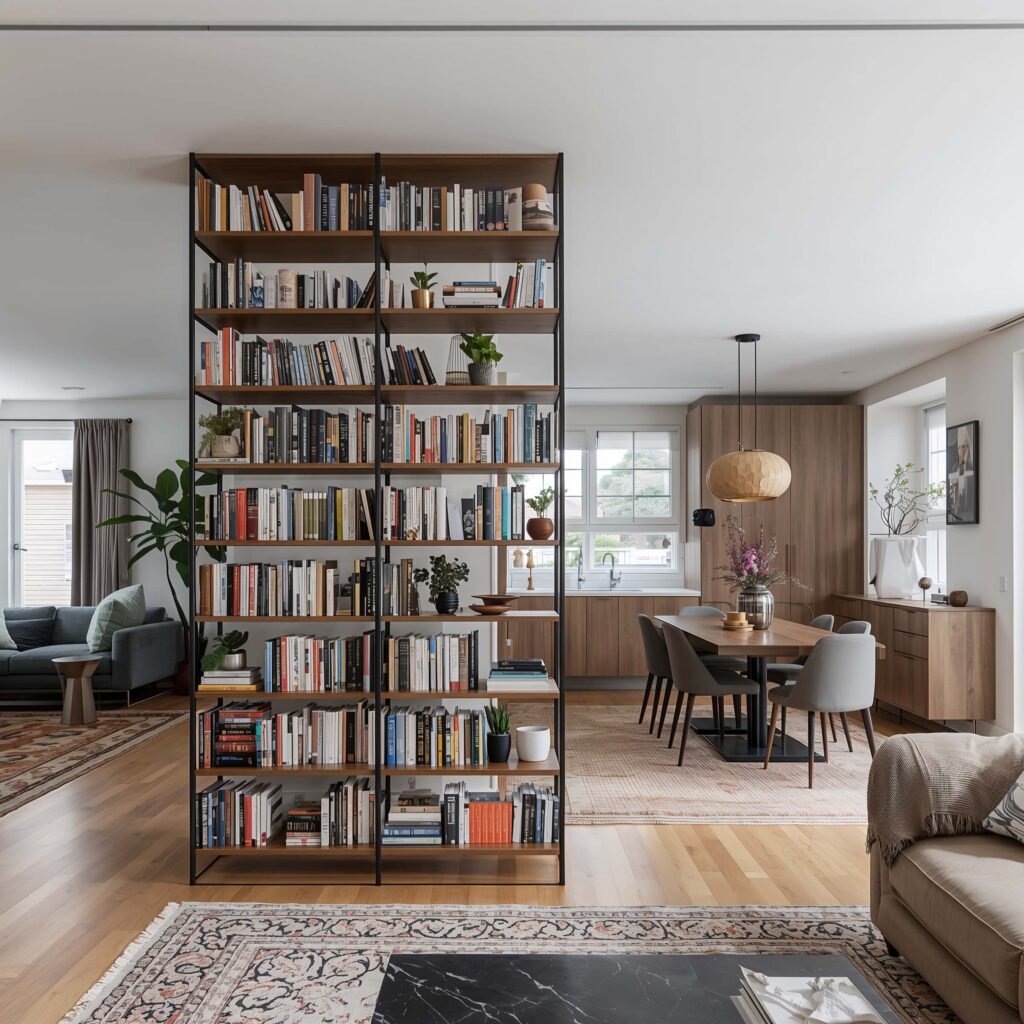
Who decided walls had to be solid anyway? Bookshelf dividers give you separation without isolation, storage without sacrificing light, and style without trying too hard. They’re basically the Swiss Army knife of furniture.
In my first studio apartment, a bookshelf divider literally created my “bedroom.” One side held books, the other side faced my bed with baskets for clothes. Instant privacy, zero construction, landlord approved.
Types That Actually Work
Open-Back Shelving:
- Light flows through
- Access from both sides
- Makes spaces feel bigger
Rotating Units:
- Spin to access different sections
- Great for kids’ rooms
- Fun party trick
Modular Systems:
- Build to your exact needs
- Expand as needed
- Move without dismantling
Styling Both Sides
The trick with divider shelves? You’re decorating two rooms at once. What looks good from the living room might look weird from the dining area. My approach:
- Keep the color palette consistent
- Mix books with decorative objects on both sides
- Use bookends to prevent see-through gaps
- Add some trailing plants for softness
Hidden Bookshelves Behind Doors
The Secret Library Fantasy
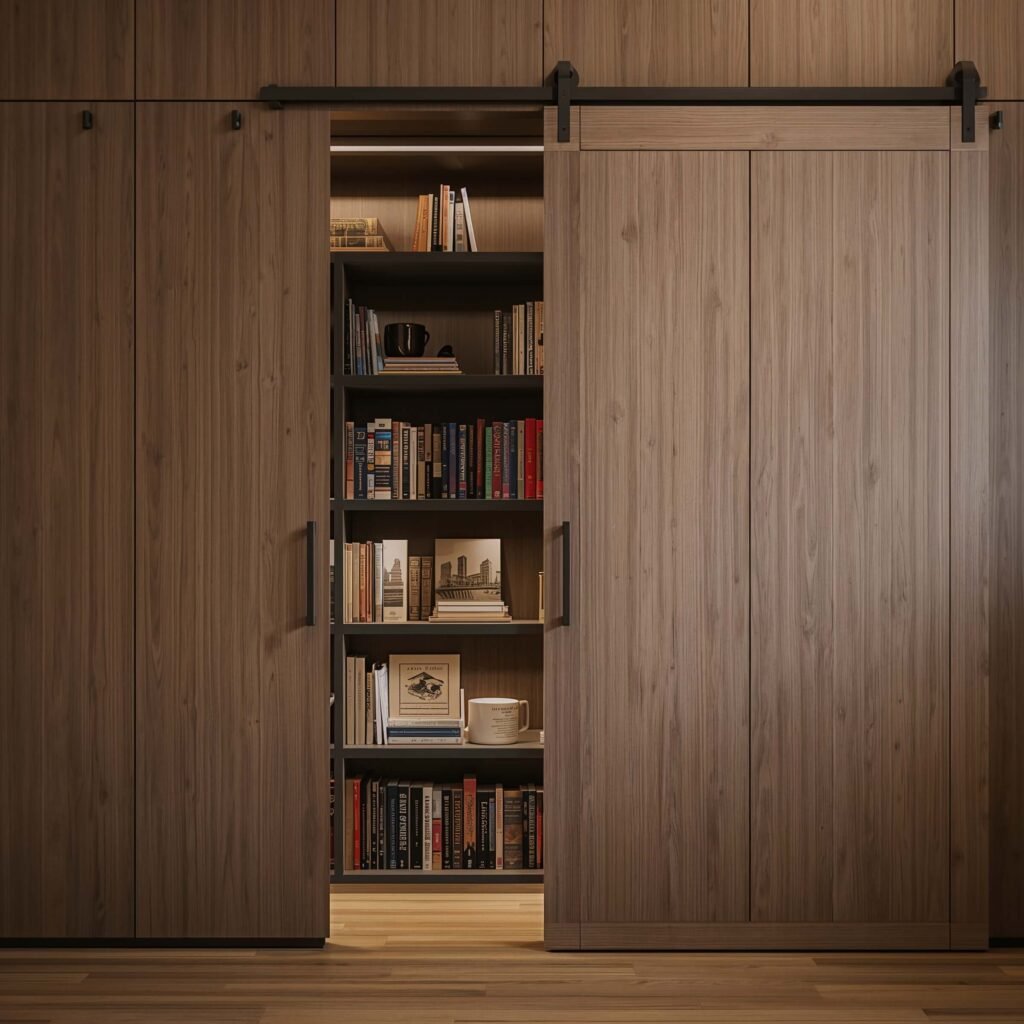
Ever pushed on a bookshelf and had it swing open to reveal a hidden room? No? Just me living in my Nancy Drew fantasies? Well, hidden bookshelf doors are real, and they’re absolutely as cool as you’d imagine.
My friend installed one leading to her home office, and watching people’s faces when she casually pushes her bookshelf open never gets old. It’s like being in a movie every single day.
The Practical Reality
Cost breakdown for hidden bookshelf doors:
- DIY kit: $300-800
- Professional installation: $1,500-4,000
- Custom build: $3,000+
But here’s the thing – you don’t need a secret room to hide bookshelves. Even simple shelves behind regular doors or in closets count. My bathroom door has narrow shelves on the back for all my guilty pleasure reads. FYI, no one expects to find romance novels behind the bathroom door.
Making It Work in Normal Homes
Behind regular doors:
- Over-door organizers work great
- Shallow shelves won’t interfere with opening
- Perfect for paperbacks
Inside closets:
- Upper shelf space often goes unused
- Great for seasonal book rotation
- Keeps dust off your books
Murphy-style shelves:
- Fold down when needed
- Hide away when you don’t
- Perfect for small spaces
Also Read: 10 Beautiful Cozy Study Room Ideas to Boost Productivity
Color-Coded Book Displays
The Rainbow Connection
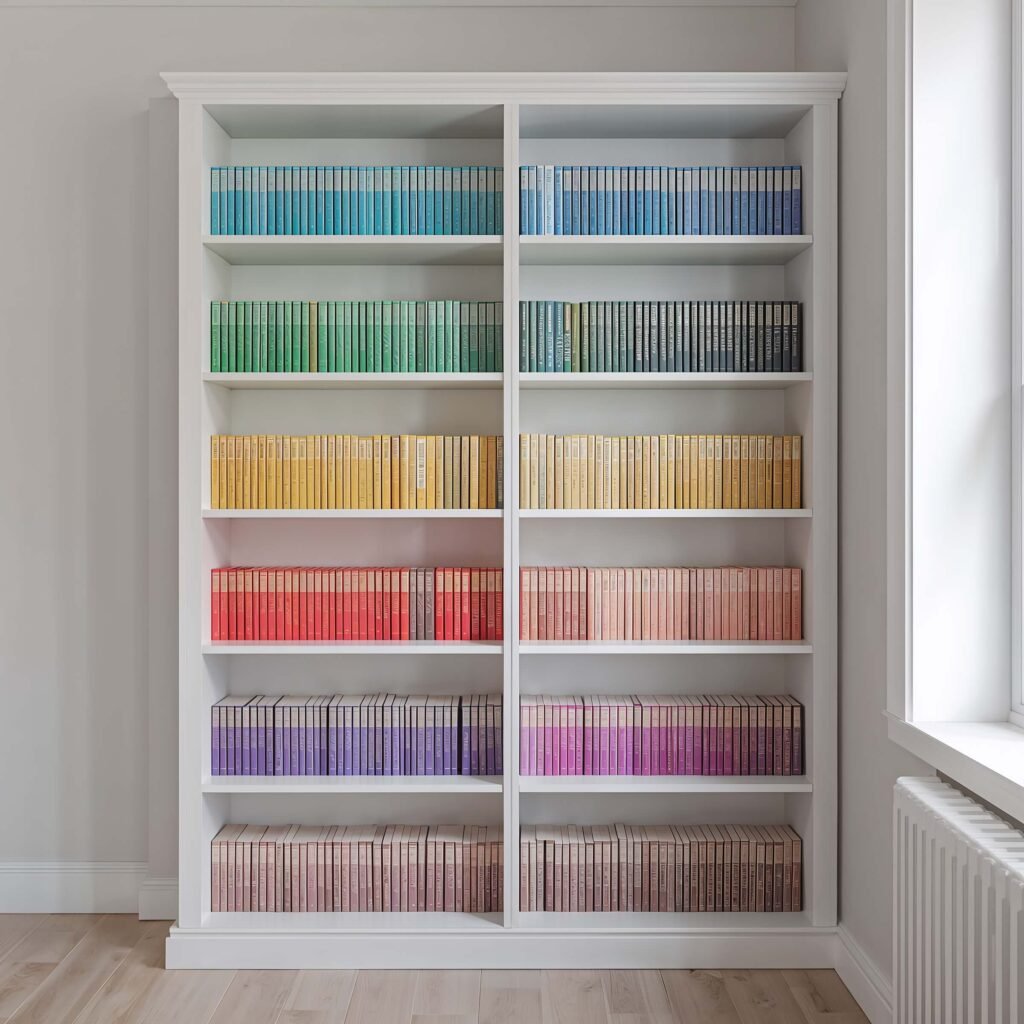
Let’s address the elephant in the room: color-coding your books is controversial. Book purists hate it (“How do you find anything?!”), but Instagram loves it. And you know what? Your house, your rules.
I color-coded my shelves two years ago as an experiment. Thought I’d hate it, but plot twist – I actually remember books better by their cover color than their alphabetical position. My brain is weird like that.
The Method to the Madness
Popular color-coding styles:
- Full rainbow spectrum (ROYGBIV, baby!)
- Gradient within each shelf
- Monochromatic sections
- Warm vs. cool tones
- Neutral with color pops
Making It Practical
Here’s how to color-code without losing your mind:
Keep series together: Break the rainbow for Harry Potter. It’s fine.
Photo before you start: Trust me on this one
Group by room: Fiction rainbow in living room, cooking books by color in kitchen
Use spine labels: Tiny dots for genres if you need them
Accept the chaos: Some books won’t fit the system
The biggest surprise? Color-coding made me actually see my books again. When everything was alphabetical, I stopped noticing them. Now, that bright blue spine catches my eye and reminds me I wanted to reread that thriller.
The Maintenance Reality
Look, I won’t lie – maintaining a color-coded shelf takes effort. Every new book means potentially reshuffling a whole section. But there’s something meditative about it? Like a puzzle that’s never quite finished.
My hack: keep a “new arrivals” shelf that doesn’t follow the color rules. Once a month, integrate them into the rainbow. It’s like a little reorganizing party for one.
The Bottom Line
So there you have it – ten bookshelf ideas that prove you don’t need to settle for boring. Whether you’re going full floor-to-ceiling library mode or just trying to make your studio apartment work harder, there’s a bookshelf solution that fits your space, budget, and style.
The best bookshelf isn’t the one that looks perfect on Pinterest. It’s the one that makes you want to grab a book, find a cozy spot, and actually read. Because at the end of the day, books are meant to be loved, not just displayed.
My advice? Start with one idea that really speaks to you. Maybe it’s those floating shelves that’ll finally get your books off the floor. Perhaps it’s turning that awkward corner into a reading nook. Or hey, maybe you’re ready to go full rainbow and color-code everything. Whatever you choose, make it yours.
And remember – your bookshelf tells your story. Every spine is a journey you’ve taken, a world you’ve explored, or maybe one you’re still planning to visit. So make that display worthy of the adventures it holds. Your books (and your guests) will thank you for it.
Now, if you’ll excuse me, all this bookshelf talk has me itching to reorganize my own collection. Again. For the third time this month. Don’t judge – we all have our things 😉