10 Stunning Bookshelf Design Ideas and Cozy Home Inspiration

Let’s be real – your books deserve better than that rickety old shelf you bought in college. You know the one I’m talking about.
The one that’s currently sagging in the middle because you’ve stuffed it with everything from your Stephen King collection to that weird ceramic elephant your aunt gave you.
I’ve spent the last decade obsessing over bookshelf designs (yes, I’m that person who rearranges their shelves monthly), and I’ve discovered some seriously game-changing ideas that’ll make you actually want to show off your book collection.
Whether you’re working with a tiny apartment or blessed with an entire wall to dedicate to your literary addiction, I’ve got something here that’ll spark your creativity.
Minimalist Floating Bookshelves
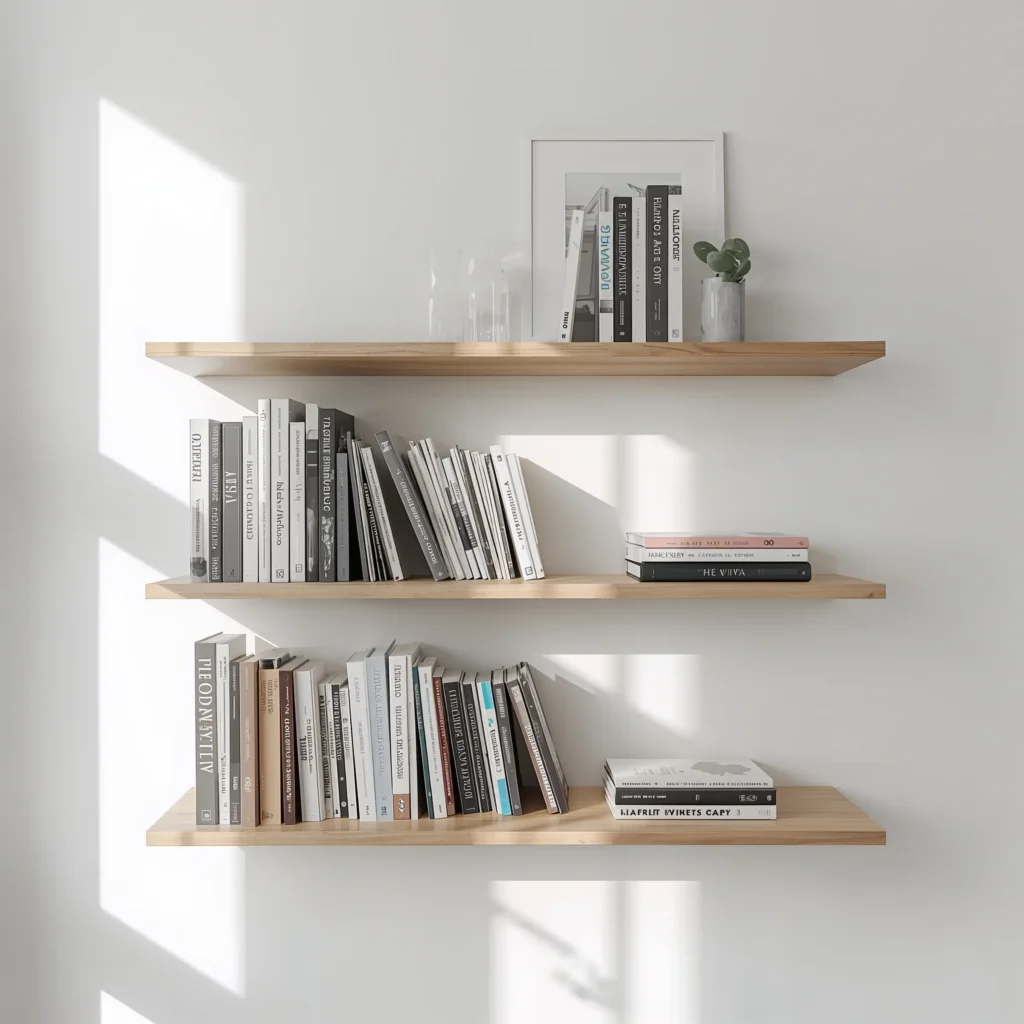
Remember when you first saw those “invisible” floating bookshelves and thought someone was playing a trick on you? I nearly lost my mind when I installed my first set. These sleek beauties create the illusion that your books are literally floating on the wall, and honestly, they never get old.
The genius behind floating shelves lies in their simplicity. You mount a small L-shaped bracket to your wall, stack your books on it, and boom – instant magic. The bottom book hides the bracket completely, creating that mind-bending floating effect that makes every guest do a double-take.
Why Floating Shelves Rock
Here’s what makes them absolutely brilliant:
- Zero floor space required (apartment dwellers, rejoice!)
- Creates clean, uncluttered wall art
- Perfect for showcasing your favorite covers
- Surprisingly affordable (most brackets cost under $20)
- Installation takes literally 15 minutes
I’ve installed these bad boys in three different apartments now, and they work everywhere. My bedroom has a vertical stack of poetry books floating next to my reading chair, and my kitchen sports a horizontal row of cookbooks that looks like they’re defying gravity. The best part? You can arrange them in patterns – zigzag, staircase, or completely random. Whatever floats your boat (or books, in this case).
Pro Tips for Floating Shelf Success
Start with paperbacks if you’re nervous about the weight capacity. Most brackets handle 15-20 pounds easily, but why risk your first edition hardcovers? Also, use a stud finder. Trust me on this one – drywall anchors work, but finding a stud makes everything more secure. Nobody wants to wake up to a book avalanche at 3 AM.
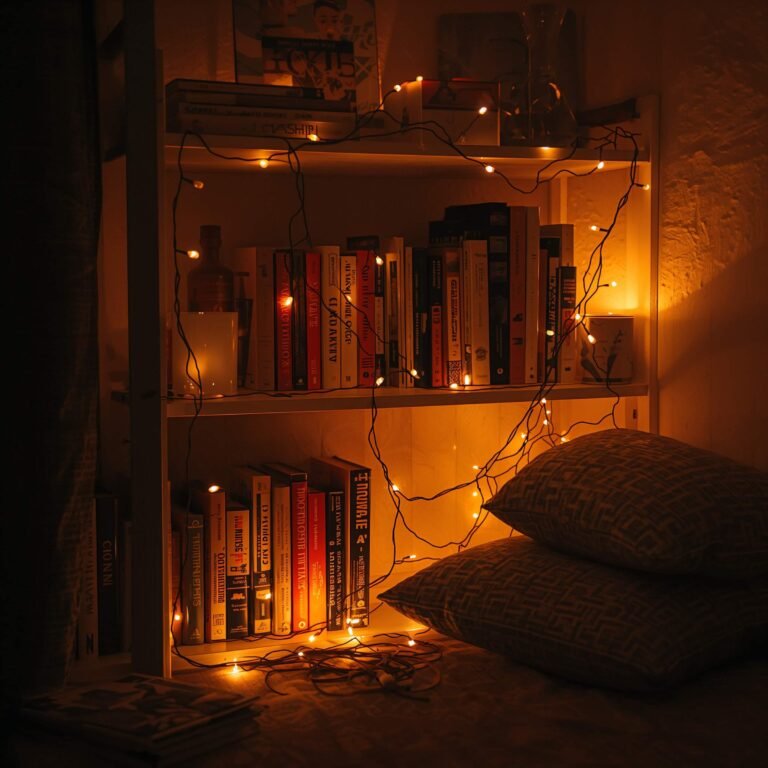
Cozy Corner Reading Nook
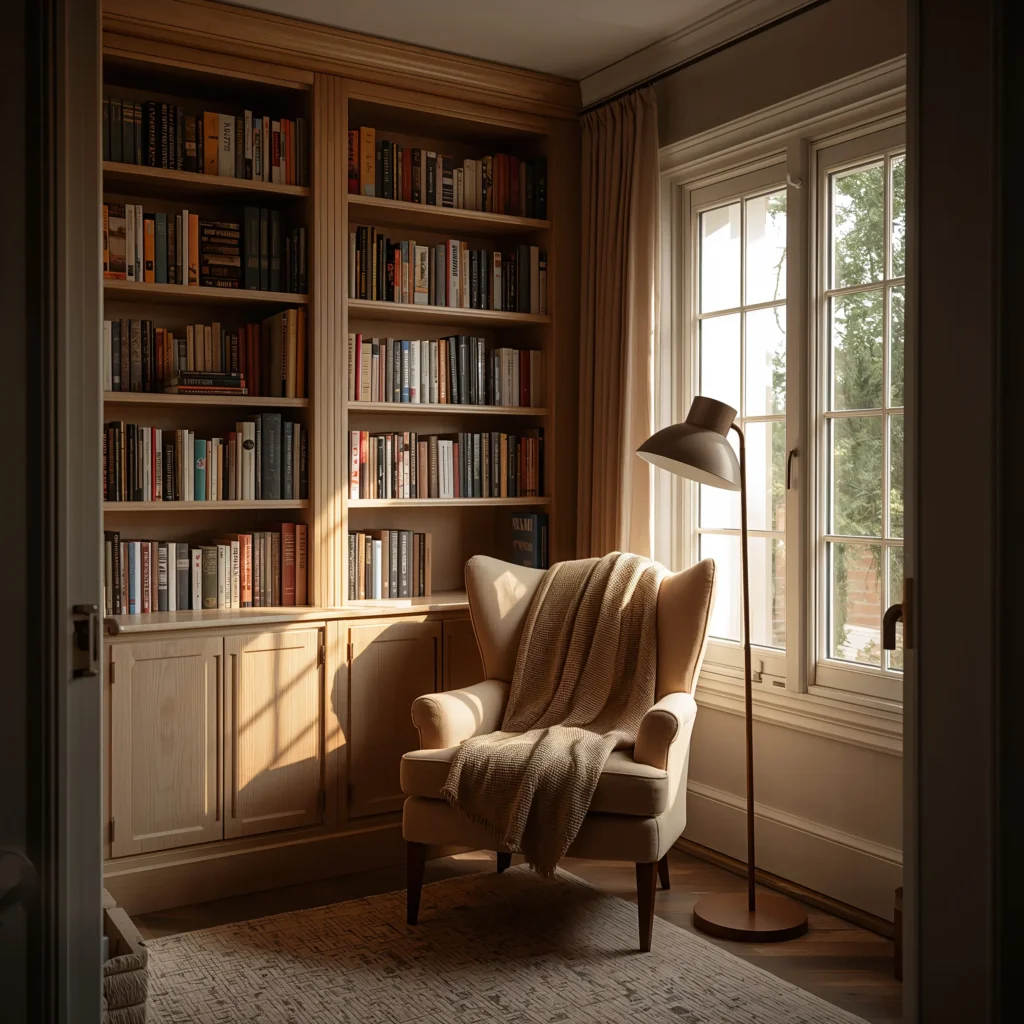
Can we talk about how corner spaces are criminally underutilized? I discovered this truth after moving into my current place and staring at an awkward corner for three months before the lightbulb went off. Transform that dead space into a personal reading sanctuary, and you’ll wonder how you ever lived without it.
Picture this: floor-to-ceiling corner shelves wrapping around your favorite reading chair, a soft throw blanket draped casually, and maybe a small side table for your coffee (or wine – no judgment here). This setup doesn’t just store books; it creates an entire experience.
Building Your Perfect Nook
The secret to a killer reading corner starts with the shelving. You’ve got options:
- L-shaped floating shelves for a modern look
- Traditional corner units for maximum storage
- Mix-and-match shelf heights for visual interest
- Built-in seating with storage underneath
I went with custom-cut floating shelves at varying heights, and let me tell you, the asymmetry adds so much character. Plus, leaving some breathing room between shelves means you can display plants, photos, or that collection of bookends you’ve been hoarding.
The Comfort Factor
Don’t skimp on the chair – this is where the magic happens. I learned this the hard way after buying a gorgeous but torture-device-level uncomfortable accent chair. Now I’ve got a oversized armchair that practically swallows me whole, and I regret nothing. Add a ottoman for your feet, proper lighting (floor lamp or wall-mounted reading light), and maybe a small basket for your current reads. Instant paradise.
Modern Geometric Bookshelf Layouts
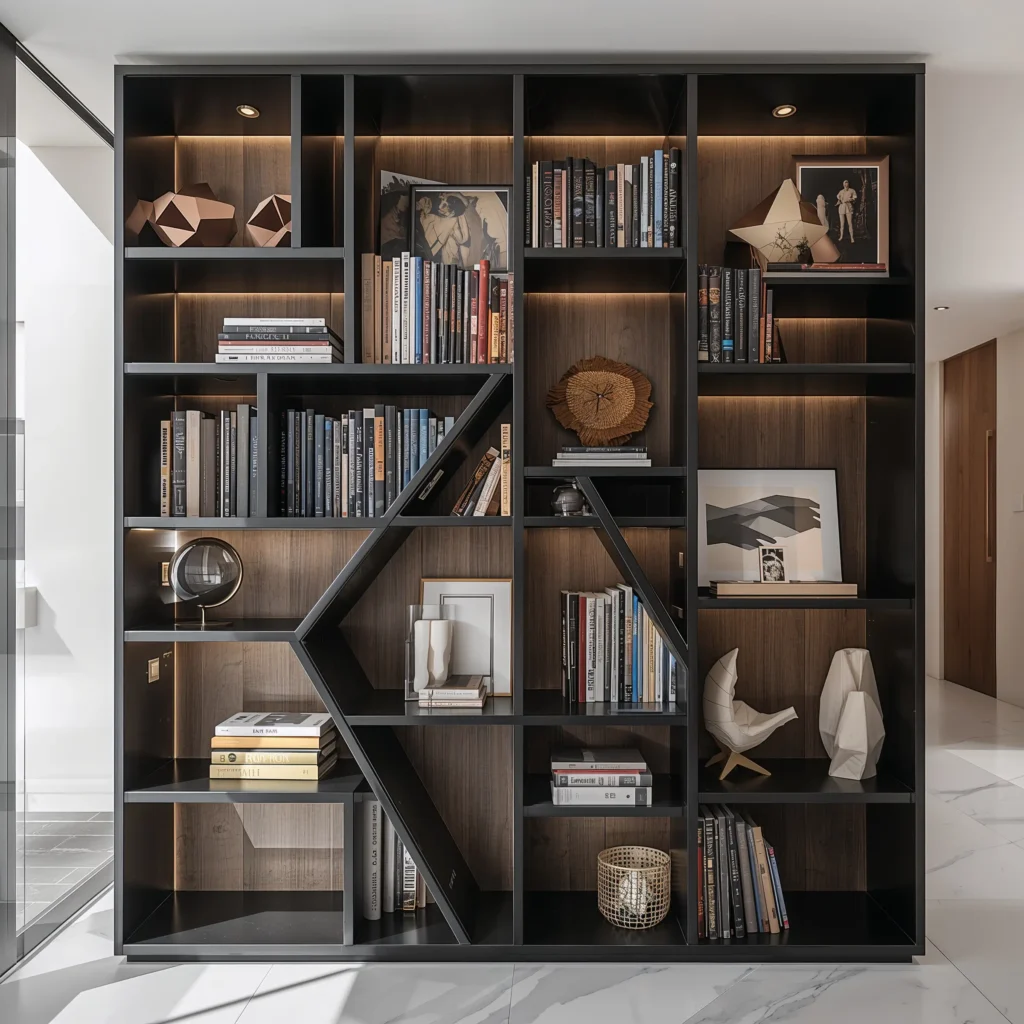
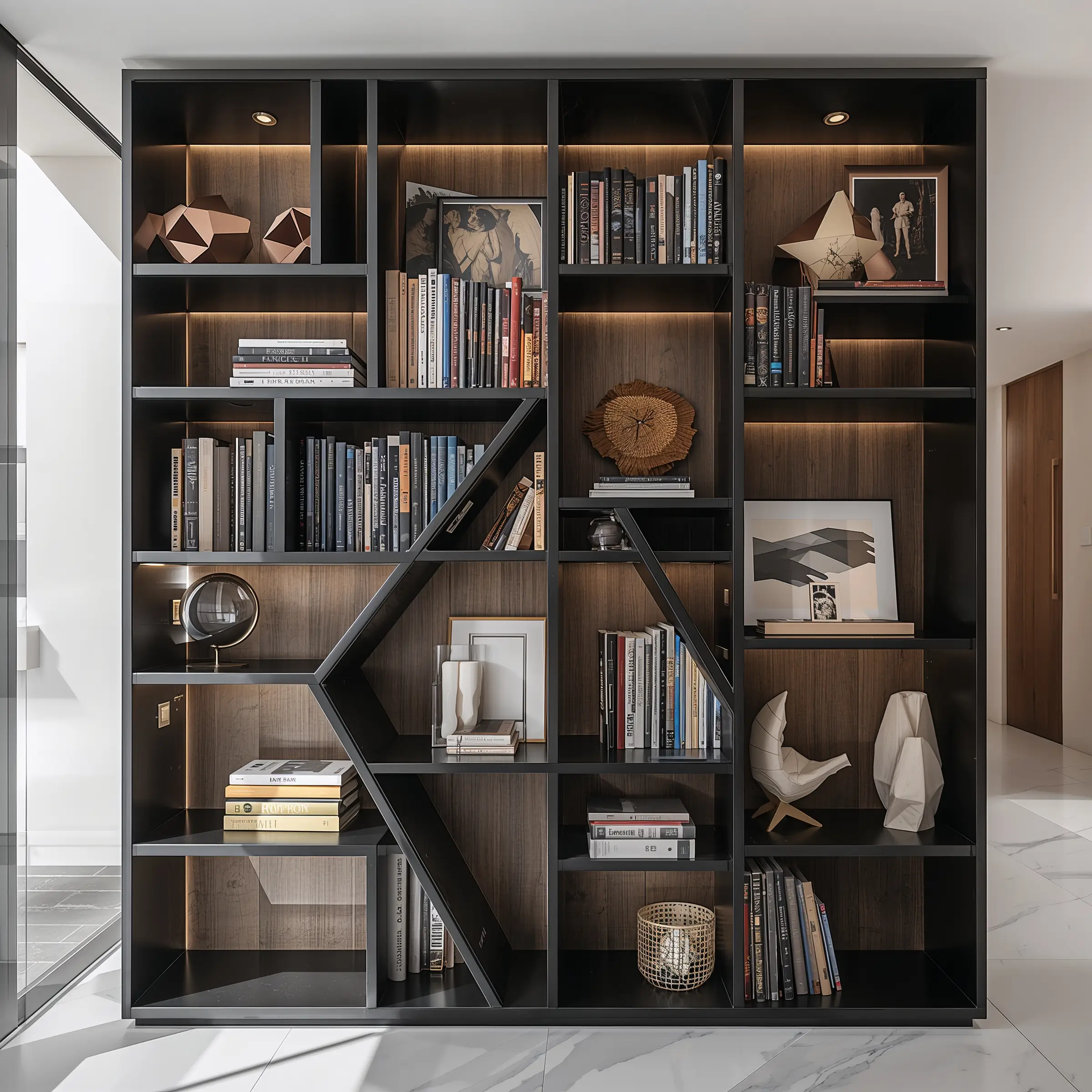
Who decided bookshelves had to be boring rectangles? Geometric shelving turns your book collection into functional art, and I’m completely here for it. Think hexagons, diamonds, triangular compartments – shapes that make your walls look like they belong in a design magazine.
My living room features a honeycomb-style shelf system that gets more compliments than anything else I own. Each hexagonal cell holds different items – some packed with books spine-out, others displaying covers face-forward, and a few left empty for breathing room. The visual rhythm it creates? Chef’s kiss.
Choosing Your Geometric Style
Here’s where you can really let your personality shine:
- Honeycomb patterns for organic, nature-inspired vibes
- Diamond shapes for Art Deco glamour
- Asymmetric triangles for edgy modernism
- Circular shelves for softer, flowing designs
- Mixed shapes for controlled chaos
The trick with geometric shelving? Balance is everything. You want enough variation to be interesting but not so much that it looks like a geometry textbook exploded on your wall. I usually stick to one or two shapes max, arranged in a pattern that feels intentional rather than random.
Styling Geometric Shelves
These shelves beg for creative styling. Mix your books with decorative objects, small plants, and maybe some framed photos. Color coordination works beautifully here – try grouping books by spine color in different compartments. Or go completely wild and turn some books backwards for a neutral palette. Your space, your rules.
Also Read: 10 Cozy Bookshelf Aesthetic Decor Tips for Stylish Spaces
Rustic Wooden Ladder Shelves
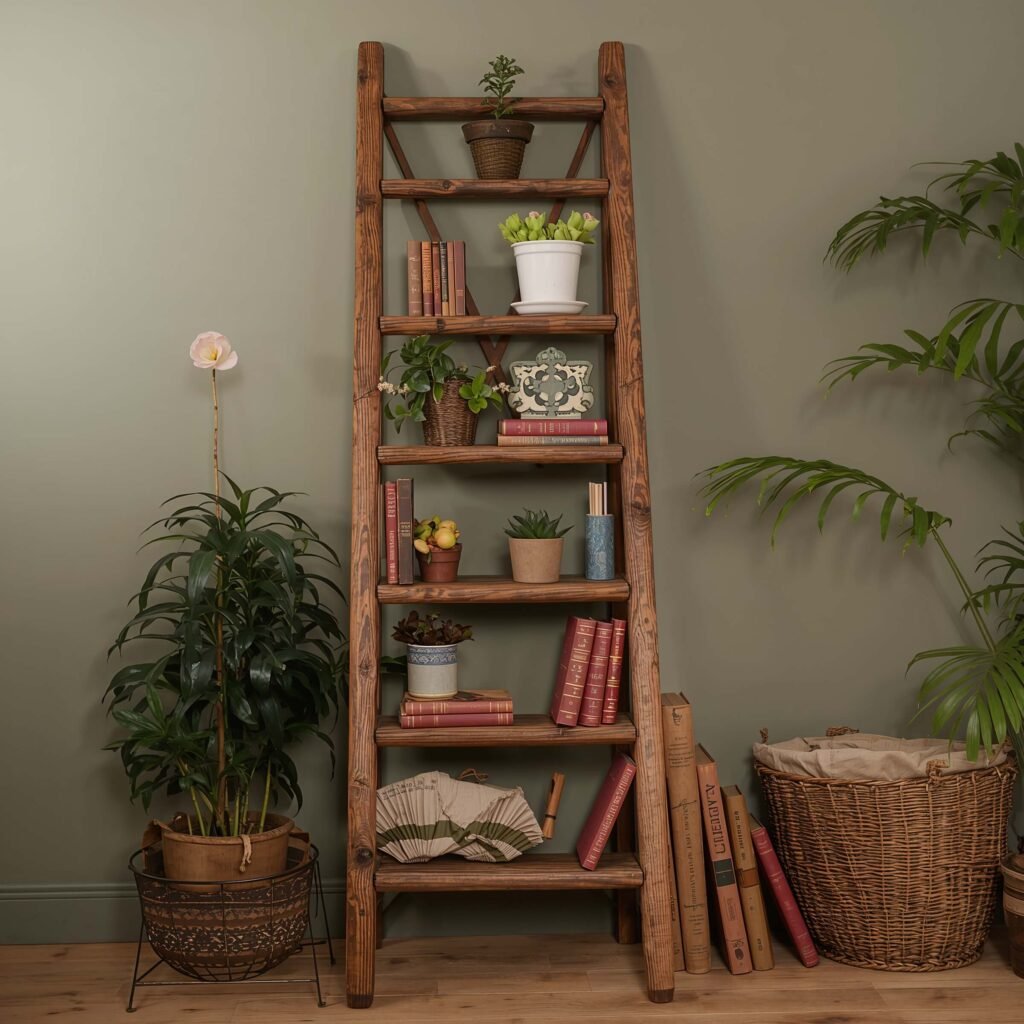
Okay, confession time: I fought the ladder shelf trend for years. Thought it was too trendy, too “Pinterest-y”. Then I built one for my sister’s birthday (she begged), and immediately built another for myself the next weekend. These leaning beauties bring warmth and character that traditional shelves just can’t match.
The beauty of ladder shelves lies in their versatility. They lean against the wall (no mounting required!), which means renters can have gorgeous shelving without sacrificing their security deposit. Plus, that slight angle creates natural bookends – your books stay put without those ugly metal things.
DIY vs Store-Bought
Building your own ladder shelf? Easier than you think:
- Two 2x4s for the sides
- Five 1×10 boards for shelves
- Wood stain of your choice
- Basic tools and an afternoon
I built mine for under $50, and the satisfaction of creating something with your own hands? Priceless. That said, if DIY isn’t your thing, there are tons of gorgeous options available. Just make sure you get solid wood if possible – particle board versions look cheap and won’t last.
Styling Your Ladder Shelf
The graduated shelf widths create natural hierarchy – wider shelves at the bottom for hefty art books and storage baskets, narrower ones up top for paperbacks and decor. I keep my bottom shelf for oversized photography books, middle shelves for regular reads, and the top for small plants and a vintage clock. The key is not overpacking – let the wood grain show through.
Color-Coded Book Arrangements
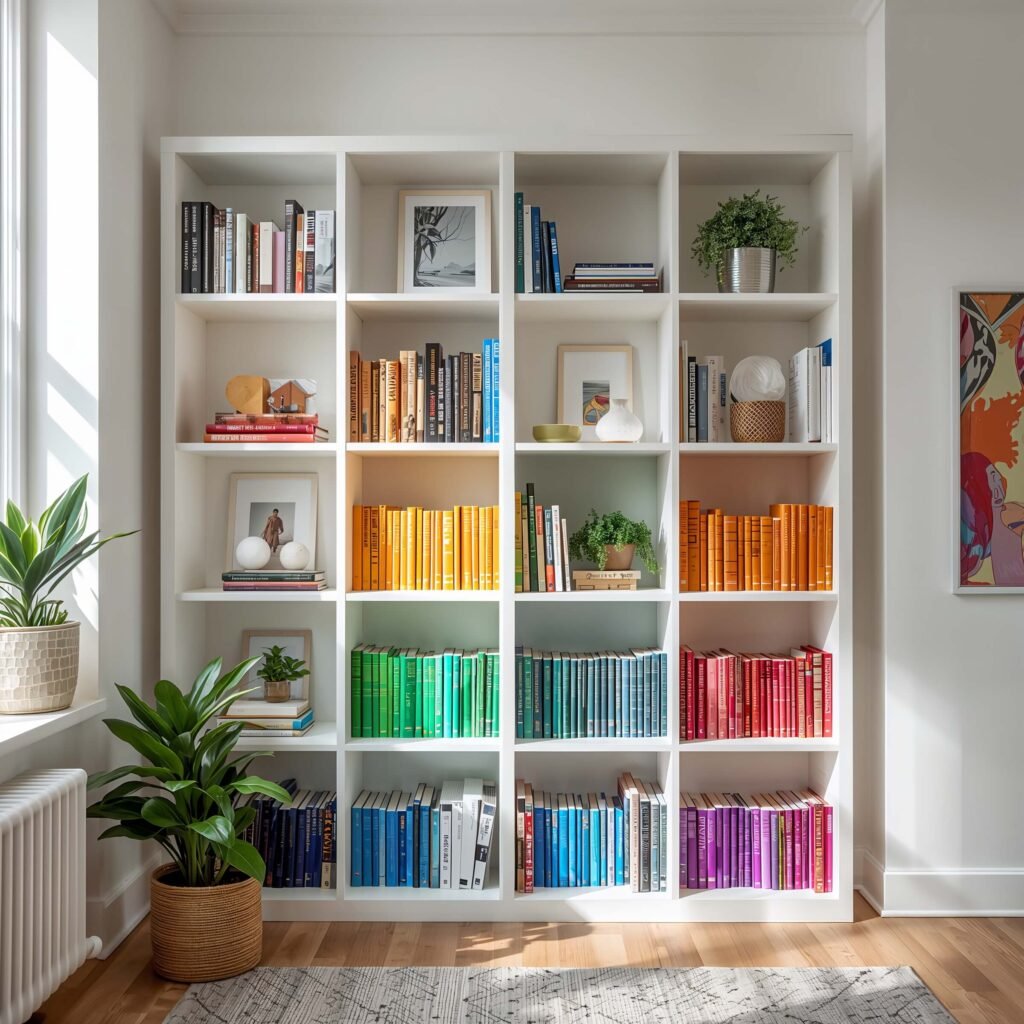
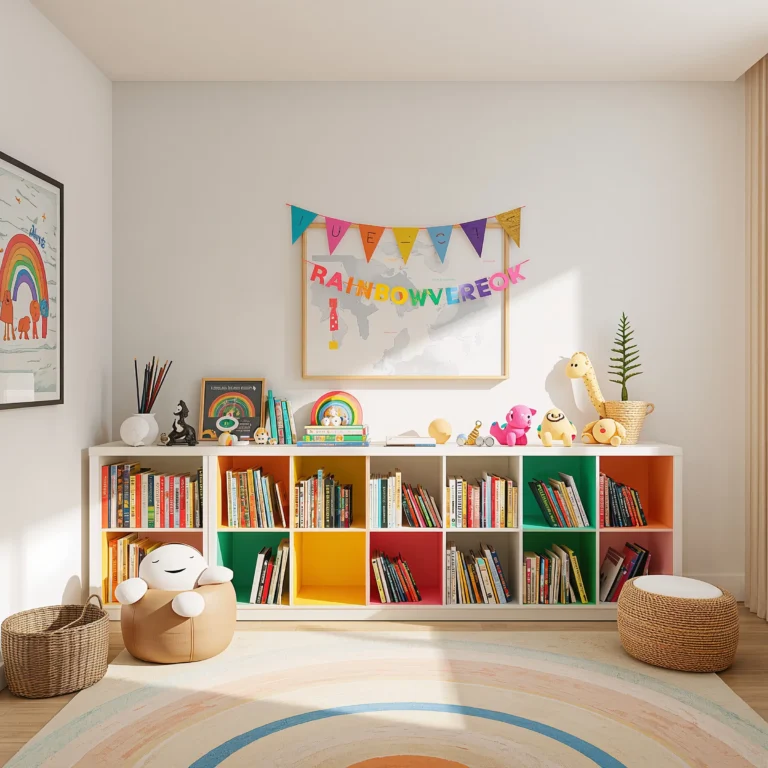
Ever walked into someone’s home and seen a rainbow bookshelf? That was me five years ago, and I literally stopped mid-conversation to gawk. Organizing books by color transforms your shelves into a legitimate art installation, and it’s surprisingly practical once you get used to it.
I know what you’re thinking – “But how will I find anything?” Here’s the thing: you remember book colors better than you think. That blue spine psychology book? That red cookbook? Your brain catalogues these details whether you realize it or not. After a week with color-coded shelves, I could find books faster than with my old alphabetical system.
The Rainbow Method
Starting your color journey? Here’s my tried-and-true approach:
- Start with ROYGBIV (red, orange, yellow, green, blue, indigo, violet)
- Add sections for black, white, and brown
- Group similar shades together
- Place metallic spines as transitions
The visual impact hits immediately. My rainbow shelf gets photographed by literally every person who visits. It’s become such a conversation starter that I keep a step stool nearby because people always want to browse the higher shelves 🙂
Alternative Color Schemes
Not feeling the rainbow? Try these:
- Ombré effect with gradual shade transitions
- Monochromatic sections (all blues, all greens)
- Alternating light and dark for contrast
- Color blocking with bold sections
FYI, paperback spines fade differently than hardcovers, so you might need to shuffle things around seasonally. Small price to pay for shelves that double as wall art.
Hidden Storage Bookshelves
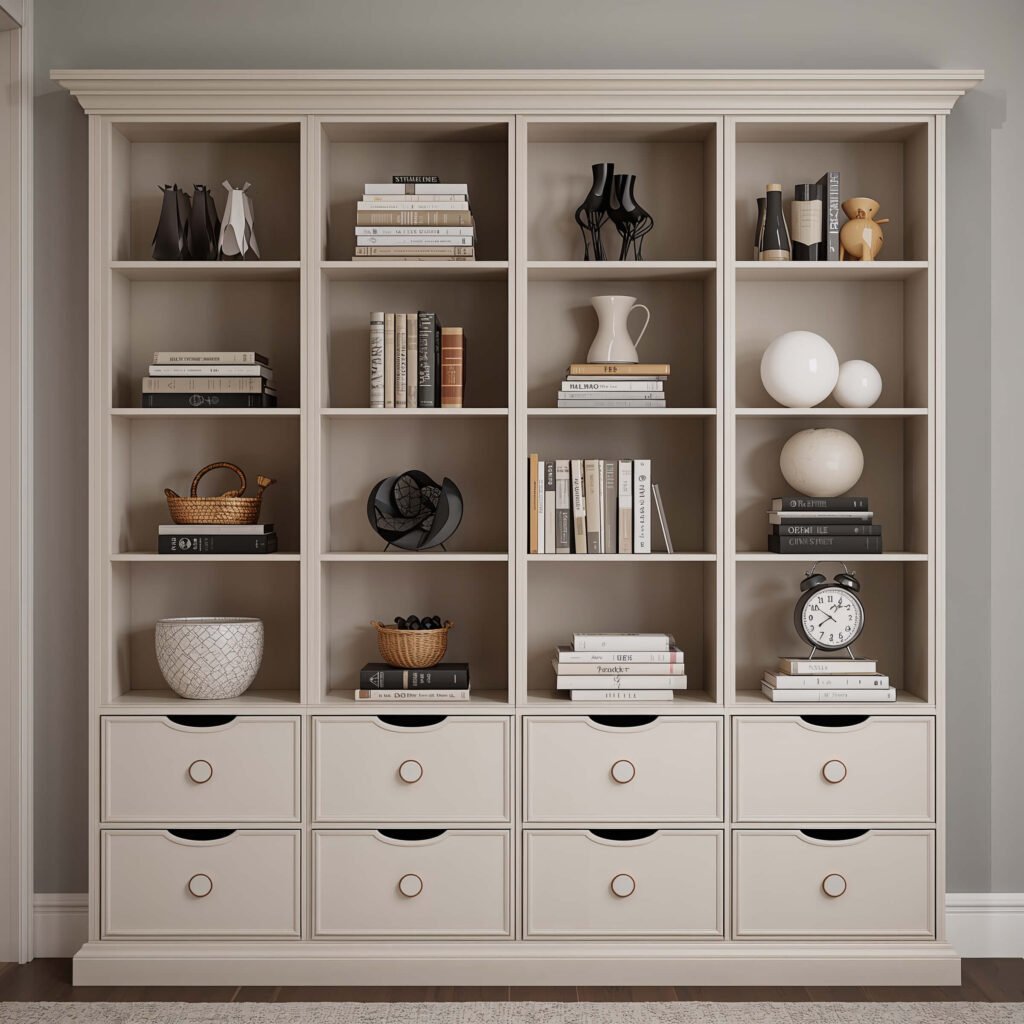
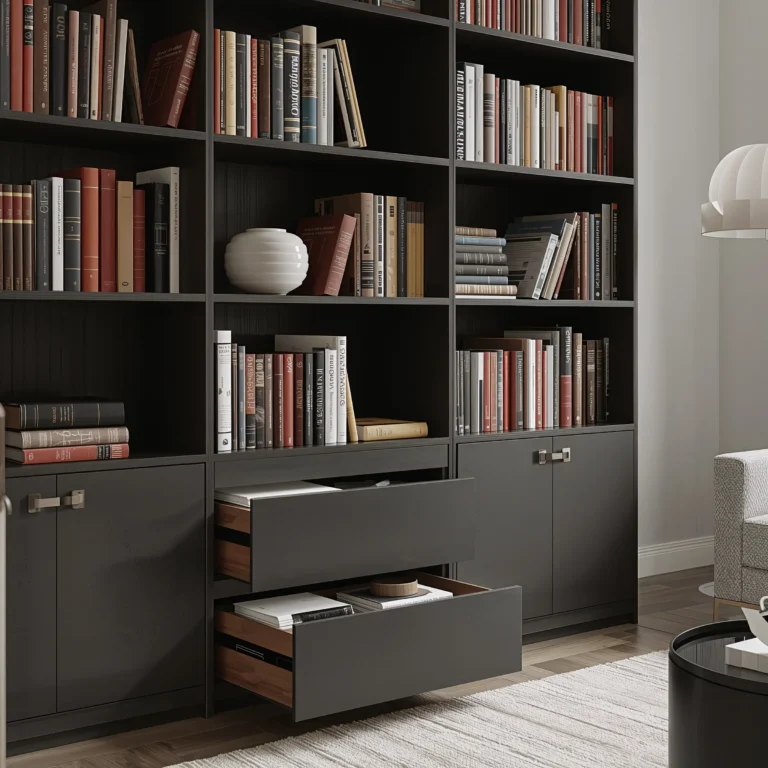
Let me blow your mind for a second: your bookshelf can hide everything from router cables to emergency chocolate stashes. I discovered hidden storage shelving after my WiFi router kept photobombing my Zoom calls, and now I’m basically a convert to the church of secret compartments.
The concept is genius – bookshelves that look normal from the outside but hide storage boxes, drawers, or compartments behind the books. Some have false book spines that open to reveal storage. Others incorporate sliding panels or hidden drawers. My favorite? A shelf unit with a flip-down desk hidden behind a row of books.
Types of Hidden Storage
Your secret storage options:
- False bottom shelves with lift-up panels
- Hollow decorative books for small items
- Pull-out drawers behind book rows
- Rotating shelves that reveal storage
- Built-in cabinets with book spine facades
I’ve got hidden storage throughout my apartment now. The living room shelf hides board games and extra cables. My bedroom bookshelf conceals important documents in a lockbox behind my novel collection. Even my bathroom has a small shelf with hidden storage for medications (judge me all you want, but bathroom reading is sacred).
Making It Work
The trick to hidden storage shelving? Don’t sacrifice book space for storage you don’t need. Start small – maybe one shelf with a hidden compartment – and see how you use it. Also, measure everything twice. Nothing worse than building in hidden storage only to realize your stuff doesn’t fit.
Also Read: 10 Unique Bookshelf Ideas for Small Spaces Made Simple
DIY Pallet Bookshelf Projects
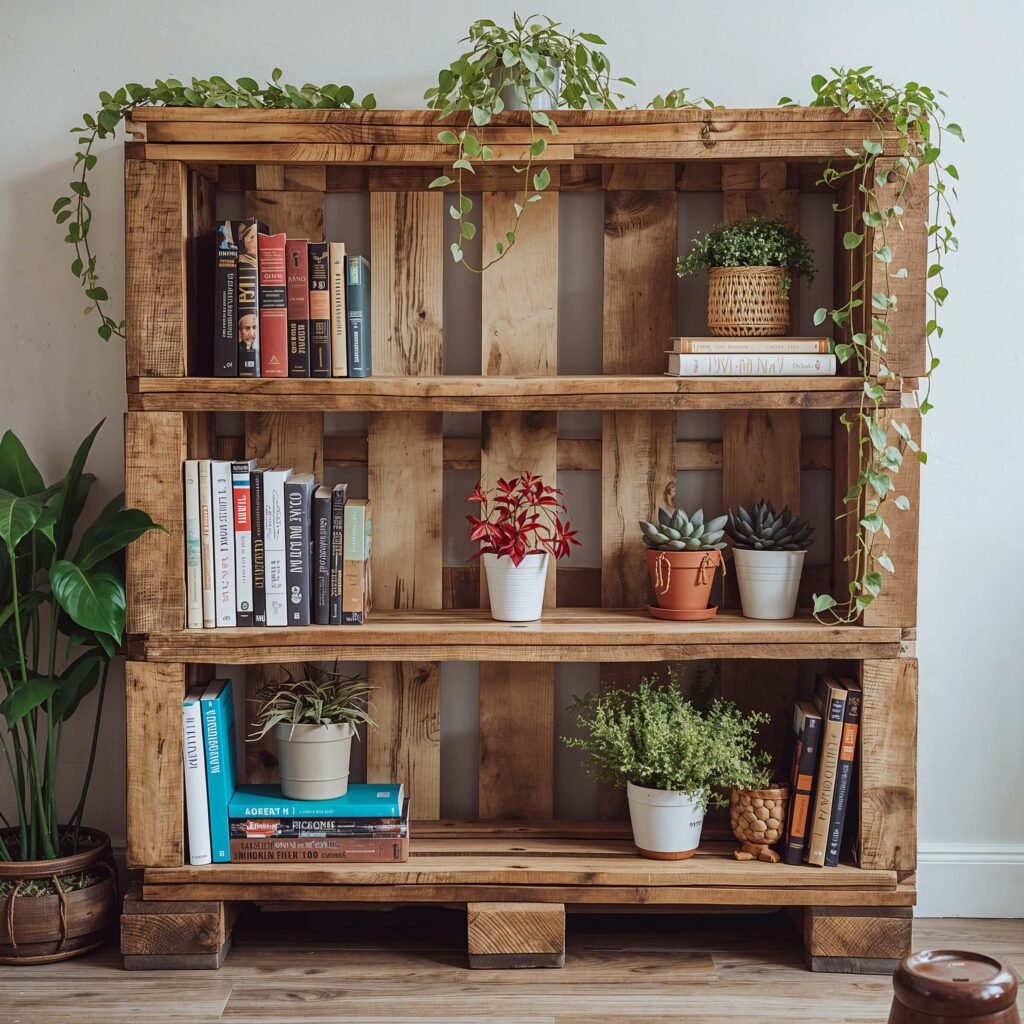
Pallets. Free wood just sitting behind stores, waiting to become something amazing. I’ve built three pallet bookshelves now, and each one cost me less than a fancy coffee drink. The rustic, industrial vibe they bring? Absolutely unmatched.
My first pallet project happened out of desperation (broke grad student needed shelves), but now I’m hooked. The wood has character – nail marks, weathering, maybe some stamps or stains. Each piece tells a story before it even holds your books.
Finding and Prepping Pallets
Here’s your pallet playbook:
- Check behind grocery stores and warehouses (always ask first!)
- Look for heat-treated stamps (avoid chemically treated wood)
- Sand thoroughly (splinters are not your friend)
- Consider a sealant or stain
- Check for loose nails or damaged boards
The prep work matters. I learned this after my first shelf gave me approximately 47 splinters. Now I sand like my life depends on it, and I always seal the wood. A clear sealant preserves that rustic look while protecting your books and hands.
Simple Pallet Projects
Start with these beginner-friendly designs:
- Wall-mounted single pallet (literally just hang it up)
- Stacked pallet tower (no assembly required)
- Dismantled and rebuilt as floating shelves
- Corner unit from two pallets
- Rolling cart with added casters
My current favorite? A deconstructed pallet rebuilt as staggered wall shelves. Took me one Saturday afternoon and maybe $20 in hardware. The irregular plank widths create this organic, flowing look that expensive furniture stores charge hundreds for.
Wall-to-Wall Library Walls
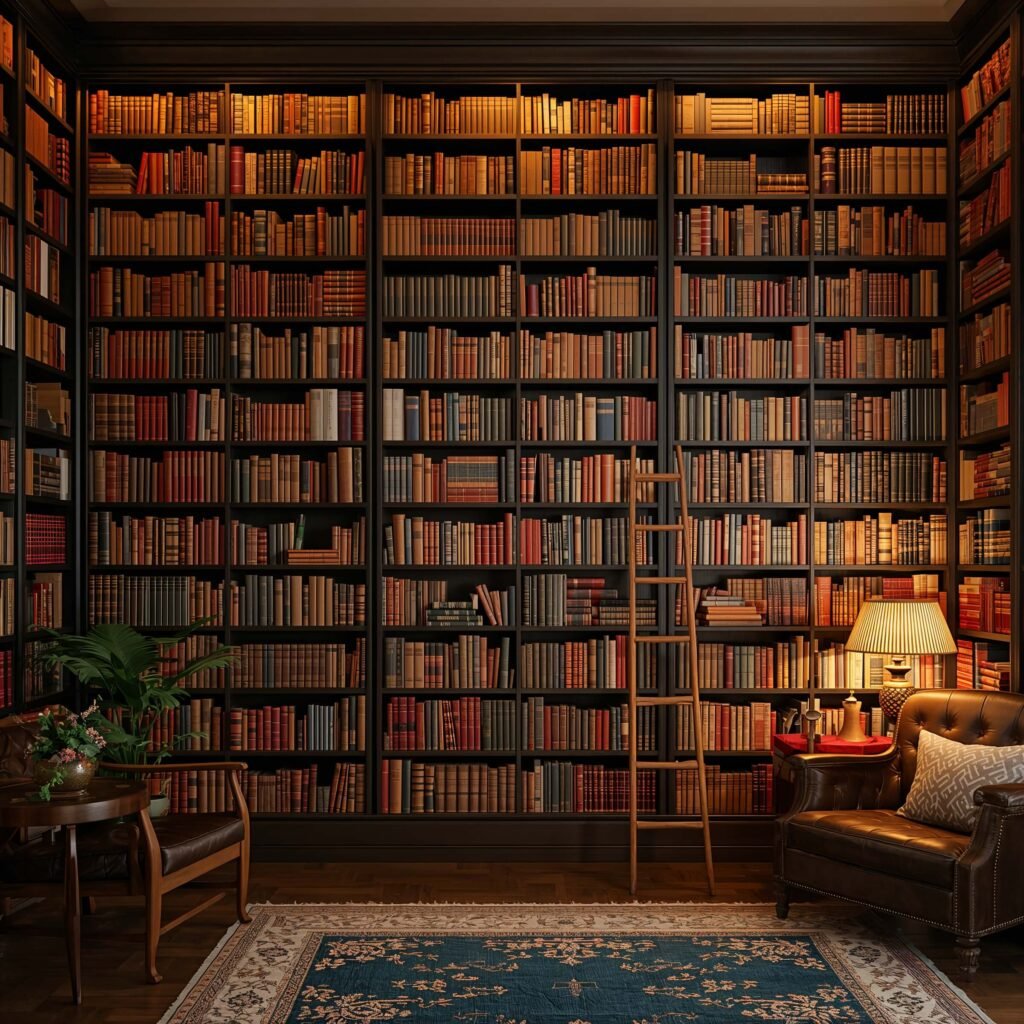
We need to discuss the ultimate bookshelf flex: the full library wall. You know the ones – floor to ceiling, wall to wall, possibly with a rolling ladder if you’re really living the dream. I finally achieved this in my current place, and honestly? It’s everything I imagined and more.
Creating a library wall transforms a room completely. My home office went from “spare bedroom with a desk” to “serious literary sanctuary” with one wall of built-ins. The visual weight grounds the entire space, and the storage capacity? Absolutely insane. I fit 500+ books on one wall, plus decorative objects, storage boxes, and my collection of vintage typewriters.
Planning Your Library Wall
Before you start:
- Measure everything three times (seriously)
- Account for baseboards and crown molding
- Plan around windows and doors
- Consider adjustable shelving
- Think about lighting needs
Built-ins are incredible but pricey. I went with the IKEA hack route – their Billy bookcases with height extensions and crown molding added on top. Total cost? Under $500. Custom built-ins would’ve been $5000+. The result looks virtually identical once you add the finishing touches.
Styling a Library Wall
The key to a magazine-worthy library wall? Breathing room. Don’t pack every inch with books. Leave space for:
- Artwork leaning against books
- Small plants or sculptures
- Horizontal book stacks
- Empty spaces (yes, really)
- Varied shelf heights if possible
My library wall follows the 70/30 rule – 70% books, 30% everything else. This prevents that overwhelming, cluttered feeling and creates visual interest. Plus, it leaves room for my collection to grow (because who are we kidding, we’re always buying more books).
Compact Bookshelves for Small Spaces
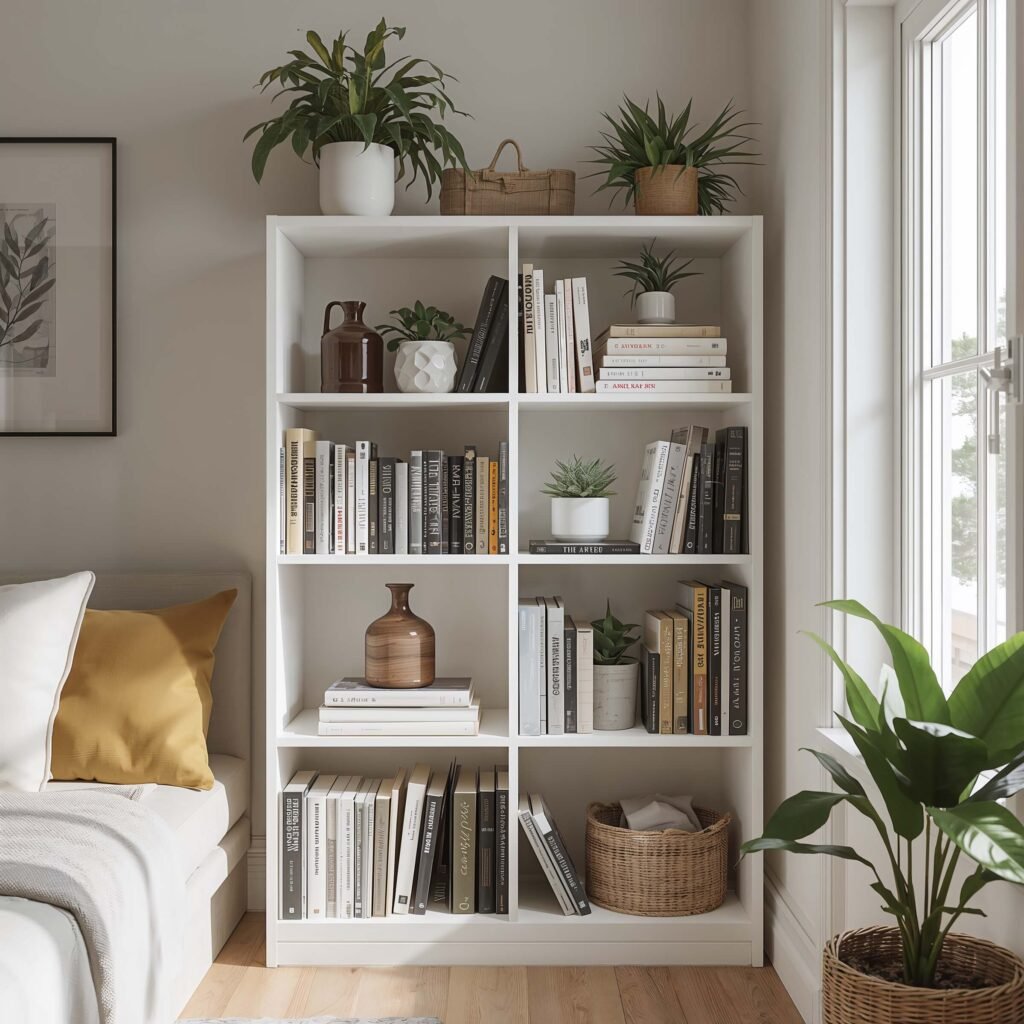
Living in 400 square feet taught me this truth: small spaces demand creative shelving solutions. You can’t just plop a bookshelf wherever – every piece of furniture needs to earn its footprint. The good news? Some of the coolest bookshelf designs I’ve seen were born from space constraints.
My studio apartment had exactly zero wall space for traditional shelving. So I got creative. Shelf above the door? Check. Narrow tower shelf in that weird gap between the fridge and wall? Absolutely. Floating shelves above the toilet? You bet (don’t knock bathroom libraries until you’ve tried one).
Space-Saving Champions
These designs maximize every inch:
- Ceiling-mounted hanging shelves
- Behind-the-door organizers
- Windowsill shelf extensions
- Headboard shelving units
- Under-stair storage solutions
- Kitchen cart repurposed as mobile library
My current favorite space-saver? A room divider bookshelf that separates my sleeping area from my living space. It provides storage on both sides while creating defined zones in my open-plan apartment. Functional and stylish – the small space dream.
Vertical vs Horizontal
Think vertically in small spaces. Tall, narrow shelving units draw the eye upward and make rooms feel larger. I’ve got a 7-foot tall, 12-inch wide tower shelf that holds 100+ books in less than one square foot of floor space. That’s efficiency.
But don’t ignore horizontal opportunities. Long, low shelves along walls create surface space for lamps and plants while storing books below. My sofa table pulls double duty – console table on top, book storage below.
Also Read: 10 Stunning Bookshelf Styling Ideas and Cozy Home Vibes
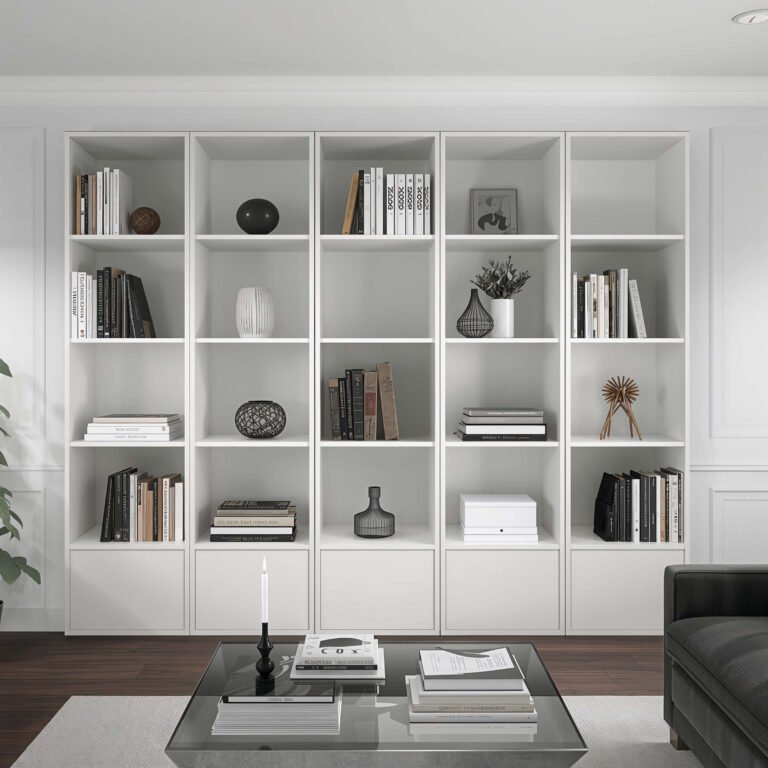
Scandinavian Open Shelf Designs
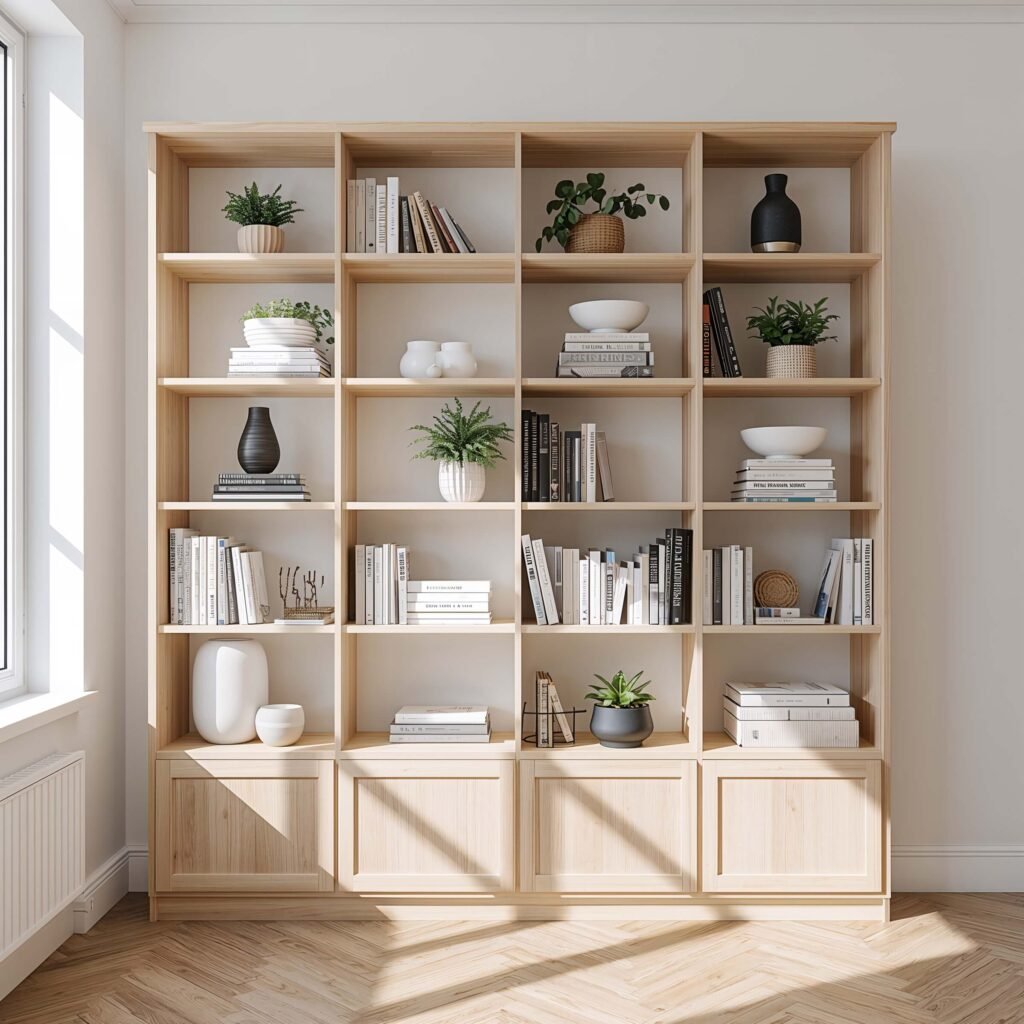
The Scandinavians understand something we’re just catching onto: less really can be more. Their approach to shelving? Clean lines, natural materials, and enough negative space to let your books (and your room) breathe.
I fell down the Scandinavian design rabbit hole during a particularly stressful period, and their philosophy changed how I approach shelving. Instead of cramming every book I own onto display, I rotate my collection seasonally. The current reads get prime shelf real estate, while others wait their turn in storage. Revolutionary? Maybe not. But the visual calm it creates? Absolutely transformative.
The Scandinavian Principles
Master these elements:
- Light wood tones (birch, pine, ash)
- Minimal hardware and ornamentation
- Mixed open and closed storage
- Strategic use of white space
- Natural materials throughout
- Function driving form
My Scandinavian-inspired shelf unit combines open shelving with two closed cabinets at the base. The hidden storage handles the ugly stuff (old paperbacks, charging cables, that exercise equipment I swear I’ll use), while the open shelves showcase my carefully curated collection.
The Art of Restraint
Here’s where Scandinavian shelving gets interesting – what you don’t display matters as much as what you do. IMO, this is the hardest part for book lovers. We want to show off everything! But try this:
- Display 50% of your collection maximum
- Group books with plenty of space between
- Add one or two meaningful objects per shelf
- Incorporate plants for life and color
- Keep a consistent color palette
The result? Shelves that feel intentional rather than cluttered. My stress levels literally dropped after implementing this approach. There’s something deeply calming about organized, uncluttered shelving.
Making It All Work Together
After years of bookshelf obsession, here’s what I’ve learned: the best bookshelf design is the one that makes you happy. Maybe that’s a rainbow-colored ladder shelf or invisible floating books defying gravity. Perhaps it’s a cozy corner nook or a commanding library wall.
Your books reflect your interests, your history, your dreams. The shelves holding them should reflect you too. Don’t get caught up in what’s trendy or what looks good on Instagram. Build or buy shelving that serves your life, your space, and your reading habits.
Start small if you’re feeling overwhelmed. Pick one idea from this list and try it. Add a single floating shelf. Reorganize one bookcase by color. Build that corner nook you’ve been dreaming about. Once you start, you’ll find yourself looking at every wall, corner, and surface as potential book storage. Welcome to the obsession – we’ve been waiting for you.
The truth about bookshelf design? It’s never really finished. You’ll always be tweaking, rearranging, adding new elements. And that’s the beauty of it. Your shelves grow and evolve with your collection, your tastes, and your life. So go ahead, give your books the home they deserve. Trust me, both you and your literary friends will thank you for it.