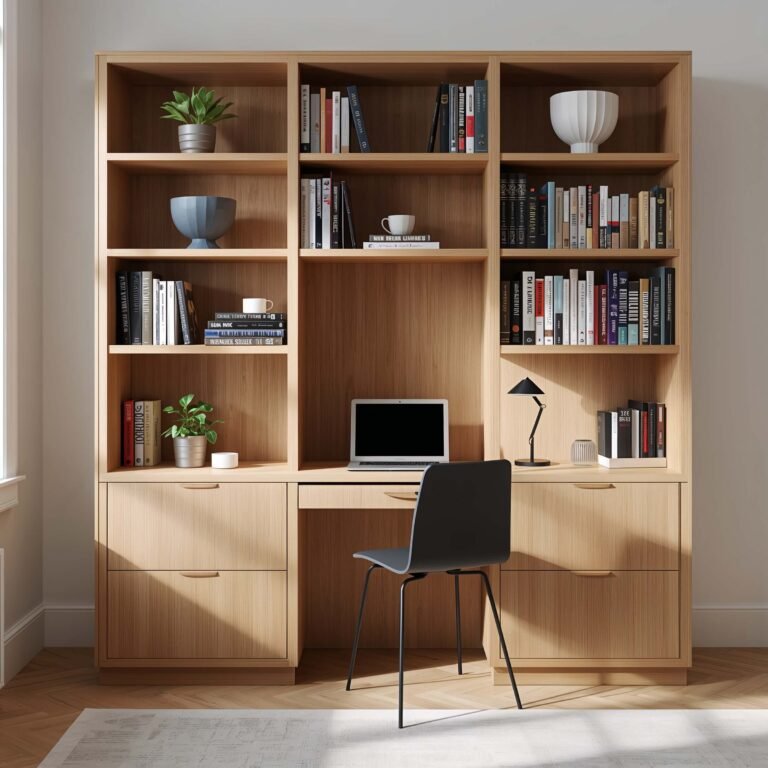
10 Beautiful Bookshelf Decor Ideas You’ll Love Trying

Look, we need to talk about your bookshelf. You know, that piece of furniture that’s currently serving as a glorified storage unit for dusty paperbacks and that one trophy from high school? Yeah, that one. Your bookshelf deserves better, and frankly, so do you.
I spent years treating my bookshelves like an afterthought—just cramming books wherever they’d fit and calling it a day.
Then I discovered the magical world of bookshelf styling, and let me tell you, it changed everything. Suddenly, my living room looked like something out of a Pinterest board (in a good way), and people actually started complimenting my space instead of just tolerating it.
So grab a coffee, get comfy, and let’s transform those sad shelves into something spectacular.
Trust me, by the time we’re done here, you’ll be itching to reorganize every shelf in your house.
Minimalist White Bookshelf Styling
The Art of Less is More
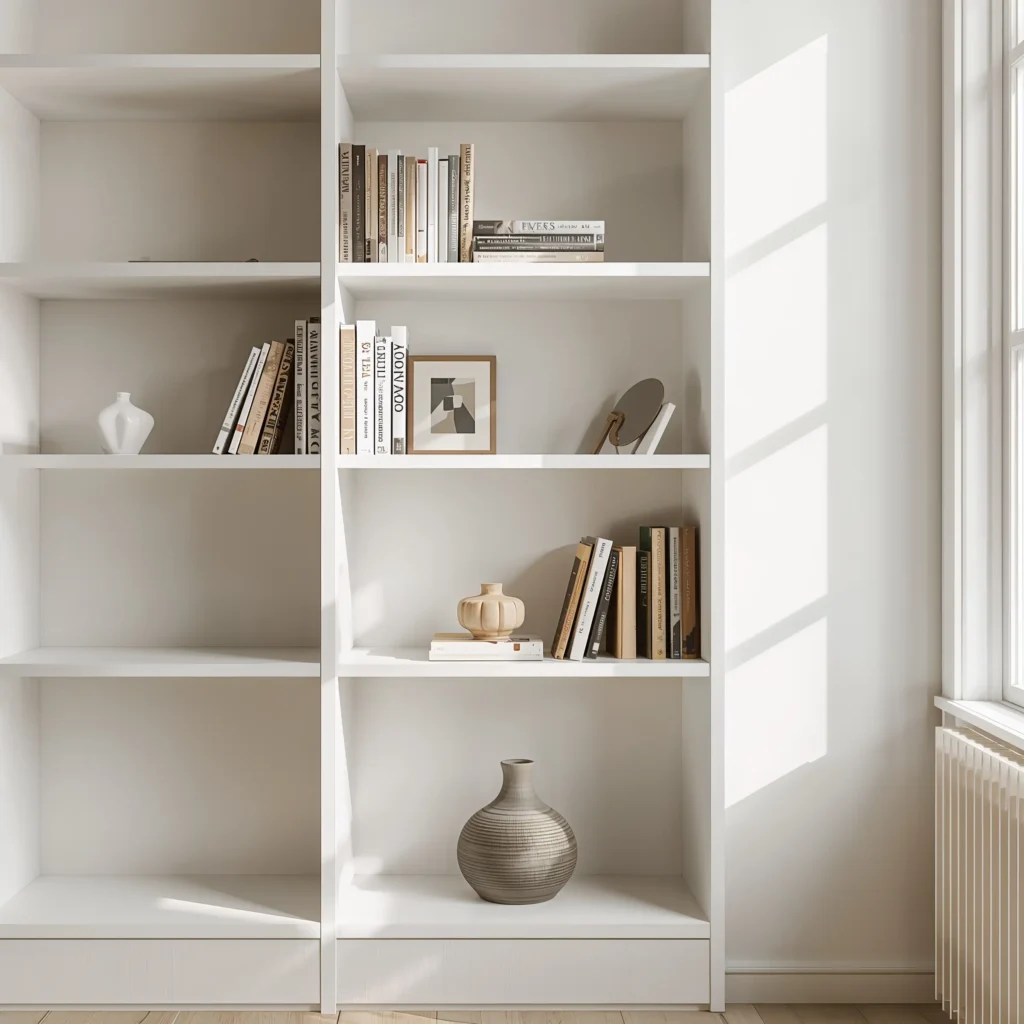
Remember when Marie Kondo convinced half the world to throw away everything that didn’t “spark joy”? Well, minimalist bookshelf styling takes that energy and runs with it. I tried this approach last year when I moved into my new apartment, and honestly, it felt like a breath of fresh air.
The key here is choosing quality over quantity. You pick maybe 5-7 books per shelf, all with similar spine colors—whites, creams, maybe some light grays. Then you add one statement piece per shelf. Think a sleek ceramic vase, a single succulent, or a piece of abstract sculpture.
What makes this work so beautifully? The negative space. You’re not filling every inch, and that emptiness actually makes everything look more expensive and intentional. It’s like your bookshelf went to finishing school and came back with perfect posture.
Making White Work for You
Here’s what you need to nail this look:
- White or neutral-colored books (you can even flip some books around to show the pages instead of spines)
- Monochromatic accessories in varying heights
- Clean lines and geometric shapes
- Minimal color accents (think one pop of black or gold)
The trickiest part? Keeping it from looking sterile. I learned this the hard way when my first attempt looked more like a medical office than a home. The solution is adding texture through materials—a rough ceramic here, a smooth marble bookend there. These subtle variations keep things interesting without cluttering the space.
Boho Chic Bookshelf Decor
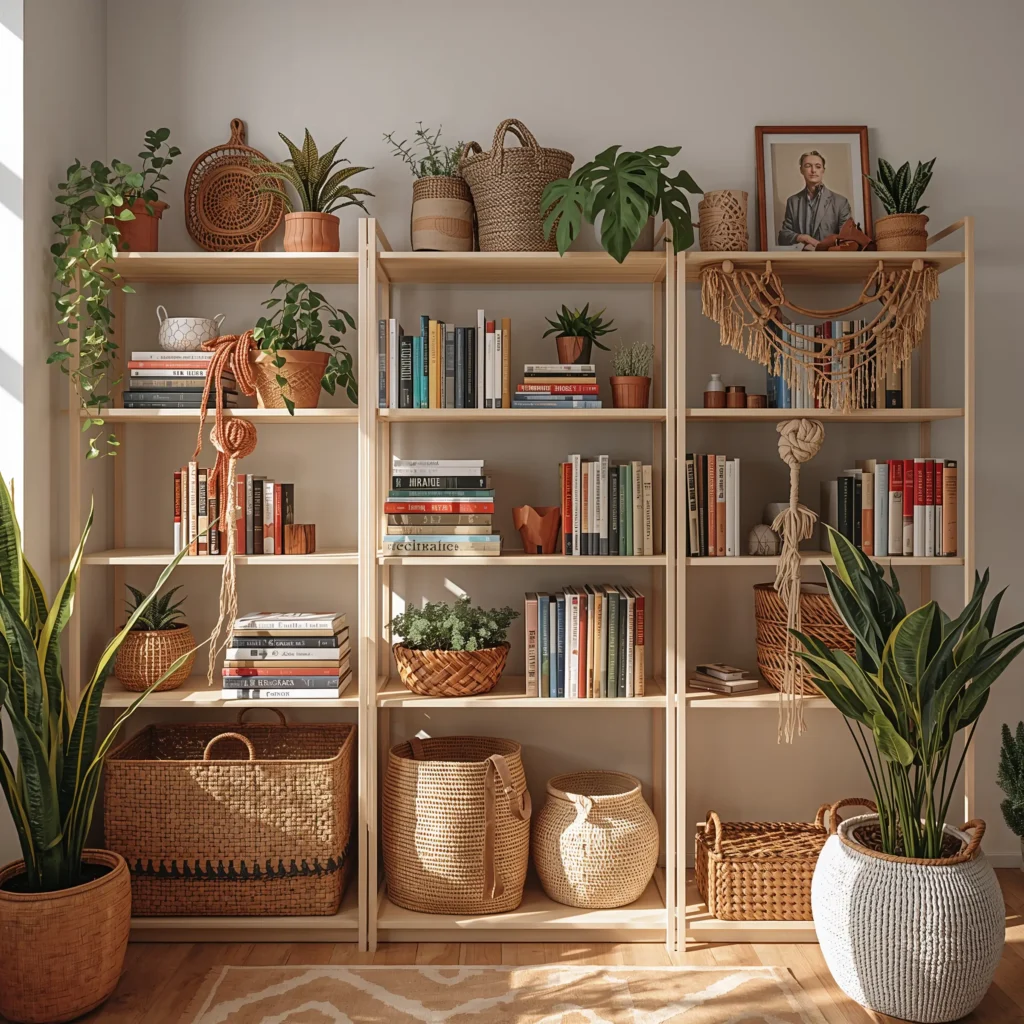
Embracing Organized Chaos
Now, if minimalism makes you yawn, let’s talk boho chic. This style basically says, “Rules? What rules?” and I absolutely love it for that. My best friend’s apartment rocks this look, and every time I visit, I find something new to admire.
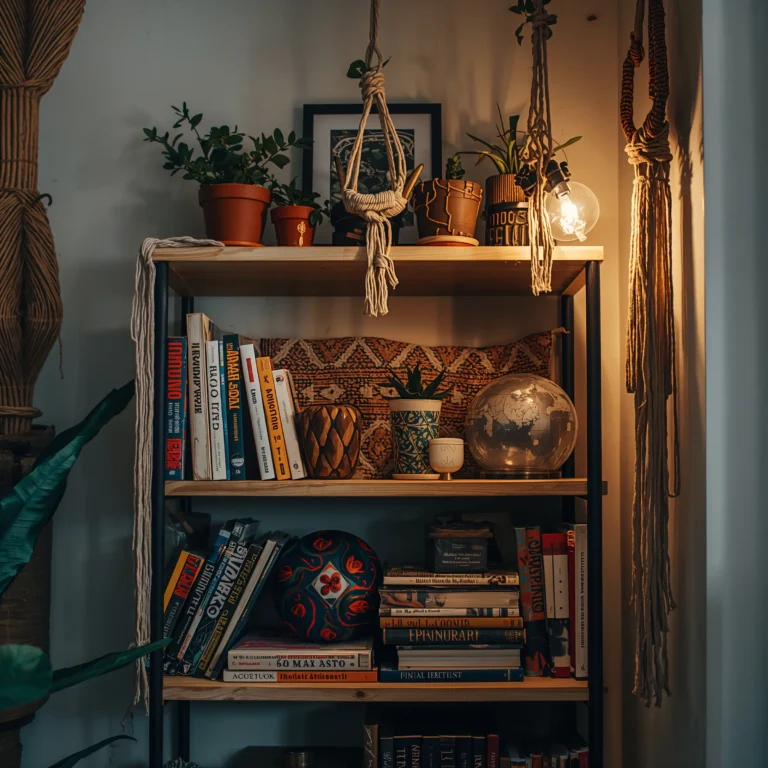
Boho styling is all about layering—books stacked horizontally AND vertically, plants trailing down from upper shelves, vintage finds mixed with modern pieces. You want it to look like you’ve been collecting treasures from around the world for years (even if you actually just raided HomeGoods last weekend).
The beauty of boho? Nothing has to match. In fact, it’s better if it doesn’t. Mix leather-bound classics with colorful paperbacks, add some woven baskets, throw in a macrame plant hanger, and boom—you’re basically a free spirit with excellent taste.
Essential Boho Elements
To get that perfect boho vibe, incorporate these elements:
- Natural materials like rattan, wood, and jute
- Plenty of plants (the more, the merrier)
- Vintage or antique books with worn covers
- Global accessories like moroccan lanterns or tribal masks
- Warm, earthy colors mixed with jewel tones
Pro tip: Layer your books with artwork. Lean a small painting or print against the back of the shelf, then arrange books in front of it. This creates depth and makes your shelf look like a curated gallery rather than just storage.
Rustic Wooden Shelf Arrangement
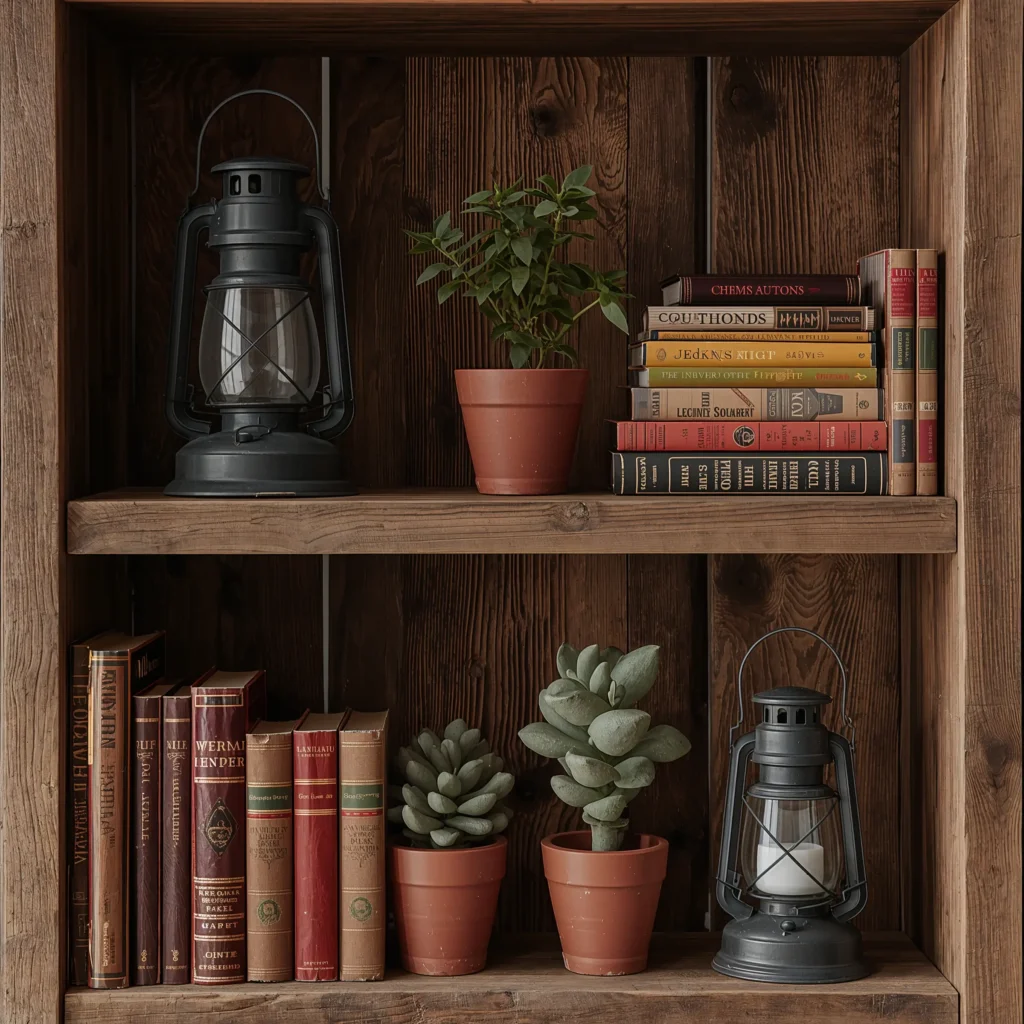
Bringing the Cabin Vibes Home
Ever walk into a cozy mountain lodge and think, “I could live here forever”? That’s the energy we’re channeling with rustic wooden shelf styling. I discovered this style when I inherited my grandfather’s old leather-bound book collection, and suddenly I needed a way to display them that felt authentic.
Rustic styling celebrates imperfection. You want wood with visible grain, books with weathered spines, and accessories that look like they have stories to tell. Think cast iron bookends, vintage lanterns, and maybe an old clock that doesn’t even work anymore (but looks amazing).
The trick is balancing the roughness with some refinement. Too much rust and weathering, and your space starts looking abandoned rather than rustic. I like to follow the 70/30 rule—70% rustic elements, 30% cleaner, more modern pieces to keep things grounded in the present.
Creating That Perfect Rustic Look
Here’s your rustic styling checklist:
- Weathered wood shelves (or regular shelves styled to look weathered)
- Leather-bound or cloth-covered books in browns, greens, and deep reds
- Metal accents in bronze, copper, or black iron
- Natural elements like pinecones, antlers, or dried flowers
- Vintage photographs in distressed frames
Want to know a secret? You can fake the rustic look pretty easily. Stack books horizontally and tie them with twine, add some battery-operated Edison bulb string lights, and suddenly your IKEA bookshelf looks like it belongs in a Vermont farmhouse.
Also READ: 10 Stunning Bookshelf Design Ideas and Cozy Home Inspiration
Color-Coded Book Organization
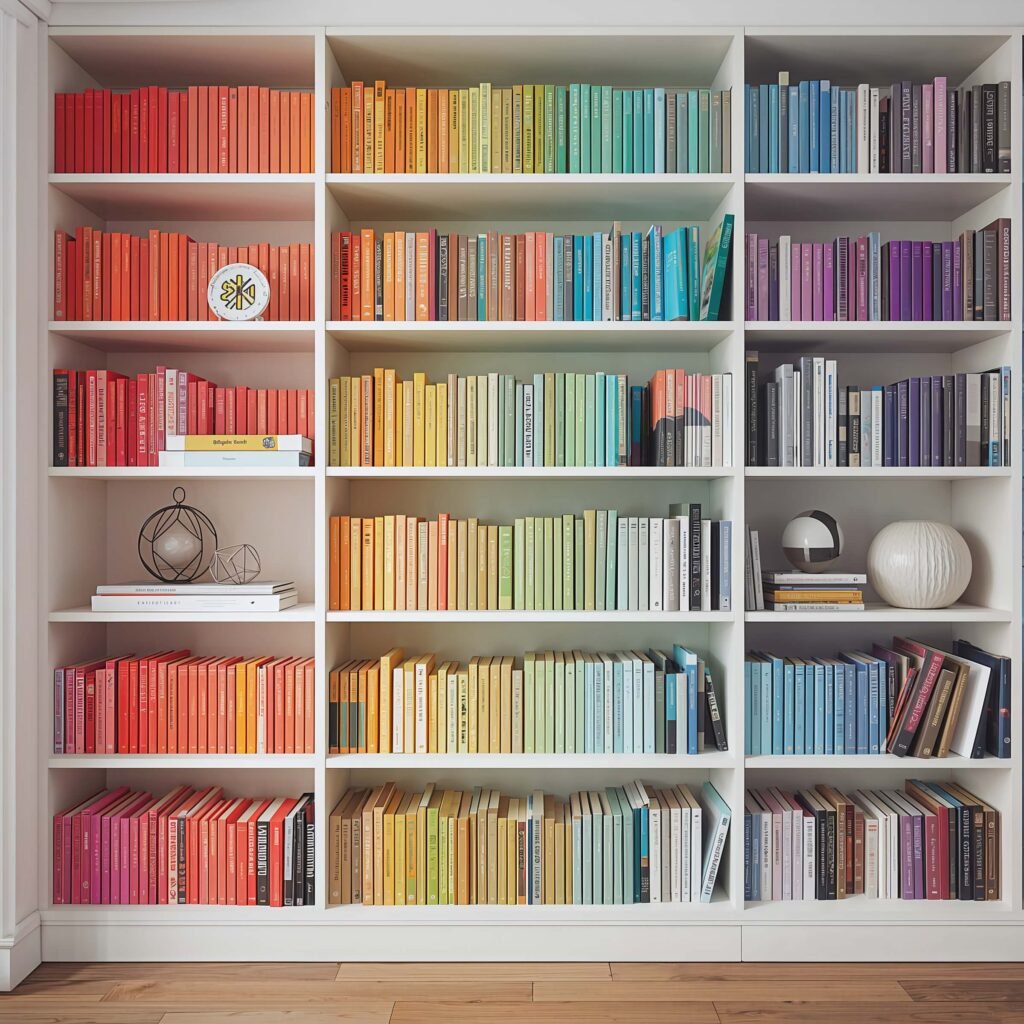
Rainbow Shelves That Actually Work
Okay, let’s address the elephant in the room. Color-coding books is either the most brilliant thing ever or completely impractical, depending on who you ask. Can you actually find the book you want? Does it look as good in real life as on Instagram?
I’ve done it, and here’s the truth: it’s absolutely gorgeous but requires commitment. When I first organized my books by color, I spent a solid afternoon arranging and rearranging until the gradient was perfect. The result? My bookshelf became the focal point of my living room, and yes, people do take photos of it.
The key to making this work is being strategic about your color flow. You don’t just throw all the red books together and call it a day. You create gradients, moving from deep burgundy to bright red to orange, creating a natural flow that guides the eye across the shelf.
Making Color-Coding Practical
FYI, here’s how to make rainbow shelves actually functional:
- Photograph your arrangement before you start (for reference)
- Group by color, then by size within each color section
- Use bookends to break up sections naturally
- Mix horizontal and vertical stacks to add visual interest
- Keep a digital catalog if you’re really worried about finding books
The biggest mistake people make? Going too strict with the colors. Real life isn’t perfectly color-blocked, and neither should your shelves be. Let some books bridge color categories—that teal-green book can live between the blues and greens, creating a more natural transition.
Floating Shelf with Greenery
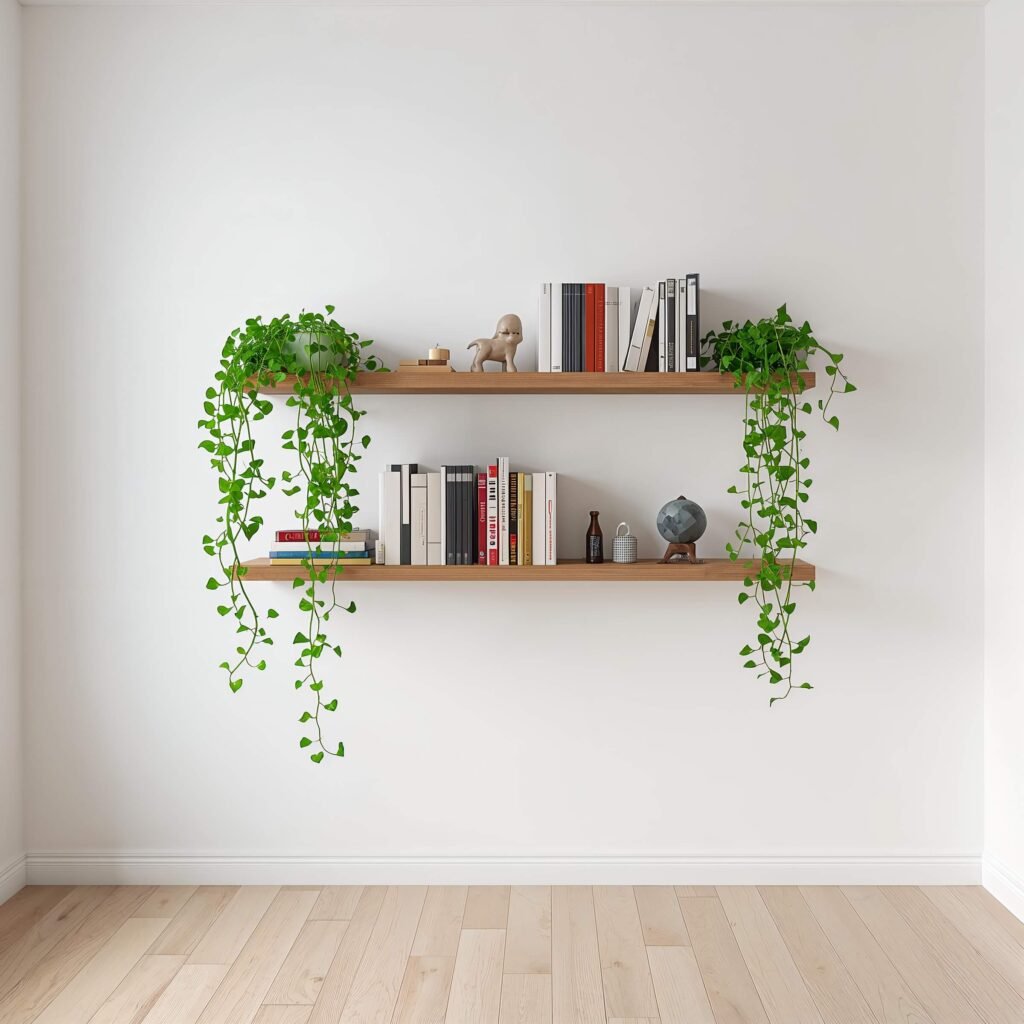
When Books Meet Plants
Here’s where things get really fun. Floating shelves with plants create this amazing living library vibe that makes any room feel fresh and alive. I started adding plants to my shelves after killing approximately 47 houseplants (okay, maybe not that many, but close), and discovering which ones actually survive indoor life.
The magic of this combination? Plants soften the hard edges of books and shelves, creating a more organic, flowing look. Trailing plants like pothos or philodendrons work especially well because they create movement and draw the eye downward, connecting your shelves to the rest of the room.
You want to treat your plants as design elements, not afterthoughts. Place them strategically—maybe a tall snake plant at one end for height, a cascading ivy in the middle for movement, and a compact succulent collection for texture variety.
Best Plants for Bookshelf Styling
Trust me on these plant picks:
- Pothos: Nearly impossible to kill and trails beautifully
- Snake plants: Vertical interest and basically immortal
- ZZ plants: Glossy leaves that catch light gorgeously
- Small succulents: Perfect for filling gaps
- Air plants: No soil needed, infinite styling possibilities
Here’s a game-changer tip: use books as plant stands. Stack a few hardcovers horizontally and place a small planter on top. This creates levels and makes your styling look intentional rather than just plopping plants wherever they fit.
Vintage Library Aesthetic
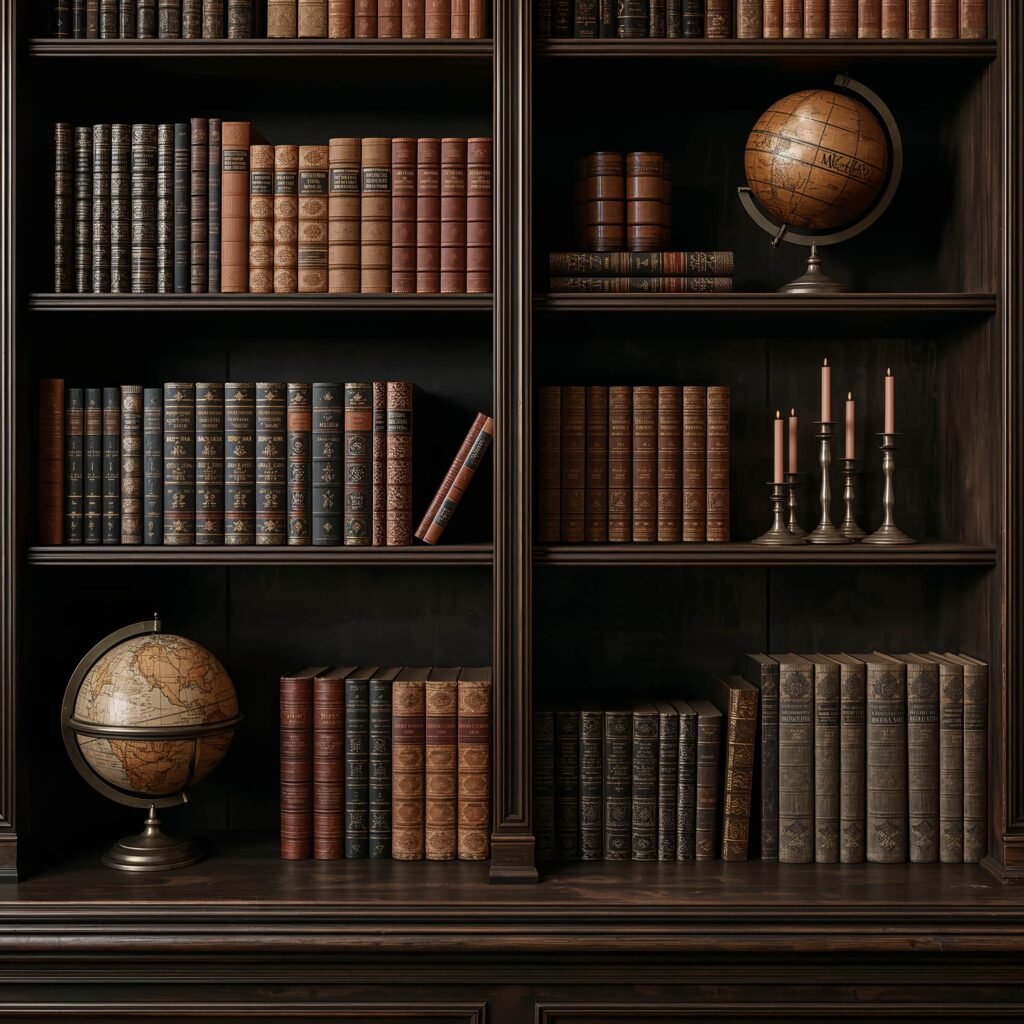
Old World Charm in Modern Times
Want your home to feel like a scene from Beauty and the Beast? The vintage library look delivers that scholarly, sophisticated vibe that makes you want to curl up with a brandy and discuss philosophy (even if you’re really drinking boxed wine and watching Netflix).
I fell in love with this style after visiting an estate sale and scoring a collection of gorgeous old encyclopedias for basically nothing. Suddenly, I had the foundation for a vintage library look that made my cheap particle board shelves look distinguished.
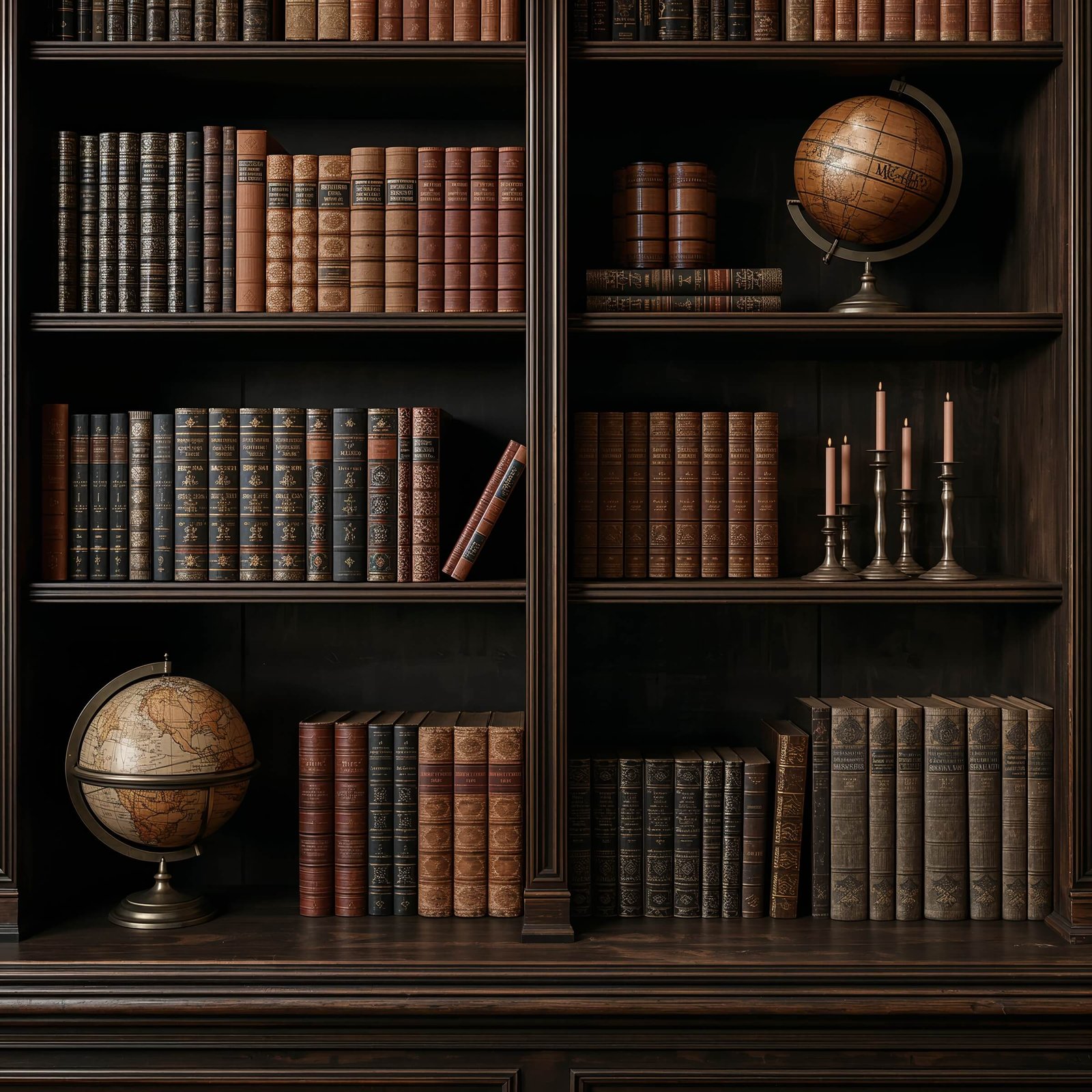
The vintage library aesthetic is all about rich colors, aged materials, and classical accessories. Think deep mahogany, forest green, burgundy, and gold accents. Your books should look like they’ve been loved for generations, even if you bought them last week at a used bookstore.
Building Your Vintage Collection
Essential elements for that library look:
- Leather or cloth-bound books in deep, rich colors
- Brass or bronze accessories like bookends, globes, or desk lamps
- Antique-looking frames with botanical prints or maps
- Dark wood elements or faux wood contact paper for shelves
- Classic decorative objects like hourglasses, magnifying glasses, or vintage cameras
Want to fake it ’til you make it? Remove dust jackets from modern books to reveal the often prettier cloth covers underneath. Group books by height and color rather than alphabetically, and add some vintage-looking bookplates to really sell the inherited library story.
Also Read: 10 Cozy Bookshelf Aesthetic Decor Tips for Stylish Spaces
Modern Geometric Shelf Display
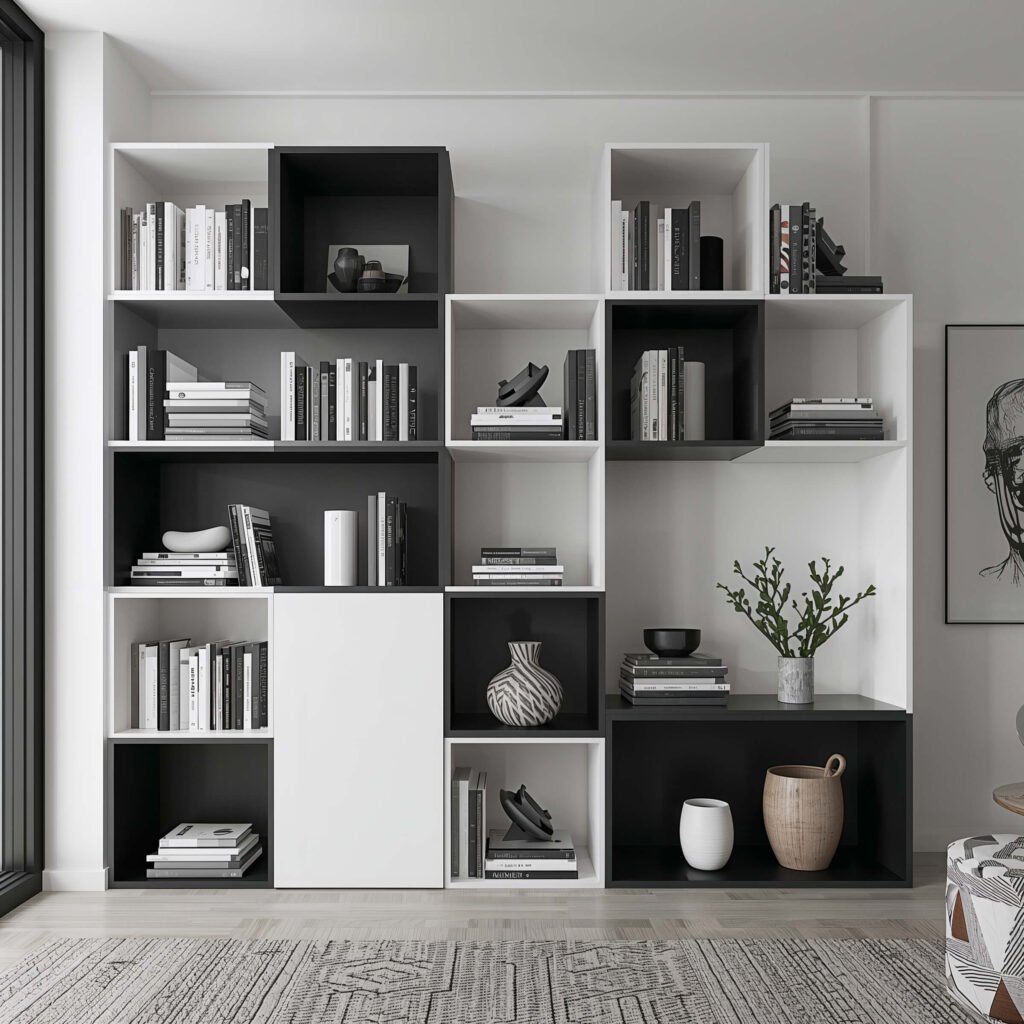
Sharp Lines and Bold Statements
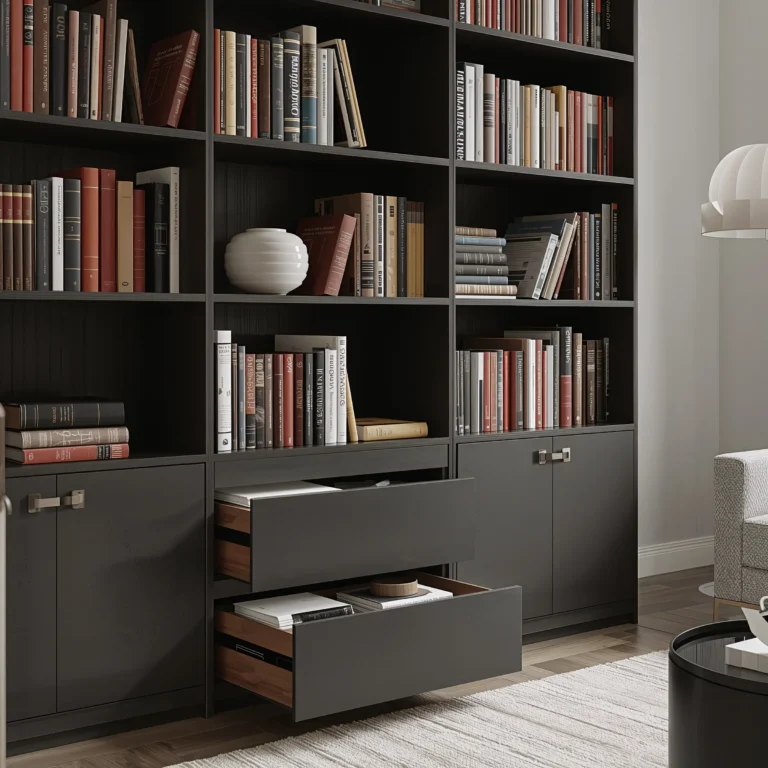
If your style leans more toward “sleek city loft” than “cozy cottage,” geometric shelf styling is your jam. This approach treats your bookshelf like a piece of modern art, where every angle and arrangement serves a purpose.
I experimented with this style when I moved into a super modern apartment with floor-to-ceiling windows. My rustic books looked ridiculous in that space, so I had to adapt. The result? A bookshelf that looks like it belongs in a design magazine.
Geometric styling relies on creating visual patterns through repetition and contrast. You might arrange books in diagonal lines, create pyramid shapes with stacked volumes, or use bookends to create strong vertical lines. The goal is making your shelf look architectural rather than just functional.
Mastering Geometric Arrangements
Key strategies for geometric success:
- Create triangular compositions with books and objects
- Use matching bookends to frame sections
- Incorporate geometric objects like spheres, cubes, or pyramids
- Stick to a limited color palette (black, white, and one accent color works great)
- Balance negative and positive space equally
Here’s something nobody tells you: geometric doesn’t mean cold. Add warmth through materials—a wooden geometric sculpture, a brass hexagonal frame, or books with textured covers. These elements prevent your shelf from looking like a math textbook exploded.
Cozy Corner Bookshelf Setup
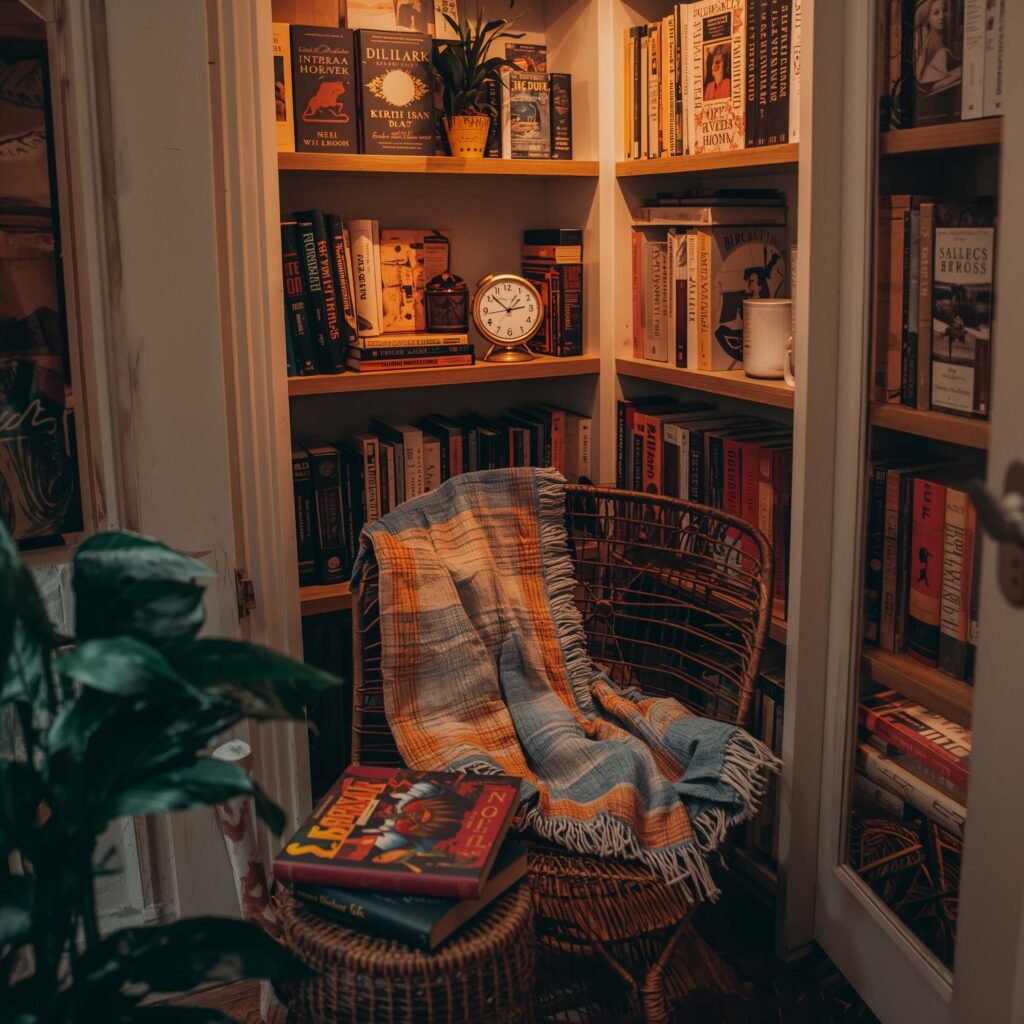
Your Personal Reading Retreat
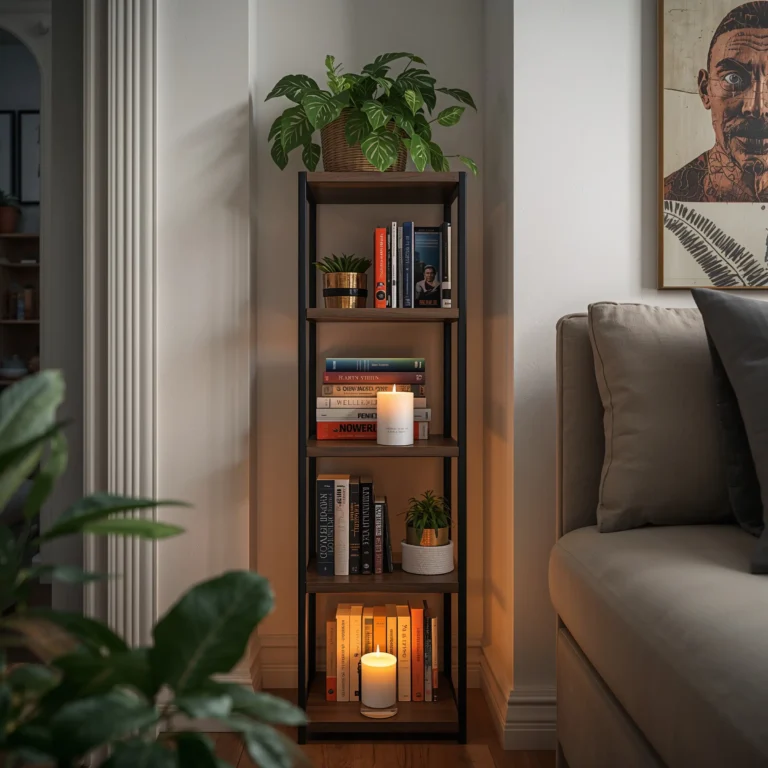
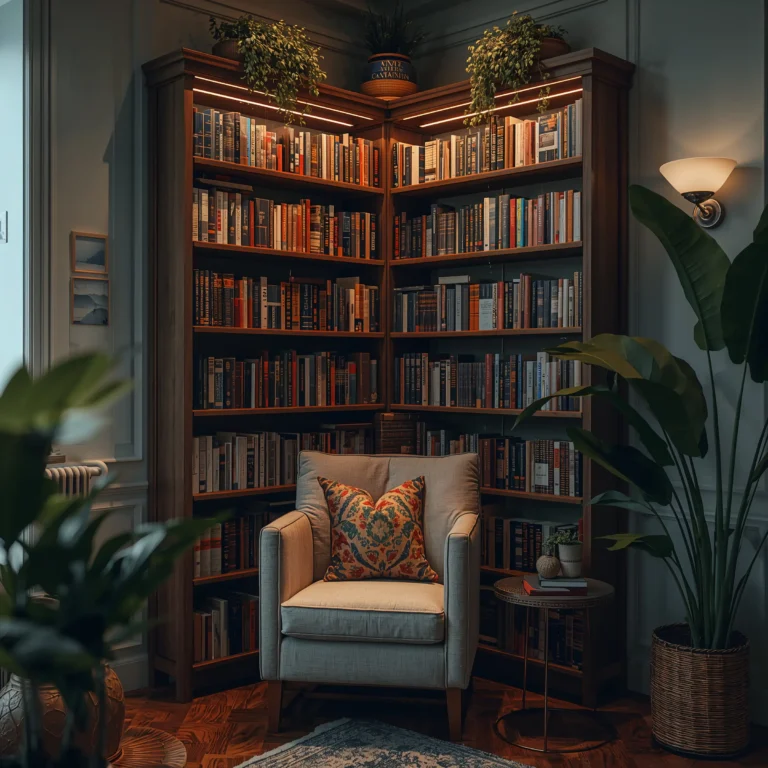
Ever notice how the best bookstores have those perfect little reading nooks that make you want to stay forever? That’s what we’re creating with a cozy corner bookshelf setup. This isn’t just about organizing books—it’s about creating an experience.
I transformed a dead corner in my bedroom into a reading sanctuary, and honestly, it’s become my favorite spot in the entire house. The key is thinking beyond just the shelf itself and considering the whole corner as one cohesive space.
Start with your bookshelf as the anchor, then build outward. Add a comfortable chair (thrift stores are goldmines for unique seating), layer in soft lighting, throw in some cushions and a blanket, and suddenly you’ve got a destination, not just storage.
Building the Perfect Reading Corner
Essential cozy corner elements:
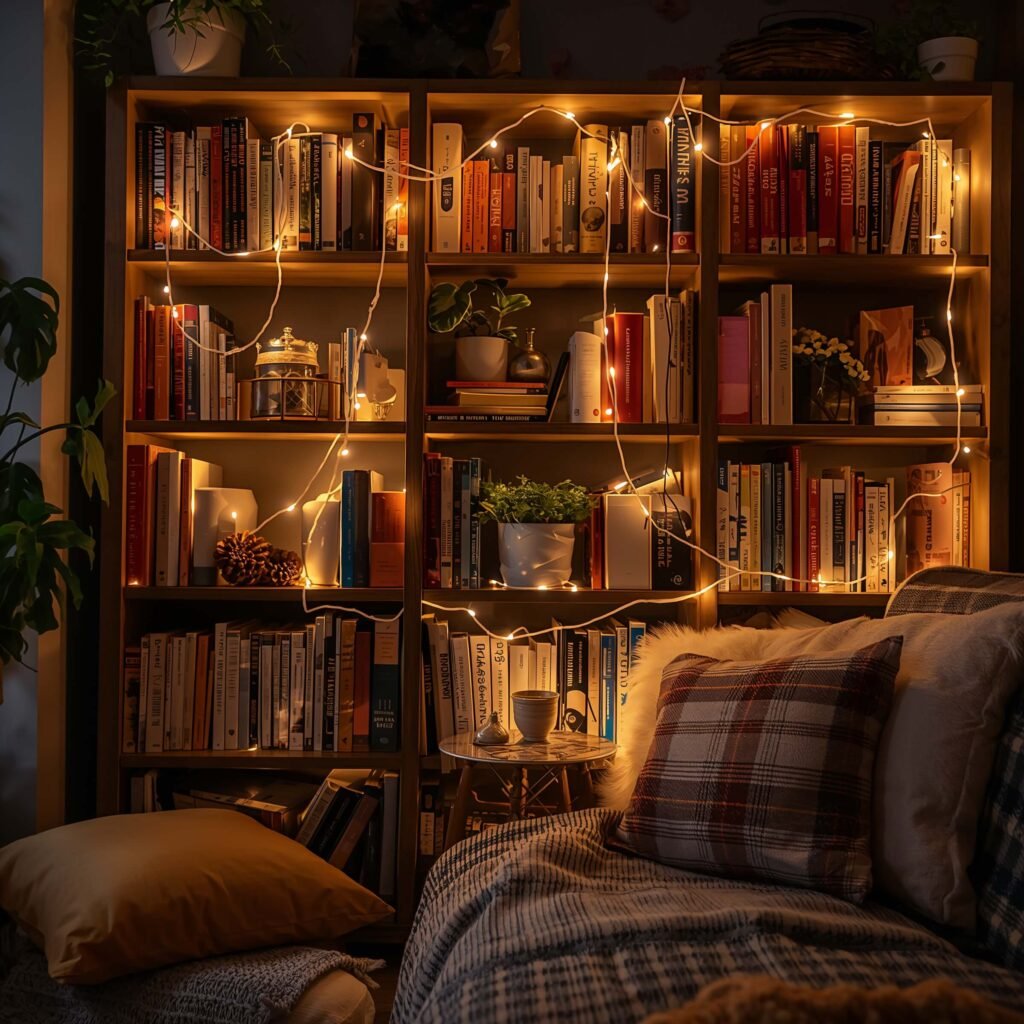
- Warm lighting (think table lamps or string lights, not overhead fluorescents)
- Comfortable seating positioned near the shelf
- Soft textiles like throw blankets and pillows
- Personal touches like family photos or travel souvenirs
- Easy-reach organization for current reads
The secret sauce? Layer your lighting. I use a combination of fairy lights woven between books, a small table lamp on the shelf itself, and a floor lamp beside my reading chair. This creates that warm, inviting glow that makes you want to grab a book immediately 🙂
DIY Book Nook with Lights
Creating Magic Between the Pages
Ready for something that’ll make everyone who sees your bookshelf say “How did you DO that?” Enter the DIY book nook—those miniature dioramas that fit between your books and look like tiny magical worlds. I made my first one during lockdown (because what else was there to do?), and now I’m completely addicted.
These little scenes tucked between your books add an element of surprise and whimsy that transforms an ordinary bookshelf into something special. The best part? Adding LED lights takes them from cute to absolutely magical, especially in the evening.
You don’t need to be super crafty to pull this off. Start simple—maybe a tiny alleyway scene or a miniature library. The lights are what really sell it, creating shadows and depth that make these tiny spaces feel real.
Book Nook Essentials
What you need for a stellar book nook:
- Small LED string lights or battery-operated fairy lights
- Craft foam or cardboard for structure
- Miniature furniture or figures (hobby stores are perfect for these)
- Mod Podge and paint for finishing touches
- Patience and imagination (the most important ingredients)
IMO, the best book nooks tell a story. Maybe it’s Diagon Alley between your Harry Potter books, or a tiny Victorian street scene next to your Sherlock Holmes collection. Match the nook to the books around it, and suddenly your shelf becomes an immersive experience.
Also Read: 10 Unique Bookshelf Ideas for Small Spaces Made Simple
Seasonal Decor Bookshelf Ideas
Keeping Things Fresh Year-Round
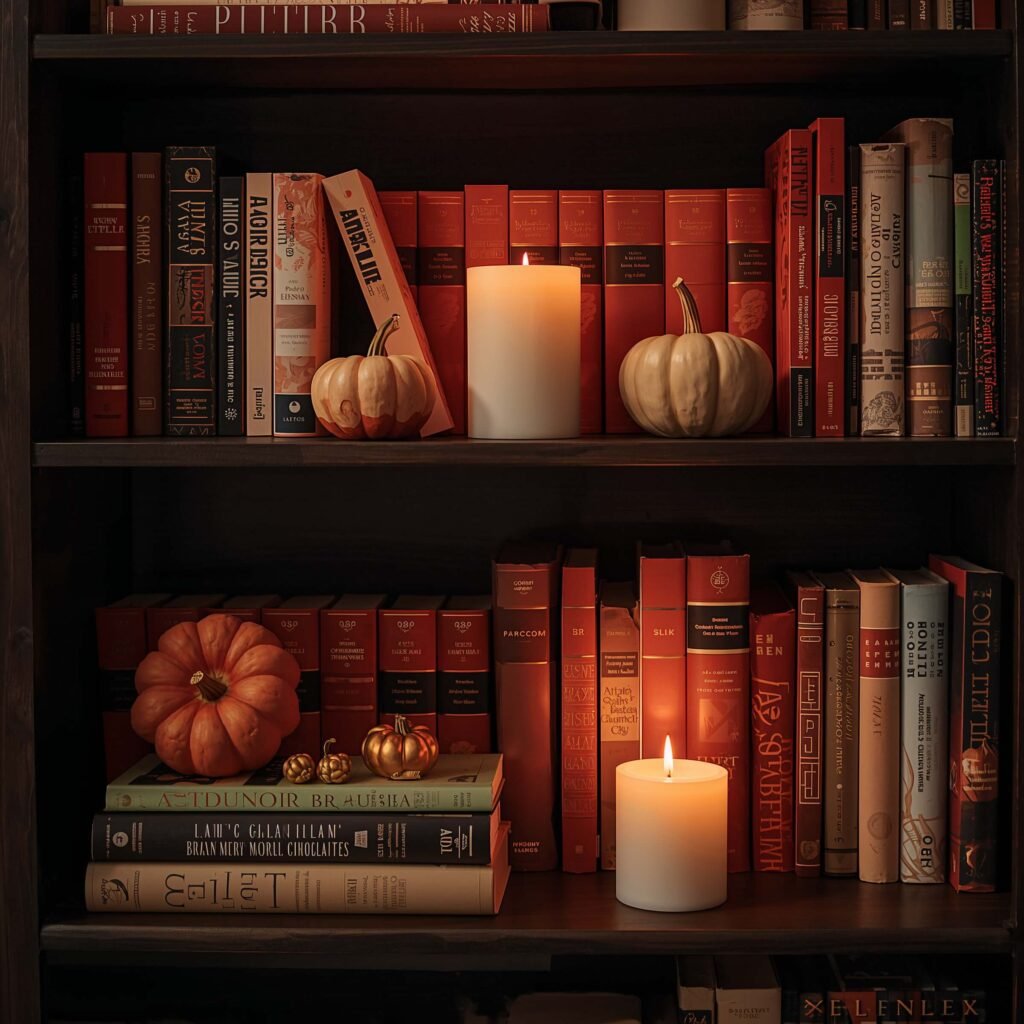
Why should your bookshelf look the same in July as it does in December? Seasonal decorating keeps your space feeling fresh and gives you an excuse to redecorate without major commitment. Plus, it’s just fun—who doesn’t love adding some pumpkins in fall or twinkle lights in winter?
I started doing seasonal shelf updates after realizing my bookshelf was the most photographed spot in my apartment (thanks, Zoom backgrounds). Now I switch things up every few months, and it keeps my space feeling alive and current.
The trick is having a base arrangement that stays constant—your books and main decorative pieces—then layering in seasonal elements. This way, you’re not completely reorganizing four times a year, just adding and swapping small touches.
Seasonal Styling Made Simple
Here’s your seasonal playbook:
Spring:
- Fresh flowers or flowering branches
- Pastel book covers rotated to front
- Bird figurines or nests
- Light, airy fabrics
Summer:
- Seashells or beach glass
- Bright, colorful book spines featured
- Small potted herbs
- Nautical elements
Fall:
- Mini pumpkins or gourds
- Warm-toned books prominently displayed
- Dried leaves or wheat stalks
- Cozy candles (battery-operated for safety)
Winter:
- String lights or fairy lights
- Metallic accents in silver or gold
- Pine cones or evergreen springs
- Cozy textures like faux fur
The best part about seasonal decorating? It forces you to actually dust your shelves at least four times a year. Silver lining, right?
Making It All Work Together
So there you have it—ten different ways to transform your bookshelf from storage solution to style statement. The real secret? You don’t have to pick just one. Mix and match elements from different styles until you find what feels right for your space.
Maybe you love the minimalist approach but want to add some seasonal touches. Or perhaps you’re all about that boho life but appreciate some geometric organization. The beauty of bookshelf styling is that there are literally no rules except one: make it reflect who you are.
Your bookshelf tells a story—not just through the books you display, but through how you choose to display them. Whether you go full rainbow, embrace your inner librarian with vintage styling, or create magical book nooks that transport viewers to other worlds, the important thing is that you’re creating a space that makes you happy every time you look at it.
Remember, the best bookshelf is one that makes you want to pick up a book and read. If your styling achieves that, then you’ve succeeded, regardless of whether it looks Instagram-perfect or not. Though honestly, with these ideas in your toolkit, Instagram-perfect is definitely within reach.
Now stop reading this and go style those shelves. Your books are waiting to shine, and trust me, once you start, you might find it hard to stop. Don’t say I didn’t warn you about the addictive nature of bookshelf styling. Happy decorating