10 Gorgeous Bookshelf Wall Decor Ideas You’ll Love Instantly

Remember that time you walked into someone’s home and their bookshelf made you stop dead in your tracks? Yeah, I had that moment at my friend Sarah’s place last month.
Her shelves weren’t just holding books—they were telling a story, creating art, basically showing off without being annoying about it. That’s when I realized my own bookshelves looked like they’d given up on life.
So here’s the thing: your bookshelf doesn’t have to be that sad, neglected wall fixture that just collects dust and random junk.
Trust me, I’ve tested enough Pinterest fails to know what actually works (and what’ll make your living room look like a craft store exploded).
These ten ideas? They’re the real deal—practical, gorgeous, and surprisingly doable even if you think you can’t decorate to save your life.
Floating Shelf Book Display
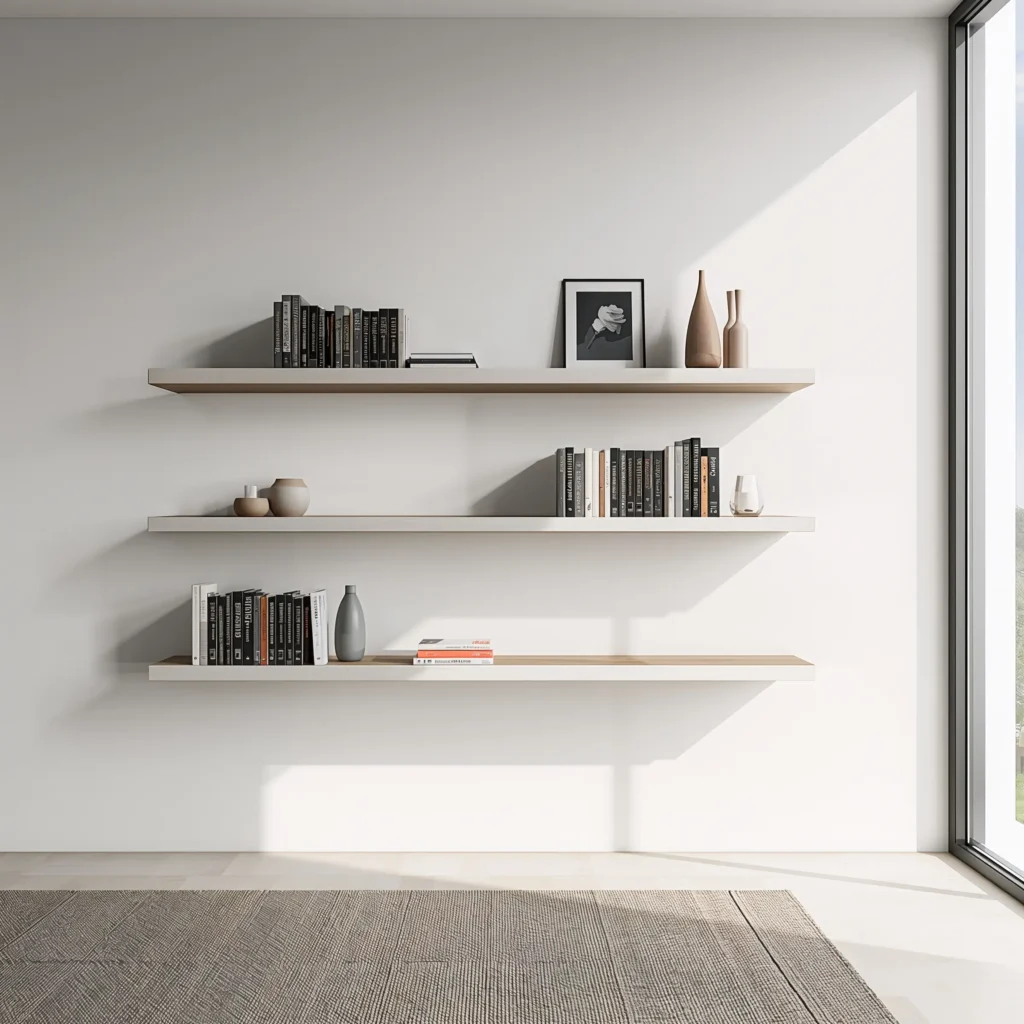
Let’s kick things off with my personal favorite: floating shelves. You know what’s amazing about them? They make your books look like they’re literally defying gravity. Plus, they trick people into thinking you’re way more sophisticated than you actually are.
I installed three staggered floating shelves in my home office last year, and honestly, it changed everything. The key here is strategic placement—you don’t want them lined up like soldiers. Mix up the heights, create some visual interest, and suddenly you’re an interior design genius.
Making Floating Shelves Work for You
Here’s what nobody tells you about floating shelves: spacing is everything. I learned this the hard way when I crammed mine too close together and couldn’t fit my art books. Aim for at least 10-12 inches between shelves if you want versatility.
The beauty of floating shelves lies in their simplicity. You can:
- Stack books horizontally for a modern look
- Mix vertical and horizontal arrangements
- Add small decorative objects between book clusters
- Leave deliberate empty spaces (negative space is your friend!)
Want to know the secret sauce? Don’t fill every inch. I know it’s tempting to showcase your entire library, but restraint creates impact. Pick your favorites, your prettiest covers, and let them breathe.
Gallery Wall Above Bookshelf
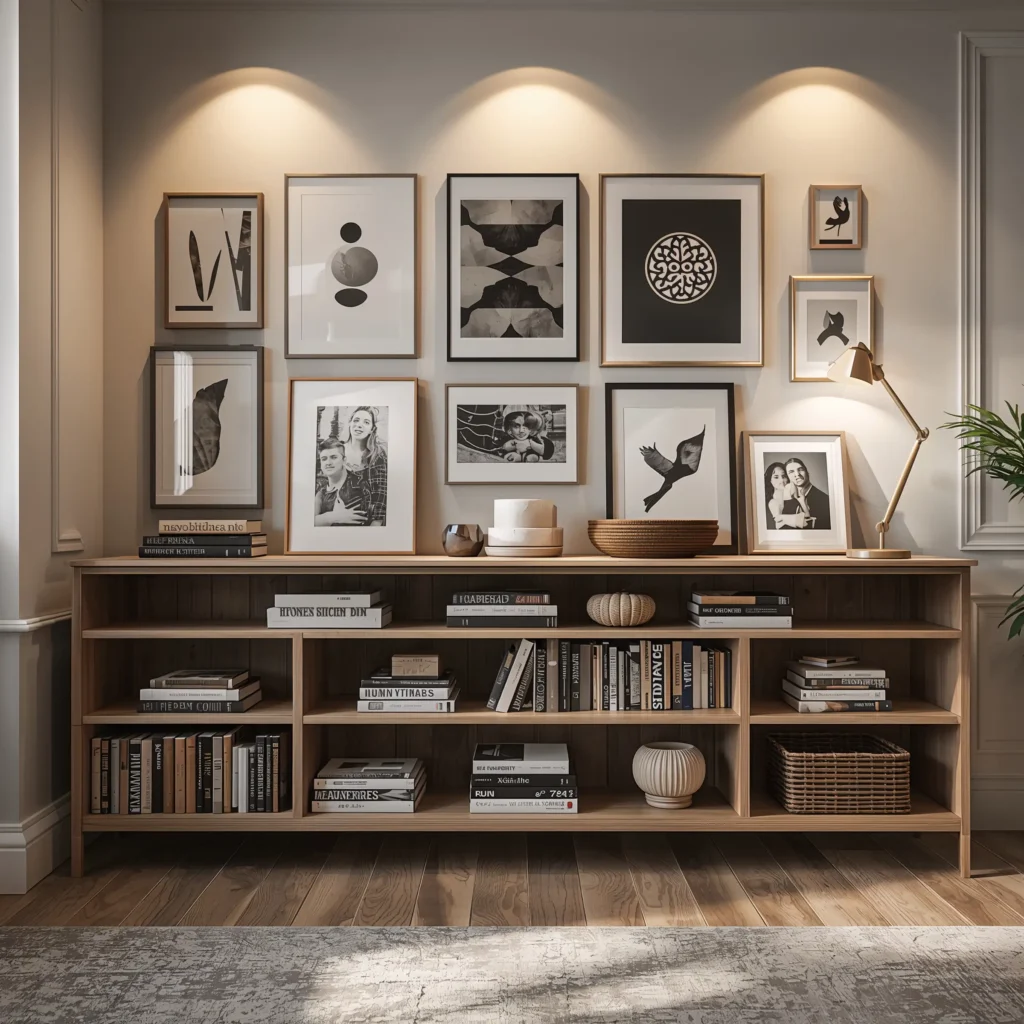
Ever looked at that empty wall space above your bookshelf and thought, “What the heck do I do with that?” Welcome to the club. Creating a gallery wall above your shelves solves this problem while adding serious personality to your space.
I spent months staring at the blank wall above my living room bookshelf before finally taking the plunge. The trick? Start with paper templates. Cut out paper in the sizes of your frames and tape them to the wall. Move them around until you love the arrangement—way easier than hammering seventeen holes only to hate it.
Curating Your Gallery Wall
The magic formula I discovered (after much trial and error) involves:
- Mixing frame sizes but keeping colors cohesive
- Including at least one statement piece as an anchor
- Incorporating different mediums (photos, prints, even small mirrors)
- Maintaining 2-3 inches between frames
Here’s where people mess up: they go too matchy-matchy. Your gallery wall should look collected over time, not like you bought a set from Target (even if you totally did). Mix black frames with wood, throw in a vintage find, maybe add a small floating shelf within the gallery for a 3D element.
Minimalist Monochrome Shelves
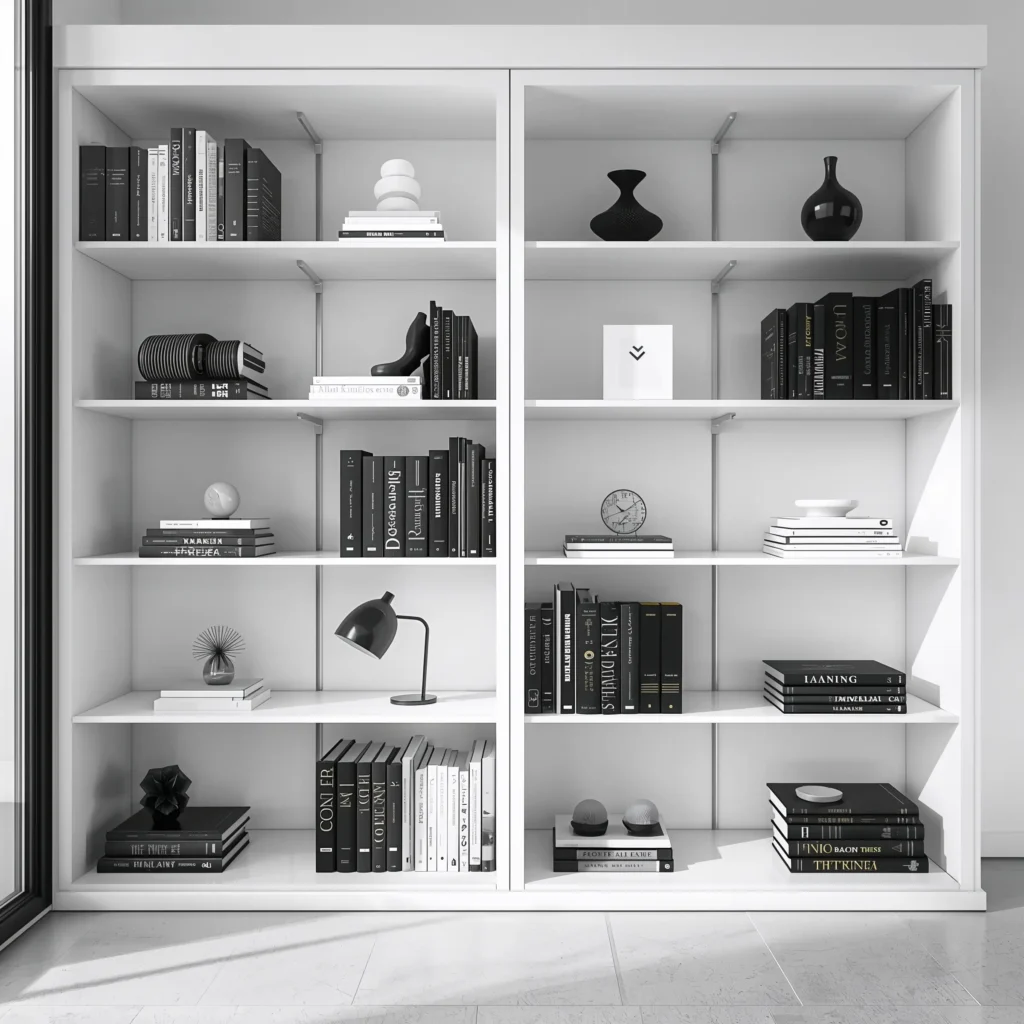
Okay, let’s talk about the minimalist monochrome approach. This one’s for you if you break out in hives at the thought of too much visual clutter. I get it—sometimes less really is more.
The monochrome shelf isn’t about being boring; it’s about being intentionally curated. Pick your color scheme (black and white is classic, but grays or even all-cream can work) and stick to it religiously. This doesn’t mean everything has to be the exact same shade—play with tones and textures within your chosen palette.
Executing the Monochrome Look
When I helped my sister redesign her studio apartment, we went full monochrome with her shelving, and the results? Chef’s kiss. The key elements:
- Remove or cover colorful book spines (controversial, I know)
- Use decorative book covers or turn spines backward for uniformity
- Add texture through different materials (matte, glossy, fabric)
- Include monochrome decorative objects for visual breaks
Want to avoid the “medical office” vibe? Layer different textures. Combine smooth ceramics with rough pottery, glossy frames with matte prints. The variation keeps things interesting without breaking your color story.
Also Read: 10 Stunning Tree Bookshelf Ideas and Cozy Reading Corners
Vintage Library Style Arrangement
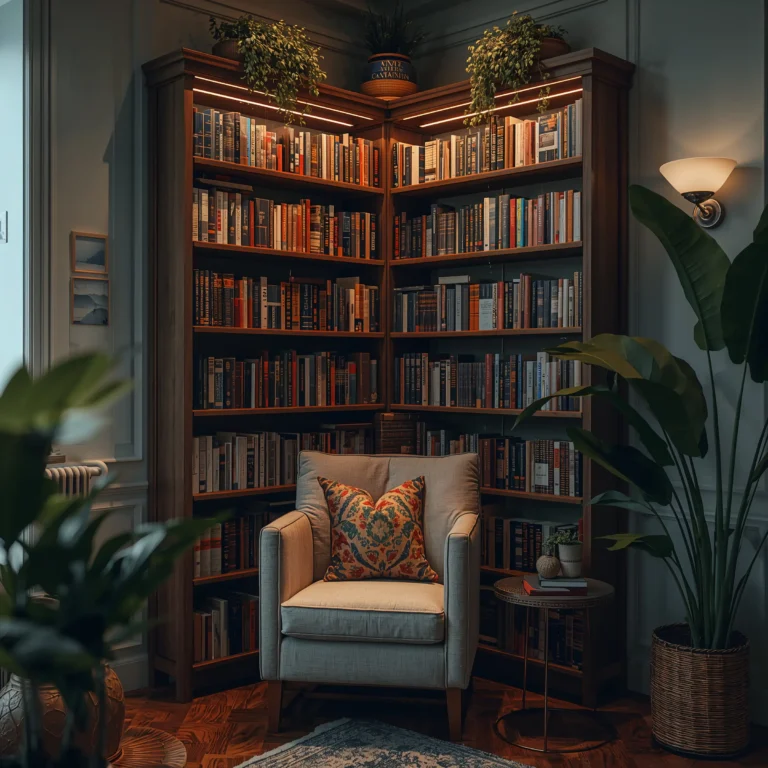
Who doesn’t secretly want their home to look like that library from Beauty and the Beast? The vintage library aesthetic brings warmth, character, and that “I’m definitely well-read” vibe we’re all secretly after.
Creating this look isn’t about having first editions (though if you do, flaunt them!). It’s about embracing the patina of well-loved books and mixing in period-appropriate accessories. I haunted estate sales for months building my vintage collection, and honestly, the hunt became half the fun.
Building Your Vintage Library Vibe
Essential elements for nailing this style:
- Leather-bound or cloth-covered books (thrift stores are goldmines)
- Antique bookends (brass animals are classic)
- Vintage globes, magnifying glasses, or small busts
- Old botanical prints or maps as backdrop elements
- Warm lighting (think brass picture lights or Edison bulbs)
FYI, you don’t need actual antiques to pull this off. I’ve seen people age new books with tea staining and distressing techniques. Is it cheating? Maybe. Does it look amazing? Absolutely.
The arrangement matters too. Group books by height creating gentle waves across your shelves. Layer horizontal stacks behind vertical rows for depth. And please, for the love of all things literary, add a vintage ladder if you have the ceiling height. Nothing says “serious book collector” quite like needing a ladder to reach your top shelf 🙂
Plant-Integrated Bookshelf Decor

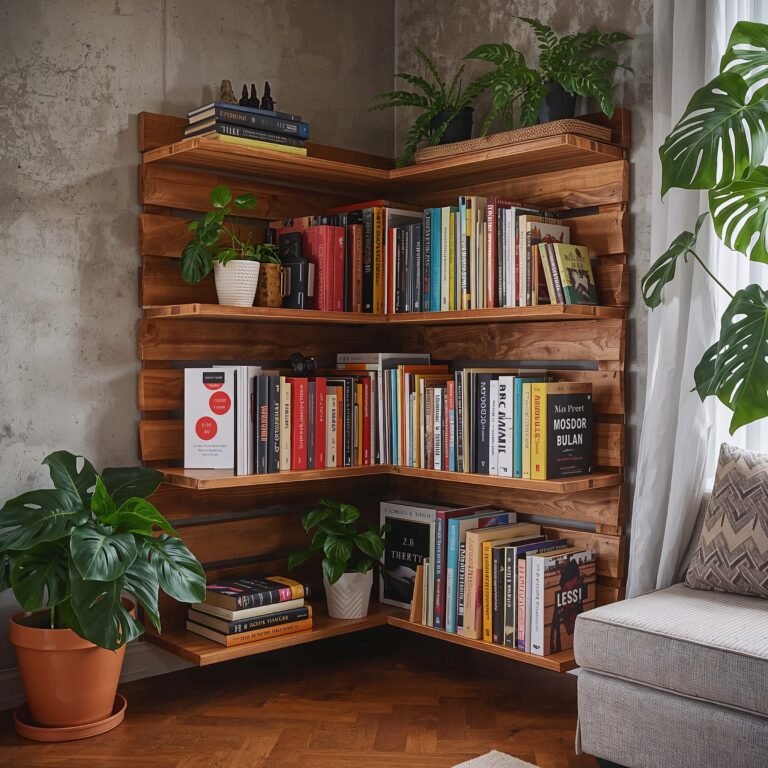
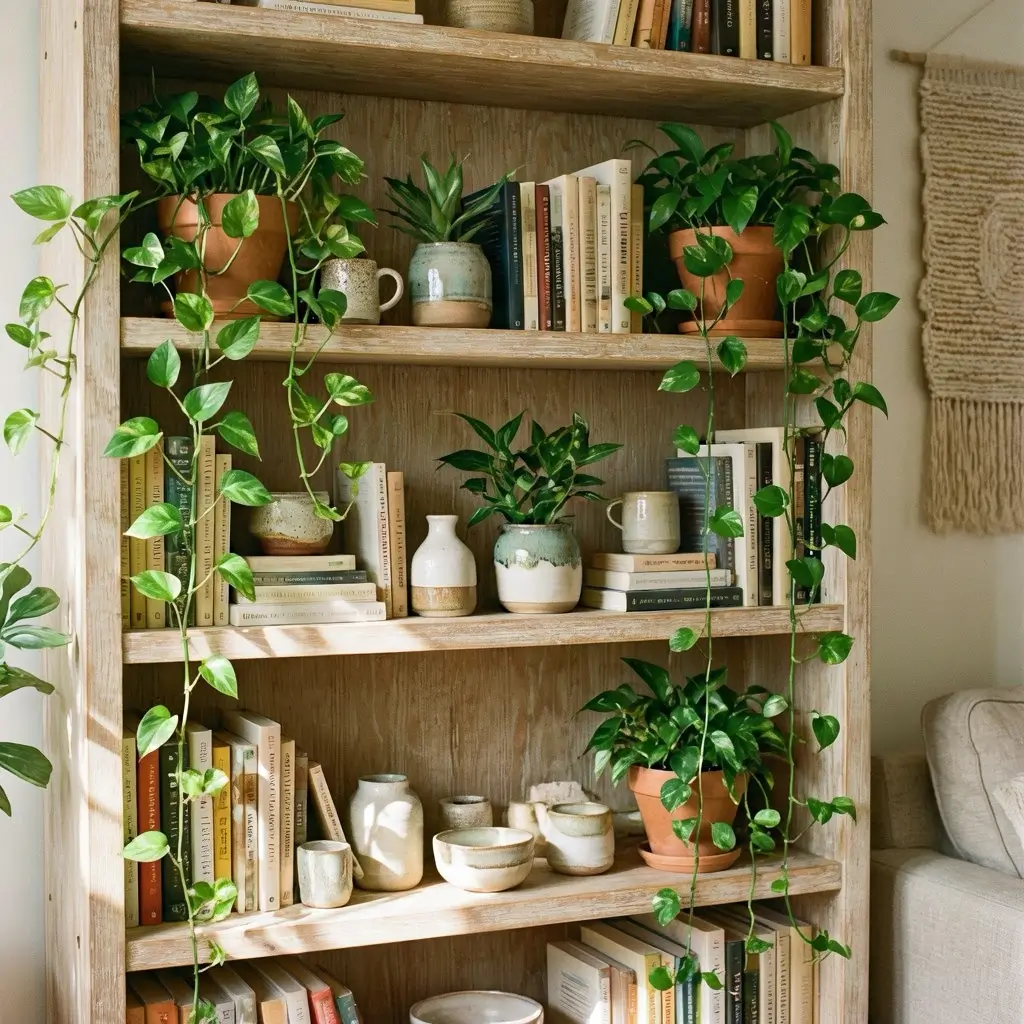
Let’s get one thing straight: plants and books together create magic. It’s like peanut butter and jelly, but for your living room. The organic shapes of plants break up the linear nature of books while literally bringing life to your shelves.
I killed approximately 47 plants before figuring out which ones actually thrive on bookshelves (RIP to all those succulents I was promised were “impossible to kill”). The survivors taught me valuable lessons about light requirements and space planning.
Choosing the Right Plants
Here’s your foolproof plant list for bookshelf success:
- Pothos: Trails beautifully, survives neglect
- Snake plants: Vertical interest, practically immortal
- ZZ plants: Glossy leaves, low light tolerant
- Philodendrons: Fast-growing, forgiving
- Air plants: No soil needed, perfect for tiny spaces
The placement strategy makes or breaks this look. Cascade trailing plants from top shelves, use upright plants as bookends, and tuck small specimens into gaps between book clusters. Pro tip: varying pot styles adds another design layer—mix terracotta with modern ceramics or woven baskets.
Making It Work Long-term
Real talk: watering plants on high shelves sucks. I learned to use saucers religiously after destroying a signed first edition (still crying about that one). Consider removable shelf liners for extra protection, and maybe keep your most precious books away from your plant babies.
Geometric Wall Shelf Patterns
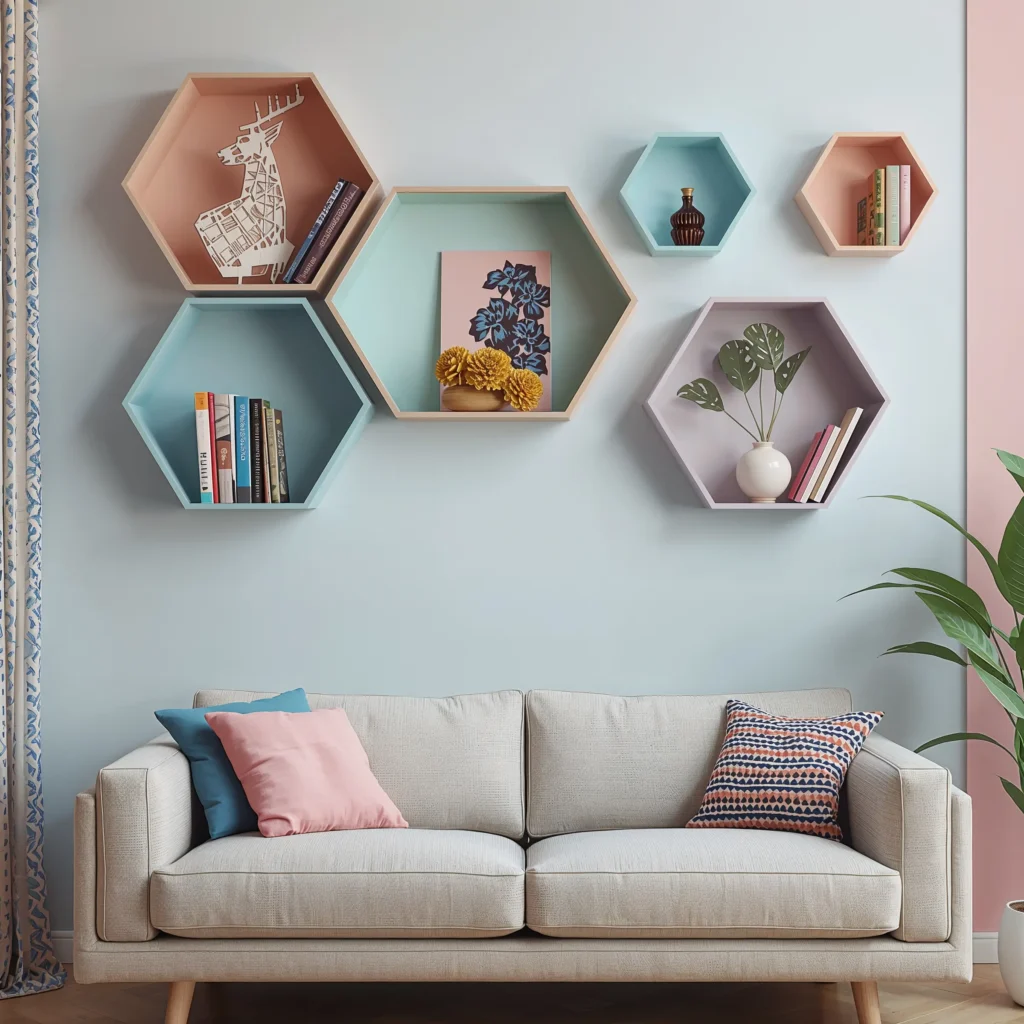
Geometric shelving takes your wall from flat and forgettable to architectural artwork. We’re talking hexagons, triangles, asymmetric designs that make people ask, “Where did you even find that?”
I installed a honeycomb shelving unit in my daughter’s room, and suddenly she actually wanted to organize her books. The visual interest of geometric patterns tricks the eye and creates movement even when everything’s perfectly still.
Creating Geometric Impact
The options here blow my mind:
- Hexagonal modules you can arrange and rearrange
- Tree-branch inspired asymmetric designs
- Mondrian-style grid patterns with varying box sizes
- Zigzag shelves that create dynamic lines
- Circular shelves for unexpected curves
Installation requires patience (and probably a friend who’s good with a level). Map out your pattern on paper first, and use painter’s tape to mark positions on the wall. Trust me, eyeballing geometric patterns leads to therapy-inducing crookedness.
The styling approach differs from traditional shelving. Each compartment becomes a mini vignette—some hold books, others display objects, a few stay empty for breathing room. The geometry itself is part of the decor, so don’t overcrowd it.
Also Read: 10 Elegant Corner Bookshelf Decor Ideas and Modern Inspirations
Color-Coordinated Book Stacking
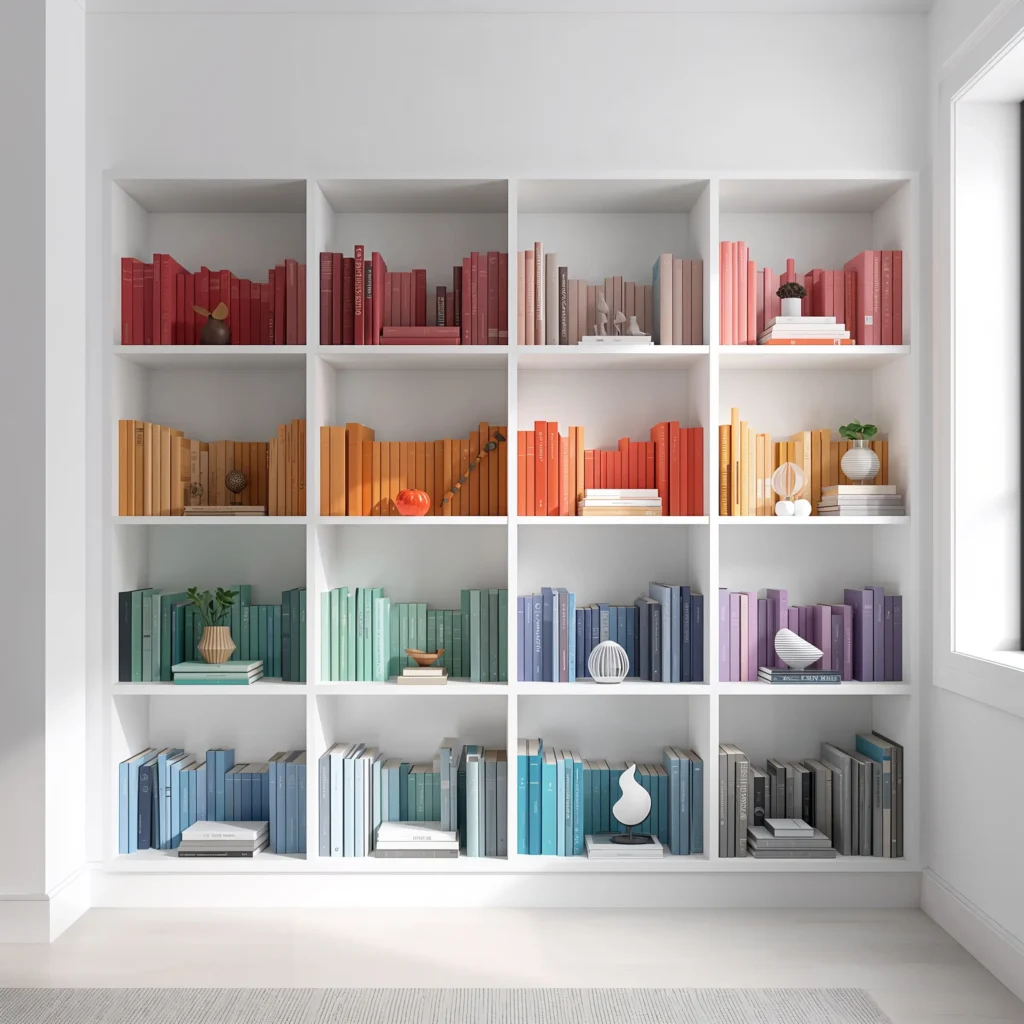
Arranging books by color might be the most controversial decorating decision you’ll ever make. Book purists hate it (“How will you find anything?!”), but visually? It’s absolutely stunning.
I resisted the rainbow bookshelf trend for years, thinking it was too trendy. Then I tried it in my guest room, and holy smokes—it transformed the entire space. The key is committing fully. Half-hearted color coordination looks messy, not artistic.
Mastering the Rainbow Effect
Several approaches work:
- Full rainbow spectrum (ROYGBIV for the win)
- Gradient within a single color family
- Alternating warm and cool tones
- Blocks of solid colors with neutral breaks
- Ombré effects within each shelf
Here’s what I learned the hard way: spine height matters as much as color. Create secondary organization within your color blocks by height for a cleaner look. And yes, you might need to separate series or authors. IMO, it’s worth it for the visual impact.
Want to maintain some functionality? Take photos of your shelves before reorganizing, or keep a digital catalog. I use a simple spreadsheet—nerdy? Sure. But I can find my books AND have a gorgeous rainbow wall.
Boho Chic Wall Accents
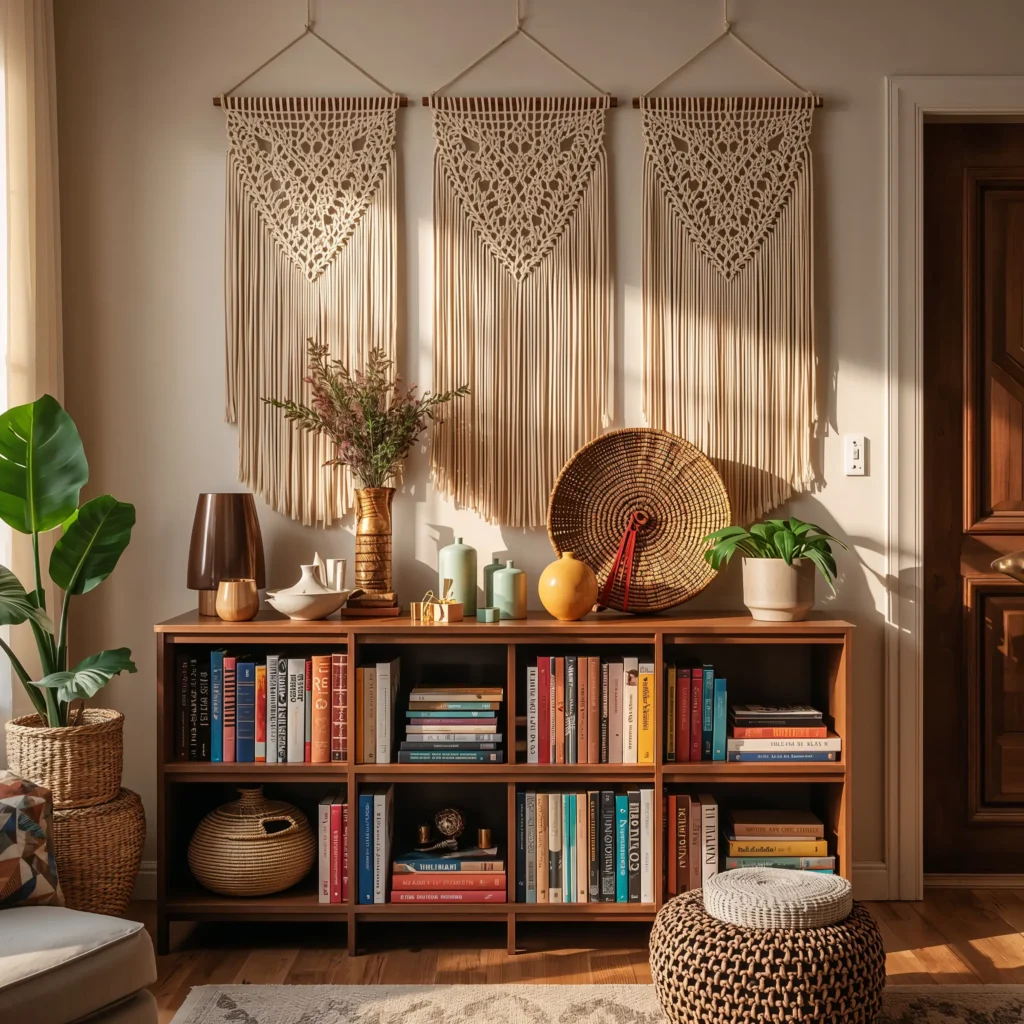
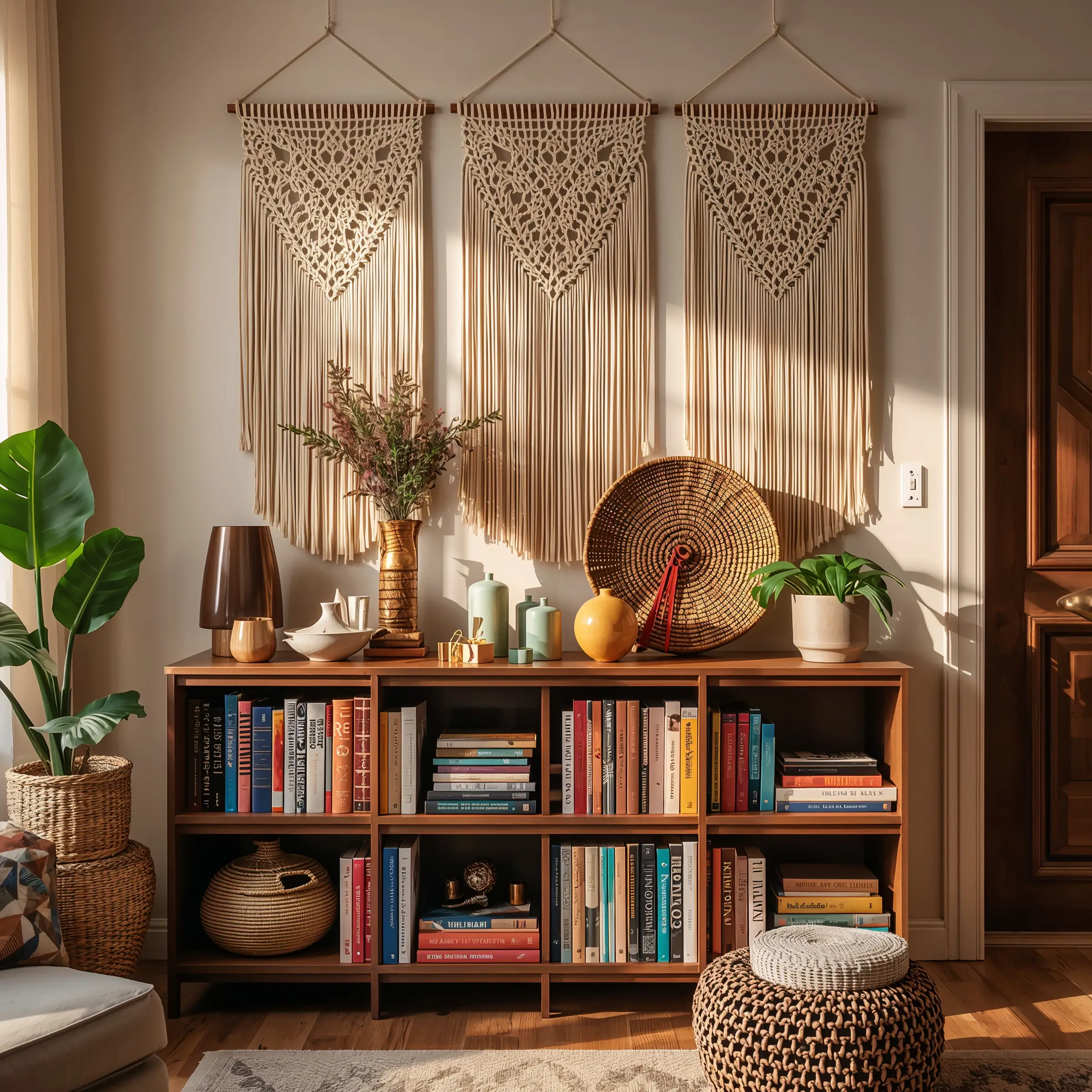
The boho shelf aesthetic screams “I’m creative and well-traveled” even if your biggest adventure was that weekend trip to Portland. Bohemian shelving mixes textures, cultures, and eras in a way that feels collected and casual.
My best friend nailed this look without spending a fortune. Her secret? Thrift stores and patience. Boho style celebrates imperfection and eclecticism, making it perfect for budget decorating.
Essential Boho Elements
Must-haves for achieving boho shelf vibes:
- Macramé plant hangers or wall hangings as backdrop
- Woven baskets for corralling smaller books
- Vintage brass or copper accents
- Natural wood elements (driftwood, carved pieces)
- Textiles (draped scarves, small tapestries)
- Candles in various heights and holders
The arrangement philosophy here is organized chaos. Layer items at different depths, mix horizontal and vertical orientations, and don’t stress about perfect alignment. Books become part of a larger tableau rather than the sole focus.
Adding Authentic Boho Touches
What really sells the boho look? Personal treasures. Display that weird shell collection, your grandmother’s costume jewelry, pressed flowers, whatever tells your story. I added my collection of vintage cameras to my boho shelves, and suddenly they felt genuinely mine.
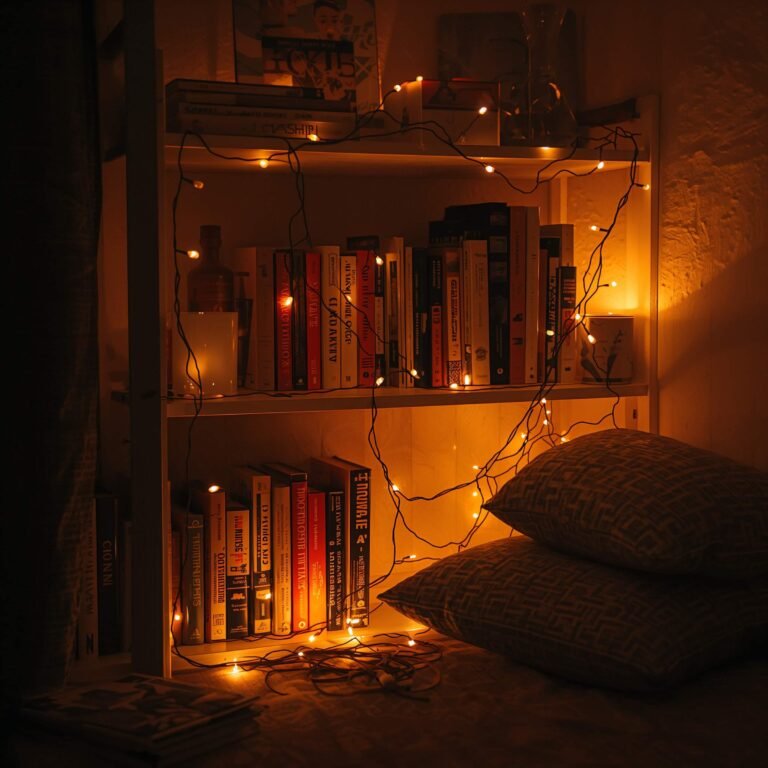
Don’t forget lighting—string lights aren’t just for college dorms anymore. Warm, ambient lighting enhances the cozy, lived-in feeling essential to boho style. Battery-operated fairy lights tucked between books create magical little moments.
DIY Hanging Book Pockets
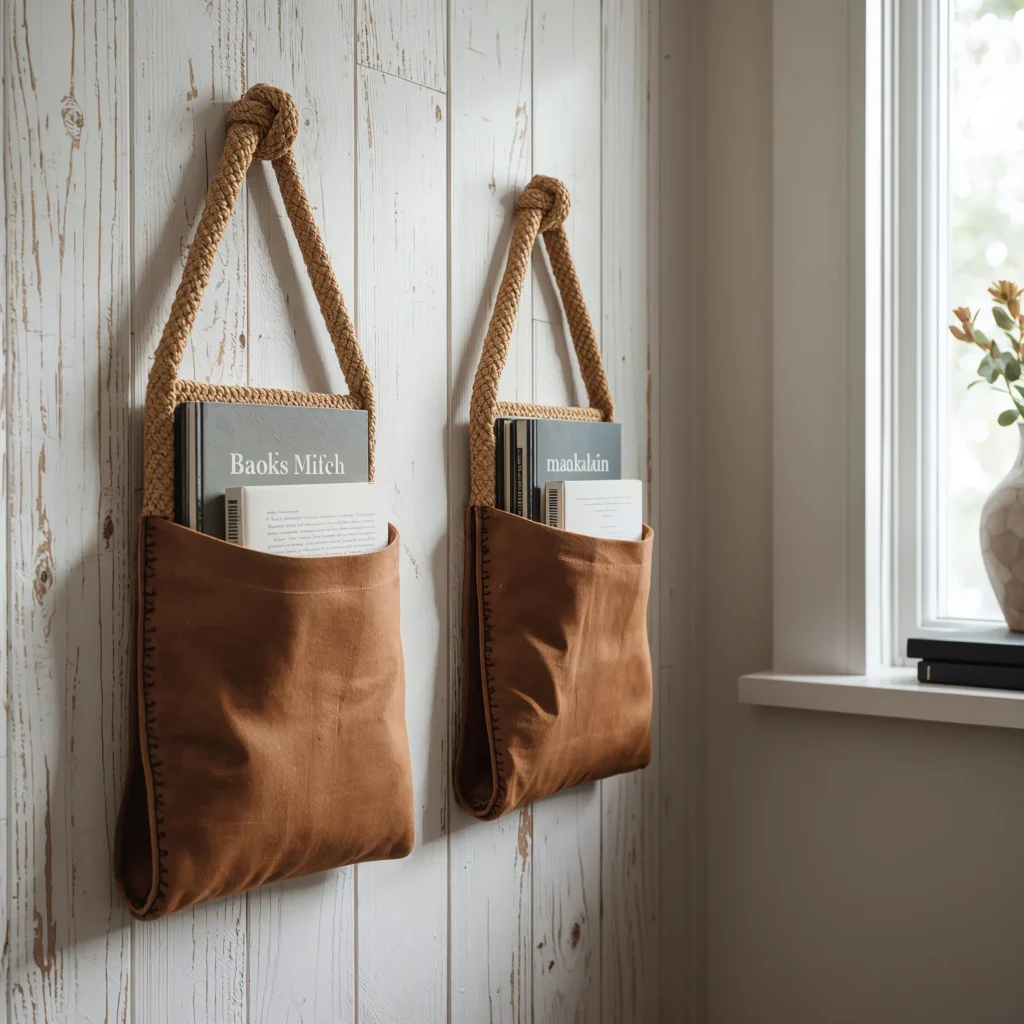
Hanging book pockets might sound crafty in a bad way, but hear me out. Wall-mounted fabric or leather pockets offer storage and style, especially in small spaces where traditional shelving won’t work.
I made canvas pockets for my son’s room when he was younger, and they’ve evolved with him. What started as picture book storage now holds his graphic novel collection. The flexibility and softness of fabric storage adds warmth that hard shelves can’t match.
Creating Your Own Book Pockets
Materials that work beautifully:
- Canvas or duck cloth for durability
- Leather or faux leather for sophistication
- Felt for kid-friendly softness
- Repurposed denim for casual cool
- Mesh for modern, see-through storage
The construction isn’t rocket science. Basic sewing skills (or fabric glue for the needle-phobic) can create custom-sized pockets for your specific books. Add dowels or decorative rods for hanging, and you’ve got removable, washable book storage.
Styling Hanging Pockets
The beauty lies in the casual display angle—books lean forward slightly, showing covers naturally. This works especially well for:
- Cookbooks in kitchens
- Children’s books in playrooms
- Magazines in waiting areas
- Art books you want to feature
- Current reads in bedrooms
Space them thoughtfully on your wall. Create patterns with multiple pockets, or use a single statement piece. I’ve seen people create entire reading nooks with floor-to-ceiling pocket arrangements—absolutely genius for renters who can’t install permanent shelving.
Also Read: 10 Inspiring Modern Bookshelf Decor Ideas for Any Room
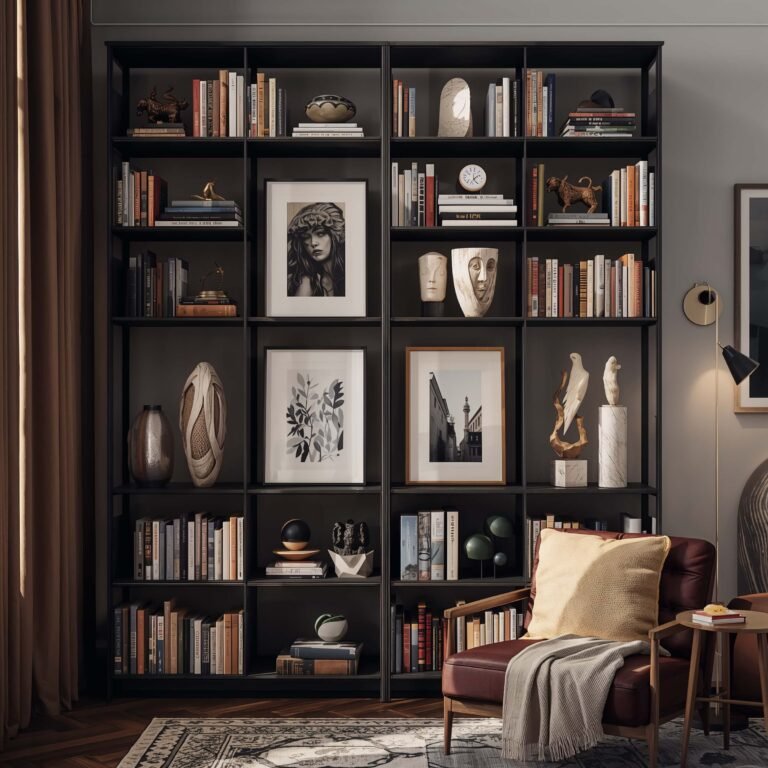
Art and Frame-Led Shelf Styling
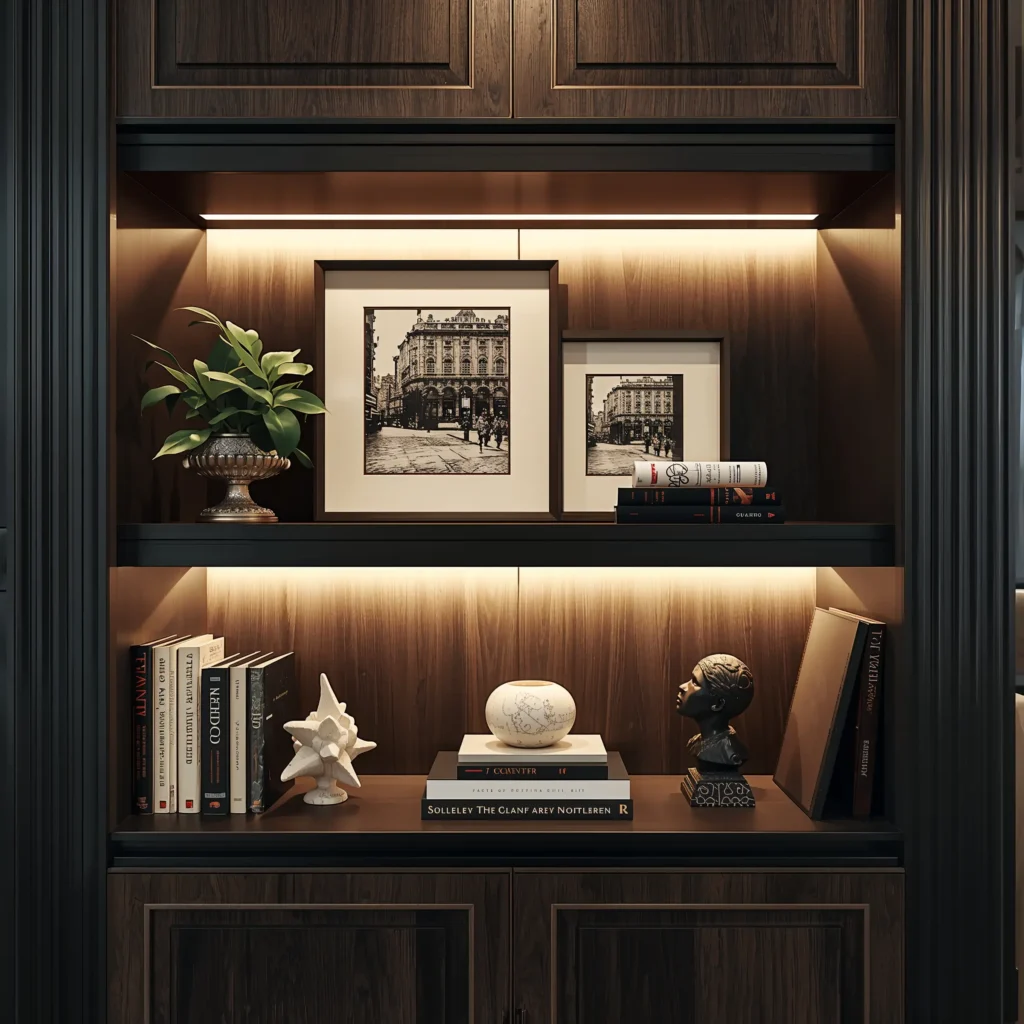
This approach flips the script: instead of books being the star, artwork and frames take center stage with books playing supporting roles. Think of your shelf as a gallery where books provide color and texture backgrounds for your art collection.
I discovered this method accidentally when I ran out of wall space for frames. Leaning artwork on shelves instead of hanging it? Game changer. You can swap pieces easily, layer different sizes, and create depth impossible with wall-mounted art alone.
Artful Arrangement Strategies
The technique involves:
- Layering frames of different sizes (largest in back)
- Mixing frame styles but keeping some element consistent
- Using books as risers for smaller pieces
- Creating negative space between groupings
- Incorporating 3D objects among flat artwork
The golden rule? Every shelf needs at least one piece of art. This could be a framed print, a small canvas, even a postcard you love. Books fill in around these anchor pieces, creating cohesive vignettes rather than separate elements.
Balancing Art and Literature
Here’s where people struggle: making it look intentional, not cluttered. The 60/30/10 rule saves the day: 60% books, 30% art and frames, 10% decorative objects or empty space. This ratio keeps shelves functional while visually interesting.
Consider your art choices carefully. Abstract pieces play well with busy book spines, while detailed artwork might need breathing room. I love mixing photography with illustration, throwing in a mirror for dimension, maybe a small sculpture for variety. The key is editing—not every piece you own needs display space.
Bringing It All Together
So there you have it—ten ways to transform your bookshelf from furniture to art. The best part? These aren’t mutually exclusive. I currently rock floating shelves with color coordination in my office, a gallery wall above vintage-style shelves in the living room, and geometric shelving with plants in the kitchen.
The real secret to amazing bookshelf decor isn’t following rules—it’s knowing your space and trusting your instincts. Start with one idea that speaks to you, then layer in elements from others as you go. Your shelves should evolve with you, reflecting your changing interests and growing collection.
Remember, the goal isn’t Instagram perfection (though if you achieve it, more power to you). The goal is creating a space you love, one that makes you smile every time you walk past. Whether that means rainbow organization or vintage library vibes, geometric patterns or boho chaos, make it yours.
Now stop scrolling Pinterest and start styling. Your books have been waiting patiently for their glow-up, and honestly? They deserve it. Transform those shelves from storage to statement, and watch how they transform your entire room. Trust me—once you start seeing your bookshelf as decor potential rather than just furniture, you’ll never look at it the same way again.