10 Beautiful Wooden Bookshelf Ideas to Transform Any Room

Let me guess – you’re standing in your room right now, staring at that pile of books on the floor, thinking “I really need to get my life together.”
Been there, done that, bought the bookshelf. Actually, I’ve bought several, and let me tell you, choosing the right wooden bookshelf changes everything about how your space feels and functions.
Wooden bookshelves bring warmth and character that metal or plastic shelves just can’t match.
Trust me, I’ve tried them all. There’s something about the grain of wood, the way it ages, and how it makes your books look like they belong in a cozy library rather than a storage unit.
Today, I’m sharing ten wooden bookshelf ideas that have either saved my space or made me seriously reconsider my entire room layout.
Floating Corner Wooden Bookshelf
Making Dead Space Work Overtime
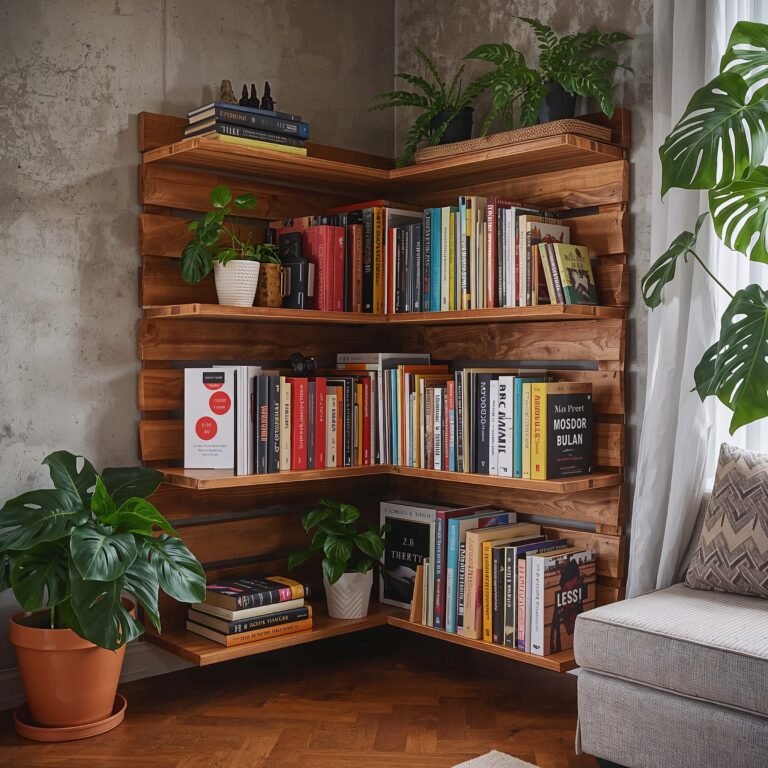
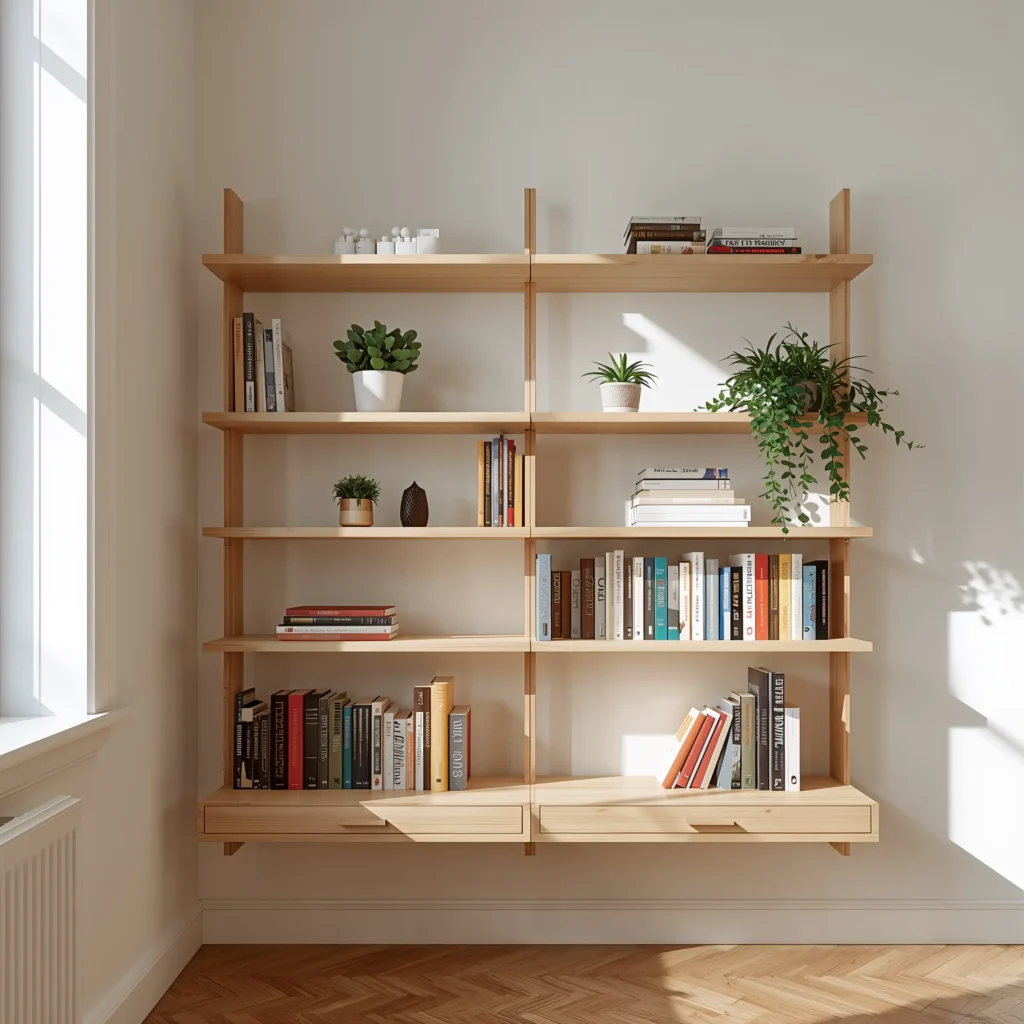
Remember that awkward corner in your living room where nothing quite fits? Yeah, that’s where floating corner shelves shine. I installed my first set last year, and honestly, I kicked myself for not doing it sooner. These bad boys transform wasted corners into functional storage that looks intentional rather than desperate.
The beauty of floating corner shelves lies in their versatility. You can stack them vertically, creating a tower effect that draws the eye upward and makes your ceiling feel higher. Or you can stagger them at different heights for a more dynamic look. The key is choosing the right wood tone – I went with walnut to match my coffee table, and it tied the whole room together.
What really sells me on these shelves? They don’t eat up floor space. My apartment’s tiny (aren’t they all?), and keeping the floor clear makes everything feel more open. Plus, mounting them yourself isn’t rocket science – just make sure you hit those wall studs, or you’ll have a very bad day when your entire book collection crashes down at 2 AM.
Installation Tips That Actually Matter
Here’s what nobody tells you about corner shelves:
- Measure twice, drill once – corners aren’t always perfectly square
- Use a level app on your phone if you don’t have a physical one
- Start with the lowest shelf and work your way up
- Consider the weight distribution – heavy books go on lower shelves
- Leave space between shelves for taller books (learned this the hard way)
Rustic Ladder-Style Bookshelf
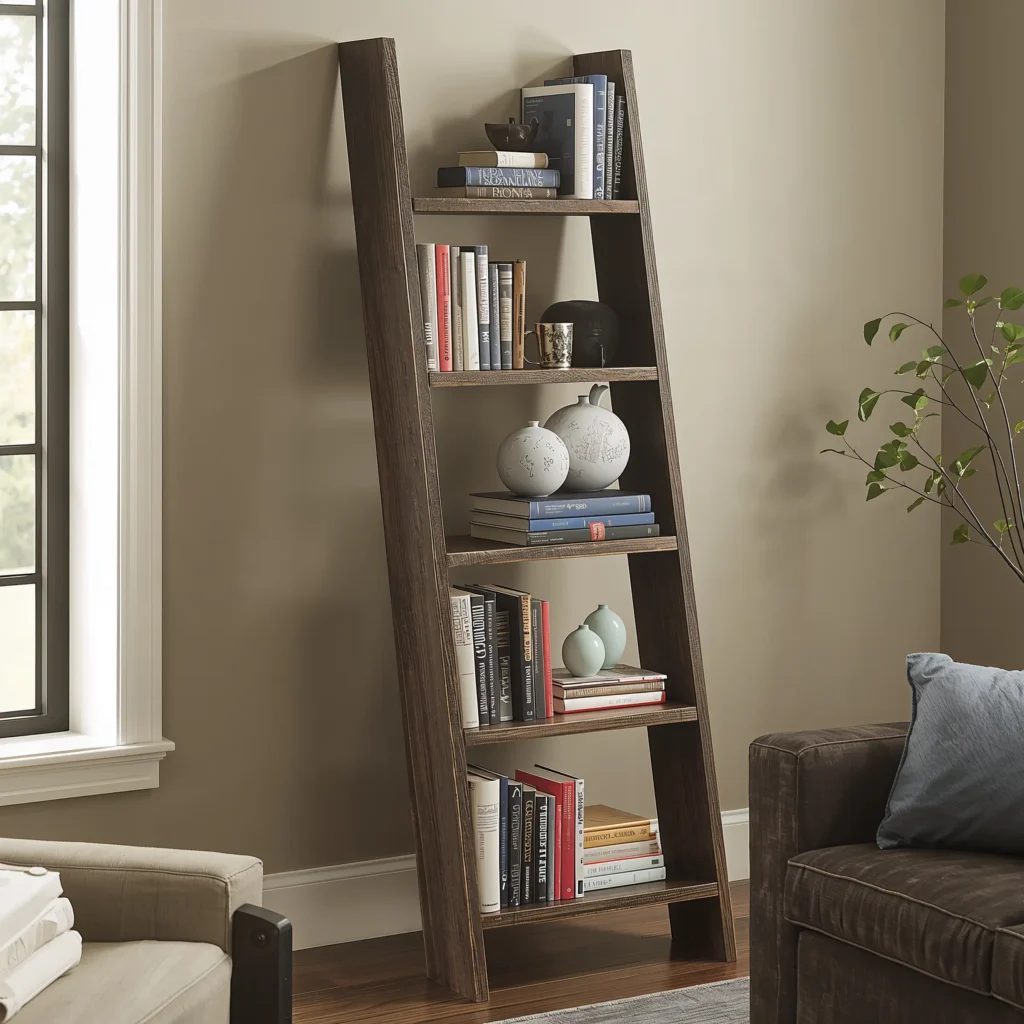
The Pinterest Favorite That Actually Works
Okay, I’ll admit it – I totally fell for the ladder bookshelf trend on Pinterest. But here’s the thing: these shelves actually deliver on both style and function. Mine leans against my bedroom wall, and every guest comments on how it makes the room feel like a trendy loft apartment. Score one for following social media trends, right?
The genius of ladder bookshelves comes from their angled design. Books naturally lean back against the wall, so you don’t need bookends cluttering up your aesthetic. The shelves get narrower as they go up, which creates visual interest and forces you to be selective about what goes where. Heavy coffee table books live on the bottom, paperbacks migrate to the top, and suddenly you have a curated display instead of a storage unit.
What surprised me most? How stable these things are when properly positioned. The angle creates natural stability, and the weight of books on lower shelves anchors everything. Just don’t go climbing it like an actual ladder – I may or may not have tried this after a few glasses of wine.
Styling Your Ladder Shelf Like a Pro
Want to make your ladder shelf Instagram-worthy? Here’s my formula:
- Mix horizontal and vertical book arrangements
- Add small plants on alternating shelves
- Include one statement piece per shelf (vintage clock, ceramic vase, etc.)
- Leave some breathing room – don’t pack every inch
- Use the top shelf for lightweight decorative items only
Minimalist Wall-Mounted Wooden Shelves
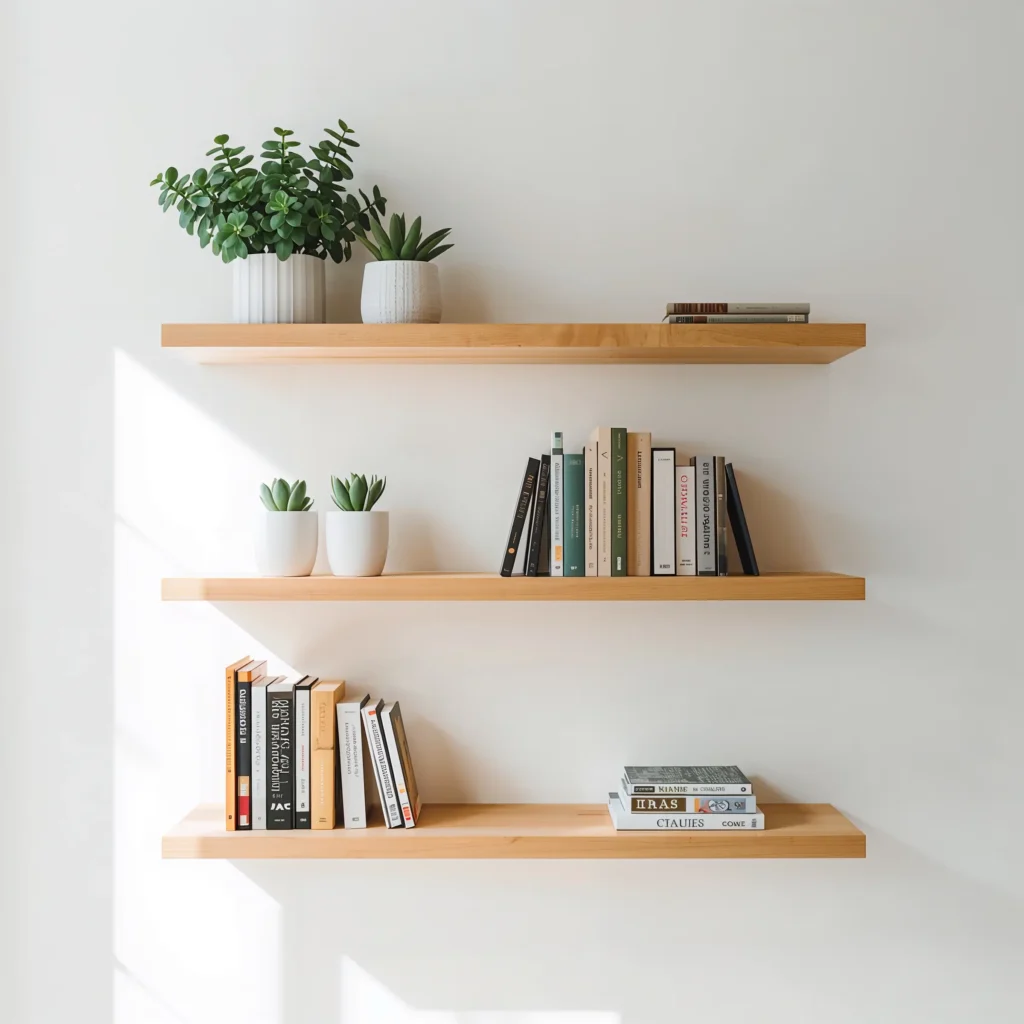
Less Really Is More (Sometimes)
Ever walk into someone’s place and think “how do they keep everything so clean?” Wall-mounted minimalist shelves are usually part of that magic. I installed three simple oak planks in my home office, and suddenly my workspace went from chaotic to zen. The trick is restraint – these shelves work best when they’re not overloaded.
These shelves excel at creating negative space, which sounds fancy but basically means giving your stuff room to breathe. Each book becomes a design element rather than just another spine in the crowd. The wood grain becomes part of the décor, especially if you choose a light finish that shows natural patterns. Mine have these subtle waves in the oak that catch morning light beautifully.
The mounting hardware matters more than you’d think. Hidden brackets create that floating effect that makes everything look expensive, even if you bought the shelves from IKEA (no judgment – mine are from there too). Just remember that minimalist doesn’t mean flimsy – choose shelves at least 1.5 inches thick to avoid that cheap, bendy look.
The Art of Minimalist Arrangement
Creating that perfect minimalist look takes discipline:
- Stick to odd numbers – groups of 3 or 5 books look more natural
- Color coordinate if you’re feeling fancy (I organize by spine height instead)
- Mix books with simple objects like a single succulent or ceramic bowl
- Embrace empty space – it’s not wasted, it’s intentional
- Dust regularly because minimalist shelves show everything
Also Read: 10 Stunning Tree Bookshelf Ideas and Cozy Reading Corners
Vintage Reclaimed Wood Bookshelf
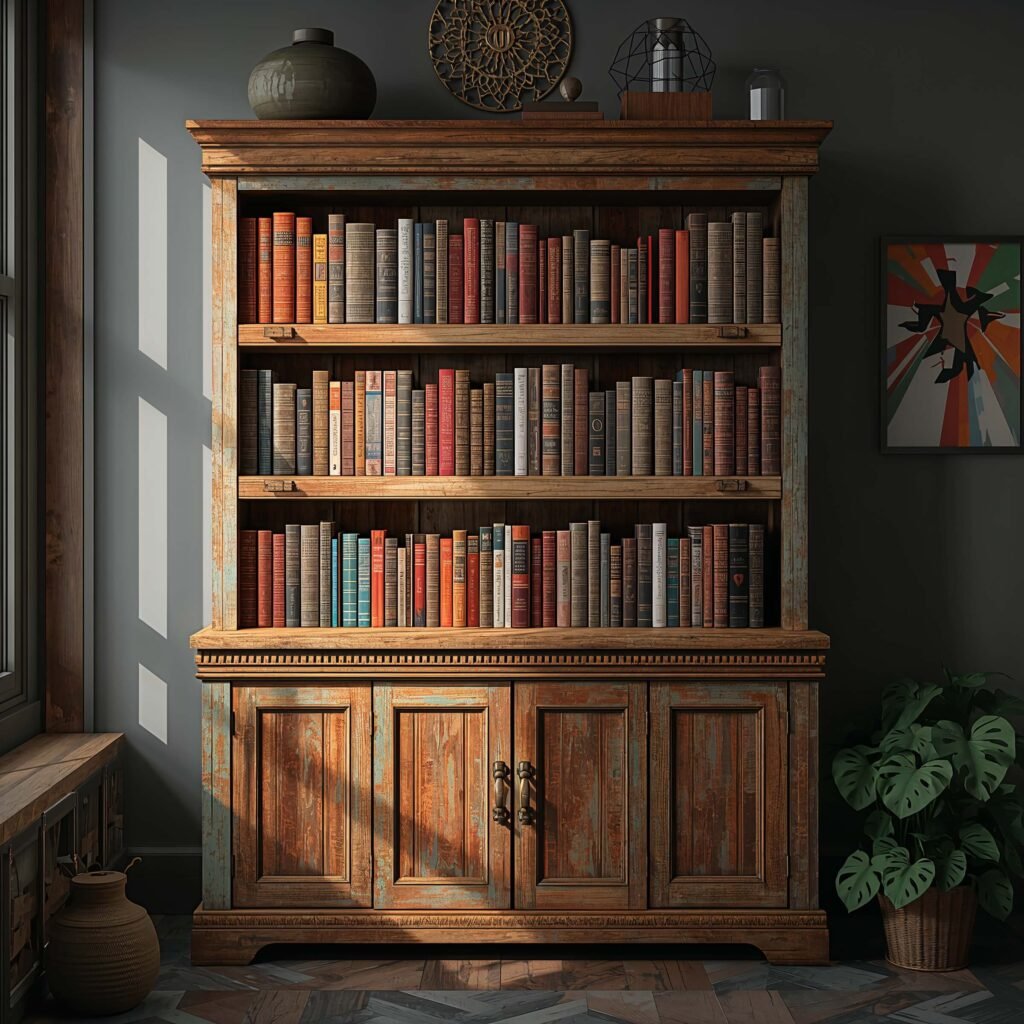
Old Wood, New Life
Can we talk about how reclaimed wood bookshelves make you look like you have your life together? Mine came from an old barn in Vermont (or so the seller claimed), and every visitor asks about it. The character in reclaimed wood – nail holes, weathering, color variations – tells a story that new lumber just can’t fake.
I found mine at a local antique market, but FYI, you can also build your own if you’re handy. The wood already has personality, so you don’t need to do much. Each plank is unique, with its own history of weather, wear, and patina. My shelves have these amazing gray streaks where the wood weathered differently, and honestly, I spend too much time just admiring the grain patterns.
The sustainability aspect makes me feel good about the purchase too. Instead of new trees being cut down, this wood gets a second life holding my book collection. Plus, reclaimed wood is usually old-growth lumber, which means it’s stronger and more stable than most new wood you’ll find today. Win-win, right?
Working with Reclaimed Wood’s Quirks
Reclaimed wood comes with personality – and challenges:
- Check for lead paint if the wood’s painted (seriously, get a test kit)
- Expect irregularities in dimensions – embrace the imperfection
- Sand lightly to remove splinters but keep the character
- Seal the wood to prevent further deterioration
- Consider metal brackets for extra industrial vibes
- Mix wood tones if you’re using multiple sources
Wooden Bookshelf with Hidden Storage
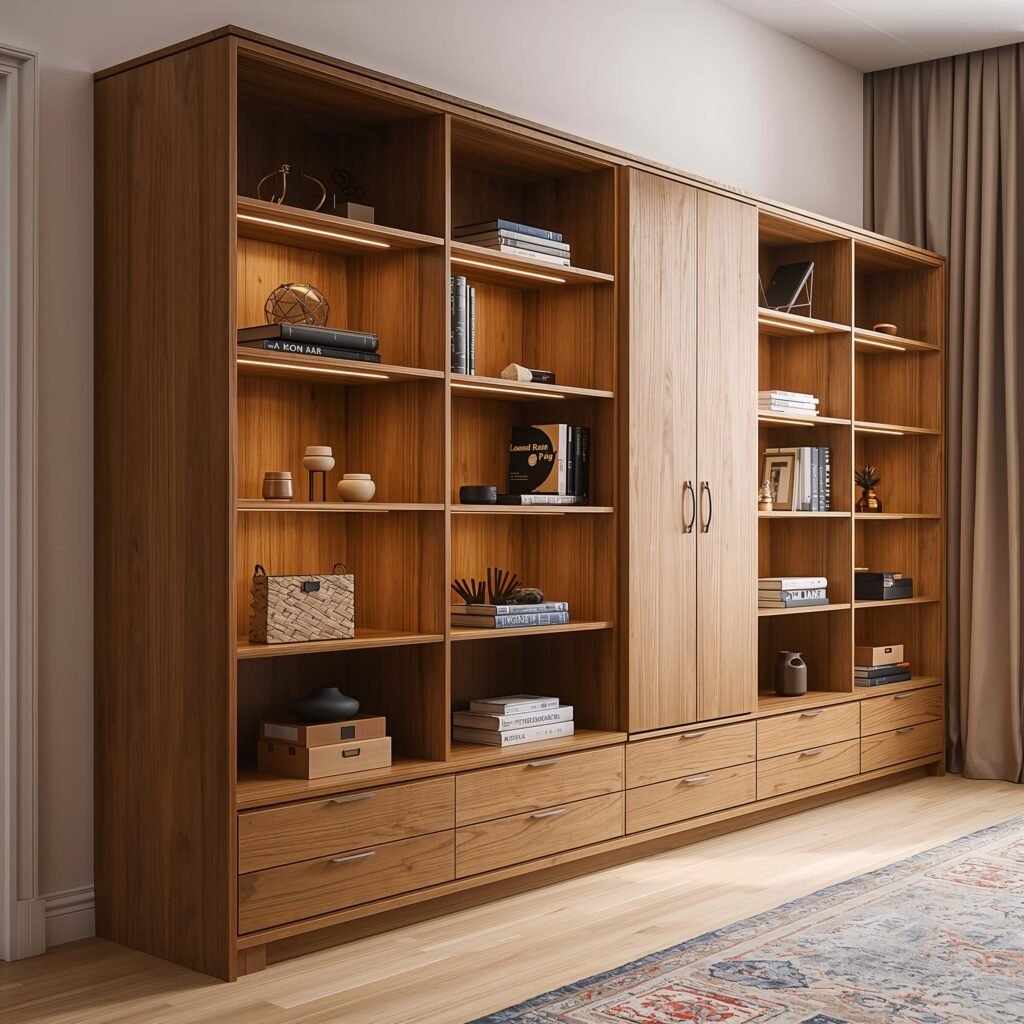
Your Secret-Keeping Furniture Friend
Who doesn’t love furniture with secrets? My bookshelf with hidden compartments makes me feel like I’m living in a mystery novel. Behind what looks like a normal shelf setup, I’ve got drawers, cabinets, and even a hidden safe (okay, it’s just a lockbox, but still). This style works perfectly if you’re dealing with limited space or just hate visible clutter.
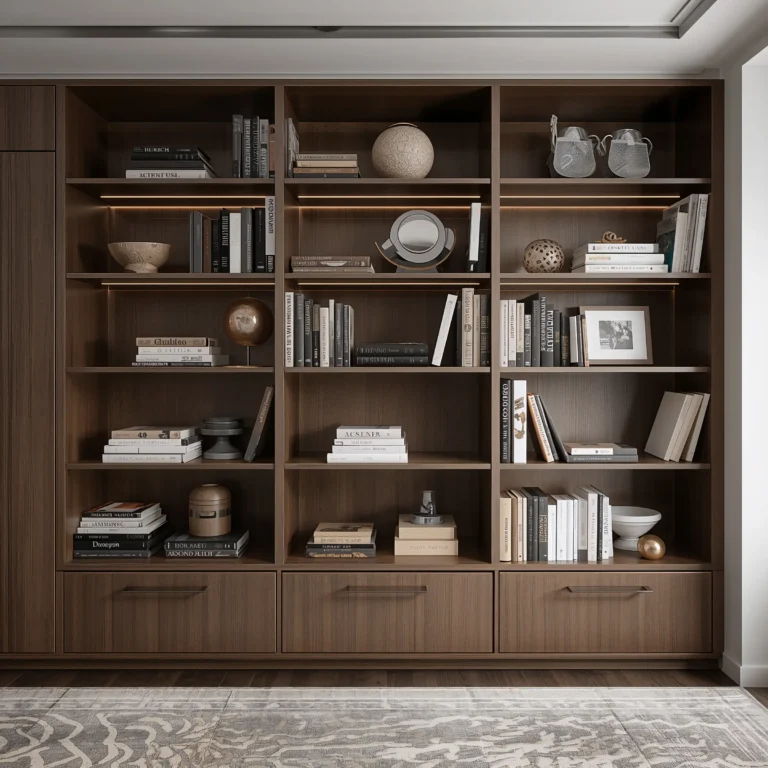
The bottom section of mine has cabinet doors that hide everything from board games to that pile of magazines I swear I’ll read someday. The middle has regular open shelving for books, and the top has small drawers perfect for hiding remotes, charging cables, and other modern life necessities. It’s basically organizational therapy in furniture form.
What really sold me on this design was realizing how much stuff I could hide while still displaying my book collection. Ever notice how some things just don’t photograph well? Yeah, those live behind doors now. My space looks cleaner, even though I haven’t actually gotten rid of anything. 🙂
Maximizing Your Hidden Storage
Here’s how to make the most of concealed compartments:
- Use drawer dividers for small items (game pieces, batteries, etc.)
- Label the inside of cabinet doors with contents
- Store seasonal items in harder-to-reach spots
- Keep frequently used items at eye level
- Use the hidden spaces for valuable items or documents
- Install LED strips inside cabinets for better visibility
Spiral Wooden Bookshelf Tower
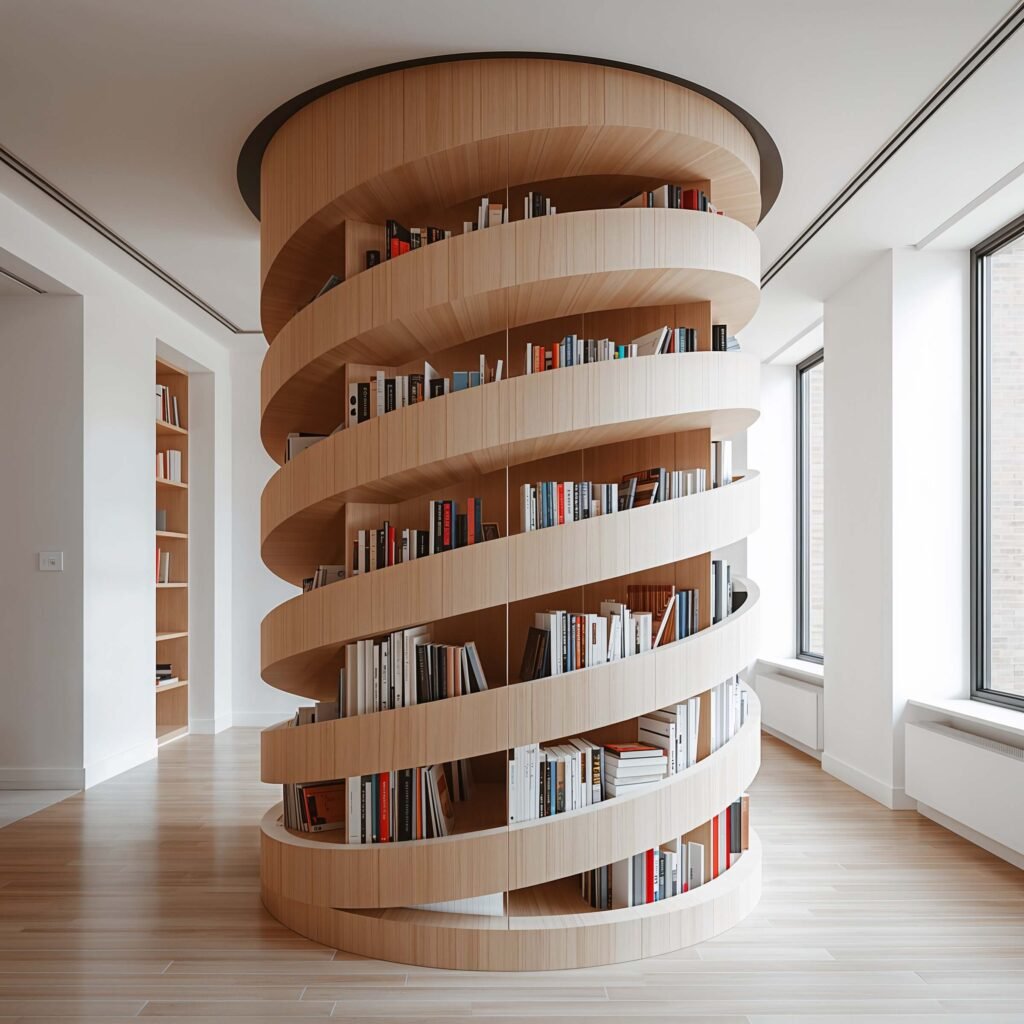
The Conversation Starter You Need
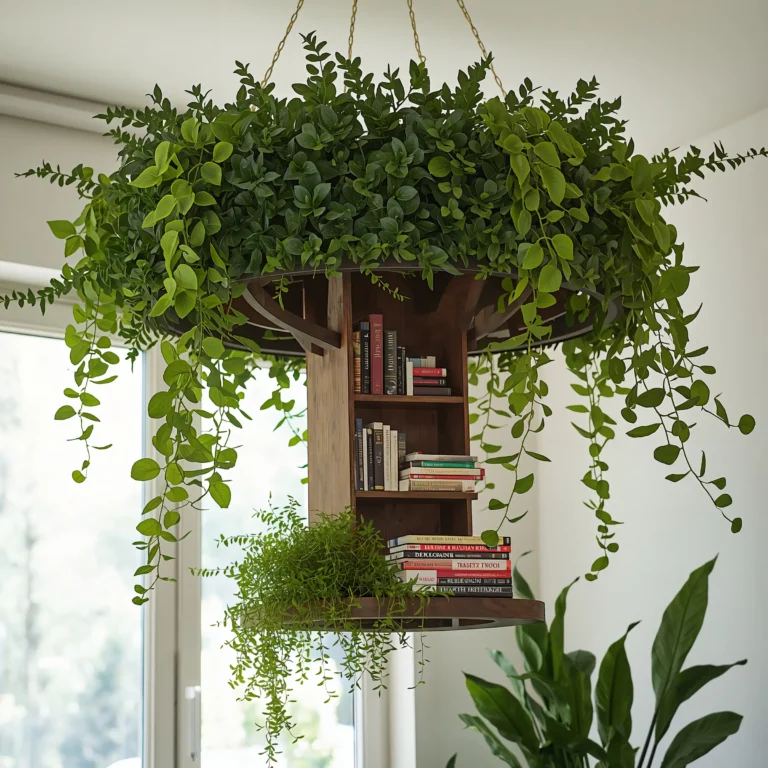
Want something that makes people stop mid-sentence when they walk into your room? Get a spiral bookshelf tower. Mine sits in the corner of my living room like a piece of functional sculpture, and I’m not exaggerating when I say every single guest comments on it. The spiral design creates movement in an otherwise static piece of furniture.
The engineering behind these shelves fascinates me. Books spiral upward around a central axis, creating this DNA-like helix that’s both artistic and practical. You can access books from multiple angles, and the open design means light flows through rather than creating a dark, heavy presence in the room. Mine holds about 100 books without feeling overwhelming.
Fair warning though – these aren’t for everyone. If you’re a neat freak who needs everything perfectly aligned, the spiral might drive you crazy. Books sit at angles, spines face different directions, and there’s no way to make it look completely uniform. But that’s kind of the point, IMO. It’s organized chaos that works.
Living with a Spiral Shelf
Some real talk about spiral shelves:
- They’re dust magnets – invest in a good duster with an extension
- Heavier books work better on lower levels for stability
- Consider the viewing angle from your usual seating position
- They work best with varied book sizes for visual interest
- Kids love them but might treat them like playground equipment
- Assembly requires patience and possibly wine
Also Read: 10 Gorgeous Bookshelf Wall Decor Ideas You’ll Love Instantly
Scandinavian-Style Open Wooden Shelves
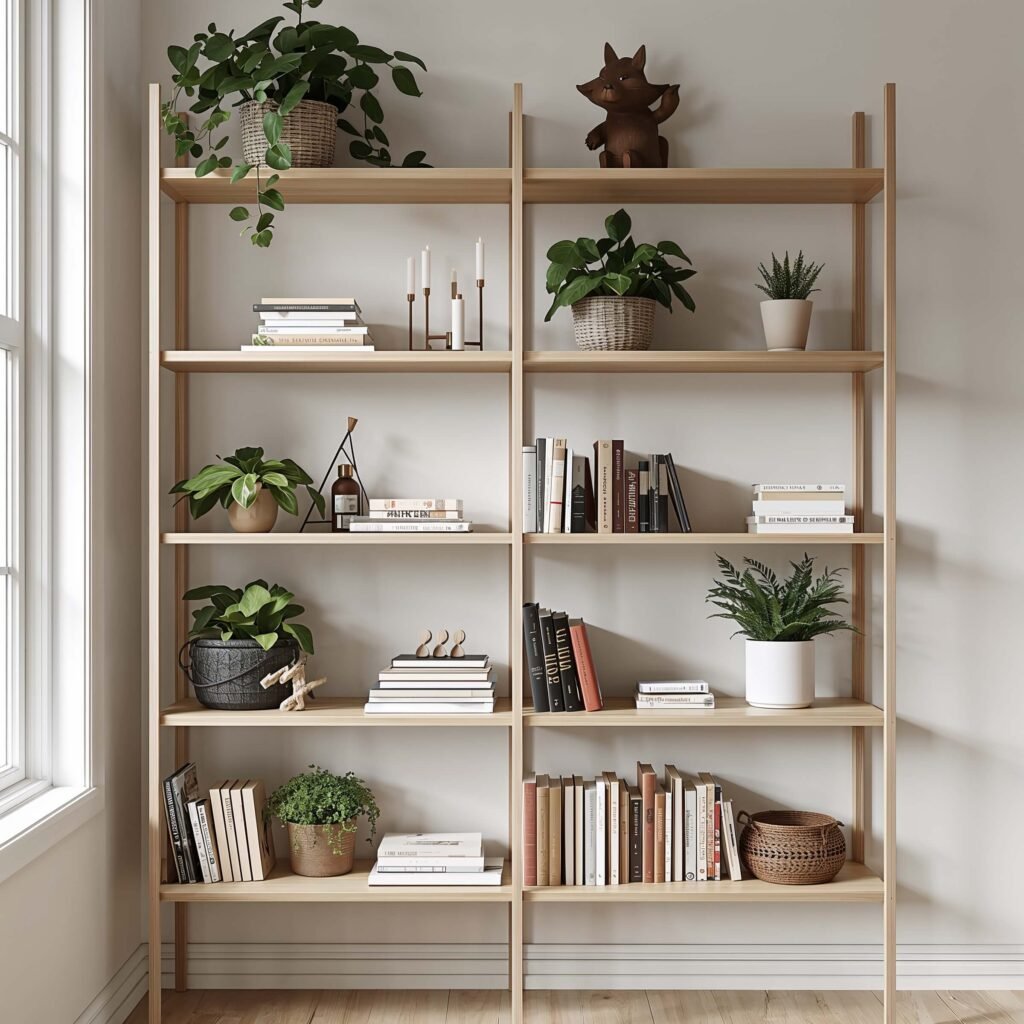
Hygge Your Way to Better Storage
The Scandinavians know what they’re doing with design, and their approach to bookshelves proves it. Light wood, clean lines, and zero fuss – that’s the formula. I switched to Scandi-style shelves in my bedroom last year, and the whole space feels calmer. There’s something about that blonde wood and simple geometry that just works.
These shelves celebrate the wood itself rather than trying to disguise it. Mine are ash with a clear finish that lets the grain shine through. No ornate carvings or unnecessary details – just honest, functional design that happens to look beautiful. The open back means wall color becomes part of the display, which I love because I can change the look just by repainting.
What really sets Scandinavian shelves apart? The proportions. Everything feels balanced without being boring. The shelves are usually slightly deeper than standard, giving books room to breathe. Spacing between shelves is generous enough for larger books but not so much that vertical space gets wasted.
Nailing the Scandinavian Aesthetic
To achieve that perfect Nordic look:
- Stick to light wood tones – birch, ash, or light oak
- Keep hardware minimal and preferably hidden
- Mix books with simple ceramics and plants
- Maintain plenty of negative space
- Add cozy textiles nearby (throw blankets, cushions)
- Choose books with neutral-colored spines when possible
- Include candles for that hygge feeling
Multi-Level Tiered Bookshelf
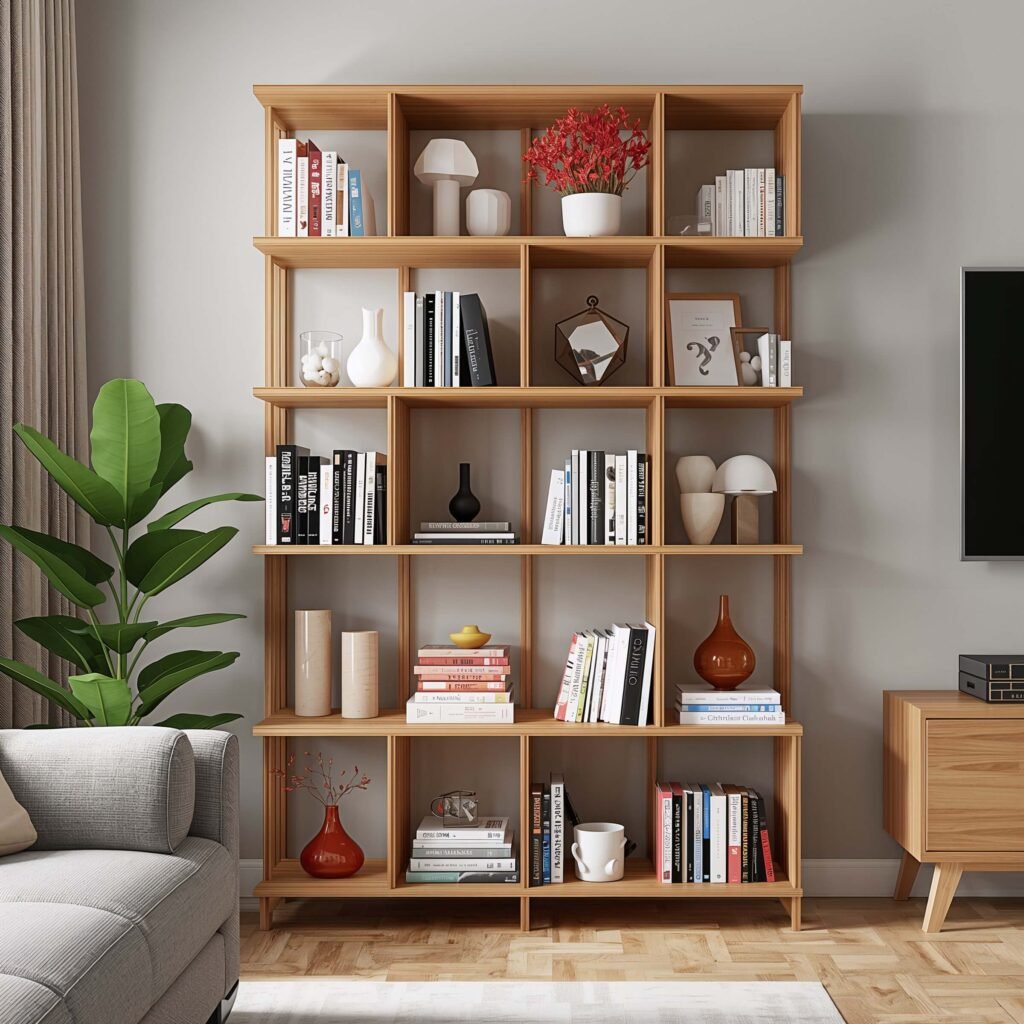
The Space-Saving Superhero
When floor space is at a premium, you build up. My tiered bookshelf literally saved my sanity in my old studio apartment. Picture stadium seating for books – each level steps back slightly, creating this cascading effect that maximizes vertical space while keeping everything accessible. Genius design that actually works in real life.
The stepped design means you can see every book spine clearly, even the ones in back. No more pulling out five books to find the one hiding behind them. Each tier becomes its own display area, perfect for mixing books with decorative objects. I use the deeper lower shelves for larger art books and the narrower upper tiers for paperbacks and small plants.
Assembly tip from personal experience: start from the top and work down. I did it backwards initially and nearly gave myself a concussion trying to reach over the lower shelves. Also, anchor it to the wall – these can get top-heavy when fully loaded, and nobody wants to explain to their landlord why there’s a book-shaped dent in the floor.
Organizing Your Tiered Display
Make the most of multiple levels:
- Group books by height on each tier for clean lines
- Use bookends on each level to prevent sliding
- Place frequently read books on middle tiers (easiest to reach)
- Mix vertical and horizontal stacking between levels
- Add LED strip lighting under each tier for drama
- Reserve top tier for display-only items
Wooden Bookshelf with Integrated Desk
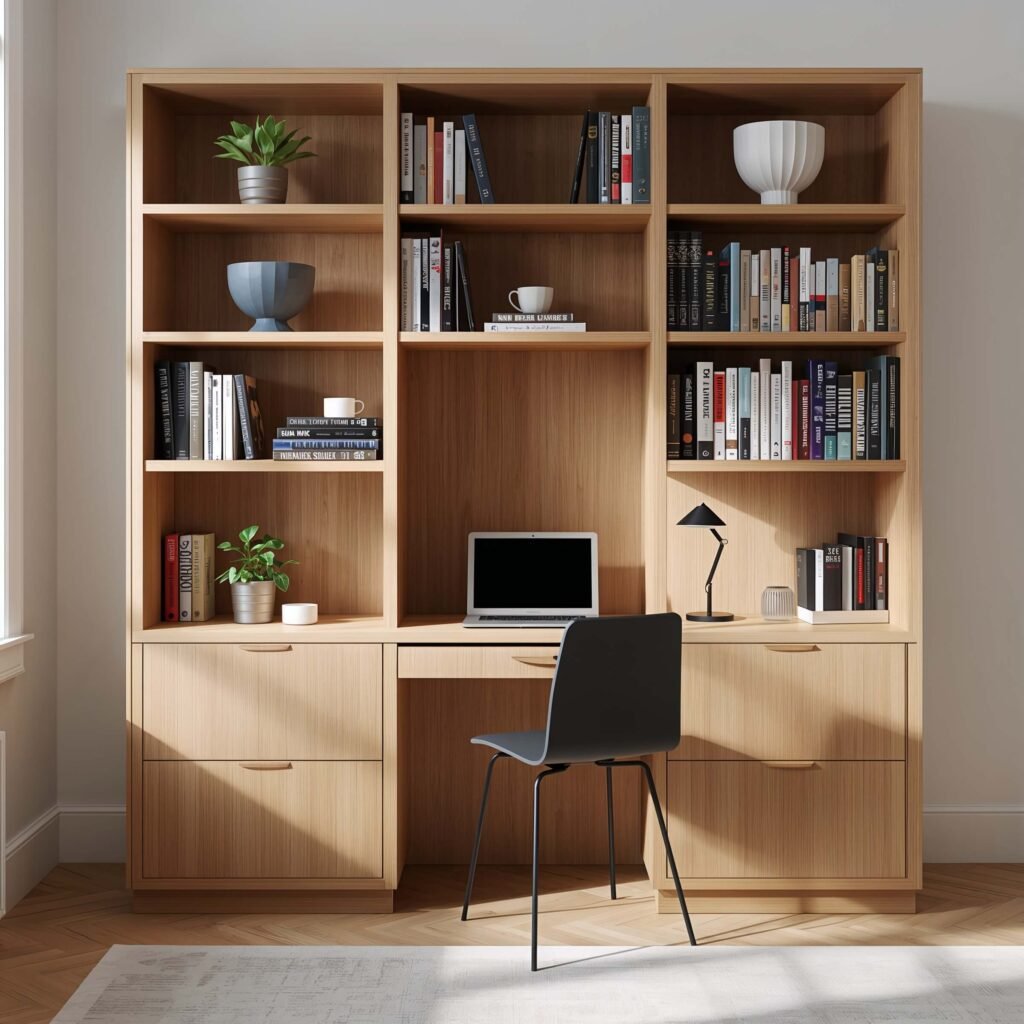
Your Home Office Hero
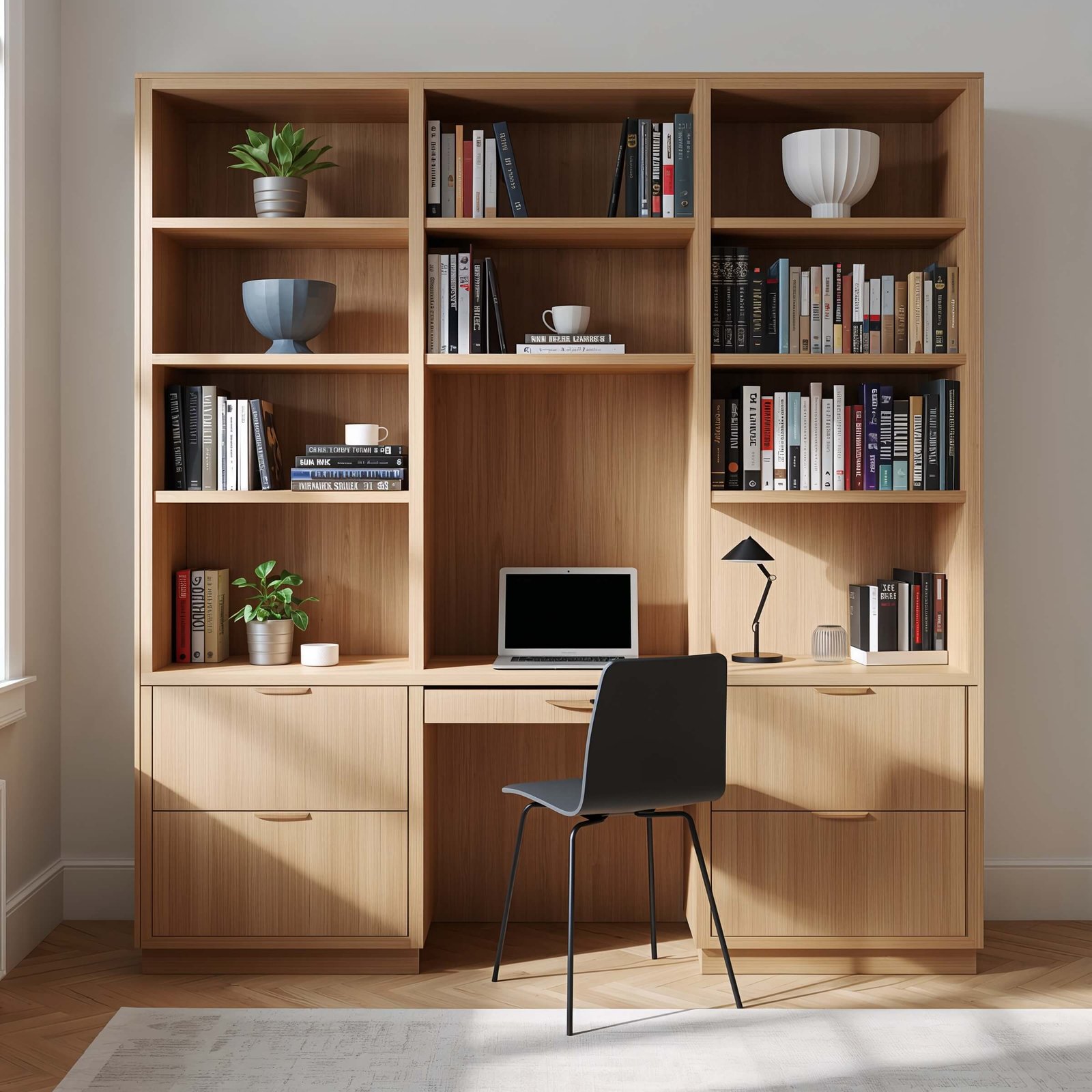
Working from home? Join the club. My bookshelf-desk combo transformed a corner of my living room into a legitimate workspace without eating up the entire room. The vertical storage keeps reference materials at arm’s reach while the desk surface stays clear for actual work. It’s basically the Swiss Army knife of furniture.
The integration feels intentional, not like you just shoved a desk against a bookshelf. Mine has the desk surface at standing height with a bar stool, which keeps me from slouching all day. The shelves wrap around and above the desk area, creating this cozy nook that somehow makes spreadsheets feel less soul-crushing. The wood warmth definitely beats those cold metal office setups.
Cable management becomes crucial with this setup. I drilled holes in the back panel for cords, and trust me, it’s worth the extra effort. Nothing ruins the aesthetic faster than a rat’s nest of cables hanging everywhere. I also added a power strip mounted underneath the desk – game changer for keeping things tidy.
Optimizing Your Shelf-Desk Setup
Maximize functionality with these tricks:
- Position frequently used books within arm’s reach of seated position
- Install task lighting attached to the shelf above
- Use vertical dividers to create “inbox” sections
- Keep the desk surface minimal – let the shelves hold supplies
- Add a small drawer unit that slides under if needed
- Consider a fold-down desk option for tiny spaces
- Use shelf backs as a bulletin board area
Also Read: 10 Creative Nursery Bookshelf Ideas to Transform Your Baby’s Room
Hexagon Modular Wooden Shelves
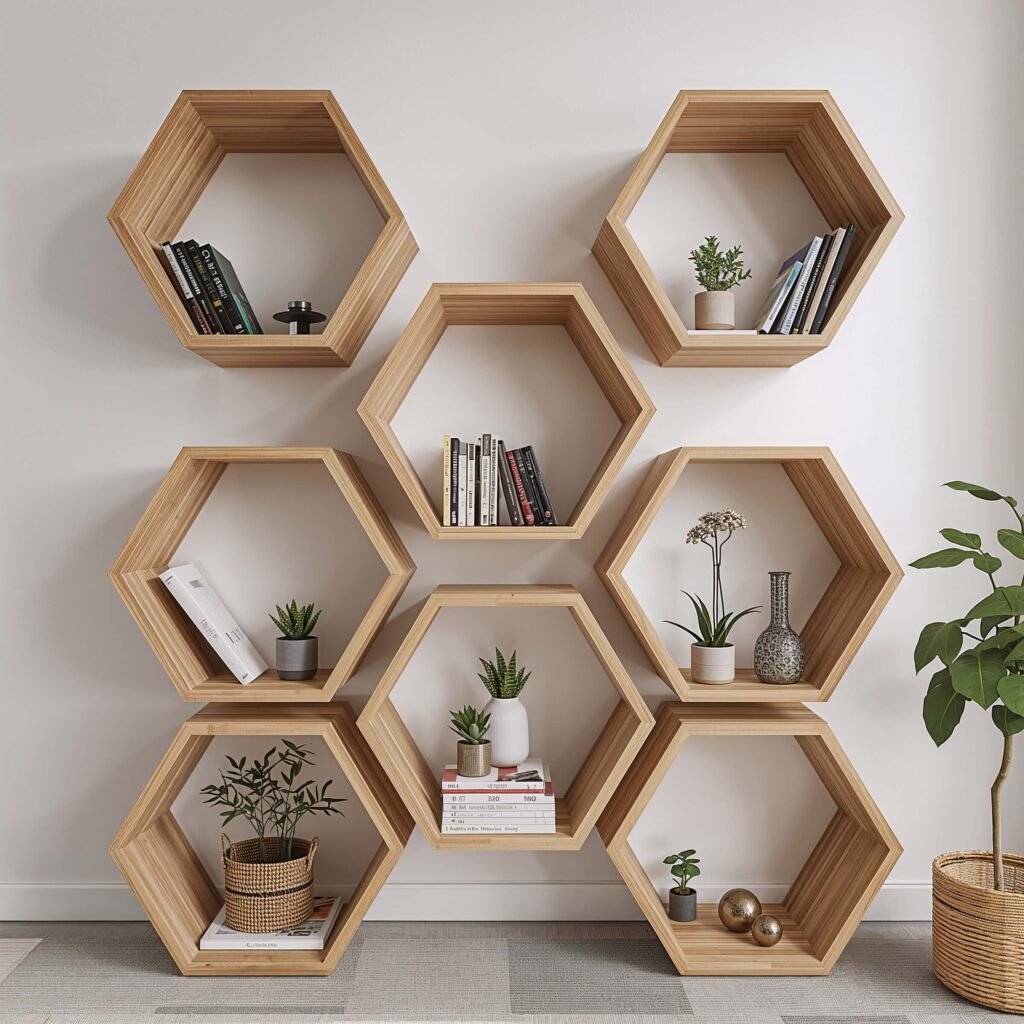
Build Your Own Bookshelf Adventure
Remember playing with building blocks as a kid? Hexagon shelves bring that same creative freedom to adult furniture. I started with three modules and now have twelve, spreading across my wall like wooden honeycomb. The best part? You can rearrange them whenever you get bored, which happens to me about every three months.
The geometry creates natural frames for your books and objects. Each hexagon becomes its own little display case, and the angles where they connect add visual interest. The modular nature means you can start small and expand as your collection (or budget) grows. Mine started as a simple cluster and evolved into this organic pattern that looks way more expensive than it actually was.
Want to know what’s really cool? The hexagon shape is incredibly strong. These modules can hold serious weight without sagging, thanks to physics I don’t fully understand but definitely appreciate. The angles distribute weight evenly, so even my chunky hardcovers don’t cause problems.
Creating Your Hexagon Masterpiece
Design tips for modular hexagons:
- Start with an odd number of modules for better visual balance
- Mix orientations (some pointed up, some flat)
- Leave some hexagons empty for breathing room
- Create clusters rather than uniform patterns
- Use different wood stains for subtle contrast
- Consider the wall space as negative hexagons in your pattern
- Plan your layout on paper first (trust me on this one)
Making Your Choice
So which wooden bookshelf should you choose? Honestly, it depends on your space, style, and how much you want to impress your friends. The floating corner shelf works magic in small spaces, while the spiral tower makes a statement in larger rooms. Love changing things up? Go modular with hexagons. Need to hide your mess? Hidden storage is your friend.
I’ve lived with most of these styles at different points, and each brought something unique to my space. The ladder shelf in my first apartment made me feel like a real adult. The Scandinavian shelves in my bedroom create the calm vibe I need. The integrated desk-shelf combo literally made remote work possible in my current place.
Here’s my advice: think about how you actually live, not just how you want your Instagram to look. Do you constantly rearrange things? Modular might be perfect. Are you a minimalist at heart? Those wall-mounted shelves will make you happy every day. Love the story behind things? Reclaimed wood speaks to you.
Whatever you choose, remember that wooden bookshelves aren’t just storage – they’re part of your home’s personality. They age with you, developing character marks and maybe a coffee stain or two (been there). Good wooden furniture becomes part of your story, holding not just books but memories of lazy Sunday readings and late-night study sessions.
The beauty of wood lies in its imperfection and warmth. Unlike those stark metal shelves that scream “office surplus,” wooden bookshelves invite you to stay awhile, pick up a book, and get comfortable. They make your space feel intentional and cared for, even if you haven’t dusted in weeks (we’ve all been there :/).
Choose the style that makes you excited to come home and crack open a book. Because at the end of the day, the best bookshelf is the one that makes you want to read more. And if it happens to make your place look amazing in the process? Well, that’s just a really nice bonus.