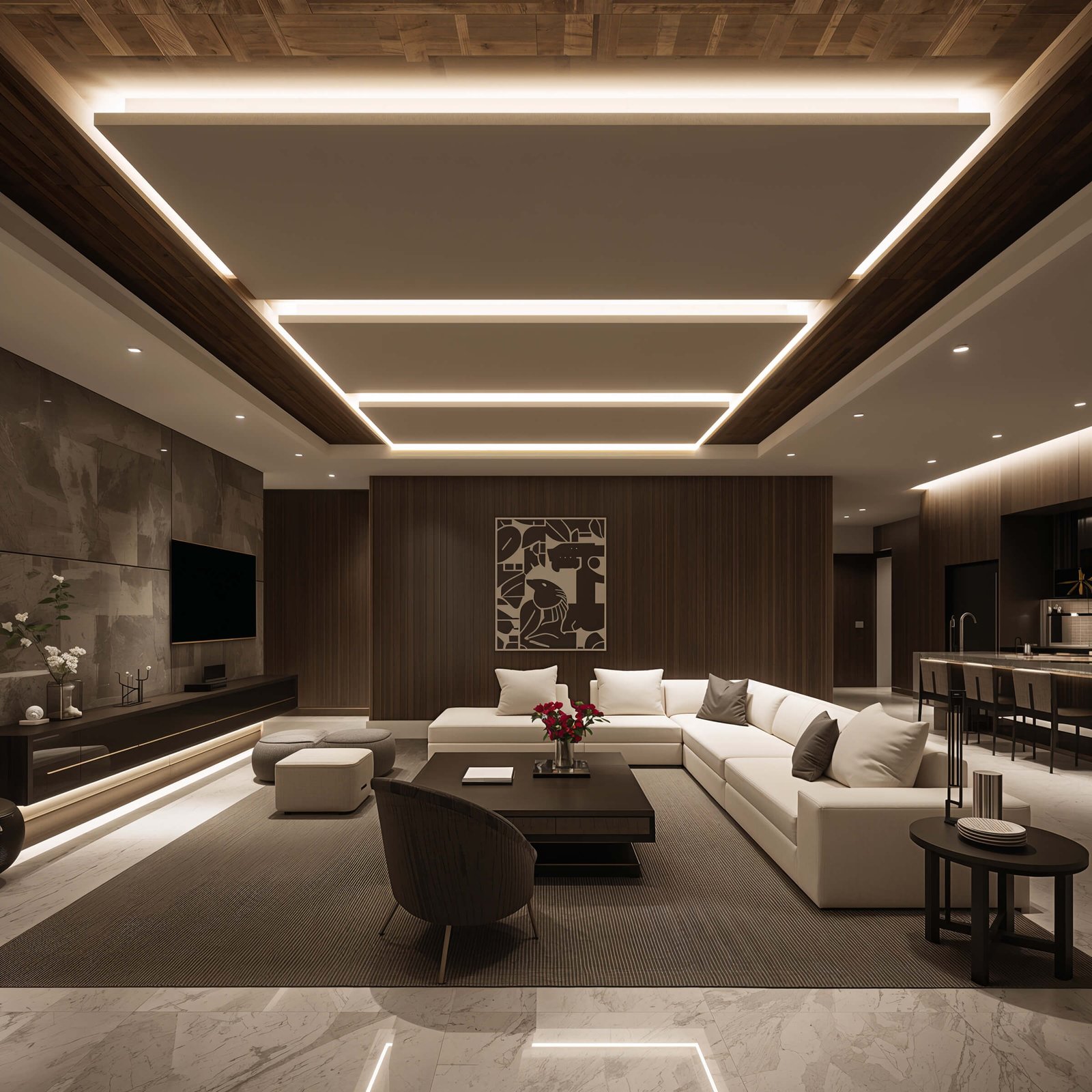
10 Elegant Basement Ceiling Ideas That Inspire Comfort

Remember that moment when you first walked into your basement and looked up? Yeah, me too. The exposed joists, random pipes, and that lovely collection of cobwebs really screamed “cozy hangout space,” right? Look, I get it – basement ceilings are the forgotten stepchild of home renovation. Everyone obsesses over floors and walls, but that space above your head? Crickets.
Here’s the thing though: transforming your basement ceiling can completely change the vibe of your entire lower level.
I learned this the hard way after spending three years avoiding my basement because looking up made me feel like I was in some horror movie set.
Once I finally tackled that ceiling, boom – suddenly I had a space where I actually wanted to spend time.
So grab a coffee (or beer, no judgment here), and let’s talk about ten basement ceiling ideas that won’t make you want to run back upstairs.
Trust me, I’ve tried most of these myself, and I’ll tell you exactly what works and what’s just Pinterest propaganda.
Exposed Beam Industrial Ceiling
The Raw Appeal
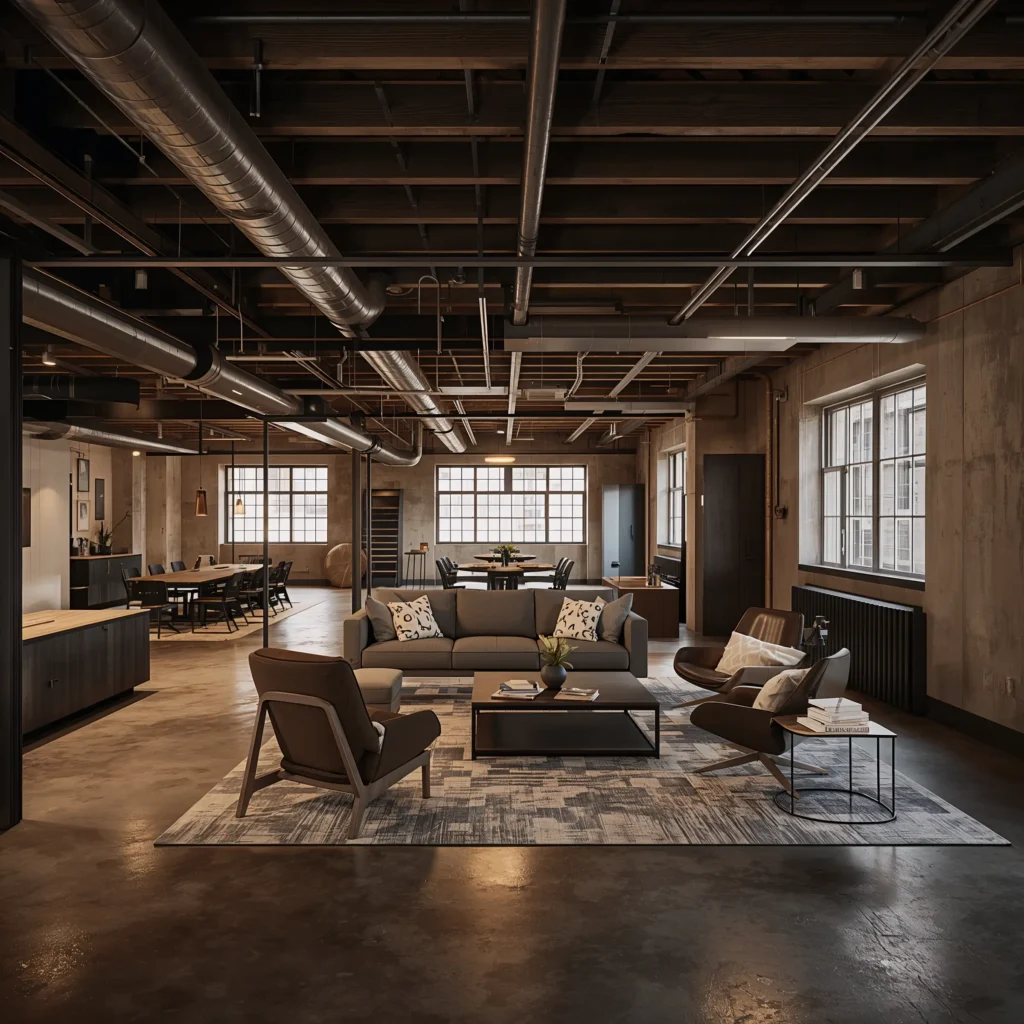
You know what’s funny? We spend thousands covering up pipes and beams, then turn around and pay designers to make our spaces look “industrial.” Why not just embrace what you’ve got? An exposed beam ceiling can transform your basement from creepy dungeon to trendy loft – and you don’t even need to add much.
I went this route in my first house, mainly because I was broke and lazy (winning combination, right?). But here’s what surprised me: it actually looked intentional. The key is treating those joists and beams like they’re meant to be seen. Paint them black or dark gray for that authentic industrial vibe, or go white if you want something brighter.
The best part? You’re literally working with what’s already there. No major construction, no permits, just some paint and maybe some strategic lighting. FYI, this works especially well if you’ve got decent-looking wood beams. If your joists look like they’ve seen better days, a coat of paint works miracles.
Making It Work
Here’s what I learned the hard way:
- Clean everything first (seriously, the amount of dust up there will shock you)
- Use a paint sprayer if you value your sanity and shoulders
- Hide the ugly bits with strategic cable management or painted conduit
- Add Edison bulb fixtures for that perfect industrial touch
The maintenance factor here is basically zero once you’re done. No sagging tiles to replace, no water damage to worry about – just raw, honest architecture doing its thing.
Coffered Ceiling with Recessed Lighting
Fancy Without the Price Tag
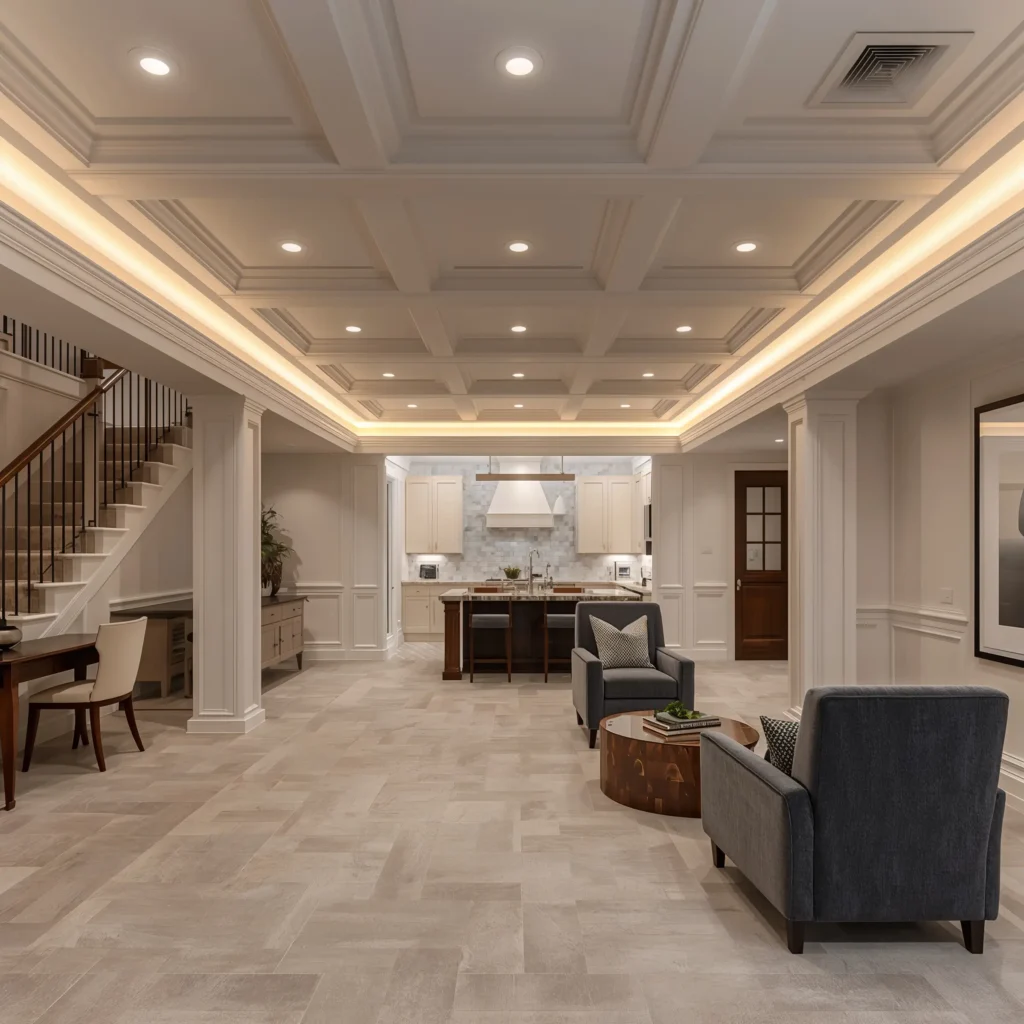
Ever walked into a high-end restaurant and looked up at those gorgeous coffered ceilings? I have, usually while calculating if I can afford the appetizer. Here’s a secret though: you can create that same luxe look in your basement for way less than you’d think.
Coffered ceilings are basically a grid pattern of recessed panels. They add depth, hide imperfections, and make your basement feel like it belongs in a magazine. Plus, when you add recessed lighting to each coffer, you get this amazing ambient glow that makes everyone look good. Win-win.
I installed one of these bad boys in my current basement, and let me tell you, the transformation was insane. My mother-in-law actually complimented it. That woman doesn’t compliment anything. The trick is using lightweight materials like MDF or foam beams instead of solid wood. Your wallet (and back) will thank you.
The Installation Reality Check
Before you get too excited, let’s talk real talk:
- This isn’t a weekend project unless you’re some kind of renovation superhero
- Measure three times, cut once (learned this after wasting $50 in materials)
- Plan your lighting layout first – rewiring after the fact is a nightmare
- Consider hiring an electrician for the lights (unless you enjoy surprise fireworks)
The payoff is huge though. My basement went from “storage dungeon” to “entertainment paradise” just with this ceiling upgrade.
Painted Black Low Ceiling Illusion
The Magic Trick Nobody Talks About
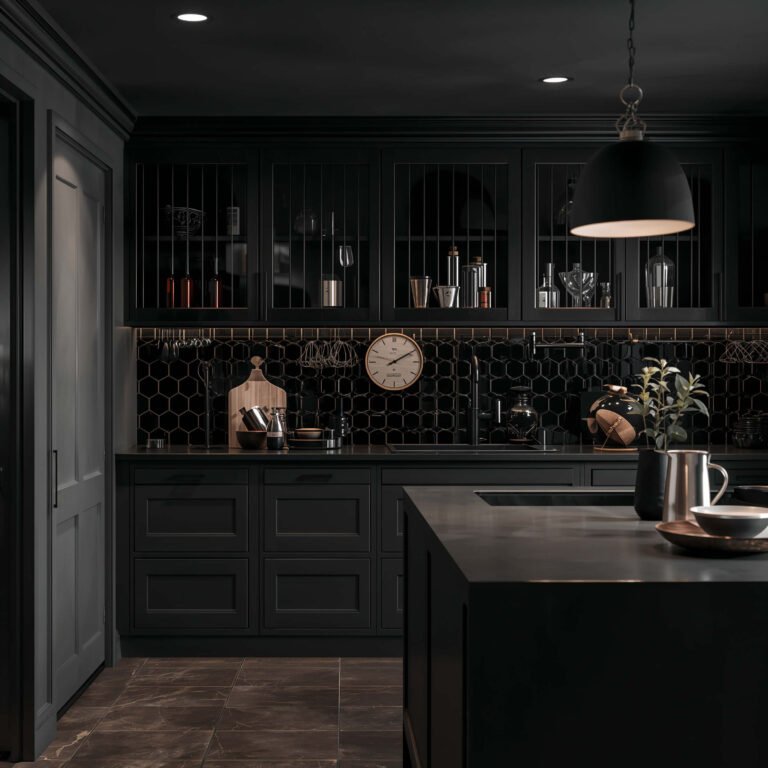
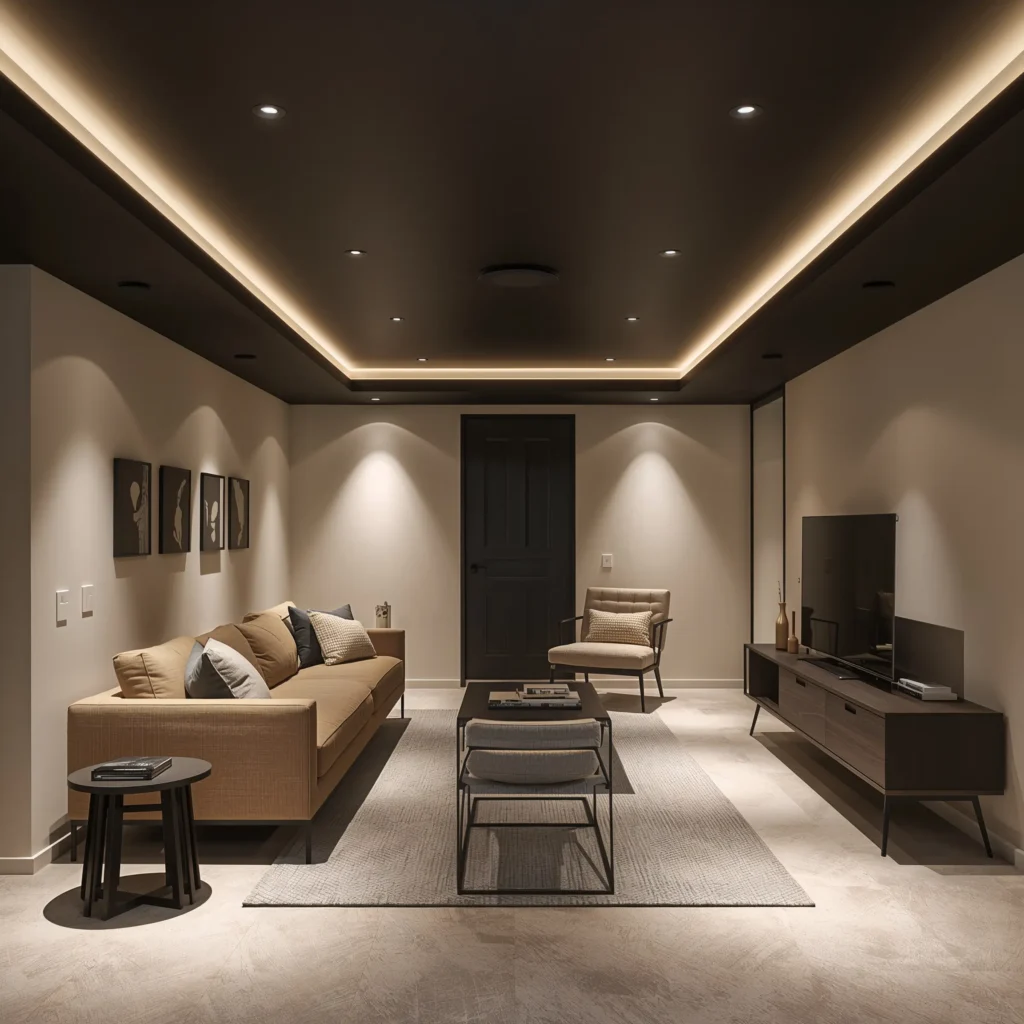
Okay, this one might sound counterintuitive, but hear me out. Painting your basement ceiling black can actually make it feel taller. I know, I didn’t believe it either until I tried it in my friend’s basement bar project.
Here’s the psychology: dark colors recede visually. When you paint that ceiling black, it basically disappears. Your eye stops at the walls instead of the ceiling, creating this illusion of endless space above. It’s like wearing all black to look slimmer, but for your basement 🙂
The other massive benefit? Everything disappears into that black void – pipes, wires, uneven surfaces, that weird stain from when the water heater leaked. Black ceiling = instant camouflage for all your basement’s sins.
Making Black Work for You
Not all black paint is created equal:
- Use flat or matte black paint (shiny black just looks weird on ceilings)
- Paint EVERYTHING – joists, pipes, ducts, the works
- Upgrade your lighting because black absorbs light like crazy
- Consider painting walls lighter colors for contrast
One warning though: if you’re already claustrophobic, maybe skip this one. My buddy’s wife made him repaint after two weeks because she felt like Batman’s cave. Know your audience (and your spouse).
Also Read: 10 Amazing Garage Workshop Layout Ideas for Small Spaces
Wood Plank Warm Ceiling Design
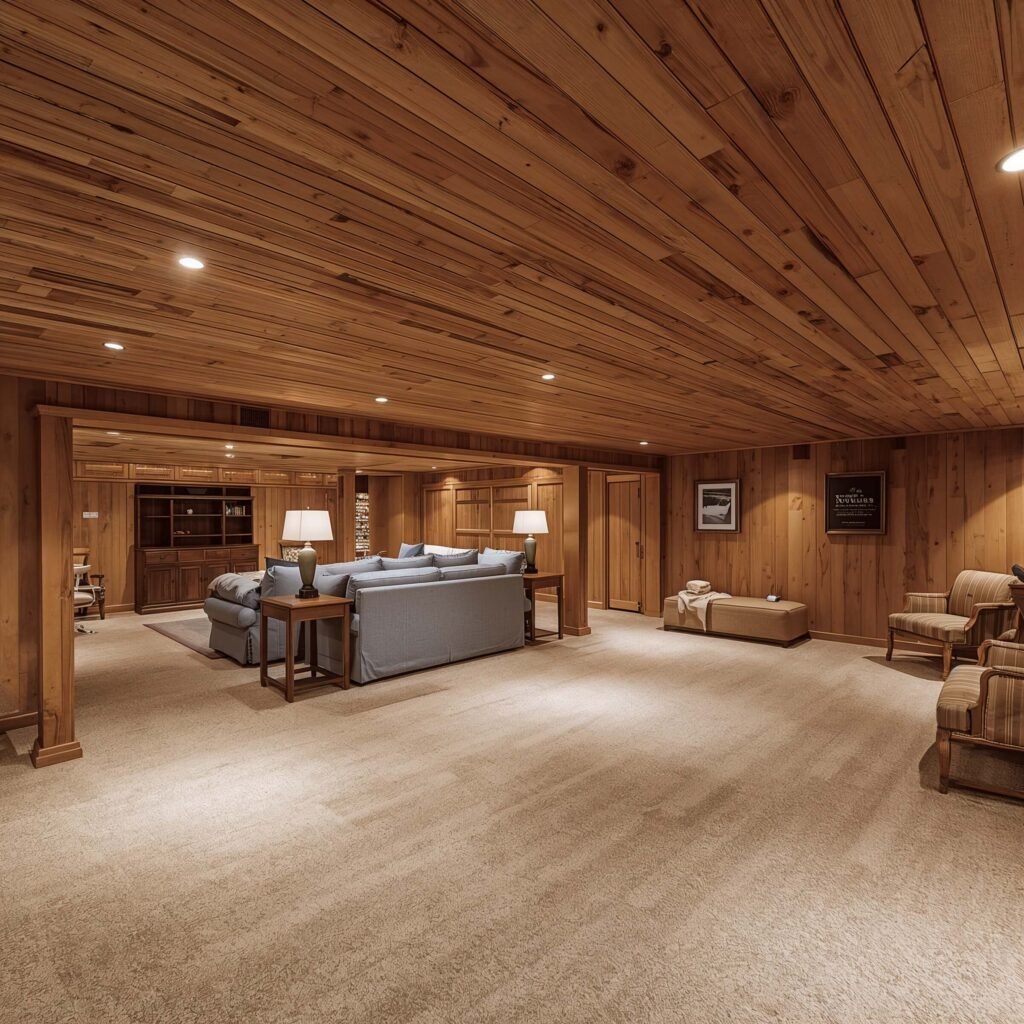
Bringing the Cabin Vibes Home
Want your basement to feel less like a basement and more like a cozy lodge? Wood plank ceilings are your answer. I’m talking about that warm, inviting look that makes people want to grab a blanket and stay awhile.
I installed tongue-and-groove pine planks in my basement office, and now it’s everyone’s favorite room. There’s something about real wood overhead that just changes the entire energy of a space. Plus, it smells amazing for the first few months – free aromatherapy, people!
The installation process is surprisingly straightforward if you can handle a nail gun. The planks lock together like a puzzle, and you just work your way across the ceiling. Though I’ll admit, my neck was killing me for a week afterward. Pro tip: invest in a good ladder or scaffolding. Your future self will thank you.
Wood Options That Won’t Break the Bank
You’ve got choices here:
- Pine: Affordable and classic (my personal favorite)
- Cedar: Smells incredible and naturally resistant to moisture
- Reclaimed wood: Eco-friendly with tons of character
- Engineered wood: Cheaper and more stable than solid wood
Just remember – wood and moisture don’t play nice together. If your basement gets humid, you’ll need proper ventilation or a dehumidifier. Nobody wants warped ceiling planks. Trust me on this one.
Drop Ceiling with Hidden Storage Panels
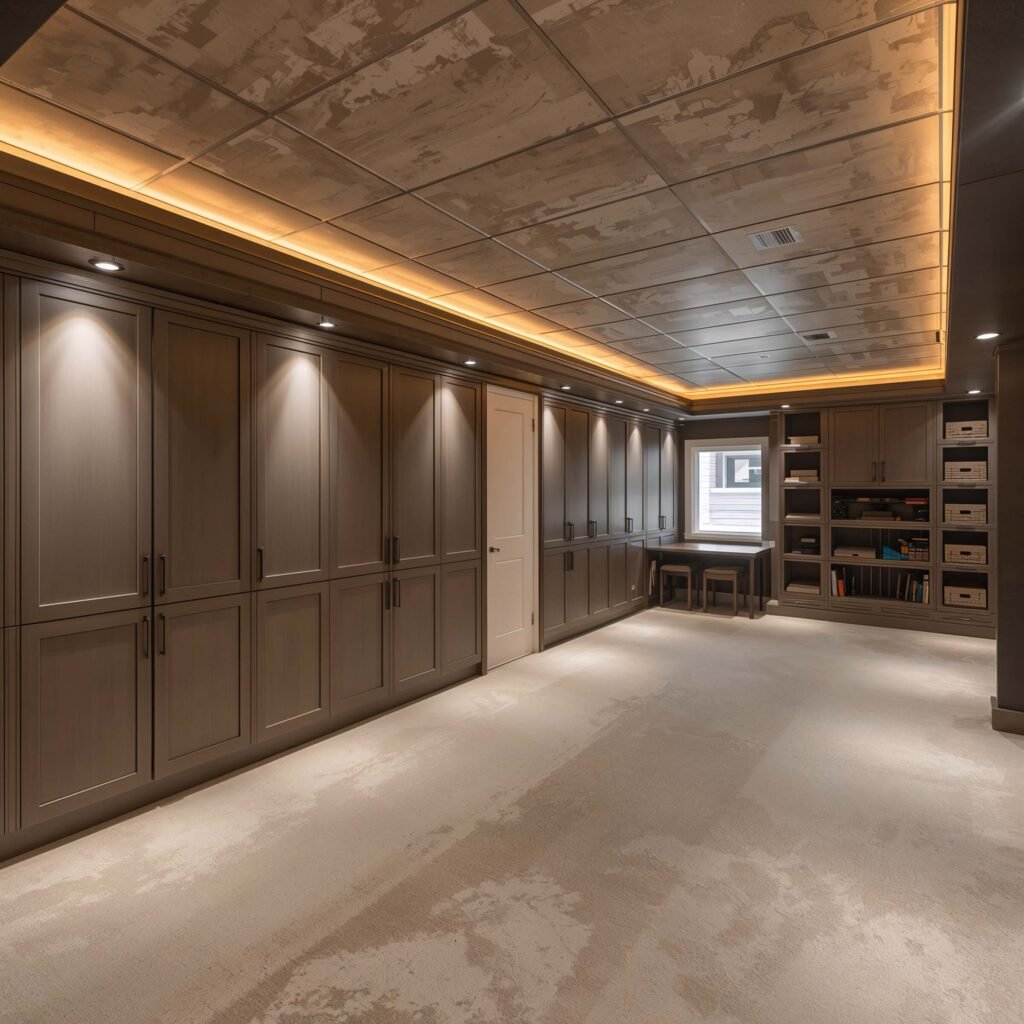
The Secret Agent Ceiling
Now this is where things get interesting. What if your ceiling could do double duty? Modern drop ceiling systems can include hidden storage panels that nobody would ever suspect exist.
I discovered this genius solution when I was desperately trying to find space for Christmas decorations. Instead of regular ceiling tiles, you can install panels that flip down to reveal storage compartments. It’s like having a secret attic in your basement ceiling. How cool is that?
My neighbor installed one of these systems and uses it for everything from holiday decor to important documents. He even has one panel that holds his bourbon collection. The man’s living in 3023 while we’re stuck in 2023.
Setting Up Your Hidden Storage
Here’s what you need to know:
- Reinforce the grid system to handle the extra weight
- Use lightweight storage bins that fit the panel dimensions
- Label everything (you’ll forget what’s where, guaranteed)
- Keep frequently used items in easy-to-reach panels
The only downside? You’ll become that person who constantly shows off their ceiling storage to guests. But honestly, can you blame them? It’s pretty awesome.
PVC Beadboard Waterproof Ceiling

The Moisture Fighter
Let’s address the elephant in the room – basements get wet. Even if yours doesn’t flood, there’s humidity, condensation, and that general dampness that makes everything feel slightly moist. Gross, I know. That’s where PVC beadboard comes in like a superhero.
I learned about PVC beadboard after my traditional wood ceiling started looking funky after one particularly humid summer. This stuff is completely waterproof, looks exactly like traditional beadboard, and laughs in the face of moisture. Plus, you can literally hose it down if needed. Try doing that with drywall!
The installation is stupid simple too. These panels are lightweight, cut easily with basic tools, and go up fast. I redid my entire basement ceiling in a long weekend, and that included beer breaks.
Why PVC Beats Traditional Materials
The benefits are pretty clear:
- 100% waterproof (obviously)
- No painting required (comes in white, but you can paint if you want)
- Won’t rot, warp, or grow mold (basement game-changer)
- Easy to clean with just soap and water
IMO, if you have any moisture concerns in your basement, this is your best bet. It might not have the charm of real wood, but it’ll look good for decades without any drama.
Also Read: 10 Stylish Half Garage Gym Ideas You’ll Love Today
Modern Floating Panel Ceiling
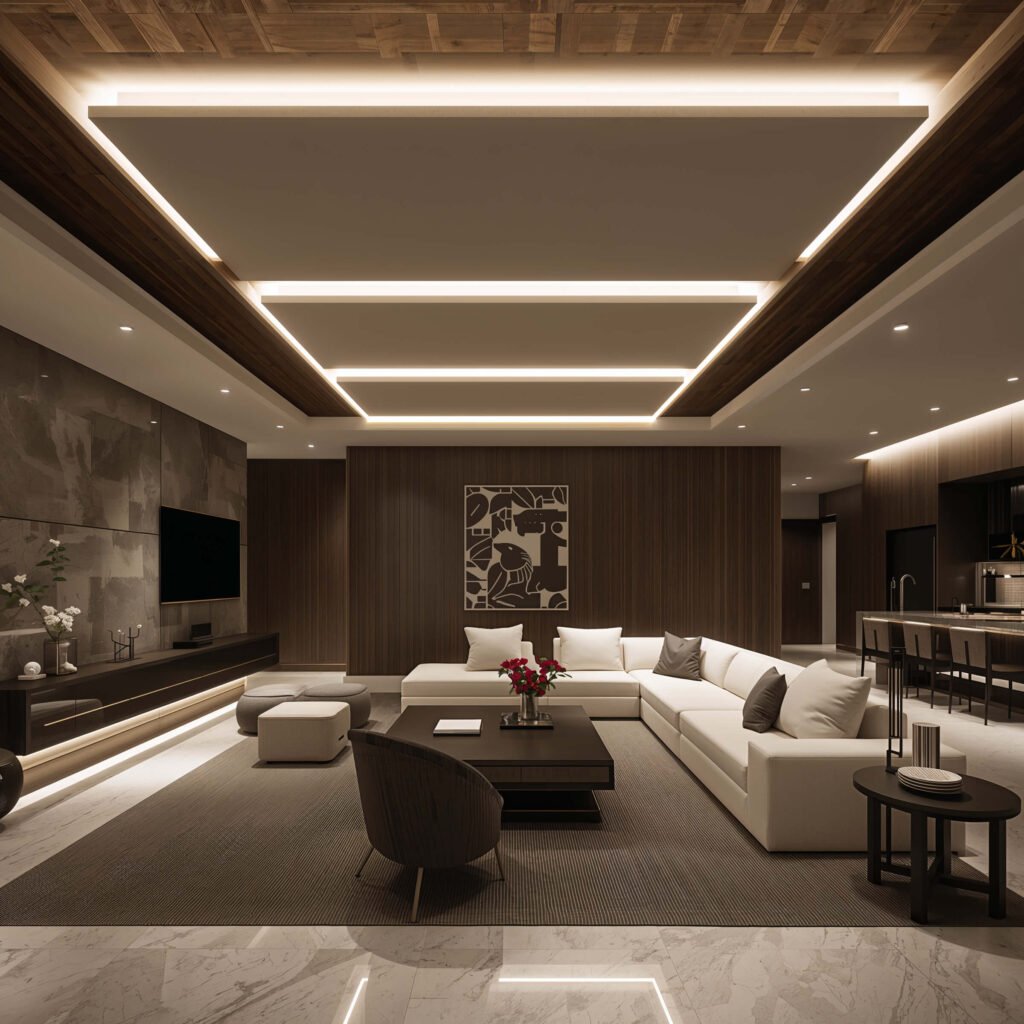
The Architectural Statement
Want to make people stop and stare at your ceiling? Floating panel systems create this amazing 3D effect that looks like something from a modern art museum. These panels appear to hover below the actual ceiling, creating shadows and depth that change throughout the day.
I first saw this in a friend’s newly renovated basement, and honestly, I spent half the party just looking up. The panels were arranged in an offset pattern, with LED strips between them creating this gorgeous ambient lighting. It was like being inside a really expensive hotel lobby, except with better snacks.
The concept is simpler than it looks. You’re basically hanging panels from a hidden grid system, leaving gaps between them for visual interest and lighting opportunities. The result? A ceiling that’s actually a conversation starter.
Creating Your Floating Masterpiece
Here’s the game plan:
- Start with a solid sketch of your pattern (random rarely works)
- Choose lightweight panels (foam core or thin MDF work great)
- Plan your lighting first – it’s integral to the design
- Consider hiring help for larger rooms (this gets heavy fast)
Fair warning: this isn’t the cheapest option on our list. But if you want that “wow” factor, this delivers in spades.
Faux Tin Decorative Ceiling Tiles

Vintage Charm Without the Vintage Price
Remember those gorgeous tin ceilings in old buildings? The ones that make you think of speakeasies and vintage charm? Well, modern faux tin tiles give you that exact look for a fraction of the cost – and they’re way easier to install than the real deal.
I went down this road in my basement bar area, and people literally cannot tell they’re not real tin. These tiles come in tons of patterns, from simple geometric designs to elaborate Victorian styles. They’re made from PVC or foam but painted to look exactly like aged metal. Some even come pre-“rusted” for that authentic antique vibe.
The installation is where these really shine though. Real tin tiles are heavy, sharp, and require serious mounting hardware. These faux versions? You can install them with basic adhesive. I knocked out my entire bar area ceiling in one Saturday afternoon.
Choosing Your Style
The options are almost overwhelming:
- Classic pressed tin patterns for that authentic vintage look
- Art Deco designs for something more glamorous
- Simple geometric patterns if you want subtle texture
- Painted finishes in copper, brass, or pewter tones
One tip: order a few sample tiles first. The photos online never quite capture how they’ll look in your actual space with your lighting.
Recessed LED Strip Ceiling
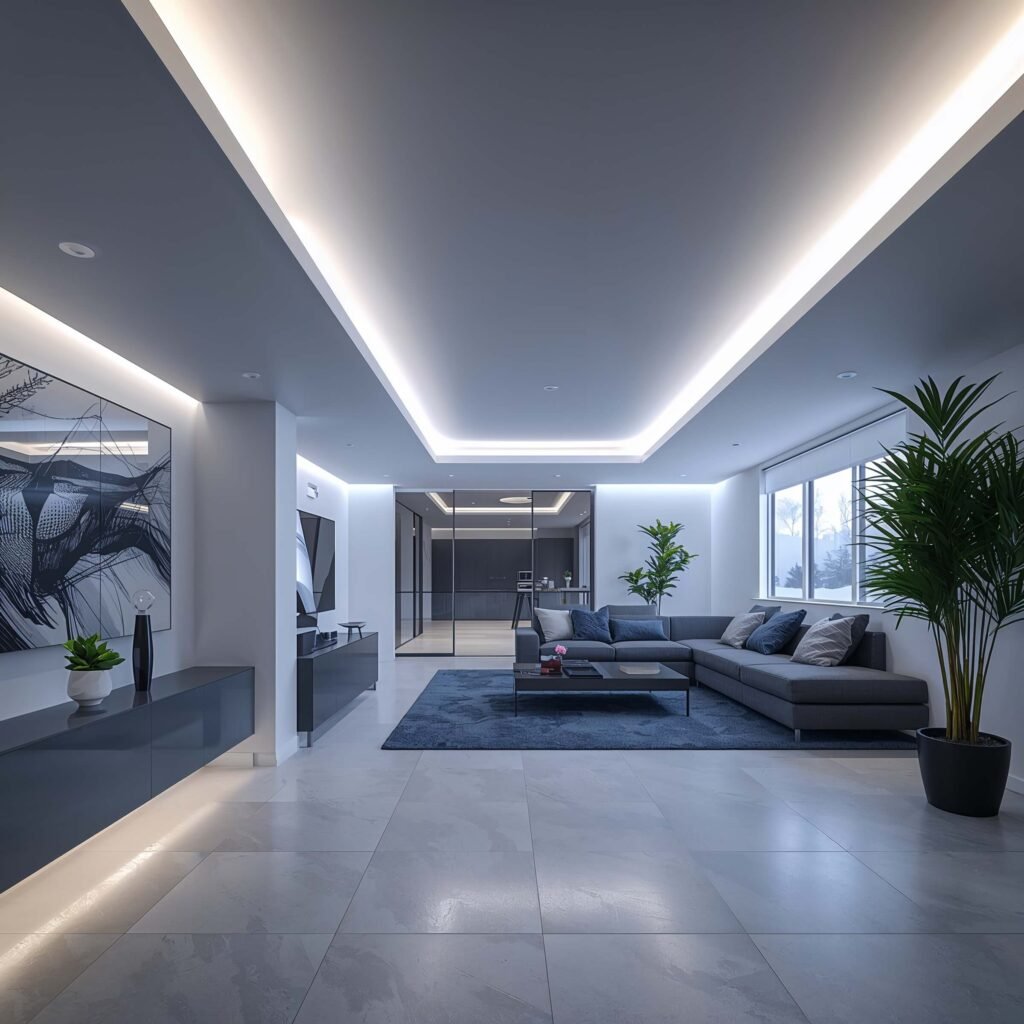
The Modern Minimalist Dream
Sometimes less really is more. A recessed ceiling with integrated LED strips creates the cleanest, most modern look possible. No visible fixtures, no dangling lights – just pure, even illumination that seems to come from nowhere.
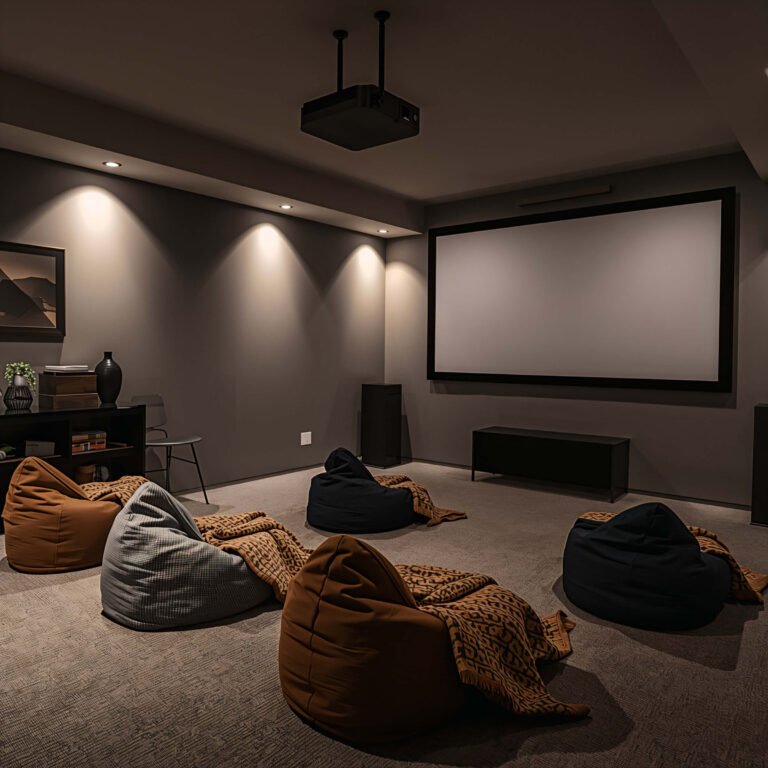
I helped my brother install this in his basement home theater, and the effect was incredible. We created a recessed perimeter around the entire ceiling with LED strips hidden in the recess. You can dim them, change colors, even sync them with his TV. It’s like living in the future, except the future is now and it’s in his basement.
The beauty of this approach is its versatility. Want mood lighting? Dim those strips to 20%. Need to find that lost Lego piece? Crank them to 100%. Having a party? Make them pulse with the music. The possibilities are endless, and honestly, kind of addictive.
The Technical Side
Getting this right requires some planning:
- Choose quality LED strips (cheap ones die fast and flicker)
- Install proper drivers and controllers for dimming and color changes
- Create smooth, clean recesses (imperfections show with this lighting)
- Consider zones for different lighting scenarios
The energy savings alone make this worthwhile. My brother’s electric bill actually went down despite having way more light than before.
Also Read: 10 Bright Basement Bedroom Ideas for a Modern Look
Fabric-Draped Cozy Ceiling

The Unexpected Comfort Zone
Okay, this last one might sound a bit out there, but stick with me. Fabric-draped ceilings can transform a cold basement into the coziest space in your house. Think romantic restaurant meets bohemian lounge meets your own personal retreat.
I experimented with this in my basement yoga studio (yes, I have a basement yoga studio, don’t judge). Using lightweight fabric attached to a simple track system, I created these flowing waves across the ceiling. The fabric hides all the ugly bits while adding incredible warmth and sound absorption. The acoustics in that room are now better than most professional studios.
Plus, you can change it seasonally or whenever you get bored. White gauzy fabric for summer, rich burgundy for winter, whatever strikes your fancy. It’s like redecorating without actually redecorating.
Making Fabric Work Underground
Here’s what I’ve learned:
- Use fire-retardant fabric (safety first, always)
- Install a simple track or wire system for easy hanging
- Leave some slack for that draped effect
- Wash or vacuum regularly (fabric collects dust like crazy)
- Choose synthetic fabrics in humid basements (natural fibers can get funky)
Not everyone’s cup of tea, I’ll admit. But if you want something totally unique that nobody else has? This is your winner.
Making Your Choice
So there you have it – ten basement ceiling ideas that range from industrial cool to cozy comfort. The best choice depends on your space, budget, and how much effort you want to put in.
Having tried most of these myself (I may have a basement ceiling addiction), here’s my honest take: start with your biggest problem. Got moisture? Go PVC beadboard. Low ceilings? Paint them black. Want maximum impact? Coffered with lights or floating panels. On a tight budget? Exposed beams or fabric draping.
The truth is, any of these options beats staring at exposed insulation and spider webs. Your basement deserves better, and so do you. Pick one that speaks to you and just go for it. The worst thing that happens? You learn something and try again. The best thing? You end up with a basement so awesome that people actually choose to hang out there.
Remember, your basement ceiling doesn’t have to be perfect – it just has to be better than what you’ve got now. And trust me, that bar is probably pretty low (pun intended). So grab your tools, pick your style, and let’s turn that forgotten space into something worth remembering. Your future self, hosting that epic game night in your newly awesome basement, will thank you for it.
Who knows? You might even enjoy the process. Stranger things have happened… usually in basements with bad ceilings