10 Inspiring Basement Stairs Ideas and Modern Upgrades

Remember that moment when you first looked at your basement stairs and thought, “Well, that’s… functional”? Yeah, me too.
Those builder-grade steps sitting there like they’re doing you some massive favor just by existing.
But here’s the thing – your basement stairs can actually become a design statement that makes guests stop and stare (in a good way, not the “what were they thinking” way).
I’ve spent the last decade obsessing over home design, and basement stairs always get the short end of the stick.
People pour thousands into their kitchens but leave their basement entrance looking like something from a horror movie set. Why do we do this to ourselves?
Let’s fix that. I’m sharing ten basement stair ideas that transformed my clients’ homes from “meh” to “magnificent.” And before you start worrying about costs, some of these options won’t even make your wallet cry.
Floating Wooden Basement Stairs
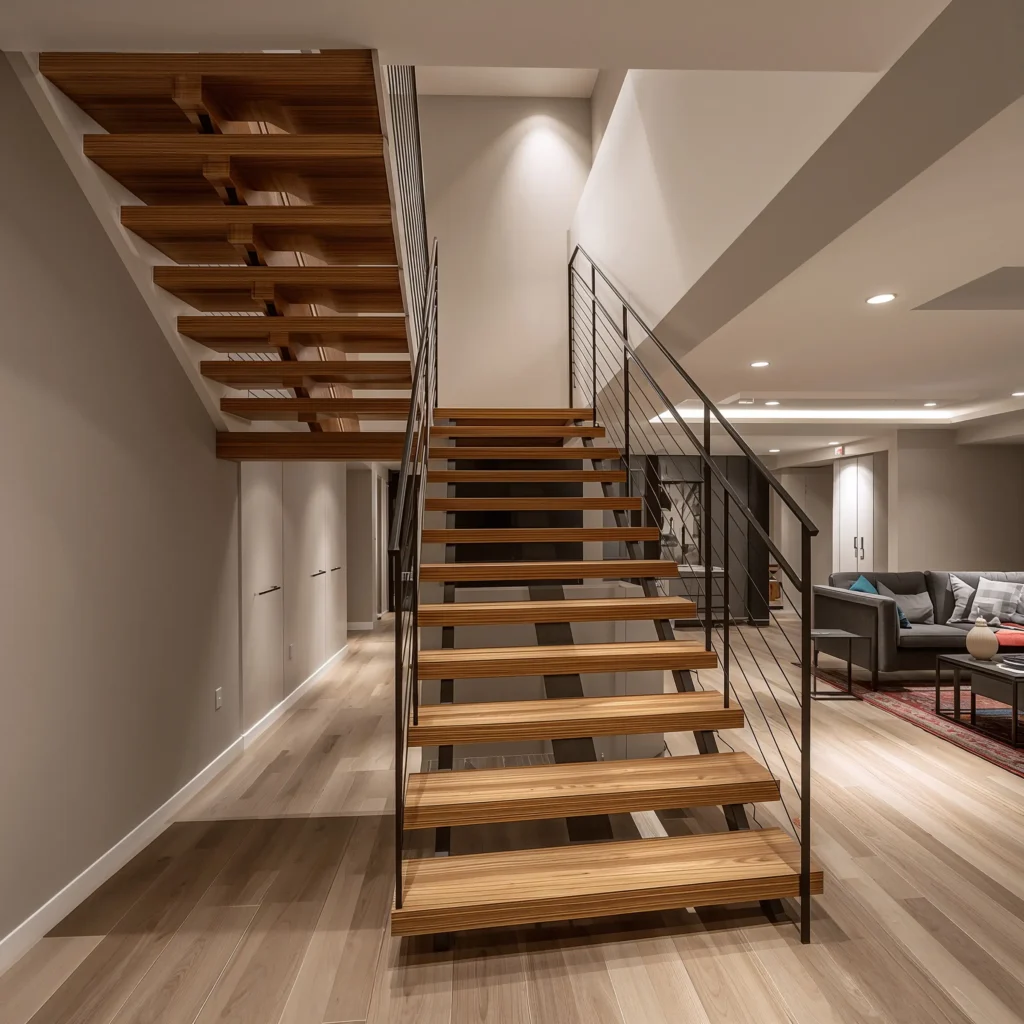
Nothing says “I’ve got my life together” quite like floating wooden stairs. These beauties create an illusion that your steps are magically suspended in mid-air. The first time I installed these in my own basement, my teenager actually put their phone down to look. That’s basically a miracle in my house.
The secret sauce here involves hidden steel brackets that anchor directly into your wall studs. You need solid walls for this – drywall over metal studs won’t cut it. Trust me, I learned that lesson the expensive way. The brackets disappear completely, leaving only gorgeous wood treads that seem to defy gravity.
Wood Selection Makes or Breaks This Look
Oak remains the classic choice, but walnut creates this rich, luxurious feel that photographs like a dream. I personally went with white oak because it handles basement humidity like a champ. Plus, it matches literally everything.
Your treads need to be at least 2 inches thick for proper support. Anything thinner starts looking cheap and feeling wobbly. Nobody wants to question their life choices every time they head downstairs for laundry.
Spiral Space-Saving Stairs
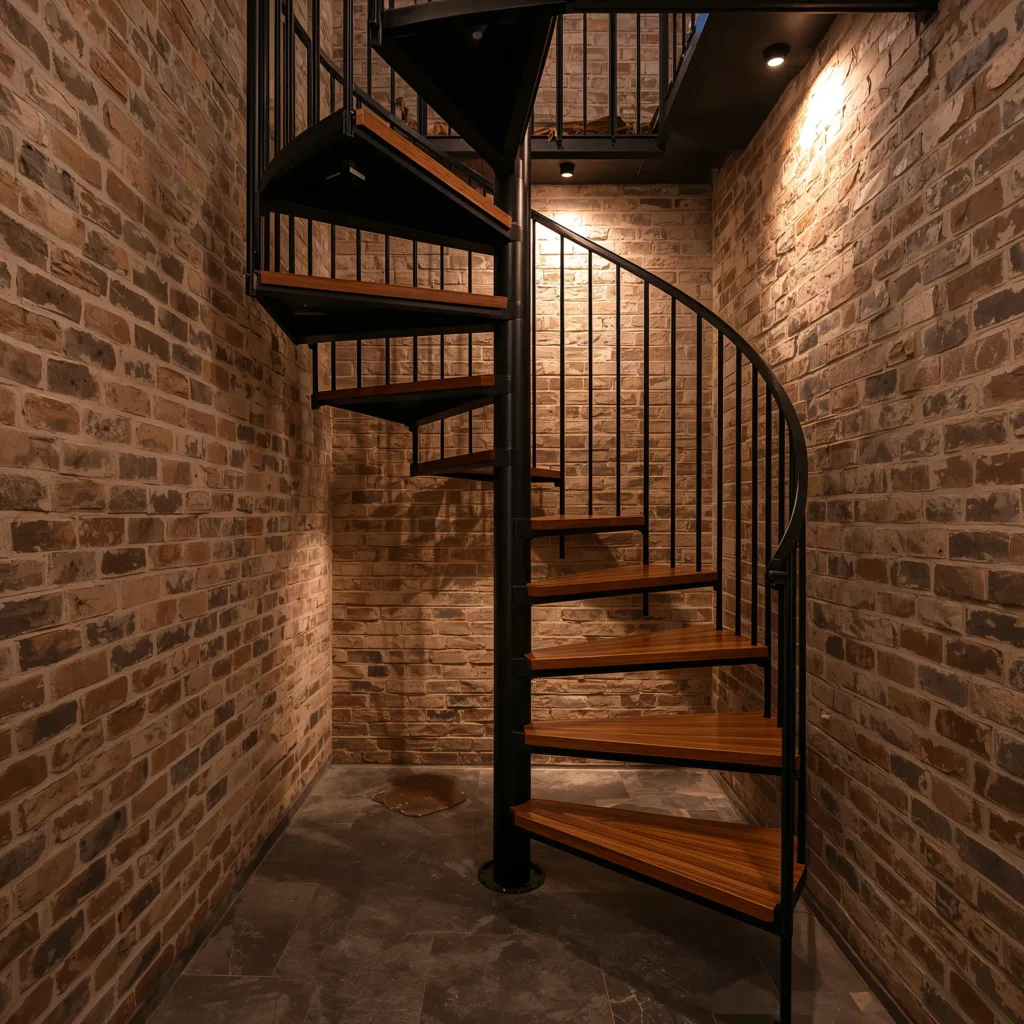
Got a basement entrance that’s tighter than your jeans after Thanksgiving dinner? Spiral stairs might save your sanity. These compact wonders fit into spaces where traditional stairs would require knocking down walls.
I installed spiral stairs in a 1920s bungalow where the basement access measured exactly 5 feet square. The homeowner thought they’d need to sacrifice a whole room upstairs. Nope! A custom spiral staircase solved everything while adding this unexpected architectural element.
The Reality Check on Spiral Stairs
Here’s what nobody tells you about spiral stairs: moving furniture becomes an Olympic sport. That sectional sofa you’re eyeing? Better have a basement window big enough to squeeze it through. Also, carrying laundry baskets requires ninja-level coordination.
But the space savings are real. You’re looking at needing only about 4-5 feet of floor space versus the typical 30-40 square feet for straight stairs. That’s basically a whole closet worth of room you get back.
Glass Railing Modern Stairs
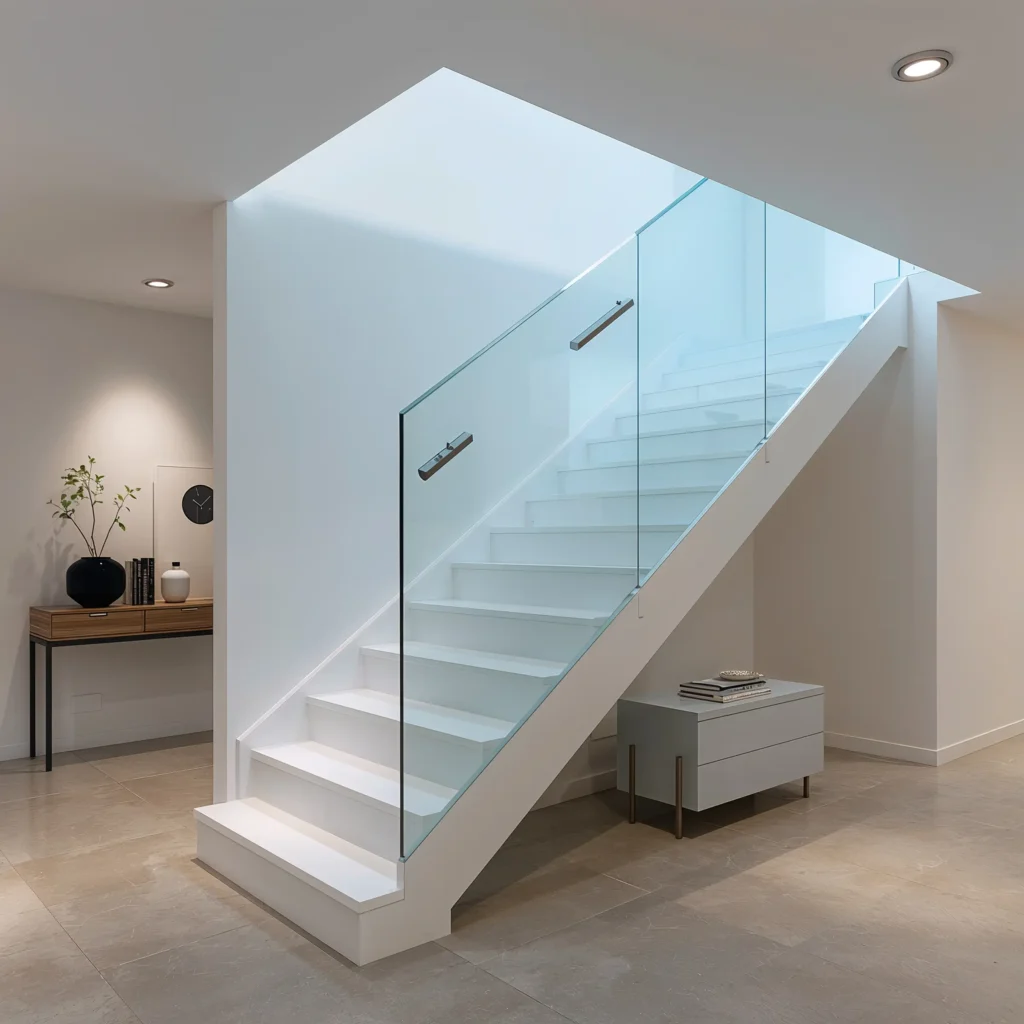
Want to make your basement feel less… basement-y? Glass railings change everything. They let light flow through while maintaining safety standards. My contractor friends initially called me crazy for suggesting glass in a basement, but the transformation speaks for itself.
Tempered glass panels run about $100-300 per linear foot installed, which sounds scary until you realize you’re creating this magazine-worthy feature. The transparency tricks your brain into thinking the space is twice as large.
Installation Tips That’ll Save Your Bacon
You need ½-inch tempered glass minimum for residential stairs. Don’t even think about regular glass – building codes won’t allow it, and honestly, it’s dangerous. The glass gets mounted into either aluminum or steel channels, and I always recommend the steel. It costs more upfront but looks infinitely better.
FYI, fingerprints become your new enemy. Keep glass cleaner handy unless you enjoy seeing every smudge highlighted by your fancy new LED strip lighting.
Also Read: 10 Stylish Basement Gym Ideas That Look Expensive on a Budget
Rustic Industrial Metal Stairs
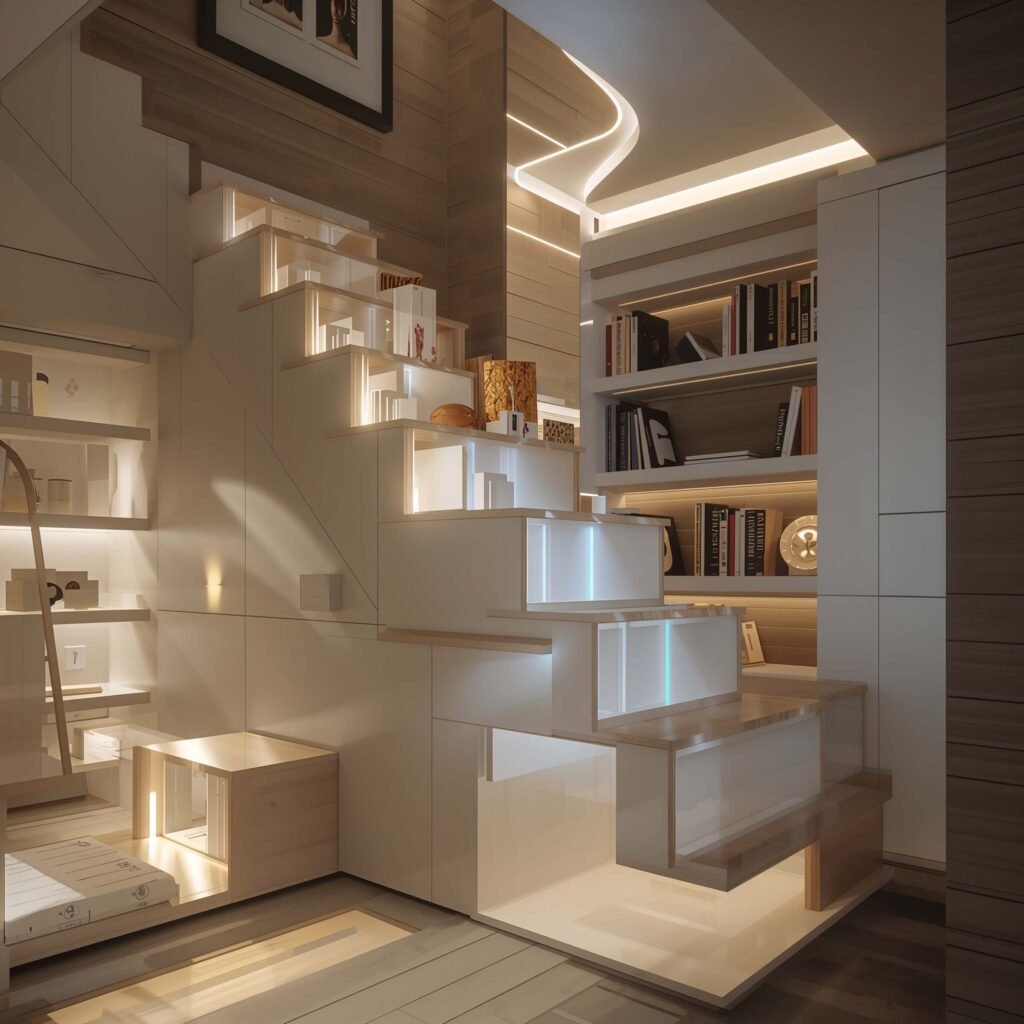
Industrial design isn’t going anywhere, and metal stairs with raw steel stringers nail this aesthetic perfectly. I helped design a set for a converted warehouse loft, and visitors literally stop mid-conversation to admire them.
The beauty lies in the contrast between rough and refined. Raw steel stringers paired with reclaimed wood treads create this tension that makes design nerds (like me) ridiculously happy. You can leave the steel raw for that authentic industrial vibe or powder-coat it for durability.
Cost Considerations Nobody Mentions
Custom metal fabrication starts around $3,000 for basic designs. But here’s my hack: find a local welding school. Students often take on projects for material costs plus a small fee. I’ve seen gorgeous stairs built for half the typical price this way.
The weight factor matters too. These stairs are HEAVY. Your floor joists better be up to the task, or you’ll discover new creaking sounds at 3 AM.
Hidden Storage Staircase
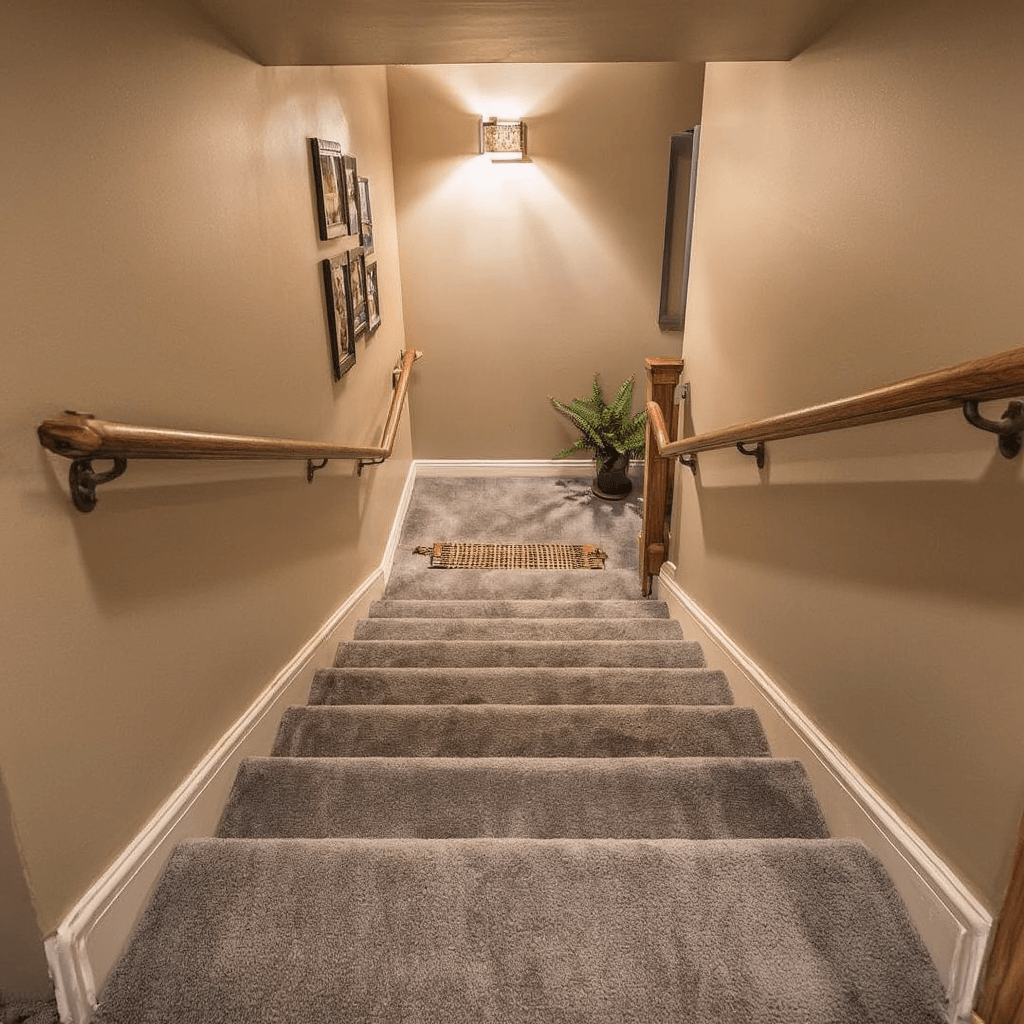
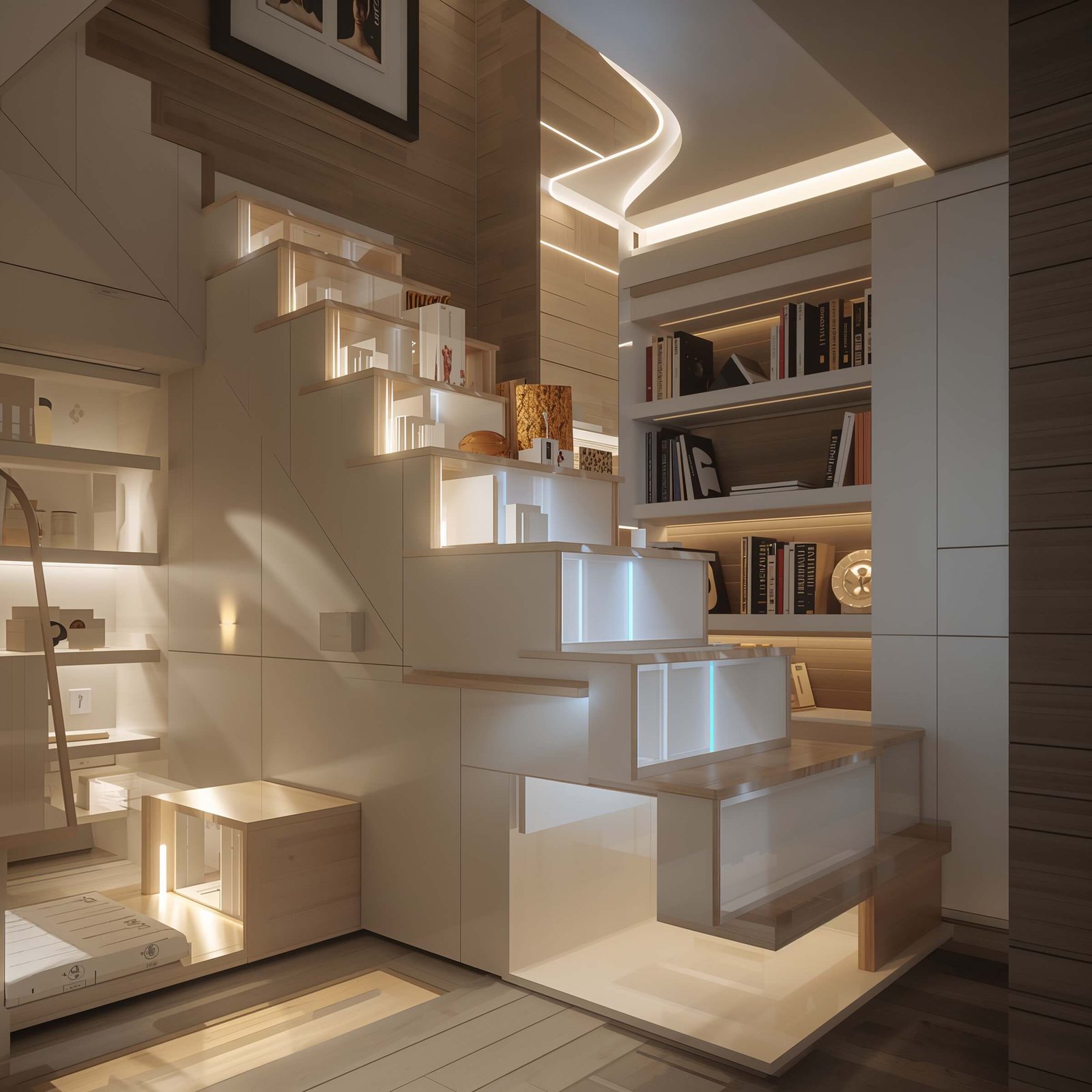
Every time I show clients a storage staircase, their minds get blown. Why waste all that space under your steps when you could hide everything from holiday decorations to wine collections?
I recently designed stairs with pull-out drawers in each rise. The homeowner stores seasonal items, sports equipment, and enough toilet paper to survive another pandemic. Each drawer holds about 15-20 pounds comfortably, depending on your construction.
The Engineering Behind Storage Stairs
Drawer slides need to be heavy-duty – none of that lightweight kitchen cabinet hardware. You want full-extension, soft-close slides rated for at least 100 pounds. They cost more but prevent that soul-crushing moment when a drawer falls apart.
Building these requires more planning than regular stairs. You lose about 2-3 inches of tread depth for the drawer boxes, so your stairs might need to extend further into the room. Worth it? Absolutely. Especially if your basement doubles as storage central.
Carpeted Cozy Basement Steps
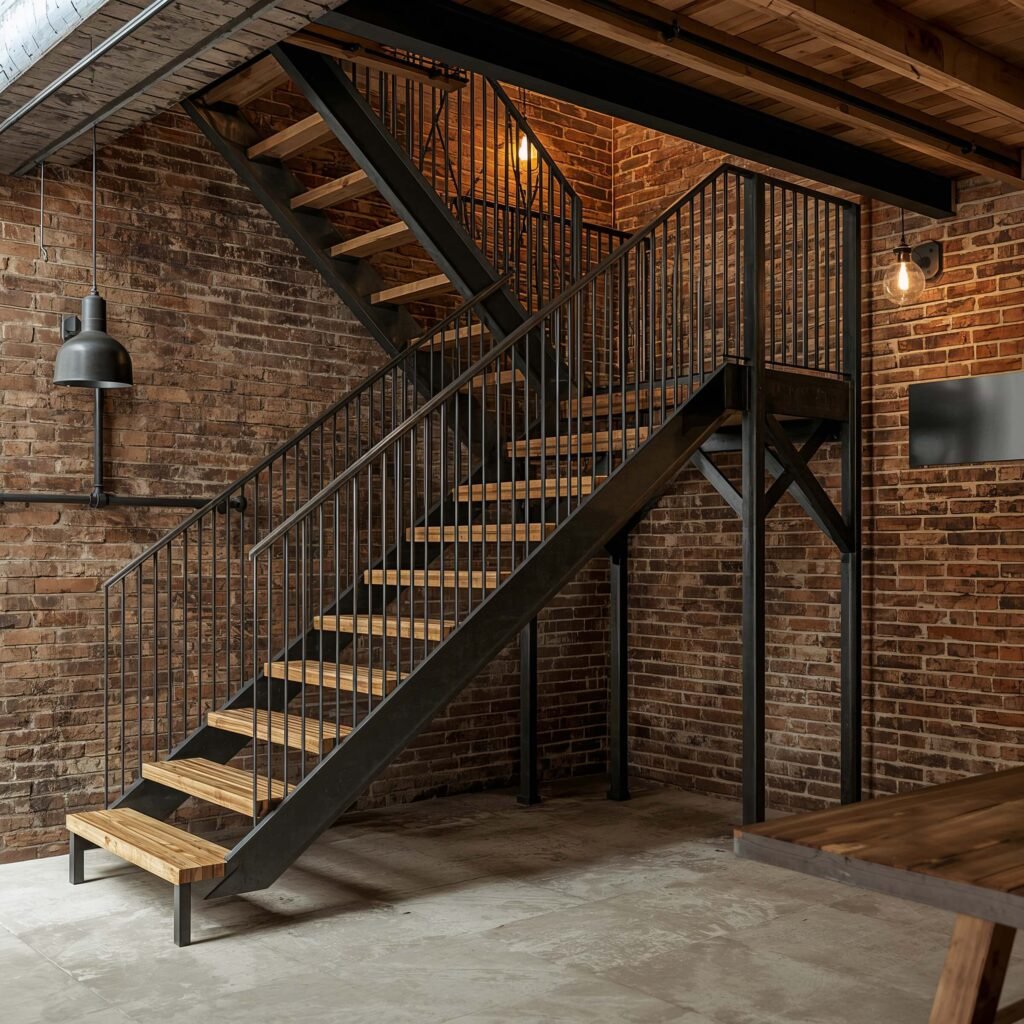
Before you roll your eyes at carpet, hear me out. Quality carpet on basement stairs creates warmth and reduces noise like nothing else. My kids can thunder down to the basement without waking the dead (or more importantly, me on Saturday mornings).
The trick involves choosing low-pile, high-density carpet designed for high traffic. Berber works great, or go for a textured loop that hides wear patterns. Skip the padding on the tread portion – it makes steps feel unstable.
Moisture Management Is Everything
Basements and moisture go together like peanut butter and jelly, except nobody wants this sandwich. Install a vapor barrier between your stairs and carpet padding. I learned this after replacing carpet twice in three years. Not fun.
Consider carpet tiles instead of wall-to-wall installation. When (not if) something spills or floods, you replace individual tiles instead of the whole staircase. Genius, right?
Also Read: 10 Brilliant Basement Laundry Room Ideas for Small Spaces
Minimalist Floating Staircase
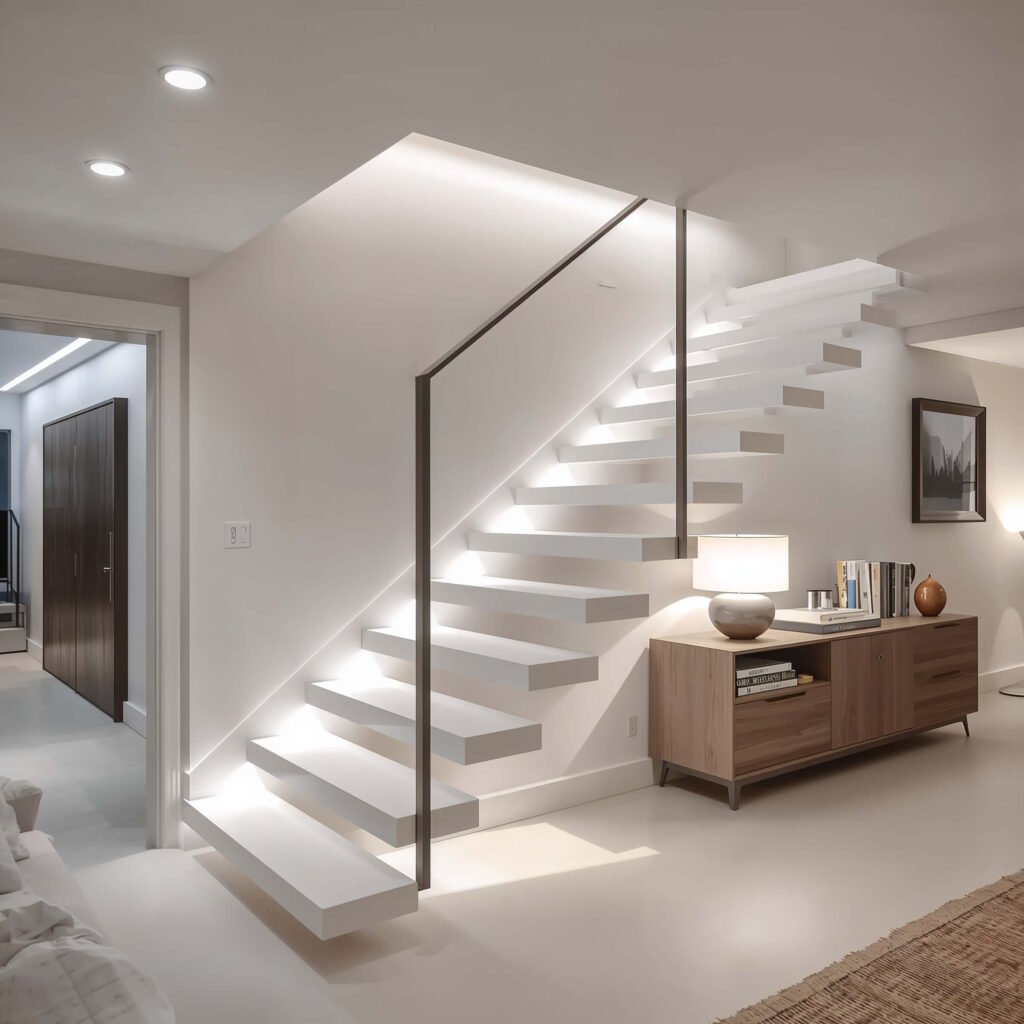
Minimalism done right makes everything else look trying too hard. Floating stairs with no visible support and clean lines create this zen-like entrance to your basement that actually makes you want to go downstairs 🙂
The engineering here gets serious. You need a structural engineer to calculate loads and specify materials. My floating staircase required steel plates ¾-inch thick embedded into reinforced concrete walls. Not exactly a weekend DIY project.
Why Minimalist Doesn’t Mean Cheap
People assume minimalist equals affordable. Nope! Achieving that “effortless” look requires precise engineering and flawless execution. Budget at least $15,000 for professionally installed floating stairs. But man, do they make a statement.
The lack of visual clutter transforms how your basement feels. Instead of stairs blocking sightlines, you maintain this open, airy feeling that makes basements feel less like dungeons.
Black Steel Open Tread Stairs
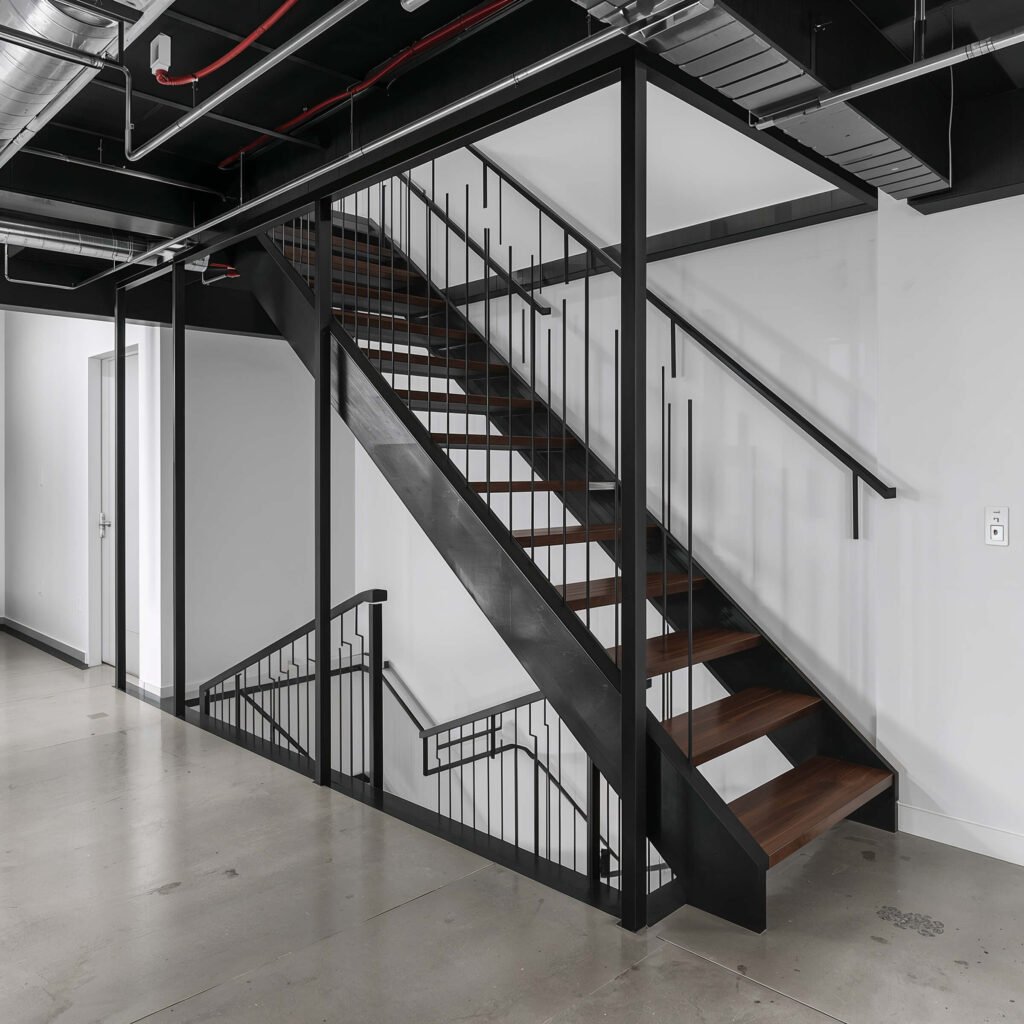
Black steel stairs hit differently. They’re bold without being obnoxious, modern without looking dated in five years. I installed these in my brother’s man cave basement, and now his friends hang out on the stairs during parties. They’ve become a feature, not just a function.
Open treads mean no risers blocking the view. Light passes through, making both your main floor and basement feel larger. The black steel frames can be powder-coated or painted, though powder coating wins for durability every time.
Tread Material Options
While steel frames stay consistent, tread materials offer flexibility:
- Reclaimed wood for warmth and character
- Perforated metal for full industrial commitment
- Concrete for that brutalist vibe
- Bamboo for eco-conscious builders
I typically recommend wood treads with black steel. The contrast works every single time, and wood feels better underfoot than metal.
Colorful Painted Accent Stairs
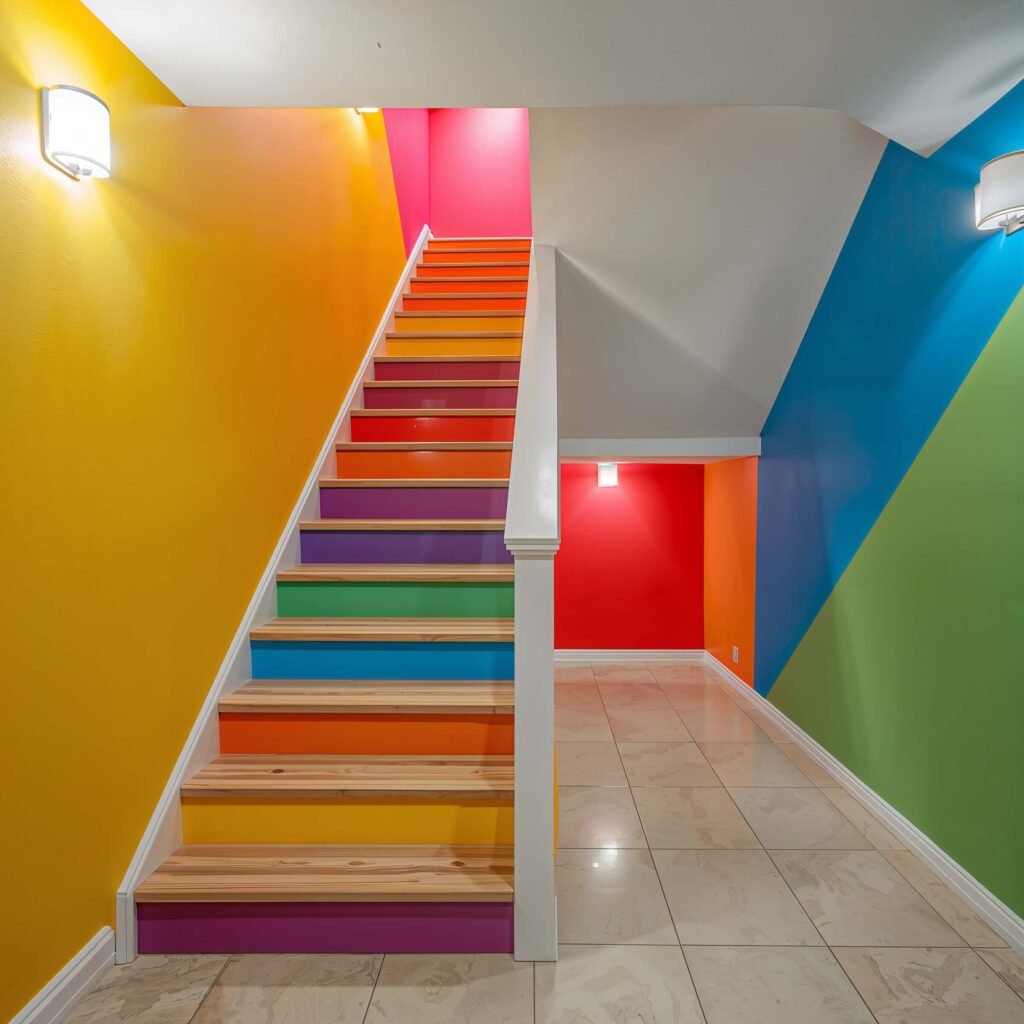
Who says basement stairs need to be boring? Painted accent stairs cost almost nothing but deliver maximum impact. I’ve seen basic builder stairs transformed into Instagram-worthy features with just paint and creativity.
Start with the risers – they’re perfect canvases for color or patterns. I painted mine in an ombre effect from dark navy at the bottom to light blue at the top. Visitors actually ask to see my basement now. How often does that happen?
Paint Selection Matters More Than You Think
Floor paint or porch paint only – regular wall paint won’t survive foot traffic. I prefer epoxy-based paints for durability, though they’re trickier to apply. Add anti-slip additives to your topcoat unless you enjoy impromptu sledding.
Consider these proven color schemes:
- Rainbow gradient for playrooms
- Black and white stripes for graphic impact
- Numbered steps for kids learning to count
- Chalkboard paint for ever-changing designs
Also Read: 10 Stunning Basement Bathroom Ideas for a Stylish Upgrade
Curved Elegant Basement Stairs
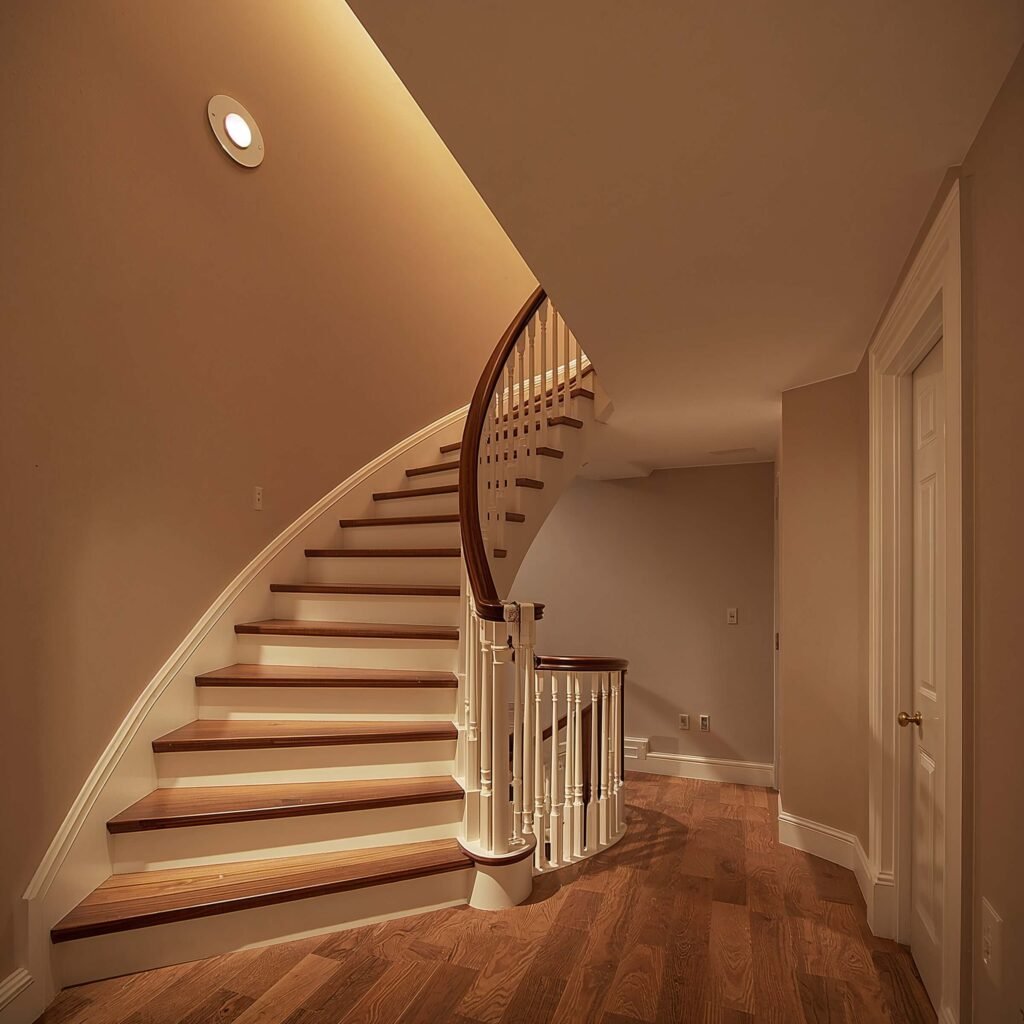
Curved stairs scream luxury louder than a designer handbag. Sweeping curves descending into your basement create this grand entrance that nobody expects. Ever walked into someone’s basement and actually gasped? That’s the curved staircase effect.
The math behind curved stairs makes my head hurt. You need precise calculations for each tread and riser to maintain building codes while creating that smooth curve. Professional design is non-negotiable here unless you’re secretly an architect.
The Investment Reality
Curved stairs start around $20,000 and climb from there. Custom millwork, specialized installation, and engineering fees add up fast. But if your home’s value supports it, curved stairs offer unmatched elegance.
The space requirements surprise people too. Curves need more floor space than straight runs – typically 20-30% more. Make sure your basement entrance can accommodate the footprint before falling in love with the idea.
Material Combinations That Work
My favorite curved staircase combined:
- White oak treads with natural finish
- Wrought iron balusters with decorative scrollwork
- Continuous handrail in matching oak
- LED strip lighting under each tread
The result? Pure elegance that makes the basement feel like a legitimate living space, not just storage overflow.
Making Your Choice
Picking the right basement stairs depends on your space, budget, and how much drama you want. IMO, even simple updates like paint or carpet can transform those forgotten stairs into something special.
Start by honestly assessing your basement’s purpose. Gaming room? Go bold with industrial metal or colorful paint. Home office? Minimalist floating stairs create that professional vibe. Storage central? Hidden compartments maximize every inch.
Budget realistically but remember – good stairs last decades. Spending $5,000 now beats replacing cheap stairs every few years. Plus, quality stairs actually add home value. Try explaining that to your spouse when you’re pitching curved stairs though :/
Consider hiring a designer for consultation even if you DIY the installation. Their expertise prevents expensive mistakes and often pays for itself through smart material choices and vendor connections.
Final Thoughts
Your basement stairs deserve better than builder-grade neglect. Whether you go full renovation with curved elegance or simply paint some accent colors, any improvement beats the status quo. These ten ideas prove that basement stairs can be functional AND fabulous.
Stop treating your basement entrance like an afterthought. Pick one idea that speaks to you, set a realistic budget, and transform those stairs into something worth showing off. Your basement will thank you, your guests will notice, and you’ll actually enjoy heading downstairs.
Who knows? You might even find yourself hanging out on your stairs like my brother’s friends. Though hopefully with better conversation topics than debating whether a hot dog is a sandwich. Some arguments aren’t worth having, even on gorgeous black steel stairs.