10 Brilliant Basement Playroom Ideas for Happy Kids

Remember that moment when you realized your basement was just sitting there, collecting dust and storing Christmas decorations nobody wants to admit they forgot about? Yeah, me too.
After tripping over my kids’ toys for the millionth time upstairs, I had this wild thought: what if we turned that forgotten dungeon into the ultimate kid paradise?
Creating a basement playroom isn’t just about throwing some toys in a corner and calling it done. Trust me, I learned that the hard way.
You want a space that actually works for your family, keeps the chaos contained, and maybe – just maybe – looks good enough that you won’t cringe when your judgmental sister-in-law comes over.
Cozy Soft Play Basement Retreat
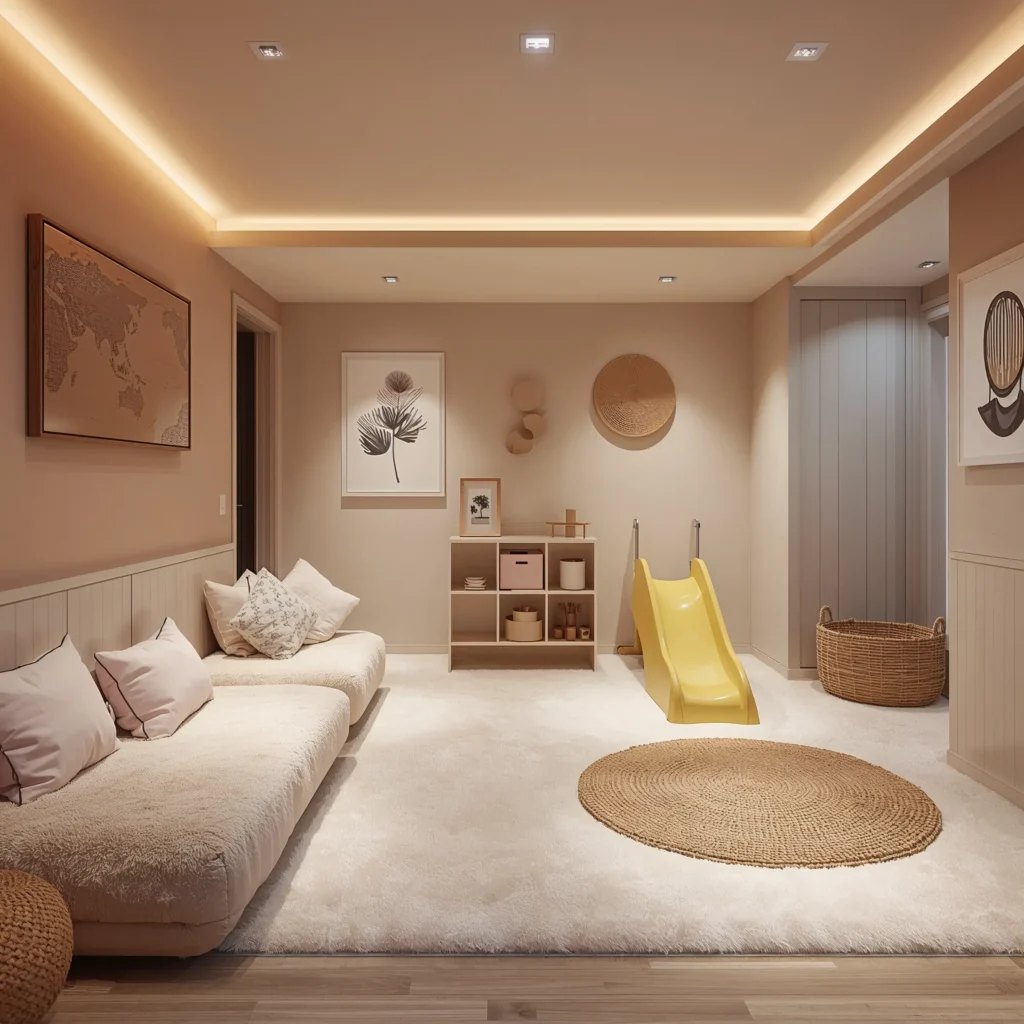
Let’s kick things off with something that screams comfort. A soft play basement retreat transforms your underground space into this cushiony wonderland where kids can basically bounce off the walls without you having a heart attack.
I remember setting up our first soft play area. My husband thought I’d lost it when I showed up with three carloads of foam blocks, mats, and what looked like oversized pool noodles. But here’s the thing – kids need a place to be wild without consequences. And honestly? So do parents who want to preserve their sanity.
Essential Elements for Your Soft Play Paradise
You’ll want to start with interlocking foam floor tiles – the thick ones, not those flimsy things that separate after two days. Cover at least 80% of your floor space with these bad boys. They come in every color imaginable, though I personally went with neutrals because neon orange gives me a headache.
Next up, grab yourself some:
- Foam climbing blocks in various shapes
- Soft play tunnels (kids lose their minds over these)
- Balance beams made from foam
- A crash mat or two for inevitable jumping sessions
- Bean bags in washable covers (learned that one the hard way)
The beauty of this setup? Everything’s modular. You can rearrange the entire room based on your kids’ current obsession. Building castles this week? Stack those blocks high. Next week they’re into obstacle courses? Spread everything out and create pathways.
Minimalist Scandinavian Kids Playroom
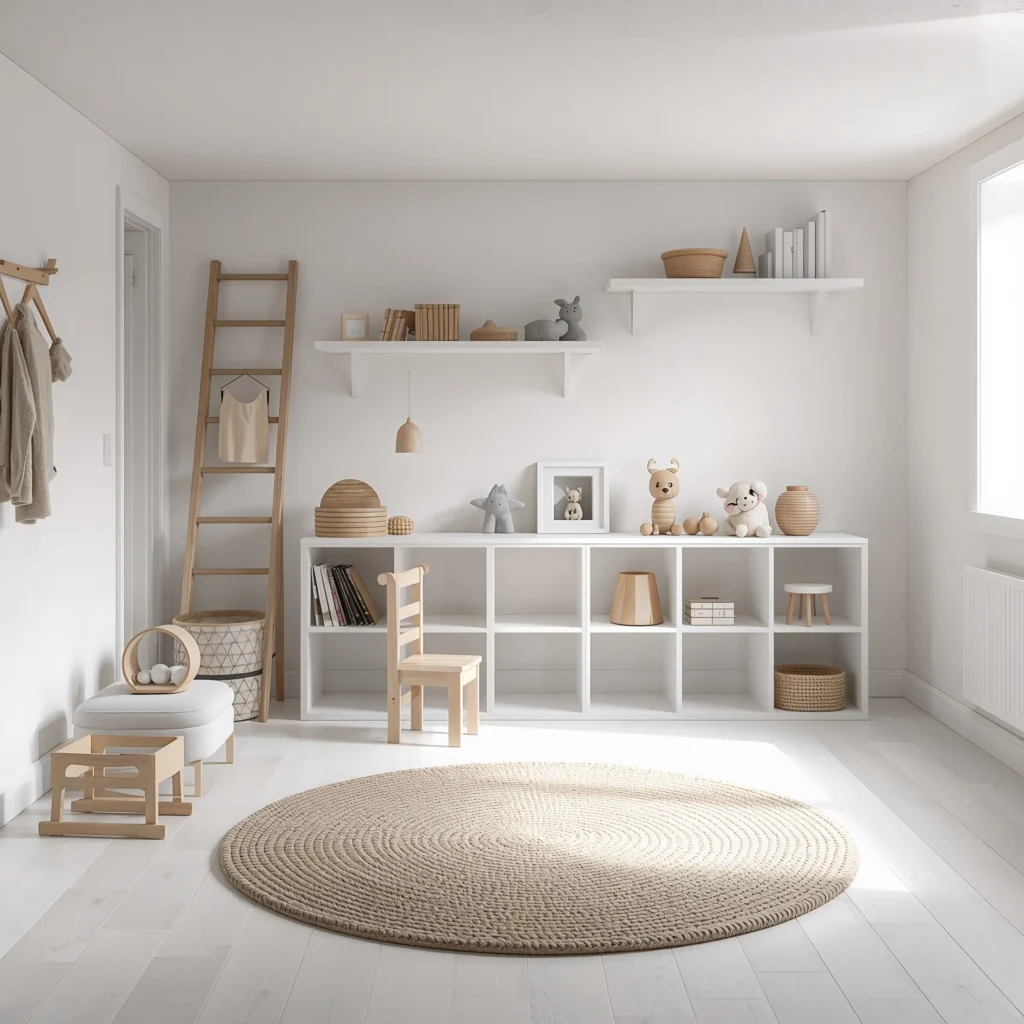
Now, if you’re anything like me and occasionally fantasize about living in an IKEA catalog, this one’s for you. A Scandinavian-inspired playroom proves that kid spaces don’t have to look like a toy store exploded.
The key here is intentional simplicity. We’re talking clean lines, natural materials, and a color palette that won’t make your eyes bleed. Think whites, soft grays, natural wood tones, and maybe one accent color if you’re feeling wild.
Creating That Nordic Magic
Start with white or light gray walls. I know what you’re thinking – white walls with kids? But hear me out. Light colors make basement spaces feel bigger and less cave-like. Plus, semi-gloss paint wipes clean like a dream.
For furniture, you want:
- Low wooden shelving units (Montessori-style works perfectly)
- A simple wooden table and chairs
- Woven baskets for toy storage
- A cozy reading corner with sheepskin rugs
- Minimal wall decor – maybe one or two prints
The trick to maintaining this aesthetic? Toy rotation. Keep only 8-10 toys out at a time. Store the rest and switch them out monthly. Your kids won’t miss what they can’t see, and you get to keep your Pinterest-worthy playroom. Win-win.
Colorful Montessori-Inspired Play Zone
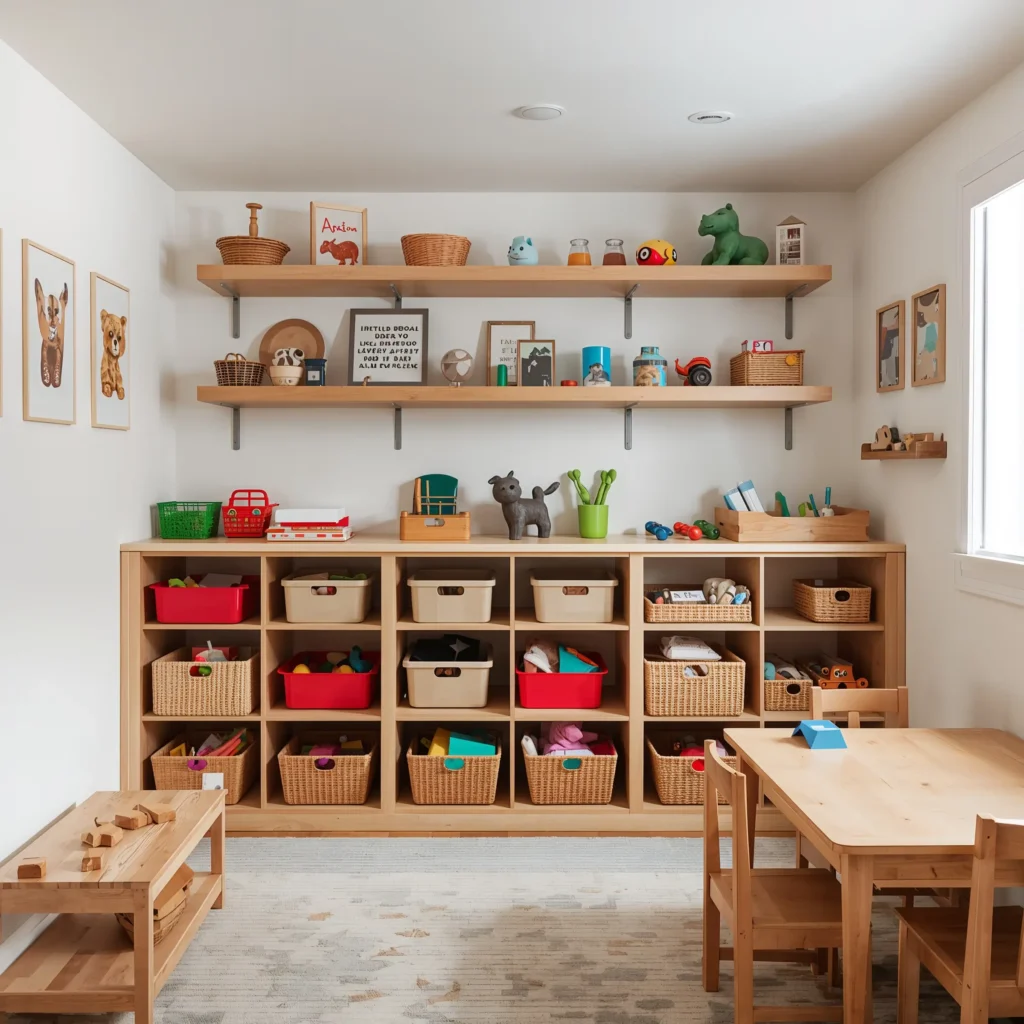
Speaking of Montessori, let’s talk about creating a space that actually helps your kids develop independence. A Montessori-inspired basement playroom focuses on child-led learning and exploration, but with way more color than those Instagram accounts would have you believe.
The Montessori approach emphasizes accessibility and order. Everything should be at kid height, organized logically, and presented beautifully. Sounds fancy, right? It’s actually pretty practical once you get the hang of it.
Setting Up Your Learning Laboratory
First things first – define clear zones. You want distinct areas for different activities:
- Practical life area with child-sized cleaning tools
- Sensory exploration zone with various textures and materials
- Math and language corner with manipulatives
- Art and creativity space with accessible supplies
- Gross motor area for movement activities
Here’s where I add my personal twist: inject color strategically. Traditional Montessori spaces tend toward neutral, but kids respond to color. Use rainbow sorting toys, colorful rugs to define spaces, and bright artwork at child eye level.
The game-changer? Open shelving with photo labels. Take pictures of where each item belongs and tape them to the shelves. My four-year-old became the cleanup champion once she could see exactly where everything went. FYI, this trick alone saved my sanity.
Also Read: 10 Modern Small Basement Layout Ideas for Stylish Homes
Under-the-Stairs Secret Play Nook
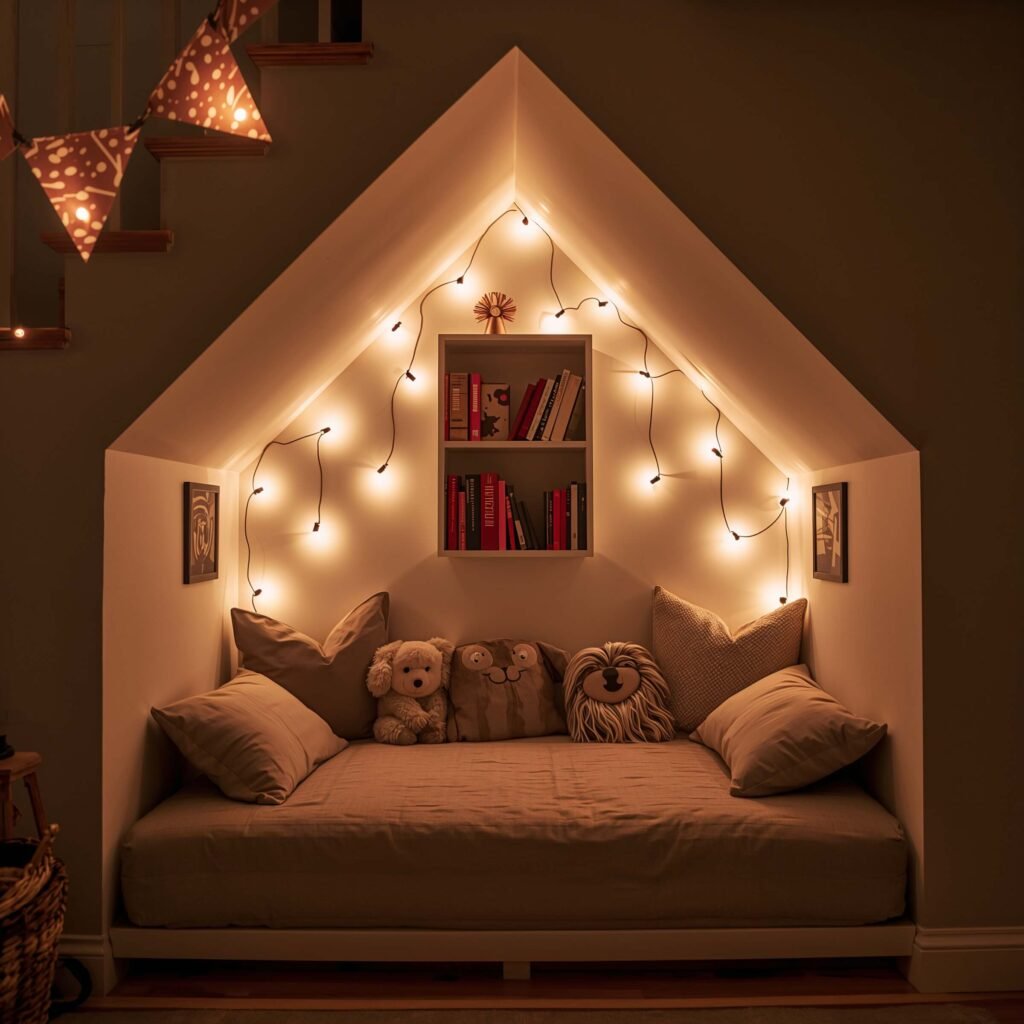
Got a weird under-stairs space in your basement? Don’t wall it off! That awkward triangle can become the coolest secret hideout your kids have ever seen.
I transformed ours into this magical little reading cave, and now I sometimes find myself squeezed in there with a coffee while the kids are at school. What can I say? Sometimes adults need hideouts too.
Maximizing That Quirky Space
The beauty of under-stairs nooks lies in their cozy factor. Kids love small spaces that feel like they’re just for them. Here’s how to make it amazing:
Start with proper lighting – fairy lights create instant magic, but add a real reading light too. Install built-in cushioned seating along the back wall if possible, or use a small floor mattress covered with washable fabric.
Add these touches:
- Mounted book ledges on the walls
- A small curtain for privacy (and drama)
- Soft pillows in various sizes
- A small basket for favorite toys
- Battery-operated LED strips for ambiance
The key is making it feel intentional, not like you just shoved stuff under there. Paint the walls a fun color – I went with deep blue to create a cave-like atmosphere. My kids pretend it’s everything from a spaceship to a dragon’s lair.
Indoor Playground Basement Setup
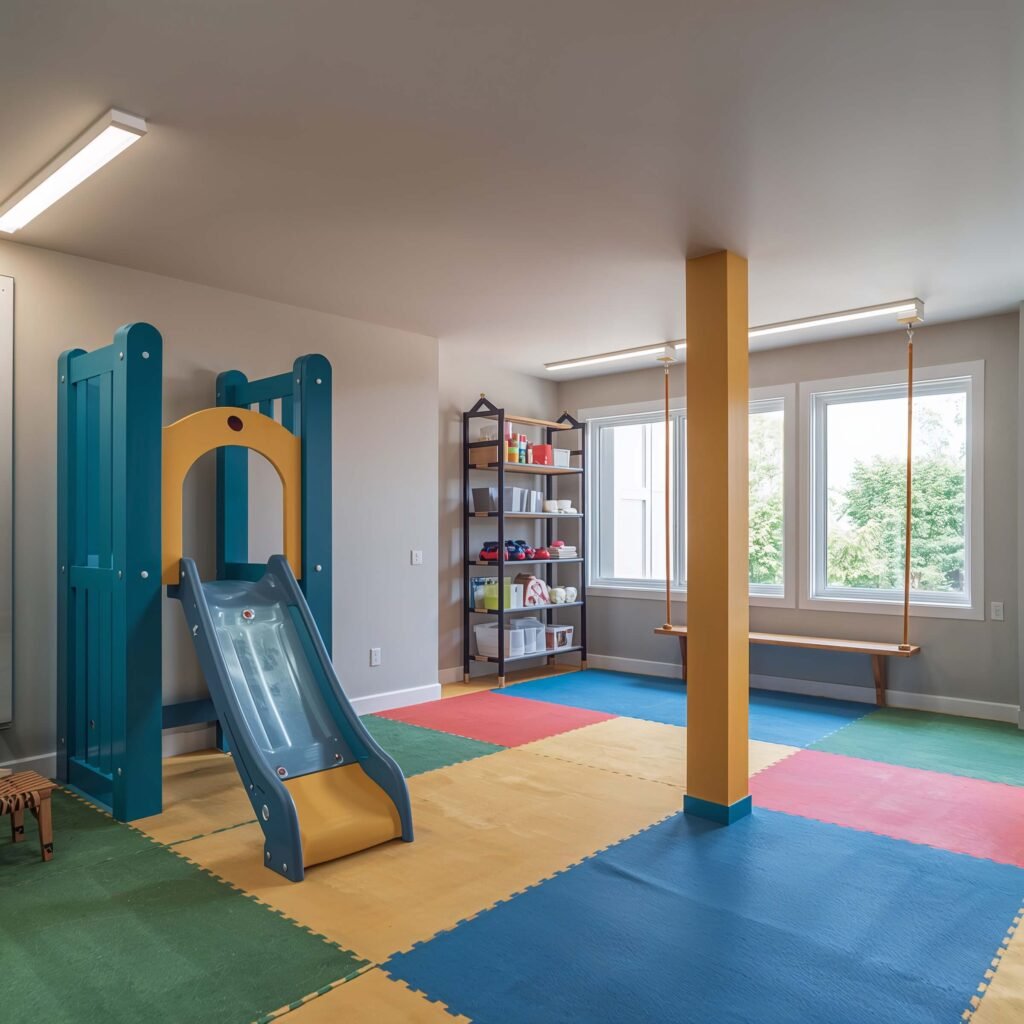
Ever wished you could just live at the park? Well, creating an indoor playground in your basement is the next best thing. And before you panic about the cost, you can DIY most of this stuff for way less than those fancy play cafe setups.
I went a little overboard with ours (my husband’s words, not mine), but watching my kids burn off energy when it’s negative degrees outside? Priceless. Plus, it’s basically a home gym for parents who embrace their inner child.
Building Your Own Adventure Zone
The foundation of any good indoor playground is climbing equipment. You can install:
- Rock climbing holds directly on the wall
- Rope ladders from ceiling joists
- A swing (if ceiling height allows)
- Monkey bars along one wall
- A small slide attached to a platform
Here’s my pro tip: start small and expand. We began with just climbing holds and added elements as the kids grew. Also, invest in proper safety surfacing. Those rubber playground tiles aren’t cheap, but they’re worth every penny when your kid inevitably attempts a backflip off the monkey bars.
For the climbing wall, create different difficulty routes using colored tape. My kids love racing to see who can complete the “red route” fastest. Competition makes everything more fun, right?
Creative Art & Craft Play Corner
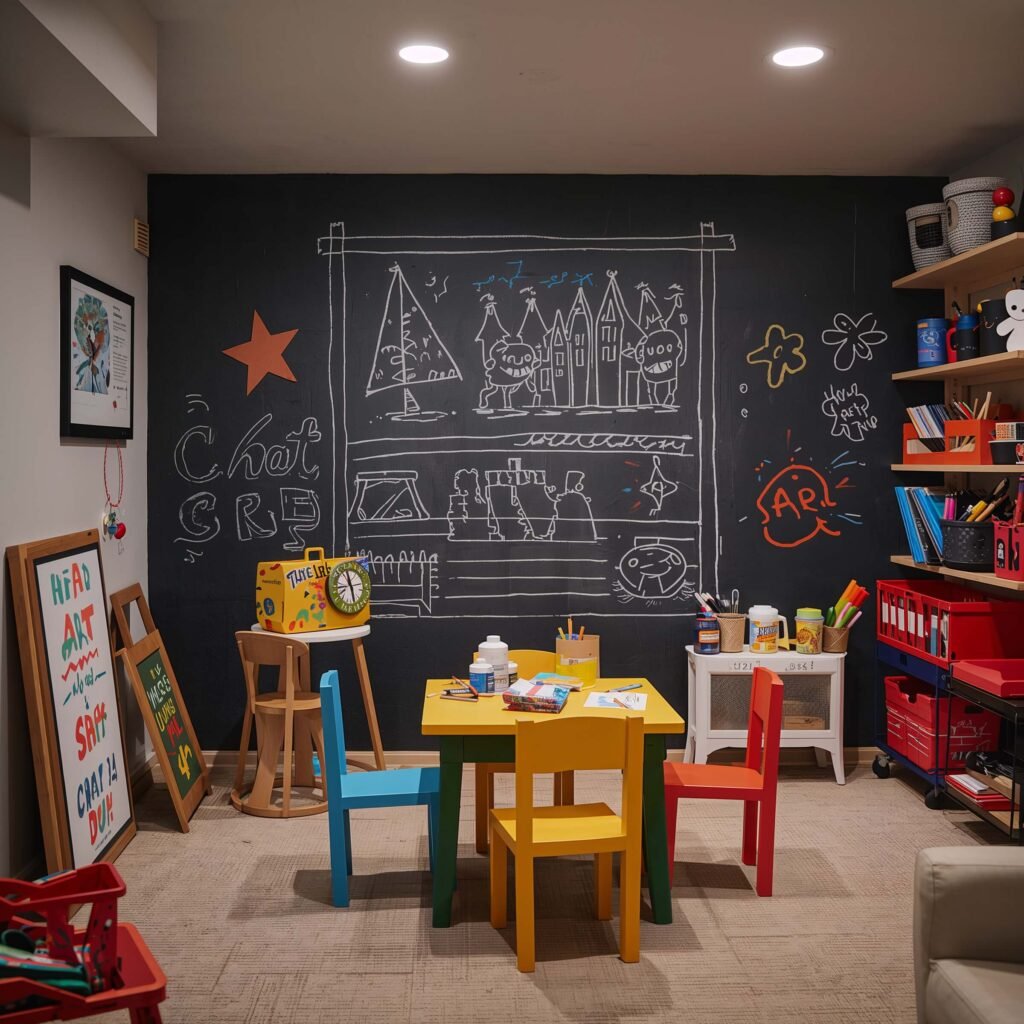
Listen, I’m not naturally a crafty person. My Pinterest fails are legendary. But kids need a space to create, and a dedicated art corner in the basement keeps the glitter explosion contained to one area. That alone makes it worth the effort.
The secret to a functional art space? Organization that kids can actually maintain. If you make it too complicated, you’ll spend your life reorganizing. Trust me on this one.
Designing Your Mini Art Studio
Start with a dedicated work surface. I found an old kitchen table at a garage sale and covered it with adhesive vinyl – instant wipeable surface. Mount a paper roll holder on the wall behind it for endless drawing space.
Your storage system should include:
- Clear containers for supplies (kids need to see what’s inside)
- A pegboard for hanging tools
- Labeled drawers for paper types
- Open shelving for current projects
- A drying rack for wet artwork
Here’s what changed everything for us: the “invitation to create” station. Every week, I set up one simple art project with materials ready to go. Could be as basic as paper and markers with a theme prompt. Kids see it and immediately want to create. It’s like magic.
Mount a gallery wire with clips to display current masterpieces. Rotate them regularly into a portfolio box. This way, you’re not drowning in artwork, but kids feel their creations are valued.
Also Read: 10 Gorgeous Basement Paint Colors Ideas to Brighten Rooms
Modern Neutral Tone Playroom Design
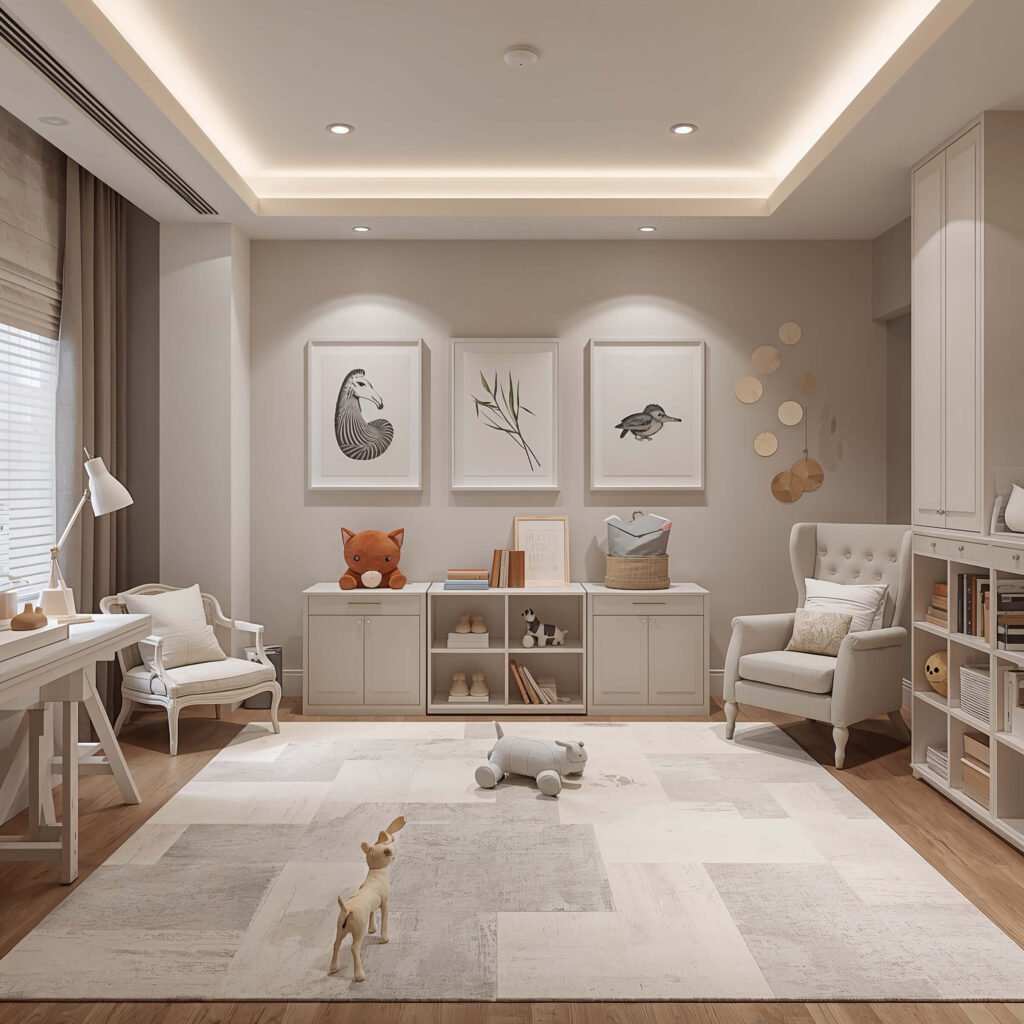
Who says playrooms have to be primary color explosions? A modern neutral playroom proves you can create a kid-friendly space that doesn’t clash with your home’s aesthetic. This approach works especially well in basements where you want to maximize light and avoid that underground feel.
I’ll admit, I was skeptical about neutral tones with kids. Wouldn’t it be boring? Turns out, when you do it right, it’s sophisticated and calming – which, let’s be honest, we all need more of in spaces where kids play.
Creating Sophisticated Play Spaces
Your color palette should revolve around:
- Warm whites and creams
- Soft grays and taupes
- Natural wood tones
- Black accents for contrast
- One subtle accent color (sage green or dusty pink work beautifully)
The trick to keeping it interesting? Texture, texture, texture. Layer different materials:
- Chunky knit poufs for seating
- Woven jute rugs for warmth
- Linen curtains if you have windows
- Wooden toys displayed like art
- Metal storage baskets for industrial edge
Here’s where modern design really shines: built-in solutions. Consider floor-to-ceiling storage that blends with the walls. Use handleless cabinets for a clean look. Lower sections stay open for toy access, while upper cabinets hide the less aesthetic stuff.
Jungle Safari Themed Playroom
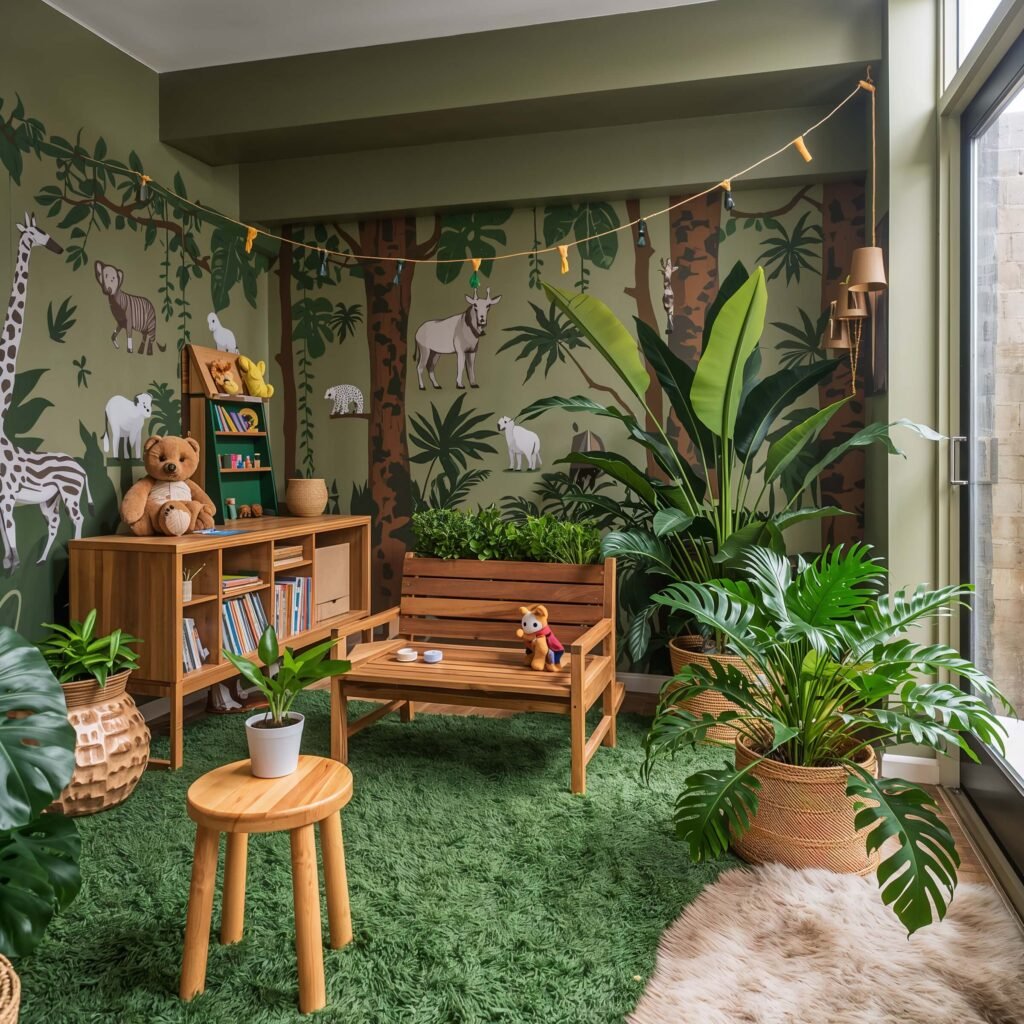
Want to know what theme never gets old? Jungle safari. I’ve yet to meet a kid who doesn’t go wild (pun intended) for animals and adventure. Creating a safari-themed basement playroom lets you go all out with the fun while still maintaining some design sanity.
The best part about this theme? It grows with your kids. Toddlers love the animals, older kids get into the adventure aspect, and you can easily update elements as they mature. Plus, green is scientifically proven to be calming – though my kids clearly didn’t get that memo.
Building Your Basement Jungle
Start with the walls. Paint an accent wall in deep jungle green, or go bold with a tropical leaf wallpaper. I opted for removable wallpaper because, well, commitment issues. The other walls stay light to prevent cave vibes.
Layer in these elements:
- Hanging canopy or mosquito netting from the ceiling
- Rope details throughout (great for gross motor skills)
- Animal print cushions and rugs
- Potted plants (fake ones if you’re plant killers like me)
- Wooden crates for that explorer vibe
IMO, the crown jewel should be a reading tent decorated like a safari camp. Throw in some binoculars, explorer hats, and field guides. My kids spend hours in there “researching” their next expedition.
For toys, focus on:
- Wooden animals in various sizes
- Safari vehicles for imaginative play
- Dress-up clothes (khaki vests, hats)
- Maps and globes for learning
- Nature-themed puzzles and games
Built-In Storage Wall Playroom
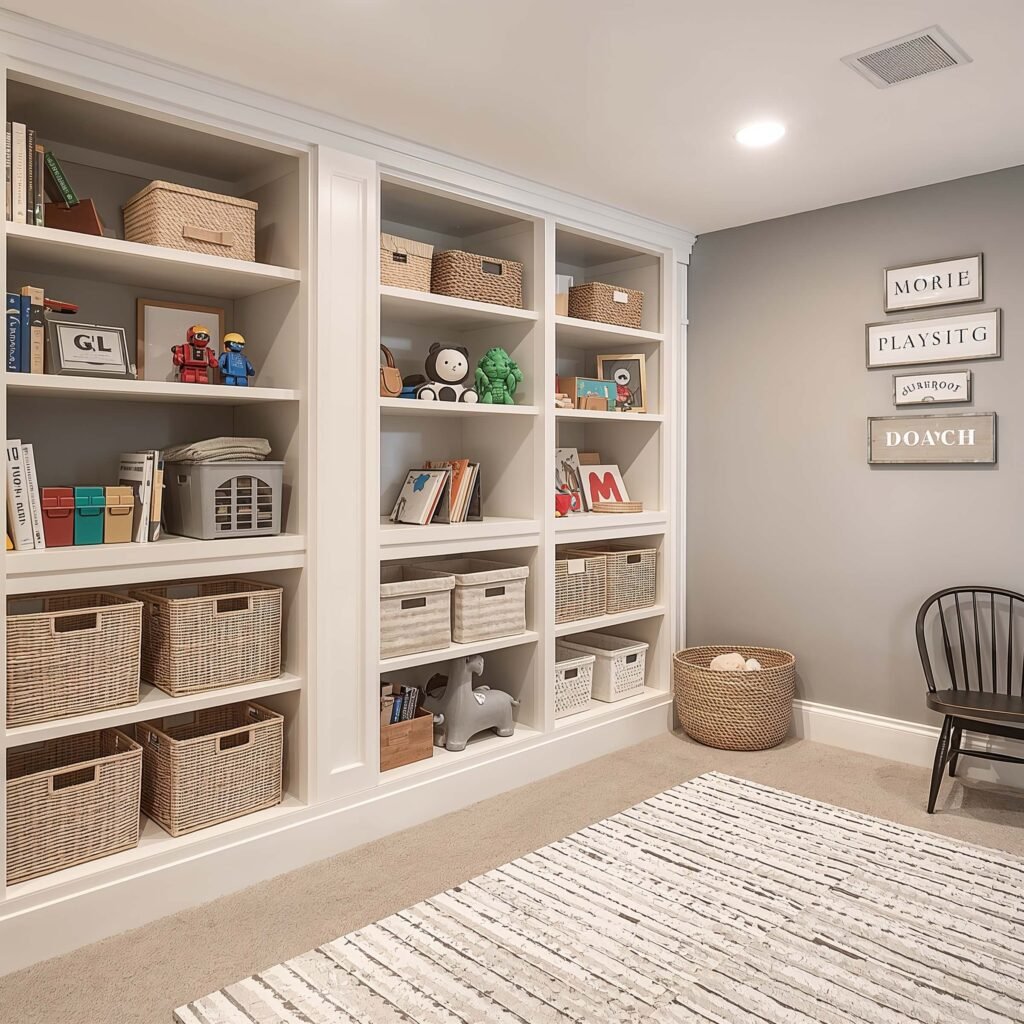
Can we talk about the storage struggle for a second? Every parent knows that kids come with approximately 47 million tiny pieces that somehow multiply overnight. A playroom with a built-in storage wall is basically the holy grail of organization.
I convinced my husband to build floor-to-ceiling storage along one basement wall, and it’s been a game-changer. Everything has a home, cleanup takes minutes, and the room actually stays organized. Well, mostly 🙂
Designing Your Storage Command Center
The key is mixing open and closed storage. You want:
- Cubbies at kid height for everyday toys
- Closed cabinets up top for rotating toys
- Deep drawers for bulky items
- Display shelving for special toys
- Built-in desk nook if space allows
Here’s my hack: color-code your storage bins. Blue for blocks, red for cars, green for art supplies. Kids learn the system fast, and cleanup becomes almost automatic. Almost.
Consider these add-ons:
- Cork board backing in some cubbies for displaying art
- Magnetic strips for toy cars
- Hidden outlets for charging stations
- Pull-out bins on sliders
- Labels with pictures for pre-readers
The beauty of built-ins? They maximize every inch of wall space while looking intentional. No more random shelving units that don’t quite fit. Plus, securing everything to the wall means no tipping hazards.
Also Read: 10 Clever Basement Storage Ideas and DIY Organization Tips
Reading Nook + Play Combo Space
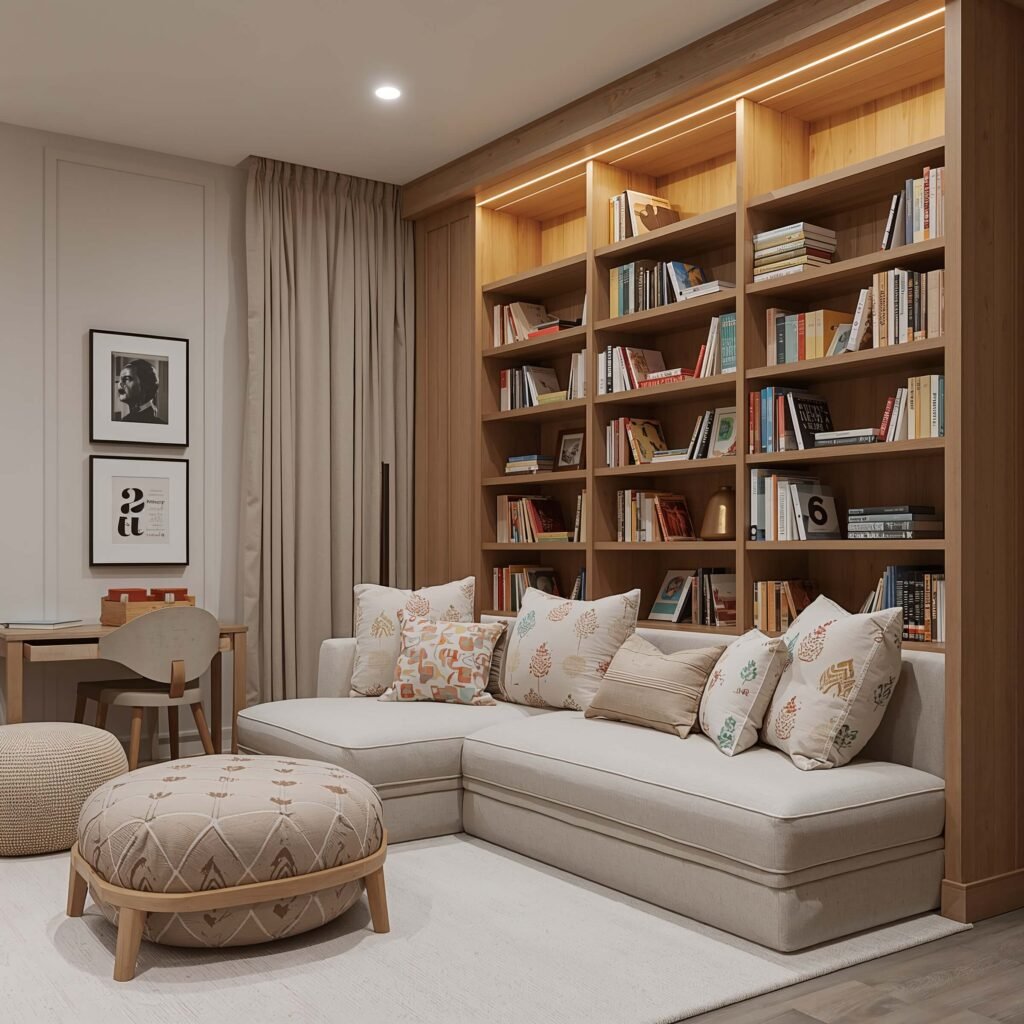
Here’s the dream: kids who love reading as much as they love running around like tiny tornadoes. Creating a combination reading and play space in your basement encourages both quiet and active time. It’s all about smart zoning and making books as appealing as toys.
My kids initially treated books like frisbees (why are toddlers like this?), but once we created a special reading zone, something clicked. Now they actually request “book time,” and I’m not questioning this miracle.
Balancing Books and Play
Divide your space into two distinct zones connected by design elements. The reading area needs:
- Comfortable seating at various heights
- Forward-facing book displays (covers out)
- Soft lighting options
- Cozy textures like rugs and pillows
- A sense of enclosure without isolation
For the play zone, keep it complementary but separate:
- Open floor space for active play
- Low storage that doesn’t block sightlines
- Quieter toys near the reading area
- Active toys further away
- Visual connection between spaces
The secret sauce? Make the transition gradual. Use a beautiful rug to define the reading area while the flooring flows into play space. Paint an accent wall behind the book nook to make it special without closing it off.
Consider adding:
- Window seating if you have basement windows
- String lights for ambiance
- Book-themed artwork
- Reading reward chart
- Rotating seasonal book displays
Making It All Work Together
After transforming our basement into kid paradise, here’s what I’ve learned: perfection is overrated. Your basement playroom doesn’t need to look like a magazine spread. It needs to work for your actual family, with your actual kids, in your actual life.
The best playroom combines elements that grow with your children. Maybe you start with soft play for toddlers, add art supplies as they develop fine motor skills, and eventually incorporate homework zones. Flexibility is your friend.
Remember, you’re not just creating a playroom – you’re building memories. Years from now, your kids won’t remember if the storage bins matched perfectly. They’ll remember the adventures they had in their special space, the forts they built, the art they created.
So grab that measuring tape, channel your inner child, and transform that basement into something magical. Your upstairs living room (and your sanity) will thank you. And hey, when the kids outgrow it? You’ve got yourself a pretty sweet adult hangout space already started.
Now, who’s ready to reclaim their basement from the land of forgotten exercise equipment and holiday decorations? Your kids’ new favorite spot is waiting to be created, one brilliant idea at a time.