10 Inspiring Basement Office Ideas and Stylish Workspaces

Remember when basements were just creepy storage spaces where we’d shove Christmas decorations and old exercise equipment? Yeah, those days are long gone.
I transformed my own basement into an office last year, and honestly, I can’t believe I waited so long.
Working underground isn’t the dungeon experience you might imagine – with the right setup, it’s actually pretty amazing.
Let me share something funny: when I first told my friends I was moving my office to the basement, they looked at me like I’d lost my mind. “You’re voluntarily going underground?” they asked.
Now? They’re all jealous of my setup and asking for tips. So here’s everything I learned, plus some killer ideas that’ll turn your basement from forgotten space to your favorite room in the house.
Cozy Minimalist Basement Office
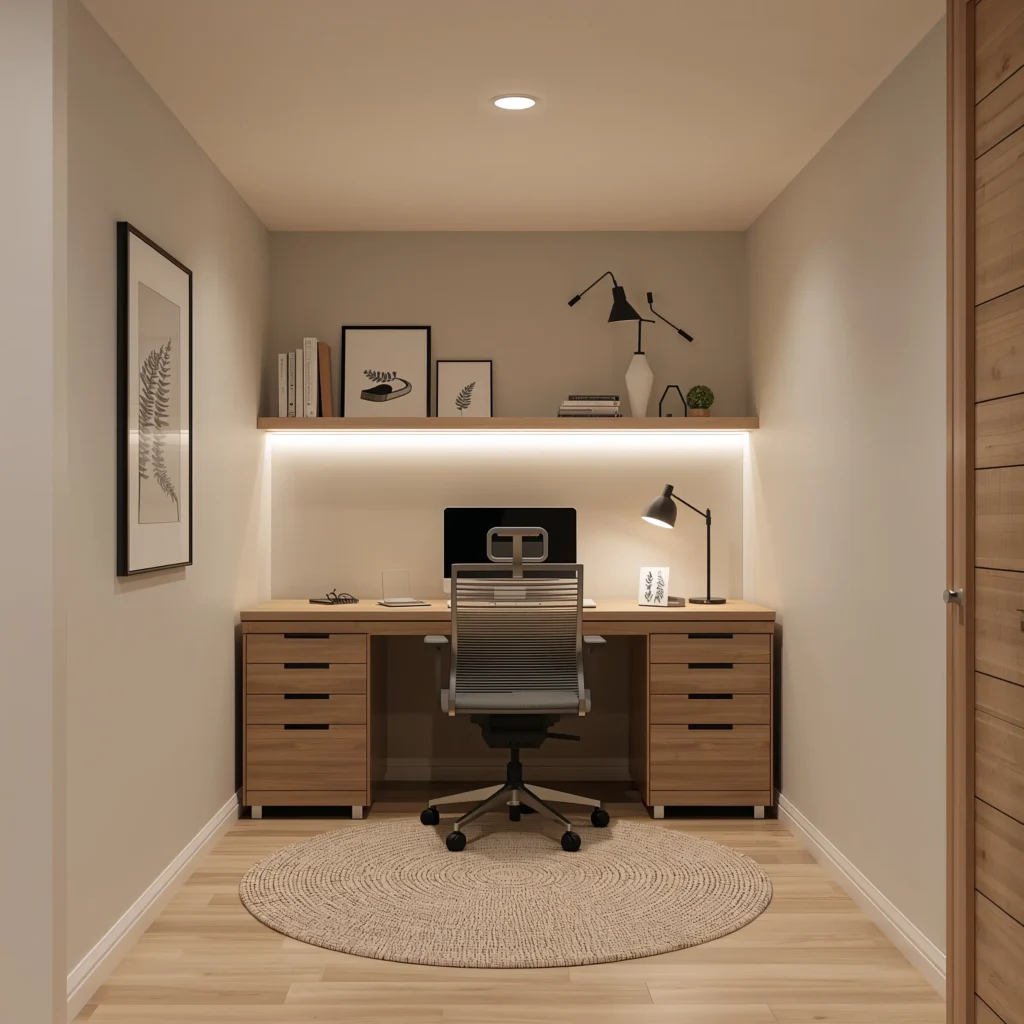
You know what’s ironic about basements? Everyone thinks you need to cram them full of stuff to make them feel less empty. Wrong. My neighbor Sarah proved this when she created the most zen workspace I’ve ever seen in her basement.
The key to nailing a cozy minimalist basement office comes down to three things: warm lighting, smart storage, and purposeful furniture choices. Sarah uses just one sleek desk, a comfortable ergonomic chair, and floating shelves that practically disappear into the walls. The magic happens when you paint everything in warm whites or soft grays – suddenly your basement feels twice as big.
Want to know the secret weapon? Texture. Add a chunky knit throw over your chair, place a simple jute rug under your desk, and maybe include one statement piece like a modern floor lamp. These elements create warmth without cluttering the space.
Essential Elements for Your Minimalist Setup
Here’s what you actually need (and nothing more):
- A quality desk with clean lines and minimal hardware
- Hidden cable management systems to keep things looking crisp
- One or two floating shelves for essential items only
- Warm LED lighting (3000K temperature works perfectly)
- A single piece of wall art that speaks to you
I learned the hard way that going minimalist in a basement requires discipline. Every time I’m tempted to add “just one more thing,” I ask myself: does this serve a purpose or spark genuine joy? If not, it stays upstairs.
Bright Scandinavian Workspace
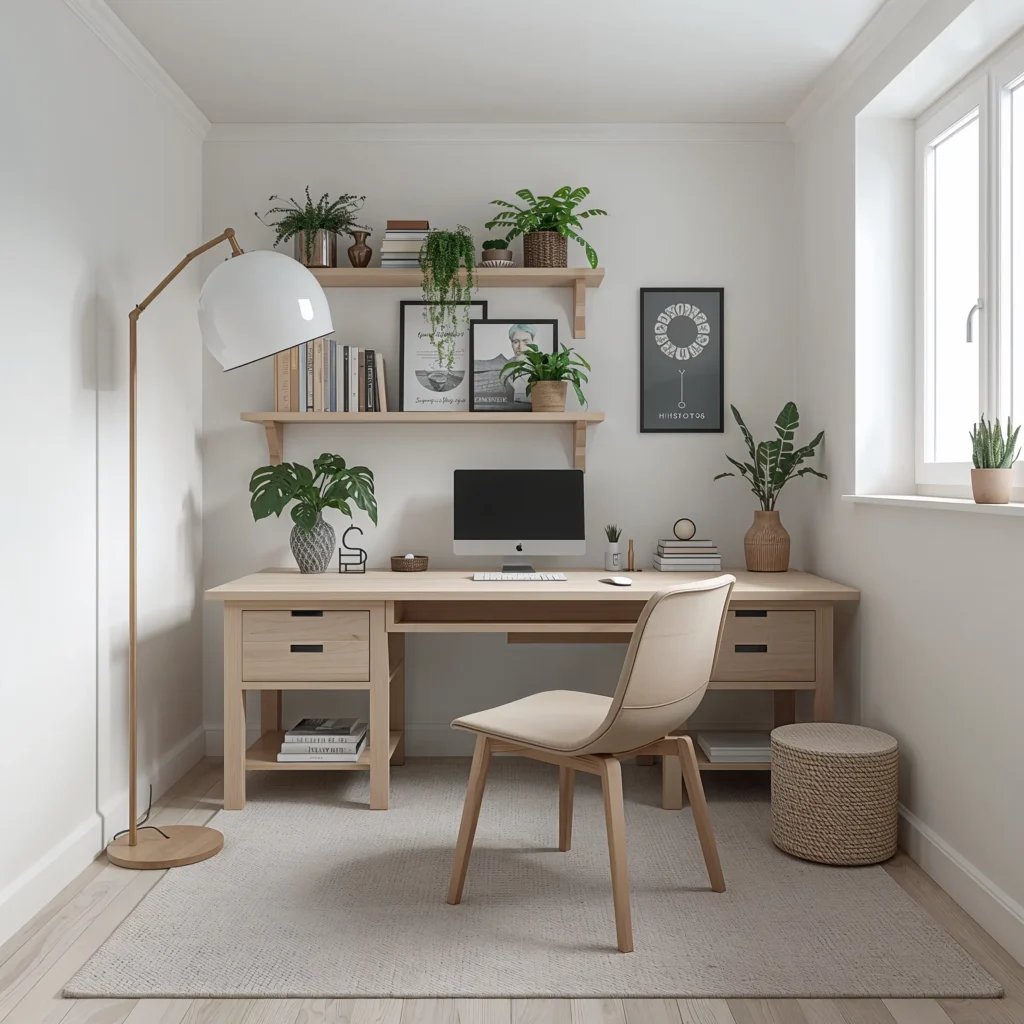
Ever walked into a Scandinavian-designed space and immediately felt calmer? That’s not an accident. Scandinavian design masters the art of making spaces feel bright and airy – exactly what most basements desperately need.
The foundation of any Scandinavian basement office starts with white walls and light wood accents. I’m talking birch desks, ash shelving, and maybe some pine details if you’re feeling adventurous. The Scandinavians figured out centuries ago that light colors reflect whatever natural light you can get, and trust me, in a basement, you need all the help you can get.
Hygge Your Way to Productivity
Let’s talk about hygge (pronounced “hoo-ga”) – that Danish concept of cozy contentment that everyone’s obsessed with. In your basement office, this translates to:
- Soft, diffused lighting from multiple sources
- Natural materials like wool, linen, and untreated wood
- Plants (yes, they can survive in basements – more on that later)
- A cozy reading nook with a sheepskin throw
- Neutral colors with occasional black accents for contrast
The trick I discovered? Layer your lighting like crazy. Combine overhead fixtures with desk lamps, floor lamps, and even string lights. Your basement will feel less like a cave and more like a Swedish design studio.
Rustic Wood-Themed Home Office
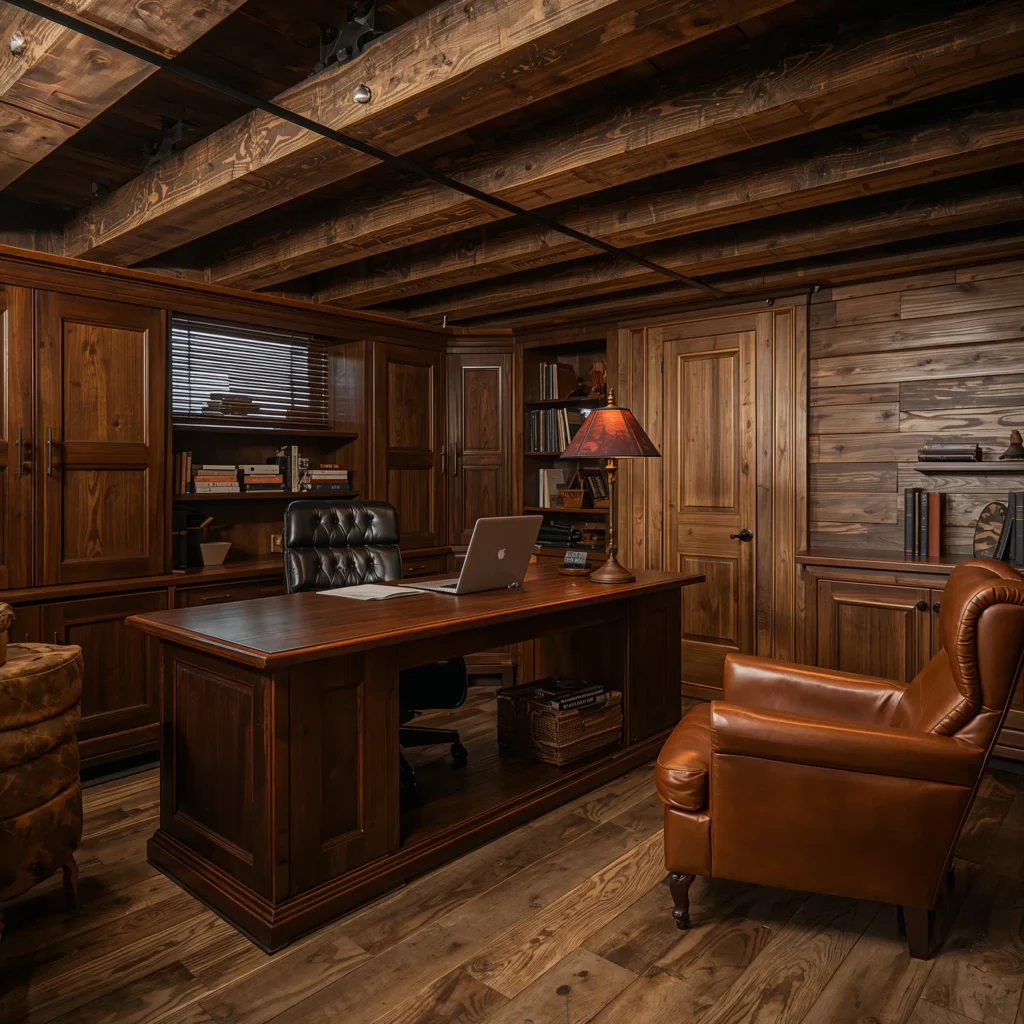
Okay, who else gets instantly productive when surrounded by wood? There’s something about natural timber that makes work feel less like… well, work. My buddy Tom went full lumberjack-chic in his basement, and the results are stunning.
Reclaimed wood is your best friend here. Tom found old barn boards on Facebook Marketplace for practically nothing and used them to create an accent wall behind his desk. The character in that wood – the knots, the grain patterns, the imperfections – adds more personality than any paint color ever could.
Building Your Rustic Haven
Here’s how to nail the rustic basement office vibe:
- Install wood beam ceiling treatments (even faux ones work great)
- Choose a live-edge desk or DIY one from a slab of walnut
- Add leather accents through your chair or desk accessories
- Include wrought iron details for hardware and lighting
- Display vintage maps or nature photography in weathered frames
Want to know what really sells this look? The smell. Seriously, add a cedar sachet or two, and your basement office will smell like a mountain cabin. It’s weirdly motivating – IMO, way better than any artificial air freshener.
Also Read: 10 Trendy Basement Floor Ideas That Wow Every Guest
Modern Industrial Basement Office
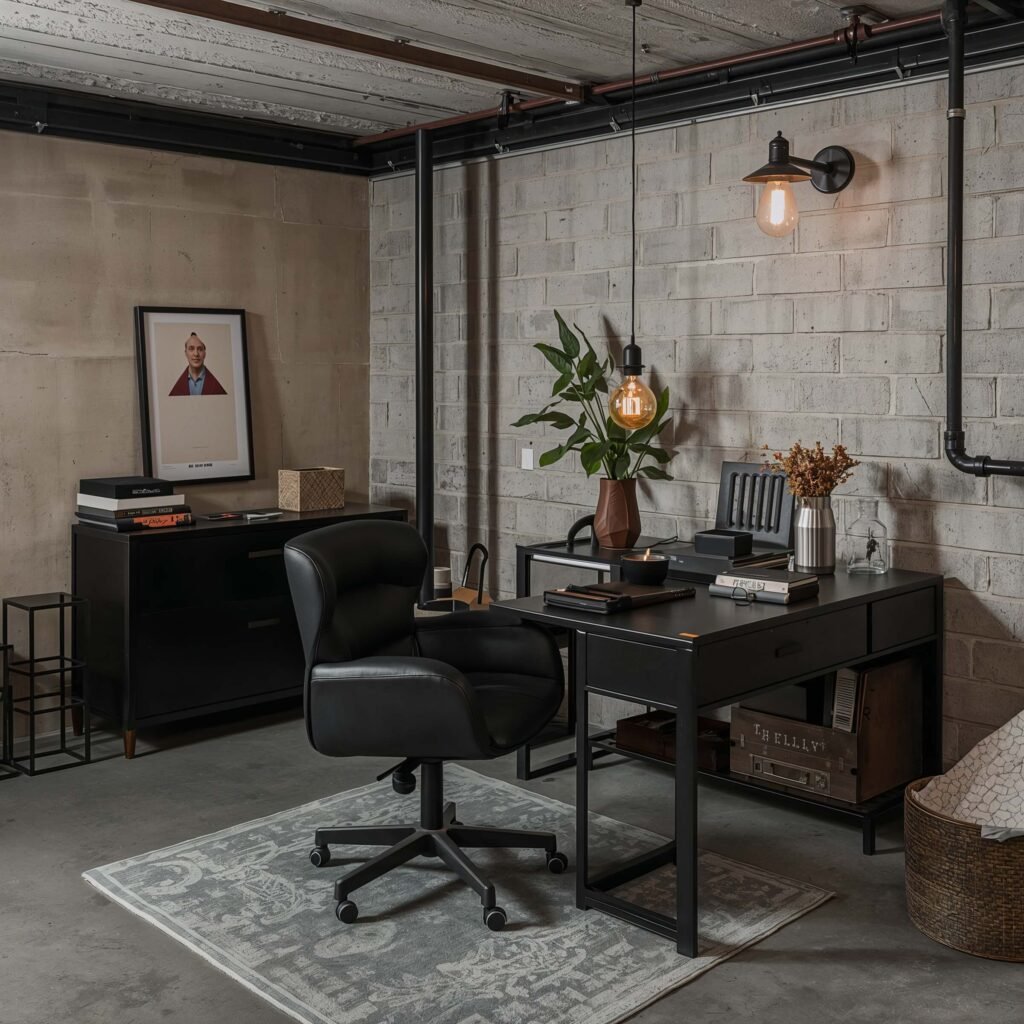
Industrial design in a basement just makes sense. You’re already underground with exposed elements – why fight it? Lean into those concrete walls and visible pipes instead of trying to hide them.
I helped my sister design her industrial basement office last summer, and we discovered something amazing: exposed elements actually make the space feel bigger. When you paint pipes and ductwork matte black and leave brick walls exposed, you create visual interest without adding clutter.
Industrial Elements That Work
The industrial look requires specific materials and finishes:
- Metal and wood combination furniture (think steel legs with wood tops)
- Edison bulb lighting in cage fixtures or on exposed cords
- Concrete floors sealed and polished (or concrete-look vinyl if you’re renting)
- Wire shelving units for open storage
- Vintage factory elements like old gears or pulleys as decor
Pro tip: Don’t go overboard with the metal. Balance cold industrial elements with warm touches like a vintage leather chair or wooden picture frames. Otherwise, your office might feel more like a warehouse than a workspace.
Compact Corner Office Setup
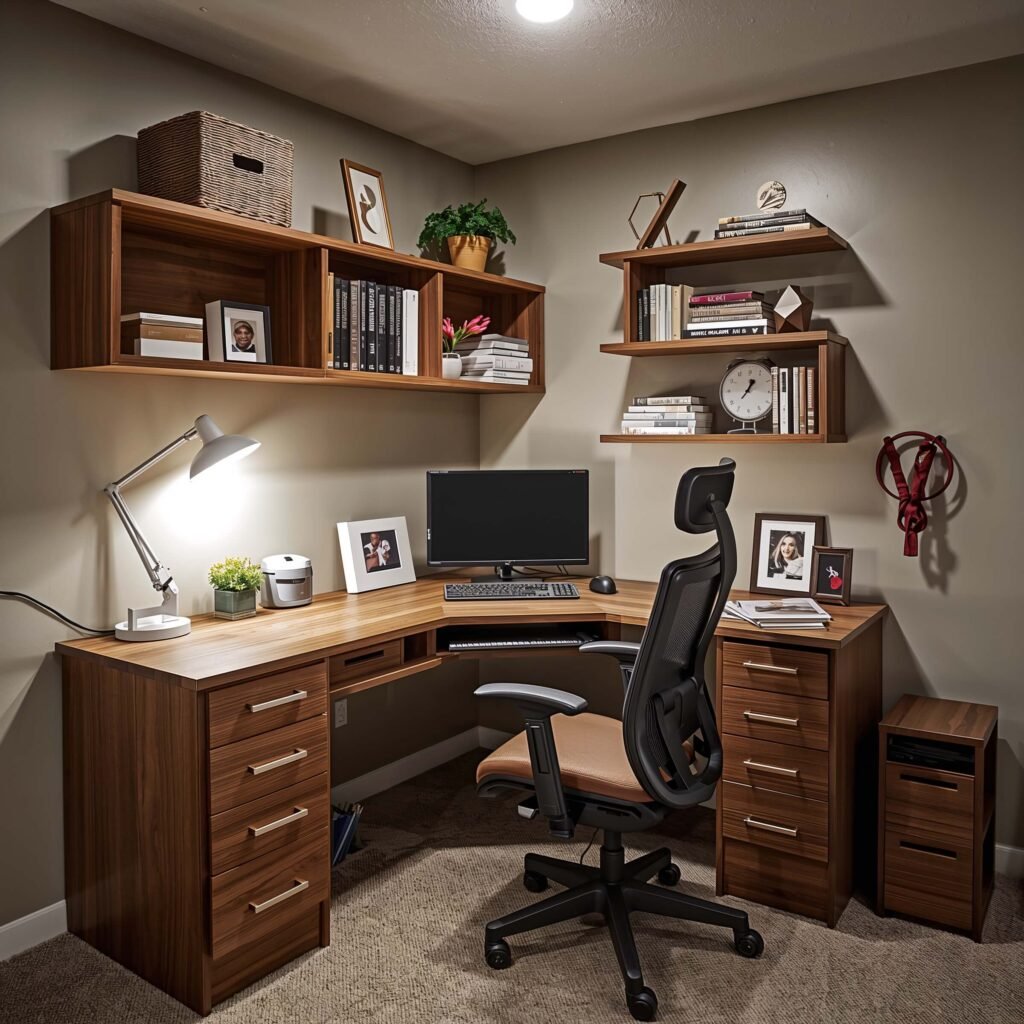
Got a tiny basement corner that’s just collecting dust? Perfect. Some of the best basement offices I’ve seen squeeze into spaces you wouldn’t think could work. My own first basement office occupied a 6×6 corner, and I loved every square inch of it.
Corner desks are obviously the hero here, but picking the right one makes all the difference. L-shaped desks maximize surface area while keeping everything within arm’s reach. I found mine at a thrift store and gave it new life with some chalk paint.
Maximizing Your Corner Space
Here’s how to make a corner office feel spacious:
- Install floating corner shelves above your desk for vertical storage
- Use a wall-mounted monitor to free up desk space
- Choose a chair that tucks completely under the desk when not in use
- Add mirrors on adjacent walls to create depth
- Keep the color palette light and consistent
The biggest mistake people make with corner offices? Trying to fit too much. Less really is more when you’re working with limited square footage. Pick pieces that serve multiple purposes, like a filing cabinet that doubles as a printer stand.
Basement Office with Skylight Illusion
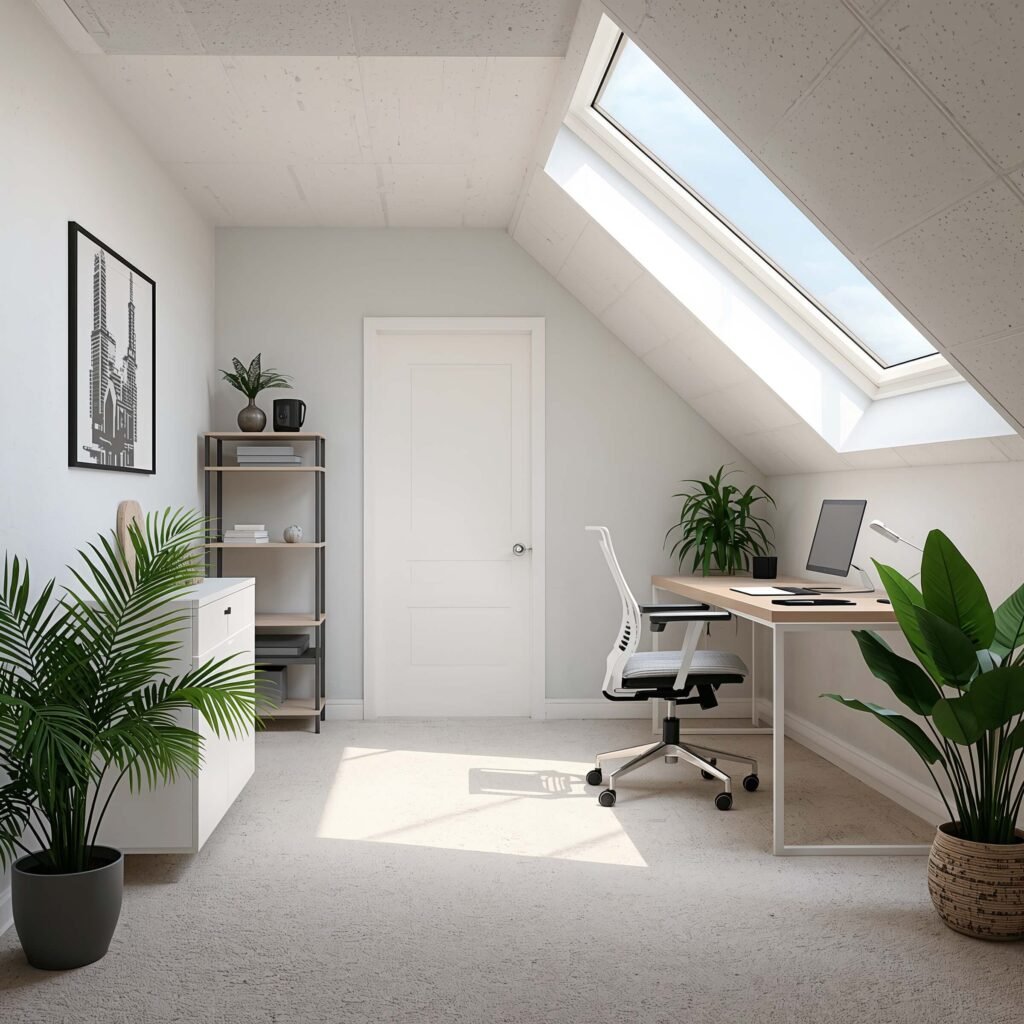
Can’t install actual skylights in your basement? Join the club. But here’s the thing – you can totally fake it. And before you roll your eyes, hear me out. The psychological impact of perceived natural light is almost as good as the real thing.
LED skylight panels have come a long way. The good ones mimic the color temperature changes throughout the day, and honestly, after a week, your brain stops noticing they’re not real. I installed two in my basement office, and visitors always ask about my “skylights” 🙂
Creating the Illusion
Besides LED panels, try these tricks:
- Paint a skylight mural on the ceiling (hire an artist if you’re not artistic)
- Install cove lighting around the ceiling perimeter
- Use daylight bulbs (5000K-6500K) during work hours
- Add a large mirror opposite your main light source
- Include upward-facing floor lamps to bounce light off the ceiling
The key to selling the illusion? Commitment. Don’t half-ass it with one fake window. Create a comprehensive lighting plan that tricks your brain into forgetting you’re underground.
Also Read: 10 Beautiful Basement Stairwell Ideas to Transform Your Space
Vintage Library-Style Workspace
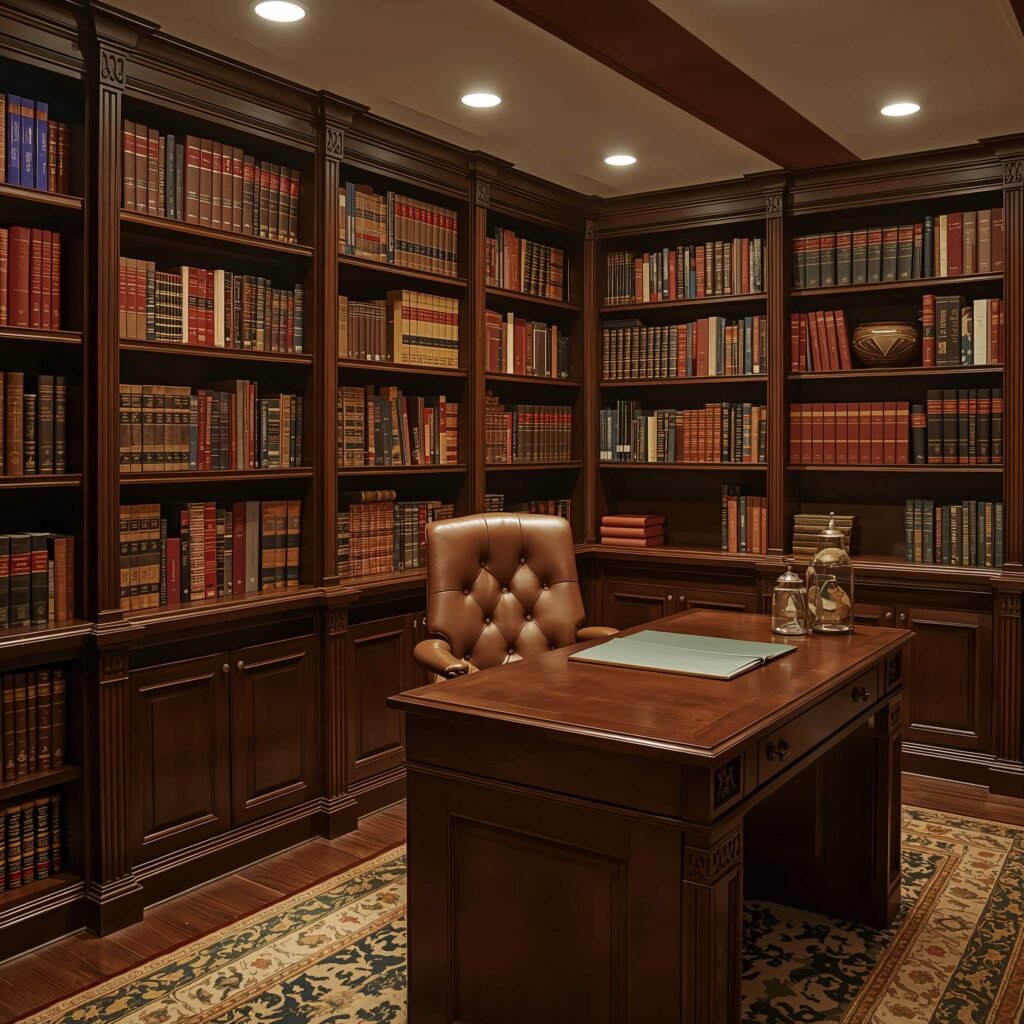
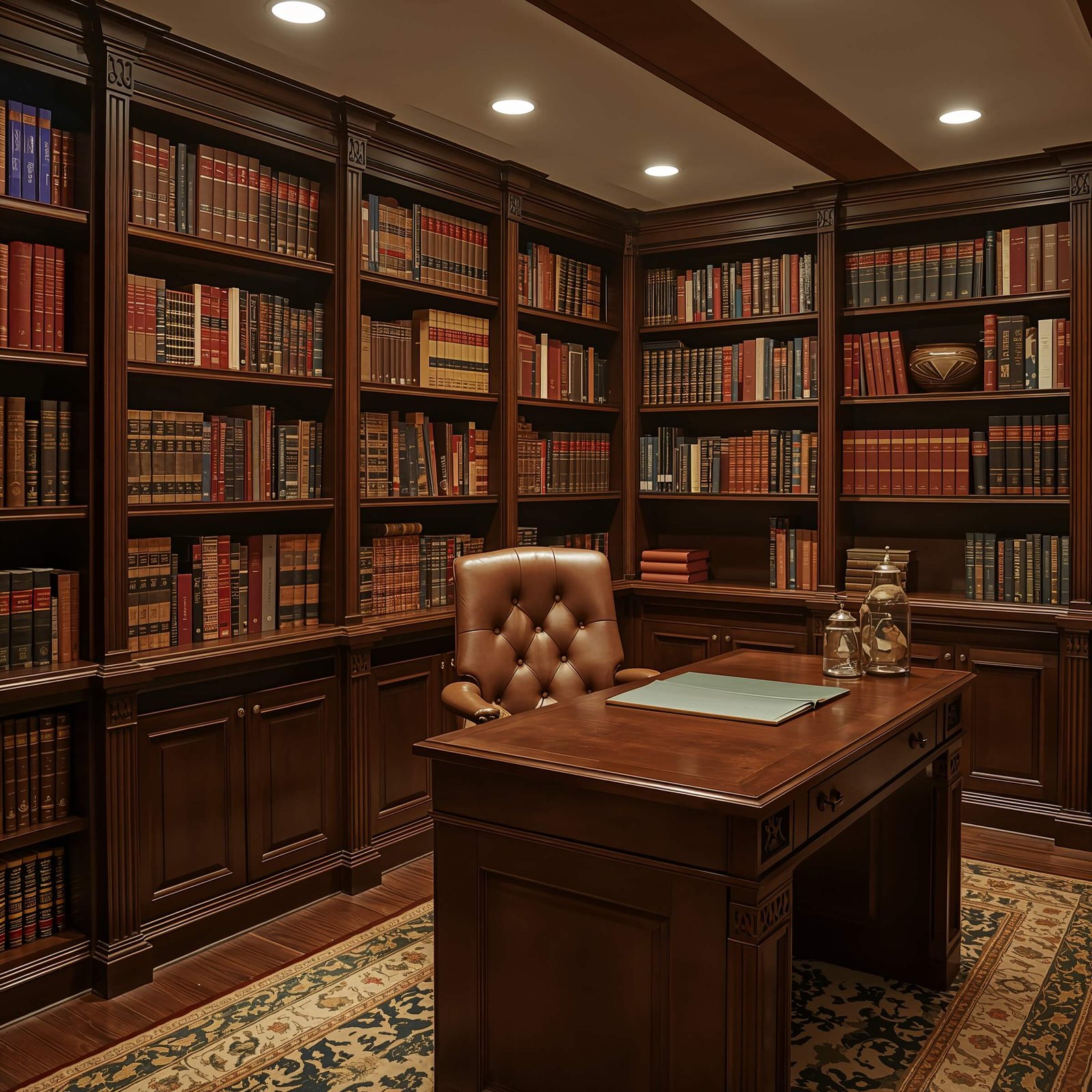
Ever fantasized about working in one of those old libraries with leather-bound books and rolling ladders? Your basement can absolutely channel that energy. This style works especially well in basements because they already have that quiet, contemplative atmosphere libraries are known for.
Dark wood furniture is non-negotiable for this look. Hunt estate sales for solid wood desks with lots of drawers and character. My friend Rachel scored an incredible banker’s desk from the 1940s for less than what IKEA charges for particle board.
Building Your Personal Library
Essential elements for library vibes:
- Floor-to-ceiling bookshelves (even if half the books are just for show)
- A vintage banker’s lamp with a green glass shade
- Rich, jewel-toned colors like emerald, burgundy, or navy
- A leather or velvet reading chair (thrift stores are goldmines for these)
- Antique accessories like globes, magnifying glasses, or old typewriters
Want to really commit? Add a rolling library ladder. Even a small one adds instant authenticity and actually helps you use vertical storage space. Plus, who doesn’t want to dramatically slide along their bookshelf while looking for reference materials?
Open-Concept Creative Studio
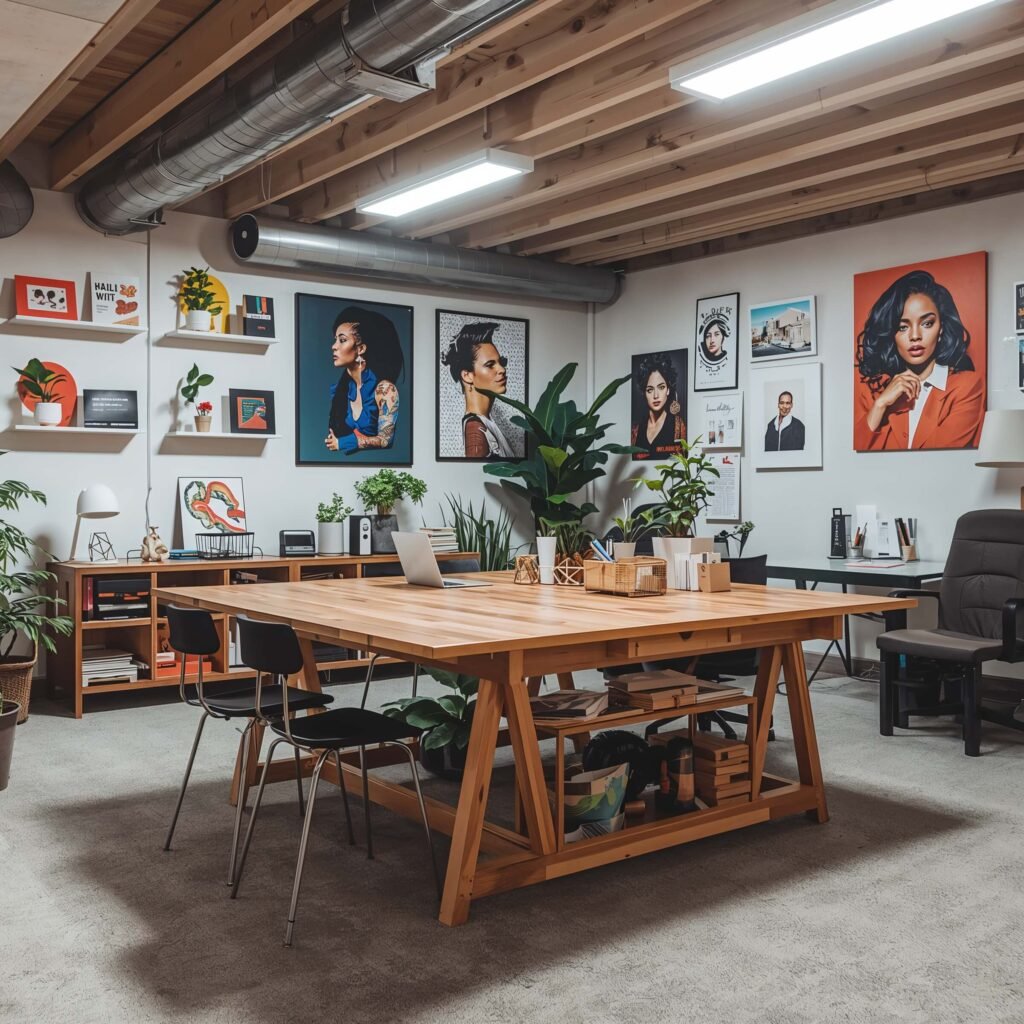
Sometimes you need space to spread out, pin up inspiration boards, and pace while you think. If your basement allows, creating an open-concept creative studio might be exactly what your productivity needs.
I converted my entire basement into one giant workspace last year, and the freedom is incredible. No walls means no limits on how you arrange and rearrange your space based on current projects.
Designing Your Creative Space
Here’s what makes an open-concept basement office work:
- Define zones with rugs instead of walls
- Use mobile furniture on casters for flexibility
- Install a massive whiteboard or cork wall for brainstorming
- Include multiple work surfaces at different heights
- Add a comfy brainstorming area with floor cushions or a small sofa
The challenge with open-concept? Avoiding chaos. You need strong organizational systems and the discipline to maintain them. But when it works, it really works. My productivity shot up 40% after switching to this layout.
Small Space Multi-Functional Office
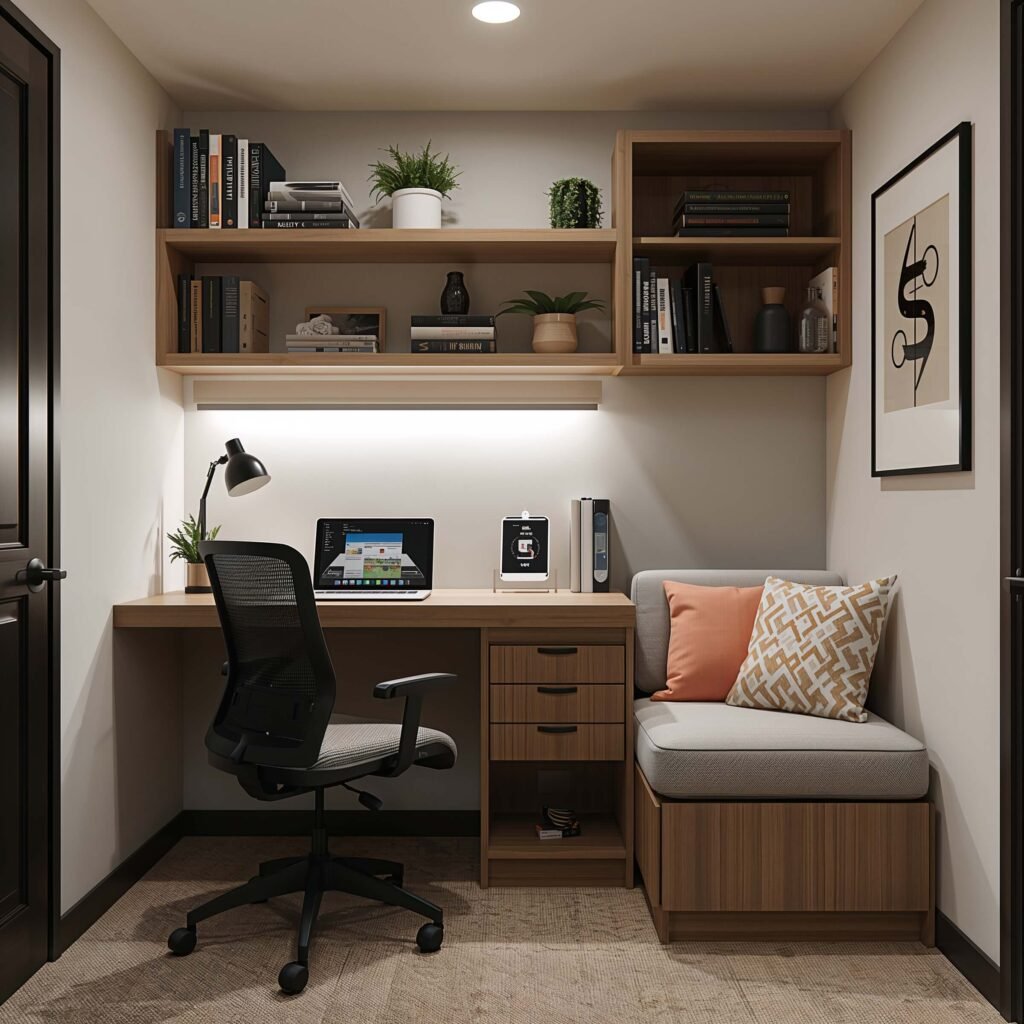
Real talk: not everyone has a massive basement to work with. Maybe you need your basement office to also be a guest room, gym, or storage area. That’s totally doable with smart planning.
Murphy desks are having a moment, and for good reason. They fold completely flat against the wall when not in use. Pair one with a Murphy bed, and you’ve got a guest room that transforms into an office in seconds.
Multi-Purpose Magic
Smart solutions for multi-functional spaces:
- Modular furniture that can be reconfigured as needed
- Storage ottomans that hide office supplies
- Room dividers that double as shelving
- Convertible desk/dining tables for entertaining
- Wall-mounted fold-down desks that disappear when not needed
My cousin Mike uses his basement as an office by day and home gym by night. His desk folds up, revealing wall-mounted gym equipment. The key is choosing furniture that works hard, just like you do.
Also Read: 10 Creative Basement Living Room Ideas for Small Spaces
Basement Office with Indoor Plants
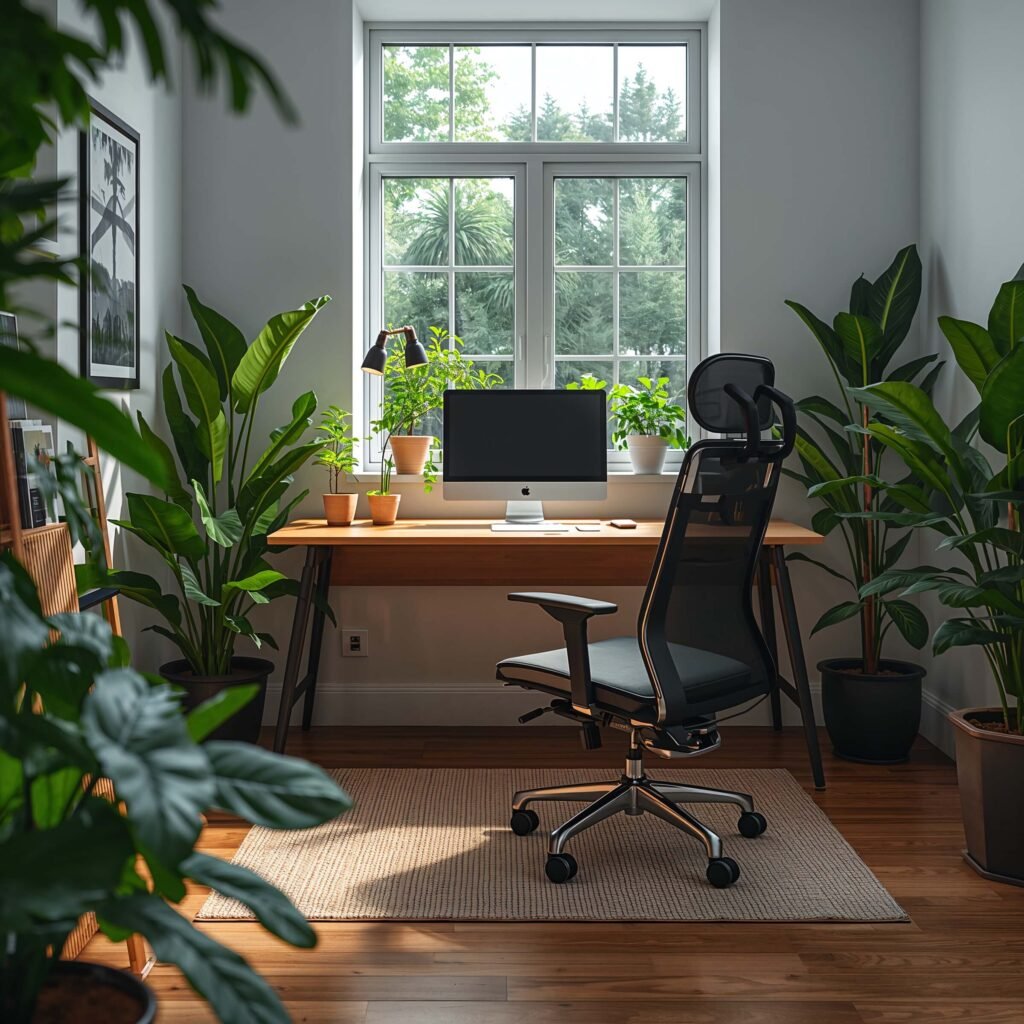
Whoever said plants can’t thrive in basements clearly never tried. Sure, you won’t grow tomatoes down there, but plenty of plants actually prefer lower light conditions. Plus, they literally clean your air while making your space feel alive.
Snake plants and ZZ plants are basically indestructible and perfect for basement offices. They tolerate low light, irregular watering, and temperature fluctuations. I’ve killed every succulent I’ve ever owned, but my basement snake plant? Thriving for two years strong.
Best Plants for Basement Offices
Your green team lineup should include:
- Pothos: Trails beautifully and tolerates neglect
- Peace lily: Actually prefers shade and tells you when it needs water
- Chinese evergreen: Gorgeous patterns and low maintenance
- Cast iron plant: Lives up to its tough-as-nails name
- Philodendron: Fast-growing and forgiving
Here’s a trick I learned: supplement with grow lights disguised as regular desk lamps. Your plants get the spectrum they need, and you get better lighting for video calls. Win-win.
Creating Your Underground Jungle
Don’t just stick a sad plant in the corner and call it a day. Create levels with plant stands, hang planters from ceiling hooks, and cluster different sizes together for impact. The goal is to make your basement feel less like a basement and more like a secret garden workspace.
FYI, overwatering kills more basement plants than low light ever will. Get a moisture meter if you’re prone to helicopter plant parenting like I am. Your plants (and your water bill) will thank you.
Making Your Basement Office Actually Work
After helping dozens of friends set up their basement offices, I’ve noticed the successful ones share certain traits. They prioritize comfort over aesthetics, invest in proper lighting, and aren’t afraid to break conventional office “rules.”
Temperature control matters more than you think. Basements run cold in winter and humid in summer. A small space heater and dehumidifier will make your space usable year-round. Don’t cheap out here – being uncomfortable kills productivity faster than any distraction.
Sound is another factor people overlook. Basements can echo weirdly or let you hear every footstep from above. Acoustic panels disguised as art solve this problem while adding visual interest. My office went from echo chamber to recording studio quality with just six panels.
Remember, your basement office should reflect how you actually work, not how Instagram thinks you should work. Need to pace while on calls? Leave space for that. Work better with music? Invest in good speakers. The best basement office is the one you’ll actually use.
The Bottom Line
Transforming your basement into an office isn’t just about maximizing square footage – it’s about creating a space where you actually want to spend time. Whether you go minimalist, industrial, or full vintage library, the key is making intentional choices that support your work style.
I spent years believing my basement was just wasted space. Now? It’s where I do my best work, away from the chaos upstairs. The isolation that makes basements seem creepy actually makes them perfect for deep focus. Plus, there’s something satisfying about turning the most overlooked room in your house into the most productive.
Ready to start your basement office transformation? Pick one idea that resonates with you and start there. You don’t need to renovate everything at once. Sometimes just painting one wall or adding better lighting completely changes the energy of a space. Trust me, once you experience the joy of a well-designed basement office, you’ll wonder why everyone doesn’t work underground.
Who knows? Maybe your basement office will become so amazing that your family starts asking to borrow it. Just remember to install a lock on the door – you know, for those important video calls 😉