10 Genius Basement Kitchen Ideas and Space-Saving Tricks

You know that forgotten space beneath your main floor? That basement you’ve been using as a glorified storage unit for holiday decorations and old exercise equipment? Yeah, that one. What if I told you it could become your new favorite cooking space?
I spent three years planning my own basement kitchen renovation, and let me tell you, the transformation completely changed how our family uses our home.
No more cramped dinner parties upstairs. No more arguing over who gets to use the kitchen during the holidays. And the best part? My teenagers actually hang out down there now instead of disappearing into their rooms.
Whether you’re dealing with low ceilings, minimal natural light, or that lovely concrete floor situation we all know and love, I’ve got ideas that’ll work.
These aren’t just pretty Pinterest boards either – these are real, practical basement kitchen designs that actually function in the real world.
Cozy Rustic Basement Kitchen
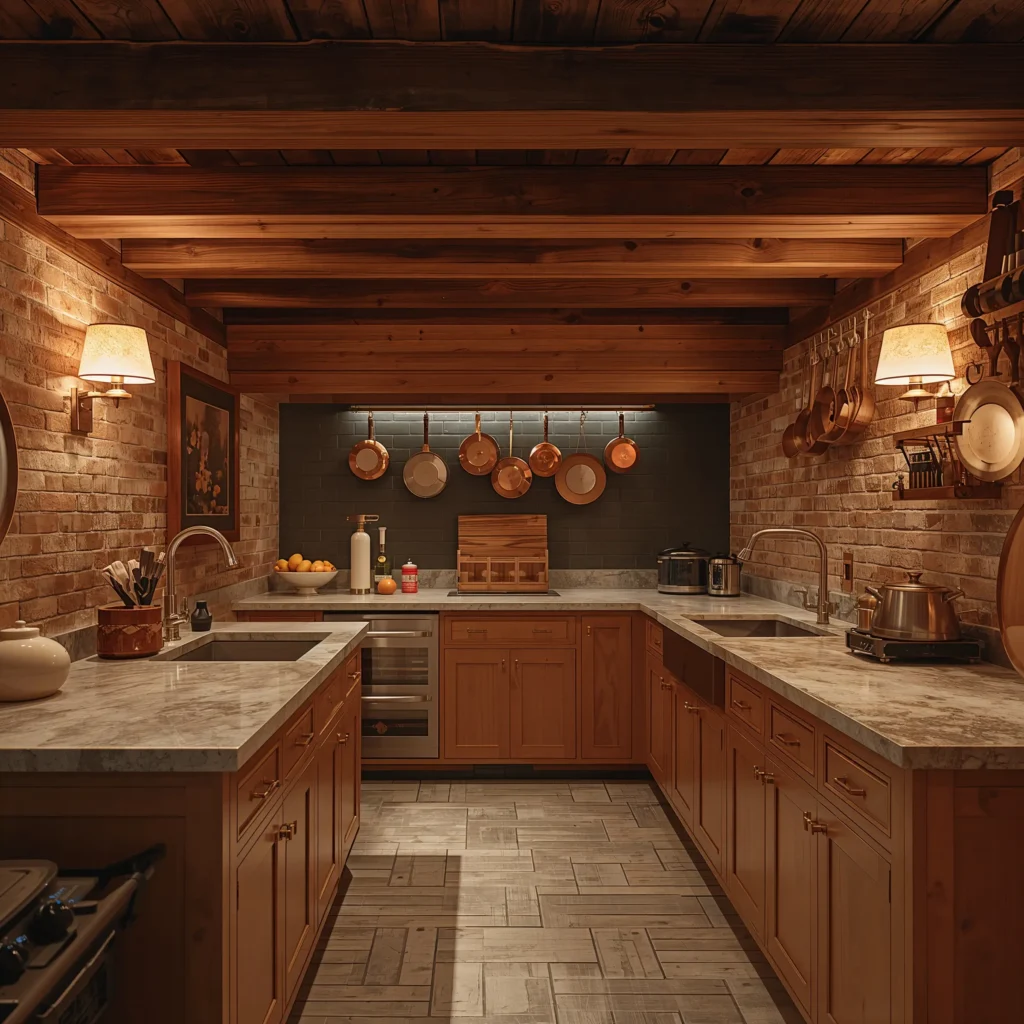
There’s something magical about walking downstairs into a warm, wood-filled kitchen that makes you forget you’re technically underground. Rustic basement kitchens embrace the cave-like nature of basements instead of fighting against it.
Start with exposed wooden beams on the ceiling – if you’ve got them, flaunt them. Don’t have them? Install some faux beams. I know, I know, “faux” sounds cheap, but modern versions look incredibly realistic and cost a fraction of real wood. Paint your walls in warm earth tones like terracotta, sage green, or that perfect shade of warm gray that doesn’t look like primer.
Key Elements for Rustic Success
The real secret to nailing this look? Mix different textures like your kitchen depends on it (because it does). Here’s what works:
- Butcher block countertops that age beautifully with use
- Open shelving made from reclaimed barn wood
- A farmhouse sink that can handle serious cooking projects
- Cast iron fixtures and hardware with that perfect patina
- Stone or brick backsplash (even faux panels work great)
Want to know what really sells this look? Lighting. Forget those harsh fluorescent ceiling lights that make everyone look like zombies. Install warm Edison bulbs in industrial-style pendants. Add under-cabinet LED strips with a warm color temperature. Your basement will feel like a cozy cabin retreat instead of, well, a basement.
I’ve seen people worry about rustic kitchens feeling too dark in basements. Here’s the trick: balance your dark wood elements with lighter walls and plenty of metallic accents. Copper pots hanging from a rack? Perfect. Brushed bronze fixtures? Even better.
Modern Minimalist Basement Kitchen
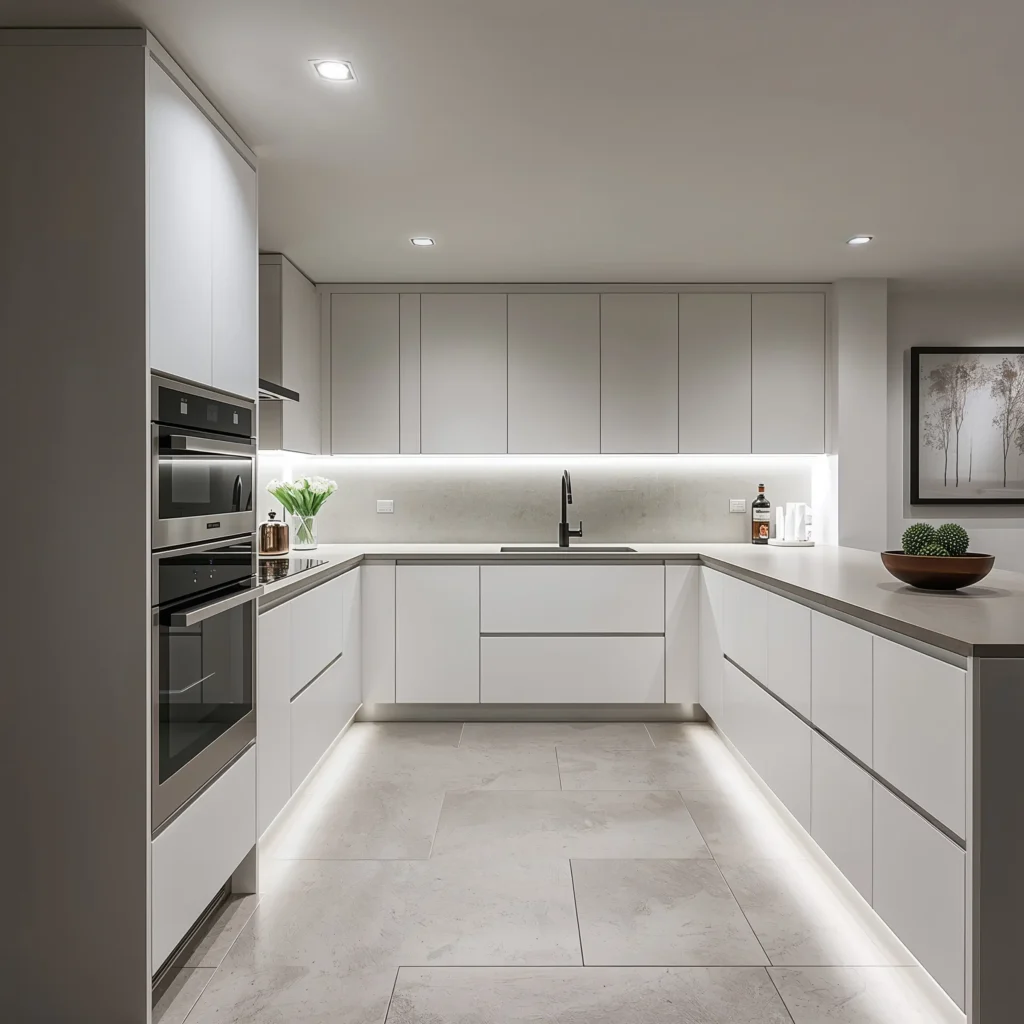
Now, if clutter makes you break out in hives and you believe that less is definitely more, let’s talk modern minimalist. This style actually works brilliantly in basements because it maximizes whatever light you’ve got and makes the space feel larger.
Think clean lines, handle-less cabinets, and surfaces so smooth you could ice skate on them. The beauty of minimalist design in a basement is that it fights back against that cramped, underground feeling. Everything feels intentional and spacious.
Making Minimalism Work Underground
Start with a monochromatic color palette – whites, grays, and blacks are your best friends here. But here’s where people mess up: they go too sterile. You need warmth, especially in a basement. Add natural wood accents sparingly. Maybe a single floating shelf or a small cutting board display.
Your appliances should disappear. I’m talking about:
- Fully integrated refrigerators that look like cabinets
- Induction cooktops that sit flush with counters
- Hidden range hoods that pop up when needed
- Dishwashers with hidden controls
The countertops make or break this look. Quartz with subtle veining works beautifully, or go bold with a waterfall edge island if you’ve got the space. Keep your backsplash simple – large format tiles or a single slab creates that seamless look you’re after.
Ever wondered why some minimalist kitchens feel cold while others feel inviting? It’s all about the lighting layers. Recessed lighting for general illumination, LED strips for task lighting, and maybe one statement pendant for personality. That’s it. No chandelier madness here.
Industrial Loft-Style Basement Kitchen
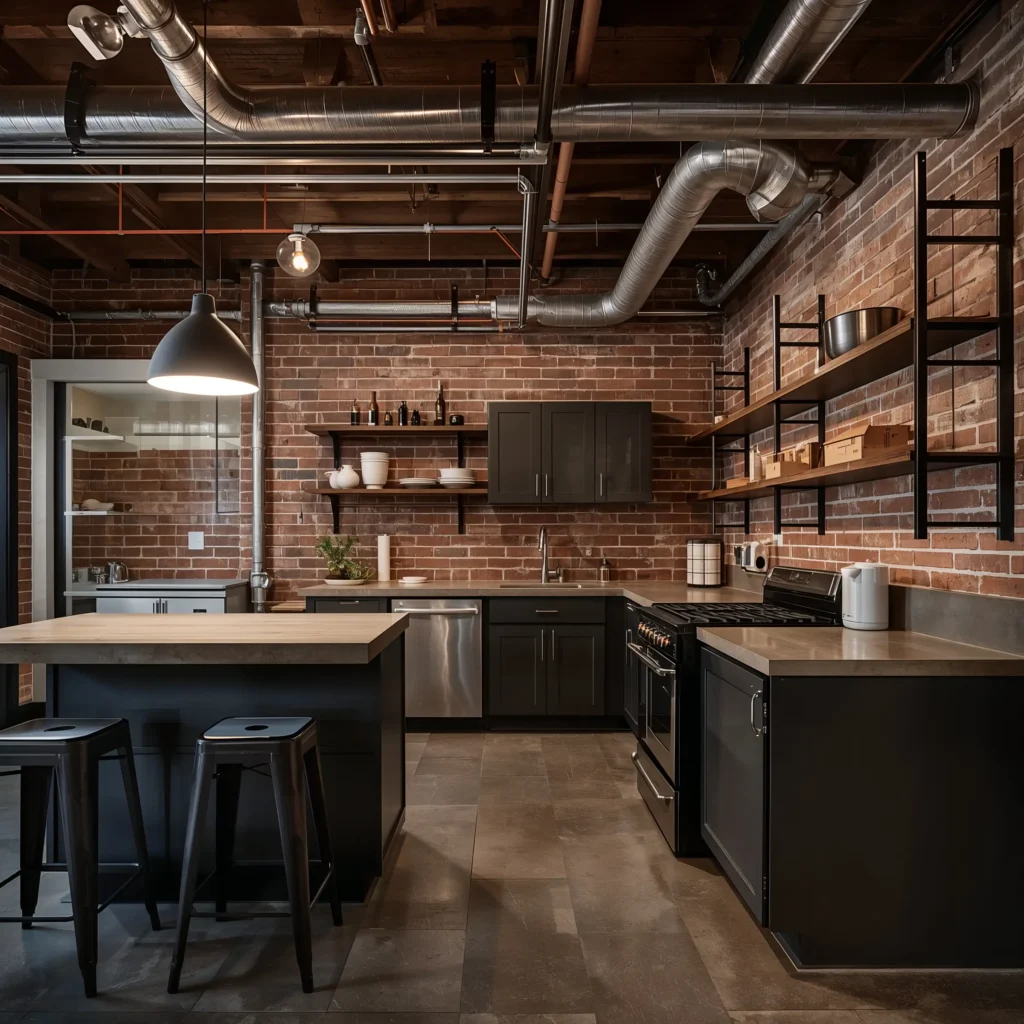
This is where basements really shine, IMO. Those exposed pipes and concrete walls you’ve been trying to hide? They’re actually features in an industrial kitchen. Embrace the underground vibe and turn your basement into a trendy urban loft.
I converted my brother’s basement into an industrial kitchen last year, and honestly, it was the easiest style to execute on a budget. Why? Because “unfinished” is literally part of the aesthetic. Exposed ceiling joists? Perfect. Concrete floors? Even better. Visible ductwork? You’ve just saved thousands on a drop ceiling.
Industrial Elements That Actually Work
The key to industrial style is mixing hard and soft elements:
- Stainless steel everything – counters, backsplash, appliances
- Open metal shelving units (restaurant supply stores are goldmines)
- Concrete or butcher block islands
- Black iron pipe for shelving supports and towel racks
- Wire basket storage instead of traditional cabinets
Here’s what nobody tells you about industrial kitchens: they’re incredibly practical. Restaurant-grade equipment handles abuse like a champ. Stainless steel cleans up easily. Open shelving forces you to stay organized (or at least makes finding things easier).
Paint one accent wall in charcoal or deep navy to add depth. Install track lighting with adjustable spots – it’s functional and adds to that gallery feel. And please, for the love of good design, add at least one warm element like a wood dining table or leather bar stools to prevent your kitchen from feeling like an actual factory.
Small Space Basement Kitchen Makeover
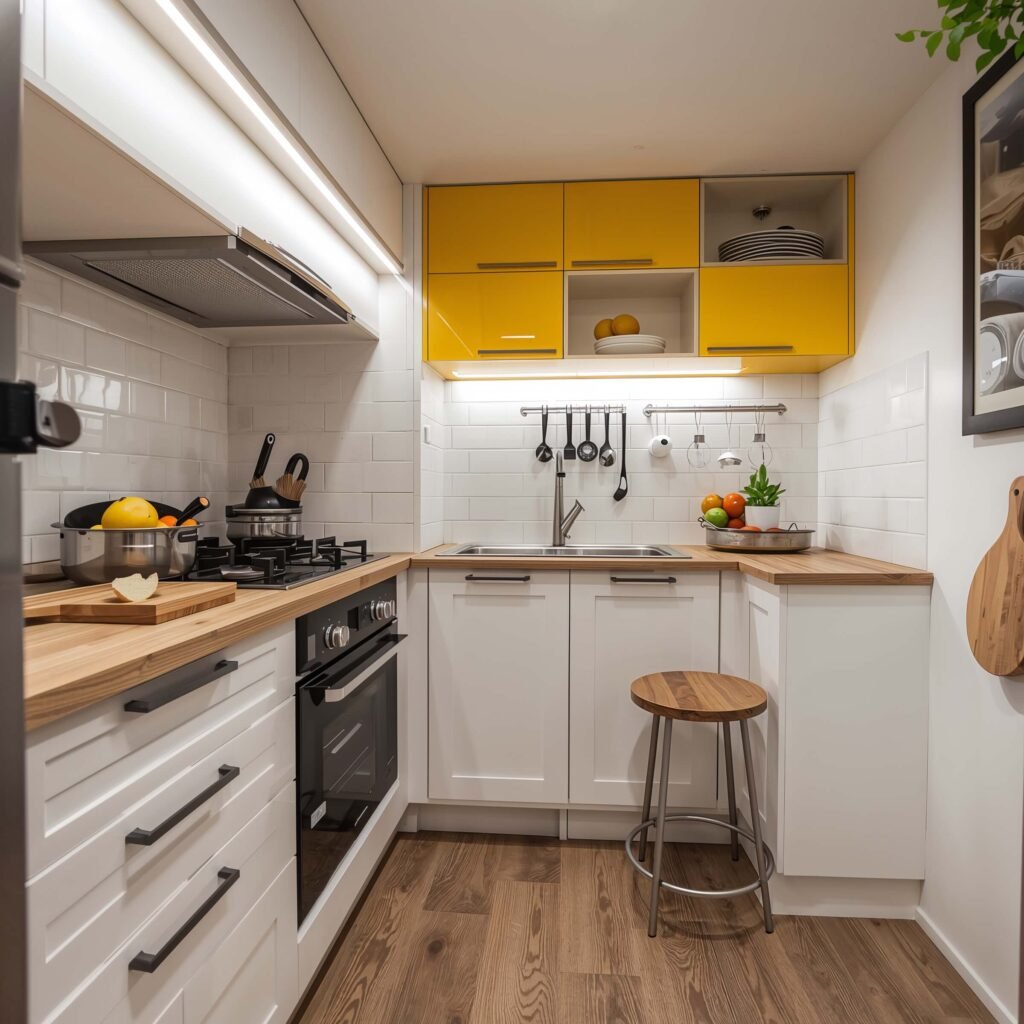
Got a basement that’s more “cozy” than “spacious”? Join the club. Most of us aren’t working with massive finished basements, and that’s totally fine. Small basement kitchens can be incredibly efficient and charming when you know what you’re doing.
First rule of small basement kitchens? Go vertical. I mean it – use every inch of wall space from floor to ceiling. Install cabinets that reach the ceiling (yes, you’ll need a step stool, but you’ll also have storage for days). Use magnetic knife strips, hanging pot racks, and wall-mounted spice racks.
Space-Saving Tricks That Actually Matter
Here’s what I learned from designing a 100-square-foot basement kitchenette:
- Choose a galley or L-shaped layout – they’re the most efficient
- Install a slim dishwasher (18 inches wide instead of 24)
- Use a single bowl sink to maximize counter space
- Pick appliances that multitask (convection microwave ovens are lifesavers)
- Add a fold-down table or peninsula for extra prep space
Color choice matters more in small spaces than anywhere else. Light colors reflect whatever light you have, making spaces feel larger. But here’s a controversial opinion: don’t be afraid of one dark accent wall. It can actually create depth and make the space feel less box-like.
Mirror backsplashes or glossy tiles bounce light around like crazy. Under-cabinet lighting is non-negotiable – you need every lumen you can get. And consider glass cabinet doors or open shelving on upper cabinets to maintain visual flow.
Bright & Airy Basement Kitchen
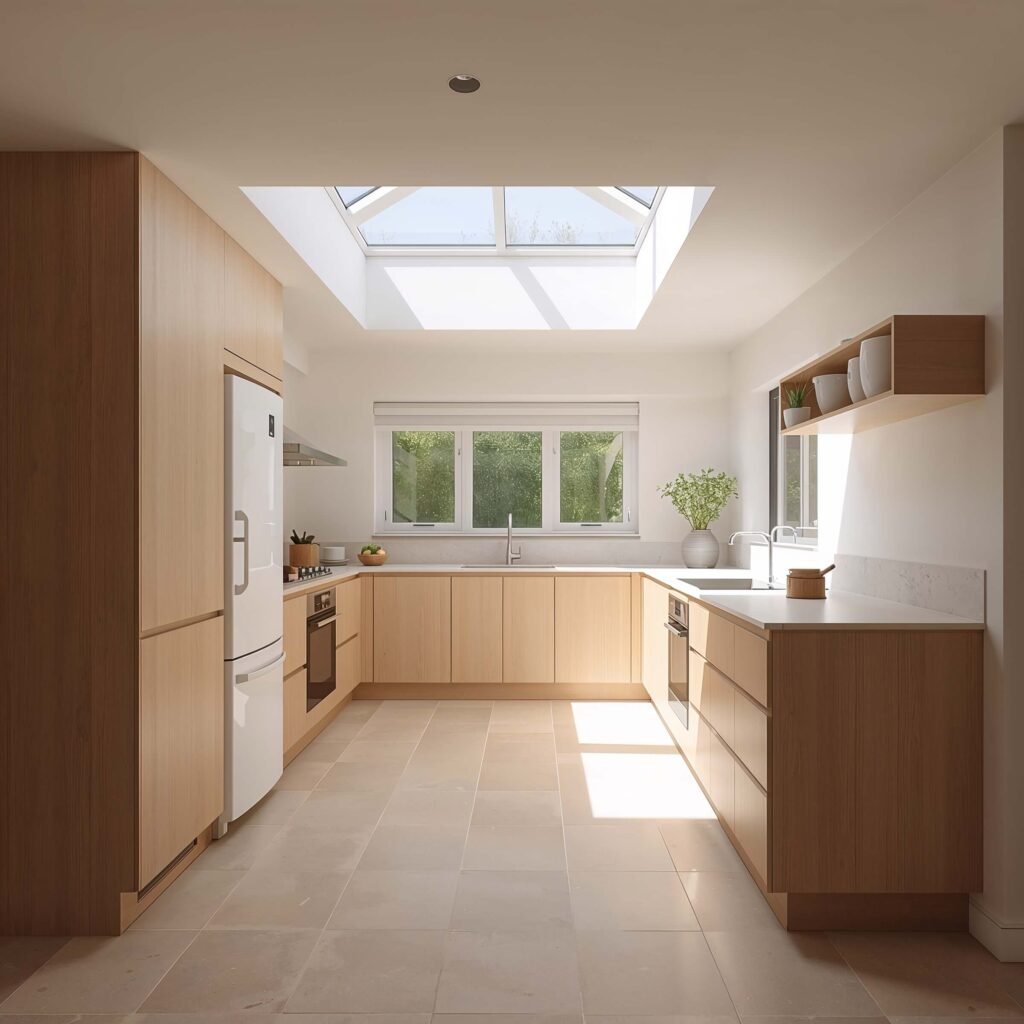
“Bright and airy basement” sounds like an oxymoron, right? Wrong. You can absolutely create a light-filled space underground – you just need to get creative with your light sources and color choices.
The secret weapon? Paint everything white. I’m serious. Walls, ceilings, even the exposed ceiling joists if you have them. Use different shades and textures of white to add interest without losing brightness. Warm whites prevent that hospital feeling, while cool whites maximize light reflection.
Maximizing Natural and Artificial Light
If you have any basement windows, treat them like royalty:
- Never block them with upper cabinets
- Use sheer curtains or skip window treatments entirely
- Paint window wells white to reflect more light inside
- Consider window well covers that allow maximum light transmission
Can’t get enough natural light? Fake it. Install LED panels that mimic skylights – they’re surprisingly convincing. Use 5000K bulbs for a daylight feel during cooking, with dimmers for evening ambiance. Layer your lighting with recessed cans, pendant lights, and tons of under-cabinet strips.
Reflective surfaces are your best friends. Glossy cabinet finishes, glass tile backsplashes, and polished countertops all bounce light around. Even your appliances should contribute – stainless steel or white appliances keep things bright.
Add mirrors strategically. A mirror backsplash behind open shelving doubles your visual space. Mirrored cabinet doors reflect light without looking like a funhouse. The goal is to trick your brain into forgetting you’re in a basement 🙂
Luxury Wine Cellar Basement Kitchen
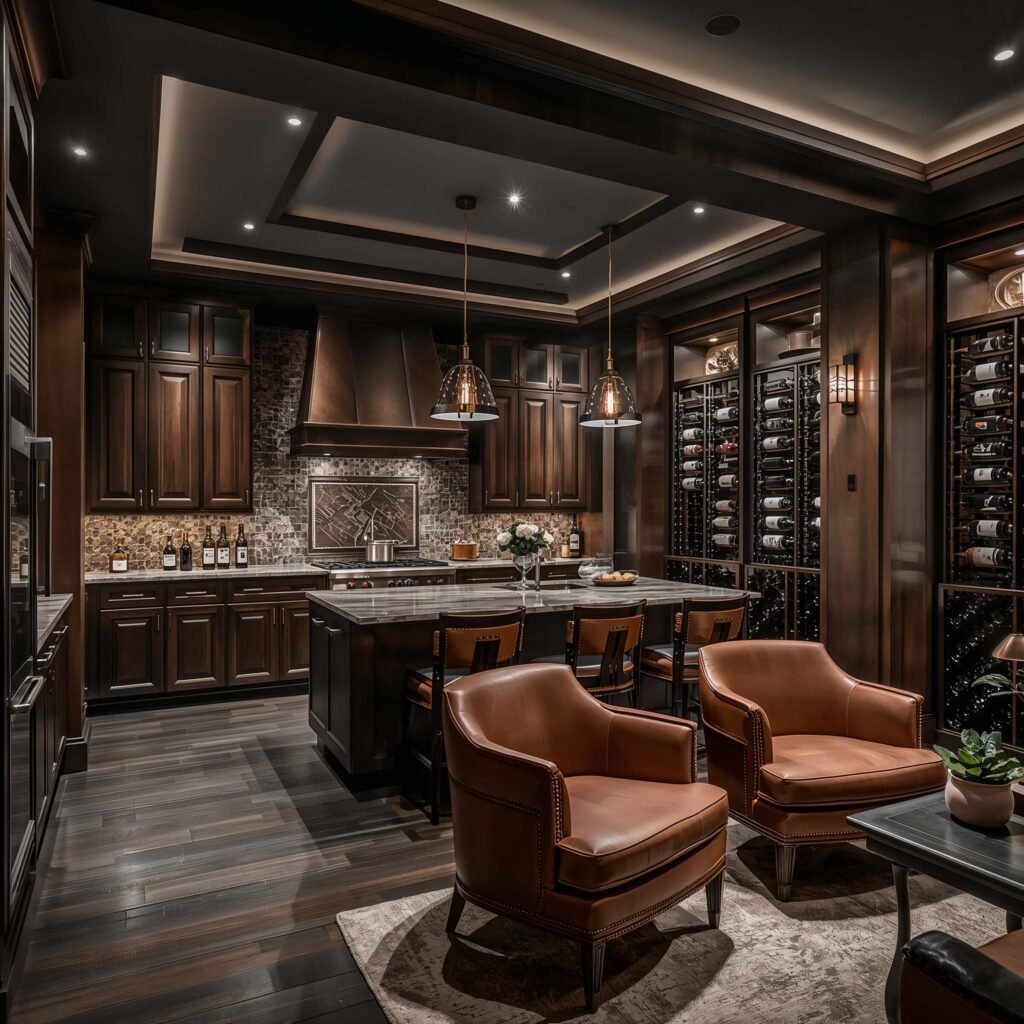
Now we’re talking about living the dream. Combining a kitchen with a wine cellar in your basement isn’t just practical – it’s downright luxurious. This setup turns your basement into the ultimate entertaining space.
Temperature control becomes crucial here. Basements naturally stay cooler, which your wine loves, but you need proper insulation between your cooking area and wine storage. Install a glass wall or door to your wine area – it’s functional and creates a stunning focal point.
Designing for Wine Lovers
Think about traffic flow when entertaining:
- Position your wine storage near the dining area but away from heat sources
- Include a wine fridge in your kitchen island for everyday bottles
- Install a proper wine rack system (not just decorative holders)
- Add a tasting counter or bar area between kitchen and wine storage
- Consider a small sink specifically for wine glasses
Materials matter more in this style. Rich woods like mahogany or walnut create warmth. Stone countertops add elegance. Copper or brass fixtures bring in that old-world charm. Your lighting should be on dimmers everywhere – bright for cooking, moody for wine tasting.
I helped design a basement kitchen where we installed a climate-controlled wine room with glass walls right next to the cooking area. The homeowner can grab ingredients and wine without leaving the space. It’s like having a restaurant in your house, minus the annoying customers.
Also Read: 10 Modern Basement TV Rooms Ideas You’ll Love to Try
Farmhouse Style Basement Kitchen
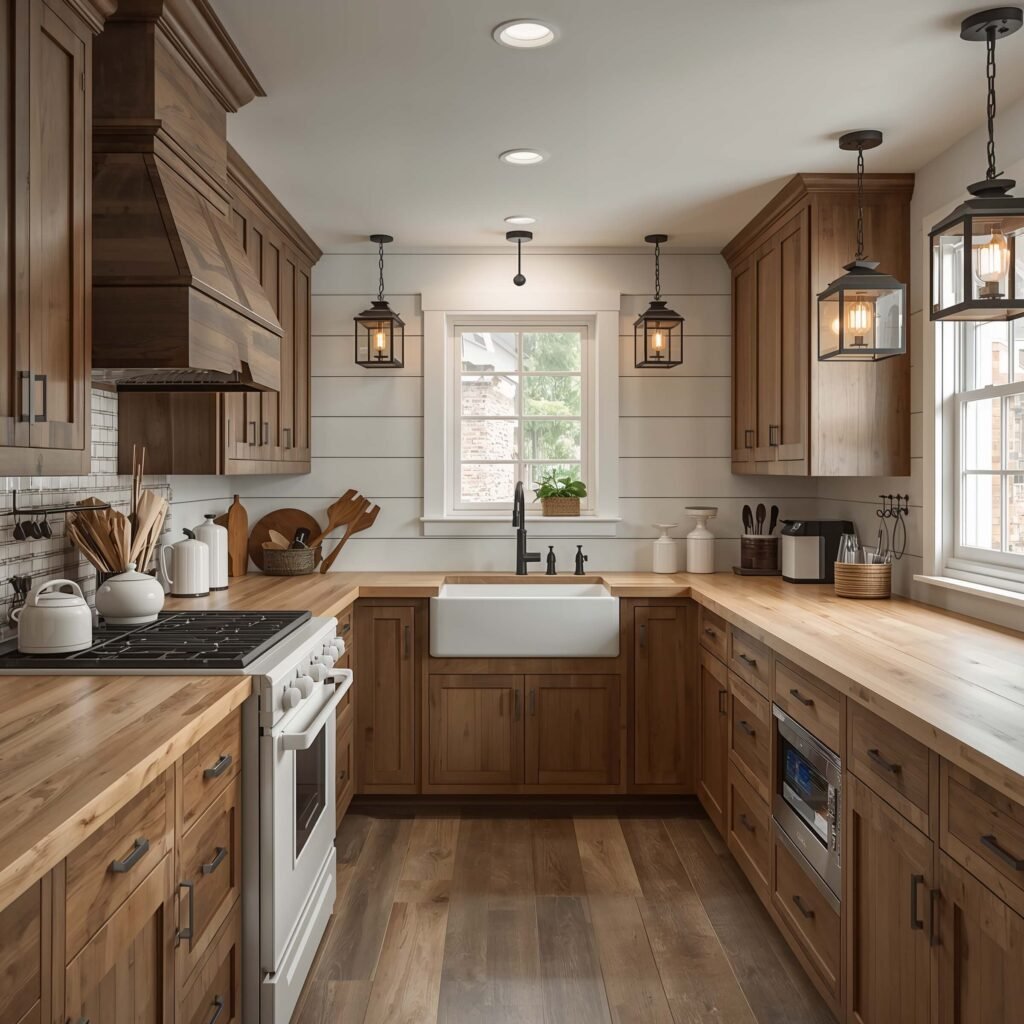
Farmhouse style in a basement might seem counterintuitive – farmhouses don’t typically have basements, right? But this style’s warmth and functionality translate perfectly to underground spaces.
Start with shaker-style cabinets in white or sage green. The farmhouse aesthetic is all about looking effortlessly collected over time, even if you bought everything last month. Mix metals – brass, copper, and black iron all play nicely together in farmhouse design.
Essential Farmhouse Elements
Your must-haves for authentic farmhouse feel:
- Apron-front sink (the bigger, the better)
- Open shelving displaying pretty dishes and mason jars
- Butcher block island or countertops
- Vintage-inspired appliances (but with modern guts)
- Subway tile backsplash with dark grout
- Barn door for pantry or storage area
The real magic happens in the details. Hang a vintage sign. Display cutting boards as art. Use woven baskets for storage. Install hooks everywhere – for dish towels, aprons, even coffee mugs.
Lighting should feel vintage but function modern. Pendant lights with metal shades over the island. Maybe a small chandelier if your ceilings allow. Edison bulbs add that perfect touch of nostalgia.
Hidden Basement Kitchen with Storage Hacks
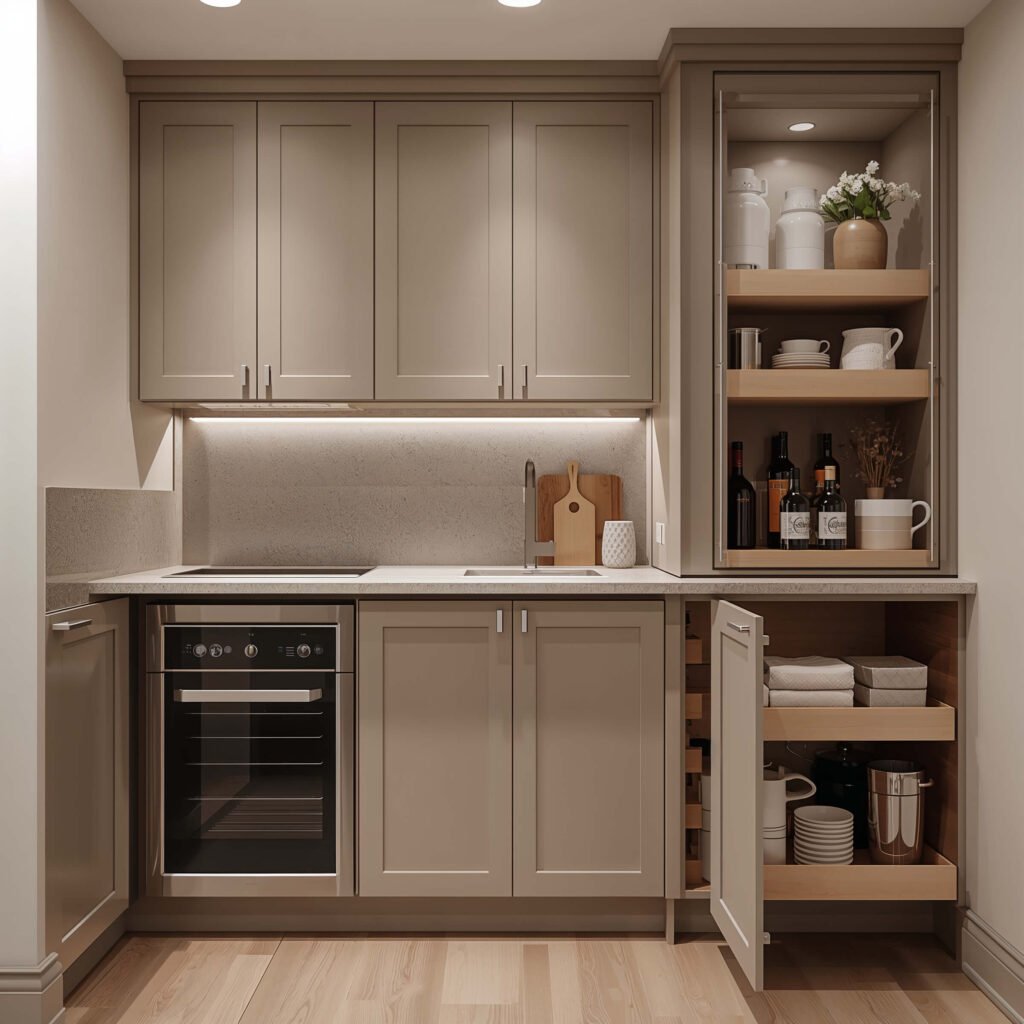
Sometimes you need a basement that multitasks. Maybe it’s a rec room that occasionally hosts dinner parties. Or a home office that transforms for entertaining. Hidden kitchens with clever storage make your basement work harder.
The key is making everything disappear when not in use. Cabinet doors that conceal entire cooking stations. Appliance garages that hide small appliances. Pull-out pantries that tuck into walls. This isn’t about having less – it’s about hiding more.
Clever Concealment Strategies
Here’s what I’ve seen work brilliantly:
- Pocket doors that hide the entire kitchen when closed
- Fold-down counters that become wall art when raised
- Toe-kick drawers for rarely used items
- Ceiling-mounted storage that lowers when needed
- Murphy tables that fold completely flat
FYI, this style requires more planning than any other. Every appliance needs a home. Every pot needs a designated spot. But when done right? Your basement transforms from kitchen to party room in minutes.
Consider modular furniture that serves double duty. An island on wheels that rolls away. Bar stools that stack and store. Even your refrigerator can be counter-depth and panel-ready to blend in.
Open Concept Basement Kitchen & Dining
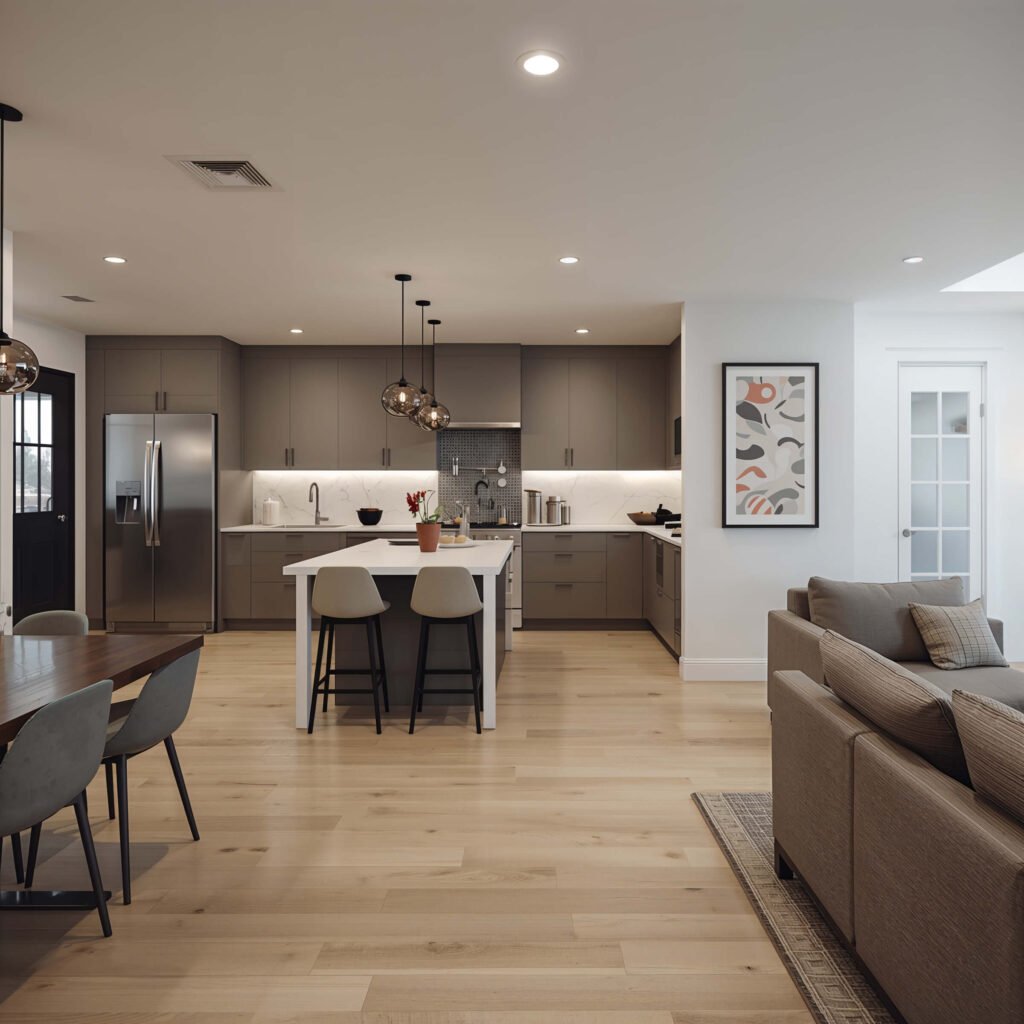
Open concept basements make so much sense. You’re already dealing with limited natural light and potentially low ceilings – why make it worse with walls? Removing barriers between kitchen and dining creates one large, flexible space.
The challenge? Defining zones without walls. Use your island as a natural divider. Change flooring materials between cooking and dining areas. Paint an accent wall behind your dining table. Even a simple area rug under your dining set creates separation.
Making Open Concept Work
Strategic furniture placement is everything:
- Orient your island toward the dining area for easy conversation
- Use bar seating for casual meals and homework
- Position pendant lights to define each zone
- Choose dining furniture that doesn’t block sight lines
- Consider a console table as a subtle room divider
Noise control becomes important in open spaces. Soft furnishings in the dining area absorb sound. A good range hood manages cooking noise and smells. Choose quieter appliances when possible – that dishwasher will be running while you’re trying to watch TV.
Keep your color palette consistent throughout the space for flow. But vary textures and materials to add interest. Maybe sleek cabinets in the kitchen with a rustic wood dining table. Or industrial bar stools paired with upholstered dining chairs.
Also Read: 10 Amazing Basement Inspiration Ideas to Maximize Your Space
Dark Moody Basement Kitchen
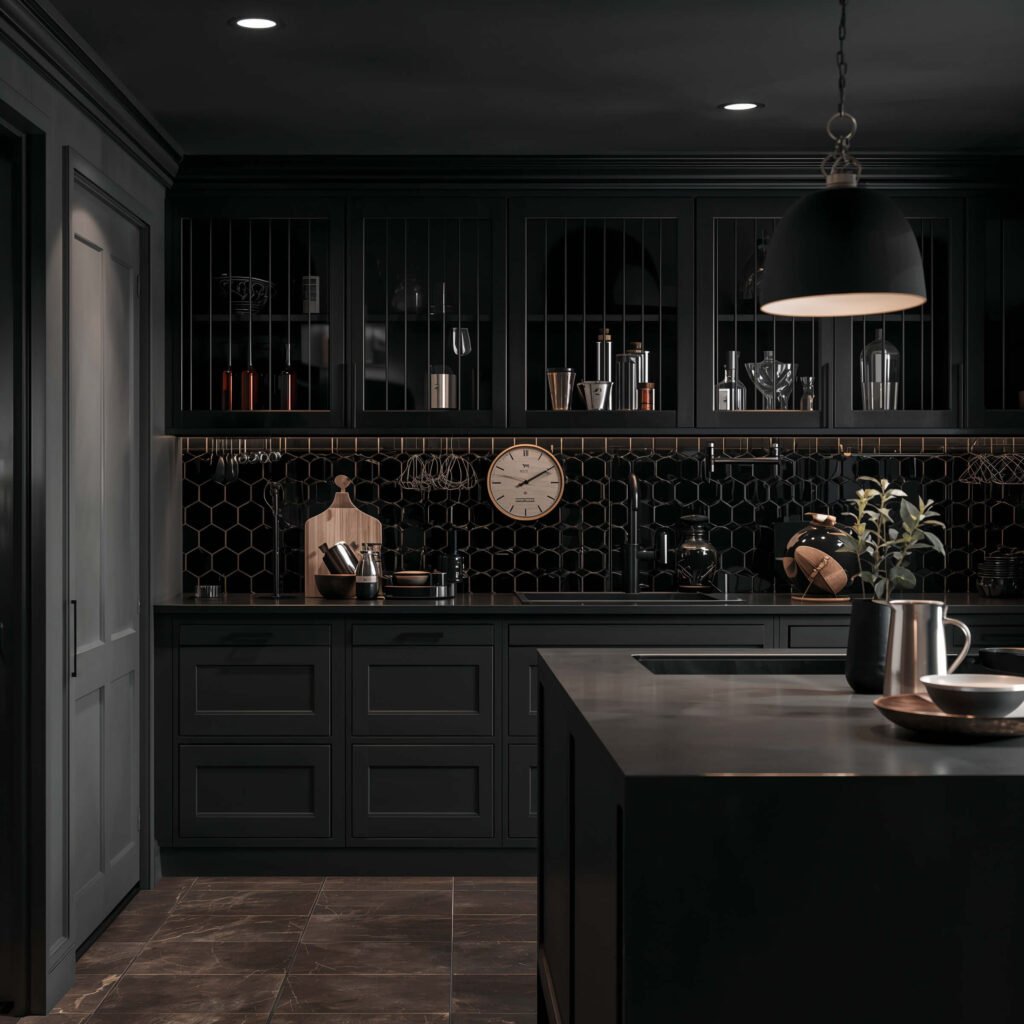
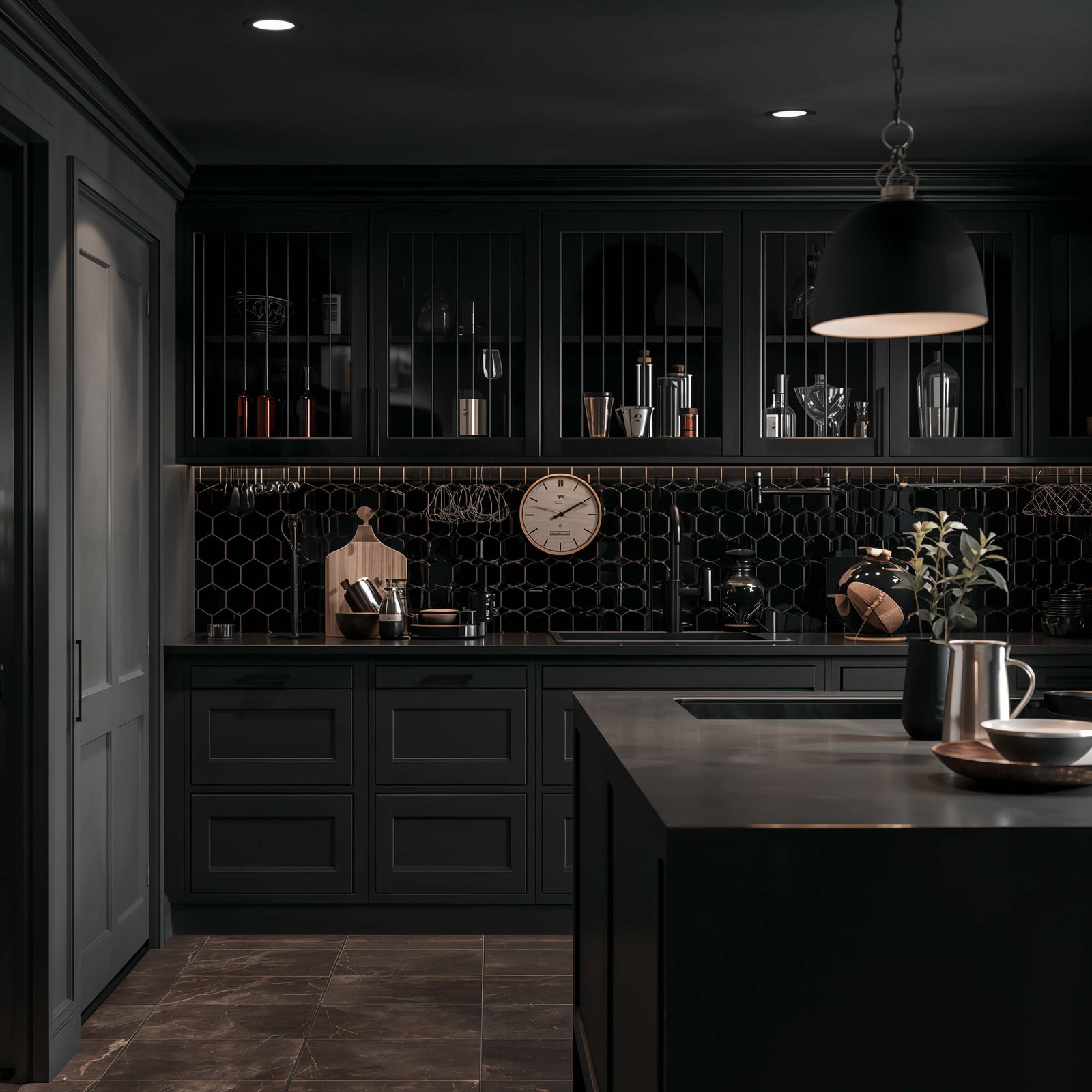
Who says basements need to fight their natural darkness? Embrace the cave vibes with a dark, moody kitchen that feels like a sophisticated speakeasy. This style is having a major moment, and basements are perfect for it.
Paint cabinets in deep navy, forest green, or even black. Choose countertops with dramatic veining. Install a dark tile backsplash that adds texture without brightness. This isn’t depressing – it’s dramatic.
Working with Dark Colors
The tricks to keeping dark kitchens from feeling oppressive:
- Layer warm lighting extensively – more than you think you need
- Mix matte and glossy finishes for depth
- Add metallic accents in gold, copper, or brass
- Include one light element (maybe marble counters or a light wood floor)
- Use open shelving to break up solid cabinet walls
I designed a charcoal gray basement kitchen last year that everyone said would be “too dark.” Now it’s the client’s favorite room. The key was using three types of lighting and adding brass hardware that catches the light beautifully.
Dark kitchens hide sins better than any other style. Fingerprints on black cabinets? Less visible than on white. Red wine spills on dark grout? No problem. It’s practically the perfect style for real people who actually cook.
Making Your Basement Kitchen Dreams Reality
Look, transforming your basement into a functional kitchen isn’t just about following trends or copying Pinterest boards. It’s about creating a space that works for your life, your budget, and yes, your basement’s quirks.
Whether you’re drawn to the warmth of rustic wood, the simplicity of minimalism, or the drama of a dark, moody space, your basement kitchen should reflect how you actually live and entertain. Don’t install a wine cellar if you prefer beer. Skip the industrial look if stainless steel feels cold to you.
The best basement kitchen is one you’ll actually use. So pick the style that makes you excited to walk downstairs, pour a glass of whatever you’re drinking, and start cooking. Because at the end of the day, that forgotten basement space could become the heart of your home – you just need to give it a chance.
Ready to start planning? Pick one element from your favorite style above and start there. Sometimes the perfect basement kitchen begins with just a single great idea and builds from there. Trust me, your future self (and your dinner guests) will thank you.