10 Creative Mirror Wall Decor Entrance Ideas for Small Spaces

Picture this: you walk into someone’s home, and the entrance stops you dead in your tracks. Not because there’s a pile of shoes blocking your way (we’ve all been there), but because the mirror setup on the wall looks absolutely stunning.
That’s the power of getting your entrance mirror game right, and honestly, it’s way easier than you think.
I’ve spent the last decade experimenting with different mirror arrangements in my own home and helping friends transform their boring entryways into conversation starters.
Trust me when I say that the right mirror setup can completely change how your entrance feels. Whether you’re working with a tiny apartment hallway or a grand foyer, these ideas will give you something to work with.
Geometric Shape Mirror Gallery
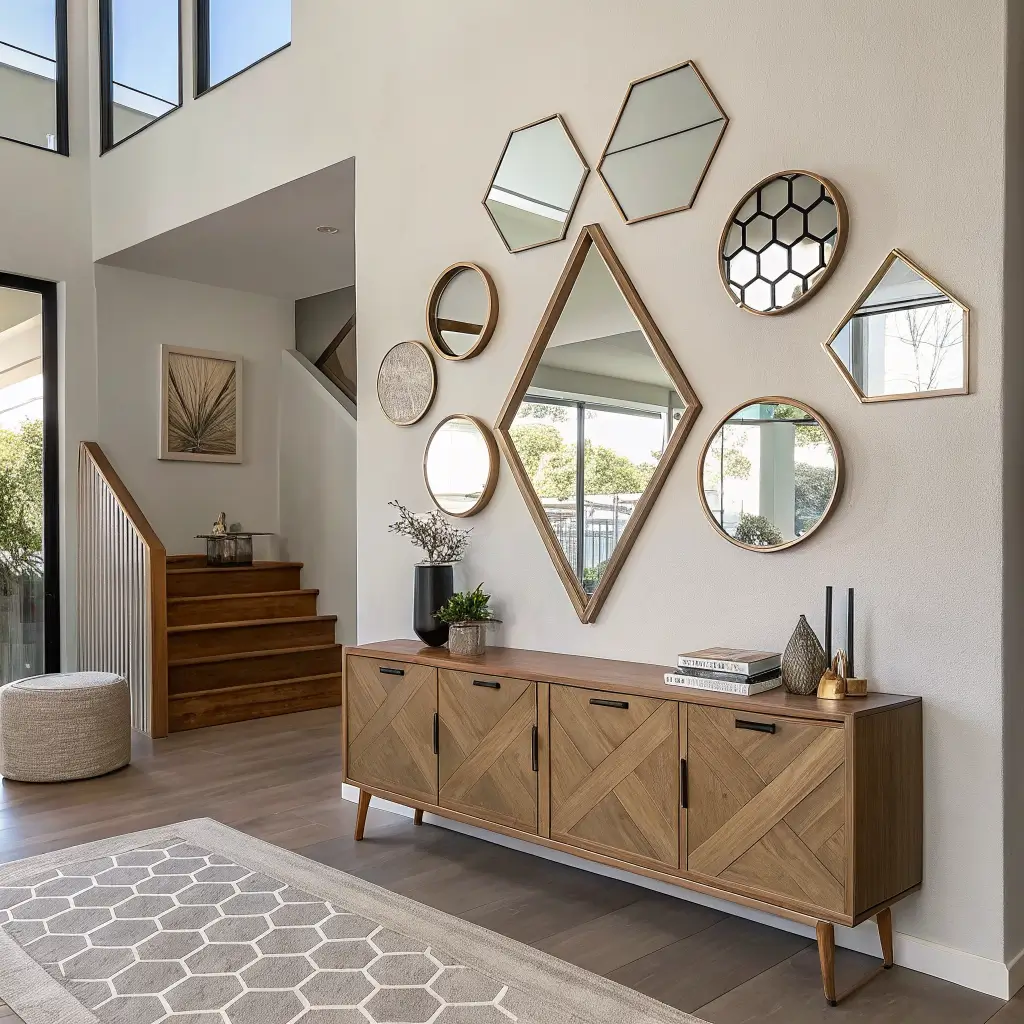
Let me tell you about my obsession with geometric mirrors – it started when I accidentally broke my grandmother’s oval mirror and had to replace it with something modern. Best accident ever! Geometric mirror galleries create visual interest without trying too hard, and they work brilliantly in entrance spaces where you want immediate impact.
You know what makes these arrangements so special? The way different shapes play off each other. I’m talking hexagons mingling with triangles, squares hanging out with diamonds – it’s like a party on your wall. The trick here involves mixing at least three different shapes while keeping either the frame color or size consistent.
Here’s what works best for geometric galleries:
- Stick to odd numbers (3, 5, or 7 mirrors total)
- Keep frames within the same color family
- Mix matte and metallic finishes for depth
- Leave 2-3 inches between each mirror
- Start with your largest piece as the anchor
The beauty of this style lies in its flexibility. You can go full-on modern with sharp angles and black frames, or soften things up with rounded edges and gold accents. I’ve seen people create stunning displays with just five small geometric mirrors from IKEA – proof that you don’t need to break the bank for this look.
Want to know a secret? The hexagon shape works with literally any decor style. It’s geometric enough to feel modern but organic enough to blend with traditional spaces. Plus, when you arrange multiple hexagons together, they create this honeycomb effect that guests can’t help but comment on.
Rustic Wooden Framed Mirrors
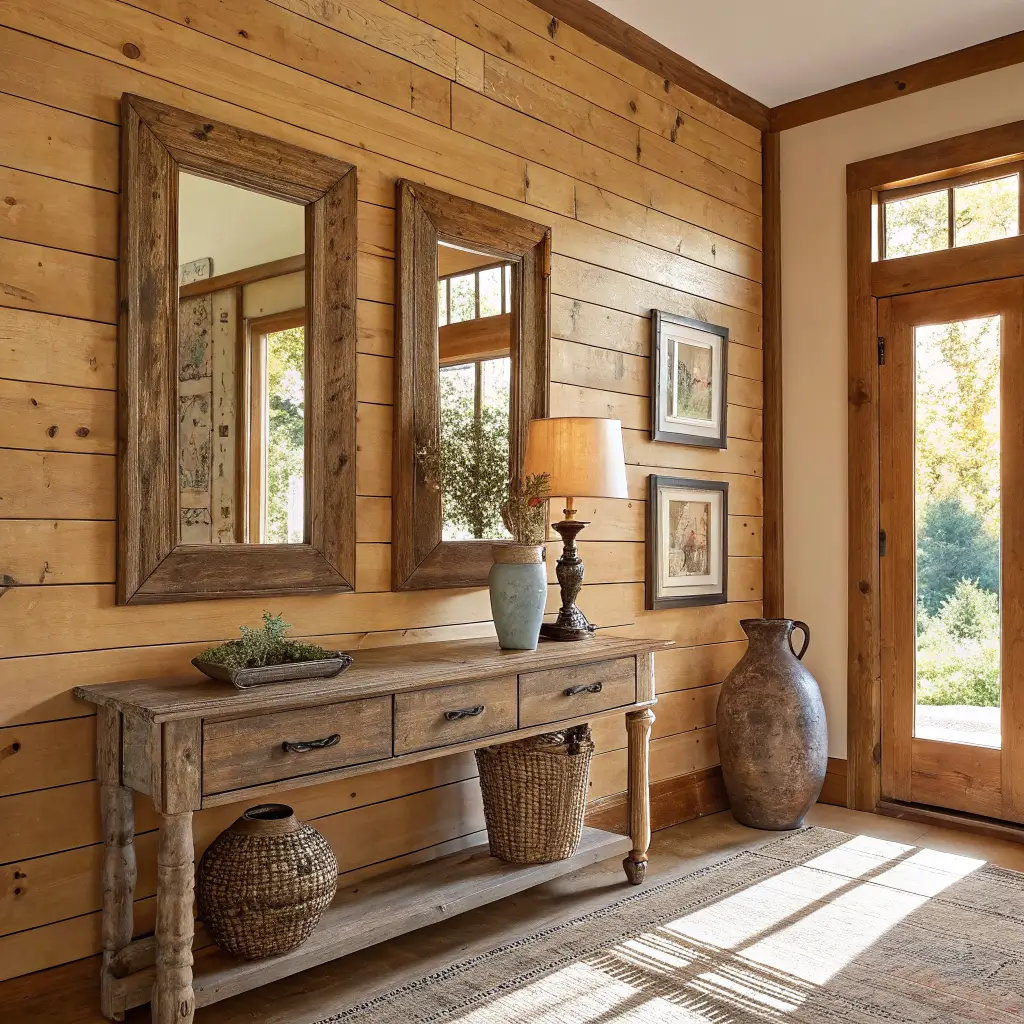
Now we’re talking my language! There’s something about weathered wood frames that instantly warms up an entrance. Maybe it’s because they remind us of cozy cabins or farmhouse charm, but rustic wooden mirrors bring personality that sleek modern frames just can’t match.
I found my first rustic mirror at a flea market – the frame looked like it had stories to tell. That single piece transformed my sterile apartment entrance into something with actual character. The grain patterns, the imperfections, the varying tones of brown – they all add layers of visual interest that manufactured frames miss.
You’ve got several options with rustic wooden frames:
- Reclaimed barn wood (my personal favorite)
- Driftwood for coastal vibes
- Live edge wood for organic appeal
- Distressed painted wood for shabby chic
- Dark-stained wood for dramatic effect
Here’s what nobody tells you about wooden framed mirrors: they’re incredibly forgiving. Got a ding in your wall? The rustic frame distracts from it. Weird paint color you’re stuck with? Wood neutralizes everything. These mirrors basically solve decorating problems you didn’t know you had.
The placement matters too. I typically hang rustic mirrors slightly lower than you’d expect – about 5 feet from the floor to center. This height feels more grounded and substantial, especially with heavier wooden frames. And please, resist the urge to over-accessorize around them. Let that beautiful wood texture be the star.
Full-Length Statement Mirror
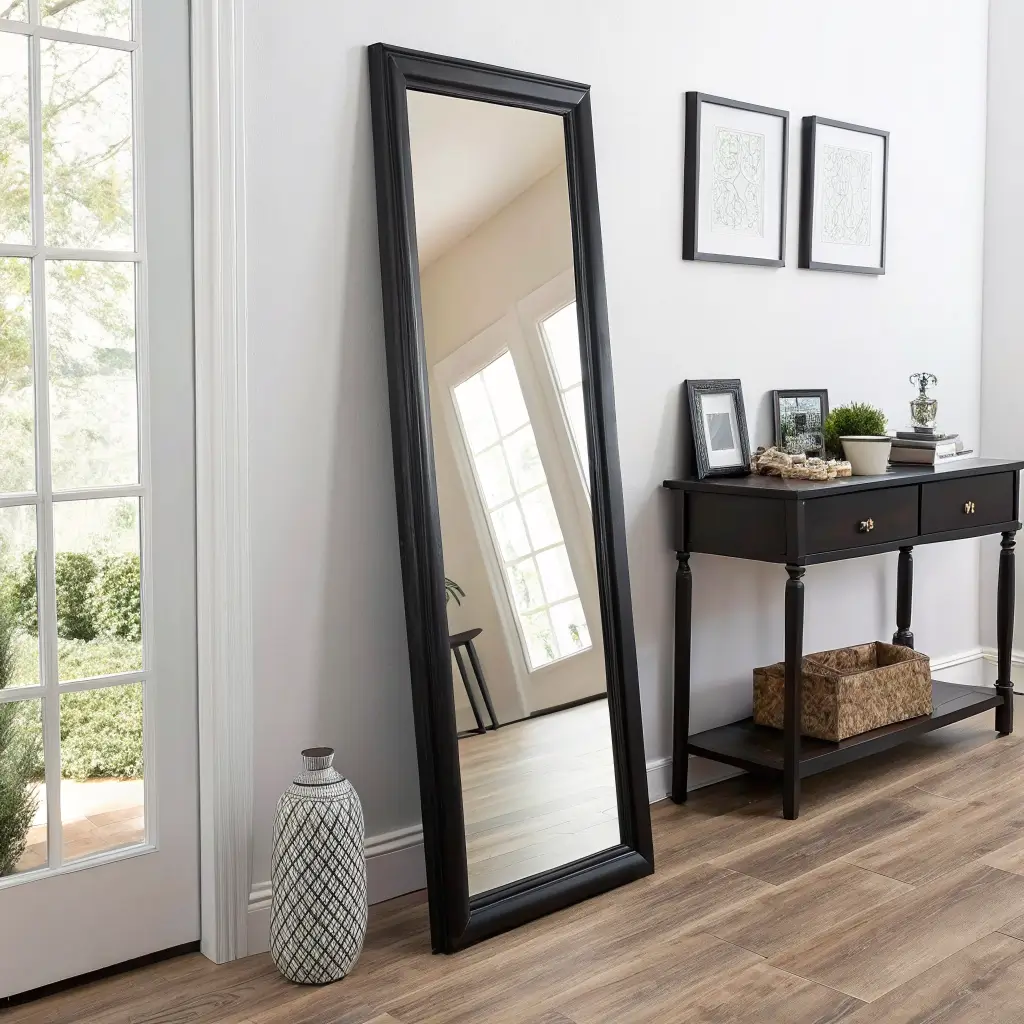
Can we talk about how a full-length mirror in your entrance changes everything? Not only does it give you that last-minute outfit check (lifesaver!), but it doubles the visual space of your entrance – and who doesn’t want that?
I installed my first floor-to-ceiling mirror three years ago, and honestly, it felt like I’d renovated the entire space. The entrance went from cramped corridor to open, airy welcome zone. The reflection bounces light around, making even the darkest hallway feel brighter.
Here’s the thing about statement mirrors – size matters, but style matters more. You want something that commands attention without overwhelming the space. My go-to recommendations include:
- Arched tops for elegance
- Ornate frames for drama
- Frameless designs for minimalist spaces
- Leaning mirrors for flexibility
- Built-in LED lighting for wow factor
Positioning your full-length mirror requires some strategy. Don’t place it directly opposite the door unless you want to startle yourself every time you come home. Instead, angle it slightly to catch interesting views – maybe it reflects your living room or a piece of art you love. This creates depth and intrigue right from the entrance.
FYI, if you’re renting and can’t drill into walls, leaning mirrors are your best friend. Just make sure you secure them at the top with adhesive strips. Nobody wants a seven-foot mirror toppling over when the door slams.
Also Read: 10 Stunning Reception Entrance Decor Ideas for a Magical Welcome
Round Sunburst Wall Mirrors
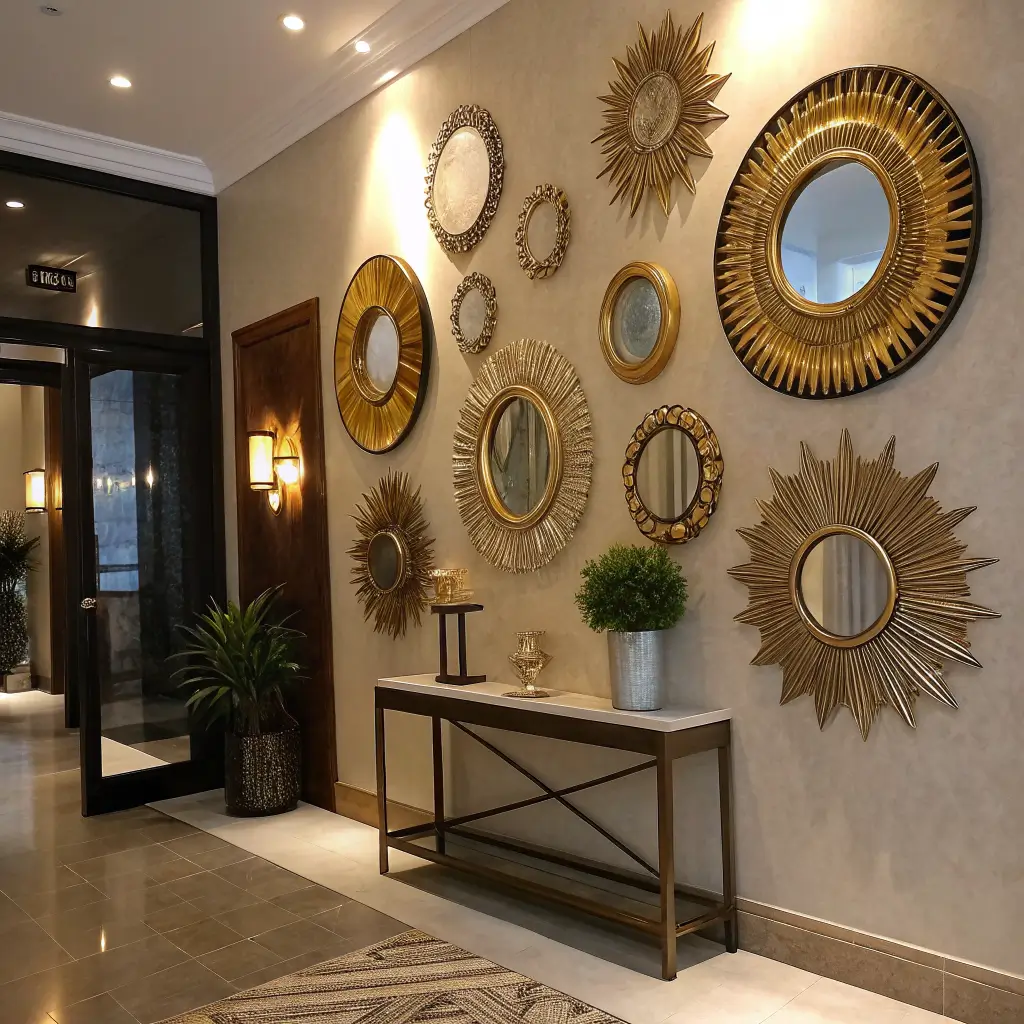
Oh man, sunburst mirrors! These beauties scream “I have style and I’m not afraid to show it.” The radiating design draws eyes immediately, making them perfect focal points for entrance walls. They’re like functional art pieces that happen to show your reflection.
My first sunburst mirror purchase was a total impulse buy, but it became the piece that tied my whole entrance together. The way those rays catch and reflect light throughout the day? Chef’s kiss. Morning sunlight hits differently when it’s bouncing off gold or silver rays.
Sunburst mirrors come in endless variations:
- Classic gold for timeless glamour
- Matte black for modern edge
- Mixed metals for eclectic vibes
- Wooden rays for organic warmth
- Crystal accents for extra sparkle
What’s the secret to nailing the sunburst look? Scale and placement. These mirrors need breathing room – don’t crowd them with other wall decor. I recommend at least 12 inches of clear space on all sides. And here’s a pro tip: hang them slightly higher than eye level to maximize their dramatic effect.
Ever wondered why sunburst mirrors feel so luxurious? It’s because they mimic the sun – literally the most powerful design element in nature. Your brain associates them with warmth, energy, and positivity. That’s some serious psychological decorating power right there.
Mixed Metal Frame Mirrors
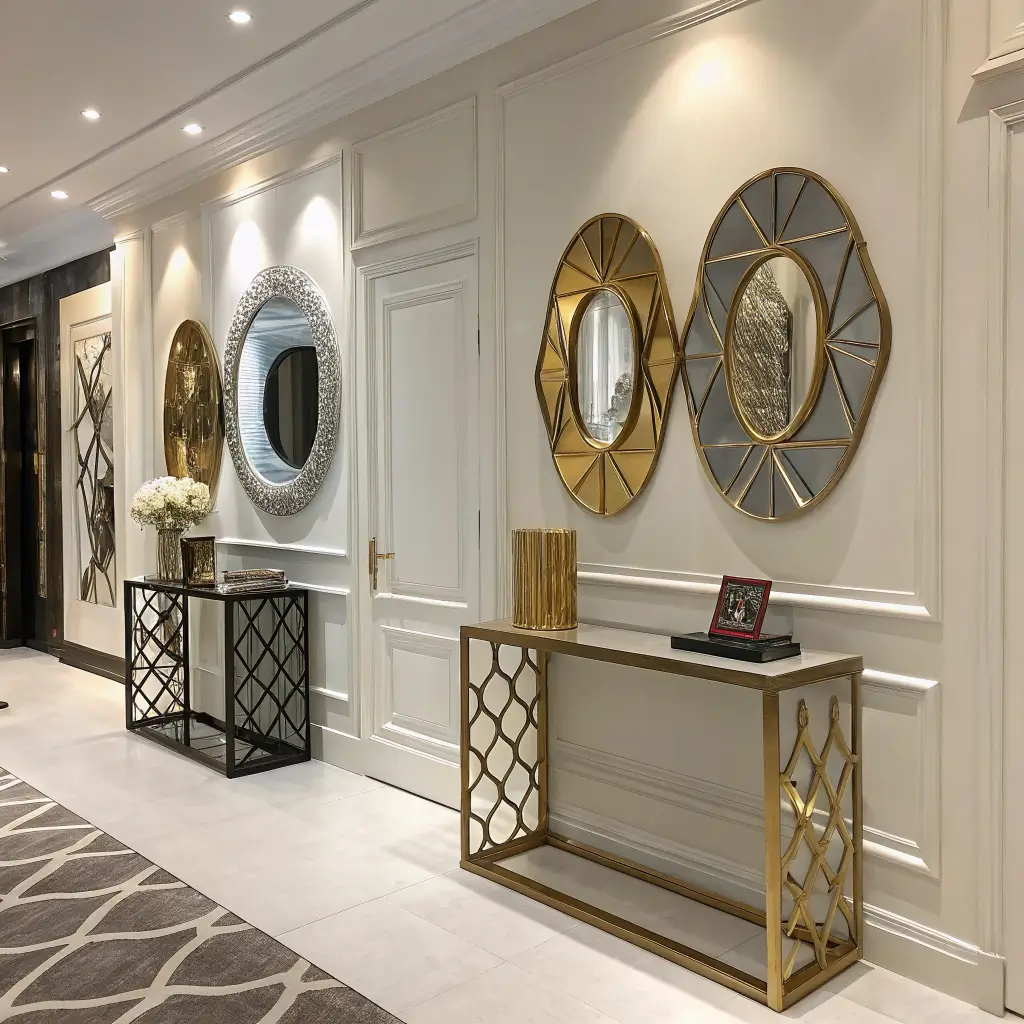
Mixing metals used to be a decorating no-no, but thank goodness we’ve moved past those rigid rules. Combining different metal finishes creates depth and sophistication that single-tone arrangements just can’t achieve. Plus, it means you don’t have to stress about matching every piece of hardware in your entrance.
I stumbled into mixed metals accidentally when I couldn’t find matching frames for a gallery wall. Necessity became style, and now I deliberately mix brass, copper, silver, and black metals. The contrast keeps things visually interesting without being chaotic.
Here’s how to mix metals like you mean it:
- Start with a dominant metal (60% of your mirrors)
- Add a secondary metal (30%)
- Sprinkle in an accent metal (10%)
- Keep shapes consistent if metals vary wildly
- Use matte and shiny finishes for extra dimension
The entrance area actually benefits from mixed metals more than other spaces. Why? Because it’s transitional – it needs to work with whatever metal finishes exist in adjoining rooms. Mixed metal mirrors act as bridges between different design elements throughout your home.
Temperature matters when mixing metals. Warm metals (gold, brass, copper) play nicely together, as do cool metals (silver, chrome, nickel). But mixing warm and cool? That’s where the magic happens. Just keep the ratio intentional – either mostly warm with cool accents or vice versa.
Minimalist Floating Mirrors
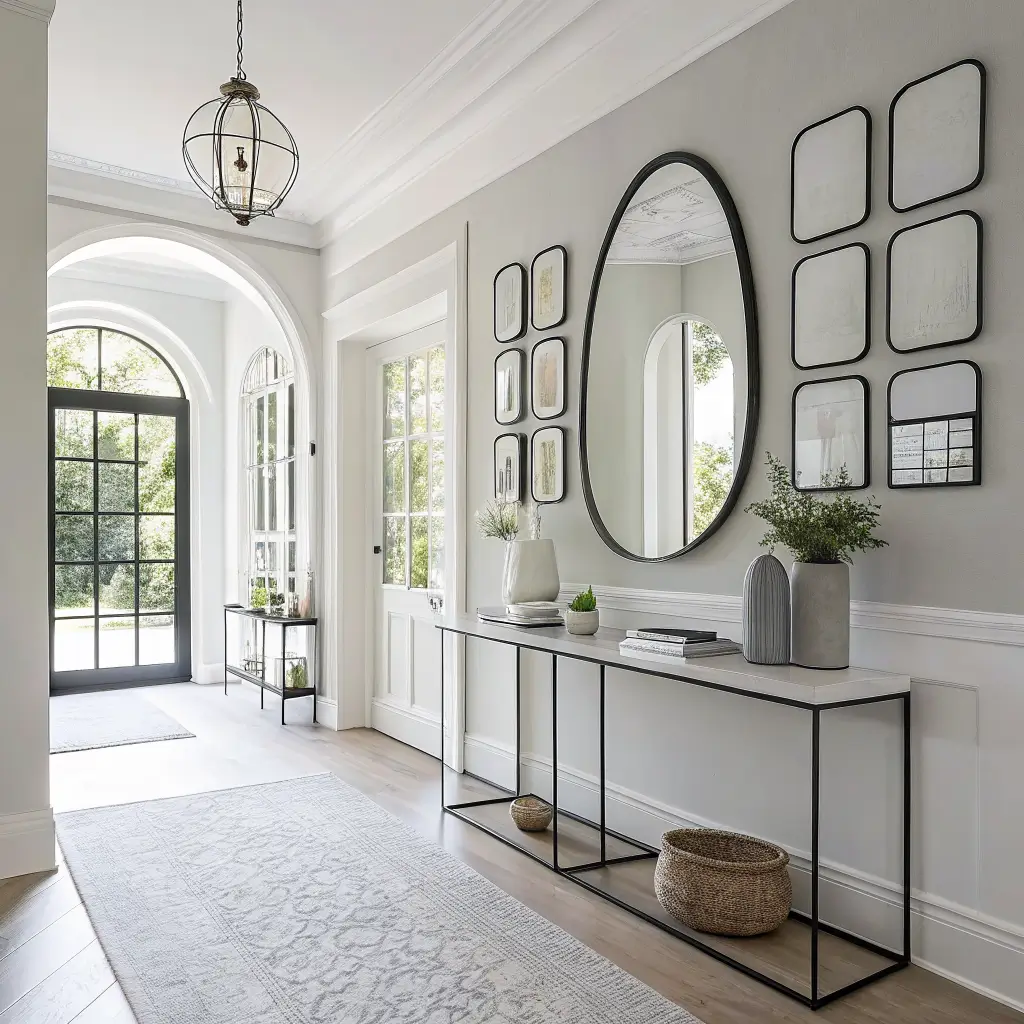
Sometimes less really is more, and floating mirrors prove it every single time. These frameless beauties create the illusion of windows, making your entrance feel larger and more open. The clean lines and invisible mounting hardware let the reflection itself become the art.
I converted to minimalist mirrors after living in a 500-square-foot apartment where every design choice had to count. Floating mirrors gave me function without visual weight – exactly what small spaces need. They practically disappear into the wall while still doing their job.
Floating mirror arrangements that work:
- Single large rectangle for maximum impact
- Multiple small circles in a grid pattern
- Horizontal strips for modern appeal
- Irregular shapes for artistic flair
- Edge-lit versions for subtle drama
Installation requires precision with floating mirrors. Since there’s no frame to hide imperfections, your mounting needs to be spot-on. Use a level, measure twice, and maybe bribe a handy friend with pizza. The clean result makes the extra effort worthwhile.
Here’s what I love most about minimalist mirrors: they never go out of style. Trends come and go, but clean, simple design remains timeless. Your entrance won’t look dated in five years, which is more than I can say for my brief affair with baroque mirrors (what was I thinking?).
Also Read: 10 Creative Entrance Wall Decor Ideas That Impress Guests Instantly
Vintage Antique Mirror Collection
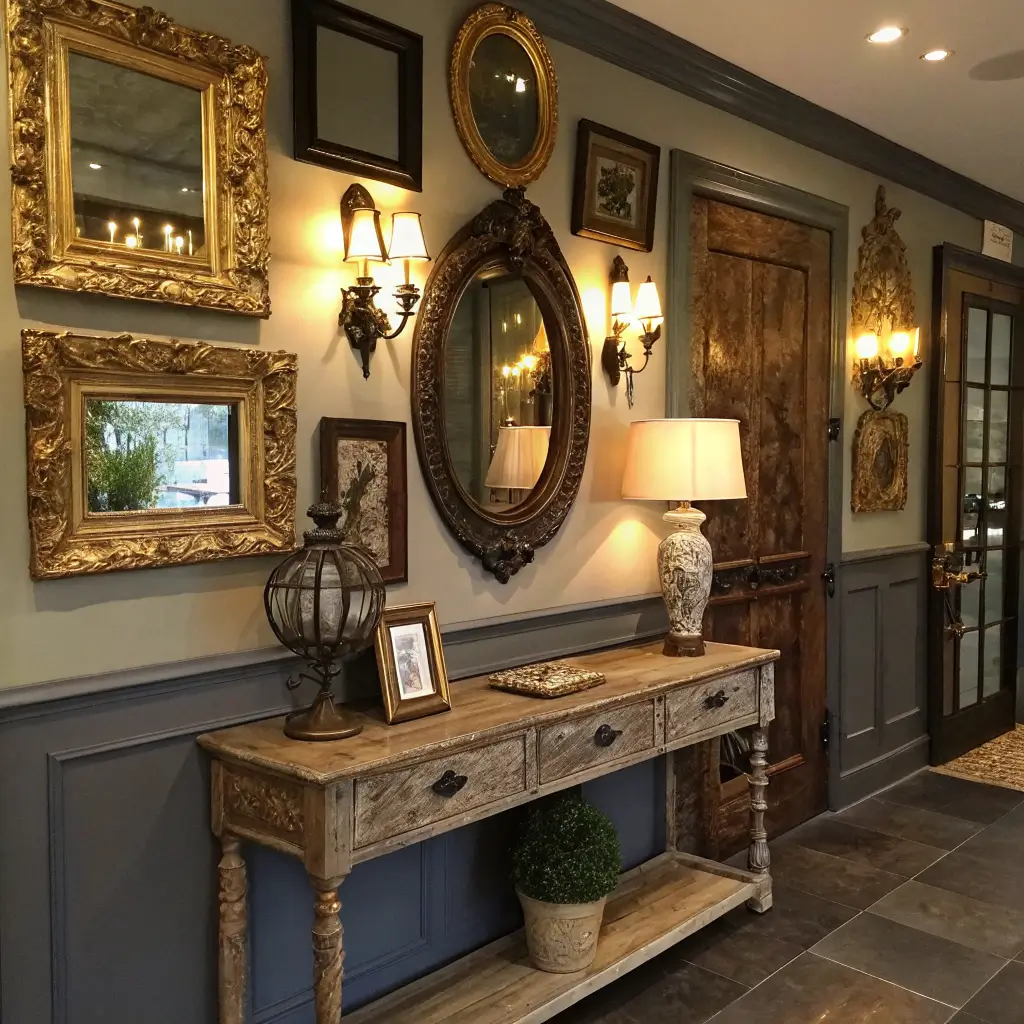
Antique mirrors bring soul to an entrance like nothing else can. Each piece carries history, and when you group them together, you’re basically creating a curated gallery of stories. Plus, that aged mirror glass with its spots and cloudiness? Pure character that you can’t fake.
My antique mirror collection started with one piece from my great-aunt’s estate. Now I hunt for them at estate sales, and let me tell you – the thrill of finding a perfect piece never gets old. Every mirror has quirks that make it special, from ornate gilt frames to unusual shapes from different eras.
Building an antique mirror collection:
- Mix time periods for eclectic appeal
- Vary sizes dramatically
- Include both ornate and simple frames
- Look for interesting shapes (shields, fans, etc.)
- Don’t restore too aggressively – patina is the point
Want to know the best part about antique mirrors? They’re conversation starters. Guests always ask about them, and suddenly you’re sharing stories about that amazing flea market find or your grandmother’s vanity mirror. These pieces create connections, not just reflections.
The key to displaying antique mirrors involves embracing asymmetry. Unlike modern gallery walls that often follow grids, antique collections look best when they feel organically arranged. Start with your largest or most ornate piece, then build around it intuitively. Trust your eye – if it feels balanced, it probably is.
Mirror and Floating Shelf Combo
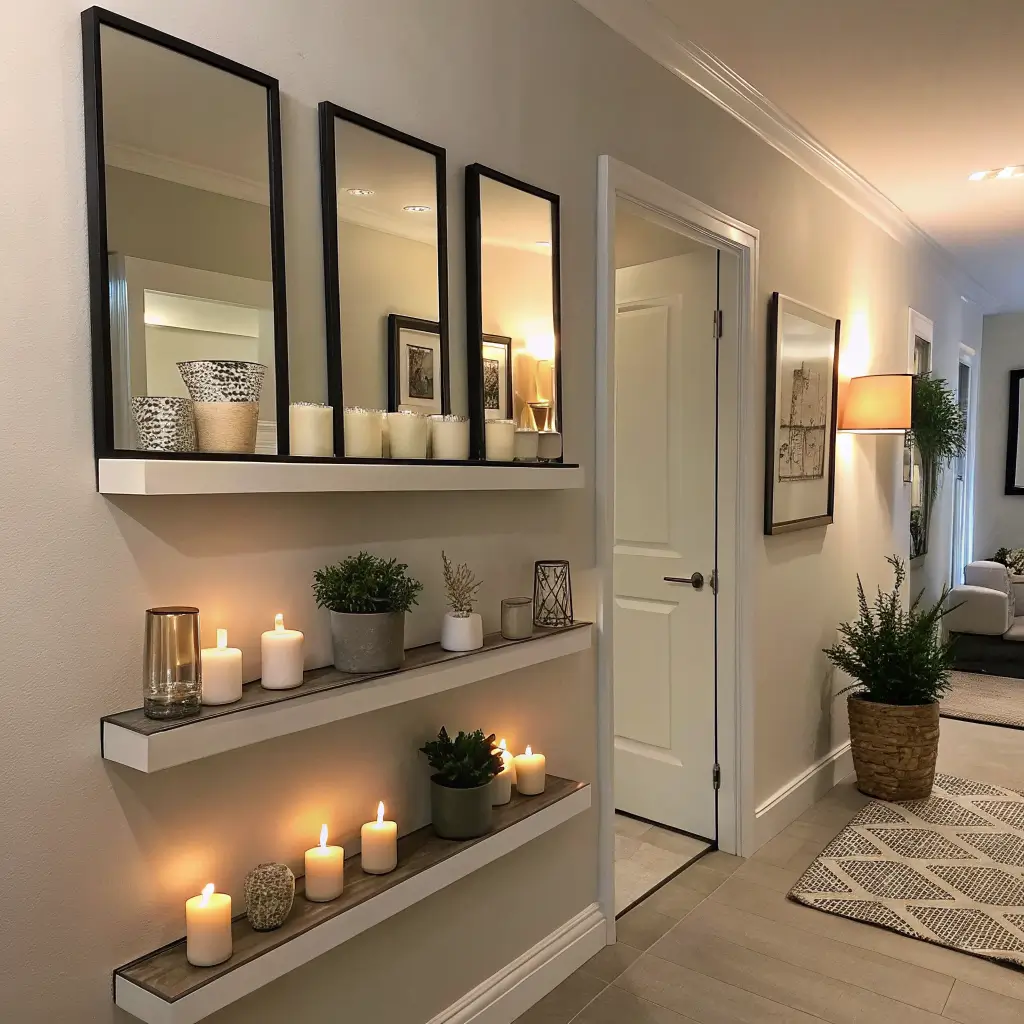
Why choose between mirrors and display space when you can have both? The mirror-shelf combo maximizes functionality while creating a styled vignette that actually serves a purpose. This setup turns your entrance into a proper landing zone for keys, mail, and those sunglasses you’re always losing.
I discovered this combination out of pure necessity – needed a mirror for last-minute appearance checks and somewhere to drop my keys. The floating shelf below my mirror became the perfect solution. Now it holds a small succulent, a decorative bowl for keys, and usually whatever book I’m currently reading.
Successful mirror-shelf combinations include:
- Mirror with integrated shelf (all-in-one solution)
- Separate floating shelf directly below mirror
- Multiple small shelves flanking the mirror
- Asymmetrical shelf placement for modern look
- LED-lit shelves for extra ambiance
The spacing between mirror and shelf matters more than you’d think. Too close and it feels cramped; too far and they look disconnected. I aim for 4-6 inches between them – close enough to feel intentional but with breathing room. This gap prevents the shelf items from obscuring the mirror’s reflection 🙂
IMO, this combo works best when you keep shelf styling minimal. A small plant, a candle, maybe a decorative object – that’s it. The mirror should remain the star while the shelf plays supporting role. Overcrowding the shelf defeats the whole purpose of having a mirror there.
Circular Cluster Mirror Arrangement
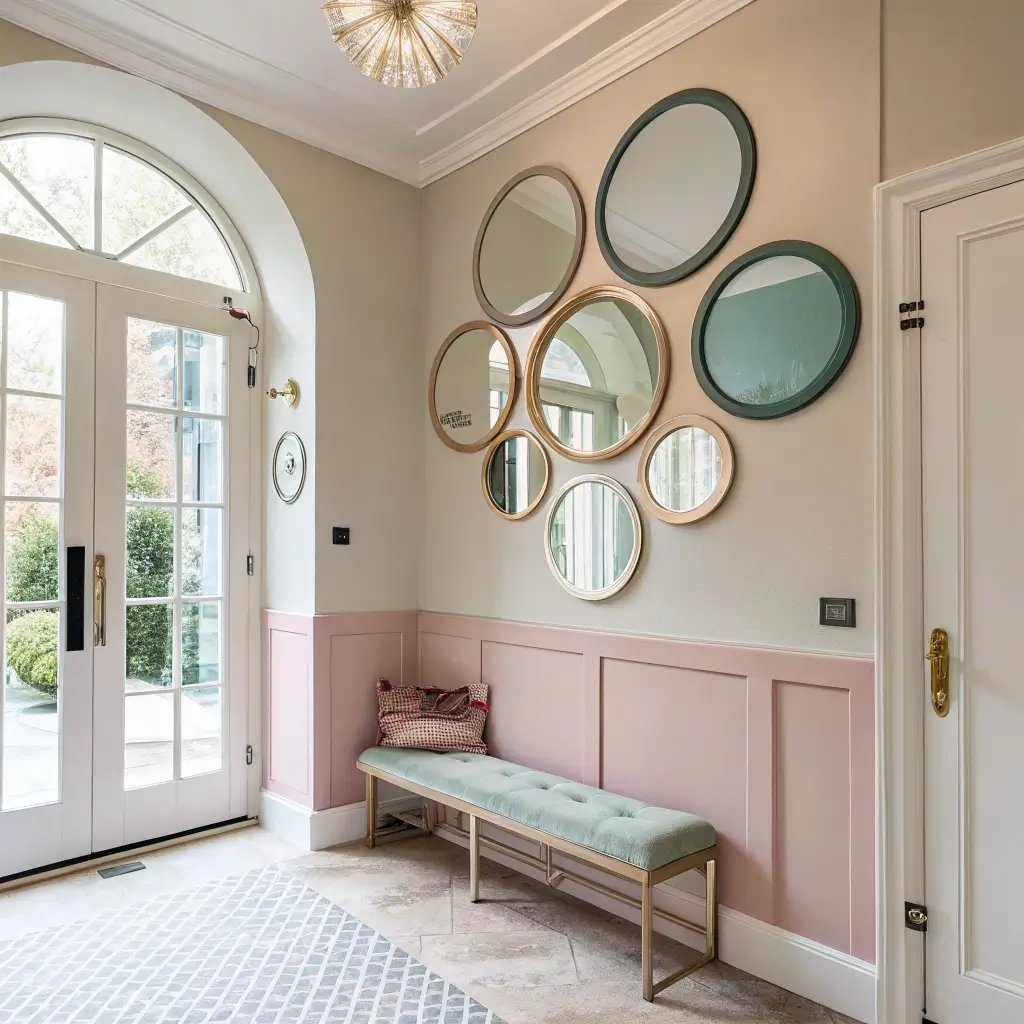
Round mirrors in groups create this amazing bubble effect that’s both playful and sophisticated. Clustering circles of different sizes adds movement and energy to your entrance wall. It’s like champagne bubbles frozen in time – festive but not overwhelming.
My first circular cluster started with three mirrors and grew organically. Now I have seven different sizes creating this cloud-like formation that everyone comments on. The trick lies in varying the sizes significantly – think 6-inch mirrors mixed with 18-inch ones, not a bunch of similar sizes.
Creating the perfect circular cluster:
- Start with your largest circle as anchor
- Add medium sizes at varying heights
- Fill gaps with smallest mirrors
- Overlap slightly for depth
- Keep frames consistent for cohesion
The arrangement process feels like solving a puzzle, and honestly, it’s kind of addictive. I recommend cutting paper circles in your mirror sizes and taping them to the wall first. This lets you play with arrangements without committing to nail holes. Move them around until that “aha!” moment hits.
What makes circular clusters so effective? The repetition of round shapes creates rhythm, while size variation keeps it interesting. Your eye naturally moves through the arrangement, creating visual flow that static rectangular mirrors can’t achieve. Plus, circles feel friendly and approachable – perfect for welcoming guests into your home.
Also Read: 10 Gorgeous Entrance Decor Ideas That Impress Instantly
Modern Asymmetrical Mirror Layout
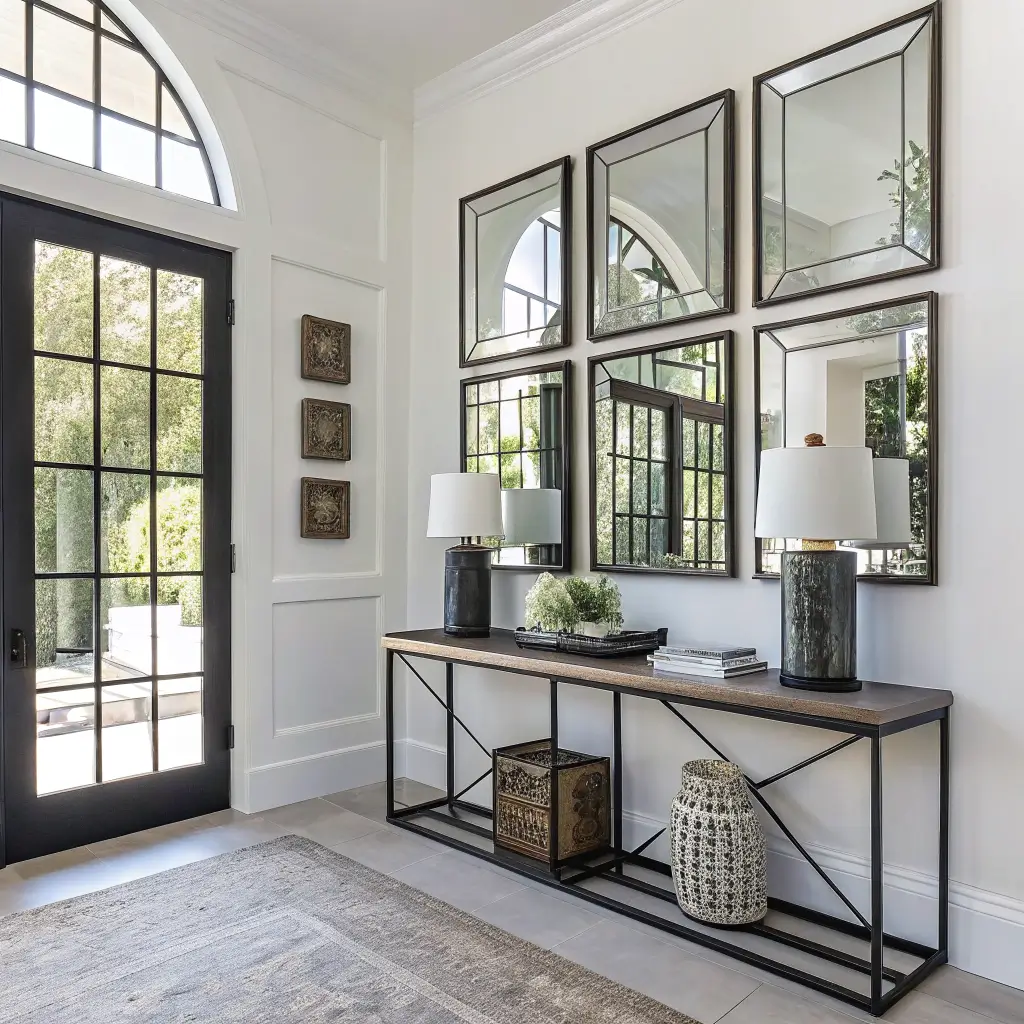
Rules? Where we’re going, we don’t need rules. Asymmetrical layouts break conventional design expectations, creating arrangements that feel fresh and unexpected. This approach works brilliantly in entrances where you want to make a bold first impression.
I fought against asymmetry for years, always trying to balance everything perfectly. Then I visited a friend’s apartment where mirrors seemed randomly placed yet somehow worked perfectly together. That’s when I learned that intentional asymmetry requires more thought than symmetrical arrangements – you’re creating balance through visual weight rather than matching placement.
Mastering asymmetrical layouts:
- Mix shapes liberally (rounds with rectangles with triangles)
- Vary heights dramatically
- Create diagonal sight lines
- Balance heavy pieces with multiple lighter ones
- Leave intentional negative space
The secret to asymmetry lies in finding balance through imbalance. Sound confusing? Think of it like this: a large mirror on the left might balance three small mirrors scattered on the right. Or a tall vertical mirror could offset a cluster of horizontal pieces. You’re creating equilibrium through variety rather than matching.
Here’s my favorite trick for asymmetrical arrangements: the invisible triangle. Pick three focal points in your arrangement that form a triangle when connected. This creates underlying structure that your brain recognizes as balanced, even when nothing matches. It’s basically design psychology in action.
Wrapping It All Up
So there you have it – ten mirror ideas that’ll transform your entrance from forgettable to unforgettable. Whether you gravitate toward geometric galleries or asymmetrical adventures, the key lies in choosing what speaks to your style and space.
Remember, your entrance sets the tone for your entire home. It’s worth investing time (and maybe a few extra dollars) to get it right. Start with one approach that resonates with you, and don’t be afraid to evolve it over time. My entrance has gone through at least five different mirror iterations, and each one taught me something new about what works in my space.
The best part about mirrors? They’re forgiving. Unlike paint or wallpaper, you can easily move them, swap them, or completely change direction if something isn’t working. Take risks, trust your instincts, and have fun with it. After all, if you’re going to look at something every time you leave or enter your home, it might as well be something that makes you smile.
Now get out there and start creating an entrance that’ll make everyone – including you – stop and take notice. Your walls are waiting, and trust me, they’re tired of being boring :/