10 Inspiring Xsmall Study Desk Decor Ideas for Small Rooms

Look, I get it. You’re staring at your cramped study space wondering how on earth you’re supposed to make it both functional AND Instagram-worthy.
Trust me, I’ve been there – squinting at my laptop screen while surrounded by a chaotic mess of textbooks, coffee cups, and that one pen that somehow always goes missing when you need it most.
Here’s the thing though: small doesn’t have to mean boring or cluttered. After years of experimenting with tiny desk setups (and making plenty of mistakes along the way), I’ve discovered that the right decor ideas can completely transform even the tiniest study nook into something that actually makes you want to sit down and get stuff done.
Ready to turn your cramped corner into a productivity powerhouse? Let’s jump into these game-changing small desk decor ideas that’ll make your space work harder than you do during finals week.
1. Minimalist Floating Desk Setup
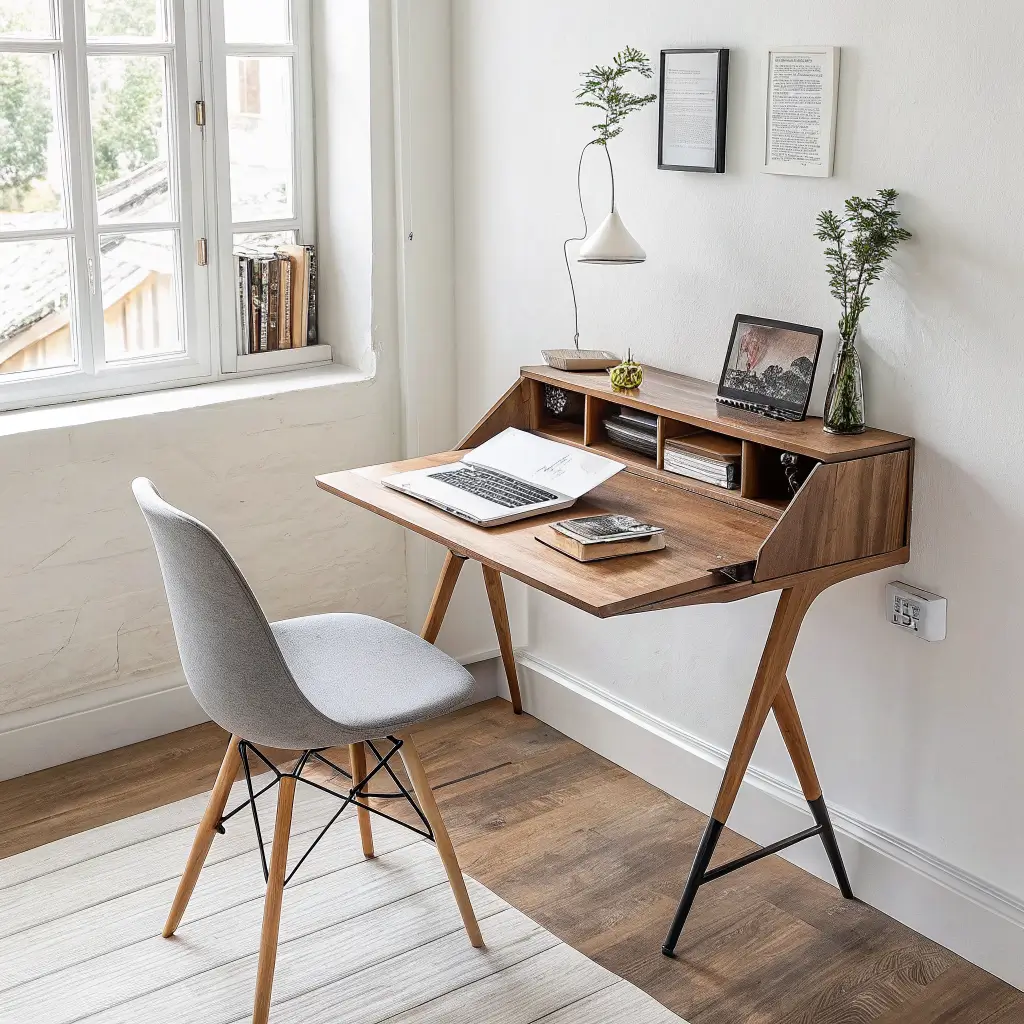
The beauty of less is definitely more when you’re working with limited square footage. A floating desk setup eliminates the visual weight of bulky furniture legs while creating the illusion of more space – pretty clever, right?
I installed a simple floating shelf as my desk about two years ago, and honestly? Best decision ever. The clean lines make my tiny room feel twice as big, and there’s something almost zen-like about having everything you need within arm’s reach without the visual clutter.
Here’s what makes this setup work:
• Wall-mounted desk surface (24-36 inches wide works perfectly for most spaces)
• Minimal desk accessories – think one small plant, a sleek lamp, and maybe a single decorative object
• Hidden cable management using adhesive clips or a small cable tray underneath
• Floating shelves above for books and supplies
The trick is choosing a desk surface that complements your wall color. I went with a warm wood tone against white walls, but a sleek white surface can create that modern, airy vibe if that’s more your style.
Pro tip: Mount your desk at exactly elbow height when you’re seated. Your future self will thank you for not having to hunch over like some kind of study goblin 🙂
2. Compact Corner Desk Station
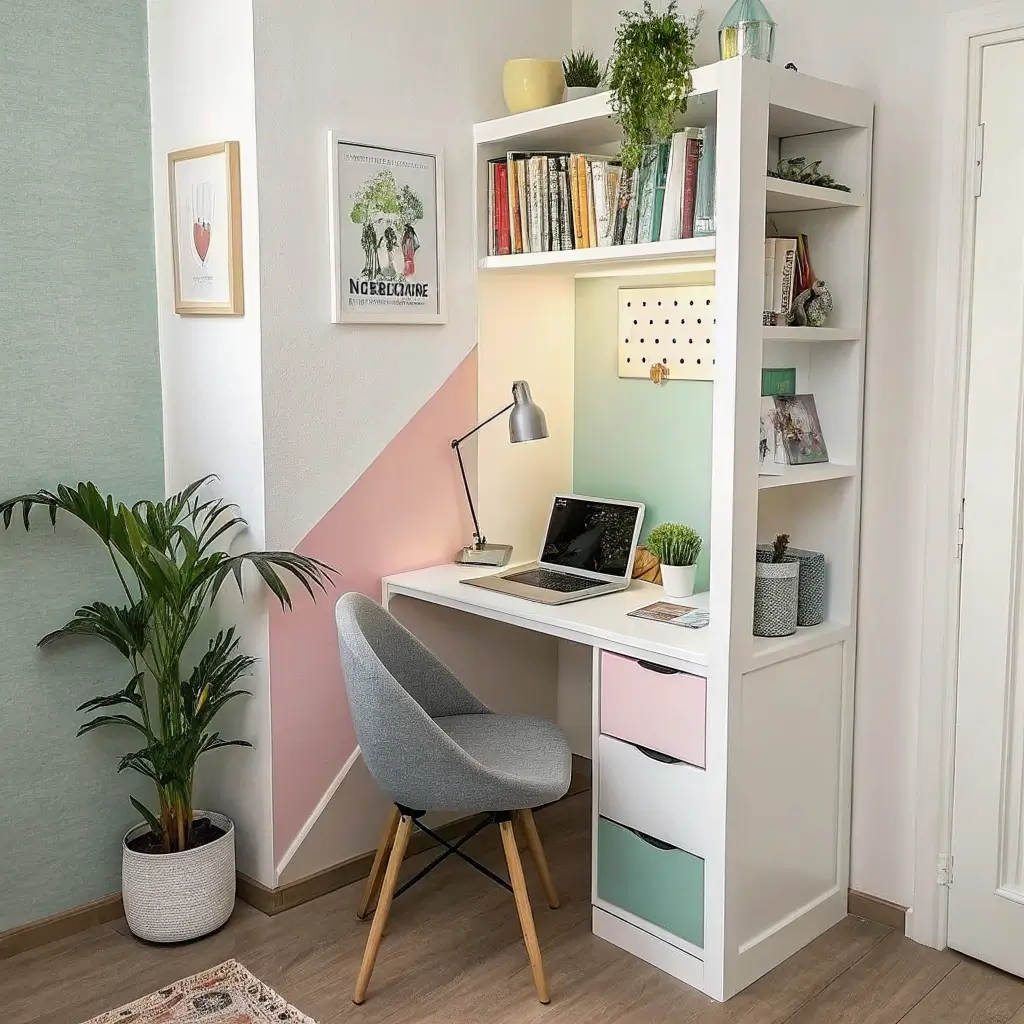
Corner spaces are like the forgotten real estate of small rooms – everyone ignores them, but they’re actually goldmines for creating functional study areas. A well-designed corner desk station maximizes every inch while giving you that cozy, tucked-away feeling that’s perfect for deep focus.
I’ve seen too many people try to cram a regular rectangular desk into a corner and wonder why it feels awkward. The secret is working WITH the corner, not against it.
Essential elements for corner desk success:
• Triangular or L-shaped desk surface that fits snugly into the corner
• Corner shelving unit that utilizes vertical space efficiently
• Dual-purpose storage like a rolling cart that slides under the desk
• Strategic lighting – a corner can get pretty dark without proper illumination
The beauty of a corner setup is that it naturally creates boundaries. When you sit down, you’re in your own little productivity bubble, separate from the rest of the room’s distractions.
Color coordination is key here – I learned this the hard way after creating what looked like a rainbow explosion in my corner. Stick to 2-3 colors max, and let one be your dominant shade.
3. Vertical Wall Organizer Display
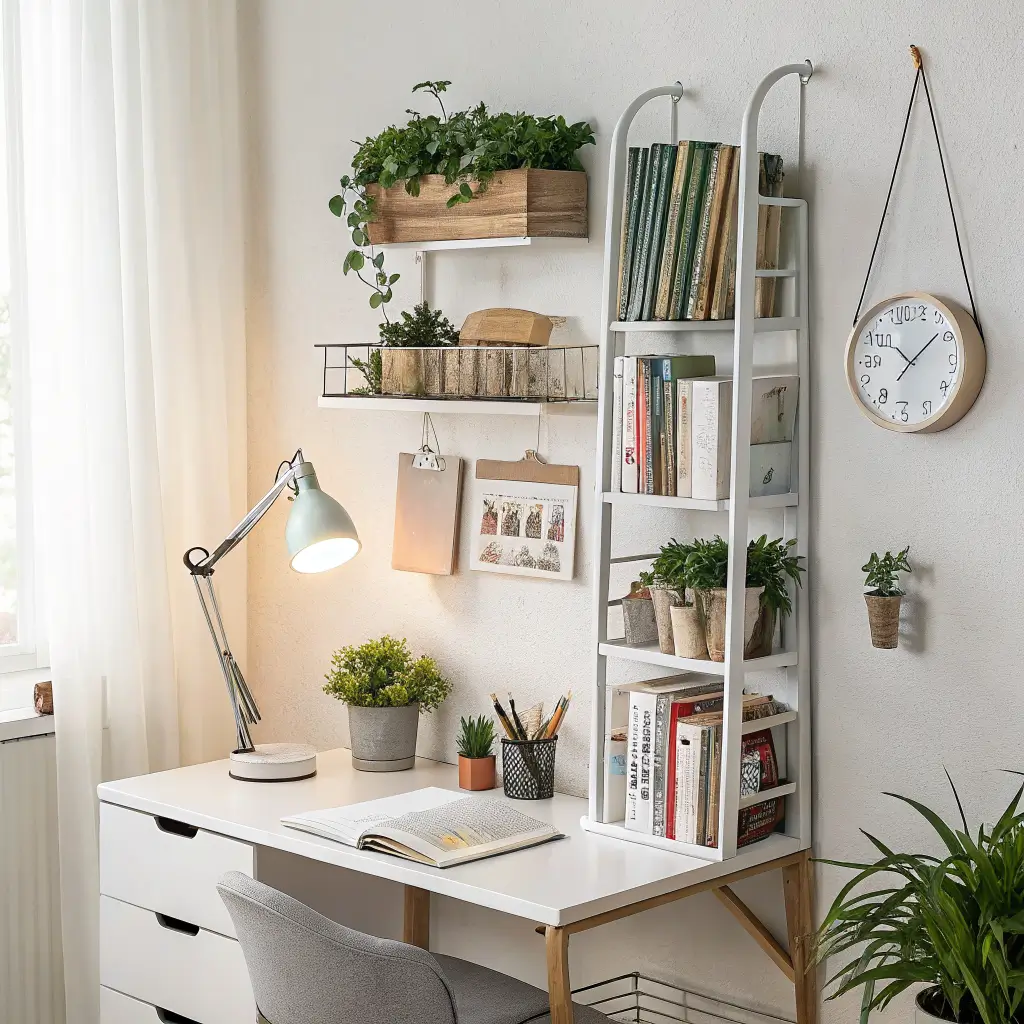
When floor space is at a premium, the only way to go is up. A vertical wall organizer display turns your wall into a functional command center that keeps everything visible and accessible while adding serious visual interest to your space.
Think of your wall as prime real estate – every square inch should earn its keep. I created a vertical organizer system using a combination of floating shelves, small baskets, and magnetic strips, and it completely changed how I work.
Key components for vertical organization:
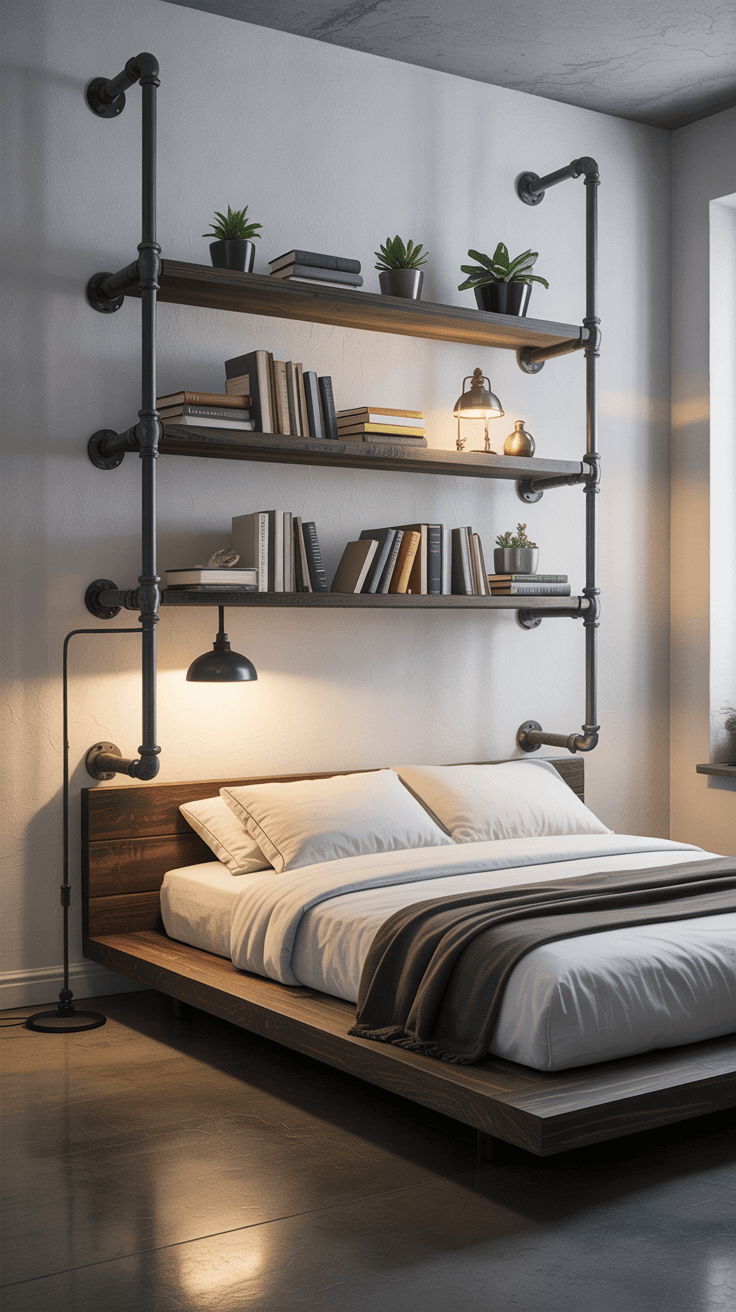
• Floating shelves at varying heights for books, supplies, and decorative objects
• Small wall-mounted baskets for pens, sticky notes, and other small items
• Magnetic strips for scissors, rulers, and metal accessories
• Cork board or whiteboard sections for notes and inspiration
• Small hooks for headphones, charging cables, or a small bag
The visual impact is incredible – instead of a boring blank wall, you’ve got this dynamic, functional display that makes your space feel intentional and organized. Plus, everything has a designated spot, which means less time hunting for that highlighter that’s definitely somewhere on your desk.
Layout tip: Start with your largest elements (shelves, boards) and work down to smaller accessories. This creates visual balance and prevents the display from looking chaotic.
Also Read: 10 Chic Simple Study Desk Decor Ideas for Cozy Corners
4. DIY Desk Shelf Ladder
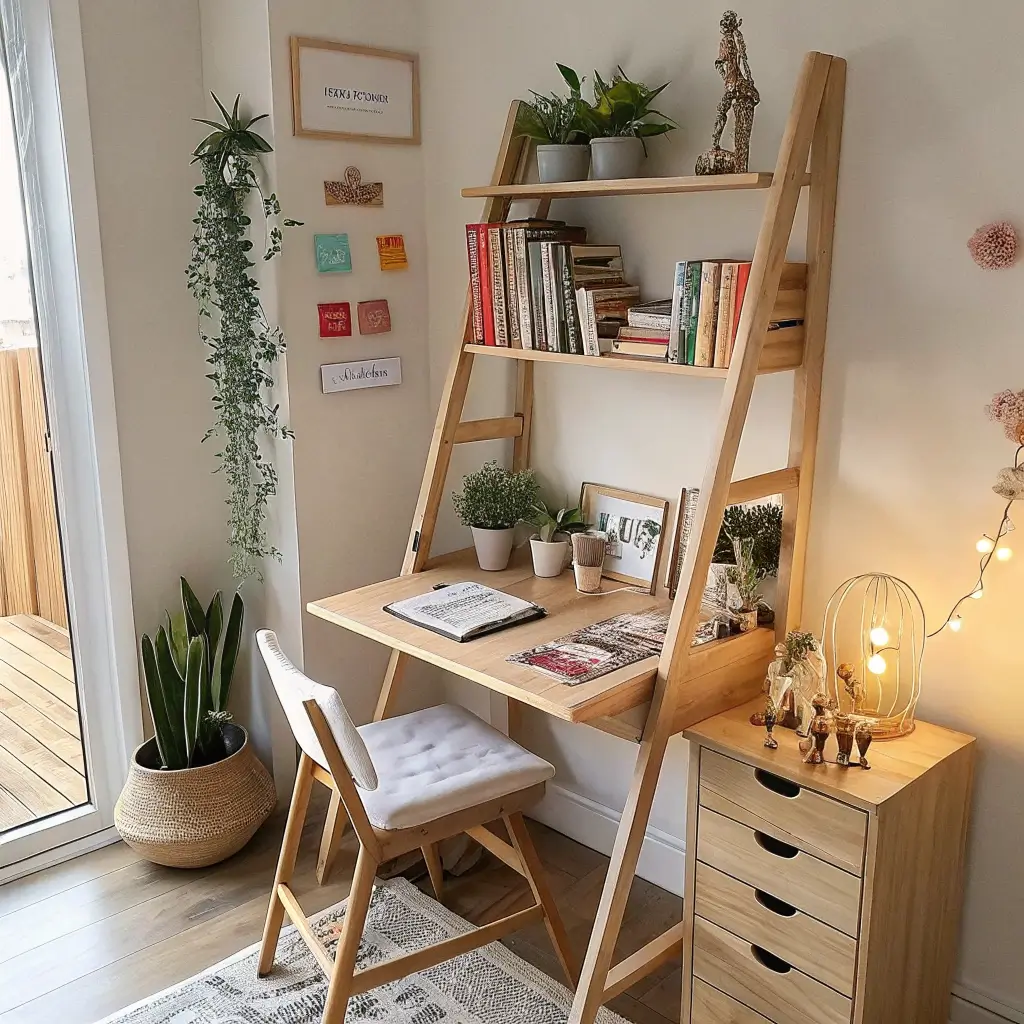
Okay, this one’s my personal favorite because it combines functionality with that trendy industrial vibe that makes any space look more sophisticated. A DIY desk shelf ladder is basically a narrow, ladder-style shelving unit that sits on or beside your desk, creating instant vertical storage.
I built mine using simple wood planks and metal brackets – total cost was under $30, and it looks like something from a fancy home decor store. The narrow profile means it doesn’t eat up precious desk surface area, but you get multiple levels of storage.
What makes this setup work:
• Narrow width (6-8 inches) so it doesn’t overwhelm your desk
• Multiple shelf levels for different types of items
• Mix of open and closed storage using small boxes or baskets
• Decorative elements mixed with functional items for visual interest
The ladder design naturally draws the eye upward, making your ceiling feel higher and your space feel larger. I use mine for books, small plants, a few decorative objects, and my ever-growing collection of coffee mugs.
Construction note: If you’re not handy with tools, many home improvement stores will cut wood to size for you. Just bring your measurements and ask nicely – most employees are happy to help.
5. Tiny Desk with Hidden Storage
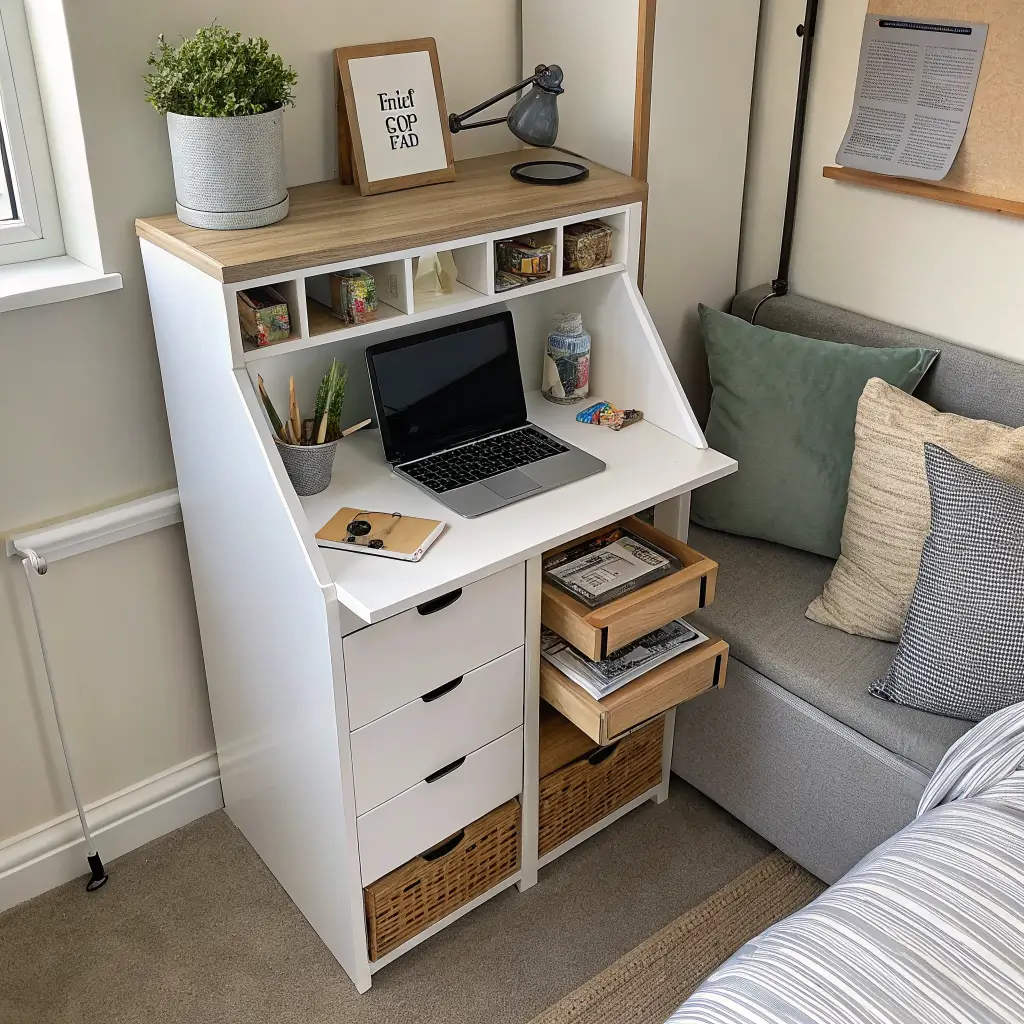
Here’s where things get sneaky in the best possible way. A tiny desk with hidden storage looks minimalist and clean on the surface, but it’s secretly harboring all your study supplies like some kind of organizational ninja.
I discovered the magic of hidden storage when I got tired of my desk looking like a tornado hit it every single day. The key is choosing storage solutions that don’t announce themselves – everything should look intentional and streamlined.
Hidden storage solutions that actually work:
• Desk with built-in drawers that sit flush with the surface
• Hollow desk legs that open to reveal storage compartments
• Magnetic strips attached to the underside of your desk
• Slide-out keyboard tray that doubles as a storage shelf
• Desktop organizers that look like decorative objects but hold supplies
The psychological effect is amazing – when your desk surface is clear, your mind feels clearer too. Everything you need is still within reach, but it’s not creating visual chaos that makes you feel overwhelmed before you even start studying.
Reality check: This setup requires discipline. You actually have to put things back in their designated spots, or the whole system falls apart. But once you get into the habit, it’s incredibly satisfying.
6. Multi-Tier Desk Organizer
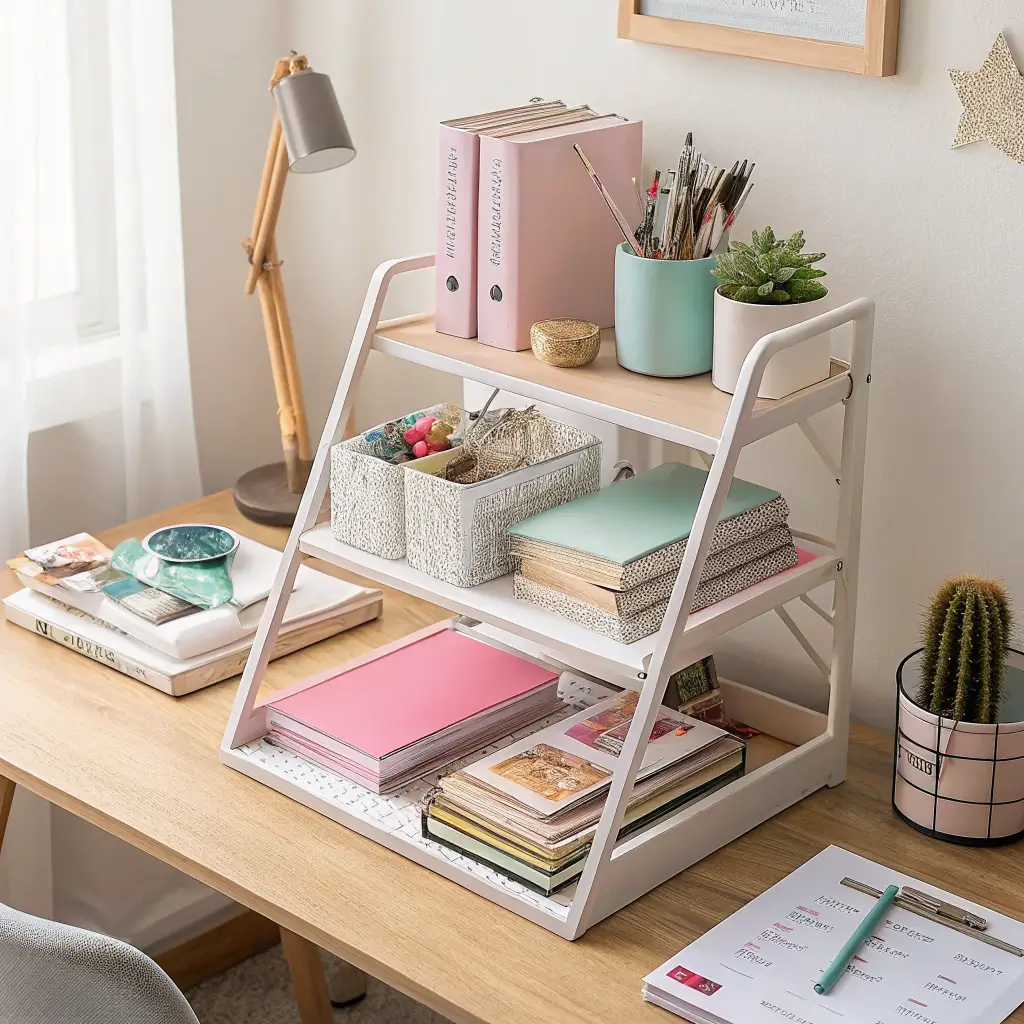
Sometimes you need to embrace the fact that you have stuff – lots of stuff – and the solution isn’t to hide it all away, but to organize it beautifully. A multi-tier desk organizer creates designated zones for different types of items while adding architectural interest to your desk.
I use a combination of tiered trays, small containers, and risers to create levels on my desk surface. It’s like having a tiny cityscape of organization, and everything has its own neighborhood.
Essential elements for multi-tier success:
• Varying heights to create visual rhythm and maximize space usage
• Clear containers so you can see what’s inside without opening everything
• Designated zones for different activities (writing, tech, reference materials)
• Mix of materials – wood, metal, and acrylic keep things interesting
• One statement piece like a unique pen holder or small sculpture
The trick is balancing function with aesthetics. Yes, you want everything organized, but you also want it to look intentional rather than like you just grabbed random containers from around your house.
Color strategy: Stick to a cohesive color palette. I learned this after creating what looked like a rainbow explosion on my desk. Now I stick to whites, natural wood, and one accent color, and everything looks much more pulled together.
Also Read: 10 Beautiful Study Table Wall Decor Desk Ideas for Cozy Spaces
7. Pegboard Wall Desk Setup
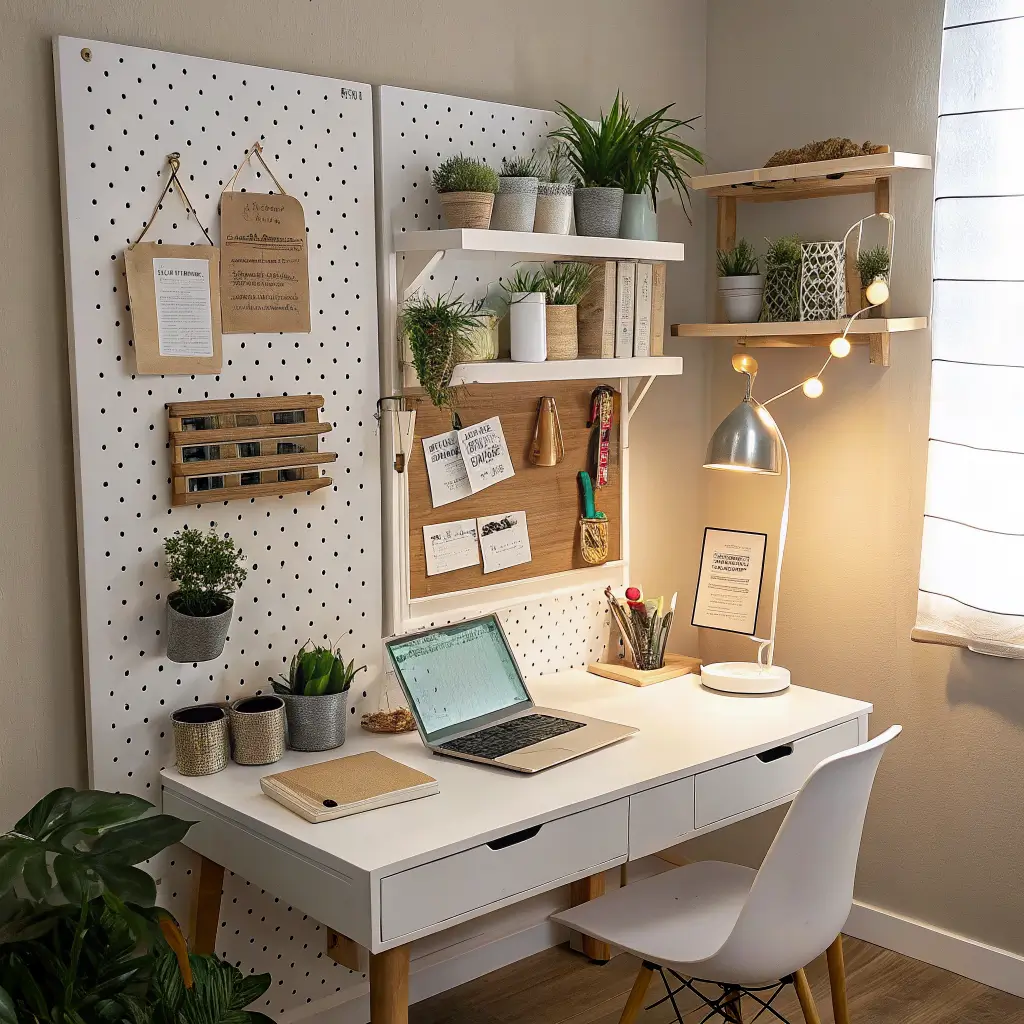
Pegboards aren’t just for garages anymore – they’re having a serious moment in home decor, and for good reason. A pegboard wall desk setup gives you ultimate flexibility to customize your storage as your needs change, plus it adds serious visual texture to your space.
I installed a small pegboard section above my desk, and it’s become my favorite feature. The ability to move hooks and accessories around means your organization system can evolve as your study habits change.
Pegboard essentials that make the difference:
• Various hook sizes for different items (small hooks for pens, larger ones for headphones)
• Small baskets that hang from the pegboard for loose items
• Magnetic containers for metal supplies like paper clips and binder clips
• Mini shelves that attach to the pegboard for books or decorative objects
• Cable management using pegboard hooks to route charging cables
The industrial vibe works surprisingly well in small spaces because the grid pattern creates visual order even when you have lots of different items displayed. Plus, everything is visible and accessible, which means you’ll actually use the supplies you have instead of buying duplicates.
Installation tip: Paint your pegboard to match your wall color for a more integrated look, or choose a bold accent color to make it a focal point. I went with sage green, and it adds just the right amount of color without being overwhelming.
8. Hanging Planter Desk Corner
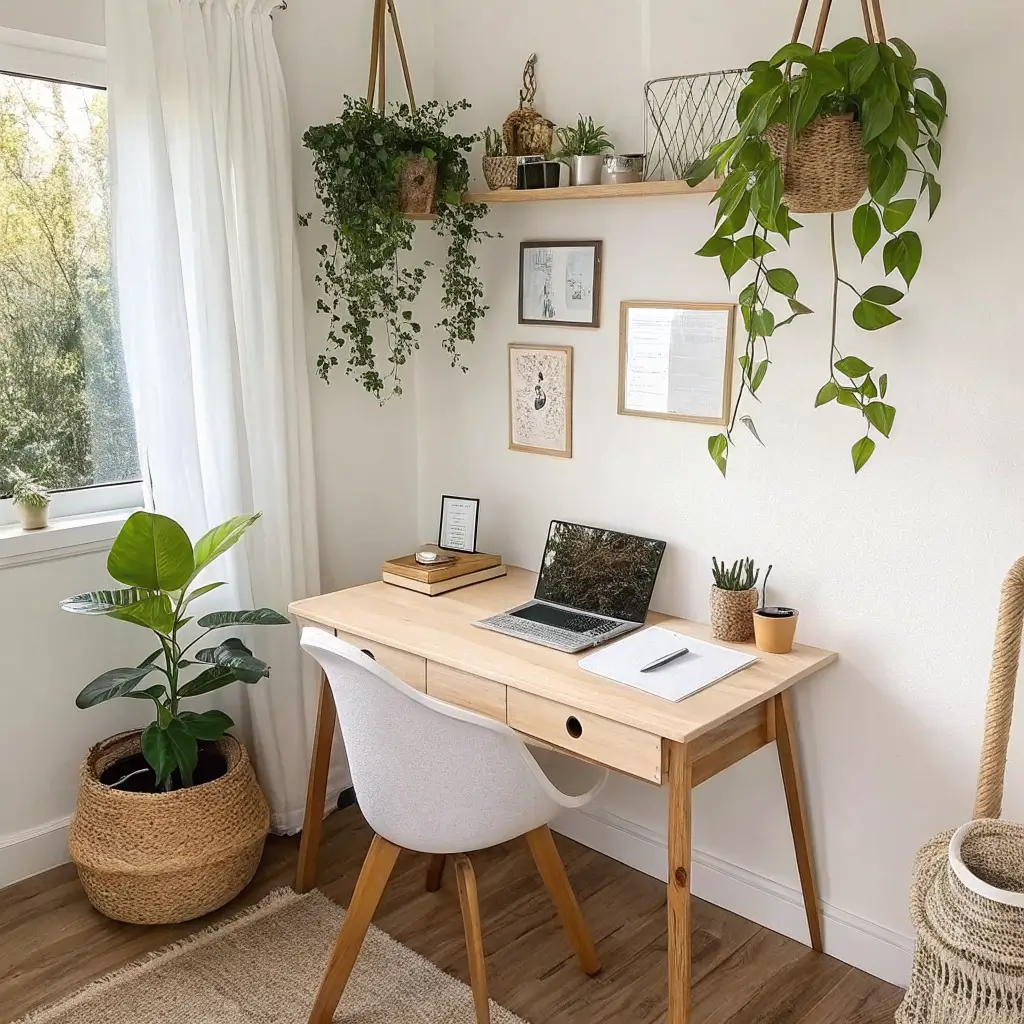
Who says your study space can’t have a little life in it? A hanging planter desk corner brings nature indoors while utilizing that often-wasted vertical space in the corner of your desk area. Plus, studies show that having plants nearby can actually boost productivity and reduce stress – win-win!
I started with one small hanging planter and got completely addicted. Now I have a whole corner garden situation going on, and it makes my study sessions feel so much more pleasant.
Plants that thrive in desk corner conditions:
• Pothos – practically indestructible and trails beautifully
• Spider plants – produce baby plants that you can propagate (free plants!)
• Small succulents – low maintenance and come in amazing varieties
• Air plants – no soil required, just mist occasionally
• Small ferns – add lush texture and don’t need direct sunlight
The key is choosing planters that complement your desk aesthetic. I use a mix of macrame hangers and simple ceramic pots in neutral colors. The varying heights create visual interest while the green adds a pop of color that works with any decor style.
Practical note: Make sure your hanging system is secure – nobody wants a plant crash-landing on their laptop during an important video call :/
9. Foldable Desk with Decor Accents
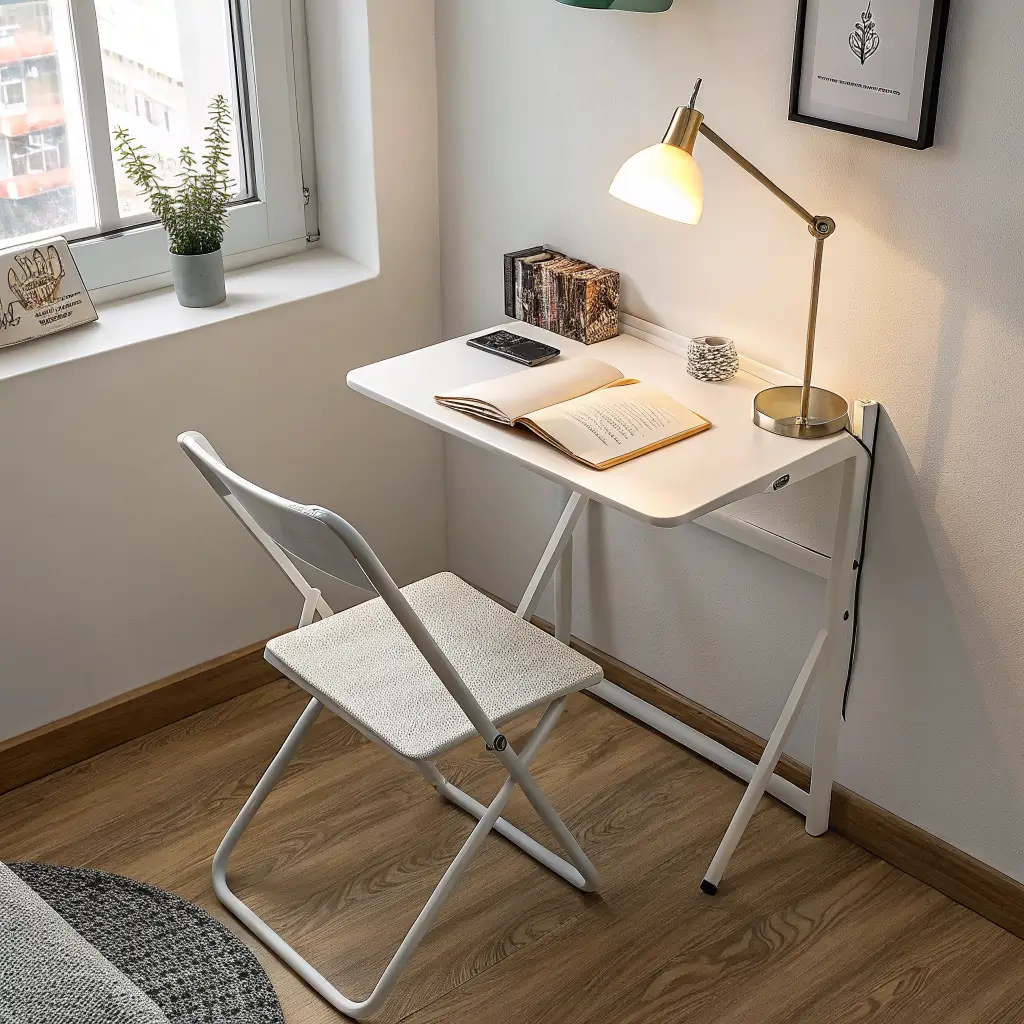
Sometimes you need a desk that can disappear when you’re not using it, especially in multi-purpose rooms. A foldable desk with carefully chosen decor accents gives you a functional workspace that transforms into an attractive wall feature when folded up.
I have a wall-mounted fold-down desk in my bedroom, and it’s been a game-changer for maintaining the room’s aesthetic while still having a dedicated study space when I need it.
Making foldable desks look intentional:
• Consistent hardware – all hinges and brackets should match
• Integrated storage for supplies that need to stay accessible
• Decorative elements that work whether the desk is up or down
• Strategic placement so the folded desk becomes part of the wall design
• Quality materials that look good from all angles
The trick is treating the folded desk as a design element rather than trying to hide it. I painted mine to match my wall color and added a small floating shelf above it that holds a few decorative objects and a small plant.
Decor accent ideas: A small piece of artwork that sits on the desk when it’s down, a decorative lamp that doubles as task lighting, or a small mirror that reflects light and makes the space feel larger.
Also Read; 10 Stylish Study Desk Decor Ideas DIY to Boost Productivity
10. LED Light Strip Desk Ambiance
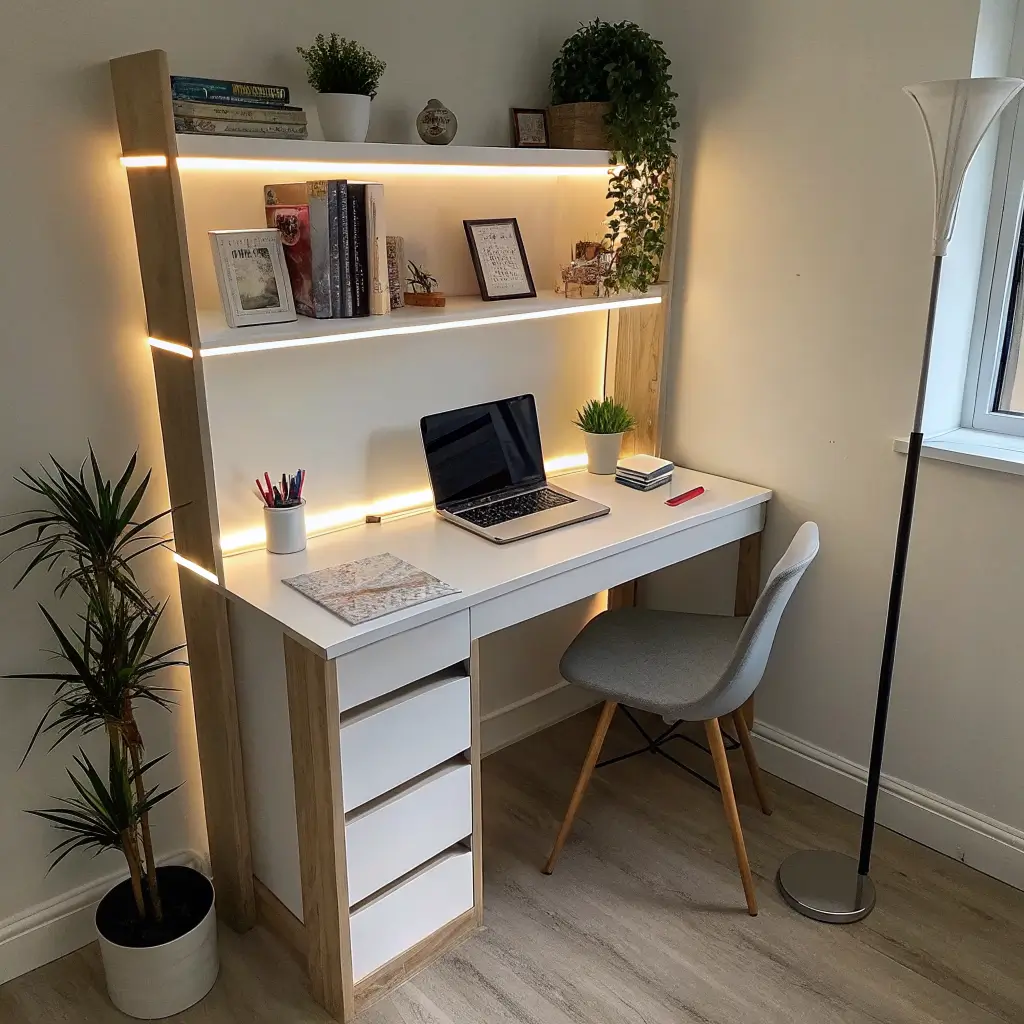
Lighting can make or break a small space, and LED light strips are like magic for creating ambiance while providing functional task lighting. I was skeptical at first – seemed a bit too “gamer setup” for my taste – but the right LED strips can create sophisticated, customizable lighting that transforms your desk area.
The secret is subtlety and placement. You want the light effect, not the light source to be the star of the show.
Strategic LED placement for maximum impact:
• Under-desk lighting that creates a floating effect
• Behind monitor to reduce eye strain and add depth
• Along shelving edges for accent lighting that highlights your decor
• Inside glass containers for a unique decorative element
• Around wall art to create gallery-style lighting
I use warm white LEDs (around 3000K) because they create a cozy, inviting atmosphere that’s perfect for long study sessions. The dimming capability means I can adjust the lighting based on the time of day or my mood.
Tech tip: Look for LED strips with adhesive backing and easy controls. Some even connect to smartphone apps, so you can adjust colors and brightness without getting up from your desk. Just don’t go crazy with the rainbow effects – save those for special occasions 🙂
The beauty of LED strips is that they’re completely customizable and relatively inexpensive. You can create dramatic lighting effects that make your small desk area feel like a high-end workspace without breaking the budget.
Bringing It All Together
Here’s the thing about small desk decor – it’s not about cramming as many cute accessories as possible into a tiny space. The best small desk setups are intentional, functional, and reflect your personal style while making the most of every square inch.
I’ve tried pretty much every combination of these ideas over the years, and the setups that work best are the ones that solve real problems while looking good. Your desk should make you want to sit down and get stuff done, not stress you out with clutter or make you feel cramped.
Start with one or two ideas that address your biggest pain points – whether that’s lack of storage, poor lighting, or just wanting your space to feel more inspiring. You can always add more elements later as you figure out what works for your specific needs and style.
Remember, the goal isn’t to create a Pinterest-perfect setup that you’re afraid to actually use. The best desk decor is the kind that makes your daily study routine more enjoyable and efficient. And if it happens to look amazing in photos? Well, that’s just a bonus.
FYI, don’t feel like you need to implement all these ideas at once. Pick the ones that speak to you, start small, and build your perfect study space gradually. Your future productive self will definitely thank you for it!