10 Beautiful Small Partition Design Ideas for Stylish Spaces

Look, we’ve all been there. You’re staring at your studio apartment or open-plan space thinking, “How the heck do I make this feel like more than just one giant room?” Trust me, I’ve spent countless hours scrolling through Pinterest at 2 AM, desperately searching for ways to carve out distinct areas without building actual walls (because, hello, rental restrictions and budgets exist).
The truth is, small spaces don’t have to feel like you’re living in a fishbowl. You just need the right partition tricks up your sleeve.
I’ve tried more room dividers than I care to admit – some epic wins, some spectacular fails that ended up on Craigslist within a week.
But through all that trial and error, I’ve discovered some absolute game-changers that’ll help you create separate zones without sacrificing that precious square footage.
Minimal Wooden Slat Divider for Small Spaces
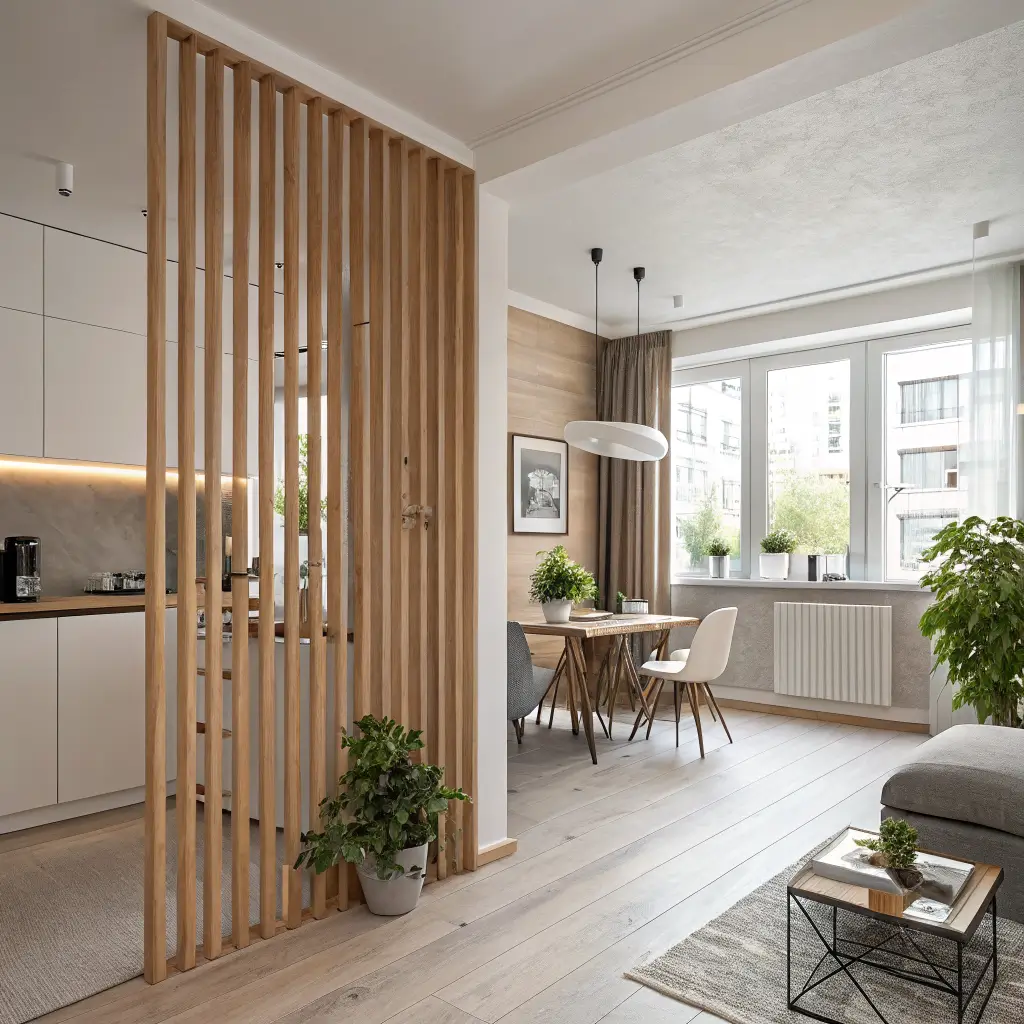
If you want to add privacy without making your space feel claustrophobic, wooden slat dividers are pure genius. I installed one between my living area and bedroom in my tiny apartment, and honestly? It changed everything.
Why wooden slats work so well:
The beauty lies in their simplicity. These dividers create visual separation while still allowing light to filter through. You’re not chopping your room in half with a solid wall – you’re creating gentle boundaries that your eye can still travel across.
I went with cedar slats spaced about 3 inches apart, mounted floor to ceiling. The vertical lines actually make your space look taller (score!), and the natural wood adds warmth without overwhelming the room. Plus, you can customize the spacing based on how much privacy you want.
Installation tip: Mount them to a ceiling track system rather than making them permanent fixtures. This way, you can slide them open when you want that open-concept feel or close them for privacy.
The best part? You can snag pre-made wooden slat panels from most home improvement stores for under $150, or DIY it for even less if you’re feeling ambitious.
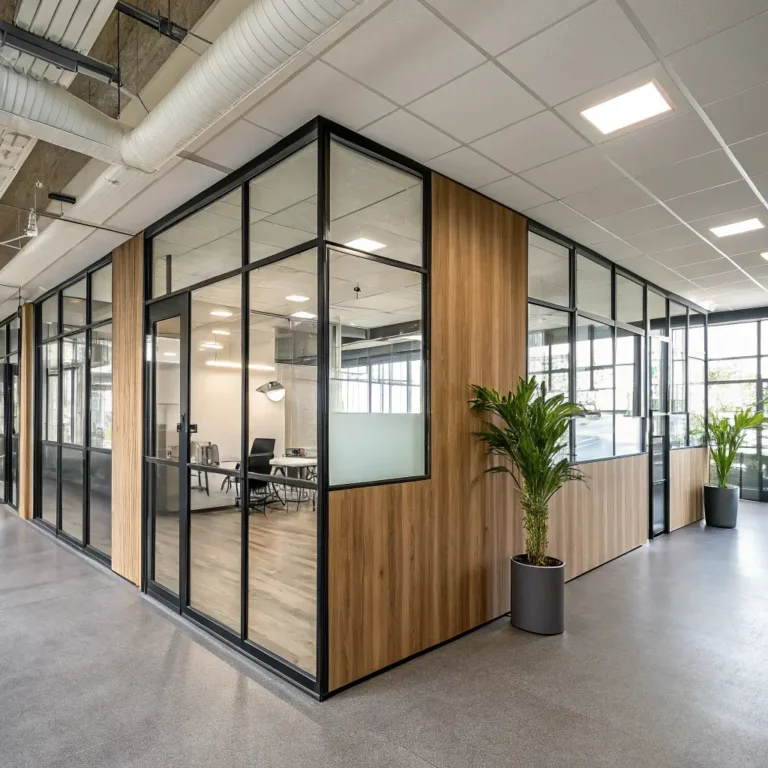
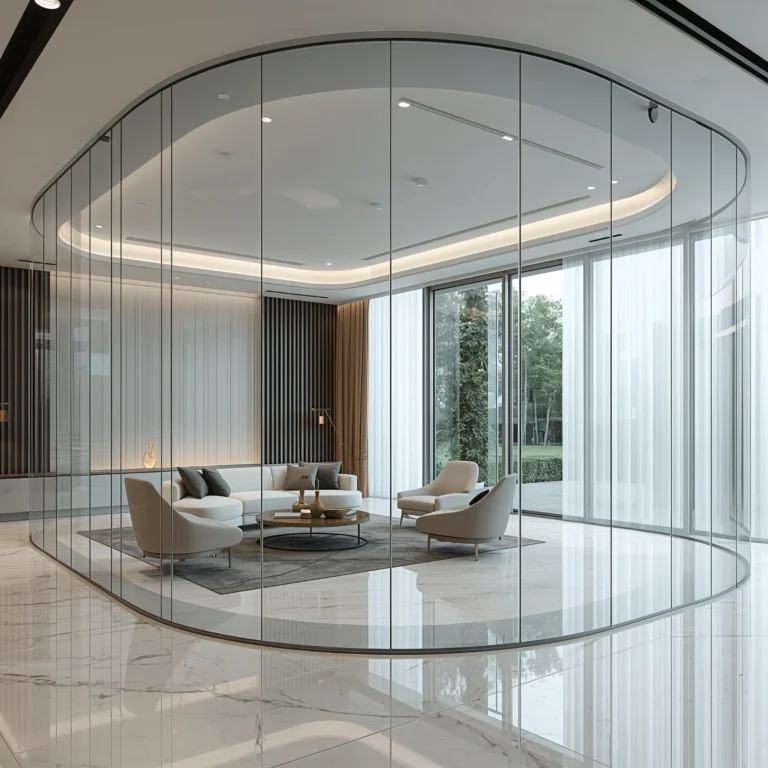
Glass Partition with Black Frame Modern Design
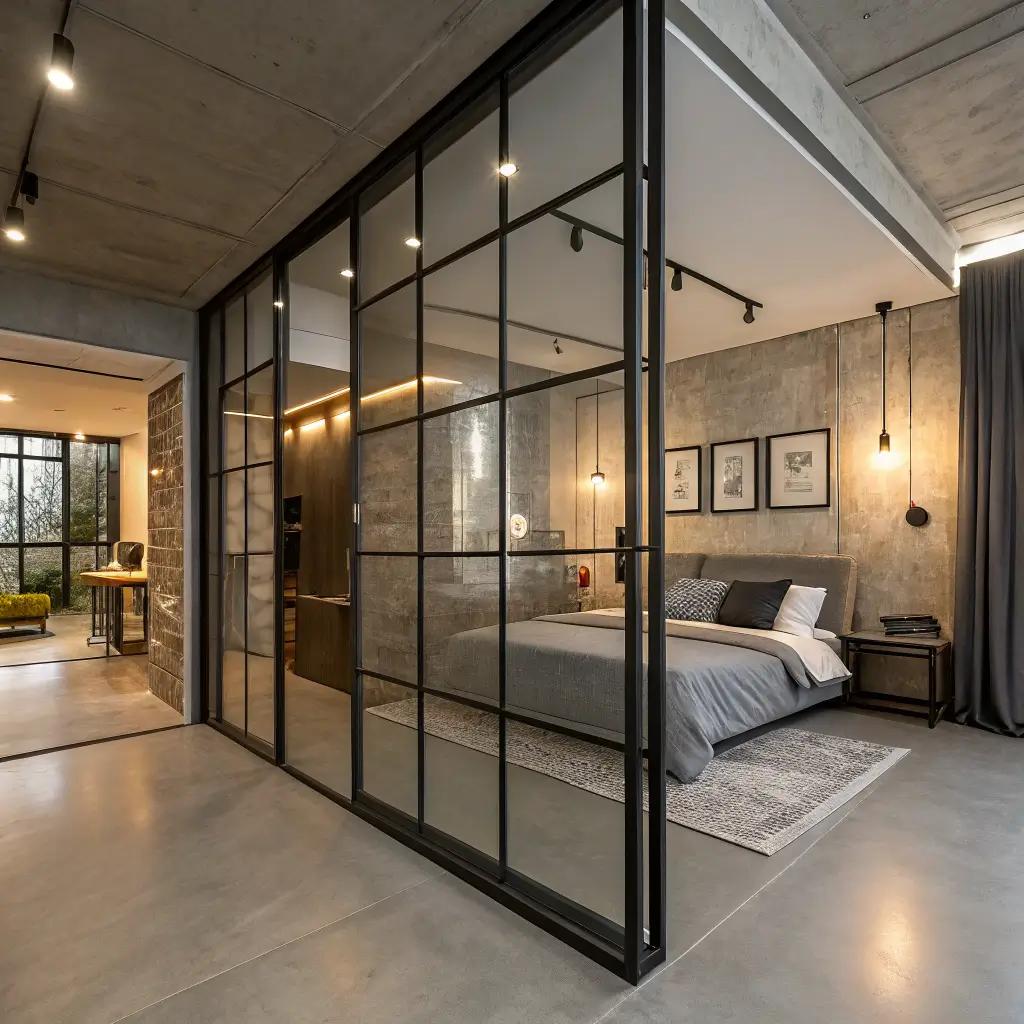
Want to feel fancy without the fancy price tag? Glass partitions with sleek black frames are where it’s at. I was skeptical at first – seemed too “corporate office” for my taste – but man, was I wrong.
The magic of transparency:
Glass partitions are brilliant because they maintain the visual flow of your space while creating defined areas. You get separation without the suffocation. The black frames add that modern industrial vibe that somehow makes even the most basic spaces look intentionally designed.
I found a gorgeous folding glass screen with black metal framing that I use to separate my dining nook from the living room. When I’m working from home, it creates a proper “office” space. When I’m entertaining, I fold it away completely.
Pro tip: Look for tempered glass options for safety, and consider frosted or textured glass if you need more privacy. The frosted version I tried in my bedroom area gives you separation while still letting light flow – perfect for those mornings when you need to get ready without waking your partner.
Ever noticed how glass partitions make small spaces feel bigger? That’s not just in your head – the transparency tricks your brain into seeing the full square footage even when areas are divided.
Floating Shelf Partition for Dual Purpose Use
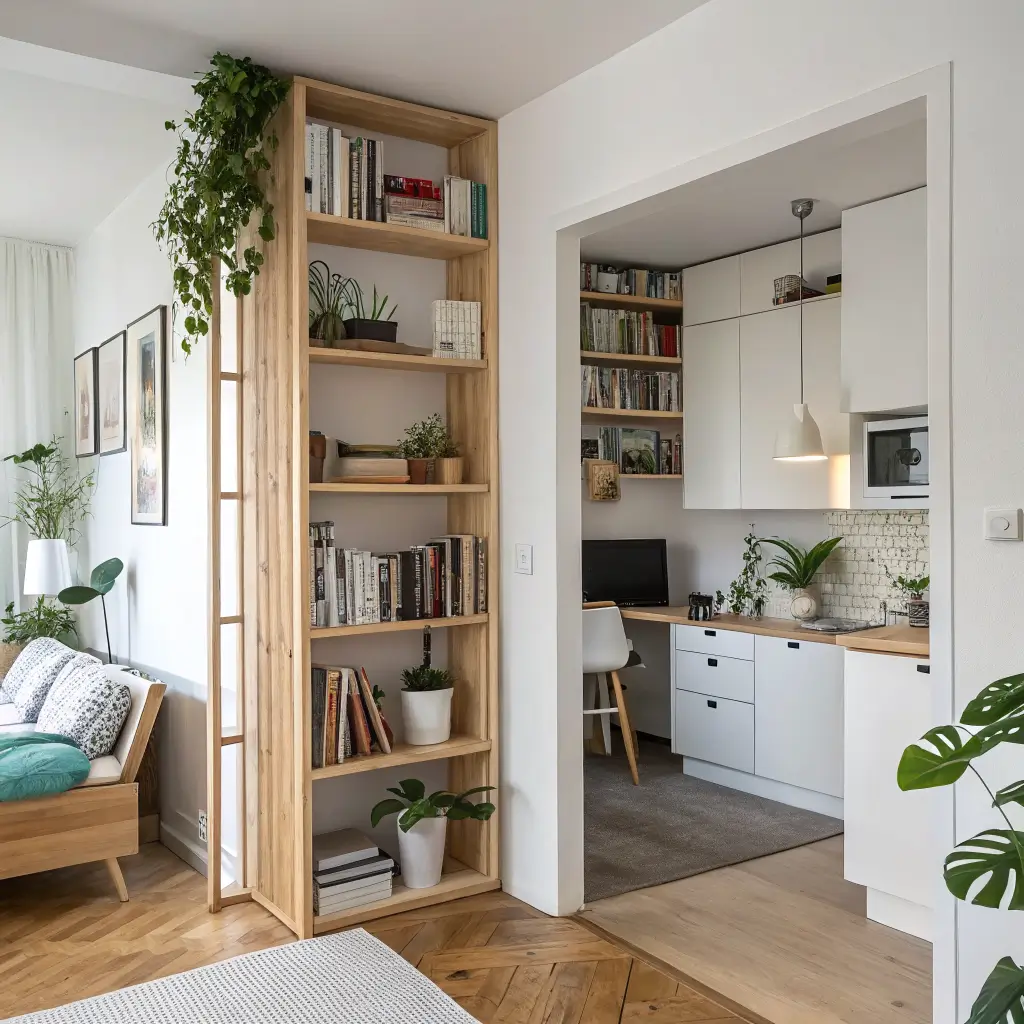
This one’s a total game-changer, especially if you’re dealing with limited storage. Floating shelf partitions give you room division AND functional storage space. It’s like getting two solutions for the price of one.
Making it work in tight spaces:
I built a floating shelf partition between my kitchen and living area using three horizontal shelves at different heights. The asymmetrical design looks intentional (even though I mostly just winged it), and now I have display space for books, plants, and all those random decorative objects we somehow accumulate.
The key is varying the shelf lengths and heights to create visual interest. You don’t want it looking like a boring ladder leaning against nothing. I staggered mine so the longest shelf is in the middle, with shorter ones above and below.
Styling secrets:
Mix functional items with decorative ones. I’ve got cookbooks and small appliances on the kitchen side, while the living room side displays plants, picture frames, and that ceramic vase I impulse-bought and actually love.
The spacing between shelves matters too. I kept about 18 inches between each shelf – enough to display items without feeling cramped, but close enough to maintain that partition effect.
Also Read: 10 Stunning Half Partition Design Ideas for Modern Homes
Curtain Divider for Soft and Flexible Separation
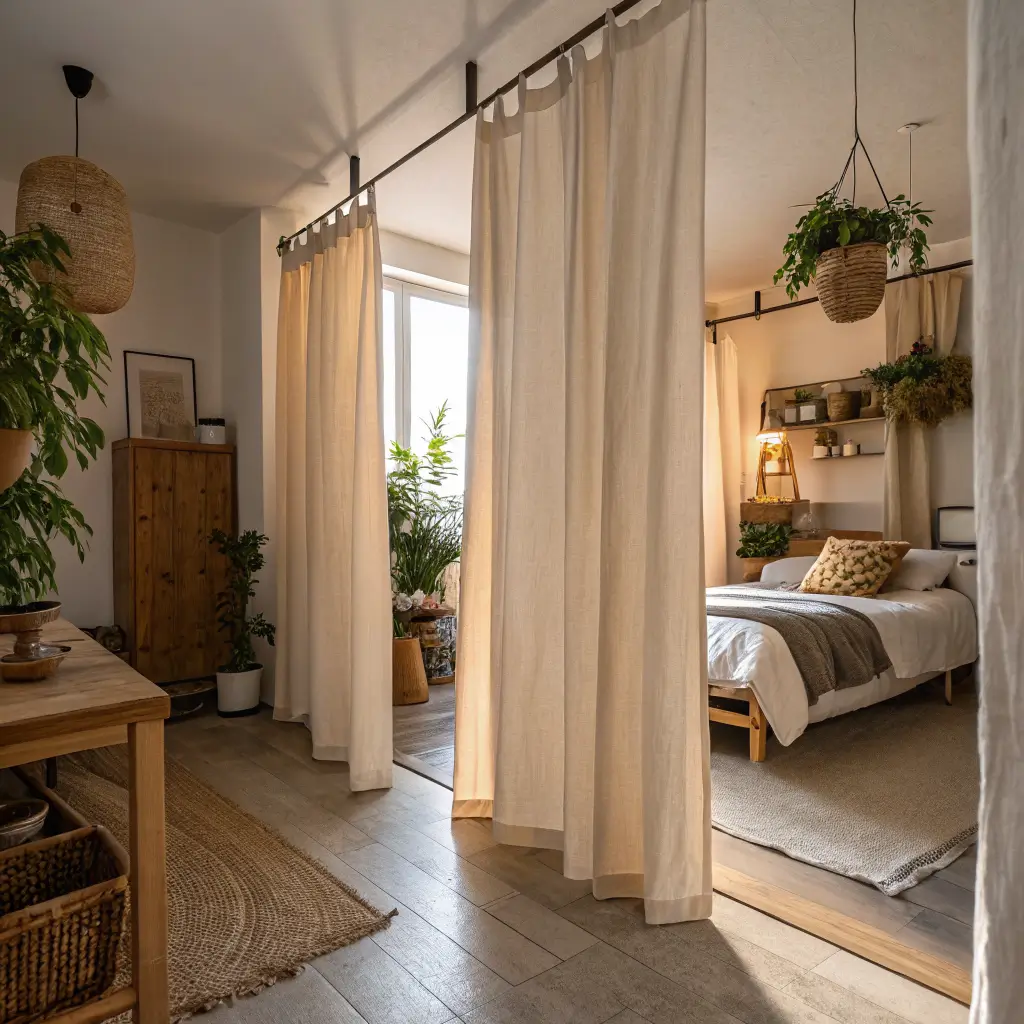
Sometimes you need partition solutions that disappear when you don’t need them. Enter the humble curtain divider – seriously underrated and ridiculously versatile.
Why curtains work better than you think:
I was hesitant about curtain dividers because they seemed too temporary, too “college dorm room.” But the right fabric and hardware can look incredibly sophisticated. I hung floor-to-ceiling linen curtains on a ceiling track to separate my sleeping area from the rest of my studio, and guests consistently ask where I got my “room divider.”
Fabric choices that don’t suck:
Skip the cheap polyester stuff. Linen, cotton canvas, or even wool felt create beautiful texture and actually provide decent sound dampening. I went with oatmeal-colored linen that complements my neutral palette while adding softness to the space.
The installation is dead simple – ceiling-mounted track systems from IKEA work perfectly and cost under $30. You can open the curtains completely during the day for an open feel, then close them at night for privacy.
Bonus points: Curtain dividers are renter-friendly and totally reversible. No commitment issues here 🙂
Foldable Screen Partition for Tiny Rooms
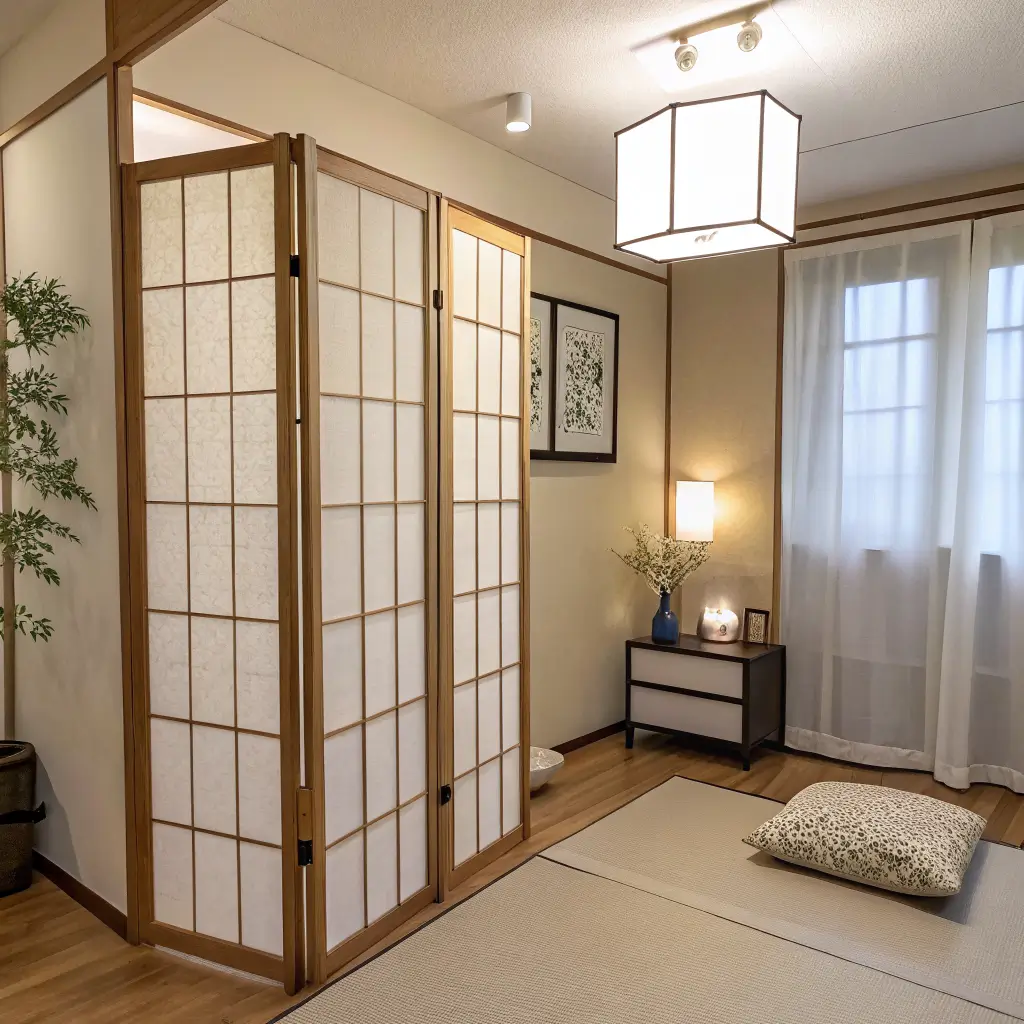
When you’re working with seriously limited square footage, flexibility becomes everything. Foldable screens are the Swiss Army knife of room dividers – they adapt to whatever you need in the moment.
The fold-away advantage:
I have a three-panel folding screen that I move around based on what I need. Some days it creates a cozy reading nook by the window. Other days it hides my “floordrobe” (we all have one) when unexpected guests drop by. And when I need maximum space for yoga or just general life, it folds flat against the wall.
Style vs. function balance:
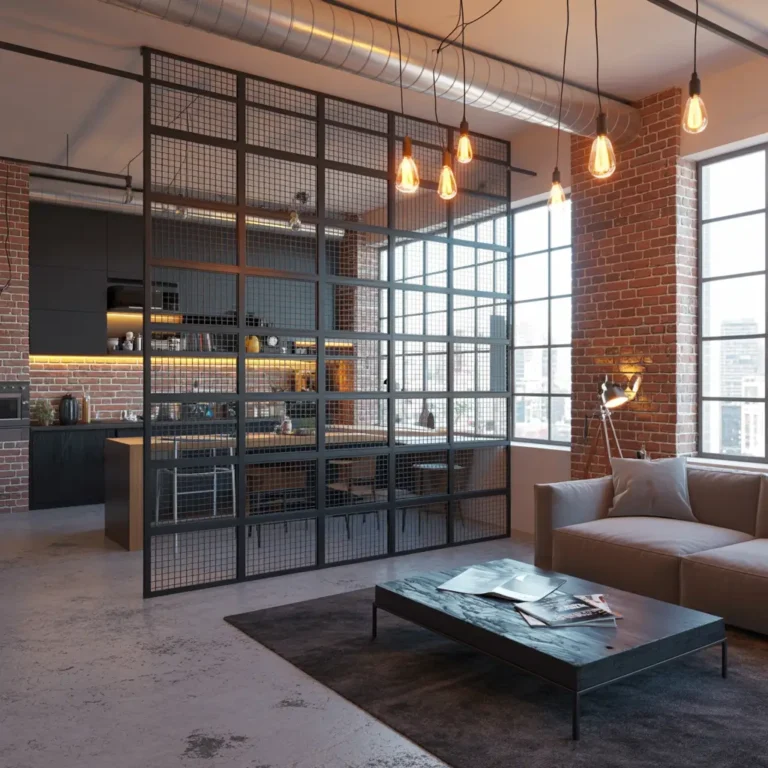
The trick is finding one that looks good even when it’s folded up. I chose a black metal frame with cane webbing inserts – looks intentional whether it’s open or closed. Plus, the cane adds texture and that slightly bohemian vibe that softens the industrial edge.
Foldable screens come in countless styles, from traditional Asian-inspired designs to modern geometric patterns. The key is picking something that complements your existing decor rather than fighting it.
Size matters: For small spaces, three panels usually work better than four or five. You get enough coverage without the screen overwhelming your room when it’s fully extended.
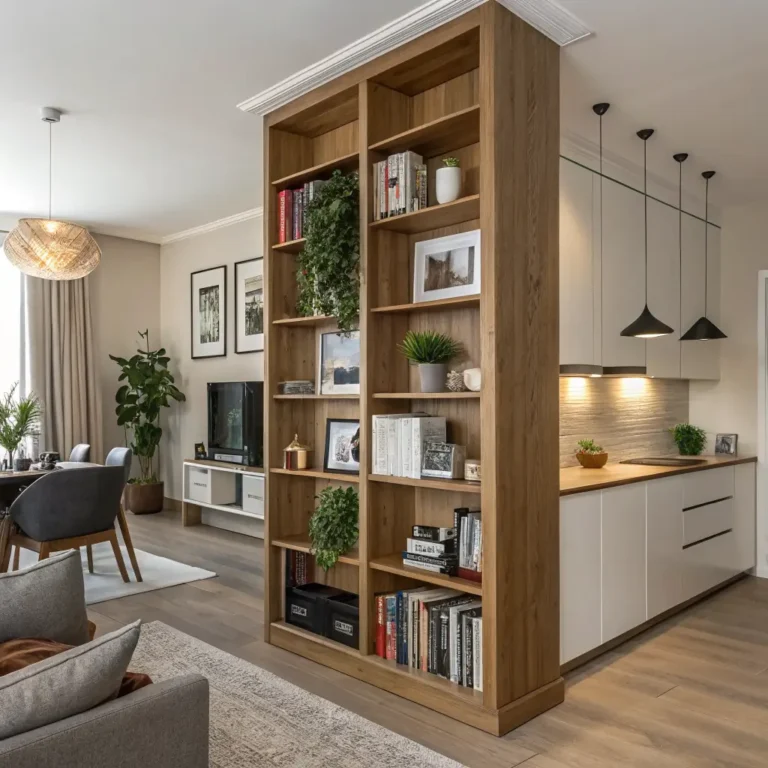
Open Bookshelf Partition for Storage and Style
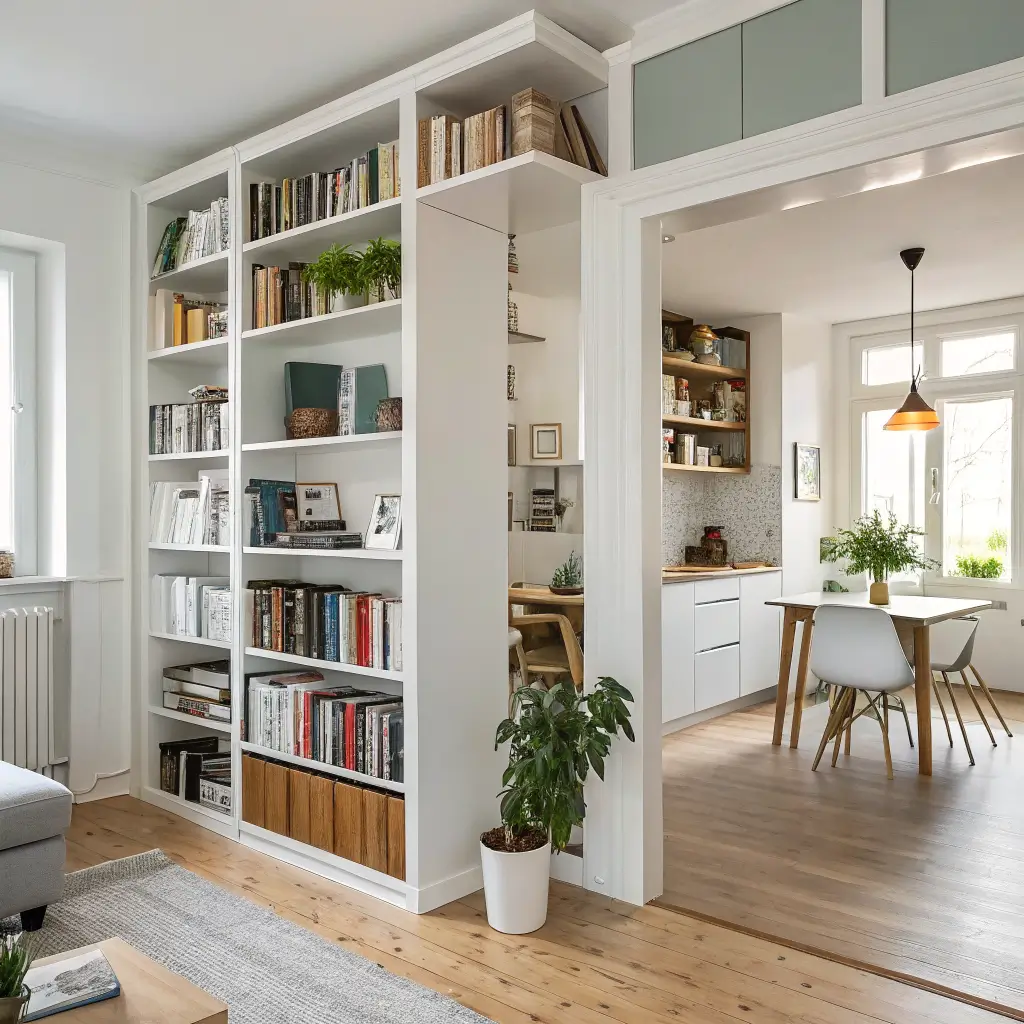
Okay, this might be my personal favorite because books make everything better, IMO. Open bookshelf partitions serve triple duty – room division, storage, and instant personality injection.
The strategic placement game:
I positioned a tall, narrow bookshelf perpendicular to one wall to create a defined entryway in my open-plan space. Now I have a proper foyer instead of walking straight into my living room, plus tons of storage for books, plants, and random life stuff.
Styling without the chaos:
The trick to bookshelf partitions is the 70/30 rule – 70% books and functional items, 30% decorative objects. This keeps it from looking cluttered while still feeling curated and personal.
I alternate between vertical and horizontal book stacks to create visual rhythm, then add small plants, picture frames, and a few ceramic pieces as breathing room. The result? Functional storage that actually looks intentional.
Pro tip: Choose a bookshelf that’s open on both sides so it doesn’t feel like a solid wall. The transparency maintains flow while creating distinct zones.
Also Read: 10 Amazing Modern Partition Design Living Rooms Concepts
Vertical Garden Partition for Fresh Small Spaces
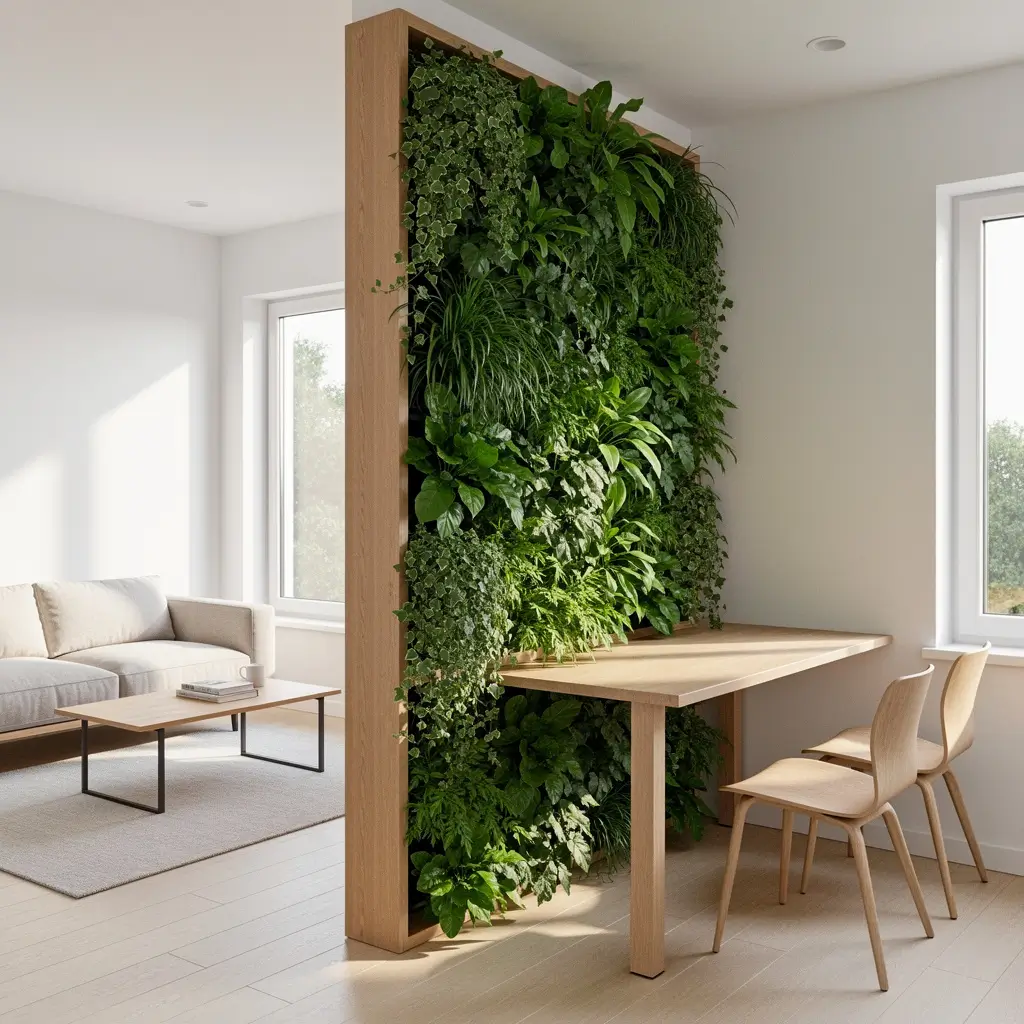
Who says you can’t have a garden in a tiny space? Vertical garden partitions are having a major moment, and for good reason – they bring life into your space while creating natural separation.
Going green without going crazy:
I was intimidated by the maintenance factor, but started small with a simple wooden frame and mounted planters. The key is choosing low-maintenance plants that actually thrive indoors. Pothos, snake plants, and ZZ plants are practically indestructible (trust me, I’ve tested this theory).
The fresh air factor:
Beyond looking amazing, plant partitions actually improve your air quality and add humidity to dry indoor spaces. My vertical garden sits between my bedroom and living area, and I swear it makes both spaces feel more peaceful.
DIY vs. buy decisions:
You can go full DIY with a wooden frame and individual planters, or invest in a modular living wall system. I started with the budget DIY route using a wooden ladder as the frame – total cost under $100. As my plant confidence grew, I expanded the system.
The watering situation is key. I installed a simple drip tray system to catch excess water, because nobody wants puddles on their floor every time they water their partition.
Sliding Panel Partition for Compact Living Areas
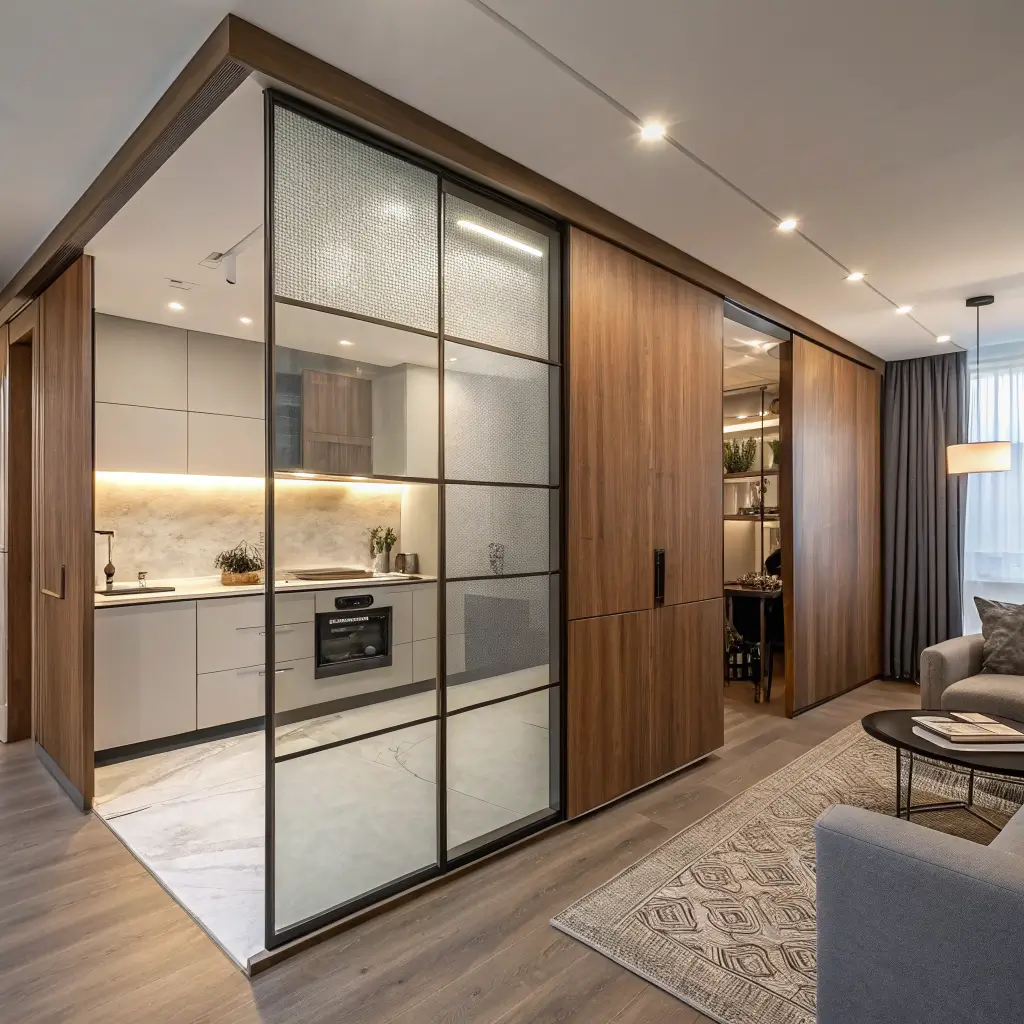
Sliding panels are space-saving heroes. When you need every square inch to count, fixed partitions feel wasteful. Sliding panels give you flexibility without sacrificing floor space.
The track system game:
I installed a ceiling-mounted track system that spans the width of my main living area. The panels slide open for an expansive feel or close to create separate zones. The hardware was surprisingly affordable – under $80 for the whole system.
Material choices that matter:
I went with white oak veneer panels that complement my existing furniture. The natural wood grain adds warmth while the clean lines keep things modern. You could also go with fabric-covered panels for sound absorption or frosted acrylic for a more contemporary look.
Installation reality check:
Ceiling mounting requires finding studs or using heavy-duty anchors, but it’s totally doable as a weekend project. Just measure twice, drill once, and maybe have a friend help with the heavier panels.
The best part? You can configure the panels however you need them. Sometimes I slide them all to one side for maximum open space, other times I position them to create a cozy conversation area.
Rope Divider Design for Creative Small Rooms
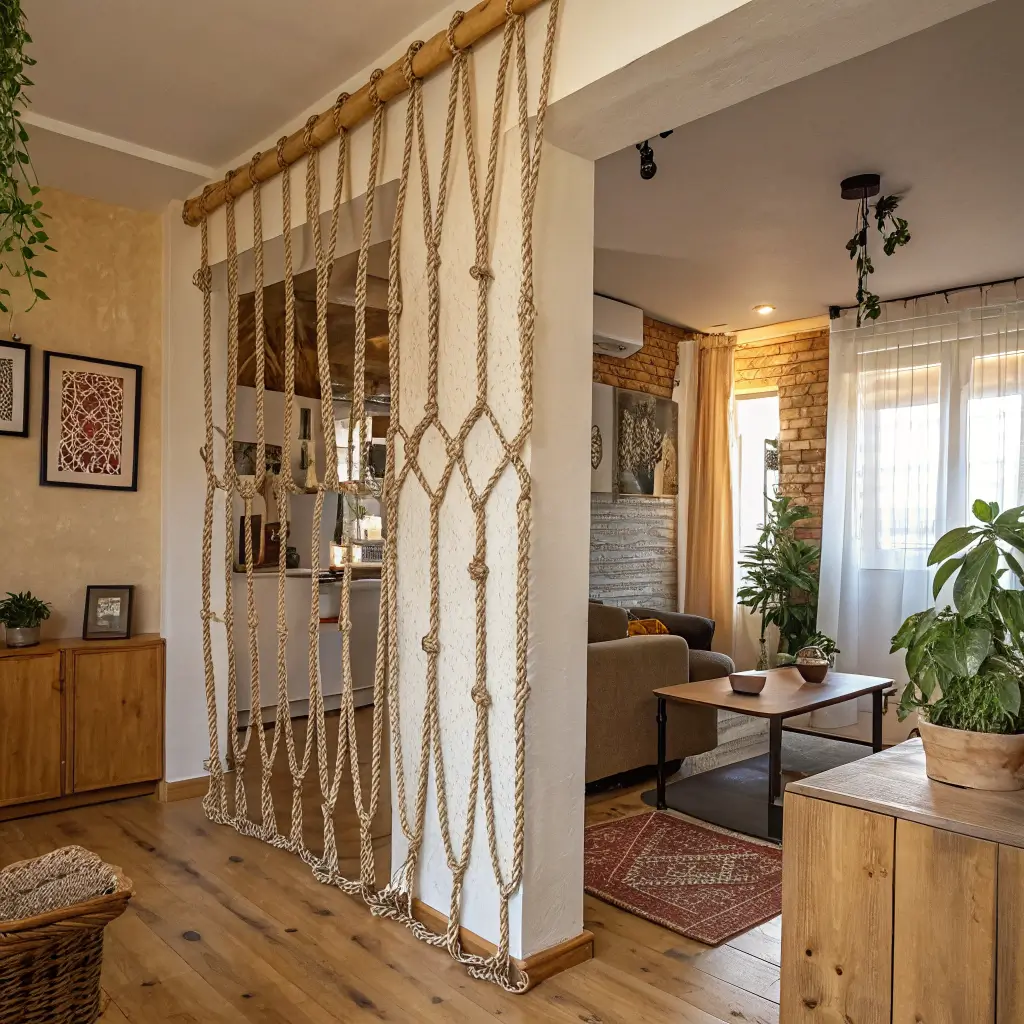
Rope dividers are for people who want something completely different. I’ll admit, when I first saw this idea, I thought it was a bit too arts-and-crafty for my taste. But executed well, rope partitions can look surprisingly sophisticated.
The unexpected elegance factor:
I used thick manila rope in a simple vertical pattern, anchored between floor and ceiling. The natural fiber adds texture and warmth while creating subtle separation. It’s definitely a conversation starter – guests always want to know where I got the idea.
Making it work aesthetically:
The key is using quality rope and keeping the pattern simple. I spaced vertical ropes about 6 inches apart – close enough to define space but open enough to maintain flow. The natural color works with my neutral palette, but you could definitely go bold with dyed rope for more drama.
Practical considerations:
Rope collects dust more than smooth surfaces, so it’s not the best choice if you have allergies or hate cleaning. But for the right space and lifestyle, it adds such unique character that the extra maintenance is worth it.
FYI, marine supply stores often have better quality rope than craft stores, and the price difference isn’t huge.
Also Read: 10 Modern Hall Partition Design Ideas Smart Space Solutions
Half Wall Partition with Built-in Storage
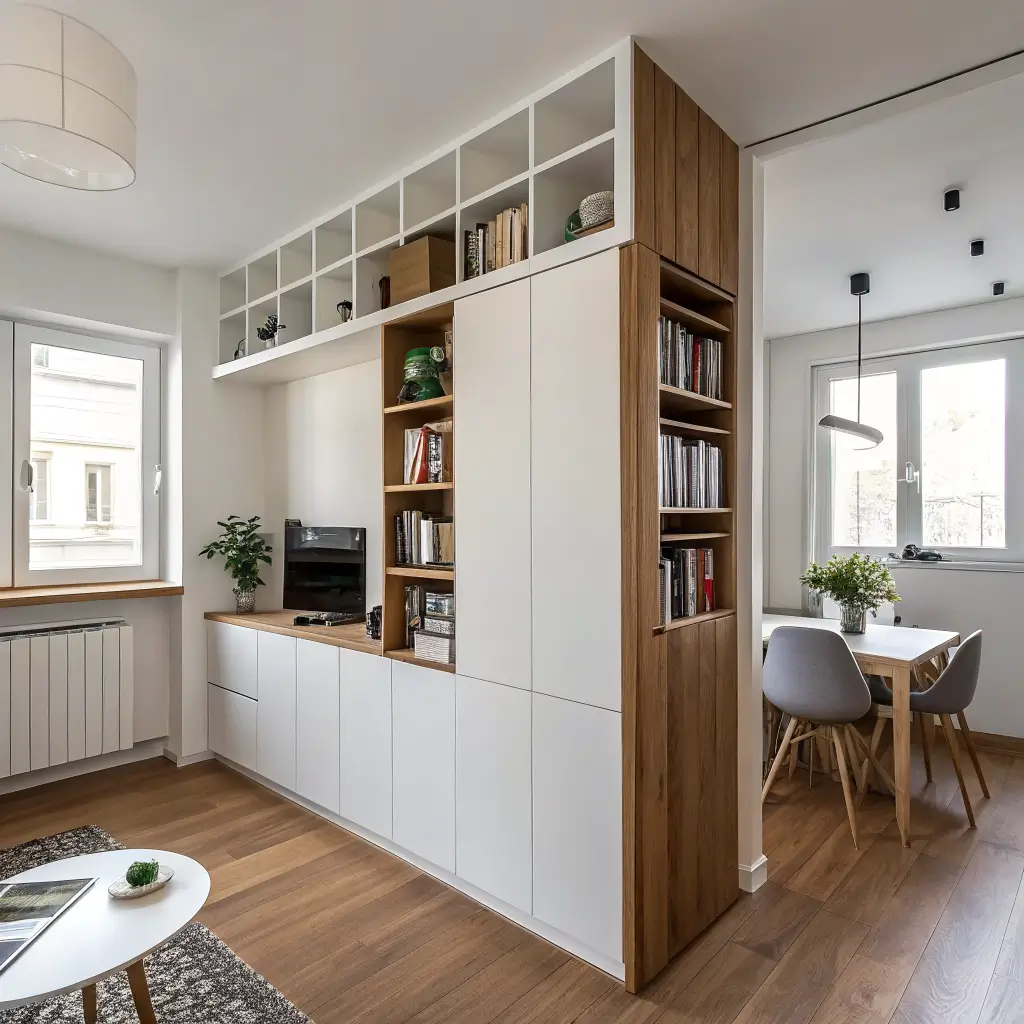
Sometimes you need more substantial separation than a simple divider can provide. Half walls hit that sweet spot between open concept and defined rooms, especially when you add built-in storage.
The structural approach:
I built a half wall about 42 inches high between my kitchen and living area, with open cubbies facing both sides. It creates clear zone definition while providing storage for everything from cookbooks to throw blankets.
Storage configuration wins:
The beauty of built-in storage is customization. I made some cubbies tall enough for wine bottles (priorities), others sized for books, and a few perfect for baskets that hide smaller items. The top surface works as a serving counter when I’m entertaining.
Construction considerations:
This is definitely more involved than other partition options, but the impact is huge. You’ll need basic carpentry skills or a handy friend, but the materials are straightforward – just plywood, some trim, and good brackets.
The half-height design maintains visual connection between spaces while creating real functional separation. Plus, the storage aspect means this partition actually earns its keep in your small space.
Bringing It All Together
After trying all these partition ideas (yes, my apartment has been a constant work in progress), I’ve learned that the best small space solutions combine function with style. You don’t have to choose between looking good and living well.
The key is matching your partition choice to your lifestyle. Need flexibility? Go with curtains or folding screens. Want storage? Bookshelves or half walls with built-ins are your friends. Craving something unique? Rope dividers or vertical gardens might be your answer.
Remember, small spaces force you to be creative, and honestly? That constraint often leads to better design than having unlimited room to work with. These partition ideas prove you can have distinct, functional areas without feeling cramped or sacrificing style.
Your small space is yours to shape. Pick the partition idea that speaks to you, start with one area, and see how it transforms your daily experience. You might be surprised how much a simple room divider can change the way you live in and feel about your space.