10 Creative Tiny House Stairs Ideas for Perfect Space Use

You know that moment when you’re touring a gorgeous tiny house and think, “This is perfect!” – until you spot the stairs? They’re either taking up half the living room or look like a death trap from a horror movie. Trust me, I’ve been there.
After years of obsessing over tiny house designs and personally helping friends navigate their builds, I’ve learned one thing: stairs can make or break your entire tiny house experience.
Here’s the thing – tiny house stairs aren’t just about getting from point A to point B. They’re prime real estate that needs to work triple duty as storage, style statement, and functional feature.
Ready to discover some seriously clever stair solutions that’ll make you rethink everything you thought you knew about vertical movement in small spaces?
Floating Minimal Tiny House Stair Design
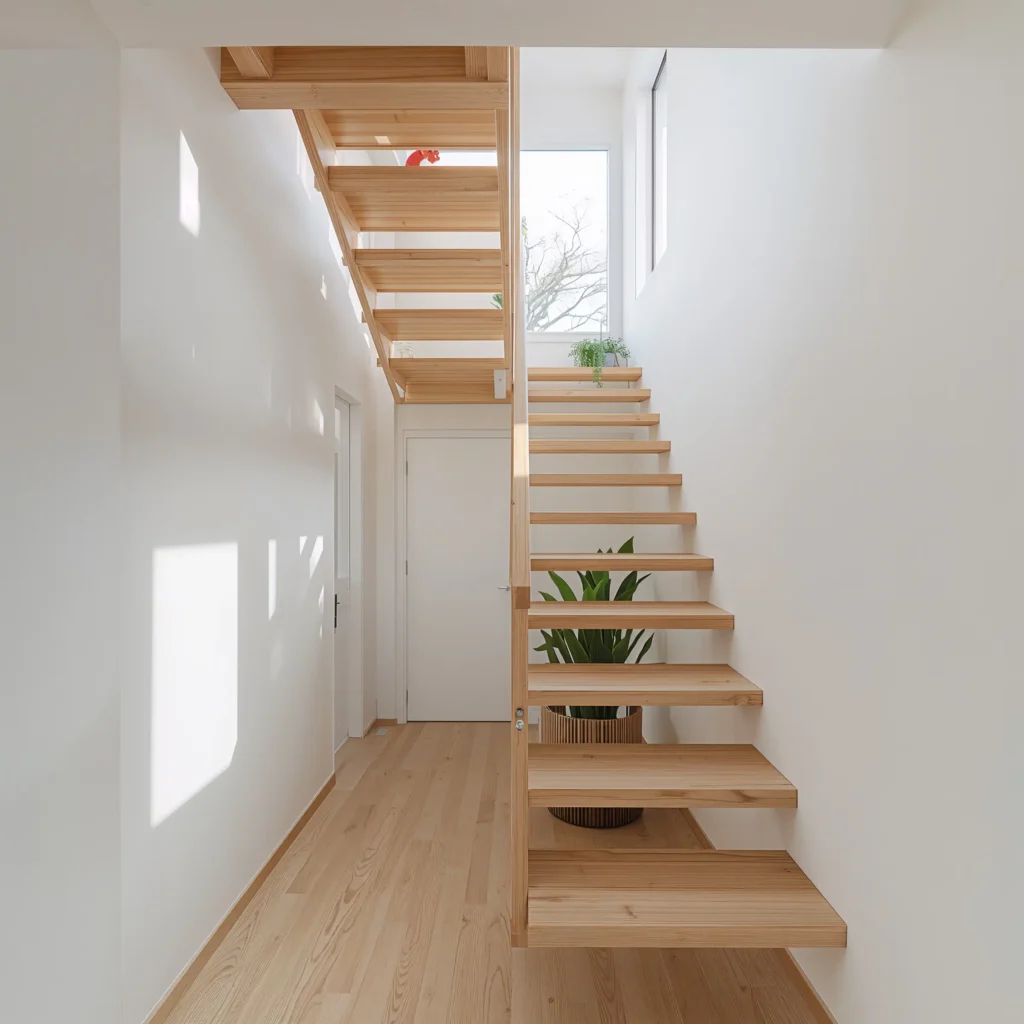
Picture this: stairs that look like they’re defying gravity, creating an open, airy vibe that makes your tiny house feel twice as big. Floating minimal stairs are the ultimate space illusion masters.
I fell in love with this concept when I visited a friend’s 320-square-foot home last year. Her floating stairs were mounted directly to the wall with hidden steel brackets, creating clean lines that didn’t interrupt the visual flow of her space. The magic happens because there’s no bulky frame underneath – just sleek treads that seem to emerge from the wall.
Key benefits of floating stairs:
• Maximum visual space – no chunky supports blocking sightlines
• Easy cleaning underneath (hello, robot vacuum!)
• Modern aesthetic that photographs beautifully
• Flexible lighting options – LED strips under each tread create stunning ambiance
The construction requires solid wall anchoring (we’re talking serious structural support here), but the payoff is incredible. You can choose from various materials – reclaimed wood for rustic charm, sleek metal for industrial vibes, or even glass treads if you’re feeling particularly adventurous.
Pro tip: Add a subtle handrail that doesn’t compete with the floating effect. A thin cable railing or minimalist metal rail keeps safety in check without ruining the illusion.
Hidden Drawer Storage Stair System
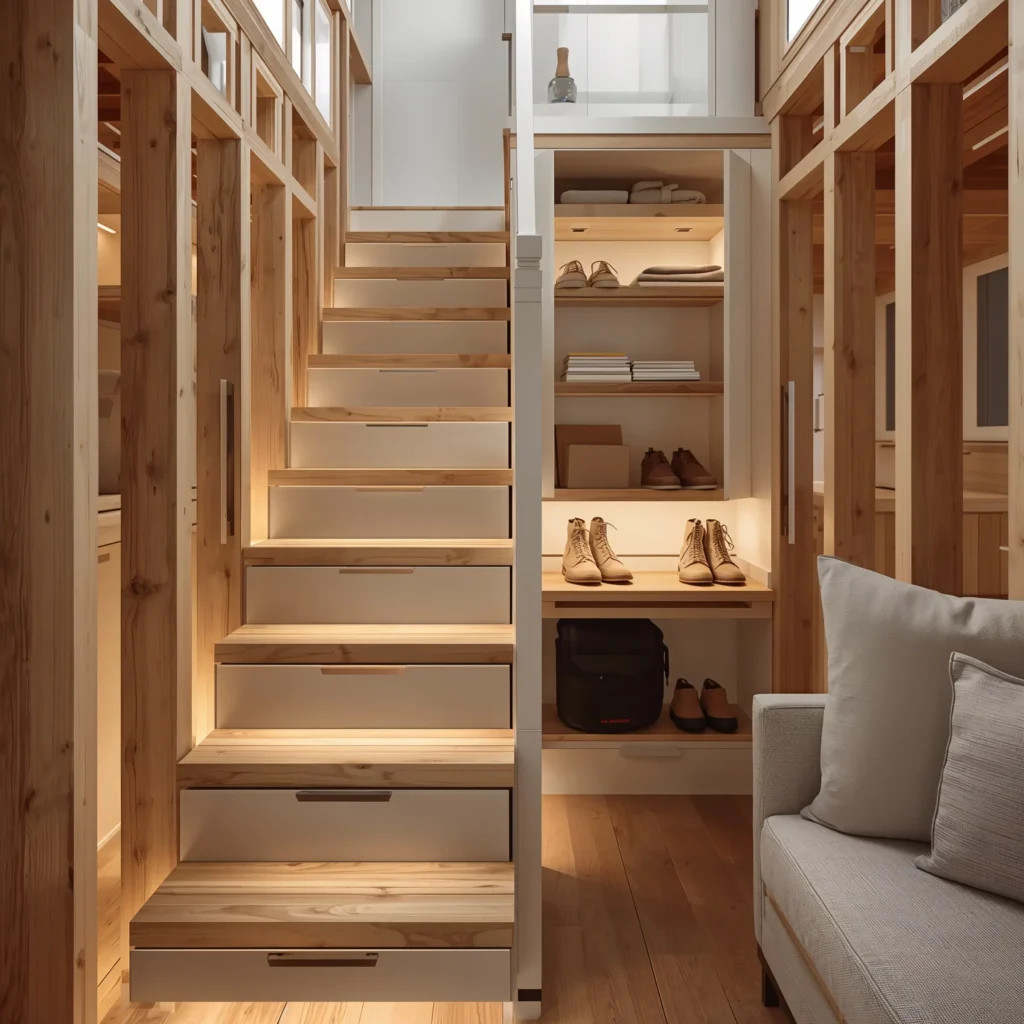
Ever wondered why we waste all that space inside stairs? This brilliant solution turns every step into a treasure chest of storage possibilities.
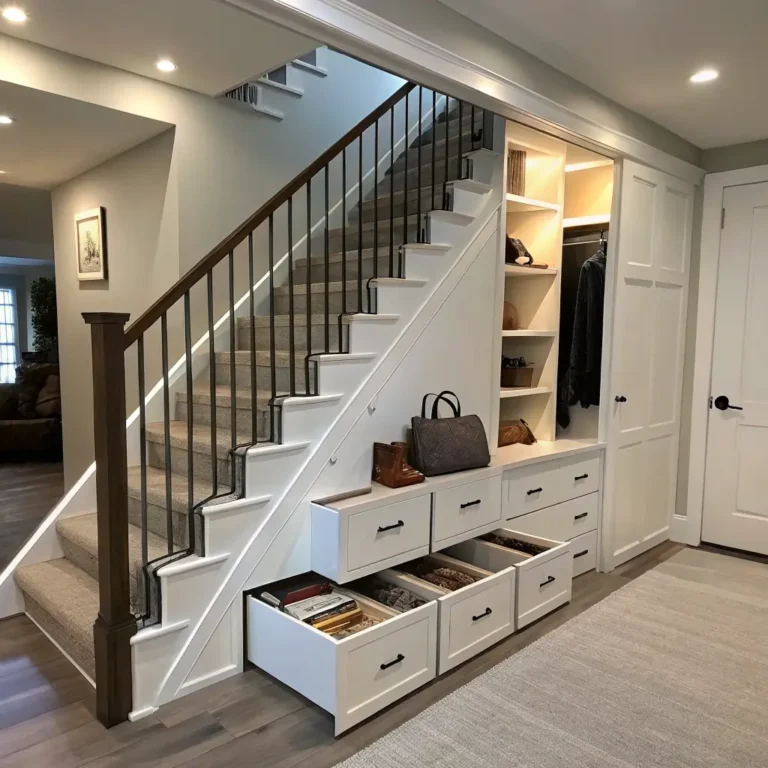
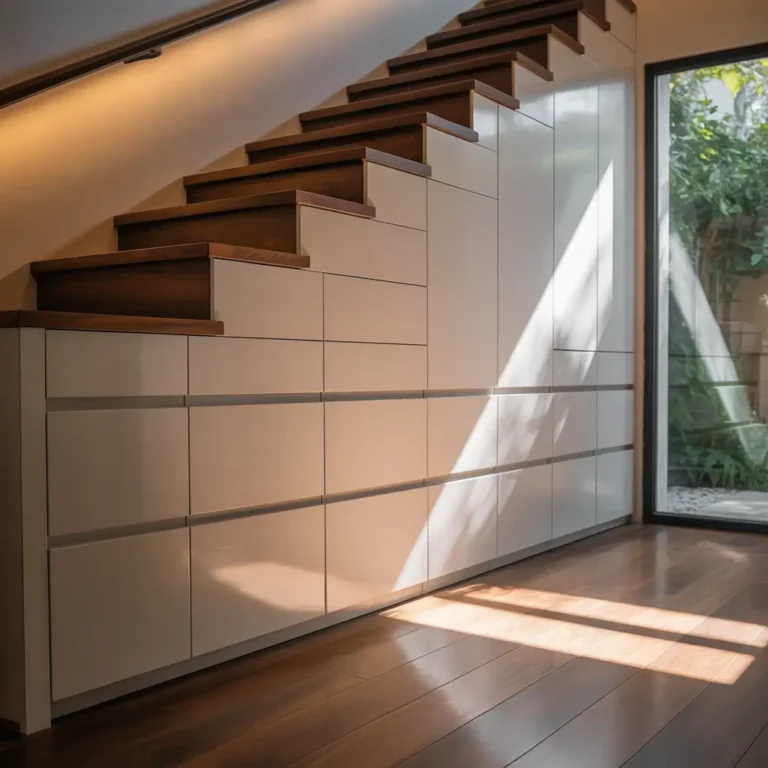
Storage stairs are absolute game-changers for tiny house living. I’m talking deep drawers that can hold everything from seasonal clothes to kitchen gadgets you don’t use daily. My neighbor installed this system and now stores her entire winter wardrobe, holiday decorations, and camping gear in her stairs. It’s like having a secret basement!
Each tread lifts or slides out to reveal compartments sized perfectly for different items:
• Bottom steps – great for shoes, cleaning supplies, or bulky items
• Middle steps – perfect for linens, books, or kitchen appliances
• Top steps – ideal for lighter items like electronics or personal belongings
The construction involves building each step as a functional drawer with quality slides and soft-close hinges. Yes, it costs more upfront than basic stairs, but think about it – you’re essentially buying a custom storage unit disguised as stairs. FYI, most people recoup this investment by not needing additional storage furniture 🙂
Installation tip: Make sure your drawer slides can handle the weight load. Nobody wants their stairs collapsing when they step on them!
Spiral Space-Saving Tiny Home Stairs
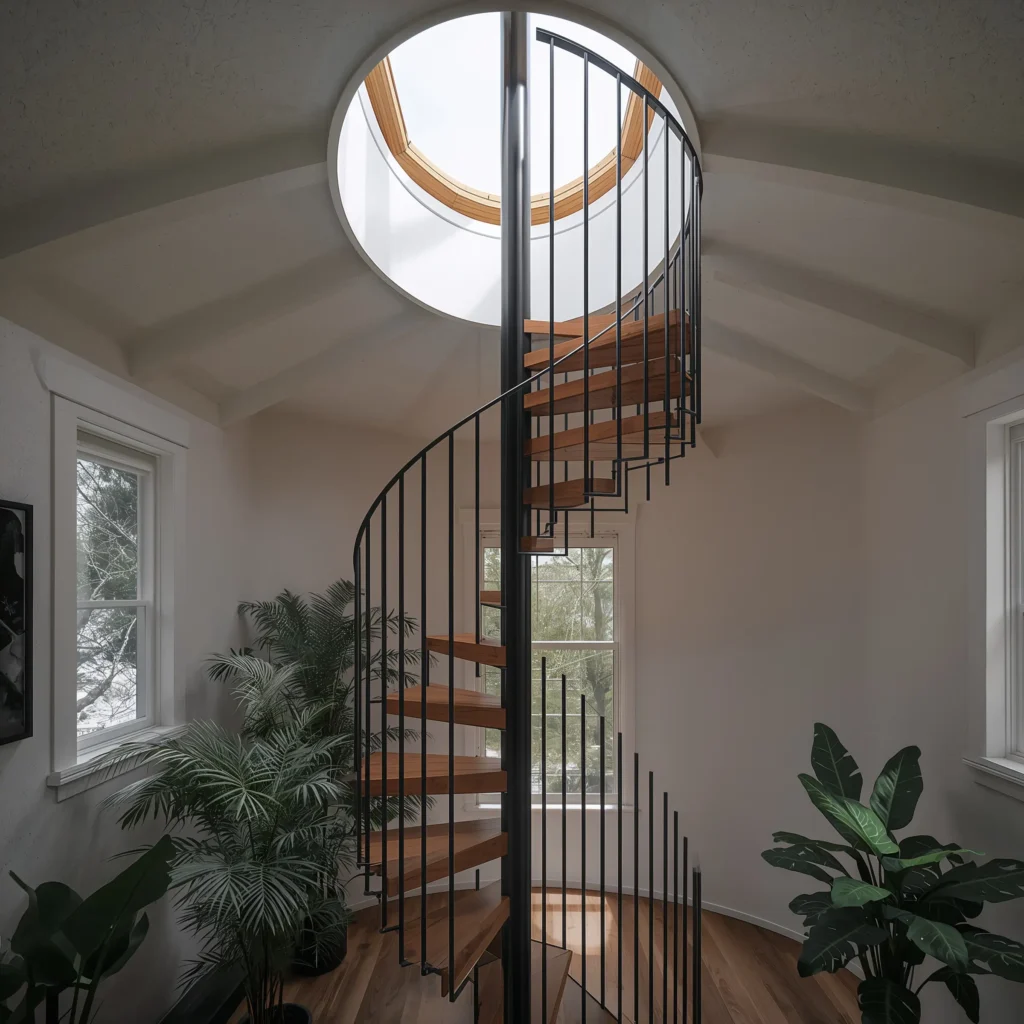
Spiral stairs in tiny houses are like that friend who’s small but packs a huge personality punch. They take up minimal floor space while adding serious architectural drama to your home.
I’ve climbed plenty of spiral stairs in tiny houses, and the well-designed ones feel like ascending a piece of art. The key is getting the proportions right – too tight and you’ll feel like you’re climbing inside a telescope; too wide and you’ve defeated the space-saving purpose.
What makes spiral stairs work in tiny houses:
• Compact footprint – typically 4-5 feet in diameter
• Vertical focus – draws the eye upward, making ceilings feel higher
• Unique character – instant conversation starter
• Central location flexibility – can be positioned almost anywhere
The downside? Moving furniture up these bad boys is practically impossible, so plan accordingly. Also, some people find the curved steps challenging for daily use, especially in bare feet or socks (speaking from experience here!).
Material choices matter big time. Metal spirals offer an industrial look and maximum durability, while wooden versions provide warmth but require more maintenance. I’ve seen gorgeous combinations using metal frames with wooden treads that give you the best of both worlds.
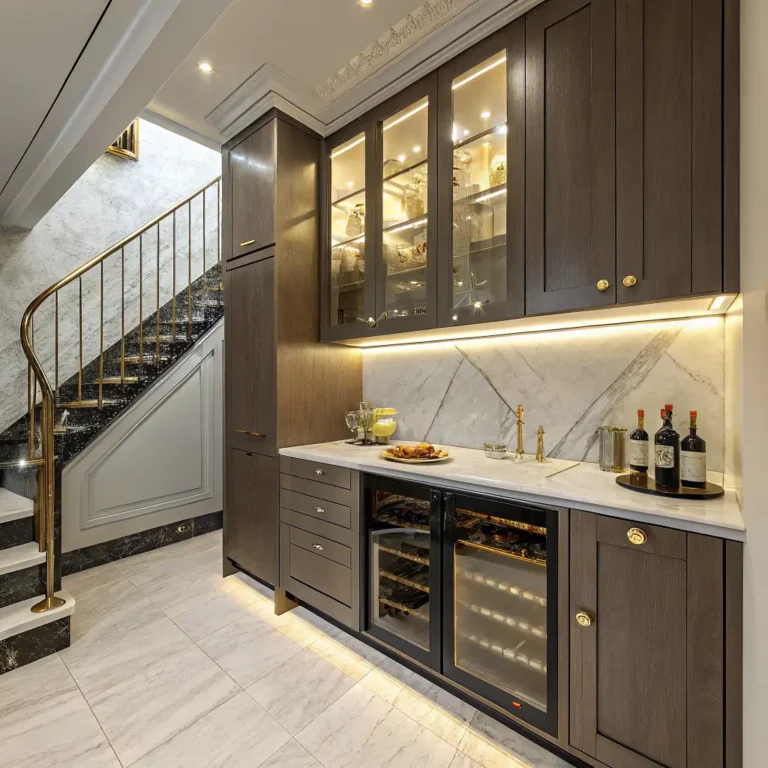
Also Read: 10 Elegant Bar Under Stairs Ideas for Luxury Living
Ladder-Style Compact Loft Stair Solution
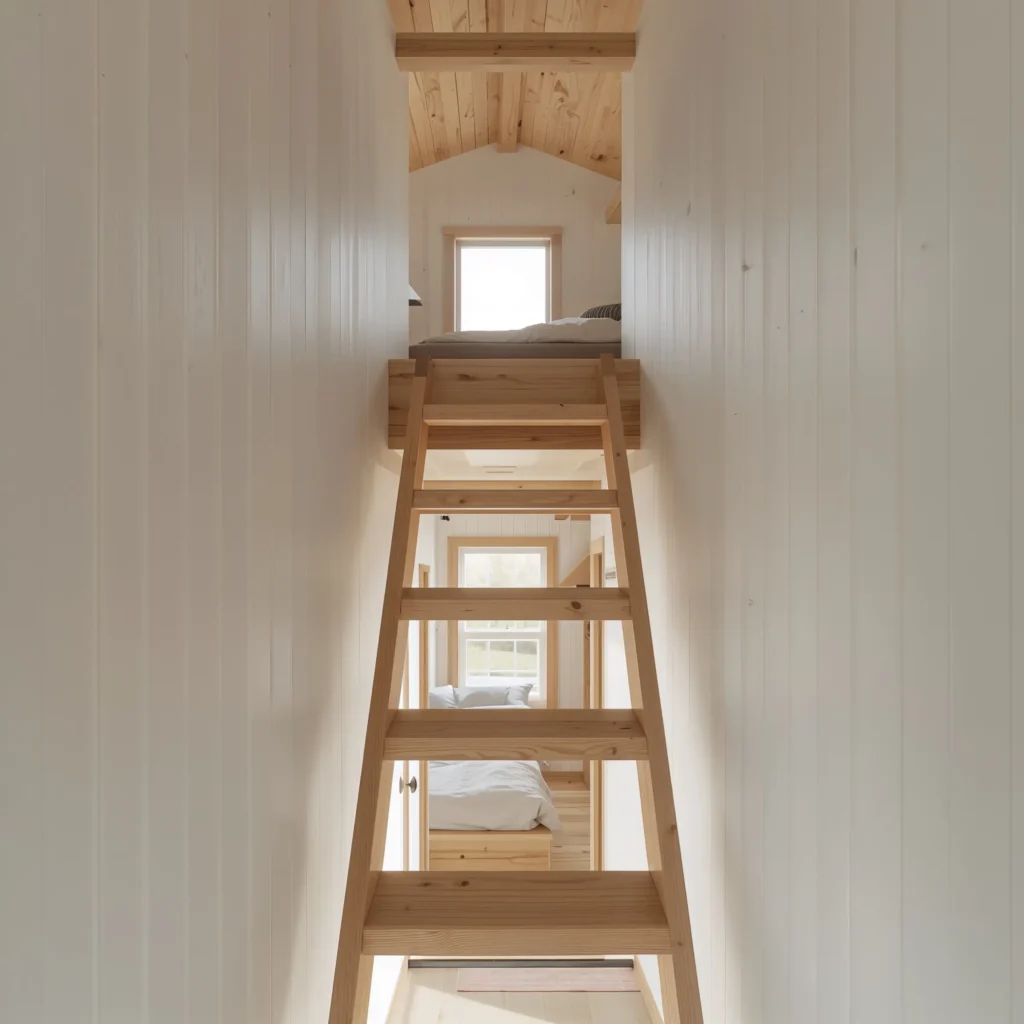
Let’s be real – sometimes a ladder is exactly what your tiny house needs, but nobody wants to feel like they’re climbing into a bunk bed every night. Enter the sophisticated ladder-style stairs that bridge the gap between function and form.
These aren’t your basic hardware store ladders. We’re talking custom-designed climbing solutions that feel intentional and stylish. I’ve seen versions with wider treads for comfort, angled installations for easier climbing, and integrated handholds that double as design elements.
Smart ladder-style features to consider:
• Alternating tread design – reduces the footprint while maintaining comfort
• Integrated handrails – usually part of the side structure
• Removable or folding options – perfect for multi-use spaces
• Ship ladder angle – steeper than regular stairs but more comfortable than vertical
The beauty of this approach is its honesty – it doesn’t pretend to be something it’s not. You’re embracing the tiny house lifestyle fully, and honestly, there’s something satisfying about the daily climb that makes reaching your loft feel like an achievement.
Safety note: Good ladder-style stairs require proper grip surfaces and stable mounting. I recommend rubber treads or textured surfaces to prevent slipping.
Under-Stair Mini Kitchen Integration Design
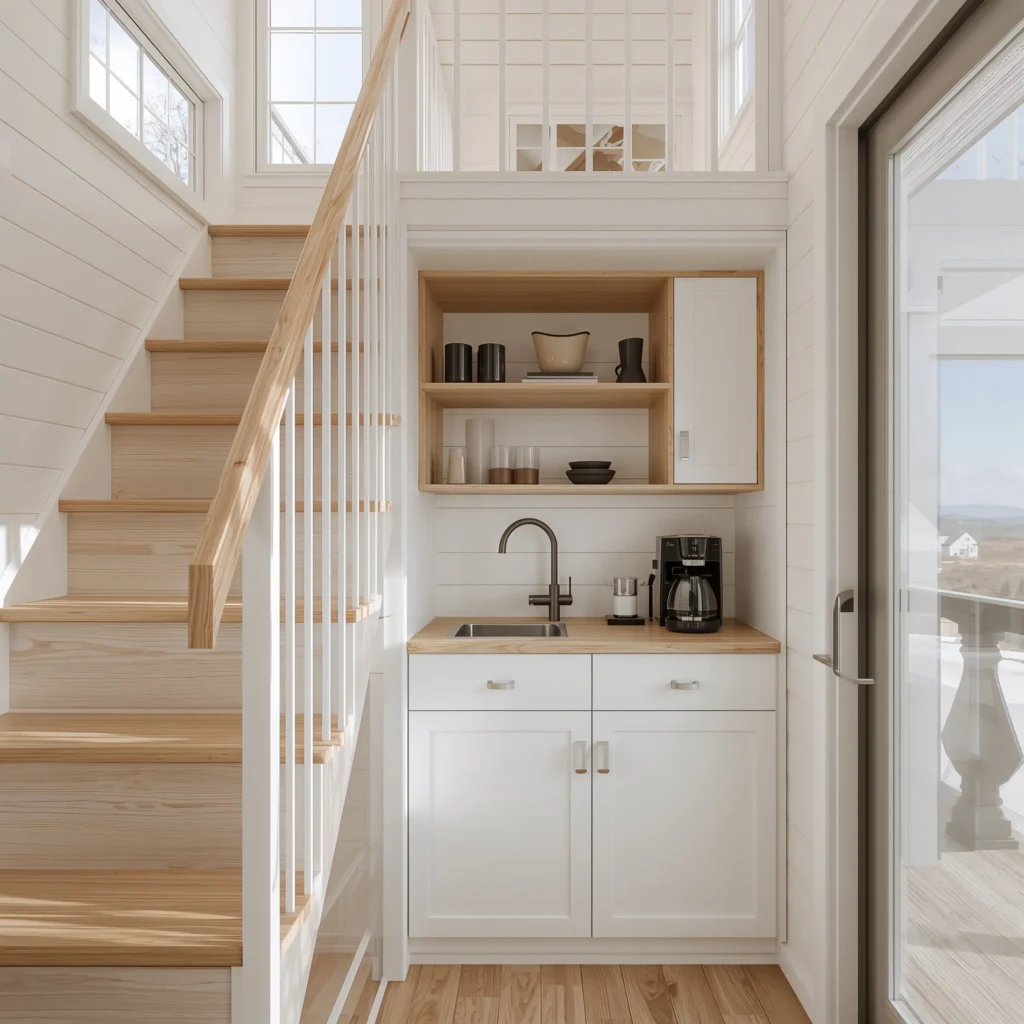
This idea absolutely blew my mind the first time I saw it executed properly. Instead of wasting all that space under your stairs, why not tuck your entire kitchen underneath?
I toured a tiny house where the owner had masterfully integrated a complete kitchen under their stairs – sink, stovetop, mini fridge, and storage all nestled perfectly in the triangular space. It felt like discovering a secret room, and the functionality was incredible.
Key elements of under-stair kitchen design:
• Graduated heights – taller appliances near the top, shorter items toward the floor
• Pull-out components – everything slides out for easy access
• Ventilation planning – crucial for cooking smells and safety
• Lighting integration – under-stair areas can be naturally dark
The trick is treating the stair structure as part of your kitchen cabinetry from the design phase. This isn’t a retrofit situation – you’re building stairs specifically to house your kitchen components.
Counter space becomes the challenge here, but I’ve seen clever solutions using pull-out cutting boards or fold-down prep surfaces. One particularly smart design included a counter that slid out from under the stairs when needed and tucked away completely when not in use.
Foldable Wall-Mounted Tiny House Stairs
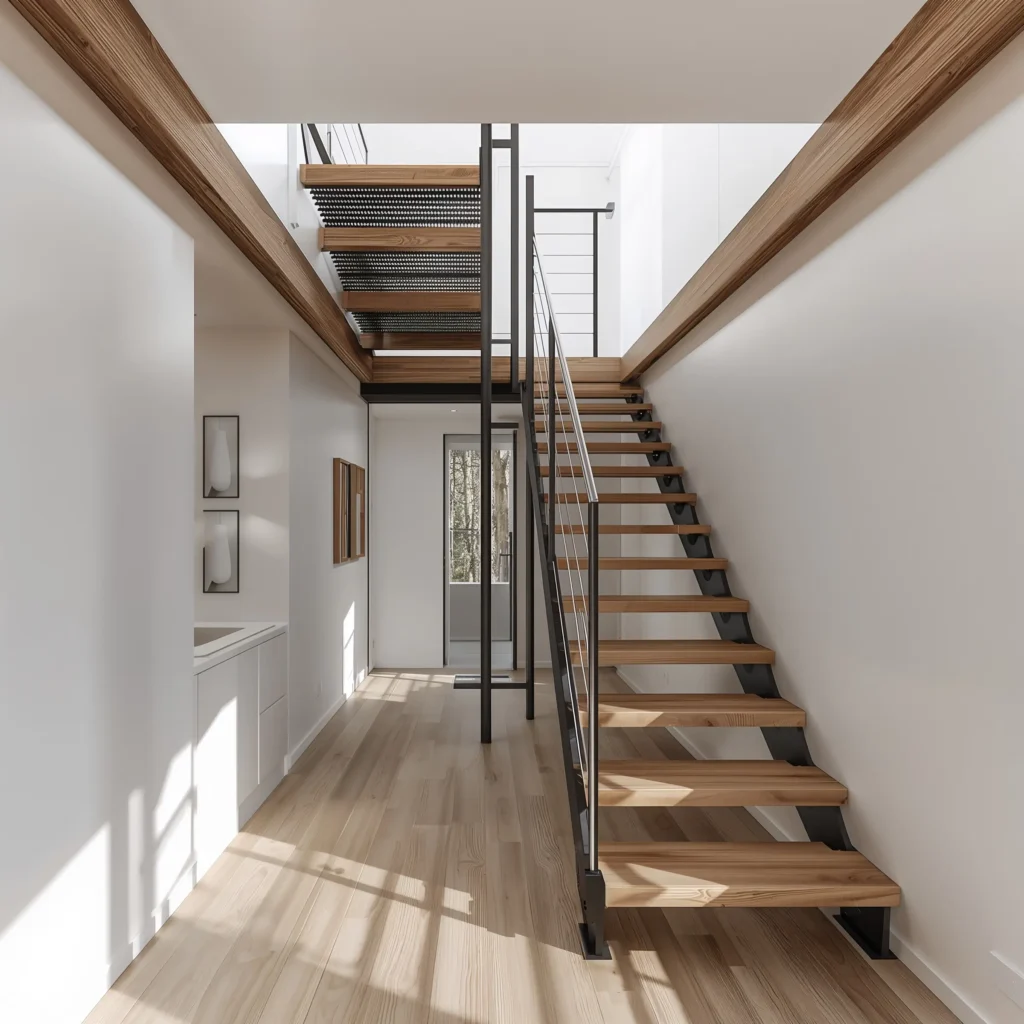
For the ultimate in space flexibility, foldable stairs are pure genius. When you don’t need them, they disappear completely. When you do, they deploy faster than a Murphy bed.
I watched someone demonstrate their foldable stair system, and I swear it looked like something from a spy movie. The entire staircase folded flat against the wall, creating a clean surface that could double as a dining table or desk space. Press a latch, and boom – full stairs ready for action.
Benefits of foldable stair systems:
• Maximum space reclamation when not needed
• Multi-purpose lower level – more flexible living space
• Safety when lowered – proper handrails and stable structure
• Conversation starter – guests always want to see the magic happen
The engineering behind these systems is pretty impressive. Quality hardware is essential because these stairs need to be rock-solid when deployed but smooth when folding. I’ve seen gas-assisted systems that make folding and unfolding effortless, even for kids.
Installation complexity is higher than fixed stairs, and you’ll need wall reinforcement to handle the dynamic loads. But for tiny houses where every square foot matters, this flexibility can be worth the extra investment.
Also Read: 10 Beautiful Farmhouse Stairs Ideas for Dream Interiors
Bookshelf Built-In Staircase Concept
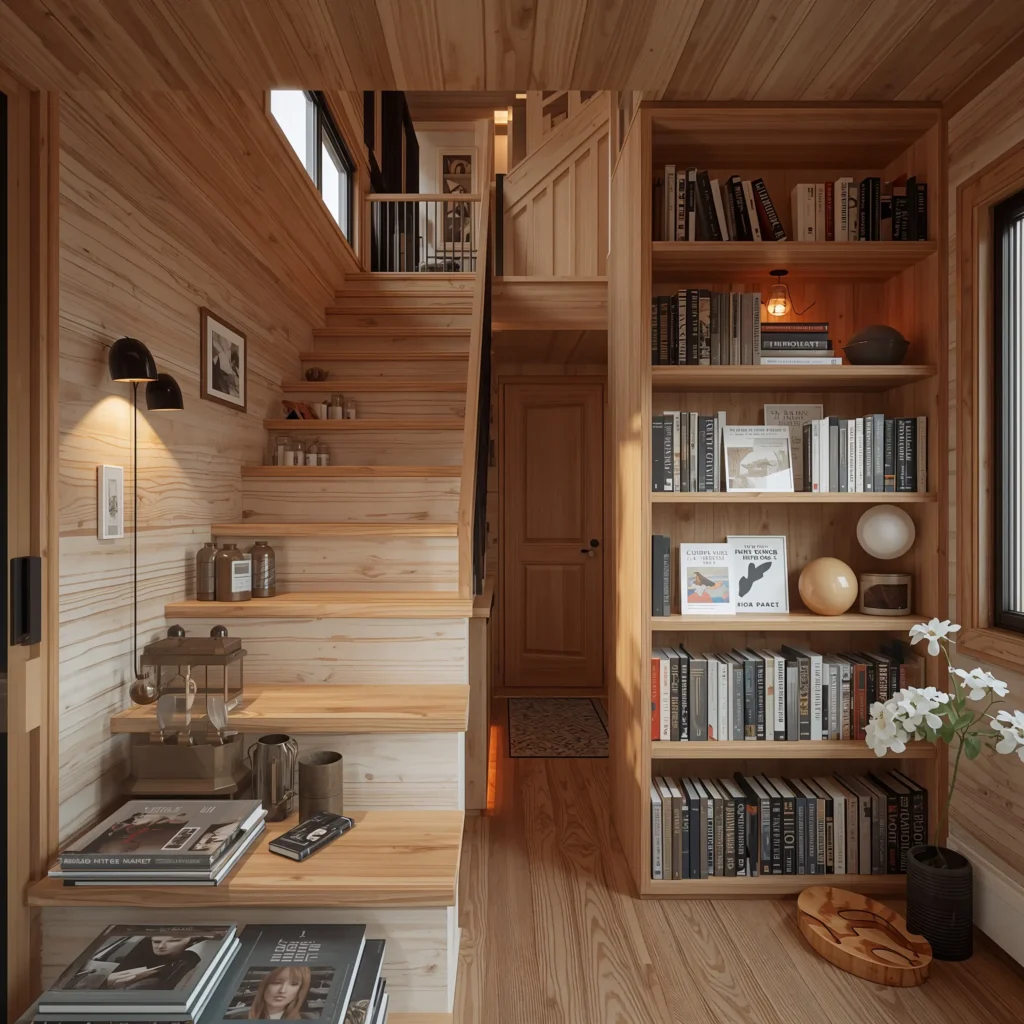
Who says you have to choose between stairs and storage? The bookshelf staircase concept turns your vertical circulation into a library, display area, or general storage system that actually looks intentional.
This design hits different when you see it in person. Each step becomes a shelf, creating this beautiful cascading display that serves dual purposes. I’ve seen versions used for books (obviously), decorative items, plants, and even kitchen storage in open-concept tiny houses.
Design considerations for bookshelf stairs:
• Step depth – needs to accommodate both feet and stored items safely
• Item security – consider rails or lips to prevent things from falling
• Weight distribution – heavier items on lower steps for stability
• Visual balance – arrange items to create pleasing sight lines
The key is treating this as furniture design, not just stairs with stuff on them. I’ve seen gorgeous examples where the owner curated their display items to create color gradients or themed collections that became the focal point of the entire space.
Safety tip: Keep frequently used items on easily accessible shelves, and make sure nothing can shift or fall when someone’s climbing the stairs. A tumbling book to the head isn’t the vibe we’re going for here!
Multi-Level Modular Tiny Home Stair Units
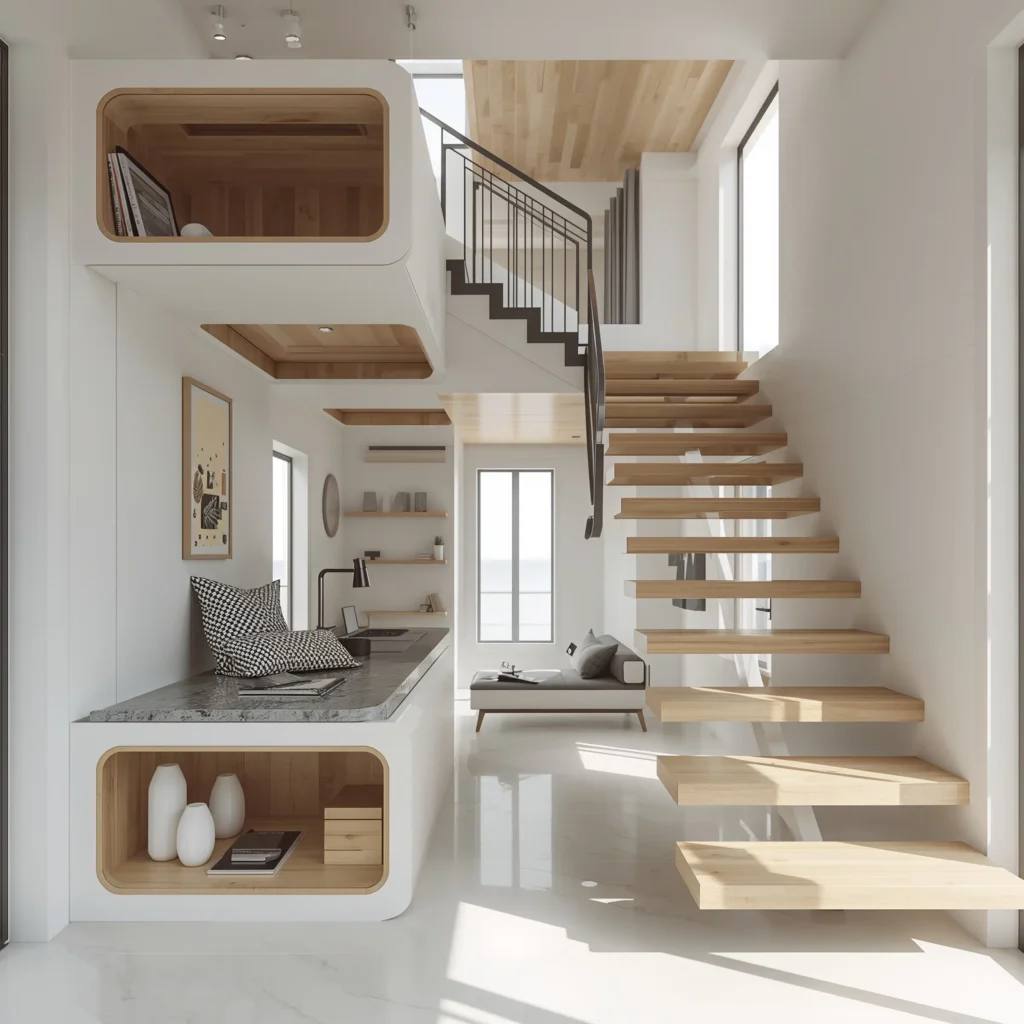
Think of these as stair building blocks – individual units that stack and configure to create your perfect climbing solution while providing tons of functional space.
I got to play around with a modular system at a tiny house expo, and it was like adult Legos. Each module contained storage, had its own structural integrity, and could be rearranged or reconfigured if your needs changed. Want to add a level? Just stack another module. Need to relocate your stairs? Disassemble and rebuild in a new configuration.
Modular stair advantages:
• Scalable design – add or remove sections as needed
• Reconfigurable layout – adapt to changing space requirements
• Individual storage units – each module serves a specific purpose
• Future-proof investment – modify rather than replace
The modules I examined included options like wine storage, file drawers, clothing compartments, and even a module with a built-in desk surface. You could literally build your perfect storage solution one step at a time.
This approach works particularly well for tiny house dwellers who might relocate or want to modify their space over time. Instead of being locked into a permanent stair solution, you maintain flexibility while maximizing function.
Scandinavian Wooden Slim Stair Design
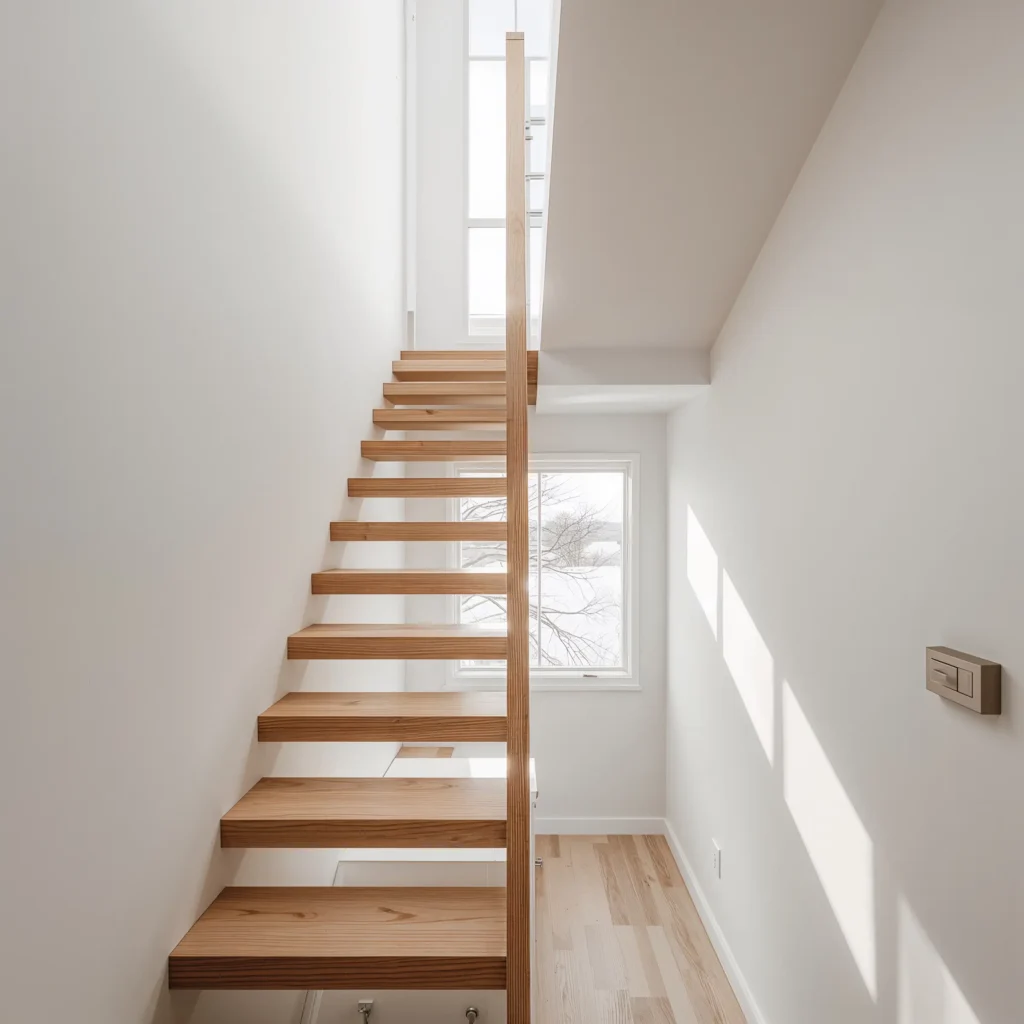
There’s something magical about Scandinavian design that makes small spaces feel both cozy and spacious simultaneously. Applied to tiny house stairs, this aesthetic creates climbing solutions that feel like functional art pieces.
I’m talking clean lines, light woods (usually birch or pine), minimal hardware, and profiles so slim they barely register as space-takers. The Scandinavian approach focuses on quality craftsmanship and natural materials that age beautifully over time.
Essential Scandinavian stair elements:
• Light wood tones – keeps the visual weight minimal
• Slim profiles – treads and risers as thin as structurally possible
• Minimal hardware – hidden fasteners and clean joints
• Natural finishes – oils and waxes instead of heavy paints or stains
What I love about this style is its honesty – you can see the wood grain, the joinery, the craftsmanship. It’s stairs that celebrate being stairs while contributing to the overall aesthetic rather than fighting it.
The slim profile is crucial in tiny houses because it reduces visual bulk while maintaining strength. I’ve seen beautiful examples where the entire staircase weighs less than traditional construction but feels more solid due to the precision engineering involved.
Also Read: 10 Amazing Steel Stairs Design Ideas for Stylish Spaces
Hybrid Stair-Storage Living Space Design
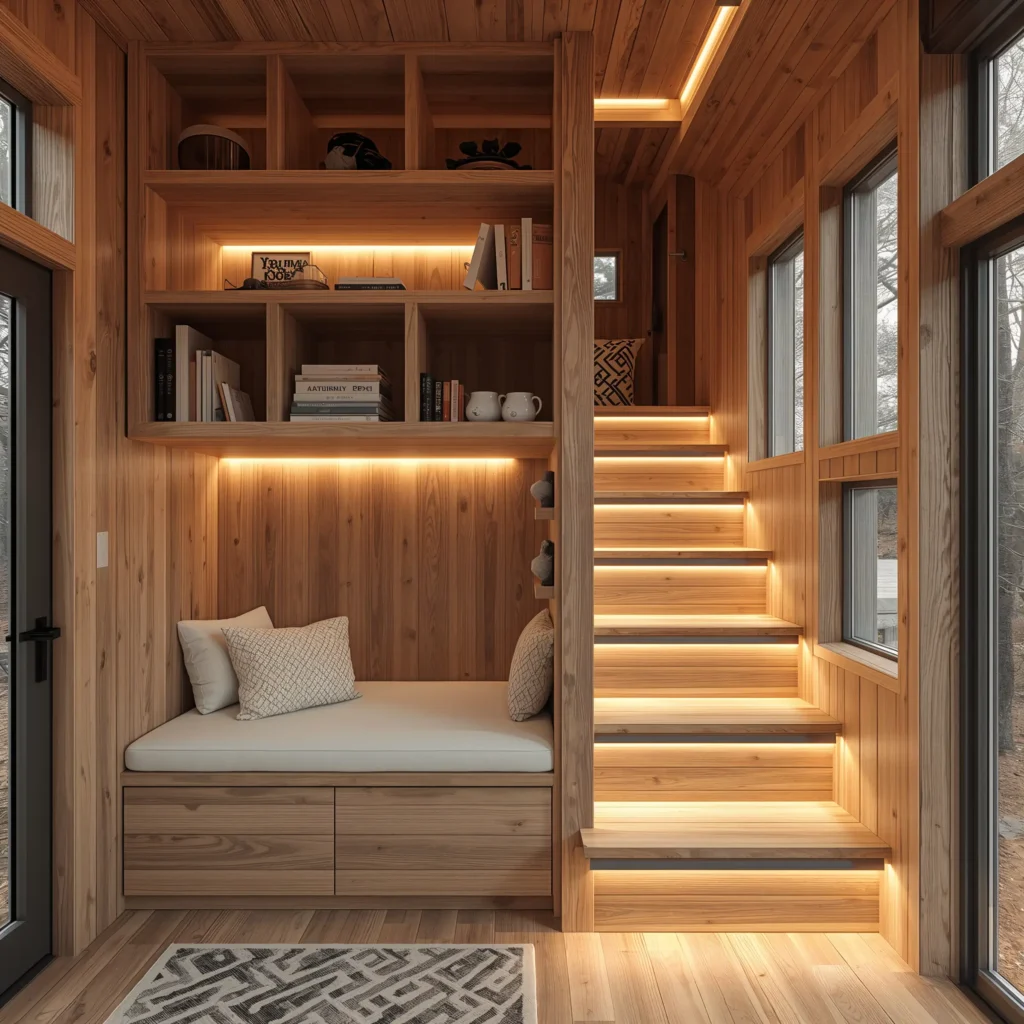
This concept takes multi-functionality to the extreme by integrating your stairs into your primary living space as both storage and furniture. It’s like your stairs decided to get three jobs and excel at all of them.
Picture this: stairs that serve as your living room seating, contain all your storage needs, and provide workspace surfaces. I toured a tiny house where the stair system formed an L-shaped sectional sofa, with each step containing different storage solutions. The top level had a fold-out desk, middle steps housed entertainment equipment, and lower steps stored seasonal items.
Hybrid design possibilities:
• Seating integration – steps double as couch or dining bench
• Workspace creation – pull-out desks or standing desk heights
• Entertainment center – TV mounting and component storage
• Room divider function – separates living areas naturally
The magic happens when you stop thinking of stairs as just circulation and start seeing them as multi-functional furniture that happens to help you change elevations. This mindset shift opens up incredible design possibilities.
Construction complexity increases significantly with hybrid designs, but the space efficiency gains are dramatic. IMO, this approach works best for people who love clever design solutions and don’t mind the extra planning required to make everything work harmoniously.
Final Thoughts: Choosing Your Perfect Tiny House Stair Solution
After exploring all these options, you might feel a bit overwhelmed – and that’s totally normal! Choosing tiny house stairs is like picking the perfect pair of shoes: they need to fit your space, match your style, and work with your daily routine.
Here’s what I’ve learned from years of tiny house obsession: the best stairs are the ones you stop noticing because they work so seamlessly with your lifestyle. Whether you go minimal with floating treads or max out functionality with modular storage systems, success comes from honest assessment of your actual needs versus your Pinterest dreams.
Consider your daily climbing habits, storage requirements, and maintenance preferences. That gorgeous spiral staircase might look amazing, but if you’re carrying laundry baskets up and down daily, it might become your least favorite home feature pretty quickly 🙂
The tiny house movement is all about intentional living, and your stair choice is one of the most intentional decisions you’ll make. Choose wisely, and every trip to your loft becomes a small reminder that you’ve created something pretty amazing.
What’s your favorite stair concept from this list? Trust me, once you start noticing tiny house stairs, you’ll never look at vertical circulation the same way again!