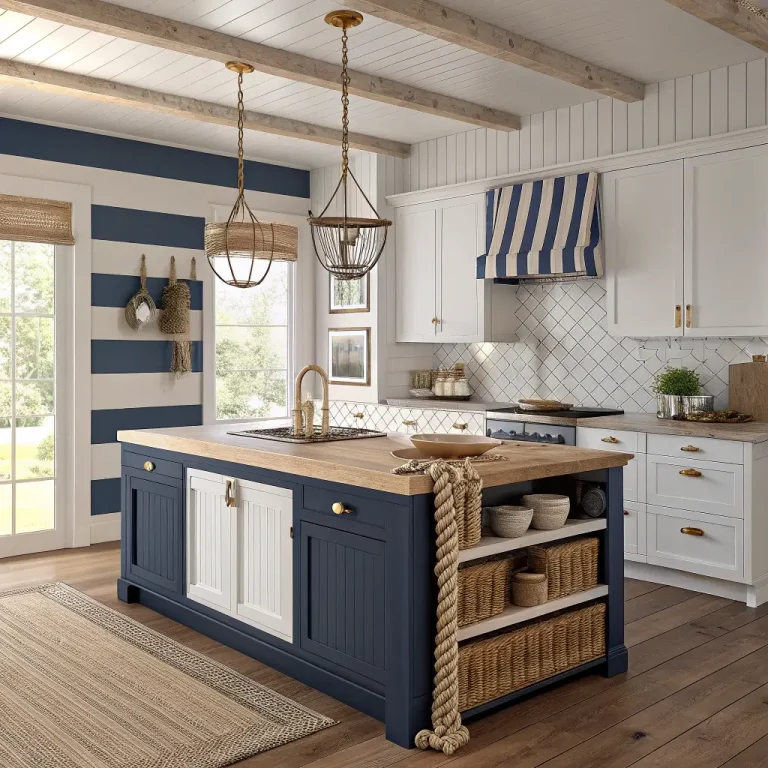
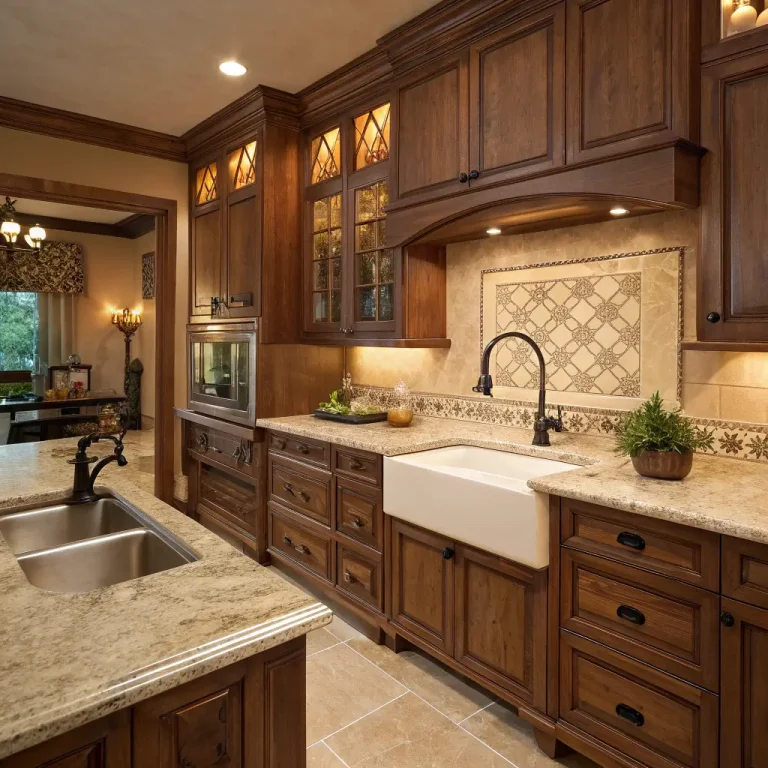
15 Stunning Vintage Farmhouse Kitchen Ideas to Inspire You

You know that warm, fuzzy feeling you get when you walk into your grandma’s kitchen? That’s exactly what we’re chasing here. I’ve spent the last decade transforming modern kitchens into vintage farmhouse havens, and let me tell you, nothing beats the charm of weathered wood and antique fixtures.
Whether you’re renovating your entire kitchen or just want to add some rustic touches, these 15 vintage farmhouse kitchen ideas will transform your cooking space into the cozy retreat you’ve always dreamed of.
Trust me, your morning coffee will taste better when you’re surrounded by authentic farmhouse character.
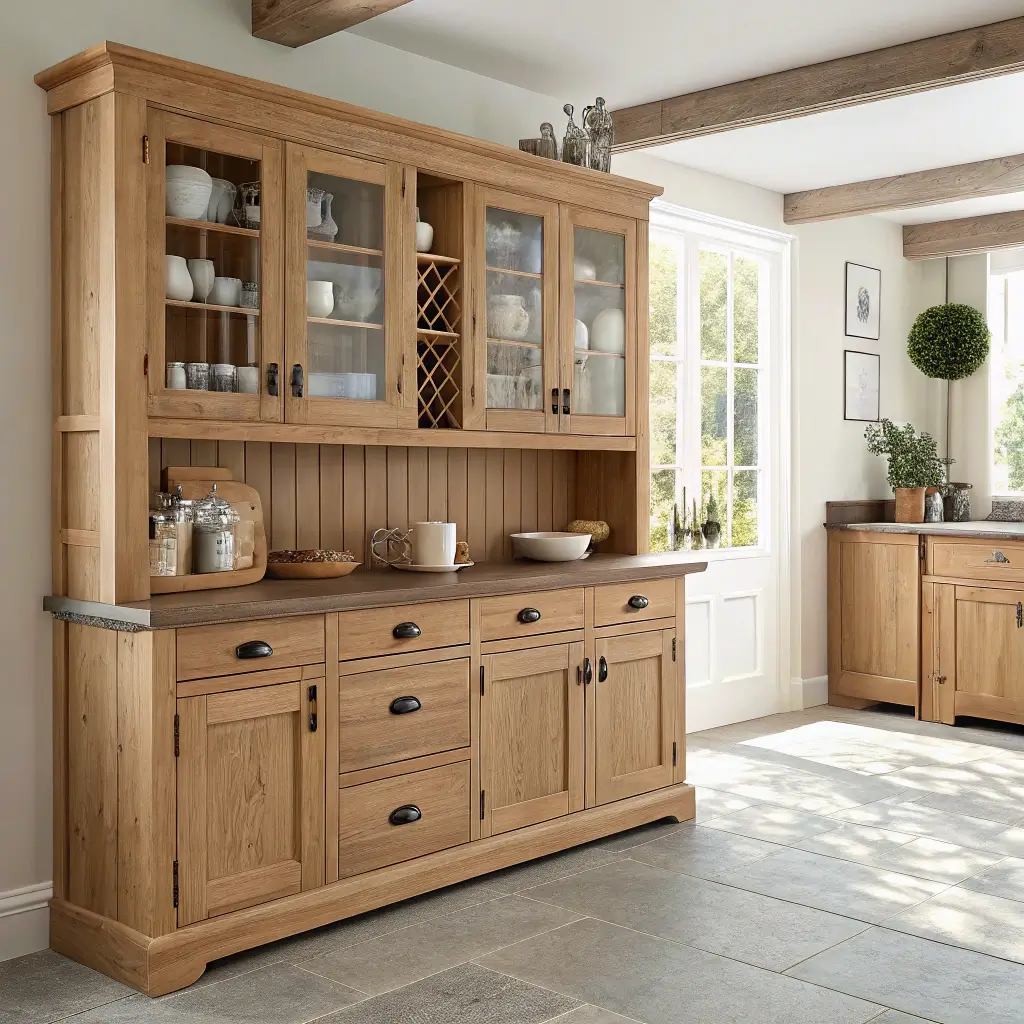
Cozy Rustic Farmhouse Kitchen
Creating That Perfect Lived-In Feel
The heart of any vintage farmhouse kitchen starts with creating warmth through texture and layers. I remember walking into my aunt’s 1920s farmhouse and feeling instantly at home – that’s the magic we’re after. You want your kitchen to feel like it’s been loved for generations, even if you just moved in last week.
Start with reclaimed wood elements wherever possible. Hunt down old barn doors for cabinet fronts or salvage beams for your ceiling. The imperfections tell a story, and honestly, they hide everyday wear and tear way better than pristine surfaces ever could.
Mix different textures to nail that authentic farmhouse vibe. Combine rough-hewn wood with smooth marble, worn metal with soft linens. The key is creating visual interest without looking like you raided every antique store within a 50-mile radius (though between you and me, that’s exactly what I did for my first farmhouse kitchen).
Essential Elements for Rustic Charm
Here’s what you absolutely need for that cozy rustic feel:
• Exposed wooden beams – real or faux, they add instant character
• A farmhouse sink – preferably apron-front in white porcelain or copper
• Mixed metals – combine brass, copper, and aged iron
• Natural stone elements – think soapstone counters or a brick accent wall
• Vintage textiles – flour sack dish towels and gingham curtains
Don’t forget about the ceiling! Too many people ignore this fifth wall. Add tongue-and-groove planking or pressed tin tiles for an authentic vintage touch that’ll make visitors look up in awe.
Charming Vintage Kitchen Islands
The Statement Piece Your Kitchen Needs
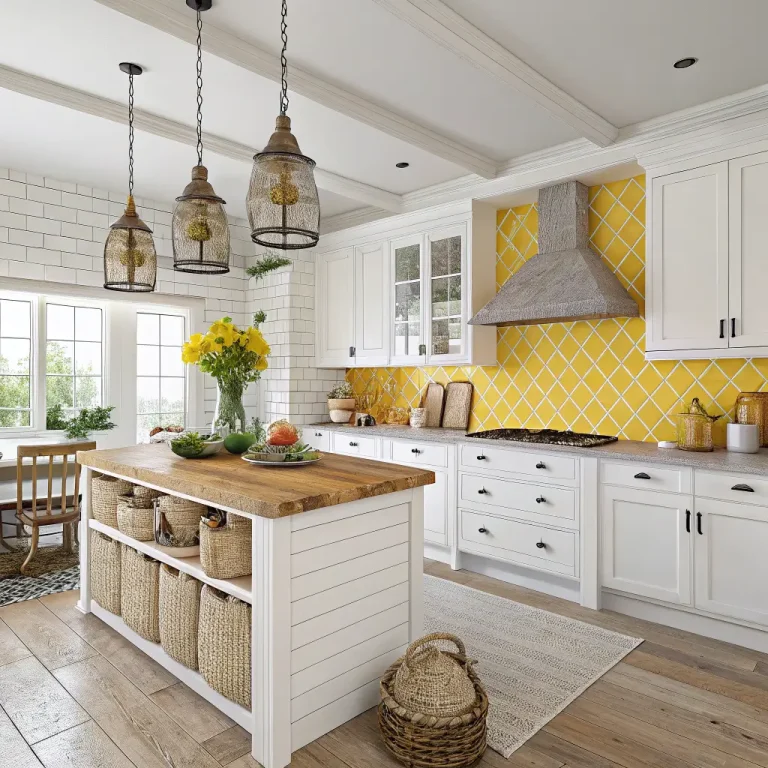
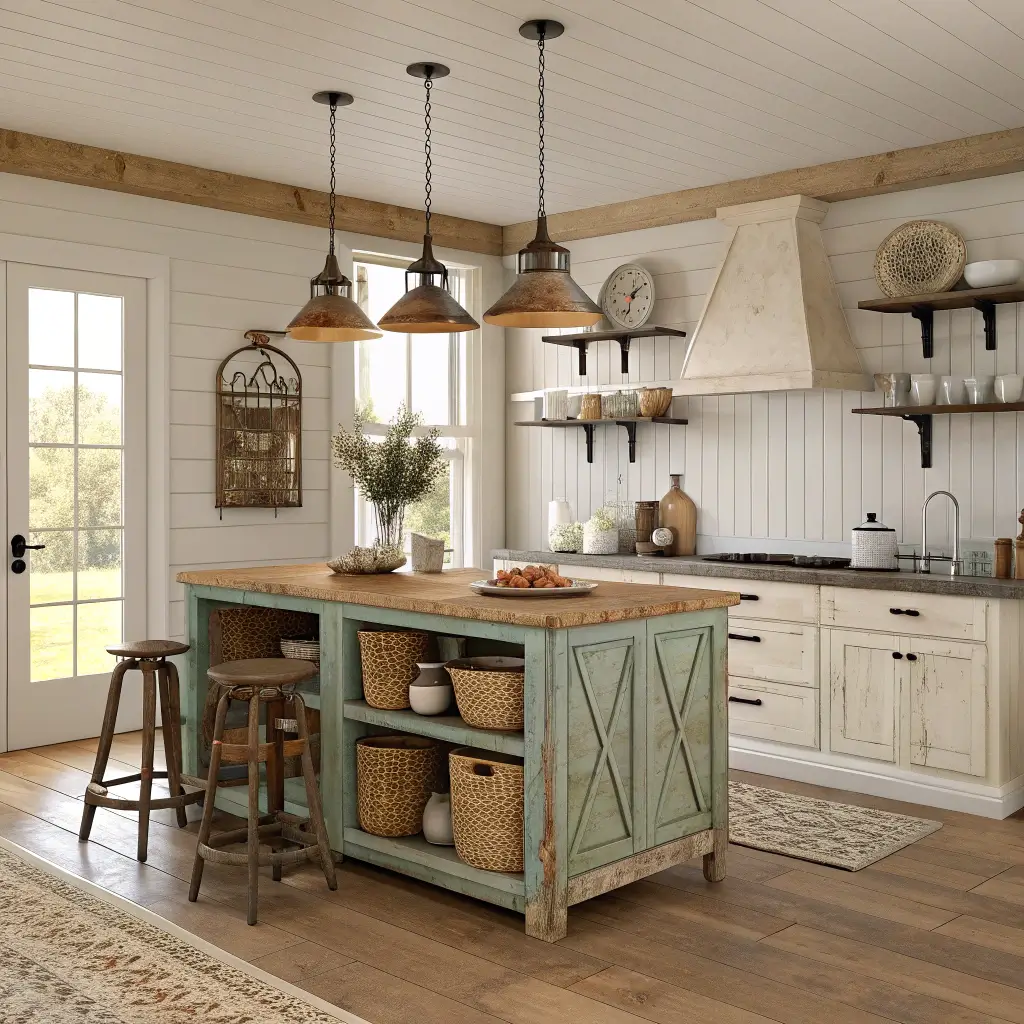
Every vintage farmhouse kitchen needs a showstopping island, and I’m not talking about those cookie-cutter home improvement store models. Your island should look like you discovered it in a French countryside flea market, even if you actually built it yourself last weekend.
Consider repurposing an old farm table or dresser. I once transformed a beat-up potting bench into the most gorgeous kitchen island – added some wheels, a butcher block top, and boom! Instant conversation starter. The worn paint and dings just added to its charm.
Size matters here, but not in the way you think. A smaller, moveable island often works better than a massive built-in. You get flexibility plus that casual, unfussy vibe that screams authentic farmhouse.
Island Features That Make a Difference
Your vintage island needs these practical elements:
• Open shelving underneath for displaying ironstone dishes or woven baskets
• A contrasting countertop – butcher block against painted base is classic
• Mixed storage solutions – drawers on one side, shelves on the other
• Vintage hardware – glass knobs or cup pulls in aged brass
• A towel bar on the end for functionality
Want to know a secret? The best islands I’ve seen combine at least three different materials. Wood, metal, and stone together create that collected-over-time look that’s impossible to fake.
Classic Wooden Cabinet Designs
Choosing the Right Wood and Finish
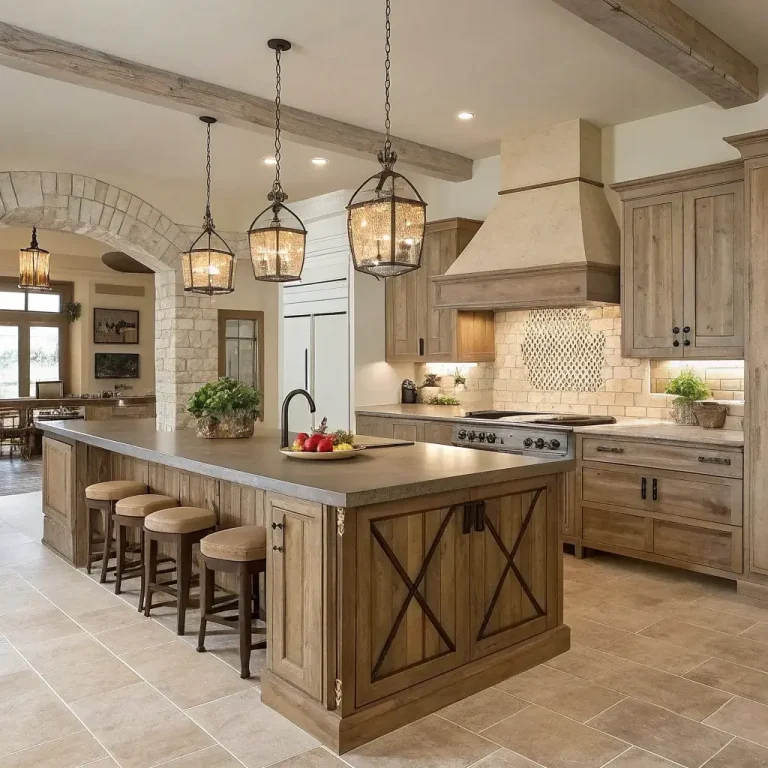
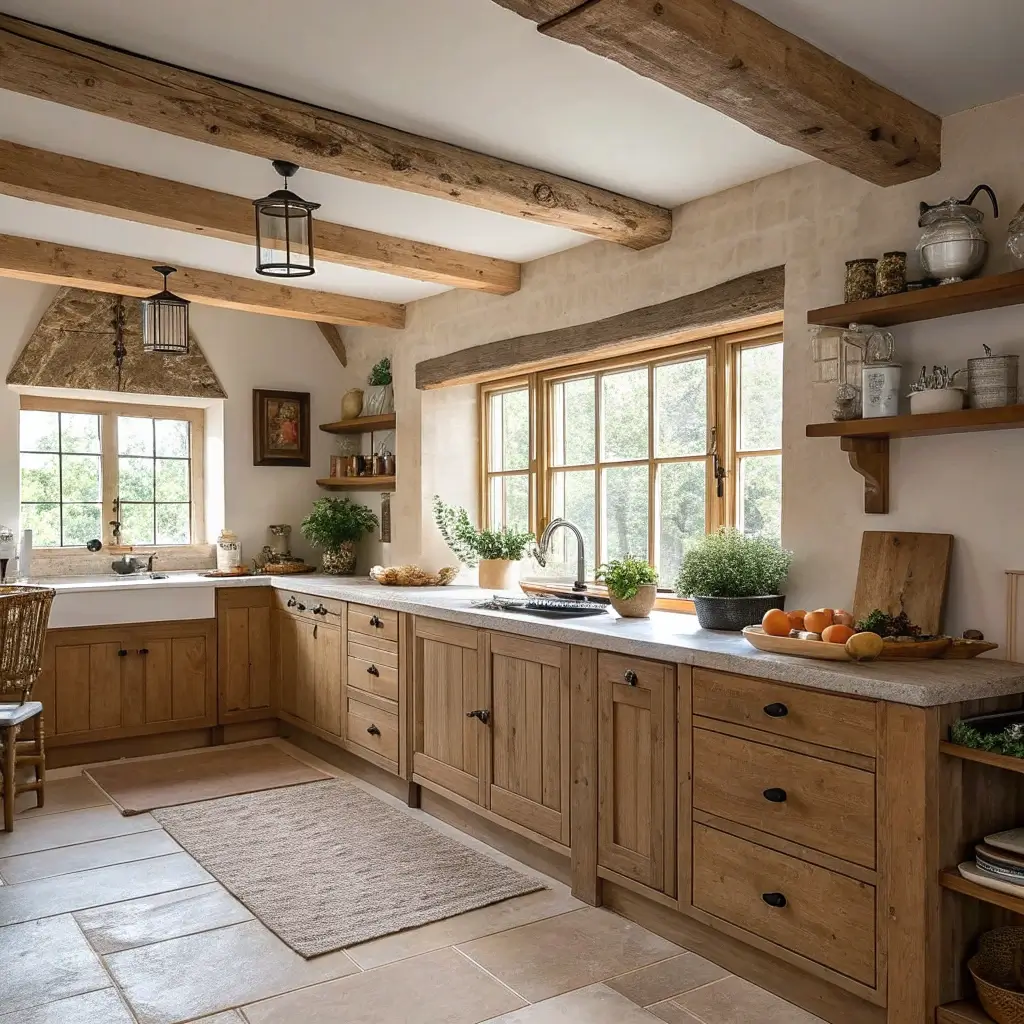
Let’s talk cabinets – the backbone of your vintage farmhouse kitchen. Forget those glossy, perfect surfaces; we want wood that looks like it’s weathered a few storms. Pine, oak, and hickory are your best friends here, especially when they show their natural grain.
I made the mistake once of going too distressed with my cabinet finish. There’s a fine line between “charming vintage” and “needs immediate replacement.” Aim for subtle wear on edges and corners where natural use would occur.
Paint versus stain is the eternal debate. Why choose? Mix both for authentic farmhouse style. Paint your upper cabinets in soft whites or sage greens, then keep lower cabinets in natural wood. This two-tone approach has been trending for good reason – it works!
Hardware That Tells a Story
The devil’s in the details, and cabinet hardware makes or breaks your vintage look:
• Cup pulls in oil-rubbed bronze or antique brass
• Glass knobs with brass backplates
• Bin pulls for drawers (so satisfying to use!)
• Latches instead of knobs for upper cabinets
• Leather pulls for a unique, rustic touch
FYI, mixing hardware styles actually looks more authentic than matching everything perfectly. Just keep the finish consistent, and you’re golden.
Also Read: 15 Stunning Rustic Farmhouse Kitchen Island Ideas for Cozy Spaces
Rustic Open Shelving Inspiration
Why Open Shelving Changes Everything
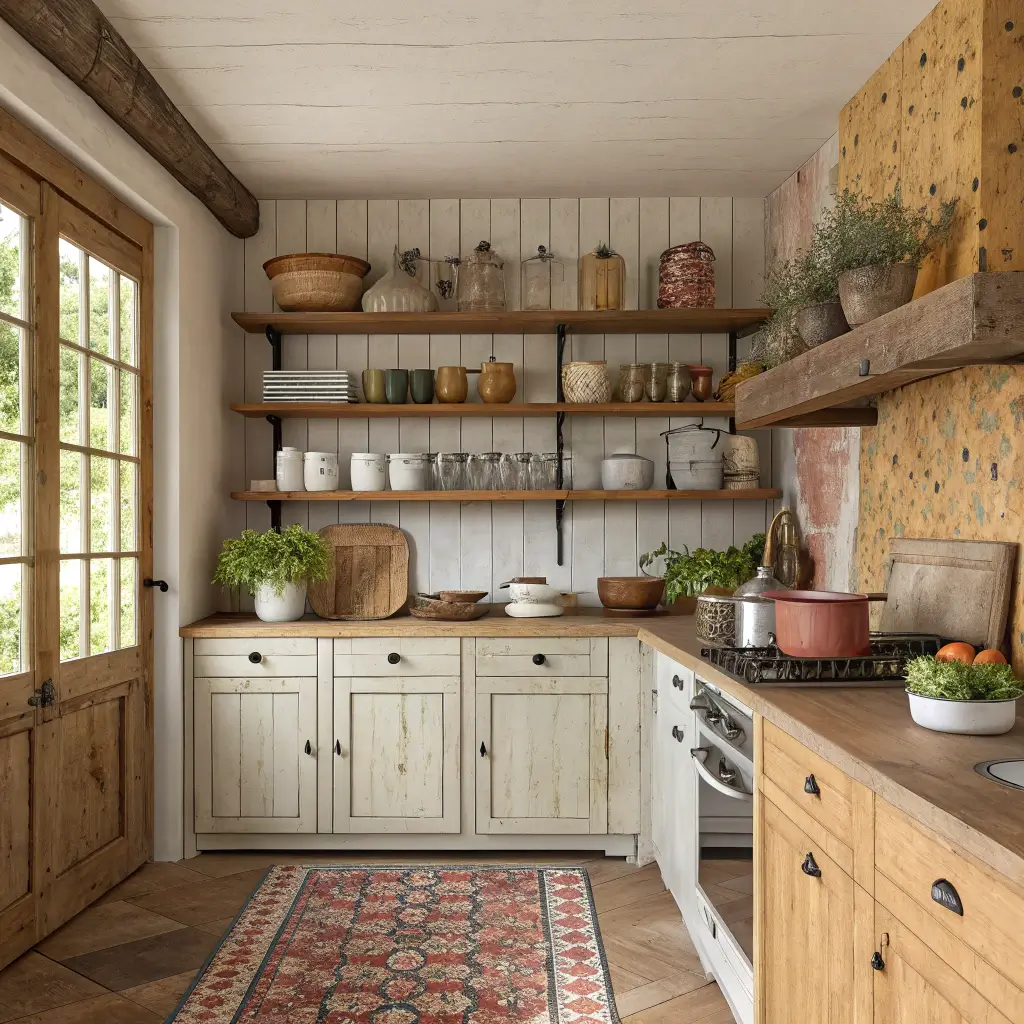
Ready for some tough love? Those upper cabinets are making your kitchen feel cramped. Open shelving opens up the space (pun intended) and showcases your beautiful dishes instead of hiding them away. Plus, it forces you to keep things organized – win-win!
I switched to open shelving five years ago and haven’t looked back. Sure, things get dustier, but I actually use my pretty dishes now instead of saving them for “special occasions” that never come. Life’s too short to hide your grandmother’s china.
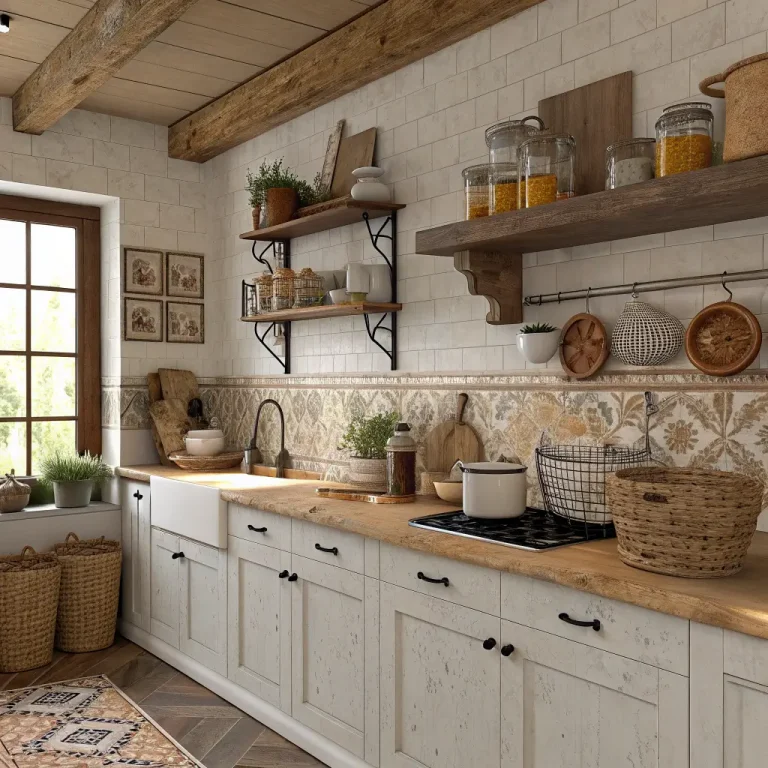
Install thick wooden shelves with visible brackets for maximum farmhouse appeal. Reclaimed barn wood or live-edge slabs make stunning shelves. The brackets themselves become design elements – choose chunky iron ones or decorative corbels.
Styling Your Open Shelves Like a Pro
Here’s how to make your shelves Instagram-worthy:
• Group items by color – whites and creams together create calm
• Mix heights – stack plates, stand cutting boards, vary visual interest
• Add greenery – small potted herbs or trailing plants soften hard edges
• Include vintage finds – old scales, mason jars, enamelware
• Leave breathing room – don’t cram every inch
Remember, open shelving isn’t just storage; it’s decor. Rotate seasonal items to keep things fresh. Those shelves become your kitchen’s art gallery.
Antique Farmhouse Dining Corners
Creating an Intimate Dining Space
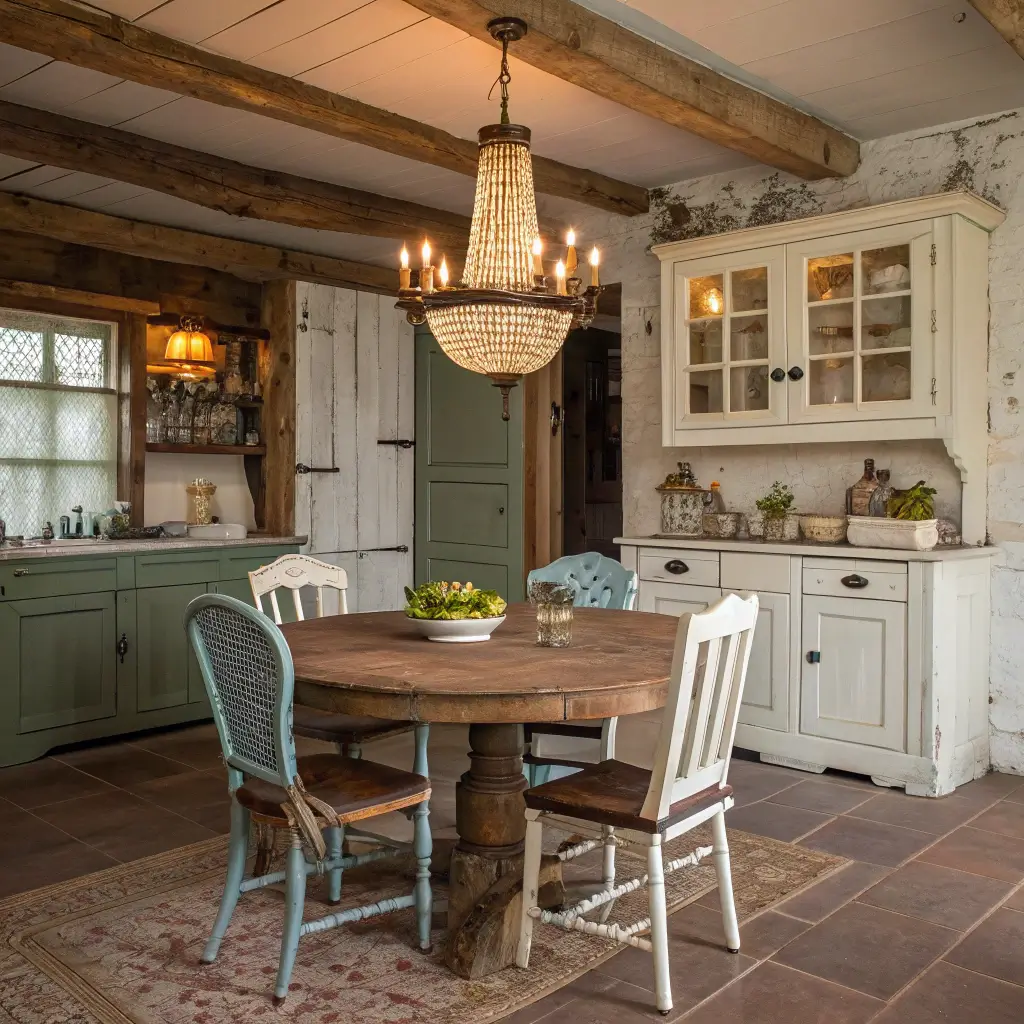
Who says you need a separate dining room? Some of my favorite meals happen in cozy kitchen corners. Creating an antique farmhouse dining area within your kitchen brings everyone together and maximizes your space beautifully.
Start with a weathered farm table – rectangular works best for corners. Mismatched chairs add authentic charm (and save money when you’re thrift shopping). I scored four different Windsor chairs over six months, and they look like they’ve always belonged together.
Position your dining corner near a window if possible. Natural light makes everything look better, especially morning coffee and evening wine. Add a vintage chandelier or pendant light to define the space without walls.
Making Small Spaces Feel Grand
Even tiny kitchens can accommodate a dining corner:
• Built-in banquette seating maximizes space and adds storage
• A round pedestal table allows for flexible seating
• Wall-mounted drop-leaf table for ultimate space-saving
• Corner booth setup creates a cozy restaurant vibe
• Bench seating on one side keeps things open
Layer in textiles for comfort and style. Vintage grain sack pillows, a worn Turkish runner, maybe a cozy throw for chilly mornings. These soft elements balance all that hard wood and metal.
Vintage Farmhouse Lighting Ideas
Illuminating with Character
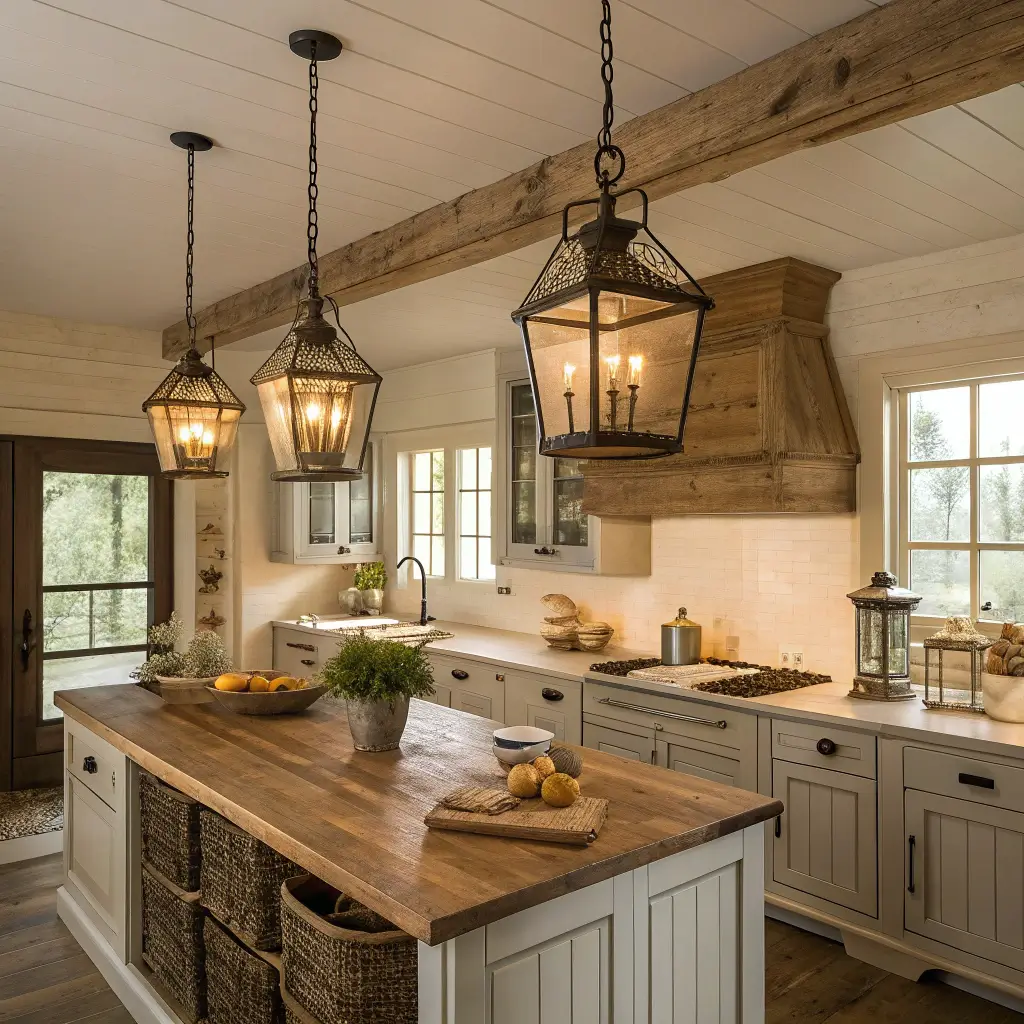
Lighting makes or breaks your vintage farmhouse kitchen atmosphere. Those builder-grade fixtures have got to go! Replace them with pieces that look like treasured finds from estate sales and barn auctions.
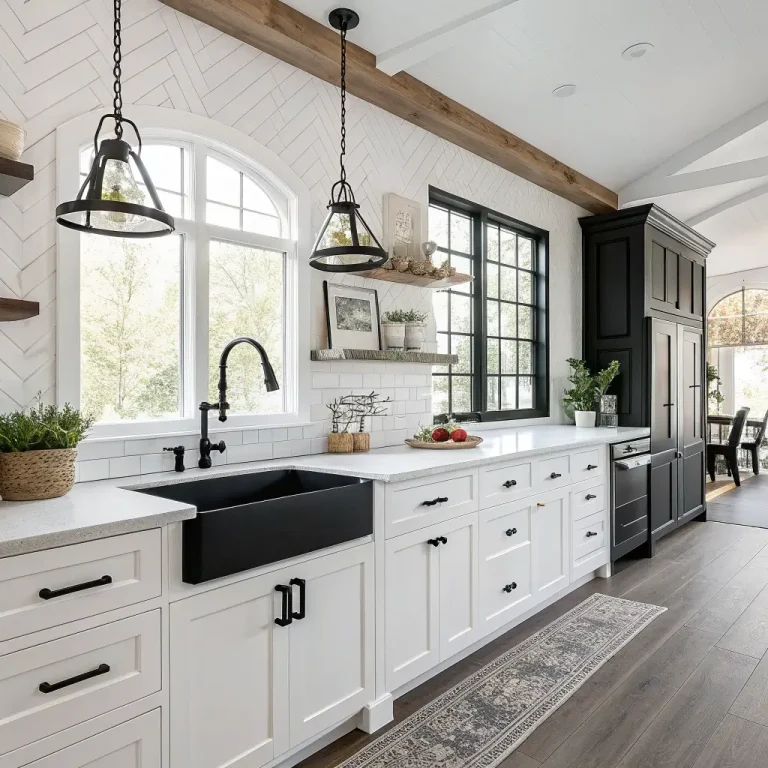
Pendant lights over islands should hang lower than you think – about 30-36 inches above the counter. I learned this the hard way after constantly bonking my head on too-high pendants. Go for oversized metal shades, glass globes, or even repurposed items like old pulleys or colanders.
Mix your light sources for the best ambiance. Combine overhead fixtures with under-cabinet lighting, wall sconces, and maybe even some vintage-style Edison bulbs. The goal is warm, layered lighting that makes everyone look good (because harsh overhead fluorescents help nobody).
Must-Have Lighting Styles
These fixtures nail the vintage farmhouse look:
• Barn-style pendants in galvanized metal or copper
• Schoolhouse glass fixtures for timeless appeal
• Wagon wheel chandeliers for dramatic impact
• Mason jar fixtures (DIY or store-bought)
• Vintage-style Edison bulb strings for ambient lighting
Don’t forget about natural light! Replace heavy curtains with simple cotton cafe curtains or roman shades in natural linen. You want to maximize daylight while maintaining privacy.
Also Read: 15 Stunning French Farmhouse Kitchen Ideas to Inspire Your Home
Warm Neutral Color Schemes
The Perfect Palette Foundation
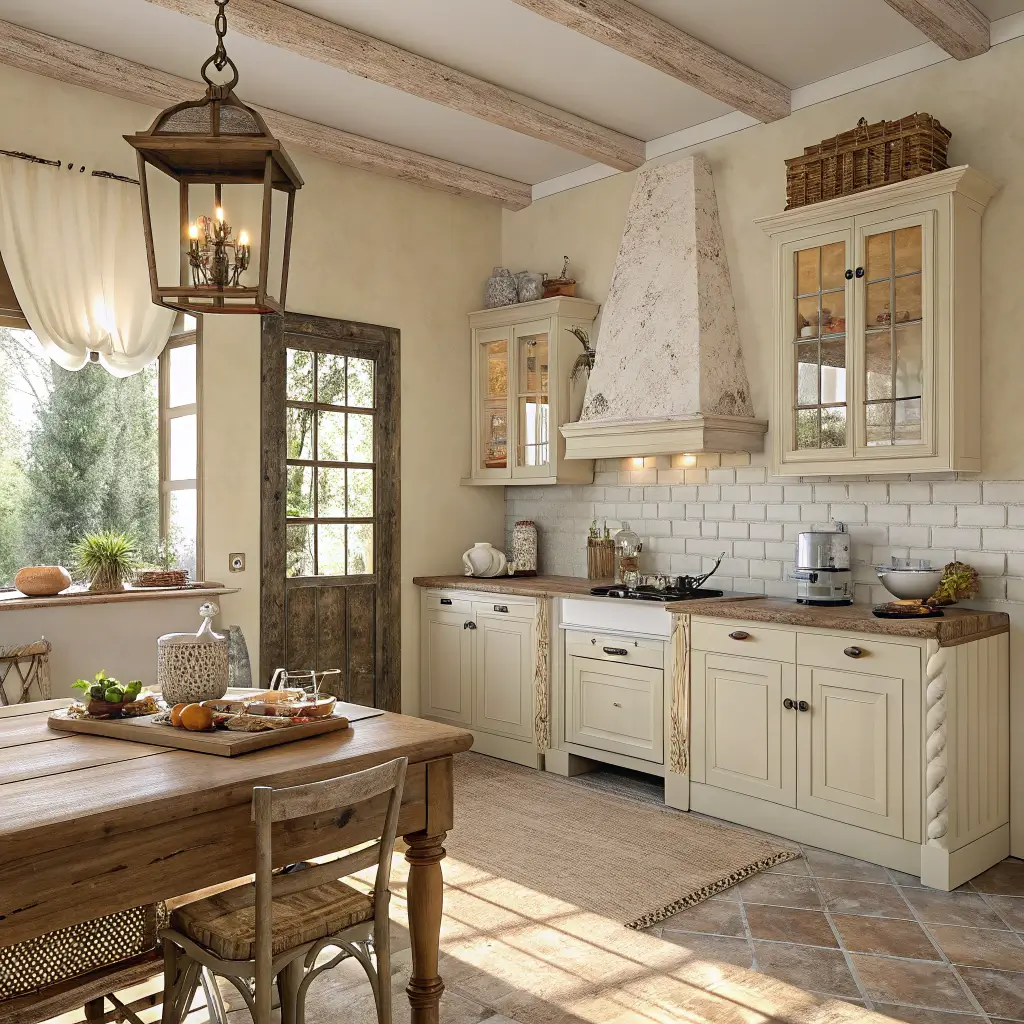
Can we talk about why warm neutrals beat stark whites every time in farmhouse kitchens? Pure white feels cold and clinical, while warm neutrals create that inviting, lived-in atmosphere we’re after. Think creamy whites, soft beiges, warm grays, and gentle taupes.
I painted my kitchen “Swiss Coffee” three times before realizing it looked different in every light. That’s actually perfect for farmhouse style! These chameleon colors shift throughout the day, keeping your space interesting.
Build your palette from natural materials in your space. Pull colors from your wood tones, stone surfaces, and metal finishes. This creates a cohesive look that feels intentional rather than matchy-matchy.
Adding Depth Without Bold Colors
Here’s how to keep neutrals interesting:
• Layer different shades of the same color family
• Mix warm and cool undertones carefully
• Add texture through materials rather than color
• Include natural wood tones as a color element
• Use black sparingly for contrast and grounding
Accent colors should whisper, not shout. Soft sage green, dusty blue, or blush pink work beautifully. Save bold colors for small accessories you can easily change with seasons or moods.
Rustic Kitchen Accessories & Decor
Curating Authentic Farmhouse Details
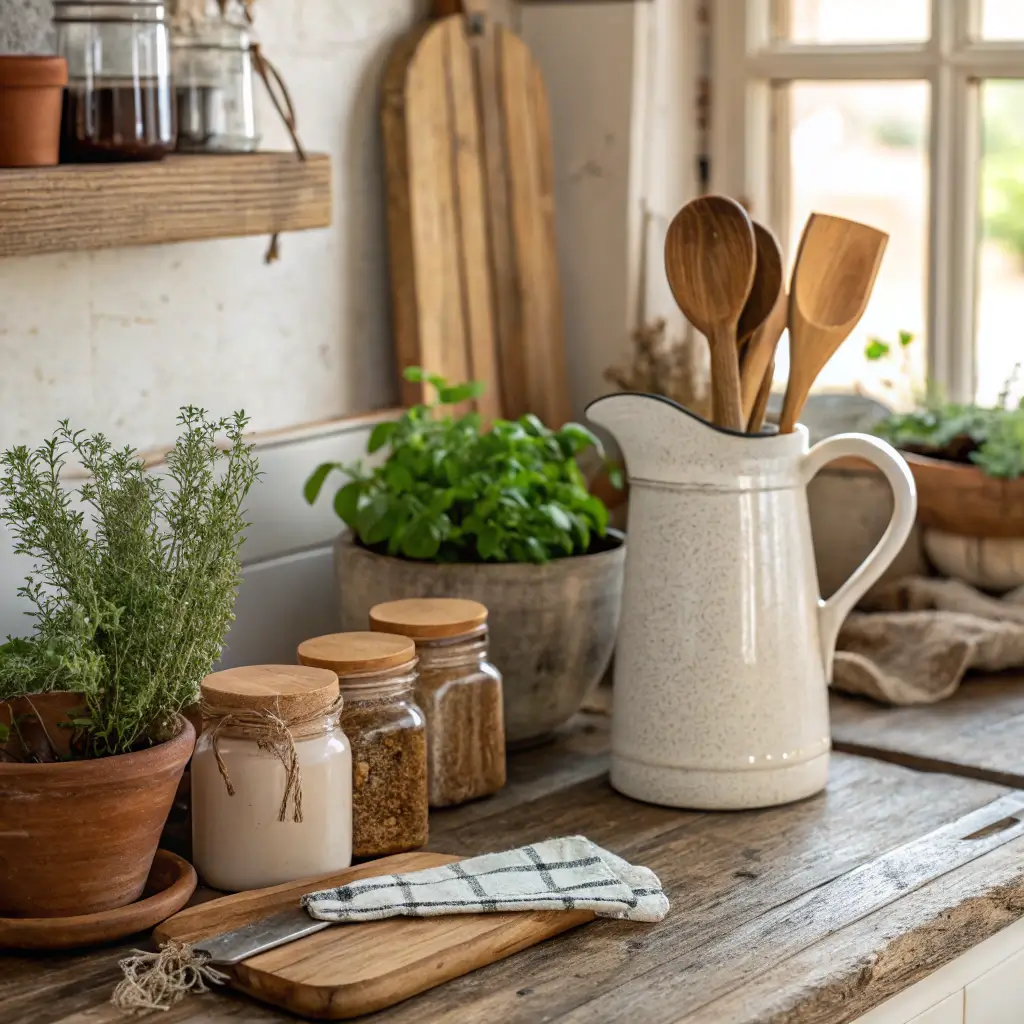
The accessories you choose make your kitchen feel genuinely vintage or like a farmhouse-themed restaurant. Skip the mass-produced “farmhouse” signs – you know the ones I mean. Instead, collect pieces with actual history and character.
Hit up estate sales, flea markets, and antique malls for authentic finds. Old cutting boards, vintage scales, enamelware, and mason jars earn their keep by being both decorative and functional. My rule? If it doesn’t serve a purpose or tell a story, it doesn’t belong.
Display collections thoughtfully. Group similar items together for impact – a wall of vintage rolling pins, a shelf of ironstone pitchers, or a collection of old wooden spoons in a crock. These vignettes feel intentional and personal.
Essential Rustic Accessories
Stock your vintage farmhouse kitchen with these authentic pieces:
• Vintage cutting boards in various sizes and woods
• Enamelware pitchers, bowls, and colanders
• Mason jars for storage and display
• Wooden bowls and trenchers
• Cast iron cookware displayed on open shelves
• Vintage linens and flour sack towels
• Old crocks and stoneware
• Antique kitchen tools like hand-crank beaters
Remember to use these items! The best farmhouse kitchens feel lived-in because they actually are. That patina develops from daily use, not artificial aging techniques.
Distressed Wood Countertops
The Warm Alternative to Stone
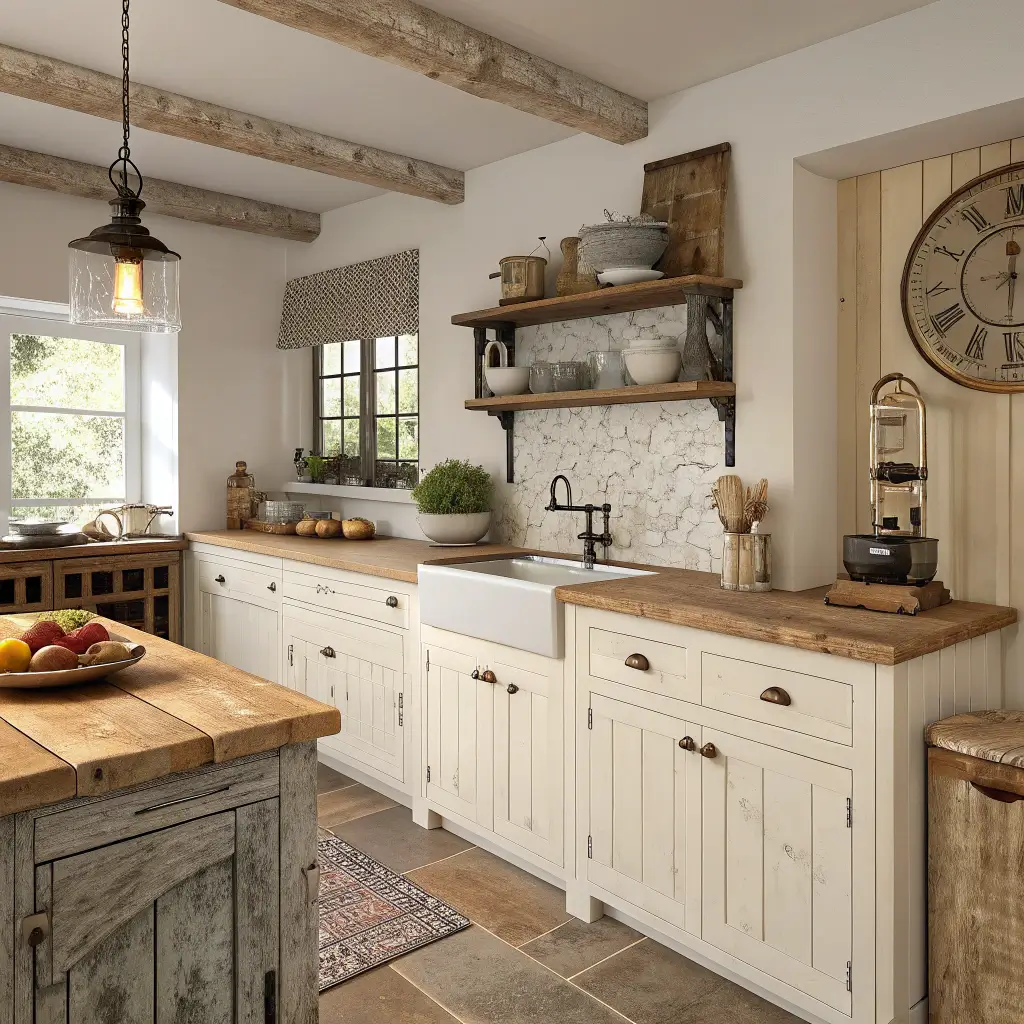
While everyone’s obsessing over marble and quartz, distressed wood countertops offer warmth and character that cold stone never can. Plus, they’re budget-friendly and DIY-able if you’re handy. I installed butcher block counters five years ago, and they’ve aged beautifully.
Choose hardwoods like maple, walnut, or oak for durability. The distressing happens naturally with use, or you can speed it up with strategic sanding and staining. Those knife marks and water rings? They’re not damage; they’re character!
Yes, wood requires more maintenance than stone. Monthly oiling keeps them gorgeous, and honestly, that ritual becomes part of the farmhouse lifestyle. It connects you to your space in a way that granite never will.
Making Wood Counters Work
Practical tips for living with wood countertops:
• Seal properly with food-safe mineral oil or beeswax
• Sand out deep scratches annually if needed
• Use cutting boards for raw meat (food safety first!)
• Wipe spills immediately to prevent staining
• Embrace the patina that develops over time
Mix materials if you’re nervous about all wood. Use butcher block on your island and stone around the sink. This combination looks intentional and gives you the best of both worlds.
Also Read: 15 Stunning Rustic Farmhouse Kitchen Ideas for Cozy Home Vibes
Farmhouse Kitchen Pantry Organization
Pretty AND Practical Storage
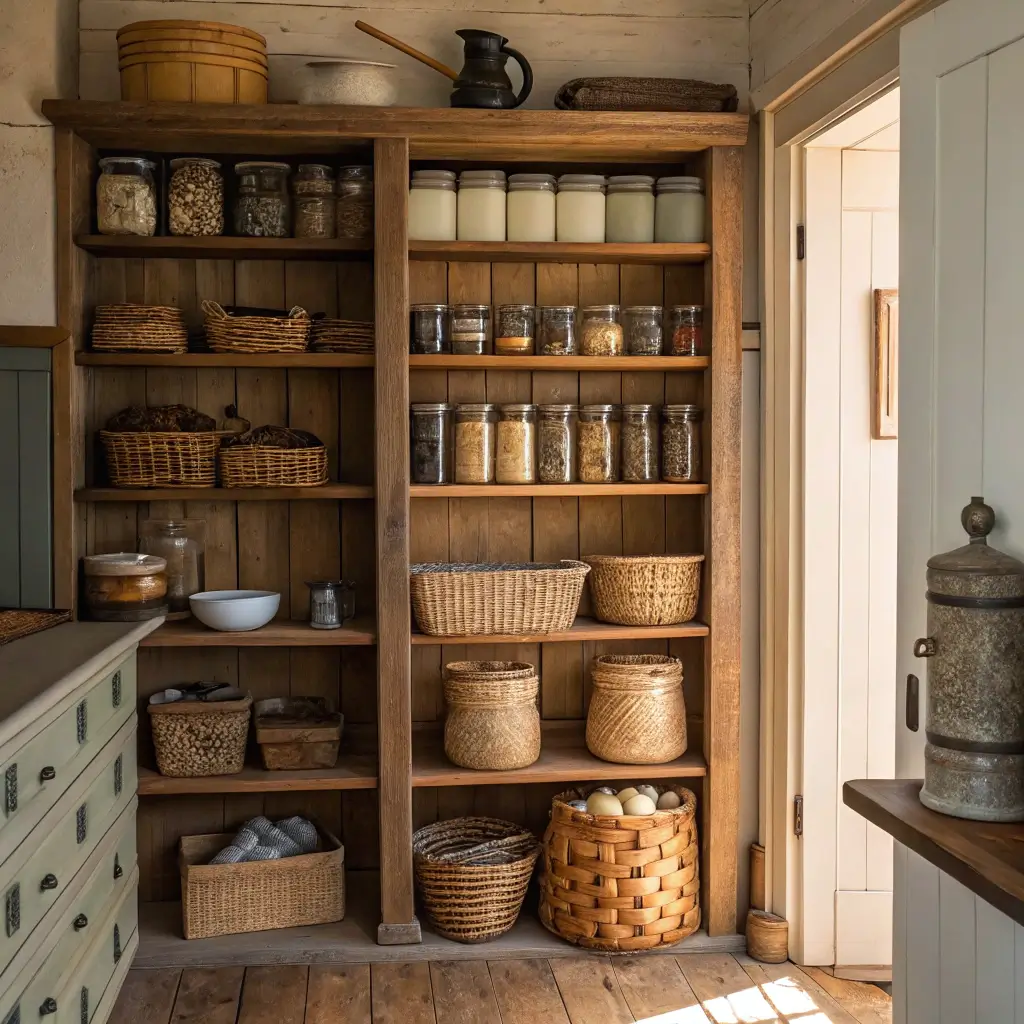
Your pantry should look like something from a vintage general store, not a modern grocery aisle. Glass jars, woven baskets, and wooden crates create that authentic farmhouse pantry aesthetic while keeping everything organized.
Transfer dry goods into glass containers – mason jars, vintage canisters, or apothecary jars. Label them with handwritten tags or chalkboard labels. This looks amazing and actually helps you see what you have (no more buying three bags of quinoa because you forgot about the ones hiding in the back).
Open pantry shelving works brilliantly in farmhouse kitchens. Paint the back wall in a contrasting color to make dishes and jars pop. If you must have doors, consider chicken wire panels or glass fronts to maintain that open feel.
Vintage-Inspired Organization Solutions
Transform your pantry with these elements:
• Wooden crates for produce storage
• Wire baskets for snacks and bread
• Glass canisters with bail lids for dry goods
• Enamelware bins for root vegetables
• Vintage tins for tea and coffee
• Wooden ladder for vertical storage
The key is making everyday items part of your decor. Those bags of flour and sugar become design elements when stored in beautiful containers. 🙂
Vintage Farmhouse Backsplash Designs
Making a Statement Without Overwhelming
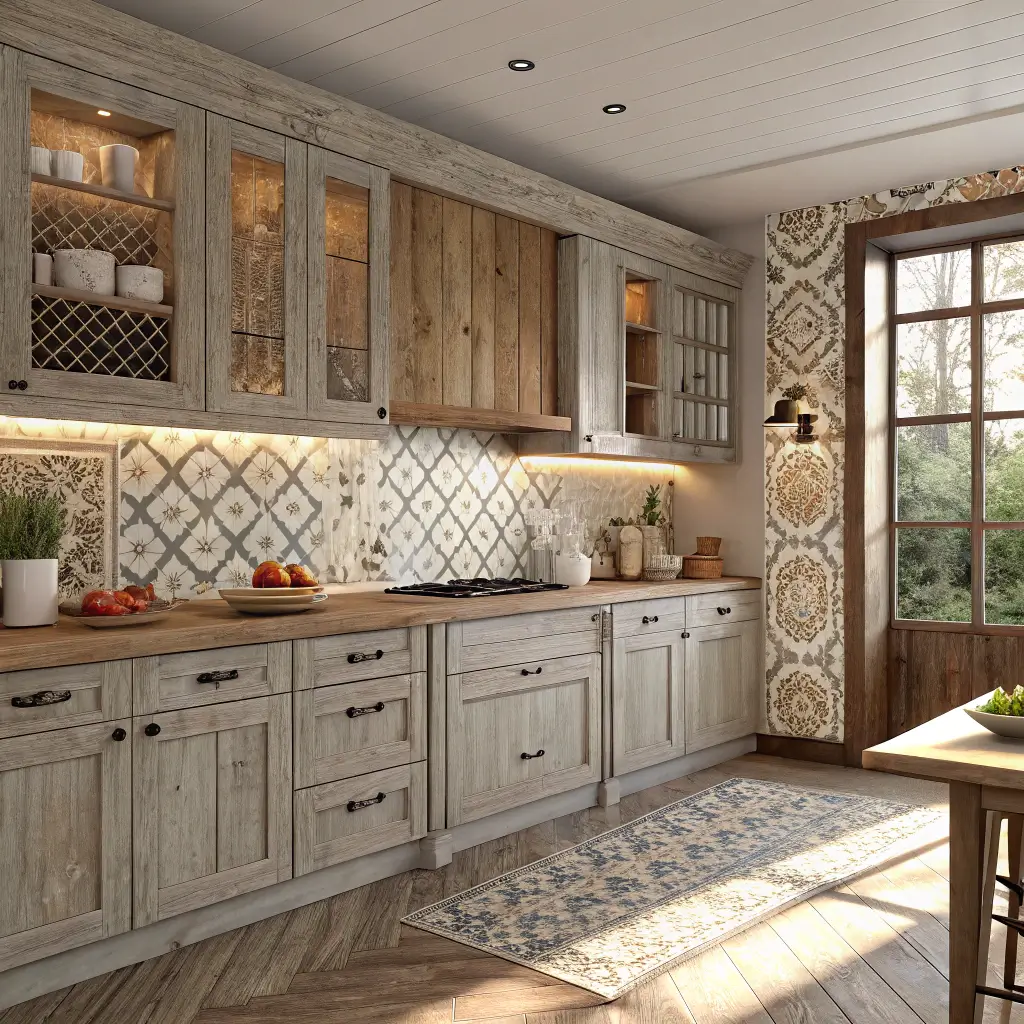
Your backsplash offers the perfect opportunity to add vintage character without major renovation. Subway tile remains the classic choice, but please, not stark white with white grout! Try cream or light gray tiles with contrasting grout for authentic vintage appeal.
I installed beadboard as my backsplash, and people always ask if it’s practical. With proper sealing, absolutely! It adds incredible texture and costs way less than tile. Paint it the same color as your cabinets for a seamless look, or contrast for drama.
Consider unconventional materials too. Pressed tin tiles, reclaimed wood, brick veneer, or even vintage license plates can create unique backsplashes. Just ensure whatever you choose can handle kitchen moisture and splatters.
Backsplash Options That Never Go Out of Style
These materials nail the vintage farmhouse look:
• Subway tile in off-white with dark grout
• Hexagon tile for period-appropriate charm
• Beadboard or shiplap properly sealed
• Brick or brick veneer for instant age
• Pressed tin tiles for Victorian farmhouse vibes
• Natural stone in irregular patterns
Extend your backsplash all the way to the ceiling behind open shelving. This creates a stunning focal point and makes cleaning easier (trust me on this one).
Shabby Chic Farmhouse Decor
Feminine Touches in Rustic Spaces
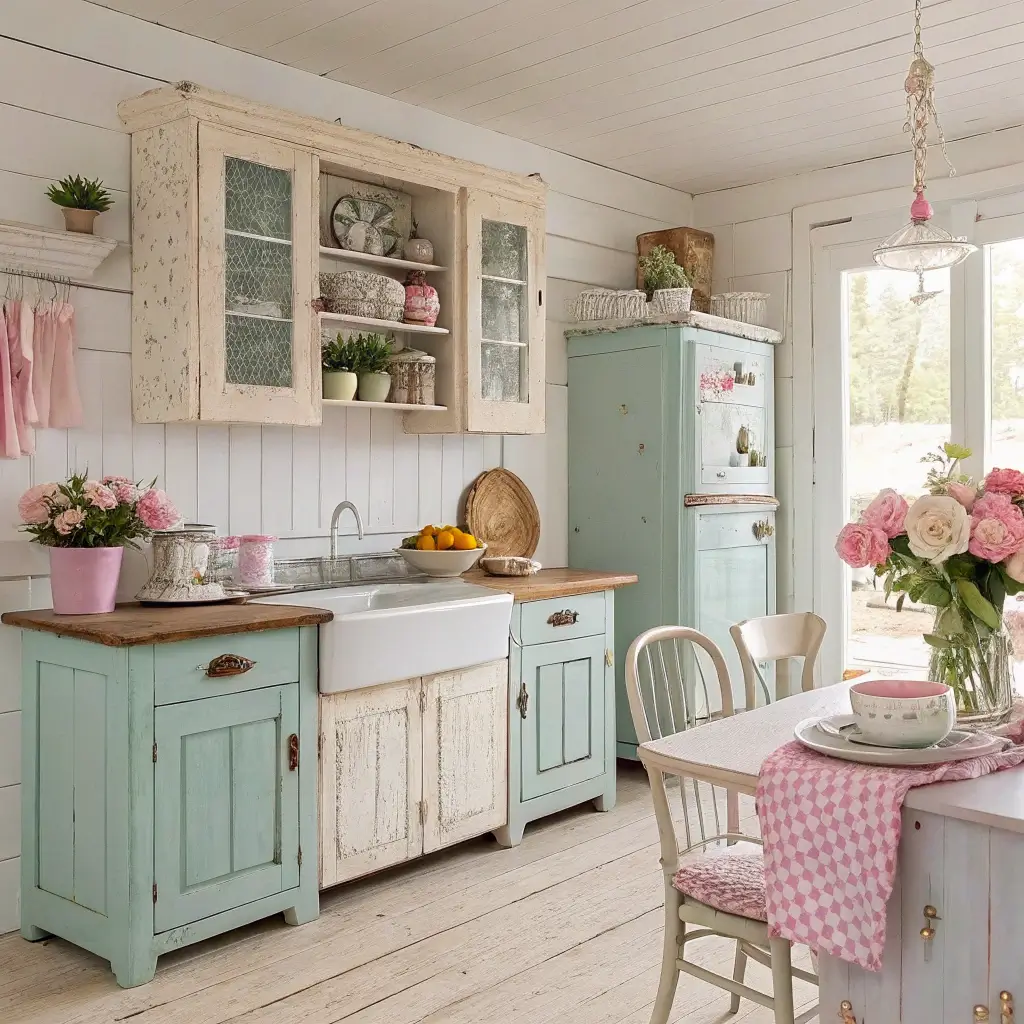
Who says farmhouse has to be all masculine wood and metal? Shabby chic elements soften those hard edges and add romantic charm. Think chippy paint, delicate florals, and vintage lace – but in moderation, or you’ll end up in full-on cottage territory.
Mix one or two shabby pieces with rustier elements. A painted hutch displaying ironstone, vintage floral cushions on wooden chairs, or a distressed mirror above the sink. These feminine touches balance the rougher farmhouse elements beautifully.
The trick is choosing pieces that look authentically aged, not artificially distressed. Real vintage furniture has wear patterns that make sense – edges worn from handling, paint chipped where chairs bump the table. Those details matter!
Incorporating Shabby Elements Without Overdoing It
Balance shabby chic with rustic farmhouse:
• One statement painted piece like a hutch or island
• Vintage floral textiles in small doses
• Chippy paint frames for kitchen art
• Delicate vintage hardware on select pieces
• Pastel accents through dishes or accessories
• Vintage mirrors with ornate frames
IMO, the best shabby chic farmhouse kitchens feel collected, not decorated. Each piece should feel special but not precious – you still need to cook in this space!
Rustic Farmhouse Flooring Ideas
Grounding Your Space Authentically
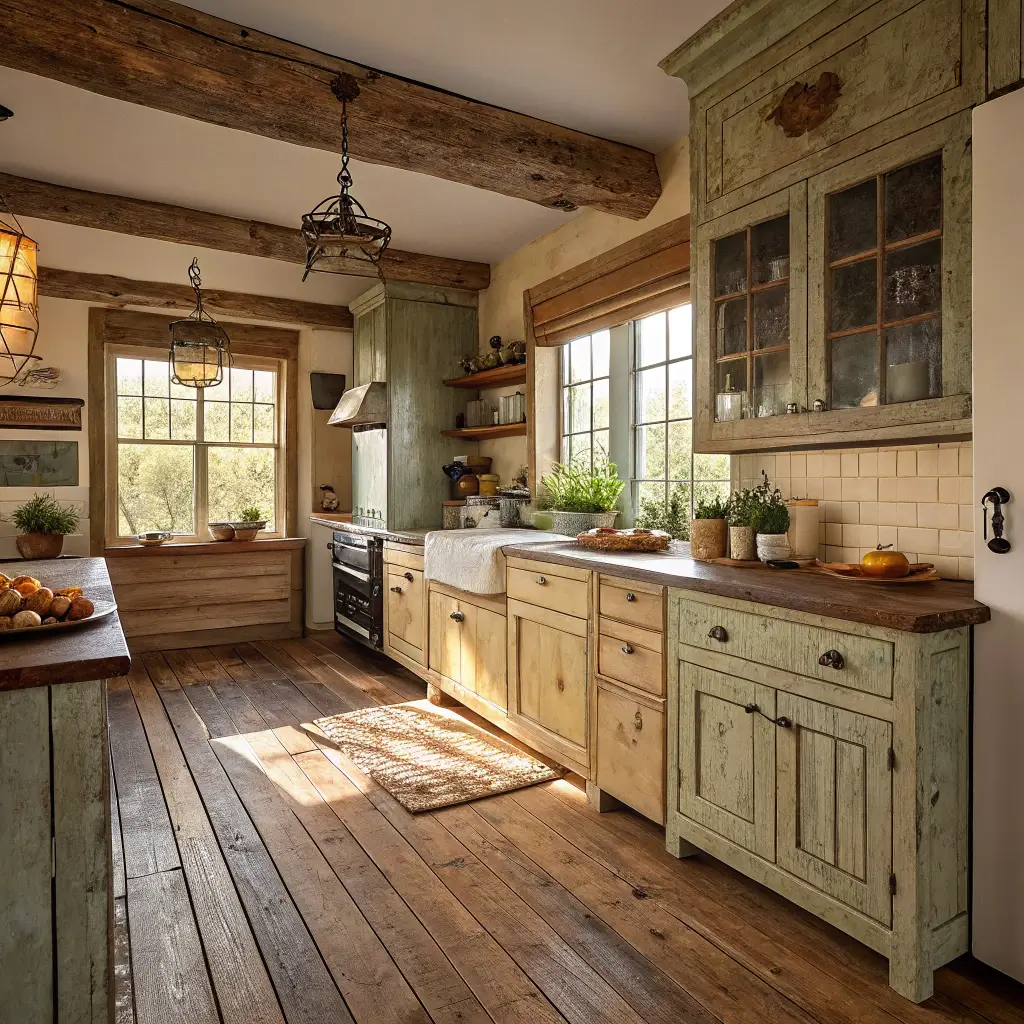
Your floor sets the entire room’s foundation, literally and stylistically. Wide-plank hardwood floors scream farmhouse, especially when they show some age. Those squeaks and gaps between boards? They’re telling stories of generations who’ve crossed these floors.
Reclaimed wood flooring gives instant authenticity but comes with a hefty price tag. Modern alternatives like luxury vinyl plank have gotten scary-good at mimicking aged wood. I’ve fooled plenty of visitors with high-quality LVP that looks like 100-year-old barn wood.
Whatever you choose, embrace imperfection. Uniform, pristine floors look wrong in farmhouse kitchens. You want variation in color, visible grain, maybe even some knots and nail holes.
Flooring Options for Every Budget
Consider these farmhouse-appropriate floors:
• Reclaimed hardwood for ultimate authenticity
• Wide-plank pine painted or stained
• Luxury vinyl plank in distressed wood looks
• Painted concrete for industrial farmhouse
• Brick or stone in older homes
• Checkerboard painted floors for vintage charm
Add vintage-style rugs for warmth and color. Persian runners, braided oval rugs, or simple jute mats all work. They also hide imperfections and add comfort where you stand most.
Farmhouse Kitchen Seating Solutions
Comfort Meets Character
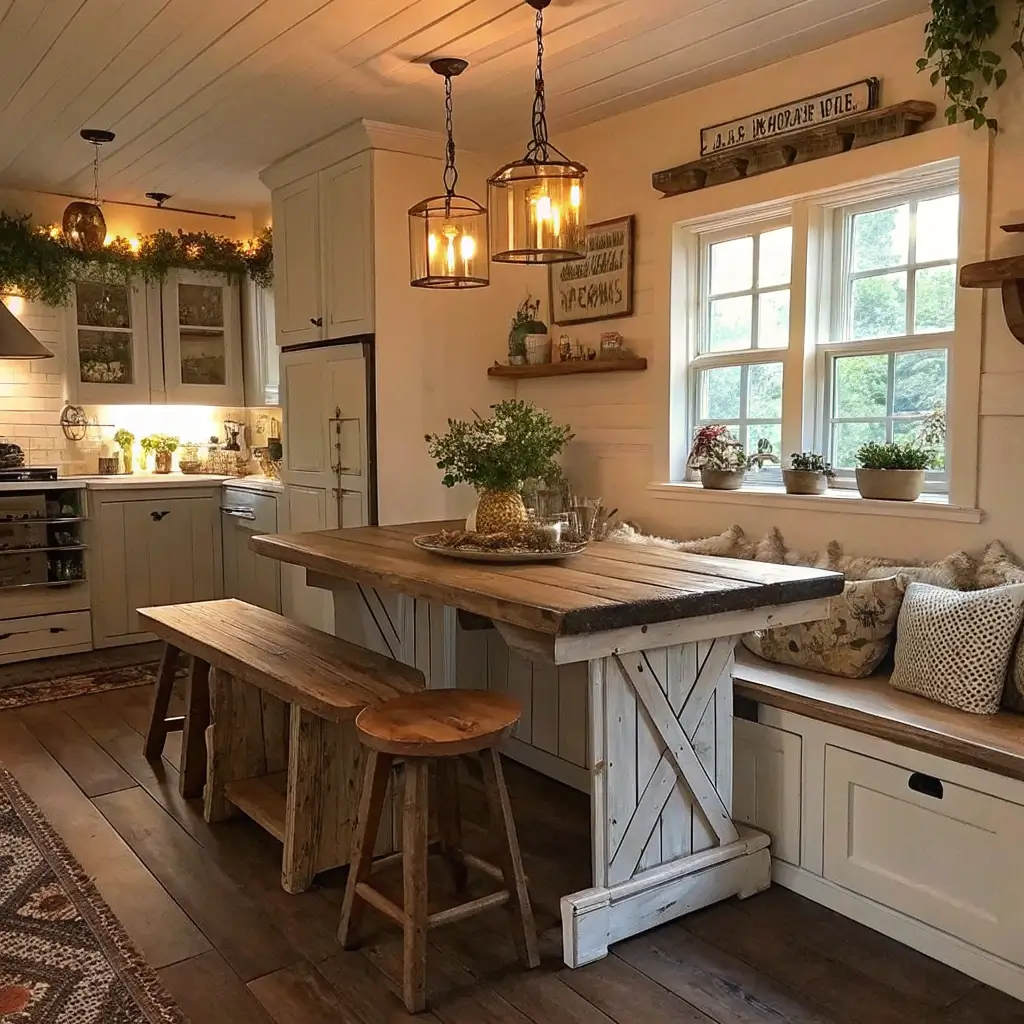
Seating in farmhouse kitchens should invite lingering over coffee and conversation. Mix different chair styles around your table for that collected-over-time look. Windsor chairs, ladder-backs, and simple wooden stools all belong here.
Bar stools at your island need to be sturdy and comfortable. Skip those modern swivel things – go for solid wood or metal with character. Industrial metal stools with wood seats perfectly blend farmhouse and modern functionality.
Built-in seating maximizes space while adding architectural interest. A simple bench along one wall with storage underneath serves double duty. Add cushions covered in grain sack fabric or vintage ticking for comfort.
Creative Seating Arrangements
Think beyond traditional chairs:
• Church pews along one side of the table
• Vintage school chairs for kids’ spots
• Upholstered host chairs at table ends
• Industrial stools at the island
• Window seats with hidden storage
• Antique benches for flexible seating
The best farmhouse kitchens have more seating than technically necessary. They’re gathering places, so plan accordingly!
Cozy Corner Breakfast Nooks
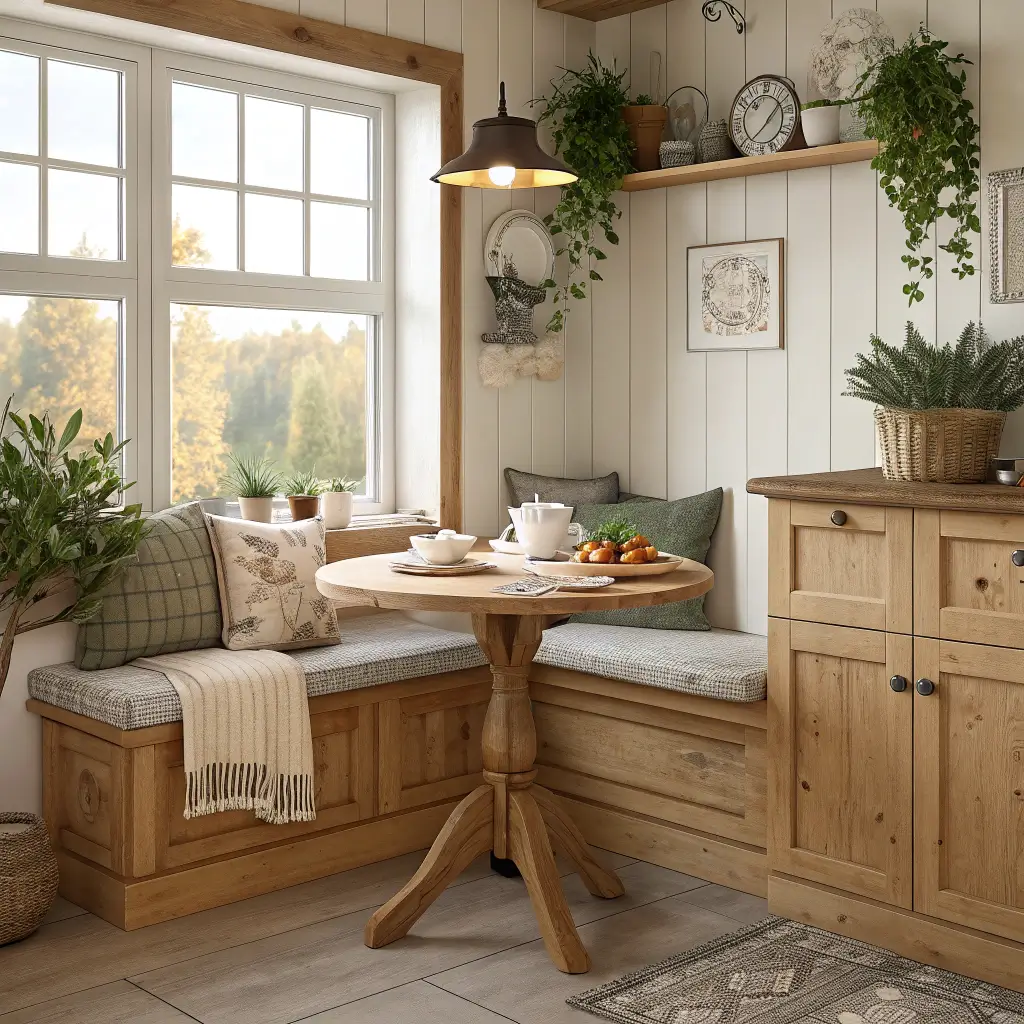
Creating Your Morning Sanctuary
Last but definitely not least, let’s talk breakfast nooks. These intimate spaces become the heart of family life, where homework happens, coffee gets savored, and late-night conversations unfold. Every farmhouse kitchen needs one.
Build a nook anywhere you have a corner and natural light. A simple L-shaped bench with a pedestal table creates instant coziness. Add plenty of pillows in vintage fabrics – grain sacks, ticking stripes, or faded florals all work beautifully.
The walls around your nook offer prime decorating real estate. Gallery walls of vintage plates, floating shelves with cookbooks, or a statement vintage sign all enhance the space without overwhelming it.
Nook Essentials for Maximum Coziness
Your breakfast nook needs these elements:
• Built-in or freestanding bench seating
• A table that fits the space without crowding
• Abundant pillows in washable fabrics
• Good lighting – pendant or chandelier
• Wall decor that adds personality
• Storage underneath benches if possible
Keep your nook clutter-free but lived-in. A vintage napkin holder, salt and pepper shakers, maybe a small plant. This space should feel like the coziest spot in your home because, honestly, it probably will be.
Bringing It All Together
Creating your perfect vintage farmhouse kitchen doesn’t happen overnight – and that’s actually the point. The best farmhouse kitchens evolve naturally, with pieces added as you find them, colors adjusted as you live with them, and character developing through daily use.
Start with one or two ideas from this list that really speak to you. Maybe it’s adding open shelving or hunting for the perfect vintage island. Build from there, letting your kitchen tell its own story. Remember, authenticity beats perfection every single time in farmhouse design.
The beauty of vintage farmhouse style lies in its flexibility and forgiveness. That scratch on your wood counter becomes character, that mismatched chair adds charm, and those everyday dishes displayed on open shelves become art. You’re not just decorating a kitchen; you’re creating a gathering place filled with warmth, history, and heart.
Take your time, trust your instincts, and don’t be afraid to break a few rules. The best farmhouse kitchens I’ve seen broke plenty of “design rules” but followed one important principle: they reflected the real people who cook, eat, and live in them. That’s the secret to farmhouse style that no amount of shiplap can fake – it has to feel like home.
Now grab that coffee, start pinning inspiration, and begin planning your vintage farmhouse kitchen transformation. Your dream kitchen is waiting, one weathered board and vintage find at a time. Who knows? Maybe your kitchen will be the one inspiring others someday. :/
Happy decorating, friends! Your vintage farmhouse kitchen adventure starts now, and I can’t wait to see what you create. Because at the end of the day, the best farmhouse kitchen is the one where memories are made, meals are shared, and everyone feels welcome to pull up a chair and stay awhile.