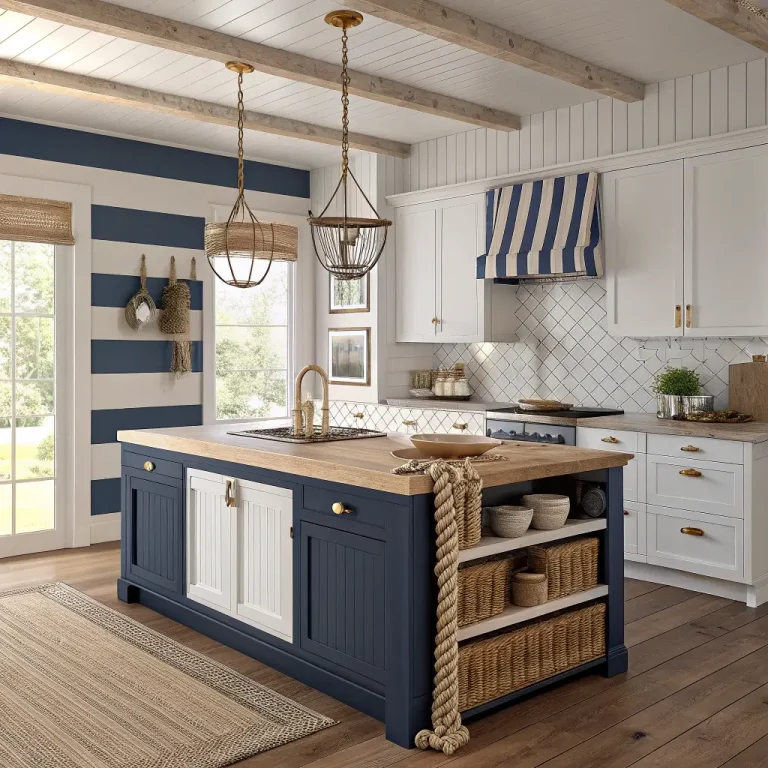
10 Inspiring Country Farmhouse Kitchen Ideas and Cozy Decor Tips

You know that feeling when you walk into a kitchen and immediately want to bake bread, brew coffee, and maybe host Sunday dinner for twelve? That’s the magic of a country farmhouse kitchen.
I’ve spent the last decade obsessing over these spaces, renovating my own kitchen twice (yes, twice – I’m that person), and I’m here to share everything I’ve learned about creating that perfect blend of rustic charm and modern functionality.
Let’s get real for a second – farmhouse kitchens aren’t just about slapping some shiplap on the walls and calling it a day.
These spaces tell a story, combining warmth, practicality, and that undeniable “come on in and stay awhile” vibe we all crave.
Whether you’re working with a sprawling country home or a tiny city apartment, I’ve got ideas that’ll transform your cooking space into something special.
Cozy Country Farmhouse Kitchen Layouts
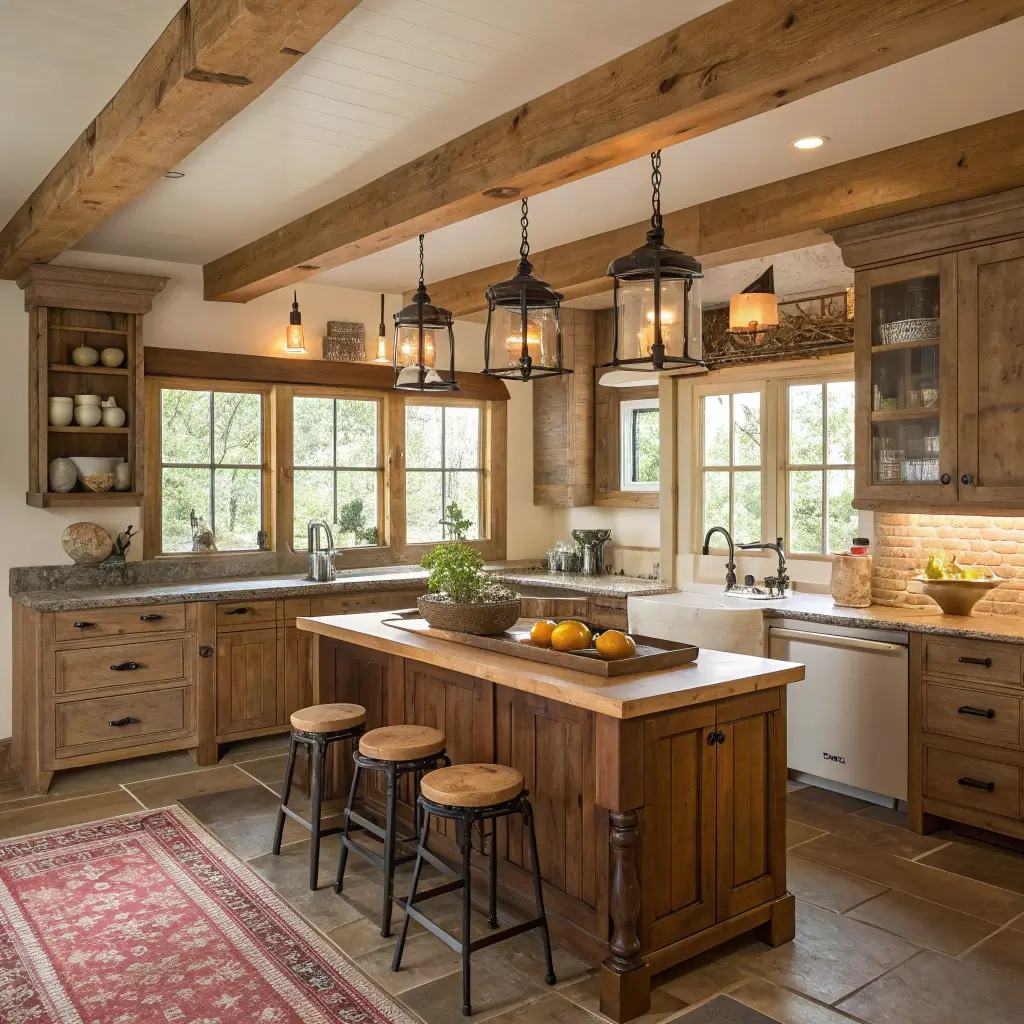
The layout sets the entire mood for your farmhouse kitchen, and honestly, getting this right makes everything else fall into place. The classic L-shaped layout remains my personal favorite because it creates natural conversation zones while keeping everything within arm’s reach. You want that workflow triangle between your sink, stove, and fridge to actually work, not just look pretty in photos.
I’ve noticed that successful farmhouse layouts always prioritize gathering spaces. Think about it – farmhouse kitchens originally served as the heart of the home where families congregated. Adding a central workspace or extending your counter to create a breakfast bar instantly makes the space more inviting. My neighbor recently knocked out a wall to create an open-concept layout, and now her kitchen flows seamlessly into the dining area. The transformation? Mind-blowing.
For those blessed with more square footage, the U-shaped layout with a central island creates multiple work zones without sacrificing that cozy feel. You can prep vegetables while your partner makes coffee, and nobody’s bumping elbows. The key here involves maintaining clear pathways – aim for at least 42 inches between your island and surrounding counters.
Making Small Spaces Work
Not everyone has a massive kitchen to work with, and that’s totally fine! Galley kitchens actually lend themselves beautifully to the farmhouse aesthetic. Keep one wall for cooking and prep, use the opposite wall for storage and display, and suddenly you’ve created an efficient workspace that feels intentional rather than cramped.
Rustic Wooden Cabinet Inspiration
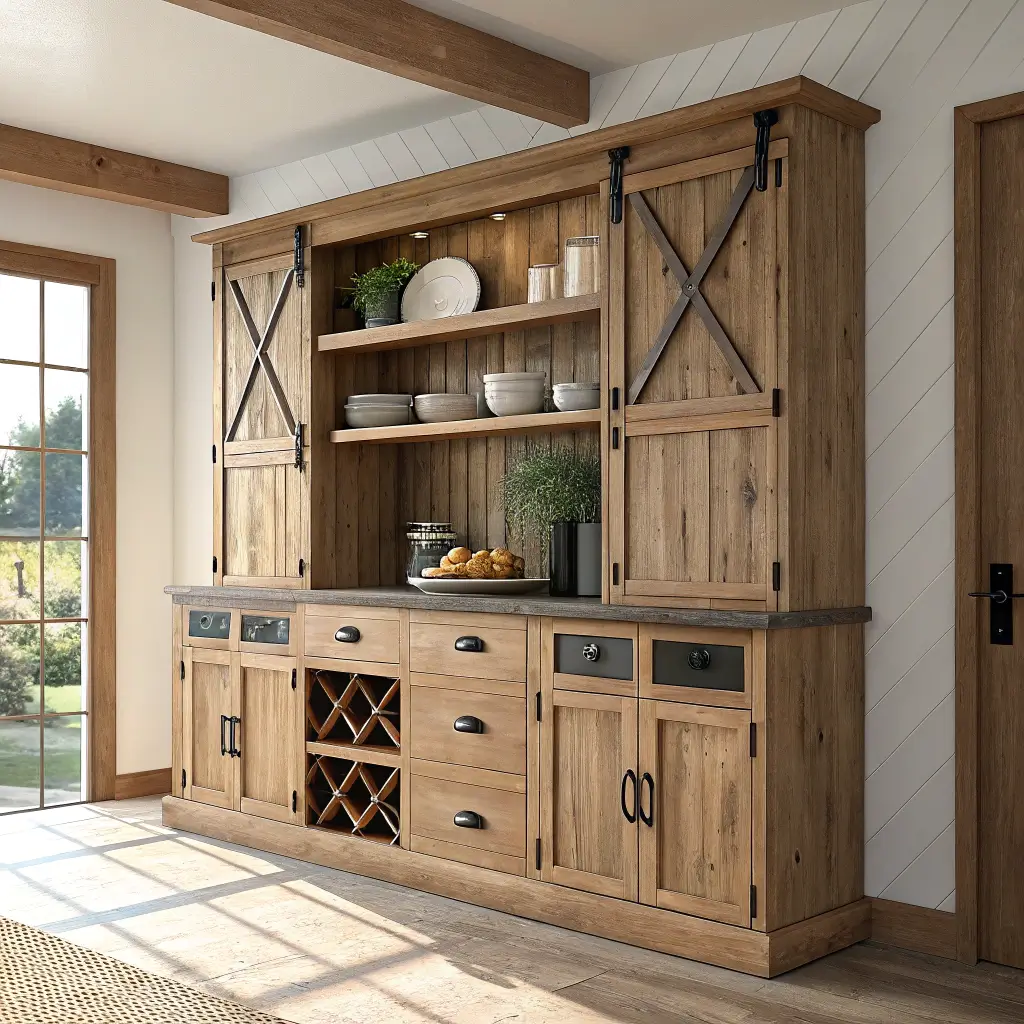
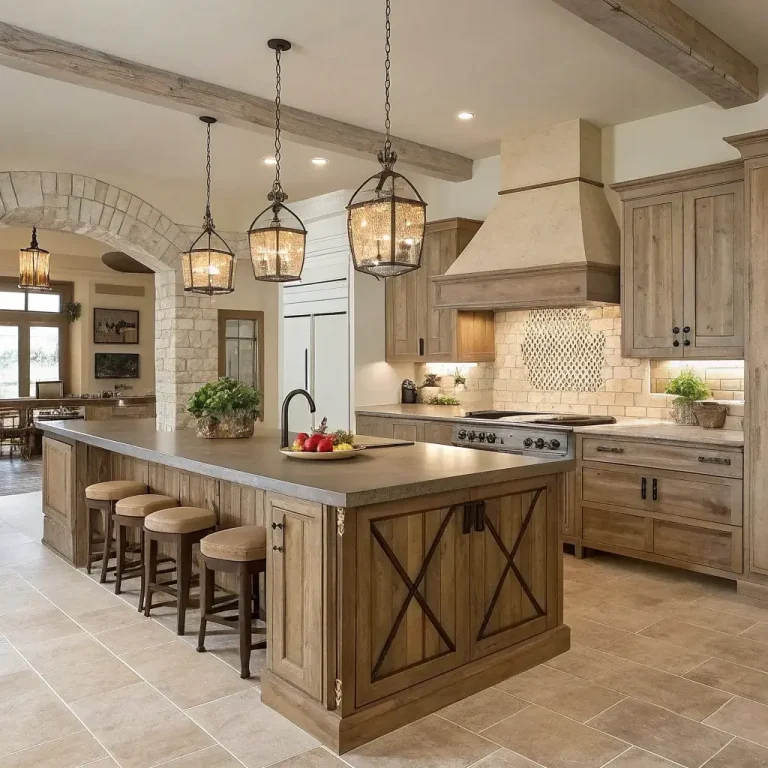
Let me tell you about the biggest mistake I made during my first kitchen renovation – I went too polished with my cabinets. Those glossy white doors looked gorgeous in the showroom, but they completely missed the mark in creating that authentic farmhouse feel. Raw or lightly finished wood cabinets bring instant warmth and character that painted surfaces simply can’t match.
Reclaimed barn wood cabinets might sound cliché, but when you see them in person? Game changer. The natural imperfections, varying grain patterns, and weathered edges tell stories that manufactured distressing never quite captures. My friend Sarah sourced old oak planks from a demolished farmhouse and had custom cabinet doors made – the result looks like they’ve been there for generations.
Wood Cabinet Combinations That Work
Here’s what I’ve learned works best:
- Upper cabinets in white or cream paired with natural wood lowers
- Mixing open shelving with closed wood cabinets
- Using different wood tones for the island versus perimeter cabinets
- Adding wooden drawer fronts to painted cabinet boxes
Don’t feel locked into one wood tone either. Mixing walnut and pine, or oak and cedar, creates visual interest without looking chaotic. The trick involves repeating each wood type at least twice in the space to create cohesion.
Farmhouse Kitchen Color Palette Ideas
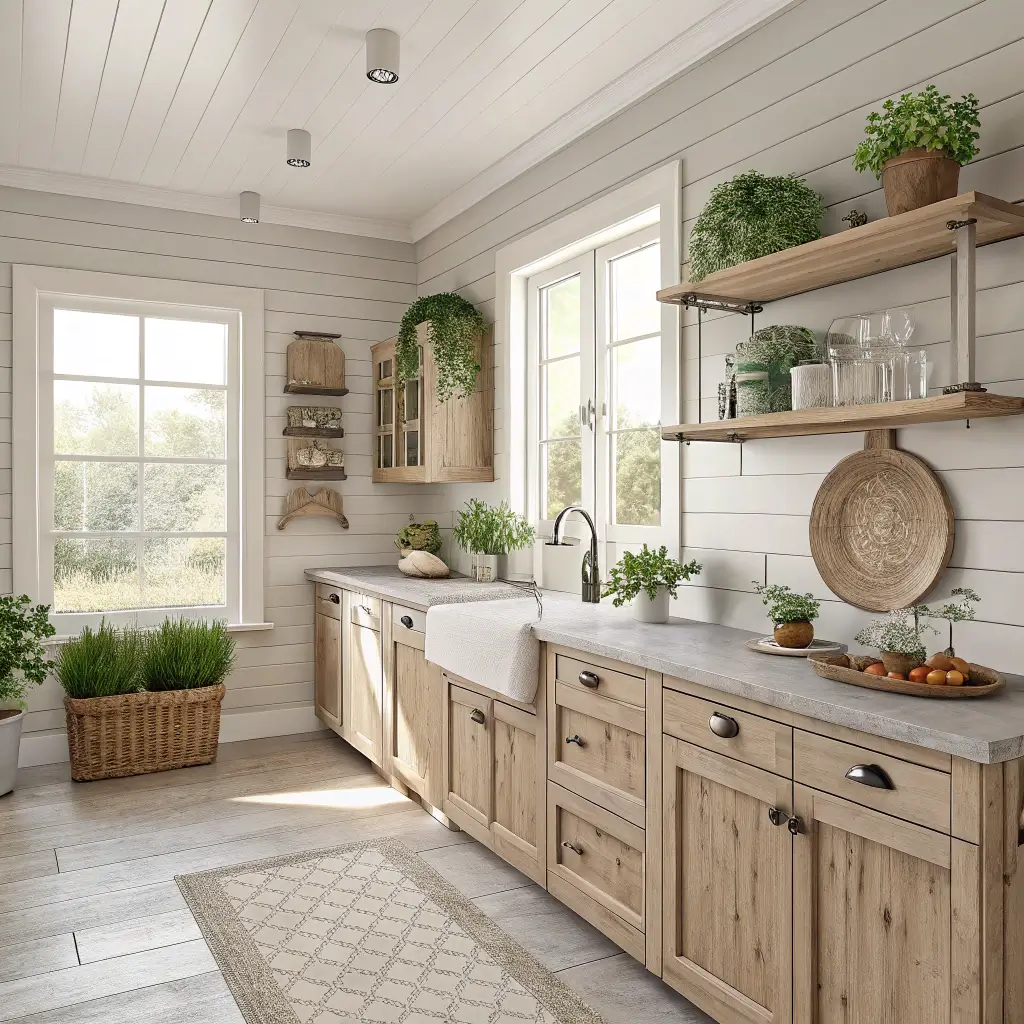
Colors make or break the farmhouse aesthetic, and I’ll die on this hill – white shouldn’t be your only option. Sure, crisp white walls create that clean, airy feeling we associate with farmhouse style, but adding layers of color brings personality and prevents your kitchen from looking like everyone else’s Pinterest board.
My current obsession involves sage green paired with warm cream and natural wood tones. This combination feels fresh yet timeless, and it works year-round without feeling seasonal. Navy blue cabinets with brass hardware? Also stunning, especially when balanced with white subway tile and butcher block counters.
Color Combinations That Never Fail
Try these palettes that I’ve seen work time and time again:
- Warm white, soft gray, and charcoal accents
- Cream, sage green, and natural linen
- White, navy, and warm wood tones
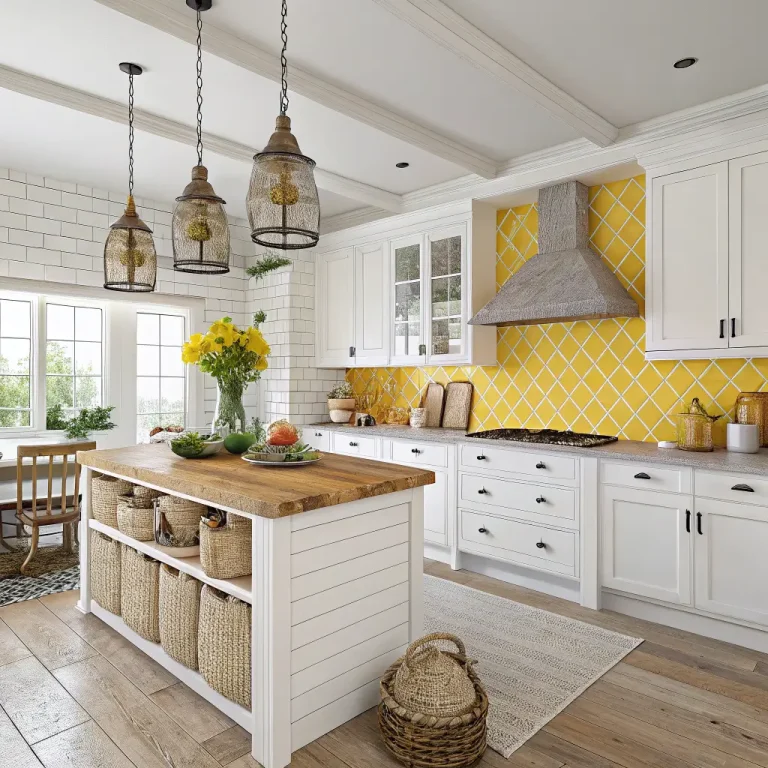
- Soft butter yellow, white, and black accents
- Dusty blue, cream, and copper elements
Remember, farmhouse doesn’t mean boring. I painted my kitchen island a deep forest green last year, and everyone who visits comments on how it anchors the entire space. Sometimes taking that color risk pays off big time.
Also Read: 15 Stunning Farmhouse Kitchen Cabinets Ideas and Cozy Style Tips
Charming Kitchen Island Designs
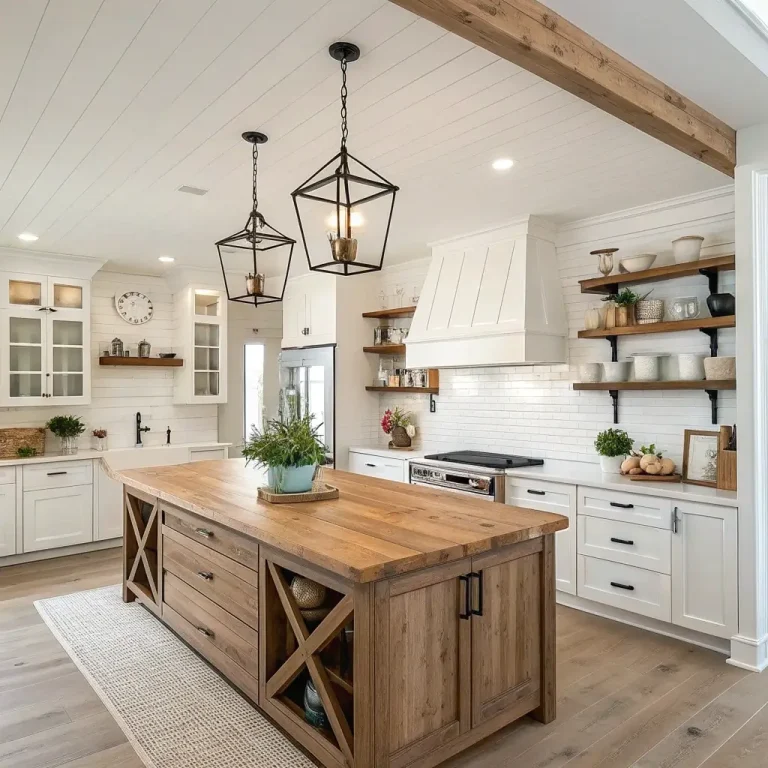
Can we talk about kitchen islands for a minute? They’re basically the Swiss Army knife of farmhouse kitchens – providing storage, prep space, seating, and often becoming the spot where everyone naturally gathers. A well-designed island transforms functionality while adding serious style points.
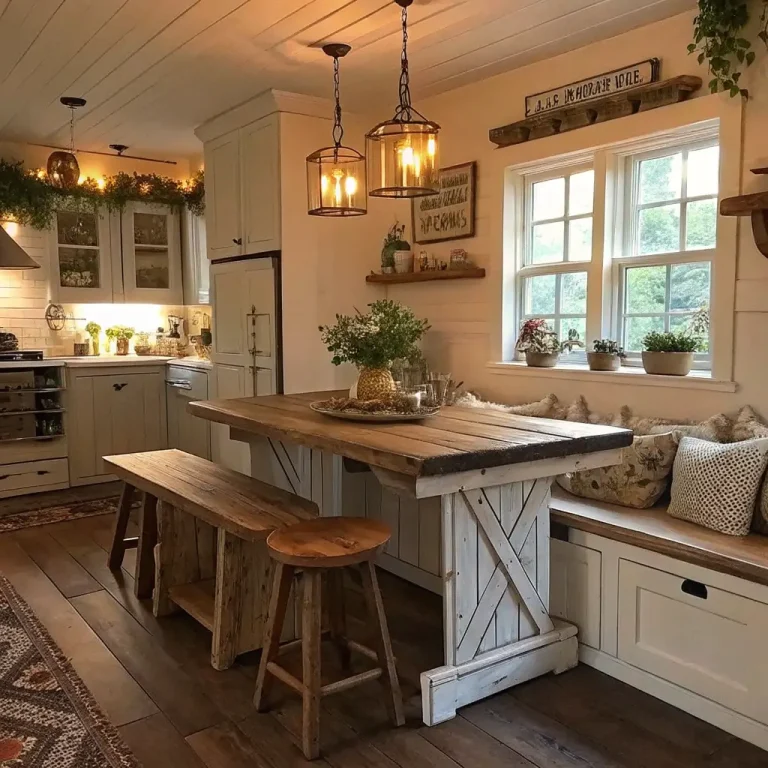
My first island attempt involved a basic rectangular design with some bar stools. Functional? Yes. Inspiring? Not really. Then I discovered the magic of repurposed furniture as islands. An old farm table with added shelving underneath, a vintage dresser converted with a butcher block top, or even a reclaimed workbench – these pieces bring instant character that manufactured islands rarely achieve.
Size matters here, and bigger isn’t always better. Your island needs at least 36 inches of clearance on all sides for comfortable movement. I learned this the hard way when I tried squeezing an oversized island into my previous kitchen – constant hip bruises aren’t the vibe we’re going for.
Island Features Worth Considering
Think beyond basic storage:
- Built-in microwave drawer to free up counter space
- Wine rack or beverage fridge for entertaining
- Pull-out trash bins hidden behind cabinet doors
- Bookshelf end for cookbook display
- Towel bars on the sides for easy access
Vintage Farmhouse Lighting Fixtures
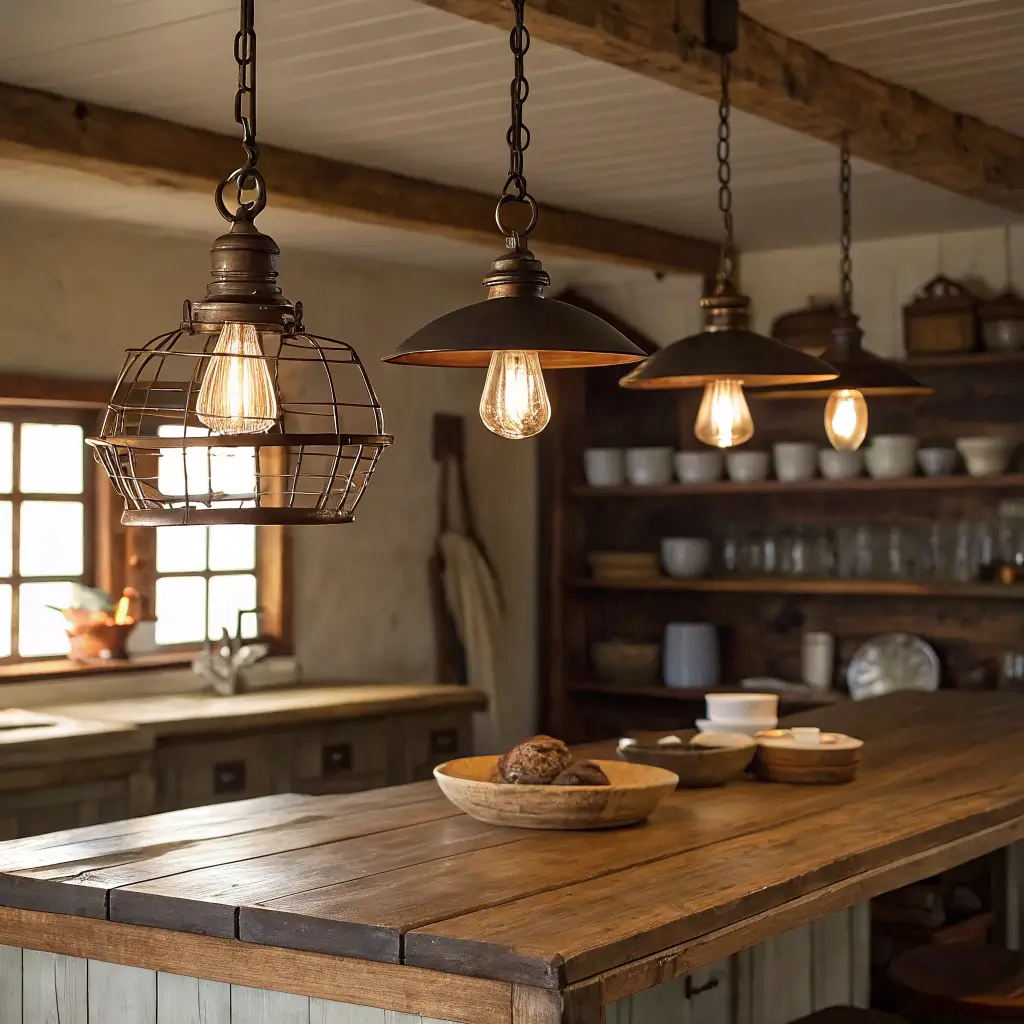
Lighting completely transforms the atmosphere, and farmhouse kitchens deserve fixtures with personality. Those builder-grade flush mounts? They’ve got to go. Statement pendant lights over your island instantly elevate the entire space, and you don’t need to spend a fortune to find amazing options.
I scored three industrial-style pendants at a salvage yard for $30 each. After rewiring them (safety first, people!), they became the focal point everyone notices. Mason jar fixtures might feel overdone at this point, but wire basket pendants, restored barn lights, or oversized lantern-style fixtures bring that farmhouse charm without screaming “I copied this from HGTV.”
Layering Your Lighting
One overhead fixture won’t cut it. You need:
- Task lighting under cabinets for food prep
- Ambient lighting from pendants or chandeliers
- Accent lighting to highlight open shelving
- Natural light maximized through window treatments
Open Shelving for Farmhouse Kitchens
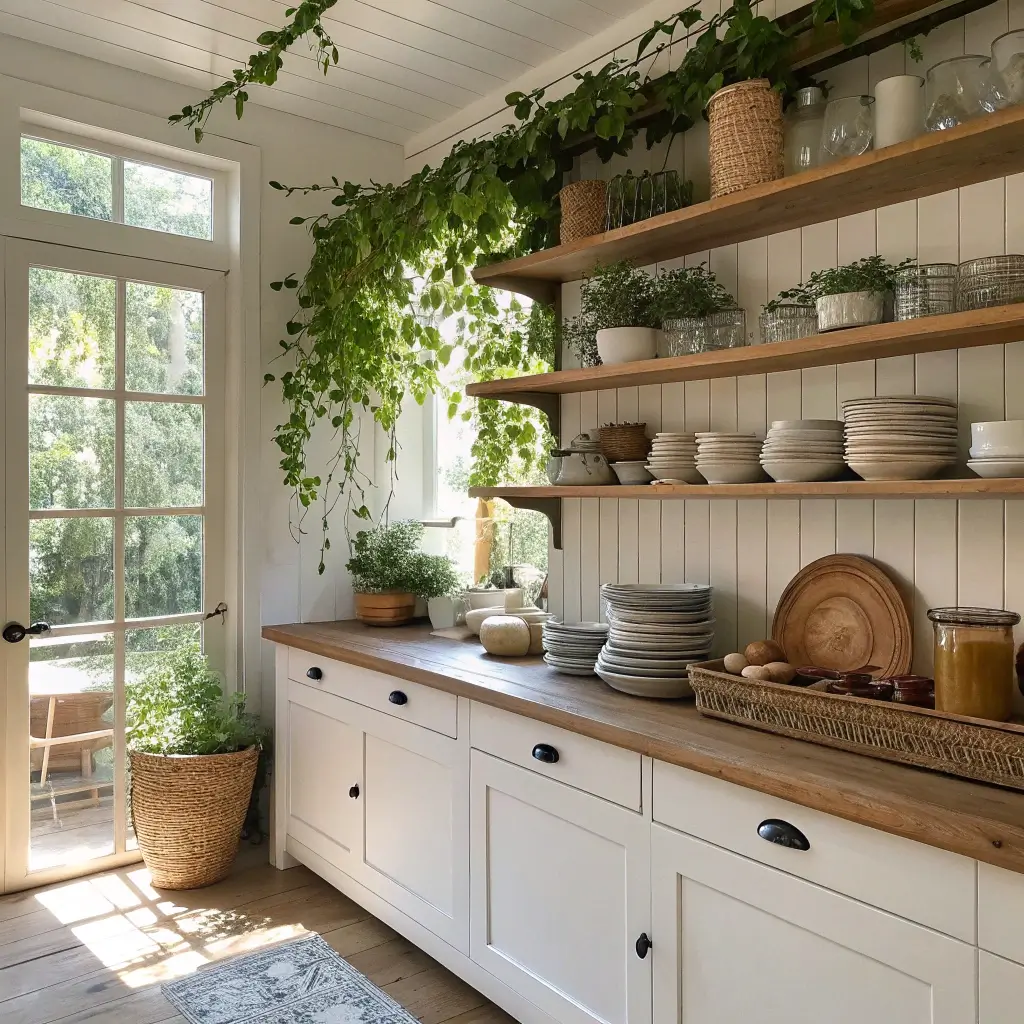
Open shelving divides people – you either love the accessibility and display opportunity, or you stress about keeping everything Instagram-worthy 24/7. IMO, the key involves strategic placement rather than going all-in. Replace just your upper cabinets flanking the window with open shelves, and suddenly your kitchen feels twice as spacious.
I’ll admit, my first attempt at open shelving looked like a garage sale explosion. The secret? Editing ruthlessly and sticking to a cohesive color scheme. White dishes, clear glass, natural wood, and maybe one pop of color – that’s your formula for shelves that look effortlessly styled rather than cluttered.
Floating shelves made from reclaimed barn beams add instant authenticity. Mount them with heavy-duty brackets (trust me, dishes are heavier than you think), and space them 15-18 inches apart for practical use.
Also Read: 15 Stunning Italian Farmhouse Kitchen Ideas for Cozy Rustic Charm
Farmhouse Sink Styles and Ideas
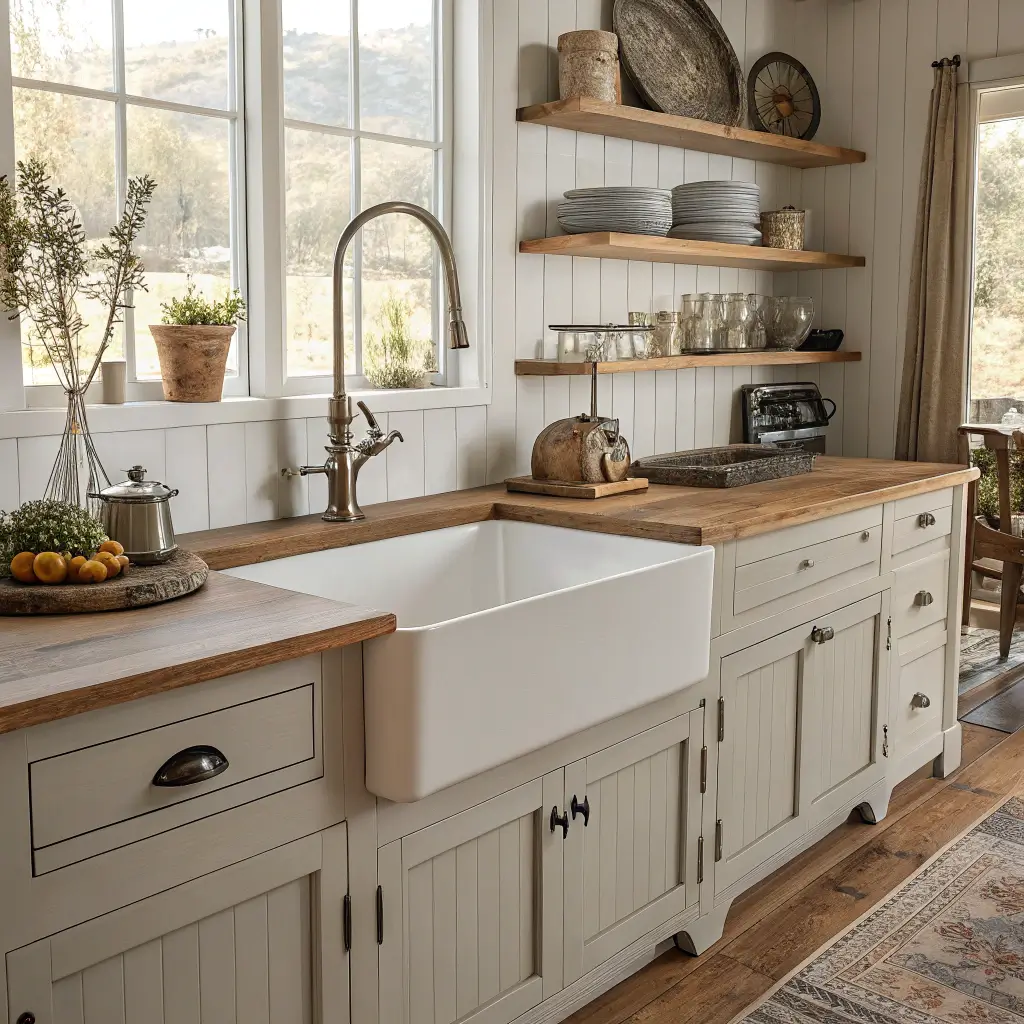
The farmhouse sink – also called an apron-front sink – might be the most iconic element of this style. These deep, wide basins make washing large pots effortless and add serious visual impact. But here’s what nobody tells you: installation can be tricky if you’re retrofitting an existing kitchen.
Classic white porcelain remains the gold standard, but I’m seeing more people embrace alternatives. Copper farmhouse sinks develop a gorgeous patina over time, while concrete versions offer an unexpectedly modern twist on the traditional style. My sister went with a black granite composite sink, and it looks absolutely stunning against her white cabinets.
Practical Sink Considerations
Before you fall in love with a specific sink:
- Measure your cabinet base carefully – farmhouse sinks need specific support
- Consider single versus double basin based on your cooking habits
- Factor in the maintenance (copper needs regular care, porcelain can chip)
- Don’t forget about the faucet height – you need clearance for tall pots
Small Country Kitchen Solutions
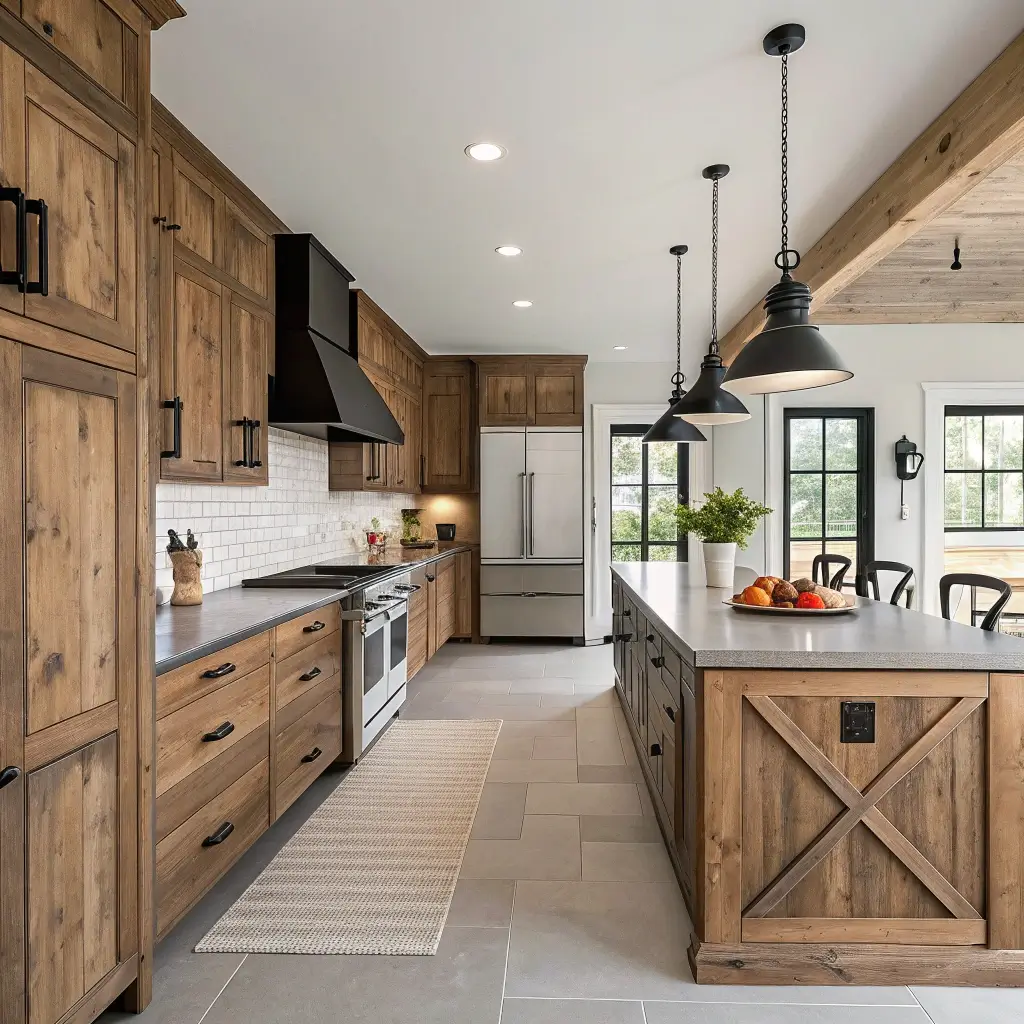
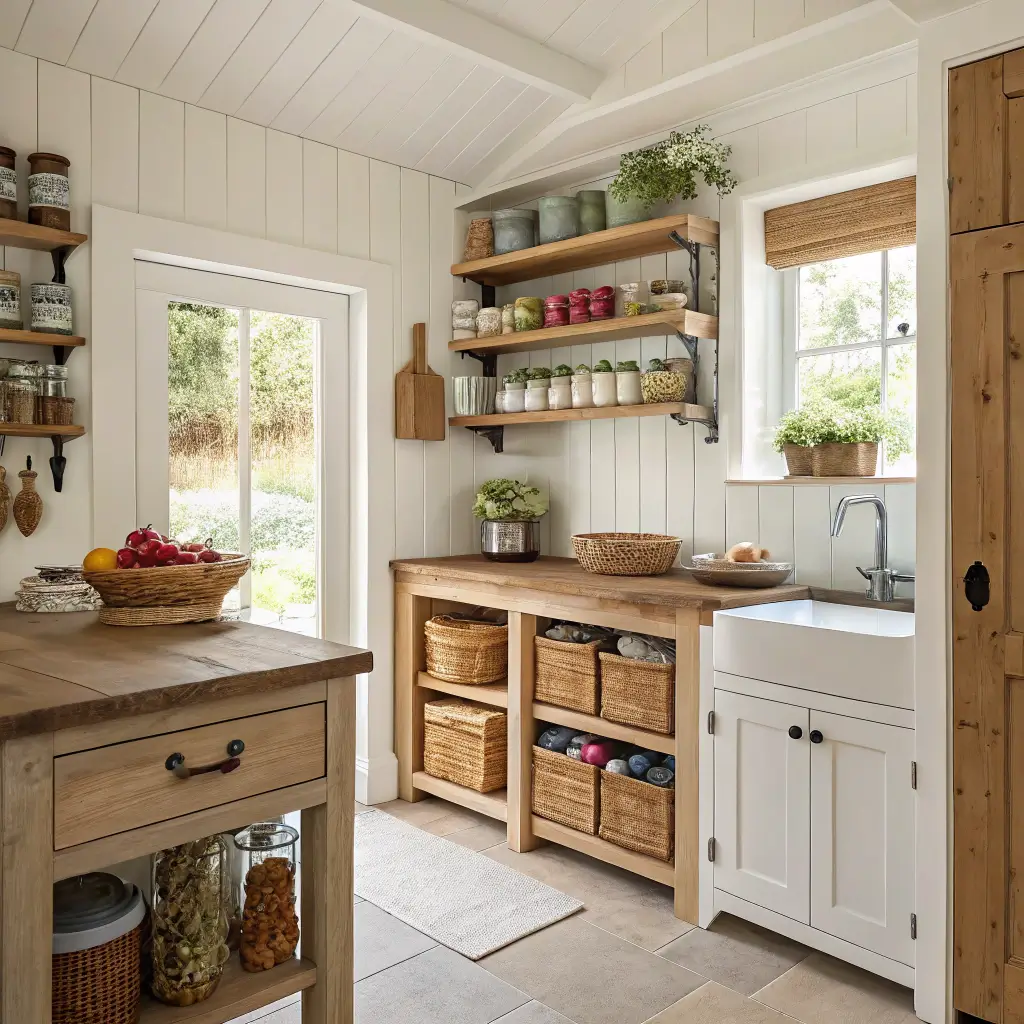
Working with a small kitchen doesn’t mean sacrificing farmhouse style. Actually, compact spaces often feel cozier and more authentic than sprawling kitchens trying too hard to achieve that rustic vibe. The trick involves maximizing every square inch while maintaining visual breathing room.
Vertical storage becomes your best friend in small farmhouse kitchens. I installed ceiling-mounted pot racks in my friend’s tiny kitchen, and it freed up three entire cabinets. Magnetic knife strips, wall-mounted spice racks, and hanging baskets for produce all serve double duty as storage and decoration.
Light colors obviously help spaces feel larger, but don’t go stark white everything. Warm whites, soft creams, and pale grays create depth without closing in the space. Adding one darker element – like a charcoal island or black window frames – actually helps define the space better than all-light schemes.
Space-Saving Ideas That Actually Work
- Pull-out drawers in lower cabinets maximize deep storage
- Corner lazy Susans eliminate dead space
- Fold-down tables attached to walls for extra prep space
- Slim rolling carts that tuck between appliances
- Over-the-sink cutting boards that create temporary counter space
Budget-Friendly Farmhouse Kitchen Makeovers
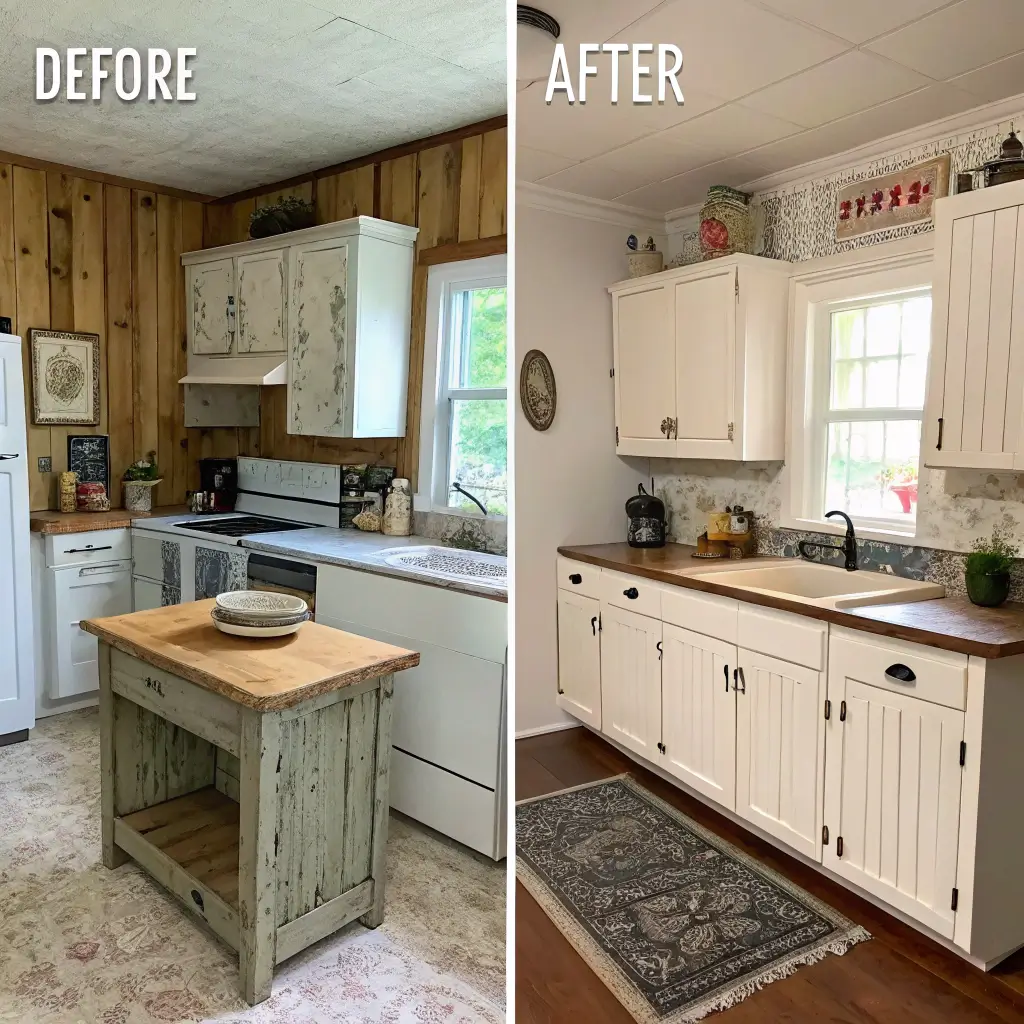
Here’s the truth nobody wants to admit: you don’t need $50,000 to create a gorgeous farmhouse kitchen. Some of my favorite transformations happened on shoestring budgets with creativity and elbow grease. Paint remains your cheapest transformation tool – those dated oak cabinets become farmhouse-perfect with chalk paint and new hardware.
I helped my cousin transform her kitchen for under $2,000. We painted the cabinets, added beadboard to the island, installed open shelving from reclaimed wood, and splurged on a farmhouse sink from a restaurant supply store. The biggest expense? New hardware, which instantly modernized everything.
Budget Renovation Priorities
Focus your spending where it matters most:
- Paint – walls, cabinets, and even outdated tile
- Cabinet hardware – this small change makes huge impact
- Lighting fixtures – even one statement piece transforms the space
- Backsplash – subway tile remains affordable and timeless
- Window treatments – roman shades or café curtains add softness
Also Read: 15 Stunning Modern Farmhouse Kitchen Ideas for Cozy Chic Homes
Rustic Backsplash and Countertop Ideas
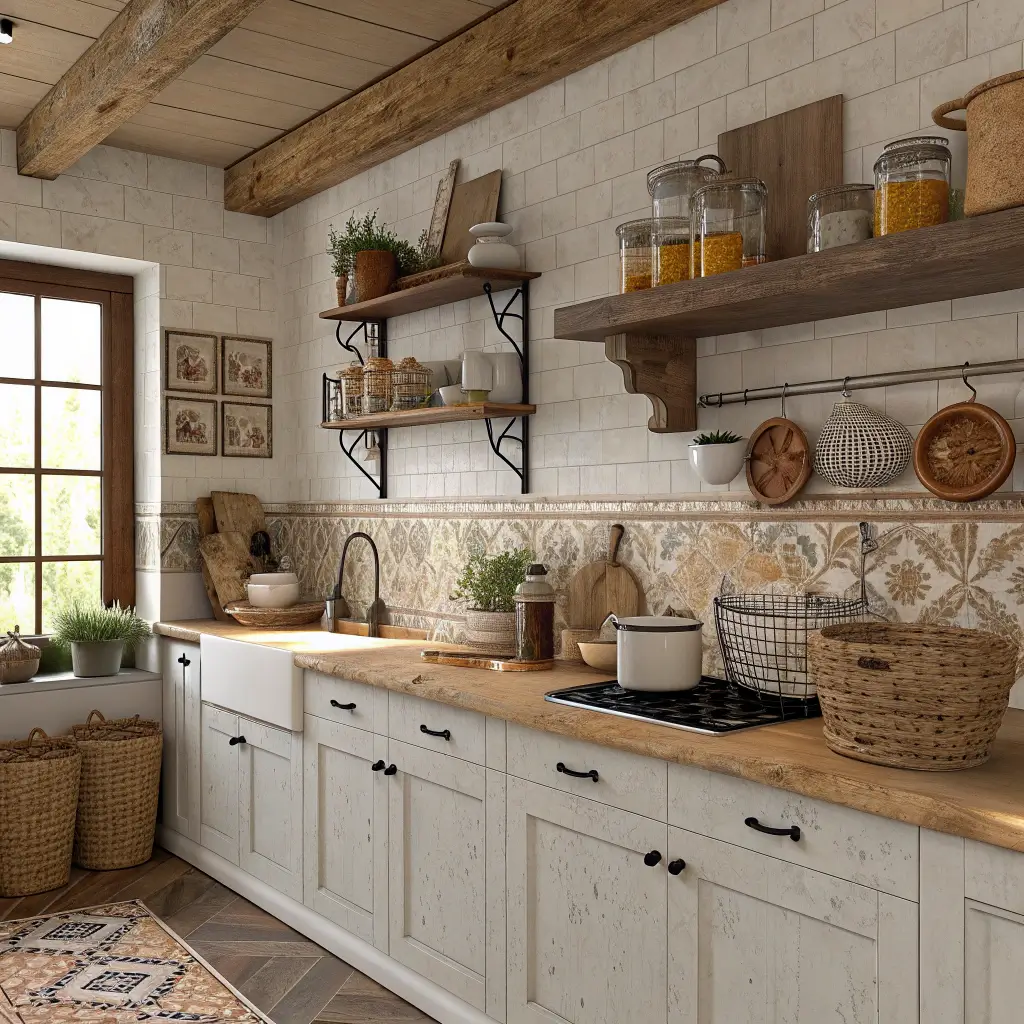
Backsplashes and countertops offer prime opportunities to add texture and visual interest. White subway tile with dark grout creates that classic farmhouse look, but don’t stop there. Brick veneer, reclaimed wood (properly sealed), or even pressed tin tiles bring unexpected character.
My personal favorite? I installed a backsplash using old barn wood in a herringbone pattern. Yes, it required extra sealing, but two years later it still looks amazing and starts conversations every single time someone visits. The warmth it adds beats cold tile any day.
For countertops, butcher block brings instant farmhouse credibility and costs significantly less than stone. I’ve had butcher block for five years now, and despite what pessimists claim, proper sealing and basic maintenance keep them looking great. Concrete counters offer another budget-friendly option that you can customize with stains or embedded objects.
Mixing Countertop Materials
Who says you need matching counters everywhere?
- Butcher block on the island, quartz on the perimeter
- Marble baking station with laminate everywhere else
- Concrete counters with a wooden breakfast bar extension
- Soapstone near the sink, wood everywhere else.
Wrapping Up Your Farmhouse Kitchen Journey
Creating your perfect country farmhouse kitchen isn’t about following every trend or copying someone else’s space exactly. It’s about building a kitchen that works for your life while incorporating elements that make you smile every morning when you brew that first cup of coffee. Start with one change – maybe it’s painting your cabinets or adding open shelving – and build from there.
Remember, the best farmhouse kitchens evolve over time. They’re filled with found treasures, family heirlooms, and pieces that tell your story. Don’t rush to complete everything at once. Some of my favorite elements came from unexpected places – estate sales, salvage yards, or even roadside finds that needed just a little love.
What matters most? Creating a space where memories happen, where friends linger over coffee, and where cooking feels less like a chore and more like a pleasure. Your farmhouse kitchen should reflect your personality while honoring the style’s roots in practicality and warmth. Now grab that paintbrush, hunt for that perfect vintage piece, or simply rearrange what you already have. Your dream farmhouse kitchen awaits, and trust me, it’s going to be absolutely worth the journey.