15 Stunning Japandi Dining Room Ideas for Cozy Modern Spaces

So you’re crushing on Japandi style for your dining room? I totally get it. After renovating my own dining space three times (yeah, I’m that person), I finally nailed the perfect balance between Japanese minimalism and Scandinavian coziness.
And honestly? It changed everything about how we use the space.
The thing about Japandi is that it’s not just another Pinterest trend that’ll fade away next year. This style actually makes sense for how we live now – less clutter, more intentional choices, and spaces that feel both sophisticated and comfortable.
Plus, who doesn’t want a dining room that looks like it belongs in a fancy design magazine but still feels welcoming enough for Sunday pancakes in pajamas?
Let me walk you through 15 Japandi dining room ideas that actually work in real homes. Not those staged, nobody-actually-lives-here spaces you see online, but ideas you can genuinely pull off without hiring an interior designer or selling a kidney.
1. Minimalist Japandi Dining Room with Natural Wood
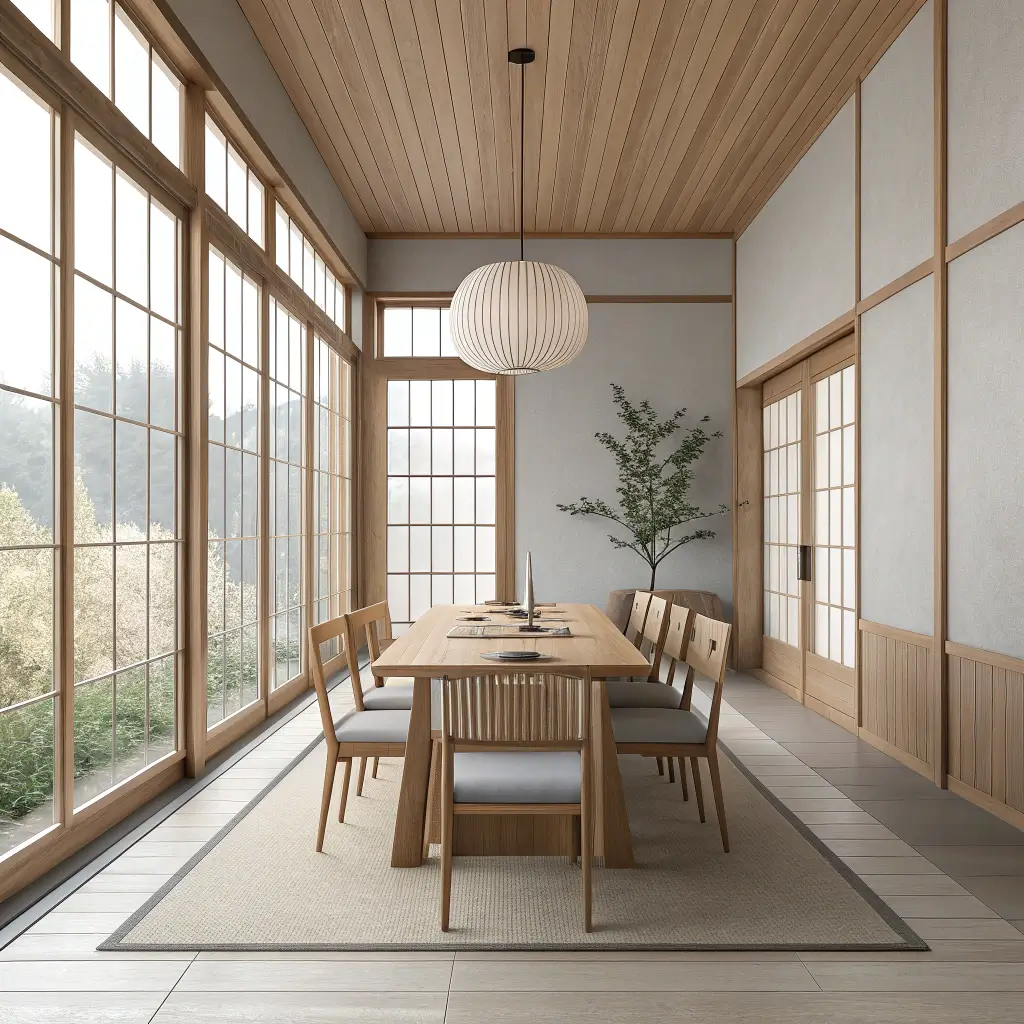
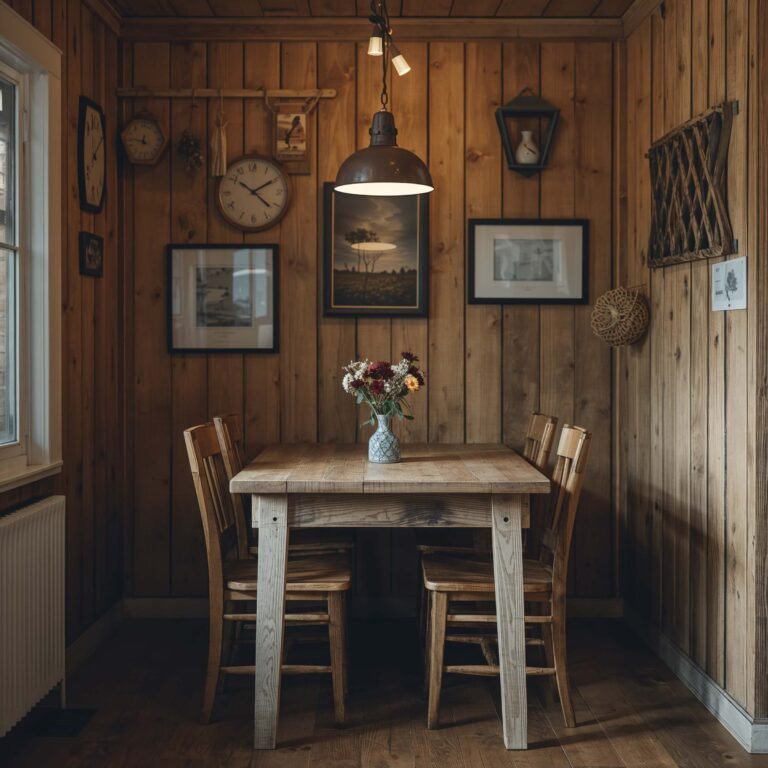
Let’s start with the foundation of any good Japandi space – natural wood everything. I’m talking about warm oak tables, walnut chairs, maybe even exposed wooden beams if you’re lucky enough to have them. The key here? You want wood that looks like wood, not some overly polished, plastic-looking veneer.
When I first tried this look, I made the mistake of mixing too many wood tones. Trust me, stick to two wood types maximum – maybe a light oak table with darker walnut accents. The Japanese influence comes through in the clean lines and minimal ornamentation, while the Scandinavian side brings that warmth we all crave.
You know what really sells this look? Leaving the wood grain visible and natural. Skip the heavy stains and let the material speak for itself. Pair your wooden pieces with simple white walls, and suddenly your dining room feels like a calm retreat instead of just another room in the house.
2. Cozy Neutral-Toned Japandi Dining Space
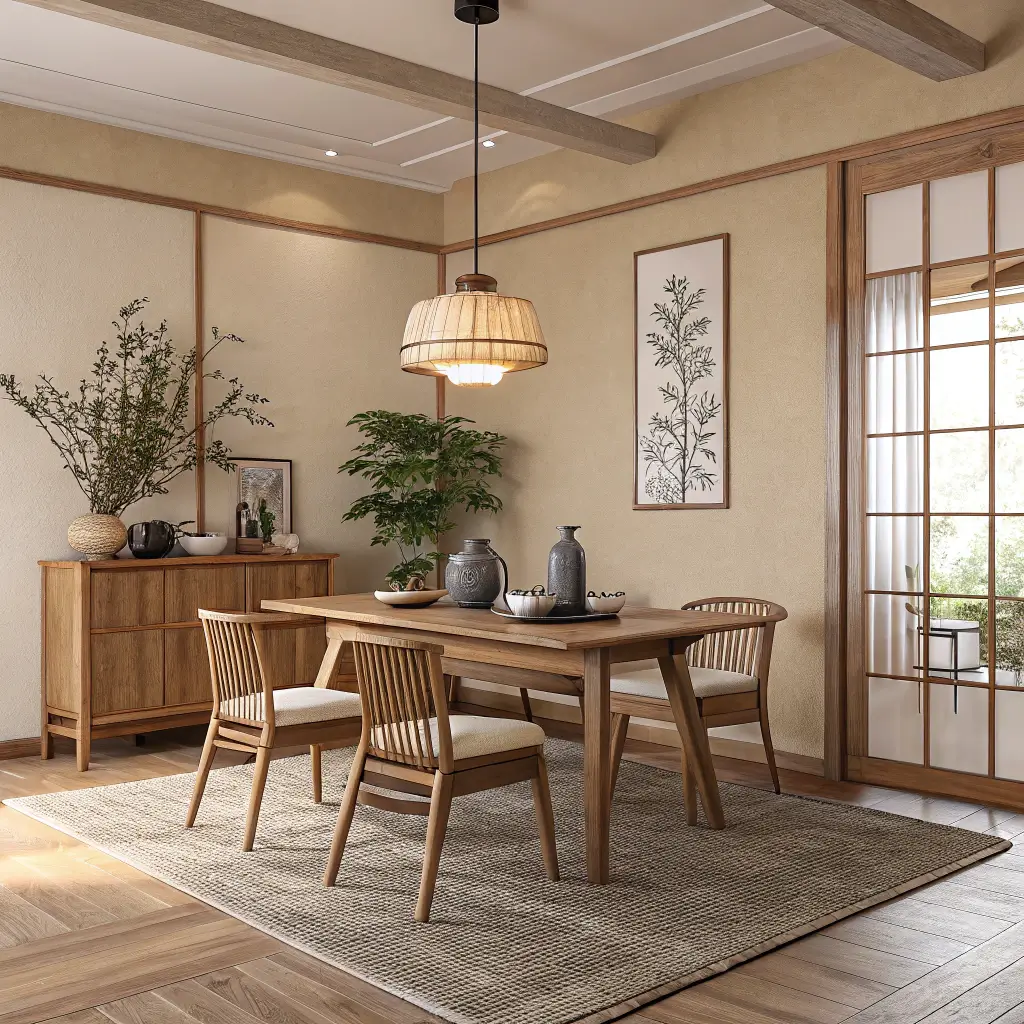
Neutrals might sound boring, but hear me out – the right neutral palette creates this incredibly soothing atmosphere that makes every meal feel like a mini meditation session. We’re talking warm whites, soft beiges, gentle grays, and maybe a touch of sage green if you’re feeling adventurous.
The trick with neutrals? Layer them like crazy. I learned this the hard way after creating what my partner lovingly called our “beige prison” :). You need different textures and subtle variations in tone to keep things interesting. Think linen chair cushions in cream, a natural jute rug, and maybe some pale gray ceramic dishes displayed on open shelving.
Pro tip: Add warmth through materials rather than colors. Natural wood, woven baskets, and soft textiles prevent your neutral space from feeling cold or clinical.
3. Small Japandi Dining Room with Sleek Furniture

Got a tiny dining space? Perfect – Japandi thrives on constraints. The whole philosophy revolves around making the most of what you have without cramming in unnecessary stuff. Choose furniture with slim profiles and raised legs that create visual breathing room.
I swear by extendable tables for small spaces. You get compact daily dining that can expand for dinner parties (remember those?). Look for chairs that can tuck completely under the table, and consider a bench on one side – it’s more space-efficient and adds that casual Scandinavian vibe.
Ever wondered why small Japandi spaces feel bigger than they are? It’s all about negative space. Don’t fill every corner. Let your dining area breathe, and suddenly your 100-square-foot nook feels twice as large.
Also Read: 15 Stunning Moody Dining Room Ideas for Cozy and Dramatic Spaces
4. Japandi Dining Room with Scandinavian Lighting
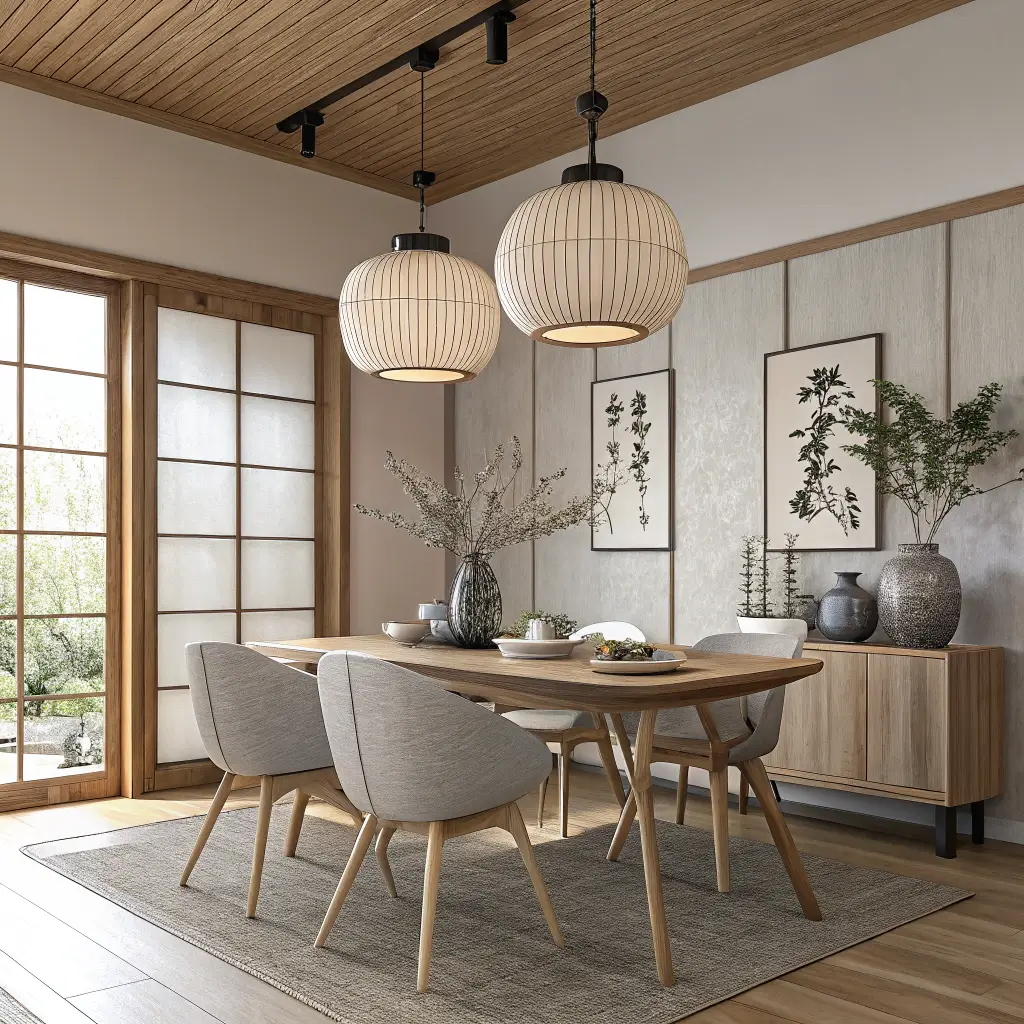
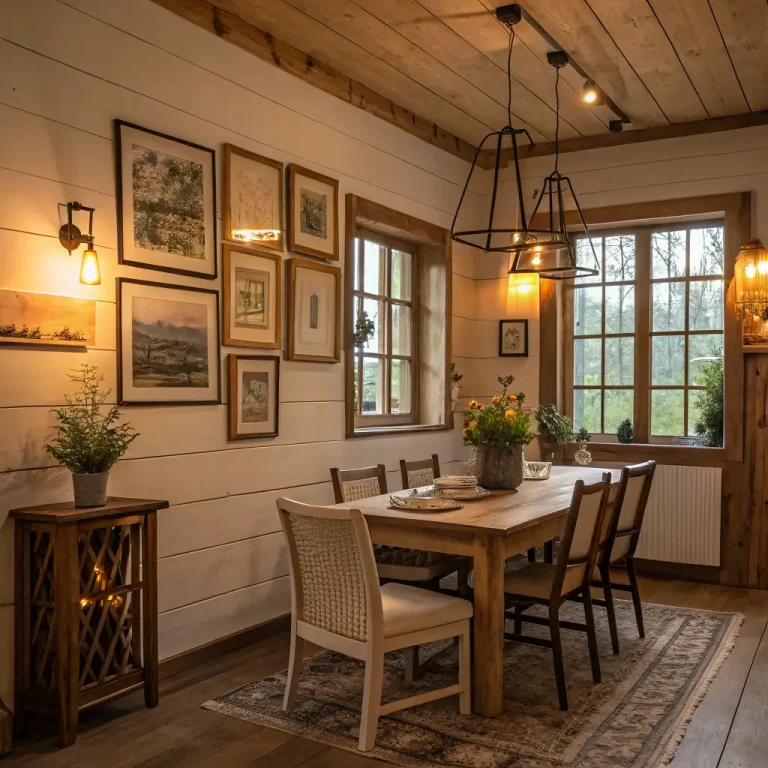
Lighting makes or breaks a Japandi dining room, and Scandinavian fixtures nail that perfect balance between functional and beautiful. Think pendant lights with clean lines, maybe in matte black or natural materials like bamboo or paper.
My personal favorite? Those oversized drum pendants that hover low over the dining table. They create this intimate pool of light that makes every dinner feel special, even when you’re just eating leftover takeout. The Japanese influence keeps the design minimal, while the Scandinavian touch ensures it’s cozy rather than stark.
FYI, dimmers are non-negotiable here. You want bright light for morning coffee and homework sessions, but soft, warm lighting for evening meals. Install dimmers and thank me later.
5. Modern Japandi Dining Room with Green Accents
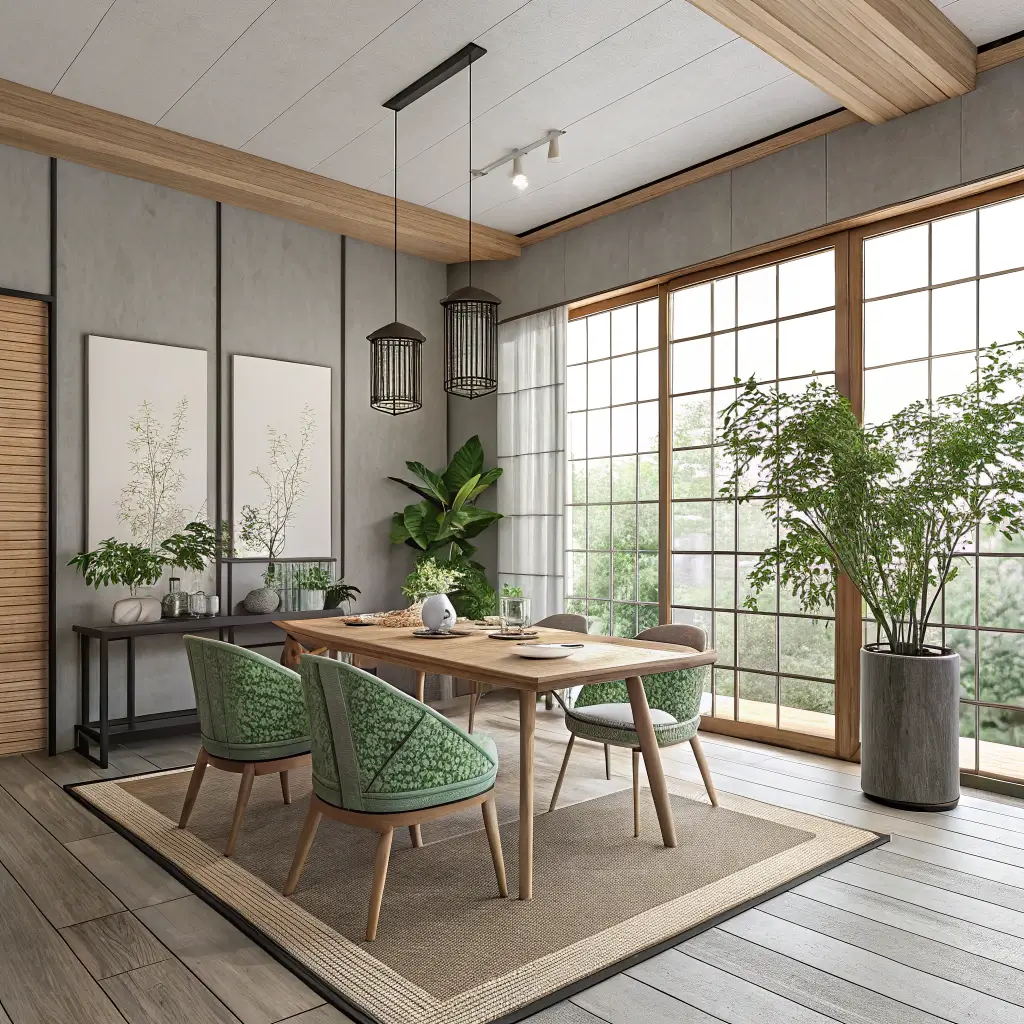
Plants and Japandi go together like coffee and Monday mornings – essential and life-giving. But we’re not talking about turning your dining room into a jungle. Strategic placement of a few well-chosen plants adds life without chaos.
Consider a single statement plant like a fiddle leaf fig in the corner, or a row of small succulents along a window ledge. The key is choosing plants with clean, architectural shapes that complement rather than compete with your minimal aesthetic.
Green accents don’t have to be literal plants either. Sage green chair cushions, olive ceramic bowls, or eucalyptus artwork can bring that natural element without the maintenance. Just keep it subtle – this isn’t the place for neon green anything.
6. Japandi Dining Space with Wooden Slatted Wall
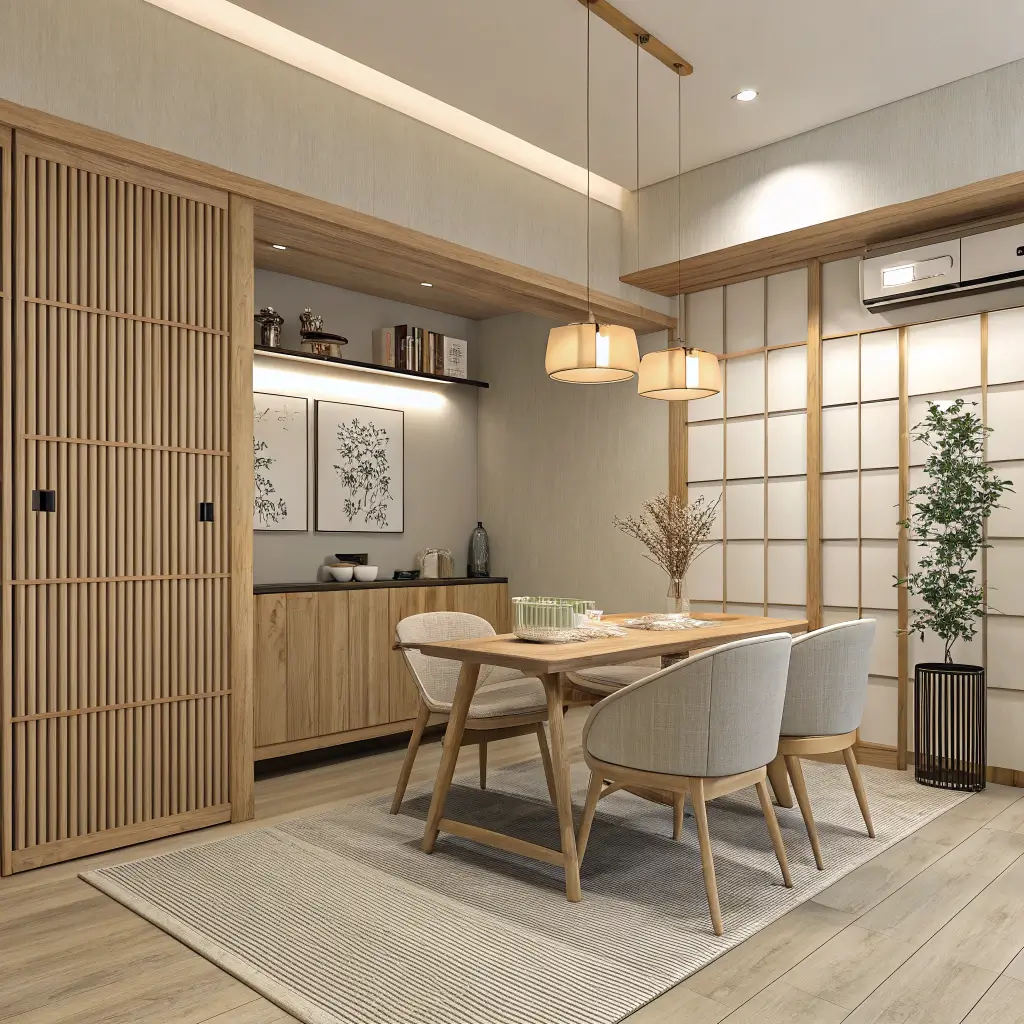
Want to add visual interest without cluttering your space? A wooden slatted accent wall is your answer. This feature combines Japanese architectural elements with Scandinavian warmth in the most gorgeous way possible.
I installed vertical wood slats behind our dining table last year, and honestly? Game-changer. It adds texture and warmth while maintaining those clean lines Japandi loves. Plus, it’s way easier than you’d think – you can even get peel-and-stick versions now if you’re renting.
The slats create this beautiful play of light and shadow throughout the day. Space them about 1-2 inches apart for the perfect balance between coverage and openness. Paint the wall behind them black or dark gray for drama, or keep it white for a softer look.
Also Read: 15 Stunning Dining Room Wallpaper Ideas to Transform Your Space
7. Elegant Japandi Dining Room with Low-Profile Furniture
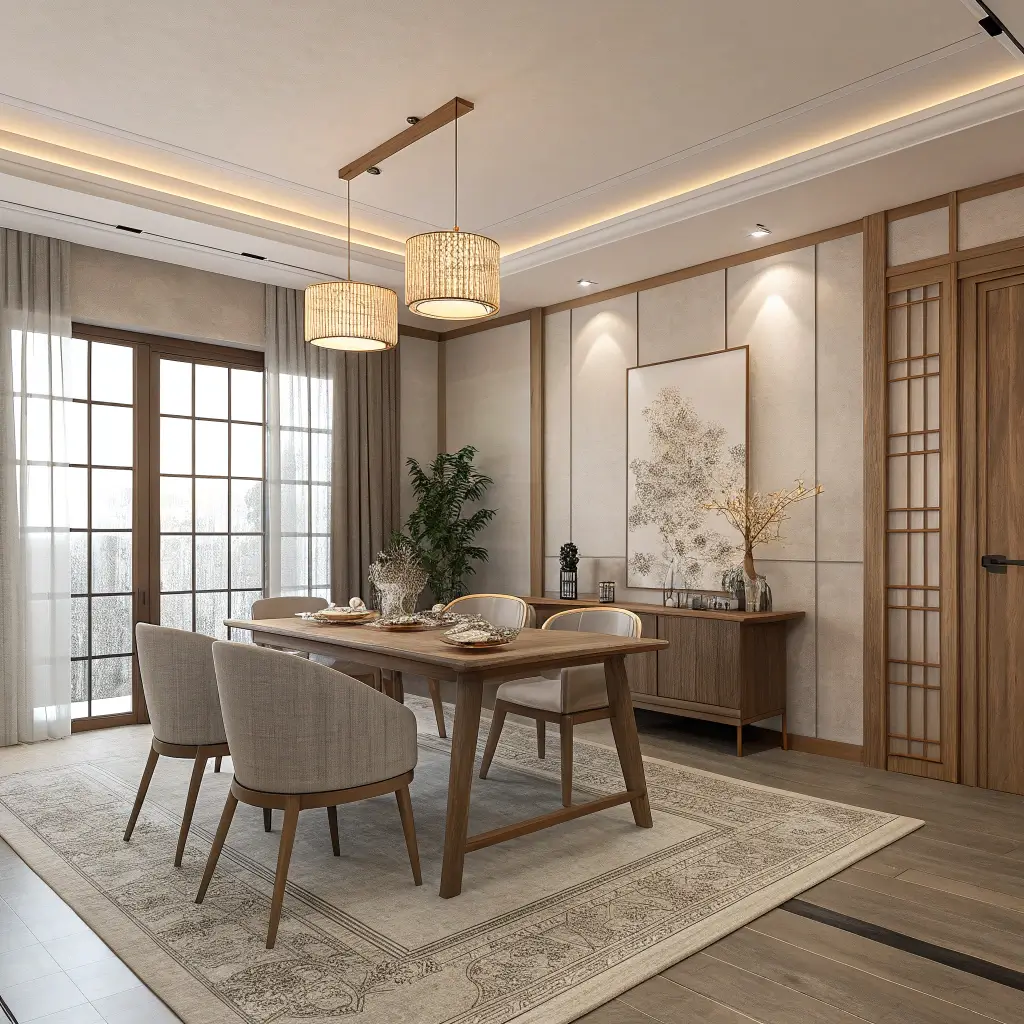
Here’s where the Japanese influence really shines – low-profile furniture that keeps your eyeline clear and your space feeling open. We’re talking dining tables that sit maybe 28 inches high instead of the standard 30, and chairs with lower backs that don’t dominate the room.
This style creates such an elegant, grounded feeling. Your dining room suddenly feels more spacious and calm, like you could actually breathe in there. The lower furniture height also makes the ceiling feel higher – a neat optical illusion that works every time.
Don’t go too low though – you still need to eat comfortably! Look for tables around 28-29 inches high with proportionally scaled chairs. Your knees will thank you.
8. Japandi Dining Room with Japanese-Inspired Artwork
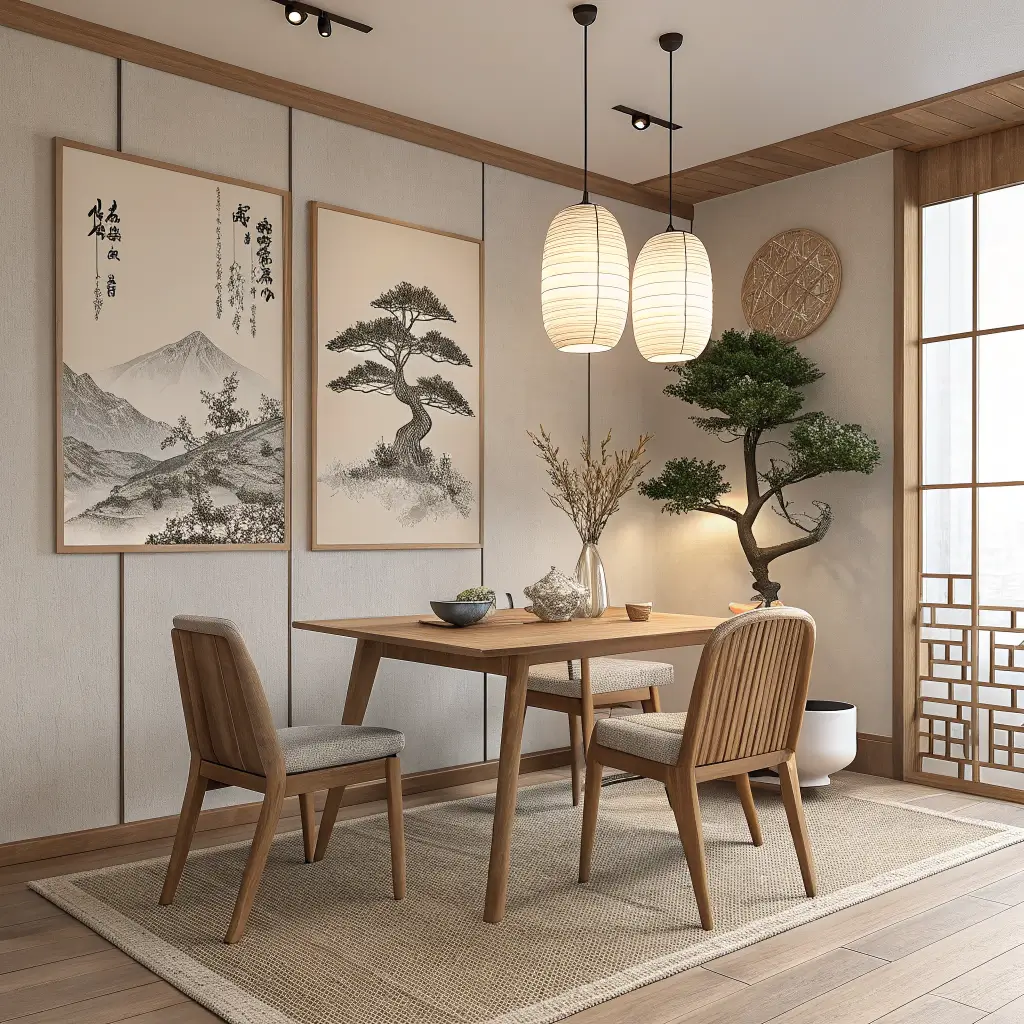
Artwork in a Japandi dining room needs to earn its place on the wall. We’re not filling walls just because they’re empty. Choose one or two meaningful pieces that actually enhance the space rather than just decorating it.
Think minimalist line drawings, abstract landscapes, or traditional Japanese calligraphy. The Scandinavian influence might show up in the framing – natural wood or simple black frames that don’t compete with the art itself. I personally love oversized pieces that make a statement without needing companions.
Here’s what nobody tells you about art placement: hang it lower than you think. Gallery height (center at 57-60 inches) works for hallways, but dining rooms need art at seated eye level. Trust me on this one.
9. Open-Concept Japandi Dining Area with Natural Light

If you’re blessed with an open floor plan and good natural light, you’ve basically won the Japandi lottery. Natural light is the ultimate design element – it’s free, changes throughout the day, and makes everything look better.
Keep window treatments minimal. Think sheer white curtains or simple roller blinds that disappear when raised. The goal is maximum light with the option for privacy when needed. No heavy drapes or fussy valances here.
Position your dining table to take advantage of that light. Morning sun for breakfast? Evening glow for dinner? Work with your home’s natural light patterns instead of fighting them. And please, keep those windows clean – grimy glass kills the vibe instantly.
Also Read: 15 Stunning Dining Room Wall Decor Ideas and Chic Styling Tips
10. Japandi Dining Room with Textured Rugs and Cushions
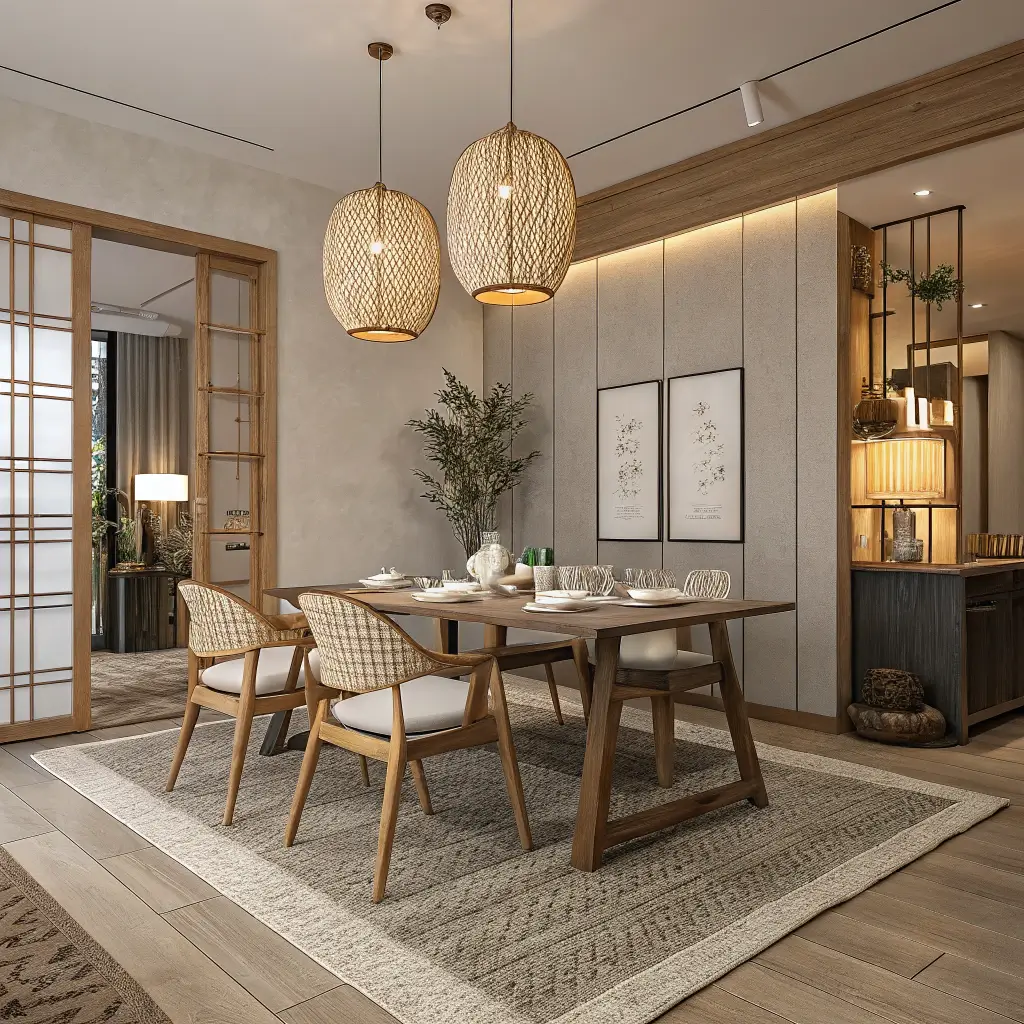
Texture is how you add interest without adding clutter. Layer different textures through rugs, cushions, and throws to create depth and warmth in your minimalist space.
A chunky wool rug under the dining table grounds the space beautifully. Make sure it’s large enough that chairs stay on it even when pulled out – nothing worse than catching a chair leg on the rug edge every meal. Linen or cotton cushions on dining chairs add comfort and that lived-in Scandinavian feel.
The Japanese influence keeps the patterns minimal or non-existent. Solid colors and natural textures are your friends here. Save the busy patterns for somewhere else IMO.
11. Zen Japandi Dining Room with Minimal Décor

Sometimes the best decoration is no decoration. A truly zen Japandi dining room might have nothing on the table except during meals, bare walls save for one piece of art, and absolutely zero knick-knacks.
This isn’t about being austere or cold though. The warmth comes from beautiful materials, perfect proportions, and thoughtful lighting. Every single item in the room has a purpose and earns its place. That ceramic bowl on the sideboard? It’s there because you use it, not because you needed to fill space.
Creating this look requires serious editing skills. Remove everything, then only add back what you genuinely need or truly love. It’s harder than it sounds but so worth it.
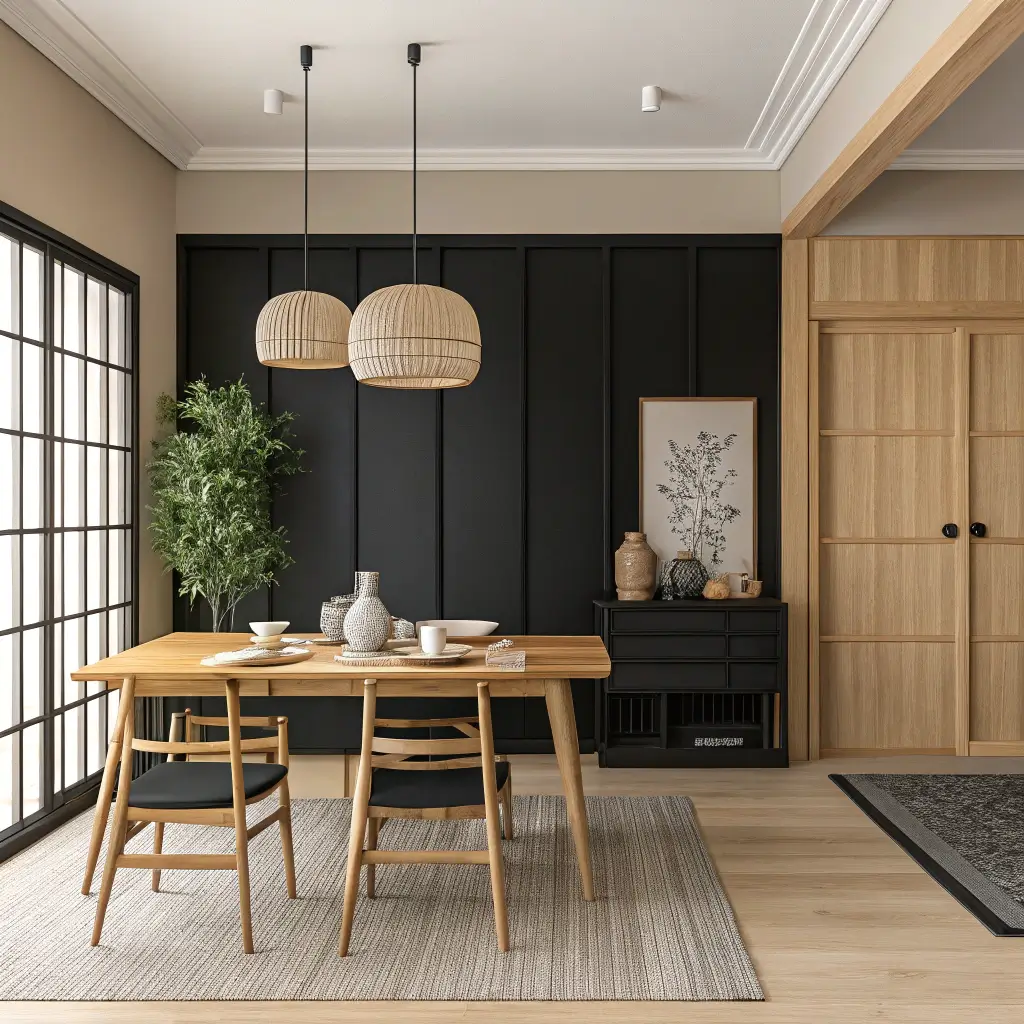
12. Japandi Dining Space with Black and Wood Contrast
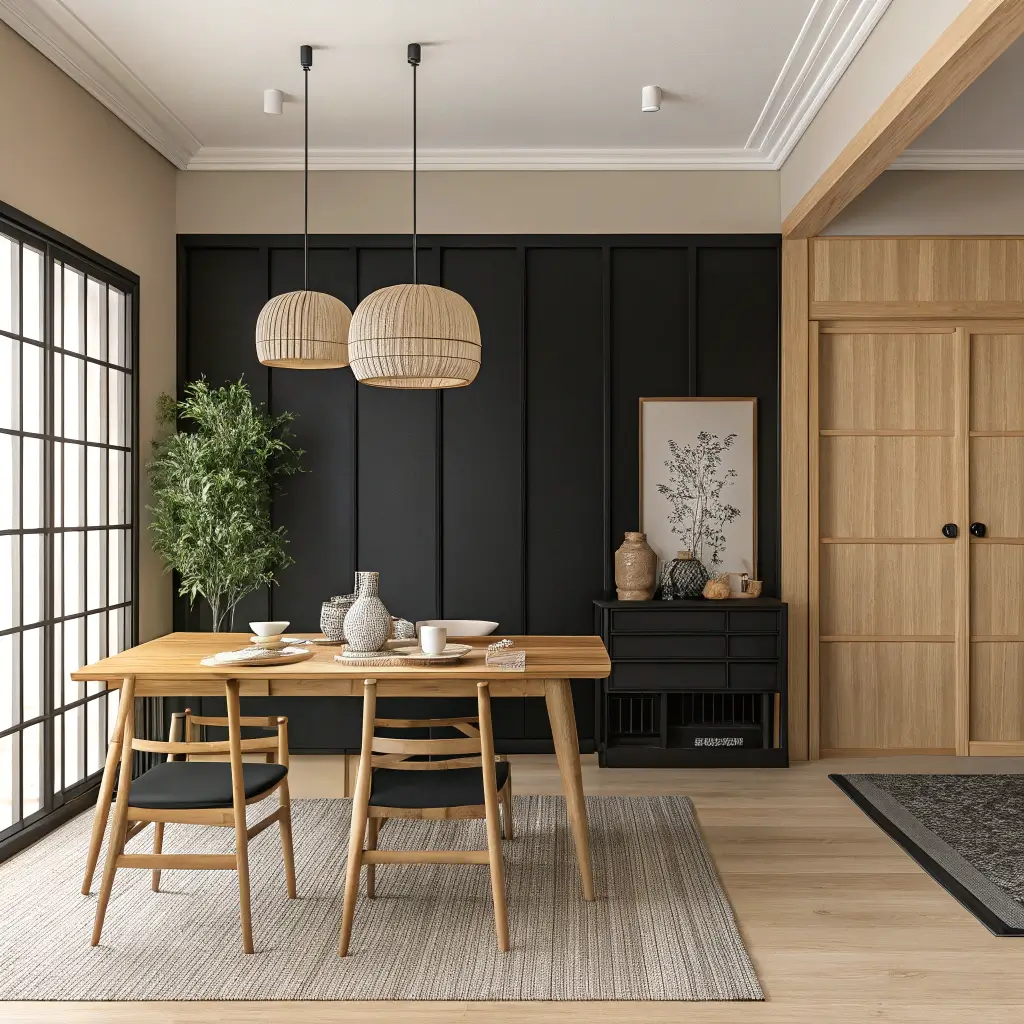
Want to add drama to your Japandi dining room? Black accents against natural wood create this sophisticated contrast that feels both modern and timeless. Think black metal chair legs, matte black pendant lights, or even a black accent wall.
I was scared of black in the dining room at first – wouldn’t it be too dark? Too harsh? Nope. When balanced with warm wood and plenty of white space, black actually makes everything else pop. It’s like the perfect little black dress of interior design.
Keep the black elements thin and linear though. Chunky black furniture can overwhelm a Japandi space. Stick to delicate black details that add definition without weight.
13. Warm Japandi Dining Room with Soft Lighting

Let’s talk about creating warmth through lighting because overhead lights alone won’t cut it. Layer your lighting with a combination of pendant lights, wall sconces, and maybe even candles for ultimate coziness.
Warm white bulbs (2700-3000K) are essential – none of that harsh blue-white office lighting here. The Scandinavian concept of hygge meets Japanese ambiance perfectly when you nail the lighting. Think soft pools of light rather than flooding the entire room.
Don’t forget about candles! Simple pillar candles or tealights in minimal holders add that flickering warmth that no electric light can replicate. Just keep them unscented or very subtle – we’re going for ambiance, not a perfume counter.
14. Japandi Dining Room with Indoor Plants
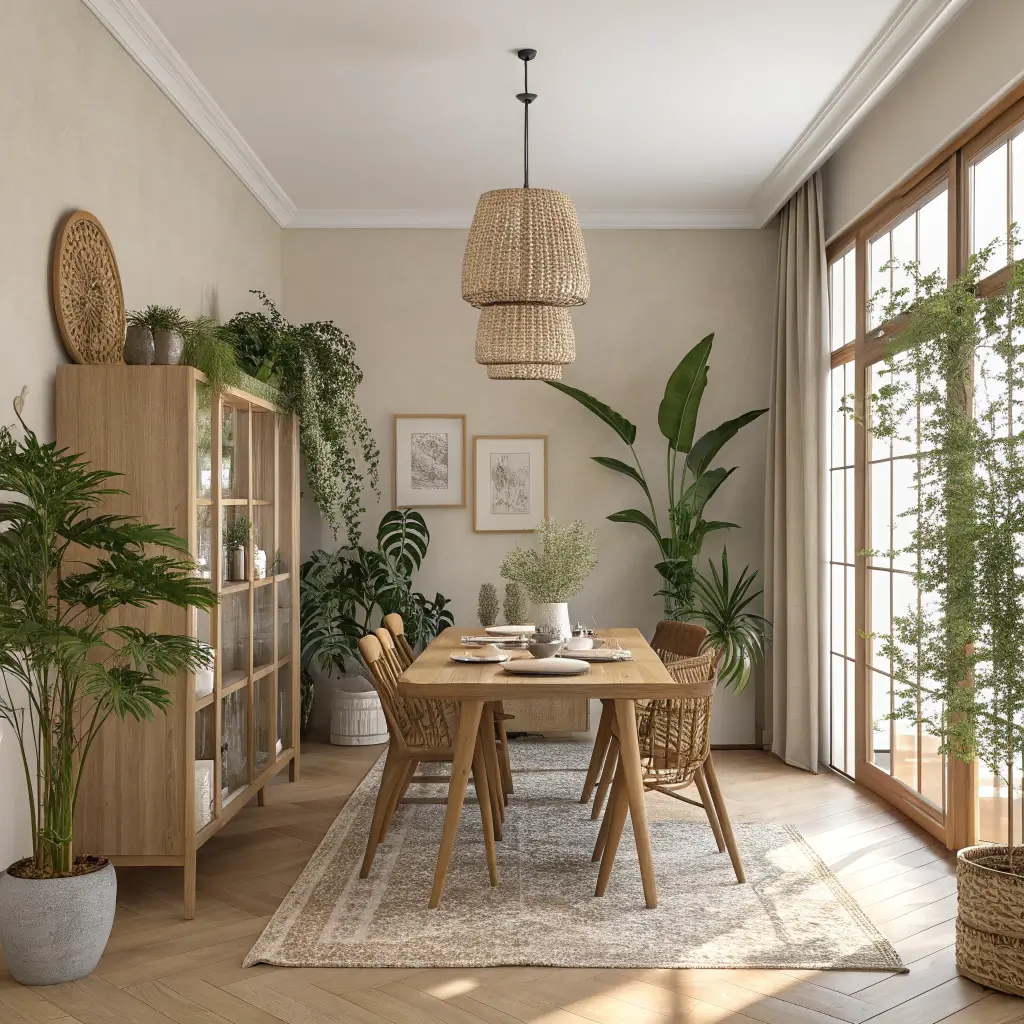
Beyond the token succulent, let’s talk about really integrating plants into your Japandi dining space. Choose plants with sculptural qualities that complement the clean lines of your furniture.
A snake plant in the corner adds vertical interest without fuss. A collection of small plants on a floating shelf creates a living art installation. The key is treating plants as design elements, not afterthoughts. They should feel intentional, not like you just stuck a plant there because you had an empty corner.
Here’s my plant rule for Japandi spaces: odd numbers, varying heights, and simple containers. White ceramic or natural terracotta pots keep the focus on the plants themselves.
15. Scandinavian-Japanese Fusion Dining Room Layout
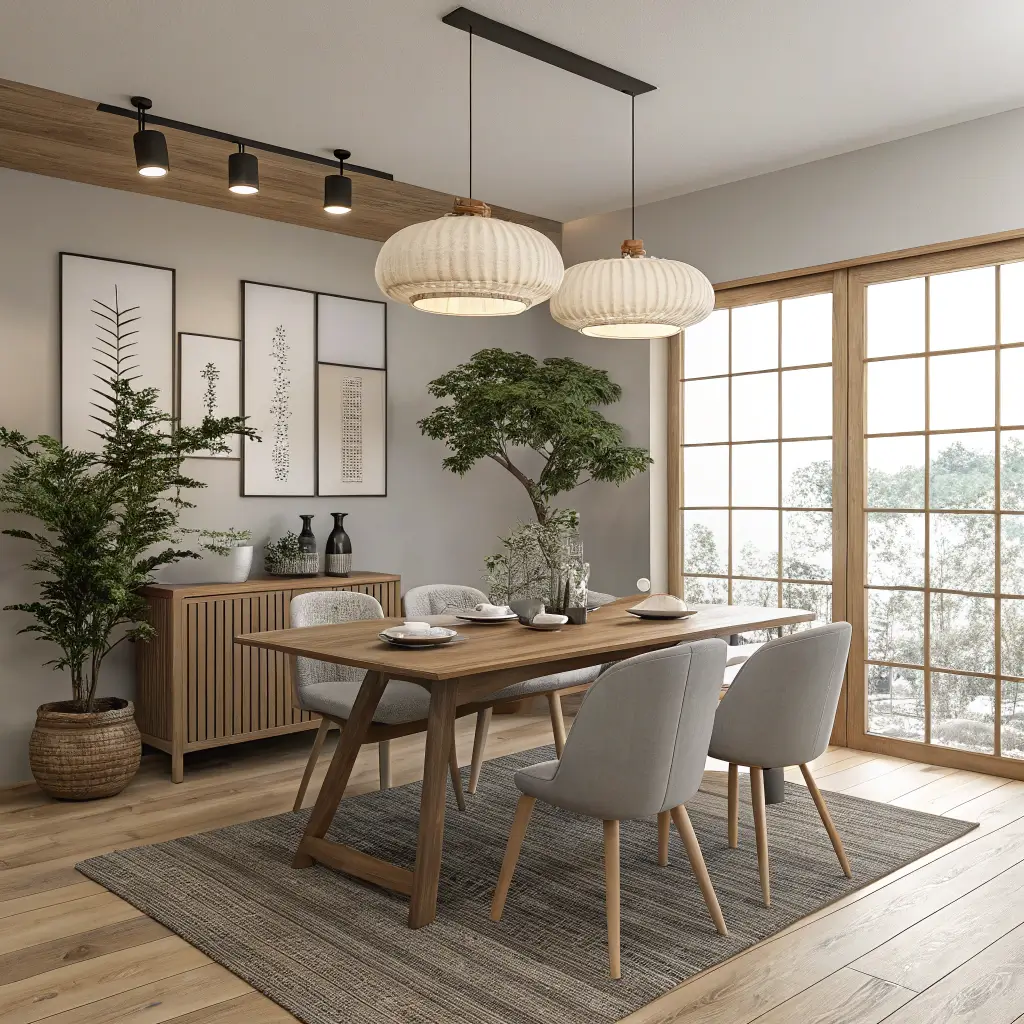
The ultimate Japandi dining room perfectly balances both design philosophies in its layout. Japanese principles guide the flow and function, while Scandinavian elements add the comfort and warmth.
Think about traffic flow first. Can people move around the table easily? Is there a clear path from kitchen to dining? Japanese design philosophy emphasizes smooth movement through space. Then layer in Scandinavian comfort – a cozy corner with a reading chair, soft textiles, warm lighting.
The best layouts feel intuitive. Everything has its place, but nothing feels rigid or forced. Your dining room should feel like it evolved naturally rather than being designed all at once.
Making It All Work Together
Here’s the thing about Japandi style – it’s not about copying these ideas exactly. It’s about understanding the principles and adapting them to your space, your life, your needs. Start with one element you love and build from there.
Maybe you begin with a beautiful wooden dining table and let everything else follow. Or perhaps you paint everything white and slowly add warmth through textiles and wood accents. There’s no wrong way to do this as long as you’re staying true to the core idea: intentional simplicity with warmth and functionality.
The biggest mistake I see? Trying to do everything at once. Japandi is about thoughtful curation, not instant transformation. Take your time, live with each change, and only add what truly improves the space.
The Bottom Line
Creating a Japandi dining room isn’t about following trends or impressing guests (though it’ll definitely do that). It’s about crafting a space that makes everyday meals feel special and brings a sense of calm to your home. Every element should serve a purpose while contributing to the overall aesthetic.
Whether you’re working with a tiny apartment dining nook or a sprawling open-plan space, these ideas can adapt to your situation. Start small, maybe with new lighting or decluttering your table. Build slowly toward your vision, and don’t be afraid to edit ruthlessly along the way.
Remember, the best Japandi dining room is one that works for your life. If you need a homework station during the day and dinner space at night, design for that. If you host weekly dinner parties, make sure you have the seating and serving space you need. Let function guide form, and you’ll end up with a space that’s both beautiful and livable.
The real magic of Japandi style? It grows better with time. As your pieces age and patina, as you refine and edit your choices, your dining room becomes more authentically yours. That’s when you know you’ve nailed it – when your dining room feels like the calmest, most inviting room in your house, the place where everyone naturally gathers.
So pick an idea, any idea from this list, and start there. Your perfect Japandi dining room is waiting to emerge, one thoughtful choice at a time. Trust the process, embrace the simplicity, and get ready for a lot more lingering over dinner. Because once you create a Japandi dining room, nobody wants to leave the table – and honestly, why would they?