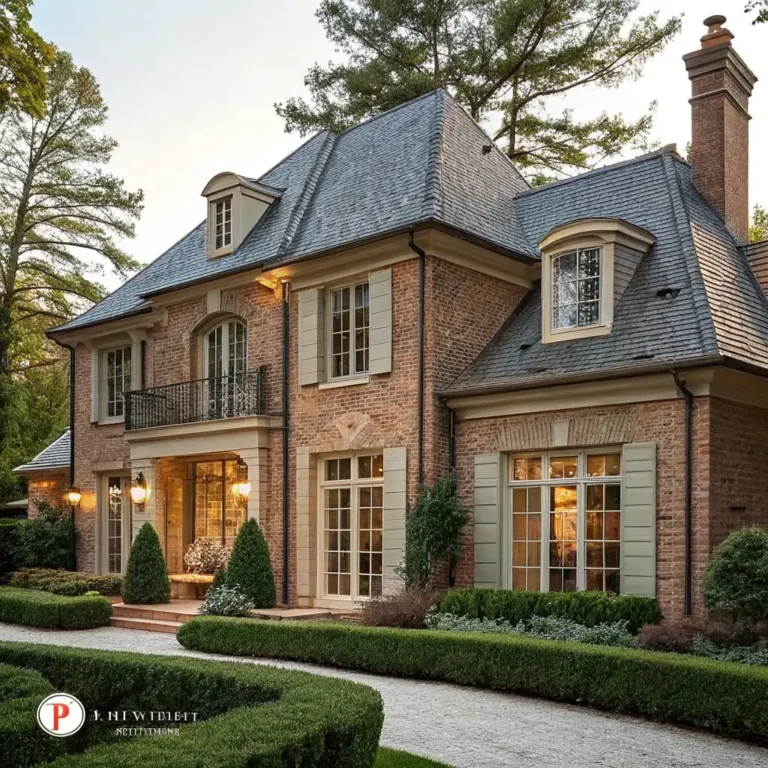
15 Modern A-Frame House Plans Ideas for Tiny Homes

Remember when you first saw an A-frame house and thought, “That’s the coolest triangle I’ve ever seen”? Yeah, me too.
These architectural beauties have been stealing hearts since the 1950s, and honestly, they’re having a major moment right now.
If you’re anything like me, you’ve probably spent countless hours scrolling through Pinterest, drooling over these geometric wonders.
Let me share something: I actually spent two weeks in an A-frame last summer, and it completely changed my perspective on what a home could be.
The way natural light floods through those massive windows? Chef’s kiss. So grab your coffee (or wine, I don’t judge), and let’s chat about 15 incredible A-frame house plans that’ll make you want to pack up and move to the mountains immediately.
Modern Minimalist A-Frame Retreat
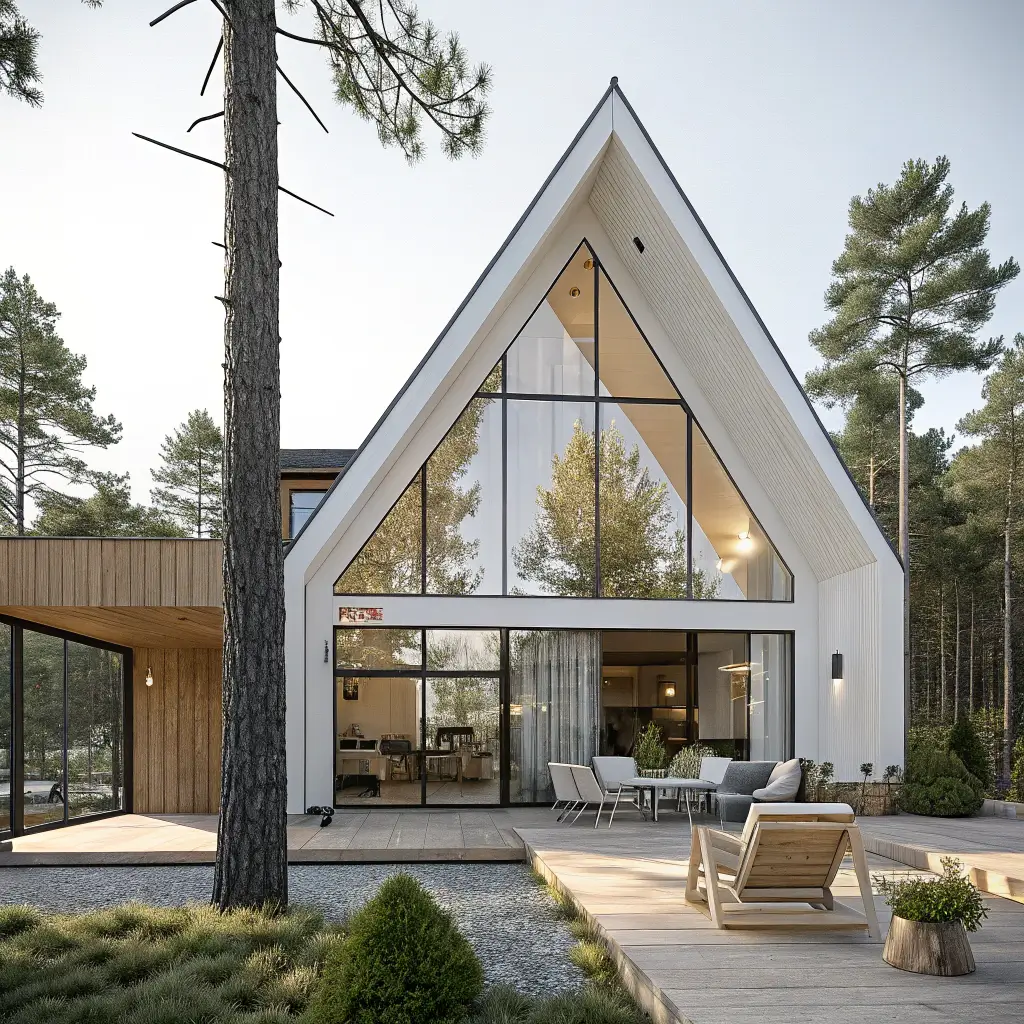
You know what’s funny? People think minimalism means boring, but modern minimalist A-frames prove them dead wrong. These sleek designs strip away everything unnecessary while keeping all the drama intact. We’re talking clean lines, monochromatic color schemes, and materials that actually celebrate their natural beauty.
The beauty of a minimalist A-frame lies in its simplicity. Picture floor-to-ceiling windows that frame nature like living artwork. You get polished concrete floors that stay cool in summer, white walls that make the space feel twice its size, and maybe one statement piece of furniture that makes everyone go “Where’d you get that?”
Key Features That Make It Work
What makes these plans special? First off, open floor plans dominate the design. You won’t find unnecessary walls cluttering up the space. The kitchen, dining, and living areas flow together like they’re having a conversation. Smart storage solutions hide in plain sight – think built-in shelving that follows the angle of the roof or hidden compartments under the stairs.
The exterior typically features:
- Metal or cedar siding in neutral tones
- Minimal landscaping that complements, not competes
- Large decks that extend the living space outdoors
- Strategic lighting that highlights the architectural lines at night
Cozy Lakeside A-Frame Cabin
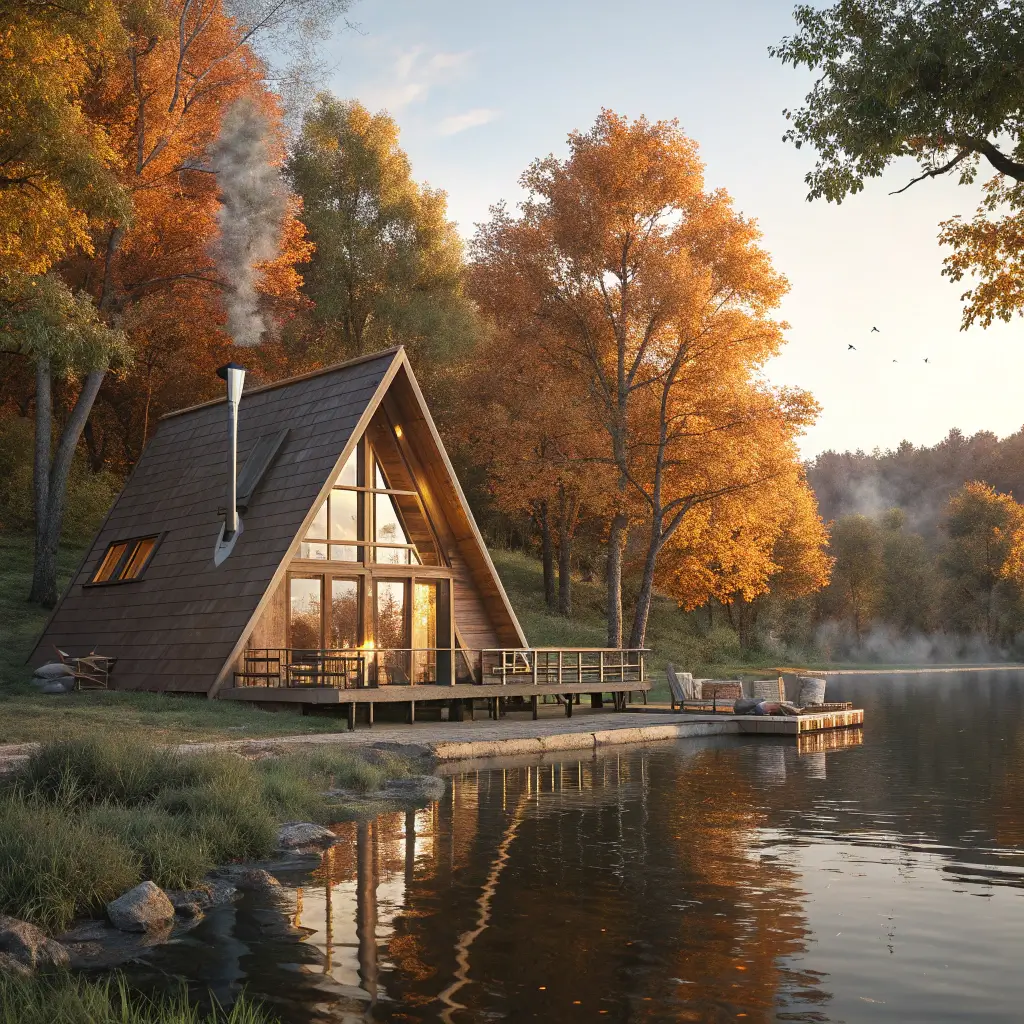
Now this is where A-frames really shine. There’s something about placing one of these beauties right on a lake that just makes sense. Maybe it’s how the triangular shape mirrors the surrounding pines, or how the reflection in the water doubles your architectural impact. Either way, lakeside A-frames hit different.
I stayed in one near Lake Tahoe once, and waking up to water views through that signature triangular window? Absolutely unmatched. These designs typically maximize the water-facing side with massive glass panels that basically turn your living room into an aquarium – except you’re the fish looking out.
Making the Most of Waterfront Living
The best lakeside A-frame plans incorporate:
- Extended decks or docks that jut over the water
- Window placement that captures sunrise or sunset views
- Materials that withstand moisture (cedar, treated pine, composite decking)
- Outdoor showers for post-swim rinses
You’ll want to position the main living areas facing the water. Bedrooms can tuck into the back or upper levels where it’s cozier. And here’s a pro tip: install sliding glass doors instead of traditional ones. They save space and create that seamless indoor-outdoor flow everyone’s after.
Rustic Mountain A-Frame Home
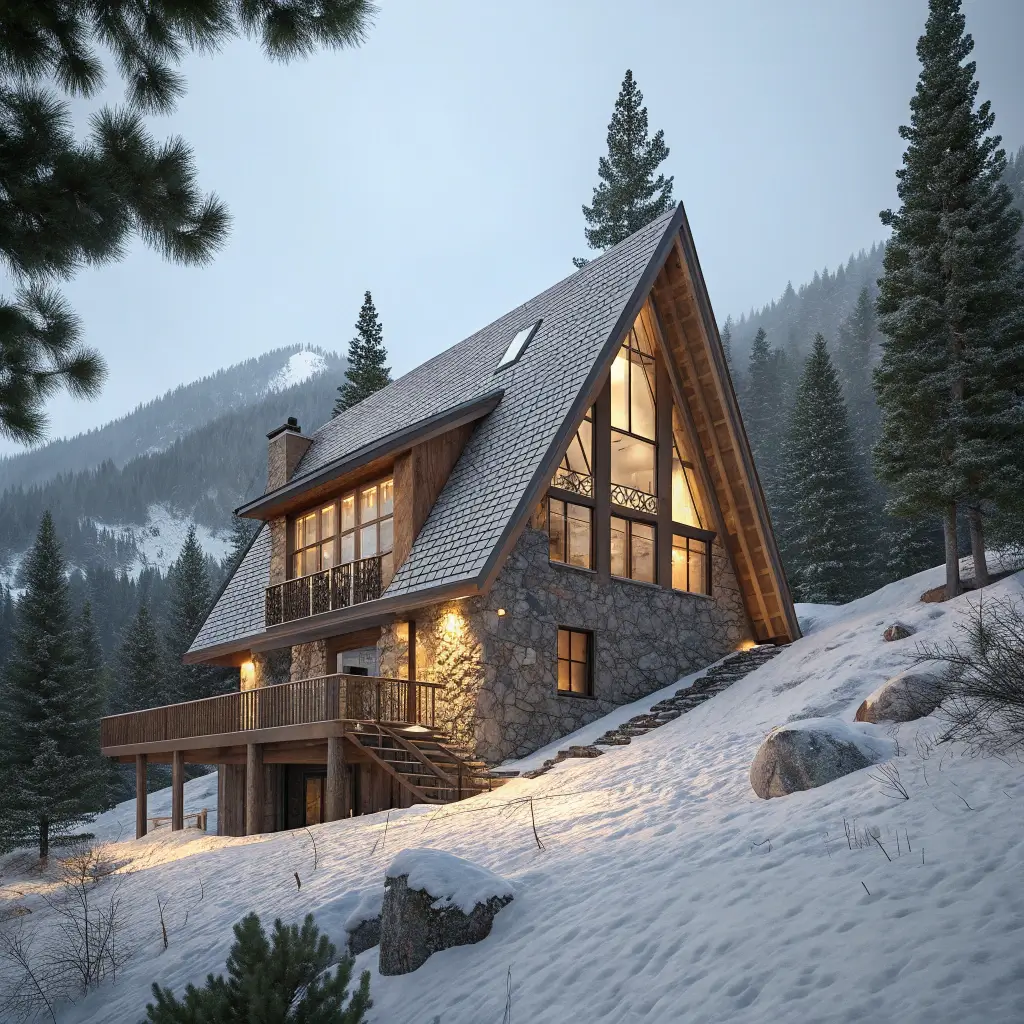
Let’s talk about the OG of A-frame vibes – the rustic mountain home. These bad boys embrace everything rugged and natural about their surroundings. We’re not trying to fight the environment here; we’re inviting it in for dinner.
Heavy timber beams, stone fireplaces, and reclaimed wood details define these spaces. You want materials that look like they could’ve been harvested from the surrounding forest (because sometimes they literally were). The goal? Creating a home that feels like it grew from the mountain itself.
Authentic Mountain Living Elements
What screams “mountain A-frame” to you? For me, it’s:
- Massive stone chimneys that anchor the structure
- Exposed wooden beams with visible grain and knots
- Deep overhangs that shed snow effectively
- Wood-burning stoves or fireplaces as focal points
Don’t forget about practical considerations. Mountain homes need serious insulation, proper roof pitch for snow load, and materials that can handle temperature swings. Cedar shingles might look amazing, but metal roofing often makes more sense in heavy snow areas.
Also Read: 15 Smart Multigenerational House Plans Ideas for Big Families
Tiny A-Frame Eco House
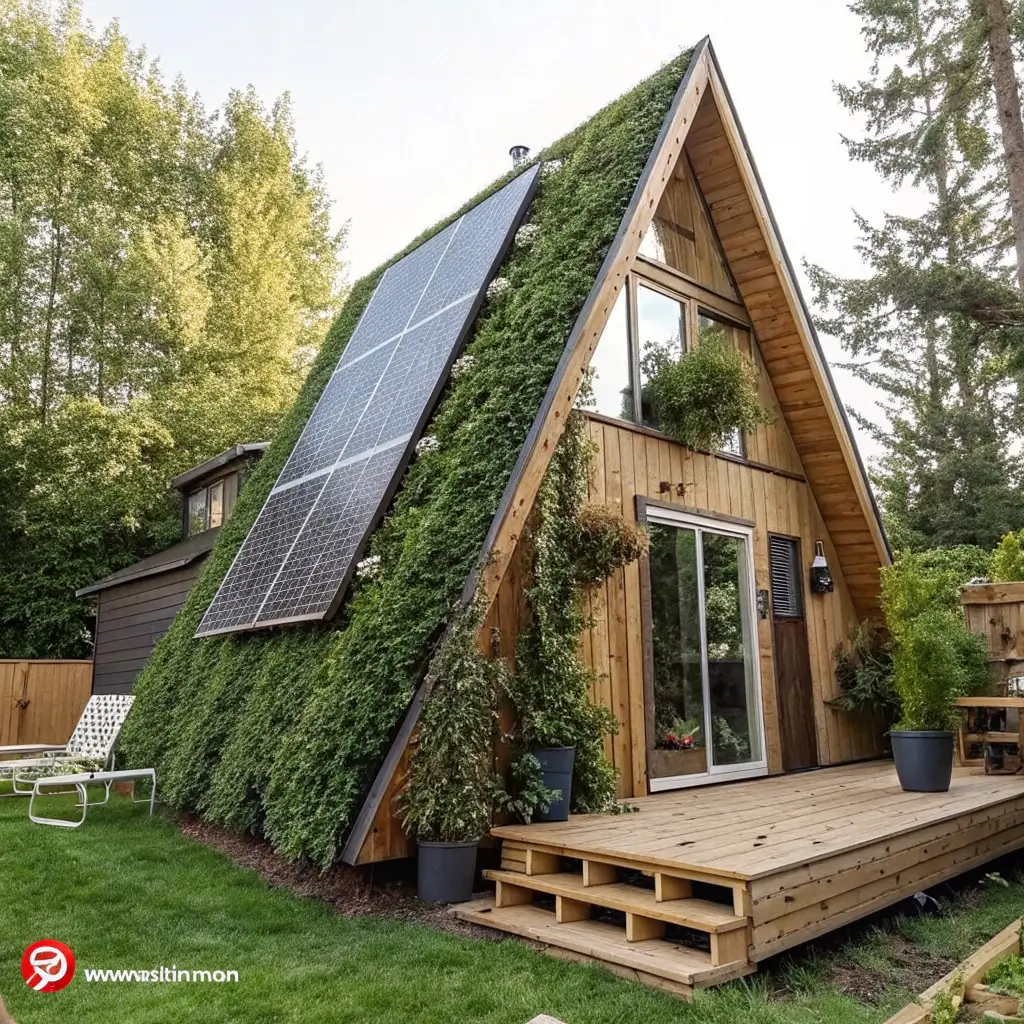
Who says you need 3,000 square feet to live well? Tiny A-frame eco houses prove that small can be mighty – and sustainable too. These designs typically clock in under 800 square feet but pack more personality per square inch than most McMansions.
The eco angle isn’t just trendy; it’s smart. Smaller spaces need less energy to heat and cool. The triangular shape naturally promotes air circulation. Plus, you can splurge on high-quality, sustainable materials when you’re buying less of them. Win-win-win, IMO.
Maximizing Minimal Space
Smart tiny A-frame features include:
- Loft sleeping areas that utilize vertical space
- Multi-functional furniture (dining tables that convert to desks)
- Composting toilets and greywater systems
- Solar panels that fit perfectly on those angled roofs
Ever noticed how tiny homes force you to actually think about what you need? These designs eliminate the junk drawer mentality. Every square foot has a purpose, every item has a home. It’s surprisingly liberating once you adjust.
Luxury A-Frame with Loft Bedrooms

Now we’re entering champagne territory. Luxury A-frames take everything we love about the style and dial it up to eleven. Premium materials, high-end finishes, and architectural details that make your jaw drop – that’s what we’re talking about here.
The loft bedrooms in these designs aren’t afterthoughts. They’re architectural statements with custom railings, built-in storage, and sometimes even ensuite bathrooms. Picture waking up in your loft, looking out through a custom skylight at the stars. Yeah, that’s the vibe.
Premium Features Worth Splurging On
What separates luxury from standard? Consider these upgrades:
- Heated floors throughout (trust me on this one)
- Custom steel and glass staircases
- Smart home integration for lighting, climate, and security
- High-end appliances that blend seamlessly into the design
- Spa-like bathrooms with soaking tubs positioned for views
The materials matter too. We’re talking reclaimed old-growth timber, hand-forged hardware, and custom metalwork. These homes don’t just shelter you; they make a statement about craftsmanship and attention to detail.
Open-Concept Beachfront A-Frame
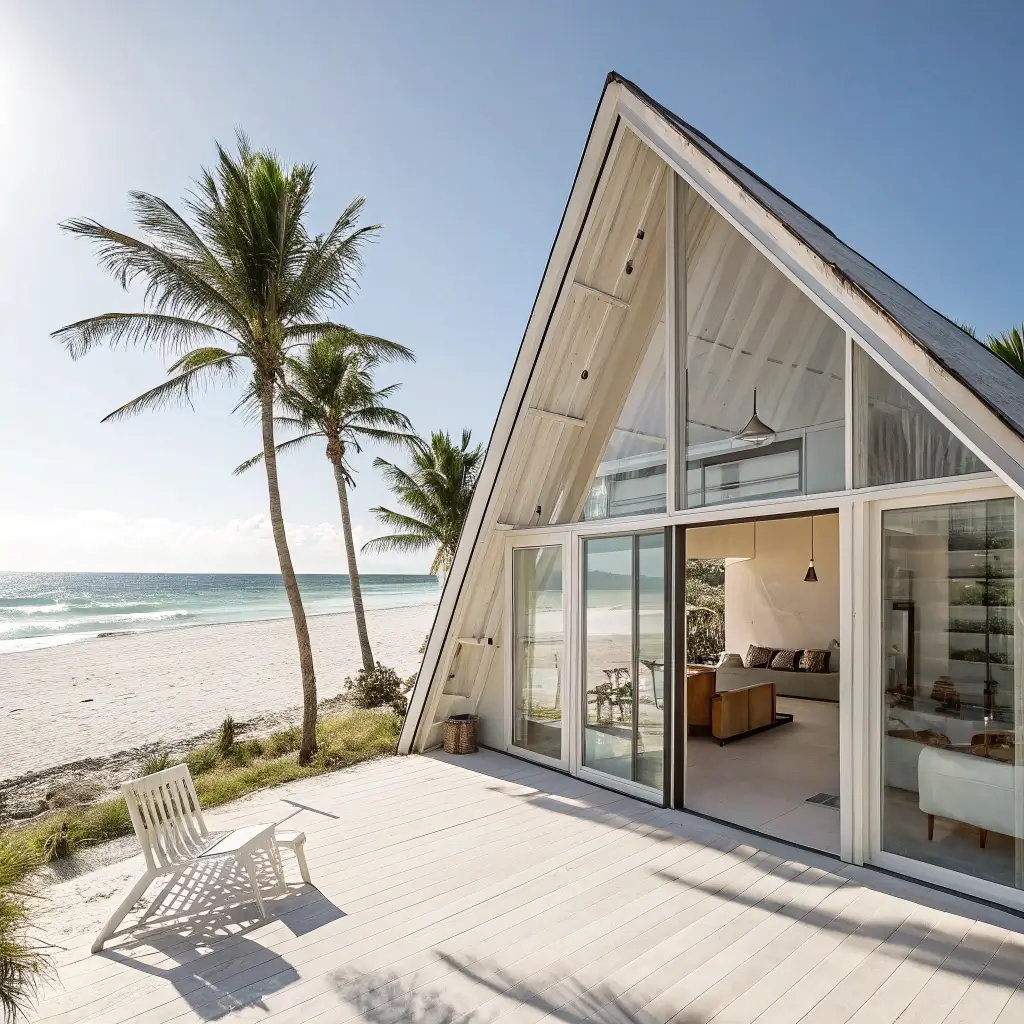
Beach A-frames hit differently than their mountain cousins. They’re breezier, brighter, and somehow more relaxed. The open-concept layout is crucial here – you want that ocean breeze flowing through every corner of your space.
Whitewashed wood, nautical accents, and materials that can handle salt air define these designs. The key? Creating a space that feels like an extension of the beach itself. Sand tracked in? No problem – that’s what the outdoor shower is for.
Coastal Living Considerations
Beachfront builds require special attention to:
- Corrosion-resistant materials (stainless steel, treated wood)
- Elevated foundations for flood zones
- Hurricane straps and reinforced construction in storm-prone areas
- Large overhangs for shade during peak sun hours
The color palette typically stays light and airy. Think whites, soft grays, and ocean blues. Natural textures like jute, rattan, and weathered wood add warmth without heaviness. And please, for the love of all things coastal, skip the anchor décor. We get it – you’re at the beach.
Also Read: 15 Charming Cottage House Plans Ideas for Dream Homes
Forest Hideaway A-Frame Cottage

Sometimes you just want to disappear into the trees, right? Forest hideaway A-frames offer exactly that escape. These designs blend into their wooded surroundings so well, you might walk right past one if you’re not paying attention.
The magic happens when you embrace the forest rather than clear it. Build around existing trees, use natural materials that age gracefully, and design with wildlife in mind. Your local deer population will become your morning entertainment.
Designing for Forest Living
Key considerations for forest A-frames:
- Fire-resistant materials and defensible space planning
- Window placement that frames specific trees or views
- Decks built around existing trees
- Natural pest control solutions
- Gutters and drainage systems that handle leaf buildup
Color choices should complement the forest palette. Deep greens, warm browns, and charcoal grays help your home nestle into its surroundings. Large windows are still important, but consider their placement carefully – privacy matters when your neighbors are trees.
Compact Family-Friendly A-Frame
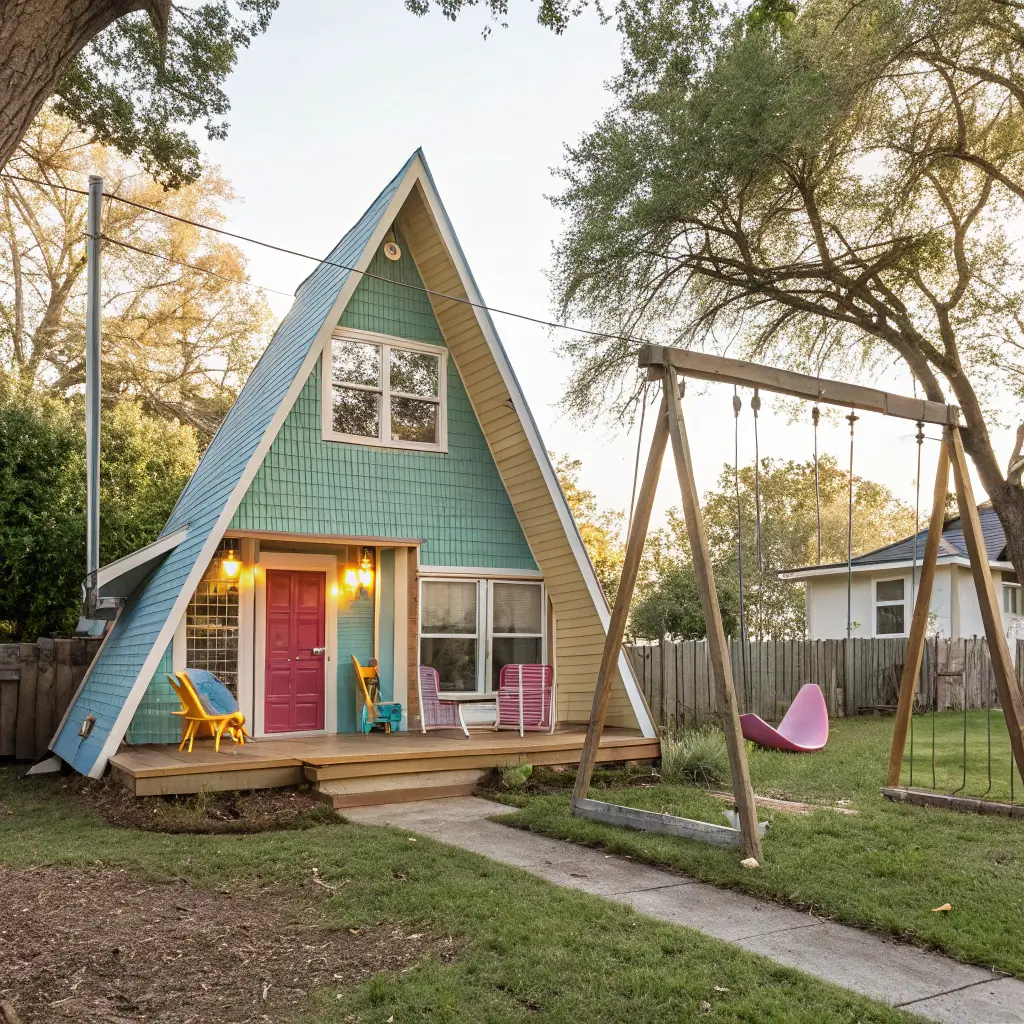
Who says A-frames can’t work for families? The compact family-friendly versions prove that smart design beats square footage every time. These plans typically range from 1,200 to 1,800 square feet but feel much larger thanks to clever layouts.
The trick is creating defined spaces within the open concept. Kids need areas to play (and make noise) while adults need spots to retreat. Built-in storage becomes your best friend, and multi-purpose rooms earn their keep.
Making It Work for Everyone
Family-friendly features that actually matter:
- Mudrooms near entrances (because kids)
- Open sight lines from kitchen to play areas
- Durable, easy-clean materials throughout
- Safety railings on lofts and stairs
- Separate zones for homework, play, and relaxation
Don’t forget outdoor space. Kids need room to run, and a deck isn’t enough. Consider how the landscape around your A-frame can become an extension of your living space. A flat area for games, maybe a fire pit for s’mores – you know, the important stuff.
Scandinavian-Inspired A-Frame Design
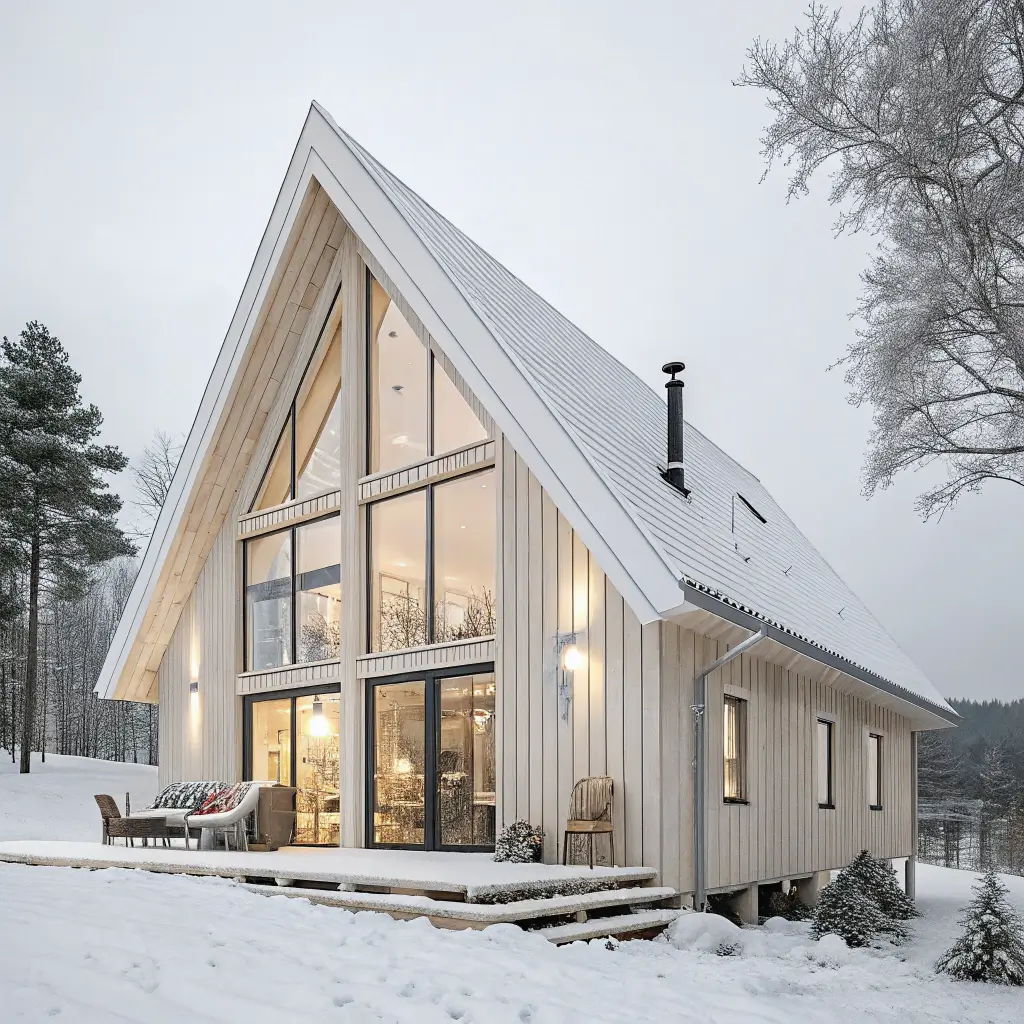
The Scandinavians know a thing or two about cozy, and their take on A-frames is chef’s kiss perfect. We’re talking hygge meets architectural drama, and honestly, what’s not to love? These designs master the art of making cold climates feel warm and inviting.
Light wood, white walls, and black accents create that signature Scandi look. But it’s more than aesthetics – it’s about creating spaces that combat long, dark winters with warmth and light. Strategic window placement maximizes natural light, while warm textiles and layered lighting create ambiance when the sun sets at 3 PM.
Nordic Design Principles
Essential Scandinavian A-frame elements:
- Light oak or birch wood throughout
- Minimalist fireplaces as focal points
- Textile layers (sheepskin, wool, linen)
- Simple, functional furniture with clean lines
- Saunas (because obviously)
The color palette stays intentionally restrained. Whites, grays, and natural wood tones dominate, with maybe one accent color if you’re feeling wild. The beauty lies in texture and quality rather than visual noise.
Also Read: 15 Practical Duplex House Plans Ideas for Efficient Layouts
Glass-Walled Panoramic A-Frame
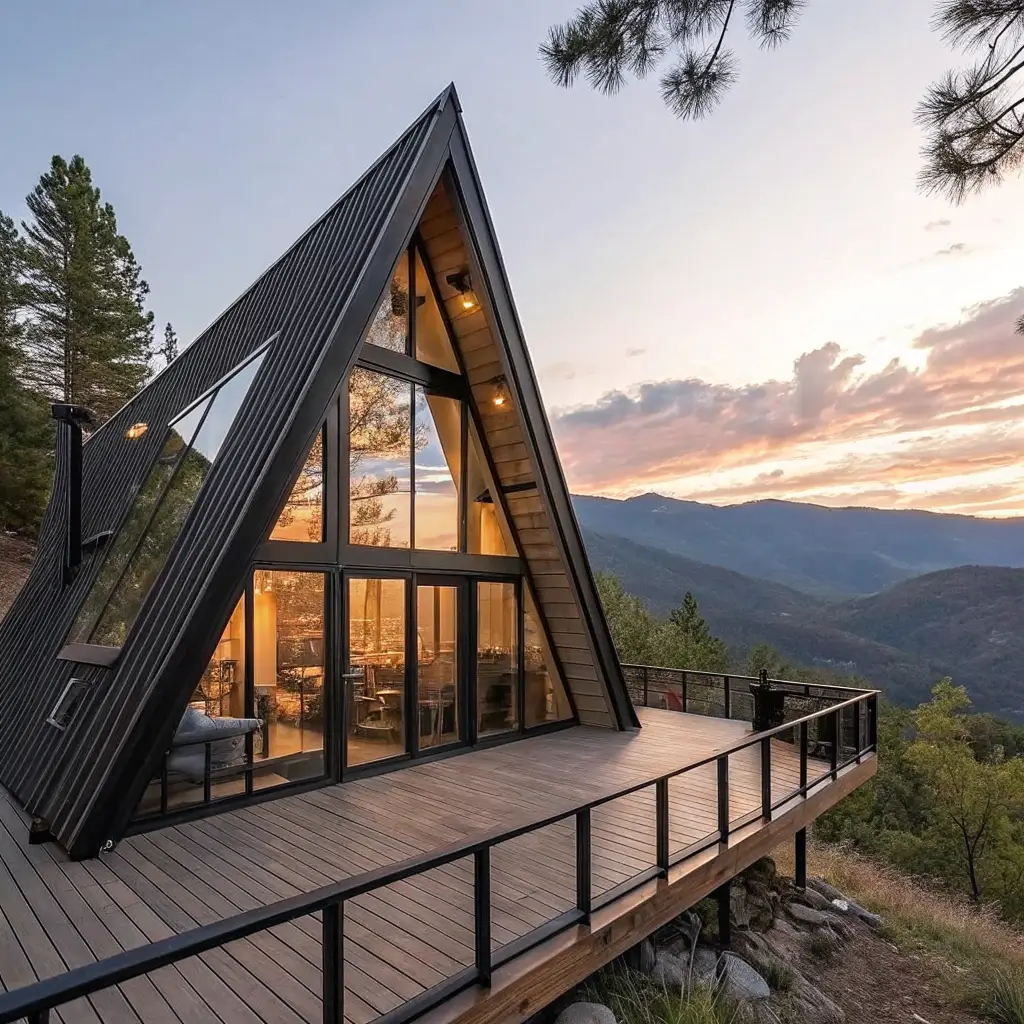
Want to feel like you’re living in a greenhouse? Glass-walled panoramic A-frames take the window game to another level. We’re talking walls that are literally just glass, turning your home into a viewing platform for whatever natural beauty surrounds you.
These designs work best with spectacular sites. Got a mountain view? Ocean vistas? Old-growth forest? This is your plan. The architecture essentially disappears, leaving you with shelter that doesn’t obstruct your connection to nature.
Technical Considerations for Maximum Glass
Going glass-heavy requires thinking about:
- Triple-pane windows for insulation
- UV coatings to protect interiors
- Automated blinds for privacy and heat control
- Structural engineering to support glass weight
- Strategic placement of solid walls for privacy
FYI, heating and cooling costs can surprise you with this much glass. Budget for high-quality windows and consider passive solar design principles. Position your home to capture winter sun and avoid summer heat. Your utility bills will thank you 🙂
Sustainable Solar-Powered A-Frame

Sustainability isn’t just a buzzword anymore – it’s becoming essential. Solar-powered A-frames make perfect sense because those angled roofs are basically begging for solar panels. The geometry that makes A-frames iconic also makes them incredibly efficient for solar collection.
These designs go beyond just slapping panels on the roof. We’re talking comprehensive sustainability: greywater systems, composting toilets, passive heating and cooling, and materials with low environmental impact. You’re not just building a house; you’re creating an ecosystem.
Green Building Strategies
Sustainable features that actually work:
- South-facing roof pitch optimized for solar panels
- Battery storage systems for energy independence
- Rainwater collection systems
- Natural insulation materials (wool, cellulose)
- Low-flow fixtures and appliances
The goal? Net-zero or even net-positive energy production. Some of these homes actually sell power back to the grid. How’s that for turning the tables on your utility company?
Multi-Level Urban A-Frame
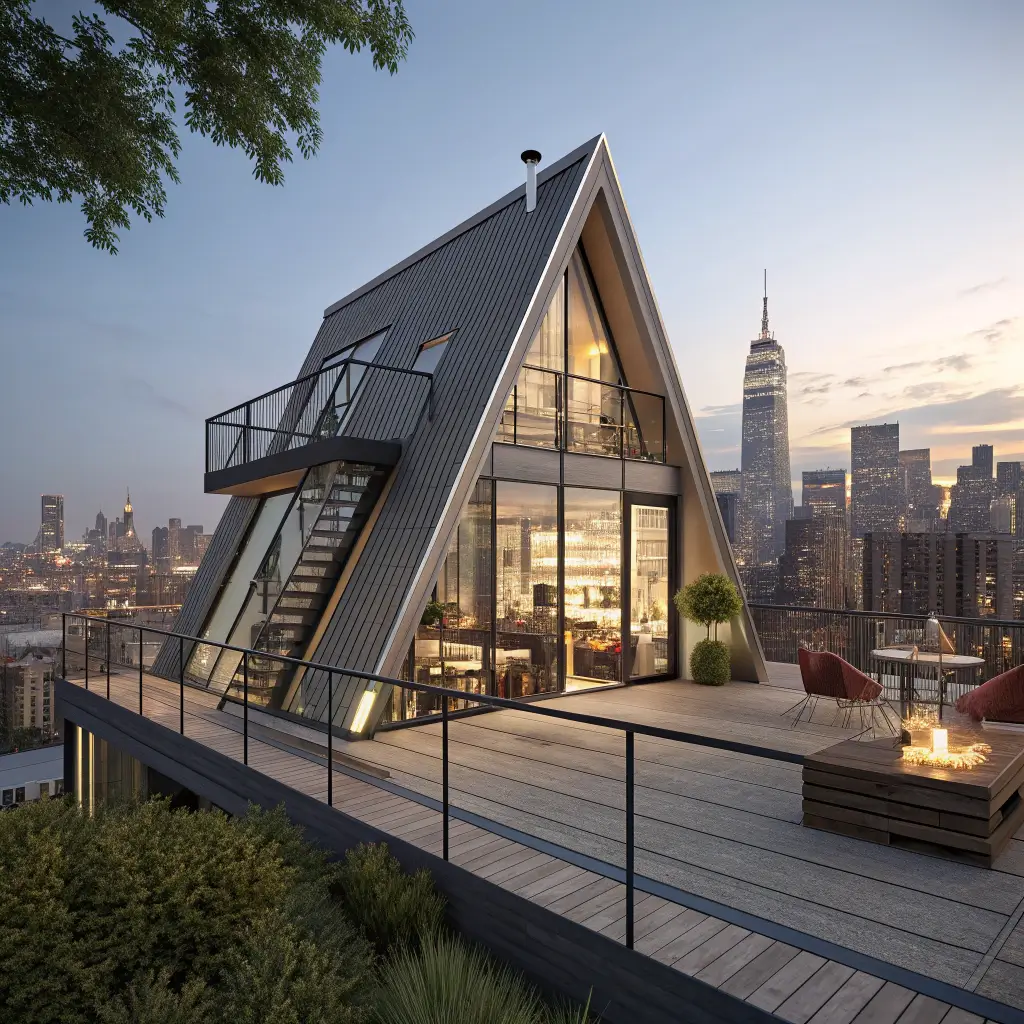
Who says A-frames belong in the wilderness? Urban A-frames are shaking up city neighborhoods with their distinctive profiles. These multi-level designs maximize vertical space on small urban lots, proving that you don’t need acres to make an architectural statement.
Urban settings present unique challenges. You’re dealing with neighbors, city regulations, and limited outdoor space. But they also offer opportunities – proximity to amenities, established infrastructure, and the chance to stand out in a sea of traditional homes.
City Living in a Triangle
Urban A-frame considerations include:
- Soundproofing between floors and shared walls
- Privacy solutions for close neighbors
- Rooftop decks or gardens to maximize outdoor space
- Parking solutions (basement garages work great)
- Compliance with local building codes and HOA requirements
The multi-level aspect really shines here. You might have parking and utilities at ground level, living spaces on the second floor, and bedrooms tucked up top. Each level serves a purpose, and the vertical layout actually enhances privacy in dense neighborhoods.
Artist’s Studio A-Frame Cabin
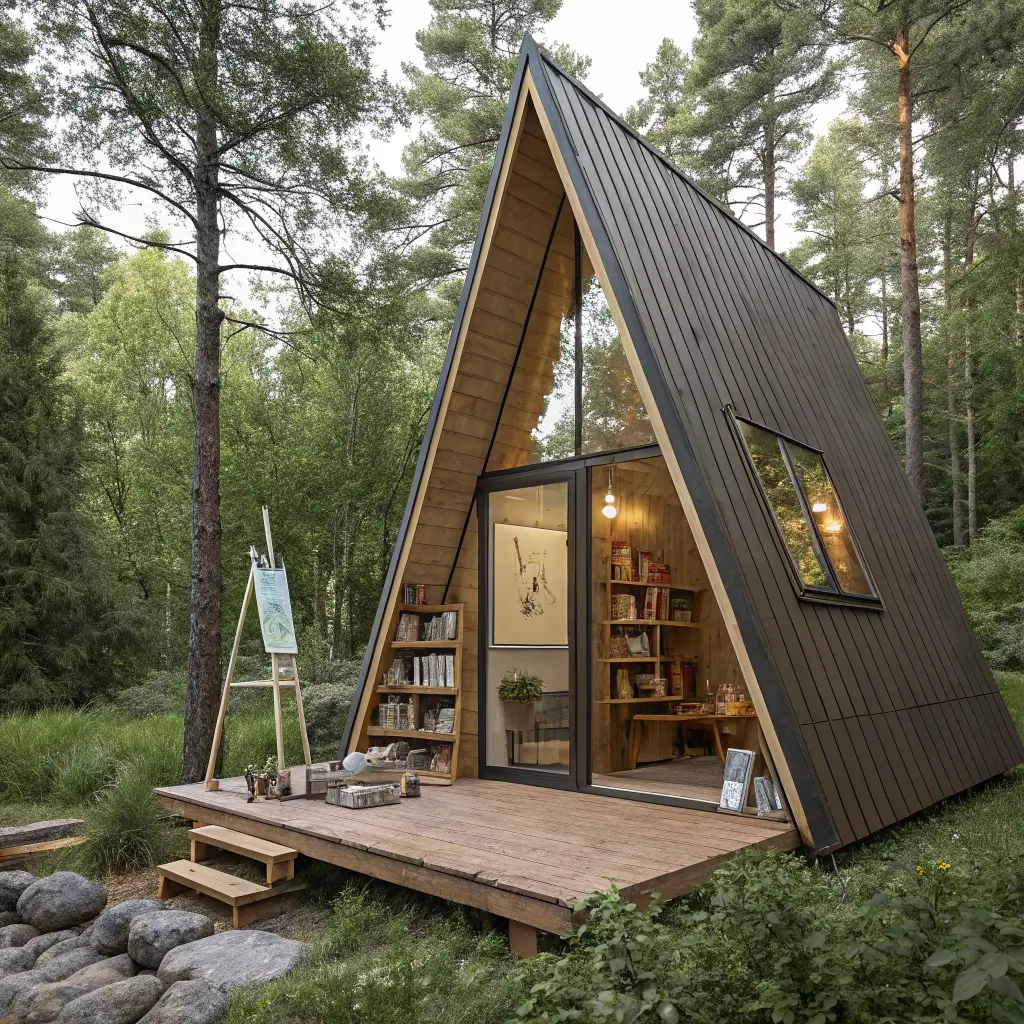
Artists need light, space, and inspiration. A-frame studios deliver all three in spades. Those soaring ceilings and massive windows create the perfect environment for creativity, whether you’re painting, sculpting, or crafting your next masterpiece.
The beauty of an artist’s A-frame? Flexibility. The open floor plan adapts to different projects, and the vertical space accommodates large canvases or installations. Plus, the architecture itself becomes part of your creative environment – how can you not feel inspired working inside a geometric sculpture?
Designing for Creativity
Studio-specific features to consider:
- North-facing windows for consistent, indirect light
- Concrete or sealed floors that handle spills
- Built-in storage for supplies and finished works
- Separate living quarters from workspace
- Ventilation systems for paints and chemicals
Don’t forget practical needs. You’ll want a utility sink, plenty of electrical outlets, and maybe a separate entrance for clients or deliveries. The goal is creating a space where making a mess is okay – encouraged, even.
Modern Farmhouse A-Frame Hybrid
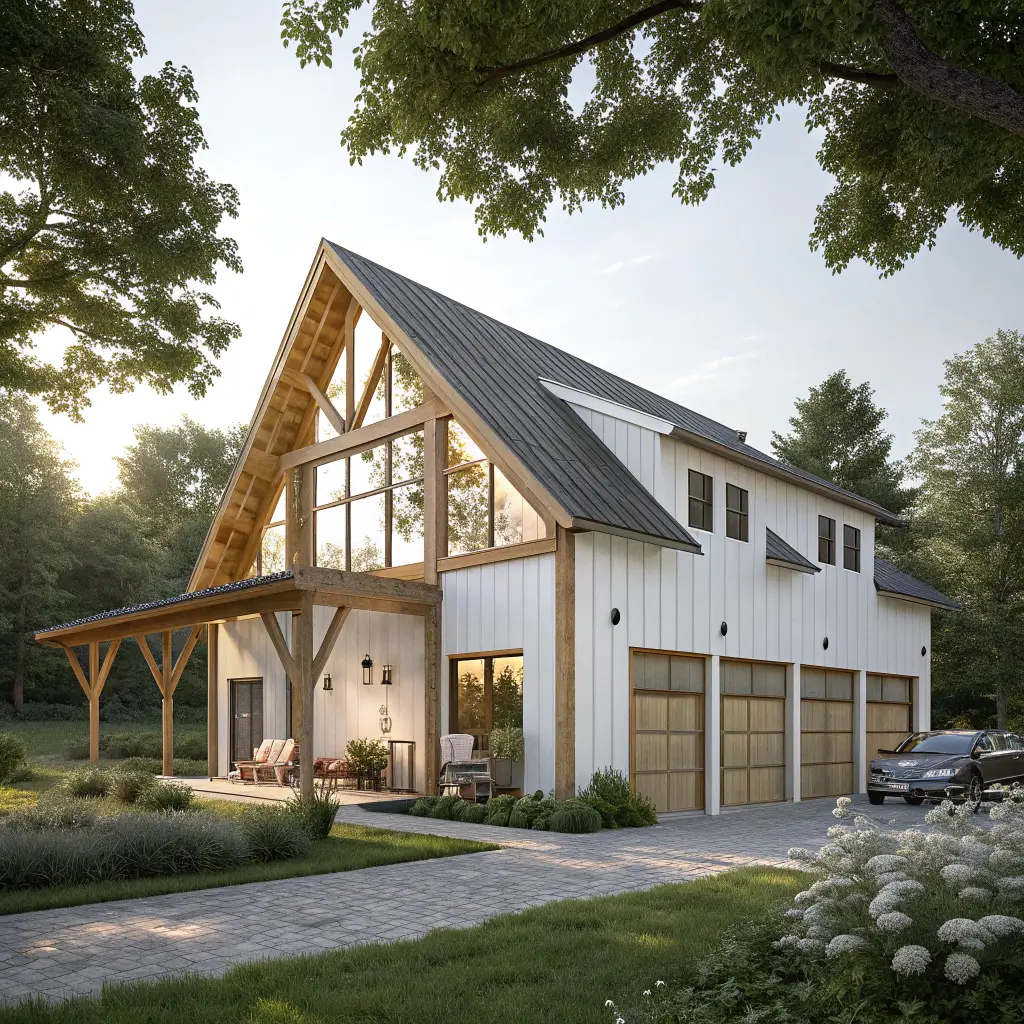
Plot twist: what happens when you marry A-frame architecture with modern farmhouse style? Magic, that’s what. These hybrids take the best of both worlds – the dramatic roofline of an A-frame with the warm, approachable elements of farmhouse design.
We’re talking board-and-batten siding, metal roofs, and wraparound porches that soften the angular geometry. Inside, shiplap walls, barn doors, and farmhouse sinks create that coveted rustic-but-refined aesthetic. It’s like Chip and Joanna Gaines met Frank Lloyd Wright and decided to collaborate.
Blending Styles Successfully
Key elements of farmhouse A-frame fusion:
- Mixed materials (wood, metal, stone)
- Large covered porches or decks
- Classic farmhouse colors (white, black, natural wood)
- Modern amenities hidden within traditional aesthetics
- Barn-style doors and hardware
The trick is balance. Too much farmhouse, and you lose the A-frame drama. Too much triangle, and the farmhouse warmth disappears. When done right, you get a home that feels both striking and welcoming.
Adventure-Ready Off-Grid A-Frame
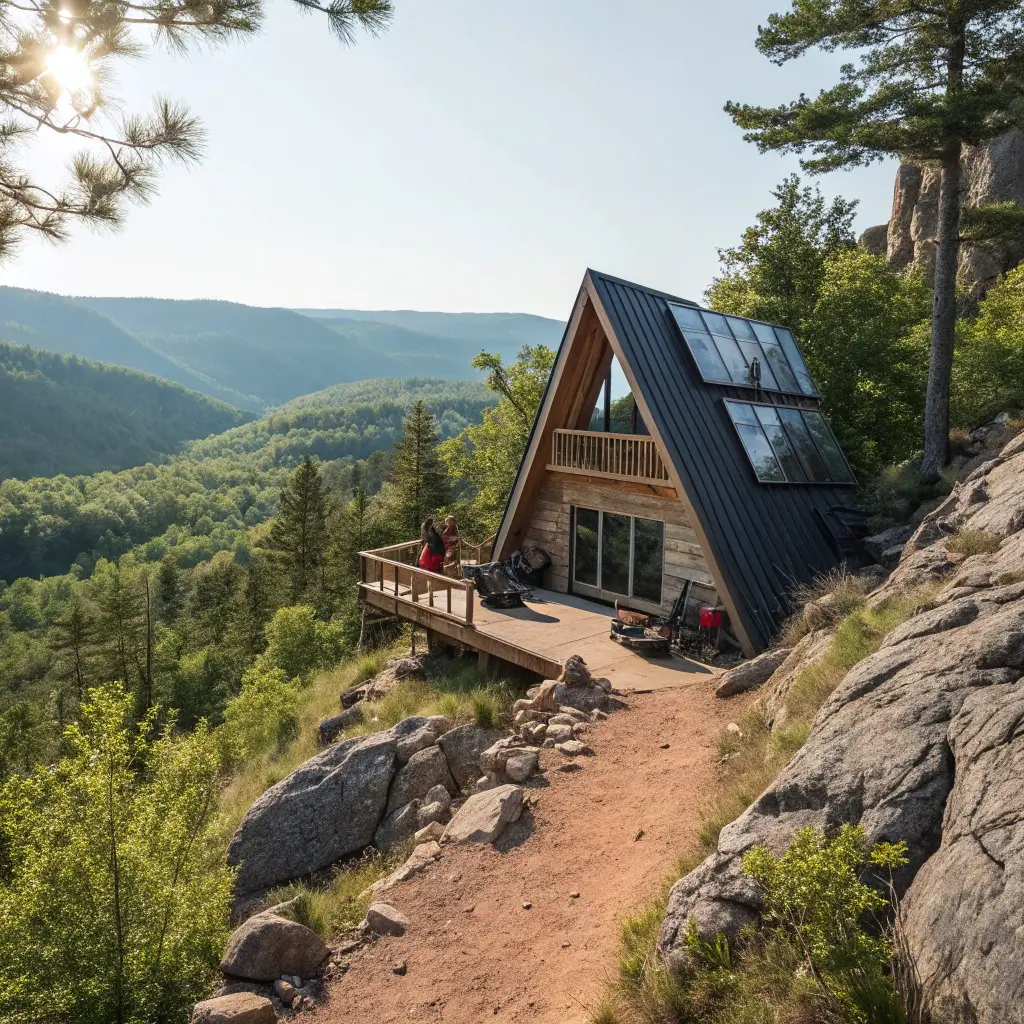
Last but definitely not least, let’s talk about off-grid A-frames for the true adventurers. These homes laugh in the face of utility companies. Built for remote locations, they’re completely self-sufficient and ready for whatever nature throws at them.
We’re not just talking about solar panels and composting toilets. These designs include water purification systems, satellite internet, backup generators, and sometimes even small-scale food production. You could literally drop one of these in the middle of nowhere and live comfortably for months.
True Independence Features
Off-grid essentials that matter:
- Robust solar and battery systems with backup generators
- Water collection, storage, and purification
- Septic or composting waste systems
- Propane appliances and heating backup
- Food storage and preservation capabilities
The construction itself needs to be bombproof. We’re talking about homes that might be hours from the nearest help. Quality materials, overbuilt structures, and systems you can maintain yourself become non-negotiable :/
Wrapping Up Your A-Frame Dreams
So there you have it – fifteen A-frame designs that prove triangles aren’t just for geometry class. Whether you’re dreaming of a minimalist retreat or a family compound, there’s an A-frame plan that fits your vision. The beauty of these structures lies not just in their iconic shape, but in their incredible versatility.
What strikes me most about A-frames? They force you to think differently about living spaces. Those angled walls that might seem limiting actually push you toward creative solutions. You start seeing possibilities where others see problems. And honestly, isn’t that what great architecture should do?
If you’re seriously considering building an A-frame, my advice is simple: visit as many as you can before committing to a plan. Each style feels different in person. That minimalist retreat might look amazing in photos but feel too stark in reality. Or that cozy cabin might be exactly the warm hug you need after a long day.
Remember, the best A-frame is the one that fits your lifestyle, not Instagram’s. Whether you go tiny or tremendous, rustic or refined, the goal is creating a space that makes you smile every time you come home. Because at the end of the day, that triangle-shaped silhouette against the sky should feel like yours – quirks, character, and all.
Now if you’ll excuse me, I have some A-frame listings to browse. This article has me ready to embrace my inner triangle enthusiast all over again. Who knows? Maybe we’ll be neighbors in our matching mountain A-frames someday. A person can dream, right? 🙂