10 Stunning Basement Bathroom Ideas for a Stylish Upgrade

Remember that time you went to your friend’s house and their basement bathroom was actually nicer than your main one? Yeah, that stung a little.
But here’s the thing – creating an amazing basement bathroom doesn’t require winning the lottery or hiring some fancy designer who speaks in paint colors you’ve never heard of.
I’ve spent the last decade transforming forgotten basement corners into bathrooms that people actually want to use.
Not the kind where guests nervously ask if there’s another option upstairs. We’re talking about real, functional, gorgeous spaces that add serious value to your home.
And trust me, after helping dozens of homeowners tackle their basement bathrooms, I’ve seen what works, what doesn’t, and what makes people say “wow” every single time.
So grab your coffee (or wine, no judgment here), and let’s chat about ten basement bathroom ideas that’ll transform your underground dungeon into something special.
Small Space Basement Bathroom Design
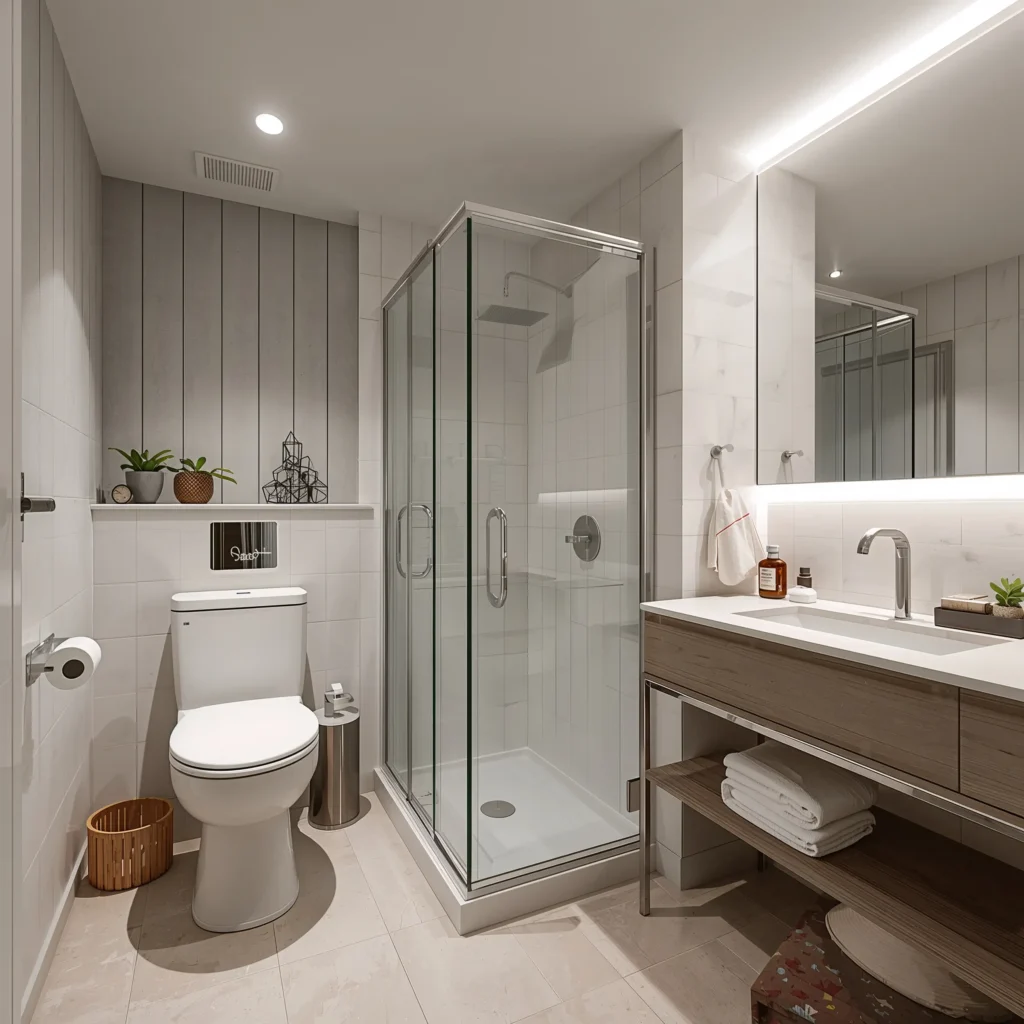
Look, not everyone has a sprawling basement with room for a Roman bath. Most of us are working with that awkward corner under the stairs or a sliver of space next to the furnace. But you know what? Small basement bathrooms can be absolute gems when you play your cards right.
The secret sauce here is thinking vertically. I learned this the hard way after cramming too much into my first basement bathroom project. Everything felt claustrophobic, and opening the door was like solving a puzzle. Now I know better – wall-mounted everything is your best friend. Toilets, sinks, even storage cabinets that float off the ground create the illusion of more floor space.
Corner fixtures are another game-changer that people overlook. Why stick a sink in the middle of the wall when a corner model gives you the same functionality with half the footprint? Same goes for showers – corner units with curved glass doors feel way less boxy than traditional rectangular ones.
Making Every Inch Count
Here’s what I always tell clients working with tight spaces:
• Pocket doors save roughly 9 square feet of usable space
• Pedestal sinks look elegant but offer zero storage (consider a narrow vanity instead)
• Large format tiles make the space feel bigger – fewer grout lines equals less visual clutter
• Mirrors that extend to the ceiling double your visual square footage instantly
The lighting situation in small basement bathrooms needs special attention too. Natural light probably isn’t happening down there, so you’ve got to fake it. I’m talking about layered lighting – overhead for general brightness, task lighting around the mirror, and maybe even some LED strips under floating vanities for that subtle glow.
Modern Minimalist Basement Bathroom
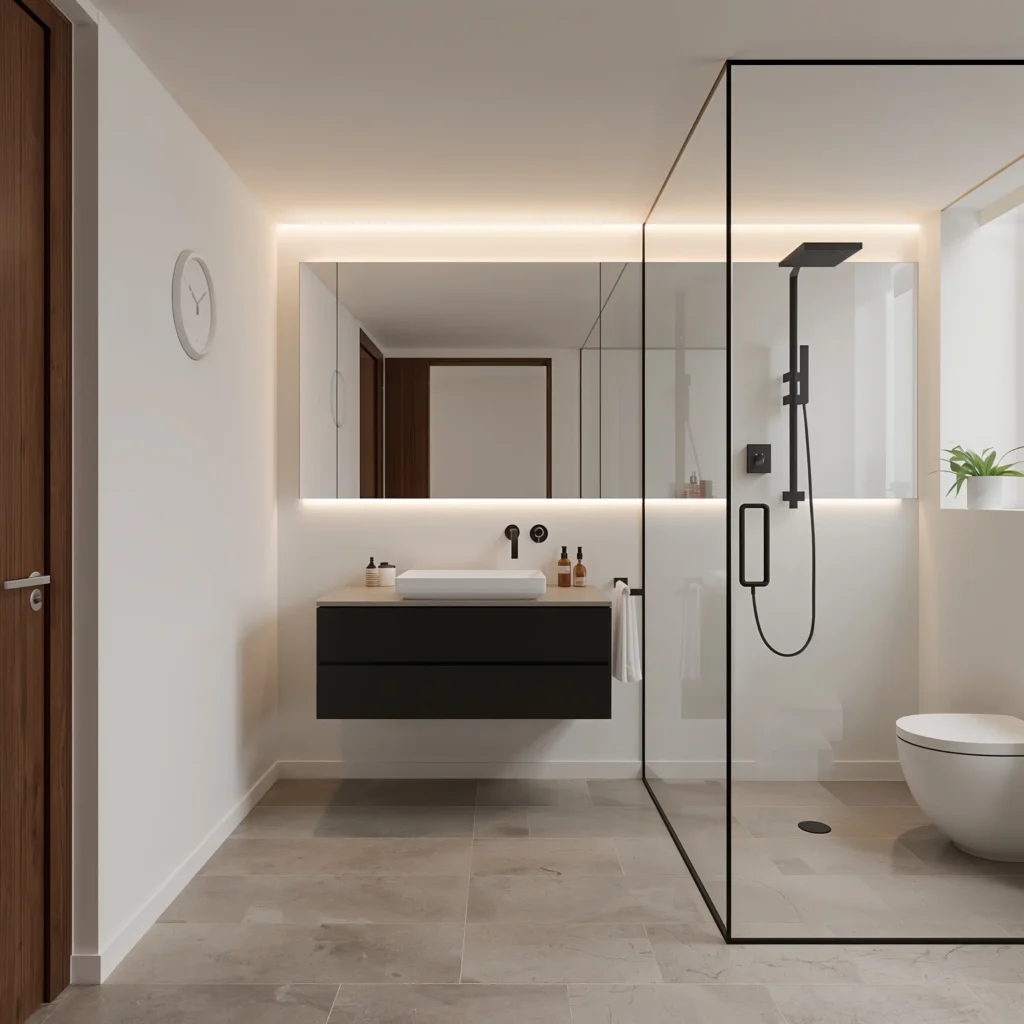
If clutter makes your eye twitch and you believe less really is more, the modern minimalist approach might be your jam. This style works particularly well in basements because it combats that naturally dark, heavy feeling with clean lines and breathing room.
The color palette here is your foundation. Think whites, grays, maybe a bold black accent if you’re feeling spicy. But here’s where people mess up – they go so minimal that the space feels cold and uninviting. Nobody wants to feel like they’re using a bathroom in a tech startup’s office.
The trick is adding warmth through texture. A wood-grain vanity against white walls, concrete-look tiles with subtle variation, or even a single plant (yes, some plants thrive in low light) can make all the difference. I once worked with a couple who wanted ultra-modern but ended up hating how sterile it felt. We added one walnut floating shelf and suddenly the whole vibe shifted from “hospital” to “high-end hotel.”
Key Elements for Nailing Minimalist Style
• Frameless glass shower doors – bulky frames kill the vibe
• Concealed tank toilets – sleek and saves space
• Single-lever faucets in matte black or brushed gold
• Hidden storage behind mirror cabinets or inside walls
The plumbing and electrical should be as invisible as possible. Nobody wants to see pipes in a minimalist bathroom. Plan for in-wall installation from the start, or you’ll be playing hide-and-seek with ugly necessities later.
Basement Bathroom with Walk-In Shower
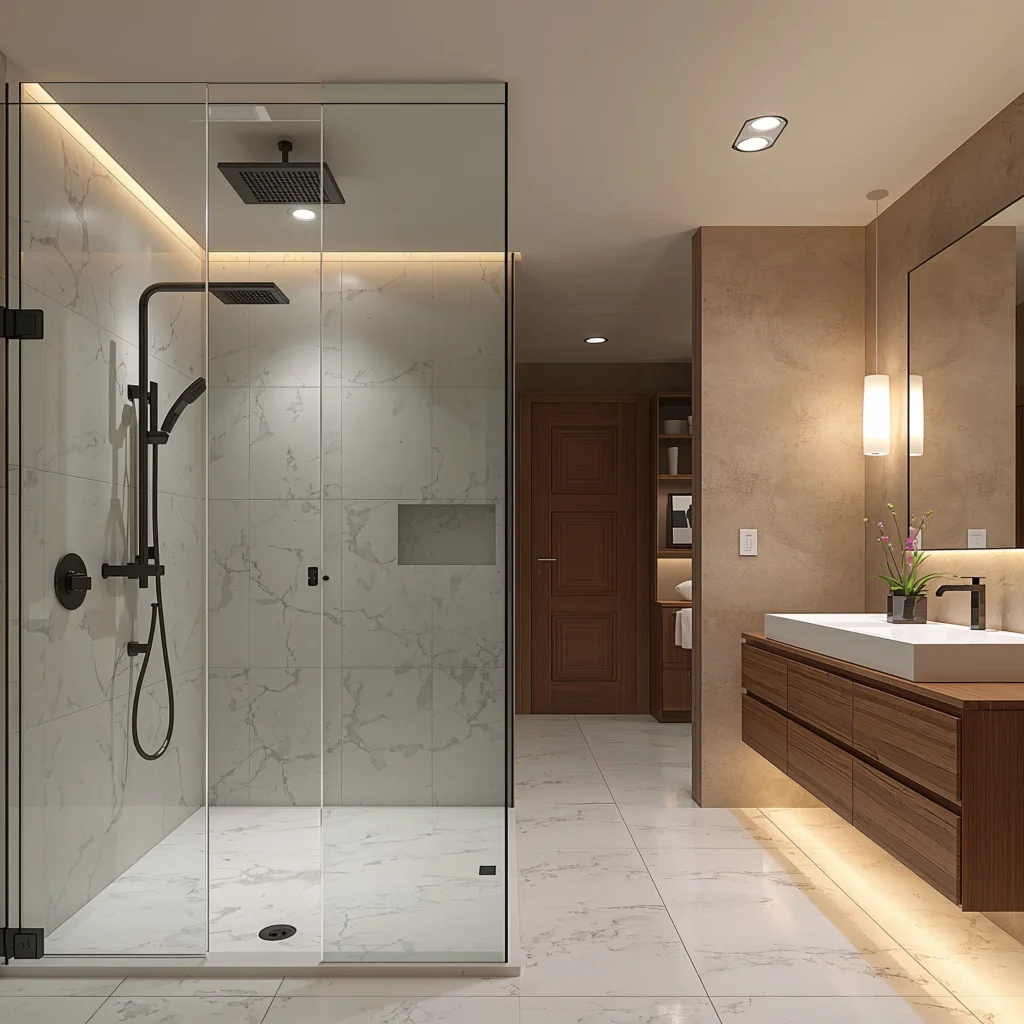
Can we talk about how walk-in showers have completely changed the basement bathroom game? Gone are the days when a basement shower meant ducking under pipes and praying the water pressure held up. Today’s walk-in showers can rival any upscale spa – assuming you know what you’re doing.
First things first – waterproofing is non-negotiable. I cannot stress this enough. Your basement already wants to be wet; don’t give it any help. Proper membrane installation, correctly sloped floors, and quality materials will save you from disaster. Trust me, redoing a failed basement shower is about as fun as it sounds.
The beauty of walk-in showers in basements? You can work around those annoying ceiling obstacles. Got a beam in the way? Design around it. Low ceiling height? Use it to create a cozy, cave-like shower experience that actually feels intentional.
Design Features That Elevate Walk-In Showers
For the shower itself, consider these upgrades:
• Linear drains along one wall instead of center drains (easier to slope, looks cleaner)
• Built-in niches for shampoo bottles (no more corner caddies falling down)
• Bench seating – even a small corner seat changes everything
• Rain showerheads work great with low ceilings (closer = better pressure)
• Handheld sprayers on sliding bars for flexibility
The no-threshold entry trend looks amazing but requires careful planning in basements. Your floor needs proper sloping throughout the entire bathroom, not just the shower area. Is it worth it? Absolutely. Does it require someone who knows what they’re doing? You bet.
Also Read: 10 Elegant Basement Ceiling Ideas That Inspire Comfort
Cozy Rustic Basement Bathroom
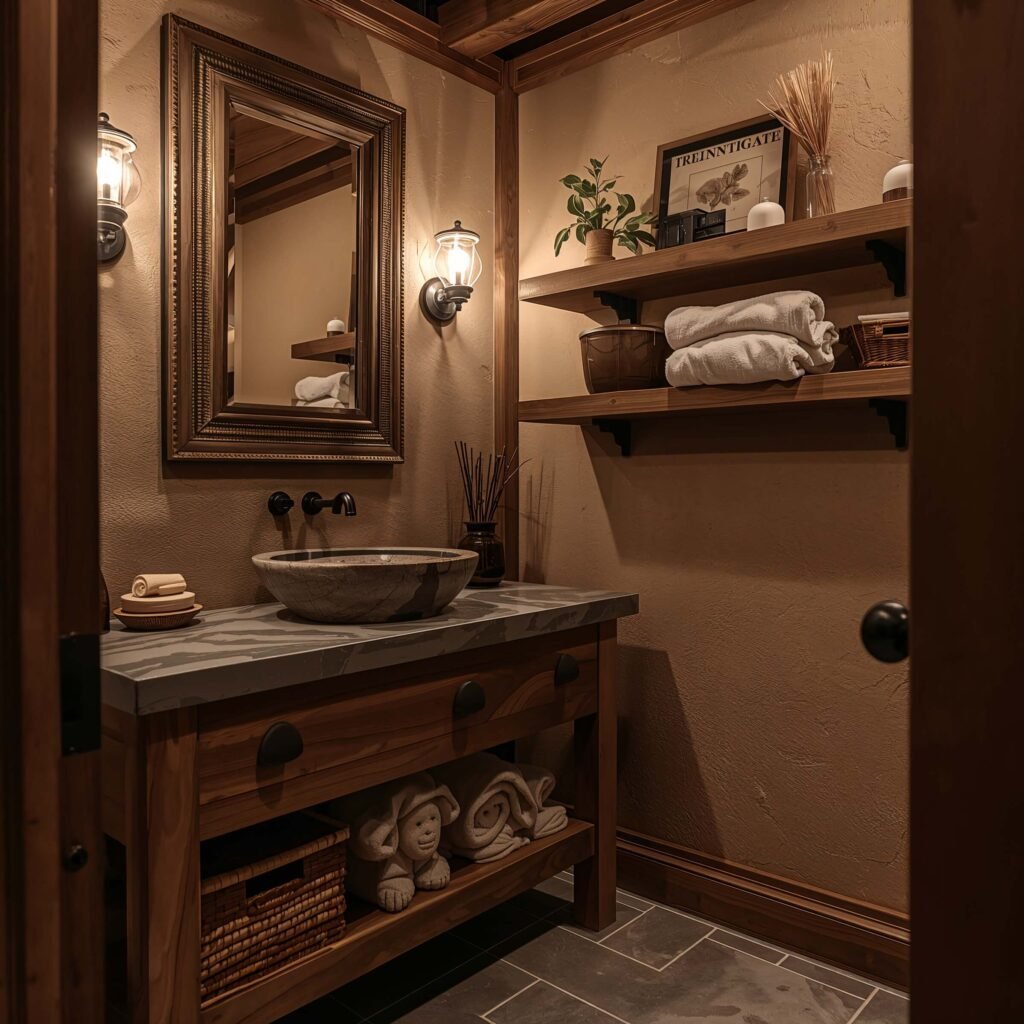
Who says basements have to feel like basements? The rustic approach basically tells those cold concrete walls to take a hike and replaces them with warm, cabin-like vibes that make you want to stay awhile.
This style really shines when you embrace the basement’s natural characteristics instead of fighting them. Those exposed ceiling joists you were planning to cover? Leave them. Paint them black or stain them dark walnut. Suddenly, what was a problem becomes a feature that city folks pay extra for.
The materials here make or break the look. Reclaimed wood vanities, Edison bulb fixtures, and vessel sinks carved from stone all scream rustic without trying too hard. But here’s my pro tip – don’t go full pioneer museum. Mix in some modern elements like a sleek toilet or contemporary faucet to keep things from feeling like a theme park bathroom.
Creating Authentic Rustic Charm
What really sells the rustic basement bathroom:
• Wood-look porcelain tiles (real wood + basement moisture = disaster)
• Matte black fixtures instead of shiny chrome
• Open shelving made from thick wooden planks and industrial brackets
• Vintage mirrors in distressed frames (check Facebook Marketplace – gold mine)
The biggest mistake I see with rustic bathrooms? People forget about comfort. Sure, that wooden toilet seat looks authentic, but nobody actually wants to sit on it in January. Keep the rustic charm where it counts, but don’t sacrifice modern conveniences.
Budget-Friendly Basement Bathroom Makeover
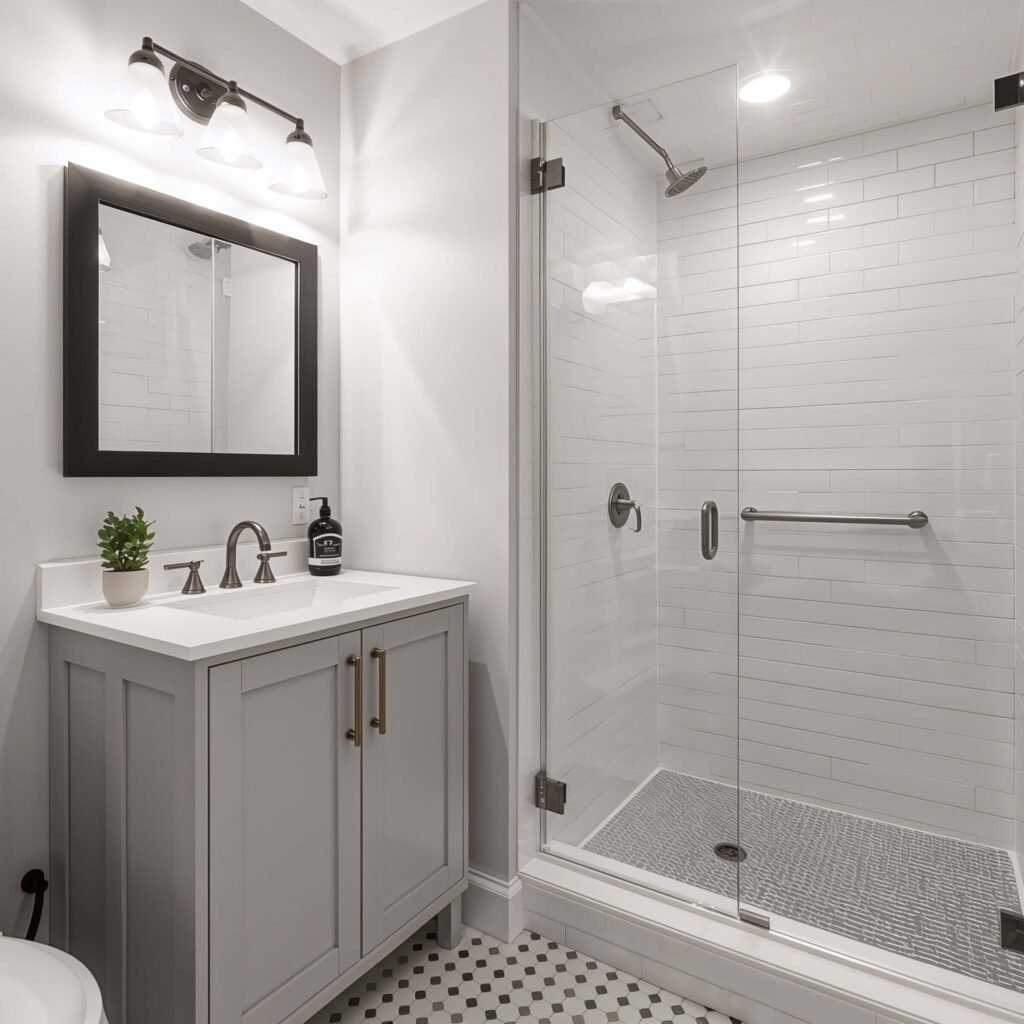
Let’s get real for a second – not everyone has $30,000 lying around for a basement bathroom. Most of us are working with champagne dreams on a beer budget, and that’s totally fine! Some of my favorite transformations happened with creativity over cash.
The first rule of budget bathroom makeovers? Know where to splurge and where to save. Plumbing and waterproofing? Don’t cheap out. That decorative tile that costs $45 per square foot? Maybe reconsider. I’ve seen too many people blow their budget on Instagram-worthy tiles, then have to settle for garbage fixtures that break within a year.
Paint is your secret weapon down here. A gallon costs less than dinner out, but it can completely transform the space. And FYI, you can paint almost anything – tiles, vanities, even bathtubs with the right products. Just make sure you’re using moisture-resistant paint designed for bathrooms.
Smart Spending Strategies
Here’s how to stretch those dollars:
• Refinish instead of replace – that dated vanity might just need new hardware and paint
• Shop the sales cycles – Black Friday for fixtures, spring for renovation supplies
• Mix high and low – one statement piece surrounded by budget basics
• DIY what you can – painting, installing accessories, even basic tiling
• Buy gently used – habitat for Humanity ReStores have incredible finds
The vanity situation deserves special attention. You can literally buy an old dresser, cut holes for plumbing, seal it properly, and boom – unique vanity for a fraction of retail. I did this with a $50 thrift store find, and people think it’s custom-made.
Luxury Spa Style Basement Bathroom
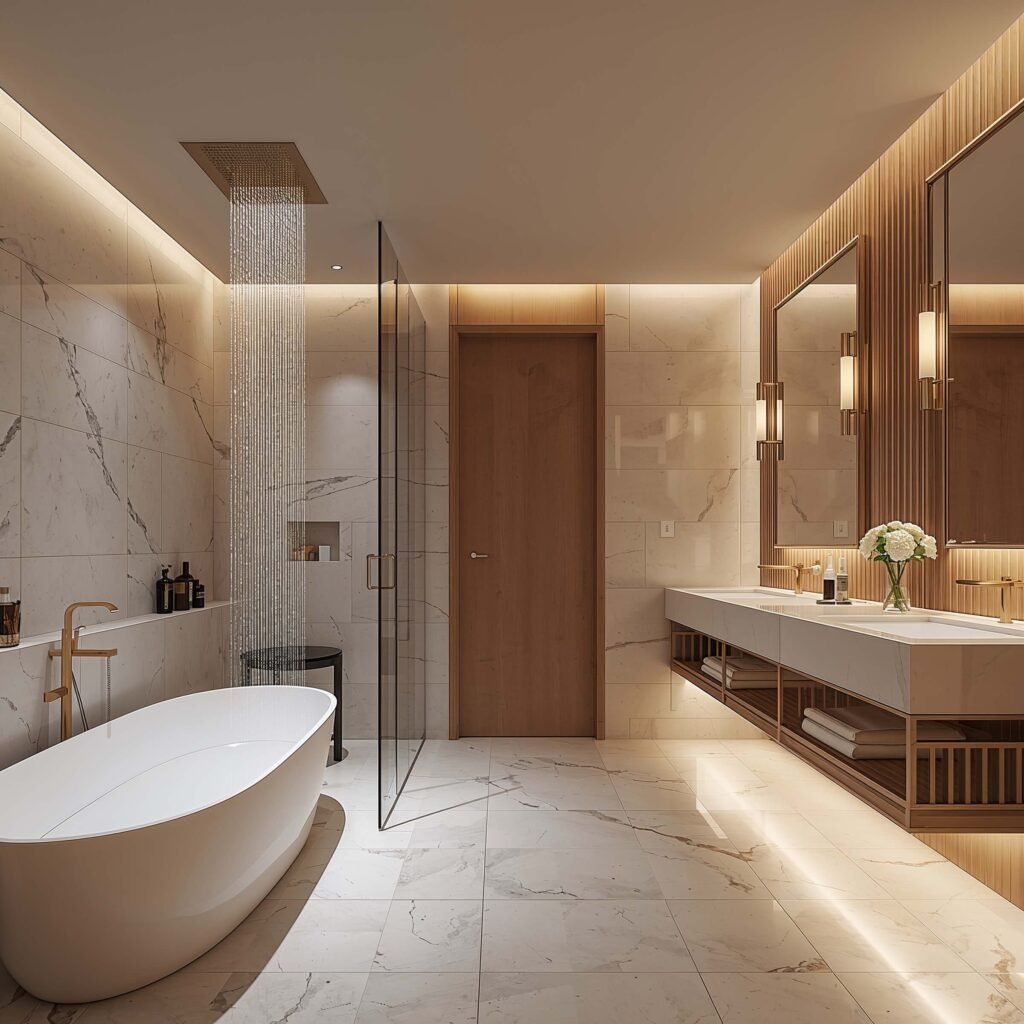
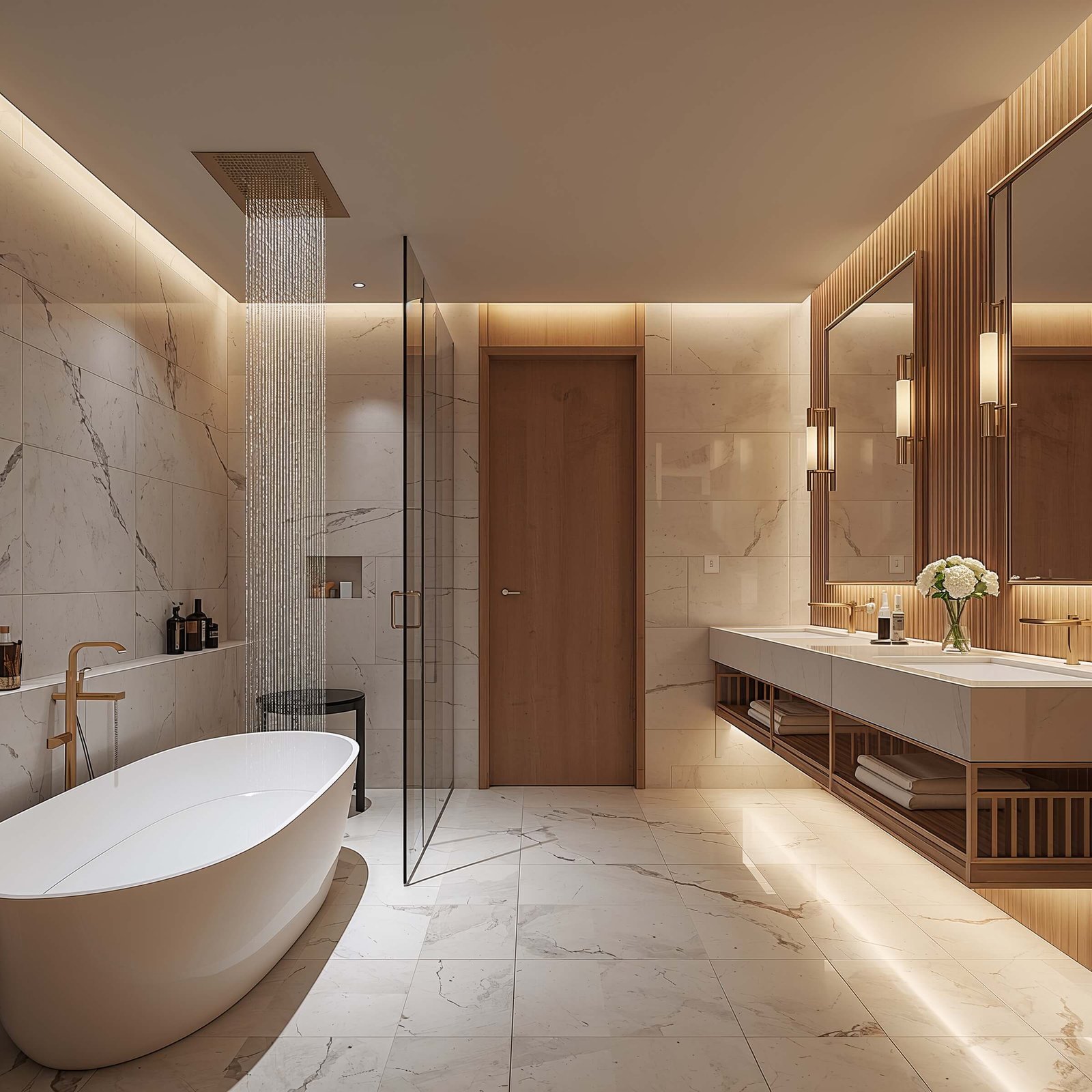
Want to know what makes people forget they’re in a basement? Creating a spa experience so good they’d rather be down there than upstairs. This isn’t about throwing money at expensive fixtures (though that helps). It’s about creating an atmosphere that makes you exhale the moment you walk in.
The foundation of any spa bathroom is the soaking experience. Whether that’s a freestanding tub or a shower with multiple heads, water is your main character here. In basements, I usually recommend amazing showers over tubs simply because of ceiling height limitations. But if you’ve got the room, a Japanese soaking tub can work even with lower ceilings.
Temperature control makes or breaks the spa vibe. Heated floors aren’t just luxury – in a basement, they’re almost necessary. Cold concrete under your feet at 6 AM? That’s not spa-like, that’s punishment. Radiant heating systems have come down in price significantly, and IMO, they’re worth every penny.
Elements That Scream Luxury
To really nail the spa aesthetic:
• Multiple shower heads including rain, handheld, and body jets
• Built-in bluetooth speakers (yes, waterproof ones exist)
• Chromotherapy lighting that changes colors for mood setting
• Towel warmers – game changer in damp basements
• Natural materials like teak, stone, and bamboo
Don’t forget the details that cost nothing but make everything. Rolled white towels, a small orchid, maybe some fancy soap you’d never actually use – these touches sell the spa story without breaking the bank.
Also Read: 10 Inspiring Basement Family Room Ideas for Modern Spaces
Industrial Style Basement Bathroom
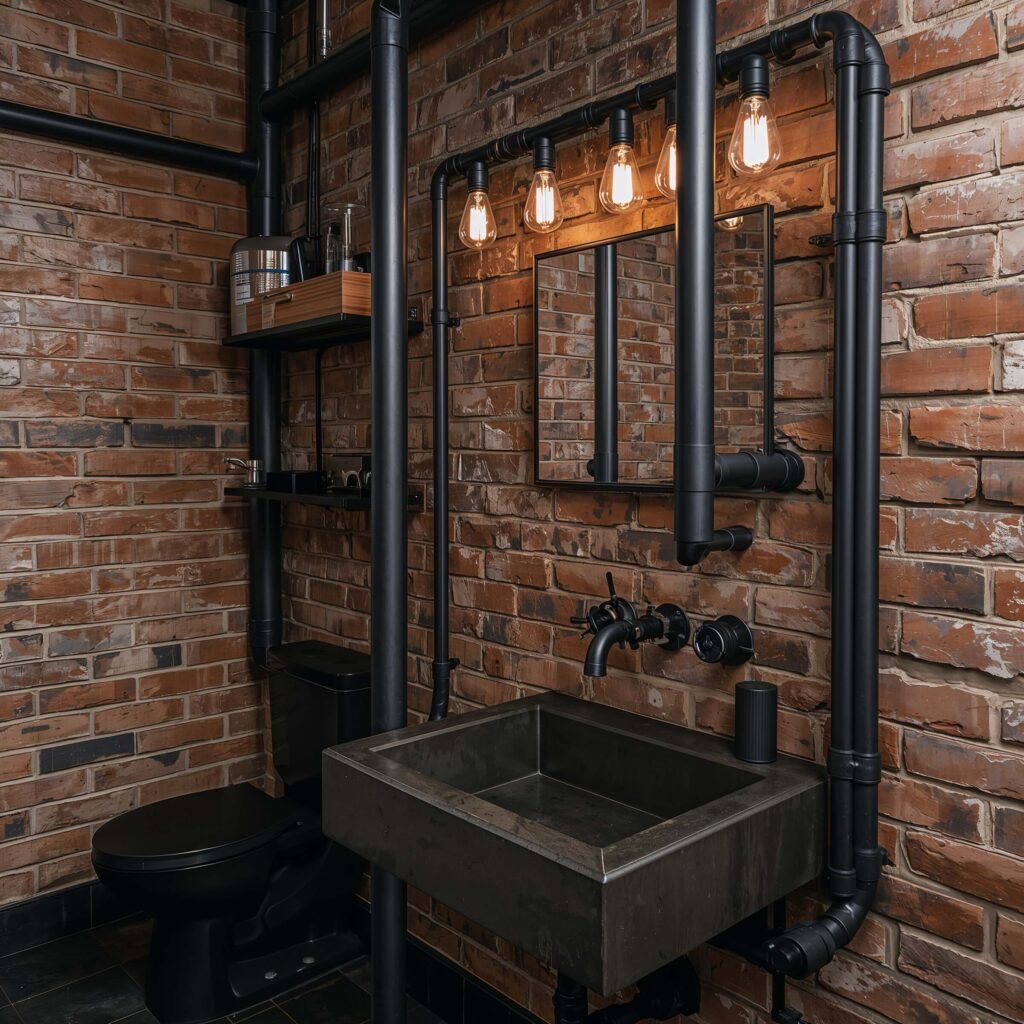
The industrial look and basements go together like peanut butter and jelly. You’ve already got concrete walls and exposed mechanicals – why fight it? Lean into that raw, unfinished aesthetic and make it look intentional.
This style thrives on honesty about materials. Exposed pipes become design features when you paint them matte black. Concrete walls don’t need covering when you seal them properly and add good lighting. Even that annoying support beam can become a focal point with the right treatment.
The key to industrial without looking unfinished? Balance the raw with the refined. Pair that concrete with a sleek glass shower enclosure. Mix rough textures with smooth surfaces. It’s all about controlled chaos that looks deliberate, not accidental.
Industrial Elements That Work
What really sells industrial style:
• Exposed Edison bulbs in cage fixtures or on vintage-style cords
• Matte black everything – faucets, shower frames, even outlet covers
• Concrete sinks or metal basin sinks
• Metro tiles with dark grout for that authentic subway feel
• Open pipe shelving using actual plumbing parts
The biggest challenge with industrial bathrooms? They can feel cold. Combat this with warm lighting (2700K bulbs, not those harsh white ones) and maybe one soft element like a plush bath mat. You want “converted loft,” not “abandoned warehouse.”
Bright White Basement Bathroom Design
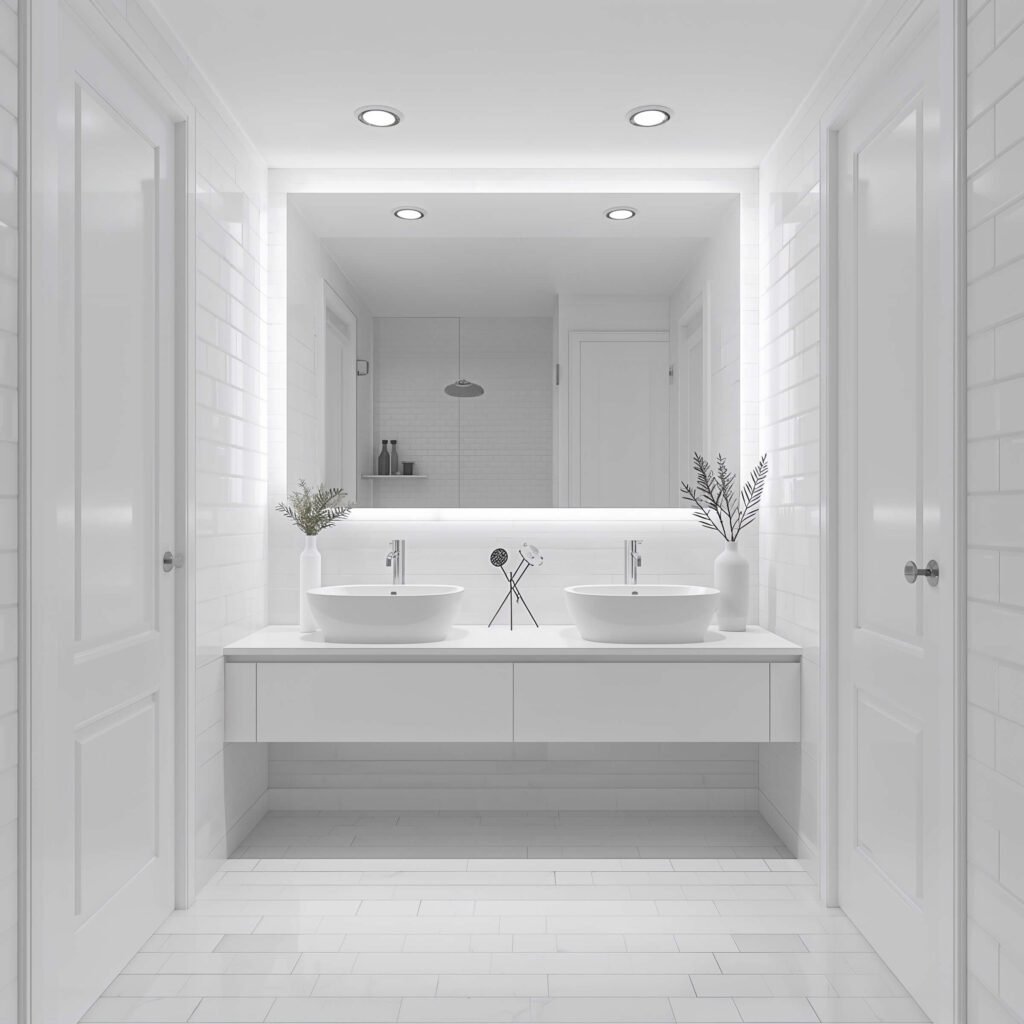
White bathrooms in basements might sound counterintuitive – won’t they show every speck of dirt? But here’s the thing: white reflects light like nothing else, and basements need all the help they can get in the brightness department.
The trick isn’t just painting everything white and calling it a day. You need layers of white, different textures, and strategic contrast to keep things interesting. Glossy white subway tiles reflect differently than matte white walls. A white marble pattern adds movement without adding color.
But let’s be honest – all white can be anxiety-inducing for some people. The solution? Add one bold accent color through accessories you can easily change. Navy towels, emerald green plants, or even black fixtures against all that white create stunning contrast without permanent commitment.
Making White Work Underground
Success strategies for white basement bathrooms:
• Multiple light sources at different heights and intensities
• Large mirrors to bounce light around (the bigger, the better)
• Glossy surfaces where possible – they reflect more light than matte
• White grout for seamless tile appearance (yes, it’s maintainable with proper sealing)
The maintenance question always comes up. Modern sealers and easy-clean surfaces have made white bathrooms way more practical than they used to be. Plus, when everything’s white, touch-up painting becomes super simple 🙂
Basement Half Bath for Small Spaces
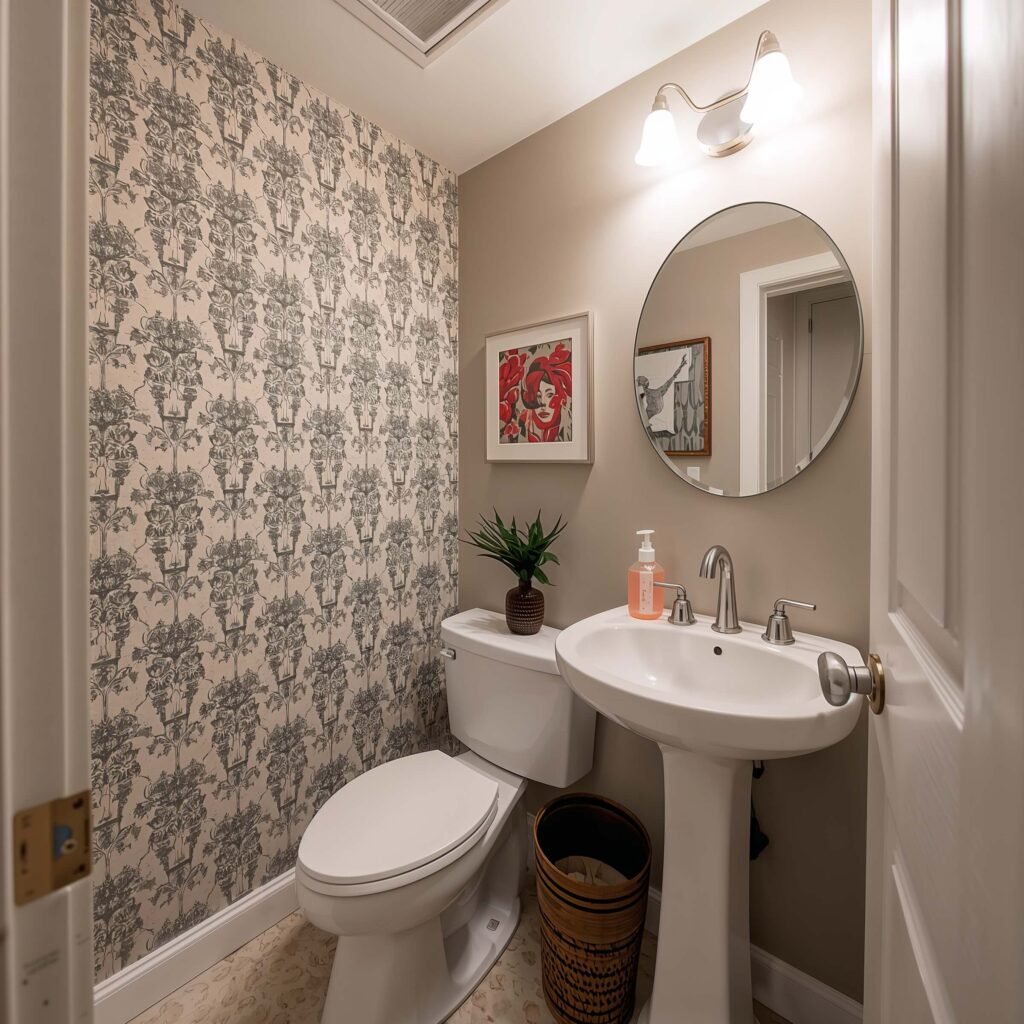
Half baths in basements are seriously underrated. Everyone fixates on full bathrooms, but sometimes a powder room is exactly what you need. Especially when you’re working with that weird space under the stairs that’s too small for anything else.
These tiny rooms can be bold in ways full bathrooms can’t. Want to try that wild wallpaper you’ve been eyeing? Perfect place for it. Dying to use that ridiculously expensive tile? You only need like 20 square feet. Half baths are where you can take risks without massive commitment.
The challenge is making a tiny basement space feel intentional, not like an afterthought. Good ventilation is crucial – nobody wants to emerge from a windowless basement bathroom gasping for air. A quality exhaust fan isn’t optional; it’s essential.
Maximizing Mini Bathrooms
Key strategies for half bath success:
• Wall-mounted toilets save precious inches
• Corner sinks or ultra-narrow vanities designed for powder rooms
• Dramatic lighting – a statement fixture draws eyes up
• Bold design choices – this is your place to experiment
Storage isn’t really a concern in half baths, which is liberating. Focus on the experience instead. Make it memorable, make it fun, make it the bathroom people actually want to use when they’re hanging in your basement.
Also Read: 10 Beautiful Finished Basement Ideas for Relaxing Retreats
Farmhouse Style Basement Bathroom
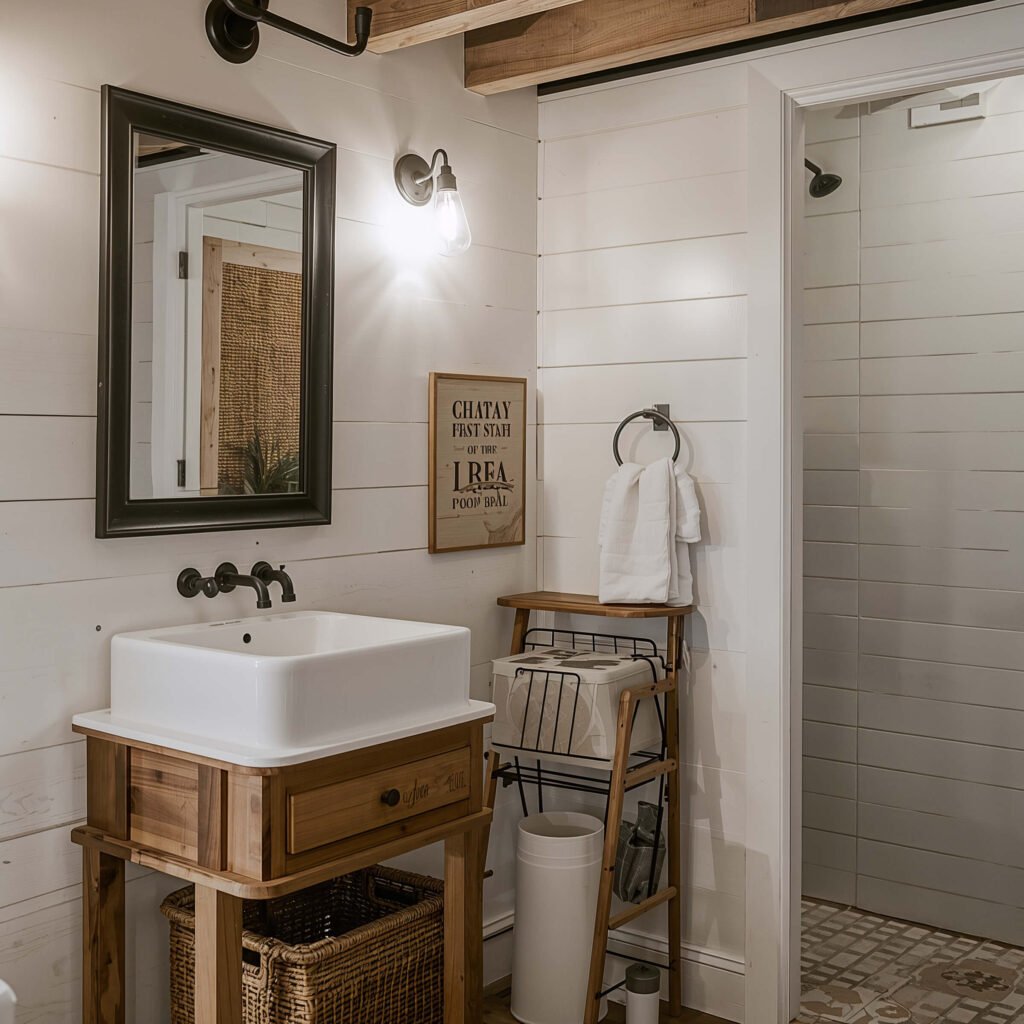
The farmhouse trend isn’t going anywhere, and honestly, it works beautifully in basements. There’s something about that cozy, lived-in feeling that makes underground spaces feel less cave-like and more charming retreat.
The color palette here stays pretty neutral – whites, creams, soft grays, maybe some sage green if you’re feeling adventurous. But texture is where farmhouse shines. Shiplap on the walls (or even just one accent wall), beadboard wainscoting, and vintage-inspired fixtures all contribute to that farmhouse charm.
Don’t go overboard with the barn door thing though. I know, I know, they’re everywhere. But in a basement bathroom? The last thing you need is a door that doesn’t properly seal in a space that’s already fighting moisture issues. Save the barn door for somewhere else and stick with a traditional door that actually provides privacy and climate control.
Farmhouse Elements That Work
What really nails the farmhouse look:
• Apron front sinks if you have the space
• Bridge faucets or gooseneck styles in brushed finishes
• Wood vanities with visible grain (or good-quality laminate that looks like wood)
• Vintage-style lighting – think schoolhouse fixtures or mason jar lights
• Open shelving with woven baskets for storage
The accessories make a huge difference here. Galvanized metal containers, vintage glass jars for cotton balls, maybe a small vintage sign – these details cost practically nothing but sell the whole farmhouse story.
Making Your Choice
So there you have it – ten different directions you could take that basement bathroom. The best part? You don’t have to pick just one. Maybe you want a modern minimalist space with industrial touches. Or a budget-friendly farmhouse design with spa-like features. The beauty of basement bathrooms is that they’re typically separated from the rest of your home’s aesthetic, giving you freedom to experiment.
Remember, the biggest mistake you can make is doing nothing. That unfinished basement space isn’t getting any more useful sitting empty. Even a basic, budget-friendly bathroom adds serious value to your home and makes your basement actually functional.
Start with what you need, work with what you have, and don’t be afraid to get creative. Every single one of these styles can be adapted to your specific space, budget, and skill level. The key is just starting. Pick the approach that speaks to you, make a plan, and get going. Your future self (and your guests) will thank you when they don’t have to trudge upstairs every time nature calls.
Whether you go luxe or lean, modern or rustic, the goal is the same – creating a basement bathroom that doesn’t feel like a basement bathroom. And with these ideas in your toolkit, you’re already halfway there. Now stop scrolling through Pinterest and start making it happen. Your basement is waiting.