10 Beautiful Basement Color Schemes Ideas for Cozy Spaces

Remember that time you walked into someone’s basement and thought, “Wow, this doesn’t feel like a dungeon at all”? Yeah, me too. That’s the power of choosing the right color scheme, my friend.
After spending way too many weekends helping friends (and myself) transform their basements from forgotten storage spaces into actual livable areas, I’ve learned that paint color makes or breaks your basement vibe.
Look, basements get a bad rap. Everyone thinks they’re automatically dark, damp, and depressing. But pick the right colors? You’ve got yourself a game-changer.
Whether you’re creating a cozy family room, a home office, or your personal escape cave, these ten basement color schemes will help you nail the transformation.
Cozy Neutral Basement Color Schemes
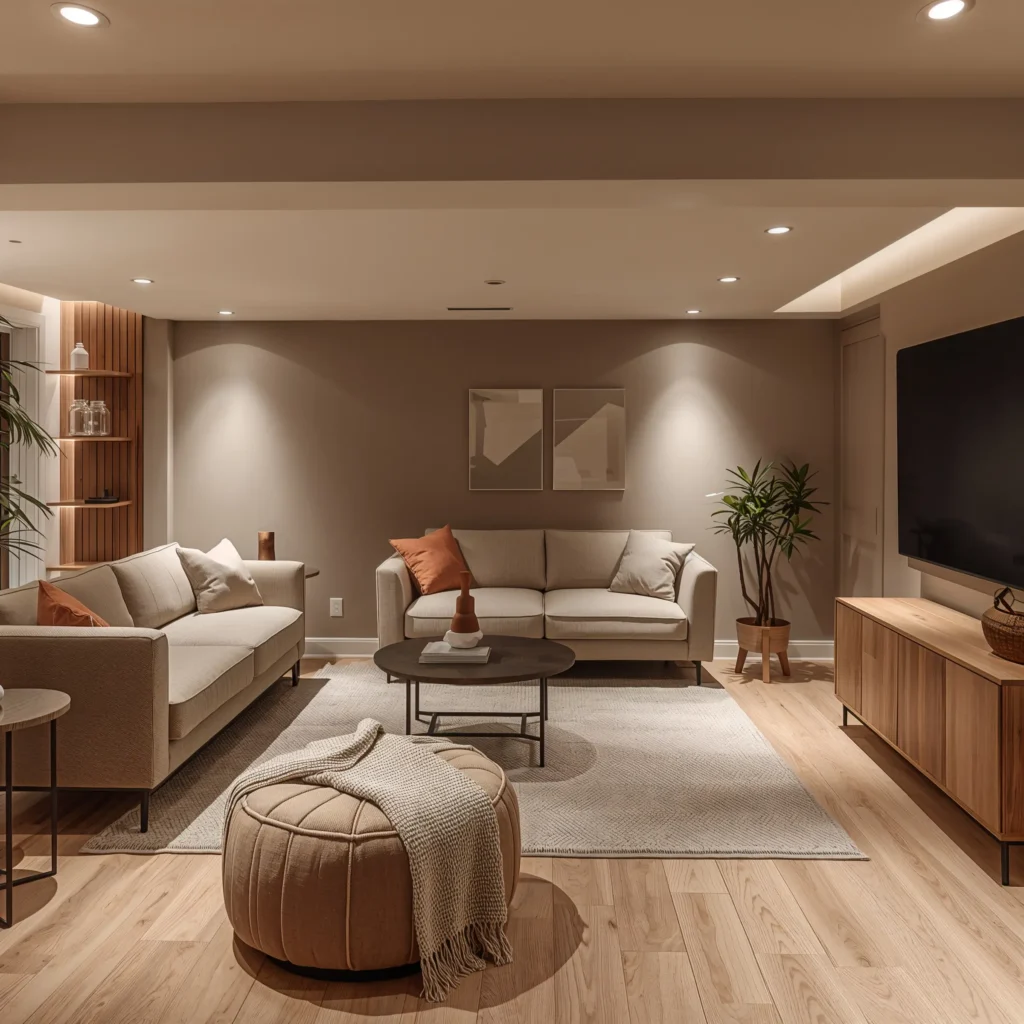
Let’s kick things off with the crowd-pleaser: neutrals. I’m talking about those warm beiges, soft taupes, and creamy whites that make everyone feel instantly at home. You know why neutrals work so brilliantly in basements? They’re basically the Switzerland of color schemes – they get along with everyone and everything.
Why Neutrals Rock in Basements
Here’s what makes neutral colors your basement’s best friend:
• They reflect light better than darker shades, helping combat that typical basement darkness
• They’re timeless – you won’t hate them in five years (trust me on this one)
• They’re versatile – switch up your decor without repainting
• They make spaces feel larger – crucial for those smaller basements
I painted my first basement in a warm beige called “Accessible Beige” by Sherwin-Williams, and honestly? It transformed the space from creepy storage area to cozy hangout spot. The trick with neutrals is choosing ones with warm undertones rather than cool ones. Cool grays and whites can make your basement feel even more cave-like – not the goal here.
Making Neutrals Interesting
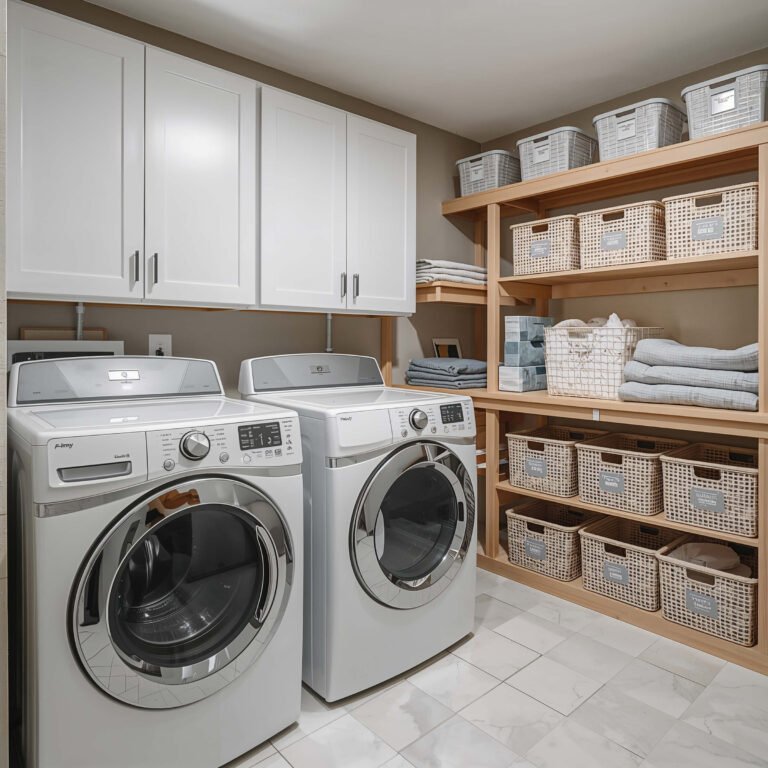
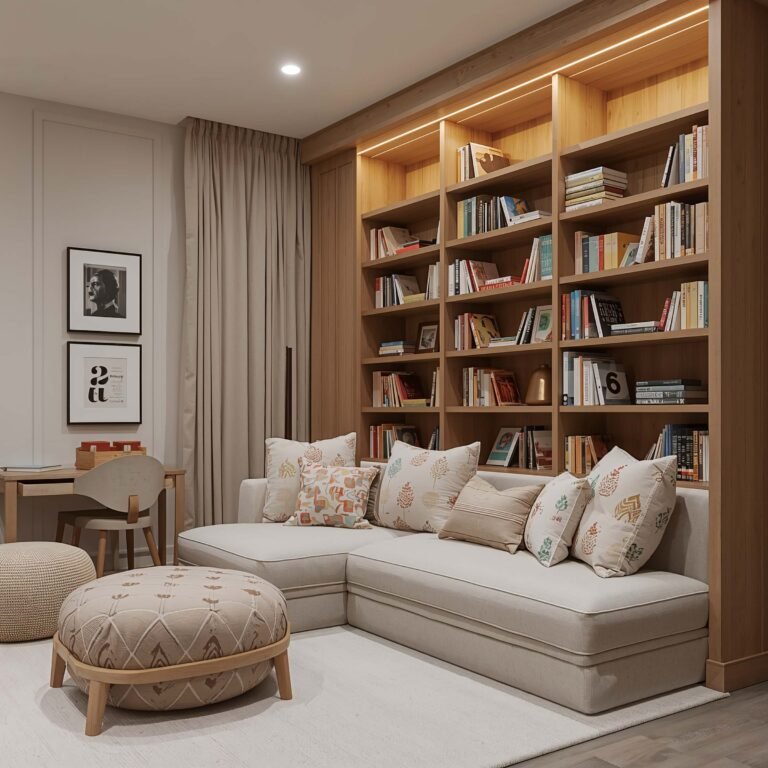
Want to avoid the “boring beige box” syndrome? Layer different neutral shades together. Try pairing a light taupe on the walls with crispy white trim and maybe a darker mushroom color on an accent wall. Throw in some natural textures like wood furniture and woven baskets, and suddenly your neutral basement has personality.
Bright and Airy Basement Palette Ideas
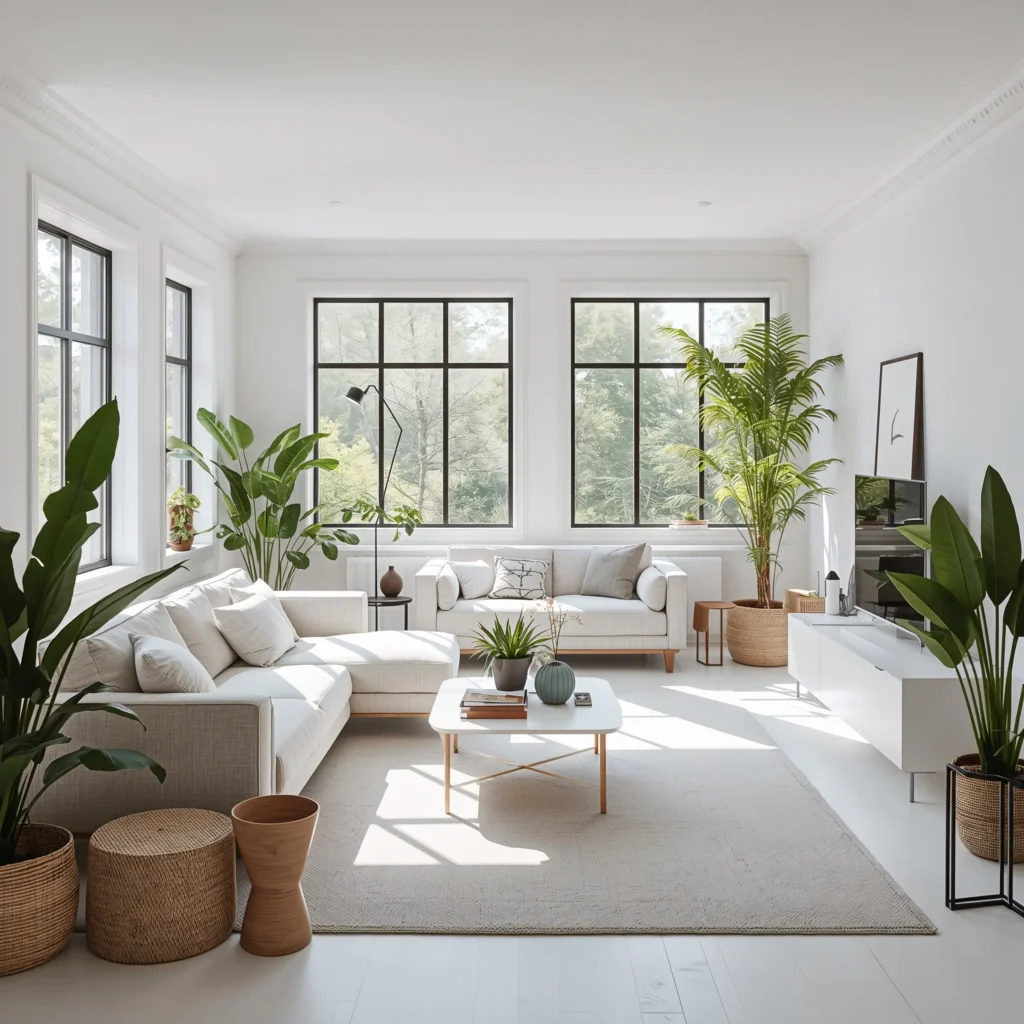
Who says basements have to feel underground? With the right bright and airy color palette, you can trick everyone (including yourself) into forgetting they’re below grade. This approach works especially well if you’ve got those tiny basement windows that let in about as much light as a flashlight.
The Magic Formula for Brightness
Creating an airy basement isn’t just about slapping white paint on everything. Here’s my tested formula:
• Start with soft whites or very pale grays as your base
• Add touches of pale yellow or soft peach for warmth
• Include mirrors strategically to bounce light around
• Choose light-colored flooring if possible
Ever noticed how Scandinavian design always looks so fresh and bright? That’s the vibe we’re going for here. I recommend colors like Benjamin Moore’s Cloud White or Sherwin-Williams’ Pure White – but here’s the kicker: test them first! What looks white in the store might look gray in your basement’s lighting.
Avoiding the Hospital Look
The biggest mistake people make with bright palettes? Going too sterile. You want bright and airy, not operating room. Add warmth through soft cream accents, natural wood elements, or even pale blush pink accessories. These subtle touches prevent your basement from feeling like a medical facility.
Moody Dark Basement Color Combinations
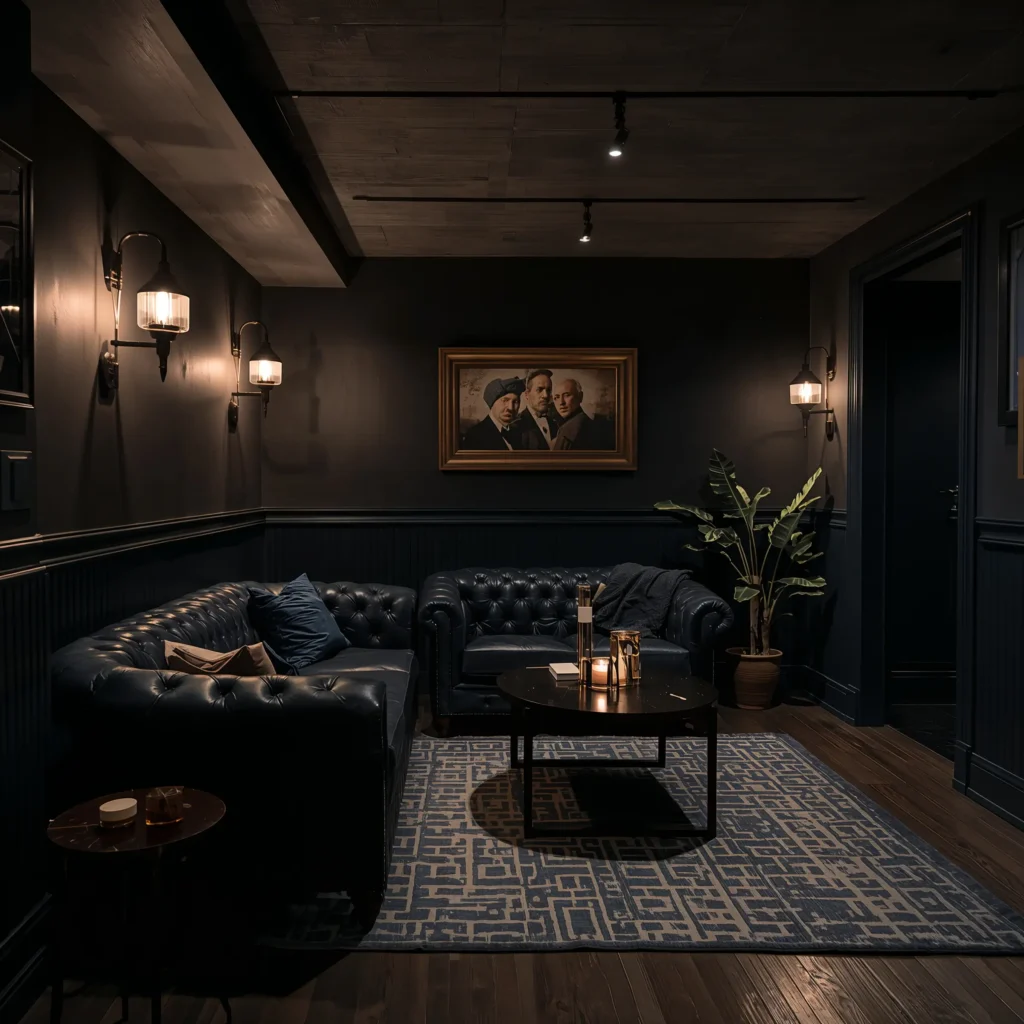
Okay, hear me out before you scroll past this one. Dark colors in a basement? I know it sounds counterintuitive, but embracing the darkness can create the most dramatic, sophisticated spaces. Think speakeasy vibes, not scary movie set.
When Dark Colors Actually Work
Dark basement colors work best when:
• You’ve got decent artificial lighting (this is non-negotiable)
• You’re creating a specific mood (home theater, anyone?)
• You want to hide imperfections in walls or ceilings
• You’re going for that cozy, cocoon-like feeling
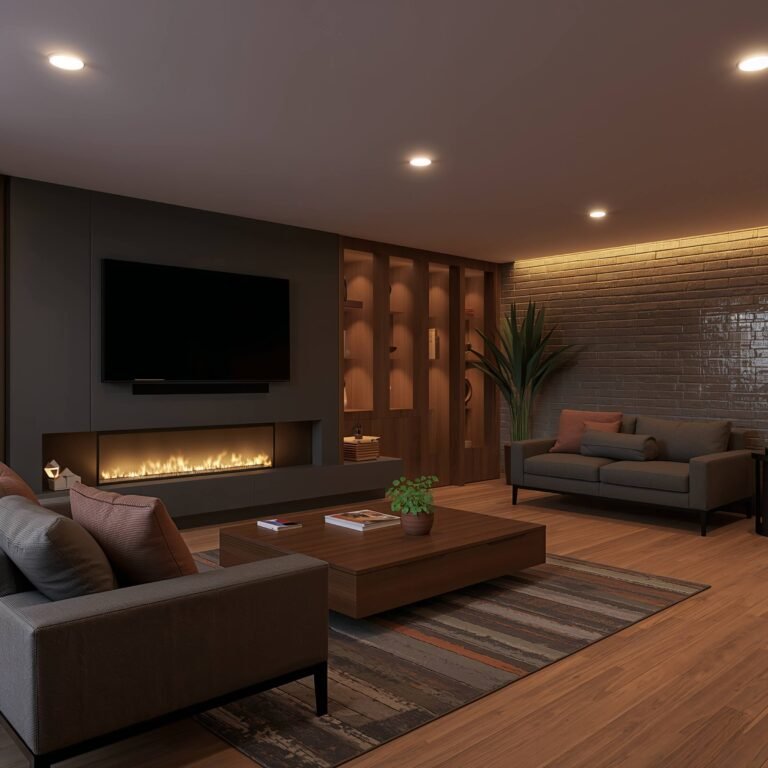
I helped my brother paint his basement in Tricorn Black by Sherwin-Williams, and everyone thought we’d lost our minds. Fast forward six months, and it’s the most requested hangout spot for game nights. The key? We paired it with warm brass fixtures and tons of layered lighting.
Color Combinations That Kill It
Some moody combinations that absolutely work:
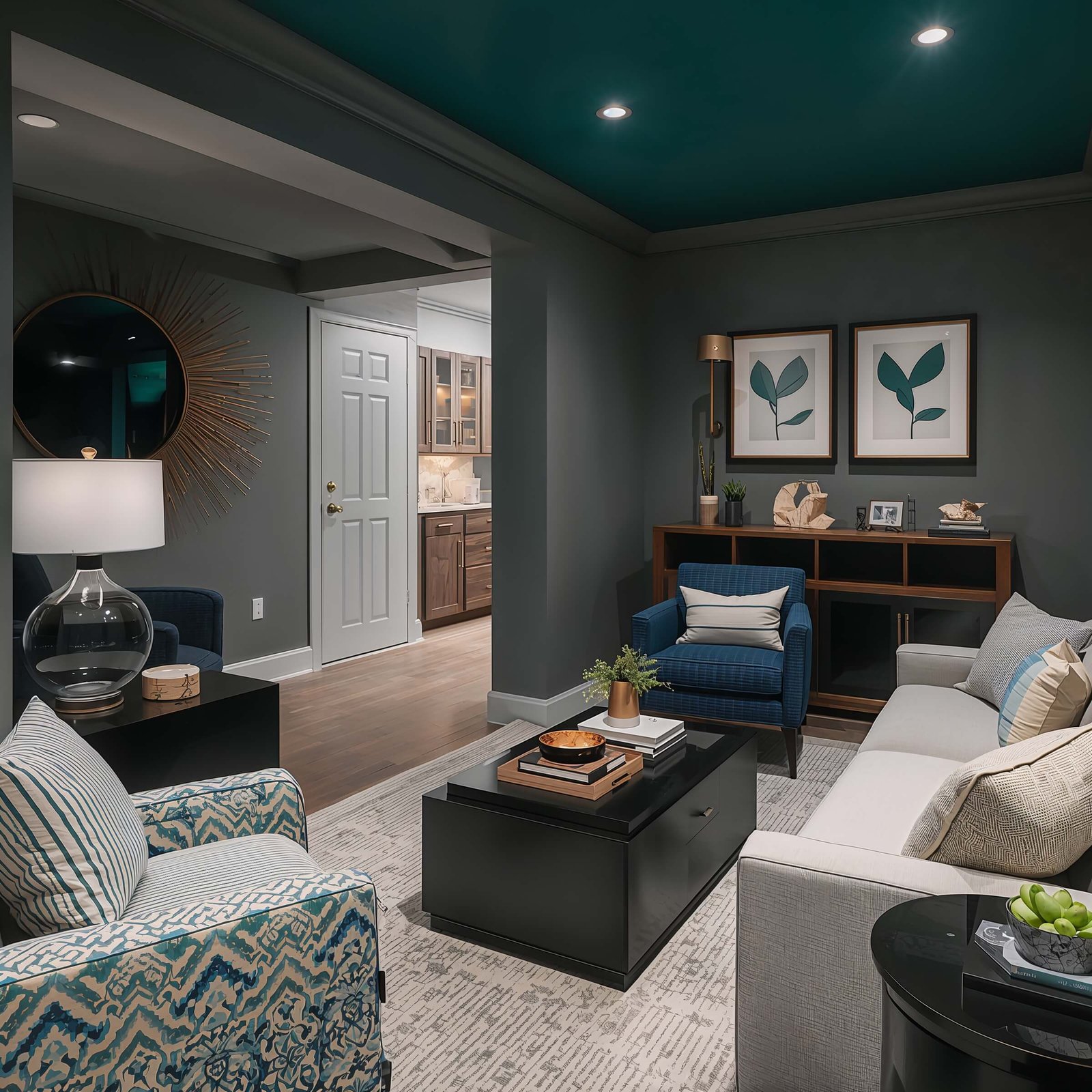
• Charcoal gray walls with deep emerald accents
• Navy blue paired with rich cognac leather
• Deep plum with gold metallic touches
• Forest green with natural wood tones
Also Read: 10 Brilliant Walkout Basement Ideas for Bright and Functional Rooms
Modern Gray Basement Color Inspirations
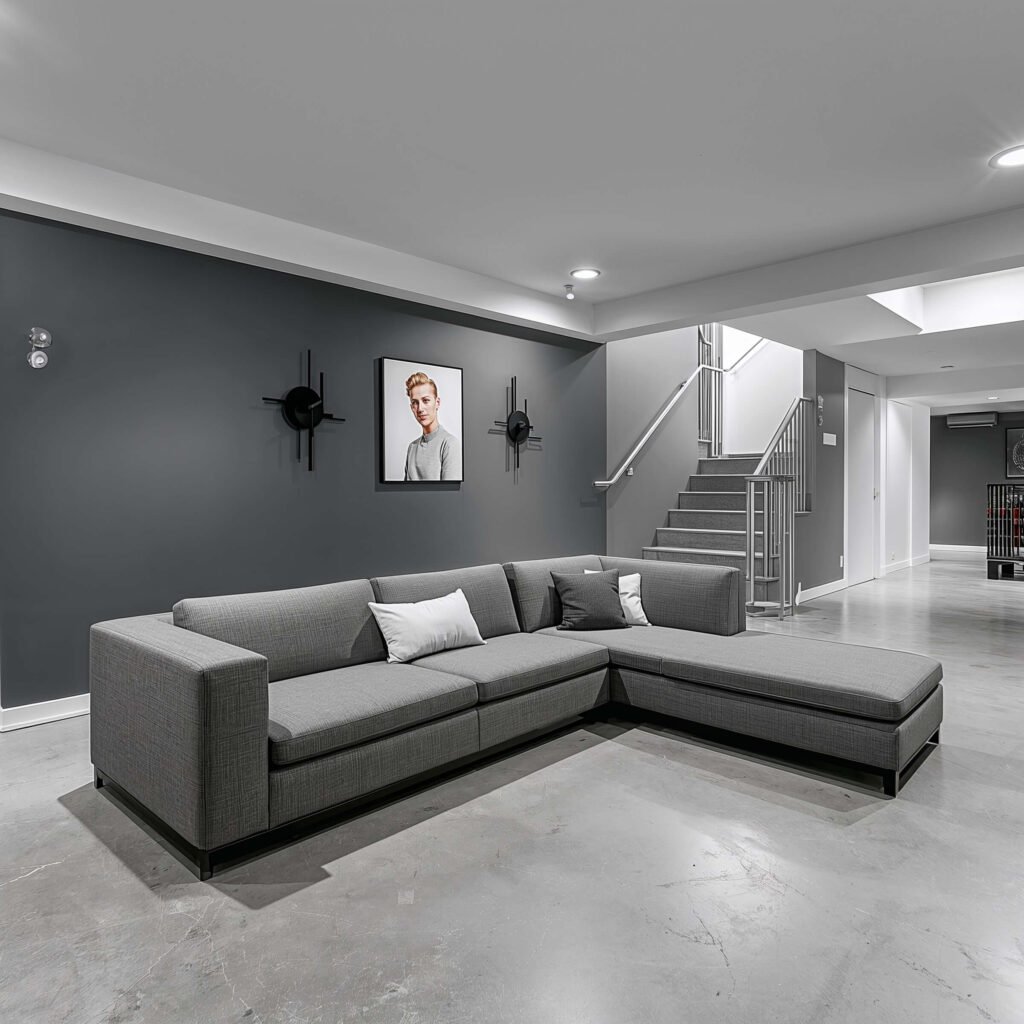
Gray might seem like the obvious choice (and honestly, it kind of is), but there’s a reason it’s been dominating basement makeovers for the past decade. Gray is incredibly versatile – it can go warm, cool, light, dark, modern, traditional… you name it.
Finding Your Perfect Gray
Not all grays are created equal, FYI. You’ve got:
• Warm grays with brown or beige undertones (think Agreeable Gray)
• Cool grays with blue or purple undertones (like Stonington Gray)
• True grays that are perfectly neutral (rare but they exist)
• Charcoal grays for drama without going full black
The biggest gray mistake? Not considering your basement’s lighting. That perfect gray you saw on Pinterest might look completely different in your space. I learned this the hard way when my “perfect gray” turned purple in my basement’s fluorescent lighting. Always, always test your paint!
Making Gray Feel Modern
Want that sleek, modern look? Pair your gray walls with:
• Crisp white trim and ceilings
• Black accent pieces for contrast
• Pops of a single bright color (yellow works great)
• Metallic finishes in silver or chrome
Warm Earth Tone Basement Schemes
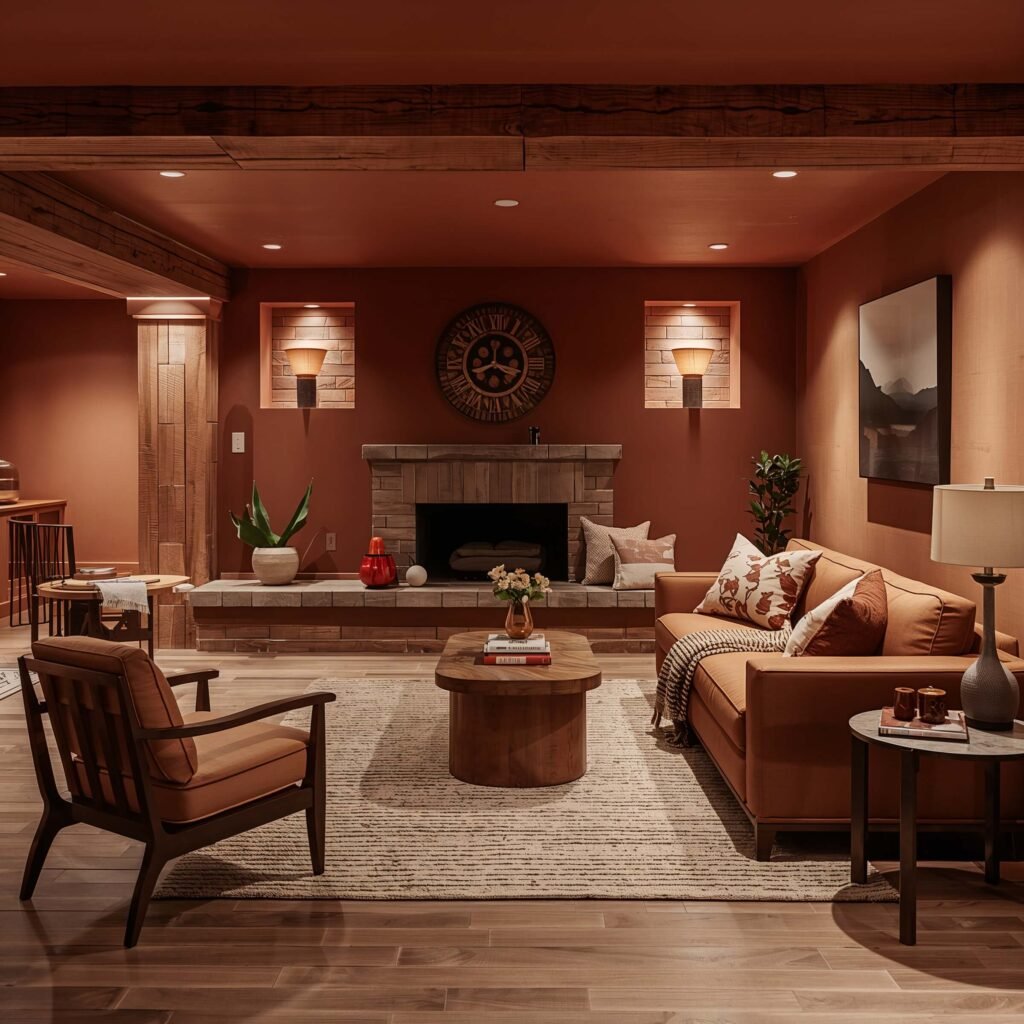
Earth tones in a basement just make sense – you’re already underground, right? But seriously, warm browns, terracottas, and sandy beiges create the coziest basement spaces I’ve ever seen. They’re like a warm hug for your walls.
Building Your Earth Tone Palette
Here’s how to nail the earth tone look:
• Start with a warm base color like camel or sand
• Layer in deeper browns through furniture or accent walls
• Add terracotta or rust for visual interest
• Include natural materials like jute, wood, and stone
My neighbor transformed her basement using Benjamin Moore’s Hawk Brown on one wall with lighter café au lait on the others. Combined with her vintage leather furniture? Pure magic. The space feels like an upscale coffee shop now.
Avoiding the 1970s Time Warp
Earth tones can quickly go from chic to dated if you’re not careful. Keep things modern by:
• Mixing in contemporary furniture shapes
• Adding black or charcoal accents for contrast
• Including plenty of white to keep things fresh
• Using geometric patterns instead of florals
Cool Blue Basement Color Ideas
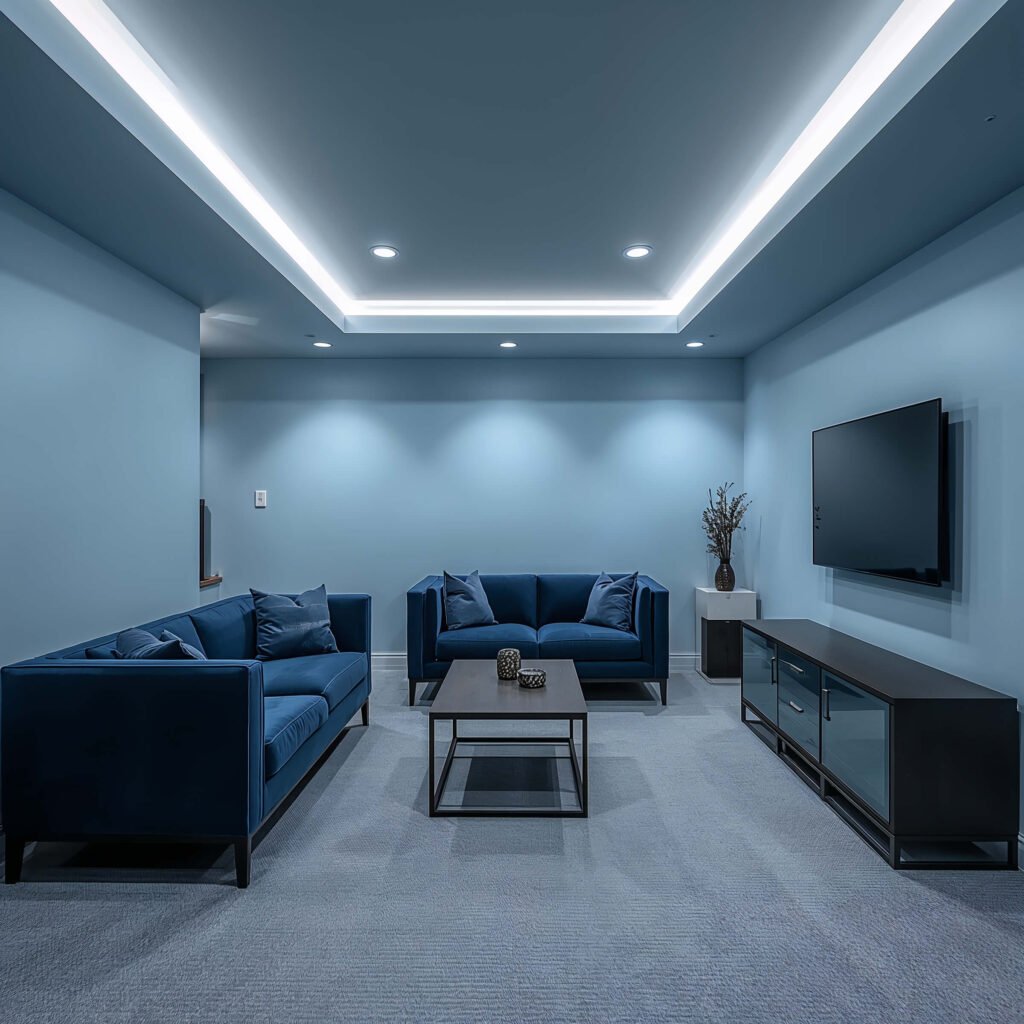
Blue basements can either feel like serene spas or cold dungeons – there’s not much middle ground. The trick? Choosing the right shade of blue and pairing it with the right complementary colors. Get it right, and you’ve got instant tranquility.
Blue Shades That Work Underground
Not every blue belongs in a basement:
• Soft powder blues work if you have good lighting
• Navy blues create sophistication without feeling cold
• Teal blues add energy while staying calming
• Gray-blues offer the best of both worlds
I painted my home office basement in Sherwin-Williams’ Watery, and it’s become my favorite room in the house. The color changes throughout the day – sometimes it looks more gray, sometimes more blue, but always calming.
Warming Up Your Blues
Blues can feel chilly in basements, so warm them up with:
• Warm wood tones in furniture and flooring
• Brass or gold fixtures and hardware
• Cream or beige textiles and rugs
• Orange or coral accent pieces (they’re blue’s complementary color!)
Also Read: 10 Creative Basement Parking Ideas and Safety Tips
Vibrant Accent Walls for Basements
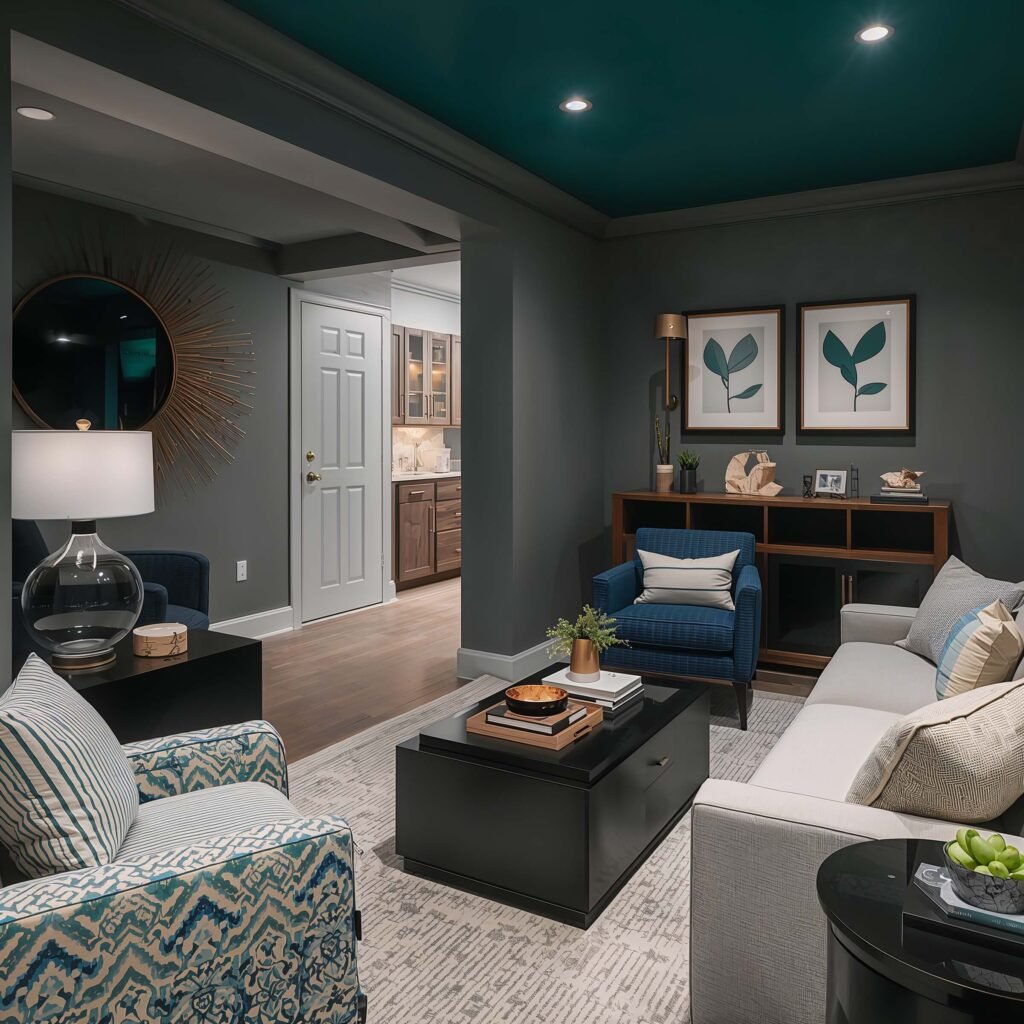
Sometimes you need that pop of color to wake up your basement space. Accent walls let you go bold without overwhelming the entire room. Plus, if you hate it in a year, you’re only repainting one wall 🙂
Choosing Your Accent Wall
The best accent walls are:
• The wall you see first when entering the space
• A wall without windows or doors breaking it up
• The wall behind your main furniture piece (like a sofa)
• A wall that highlights architectural features
Colors That Command Attention
Some accent colors that absolutely slay in basements:
• Emerald green – sophisticated and unexpected
• Burnt orange – warm and energizing
• Deep purple – dramatic without being overwhelming
• Mustard yellow – retro cool when done right
My cousin went wild with a hot pink accent wall in her craft room basement. Should it work? Probably not. Does it work? Absolutely. The key was keeping everything else neutral and letting that pink wall be the star.
Soft Pastel Basement Color Palettes
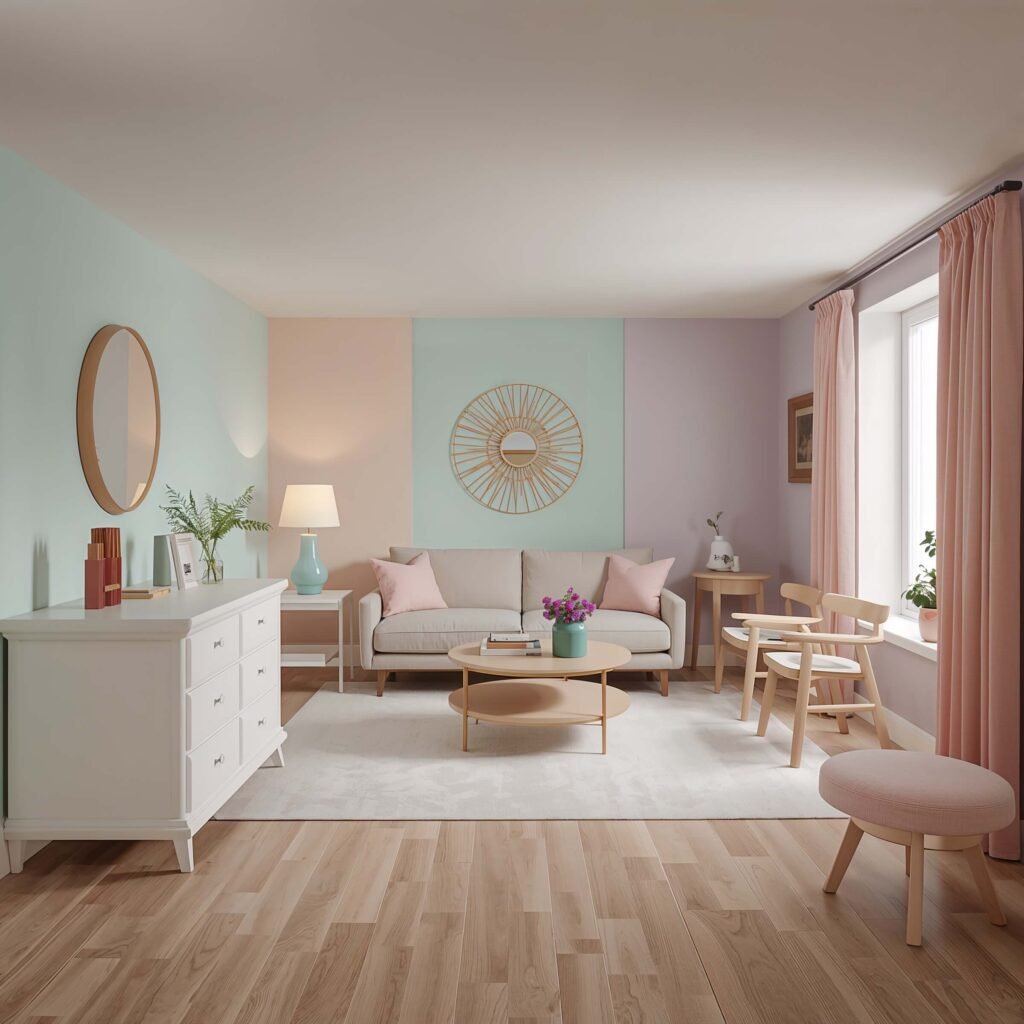
Pastels in a basement might sound too sweet, but hear me out. Soft, muted pastels can create the most calming, inviting spaces when done right. We’re not talking Easter egg colors here – think sophisticated, grown-up pastels.
Pastels That Work for Adults
Skip the baby nursery vibes with these sophisticated pastels:
• Dusty rose or blush pink
• Sage green or celadon
• Pale lavender with gray undertones
• Soft peach or apricot
The secret to adult pastels? Keep them muted and pair them with neutrals. I used a pale sage green in my friend’s basement yoga studio, and paired with white and natural wood, it feels zen rather than juvenile.
Creating Balance with Pastels
Pastels need grounding elements:
• Add charcoal gray or black accents
• Include natural textures like linen and wood
• Use metallic finishes for sophistication
• Keep artwork and decor minimal and modern
Rustic Farmhouse Basement Colors
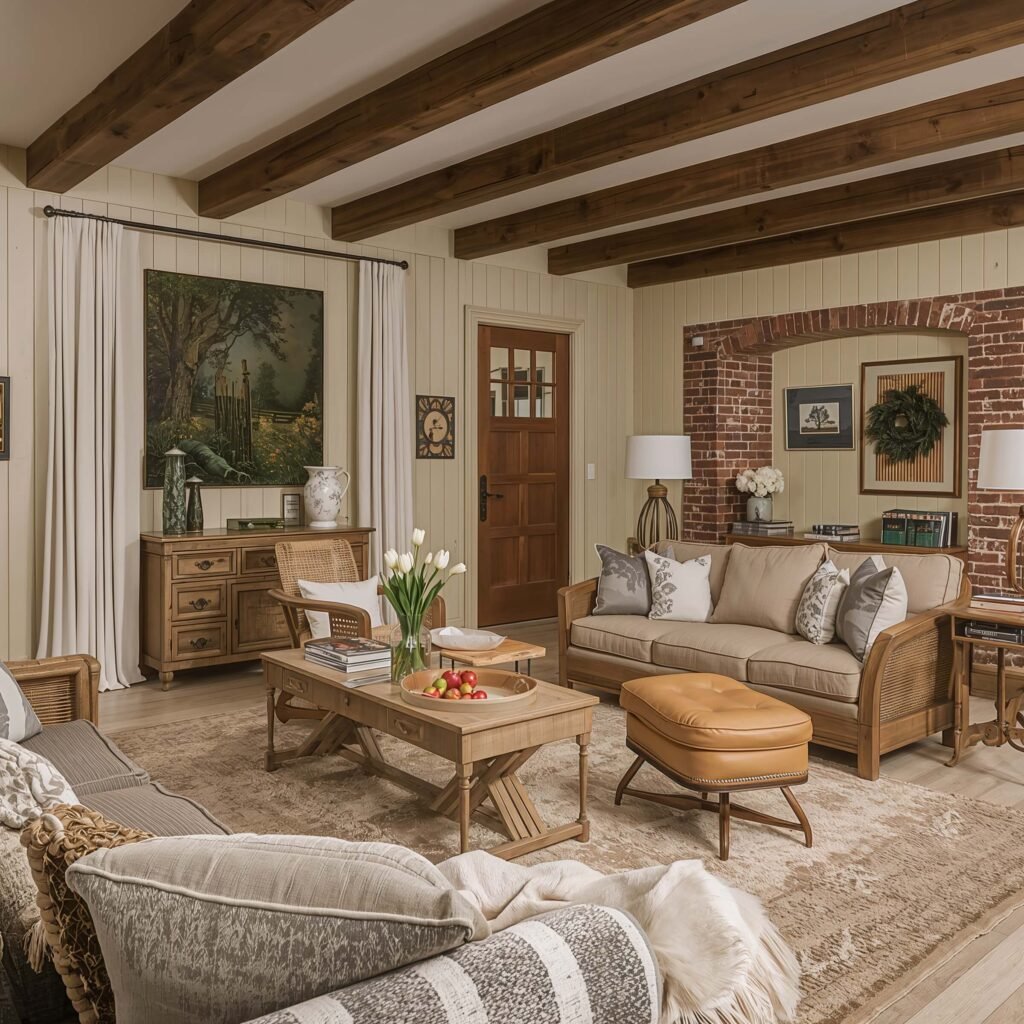
The farmhouse trend isn’t going anywhere, and honestly? Basements are perfect for this cozy, lived-in look. Rustic farmhouse colors bring warmth and character to what could otherwise be a sterile space.
The Farmhouse Color Formula
Here’s your rustic palette starter pack:
• Warm whites like Swiss Coffee or Alabaster
• Soft grays with warm undertones
• Sage greens or muted olives
• Navy blue for contrast and depth
Adding Authentic Farmhouse Character
Colors alone won’t give you that farmhouse feel. You need:
• Shiplap or board-and-batten on at least one wall
• Natural wood elements (beams, furniture, shelving)
• Black metal accents in lighting and hardware
• Vintage or distressed furniture pieces
I helped transform a friend’s basement using Benjamin Moore’s Simply White on shiplap walls with Kendall Charcoal on the remaining walls. Add some reclaimed wood shelving and vintage signs? Instant farmhouse perfection.
Also Read: 10 Genius Basement Kitchen Ideas and Space-Saving Tricks
Chic Monochromatic Basement Ideas
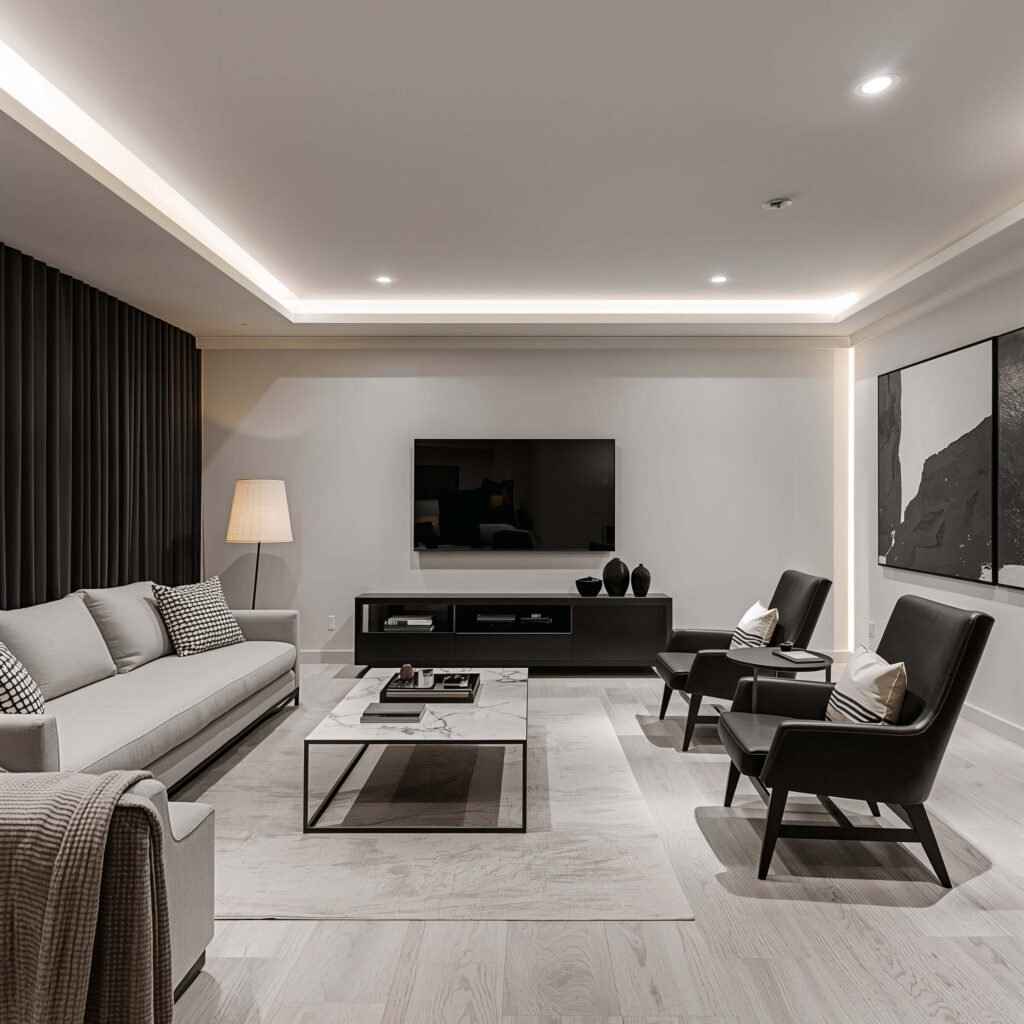
Want to look like you hired an expensive designer? Go monochromatic. Using varying shades of one color creates depth and sophistication that’s hard to mess up. It’s basically foolproof elegance.
Mastering the Monochrome Look
The key to monochromatic success:
• Choose 3-5 shades of your chosen color
• Use the lightest shade on walls and ceilings
• Add medium tones through furniture
• Include the darkest shade in accents and accessories
Color Families That Work Best
Some monochromatic schemes that never fail:
• All grays – from pale silver to charcoal
• Beige to brown spectrum – warm and inviting
• White to cream – bright but not boring
• Blue family – from powder to navy
My own basement uses a gray monochromatic scheme, and IMO, it’s the easiest design decision I’ve ever made. Everything coordinates, nothing clashes, and it looks intentional rather than random.
Adding Interest Without Color
Monochromatic doesn’t mean monotonous:
• Play with different textures (smooth, rough, soft, shiny)
• Mix patterns in the same color family
• Include various materials (wood, metal, fabric, glass)
• Use lighting to create depth and shadows
Making Your Final Color Decision
So which basement color scheme speaks to you? Before you grab that paintbrush, consider:
• Your basement’s natural lighting (or lack thereof)
• How you plan to use the space
• Your existing furniture and decor
• Your personal style preferences
Remember, paint is relatively cheap and changeable. If you hate it, you can always repaint. But chances are, if you’ve thought it through and tested your colors, you’ll love your transformed basement.
The biggest mistake people make? Overthinking it. Pick a scheme that makes you happy, test it out, and go for it. Your basement deserves to be more than just a storage space or laundry room. With the right colors, it becomes an extension of your home that you actually want to spend time in.
Ready to transform that underground space? Grab some paint samples this weekend and start experimenting. Trust me, once you see how color can completely change your basement’s vibe, you’ll wonder why you waited so long. And hey, if you end up with a color fail? Well, that’s what accent walls are for – turning mistakes into “design choices”!