10 Amazing Bookshelf Inspiration Ideas for Small Rooms

Ever walk into someone’s home and immediately get book envy? You know what I’m talking about – that perfectly styled bookshelf that somehow manages to look both functional and Instagram-worthy at the same time.
Well, I’ve spent the last decade obsessing over bookshelves (yes, really), and I’m here to share the secrets that’ll turn your boring book storage into a conversation starter.
Look, we all start with good intentions. We buy a bookshelf, dump our books on it, and call it a day. But then we see those gorgeous home tours online and wonder why our shelves look like they survived a tornado.
The truth? Great bookshelves don’t just happen – they’re designed. And no, you don’t need to hire an interior designer or blow your budget to make it work.
Today, I’m sharing ten bookshelf ideas that actually work in real homes. Not those fantasy Pinterest boards that require a trust fund and a personal stylist, but genuine, achievable inspiration that you can implement this weekend.
Minimalist Bookshelf Styling
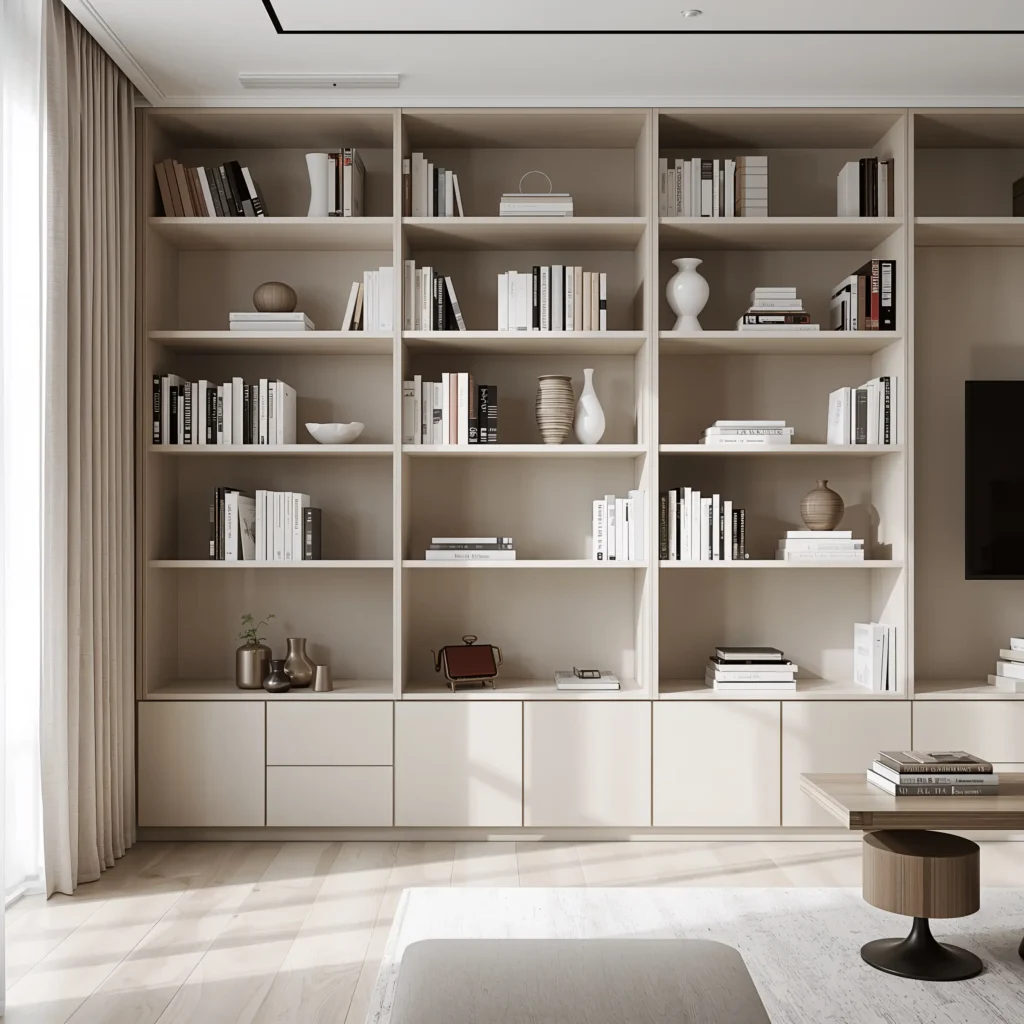
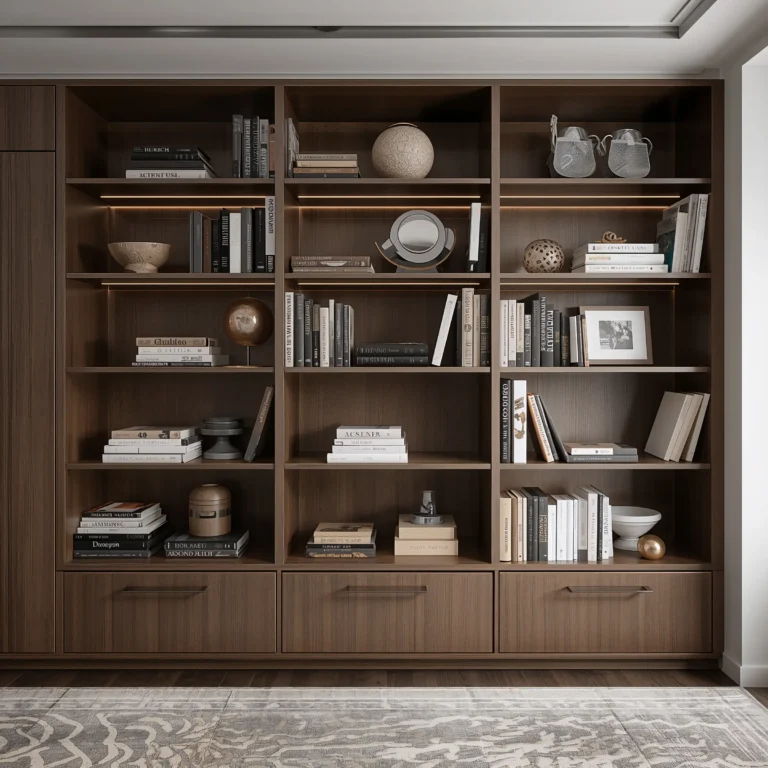
Let me guess – you’ve tried the minimalist thing before and ended up with shelves that looked empty rather than elegant? I’ve been there. The trick with minimalist bookshelf styling isn’t about having less stuff. It’s about being intentional with what you display.
Start by removing everything. Yes, everything. Now comes the fun part: you’re going to curate like you’re running your own personal museum. Choose books that actually mean something to you, not just ones with pretty spines (though those help too).
The 70/30 Rule
Here’s my personal formula that works every time:
- 70% books (arranged with breathing room between them)
- 30% negative space or carefully chosen objects
- Zero clutter
I keep my minimalist shelves interesting by varying the orientation. Stack some books horizontally to create natural breaks in the vertical lines. Place a small sculptural object or a single succulent on top of these stacks. The key word here? Restraint.
Color Matters (Even in Minimalism)
Want to know what separates amateur minimalist shelves from the pros? A cohesive color palette. I stick to three colors max:
- Neutral base (white, black, or natural wood)
- One accent color
- Metallic touches (gold, copper, or silver)
This doesn’t mean painting your books – though some people do that, and honestly, more power to them. It means being selective about which books you display and adding accessories that complement rather than compete.
Color-Coordinated Book Arrangement
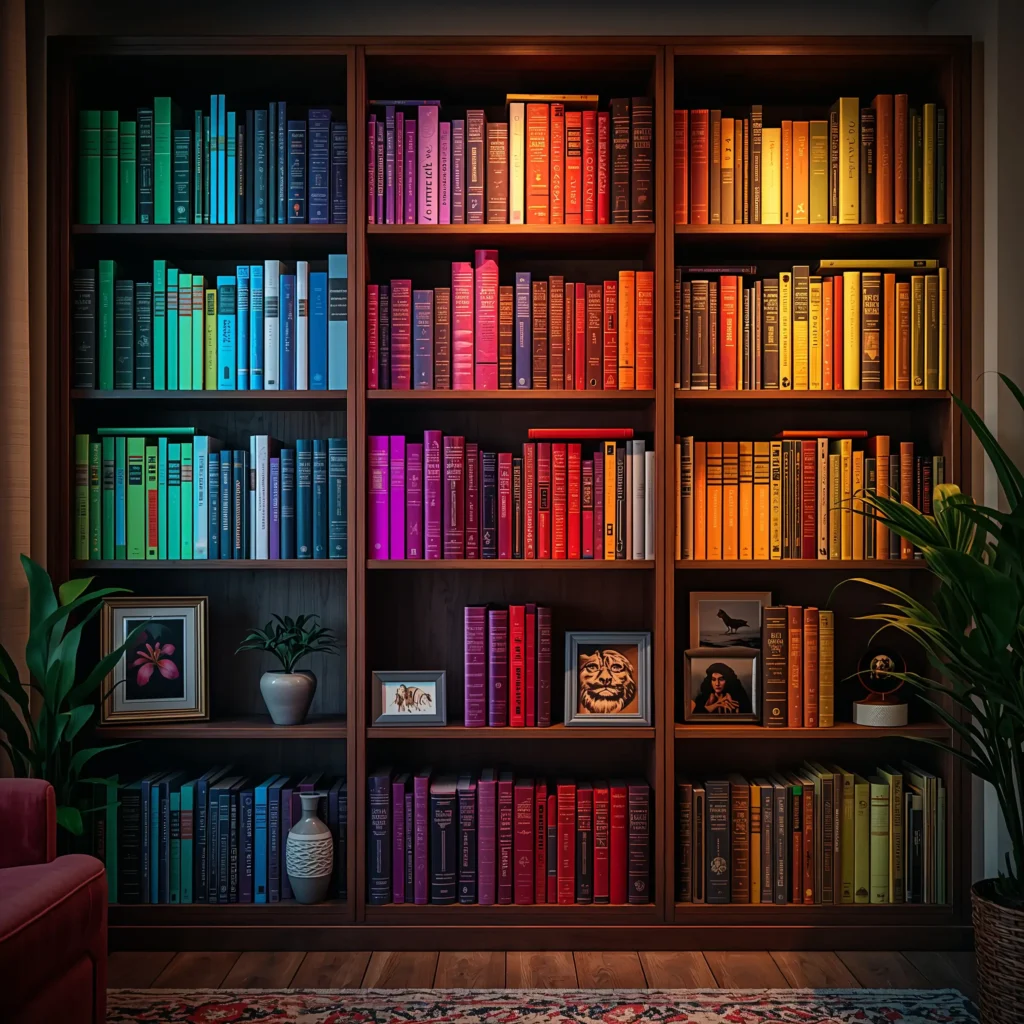
Okay, this one’s controversial, and book purists might want to sit down. Arranging books by color creates one of the most visually striking effects you can achieve with a bookshelf. Is it practical for finding specific titles? Not really. Does it look absolutely stunning? You bet.
I tried this in my home office, and the transformation was instant. The rainbow effect turns your books into art. Start with your darkest colors on one end and gradually transition to the lightest. Or go monochromatic – all white books create a serene, sophisticated look that screams “I have my life together” (even if you don’t).
Making It Work in Real Life
Here’s how I maintain both style and function:
- Keep frequently referenced books elsewhere
- Use a simple cataloging app to remember where books are
- Group similar genres within color blocks when possible
The biggest mistake people make? Forcing it. If you don’t have enough books in certain colors, don’t try to fill gaps with random items. Asymmetry can be beautiful when it’s intentional.
Boho Chic Bookshelf Decor
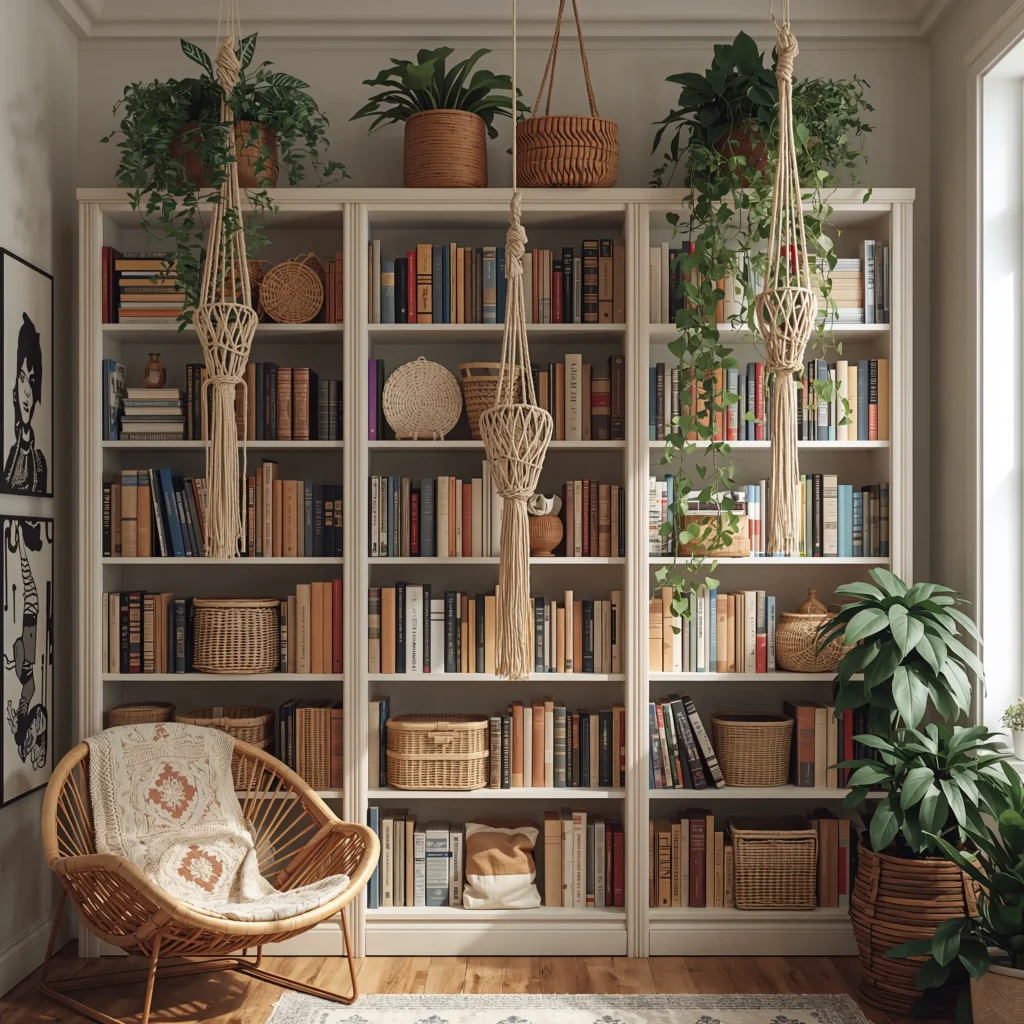
This style speaks to my soul, probably because it’s basically organized chaos with good intentions. Boho bookshelf styling embraces the “more is more” philosophy while somehow maintaining visual harmony. How? Through layers, textures, and a healthy disregard for conventional rules.
Start with your books, but don’t line them up like soldiers. Mix vertical and horizontal stacks, lean some against the back, and create depth. This is where you can finally use those vintage finds from flea markets – that brass elephant, the macramé plant hanger, those pottery pieces you couldn’t resist.
Essential Boho Elements
Your boho bookshelf needs:
- Natural materials (rattan baskets, wooden boxes, woven textiles)
- Plants (trailing pothos, small cacti, or air plants)
- Global treasures (anything with a story)
- Warm lighting (string lights or small lamps)
I’ve found that the secret to nailing boho style is the rule of odds. Group items in sets of three or five. Our brains find odd numbers more visually appealing – it’s science, not just design snobbery.
Avoiding the Cluttered Look
Yes, boho can go wrong fast. The line between “eclectic charm” and “hoarder chic” is thinner than you think. Keep these guidelines in mind:
- Maintain some breathing room between groupings
- Stick to a warm, earthy color palette
- Use baskets to hide actual clutter
- Regularly edit – just because you can display it doesn’t mean you should
Also Read: 10 Beautiful Bookshelf Decor Ideas You’ll Love Trying
Small Space Bookshelf Hacks
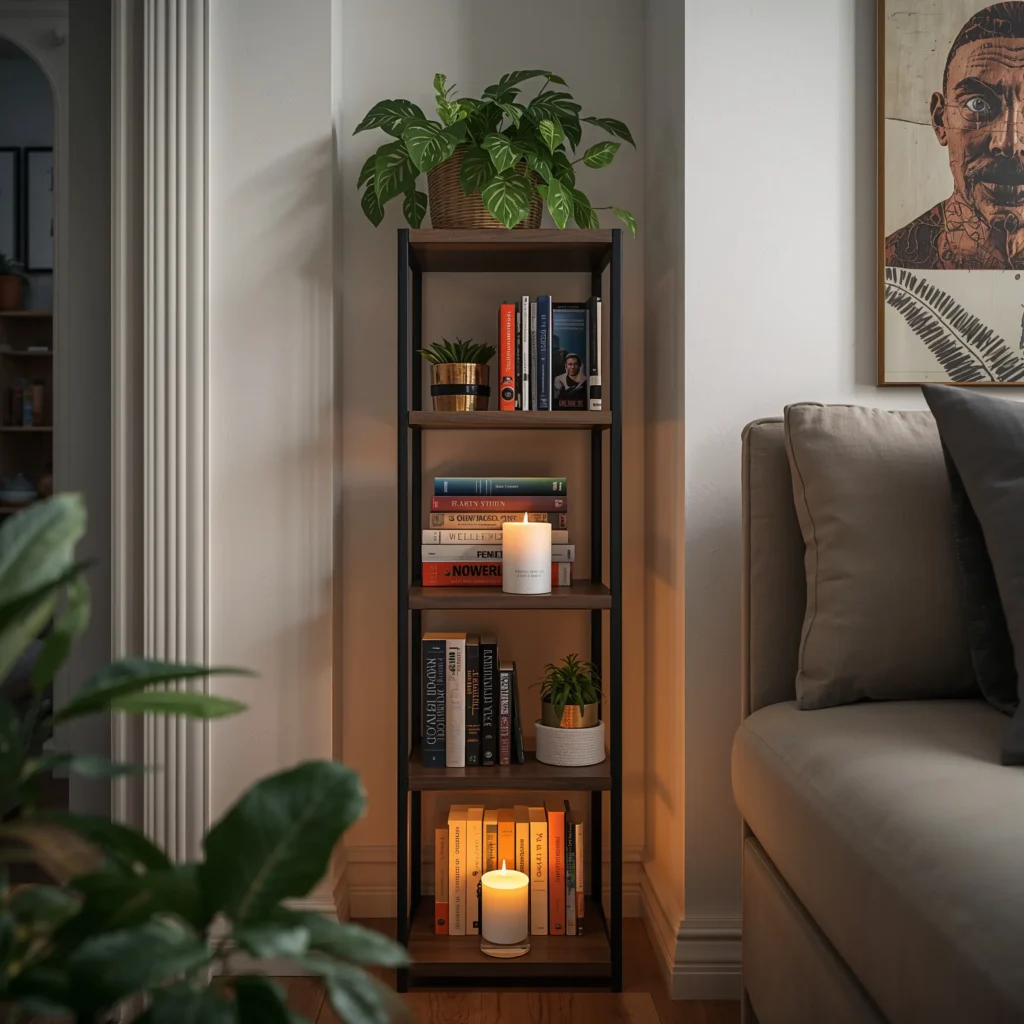
Living in a shoebox apartment taught me more about creative storage than any design course could. When you’ve got limited square footage, every bookshelf needs to work overtime. The secret? Think vertical and multifunctional.
Corner shelves changed my life – seriously. That awkward corner that serves no purpose? Perfect spot for a ladder shelf or floating corner unit. I squeezed an entire library into my 500-square-foot apartment using corners alone.
Double-Duty Solutions
Here’s what actually works in small spaces:
- Room divider bookshelves (instant wall without the construction)
- Over-door shelving units (that wasted space behind doors)
- Bench bookshelves (seating AND storage)
- Picture ledges as book displays (shallow but effective)
My favorite hack? Using the space above doorways. Install a shelf running along the top of door frames. You’d be amazed how many books fit up there, and it creates this cozy library feeling without eating floor space.
Making Small Shelves Look Bigger
Want your tiny bookshelf to appear larger? Try these optical illusions:
- Paint the back wall of shelves a lighter color than surrounding walls
- Arrange books by height (tallest on bottom)
- Use mirrors as bookends
- Keep the top shelf relatively empty
Floating Shelf Inspiration
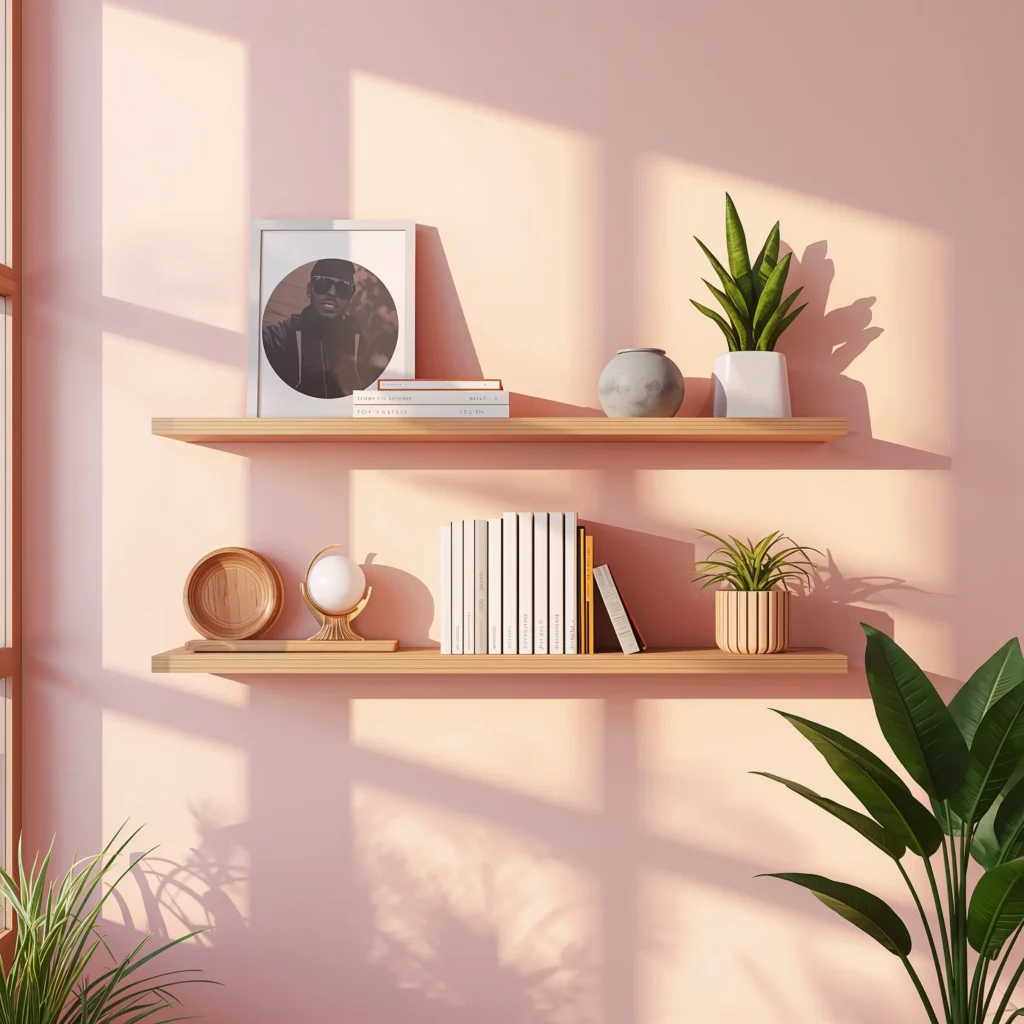
Floating shelves make walls look like magic, IMO. Books seemingly hover in mid-air, and you get that clean, modern look without bulky furniture. I installed my first set five years ago, and now I’m basically a floating shelf evangelist.
The beauty of floating shelves? Complete customization. You decide the height, spacing, and configuration. Want a single dramatic shelf? Go for it. Prefer a geometric pattern? Why not? I’ve seen people create entire wall murals using floating shelves, and the effect is stunning.
Installation Tips That Actually Matter
Let me save you from my mistakes:
- Always hit the studs (drywall anchors will fail you)
- Level each shelf individually (walls aren’t as straight as you think)
- Consider weight limits seriously (books are heavier than they look)
- Leave 10-12 inches between shelves for average-sized books
Styling Floating Shelves
The key to gorgeous floating shelves? Negative space is your friend. Unlike traditional bookcases, floating shelves look best when they’re not crammed full. I follow this formula:
- Group books in small clusters
- Add one statement piece per shelf
- Leave at least 30% empty space
- Vary heights and orientations
Cozy Reading Nook with Bookshelf
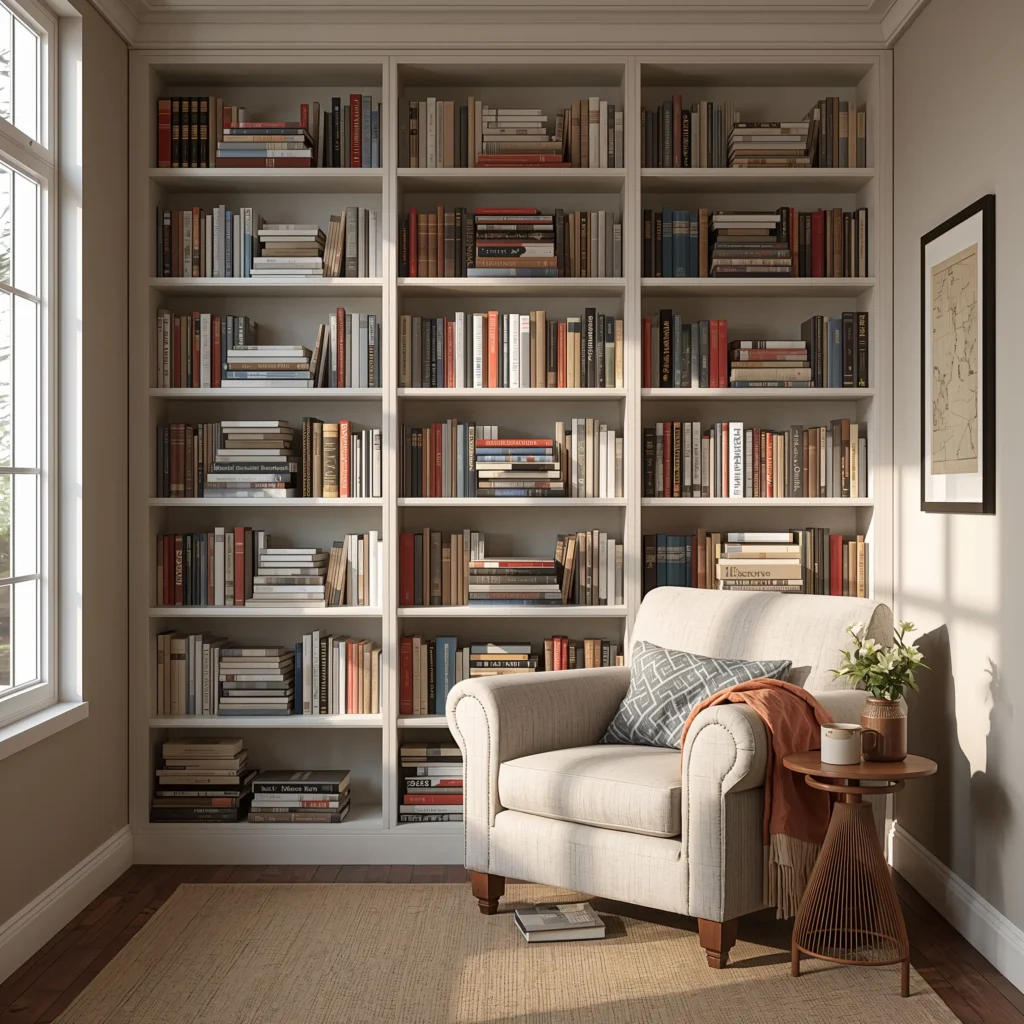
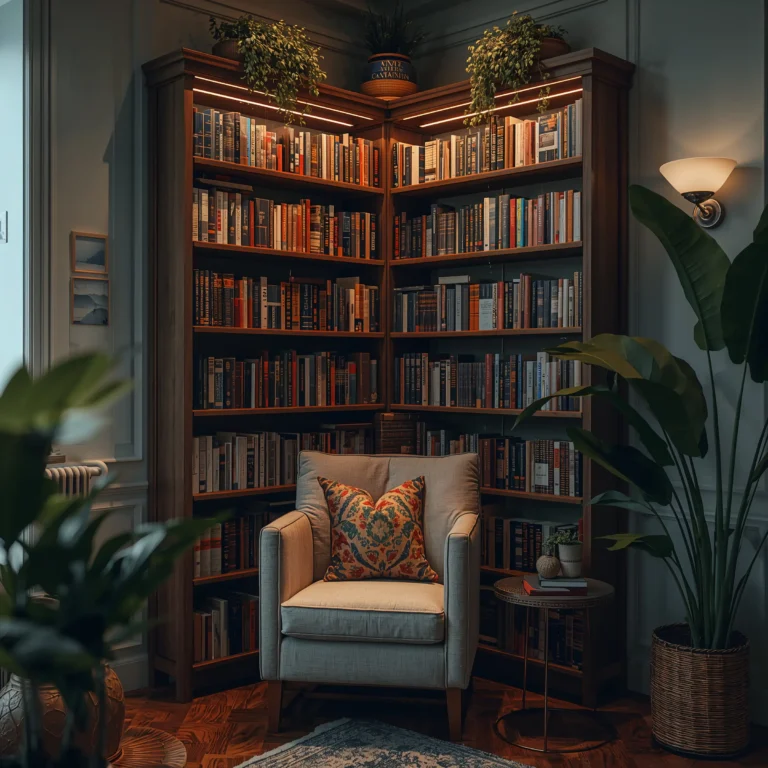
Creating a reading nook around your bookshelf transforms a storage solution into an experience. This is where form meets function in the most delightful way. Your books become the backdrop to your personal retreat.
I converted a forgotten corner of my bedroom into a reading sanctuary, and it’s now my favorite spot in the entire house. Started with a simple bookshelf, added a comfortable chair, proper lighting, and suddenly I had my own private library.
The Anatomy of a Perfect Reading Nook
Here’s what you need:
- Comfortable seating (chair, floor cushions, or window seat)
- Task lighting (adjustable reading lamp or sconce)
- Side table (for your coffee/tea/wine)
- Soft textiles (throw blanket and pillows)
- Easy book access (keep current reads at arm’s length)
Making It Work in Any Space
Don’t have a spare corner? Get creative:
- Use a closet with doors removed
- Convert a wide hallway end
- Utilize bay windows
- Create one with curtains and a tension rod
The magic happens when you treat your reading nook as sacred space. This isn’t where you scroll through your phone or eat lunch. It’s purely for reading, and that intentionality makes all the difference.
Also Read: 10 Stunning Bookshelf Styling Ideas and Cozy Home Vibes
DIY Modern Bookshelf Makeover
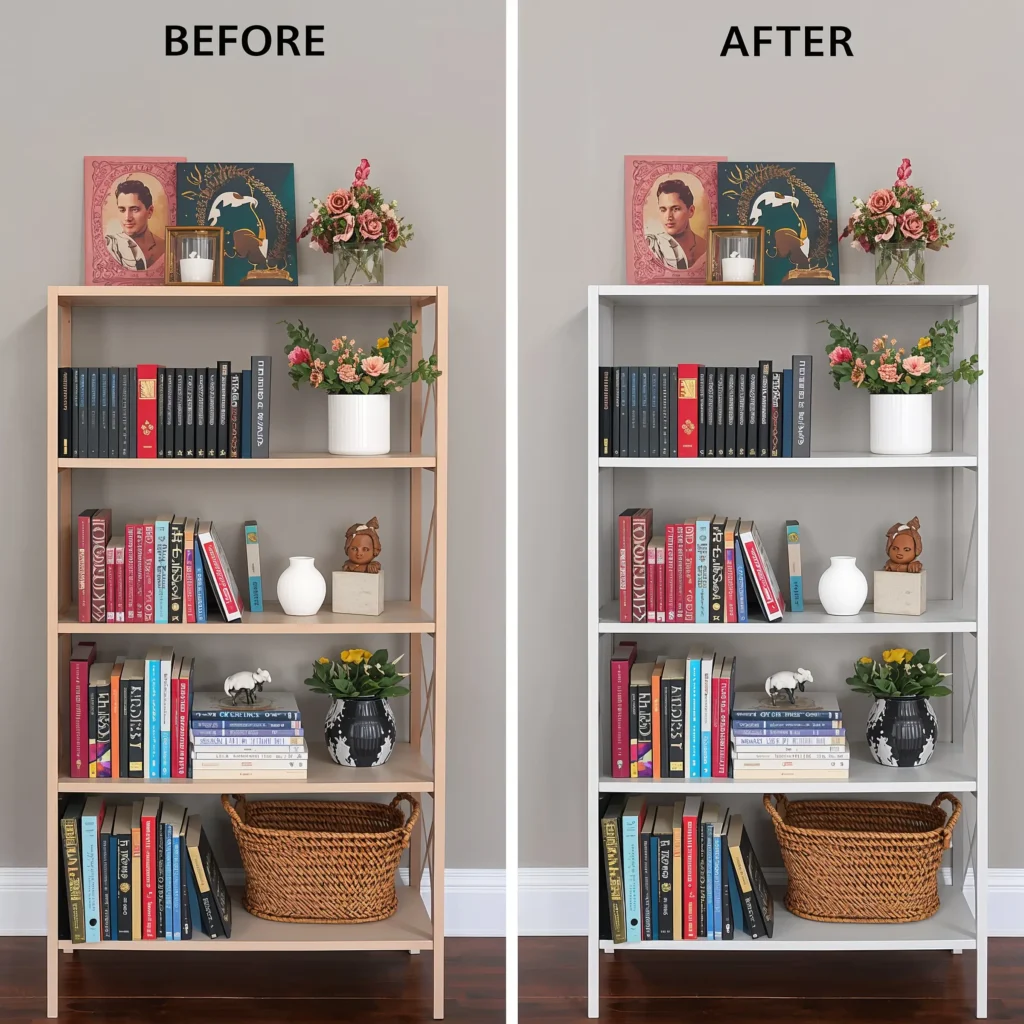
That hand-me-down bookshelf doesn’t have to look like it came from your college dorm room. With a weekend and minimal investment, you can transform any basic shelf into a modern showpiece. Trust me, I’ve rescued more tragic bookshelves than I can count.
Paint is your cheapest miracle worker. I took a brown laminate monstrosity and painted it matte black – instant sophistication. Add some metallic contact paper to the back panels, and boom, you’ve got yourself a designer look for under $50.
Modern Makeover Essentials
Your transformation toolkit:
- Quality paint (don’t cheap out here)
- New hardware (if applicable)
- Lighting (LED strips are game-changers)
- Contact paper or wallpaper (for back panels)
Step-by-Step Transformation
Here’s my foolproof process:
- Clean thoroughly and sand lightly
- Prime everything (yes, even laminate)
- Apply two coats of paint
- Add backing material while paint cures
- Install LED strips under shelves
- Replace any dated hardware
The LED strips alone will make your bookshelf look like it belongs in a high-end hotel lobby. Pro tip: get the ones with remote controls – dimming capability adds serious ambiance.
Vintage & Rustic Bookshelf Ideas
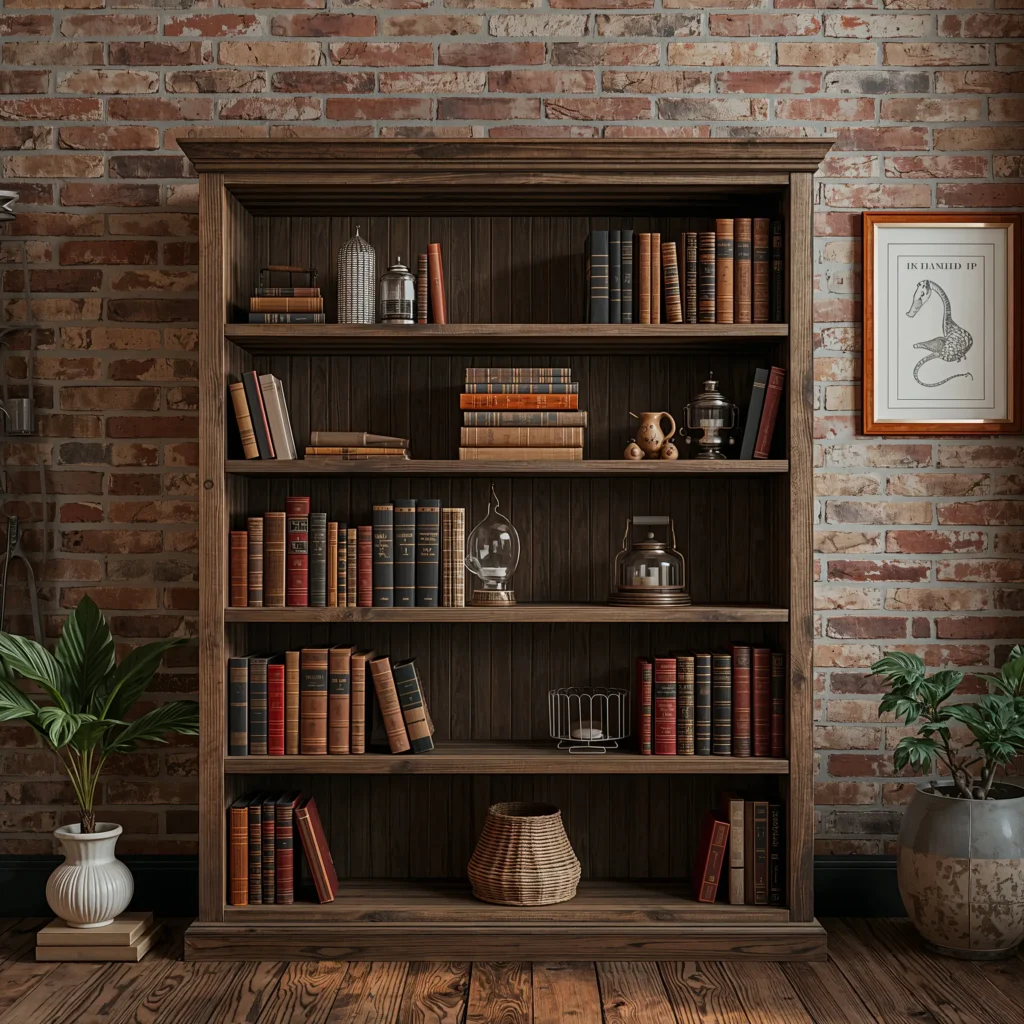
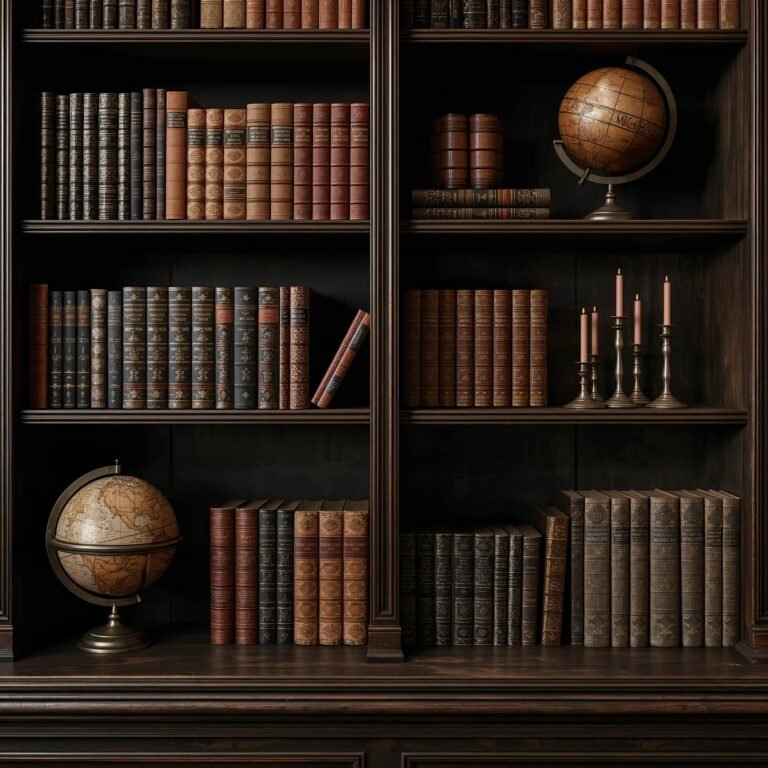
Sometimes you want your bookshelf to tell a story before you even pick up a book. Vintage and rustic styles bring character that mass-produced furniture just can’t match. The imperfections become the charm.
I scored an old ladder at an estate sale for $20, and it’s now my favorite bookshelf. Leaned against the wall with books on each rung, it gets more compliments than pieces I paid hundreds for. That’s the beauty of vintage – unique pieces with history built in.
Where to Find Vintage Gold
My favorite hunting grounds:
- Estate sales (early Saturday mornings)
- Architectural salvage yards (hidden treasures)
- Facebook Marketplace (set alerts for specific keywords)
- Antique malls (negotiate everything)
Creating Rustic Vibes with New Pieces
Can’t find authentic vintage? Fake it:
- Distress new wood with sandpaper and stain
- Use reclaimed wood for DIY projects
- Add vintage-style brackets and hardware
- Mix in actual vintage accessories
Remember, rustic doesn’t mean sloppy. Edit carefully – one perfectly imperfect piece makes a statement, too many look like you raided grandma’s attic.
Plant-Integrated Bookshelf Styling
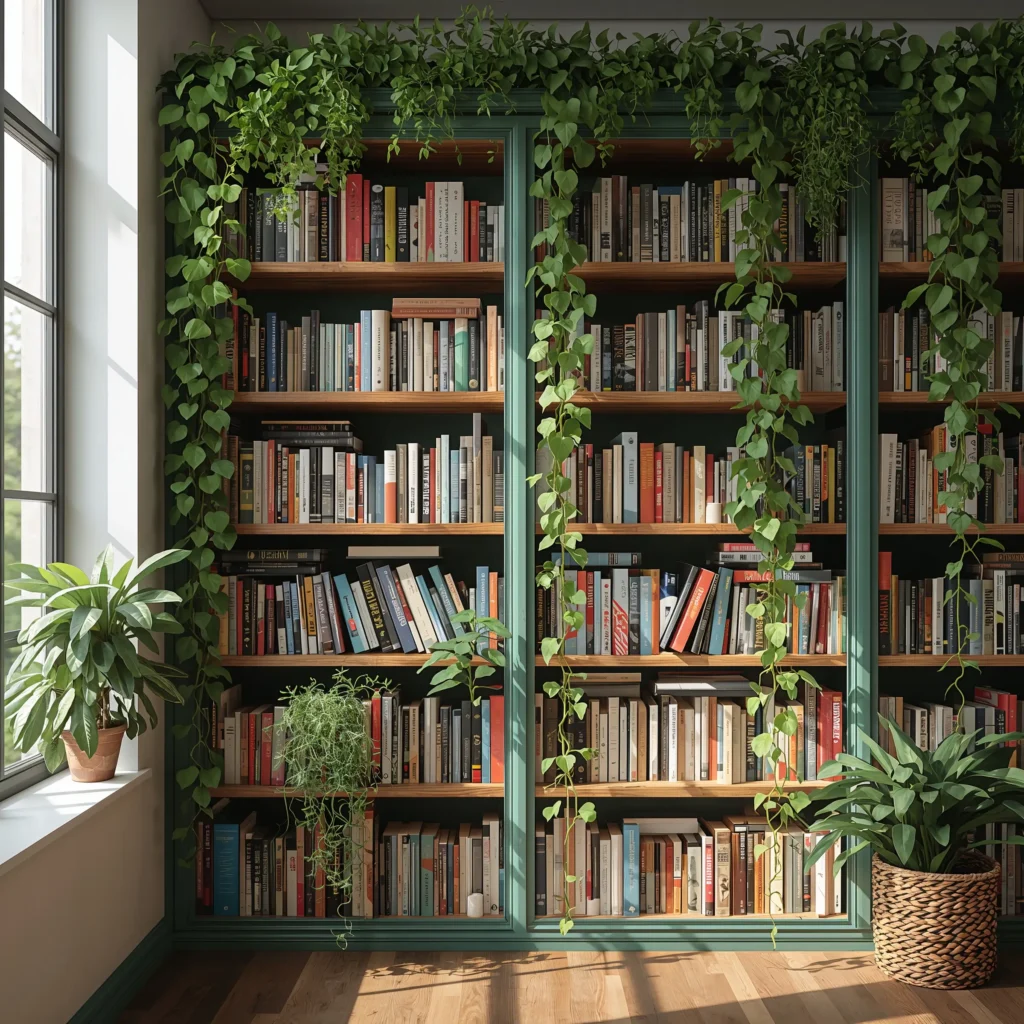
Plants and books together? It’s like peanut butter and chocolate – an unexpectedly perfect combination. Adding greenery to your bookshelf brings life (literally) to your display. Books provide knowledge; plants provide oxygen – what’s not to love?
I started with one small pothos, and now my bookshelves look like a botanical garden had a baby with a library. The trick is choosing the right plants for your light conditions and maintenance commitment.
Best Plants for Bookshelf Life
My tried-and-true winners:
- Pothos (impossible to kill, trails beautifully)
- Snake plants (vertical interest, low maintenance)
- Small succulents (minimal water needs)
- Air plants (no soil required!)
- Philodendrons (fast-growing, forgiving)
Preventing Plant Problems
Nobody talks about the downsides, so I will:
- Use saucers under everything (water damage is real)
- Rotate plants regularly for even growth
- Check for pests monthly
- Keep plants away from valuable first editions
Golden rule: Start with one or two plants. See how they do before turning your bookshelf into a greenhouse. I learned this the hard way when I overwatered a succulent directly above my signed book collection. RIP, succulent. RIP, books :(.
Styling with Plants
Here’s how to make it look intentional:
- Vary heights with plant stands or stacked books
- Use trailing plants on top shelves
- Group small plants in odd numbers
- Mix real and quality fake plants (yes, I said it)
Also READ: 10 Modern Study Room Interior Ideas for Stylish Home
Wall-Mounted Bookshelf Designs
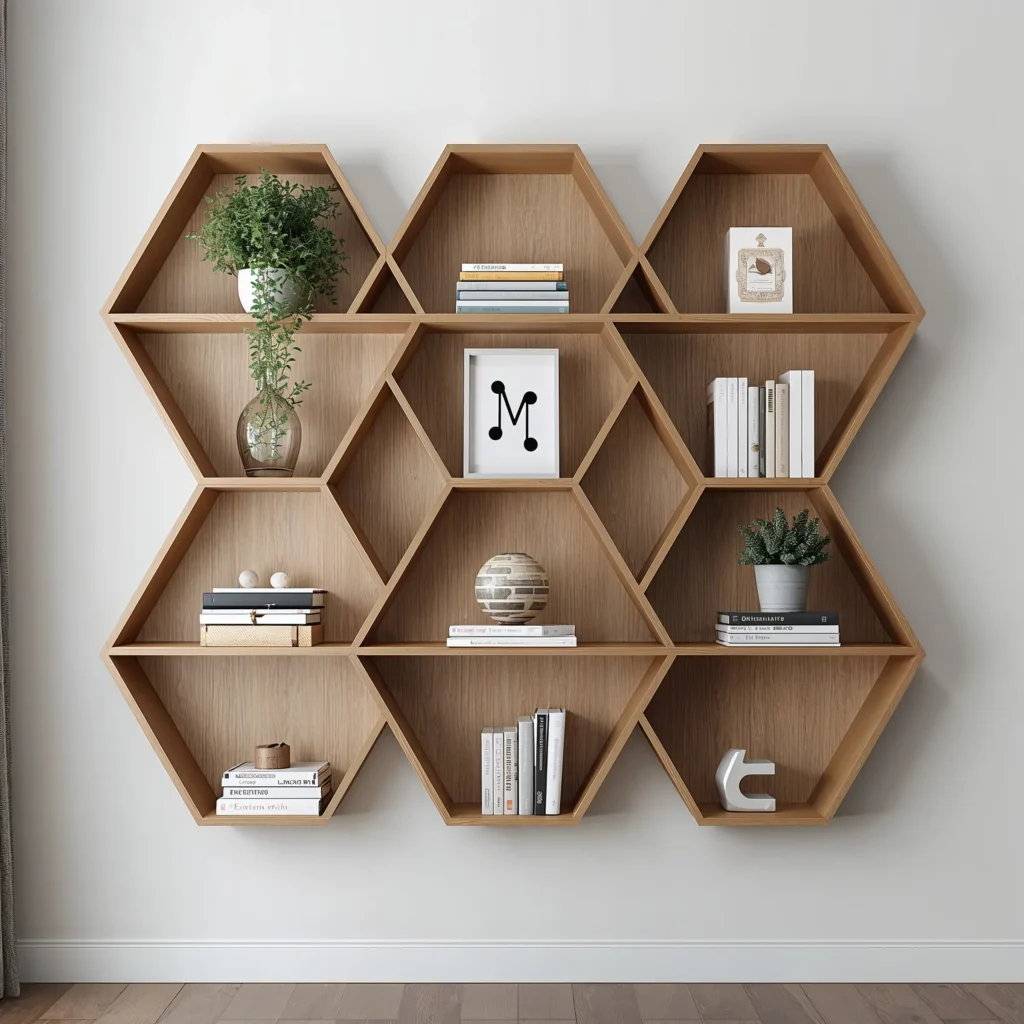
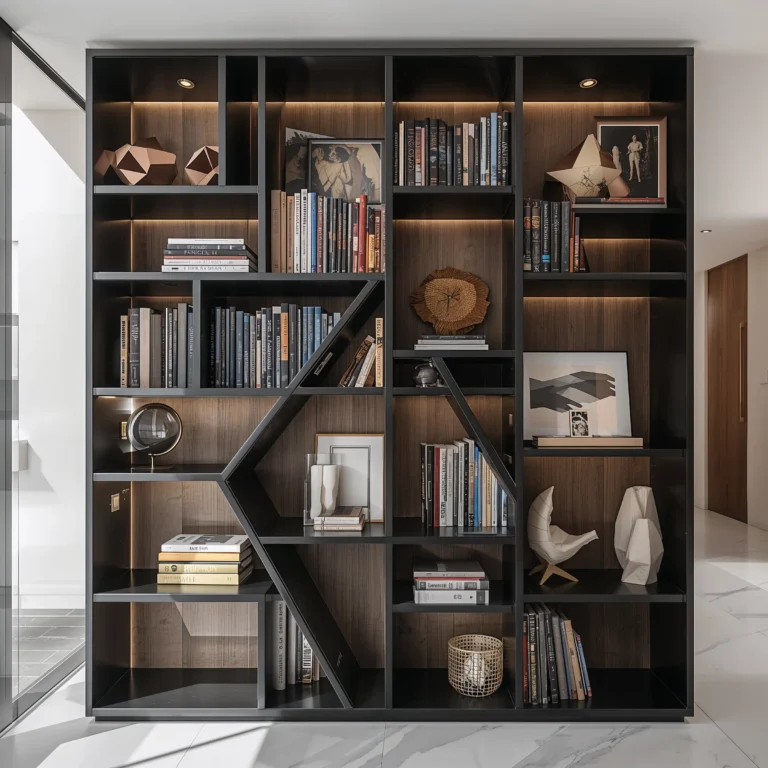
Wall-mounted bookshelves turn your entire wall into a canvas. Forget single floating shelves – I’m talking about geometric designs, asymmetrical arrangements, and creative configurations that make people stop and stare.
My living room features a tree-shaped shelf system that branches across the wall. Did it take forever to install? Absolutely. Do I regret it? Never. Wall-mounted designs let you think beyond the box – literally.
Popular Wall-Mounted Configurations
Design ideas that actually work:
- The Grid (uniform squares or rectangles)
- The Cascade (staggered descending shelves)
- The Frame (shelves arranged around artwork or TV)
- The Branch (organic, tree-like arrangement)
- The Mondrian (inspired by the artist’s geometric compositions)
Planning Your Wall Design
Before you drill a single hole:
- Map it out on paper first
- Use painter’s tape to visualize on the wall
- Consider sight lines from different room angles
- Account for future furniture placement
- Check weight limits for your wall type
FYI, the painter’s tape trick saved me from a disaster. What looked good in my head would have been completely off-center in reality.
Making It Cohesive
The challenge with wall-mounted designs? Avoiding visual chaos. Here’s how:
- Stick to one shelf style/color
- Maintain consistent spacing
- Leave breathing room around the entire design
- Balance heavy and light visual elements
- Consider the wall color (contrast is your friend)
Bringing It All Together
So there you have it – ten ways to transform your bookshelf from storage necessity to design statement. The best part? You don’t have to pick just one style. Mix minimalist principles with plant integration. Combine vintage finds with modern DIY updates. Your bookshelf should reflect your personality, not some magazine’s idea of perfection.
Remember, the most important element of any bookshelf isn’t the styling – it’s the books. These ideas just help showcase your collection in a way that makes you smile every time you walk past. Start with one small change and build from there. Rome wasn’t built in a day, and neither is the perfect bookshelf.
Take it from someone who’s rearranged their bookshelves approximately 847 times (rough estimate): the journey is half the fun. Every time you reorganize, you rediscover books you forgot you owned. You find new combinations that work better than before. You create a space that evolves with your tastes and needs.
Now stop reading this article and go style those shelves! Your books have been waiting patiently for their moment to shine. Give them the showcase they deserve, and trust me, you’ll never look at a bookshelf the same way again.