15 Amazing Ceiling Design Modern Ideas for a Luxe Feel

You know that moment when you walk into someone’s home and something just feels different? Nine times out of ten, they’ve nailed their ceiling design, and you didn’t even realize that’s what caught your attention.
I learned this the hard way after living with popcorn ceilings for three years – talk about a missed opportunity!
Here’s the thing: ceilings are the fifth wall we all forget about. While everyone obsesses over accent walls and floor tiles, smart homeowners know that modern ceiling designs transform spaces from basic boxes into architectural statements.
And honestly? After renovating my own place twice (yes, twice – I’m that person), I can tell you that updating your ceiling gives you the biggest bang for your buck.
Minimalist White False Ceiling
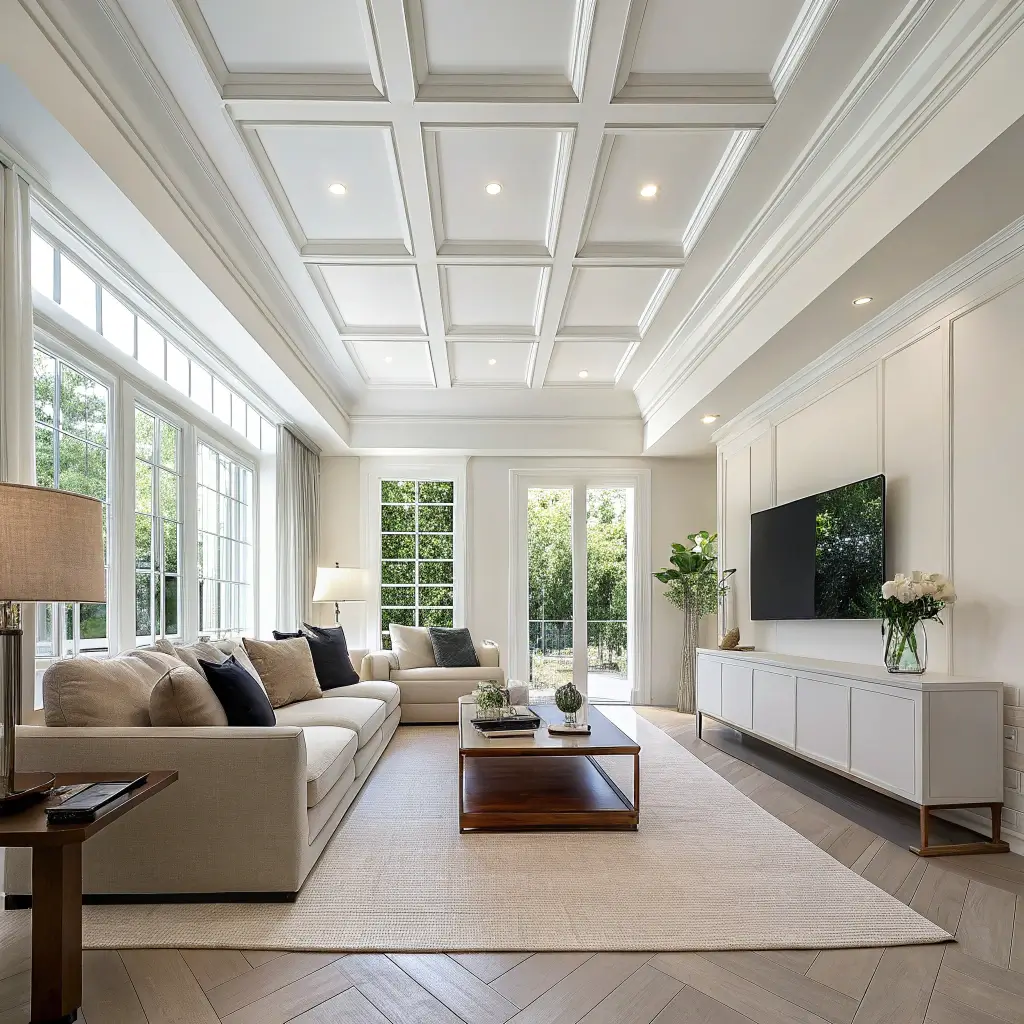
Let me start with the gateway drug of modern ceiling designs – the minimalist white false ceiling. This isn’t your grandma’s boring flat ceiling; we’re talking about a sleek, sophisticated surface that makes every room feel like it belongs in a design magazine.
What makes this design work so brilliantly? First off, it creates this incredible clean canvas that amplifies natural light like nobody’s business. I installed one in my living room last year, and suddenly my north-facing space felt twice as bright. The false ceiling drops down just 4-6 inches from the original ceiling, creating perfect spots for recessed lighting without any visible fixtures cluttering up the view.
Why This Works for Modern Homes
The beauty lies in the simplicity. You get:
- Hidden wiring and ductwork (goodbye, ugly cables!)
- Perfect paint finish without texture issues
- Acoustic benefits that reduce echo
- Flexibility to add lighting wherever you want
Here’s what nobody tells you though – the installation process requires precision. My contractor had to redo one section because even a tiny imperfection shows on that pristine white surface. But when it’s done right? Chef’s kiss.
Wooden Slat Linear Ceiling
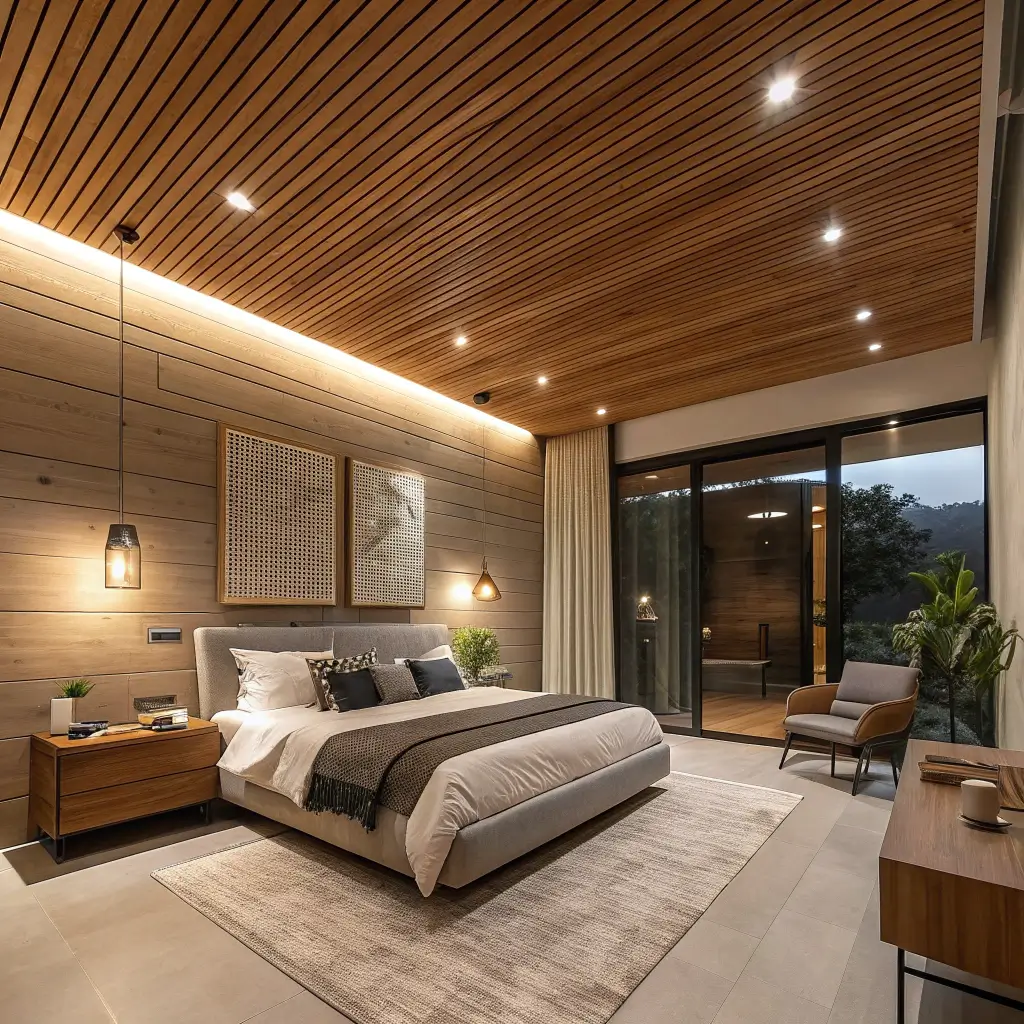
Remember when everyone thought wood ceilings meant dark, oppressive cabin vibes? Yeah, modern wooden slat ceilings completely flip that script. These bad boys bring warmth without the weight, creating linear patterns that draw your eye and make rooms feel longer and more spacious.
I first saw this design at a boutique hotel in Portland (of course it was Portland), and I couldn’t stop staring. The parallel wooden strips run across the ceiling with small gaps between them, often backed by a dark surface that creates incredible depth. It’s like architectural eye candy that actually serves a purpose.
Installation Tips from Experience
When I helped my brother install his wooden slat ceiling, we learned some crucial lessons:
- Choose your wood wisely – cedar and pine work great for weight
- Leave expansion gaps (wood moves, people!)
- Consider the direction – lengthwise makes rooms feel longer
- Pre-finish your slats before installation saves tons of time
The acoustic properties are insane too. His home theater went from echoey mess to perfectly balanced sound just from adding those slats. Who needs expensive acoustic panels when you’ve got style that doubles as function?
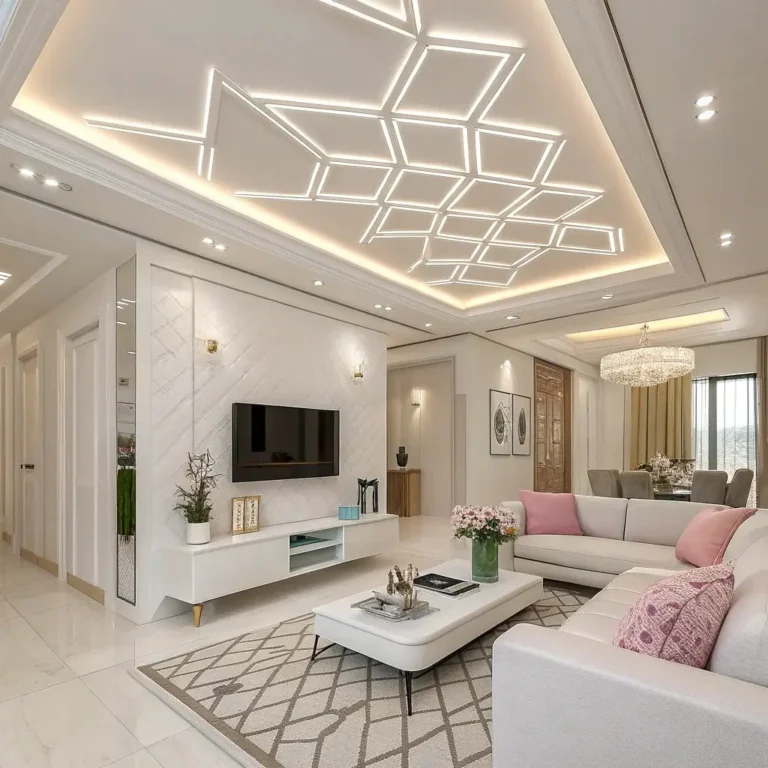
Geometric Patterned Ceiling
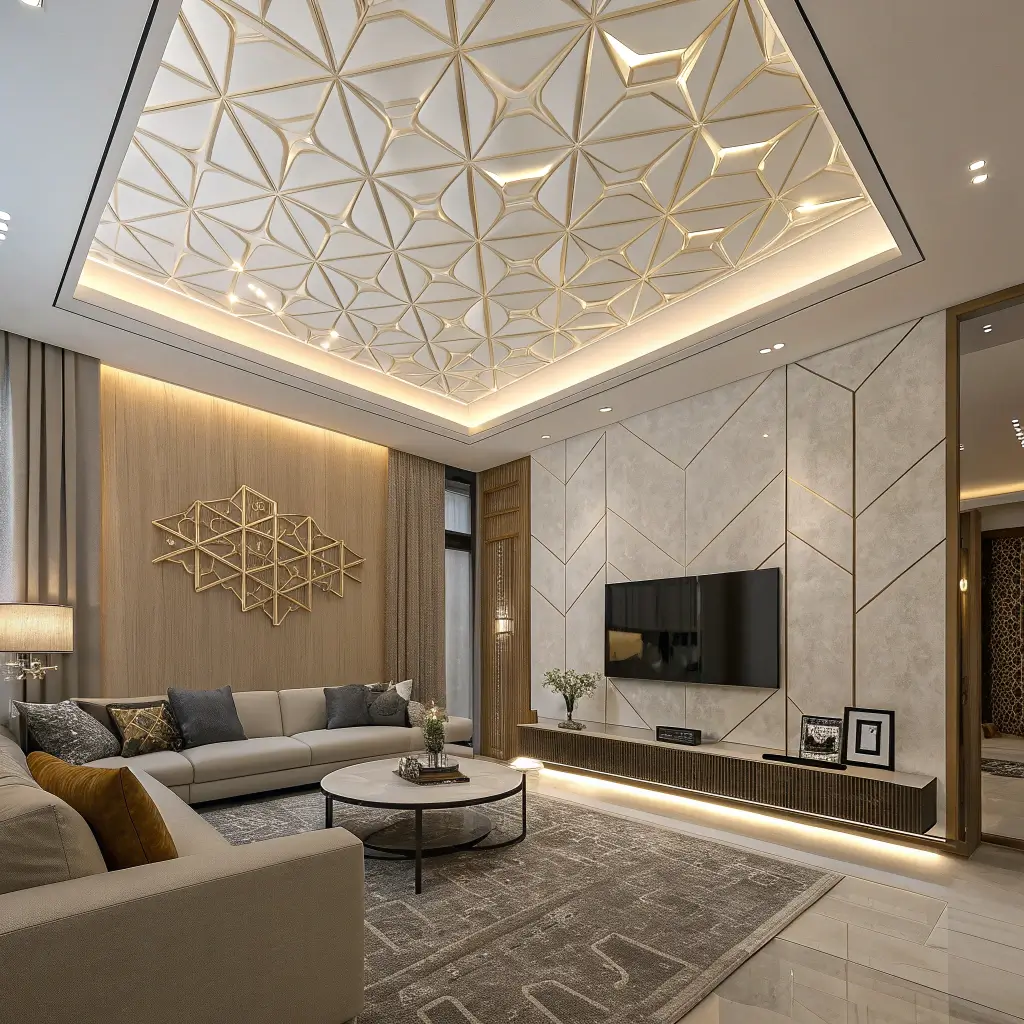
Want to know what separates amateur hour from pro-level design? Geometric patterned ceilings that make people stop mid-conversation to look up. These aren’t your basic grid patterns either – we’re talking hexagons, triangles, and abstract shapes that turn ceilings into art installations.
I’ll admit, when my designer first suggested a geometric pattern for my home office, I thought she’d lost it. But here’s the kicker – the angular designs actually help define zones in open-plan spaces without building walls. My work area now feels distinctly separate from the lounge space, all thanks to those ceiling triangles.
Design Considerations
The patterns you choose matter more than you think:
- Large patterns work in spacious rooms with high ceilings
- Smaller, repetitive patterns suit compact spaces
- Asymmetric designs add dynamic energy
- Symmetric patterns create calm and order
FYI, painting these patterns yourself isn’t for the faint of heart. I tried DIY-ing a section and… let’s just say professional painters exist for a reason 🙂
Also Read: 15 Unique False Ceiling Design Ideas for Dream Homes
Coffered Ceiling with LED Lights
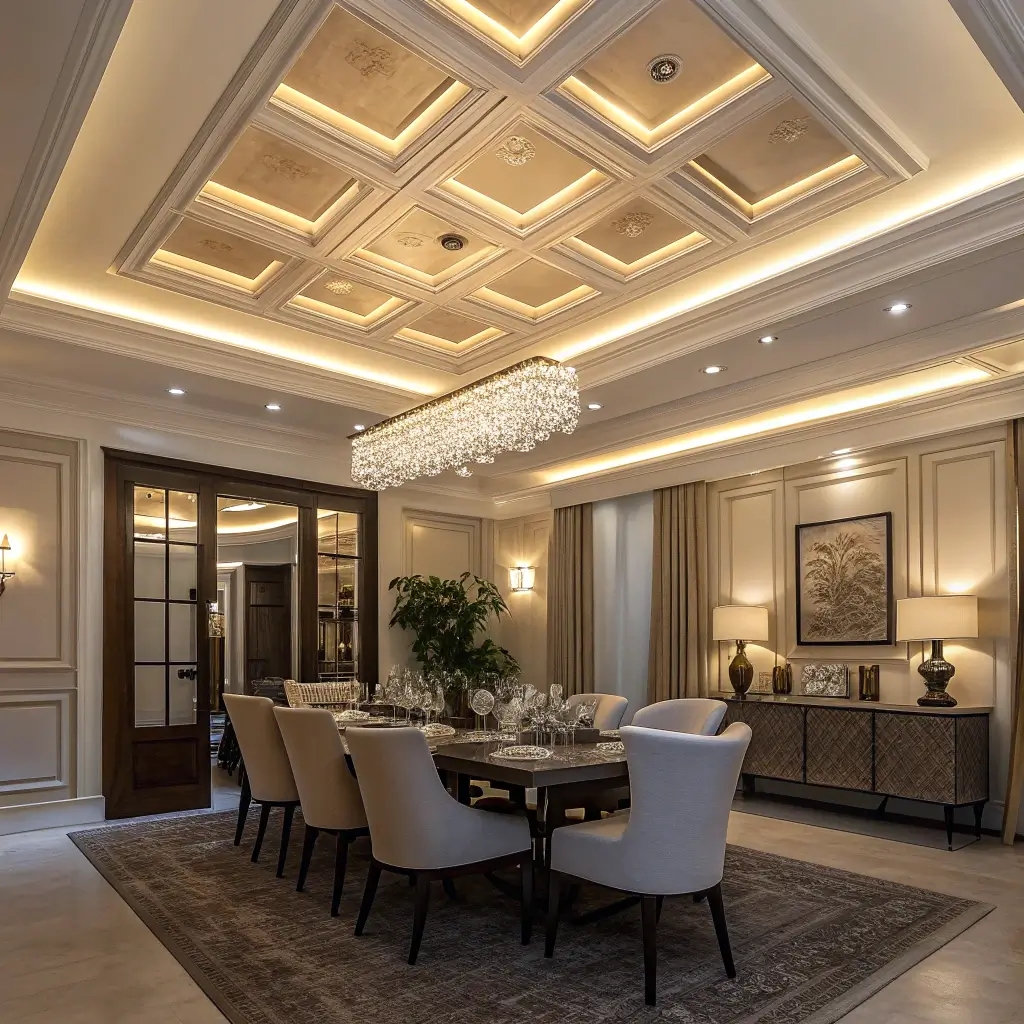
Talk about making a statement! Coffered ceilings with integrated LED lighting combine old-world elegance with modern tech, and the result is absolutely stunning. These recessed panel grids create depth and dimension while the LEDs turn the whole setup into a customizable light show.
My neighbor installed one of these in her dining room, and now every dinner party feels like a five-star restaurant experience. The individual coffers (those sunken panels) each house LED strips that can be dimmed, colored, or programmed to create different moods. It’s like having architectural details and a lighting system rolled into one.
Why LEDs Change Everything
Traditional coffered ceilings looked great but felt heavy. Add LEDs and suddenly:
- The upward light makes ceilings appear higher
- Energy efficiency keeps electricity bills reasonable
- Smart home integration lets you control everything from your phone
- Color-changing options mean one ceiling, infinite moods
The installation cost scared me initially, but considering you’re getting both architectural detail AND a complete lighting solution, it actually makes financial sense.
Floating Panel Ceiling
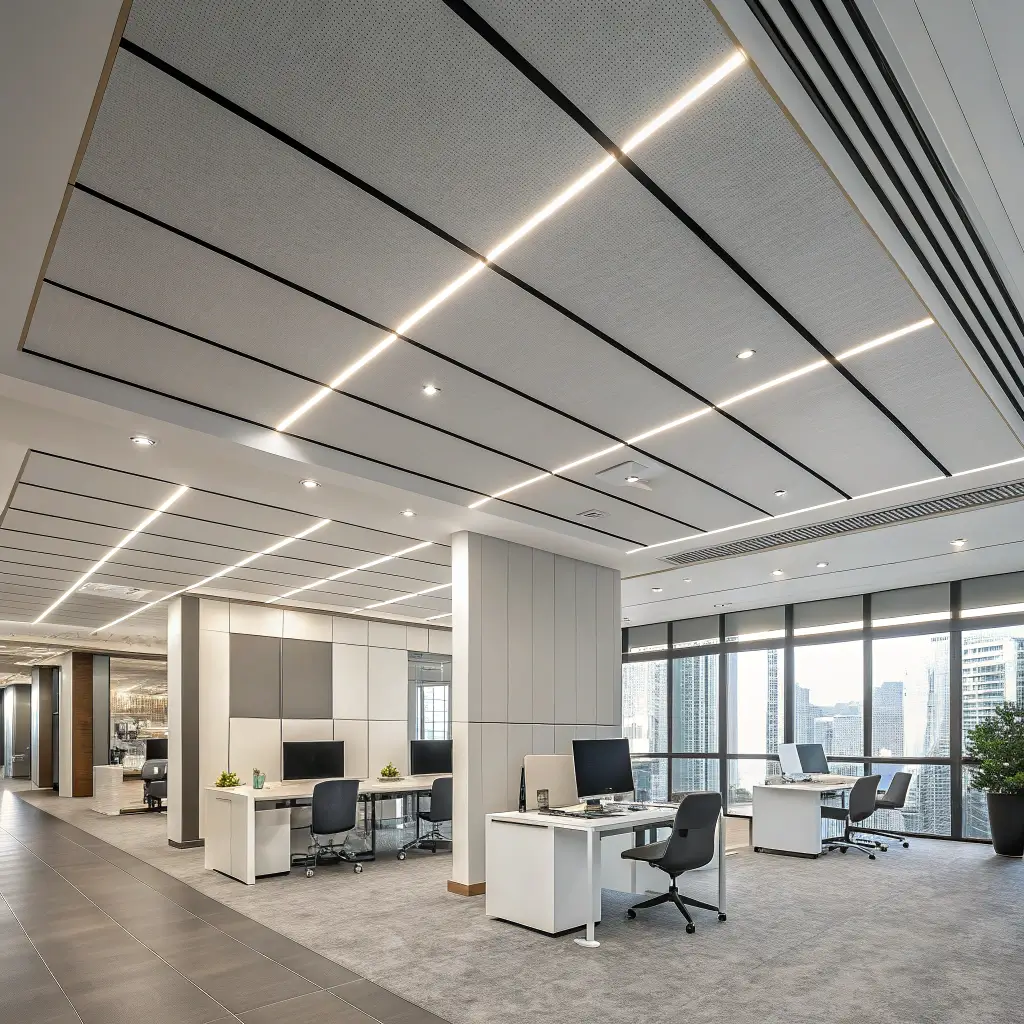
Ever seen a ceiling that looks like it’s levitating? That’s the magic of floating panel ceilings, and they’re having a serious moment right now. These panels appear to hover below the main ceiling, creating shadows and depth that make flat ceilings look positively prehistoric.
I discovered this design while scrolling through Pinterest at 2 AM (we’ve all been there), and immediately knew my bedroom needed this treatment. The panels don’t actually float – they’re suspended using hidden brackets – but the visual effect is pure architectural sorcery.
Creating the Illusion
Here’s how to nail the floating effect:
- Leave 2-3 inch gaps between panels and walls
- Use indirect lighting behind panels for that glow
- Keep panels perfectly level (seriously, invest in a laser level)
- Choose lightweight materials like gypsum or foam boards
The best part? You can arrange panels at different heights for a 3D effect that makes your ceiling look like modern art. My bedroom went from boring box to boutique hotel vibes in one weekend.
Black Matte Modern Ceiling
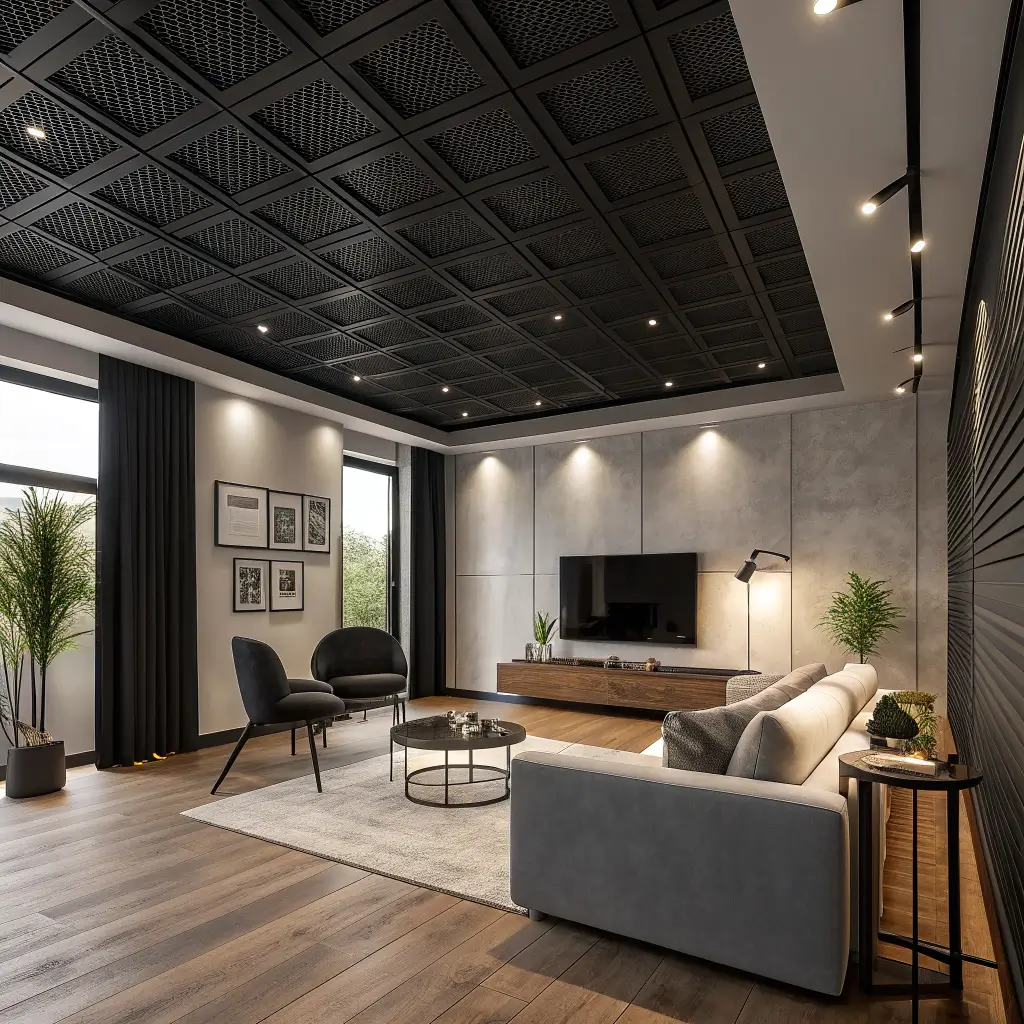
Okay, hear me out before you think I’ve gone to the dark side – black matte ceilings are having a major moment, and for good reason. This bold choice creates drama, sophistication, and surprisingly makes spaces feel more intimate rather than smaller.
When I suggested painting my studio ceiling black, my partner thought I’d lost my mind. But once we saw the finished result? Game changer. The non-reflective matte finish absorbs light in a way that makes everything else in the room pop. It’s like having a theatrical backdrop that makes your furniture and art the stars of the show.
Making Black Work
Successfully pulling off a black ceiling requires strategy:
- High ceilings (8 feet minimum) prevent cave vibes
- Excellent lighting is non-negotiable
- Keep walls light for contrast
- Use it in rooms with large windows
The psychological effect is fascinating too. That black ceiling creates a cocoon effect that makes movie nights feel like private screenings and dinner parties feel mysteriously sophisticated.
Also Read: 15 Modern Ceiling Design Ideas to Elevate Your Space
Metallic Accent Ceiling
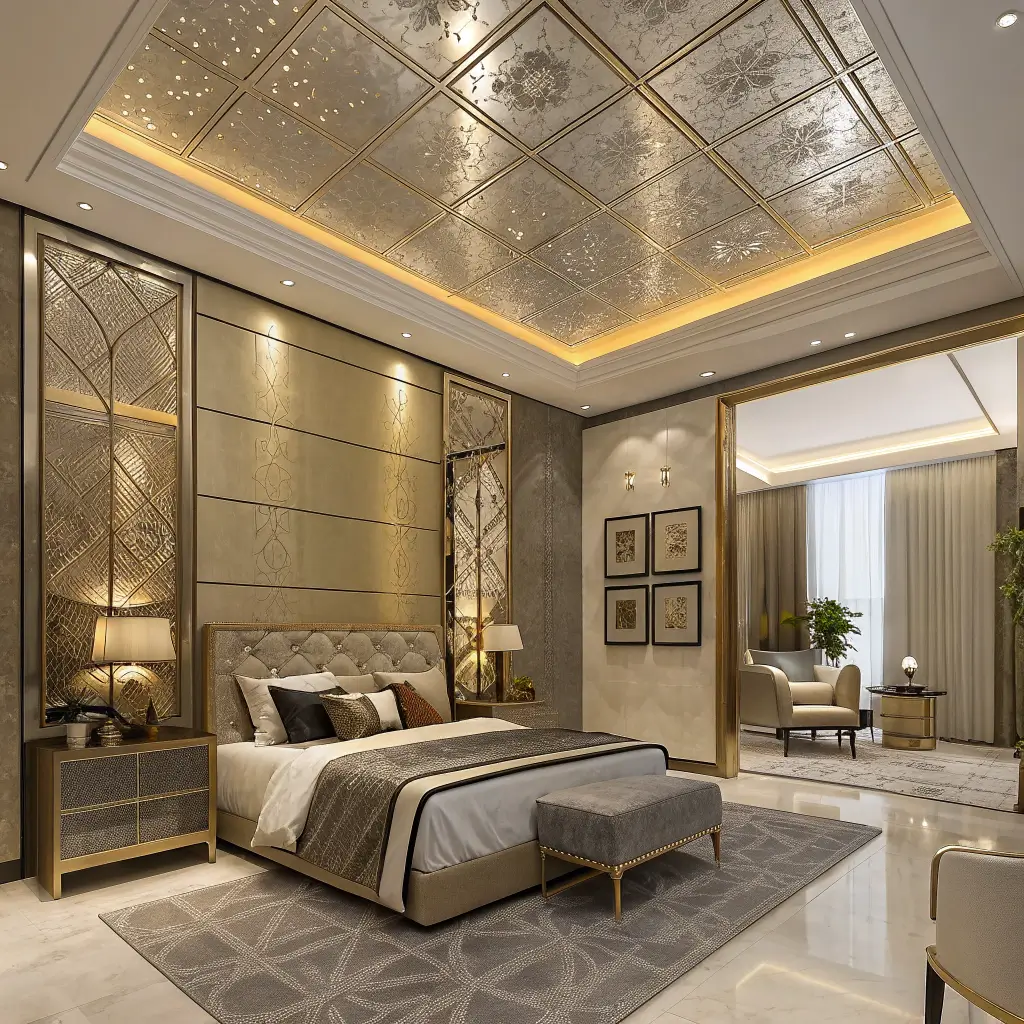
Want instant glamour without going full Vegas? Metallic accent ceilings deliver that perfect touch of luxury while staying firmly in tasteful territory. We’re not talking mirror balls here – think subtle copper tones, brushed gold finishes, or pewter sheens that catch light beautifully.
I experimented with a metallic finish in my powder room (small space = lower commitment), and guests literally gasp when they walk in. The reflective quality bounces light around in unexpected ways, making the tiny room feel twice its actual size. Plus, every selfie taken in there looks professionally lit – not that I’m encouraging bathroom selfies or anything.
Application Techniques
Getting that perfect metallic finish requires technique:
- Specialty paints work better than metallic leafing for DIY
- Apply in thin, even coats
- Use cross-hatching brush strokes for depth
- Consider metallic wallpaper for easier application
Pro tip: combine metallic ceilings with dimmer switches. The way these finishes transform under different lighting intensities will blow your mind.
Cove Lighting with Smooth Finish
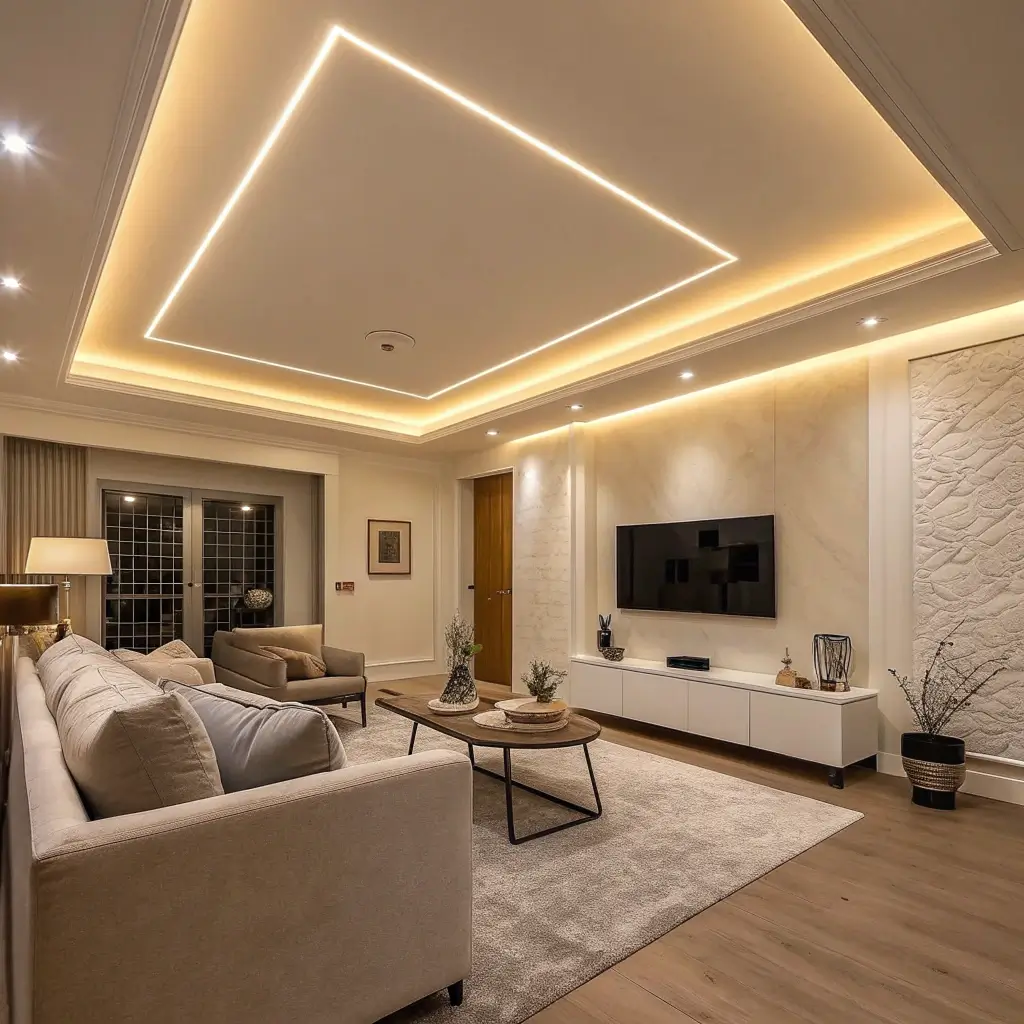
If you want to feel like you’re living in a high-end spa every single day, cove lighting with a smooth finish is your answer. This design hides LED strips in a recessed ledge around your ceiling perimeter, washing the ceiling with soft, indirect light that eliminates harsh shadows.
Installing cove lighting in my main bathroom was literally life-changing (and yes, I realize how dramatic that sounds). Morning routines feel less jarring when you’re bathed in gentle ambient light instead of harsh overhead bulbs. The smooth finish of the ceiling becomes a canvas for the light to play across, creating an almost ethereal effect.
Technical Details That Matter
Here’s what makes cove lighting work:
- 4-6 inch cove depth provides optimal light spread
- Position LEDs at 45-degree angles for best coverage
- Use warm white (2700K-3000K) for residential spaces
- Install dimmers for versatility
The energy savings are ridiculous too. My bathroom uses 75% less electricity for lighting now, and it looks ten times better. How’s that for a win-win?
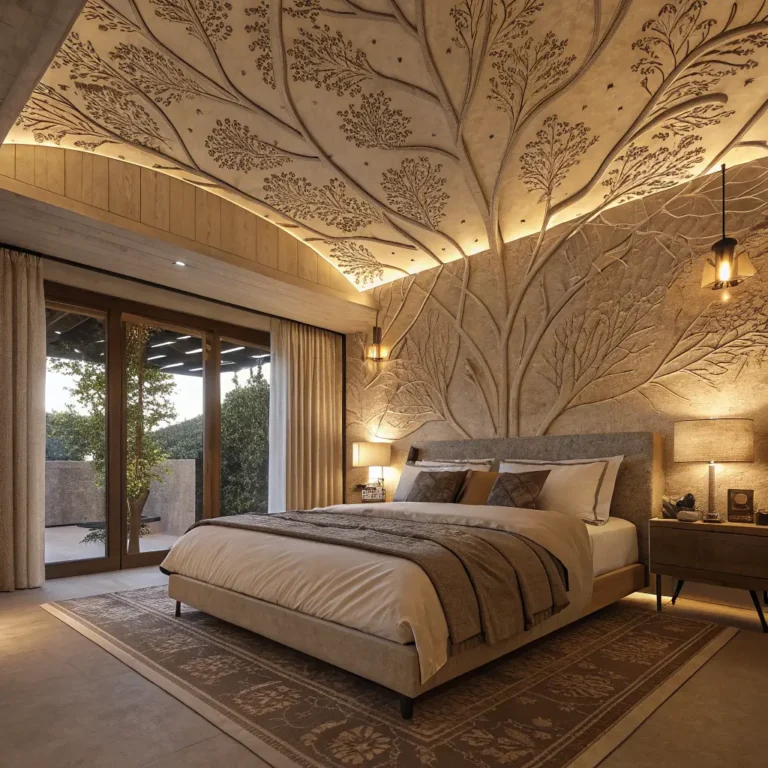
Textured Concrete Ceiling
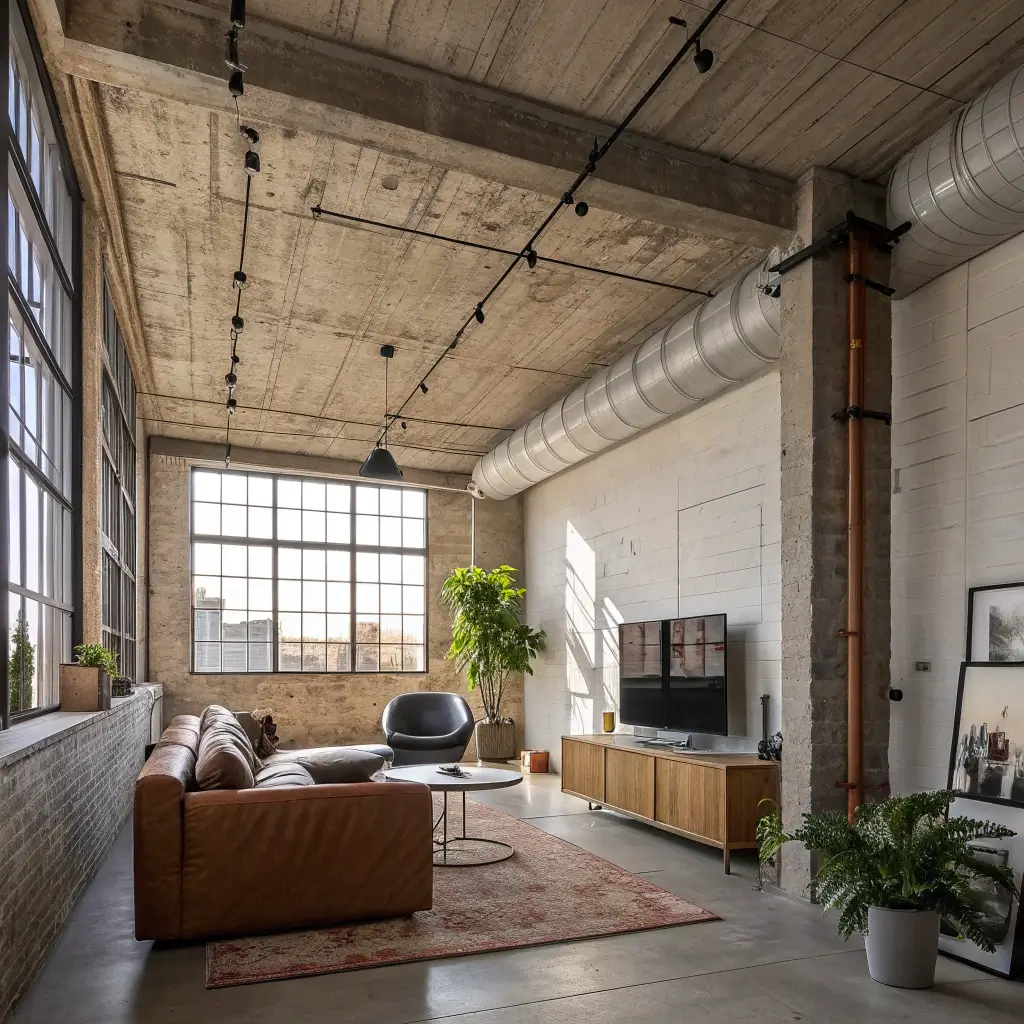
Industrial chic isn’t going anywhere, and textured concrete ceilings prove that raw materials can be incredibly sophisticated. This isn’t about leaving your ceiling unfinished – it’s about celebrating the beauty of concrete’s natural patterns and imperfections.
My friend’s loft conversion features a textured concrete ceiling, and it’s absolutely stunning. The organic patterns created during the pour become unique artwork that you literally cannot replicate. Every swirl, bubble, and variation tells a story about the material’s journey from liquid to solid.
Achieving the Look
There are several ways to get this aesthetic:
- Real poured concrete (for new construction)
- Concrete overlay systems (for existing ceilings)
- Microcement application (lighter weight option)
- Concrete-look paint techniques (budget-friendly)
The acoustic properties surprise people too. That textured surface actually helps break up sound waves, reducing echo without adding any additional materials.
Also Read: 15 Inspiring Pink Christmas Bedroom Ideas for a Warm Holiday
Glass Insert Ceiling Panels
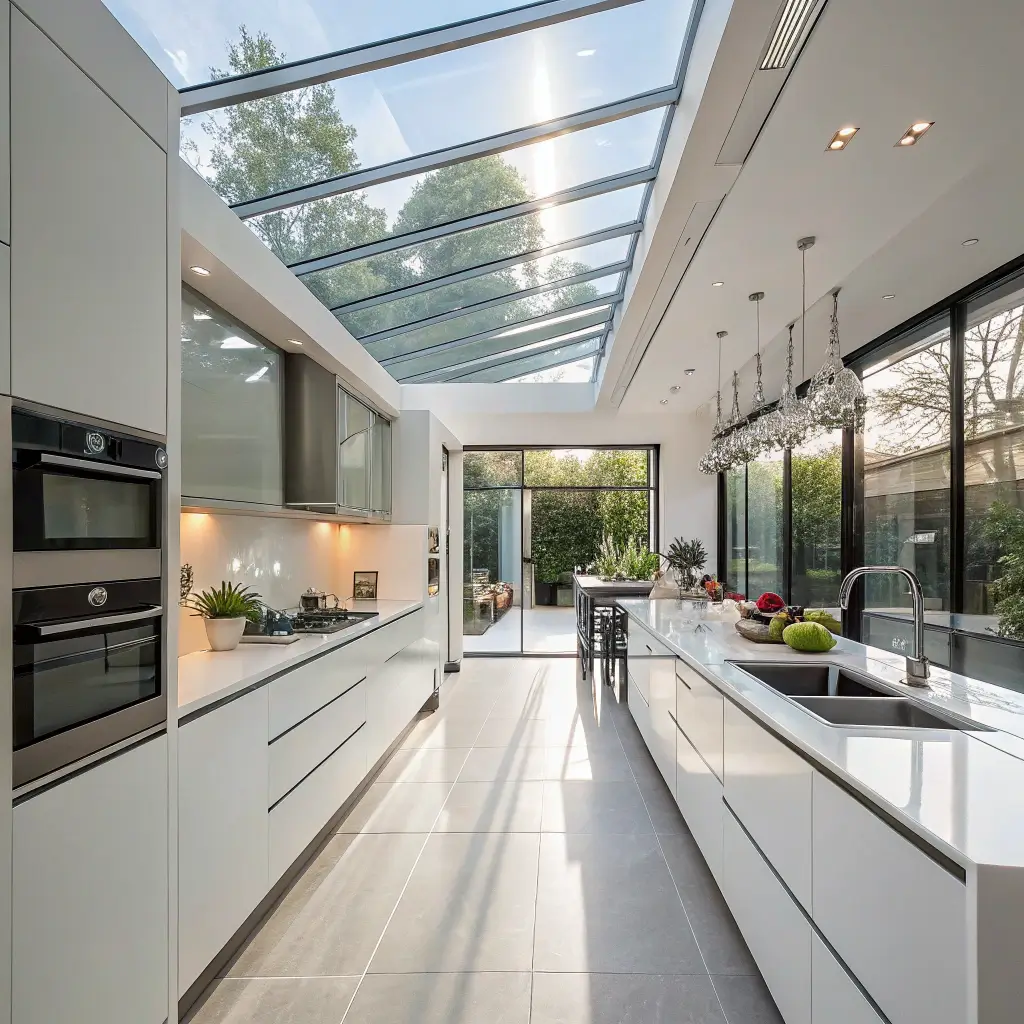
Imagine looking up and seeing sky through parts of your ceiling – that’s the magic of glass insert ceiling panels. These architectural features bring natural light deep into interior spaces while adding serious wow factor to any room.
I toured a home last month with glass panels integrated into a coffered ceiling design, and honestly? Mind. Blown. The translucent glass diffused sunlight throughout the day, completely eliminating the need for artificial lighting until sunset. It felt like living in a naturally lit gallery.
Practical Considerations
Before you go cutting holes in your ceiling:
- Safety glass is mandatory (tempered or laminated)
- Consider privacy (frosted vs. clear)
- Factor in cleaning access
- Understand thermal implications
The installation isn’t DIY territory unless you’re seriously experienced. But the payoff – both in aesthetics and reduced electricity bills – makes professional installation worth every penny.
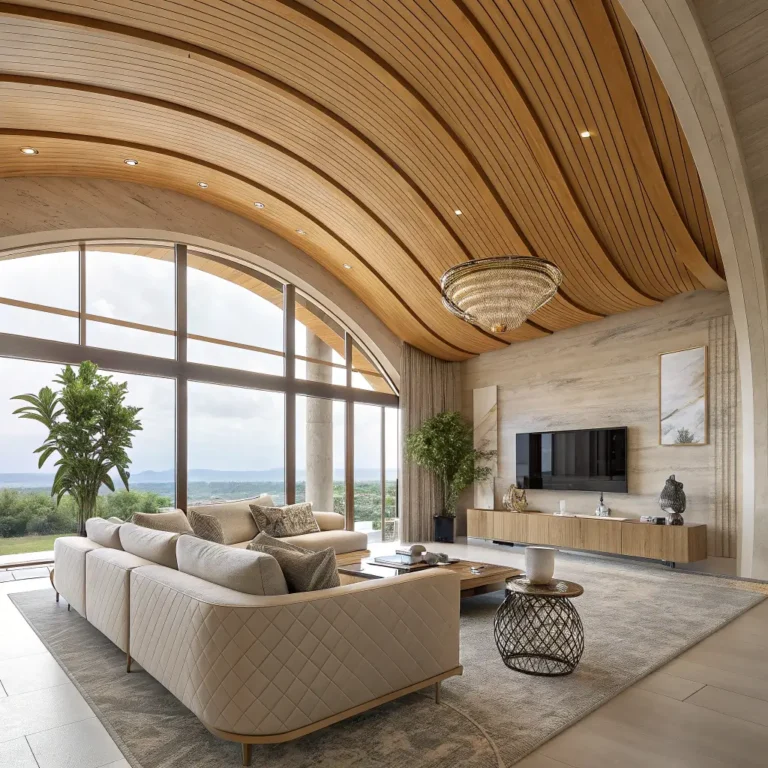
Curved Wave Ceiling Design
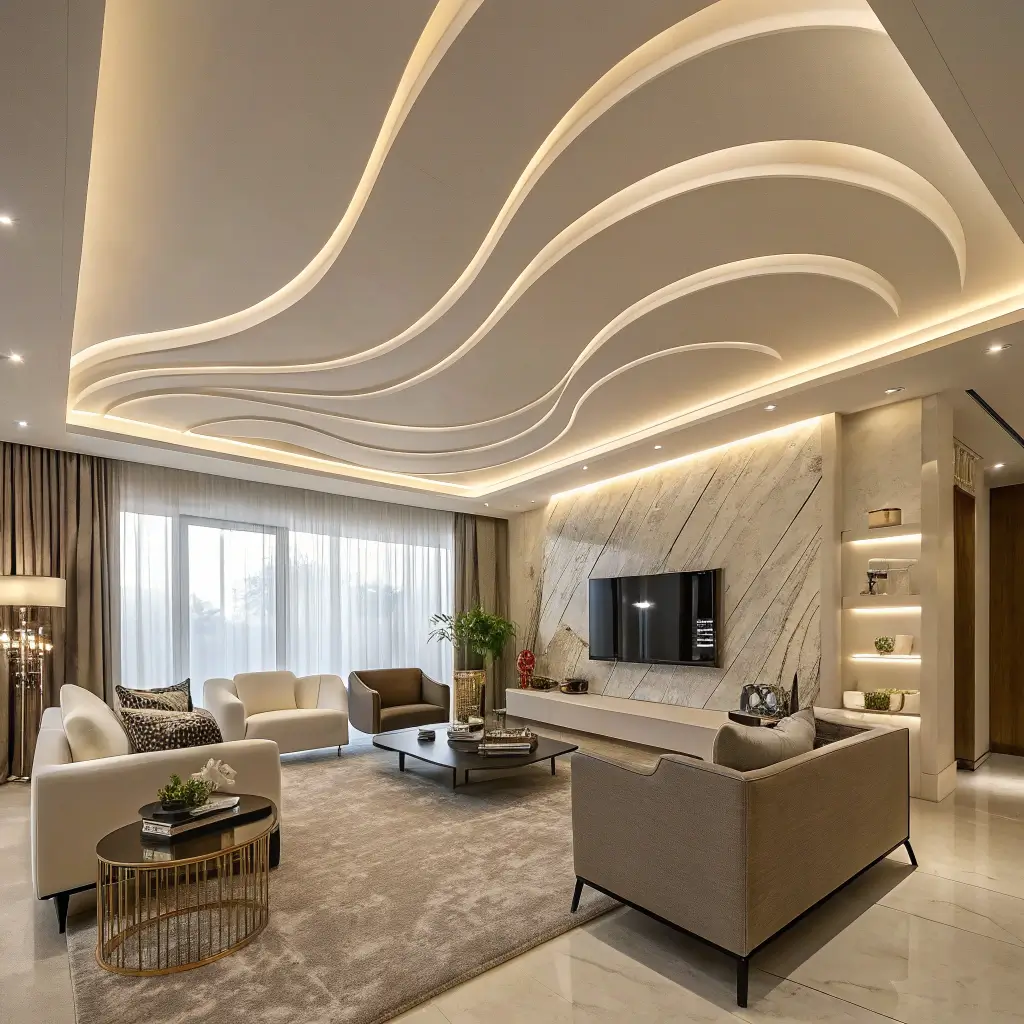
Straight lines are so last decade. Curved wave ceiling designs bring organic flow to modern interiors, creating movement and visual interest that flat ceilings simply can’t match. These undulating surfaces transform rooms from static boxes into dynamic spaces that feel alive.
The first time I encountered a wave ceiling was at a spa in Sedona, and I literally laid on the massage table staring up for half my treatment. The gentle curves seemed to flow like frozen water, creating this incredible sense of calm and movement simultaneously.
Creating Curves
Modern materials make wave ceilings more accessible:
- Flexible drywall bends to create smooth curves
- CNC-cut panels ensure precision
- Plaster systems allow organic shapes
- Stretch fabric creates temporary wave effects
IMO, the key is restraint. One or two gentle waves look elegant; too many and your room feels like a funhouse. Trust me on this one.
Integrated Skylight Ceiling
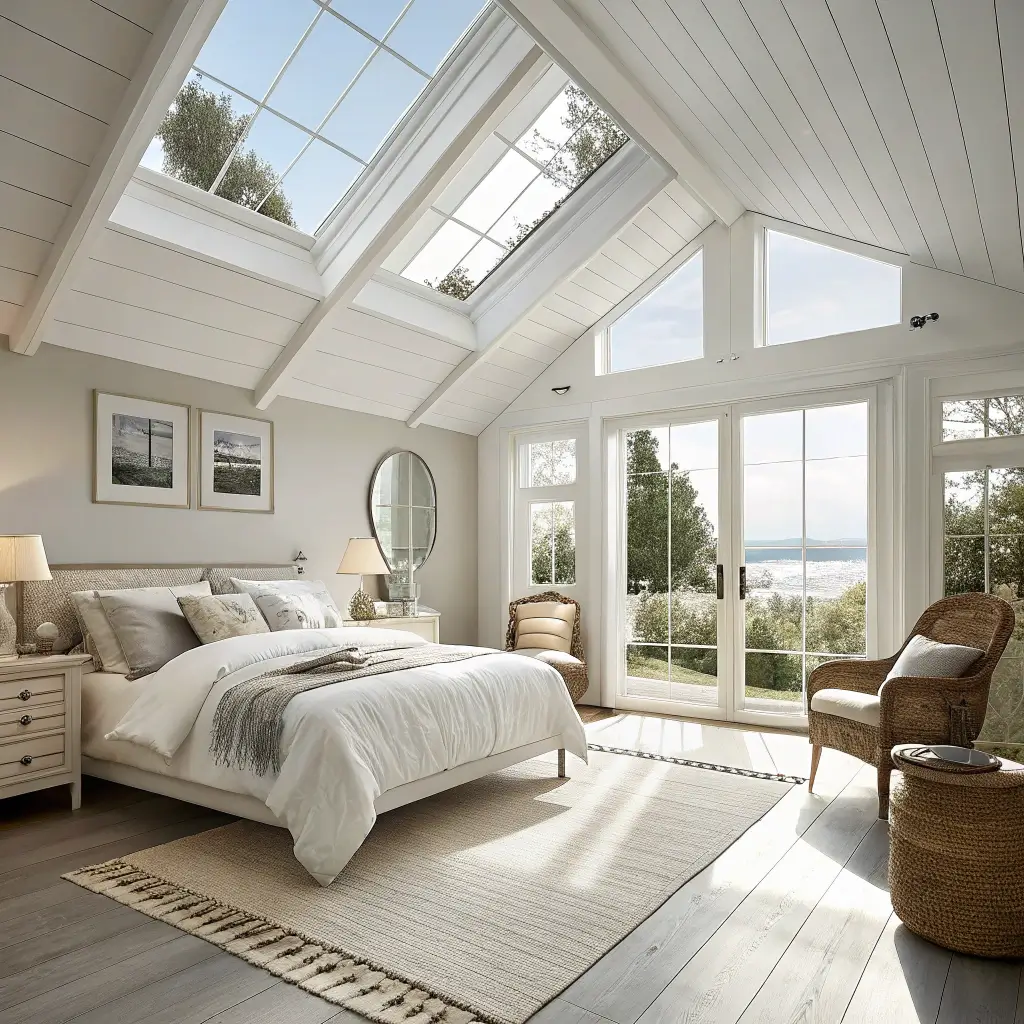
Why settle for artificial light when you can have the real thing? Integrated skylight ceilings don’t just poke holes in your roof – they create architectural features that flood interiors with natural light while maintaining design cohesion.
After living through Seattle’s gray winters, I invested in a skylight system for my home office. Best. Decision. Ever. The integrated design means the skylight feels like part of the ceiling architecture, not an afterthought. Even on cloudy days, the natural light quality beats any LED on the market.
Modern Skylight Solutions
Today’s skylights are nothing like those leaky units from the ’80s:
- Smart glass technology tints automatically
- Ventilating models improve air quality
- Tubular skylights work in tight spaces
- Solar-powered blinds provide shade control
The vitamin D boost alone justifies the investment, but the way natural light transforms interior spaces? That’s priceless.
Two-Tone Layered Ceiling
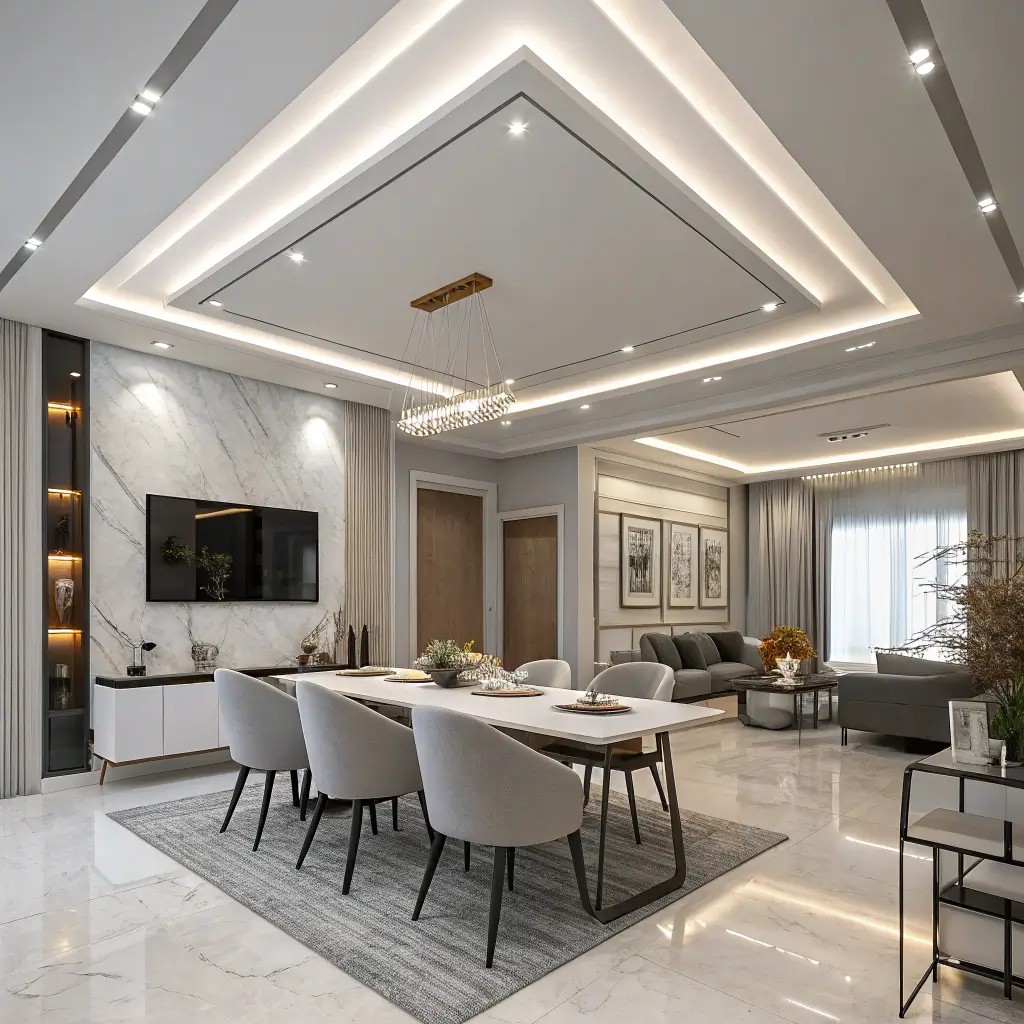
Can’t decide on one ceiling treatment? Why not have two? Two-tone layered ceilings combine different levels, colors, or materials to create depth and define spaces without walls. This approach lets you have your cake and eat it too – architecturally speaking.
My open-plan kitchen and living room suffered from that “one big undefined space” syndrome until we installed a two-tone layered ceiling. The kitchen area features a dropped white panel while the living room maintains the original height in warm gray. Suddenly, each zone had its own identity while maintaining the open feel.
Design Strategies
Successful two-tone ceilings balance several elements:
- Color contrast (subtle or bold, your choice)
- Height variation (even 4 inches makes a difference)
- Material mixing (smooth vs. textured)
- Lighting integration between layers
The layers also provide perfect channels for running cables and HVAC without visible bulk. Form meets function at its finest.
Fabric Draped Ceiling Concept

Who says ceilings need to be rigid? Fabric draped ceiling concepts bring softness and movement to modern interiors, creating ethereal spaces that feel both temporary and timeless. This isn’t your wedding tent situation – we’re talking architectural fabric installations that redefine what ceilings can be.
A boutique I visited in Miami featured a fabric ceiling that literally took my breath away. The tensioned fabric created gentle billows that moved slightly with the air conditioning, making the entire space feel alive. It transformed shopping from a transaction into an experience.
Fabric Selection and Installation
Not all fabrics work for ceiling applications:
- Fire-retardant treatment is non-negotiable
- Stretch fabrics maintain shape better
- Consider acoustic properties
- Light transmission affects ambiance
Maintenance concerns are real – fabric collects dust. But modern materials and proper ventilation systems minimize this issue. Plus, many systems allow fabric removal for cleaning.
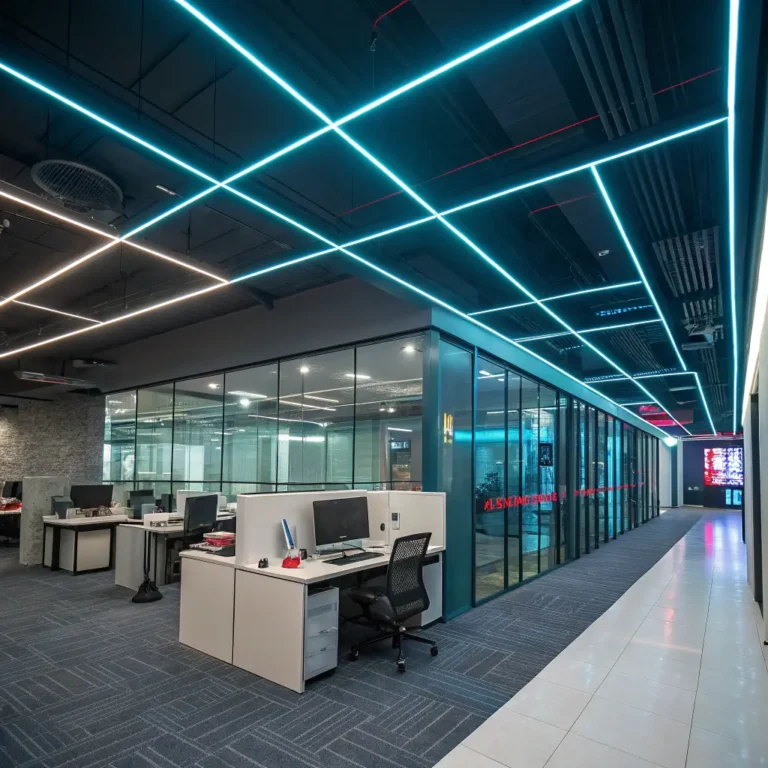
Recessed LED Strip Ceiling
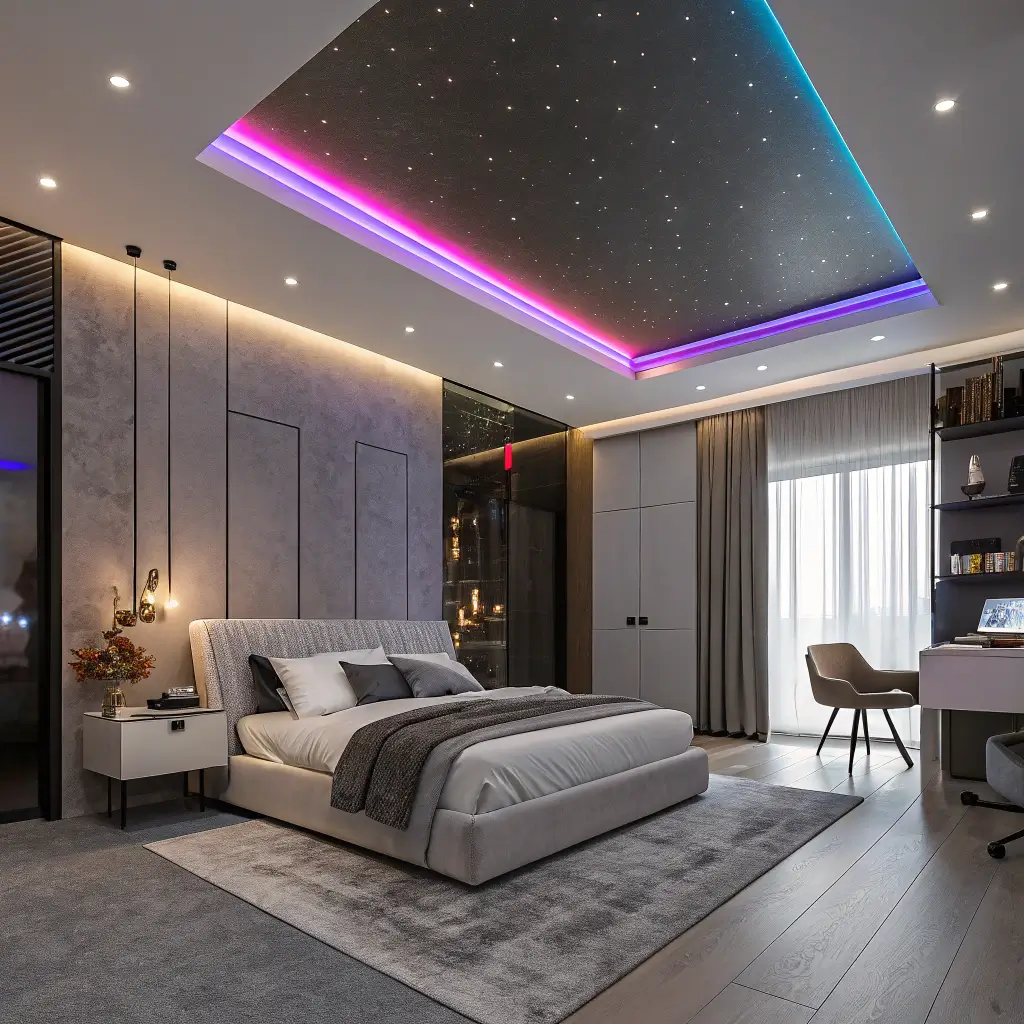
Last but absolutely not least, recessed LED strip ceilings represent the perfect marriage of minimalism and technology. These designs embed lighting directly into ceiling channels, creating clean lines of illumination without any visible fixtures.
I went full recessed LED in my hallway, and it transformed a boring passthrough into a gallery-worthy space. The continuous lines of light guide you through while highlighting artwork on the walls. No more ugly ceiling fixtures breaking up the view – just pure, architectural light.
Planning Your LED Layout
Strategic placement makes all the difference:
- Perimeter placement enlarges rooms visually
- Grid patterns suit modern minimalist styles
- Organic curves soften geometric spaces
- Variable spacing creates rhythm
Don’t cheap out on the LED quality either. Good strips last 50,000+ hours and maintain consistent color temperature. Considering you’re embedding them in your ceiling, spending extra upfront saves headaches later.
Wrapping This Up
So there you have it – fifteen modern ceiling designs that prove the fifth wall deserves just as much attention as the other four. Whether you go bold with black matte or keep it clean with minimalist white, the key is choosing a design that enhances your space while reflecting your style.
Here’s my final thought: ceilings set the mood for entire rooms, yet most of us ignore them completely. Start looking up when you enter spaces, and you’ll quickly notice how ceiling design impacts everything from lighting quality to acoustic comfort to psychological well-being. Once you see it, you can’t unsee it.
Ready to transform your ceiling from afterthought to main event? Pick one idea that resonates with you and start small – even updating a single room’s ceiling changes how you experience your entire home. Trust me, once you nail that first ceiling design, you’ll wonder why you waited so long to look up