10 Inspiring Dining Area Ideas and Modern Layouts

You know that awkward space where you currently eat takeout while scrolling through Instagram? Yeah, that one. We need to talk about it.
Your dining area deserves better than being a dumping ground for mail and random shopping bags.
Trust me, I learned this the hard way after eating dinner on my couch for three years straight – not my finest moment.
Creating an amazing dining space doesn’t require hiring an expensive designer or selling a kidney.
What you need are solid ideas and maybe a weekend or two to spare. I’ve transformed countless dining areas (including my disaster of a breakfast nook), and I’m here to share what actually works versus what just looks good on Pinterest.
Cozy Corner Dining Nook
Making Small Spaces Feel Intimate
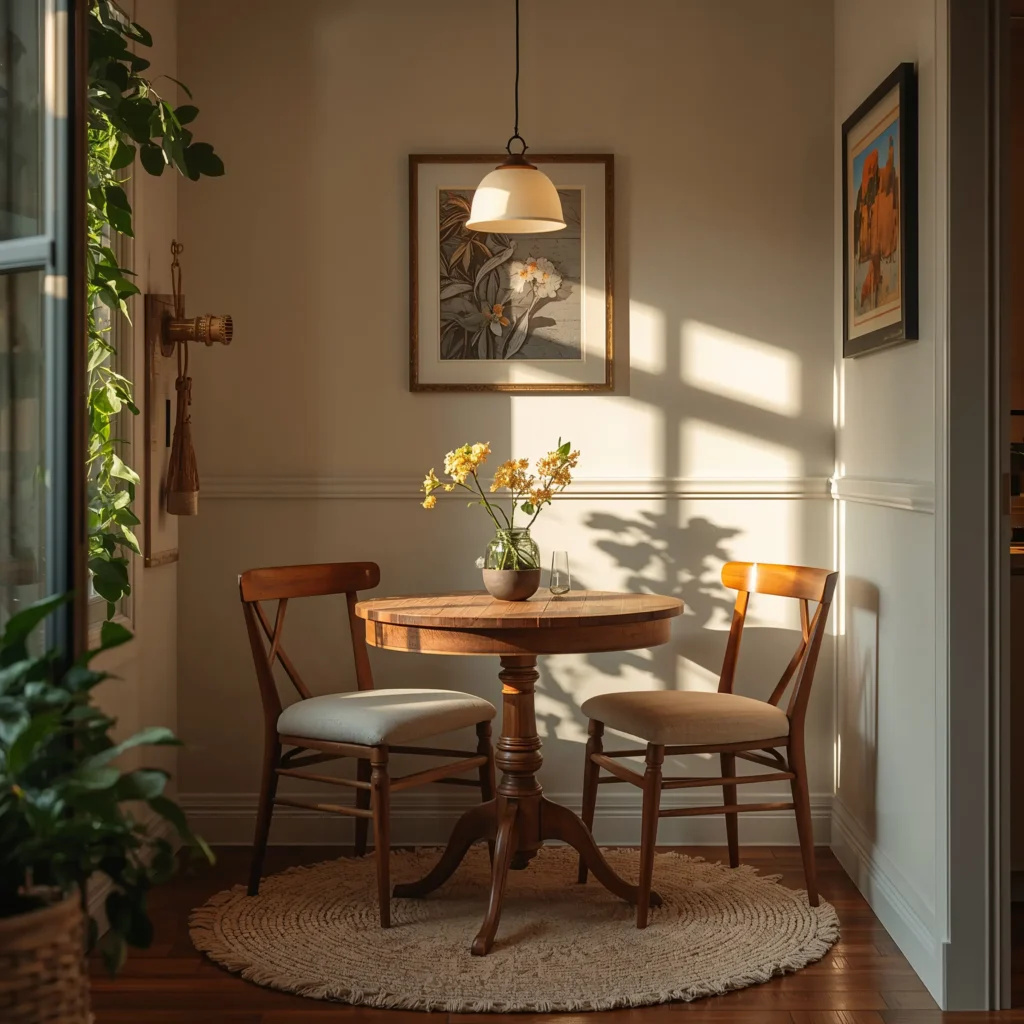
Let’s start with my personal favorite – the corner dining nook. Remember those booth seats at your favorite diner? That’s the vibe we’re going for here, minus the sticky vinyl and questionable coffee. Corner nooks maximize every square inch while creating this incredible sense of intimacy that regular dining tables just can’t match.
I converted my awkward kitchen corner into a nook last spring, and honestly? Game-changer. You grab a corner banquette or L-shaped bench, throw in some plush cushions, and suddenly that dead space becomes the most popular spot in your home. My kids literally fight over who gets to sit there during breakfast.
The beauty of corner nooks lies in their efficiency. You’re using walls as natural boundaries, which means you need less floor space overall. Plus, built-in storage underneath the seating? Chef’s kiss. I hide everything from seasonal decorations to my emergency chocolate stash under there.
Essential Elements for Your Nook
Here’s what you absolutely need to nail this look:
• A round or square table (rectangles get awkward in corners)
• Comfortable cushions with washable covers (trust me on this)
• Wall-mounted lighting to save table space
• At least 2-3 throw pillows for extra coziness
• Storage baskets underneath if you’re going the bench route
Want to know the secret sauce? Layer your textures. Mix smooth wood with soft fabrics, add a knitted throw, maybe toss in a leather cushion. Your corner instantly transforms from “meh” to “can we eat every meal here?”
Minimalist White Dining Space
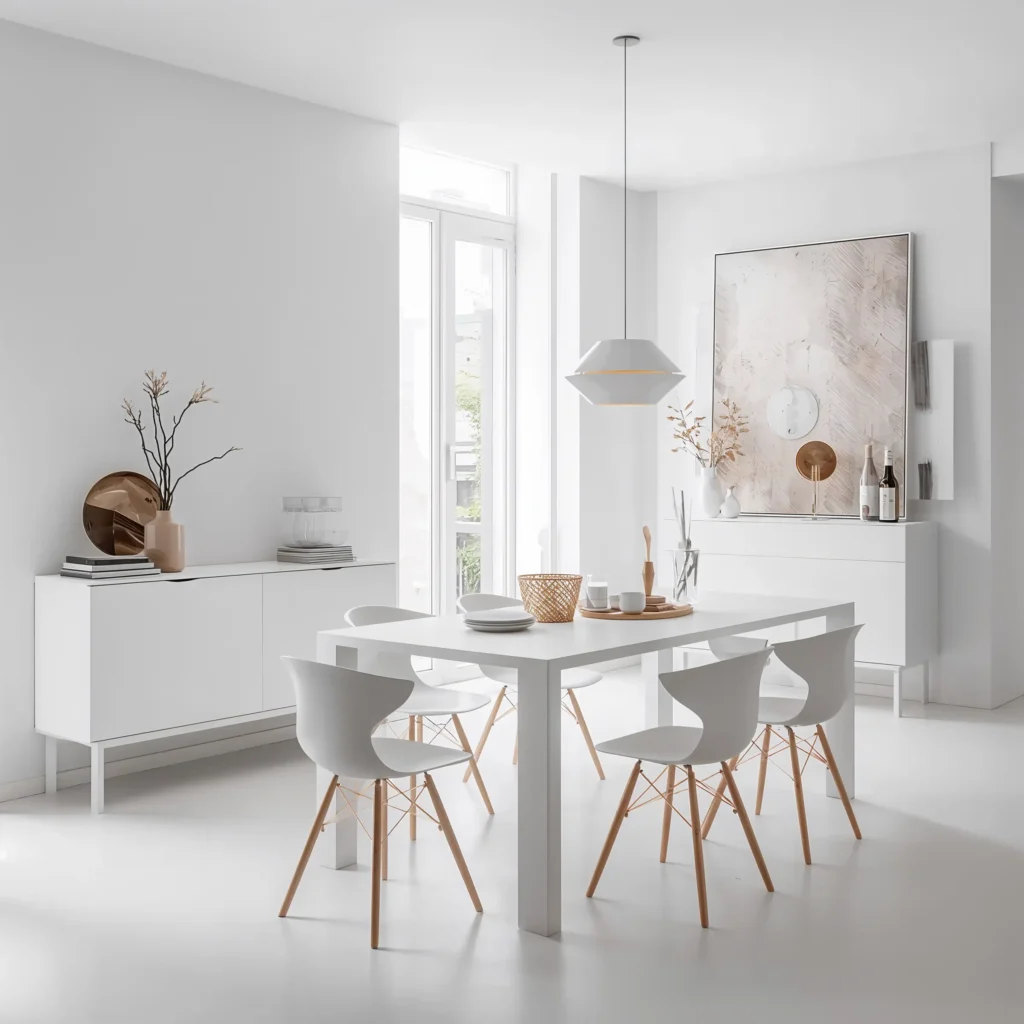
The Art of Less Is More
Okay, confession time: I used to think minimalist dining rooms were boring. White walls, white table, white chairs – where’s the personality, right? Then I visited my friend Sarah’s place, and her all-white dining room literally took my breath away. The key isn’t removing everything; it’s choosing exactly the right everything.
White spaces make small rooms feel massive. They bounce light around like nobody’s business, and FYI, they’re surprisingly forgiving when you keep the design simple. No one notices that tiny scuff on your white wall when the entire space feels like a cloud.
The trick with minimalist white dining areas? Texture and subtle variations save you from sterile hospital vibes. Think matte white walls, glossy white table, maybe linen white chairs. See what I’m doing there? Same color family, totally different surfaces.
Making White Work Without Going Crazy
Listen, I have two kids and a dog. An all-white dining room sounds like a nightmare waiting to happen, right? Wrong. Here’s how you make it livable:
• Choose wipeable surfaces – high-gloss tables and leather chairs
• Add one statement piece – a single black light fixture or natural wood accent
• Invest in quality white that doesn’t yellow over time
• Keep cleaning supplies handy (but hidden)
• Use washable rugs in natural fibers
My biggest tip? Don’t go pure white everything. Throw in some cream, ivory, or pearl. Your eyes need those subtle shifts to stay interested.
Rustic Farmhouse Table Setup
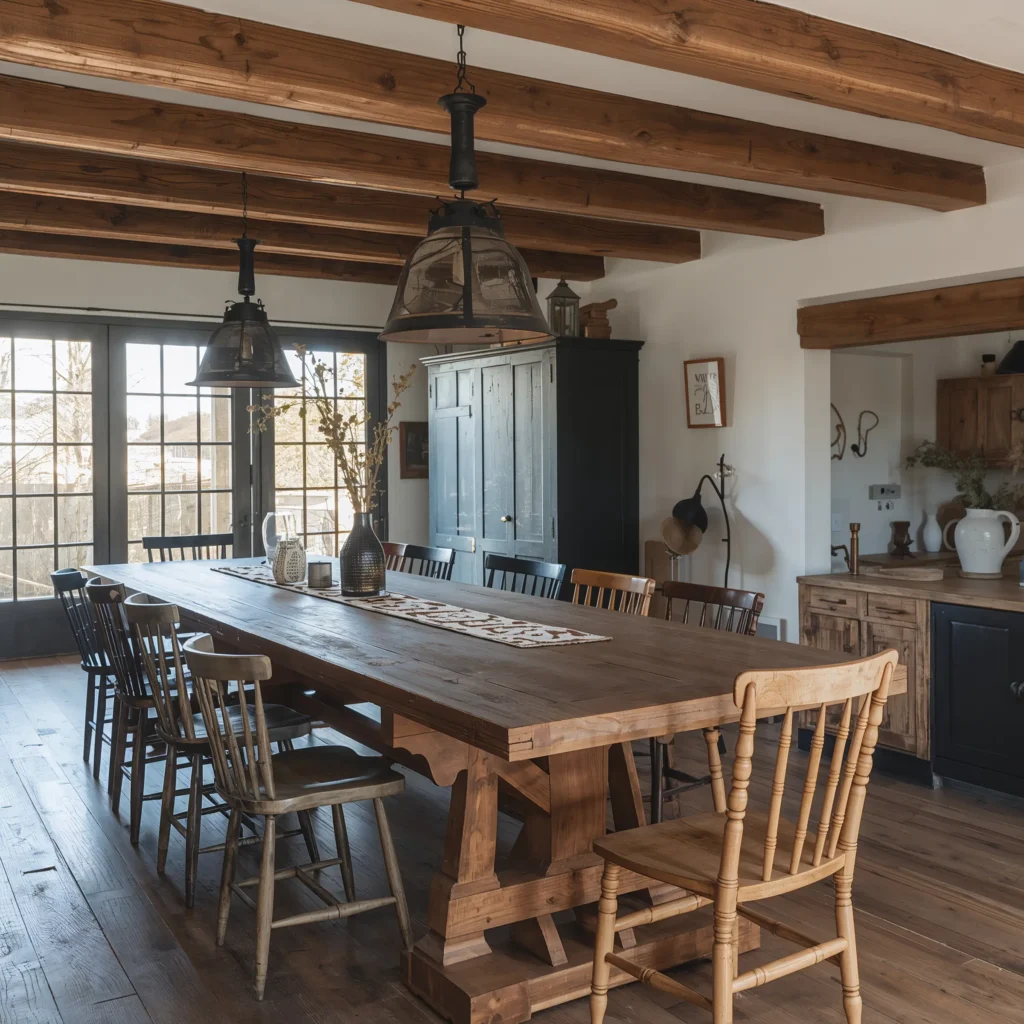
Bringing the Countryside Home
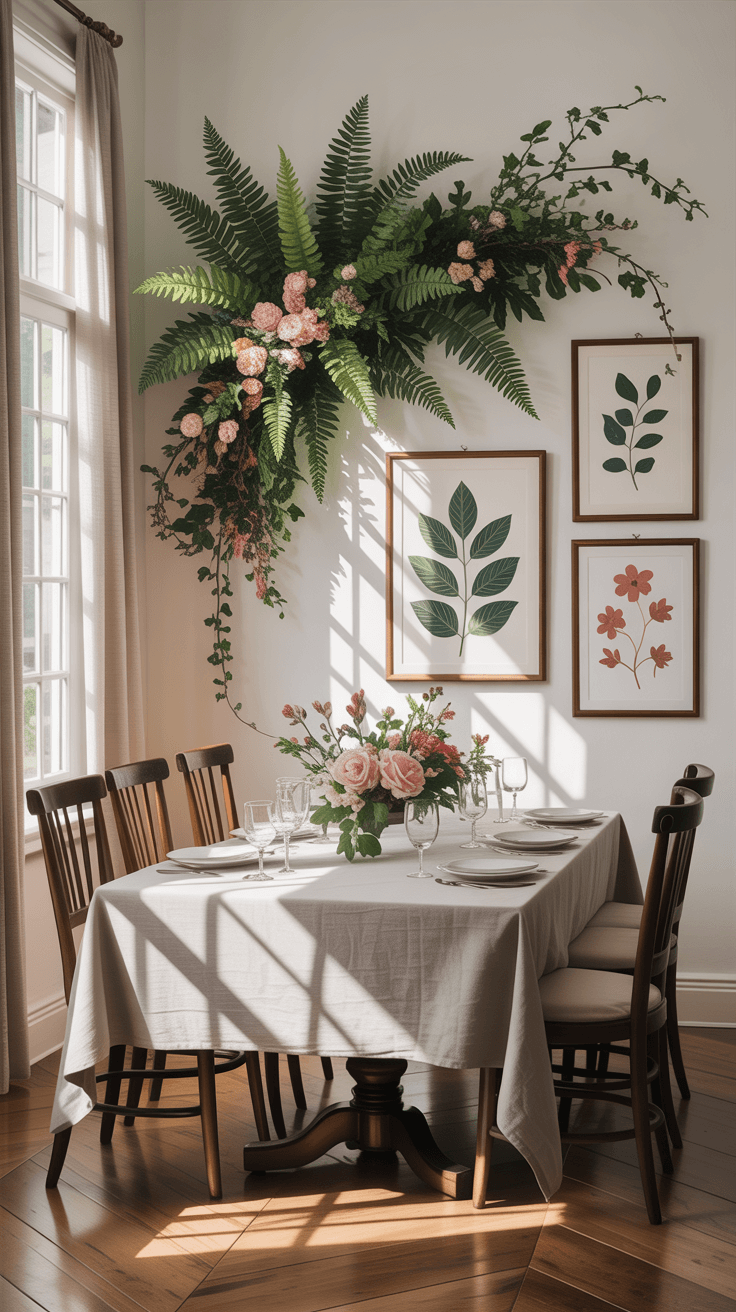
Ever walked into someone’s dining room and immediately felt like you should be eating fresh-baked bread while discussing the harvest? That’s farmhouse magic, my friend. Rustic farmhouse dining areas tap into our primal need for warmth and community, and they do it with style.
I scored an old barn door table at an estate sale three years ago. Best $200 I ever spent. The thing weighs approximately seventeen thousand pounds (okay, maybe 150), but it anchors my dining room like nothing else could. Every scratch and dent tells a story – mostly about my questionable furniture-moving skills.
The farmhouse look works because it feels authentic. You’re not trying to impress anyone; you’re creating a space where people want to linger over coffee and homemade pie. Even if that pie came from the grocery store. We don’t judge here.
Key Farmhouse Elements That Actually Matter
• A solid wood table – preferably with visible grain and imperfections
• Mismatched chairs (intentionally mismatched, not “I’m broke” mismatched)
• Industrial or vintage lighting fixtures
• Natural textiles like burlap, linen, or cotton
• Open shelving displaying actual dishes you use
Here’s where people mess up: they go too themed. You don’t need roosters and “Live, Laugh, Love” signs everywhere. Keep it simple, keep it functional, and let the natural materials do the talking.
Also Read: 10 Beautiful Dining Table Design Modern Ideas for Every Room
Modern Open-Plan Dining Area
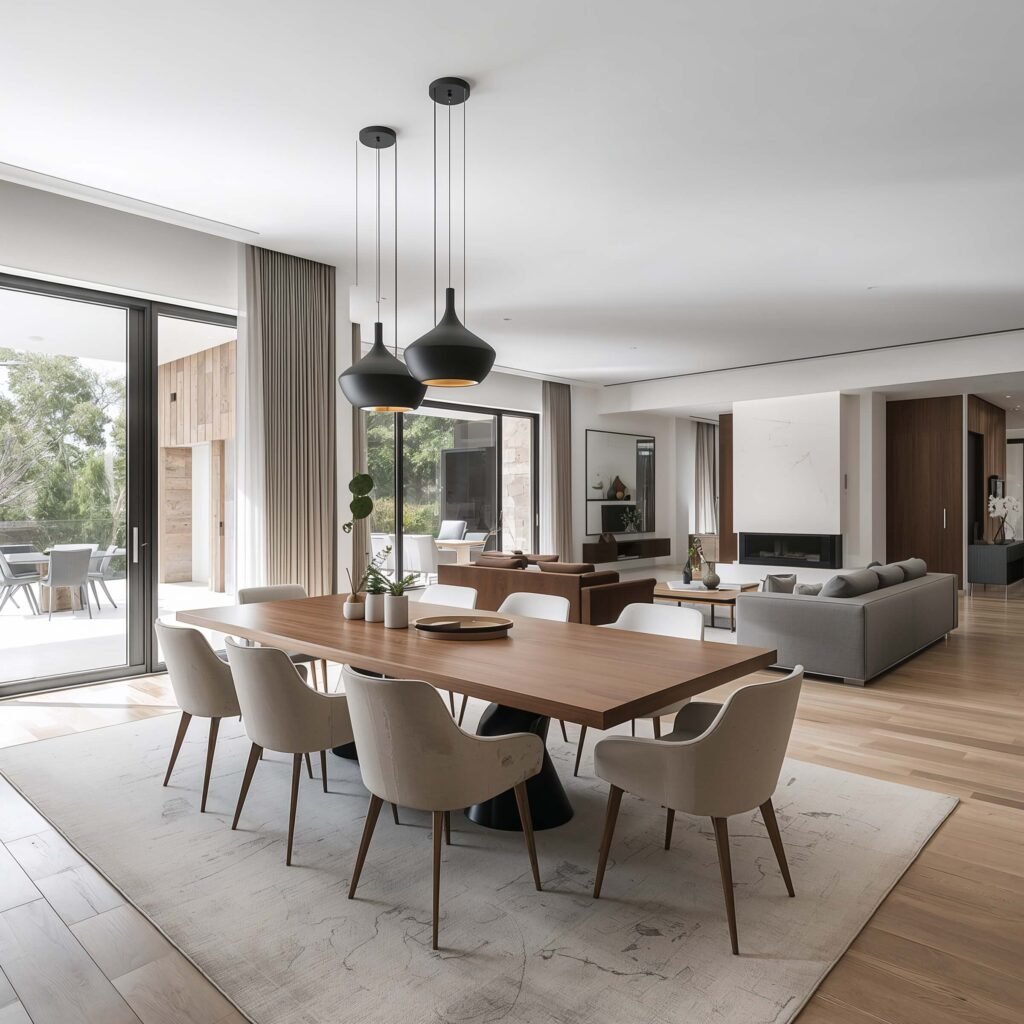
When Your Dining Room Isn’t Really a Room
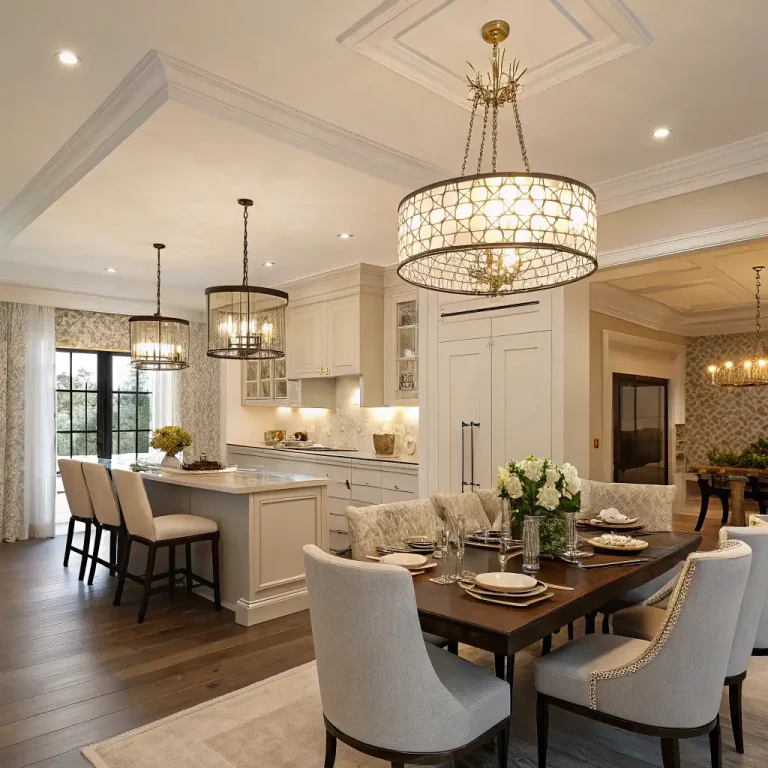
Open-plan living – architects love it, and honestly, so do I. My current place has the kitchen, dining, and living areas all flowing together, and it makes entertaining so much easier. No more shouting conversations through walls while I’m cooking!
The challenge? Creating distinct zones without walls. Your dining area needs to feel separate enough to be special but integrated enough to maintain that open flow. Sounds tricky? It kind of is, but totally doable.
I use my dining table as a room divider. It sits between my kitchen and living room, creating a natural traffic pattern. The overhead pendant light acts like a beacon, saying “this is where we eat” without needing actual boundaries. Smart, right?
Defining Your Open Dining Space
Think about these zone-creating tricks:
• Use a statement rug to ground your dining area
• Install a dramatic light fixture as a focal point
• Choose dining chairs that contrast with your living room seating
• Add a console or bar cart as a subtle boundary
• Paint an accent wall behind your dining space
The beauty of open-plan dining? You can cook, serve, and socialize without missing anything. The downside? Everyone can see your kitchen mess. IMO, it’s worth investing in some nice-looking containers to hide the chaos 🙂
Small Apartment Foldable Dining
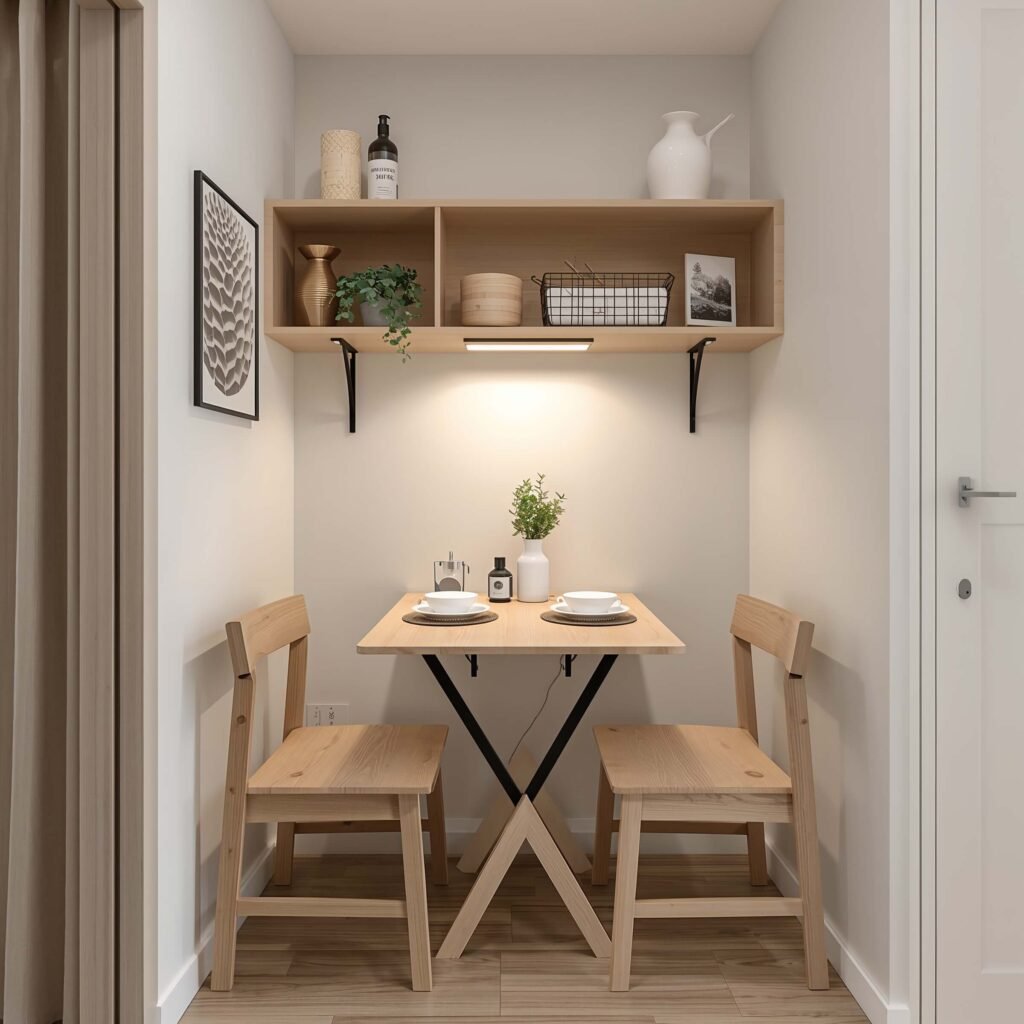
Big Ideas for Tiny Spaces
Living in 500 square feet doesn’t mean eating off TV trays forever. Been there, done that, got the backache to prove it. Foldable dining solutions let you have a proper dining experience without sacrificing your entire living room.
My first apartment had this genius wall-mounted drop-leaf table. During the day? Flat against the wall, taking up literally zero floor space. Dinner time? Boom – seats for four. I felt like a magician every time I set it up.
The key to small apartment dining isn’t just about finding furniture that folds. You need pieces that look intentional when they’re both open and closed. That folding table shouldn’t scream “I’m only here temporarily!” when you’re using it.
Smart Foldable Solutions That Don’t Suck
• Wall-mounted drop-leaf tables that double as console tables
• Nesting chairs that stack or slide under counters
• Expandable console-to-dining tables (these things are wizardry)
• Bar-height counters with tucked stools
• Ottoman storage benches that work as seating
Here’s my pro tip: invest in good folding chairs. Not those metal monstrosities from your college days – actual nice ones. West Elm and CB2 make folding chairs that look better than most regular dining chairs. Your back (and your guests) will thank you.
Industrial Chic Dining Zone
Factory Meets Function
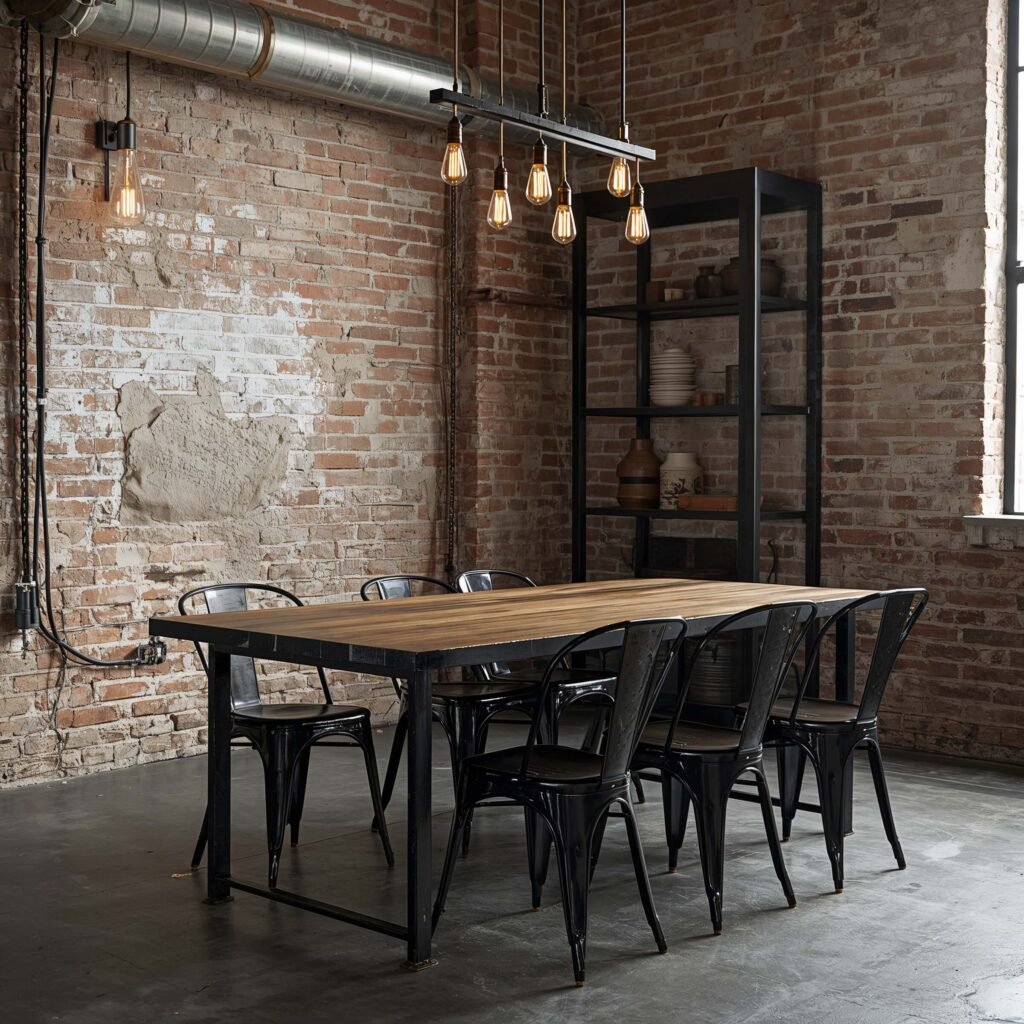
Remember when exposed brick and metal pipes were signs of a crappy apartment? Now we pay extra for that stuff. Industrial dining spaces embrace raw materials and unfinished elements, creating this cool urban vibe that feels both edgy and inviting.
I accidentally stumbled into industrial style when I removed some drywall during a renovation and found gorgeous brick underneath. Instead of covering it back up, I built my entire dining room design around it. That raw brick wall became my favorite feature, and it cost me exactly nothing extra.
Industrial doesn’t mean cold and unwelcoming. You balance those hard materials with warm woods, soft textiles, and good lighting. Think of it as tough on the outside, cozy on the inside – like that biker who secretly loves kittens.
Building Your Industrial Look
Get these elements right:
• Metal and wood combinations – think steel legs with wooden tops
• Edison bulb lighting (cliché? Maybe. Effective? Absolutely.)
• Exposed structural elements like beams or pipes
• Leather or canvas seating materials
• Concrete or dark metal finishes
Want to know what really sells the industrial look? Consistency in your metal finishes. Pick either black iron, brushed steel, or copper – then stick with it. Mixing metals works in other styles, but industrial design loves commitment.
Also Read: 12 Creative Farmhouse Dining Table Ideas for Rustic Charm
Luxury Marble Dining Experience
Because Sometimes You Want to Feel Fancy
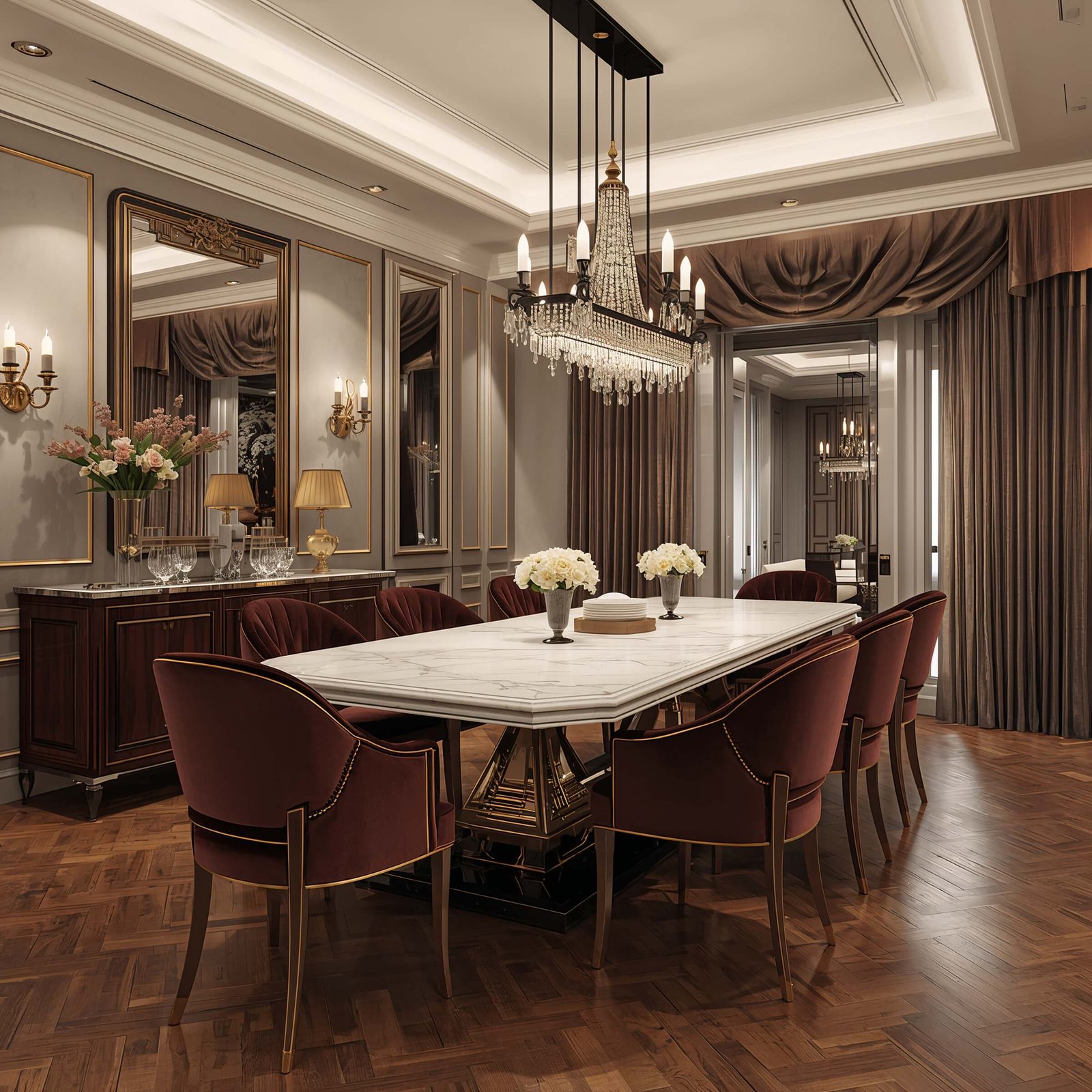
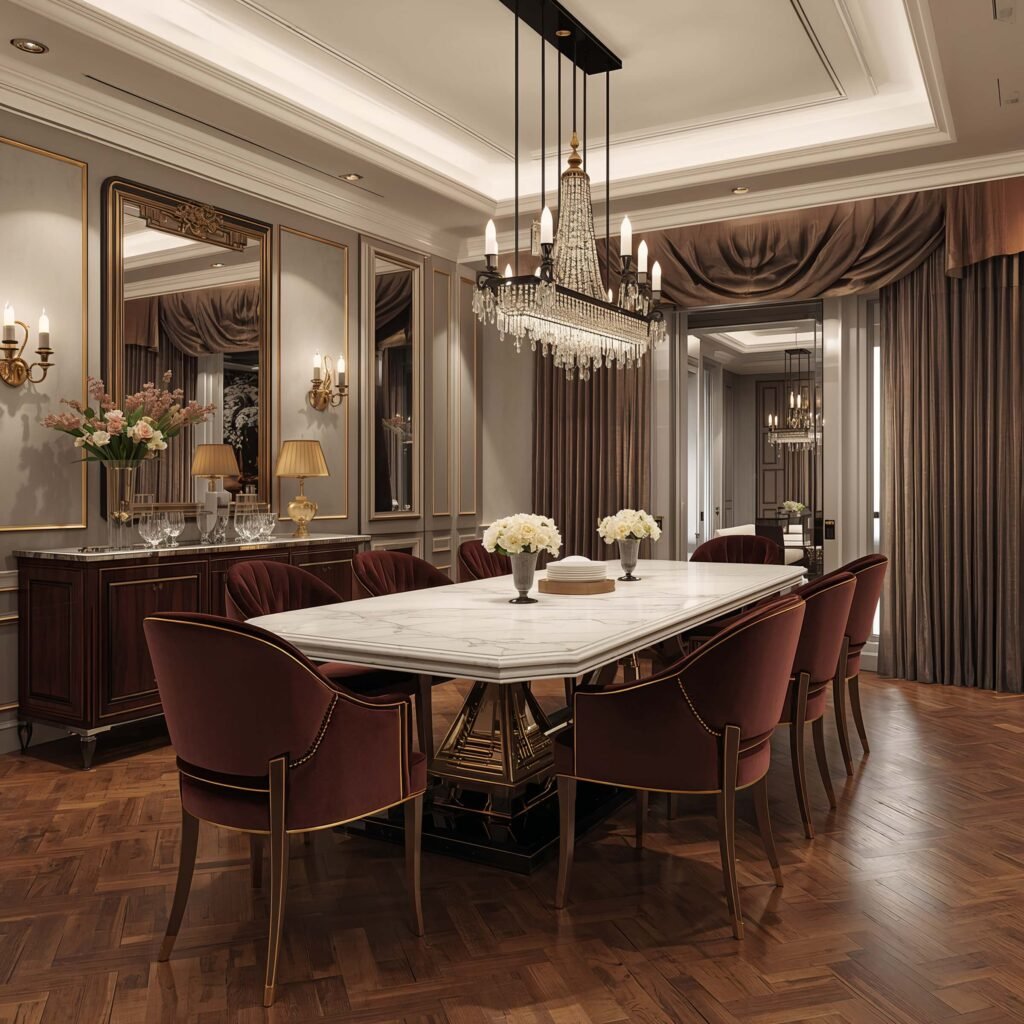
Let’s talk marble dining tables. Yes, they’re an investment. Yes, they require maintenance. But holy moly, do they elevate a space. Nothing says “I have my life together” quite like a marble dining table – even if you’re eating cereal for dinner.
I saved for two years to buy my Carrara marble table. Was it worth it? Every single penny. The way light plays across the surface, the cool touch under your hands, that subtle veining that makes each piece unique – it’s basically functional art.
But here’s the thing about luxury dining spaces: they don’t need to be stuffy. My marble table hosts everything from fancy dinner parties to my nephew’s Play-Doh sessions (with a protective mat, obviously). Luxury should enhance your life, not restrict it.
Creating Luxury Without the Trust Fund
You want that high-end look? Try these tricks:
• Marble-look quartz or porcelain – seriously, the good stuff is nearly indistinguishable
• Velvet dining chairs in jewel tones
• Crystal or high-quality glass lighting
• Metallic accents in gold, rose gold, or brass
• Fresh flowers or orchids as permanent centerpieces
The secret to luxury dining spaces? Quality over quantity. Better to have four amazing chairs than eight mediocre ones. Your dining room doesn’t need to look like a furniture showroom to feel luxurious.
Vintage Boho Dining Corner
Eclectic Vibes for Free Spirits
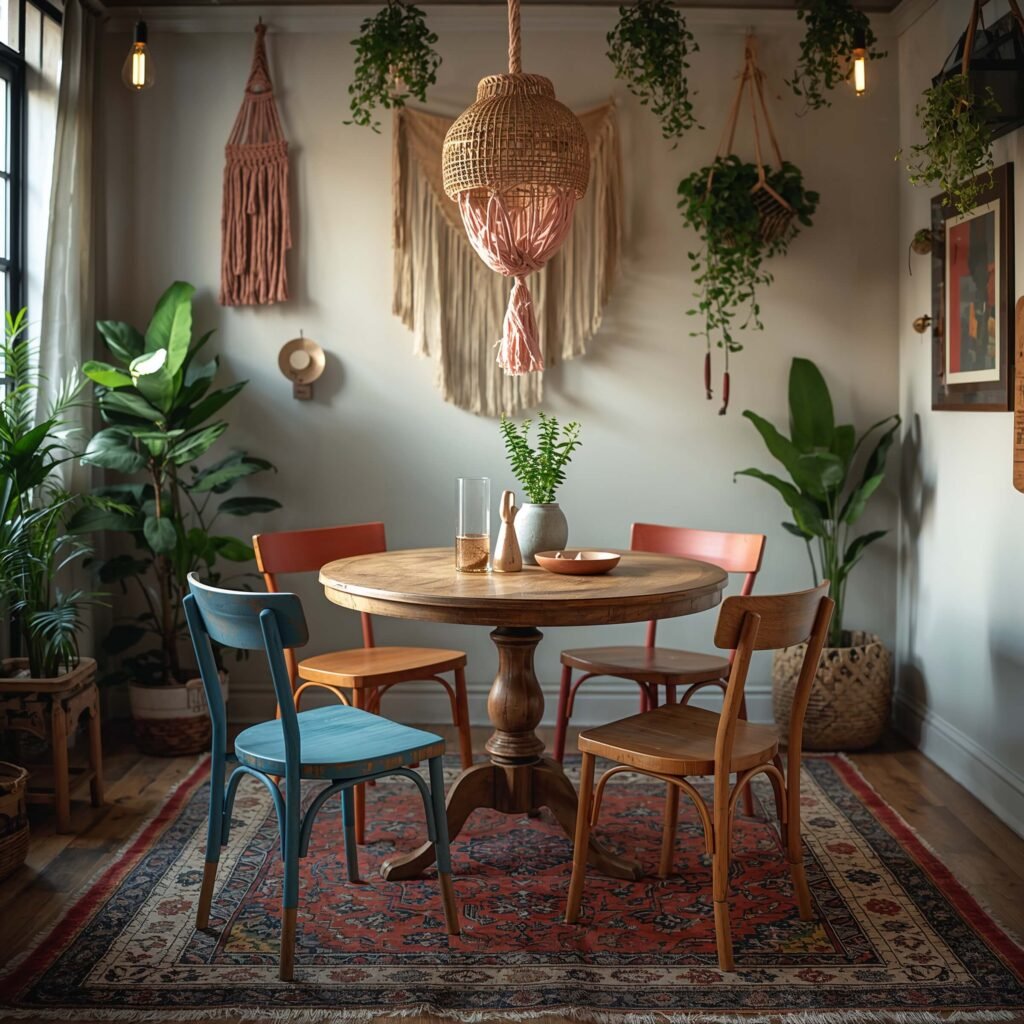
Boho dining rooms are where rules go to die, and I mean that in the best way possible. Mix patterns? Sure. Combine decades? Why not. Hang plants from the ceiling? Obviously. Vintage boho is about creating a collected-over-time feel, even if you bought everything last Tuesday.
My sister nailed this style without even trying. Her dining room has a 1970s teak table, Victorian parlor chairs she reupholstered, macramé plant hangers, and a Turkish rug that ties it all together somehow. It shouldn’t work, but it absolutely does.
The trick with boho? Controlled chaos. You want it to look effortless and organic, not like a thrift store exploded. There’s a fine line between eclectic and messy, and that line is usually about three decorative elements.
Essential Boho Elements That Won’t Overwhelm
• Mixed chair styles united by color or material
• Layered textiles – rugs on rugs, throws on chairs
• Plants at varying heights (hanging, table, floor)
• Warm, earthy color palettes with jewel tone accents
• Global-inspired patterns and textures
• Vintage or thrifted centerpiece items
My advice? Start with neutrals and add color through accessories. It’s easier to change out pillows and plants than to repaint everything when you get bored. And with boho style, you will get bored – that’s half the fun.
Scandinavian Style Minimal Dining
Hygge Meets Hunger
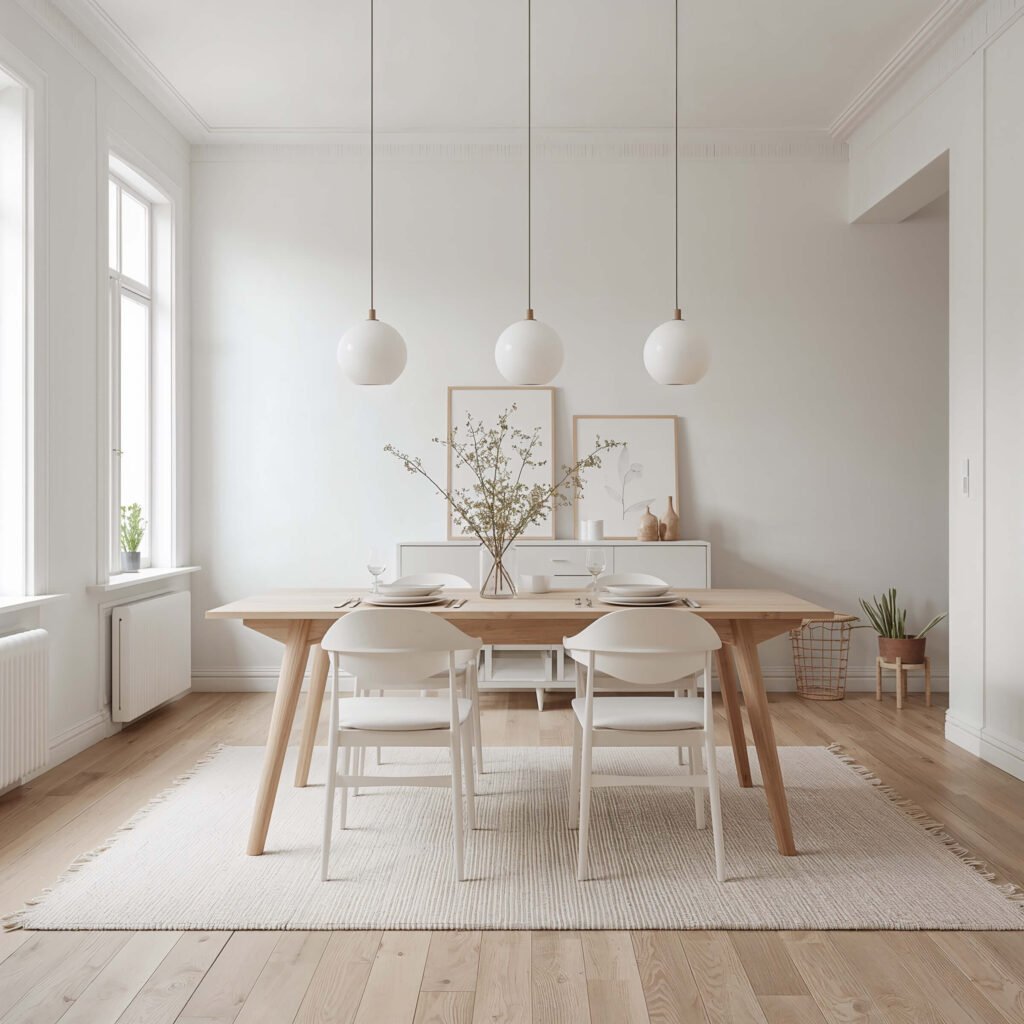
Scandinavian dining rooms make minimalism feel warm, which sounds like an oxymoron until you experience it. These spaces prove that simple doesn’t mean stark, and functional doesn’t mean boring. The Danes know what they’re doing, folks.
I spent a week in Copenhagen last year (humble brag, I know), and every dining space I saw made me want to completely redo my home. Light woods, cozy textiles, and this incredible sense of calm that made every meal feel like a meditation.
The Scandinavian secret? Natural light is everything. They design entire rooms around maximizing daylight, which makes sense when winter means four hours of sun. Even if you live in sunny California, embracing natural light transforms your dining space.
Achieving That Nordic Magic
Focus on these key elements:
• Light wood tones – think ash, birch, or white oak
• Neutral color palettes with black accents
• Sheepskin throws or seat cushions
• Simple, functional design with no unnecessary ornamentation
• Candles everywhere (seriously, so many candles)
• Natural materials like wool, linen, and leather
Here’s what most people miss about Scandinavian design: it’s not cold or impersonal. Every element serves a purpose, whether functional or emotional. That seemingly simple wooden chair? It’s ergonomically perfect and sustainably sourced. Form and function in perfect harmony.
Also Read: 10 Elegant White Dining Table Ideas That Wow Instantly
Outdoor Patio Dining Ideas
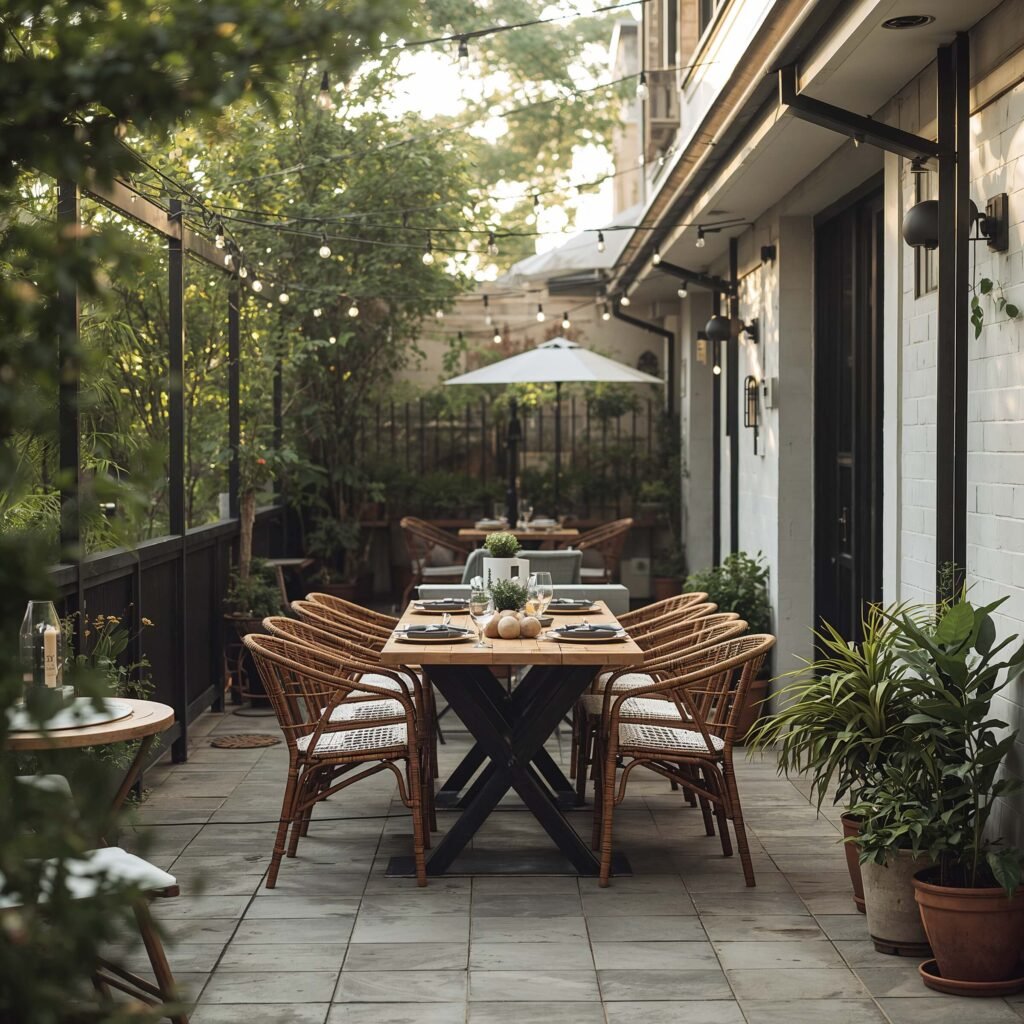
Taking It Outside
Why limit yourself to indoor dining when Mother Nature provides the best ambiance? Outdoor dining spaces extend your home’s footprint and give you an excuse to eat outside even when you’re not camping.
I converted my sad concrete patio into a legit outdoor dining room last summer. String lights, weather-resistant furniture, and a few potted plants later, we eat outside more than inside from April through October. My electricity bill loves it, and so do my vitamin D levels.
The biggest mistake people make with outdoor dining? Treating it like an afterthought. Your patio deserves the same design attention as your indoor spaces. Weather-resistant doesn’t mean ugly anymore – outdoor furniture has seriously upped its game.
Creating an Outdoor Room That Actually Gets Used
Consider these must-haves:
• Shade solutions – umbrella, pergola, or shade sail
• Comfortable seating with weather-resistant cushions
• Ambient lighting for evening meals
• A sturdy table that can handle temperature changes
• Protection from wind (privacy screens or plants)
• Easy access to the kitchen
Want to know my secret weapon? An outdoor rug. It instantly makes your patio feel like a real room instead of just furniture on concrete. Plus, it’s way more comfortable under bare feet during those summer barbecues.
Making Your Choice
So which dining area style speaks to you? Maybe you’re drawn to the cozy embrace of a corner nook, or perhaps the clean lines of Scandinavian design make your heart sing. Here’s the thing – you don’t have to pick just one.
My current dining space combines industrial elements (metal chairs), farmhouse warmth (reclaimed wood table), and a touch of boho (that vintage rug I’ll never get rid of). The best dining rooms reflect the people who use them, not some magazine’s idea of perfection.
Start with what you have. Seriously. That hand-me-down table from your parents? It might be the perfect farmhouse centerpiece with a little love. Those white walls you’ve been meaning to paint? Maybe they’re already perfect for a minimalist setup.
The best dining area is one that makes you want to gather around it. Whether you’re hosting elaborate dinner parties or eating cereal at midnight, your dining space should feel like home. Because at the end of the day, it’s not about the Instagram-worthy moments (though those are nice too). It’s about creating a space where memories happen, conversations flow, and maybe, just maybe, everyone puts their phones down for a minute.
Now get out there and transform that dining area. Your takeout containers deserve better, and so do you :/