10 Genius Entryway Shoe Storage Ideas That Maximize Space

Let’s be honest – we’ve all been there. You walk into your home after a long day, and the first thing you see is a chaotic pile of shoes that looks like a footwear tornado just touched down in your entryway. Not exactly the warm welcome home you were hoping for, right?
I spent years playing shoe Tetris every time I walked through my door until I finally decided enough was enough.
After testing more storage solutions than I care to admit (and returning half of them), I’ve discovered some game-changing ideas that actually work.
And guess what? They don’t all require you to be a DIY wizard or have a trust fund to pull off.
Hidden Lift-Top Entryway Bench Storage
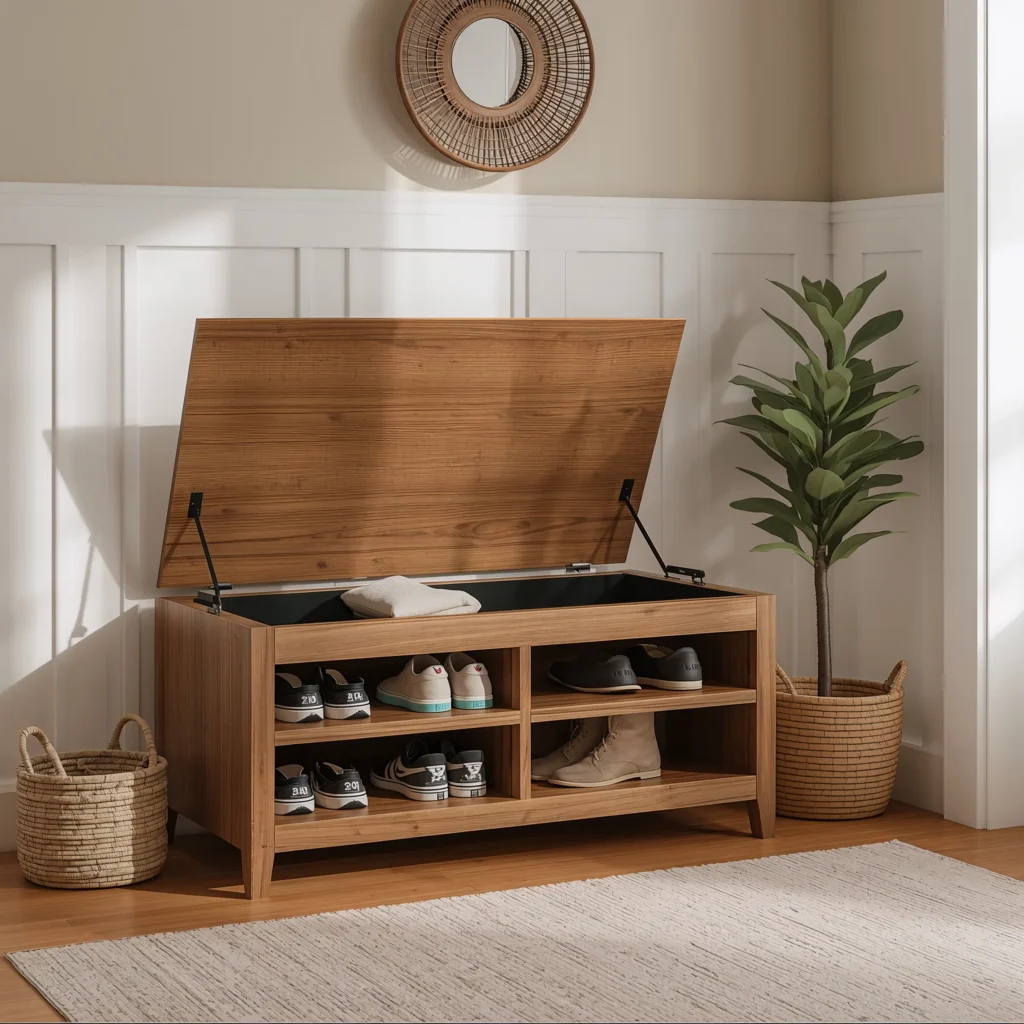
This one’s my personal favorite, and I’ll tell you why. A lift-top bench gives you the perfect two-for-one deal – somewhere to sit while you wrestle with your boots AND a secret hideaway for all those shoes you don’t want guests to see.
The genius part about these benches is that they look like regular furniture. Nobody walking into your home suspects that underneath that innocent-looking cushion lies your collection of running shoes, rain boots, and those embarrassing slippers shaped like dinosaurs (we all have them, don’t lie).
When shopping for one, look for these features:
- Soft-close hinges (trust me, slamming bench lids at 6 AM will not win you any popularity contests)
- Interior dividers or compartments
- A weight capacity that can handle both storage and sitting
- Cushioned top for actual comfort
I picked up mine from a local furniture store for about $150, and it holds roughly 8-10 pairs of shoes comfortably. The best part? My mother-in-law complimented my “tasteful entryway seating” without realizing she was sitting on top of my husband’s smelly gym shoes. Victory!
Slim Wall-Mounted Shoe Cabinet for Narrow Spaces
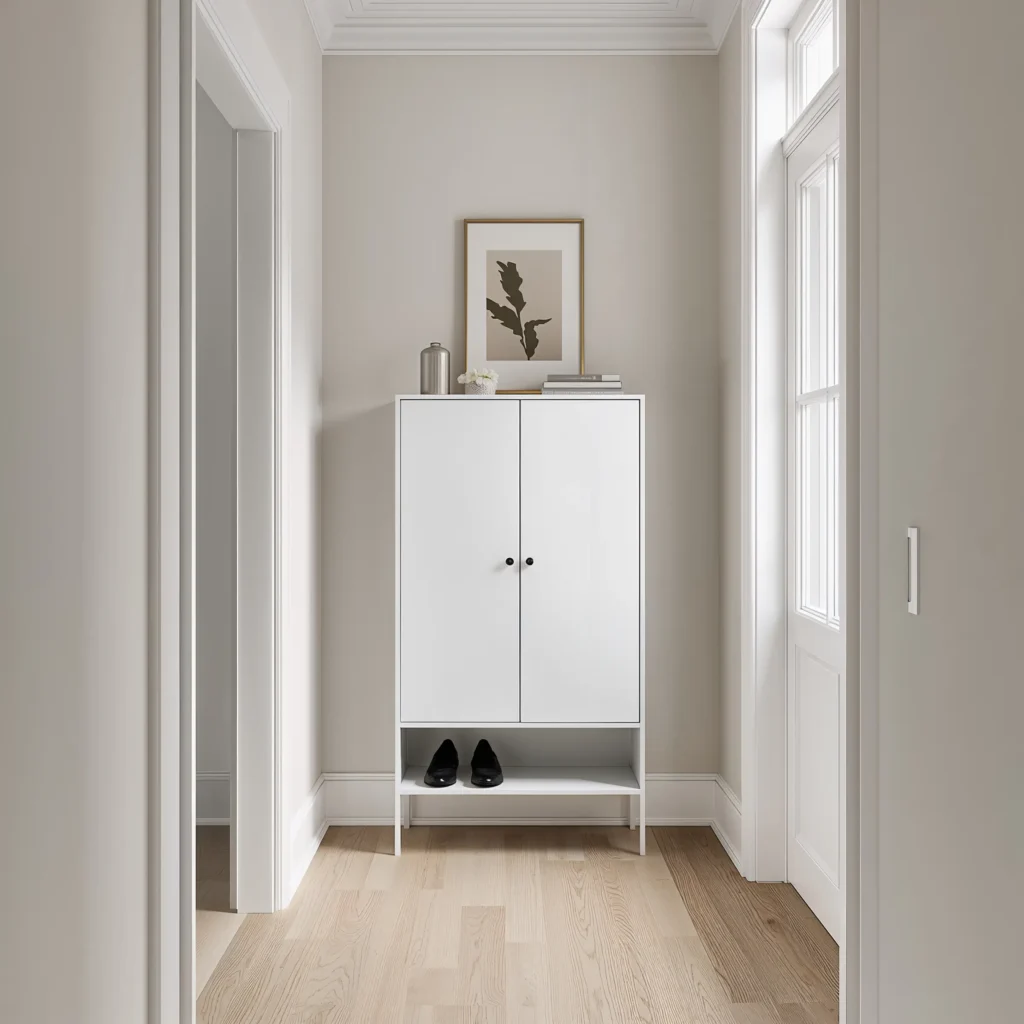
Living in a shoebox-sized apartment? Yeah, I’ve been there too. That’s where wall-mounted shoe cabinets become your best friend. These bad boys stick to your wall like a flat-screen TV and barely jut out into your walkway.
Most slim cabinets measure only 6-8 inches deep, which means they won’t turn your narrow hallway into an obstacle course. You can find models that flip down, slide open, or have tilting compartments – it’s like shoe storage went to engineering school and graduated with honors.
Here’s what makes them work so well:
- They utilize vertical space you’re already not using
- Each compartment typically holds 2-3 pairs of regular shoes
- They keep dust off your shoes (goodbye, constant cleaning!)
- Many models include a mirror on the front
Pro tip: Mount these at different heights if you have kids. Give them their own lower cabinet so they can actually reach their shoes without climbing furniture like tiny mountain goats.
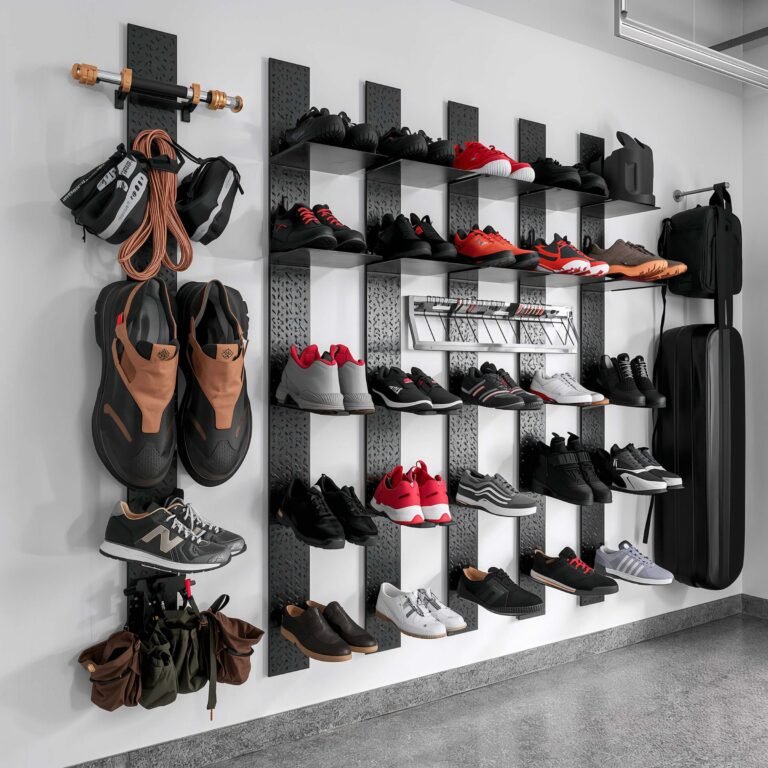
Vertical Floating Shoe Shelf Display
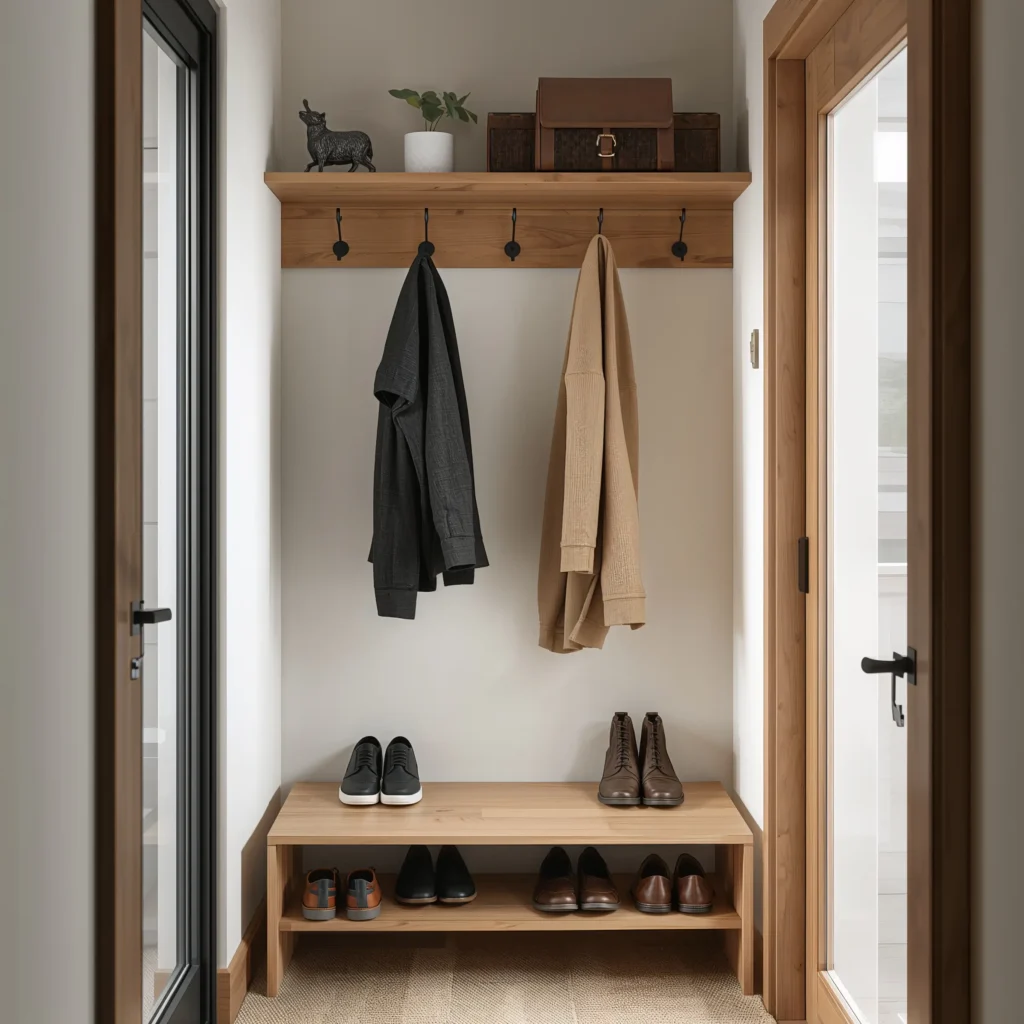
Ever walked into someone’s home and thought their shoe collection looked like modern art? That’s the magic of floating shoe shelves. They turn your footwear into decor, and honestly, if you’ve invested in nice shoes, why hide them?
Floating shelves work especially well for sneakerheads or anyone with a designer shoe collection. You install them at various heights on your wall, creating this cool geometric pattern that screams “I have my life together” even if you don’t.
The trick to making this work:
- Space shelves 12-14 inches apart vertically
- Use sturdy brackets rated for at least 20 pounds
- Arrange shoes by color or style for visual impact
- Mix in a small plant or two between shelves
I installed five floating shelves in my entryway last year, and now my friends think I’m way more organized than I actually am. The shoes on display are my nice ones – the ratty ones still live in the closet where they belong 🙂
Also Read: 10 Brilliant IKEA Shoe Storage Ideas for Small Spaces
Built-In Entryway Cubby Shoe Wall
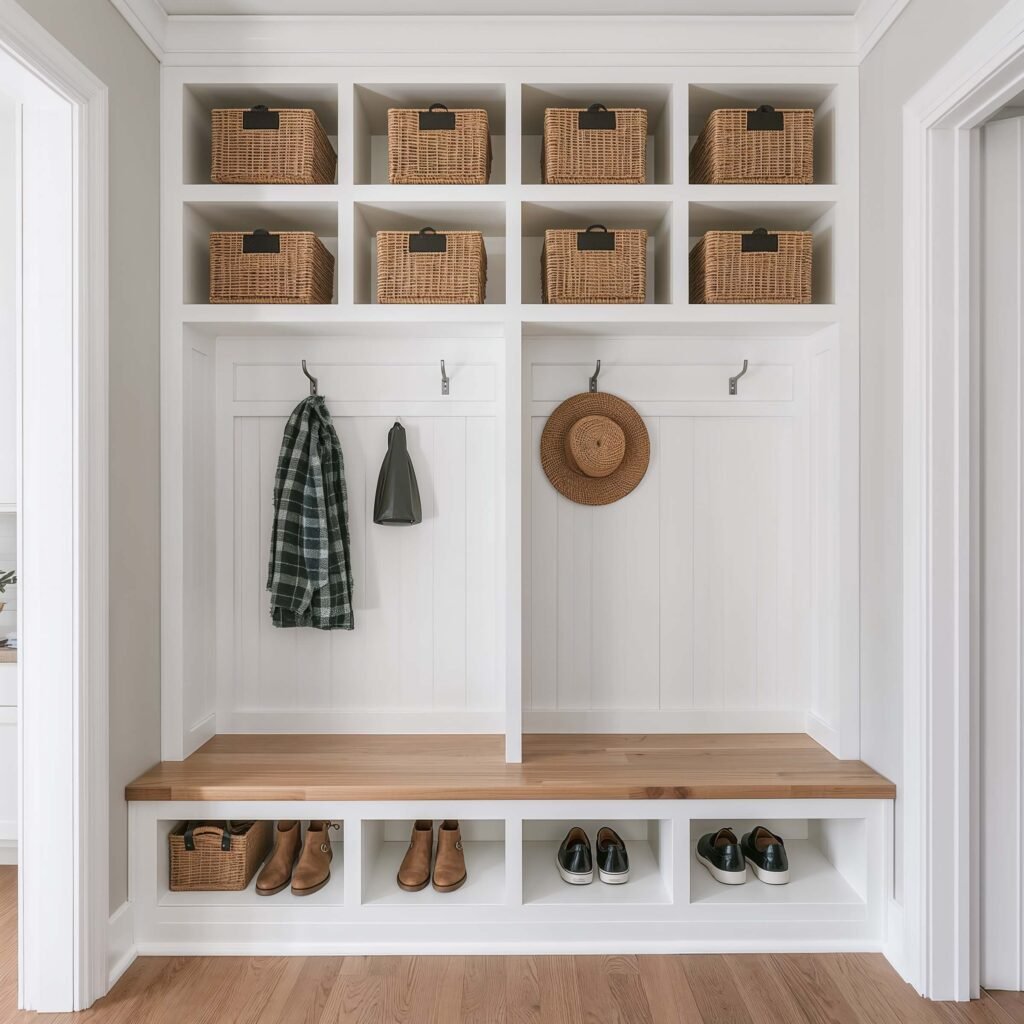
Remember those cubbies from kindergarten? Well, they’ve grown up and gotten sophisticated. A built-in cubby system transforms your entire entryway wall into an organizational masterpiece.
This option requires more commitment (and possibly a contractor), but the payoff is huge. You get individual compartments for each family member’s shoes, plus space on top for bags, keys, and whatever else accumulates by your door.
What makes cubby systems brilliant:
- Each cube typically fits 2-3 pairs of adult shoes or 4-5 kids’ pairs
- You can add baskets for smaller items
- Labels or assigned cubbies end the “whose shoes are these?” debate
- Built-ins add actual value to your home
My neighbor installed one of these systems, and I’m not jealous at all. Nope. Not even a little bit. (Okay, I’m totally jealous – her entryway looks like it belongs in a magazine while mine still looks like a yard sale exploded.)
Over-the-Door Shoe Organizer Hack
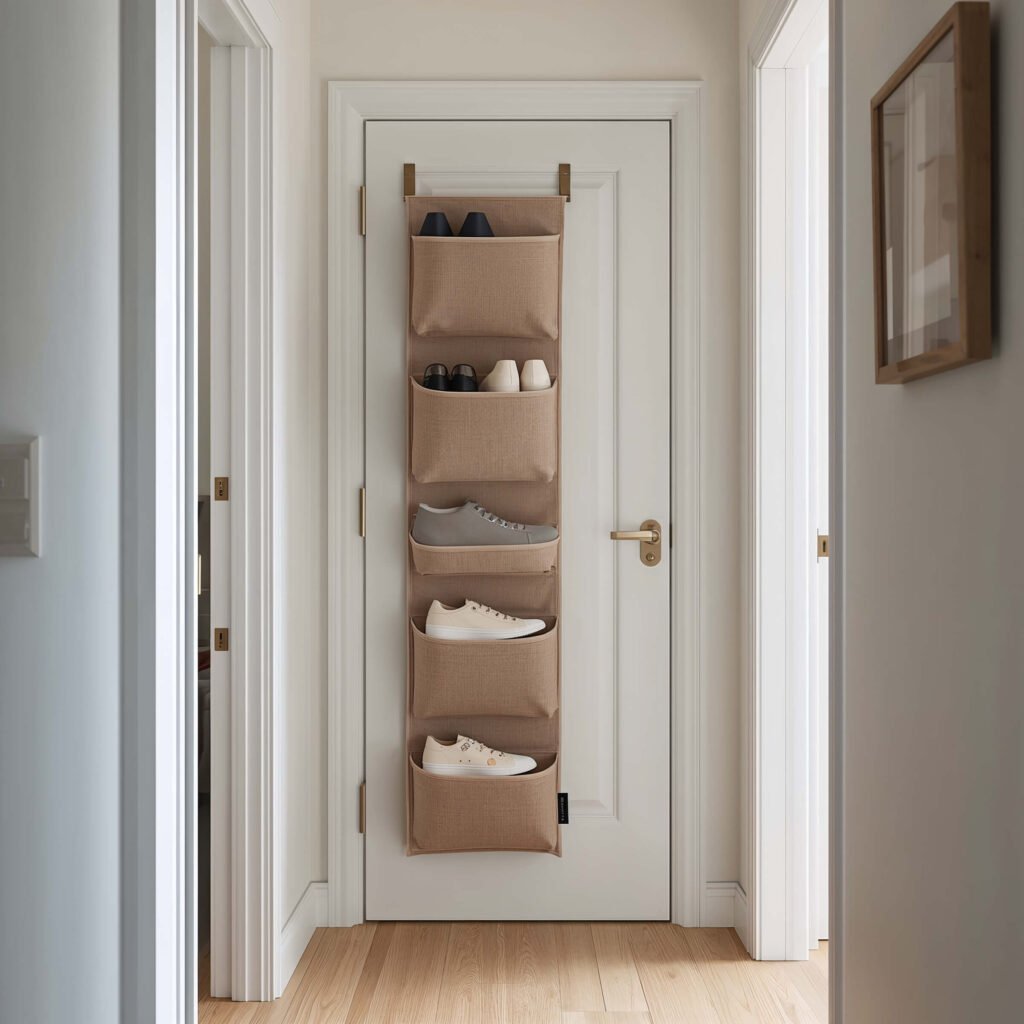
Who says over-the-door organizers are just for closets? Slap one on your coat closet door, and boom – instant shoe storage that takes up exactly zero floor space.
These organizers come in clear pockets (great for finding shoes quickly) or fabric compartments (better for hiding the chaos). They typically hold 12-24 pairs depending on the size, and installation takes about 30 seconds. No drilling, no measuring, no calling your handy friend for help.
Here’s how to maximize them:
- Use clear pockets for everyday shoes
- Store seasonal shoes in higher pockets
- Roll up flip-flops and sandals to save space
- Keep shoe cleaning supplies in the bottom pockets
FYI, these also work great on the back of your front door if you don’t have a coat closet. Just make sure your door can close properly with the added bulk.
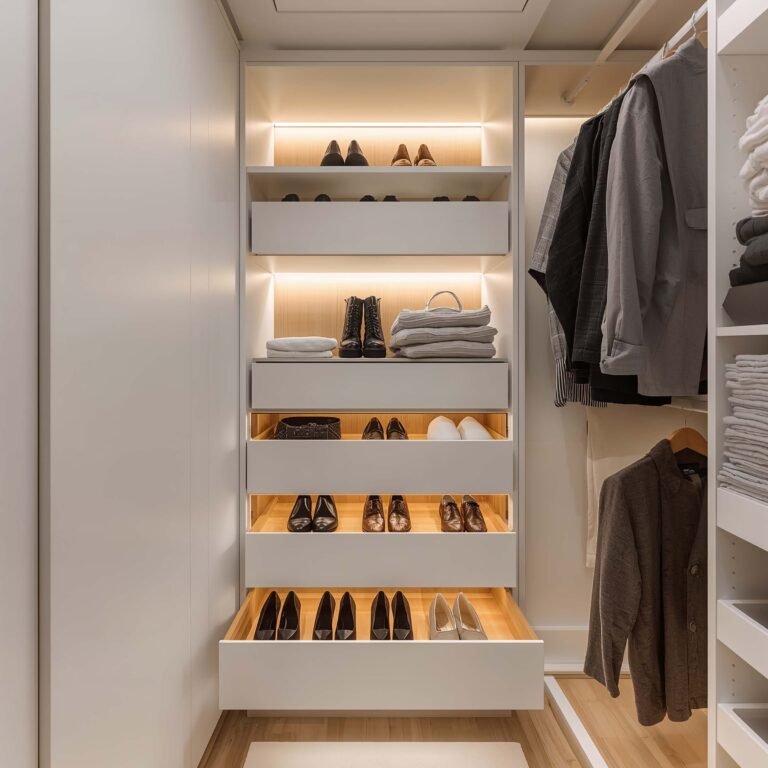
Under-Bench Pull-Out Shoe Drawers
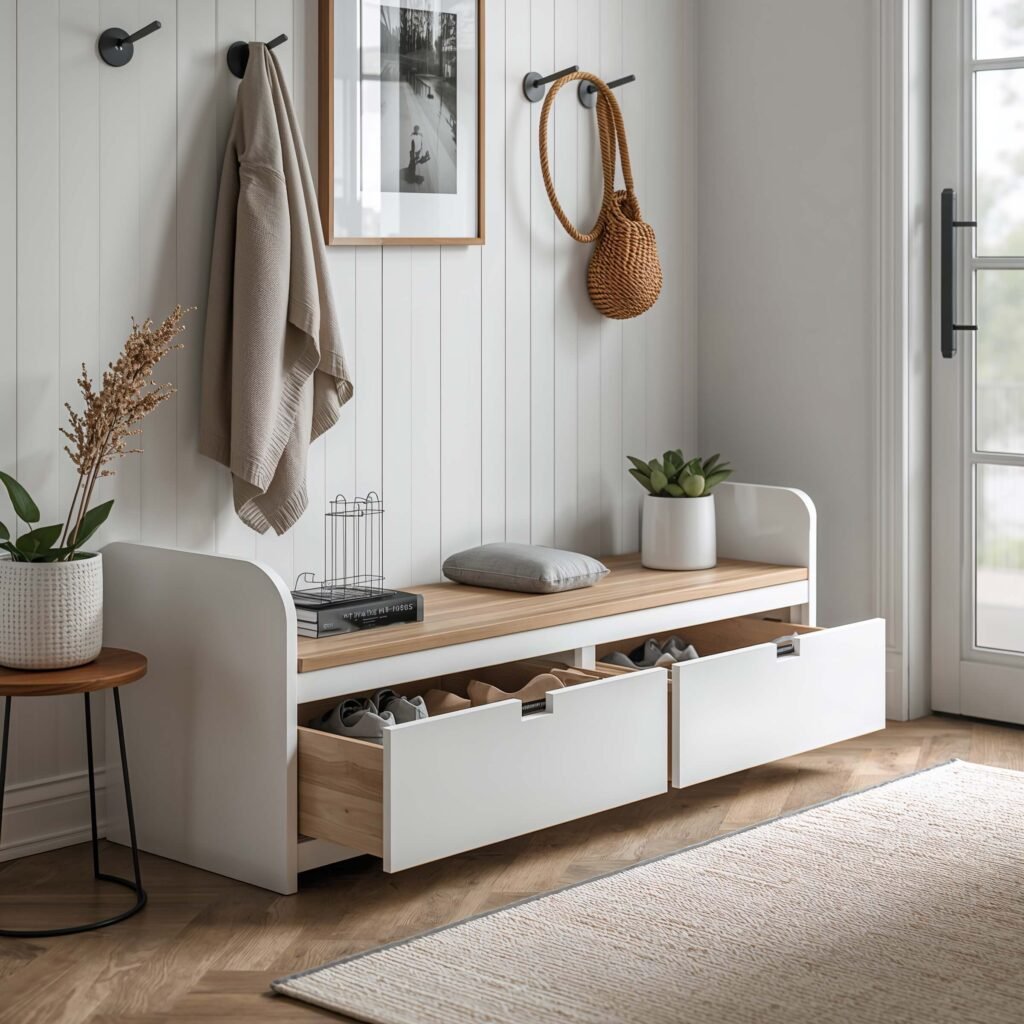
Think of these as the secret agents of shoe storage. Pull-out drawers hiding under a bench give you easy access without the visual clutter. When guests come over, everything slides away like it never existed.
I installed these under my existing entryway bench, and it felt like I’d discovered a whole new room in my house. The drawers glide out on smooth rails, revealing neat rows of shoes that would otherwise be scattered across my floor.
Key features to look for:
- Full-extension drawer slides (so you can reach shoes in the back)
- Ventilation holes or slats for air circulation
- Adjustable dividers for different shoe sizes
- Soft-close mechanisms to prevent slamming
The installation took me about two hours with basic tools. If I can do it while simultaneously googling “which way does a screw turn?” then you definitely can too.
Also Read: 12 Stylish DIY Shoe Storage Ideas for a Clutter-Free Home
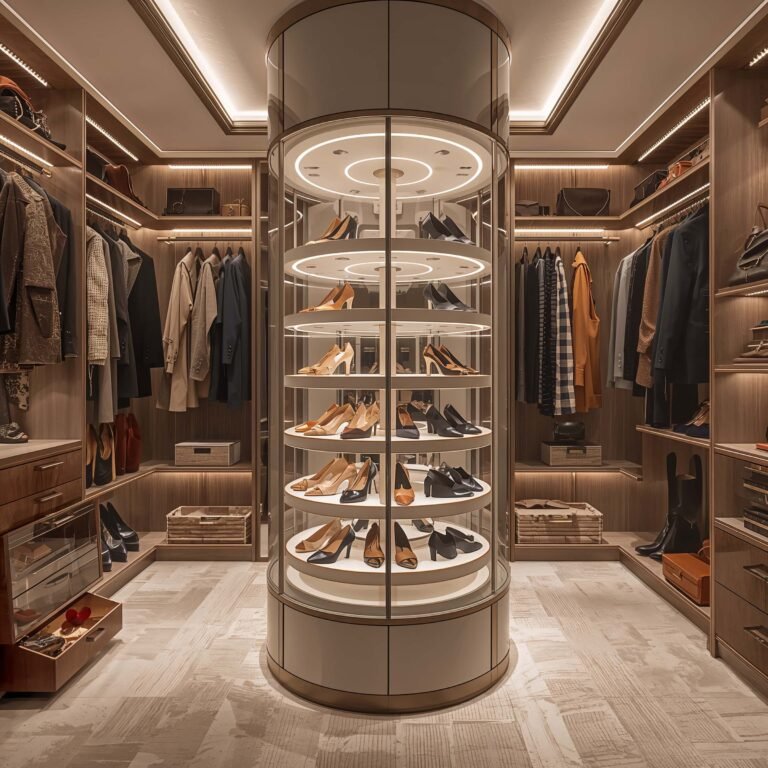
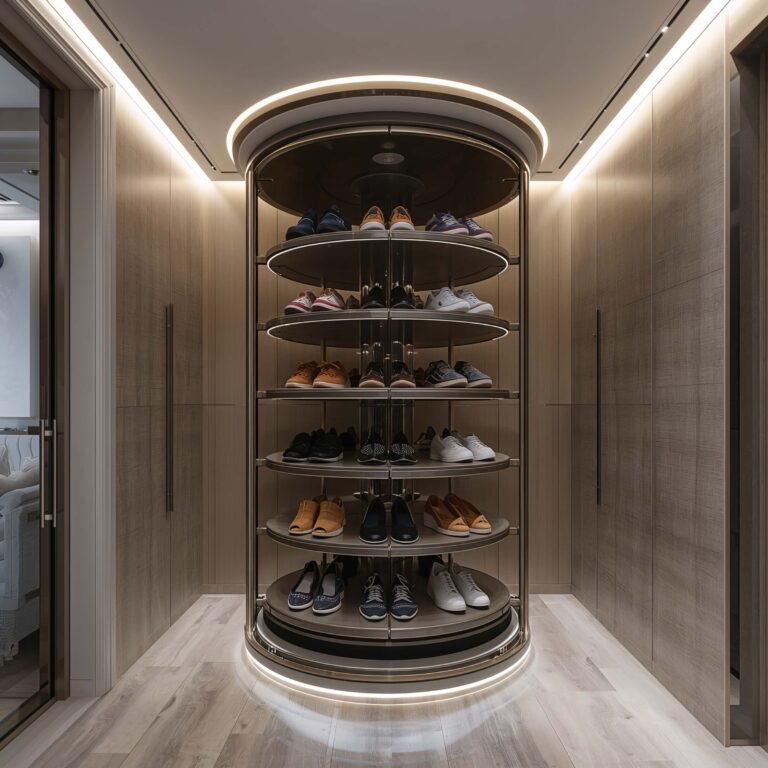
Corner Entryway Shoe Tower Solution
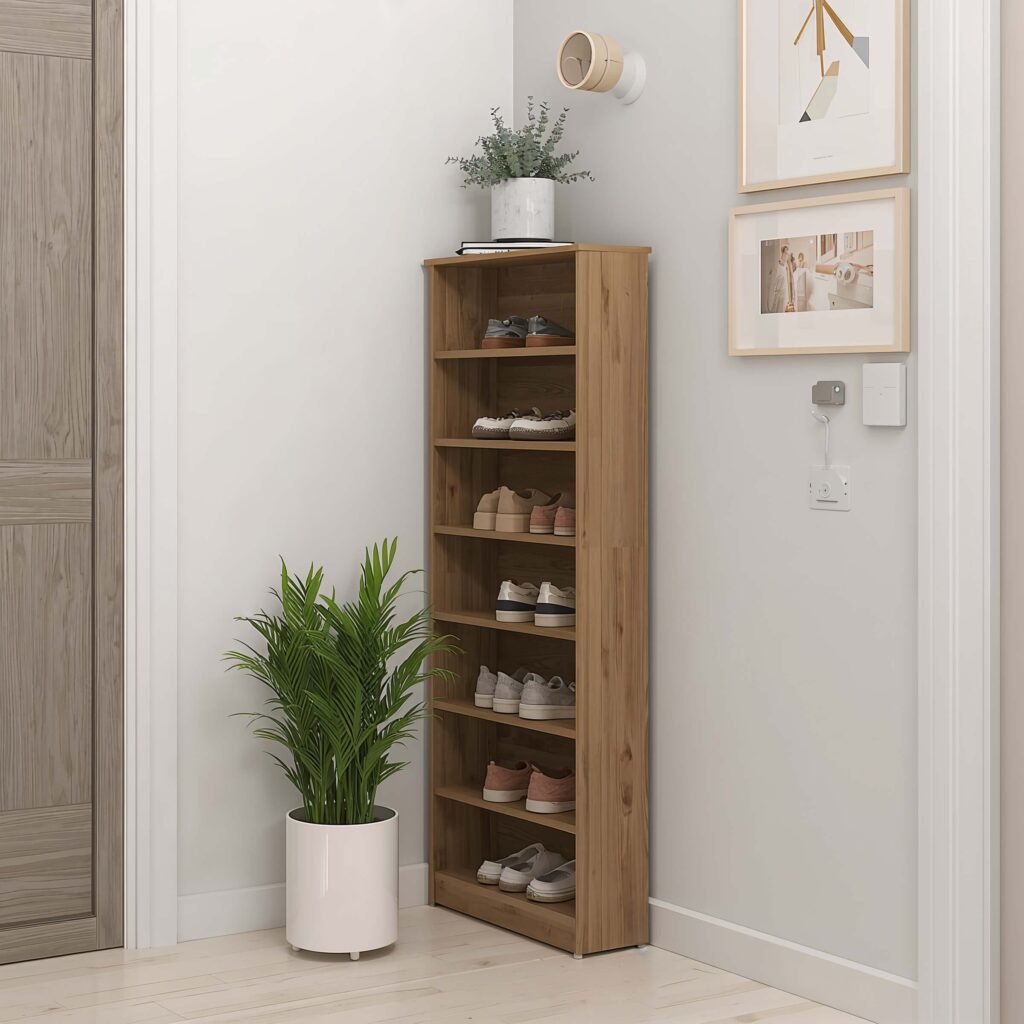
Corners are the wallflowers of home storage – always there, rarely utilized. A corner shoe tower changes that completely, turning that awkward space into prime real estate.
These towers come in rotating models (lazy Susan style) or stationary triangular shapes that fit snugly into corners. They typically reach 5-6 feet tall and can hold 20-30 pairs of shoes without hogging your walkway.
Why corner towers rock:
- They use space that’s usually wasted
- 360-degree rotation models let you access all shoes easily
- Multiple tiers mean more storage in less floor space
- Many include a top surface for keys or decorations
Mine holds everything from my winter boots to summer sandals, and it spins like a shoe carousel. Sometimes I rotate it just for fun. (Don’t judge – we all need simple pleasures in life.)
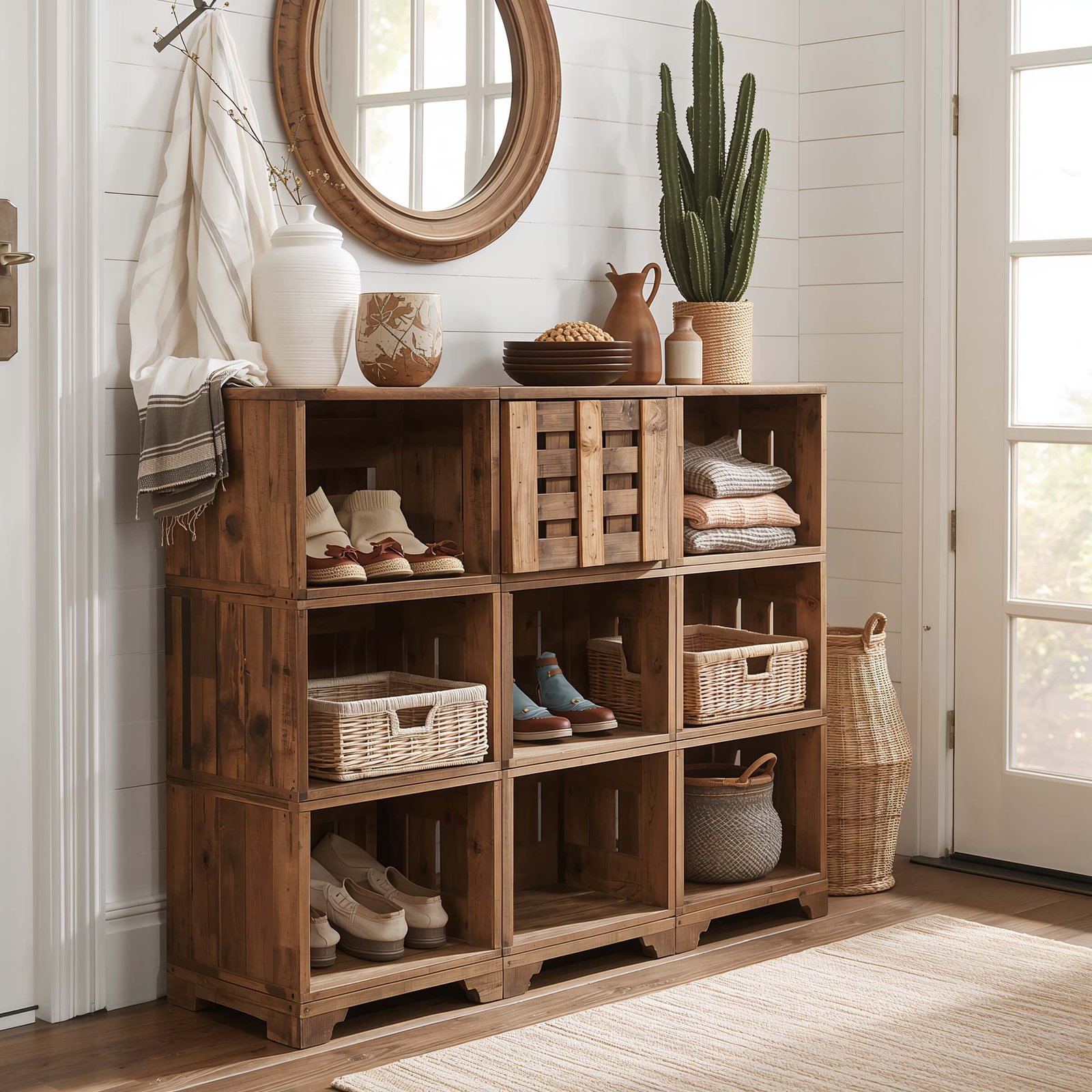
Rustic Farmhouse Crate Shoe Storage
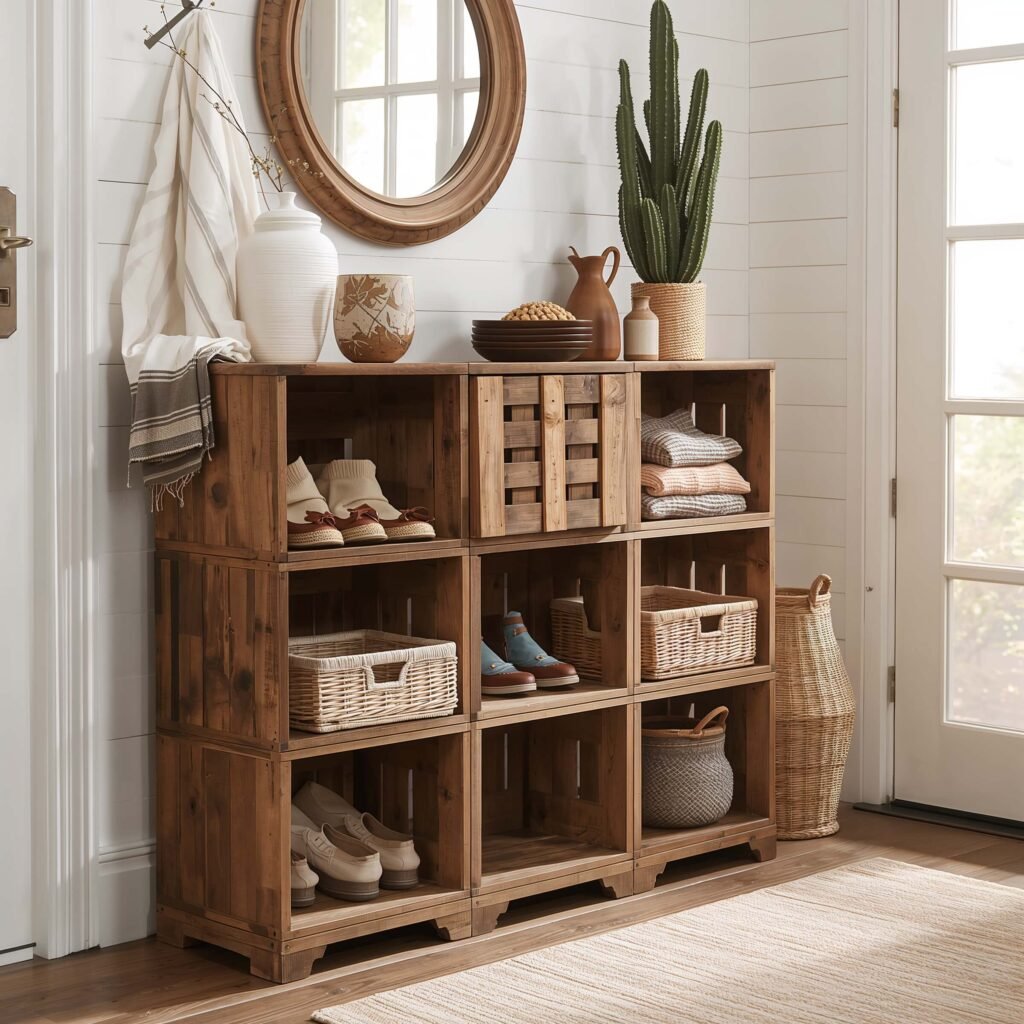
Want storage with personality? Wooden crates bring that farmhouse charm while keeping your shoes organized. Stack them, mount them on walls, or arrange them in creative patterns – the possibilities are endless.
I picked up six vintage crates from a flea market for about $10 each, gave them a quick sand and stain, and created a storage system that gets more compliments than my actual shoes do. The rustic look adds character, and you can easily rearrange them whenever you get bored.
Tips for crate storage success:
- Sand any rough edges to protect your shoes (and feet)
- Add fabric liners for delicate shoes
- Label crates with chalkboard paint or tags
- Stack securely with L-brackets for safety
IMO, this is the most Instagram-worthy option on the list. Every time someone visits, they ask where I got my “custom shoe storage system.” I just smile and don’t mention the flea market.
Minimalist Closed Shoe Console Cabinet
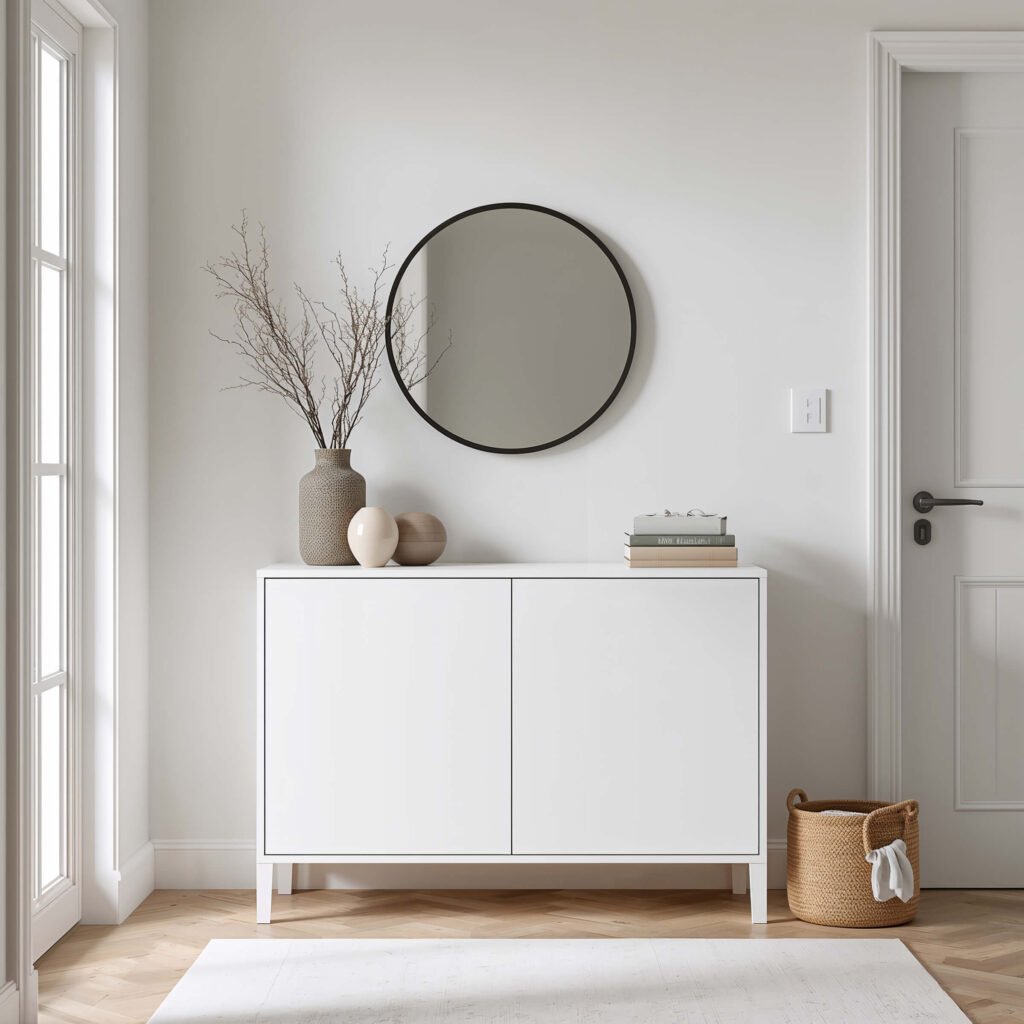
For my fellow minimalists who believe “less is more,” a closed console cabinet keeps everything hidden behind sleek doors. No visual chaos, no dust collection, just clean lines and peace of mind.
These cabinets look like regular furniture – nobody would guess they’re stuffed with footwear. Choose one with adjustable shelves so you can customize the spacing for boots, heels, or whatever oddly-shaped shoes you own.
What to consider:
- Ventilation is crucial (closed spaces + shoes = not great smells)
- Look for models with cable management holes for added airflow
- Soft-close doors prevent that 3 AM slam when grabbing shoes quietly
- Interior LED lights make finding shoes easier
I switched to a closed cabinet after my cat decided my shoe rack was her personal jungle gym. Now she can’t knock shoes everywhere, and my entryway looks like an adult lives here instead of a tornado survivor.
Also Read: 10 Clever Shoe Storage Cabinet Entryway Ideas to Organize Shoes
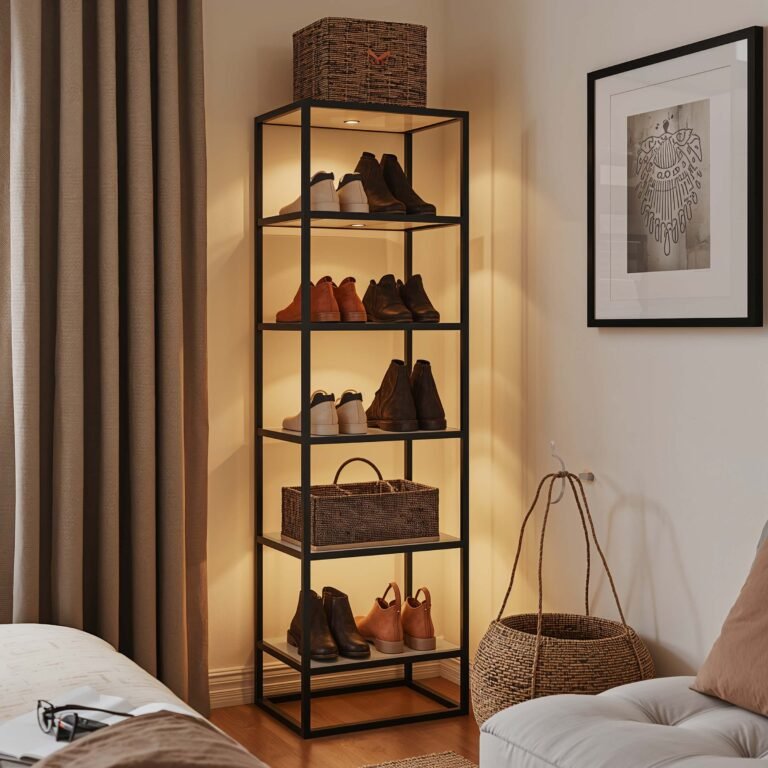
Industrial Pipe and Wood Shoe Rack
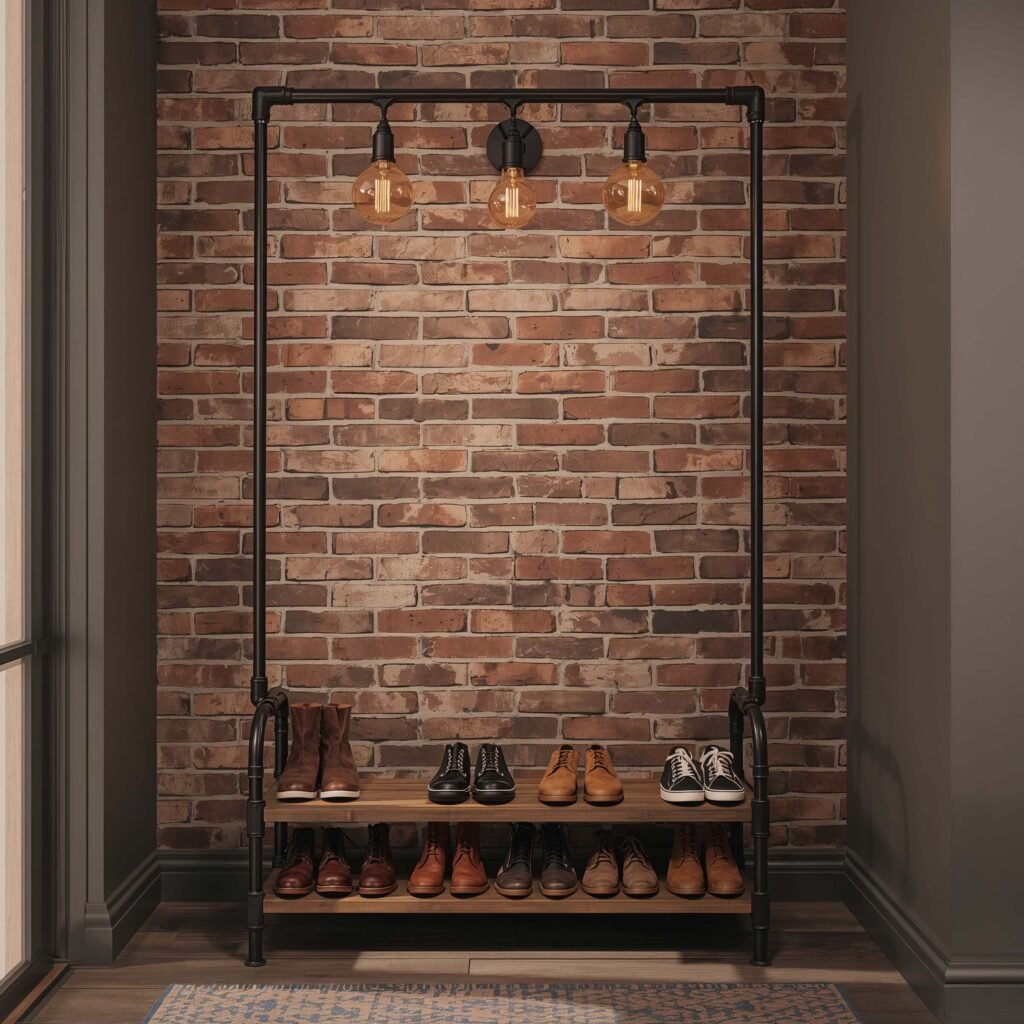
Last but definitely not least, the industrial pipe and wood combo brings that trendy loft vibe to any entryway. These racks scream “I’m creative and handy” even if you bought it pre-made online.
The combination of metal pipes and reclaimed wood creates a sturdy structure that can handle even the heaviest work boots. Plus, the open design means no more fishing around in dark cubbies for that one specific pair of shoes.
Building or buying considerations:
- Black pipes give the most authentic industrial look
- Use thick wood shelves (at least 1 inch) for stability
- Space shelves 10-12 inches apart for most shoe types
- Add hooks on the sides for bags or umbrellas
My brother built one of these for his bachelor pad, and even though his cooking skills are questionable at best, visitors think he’s got his life together based on this shoe rack alone. Sometimes perception really is everything.
Making Your Choice: What Actually Works?
So which option should you choose? Here’s my honest take after trying most of these myself:
If you have kids, go with cubbies or pull-out drawers. They’re easier for little hands to manage, and you can assign specific spaces to avoid the morning shoe hunt panic.
For small spaces, wall-mounted cabinets or over-the-door organizers are your heroes. They keep the floor clear and make your entryway feel bigger than it actually is.
If you’re renting, stick with freestanding options like benches, crates, or corner towers. No angry landlords, no lost security deposits.
For shoe collectors, floating shelves or industrial racks let you show off your collection while keeping everything organized. Your Jordans deserve better than a pile on the floor, right?
The truth is, any of these solutions beats the classic “shoe mountain by the door” approach. I started with an over-the-door organizer in my first apartment, upgraded to a storage bench in my second place, and now rock a combination of floating shelves and pull-out drawers. Your shoe storage can evolve with your space and needs.
The Bottom Line
Creating an organized entryway doesn’t require a complete renovation or a massive budget. Start with one solution that fits your space and lifestyle, then build from there. Your future self will thank you every time you walk through the door without tripping over a rogue sneaker.
Remember, the best shoe storage system is the one you’ll actually use. If you’re not a naturally organized person (hi, that’s me!), choose something simple that doesn’t require perfect placement every time. And hey, if all else fails, at least now your shoe pile can be an organized shoe pile.
Take it from someone who once used a laundry basket as “shoe storage” – any of these ideas will revolutionize your entryway. Your shoes will have proper homes, your guests won’t judge your organizational skills, and you might even start looking forward to taking your shoes off when you get home. Now that’s what I call a win-win situation!