10 Beautiful IKEA Bookshelf Ideas to Inspire Your Home

Let me guess—you’re staring at that plain IKEA bookshelf wondering why it looks nothing like those Pinterest photos you saved at 2 AM last night.
Been there, done that, got the Allen wrench scars to prove it. Here’s the thing: IKEA bookshelves are basically the blank canvases of the furniture world, and I’m about to show you exactly how to turn yours into something that’ll make your friends ask, “Wait, that’s from IKEA?”
I’ve spent the last five years experimenting with every BILLY, KALLAX, and HEMNES shelf IKEA throws at us, and trust me, I’ve learned a thing or two about making these Swedish flat-packs sing.
Whether you’re working with a studio apartment that’s smaller than your college dorm or you’ve got a whole wall begging for some bookshelf magic, these ideas will change how you look at those basic shelves forever.
Floating Bookshelf Wall Display
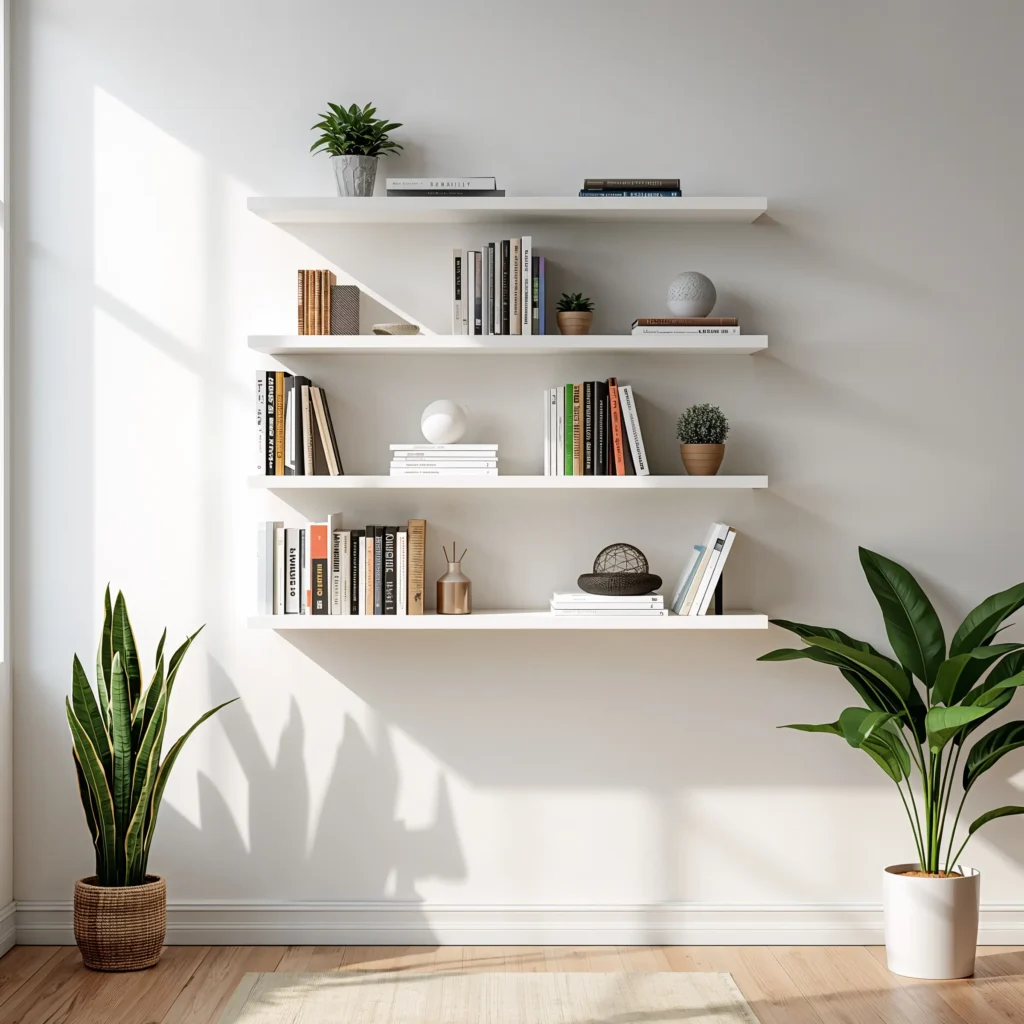
Picture this: books floating on your wall like they’re defying gravity. The floating bookshelf display creates an illusion that makes people do a double-take every single time they walk into your room. I installed my first floating shelf setup three years ago, and visitors still ask me how the books stay up there.
You’ll want to start with IKEA’s LACK shelves—they’re basically the unsung heroes of the floating shelf world. These babies come in different lengths, and at around $10-20 each, they won’t murder your bank account. The trick isn’t just mounting them; it’s about creating visual rhythm on your wall.
Here’s what works best:
- Stagger your shelves at different heights (think zigzag pattern, not library ladder)
- Leave breathing room between shelves—about 10-12 inches minimum
- Mix horizontal and vertical book arrangements
- Add small plants or decorative objects between book clusters
The real magic happens when you hide those brackets properly. I learned this the hard way after my first attempt looked like a construction site. Paint the brackets the same color as your wall, and suddenly they disappear. Want to get really fancy? Use L-shaped brackets and position them behind larger books so they’re completely invisible.
Ever wondered why some floating shelves look professional while others scream “college dorm”? It’s all about the spacing and weight distribution. Don’t cram every book you own onto these shelves—curate your collection like you’re running a boutique bookstore.
Color-Coordinated Book Rainbow
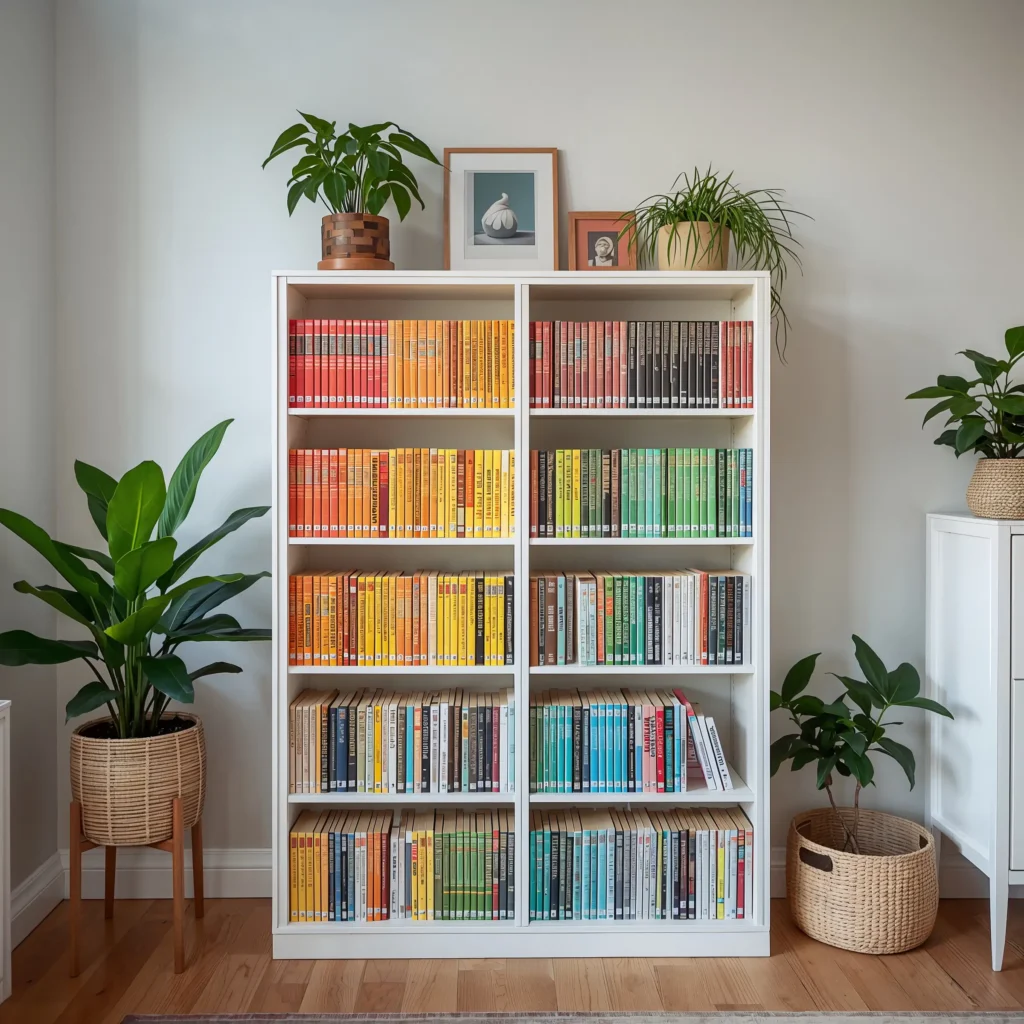
Okay, I know what you’re thinking—organizing books by color instead of genre or author sounds absolutely insane. But hear me out. A rainbow bookshelf transforms your reading collection into legitimate wall art, and it’s surprisingly practical once you get used to it.
I resisted this trend for years because, honestly, how would I find anything? Then I tried it in my home office, and the visual impact knocked me sideways. The key is committing fully to the gradient—no half-hearted attempts allowed.
Start by pulling every book off your shelves (yes, all of them). Group them by color families first:
- Reds and oranges
- Yellows and light browns
- Greens
- Blues and purples
- Black, white, and gray
The transition zones between colors make or break this look. Place books with multiple colors in their spines as bridges between sections. That teal-green book? Perfect transition piece. The burgundy-brown one? Slide it between your reds and browns.
FYI, this works phenomenally well with IKEA’s BILLY bookcases because their simple design doesn’t compete with the color display. I’ve noticed my reading habits changed too—instead of grabbing the same five books, I explore different sections based on my mood. Who knew color psychology applied to bookshelves?
Hidden Storage Behind Books
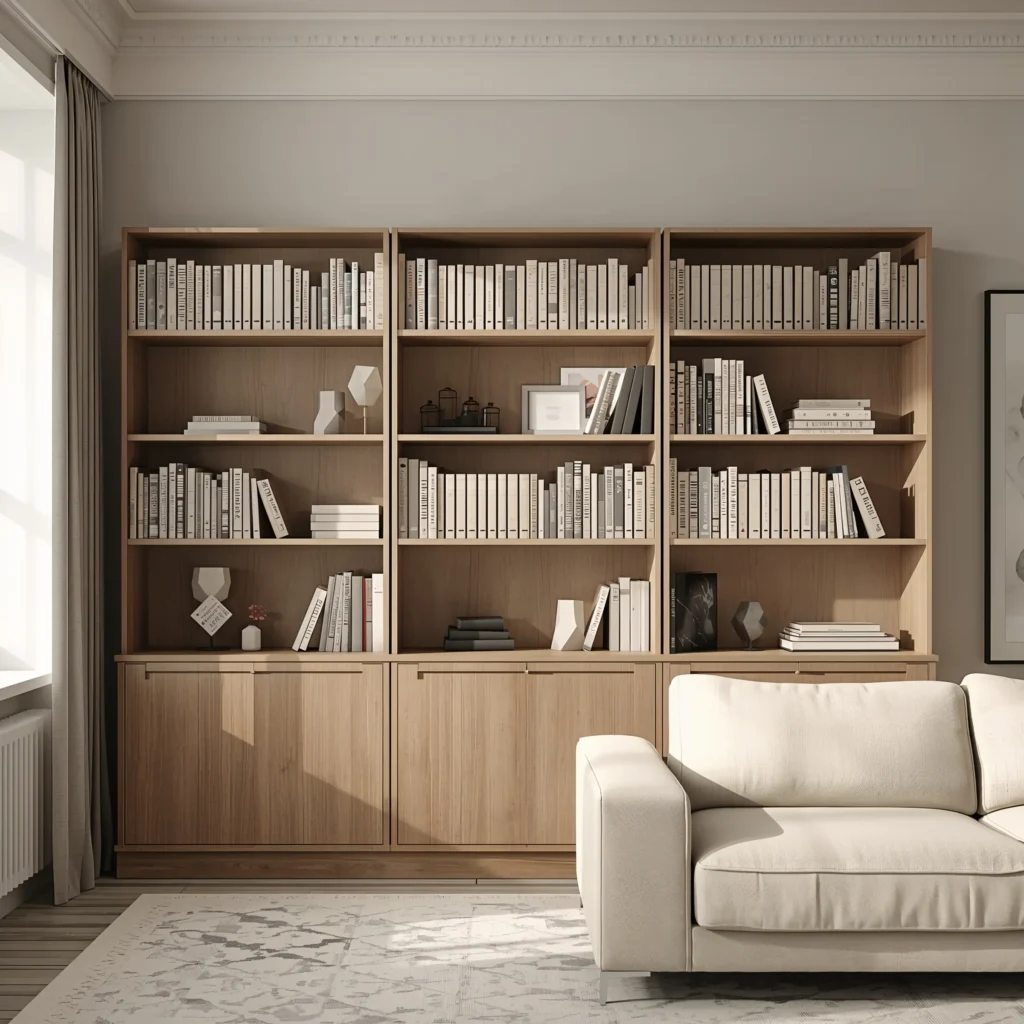
Let’s talk about the stuff you don’t want anyone to see. We all have it—important documents, emergency chocolate stash, that questionable DVD collection from 2005. Creating hidden storage behind your books turns your bookshelf into a secret agent’s dream.
I discovered this hack accidentally when I needed to hide birthday presents from my ridiculously nosy partner. Place storage boxes or bins at the back of deeper shelves, then arrange books in front of them. IKEA’s EKET boxes fit perfectly behind a standard row of paperbacks.
The genius move? Create false book spines using old book covers glued to box fronts. I made mine from thrift store books that were falling apart anyway. Now my router, cable mess, and spare batteries live behind “War and Peace” and nobody’s the wiser.
For maximum stealth:
- Use boxes that match your shelf color exactly
- Keep heavier items on lower shelves to prevent sagging
- Leave a finger-width gap so you can easily pull boxes out
- Label the inside of boxes (not the outside, obviously)
Want to level up? Install a thin curtain rod at the back of your shelf and hang small fabric pouches. They’re invisible behind books but perfect for storing remotes, charging cables, or anything else that usually clutters your coffee table.
Also Read: 10 Stylish Bookshelf Organization Ideas for Small Rooms
Bookshelf Room Divider with Plants
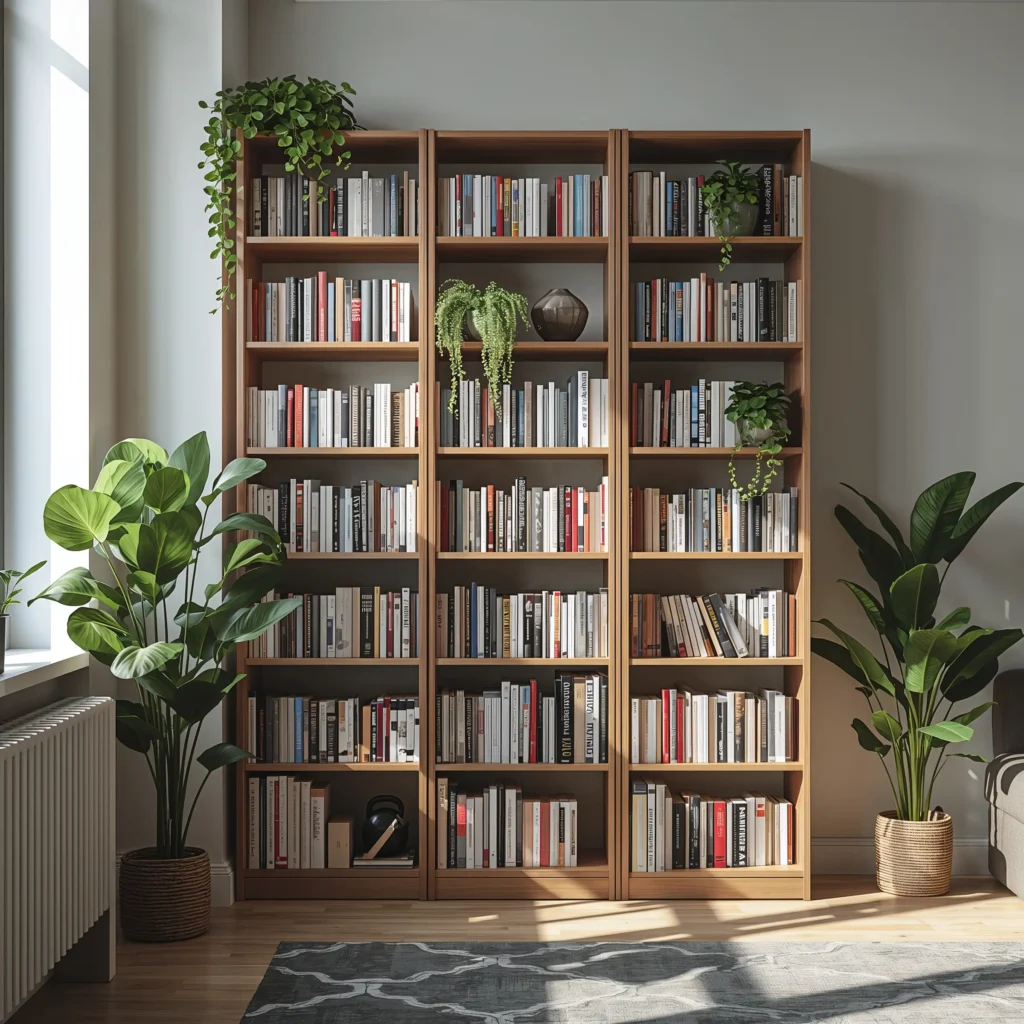
Who says walls need to be solid? A bookshelf room divider with plants creates zones in open spaces while keeping everything airy and bright. I transformed my studio apartment from a glorified box into a legitimate one-bedroom feel using this exact technique.
The KALLAX series works brilliantly here because you can see through it while still creating definition. Position it perpendicular to your wall, and boom—instant room division. But here’s where most people stop, and that’s a mistake.
Plants are what transform a basic divider into a living, breathing design element. Mix trailing plants like pothos with upright options like snake plants. The combination of books and greenery creates this organic library vibe that’s basically Instagram catnip.
My setup includes:
- Pothos in the top cubes (they trail down beautifully)
- Snake plants in floor-level cubes (impossible to kill, trust me)
- Small succulents scattered throughout
- Books arranged spine-in and spine-out for variety
Pro tip that took me forever to figure out: use cube inserts selectively. Leave some cubes completely open for larger plants or decorative objects. This prevents the divider from feeling too heavy or blocking all the light. The negative space is just as important as what you fill.
Minimalist Monochrome Arrangement
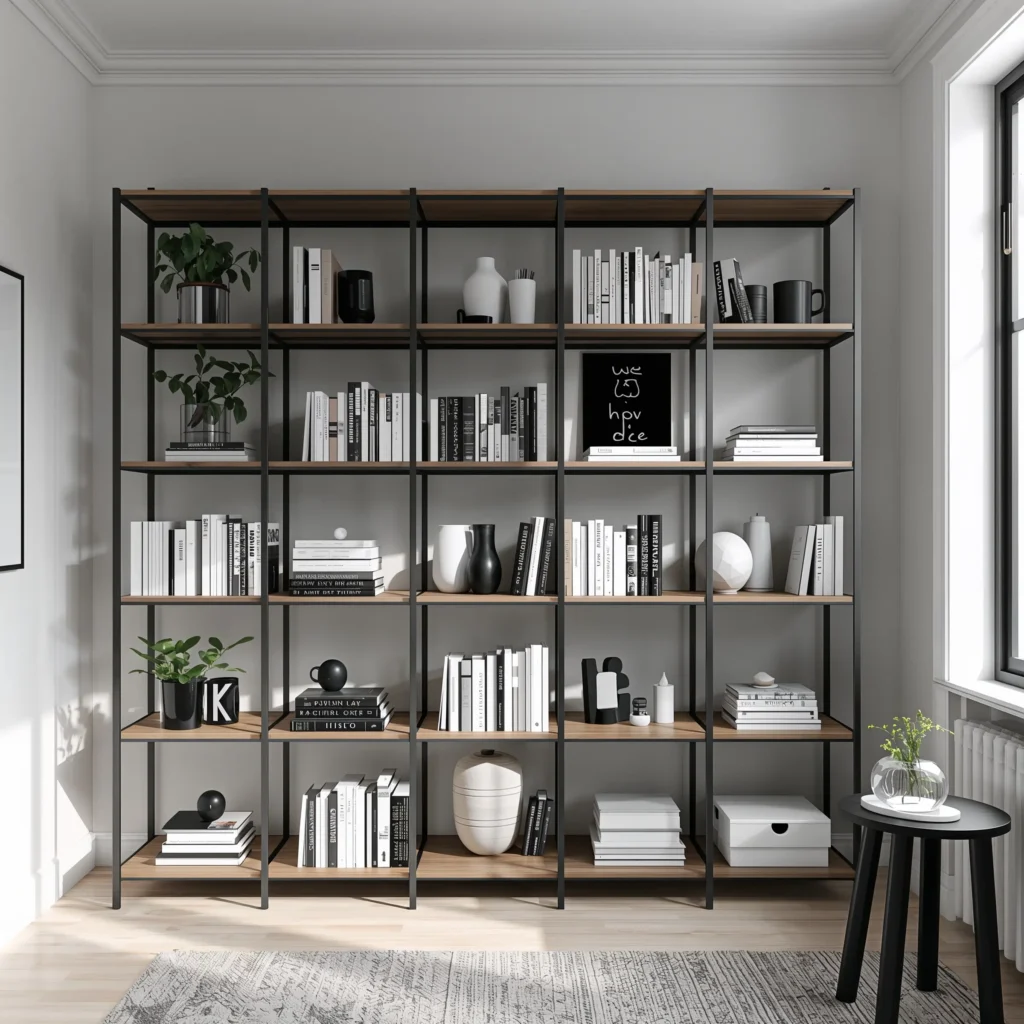
Sometimes less really is more, and I’m saying this as someone who used to think “minimalist” meant “boring.” A monochrome bookshelf arrangement creates sophisticated impact through restraint, not excess. Think of it as the little black dress of bookshelf styling.
I went full monochrome in my bedroom last year—whites, blacks, and grays only. The mental clarity it brings? Chef’s kiss. No visual noise, no decision fatigue, just pure zen. Start by choosing your color palette and sticking to it religiously.
Here’s how I achieved the look:
- Covered all colorful book spines with removable paper (kraft paper for warmth, white for clean modern)
- Invested in matching storage boxes (IKEA’s TJENA boxes are perfect)
- Added texture through materials, not colors
- Incorporated metallics as accents only
The secret sauce? Varying heights and depths creates visual interest without color. Stack some books horizontally, lean others at angles, and leave strategic empty spaces. The shadow play becomes part of the design—something I never noticed with colorful arrangements.
What surprised me most? This setup actually makes me read more. Without colorful spines competing for attention, I choose books based on what I actually want to read, not what catches my eye. 🙂
DIY Bookshelf Bench Combo
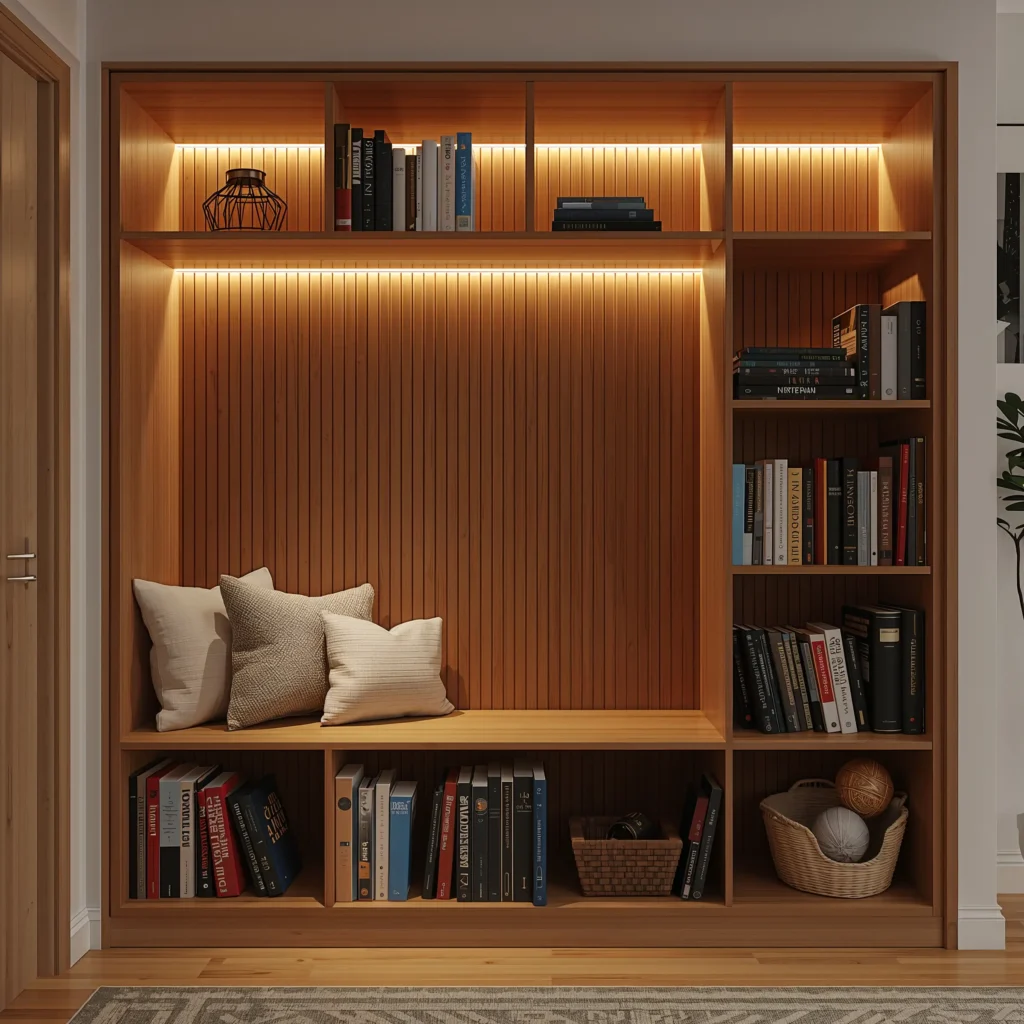
Why should furniture only do one job? Combining a low bookshelf with seating creates a multifunctional piece that’s perfect for small spaces. I built my first bookshelf bench when my apartment was so tiny, I had to choose between seating and storage. Why not both?
Take a KALLAX unit (the 4×1 or 2×2 works best), flip it on its side, and add a cushioned top. Sounds simple, right? The magic is in the execution. The cushion needs to be firm enough to sit on but soft enough to be comfortable—I learned this after my first attempt felt like sitting on concrete.
Essential components for success:
- Custom-cut foam (3-4 inches thick minimum)
- Durable fabric that can handle daily use
- Anti-slip material between shelf and cushion
- Baskets or boxes that fit perfectly in the cubes
I positioned mine under a window, creating a reading nook that doubles as book storage. The cubes facing out hold my current reads, while decorative baskets hide everything else. Added bonus? It’s the perfect height for a window seat, making my 500-square-foot apartment feel like it has custom built-ins.
Also Read: 10 Creative Nursery Bookshelf Ideas to Transform Your Baby’s Room
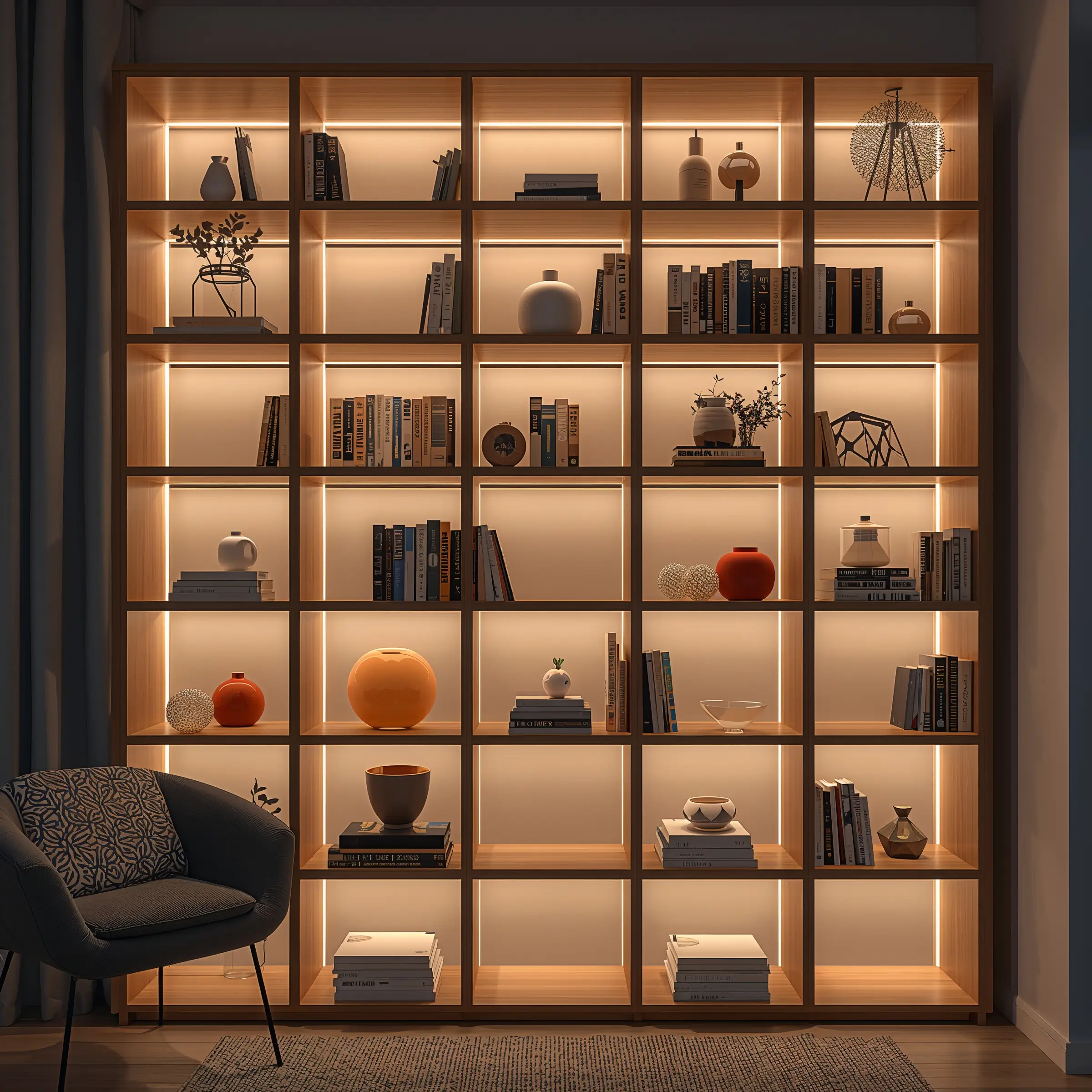
Layered Bookshelf with LED Lighting
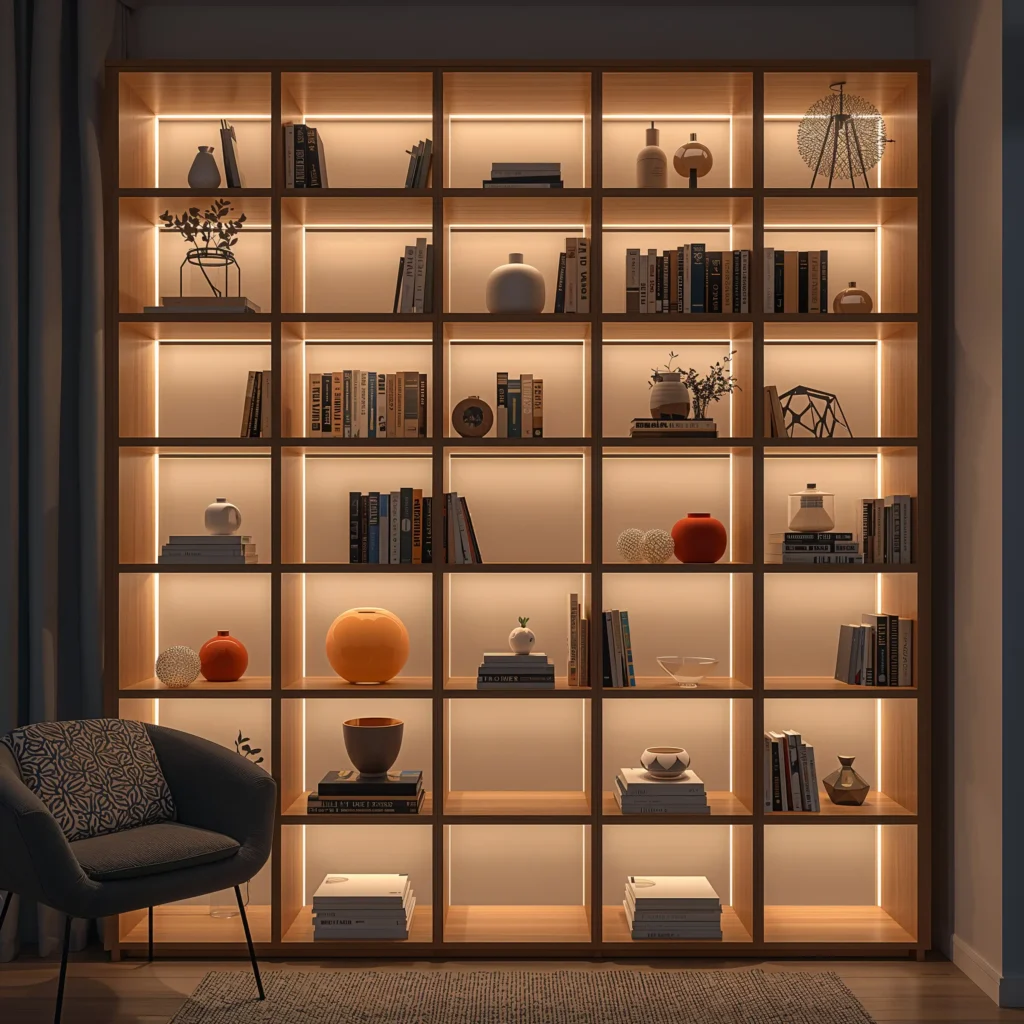
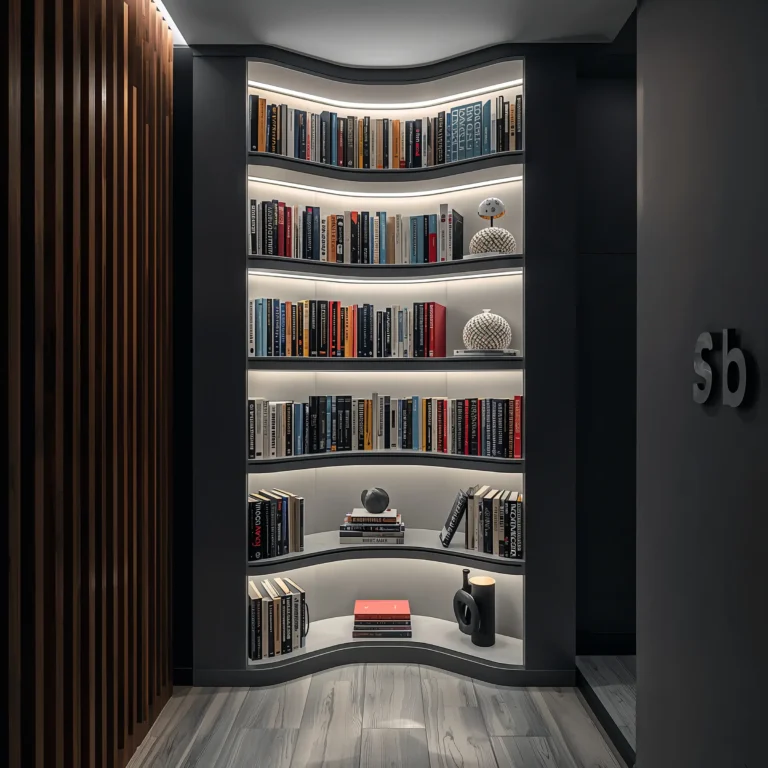
Good lighting changes everything—and I mean everything. Adding LED strips to your bookshelf transforms it from furniture into a focal point, especially at night. I installed LEDs on my main bookshelf last winter, and now it’s basically the MVP of my living room.
The trick isn’t just slapping some lights on and calling it a day. Strategic placement creates depth and drama. I run LED strips along the underside of each shelf, hidden behind a thin wood strip I attached to conceal them. The light washes down each shelf level, creating this gorgeous layered effect.
Here’s my lighting game plan:
- Warm white LEDs (3000K) for a cozy vibe
- Dimmer switch for mood control
- Battery-powered options for shelves far from outlets
- Light placement 2 inches from the front edge
Want to get really extra? Use color-changing LEDs and set them to complement your book arrangement. My purple section looks incredible under subtle violet backlighting. Just don’t go full disco—unless that’s your thing, then absolutely go full disco.
The unexpected benefit? The lighting makes finding books at night so much easier. No more squinting at spines or knocking over half your collection trying to find that one book. Plus, the ambient lighting is perfect for those late-night reading sessions.
KALLAX Cube Display Wall
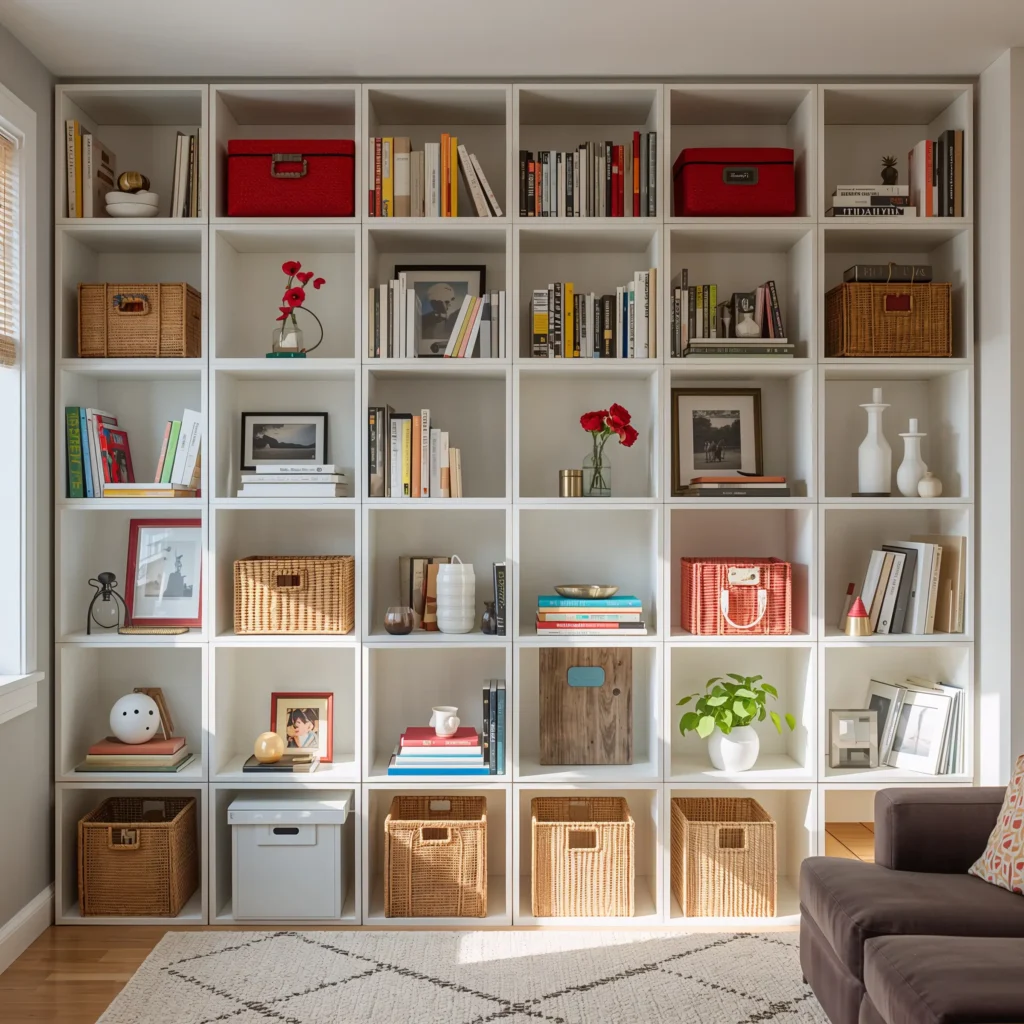
Let’s talk about the KALLAX—IKEA’s gift to storage-obsessed humans everywhere. Creating a full KALLAX wall display turns bland walls into organized, stylish storage that actually looks intentional. I covered an entire wall in my home office with these cubes, and it’s basically organizational paradise.
The beauty of KALLAX units? They’re modular. Mix different sizes—2×2, 4×4, 2×4—to create an asymmetrical pattern that looks custom-built. I started with one 4×4 unit and kept adding until I achieved wall domination. The result looks like expensive built-ins for a fraction of the cost.
The key to KALLAX success is the insert game. Don’t fill every single cube—that’s amateur hour. Here’s my formula:
- 1/3 books (mixed vertical and horizontal)
- 1/3 decorative objects or plants
- 1/3 hidden storage with doors or baskets
IMO, the biggest mistake people make is treating each cube equally. Vary your arrangements—some cubes packed, others nearly empty. Create diagonal lines with your arrangements that draw the eye across the entire wall. Think of it as a giant puzzle where each cube contributes to the bigger picture.
Bookshelf Gallery Wall Integration
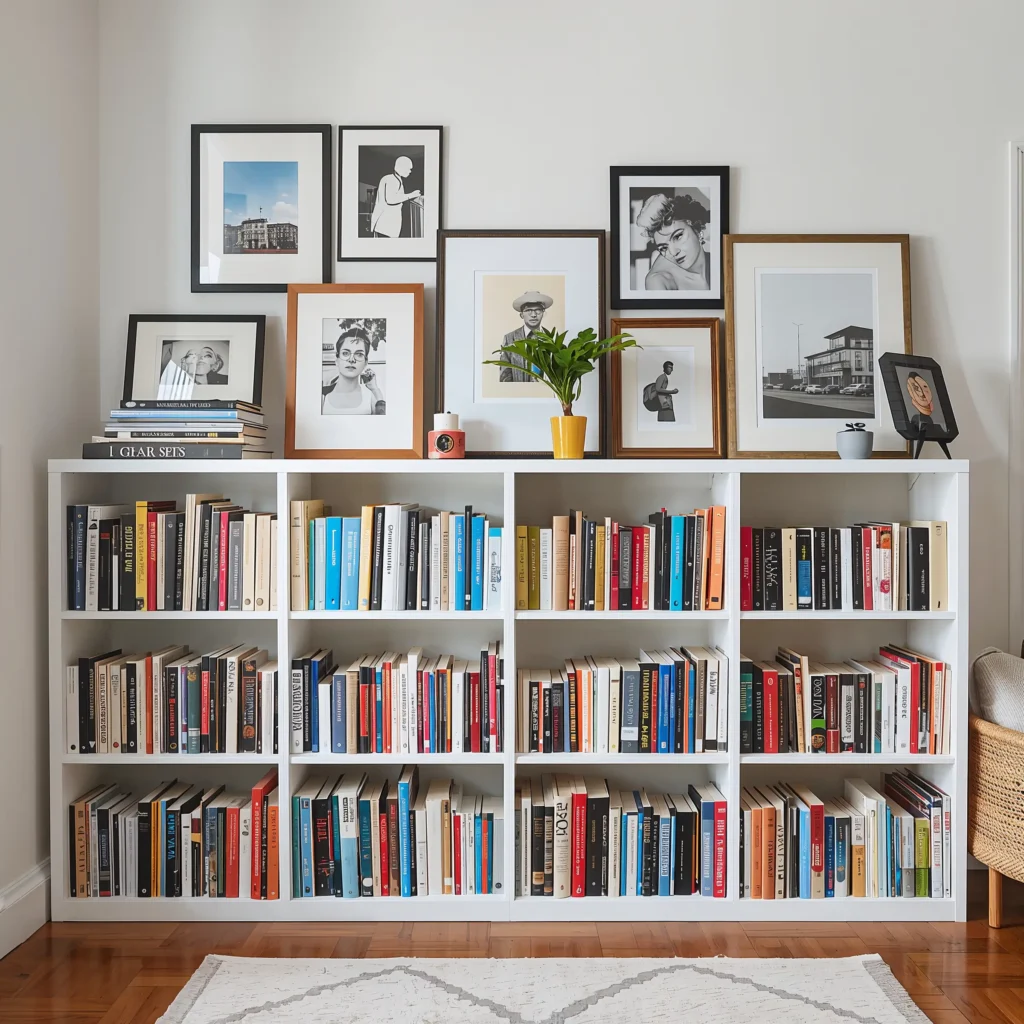
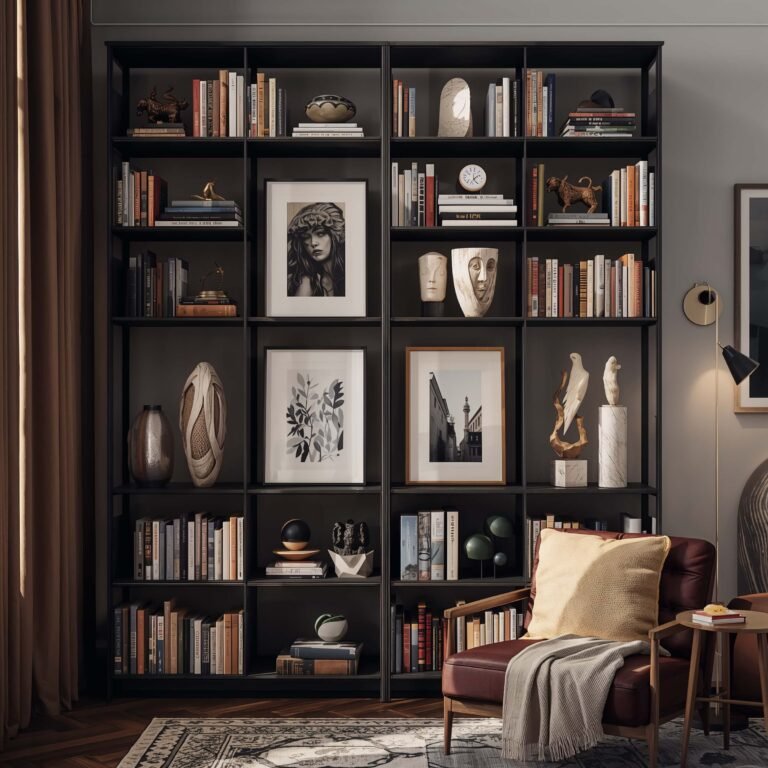
Why choose between a bookshelf and a gallery wall when you can have both? Integrating artwork with your bookshelf creates a collected-over-time look that feels authentic and personal. I merged my book collection with my art collection last year, and suddenly my living room had actual personality.
Start by treating your bookshelf as part of a larger wall composition. Hang artwork around and above it—not just in perfect grids, but in organic clusters that feel natural. The bookshelf becomes the anchor that grounds all the visual elements.
My approach:
- Lean smaller framed pieces on shelves between books
- Hang larger pieces on the wall adjacent to the shelf
- Mix frame styles and sizes for that collected look
- Include mirrors to reflect light and create depth
The game-changer? Extending elements from the shelf onto the wall. If you have plants on your shelf, hang some planters on the adjacent wall. Got colorful books? Echo those colors in your artwork choices. This creates visual flow that makes everything feel intentional, not random.
Here’s something nobody tells you: this setup actually makes your space feel bigger. The eye travels continuously from shelf to wall to art, creating movement and interest that draws attention away from room size. :/
Also Read: 10 Gorgeous Bookshelf Wall Decor Ideas You’ll Love Instantly
Bookshelf with Rotating Storage Bins
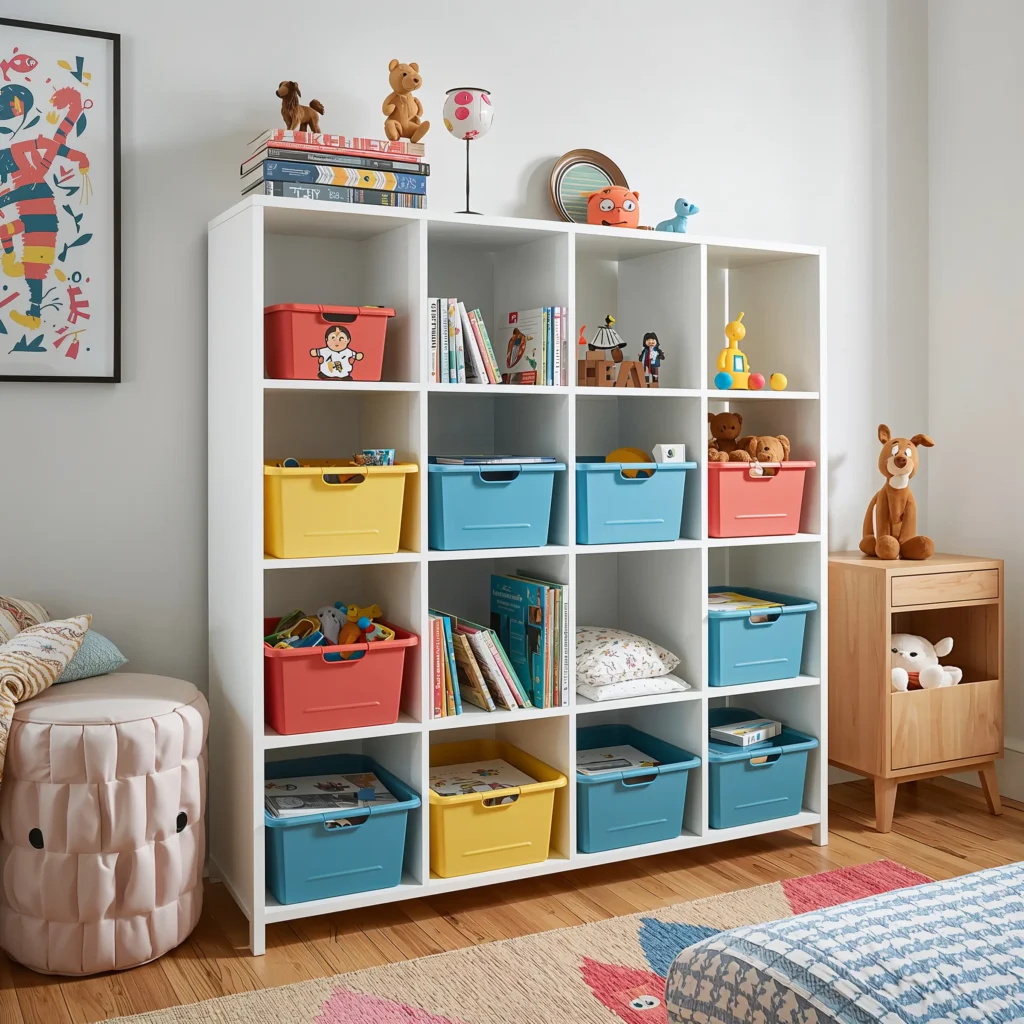
Static storage is so last year. Adding rotating storage bins to your bookshelf creates dynamic organization that adapts to your changing needs. I implemented this system when I realized my bookshelf needs changed with the seasons—more cookbooks in winter, travel guides in summer.
I use a combination of IKEA’s VARIERA shelf inserts (they spin!) and lazy Susan turntables in deeper shelves. The rotation feature means everything stays accessible without the dreaded shelf shuffle. Remember that thing where you need the book at the back and basically destroy your entire arrangement? Yeah, that’s history now.
Setting up rotating storage:
- Place turntables in corner shelves where reaching is hardest
- Use divided rotating bins for smaller items
- Group books by frequency of use on each rotating section
- Keep heavier items on lower rotating shelves for stability
The unexpected win? This system forced me to actually organize by use, not just appearance. My reference books rotate together, fiction spins separately, and my craft books have their own rotating real estate. Finding anything takes seconds now, not the usual five-minute archaeological dig.
I added labels to the outer edge of each rotating section—subtle enough that they don’t scream “LABELED!” but clear enough that everyone (including me on Monday mornings) knows where things live.
Making Your IKEA Bookshelf Dreams Reality
Look, transforming basic IKEA bookshelves into something spectacular doesn’t require a design degree or a trust fund. It just takes a bit of creativity and the willingness to see these simple pieces as starting points, not finished products. Every single one of these ideas started as an experiment in my own space, usually born from frustration with the status quo.
The best part about working with IKEA bookshelves? If you mess up, you’re not out thousands of dollars. Try that rainbow arrangement—hate it? Rearrange next weekend. Want to add lights? Go for it. These shelves are forgiving, adaptable, and honestly kind of addictive once you start customizing them.
My advice? Pick one idea that speaks to you and start there. Don’t try to revolutionize your entire space in one weekend (learned that lesson the hard way). Build your bookshelf story gradually, adding elements as you figure out what works for your space and lifestyle. Before you know it, you’ll have people asking for your “designer’s” contact information, and you can smugly reply, “Oh, this? It’s just IKEA.”
The transformation from flat-pack to fabulous isn’t just about the destination—it’s about creating a space that actually works for how you live. Whether you go full rainbow, embrace your inner minimalist, or create a plant-filled paradise, remember that the best bookshelf is one that makes you happy every time you look at it. Now grab that Allen wrench and let’s make some magic happen!