15 Stunning Japandi Bedroom Interior Design Ideas for Calm Spaces

Okay, let’s talk about something that’s been keeping me up at night (ironically) – creating the perfect Japandi bedroom. You know that feeling when you walk into a space and instantly feel your shoulders drop? That’s what we’re after here.
I’ve spent the last year completely obsessing over this design style, and honestly, my bedroom has never looked better.
If you’re anything like me, you’ve probably scrolled through countless Pinterest boards wondering how to nail that perfect balance between Japanese minimalism and Scandinavian coziness.
Well, grab your coffee (or matcha, if you’re feeling the vibe), because I’m about to share 15 game-changing Japandi bedroom ideas that actually work in real life.
What Makes Japandi So Special Anyway?
Before we jump into the good stuff, let me quickly explain why Japandi has become my favorite design style. It’s basically the lovechild of Japanese and Scandinavian design – imagine zen meets hygge. You get the warmth and functionality of Nordic design mixed with the minimalism and natural beauty of Japanese aesthetics.
The result? A bedroom that feels like a high-end spa retreat, minus the pretentiousness. And who doesn’t want that?
1. Minimal Wood Harmony Bedroom

Let’s start with the foundation of any good Japandi space – wood, glorious wood. But we’re not talking about your grandmother’s heavy oak furniture here. I’m talking about light, natural wood that makes your room feel like it’s breathing.
When I redesigned my bedroom last spring, I went all-in on this concept. Picture this: a low-profile bed frame in light ash wood, matching floating nightstands, and maybe a simple wooden bench at the foot of the bed. The key here is choosing pieces with clean lines and natural grain patterns that speak for themselves.
Making It Work in Your Space
Here’s what I learned the hard way:
- Stick to one or two wood tones maximum (mixing cherry with pine? Not the vibe)
- Choose pieces with minimal hardware – the wood should be the star
- Sand down any glossy finishes for that raw, natural look
The beauty of this approach lies in its simplicity. You’re creating harmony through repetition and natural materials. No need for fancy decorations when the wood grain itself becomes art.
2. Neutral Earth-Tone Serenity Space

Ever noticed how you instantly relax when surrounded by earth tones? There’s actual science behind this, but honestly, you don’t need studies to know that beiges, taupes, and warm grays just hit different.
I transformed my previous all-white bedroom (boring, right?) into this earthy paradise, and the difference in my sleep quality has been ridiculous. We’re talking warm sand colors on the walls, mushroom-colored bedding, and terracotta accents that make everything feel grounded.
Color Palette Essentials
The perfect earth-tone palette includes:
- Warm beige as your base (think unbleached linen)
- Soft browns for depth (cocoa, not chocolate)
- Muted terracotta for subtle pops
- Sage or olive greens as accent colors
Remember, we’re going for serene, not sedated. These colors should whisper, not shout.
3. Japandi Wabi-Sabi Inspired Retreat

Okay, wabi-sabi might sound like something you’d order at a sushi restaurant, but it’s actually a Japanese philosophy that celebrates imperfection and impermanence. And honestly? It’s been a game-changer for my perfectionist tendencies.
In bedroom terms, this means embracing that slightly wonky handmade ceramic vase, the linen curtains with natural wrinkles, or that reclaimed wood headboard with all its beautiful flaws. I added a hand-thrown pottery lamp to my nightstand – it’s slightly asymmetrical, and that’s exactly what makes it perfect.
Wabi-Sabi Elements to Include
- Handcrafted ceramics with visible maker’s marks
- Natural textiles that age beautifully
- Live-edge wood pieces that show nature’s randomness
- Vintage or weathered items with stories to tell
The whole point is to create a space that feels authentic and lived-in, not like a furniture showroom.
Also Read: 15 Stunning Contemporary Bedroom Interior Design Ideas for Inspiration
4. Scandinavian Zen Sleep Haven
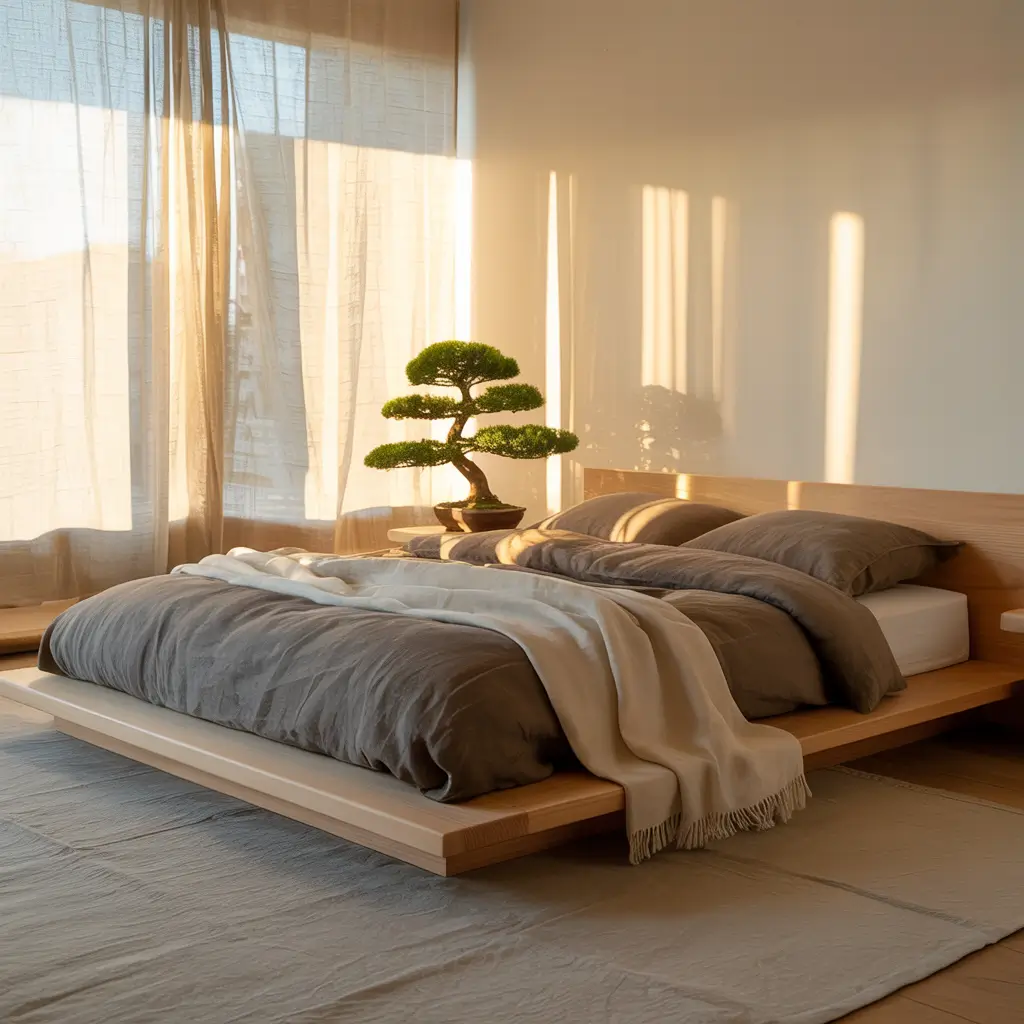
This is where things get interesting. You’re basically marrying Danish hygge with Japanese zen – sounds complicated, but it’s surprisingly intuitive. Think cozy minimalism, if that makes sense.
My approach? I kept the furniture super minimal (classic Japanese), but added layers of soft textures (hello, Scandinavia). Picture a low platform bed with crisp white sheets, topped with a chunky knit throw and maybe one or two perfectly imperfect linen pillows.
The Perfect Balance
To nail this look:
- Keep furniture low and simple (floor-sitting culture meets Nordic functionality)
- Layer natural textiles for warmth without clutter
- Add one statement piece – maybe a Danish modern chair or Japanese floor lamp
- Use negative space as a design element
The magic happens when these two philosophies meet. You get warmth without excess, simplicity without coldness.
5. Textured Linen and Bamboo Blend
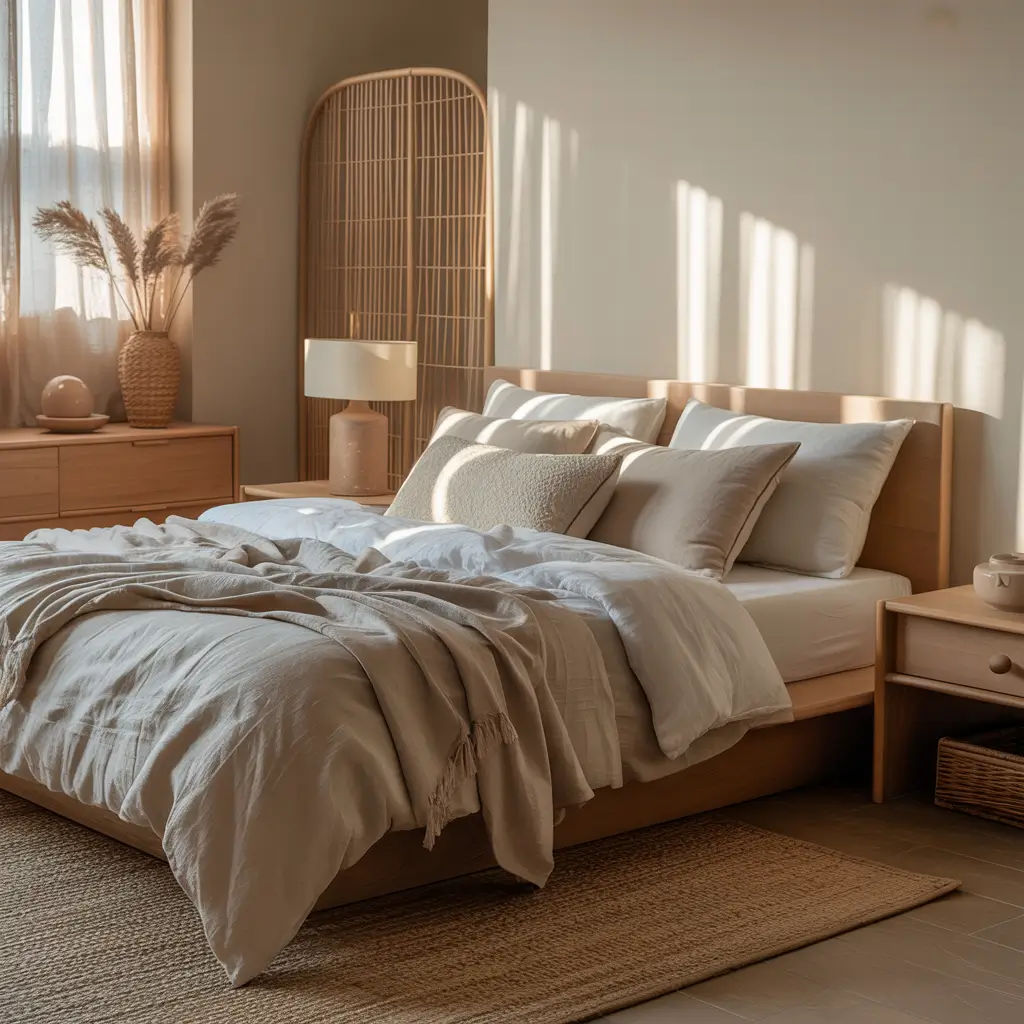
Let’s talk textures, because IMO, this is where most people mess up their Japandi bedrooms. You need that tactile interest without visual chaos. Linen and bamboo are your best friends here.
I switched out all my cotton bedding for linen last year (yes, it was pricey, but so worth it). The natural wrinkles add character, and it gets softer with every wash. Paired with bamboo elements – maybe a room divider or window blinds – you create this amazing textural story.
Texture Combinations That Work
- Rough linen bedding + smooth bamboo accessories
- Nubby wool throws + silky bamboo sheets
- Raw wood furniture + soft linen curtains
- Jute rugs + cotton cushions
The contrast creates interest without breaking the calm aesthetic. Trust me on this one.
6. Floating Furniture Simplicity Room

Want to make your bedroom feel twice as big? Float your furniture. I’m talking wall-mounted nightstands, floating shelves, and if you’re really brave, a suspended bed frame.
When I first mounted my nightstands to the wall, the visual weight of the room dropped instantly. Suddenly, you could see all that beautiful floor space, and cleaning underneath became a breeze (bonus!). The room breathes better when furniture doesn’t touch the ground.
Floating Furniture Tips
Here’s what works:
- Mount nightstands 2-3 inches below mattress height for easy reach
- Use hidden brackets for that magic floating effect
- Keep cords concealed – nothing ruins the illusion faster
- Balance with one or two grounded pieces so it doesn’t feel too disconnected
Also Read: 15 Creative Kids Bedroom Interior Design Ideas for Happy Spaces
7. Natural Light and Shadow Balance

Light is everything in Japandi design. And I’m not just talking about having big windows (though that helps). It’s about understanding how light and shadow play together throughout the day.
I replaced my heavy blackout curtains with sheer linen panels, and wow – game changer. The way morning light filters through creates these beautiful shadows that shift throughout the day. It’s like having living art on your walls.
Maximizing Natural Light
- Use sheer or semi-sheer window treatments in natural fibers
- Position mirrors strategically to bounce light (but not directly opposite windows)
- Choose light, reflective wall colors that amplify natural light
- Add paper lanterns or rice paper shades for soft evening lighting
Remember, we’re not going for hospital-bright here. We want that soft, diffused glow that makes everything look expensive 🙂
8. Warm Oak and Soft Beige Palette
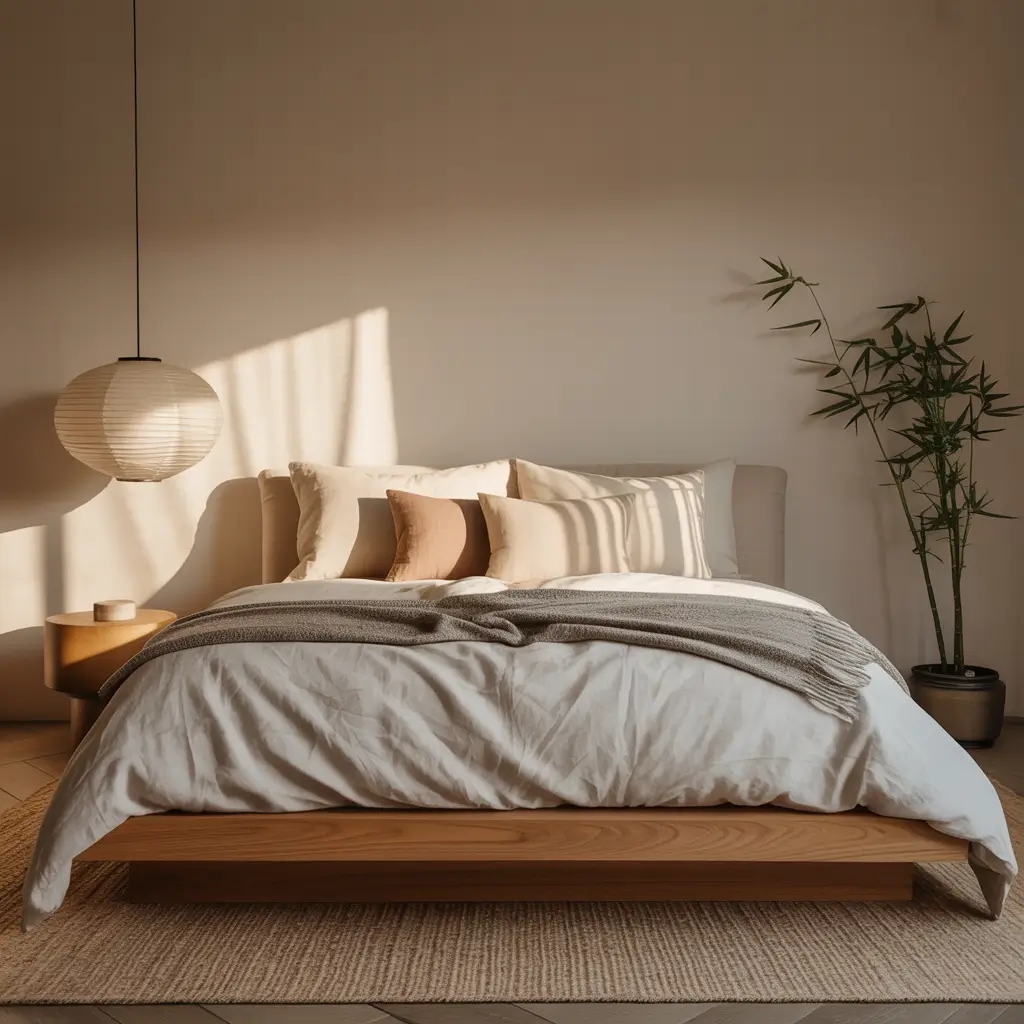
If you’re scared of going too minimal and cold, this combo is your safety net. Warm oak and soft beige create an instantly inviting space that still feels clean and uncluttered.
I went this route in my guest bedroom, and everyone comments on how welcoming it feels. The oak brings warmth and character, while beige keeps things calm and sophisticated. It’s foolproof, really.
Creating the Perfect Oak-Beige Harmony
- Choose white oak or red oak with visible grain
- Pair with warm beige walls (think cappuccino foam, not cardboard)
- Add cream or ivory textiles for layering
- Include one darker wood accent for depth
This palette works year-round and never feels dated. It’s basically the little black dress of bedroom design.
9. Minimalist Tatami-Inspired Bedroom
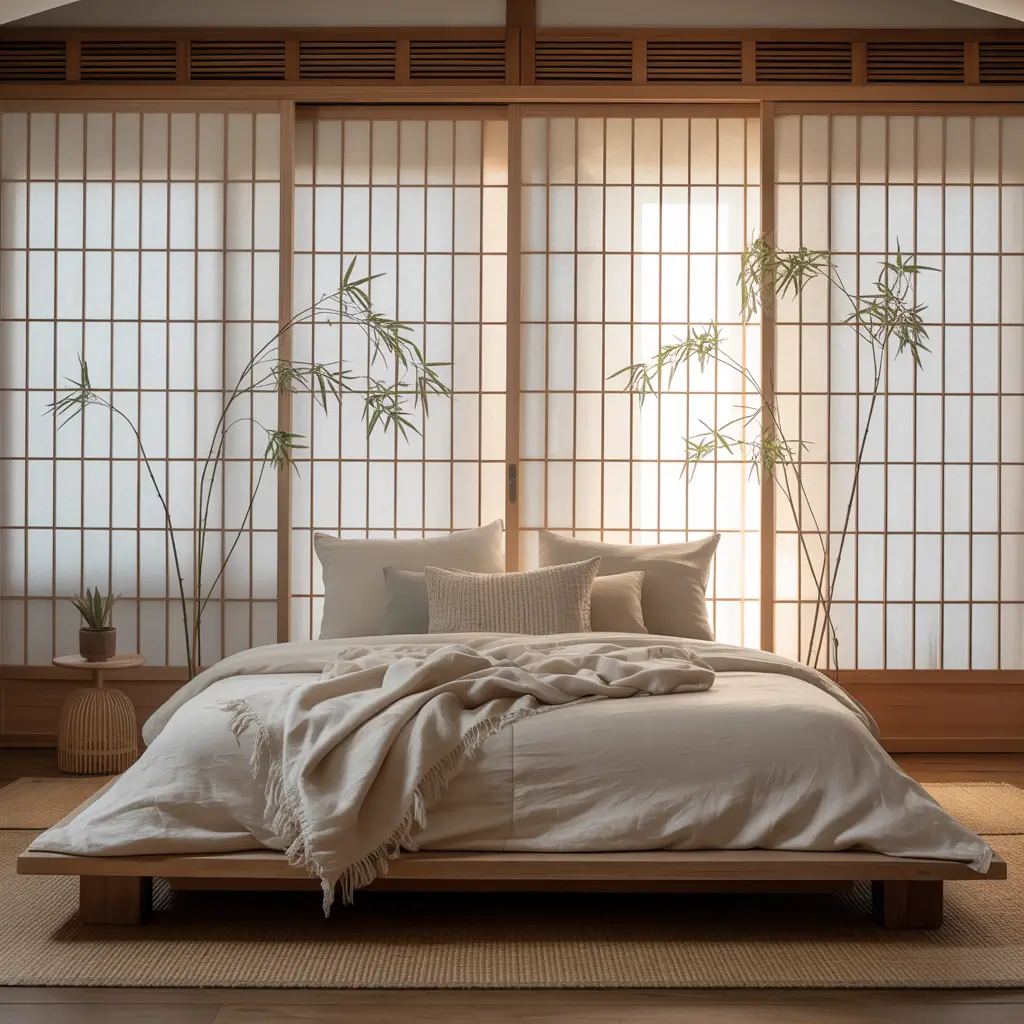
Ever slept on a traditional Japanese futon? I tried it for a month, and while my back thanked me, I’ll admit I missed some elevation. Enter the tatami-inspired bedroom – all the zen without the floor sleeping.
The idea is to incorporate tatami elements without going full traditional. Maybe tatami mats as area rugs, or a platform bed that sits just inches off the ground. I even found tatami-style cushions for my reading corner.
Tatami Elements to Consider
- Tatami platform beds (low but not floor-level)
- Rush grass mats as bedside rugs
- Shoji screen room dividers for flexible spaces
- Floor cushions for a meditation corner
The natural grass scent of real tatami is incredibly calming. Just saying.
Also Read: 15 Stunning Bedroom Interior Design Luxury Master Suite Ideas to Try
10. Japandi Accent Wall with Wood Slats
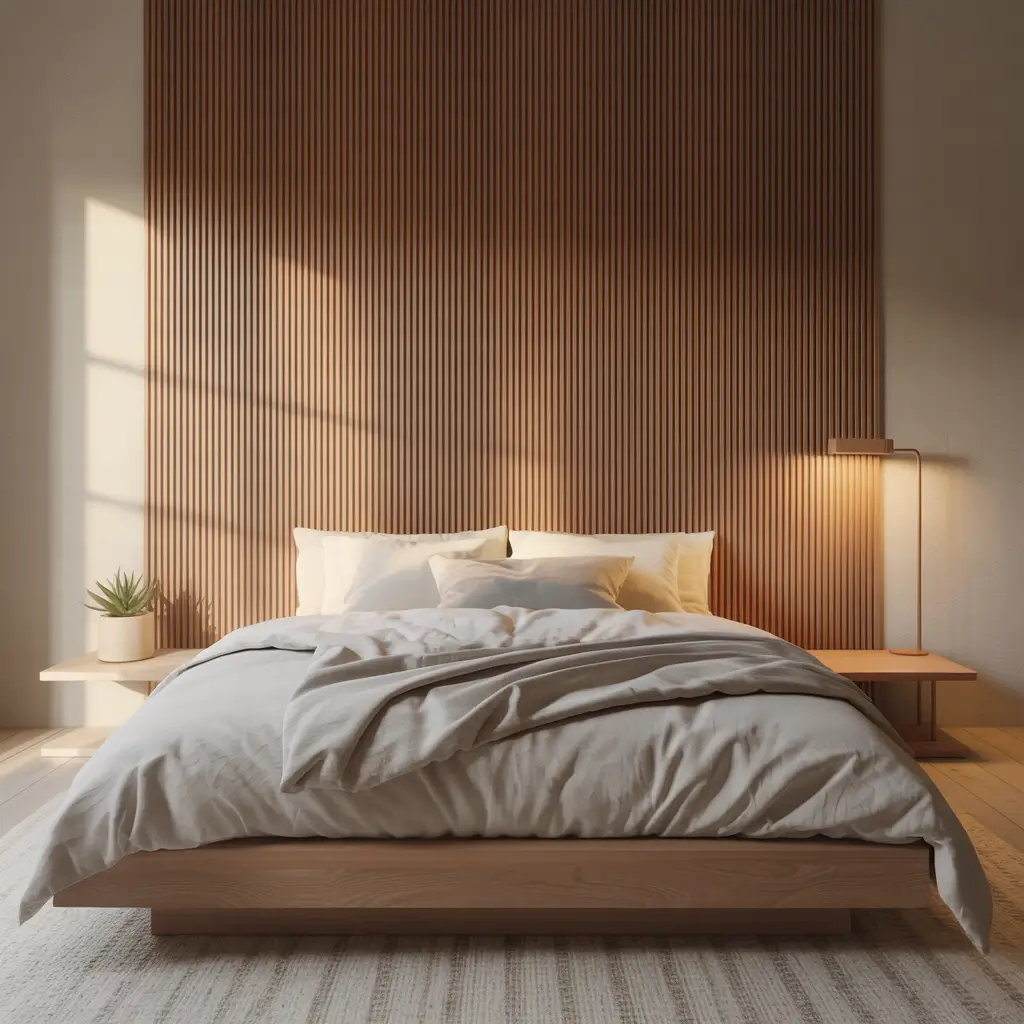
Who says accent walls are outdated? Not when you do them Japandi-style. Vertical wood slats create rhythm and interest without overwhelming the space.
I installed thin oak slats behind my bed last summer, and it completely transformed the room. The vertical lines draw the eye up (making my ceiling feel higher), and the natural wood adds warmth without needing any artwork.
Wood Slat Wall Tips
- Space slats 1-2 inches apart for the perfect rhythm
- Run them floor to ceiling for maximum impact
- Choose consistent wood width (varying sizes look chaotic)
- Consider backlighting for evening ambiance
FYI, this also works great for hiding imperfect walls. Just saying.
11. Cozy Floor Mattress Zen Corner

Not ready to commit to a full floor bed? Create a zen corner with a floor mattress or thick cushions. It’s perfect for meditation, reading, or those Sunday afternoon naps.
I turned a dead corner of my bedroom into this little retreat with a Japanese floor mattress, some meditation cushions, and a low tea table. It’s become my favorite spot for morning journaling.
Creating Your Zen Corner
Essential elements:
- Quality floor mattress or zabuton (comfort is key)
- Meditation cushions in natural fabrics
- Low table for tea or books
- Soft lighting – maybe a salt lamp or paper lantern
- One plant for life energy
This doesn’t need to be huge. Even a 4×4 foot space works perfectly.
12. Modern Minimal Japandi Loft

Got high ceilings? Lucky you! Japandi loft style makes the most of vertical space while maintaining that grounded feeling we love.
The trick is to keep the upper areas minimal while creating cozy zones below. Think exposed beams (painted white or natural wood), simple pendant lights, and maybe a sleeping loft with just a mattress and nothing else.
Loft Design Principles
- Embrace vertical space without filling it
- Use long pendant lights to connect ceiling to floor
- Create distinct zones for sleeping, dressing, relaxing
- Keep upper areas sparse, lower areas cozy
The contrast between airy heights and grounded comfort zones creates amazing spatial dynamics.
13. Stone, Wood, and Linen Harmony

This trio is basically the holy trinity of Japandi materials. Stone brings grounding, wood adds warmth, and linen provides softness. Together? Magic.
I added a stone-topped nightstand to my wood and linen bedroom, and it tied everything together perfectly. The cool touch of stone in the morning is surprisingly refreshing, and it looks incredibly sophisticated.
Material Balance Guide
- 60% wood (furniture, floors, accents)
- 30% textiles (mainly linen and cotton)
- 10% stone or ceramic (statement pieces)
The key is using stone sparingly – it’s the accent, not the main character.
14. Greenery-Infused Calm Retreat
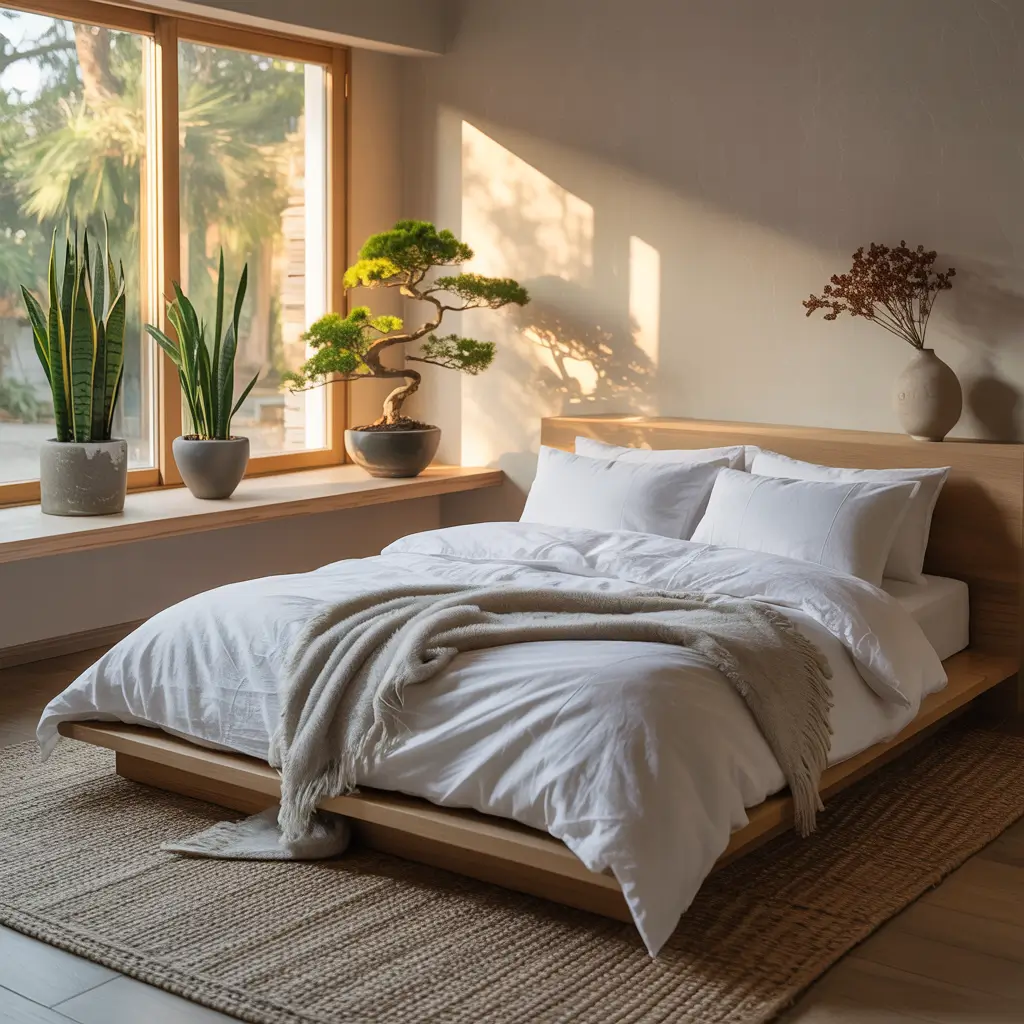
Plants and Japandi go together like coffee and mornings. But we’re not talking about turning your bedroom into a jungle. Strategic greenery is what we’re after.
I keep three plants in my bedroom: a snake plant (air purifying and impossible to kill), a small bonsai (because obviously), and a hanging pothos in a macramé planter. They add life without cluttering the space.
Best Plants for Japandi Bedrooms
Top picks:
- Snake plants – sculptural and low maintenance
- Peace lilies – elegant and air-purifying
- Bonsai trees – if you’re feeling ambitious
- Rubber plants – glossy leaves add subtle shine
- Bamboo – grows in water, super minimal
Remember: one statement plant often works better than five small ones.
15. Black Accents in Soft Neutrals Japandi Style

Plot twist – Japandi doesn’t mean you can’t use black! Strategic black accents actually enhance the neutral palette by providing visual anchors.
I added black metal picture frames, a matte black lamp, and black drawer pulls to my beige and wood bedroom. The contrast makes everything else pop while maintaining sophistication. It’s that perfect amount of edge without going full industrial.
Using Black Successfully
- Keep black to 10-15% of the color scheme
- Choose matte black over glossy (less harsh)
- Use black for frames, hardware, and lighting
- Balance with plenty of natural light and white space
Think of black as the punctuation in your design sentence – necessary but not overwhelming.
Bringing It All Together
Creating your perfect Japandi bedroom isn’t about following every trend or buying everything new. Start with one or two ideas that really speak to you. Maybe it’s adding wood slats behind your bed, or finally investing in that linen bedding you’ve been eyeing.
The beauty of Japandi lies in its flexibility. You can go full minimalist or add cozy touches – as long as you maintain that balance between form and function, warmth and simplicity. Remember, your bedroom should be your sanctuary, not a magazine spread (unless that magazine spread also happens to be incredibly comfortable).
What’s your favorite Japandi element? I’d love to know which of these ideas you’re planning to try first. Because honestly, once you experience the calm of a well-designed Japandi bedroom, there’s no going back to cluttered chaos. Trust me, your future well-rested self will thank you.