15 Stunning Japanese Bedroom Aesthetic Ideas for Calm Living

You know that feeling when you walk into a bedroom and instantly feel your shoulders drop, your breathing slow down, and your mind just… quiet? That’s exactly what happened to me the first time I stepped into a traditional ryokan room in Kyoto.
The simplicity, the warmth, the way everything seemed to have a purpose – I was hooked. Now, three years and countless Pinterest boards later, I’m here to share everything I’ve learned about creating that perfect Japanese bedroom aesthetic.
Let’s be real – you don’t need to fly to Japan or spend a fortune to capture this vibe. You just need the right ideas and maybe a willingness to get rid of some clutter (looking at you, chair that’s become a permanent clothes holder).
Minimalist Japanese Platform Bed Setup
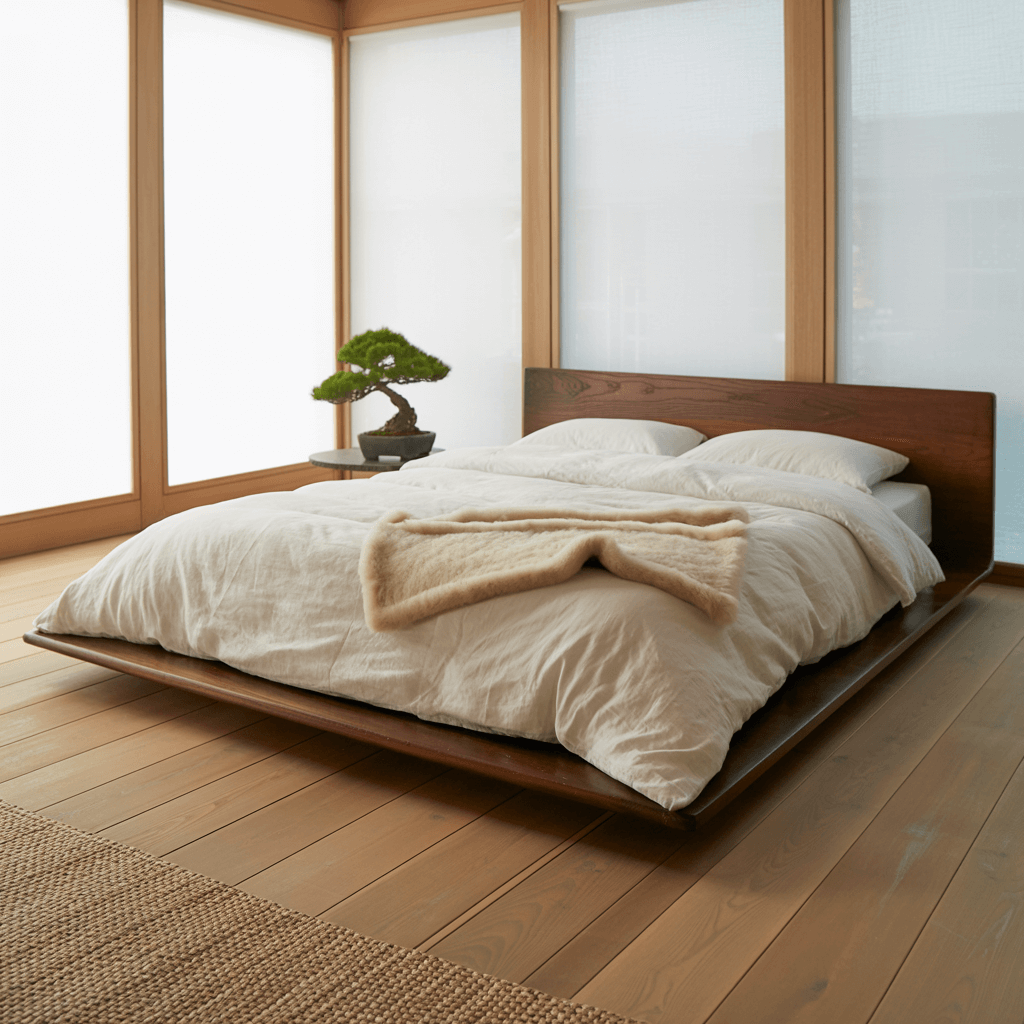
The platform bed is basically the foundation of any Japanese-inspired bedroom – literally and figuratively. I switched from my old squeaky metal frame to a low wooden platform bed two years ago, and honestly? Game changer.
These beds sit much closer to the ground than Western-style beds, usually between 8-18 inches high. The whole point is to create this grounded, stable feeling that connects you more closely with the earth. Sounds a bit woo-woo, I know, but there’s something genuinely calming about sleeping closer to the floor.
What makes platform beds so perfect for the Japanese aesthetic? First off, they create clean, horizontal lines that make your room look bigger and more organized. You can go super minimal with just a mattress on a simple wooden frame, or add a subtle headboard made from natural wood or bamboo.
Key Features to Look For:
- Natural wood construction (pine, oak, or bamboo work beautifully)
- Simple, geometric design without ornate details
- Built-in side tables or shelving for extra functionality
- Height between 8-18 inches for that authentic low-profile look
The best part? Platform beds often come with built-in storage underneath. I use mine to store extra bedding and seasonal clothes in neat wooden boxes. It keeps everything organized while maintaining that clutter-free zen vibe we’re going for.
Zen-Inspired Tatami Mat Bedroom
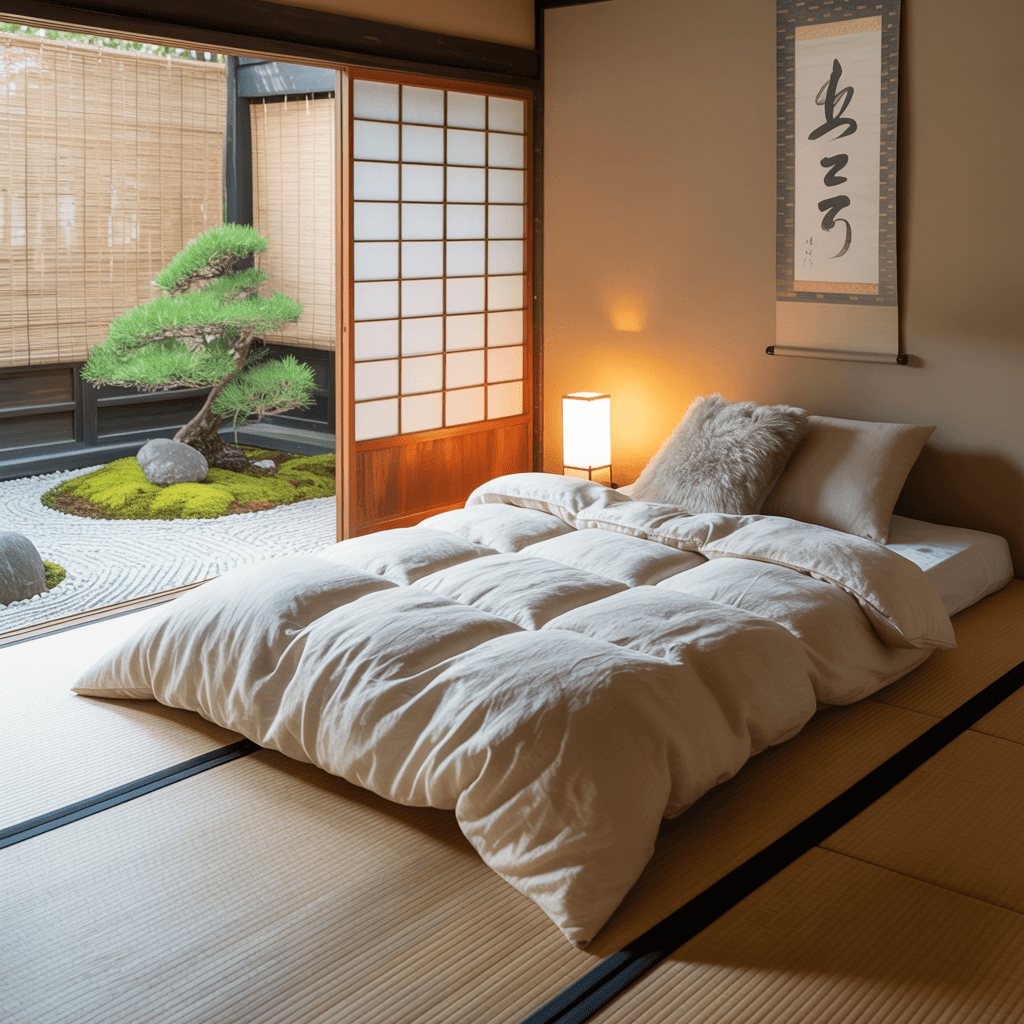
Ever wondered why Japanese bedrooms feel so different from Western ones? A huge part of it comes down to the flooring, and tatami mats are where the magic happens.
Traditional tatami mats are made from woven rush grass with rice straw cores, and they smell absolutely incredible – like fresh hay mixed with green tea. I added two authentic tatami mats to my bedroom last year, and walking on them barefoot every morning feels like a mini meditation session.
You don’t have to cover your entire floor with tatami (though you totally can if you’re committed). Even just placing a few mats around your bed or creating a designated meditation corner works wonders. The texture adds warmth and natural beauty that no carpet could ever match.
How to Incorporate Tatami:
- Use them as area rugs beside your bed
- Create a dedicated meditation or reading nook
- Layer them under your platform bed for extra cushioning
- Mix with regular flooring for visual interest
One thing to keep in mind – real tatami mats need some TLC. You’ll want to air them out regularly and avoid placing heavy furniture on them permanently. But trust me, the authentic feel and that subtle grassy scent make the extra care worth it.
Japanese Sliding Shoji Screen Ideas
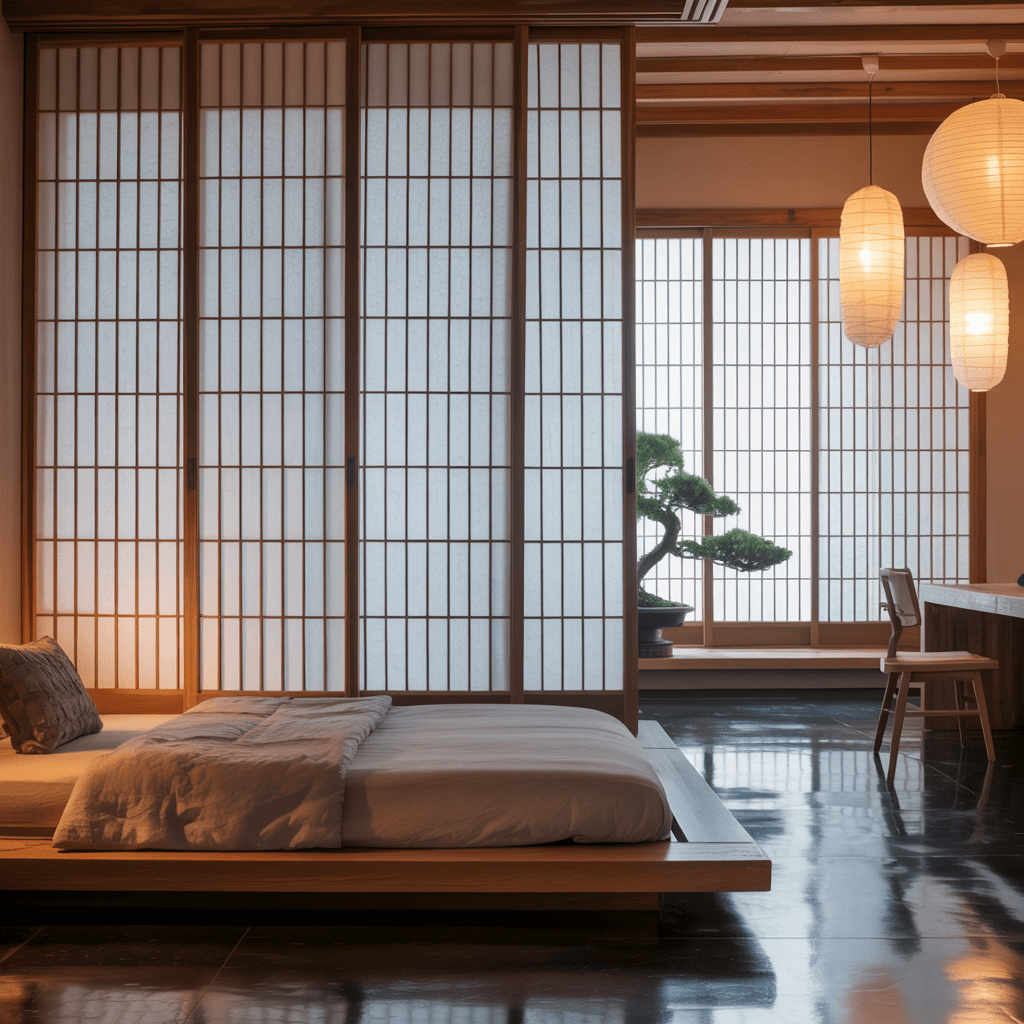
Shoji screens are like the Swiss Army knife of Japanese interior design. Need privacy? Shoji screen. Want to divide a room? Shoji screen. Looking for a gorgeous backdrop for your Instagram pics? You guessed it – shoji screen.
These translucent paper and wood panels filter light in the most beautiful way. I use mine as a room divider between my sleeping area and my work-from-home setup, and it creates this soft, diffused lighting that makes 8 AM Zoom calls slightly more bearable.
The traditional white paper (called washi) is classic, but modern versions come in all sorts of materials and colors. You can find screens with fabric panels, frosted acrylic, or even decorative patterns if plain white feels too stark for your taste.
Creative Shoji Screen Uses:
- Closet doors replacement (instant upgrade from those boring sliding mirrors)
- Window treatments for privacy without blocking light
- Headboard alternative for a unique focal point
- Portable room divider for studio apartments
FYI, you don’t need to buy expensive custom screens. I found mine on Facebook Marketplace for $50, and with a little wood stain and new paper, they look absolutely stunning.
Also Read: 15 Stylish Men’s Aesthetic Bedroom Ideas for Modern Comfort
Neutral Tones with Wooden Accents
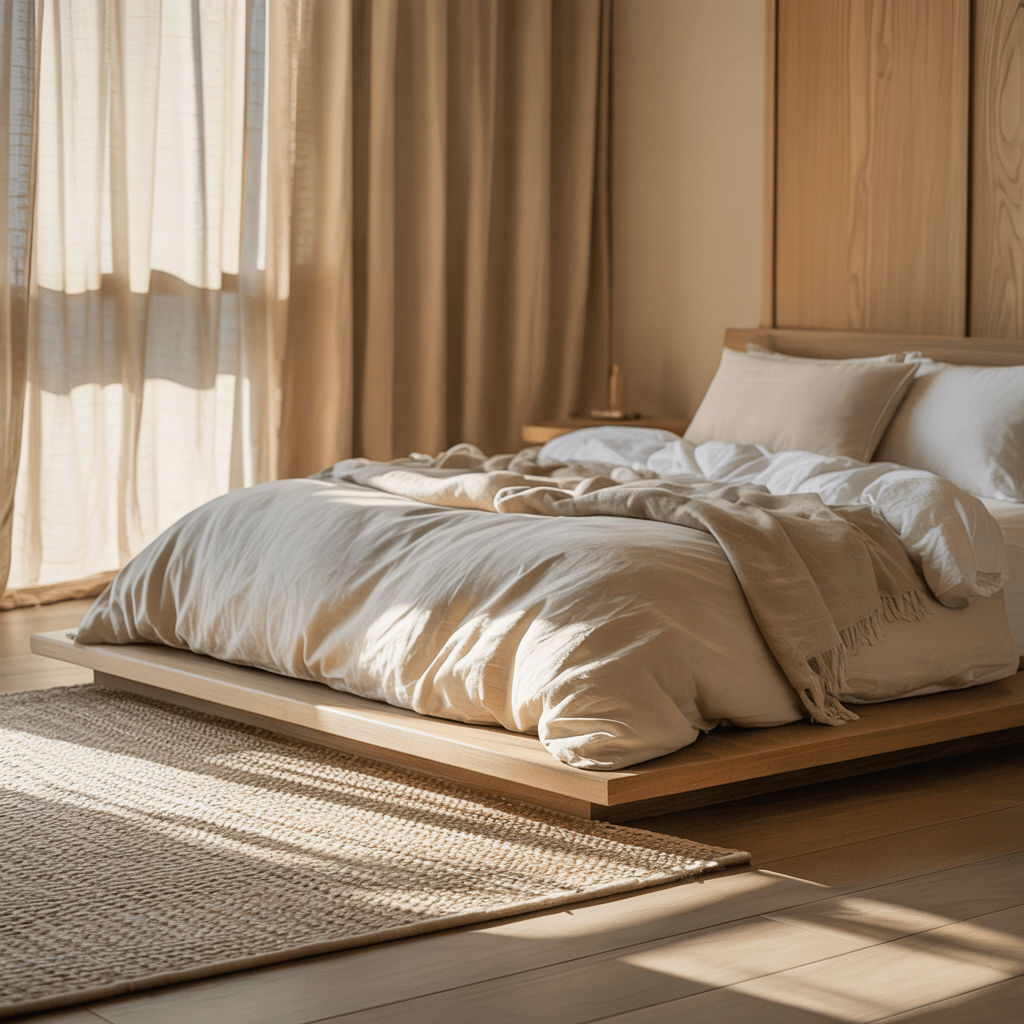
The Japanese bedroom color palette is all about earth tones and natural materials. Think warm beiges, soft grays, creamy whites, and various shades of brown from light bamboo to rich walnut.
I used to be all about bold accent walls and bright colors, but switching to neutrals completely transformed how I sleep. There’s something about these muted tones that signals to your brain: “Hey, time to chill out.” The key is layering different textures and shades to keep things interesting without adding visual chaos.
Wood accents are absolutely essential here. Whether it’s your bed frame, floating shelves, or picture frames, natural wood brings warmth that prevents the neutral palette from feeling cold or sterile. I mix light bamboo pieces with darker walnut accents, and the contrast creates depth without breaking the serene vibe.
Winning Wood and Neutral Combinations:
- Light oak floors with cream walls and linen bedding
- Bamboo furniture against soft gray walls
- Dark wood bed frame with white and beige textiles
- Natural pine shelving with warm taupe accents
Futon Style Japanese Bedroom Design
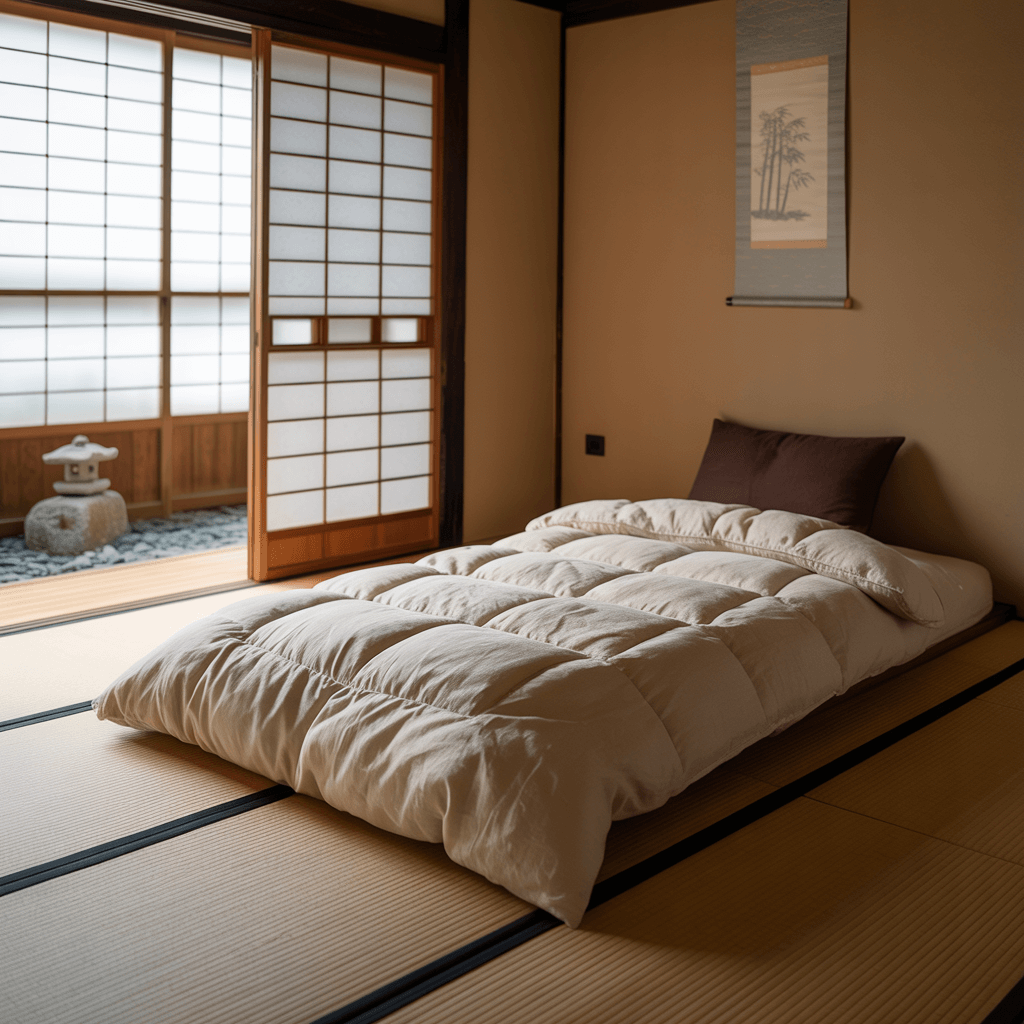
Okay, before you picture that lumpy futon from your college dorm – stop right there. Real Japanese futons are a completely different animal, and they might just revolutionize how you think about sleeping.
Traditional Japanese futons (called shikibuton) are thin mattresses that you place directly on the floor or on tatami mats. They’re typically 3-4 inches thick and filled with cotton or synthetic materials. Every morning, you fold them up and store them away, which frees up your entire bedroom for other activities.
I tried the futon life for six months, and while I eventually went back to a platform bed (my back needed more support), the experience taught me so much about intentional living. Rolling up your bed each morning forces you to start the day with purpose – no more lounging in bed scrolling through TikTok for an hour.
Modern Futon Adaptations:
- Use a thicker Western-style futon on a low platform for comfort
- Try a tri-fold futon that doubles as floor seating during the day
- Layer multiple thin futons for adjustable firmness
- Add a tatami mat underneath for authentic feel and extra support
Low Furniture with Floor Seating
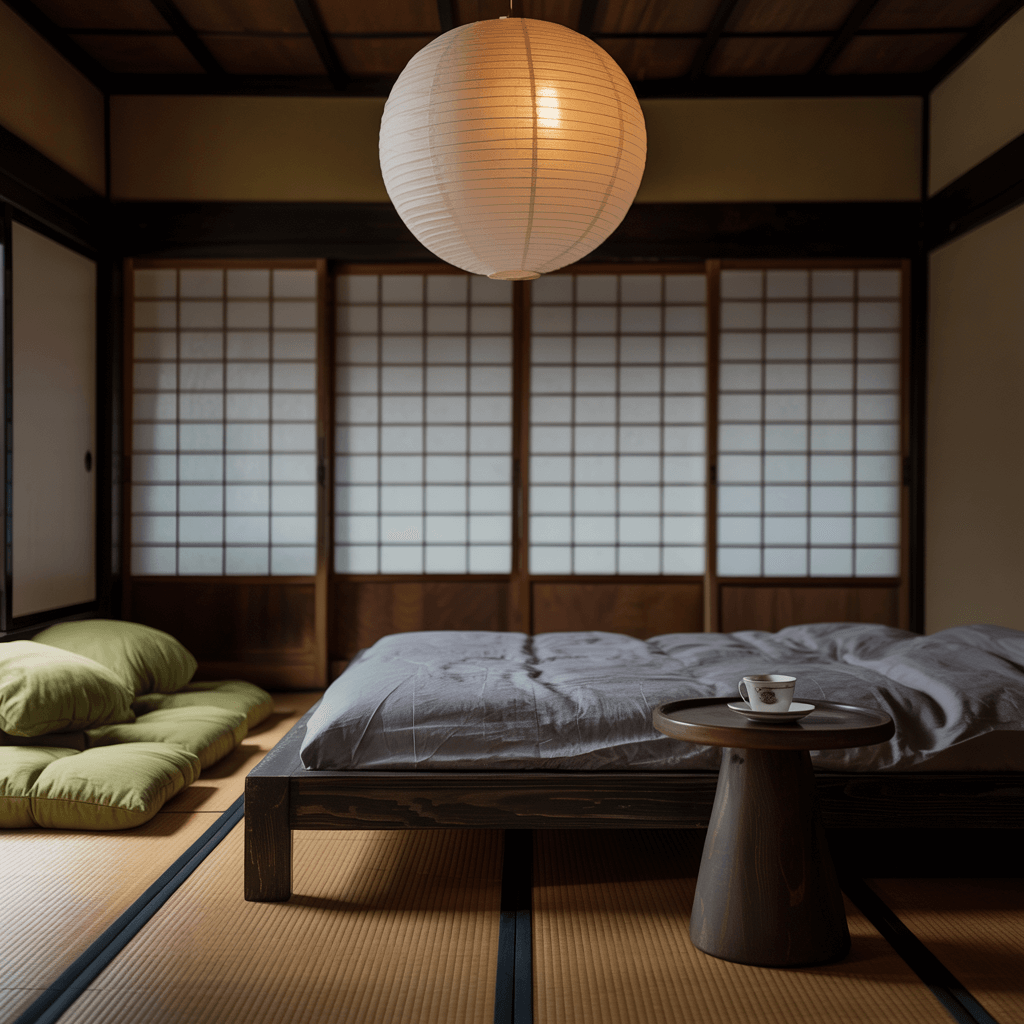
Here’s where Japanese bedroom design gets really interesting – everything sits low to the ground. We’re talking floor cushions, low tables, and furniture that barely rises above knee height.
This design philosophy, called “floor living,” creates an incredibly intimate and cozy atmosphere. I added a low wooden tea table and some floor cushions to my bedroom corner, and it’s become my favorite spot for morning coffee and journaling.
The psychological effect is real too. Sitting closer to the ground naturally makes you feel more grounded and relaxed. Plus, low furniture makes your ceiling feel higher and your room feel more spacious – win-win for small bedrooms.
Essential Low Furniture Pieces:
- Zabuton floor cushions for comfortable seating
- Low wooden side tables (about 12-16 inches high)
- Floor-level bookshelves or storage units
- Japanese-style low desks for a workspace
Also Read: 15 Amazing 2000s Bedroom Aesthetic Ideas for Nostalgic Vibes
Japanese Indoor Plants for Bedroom Calm
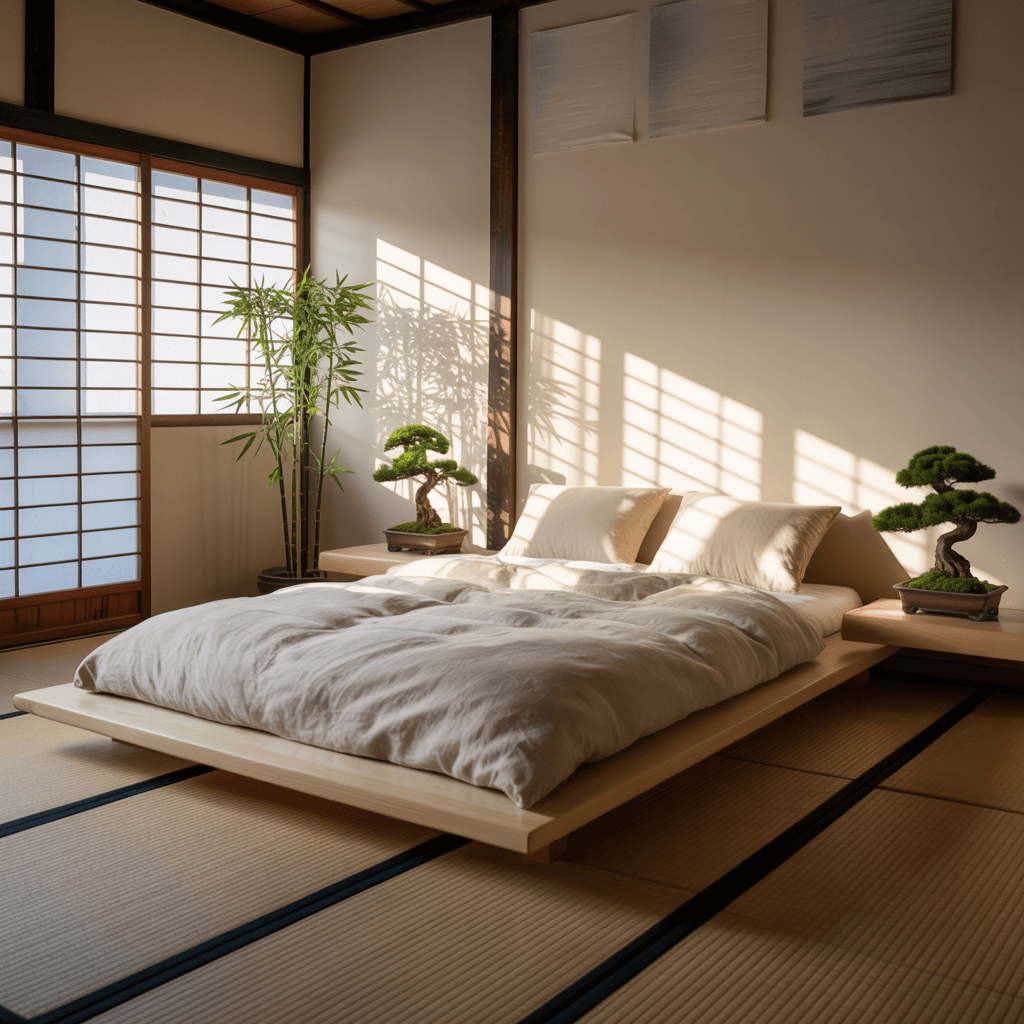
Plants and Japanese aesthetics go together like matcha and meditation. But we’re not talking about turning your bedroom into a jungle – it’s all about strategic placement of specific plants that enhance the zen atmosphere.
Bonsai trees are the obvious choice, but let’s be honest – keeping them alive requires serious commitment. I’ve killed two (RIP little buddies) before accepting that I needed lower-maintenance options. Lucky bamboo, snake plants, and peace lilies give you that natural element without the stress.
The Japanese concept of “shinrin-yoku” or forest bathing inspires this connection with nature indoors. Even just one or two well-placed plants can transform your bedroom’s energy completely.
Best Plants for Japanese Bedrooms:
- Lucky bamboo in simple glass vases
- Snake plants for air purification and minimal care
- Small ferns in ceramic pots
- Moss balls (marimo) in clear containers
- Single orchid for elegant simplicity
Place plants asymmetrically – Japanese design loves odd numbers and imperfect balance. One tall plant in a corner and two smaller ones on a shelf creates more visual interest than perfectly matched pairs.
Natural Light and Open Space Layout
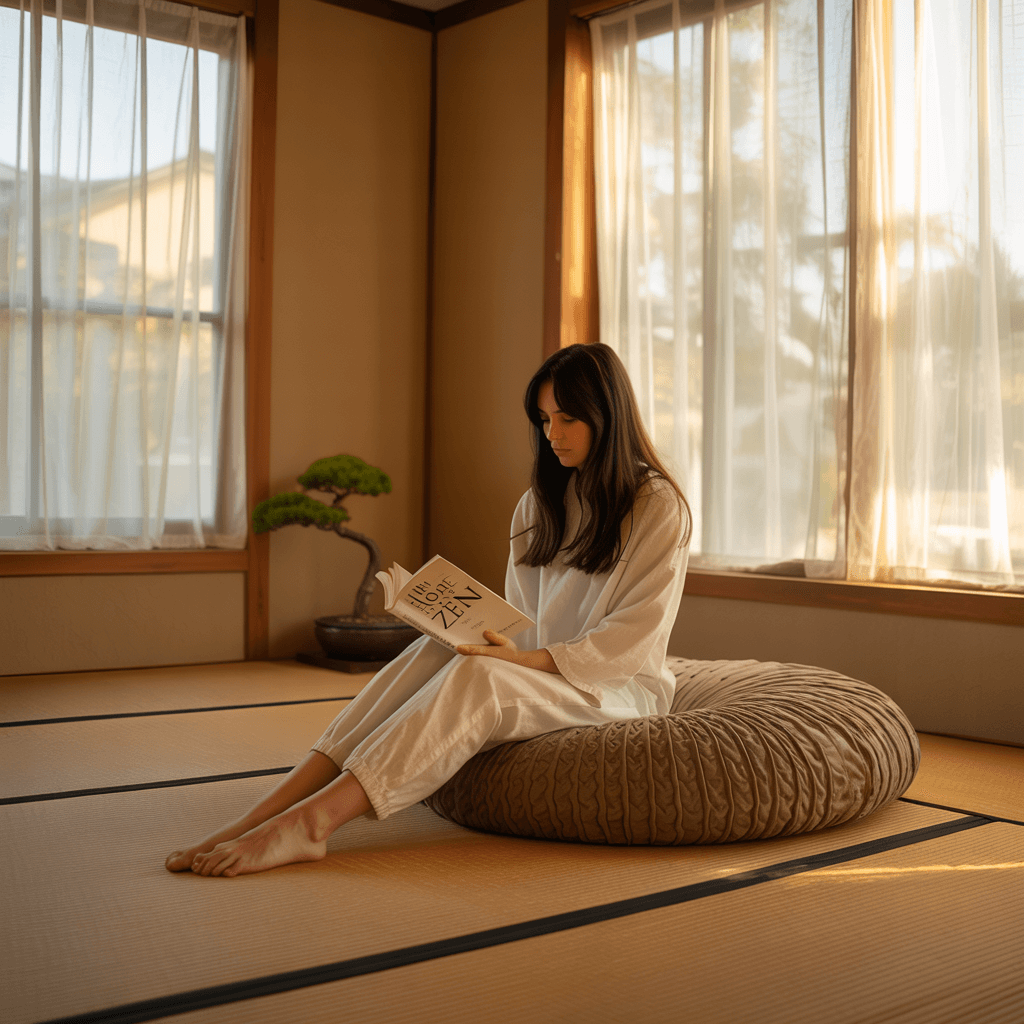
Japanese bedrooms worship natural light like it’s a religion. The goal is to maximize daylight while maintaining privacy – hence those genius shoji screens I mentioned earlier.
I rearranged my entire bedroom to position my bed where it catches the morning sun, and honestly, I haven’t needed an alarm clock since. The gradual natural light wakes you up so much more peacefully than that jarring phone alarm.
Keep window treatments minimal. Thin white curtains or bamboo blinds filter harsh sunlight while preserving that airy, open feeling. And here’s a pro tip: mirrors placed strategically opposite windows can double your natural light without adding any fixtures.
Maximizing Natural Light:
- Position your bed to face east for morning sun
- Use sheer curtains instead of heavy drapes
- Keep windowsills clear of clutter
- Add mirrors to reflect light into darker corners
- Paint walls in light, reflective colors
Japanese Bedding and Linen Inspiration
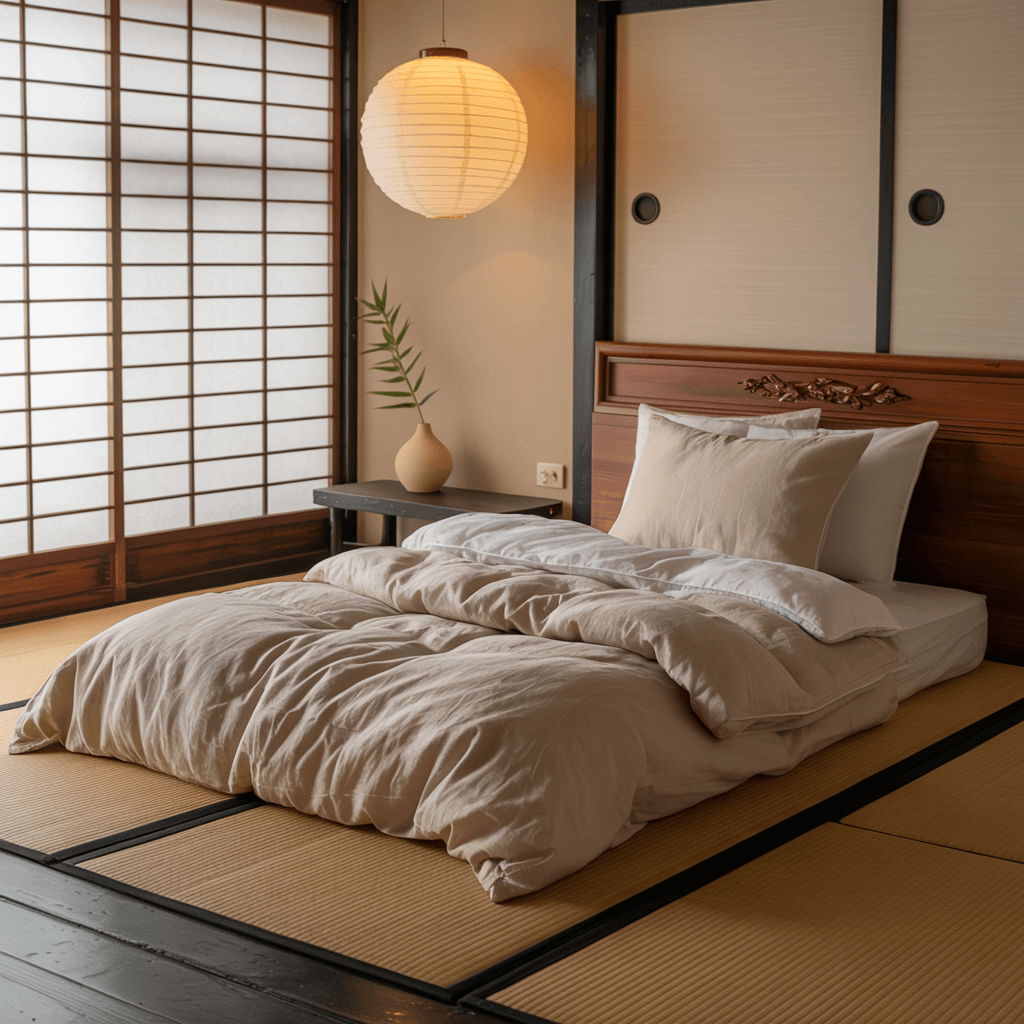
Your bedding choices can make or break the Japanese bedroom aesthetic. Forget those busy patterns and bright colors – we’re going for simple, natural, and incredibly soft.
I switched to all-natural linen bedding in cream and light gray, and my bed now looks like it belongs in a fancy ryokan. The slightly wrinkled texture of linen actually adds to the wabi-sabi aesthetic (more on that coming up). Plus, linen gets softer with every wash – it’s basically the fine wine of bedding.
Japanese bedding philosophy emphasizes quality over quantity. Instead of piling on decorative pillows, invest in one or two really good pillows with simple, elegant covers.
Japanese Bedding Essentials:
- Natural fiber sheets (linen, cotton, or bamboo)
- Neutral colors (white, cream, gray, or soft earth tones)
- Minimal pillows – typically just two for sleeping
- Simple duvet or comforter without patterns
- Textured throws in natural materials
Also Read: 15 Cozy Comfy Bedroom Aesthetic Ideas for Ultimate Relaxation
Wabi-Sabi Japanese Bedroom Aesthetic
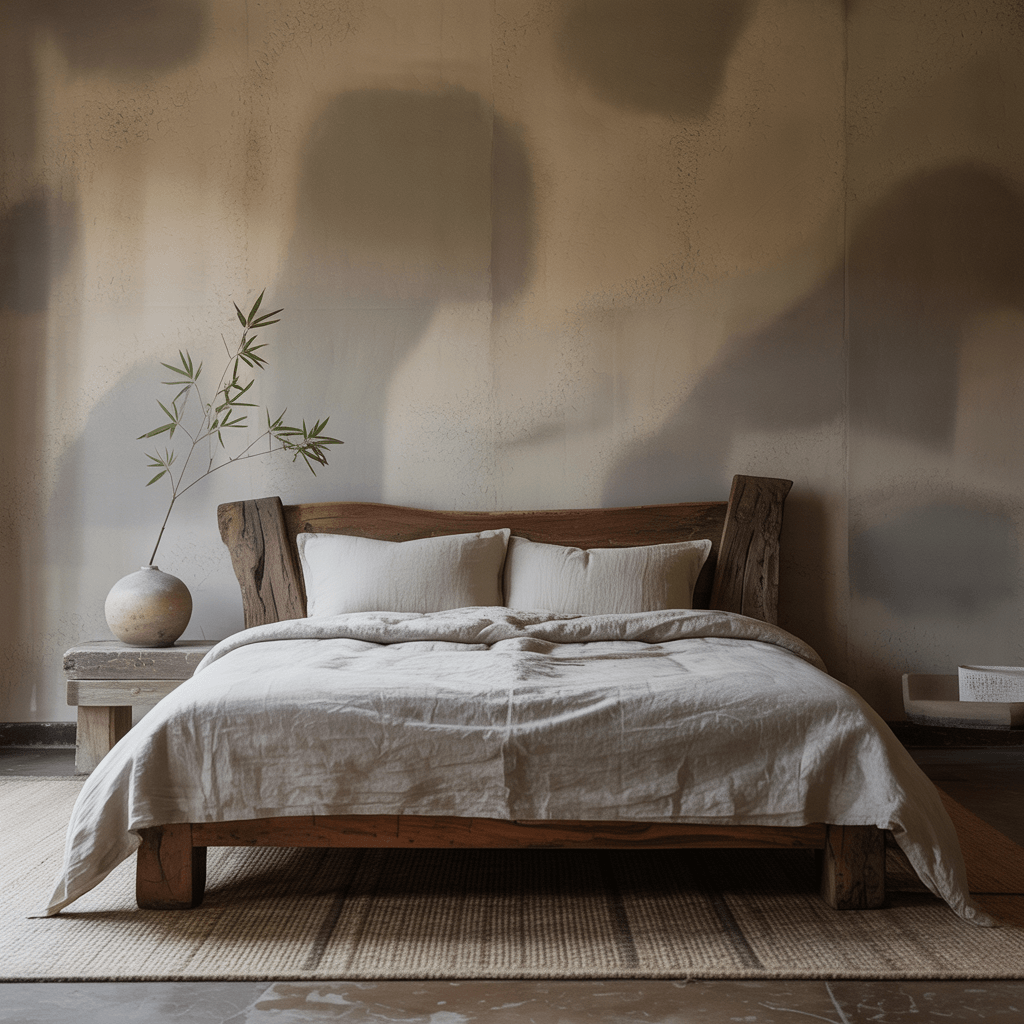
Wabi-sabi might be my favorite Japanese concept ever. It’s basically the art of finding beauty in imperfection – and honestly, it’s so refreshing in our Instagram-perfect world.
Instead of hiding that slightly wonky nightstand or patching every tiny wall crack, wabi-sabi celebrates these imperfections as part of your room’s story. I have a wooden shelf with a natural split in the grain, and visitors always comment on how beautiful it is. Three years ago, I would’ve returned it as defective. 🙂
This aesthetic embraces natural aging, weathering, and the marks that come with daily use. It’s about choosing items that will age gracefully rather than look dated in a few years.
Incorporating Wabi-Sabi:
- Choose handmade items with visible craftsmanship
- Display weathered wood or naturally aged materials
- Embrace asymmetry in your decor arrangement
- Keep some “perfectly imperfect” elements visible
- Select items that patina beautifully over time
Soft Lighting with Japanese Lanterns
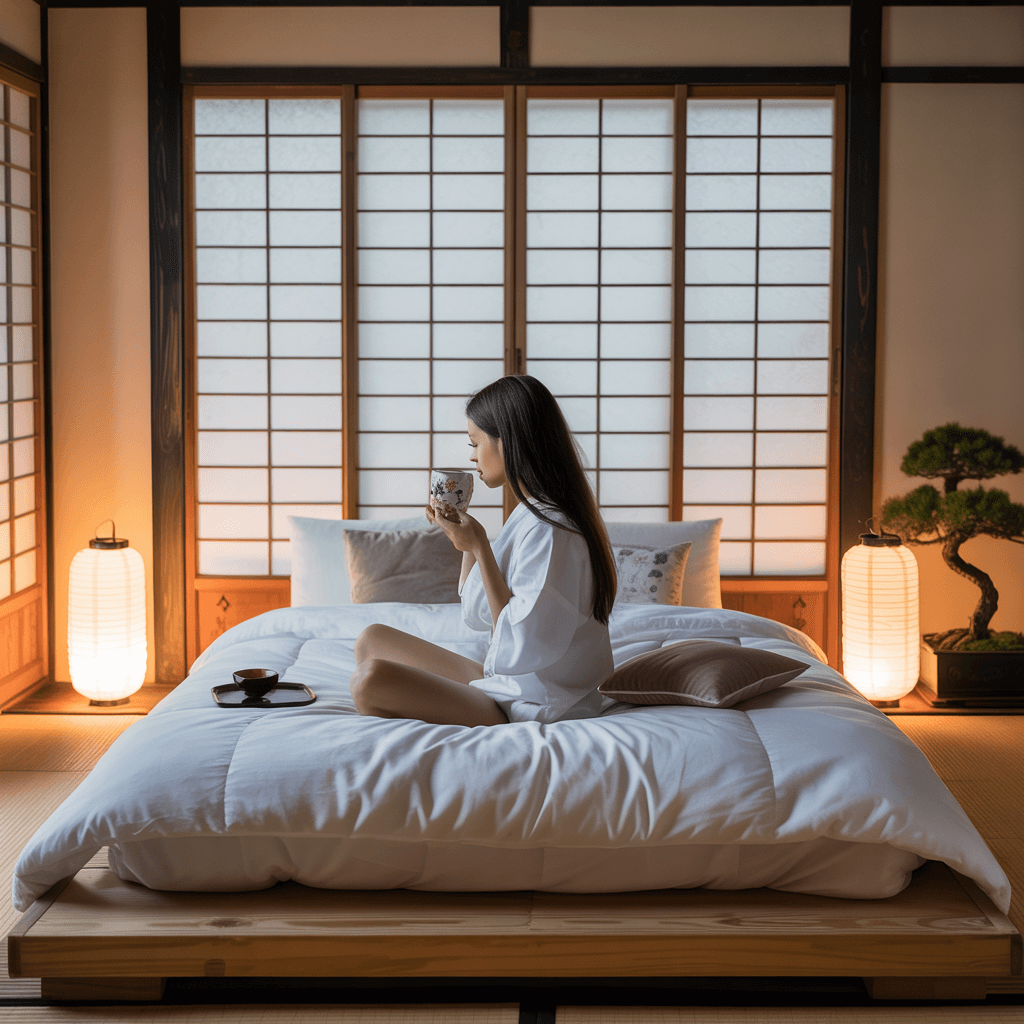
Harsh overhead lighting is basically the enemy of zen bedroom vibes. Japanese bedrooms rely on multiple soft light sources at different heights to create layers of warm, ambient lighting.
Paper lanterns are the MVP here. I have three at different heights in my bedroom – one pendant light, one table lamp with a paper shade, and a small bedside lantern. The soft, diffused light they create in the evening is absolutely magical.
Don’t overlook candles either. The flickering light adds movement and life to the space. Just maybe skip the pumpkin spice scented ones – stick to unscented or subtle natural scents like sandalwood or green tea.
Japanese Lighting Ideas:
- Akari-style paper lanterns in various sizes
- Bamboo or wood table lamps with fabric shades
- LED candles for safe ambient lighting
- Salt lamps for a warm, natural glow
- String lights behind shoji screens for backlighting
Small Space Japanese Bedroom Ideas
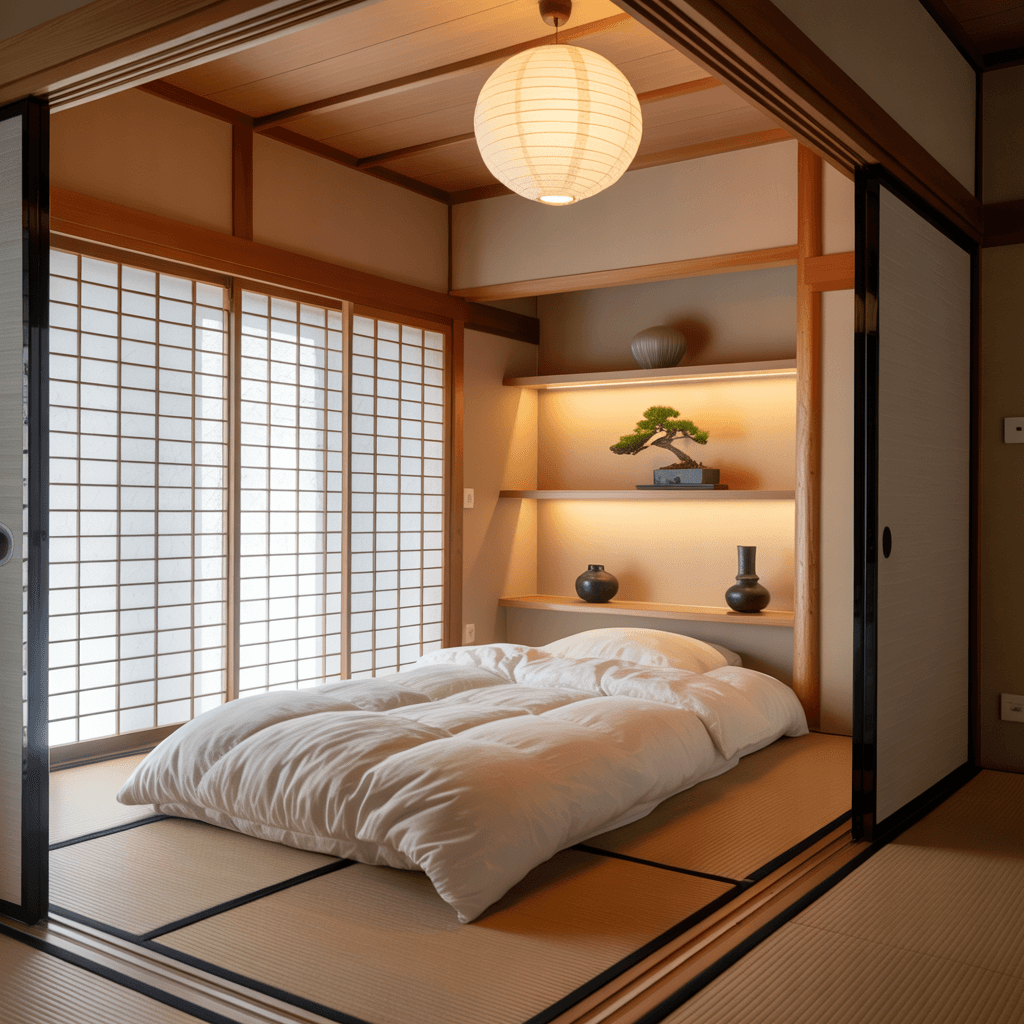
Japanese design is basically the master class in small space living. When your entire bedroom needs to function as sleeping space, living area, and sometimes office, every square inch counts.
The secret? Multi-functional everything. That platform bed with built-in storage? Essential. Floor cushions that stack when not in use? Genius. Wall-mounted shelves instead of bulky bookcases? You get the idea.
I live in a 400-square-foot studio, and applying Japanese design principles made it feel twice as big. The key is keeping everything low and leaving plenty of negative space – empty areas that let your room breathe.
Small Space Solutions:
- Foldable furniture that stores away when not needed
- Wall-mounted desks that fold flat
- Under-bed storage boxes in natural materials
- Vertical storage using wall space efficiently
- Multi-purpose items (storage ottoman, bed with drawers)
Nature-Inspired Japanese Wall Art
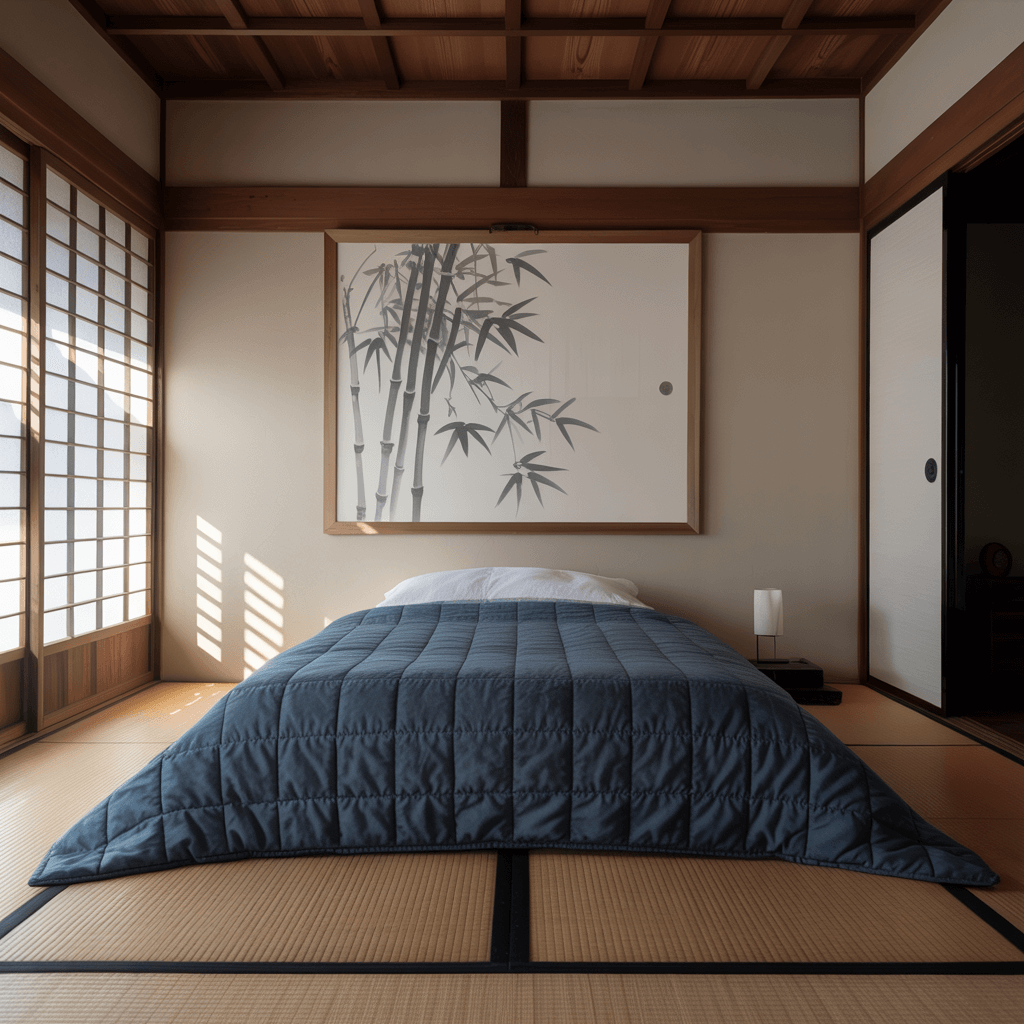
Japanese bedrooms don’t do gallery walls packed with random prints. Instead, they feature one or two carefully chosen pieces that complement the overall aesthetic.
Traditional options include calligraphy scrolls, minimalist ink paintings, or botanical prints. But you don’t need to stick strictly to Japanese art. Any nature-inspired piece that speaks to you works – just keep it simple and intentional.
I have a single large canvas with an abstract mountain landscape above my bed, and it’s literally the only wall art in my bedroom. Does it make a statement? Absolutely. Does my room feel empty without twenty other pieces? Not at all.
Wall Art Guidelines:
- Choose one focal piece rather than multiple small prints
- Stick to nature themes (mountains, water, plants, seasons)
- Frame in natural wood or simple black frames
- Consider traditional Japanese art forms (sumi-e, ukiyo-e)
- Leave plenty of wall space empty for visual breathing room
Japanese Closet and Storage Solutions
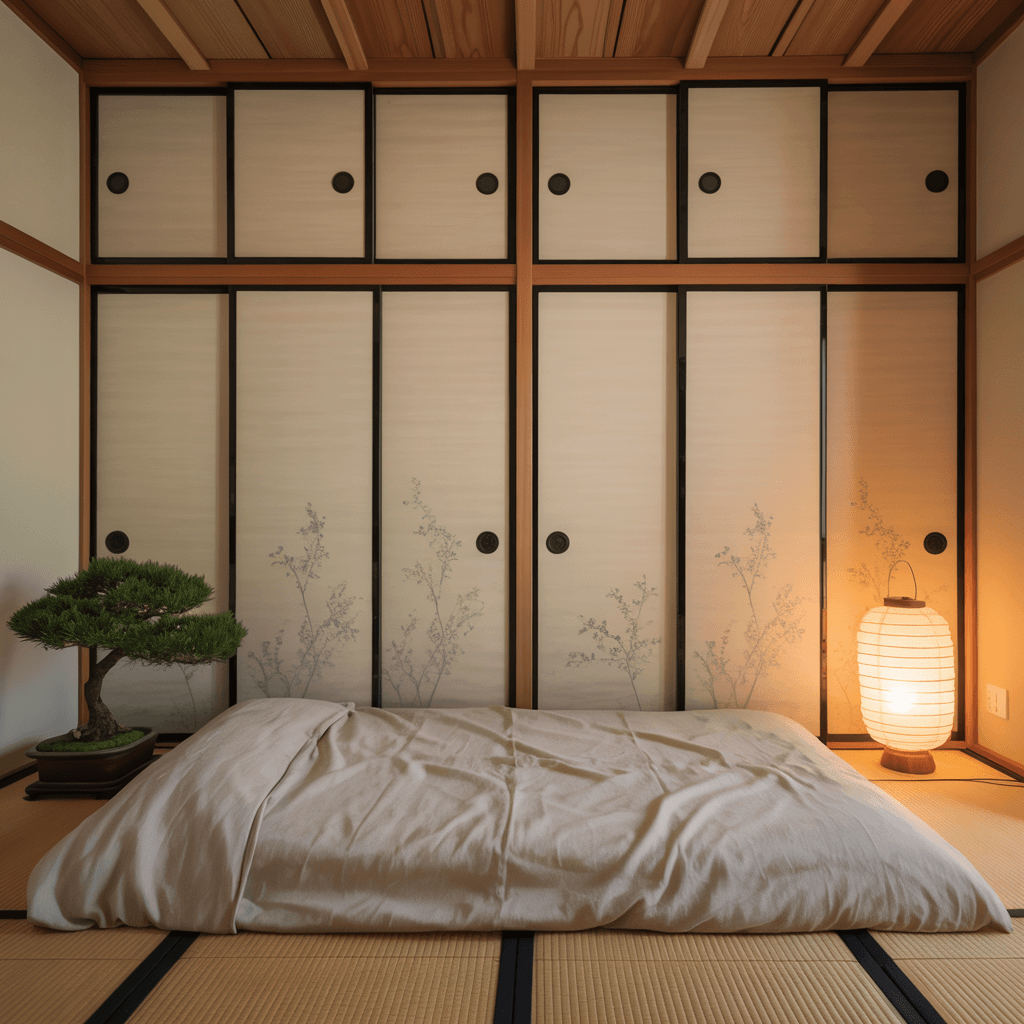
Here’s where Japanese bedrooms really shine – storage that’s so well-integrated, you barely notice it exists. The motto? Everything has a place, and everything in its place.
Traditional Japanese closets (oshi-ire) are built into the wall with sliding doors, but you can recreate this with modern wardrobes. The trick is choosing pieces that blend seamlessly with your walls rather than standing out as furniture.
I replaced my old dresser with a combination of under-bed boxes and wall-mounted shelves hidden behind a curtain. My clothes are more organized than ever, and my room looks twice as spacious.
Smart Storage Solutions:
- Built-in or wall-mounted wardrobes with sliding doors
- Woven baskets for organizing smaller items
- Under-bed storage in wooden or fabric boxes
- Floating shelves in alcoves or corners
- Minimalist clothing racks for frequently worn items
IMO, the best part about Japanese storage philosophy is that it forces you to be intentional about what you keep. If it doesn’t serve a purpose or bring you joy, it doesn’t belong in your bedroom.
Serene Japanese Bedroom Color Palette
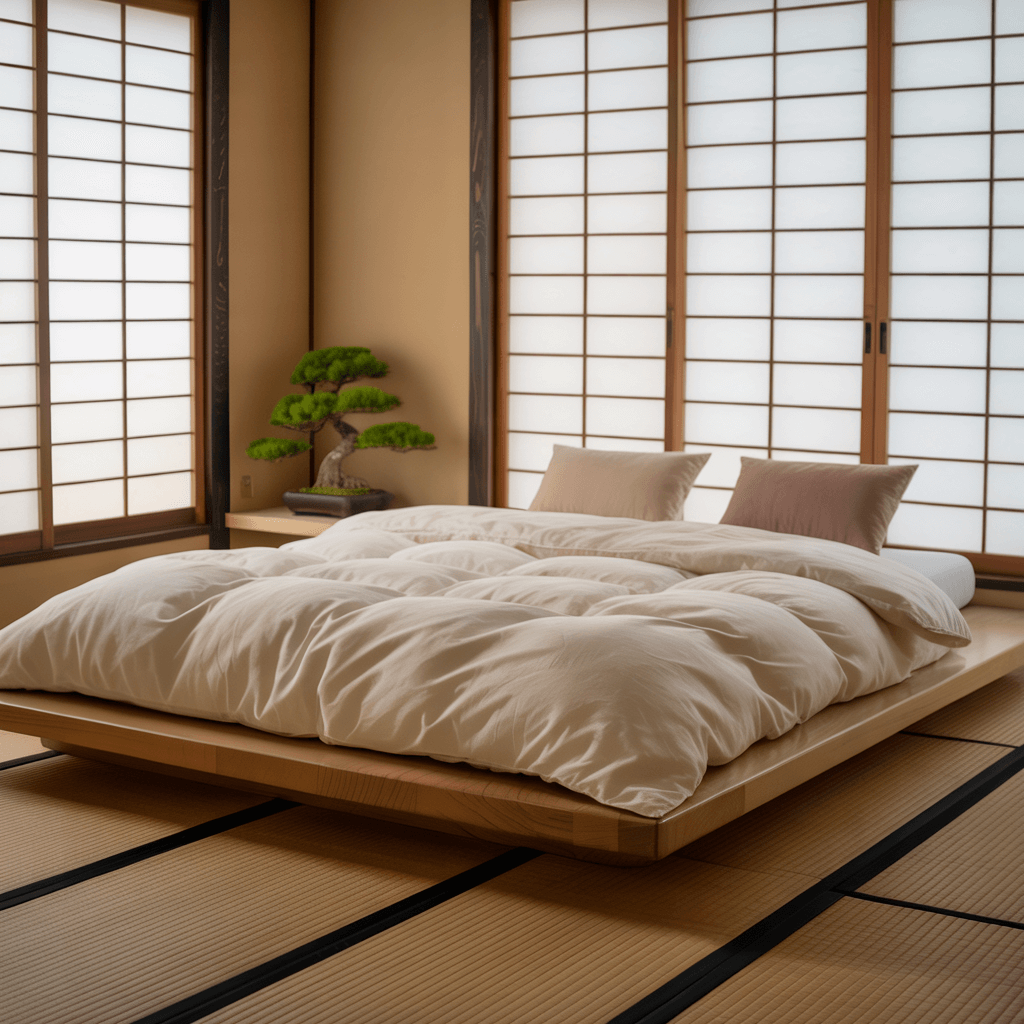
Let’s talk about the color psychology behind Japanese bedrooms. The palette isn’t just about looking pretty – it’s designed to promote rest and relaxation.
The base is always neutral: whites, creams, beiges, and soft grays. These colors reflect light and make spaces feel larger while creating a calm backdrop for your mind to unwind. Then you layer in natural wood tones for warmth and maybe – maybe – one subtle accent color inspired by nature.
I experimented with adding a soft sage green through my bedding and one small plant pot, and it brought just enough life without disrupting the peaceful vibe. The key is restraint – think of color as seasoning, not the main dish.
Building Your Color Palette:
- Start with white or off-white walls as your base
- Add warmth through natural wood in 2-3 tones
- Choose textiles in complementary neutrals
- Consider one soft accent color (sage, dusty blue, or blush)
- Use black sparingly for contrast and grounding
Bringing It All Together
Creating a Japanese-inspired bedroom isn’t about copying every element exactly – it’s about understanding the principles and adapting them to your life. You might not want to sleep on a futon or install shoji screens, and that’s totally fine.
The real magic happens when you embrace the core ideas: simplicity, natural materials, intentional choices, and connection with nature. Start with one or two changes – maybe swap out your bedding for natural linens or add a low table with floor cushions. See how it feels, then build from there.
Remember, the ultimate goal of a Japanese bedroom aesthetic isn’t just to look good on Instagram (though it definitely will). It’s about creating a space that actually helps you rest, recharge, and find a little peace in our crazy world. And honestly? We could all use more of that.