
15 Amazing Kitchen Tiles Texture Ideas for Elegant Interiors

So you’re staring at your kitchen floor and backsplash thinking, “This needs a serious upgrade.” Trust me, I’ve been there.
After renovating three kitchens in the past decade (yes, I move a lot), I’ve learned that tile texture makes or breaks your kitchen’s personality.
Let’s talk about the game-changing textures that’ll have your guests asking, “Where did you get those tiles?” I’ve tested, installed, and lived with most of these options, and I’m ready to spill all the details – the good, the gorgeous, and the “why didn’t anyone warn me about this?”
Rustic Stone Kitchen Tiles Texture

Remember walking into that Italian farmhouse kitchen on your last vacation? That’s the vibe rustic stone tiles bring home. These beauties feature natural variations, rough edges, and an organic feel that screams authenticity.
I installed limestone-look tiles in my first kitchen renovation, and honestly? Best decision ever. The texture hides everything – dropped spaghetti sauce, muddy paw prints, you name it. The slightly uneven surface catches light differently throughout the day, creating this warm, lived-in atmosphere that feels like home.
Want to know what really sells me on rustic stone? The imperfections become features. Every chip, every variation in color, every subtle texture difference adds character. You’re not getting cookie-cutter perfection here – you’re getting personality.
Practical Considerations for Stone Textures
Here’s what nobody tells you about rustic stone tiles:
- Sealing is non-negotiable (learned this the hard way)
- The texture can trap dirt in crevices
- Your feet will thank you – they’re surprisingly comfortable to stand on
- They pair brilliantly with both modern and traditional cabinetry
Modern Matte Finish Kitchen Tiles
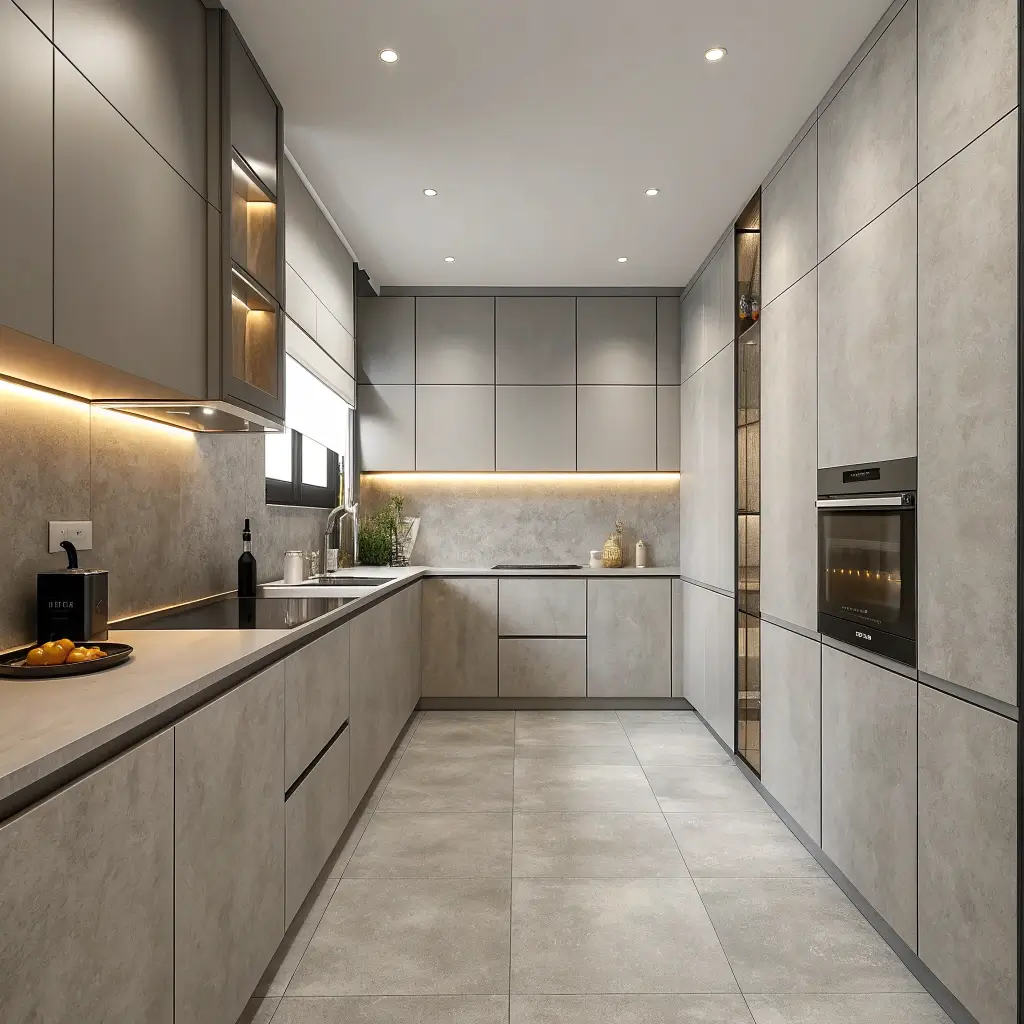
Who says modern has to mean boring? Matte finish tiles bring sophistication without the maintenance headaches of glossy surfaces. These tiles absorb light rather than reflect it, creating a calm, contemporary aesthetic that works overtime.
I’ve noticed matte tiles trending hard lately, and for good reason. They hide water spots like champions and don’t show every single footprint. Plus, that velvety texture? Chef’s kiss. My sister installed large-format matte porcelain tiles last year, and her kitchen looks like it belongs in a design magazine.
The beauty of modern matte tiles lies in their versatility. Want industrial chic? Go for concrete-look matte. Prefer Scandinavian minimalism? White or light gray matte tiles are your best friends. The lack of shine means your other design elements – cabinets, fixtures, artwork – get to be the stars.
Why Matte Beats Glossy (Sometimes)
Let me break down when matte wins:
- High-traffic areas where slip resistance matters
- Kitchens with tons of natural light (no glare!)
- Spaces where you want a cozy, grounded feeling
- Homes with pets or kids (trust me on this one)
Glossy Subway Tile Textures

Okay, hear me out – subway tiles might seem basic, but glossy subway tiles are having a serious moment. And honestly? They deserve it. The reflective surface bounces light around your kitchen like nobody’s business, making small spaces feel massive.
I remember thinking subway tiles were overdone until I saw them in a friend’s kitchen with dark grout. Game changer! The glossy finish creates this wet-look effect that’s simultaneously classic and fresh. Plus, cleaning them? Literally a breeze – just wipe and go.
What makes glossy subway tiles special isn’t just their shine. It’s how they play with light throughout the day. Morning sun creates different patterns than evening lighting, keeping your kitchen visually interesting 24/7.
Creative Patterns with Subway Tiles
Forget basic brick patterns. Try these instead:
- Herringbone for instant sophistication
- Vertical stack for modern edge
- Diagonal placement for visual interest
- Mixed sizes for texture variation
Also Read: 15 Beautiful Moroccan Tiles Kitchen Ideas and Modern Designs
3D Geometric Kitchen Tiles
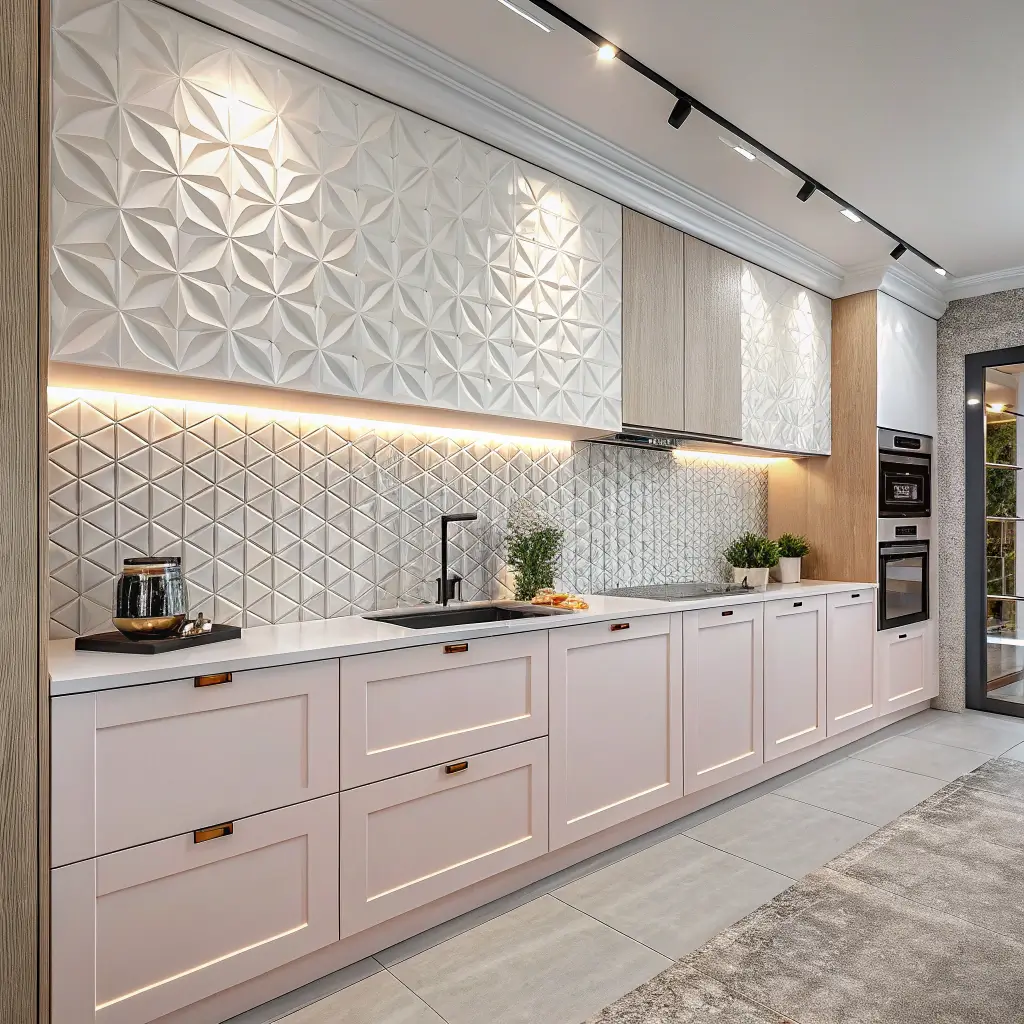
Ready to make your kitchen walls the conversation starter at every dinner party? 3D geometric tiles add literal depth to your design. We’re talking raised patterns, angular surfaces, and shadows that change with the light.
I installed hexagonal 3D tiles as a backsplash accent last year, and wow – the visual impact hits different. The tiles create natural shadow lines that eliminate the need for busy patterns or colors. Your kitchen becomes architectural art.
Here’s the thing about 3D tiles though – less is more. Using them on every surface would be overwhelming (and probably give you a headache). Pick one focal wall or backsplash area and let these textured beauties steal the show.
Installation Tips for 3D Tiles
FYI, installing 3D tiles requires patience:
- Level surfaces are crucial – any wobble shows
- Consider professional installation for complex patterns
- LED strip lighting amplifies the 3D effect
- Cleaning requires more attention to angles and crevices
Natural Wood-Look Tile Textures

Ever wanted hardwood floors in your kitchen but worried about water damage? Enter wood-look tiles – the brilliant compromise that gives you warmth without the worry. These tiles nail the grain patterns, knots, and even the subtle texture of real wood.
My parents switched from actual hardwood to wood-look porcelain tiles three years ago. Can you tell the difference? Only if you touch them. The technology has gotten so good that manufacturers recreate everything from rustic barn wood to polished mahogany.
The texture variation in quality wood-look tiles is insane. You’ll find raised grain patterns, weathered finishes, and even tiles that mimic reclaimed wood complete with nail holes and saw marks.
Benefits Beyond Aesthetics
Why I recommend wood-look tiles to everyone:
- Zero maintenance compared to real wood
- Water-resistant (hello, kitchen spills)
- Won’t fade in sunlight
- Compatible with radiant floor heating
- No refinishing ever needed
Moroccan Patterned Tile Textures
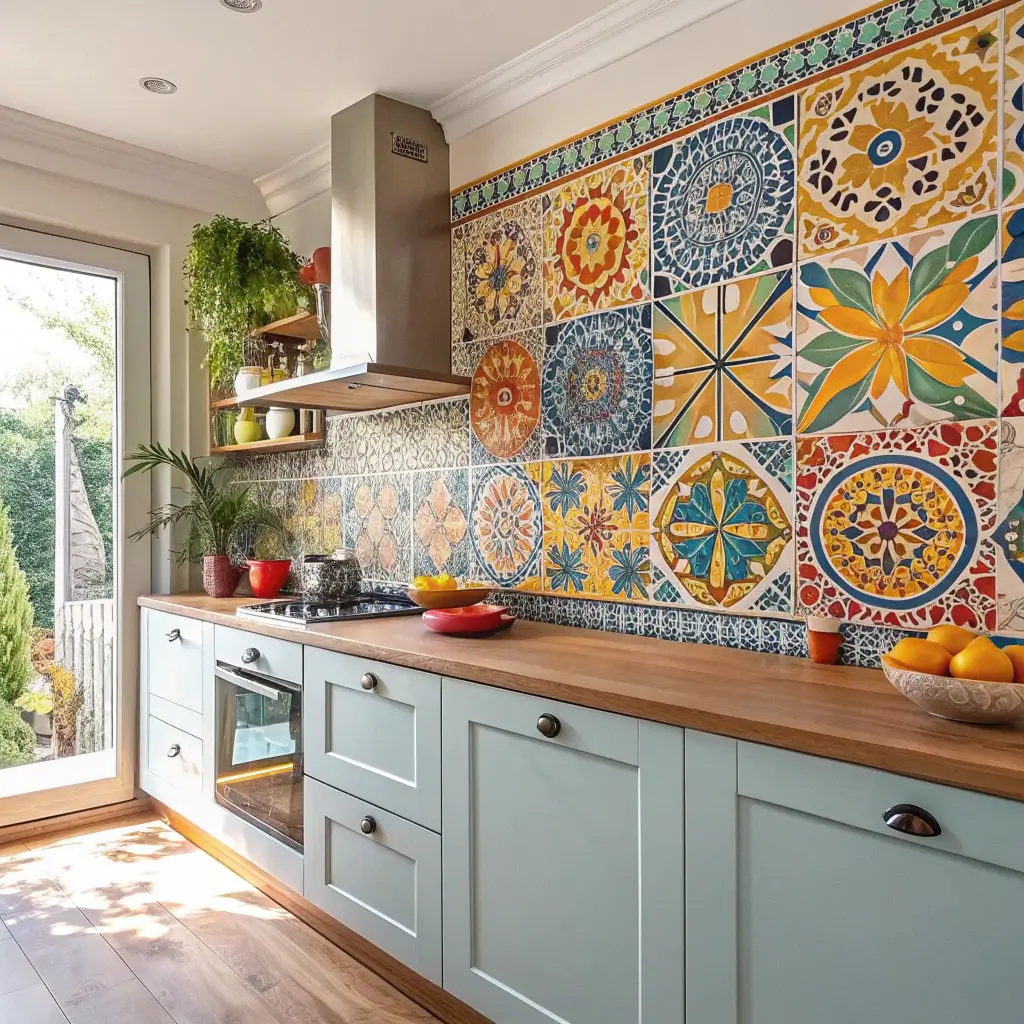
Want to transport your kitchen to Marrakech? Moroccan tiles bring bold patterns, vibrant colors, and textured surfaces that transform cooking spaces into exotic retreats. These aren’t just tiles; they’re tiny pieces of art.
I’ll admit, I was intimidated by Moroccan tiles at first. Would they be too much? But after seeing them in person (and running my hands over those gorgeous raised patterns), I was sold. The texture adds dimension that flat printed tiles can’t match.
The secret to nailing Moroccan tiles? Balance. Pair them with simple, solid surfaces. Let the tiles be the star while everything else plays supporting role. IMO, they work best as backsplashes or accent floors rather than covering every surface.
Styling Moroccan Tiles
Make Moroccan tiles work in any kitchen:
- Stick to a limited color palette for sophistication
- Mix with solid tiles for breathing room
- Use as a “rug” pattern in larger floor layouts
- Consider monochromatic versions for subtle impact
Also Read: 15 Stunning Black Tiles Kitchen Ideas and Stylish Inspirations
Concrete Effect Kitchen Tiles

Industrial chic isn’t going anywhere, and concrete effect tiles deliver that raw, urban aesthetic without actual concrete’s maintenance nightmares. The texture ranges from smooth and polished to rough and weathered.
My brother’s loft kitchen features large-format concrete tiles, and every time I visit, I’m jealous. The subtle texture variations and natural-looking imperfections create this effortlessly cool vibe. Plus, they’re practically indestructible.
What surprises people about concrete tiles? How warm they can feel. Choose tiles with brown or beige undertones, and suddenly your industrial kitchen feels cozy rather than cold.
Pairing Concrete Textures
Concrete tiles love these combinations:
- Warm wood cabinets for contrast
- Brass or copper fixtures for warmth
- Colorful backsplashes for personality
- Minimalist white countertops for balance
Herringbone Textured Tiles

Can we talk about how herringbone patterns make everything look expensive? This classic pattern creates visual texture through arrangement rather than surface treatment. The zigzag design adds movement and sophistication instantly.
I helped my best friend install herringbone tiles in her galley kitchen. The pattern literally makes the narrow space feel wider – it’s like an optical illusion that actually works. The angled lines draw your eye across the room rather than emphasizing the tight quarters.
Texture-wise, herringbone works with any tile finish. Combine it with matte tiles for understated elegance or glossy tiles for maximum drama. The pattern itself provides enough visual interest that you don’t need complicated textures.
Herringbone Installation Reality Check
Before you commit to herringbone:
- Expect 15% more tile waste from cuts
- Professional installation might be worth it
- The pattern shows imperfections easily
- Consider larger tiles for easier installation
Hexagon Shaped Kitchen Tile Textures

Hexagons are having their moment, and honestly? These six-sided beauties deserve the hype. The geometric shape creates natural pattern interest while the texture options range from smooth to heavily textured.
My neighbor installed small hexagon mosaic tiles with a matte finish, and the texture variation between each tiny tile creates this amazing organic feel. Large hexagons? They make bold statements without overwhelming the space.
What makes hexagon tiles special is their versatility. Mix sizes for a modern honeycomb effect or stick with uniform sizing for classic appeal. The shape itself provides textural interest through grout lines and edge shadows.
Creative Hexagon Applications
Think beyond basic installations:
- Gradient colors for ombre effects
- Mixed materials (marble with porcelain)
- Contrasting grout for graphic impact
- Transition zones between different flooring
Also Read: 15 Trendy Terracotta Tiles Kitchen Ideas That Wow Everyone
Hand-Painted Ceramic Tile Textures

Want tiles that nobody else has? Hand-painted ceramics bring artisanal charm and unique texture variations that mass production can’t replicate. Each tile tells its own story through brush strokes and glaze pooling.
I splurged on hand-painted tiles for my backsplash, and zero regrets. The slight irregularities in the glaze create depth, while the painted designs add personality. You can literally feel the artist’s hand in the work.
Here’s what’s cool about hand-painted tiles – they’re conversation starters. Guests always ask about them. The texture isn’t just visual; it’s tactile, with raised paint edges and glaze variations you can feel.
Caring for Hand-Painted Tiles
Keep your artistic tiles looking fresh:
- Gentle cleaning only – no harsh chemicals
- Seal them properly before grouting
- Consider protective coating for high-use areas
- Expect some patina development over time
Metallic Finish Kitchen Tiles

Who says tiles can’t be glamorous? Metallic finish tiles bring shine, shimmer, and serious sophistication to kitchen spaces. We’re talking copper, bronze, silver, and gold finishes that catch and reflect light beautifully.
My cousin installed copper-finish tiles as a backsplash behind her range, and wow – total showstopper. The metallic texture adds warmth and luxury without being over the top. The key? Using them strategically as accents rather than everywhere.
The texture of metallic tiles varies wildly. Some feature smooth, mirror-like finishes while others have brushed or hammered textures that add depth. The aged patina options? Chef’s kiss for rustic kitchens.
Balancing Metallic Elements
Make metallic tiles work:
- Limit to one metallic finish in the space
- Pair with matte surfaces for contrast
- Use lighting to enhance the shimmer effect
- Consider metallic tiles as “jewelry” for your kitchen
Textured Glass Kitchen Tiles
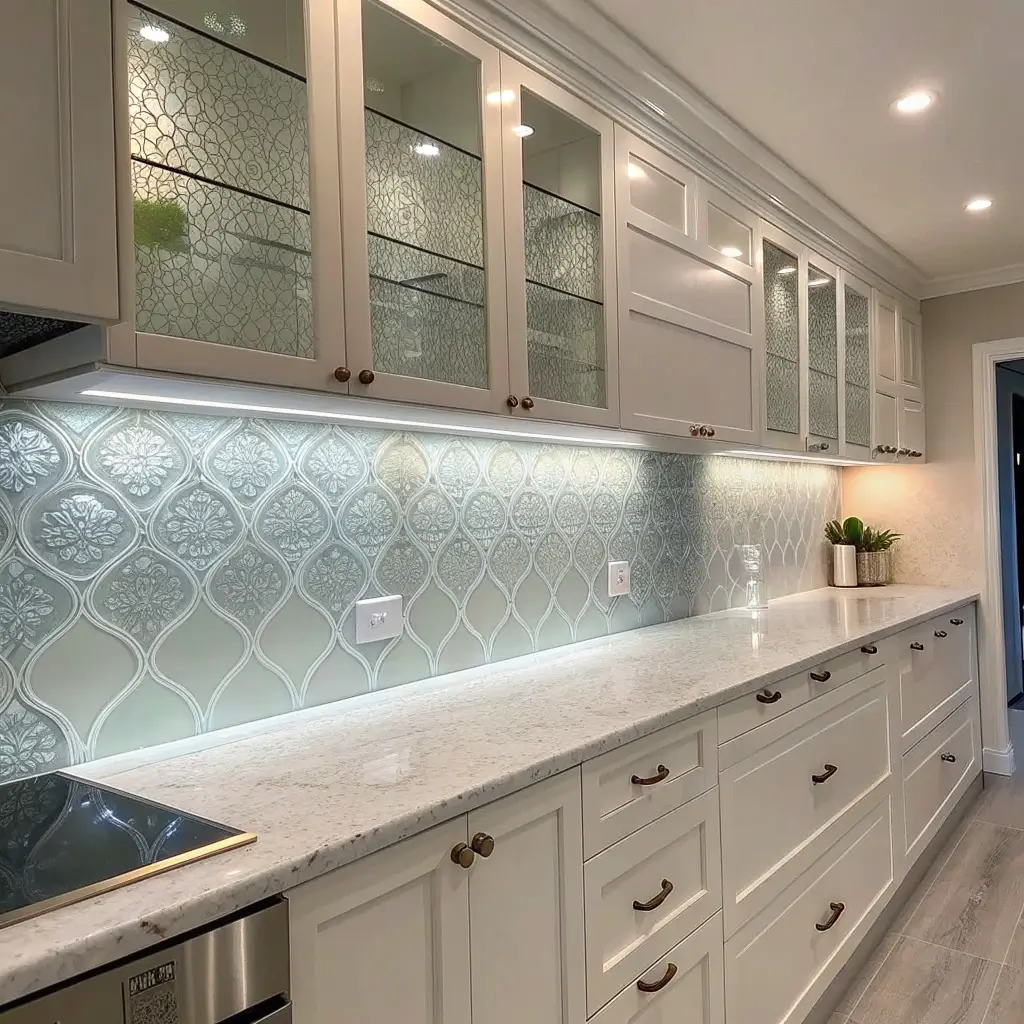
Glass tiles bring luminosity and depth that other materials can’t match. The texture options? Mind-blowing. From smooth and sleek to rippled and dimensional, glass tiles play with light like nothing else.
I installed textured glass mosaic tiles in my last kitchen renovation. The way they caught morning light was magical 🙂 The rippled surface created moving shadows throughout the day, making the space feel alive.
What surprised me most about glass tiles? Their durability. Everyone worries they’ll crack or chip easily, but quality glass tiles are tough cookies. The textured varieties hide fingerprints and water spots better than smooth glass too.
Glass Tile Design Tips
Maximize glass tile impact:
- Backlighting creates stunning effects
- Mix textures for visual interest
- Consider recycled glass for eco-friendly options
- Use neutral colors to avoid dating quickly
Patterned Mosaic Kitchen Tiles
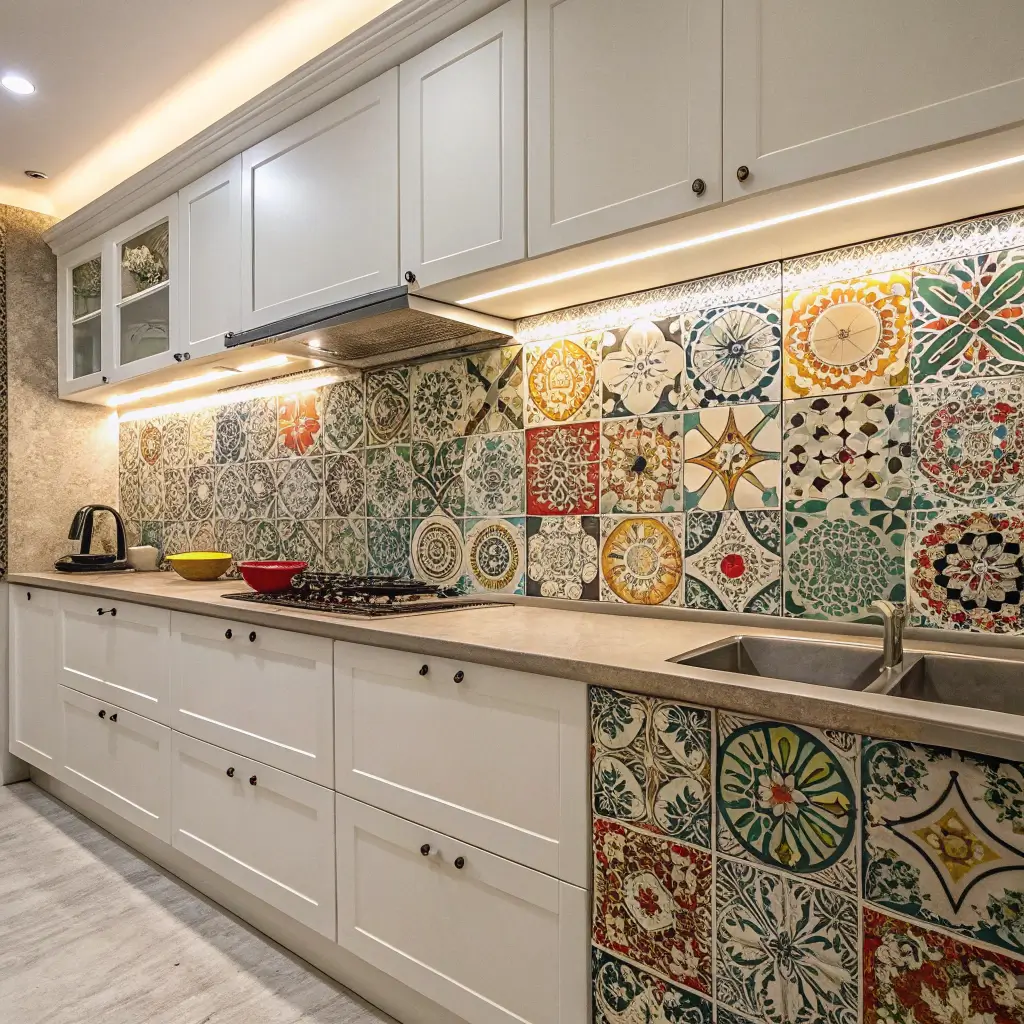
Mosaic tiles let you create custom patterns and textures through tiny tile arrangements. Whether you choose penny rounds, mini squares, or irregular shapes, the texture comes from both individual tiles and overall pattern.
My first experience with mosaic tiles? Installing a medallion pattern in my kitchen floor entrance. The varying heights and angles of individual tiles create this amazing textured surface that’s both beautiful and functional. No two installations look exactly alike.
The beauty of mosaic tiles lies in their flexibility. Create gradients, patterns, or even “tile rugs” that define spaces within your kitchen. The grout lines add additional texture that larger tiles can’t achieve.
Mosaic Installation Secrets
What I’ve learned about mosaics:
- Mesh-backed sheets save sanity
- Consistent grout spacing is crucial
- Seal natural stone mosaics immediately
- Consider professional installation for complex patterns
Terrazzo Effect Tile Textures
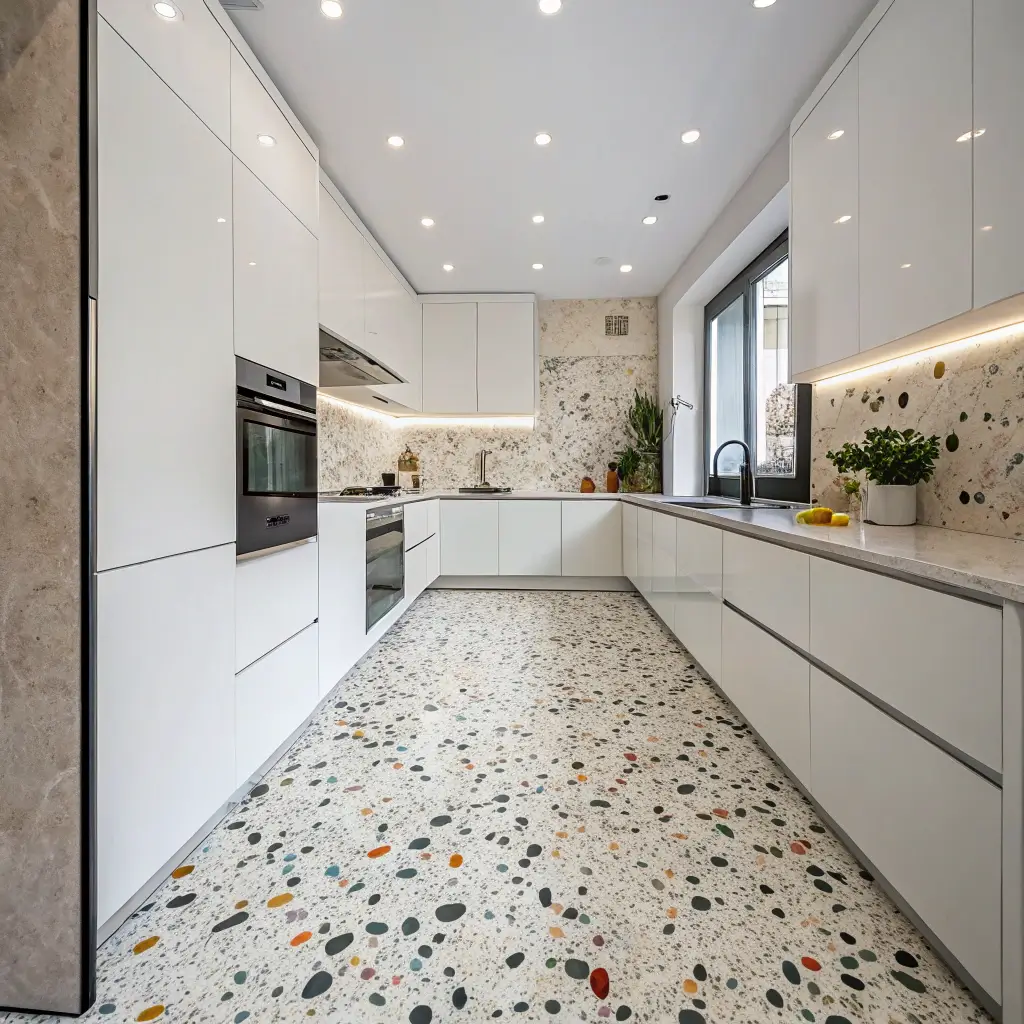
Terrazzo is back, baby! These tiles featuring chips of marble, quartz, or glass in a polished base bring playful sophistication to kitchens. The texture combines smooth surfaces with visual depth from embedded aggregates.
I fell in love with terrazzo tiles at a design show last year. The larger chips create actual texture you can feel, while smaller chips provide visual interest without surface variation. It’s like confetti frozen in stone – fun but sophisticated.
Modern terrazzo tiles nail the authentic look without the installation hassle of poured terrazzo. Plus, you get consistent patterns and easier replacement if needed. The texture works brilliantly in both retro and contemporary kitchens.
Styling with Terrazzo
Make terrazzo tiles shine:
- Large chips for bold statements
- Monochrome versions for subtle elegance
- Pair with solid colors to avoid pattern overload
- Consider terrazzo-look for budget-friendly options
Minimalist Smooth Matte Tiles
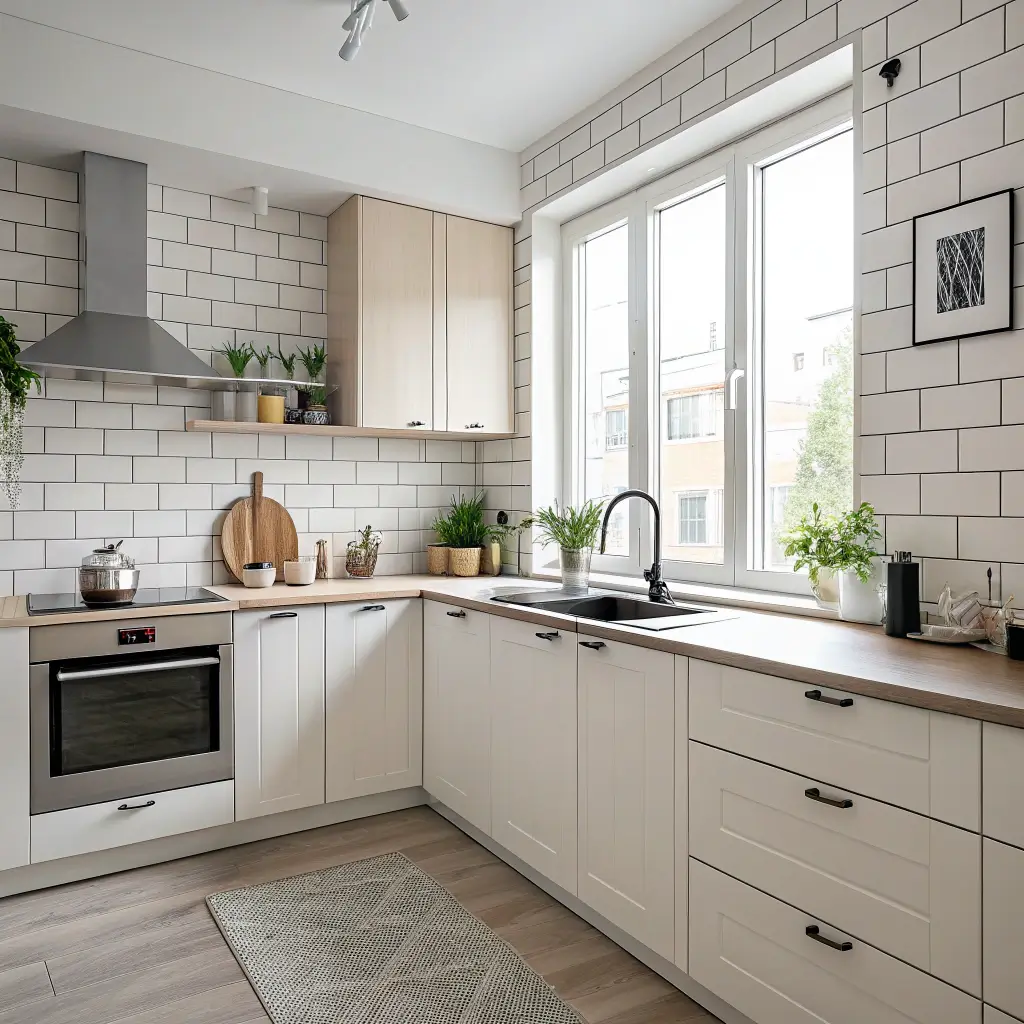
Sometimes less really is more. Smooth matte tiles in solid colors provide the perfect backdrop for kitchens where other elements take center stage. The lack of shine or pattern doesn’t mean boring – it means sophisticated restraint.
My minimalist friend chose large, smooth matte white tiles for her entire kitchen. Sounds plain? Nope. The subtle texture variations in the matte finish create interest without shouting. The tiles whisper elegance rather than scream for attention.
What makes smooth matte tiles special is their ability to make spaces feel larger and calmer. No busy patterns or reflections to distract the eye. Just clean, serene surfaces that age beautifully.
Why Minimalist Tiles Work
The power of simplicity:
- Timeless appeal that won’t date
- Perfect canvas for colorful accessories
- Easy to clean and maintain
- Make small kitchens feel spacious
- Replacement tiles easier to match
Making Your Texture Choice
After all this tile talk, how do you choose? Consider your lifestyle first. Got kids and pets? Skip high-gloss and go for textured surfaces that hide imperfections. Love cooking elaborate meals? Choose tiles that clean easily and don’t show every splash.
Think about your kitchen’s natural light too. North-facing kitchens benefit from glossy or light-colored tiles that maximize brightness. South-facing spaces can handle matte textures and deeper colors without feeling cave-like.
Remember, you don’t have to pick just one texture. Mixing textures adds incredible depth to kitchen design. Maybe smooth floors with textured backsplash? Or geometric tiles as an accent with simple field tiles everywhere else? The combinations are endless.
Final Thoughts
Choosing kitchen tile textures feels overwhelming, but here’s my advice: trust your gut and think long-term. That super trendy texture might look amazing on Instagram, but will you still love it in five years? I’ve learned (sometimes the hard way) that classic textures with personal twists create the most satisfying kitchens.
Touch samples before buying. Seriously, texture isn’t just visual – it’s tactical. Live with samples for a few days. See how they look in different lights. Spill something on them. Walk on them barefoot. Your kitchen tiles need to work for your real life, not just your Pinterest board.
Whether you go rustic stone or sleek glass, geometric or minimalist, remember that the best kitchen is one that makes you happy every time you walk in. So pick the texture that speaks to you – your morning coffee will taste better for it :/
Happy tiling, friends! May your grout lines be straight and your surfaces be exactly as textured as you dreamed.


