15 Brilliant LEGO Shelves Ideas for Small Spaces

Remember that moment when you stepped on a rogue LEGO brick at 2 AM? Yeah, we need to talk about storage solutions. If you’re anything like me, your LEGO collection has probably taken over every flat surface in your home, and your significant other keeps giving you that look whenever another set arrives at the door.
Let’s face it – LEGO storage in small spaces feels like solving a 5000-piece Millennium Falcon with half the instructions missing. You want to display your masterpieces, keep everything organized, and somehow not turn your living space into a plastic brick warehouse. The good news? I’ve spent way too many hours figuring this out, and I’m about to share some game-changing shelf ideas that actually work.
Floating LEGO Brick Shelves
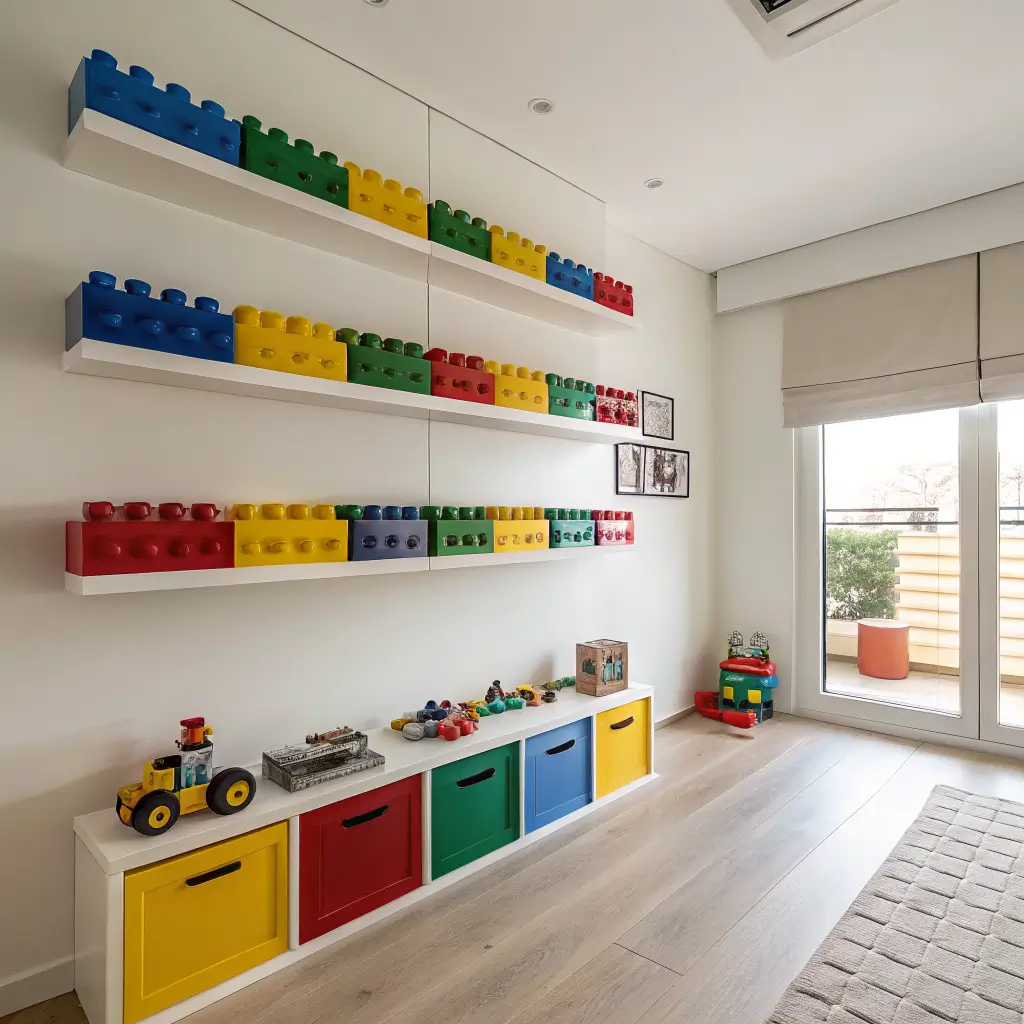
These bad boys changed my entire storage game. Floating LEGO brick shelves basically turn your walls into a giant LEGO set – how cool is that? You mount oversized brick-shaped shelves directly onto your wall, creating this awesome 3D effect that makes visitors do a double-take.
I installed three of these in my home office last year, and they hold about 15-20 smaller sets each. The best part? They come in authentic LEGO colors, so you can color-coordinate with your room or go full rainbow mode. Mine are arranged in a diagonal pattern climbing up the wall, which saves floor space while creating this killer visual effect.
Installation Tips for Floating Brick Shelves
Here’s what I learned the hard way about mounting these shelves:
- Always use wall anchors – LEGO sets get heavy fast
- Space them at least 12 inches apart vertically for larger sets
- Consider weight distribution when loading them up
- Group similar-sized sets together for better visual balance
The trick with floating shelves is positioning them at different heights. You create visual interest while maximizing vertical space that usually goes unused. Plus, when friends come over, they immediately want to know where you got them – instant conversation starter right there.
Color-Coded Modular LEGO Storage
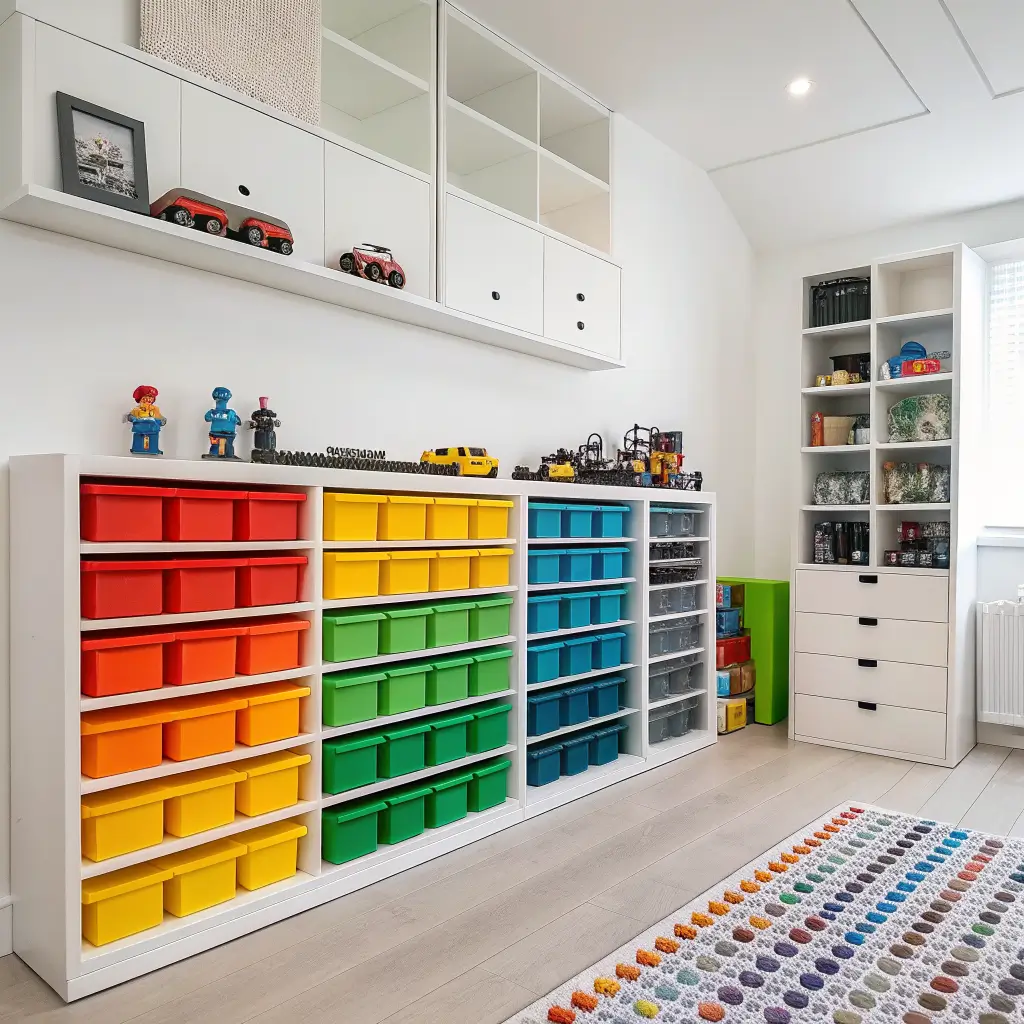
Ever tried finding that one specific piece in a sea of mixed bricks? Color-coded modular storage systems save hours of searching time. I’m talking about stackable units where each module handles a specific color range.
Think of it like creating your own LEGO store pick-a-brick wall at home. Each transparent drawer or compartment houses one color family, making building sessions way more efficient. You stack these modules vertically or arrange them horizontally depending on your space constraints.
My setup uses clear acrylic drawers that stack five high. Red bricks live in the top drawer, blues in the second, greens in the third – you get the idea. The modular design means you can add more units as your collection grows (because let’s be honest, it always grows).
Benefits of Color Organization
- Building becomes 10x faster when you know exactly where each color lives
- Sets look amazing when displayed by color gradient
- Kids actually put pieces back in the right place (sometimes)
- You instantly spot which colors you’re running low on
LEGO Wall-Mounted Display Grid
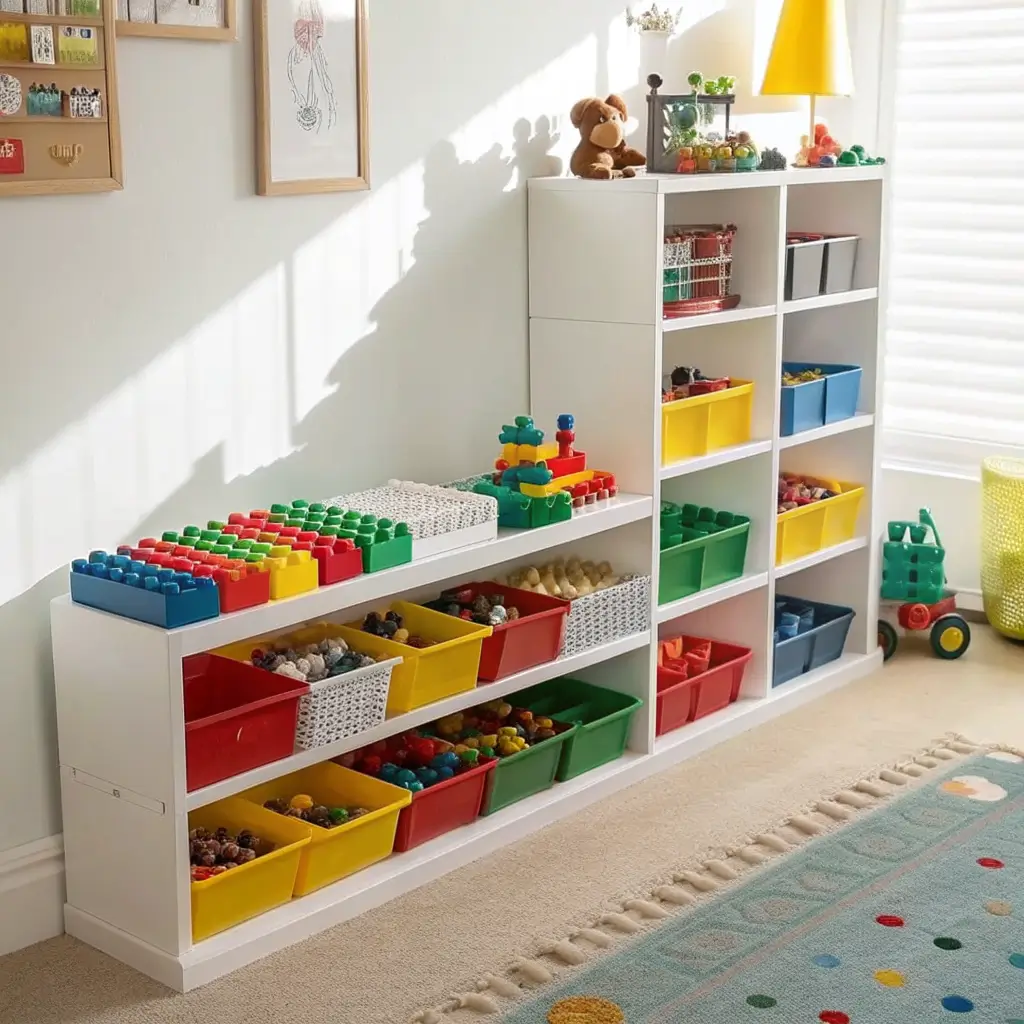
Want to turn your LEGO collection into living art? Wall-mounted display grids transform any blank wall into a customizable gallery. Picture a pegboard system specifically designed for LEGO displays – that’s essentially what we’re talking about here.
I installed a 4×6 foot grid system in my kids’ playroom, and it completely revolutionized how we display completed sets. Small shelves, hooks, and platforms attach anywhere on the grid, letting you rearrange displays whenever inspiration strikes. Currently showcasing everything from Speed Champions to Architecture sets, all at different heights and angles.
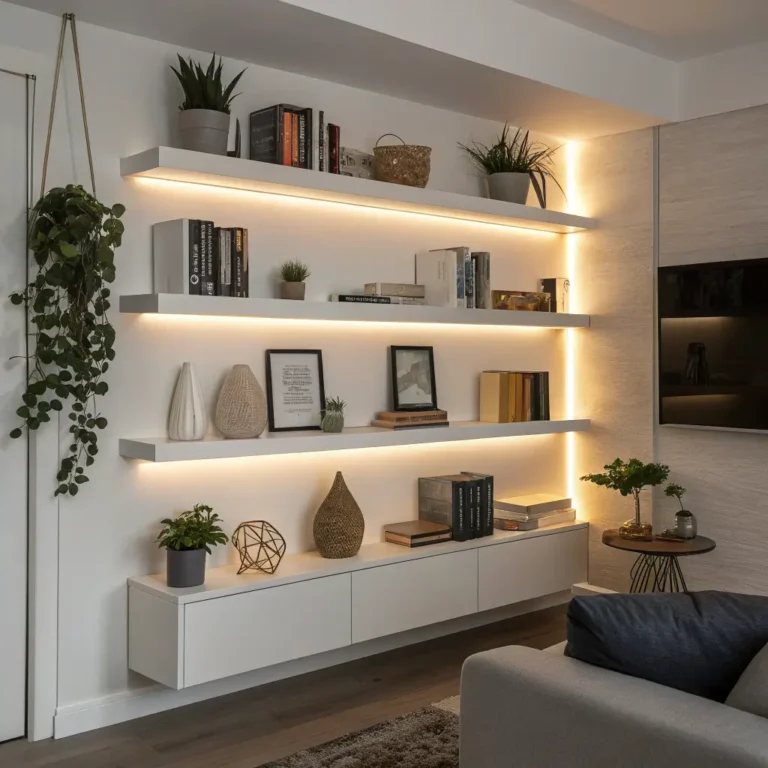
The genius part? You can add LED strip lighting behind the grid for that museum-quality display vibe. My Star Wars ships look absolutely epic floating against the backlit grid at night. FYI, this setup works especially well in narrow hallways where floor space is basically non-existent.
DIY LEGO Brick Stack Shelves
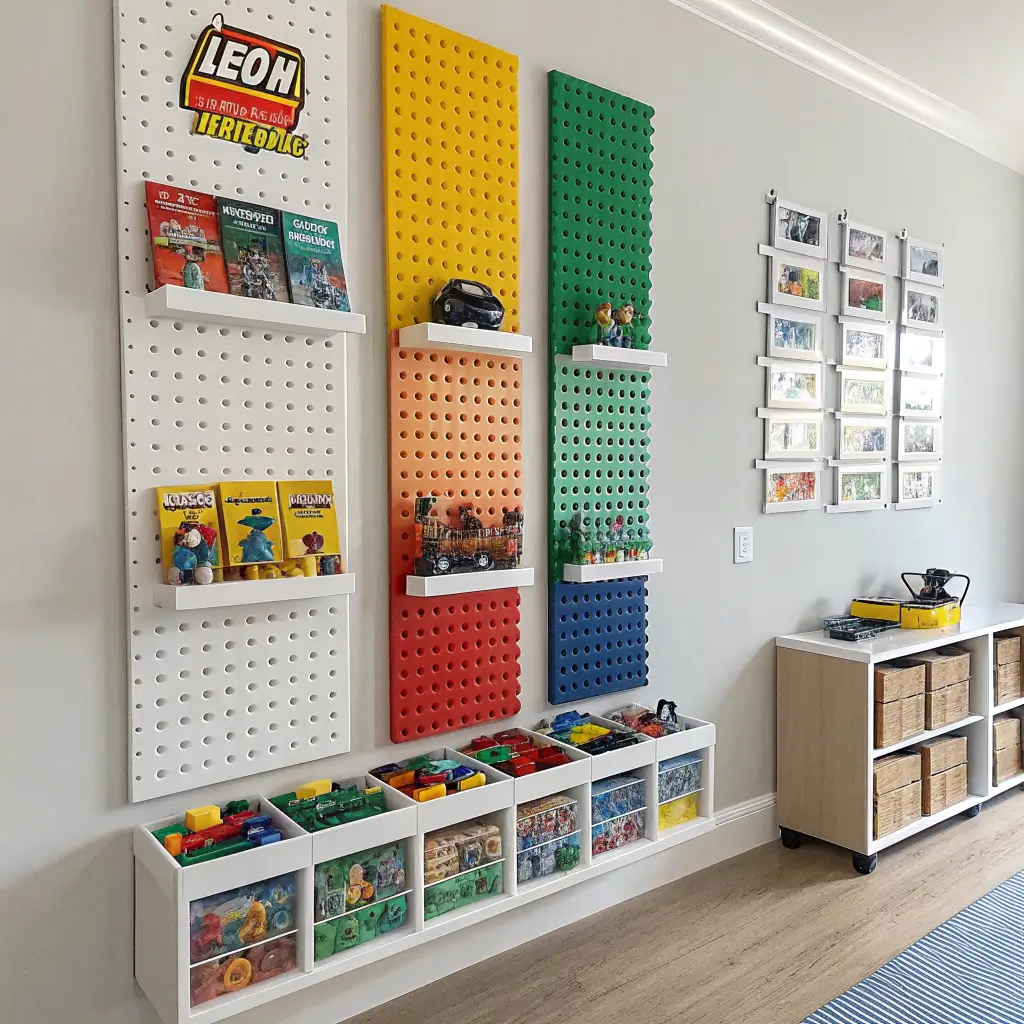
Building your own LEGO-inspired shelves sounds intimidating, but trust me, it’s easier than assembling that Hogwarts Castle set. DIY brick stack shelves involve creating rectangular boxes that interlock just like actual LEGO bricks.
I built mine from MDF board over a weekend. Each “brick” measures 16 inches wide by 8 inches tall – perfect proportions for that authentic LEGO look. You paint them in classic LEGO colors, add circular “studs” on top (I used wooden discs from the craft store), and stack them however you want.
Materials You’ll Need
- MDF or plywood sheets
- Wood glue and screws
- Circular wooden discs for studs
- Primer and paint in LEGO colors
- Basic woodworking tools
The coolest feature? You can literally reconfigure your entire shelving system whenever you feel like it. Move the yellow brick to the top, slide the red one to the side – it’s like playing with giant LEGO bricks that actually store your regular-sized ones.
LEGO Minifigure Display Ledges
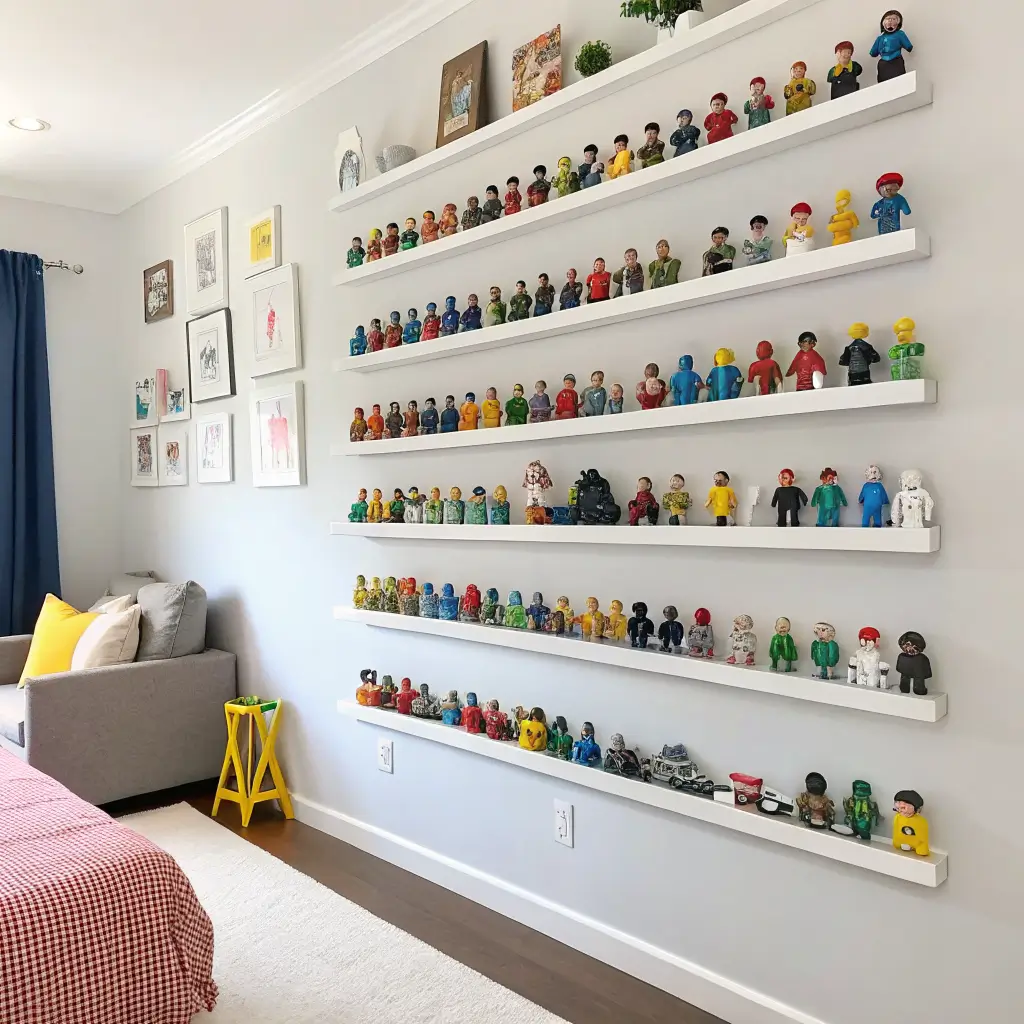
Your minifigure collection deserves better than being crammed in a bag somewhere. Picture rails and narrow ledges specifically for minifigure displays turn these tiny characters into a stunning wall feature.
I’ve got three 36-inch ledges running along my hallway, each holding about 40 minifigures. The ledges are only 2 inches deep, so they barely stick out from the wall – perfect for tight spaces. Arranging minifigures by theme creates these mini storytelling scenes that guests always stop to examine.
Here’s a pro tip: angle the ledges slightly backward (about 5 degrees) to prevent any figure-falling disasters. Nothing ruins your day quite like finding Batman face-down on the floor because someone slammed a door too hard.
Corner LEGO Storage Towers
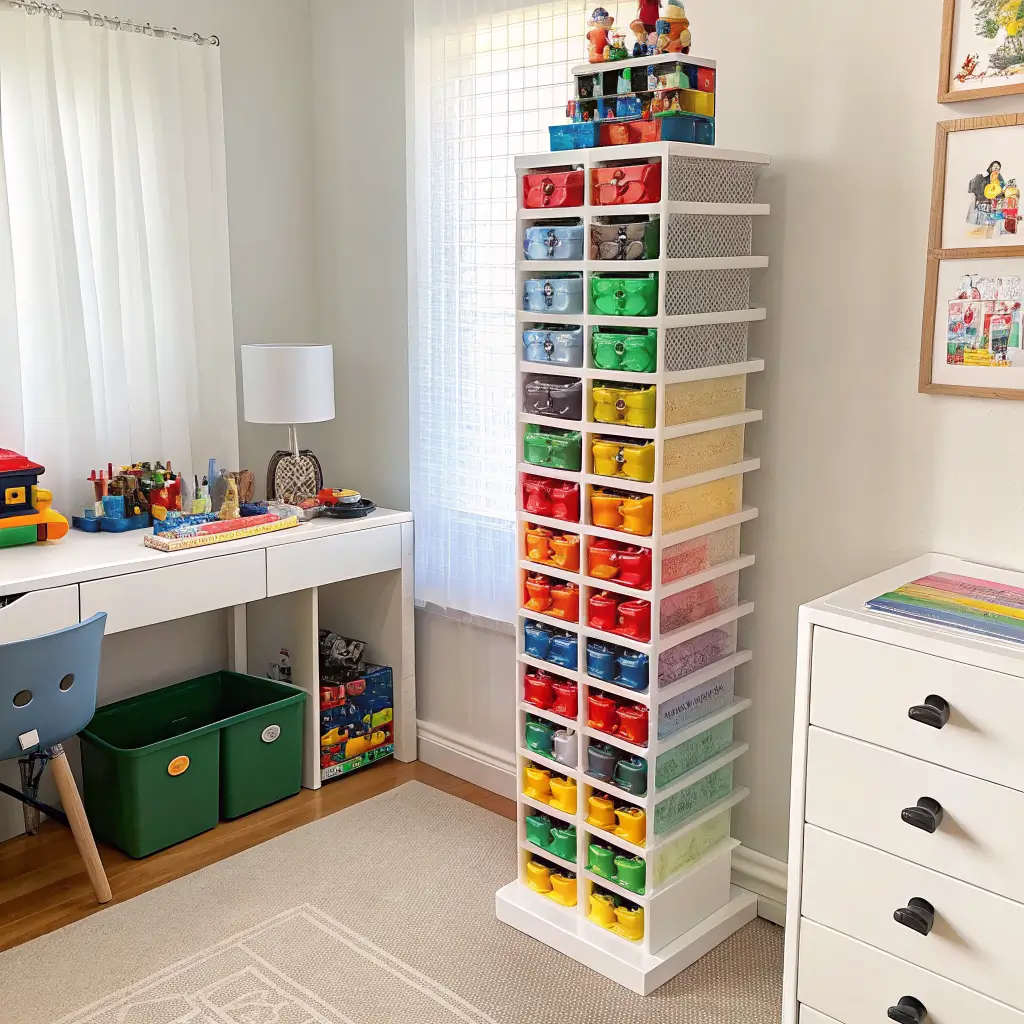
Corners usually become dead space, but corner storage towers flip that script entirely. These vertical units fit snugly into room corners, spiraling upward with multiple display platforms.
My corner tower stands 6 feet tall with eight rotating platforms. Each platform holds 3-4 medium-sized sets, and the whole thing spins for easy access. The triangular shape means it takes up minimal floor space while maximizing that awkward corner area nobody knows what to do with.
Design Considerations for Corner Towers
- Make sure platforms can support at least 10 pounds each
- Include raised edges to prevent sets from sliding off
- Consider clear acrylic platforms for better visibility from below
- Add casters if you want mobility
Also Read: 15 Cute Nursery Shelves Ideas to Organize Perfectly
Transparent LEGO Brick Storage Boxes
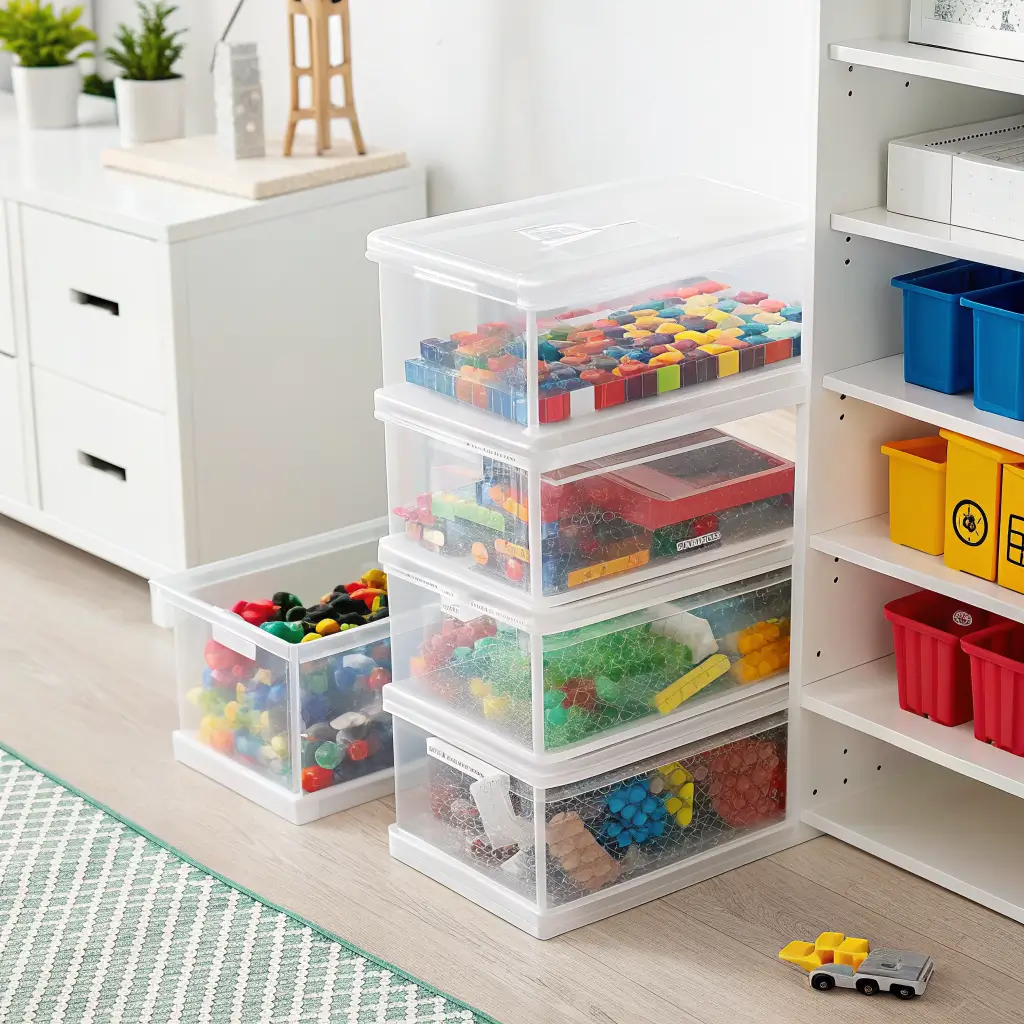
Remember those giant LEGO brick storage heads? Well, transparent versions take that concept to the next level. You get the iconic brick shape plus the ability to actually see what’s inside – revolutionary, right?
I use these for sorting pieces by type rather than color. One box holds all my wheels and axles, another stores windows and doors, and so on. The transparency eliminates the guessing game of which box contains what. They stack perfectly, creating this cool architectural element that’s both functional and decorative.
The best part about transparent storage? It motivates you to keep things organized because everyone can see the chaos if you don’t. Nothing like a little peer pressure to maintain that sorting system 🙂
LEGO-Themed Floating Cubes
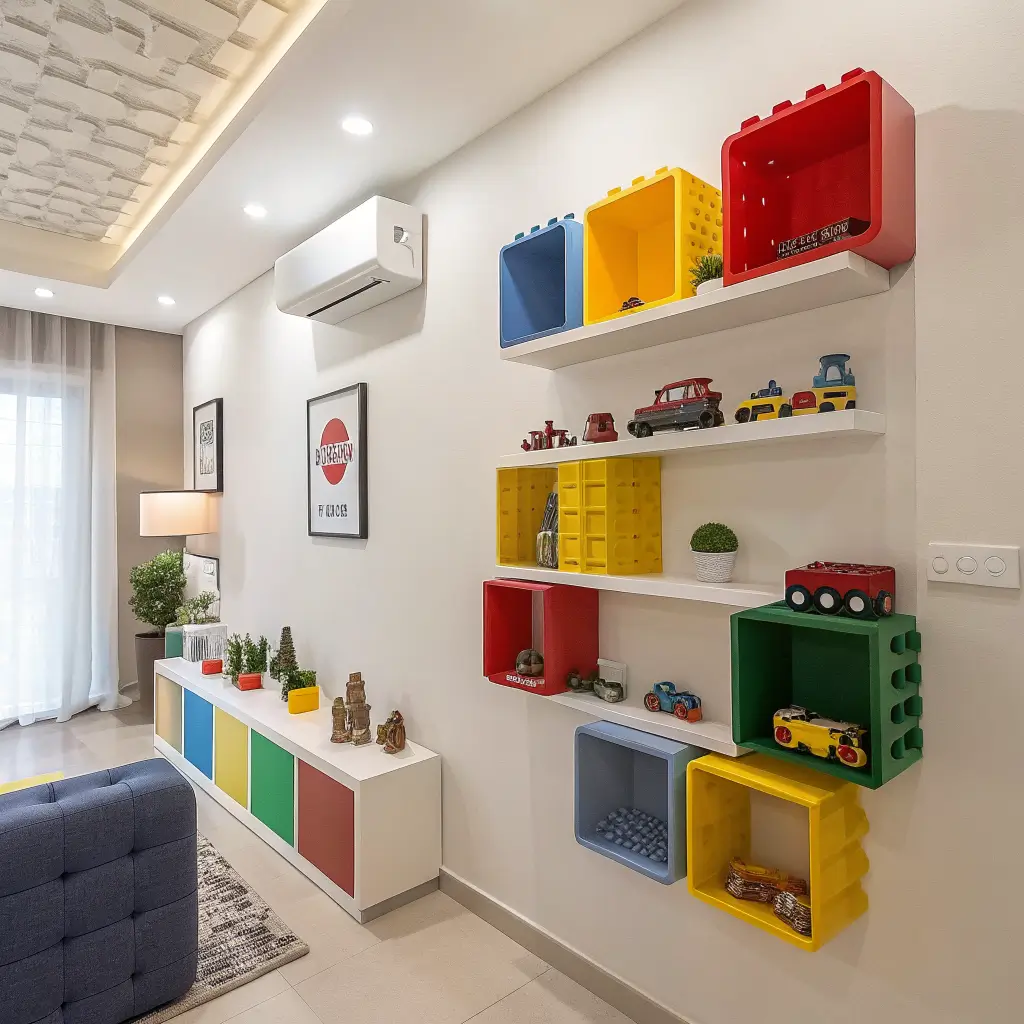
Floating cube shelves arranged in tetris-like patterns create incredible visual interest while maximizing wall space. Each cube becomes its own display case for a special set or collection.
My living room wall features nine cubes in different sizes, painted in LEGO colors. The asymmetrical arrangement draws the eye upward, making the room feel taller. Smaller cubes house individual builds while larger ones accommodate those massive Creator Expert sets.
You can find these cubes pretty cheap at most furniture stores, but the magic happens in the arrangement. Start with a rough paper template on your wall before committing to drill holes – learned that one the hard way.
Under-Desk LEGO Storage Drawers
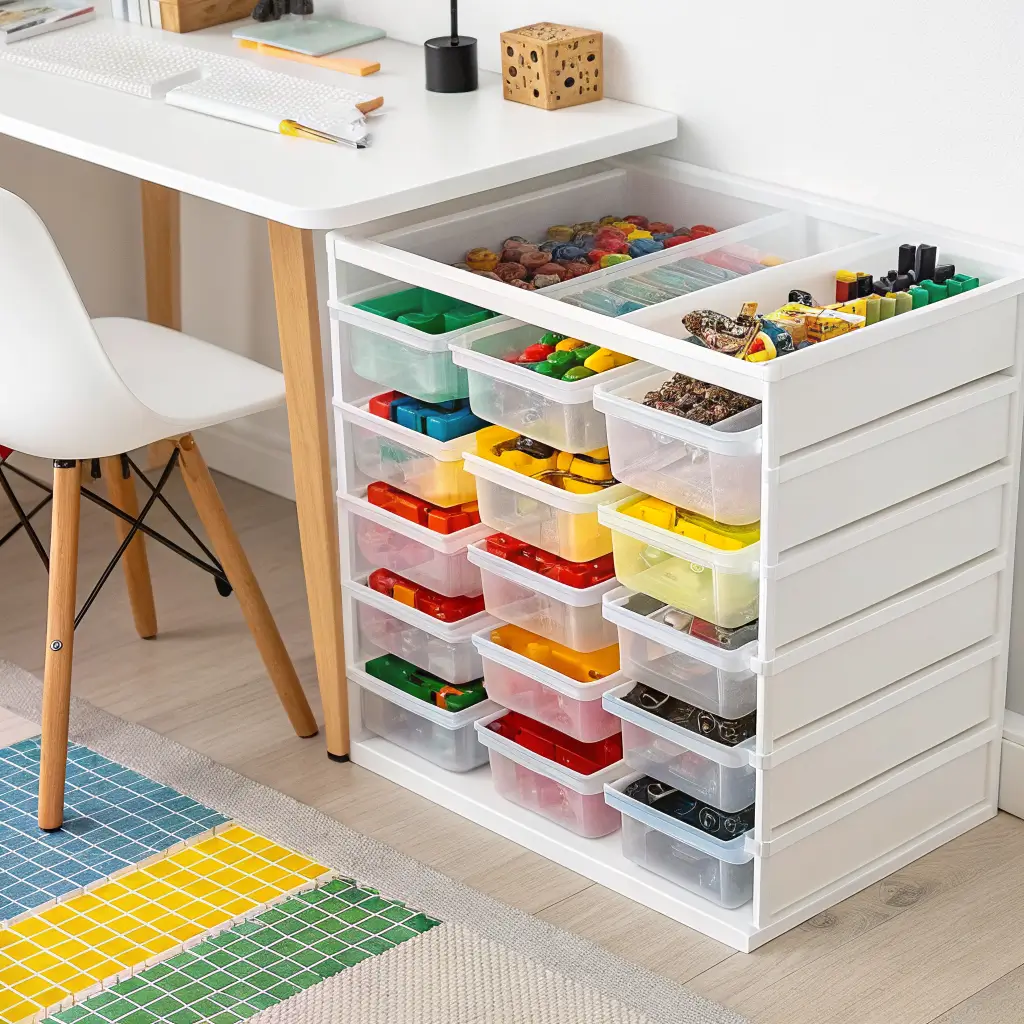
That space under your desk? Prime real estate for LEGO storage. Rolling drawer units slide perfectly into this usually-wasted area, keeping bricks accessible but hidden.
I retrofitted an old filing cabinet with custom drawer dividers, creating 30+ compartments for different brick types. When building time arrives, I roll the whole unit out, and when work calls, it slides back under. The top drawer holds current projects, middle drawer stores loose bricks, and the bottom handles instruction booklets.
Maximizing Under-Desk Space
- Measure clearance carefully – account for your legs!
- Use drawer dividers or small containers inside
- Label everything clearly
- Consider soft-close drawer slides to protect builds
Also Read: 15 Clever Office Shelves Ideas for Maximum Storage
LEGO Brick Ladder Shelves
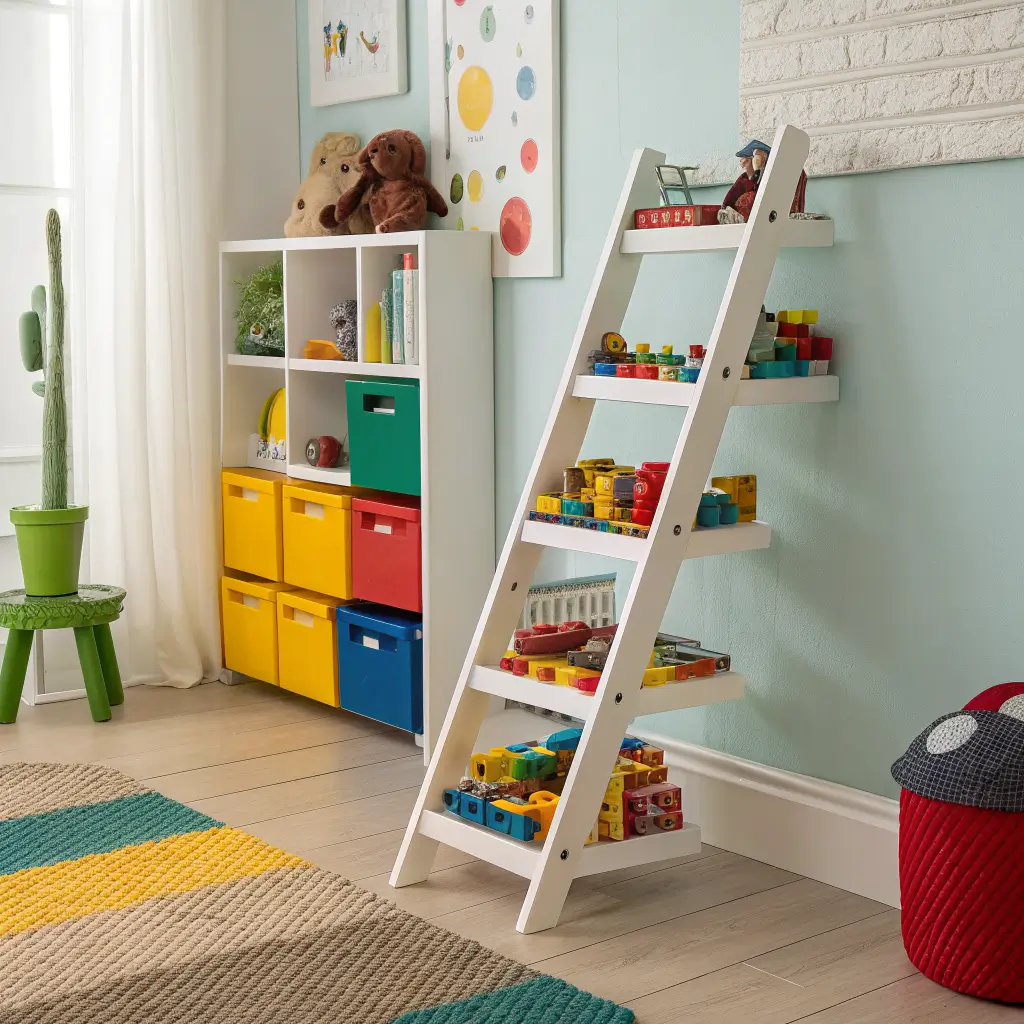
Ladder shelves lean against the wall at an angle, creating graduated display space that works brilliantly for LEGO collections. The angled design means larger sets go on bottom shelves while smaller ones climb toward the top.
My bedroom ladder shelf showcases my Architecture series perfectly. Each shelf is a different depth, with the bottom being 12 inches deep and the top only 6 inches. This creates a natural hierarchy for display while ensuring everything stays visible.
What makes ladder shelves perfect for small spaces? They don’t need wall mounting (renters rejoice!), and you can easily move them around. Mine travels between rooms depending on where I’m building that week.
Magnetic LEGO Wall Panels
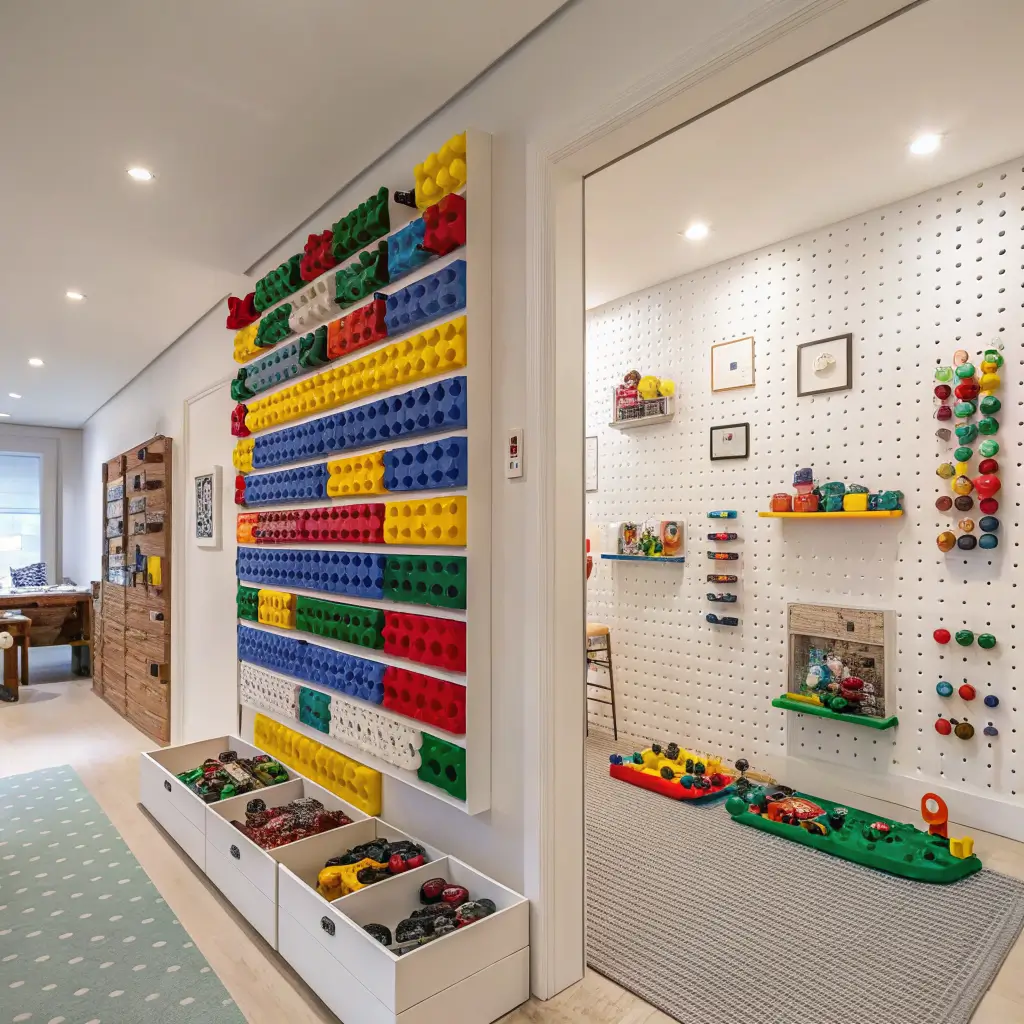
This might sound crazy, but hear me out – magnetic walls for LEGO storage. You attach thin metal plates to LEGO baseplates, then stick powerful magnets to your wall. Boom – instant vertical building and display surface.
I covered one wall in my workshop with magnetic paint (yes, that’s a thing), then created 20 magnetic baseplates for different builds. Small sets and MOCs attach directly to the wall, creating this ever-changing LEGO mural. Currently displaying my modular building facades in a street scene configuration.
The magnetic system lets you quickly swap displays without any tools. Want to show off your new creation? Pull down an old one and slap up the new one. It’s basically the Pinterest board of LEGO storage IMO.
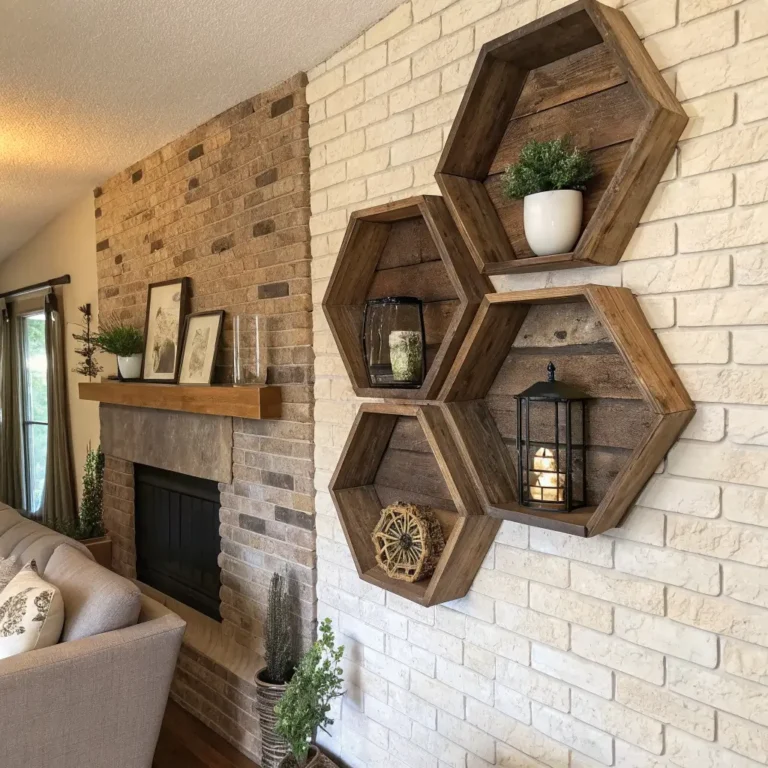
Reclaimed Wood LEGO Shelves
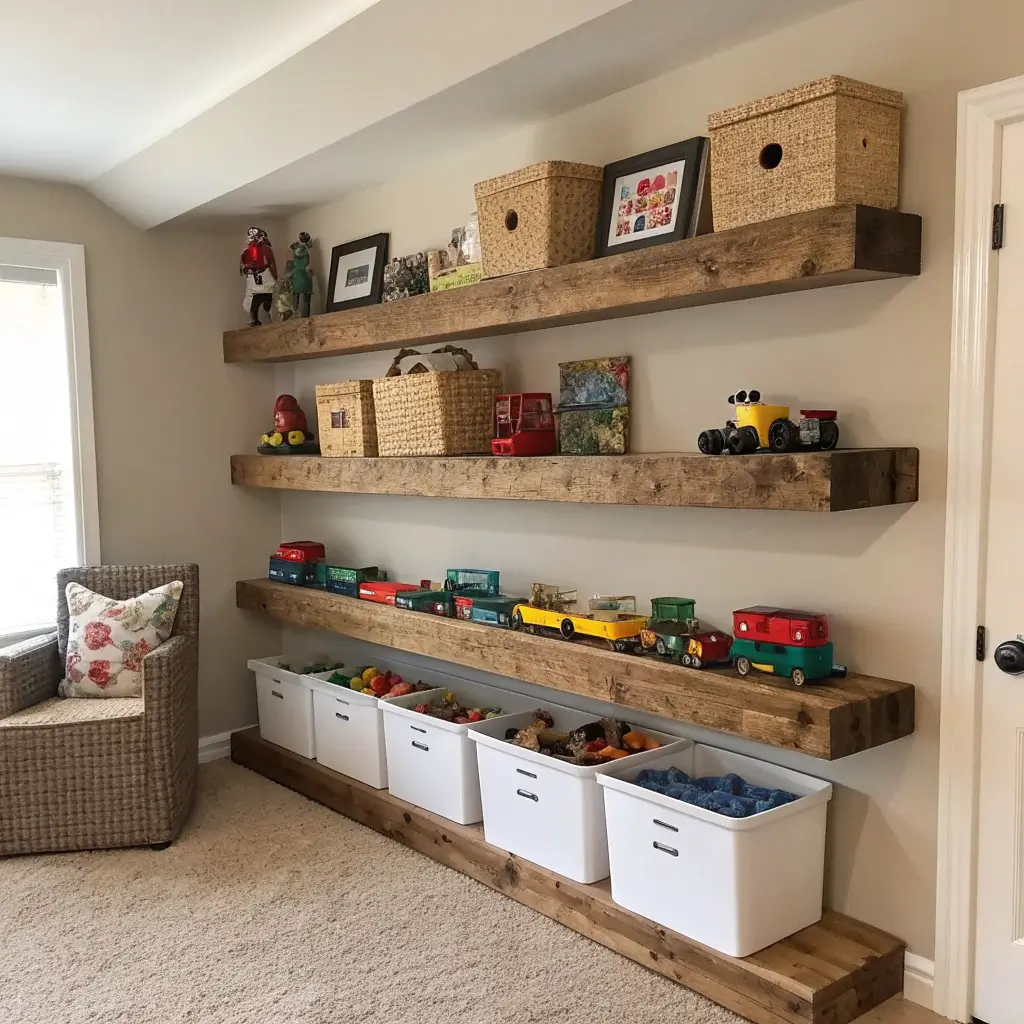
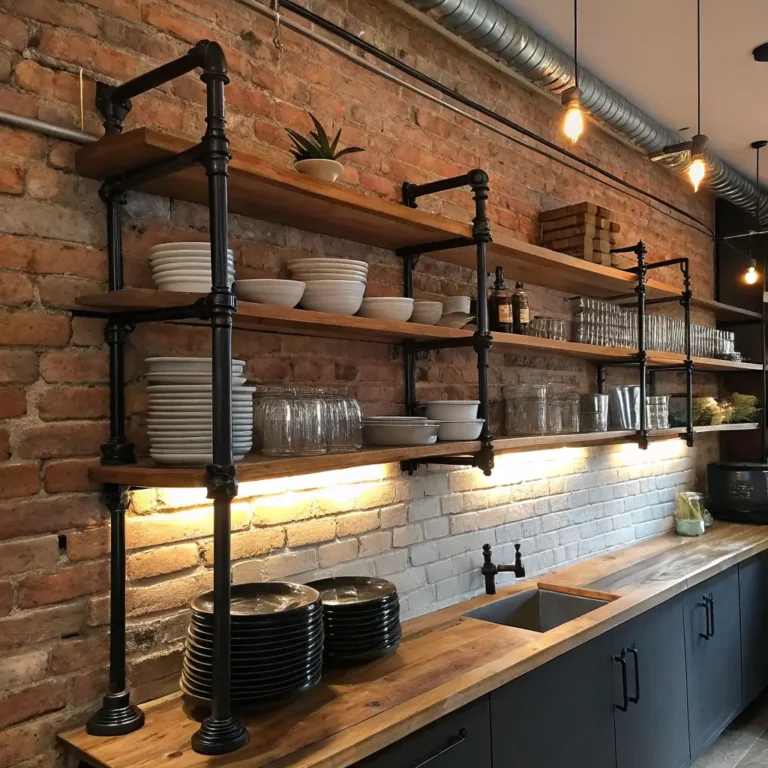
Rustic meets playful when you build shelves from reclaimed wood specifically for LEGO displays. The natural wood texture creates stunning contrast against colorful plastic bricks.
I scored some old barn wood from a demolition site and turned it into floating shelves with built-in LEGO baseplate tops. Each shelf has grooves routed into the surface where baseplates sit flush, creating integrated building surfaces. You can display completed sets or use them as building stations.
Why Reclaimed Wood Works
- Unique character – no two pieces look identical
- Environmentally friendly option
- Natural imperfections hide LEGO-related damage
- Adds warmth to modern LEGO displays
- Usually cheaper than buying new premium wood
Also Read: 15 Creative Bar Shelves Ideas to Upgrade Your Home Bar Setup
LEGO Castle Display Shelf
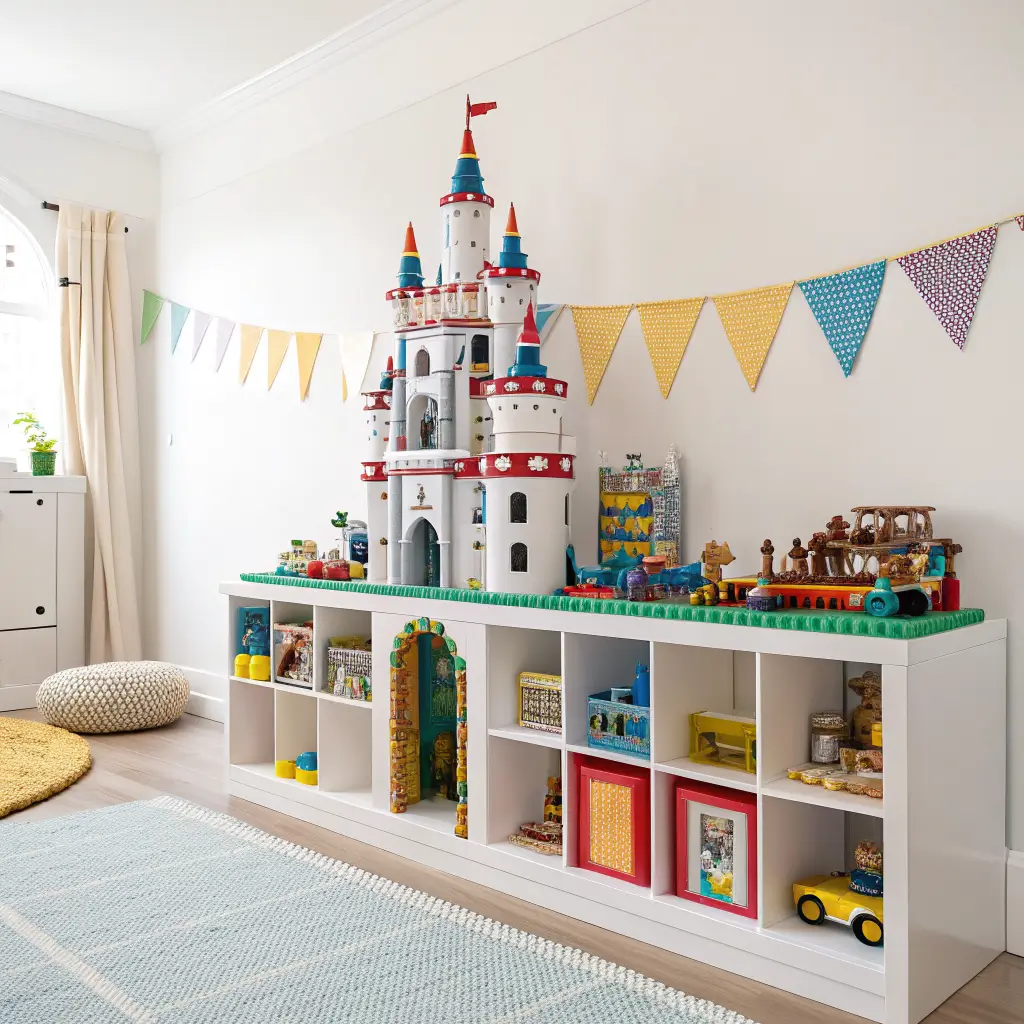
Castle and medieval sets deserve their own epic display solution. A castle-themed display shelf with multiple levels mimics the tiered landscape of medieval times.
My custom castle shelf features four ascending platforms covered in green baseplate material, creating hills and valleys for displaying everything from the Blacksmith to the Medieval Castle. Small LED spotlights hidden under each tier illuminate the sets from below, creating dramatic shadows that enhance the medieval atmosphere.
The whole unit measures 3 feet wide but only 8 inches deep, fitting perfectly on top of a dresser. Each level connects with hidden brackets, and the modular design means I can add more tiers as my castle collection grows (because who can resist those Creator Castle sets?).
Multi-Level LEGO Step Shelves
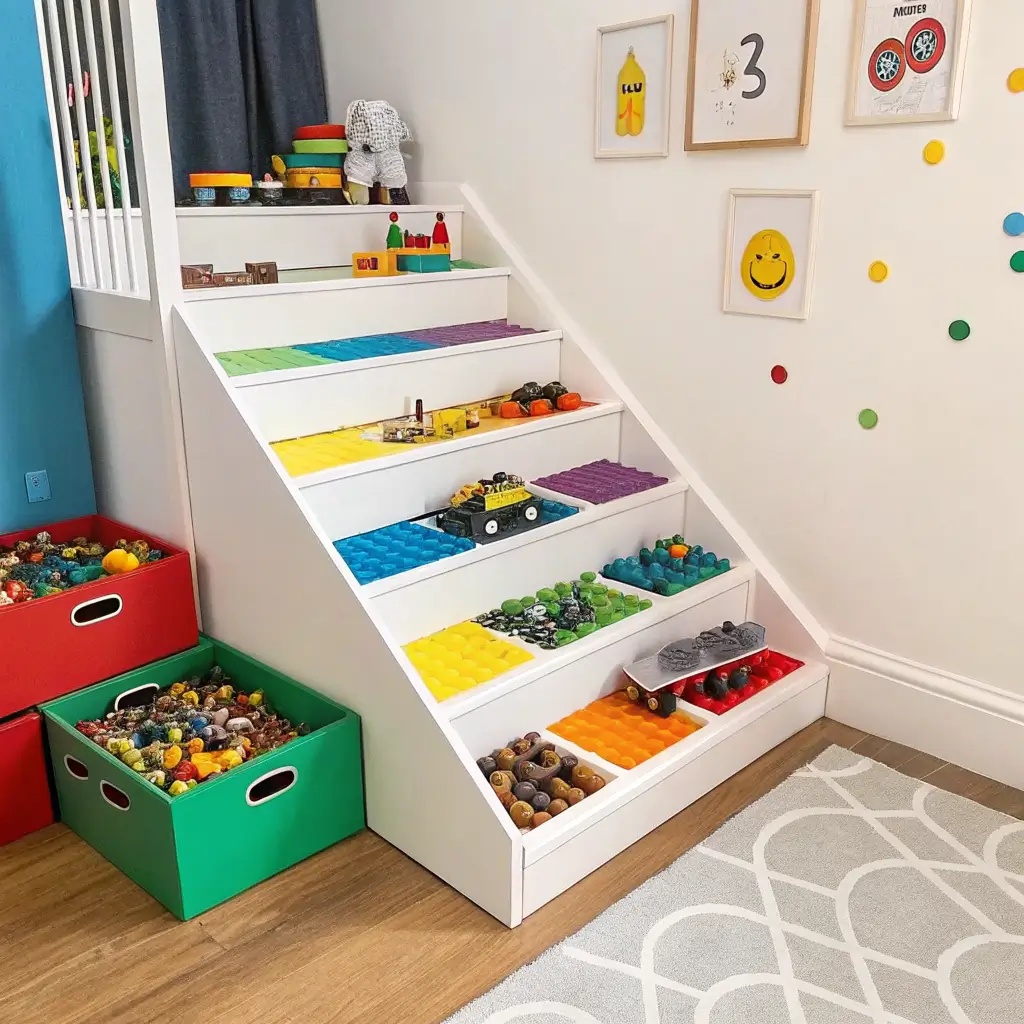
Step shelves create a stadium-seating effect for your LEGO displays. Each level sits slightly behind and above the previous one, ensuring every set gets its moment in the spotlight.
I built my step shelf system into an unused closet, transforming dead storage into a LEGO gallery. Five levels ascend from floor to eye height, each 6 inches deep and 8 inches apart vertically. The stepped design means even sets in the back remain completely visible.
Here’s what makes step shelves brilliant for small spaces:
- Utilizes vertical space efficiently
- Every set remains accessible
- Creates natural organization by size
- Works in closets, alcoves, or against walls
- Prevents the dreaded “hidden set syndrome”
Rotating LEGO Carousel Storage
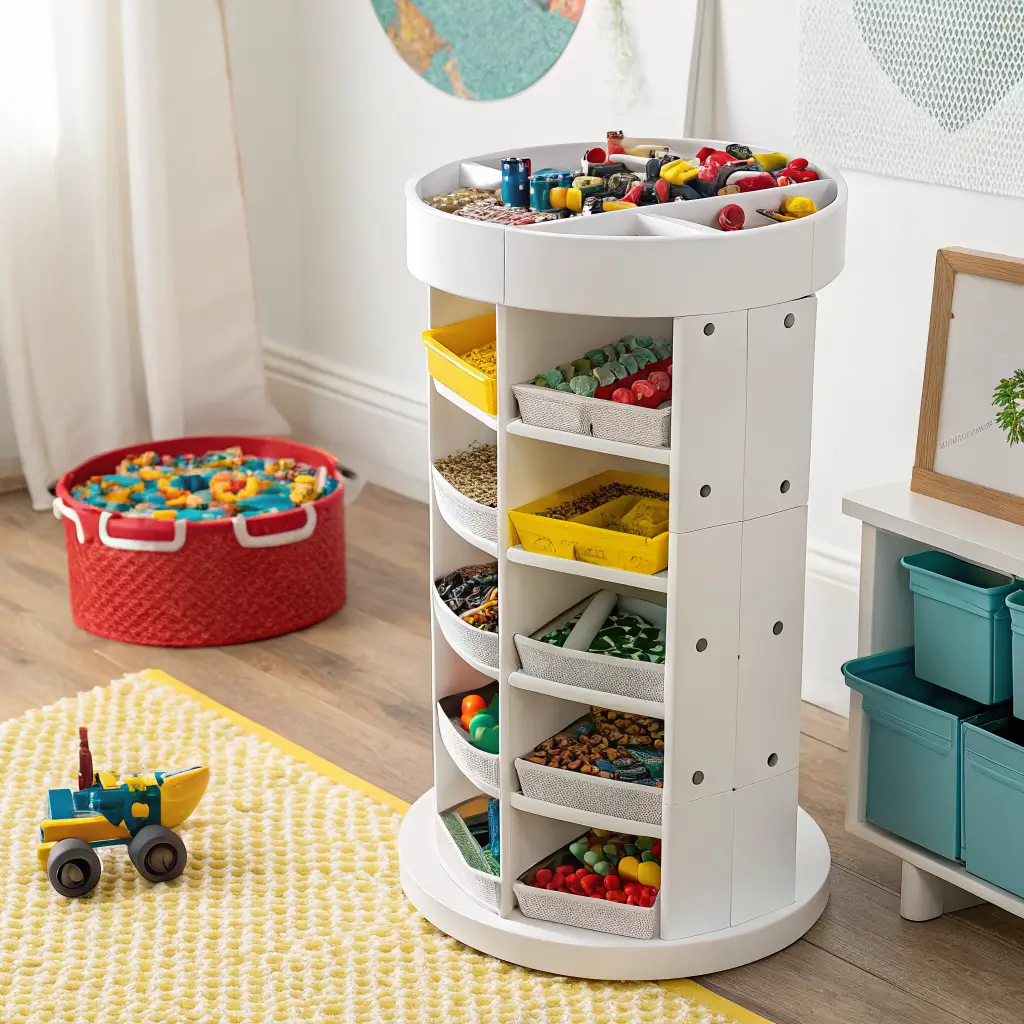
Ever wished you could spin your collection around like a lazy Susan? Rotating carousel storage makes that dream reality. These cylindrical towers spin 360 degrees, packing maximum storage into minimal floor space.
My carousel stands 5 feet tall with six rotating tiers. Each tier holds 8-10 sets arranged in a circle, and the whole thing occupies less than 2 square feet of floor space. The rotation mechanism uses simple lazy Susan hardware from the hardware store – nothing fancy needed.
Building tip: make each tier removable for easier reorganization. I use a central pole with notches where each platform slots in. When I want to reorganize, I lift off a tier, rearrange it on my desk, then slide it back on.
Carousel Design Benefits
- 360-degree access without moving furniture
- Occupies minimal floor footprint
- Adds kinetic element to static displays
- Kids love the spinning feature
- Perfect for corner placement
Making Your LEGO Storage Work
After years of experimenting with different storage solutions, here’s what I’ve learned: the best system is one you’ll actually use. Fancy organizational methods mean nothing if you won’t maintain them.
Start small with one or two solutions that address your biggest pain points. Got minifigures everywhere? Try the display ledges first. Stepping on bricks constantly? Focus on the transparent storage boxes. Build your system gradually as you figure out what works for your space and habits.
Don’t forget about combining different solutions either. My setup uses floating shelves for display, transparent boxes for loose bricks, and a corner tower for works-in-progress. Each solution handles a specific need, and together they keep my LEGO addiction – I mean collection – under control.
Final Thoughts on Small Space LEGO Storage
Creating brilliant LEGO storage in small spaces isn’t about having the biggest room or the most expensive furniture. It’s about getting creative with vertical space, dead corners, and unexpected areas. Every solution I’ve shared came from necessity – running out of room but refusing to stop collecting.
The real secret? Your storage should celebrate your collection, not hide it. These aren’t just plastic bricks we’re storing; they’re creativity, memories, and probably a small fortune worth of sets. Display them proudly, organize them smartly, and maybe, just maybe, you’ll stop stepping on them at 2 AM.
Remember, the perfect LEGO storage system doesn’t exist – but the perfect system for YOUR space absolutely does. Start with one idea that excites you, test it out, and build from there. Just like assembling a complex set, take it one brick at a time. Before you know it, you’ll have a storage system that makes both you and your LEGO collection happy.
Who knows? Maybe your storage solution will be so impressive that visitors spend more time admiring your organization than your actual builds. Though honestly, is there really a difference when both showcase your LEGO passion? Now get building – those shelves won’t install themselves!