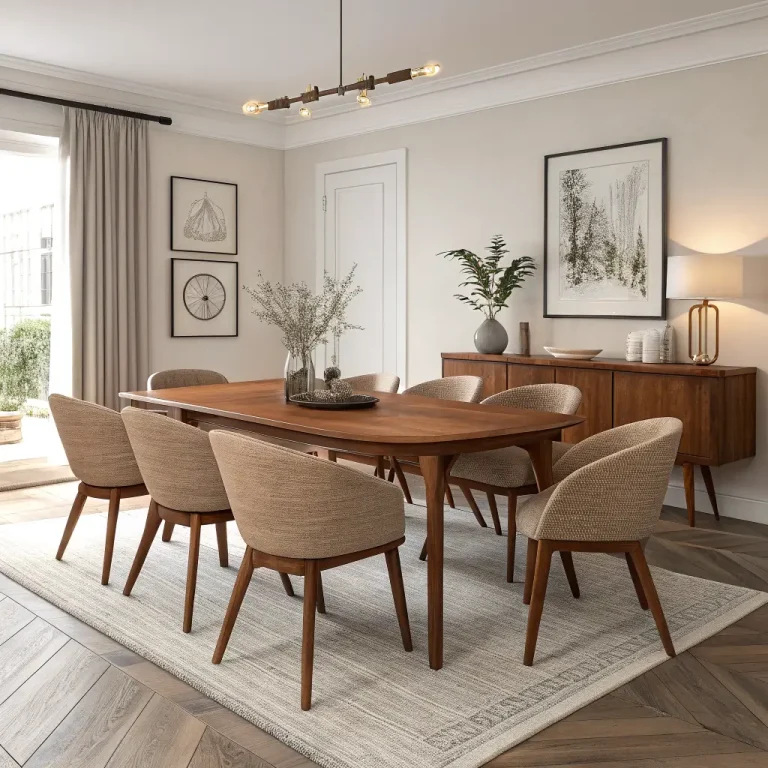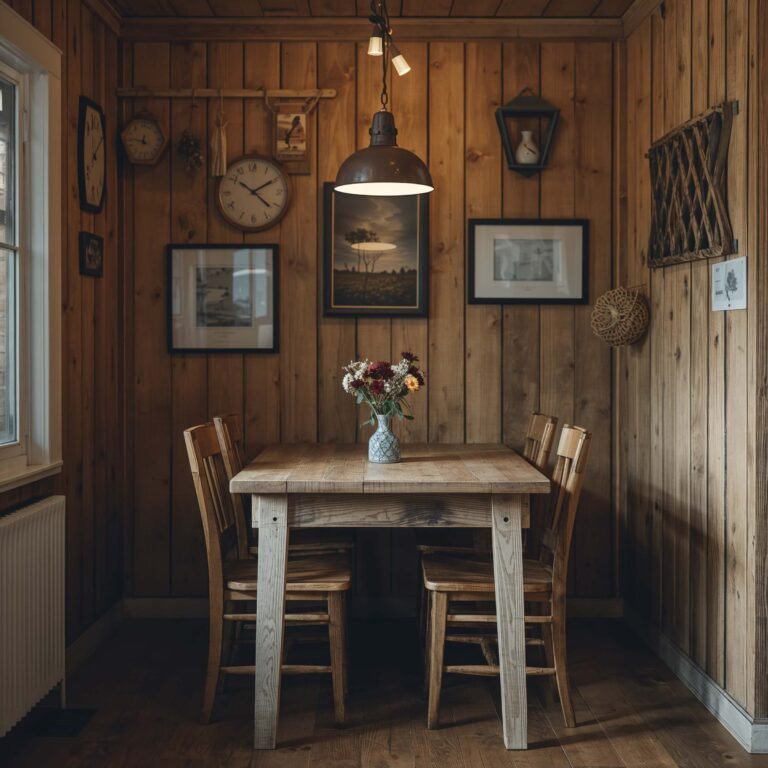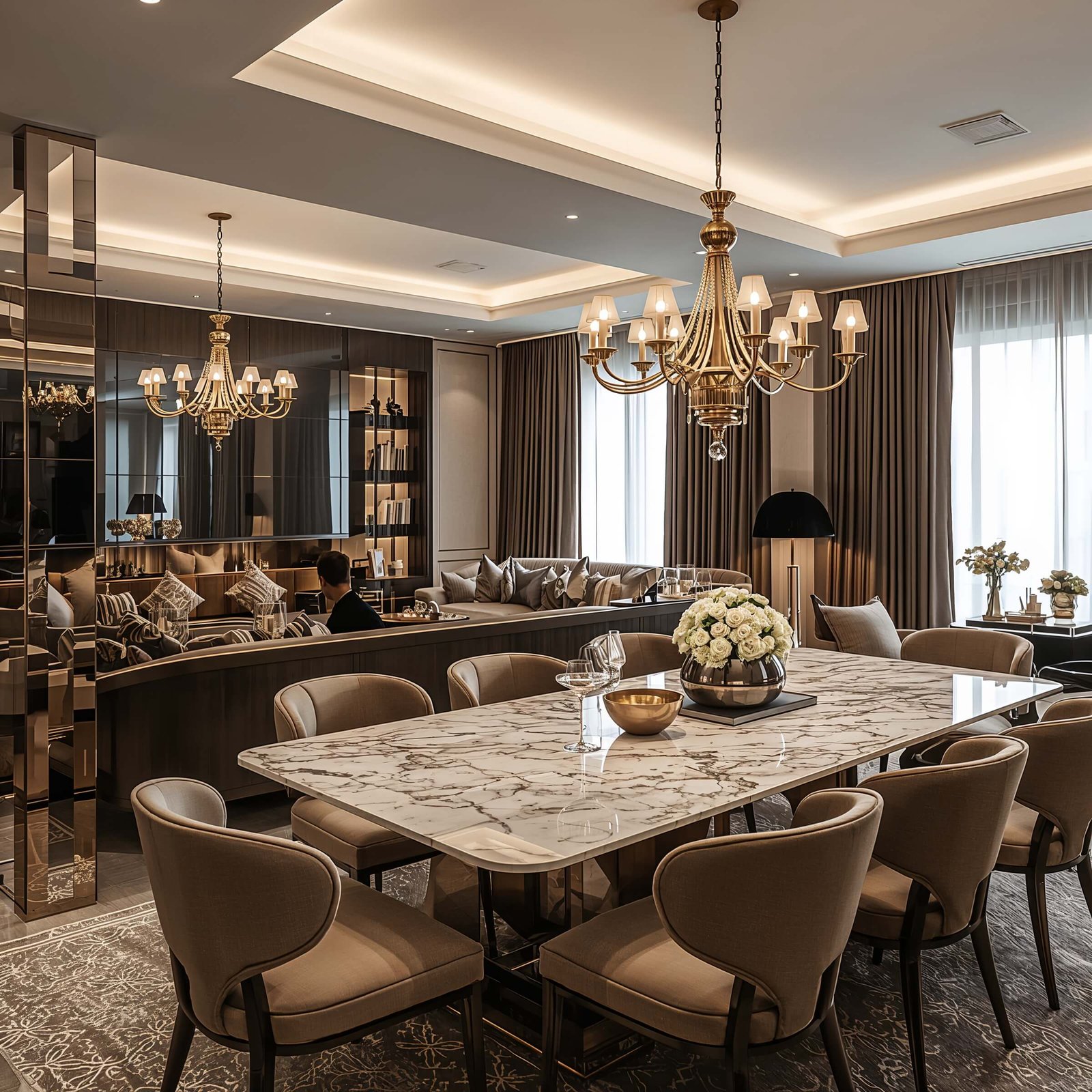
10 Creative Living Room with Dining Area Ideas for Modern Homes

Remember when your mom told you not to eat in the living room? Well, times have changed, and combining your living and dining spaces has become the smart way to maximize your home.
I’ve spent the last decade helping friends redesign their spaces, and trust me, getting this combo right changes everything about how you actually live in your home.
You know what’s funny? Most people think they need a massive house to have both a proper living room and dining area.
That’s complete nonsense. I’ve seen tiny apartments with brilliant living-dining combos that put sprawling McMansions to shame. The secret? Knowing which design approach matches your lifestyle and space.
Open-Concept Minimalist Living and Dining Combo
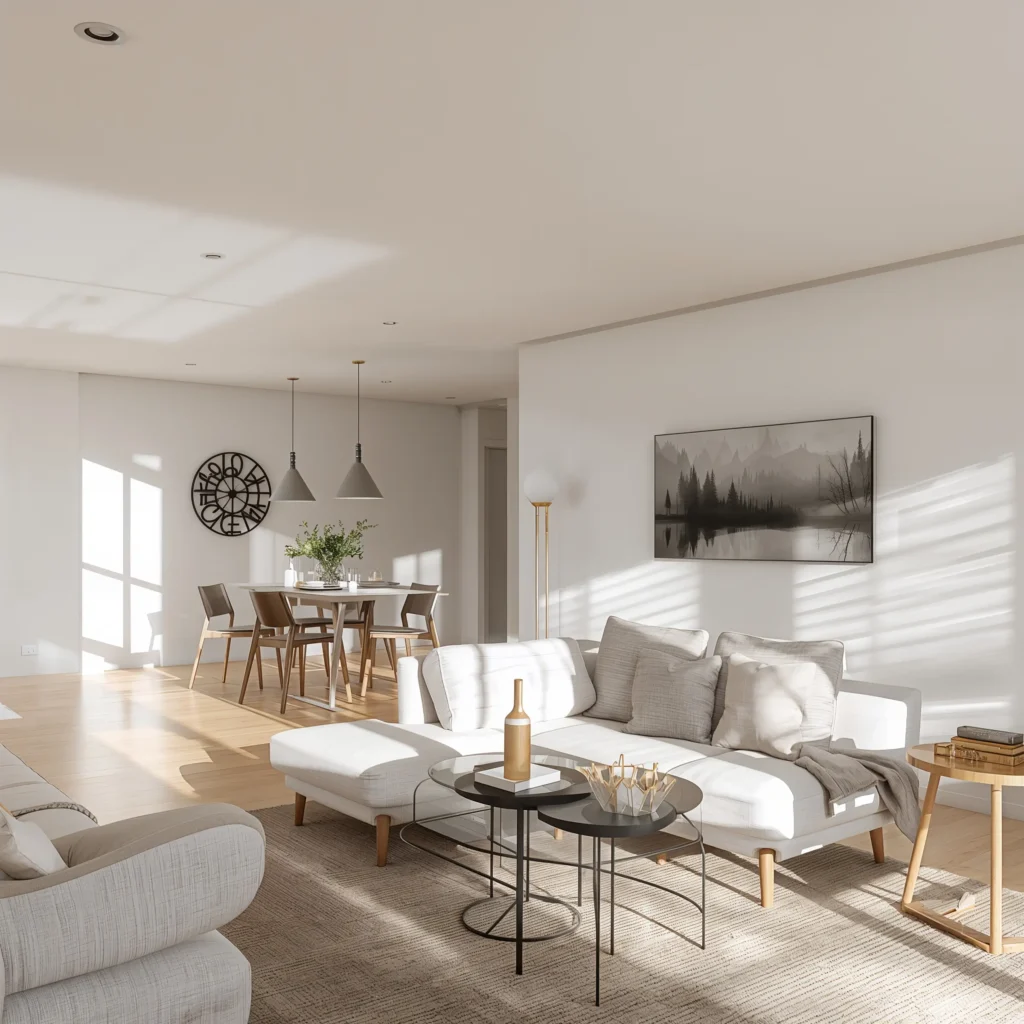
Let’s start with my personal favorite – the minimalist approach that makes every square foot count. Have you ever walked into a space and immediately felt like you could breathe easier? That’s what a well-executed minimalist combo does.
The key to minimalist success lies in three principles: clean lines, purposeful furniture, and absolutely zero clutter. I learned this the hard way after cramming my first apartment with every piece of furniture I could find on Facebook Marketplace. Spoiler alert: it looked terrible.
When you’re planning a minimalist combo, choose furniture that whispers rather than shouts. Think of a sleek dining table with thin legs that seems to float in the space. Pair it with a low-profile sofa that doesn’t block sightlines. The magic happens when you can stand in one corner and see clear through to the opposite wall.
Color Palette Matters More Than You Think
Stick to a neutral color scheme – whites, grays, and maybe one accent color if you’re feeling adventurous. I personally love adding a single navy blue accent chair or some charcoal cushions. The uniformity creates visual flow between your living and dining zones without needing physical barriers.
Your lighting choices make or break this style. Skip the chunky chandeliers and opt for:
- Pendant lights with geometric shapes over the dining table
- Recessed lighting throughout the space
- Floor lamps with slim profiles for ambient evening light
Modern Rustic Living Room with Dining Area
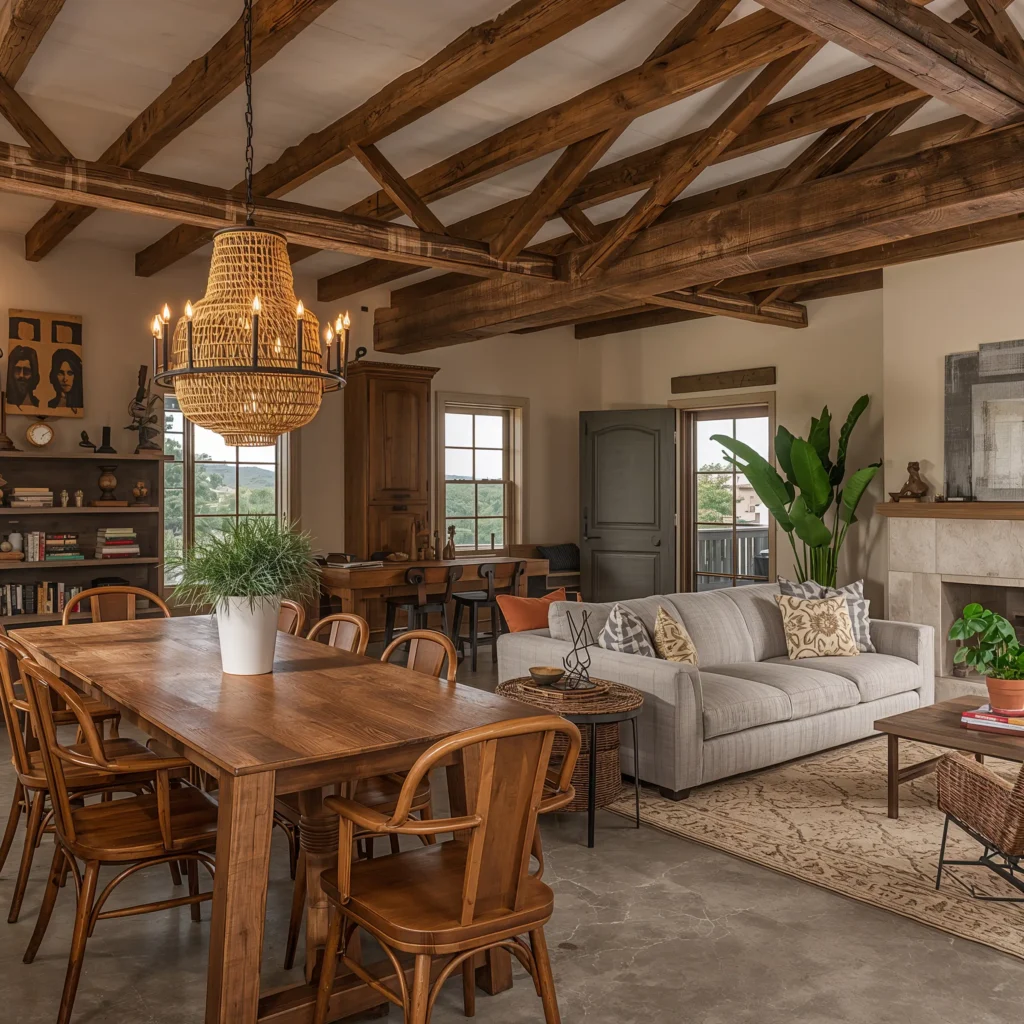
Who says you can’t have farmhouse charm without living on an actual farm? Modern rustic design brings warmth to open spaces while keeping things contemporary enough that your friends won’t think you’re stuck in 2016.
The foundation of modern rustic starts with natural materials. I’m talking real wood (or convincing fakes if you’re budget-conscious), exposed beams if you’ve got them, and textures that beg to be touched. My sister transformed her cookie-cutter suburban home into a modern rustic paradise, and now everyone wants to host gatherings at her place.
Mixing Old and New Like a Pro
The trick? Balance rough with refined. Place a reclaimed wood dining table next to a crisp white modern sofa. Add industrial metal chairs around that rustic table. The contrast creates visual interest without looking like you raided grandma’s attic.
Here’s what works every time:
- Wood and metal combinations for furniture
- Neutral upholstery with textured throw pillows
- Edison bulb fixtures for that perfect warm glow
- Natural fiber rugs to define each zone
Don’t forget the accessories! Mason jar vases and vintage signs work, but please, for the love of good design, don’t go overboard with the “Live, Laugh, Love” decor 🙂
Small Space Living with Compact Dining Solutions
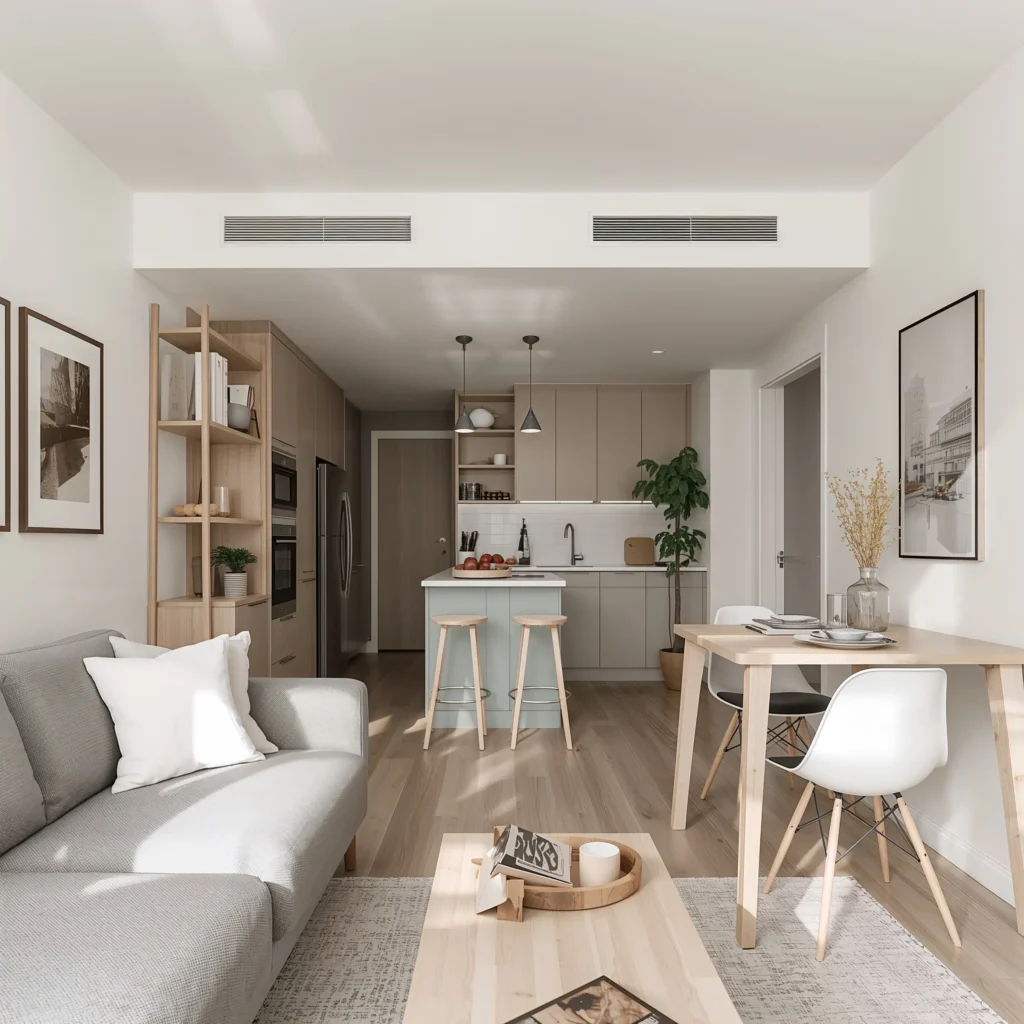
Living in 600 square feet? Join the club! Small space living forces you to get creative, and honestly, some of the cleverest designs I’ve seen come from necessity rather than luxury.
Every piece of furniture needs to earn its keep in a small combo space. That ottoman better have storage inside. Your dining table should expand when needed and shrink when it doesn’t. I once helped a friend in a studio apartment create a living-dining combo in just 200 square feet – it’s totally doable.
Smart Furniture Choices That Save Your Sanity
Forget everything you think you know about “proper” dining tables. Drop-leaf tables, wall-mounted options, and console-to-dining transformers are your new best friends. I’ve got a console table that extends to seat eight people, and guests never believe it until they see the transformation.
Consider these space-savers:
- Nesting coffee tables that tuck away when you need floor space
- Bar-height dining that doubles as extra kitchen prep space
- Bench seating with storage instead of individual chairs
- Wall-mounted TV to free up surface area
The biggest mistake people make? Pushing all furniture against the walls. Sounds counterintuitive, right? But floating your sofa even six inches from the wall creates the illusion of more space. Trust me on this one.
Also Read: 12 Elegant Dining Area Design Ideas to Transform Your Space
Scandinavian Style Living and Dining Design
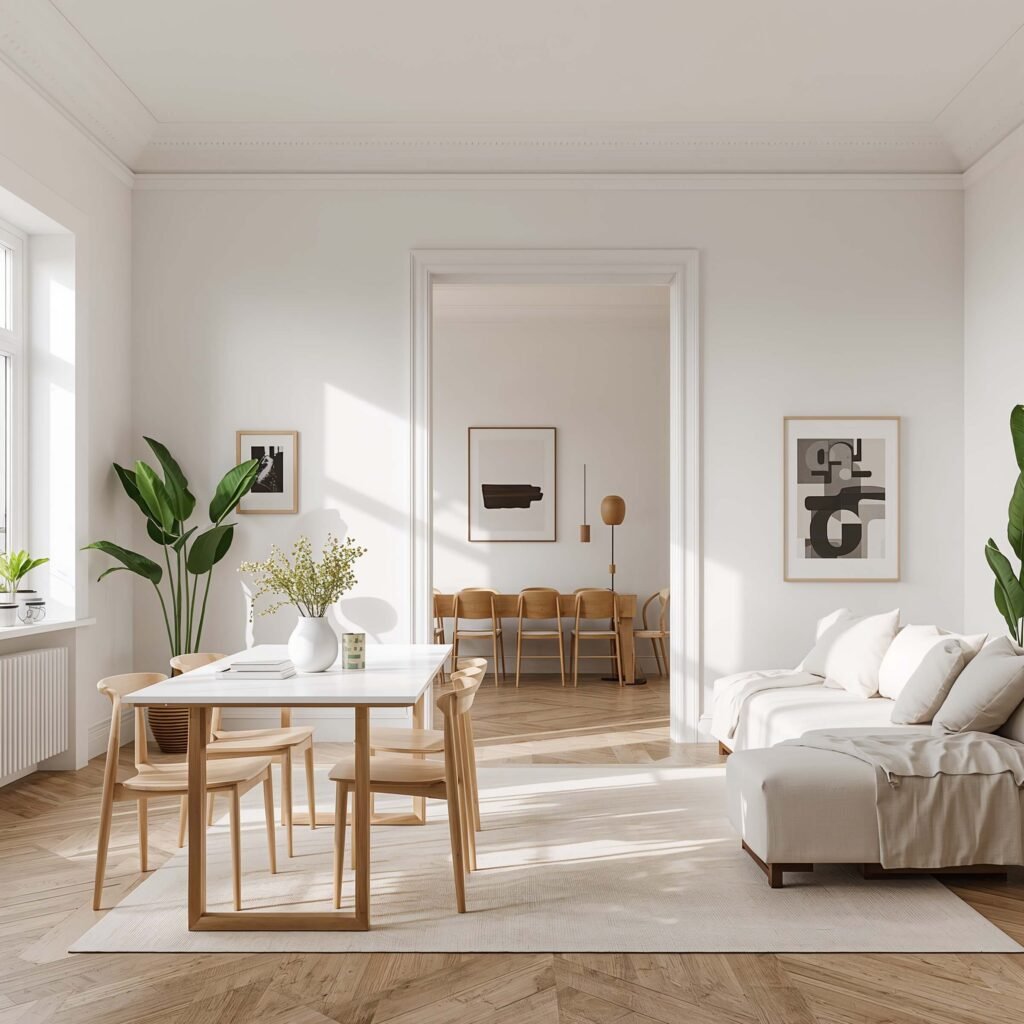
Scandinavian design makes me happy in a way that’s hard to explain. Maybe it’s the cozy-yet-minimal vibe, or how everything just seems effortlessly perfect. This style works brilliantly for combo spaces because it emphasizes function without sacrificing beauty.
Hygge isn’t just a buzzword – it’s a lifestyle that translates beautifully to home design. The Scandinavian approach focuses on creating spaces where you actually want to spend time, not just spaces that photograph well for Instagram (though they do that too).
Creating That Effortless Scandi Vibe
Start with a white or light gray base for walls and major furniture pieces. Add warmth through natural wood tones – think light oak or birch. The dining table should be simple, maybe with tapered legs, while your living room furniture stays low and inviting.
Layer in these essential elements:
- Sheepskin throws draped casually over dining chairs
- Minimalist pendant lights in matte black or brass
- Plants, plants, and more plants (seriously, you need greenery)
- Textured cushions in muted tones
What really sets Scandinavian design apart? The attention to quality over quantity. Buy one beautiful dining chair design and repeat it, rather than mixing and matching. Your space will thank you for the visual consistency.
Luxury Living Room with Elegant Dining Corner
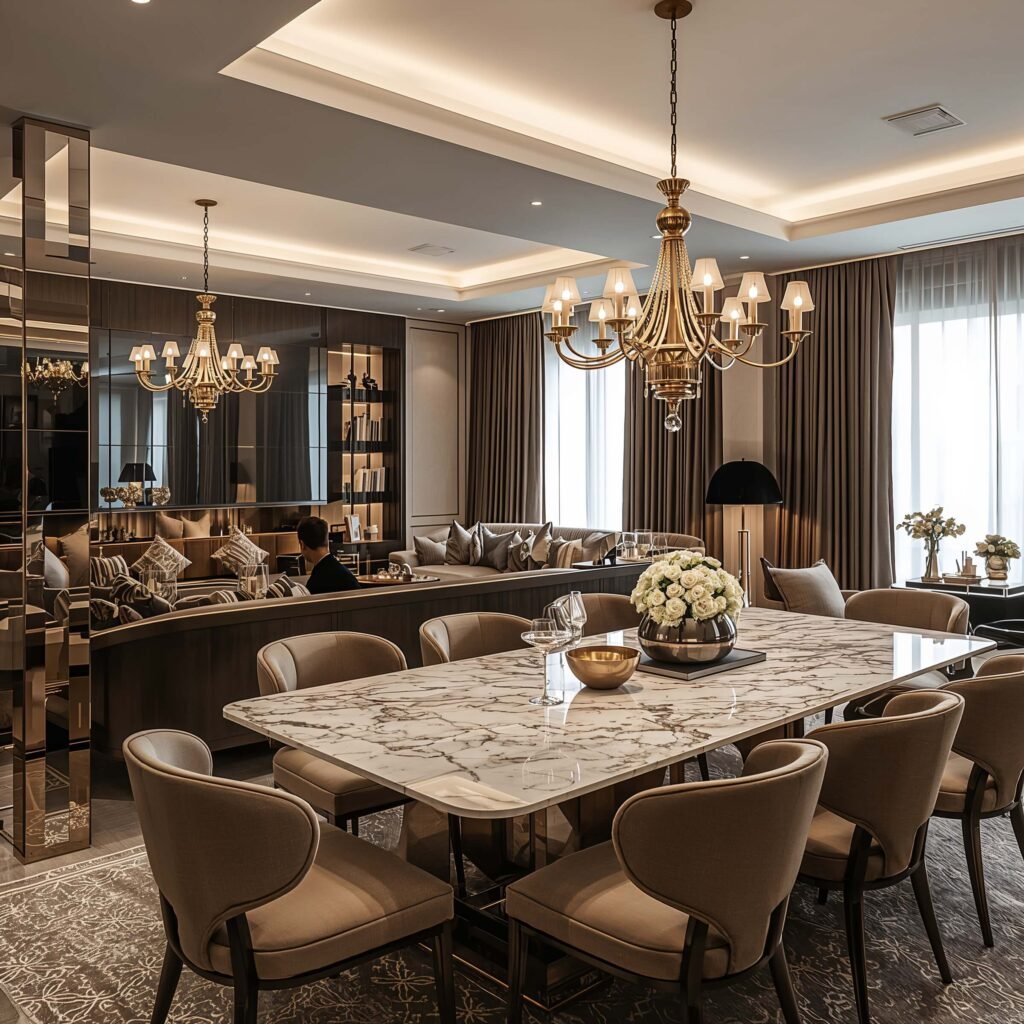
Want to feel like you’re living in a five-star hotel? Creating a luxury combo doesn’t require winning the lottery – it requires understanding what actually makes a space feel expensive. Hint: it’s not about the price tags.
Luxury means different things to different people, but certain elements universally elevate a space. Rich textures, thoughtful lighting, and a cohesive color palette transform ordinary rooms into something special. I’ve achieved luxury looks on IKEA budgets by focusing on these principles.
The Details That Scream Expensive
First, invest in statement lighting over your dining area. A crystal chandelier or modern sculptural piece draws the eye up and creates a focal point. Your living room needs equally impressive lighting – think oversized floor lamps or artistic table lamps.
Here’s your luxury checklist:
- Velvet or leather upholstery for major seating
- Marble or glass dining table (or convincing alternatives)
- Metallic accents in gold, brass, or chrome throughout
- Custom window treatments – even inexpensive curtains look luxe when properly hung
- Oversized artwork that commands attention
Remember, symmetry equals sophistication in luxury design. Match your end tables, balance your dining chairs, and create visual pairs throughout the space. It’s a simple trick that immediately elevates the entire room.
Multifunctional Furniture for Living-Dining Spaces
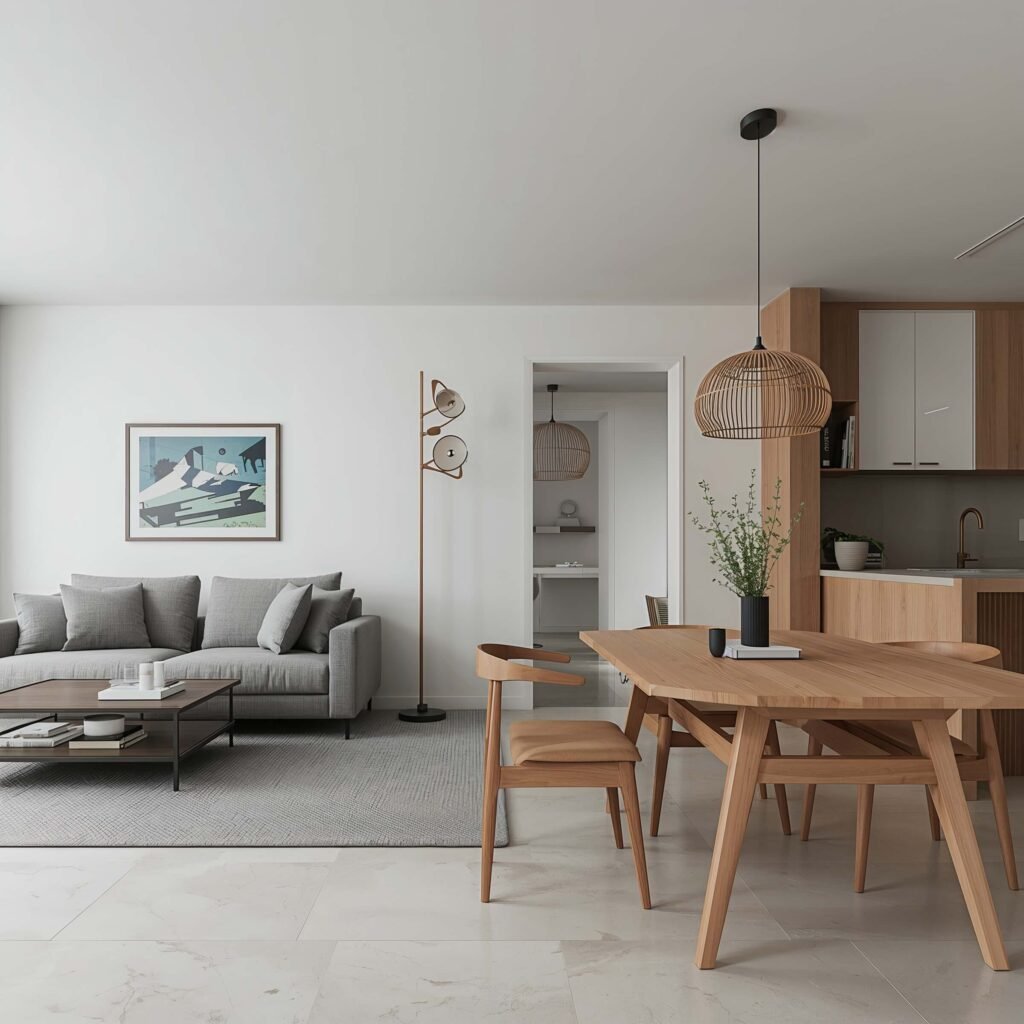
FYI, the furniture industry has seriously stepped up its multifunctional game lately. Gone are the days when “convertible” meant ugly and awkward. Today’s transforming furniture looks good in every configuration.
I became a multifunctional furniture convert (pun intended) after watching my coffee table rise and expand into a full dining table for six. Mind. Blown. Now I recommend these pieces to anyone working with limited space or anyone who just loves clever design.
The MVPs of Multifunctional Design
Let’s talk about the real game-changers. Expandable dining tables obviously top the list, but have you seen the latest ottoman storage solutions? Some include built-in trays that flip to become side tables. Genius!
Must-have multifunctional pieces:
- Sofa beds that actually look like real sofas
- Coffee-to-dining tables with hydraulic lift systems
- Modular shelving that separates or combines spaces as needed
- Dining benches with hidden storage compartments
- Nesting furniture sets that expand your options instantly
The best part about multifunctional furniture? It forces you to think about how you really use your space. Do you need a full dining table 365 days a year, or just when you host? Be honest about your lifestyle, and choose pieces that adapt to your real needs.
Also Read: 10 Inspiring Dining Area Ideas and Modern Layouts
Cozy Boho Living Room with Dining Nook
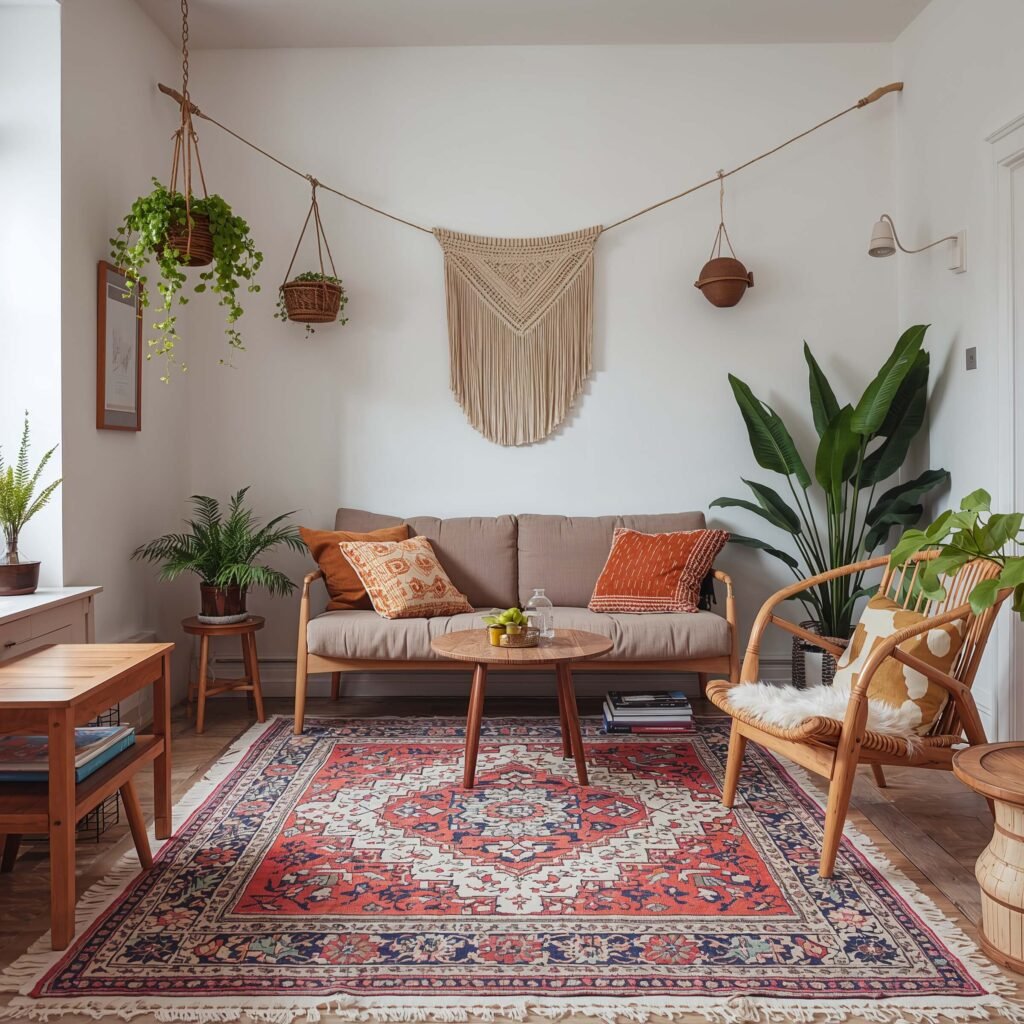
Bohemian style gets a bad rap sometimes, like it’s all macramé and mandala tapestries. But modern boho? That’s where the magic happens. This style creates the coziest combo spaces imaginable while still looking pulled-together.
Boho design celebrates imperfection and personality. Mix patterns like nobody’s watching. Layer textures until your space feels like a warm hug. I converted my own living-dining area to boho style last year, and now nobody wants to leave when they visit.
Building Boho Without the Clichés
Start with a neutral base – yes, even boho needs grounding. Add warm earth tones through your larger furniture pieces. Then go wild with accessories and textiles. The key is building layers that feel collected over time, not purchased in one Target run.
Your boho toolkit includes:
- Mixed dining chairs (intentionally mismatched)
- Layered rugs defining different zones
- Hanging plants at varying heights
- Warm lighting from multiple sources
- Natural materials like rattan, jute, and wood
Don’t forget the personal touches that tell your story. Display your travel finds, showcase your plant collection, hang that gallery wall of family photos. Boho style gives you permission to surround yourself with things you love.
Contemporary Living with Built-In Dining Area
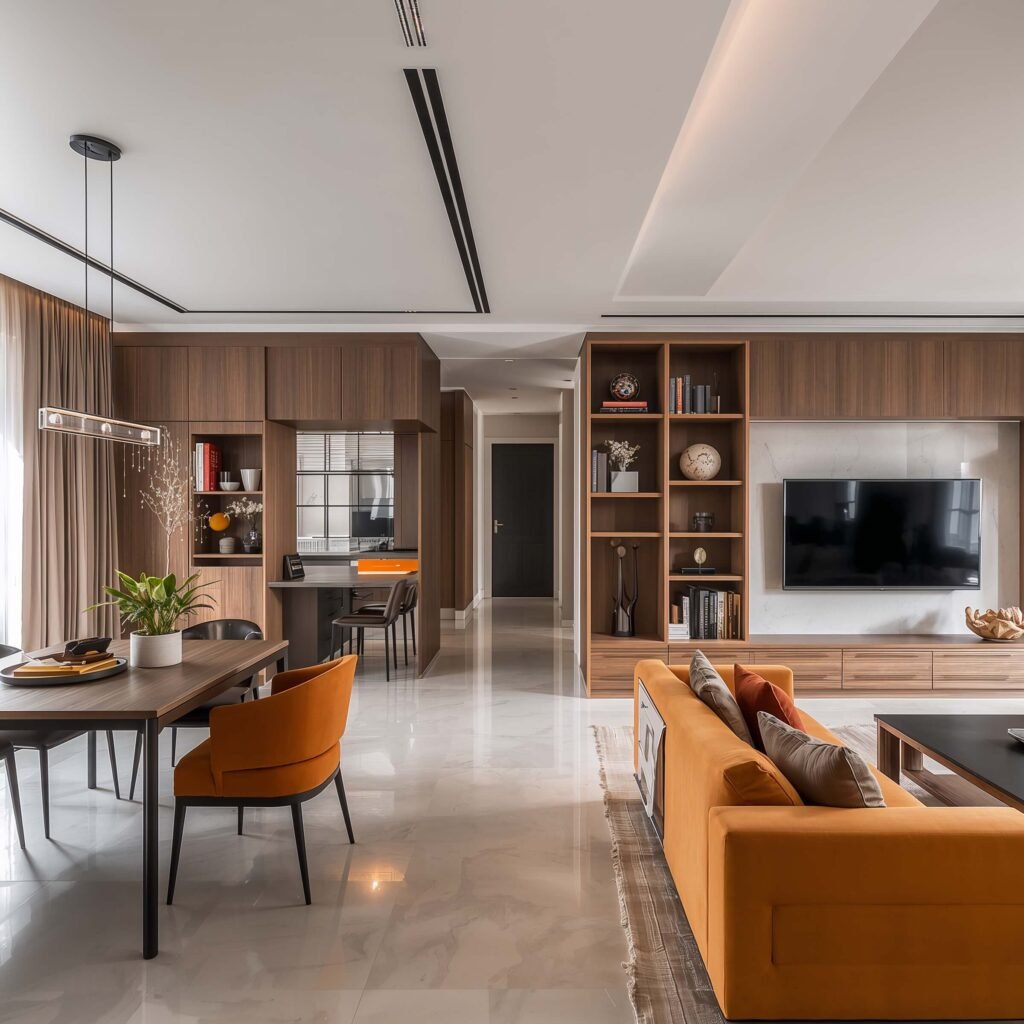
Built-ins might sound permanent and scary, but they’re actually the secret weapon for seamless combo spaces. Contemporary built-in solutions maximize every inch while looking impossibly sleek.
I helped design a built-in dining banquette for a friend’s condo, and it completely transformed the space. What was once an awkward corner became the most-used spot in the home. Built-ins create definition without walls, storage without bulk, and style without trying too hard.
Making Built-Ins Work for You
The beauty of contemporary built-ins? They disappear into the architecture while providing massive functionality. Banquette seating along one wall creates a dining area without the visual weight of chairs all around a table.
Consider these built-in options:
- Floating shelves that frame your dining space
- Built-in bench seating with hidden storage
- Media walls that incorporate dining surface extensions
- Room dividers with pass-through shelving
- Integrated lighting that highlights both zones
The investment in built-ins pays off through increased home value and daily functionality. Plus, you’ll never have to worry about whether new furniture will fit – it’s literally built for your space.
Industrial Loft Style Living and Dining Combo
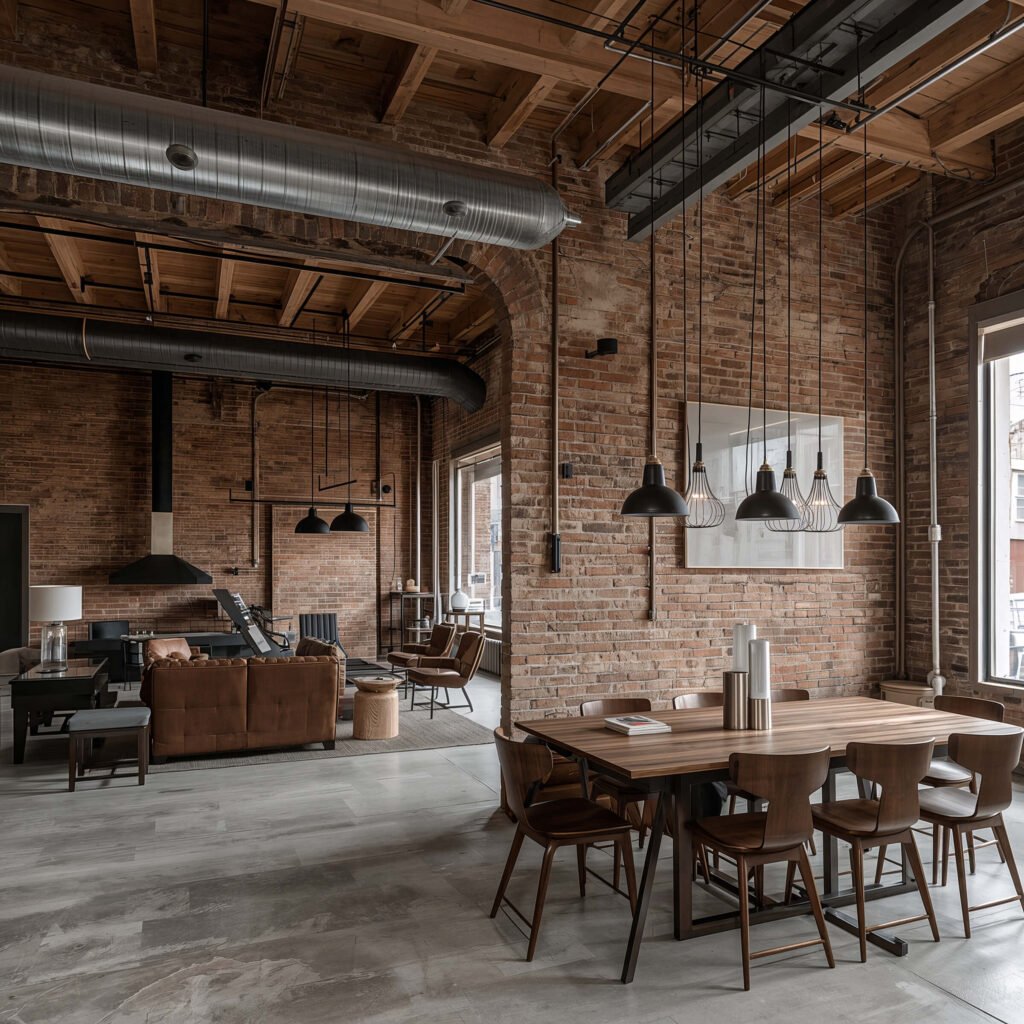
Industrial design makes me feel like I’m living in a converted Brooklyn warehouse, even if I’m actually in suburban Ohio. This style works incredibly well for open combos because it celebrates the bones of the space rather than trying to hide them.
Raw materials and exposed elements define industrial style. Think exposed brick (real or faux), visible ductwork, and concrete floors. But here’s the thing – you need to warm it up, or you’ll feel like you’re living in an actual factory.
Softening the Industrial Edge
The trick to livable industrial design? Balance hard with soft, cold with warm. Your metal and wood dining table needs upholstered chairs or sheepskin throws. That concrete floor demands a plush area rug. I learned this after my first industrial attempt felt more like a prison than a home – oops.
Industrial essentials that actually work:
- Metal dining chairs softened with cushions
- Reclaimed wood dining tables with metal bases
- Leather sofas in rich cognac or black
- Edison bulb chandeliers or cage pendant lights
- Mixed metals throughout both zones
IMO, the best industrial spaces feel both tough and inviting. Add plants to bring life, use warm lighting to combat coolness, and don’t forget textiles to create comfort. Your space should feel like a stylish loft, not an abandoned warehouse.
Also Read: 10 Beautiful Dining Table Design Modern Ideas for Every Room
Color-Coordinated Living and Dining Layouts
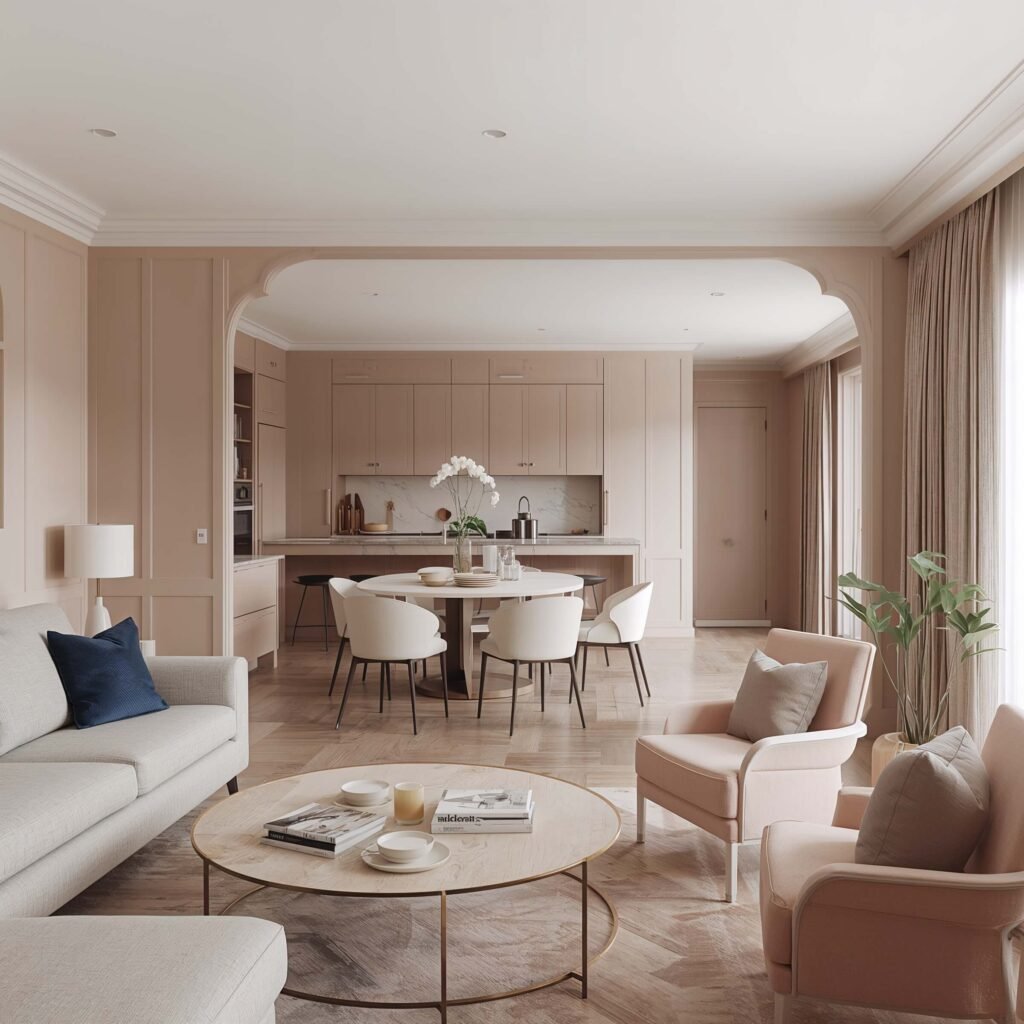
Color coordination might sound basic, but it’s actually the most underutilized tool for creating cohesive combo spaces. The right color strategy ties everything together without making your space feel matchy-matchy.
Color creates flow between zones better than any furniture arrangement. I’ve seen completely separate living and dining areas feel connected just through smart color choices. The best part? You can achieve this with paint, accessories, or textiles – no major renovations required.
Creating Your Color Story
Start by choosing a primary color palette of three colors. One dominant neutral, one secondary color, and one accent for pops of interest. Use the 60-30-10 rule: 60% dominant color, 30% secondary, 10% accent. This formula works every single time.
Color coordination strategies that work:
- Repeat accent colors in both zones through pillows, art, or accessories
- Use rugs to define spaces while maintaining color continuity
- Paint an accent wall that’s visible from both areas
- Choose dining chairs that echo living room accent colors
- Layer similar tones for sophisticated monochromatic schemes
Don’t be afraid of color! Sure, all-white spaces photograph beautifully, but living in color makes you happier. Trust the science on this one. Just keep your palette consistent, and both zones will feel intentionally designed together.
Advanced Color Techniques
Want to level up? Try these pro moves:
- Gradient color schemes that shift slightly from living to dining
- Complementary colors for dynamic energy
- Analogous colors for harmony and calm
- Strategic metallics as a unifying accent throughout
The biggest mistake I see? People choosing colors in isolation. Your dining area burgundy needs to talk to your living room navy. They don’t need to match, but they need to be friends. Test paint samples in both zones before committing – light changes everything.
Making It All Work Together
After exploring all these styles, you might wonder which one’s right for you. Here’s the truth: the best living-dining combo reflects how you actually live. Love hosting dinner parties? Prioritize that dining space. Netflix marathons more your speed? Focus on the living room comfort.
I’ve tried several of these styles in my own homes over the years. My current favorite combines Scandinavian simplicity with industrial touches – it shouldn’t work, but it does. That’s the beauty of combo spaces: rules are more like guidelines.
Remember these universal truths regardless of style:
- Define zones without walls through rugs, lighting, or furniture placement
- Maintain visual flow with consistent colors or materials
- Scale matters – don’t overwhelm small spaces with massive furniture
- Storage is king – hidden storage keeps combos clutter-free
- Lighting sets mood – layer ambient, task, and accent lighting
Final Thoughts
Creating the perfect living room with dining area combo isn’t about following trends or copying Pinterest boards. It’s about understanding your space, knowing your needs, and having the confidence to make bold choices. Every single one of these ideas can transform your home, but only if it aligns with how you want to live.
The best advice I can give? Start with one zone and let it inform the other. Choose your sofa, then find a dining table that complements it. Or fall in love with dining chairs and build your living room around that energy. There’s no wrong starting point.
Your combo space should make you smile every time you walk in. It should function brilliantly for your daily life while looking good enough for those spontaneous dinner parties. Most importantly, it should feel like home – your home, not some catalog reproduction.
So which style speaks to you? Maybe you’re ready to embrace minimalist calm, or perhaps boho warmth calls your name. Whatever you choose, commit fully and have fun with it. After all, you’re the one living there, and your happiness matters more than any design rule. Now go forth and create something amazing – your perfect living-dining combo awaits!